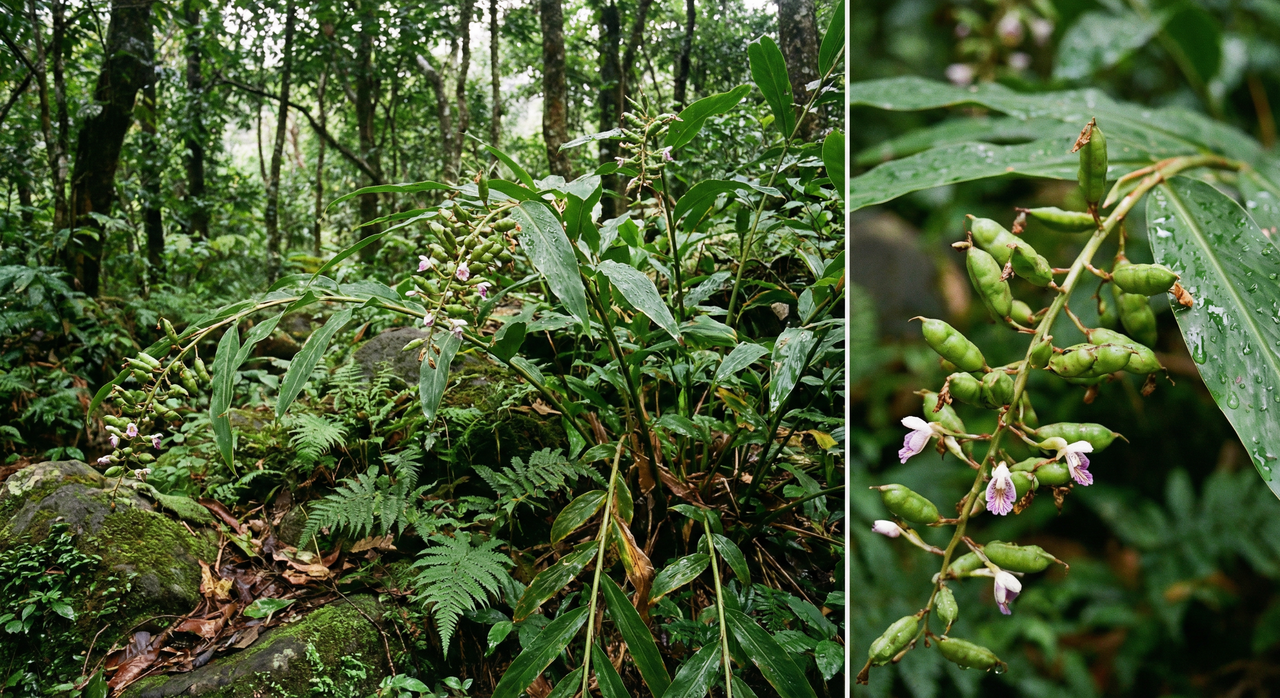
Here's what gets me every time I walk past a cardamom plant in flower: the blooms don't come from the tall, leafy stems you've been admiring. They come from separate, low-creeping stalks that emerge right at soil level, threading through the leaf litter like something secretive. The first time I saw it, I crouched down thinking I'd found a different plant entirely. That split architecture, towering foliage up top and tiny pale orchid-like flowers hugging the ground, is the whole reason cardamom is such a frustrating crop to pollinate outside its native range. Native bees in the Western Ghats know exactly where to look. Most gardens in Florida or Hawaii have no such bees, and no such institutional memory.[1]
What I keep coming back to is how much this plant rewards the people who actually pay attention to it, and quietly punishes everyone who grows it from a distance. It's the third most expensive spice in the world by weight, behind saffron and vanilla, yet it's not rare because it's hard to grow exactly. It's rare because it demands a very specific kind of intimacy.
Cardamom Origin and History
Botanical Background and Visual Characteristics
The first time I saw a mature cardamom clump in a tropical conservatory, I did a double-take. It reads, honestly, more like a dense stand of ornamental ginger than anything you'd expect to produce one of the world's most prized spices. Elettaria cardamomum, the botanical name for true green cardamom, is a perennial herb in the ginger family (Zingiberaceae) native to the shaded understory of tropical evergreen rainforests in the Western Ghats of southern India and Sri Lanka, growing wild at elevations between 600 and 1,500 meters where mist, dappled light, and reliable rainfall define the environment.[2][3][4]
The plant emerges from a short, thick, aromatic rhizome in tight clumps of reed-like pseudostems that can reach two to five meters tall, each lined with long, dark green, leathery leaves arranged in two alternating rows.[5][4] Crush a leaf and you get that faintly sweet, lemon-ginger scent immediately, even before you've gotten anywhere near the pods. What surprises most people is where the flowers actually appear: not up in the canopy of foliage but on low, almost horizontal spikes that creep along the ground near the base of the pseudostems, producing small white to pale violet blooms during the monsoon season.[2][6] They look almost hidden among the leaf litter, which is part of why hand-pollination matters so much for growers outside the native range. Those flowers develop into the familiar pale green capsules, roughly one to two and a half centimeters long, each holding tightly packed rows of small, dark, intensely aromatic seeds.[7][8] Those seeds are the spice.
A well-established clump is productive for ten to twelve years, and the plant is polycarpic, meaning it flowers and fruits repeatedly across that lifespan rather than dying after a single fruiting cycle.[9][10] That longevity matters when you're thinking about it as a food forest plant. One thing I'd flag early: black cardamom (Amomum subulatum) is a different plant entirely, with larger, darker, striated pods, a notably smoky flavor, and a Himalayan native range. I've grown both, and the difference in pod texture and aroma is unmistakable the moment you pick one up. Ethiopian "cardamom" is yet another species, Aframomum corrorima.[11] What we're talking about throughout this profile is true green cardamom only.
Traditional and Cultural Uses
Cardamom's human history is long enough to be genuinely humbling. Traces of spice use appear in the Indus Valley Civilization around 2500 BCE, and by roughly 1550 BCE the Ebers Papyrus was documenting it in Egyptian medicine, perfumery, and embalming. Greek and Roman writers including Theophrastus recorded it as a valued commodity from the East.[12][13] Long before any of that formalized trade, though, tribal communities in the Western Ghats were harvesting it wild, and the spice appears in the Charaka Samhita and Sushruta Samhita as a Tridoshic herb used for digestion, respiratory health, and detoxification.[14][15] I keep that Ayurvedic lineage in mind when I grow it; it connects directly to why this plant ended up in so many of the food-as-medicine traditions I work with, much like turmeric and ginger before it found its way into modern wellness circles.
Arab traders monopolized the export routes from India until the fifteenth century, moving green cardamom along both the maritime Indian Ocean passages and the overland Silk Road. At its peak, it was valued more highly than gold by weight, and it reached medieval Europe in mulled wines, spiced breads, and apothecary preparations.[13][16] Portuguese, Dutch, and then British colonial powers broke that monopoly between the sixteenth and nineteenth centuries; the British actively promoted cultivation in the Indian hill stations, and German settlers brought the plant to Guatemala in the early twentieth century.[17] Today green cardamom remains central to South Asian culinary life, from masala chai and garam masala to wedding rituals and festival offerings where it symbolizes prosperity and hospitality, and it flavors the qahwa coffee of the Middle East with the same cultural weight it carries in its homeland.[18][19]
Fun Facts and Modern Production
Cardamom ranks third in the world by price per gram, sitting just behind saffron and vanilla.[20] Global production runs somewhere between 50,000 and 60,000 metric tons annually, and here's the twist in the story: Guatemala, where cardamom didn't even exist until the early 1900s, now supplies roughly 40% of the market and about 70% of exports, well ahead of India, the plant's ancestral home.[21][22] That's the kind of colonial agricultural reversal that makes you stop and think about what "origin" really means for a traded crop.
Back in the Western Ghats, wild populations face real pressure from overharvesting and habitat loss, which makes the case for integrating cardamom into well-managed agroforestry systems rather than extracting it from forest remnants.[3] I've seen demonstration plots where cardamom is grown in shaded, layered systems alongside taller canopy species, and those plots maintain real biodiversity while still producing steady yields. That's not an accident; it reflects the ecological niche this plant evolved to fill. Understanding that niche is exactly where the permaculture story for this species begins.
Cardamom Varieties and Where to Buy Plants or Seeds
Main Cultivar Groups: Mysore, Malabar, and Beyond
Most of the world's green cardamom spice comes from two countries with very different production philosophies. India holds the greatest cultivar diversity, rooted in the wild and semi-wild populations of the Western Ghats, while Guatemala now supplies over 70% of global production using clones originally introduced from those same Indian populations.[23][24][25] Understanding that split matters the moment you start choosing what to grow.
The two foundational Indian groups are Mysore (sometimes called Mesian) and Malabar, and they behave quite differently in the garden. Mysore types grow tall, reaching up to 4 meters, with large flag leaves and serious yield potential, but they take 3-4 years to begin flowering and want space.[26] Malabar types stay compact at 1.5-2.5 meters, bear earlier at around 2 years, and while their yield is lower, they're meaningfully more tolerant of drought, shade, and pest pressure.[26] I've grown both in a Central Florida greenhouse setup, and the Malabar's compact habit made it genuinely easier to manage under shade cloth. The flavor it delivers is intense, which matters to me for chai blends, almost the way Thai basil differs from sweet basil: same genus, very different aromatic personality.
Within those two lineages, Indian breeders and ICAR researchers have developed a range of named varieties worth knowing. Mysore selections like Vazhukka and Panniyur-1 offer large cardamom pods and strong yield. Muziri brings roughly 20-25% higher yield than traditional landraces with added rust resistance.[27] Njallani (also released as ICRI-1) has become a popular green-fruited type prized for pod quality.[23] IISR-Vijay and IISR-Avinash, along with the CCS series, were selected specifically for traits like essential oil content, thrips resistance, and rhizome rot tolerance, with improved lines reaching 500-1,000 kg/ha compared to a commercial average closer to 300-500 kg/ha.[23][28] The USDA ARS also maintains an Elettaria cardamomum germplasm accession (ELECAR) that helped me narrow my own early variety research before I ever bought a plant.[29]
Guatemalan Commercial Types and US Experimental Adaptations
Guatemala's dominant commercial types fall into two groups: Green Cardamom (6-meristem clones with higher essential oil) and Brown Cardamom (8-meristem types with a more robust, starch-forward character).[25] Both produce larger pods than most Indian material, but the eucalyptol profile is notably milder than what you get from Indian Malabar types.[30] For culinary growers who want the sharpest, most complex flavor, Indian selections still win on intensity.
In the US, commercial cardamom cultivation doesn't exist at any meaningful scale because the plant's tropical requirements are simply too demanding for most of the country. UF/IFAS trials in Florida and University of Hawaii CTAHR research have adapted Malabar and Mysore-derived material to local conditions, with Hawaii's volcanic soils supporting experimental yields up to 500 kg/ha in protected settings.[31][32] For most American growers, these findings are useful mainly as proof of concept; the realistic path is greenhouse or container culture rather than open-ground planting.
Sourcing Cardamom Plants and Seeds in the United States
Seeds are usually the easiest and least expensive starting point, running about $5-15 per packet from suppliers like Baker Creek Heirloom Seeds and similar specialty seed companies. Live Elettaria cardamomum plants are available from Logee's Greenhouses, Eureka Farms, and US-based Etsy sellers, typically priced between $20-50 each.[33][34][35] Seeds germinate more slowly than transplanting an established plant or dividing a rhizome, but they're far simpler to ship legally and safely across state lines.
I always source from reputable US nurseries rather than attempting to import stock directly. Importing cardamom seeds, plants, or pods requires USDA APHIS permits, phytosanitary certificates, formal declaration, and inspection, and Florida and California add their own state-level requirements on top of that.[36][37][38][39] The paperwork burden alone isn't worth it, and the thrips hitchhiker risk makes clean domestic nursery stock the smarter call every time.
One thing I've become more deliberate about is insisting on certified organic or fair-trade sourcing when buying pods or seeds for culinary use, given how much pressure wild Western Ghats populations still face from collection and habitat loss.[40] If you're buying the spice anyway, the extra effort to trace its origin aligns with the same regenerative values that brought you to growing it in the first place.
Cardamom Propagation and Planting Guide
There's a reason commercial cardamom plantations across India's Western Ghats rely almost entirely on vegetative propagation rather than seed. When you're growing a crop where pod size, oil content, and yield timing are everything, genetic uniformity matters. Rhizome division accounts for roughly 90% of plants in major production regions like Kerala and Karnataka[41][42][43] because seeds simply don't breed true. Cardamom outcrosses readily, so seedlings are genetically variable offspring that may or may not deliver the pod quality you planted for. For home growers, that variability is often fine or even interesting. For a plantation, it's a commercial liability.
Propagation Methods: Rhizome Division vs. Seeds vs. Tissue Culture
When you have access to healthy mother plants, rhizome division is the fastest and most reliable path. Divisions taken during the rainy season, roughly June through August, using clumps with 3 to 6 vigorous buds achieve success rates of 80 to 95% when sourced from disease-free stock.[44][45][46] I can't stress that "disease-free" qualifier enough. Any Phytophthora or Fusarium lurking in the mother clump hitchhikes straight through your divisions into a brand-new bed. I'm ruthless about only taking material from clumps that look genuinely healthy, not just passable.
Seeds are a slower, more variable option, with germination rates averaging 20 to 40% under normal conditions and first flowering pushed back to 2 to 3 years versus 1 to 2 years for rhizome plants.[44][41][43] That said, seeds aren't worthless for home growers or breeders who want to experiment. For cutting propagation, semi-hardwood stems 10 to 15 cm long with 2 to 3 nodes, treated with 1000 to 2000 ppm IBA, achieve 60 to 80% rooting within 30 to 45 days under high humidity.[47][48] In my greenhouse trials, hormone-treated cuttings rooted reliably when I kept humidity above 80%, but rhizomes were still simpler to manage. Tissue culture is the research and nursery trade route, with 50 to 90% success from shoot-tip explants on MS medium, though acclimatization back to greenhouse conditions requires patience.[49]
Germination Timeline and Requirements
If you're going the seed route, use the freshest seed you can find. Cardamom germinates hypogeal style, with the shoot emerging well after the root, and the process is famously slow: anywhere from 20 to 90 days, most commonly 20 to 45 days, at 25 to 30°C with relative humidity held between 60 and 80%.[50][51][52] A 24 to 48 hour soak, light scarification, or a brief 0.1% carbendazim dip before sowing improves rates and cuts fungal risk on the long wait.[53] I started my first batch from fresh scarified seed in my Central Florida greenhouse, and I'll warn you: the seedlings look like fine-bladed grass for weeks. I label everything meticulously when working with Zingiberaceae because the early growth is nearly indistinguishable between species.
Plan for a 6 to 8 month nursery phase before transplant, waiting until seedlings have developed 4 to 6 true leaves.[50][51] Even then, first harvest is realistically 3 years out from sowing, with full production not arriving until years 7 to 8.[54][55] Don't let that timeline discourage you; once a healthy clump is established, it will produce for decades with minimal input. The seed storage picture complicates things further. There's genuine scientific disagreement about whether cardamom seed is orthodox (tolerating drying to 5 to 7% moisture for cold storage) or recalcitrant (requiring above 25 to 30% moisture and a strict 6 to 12 month window).[56][57] I stopped storing cardamom seed long-term after losing a batch to unexpected desiccation. Now I source fresh seed or divisions each season rather than gambling on viability.
Soil, Site Selection, and Light Conditions
Get the soil right before anything else. Cardamom needs well-drained loamy or sandy-loam soil with 3 to 5% organic matter, a pH of 5.0 to 6.5 (ideally around 5.5 to 6.0), and a minimum soil depth of 45 to 60 cm to give its shallow rhizome system the room it needs.[58][59][60] Waterlogging is not a minor stress for this plant; it's a death sentence. I've watched a young containerized plant collapse within days of sitting in a saucer with standing water. Heavy clay, compacted beds, or any situation where drainage stalls will cost you the planting.
The site requirements follow directly from where this plant evolved: the humid evergreen understory of the Western Ghats between 600 and 1500 meters elevation.[61] That means 50 to 70% shade, temperatures held between 20 and 30°C with nothing dropping below 10 to 15°C, relative humidity at 70 to 80%, and annual rainfall of 1500 to 4000 mm well distributed across the year.[62][63] For most readers in the continental US, that translates to greenhouse or large-container culture under shade cloth, full stop.[64][65] I grow mine under 60% shade cloth for the first season, which replicates enough of that rainforest floor light to keep the seedlings growing without scorching. Outdoor production without frost protection is only viable in genuinely tropical climates.
Spacing, Planting Technique, and Initial Establishment
Standard field spacing runs 1.5 to 2 m between plants and 2 to 2.5 m between rows, with the 1.8 m square arrangement common on the hilly terrain of Kerala.[46][52] That works out to roughly 2,000 to 3,500 clumps per hectare depending on shade intensity and soil fertility.[66] Those spacings aren't arbitrary; a mature clump reaches 2 to 5 m tall with 8 to 12 tillers and a canopy spread of 1 to 2 m, so distance that feels generous at planting fills in faster than you expect.[2][67] In my own trials, allowing clumps to reach 8 to 12 tillers before thinning produced the best pod set. Crowding beyond that improves yield numbers on paper but invites the humidity-driven leaf spot and rhizome rot issues that make your life miserable later. I've settled on the looser end of the spacing range for home food forest plantings.
Plant at the start of the rainy season, May through June, using either rhizome divisions or well-hardened nursery seedlings with 4 to 6 leaves.[68][42] On sloped ground, raised beds or contour planting at 10 to 30% grade improves drainage and limits erosion. Keep young plants under nursery shade for their first 6 to 8 months regardless of how vigorous they look; the understory is not optional during establishment. Any shortcut on shade or drainage at this stage sets up the planting to struggle for years before it recovers, if it recovers at all.
Cardamom Care Guide: Growing and Maintaining Elettaria cardamomum
Every care decision you make for cardamom comes back to one question: does this resemble the Western Ghats? That misty, humid, forest-filtered understory in southern India is what this plant's entire physiology is built for. Get close to those conditions and cardamom rewards you with years of aromatic, productive clumps. Drift too far and it will tell you loudly, through scorched leaves, failed flowers, and sulking growth.
Light and Shade Requirements for Healthy Growth
Cardamom needs 40-60% shade under normal conditions, bumped up to 50-70% in hotter climates where summer sun is intense.[52][69] Too much sun and the leaf margins scorch, photosynthesis actually shuts down, and pod production collapses. Too little and the pseudostems go pale and floppy, reaching for light they can't find. In my greenhouse setup in Central Florida, 60% shade cloth stretched over the bench hits the sweet spot. For home or greenhouse growers, target light levels around 20,000-30,000 lux alongside humidity in the 50-80% range.[70][71] Think of it like growing a large calathea or ginger: dappled, filtered light, never direct afternoon sun.
Watering Needs and Humidity Management
In its native range, cardamom receives 1,500-4,000 mm of rainfall annually under 70-90% relative humidity.[52][60] The soil it wants is consistently moist, humus-rich, and well-drained; waterlogging causes root rot just as readily as drought causes tip necrosis and leaf curl. For established plants, aim for 20-30 mm per irrigation session every four to seven days, or whenever the top inch or two feels dry.[72] Seedlings need water every two to three days. The plant can survive a dry spell of 15-20 days but prolonged drought hits yield hard.[73] I rely on drip irrigation and a 5-10 cm mulch layer of shredded leaves or coir to keep moisture steady without babysitting the watering can every morning.[74]
Temperature, Heat, and Frost Tolerance
The comfortable growing window is 20-30°C (68-86°F), with 20-25°C being the real sweet spot for flowering and fruit set.[75] Cardamom tolerates brief heat to 35°C but prolonged temperatures above 30°C reduce capsule quality noticeably, and flowering is the most vulnerable stage.[76] In my Central Florida summers I run shade cloth and a misting line together to keep the canopy temperature below that threshold. On the cold end, this plant is strictly for USDA Zones 10a-12b; any prolonged exposure below 15°C causes browning and chlorosis, and anything resembling frost is lethal.[77][78] Outside those zones, the only workable path is greenhouse or indoor overwintering.[78] I keep my potted plants on casters so I can wheel them into a protected lanai the moment night temperatures threaten to drop toward 10°C, and that habit has let me keep the same mother clumps producing for several seasons.
Feeding and Nutrient Management
Potassium is the nutrient that matters most for cardamom. The plant actually removes more K from soil than nitrogen, and potassium directly determines capsule size, yield, and essential-oil content.[79][52] I've tasted the difference: years when I've pushed K during the fruit-development window consistently produce plumper, more aromatic pods. A typical annual rate runs around 100:50:100 g NPK per plant, paired with 10-20 kg of compost.[79] Nitrogen drives vegetative growth and tillering, but overcorrecting with N is a trap: lush foliage comes at the expense of flowers and opens the door to pest pressure.[80] Apply fertilizer in two or three split doses timed to growth flushes, and work toward an integrated program combining roughly equal parts organic and inorganic nitrogen alongside regular compost.[81] The soil pH should sit between 5.5 and 6.5 with organic matter above 2%; outside that range, micronutrient availability falls apart.[81] I test both soil and leaf tissue every spring. The leaf results tell me far more about when the plant actually needs a zinc or magnesium correction than a soil test alone ever could.
Pruning, Maintenance, and Seasonal Care
Cardamom forms a clumping structure of pseudostems called tillers, and keeping that clump vigorous means managing the number actively. The target is 8-15 healthy tillers per clump; in a pot I aim for the lower end of that range since container-restricted roots can't support the same nutrient competition a plantation clump handles.[82][83] Once a year, after harvest and outside the monsoon season to minimize fungal risk, I cut old, dry, or diseased stems out at ground level. Every three to six months I pull excess suckers before they crowd the productive pseudostems. Thinning fruit spikes to four to six capsules each and deadheading spent flowers redirects energy and reduces disease entry points.[84] A fresh top-dress of organic mulch at the same time conserves moisture, suppresses weeds, and slowly feeds the soil.[52] If panicles get heavy in wet weather, a bamboo stake prevents lodging.[85]
Seasonal Rhythm and Lifecycle Notes
Cardamom is a long game. Flowering starts two to three years after planting, peak production arrives somewhere between years four and seven, and a well-managed clump remains productive for up to 15 years.[86] Flowering is asynchronous year-round but peaks hard during the monsoon season (June through September) when humidity and warmth align; pods take 150-180 days to mature from there. Outside the tropics, your "seasonal rhythm" is largely dictated by when you can safely move containers outdoors and when you need to bring them back in. The plant doesn't go fully dormant, but it does slow significantly below 15°C, and even my Florida-grown plants visibly pause during the shorter, cooler days of winter before picking back up when warmth returns.[87] That semi-dormant period is actually a good window for tiller cleanup and a soil amendment top-dress before the growing season resumes.
Harvesting Cardamom: Timing, Technique, and Maximizing Flavor
Cardamom is a plant that asks for your patience before it gives you anything at all. Grown from rhizome division, expect roughly three years before the first pods appear; from seed, often four years or more under ideal conditions, longer if something's off with shade or moisture.[88][89] Like its relatives ginger and turmeric, cardamom rewards that patience eventually. My own plants only began producing respectable amounts in year four, once the rhizome clumps were genuinely well-established and the understory conditions were dialed in.
When to Harvest Cardamom Pods
Once flowering begins, pods take around five to six months to develop fully, and the harvest window is narrower than most growers expect.[90][91] The target is 70-80% maturity: pods that have shifted from deep green to a yellowish-green, reached 1-2 cm in length, and feel plump and firm with just a slight give under gentle pressure.[92] A faint split at the apex and seeds that rattle when you shake the pod are the cues I trust most. The glossy ridged skin should look taught rather than soft or wrinkled.[93]
Don't wait for the pods to go fully pale. I learned this the hard way after losing a good portion of a harvest to splitting during a wet spell. Now I pick at the first clear rattle and that yellowish-green shift, well before full color change. The chemistry backs this up: essential oil content rises from around 2% in immature pods to 4-6% at peak maturity, but harvest too late and the volatiles degrade and pods crack open.[94][95] In humid subtropical conditions the color shift can be subtle; I check a few pods per raceme each morning during the main flush rather than trying to assess the whole plant at once.
How to Harvest and Process Cardamom
Pick in the early morning during dry weather, cutting cleanly at the peduncle with a small knife or snips rather than pulling.[96][91] Morning harvests avoid peak-heat volatile loss, and dry conditions reduce the fungal pressure that comes with handling wet foliage. What happens in the first 48 hours after picking matters enormously for final kitchen quality.
After cleaning off any debris, dry pods to 10-12% moisture: start with two to three days of shade drying, then move to sun drying at 40-50°C for three to five days, or use a food dehydrator at 45-50°C for 24-48 hours.[96][97] In my experience, sun-drying on elevated screens in a breezy spot gives a brighter, more complex aroma than a dehydrator; the gentler heat preserves delicate terpenes like 1,8-cineole that high heat degrades.[98] Once fully dried, store whole pods in an airtight container somewhere cool and dark; whole pods hold quality for two to three years, while ground cardamom loses its edge in six to twelve months.[99]
Cardamom Yields and Flavor at Harvest
Realistic yield expectations matter here. A mature, well-managed plant produces roughly 200-500 capsules per year, peaking somewhere in years four through seven.[100][88] A few plants won't supply a commercial kitchen, but they'll give a home grower enough for a season of chai, baked goods, and gifting, which is a genuinely satisfying return on the patience invested.
The reward, when you get it right, is unmistakable. Pods are harvested green and at that 70-80% maturity threshold specifically to preserve maximum aroma before the seeds fully mature or the pod splits;[101] both the pods and the seeds inside are usable, with the seeds carrying the most concentrated spice. The flavor profile is sweet and slightly bitter with prominent notes of eucalyptus, mint, citrus, and warm spice driven by 1,8-cineole, α-terpineol, and sabinene, finishing with a lingering cooling, camphoraceous sensation.[102][103] The first time you crack open a pod from your own plant, the camphor-mint burst is noticeably fresher than anything from a grocery jar, and that difference traces directly back to harvest timing and how gently you dried them.
Cardamom Preparation and Uses
Culinary Uses of Cardamom
The seeds are where almost all the culinary action happens. Whole pods infuse curries, biryanis, and masala chai with a warm, resinous depth, while cracked or ground seeds go into sweets, baked goods, and spice blends across Indian, Middle Eastern, and Scandinavian kitchens.[104][105] Swedish kardemummabullar, the famously tender cardamom bun, would not taste like itself without a generous hand with freshly ground seed. The leaves also have their quiet moment: in parts of India and Southeast Asia they're used as wrapping for steamed foods, functioning much like banana leaves or grape leaves would in other culinary traditions.[104][106] I've tried this in my own garden with smaller parcels of sticky rice, and the leaf imparts a subtle, pleasantly grassy fragrance that's worth the experiment.
The aroma you get from a freshly cracked pod is genuinely incomparable to anything pre-ground. Grinding releases volatile oils instantly but also starts burning them off, with studies showing 20-30% volatile loss within weeks of grinding.[107] I grind only what I need for the week's chai and store the rest as whole pods in a sealed glass jar. The difference in scent between a jar I opened two days ago and one I opened two months ago is striking. Commercially, pods go through blanching, then slow drying at 40-50°C down to 8-12% moisture to prevent mold and mycotoxin contamination before they ever reach a spice shelf.[101] At home, if you're drying your own, that brittle, pale-brown capsule and a faint rattle of the seeds inside tells you it's ready.
Medicinal Preparations and Dosages
Cardamom has served as a digestive aid for centuries in Ayurvedic practice, valued for easing indigestion, nausea, and gas.[108] For practical home use, the research points to 1-3 grams of powder daily in divided doses; clinical trials have run participants at 3 grams per day for up to eight weeks without significant adverse effects.[109] A simple infusion uses 1-2 grams of lightly crushed seeds steeped in 250 ml of hot water, taken two or three times daily for mild stomach complaints. Tinctures are typically dosed at 1-2 ml at a 1:5 ratio, three times daily. I keep my own use at 1-2 grams in an evening tea; that's where both the data and personal experience show benefit without the digestive backlash that can come from overdoing warming spices.
Non-Food Applications
The essential oil distilled from cardamom seeds has its own significant life outside the kitchen, used as a base note in Oriental fragrances, soaps, and aromatherapy products.[110][111] That same essential-oil chemistry driving the flavor also drives the scent industry's interest. Beyond the oil, traditional uses extend into fiber from the leaf stalks for weaving and cordage, seeds for producing a yellow dye, and stems for small craft projects.[110] I've dried some stems and worked them into simple basketry; they're surprisingly flexible before fully curing and hold a curve well. For a permaculture grower, that's the satisfying reality: once you've pulled the pods, almost nothing in the plant goes to waste.
Cardamom Health Benefits and Medicinal Uses
Every culture that has grown or traded cardamom has found medicinal uses for it, and that consistency across traditions tells you something important about the plant. Long before any laboratory isolated its compounds, Ayurvedic practitioners were reaching for cardamom to calm indigestion, ease flatulence, quiet a cough, and clear respiratory congestion. Unani physicians used it as a stomachic and appetizer, and traditional healers in Guatemala's cardamom-growing highlands applied it to the same kinds of gastrointestinal complaints. The carminative and antispasmodic reputation this spice earned across such different systems isn't coincidence; it reflects real phytochemical activity that modern research is now catching up to.
Traditional Uses in Ayurveda, Unani, and Folk Medicine
In Ayurveda, cardamom is classified under both digestive and respiratory herbs, valued for its ability to address indigestion, nausea, flatulence, cough, and asthma.[112][113] Unani medicine adds halitosis to the list, which makes perfect sense given the volatile oils, and also recognizes it as an aphrodisiac.[114] I've noticed this myself in my food forest: even handling fresh pods triggers salivation and a distinct sense of digestive readiness, which aligns with both the antispasmodic and appetizer roles those traditions describe. The carminative action isn't mysterious once you understand the plant's chemistry. It's the essential oils relaxing smooth muscle in the gut, and that mechanism threads directly into the modern pharmacological picture.
Key Phytochemicals: Essential Oils, Flavonoids, and Cardamomol
The seed oil is dominated by 1,8-cineole (anywhere from 25 to 50% of the oil) and α-terpinyl acetate (30 to 45%), with supporting contributions from sabinene, limonene, and α-terpineol.[115][116] On top of that volatile fraction, the seeds carry a diverse load of phenolic acids, flavonoids including quercetin and kaempferol, glycosides, alkaloids, tannins, and saponins.[117] The compound that genuinely surprised me when I first read the research is cardamomol, a unique polyacetylene that appears to contribute meaningfully to both anti-inflammatory and antimicrobial activity in ways the more common terpenoids don't fully explain.[118]
These ratios aren't fixed. Altitude above 900 meters pushes 1,8-cineole higher, acidic soils in the 5.5 to 6.5 pH range favor terpenoid accumulation, and genotype matters too: Mysore-type cardamom runs higher in α-terpinyl acetate than Vazhukka types.[119][120] I've grown cardamom in Central Florida for several years, and I can confirm that pods from a wet, warm summer smell noticeably different from those grown through a drier, cooler stretch. The science calls it phytochemical variation; in my garden it just means some harvests taste sharper and more camphoraceous while others lean sweeter and floral.
Scientific Evidence for Antioxidant, Anti-Inflammatory, and Antimicrobial Effects
The antioxidant picture is well established at the lab level. Ethanolic extracts show DPPH free-radical scavenging up to 80%, with total phenolic content ranging from 20 to 100 mg GAE per gram depending on plant part, and the mechanism runs partly through Nrf2 pathway activation rather than simple radical quenching.[121][122] Anti-inflammatory activity is similarly solid in cell and animal work: cardamom inhibits the NF-κB pathway and COX-2 enzyme, reducing TNF-α and IL-6 expression by 40 to 70% in cell models and showing measurable effects in animal models of arthritis and colitis.[123][124] The same essential-oil components drive broad-spectrum antimicrobial action against Staphylococcus aureus, E. coli, and Salmonella typhi, with MIC values of 0.5 to 2 mg/mL against common foodborne pathogens.[125][126] The traditional use for halitosis, in other words, has real antimicrobial teeth behind it.
Metabolic, Cardiovascular, and Neuroprotective Benefits
This is where the research gets exciting but where I also try to keep my expectations calibrated. In preclinical work, cardamom inhibits α-glucosidase with an IC50 comparable to acarbose, inhibits HMG-CoA reductase for cholesterol reduction, and blocks ACE for blood pressure, with hepatoprotective effects running through the Nrf2/ARE pathway and acetylcholinesterase inhibition suggesting neuroprotective potential.[127][128][129][130] Human trials have produced modest but real improvements in glycemic control, lipid profiles, and blood pressure in hypertensive individuals using around 3 grams of powder daily over eight weeks.[131][132][133] Most of these trials are small, and the findings need larger confirmation. Anticancer activity (apoptosis via the mitochondrial pathway in cell lines) and neuroprotective effects in animal amnesia models are promising but strictly preclinical for now.[134][135] My own approach is to start with the culinary 1 to 3 grams per day I use in morning chai and let the research on higher doses inform whether to go further, rather than jumping straight to supplements on the strength of in-vitro IC50 values.
Nutritional Profile and Everyday Wellness Support
Per 100 grams of dried seed, cardamom delivers around 311 to 321 calories, 9 to 11 grams of protein, 28 to 33 grams of dietary fiber, and an impressive mineral load: 383 mg calcium, 229 mg magnesium, 1119 mg potassium, 14 mg iron, and 28 mg manganese.[136] A typical culinary serving of about 2 grams is only 6 calories, but it delivers meaningful manganese and iron alongside the same flavonoids (quercetin, kaempferol, rutin, orientin) and terpene-rich oil that the research highlights for antioxidant and anti-inflammatory effects.[137][138] I find it instructive to compare cardamom to turmeric or ginger in this regard: none of these spices are nutritional superstars by the tablespoon, but their phytonutrient density at culinary doses means daily use quietly supports the same metabolic and inflammatory pathways the concentrated extracts target in clinical trials. The cumulative effect of grinding a few pods into your morning tea every day is more meaningful than it sounds.
Safety Profile, Dosage, and Cautions
Cardamom is FDA GRAS, and at culinary amounts of 1 to 3 grams daily it carries very low risk, with rodent LD50 values above 2000 to 5000 mg/kg and no significant adverse effects in human trials at these doses.[139][140] Large amounts may cause mild gastrointestinal upset, and this is where the whole-spice versus essential-oil distinction matters enormously. I never ingest undiluted cardamom essential oil and I tell every client the same: the concentrated 1,8-cineole that creates that clean, pleasant aroma can become irritating or even neurotoxic at high doses, so topical application should stay at 1 to 2% dilution and internal use of the oil requires professional guidance.[141]
A few specific cautions are worth knowing. Cardamom may potentiate blood-pressure, anticoagulant, and diabetes medications, so anyone on those drugs should flag the supplement form with their prescriber before going above culinary amounts.[142][143] It stimulates bile flow, making it unsuitable for people with gallstones.[142] Pregnant and breastfeeding individuals should stay within culinary doses until more safety data exist.[144] Rare but documented allergic reactions include contact dermatitis and occupational asthma, and there's a possible latex-fruit syndrome cross-reactivity documented in some cases.[145][146] I always ask new clients about latex sensitivity when they want to grow cardamom or any Zingiberaceae relative; it's a small but important screening question. Whole pods are generally non-toxic to pets in small amounts, though the essential oil is a different story and should be kept well out of reach.[147] The spice's overall safety profile at everyday culinary doses is genuinely reassuring; the cautions above are about concentrated or medicinal-scale use, not about what you're adding to your chai.
Cardamom Pests and Diseases
Cardamom's vulnerability to pests and disease is largely a function of its growing environment rather than any inherent fragility. High humidity above 80% combined with temperatures in that 25-30°C sweet spot creates ideal conditions for both insect outbreaks and fungal explosions.[148][149] Which means if you get the spacing, airflow, and drainage right (covered in detail in the care guide), you're already doing most of your pest and disease management before a single problem appears.
Common Pests of Cardamom and Their Damage
The primary culprits to watch are thrips (Sciothrips cardamomi), the shoot and capsule borer (Conogethes punctiferalis), and the cardamom weevil (Euwallacea fornicatus), with leafhoppers, mealybugs, aphids, root grubs, and red bug rounding out the supporting cast of trouble.[150][151] Thrips are often the first thing I notice going wrong: leaves take on a silvery, papery look, capsules distort, and in a bad dry-season outbreak you can lose 40-50% of your yield before you've realized there's a problem.[150][152] That silvery scarring looks a lot like what I see on stressed citrus, so if you've grown either, you'll recognize it quickly. Capsule borers are sneakier; the larvae tunnel into pods and stems, causing premature drop and destroying seed viability without obvious external damage until you crack open a pod and find it hollow.[150][153]
Red bug sucks sap from developing capsules, producing that telltale yellowing and premature drop, while mealybugs coat stems and pods in waxy fluff and leave behind honeydew that invites sooty mold.[154][155] Aphids are worth mentioning separately, not just for their feeding damage but because Myzus persicae is the primary vector for katte mosaic virus, the most feared disease in the planting.[151] Weevils are worsened considerably by poorly drained soils, and root grubs quietly undermine plant vigor from below before you see any above-ground symptoms.[151]
One reason cardamom holds its own despite this list is its own chemistry: the essential oils rich in 1,8-cineole and α-terpineol have genuine insecticidal and repellent properties, the phenolic compounds act as feeding deterrents, and glandular trichomes release volatiles the moment an insect begins to settle.[156][157][158] That built-in defense doesn't eliminate pressure, but it does reduce it, especially when you layer in smart design choices. Proper spacing, canopy management, and intercropping with legumes enhance biodiversity and meaningfully reduce pest incidence.[151][159] Since I started interplanting with legumes and leaving space for predatory spiders to establish, my intervention needs have dropped noticeably. That experience tracks with the research: integrated pest management combining cultural practices, pheromone and sticky traps, biocontrols like Trichogramma parasitoids, Beauveria bassiana, and Anagyrus kamali for mealybugs, plus targeted neem applications timed away from flowering, has cut pesticide use by up to 50% in Indian plantings.[160][161] Choosing partially resistant cultivars like 'Vajra' (borer and thrips tolerance) or IISR-Rejani, which I've sourced specifically for reduced borer pressure, makes the whole system easier to maintain from the start.[162][151] No cultivar is immune, but starting with better genetics is far easier than managing an outbreak on susceptible stock.
Major Cardamom Plant Diseases and Integrated Management
Phytophthora foot rot (Phytophthora meadii) is the disease I respect most in wet climates.[163][164] After losing several plants to it in a particularly wet season, I started treating raised beds and Trichoderma soil amendments as non-negotiable rather than optional extras, and I haven't had a repeat since. Fusarium wilt and red rot (Fusarium solani) follow a similar logic: they hit hardest in waterlogged, humid conditions, causing that distinctive reddish discoloration in pseudostems and rhizomes that usually means the plant is already beyond saving.[148][165] Leaf spot pathogens (Pestalotiopsis, Phyllosticta, Colletotrichum) cause necrotic spots during rainy seasons but are generally less fatal than the root and stem rots.[148]
Katte mosaic virus is in its own category of alarming. Spread by aphids and causing mottling, stunting, and serious yield loss, it has no fully immune cultivars and no cure once established.[166][167] I'll be direct: buy certified disease-free planting material. Once katte is in your garden, eradicating it means removing plants entirely, and even then the aphid vectors can reintroduce it from neighboring areas. Bacterial diseases like Xanthomonas leaf streak and Pseudomonas wilt are worth watching too, with yield reductions of 30-50% in unmanaged cases.[165]
Cultivar selection helps considerably on the disease side. 'Njallani' and 'Vandanamedu' carry moderate to high resistance to Fusarium wilt; 'Vandanam' and IISR-Rejani offer better odds against Phytophthora root rot.[168][162] Pair resistant varieties with drainage improvement, prompt removal of infected material, and soil applications of Trichoderma spp. and Pseudomonas fluorescens, and you have a genuinely manageable system rather than a constant firefight.[169][170]
Cardamom in Permaculture Design
Every plant tells you something about where it wants to live. Cardamom is unusually articulate on this point. Elettaria cardamomum evolved in the misty evergreen rainforests of the Western Ghats in southern India and Sri Lanka, growing at elevations between 600 and 1,500 meters where the canopy filters light, the soil is perpetually moist and rich with organic matter, and the air rarely dips below comfortable warmth.[3][171] That ecological origin is a blueprint. If you can replicate those conditions, cardamom will give you decades of productive, beautiful, fragrant layering. If you can't, no amount of wishful planting will change the outcome.
Ecosystem Functions and Pollination Ecology
In its native habitat, cardamom is genuinely functional beyond its seeds. Its leaf litter decomposes readily in humid conditions, feeding the soil food web and supporting mycorrhizal fungal networks that help the plant and its neighbors mine water and nutrients from the substrate.[3][172] I've noticed this in my own tropical understory plantings: ginger-family plants visibly change the texture of the soil around their rhizomes over two or three seasons, and the fungal activity in those zones is noticeably livelier. It's clumping, decomposing, and quietly improving the ground beneath it all at once.
Unlike some legumes I use in the same understory layer, cardamom doesn't fix nitrogen. Its deep roots and mycorrhizal connections may help draw up minerals from the subsoil, but I'd rather not oversell that benefit.[173][174] What I can say is that the essential oils in its tissues offer genuine insect-repellent properties against mosquitoes and certain crop pests,[175] and I've noticed fewer mosquitoes around established clumps in my garden. Whether that's the oils doing their job or just the dense canopy reducing exposed standing water, I can't say definitively, but I'll take it. The lush, evergreen foliage also makes this one of the more visually striking plants you can run through a lower guild layer.[176]
Pollination deserves real attention in any cardamom guild design, because pod production depends on it. The flowers are protandrous, meaning pollen is shed before the stigma of the same flower is receptive, which nudges the plant toward cross-pollination even though self-pollination is possible.[177] Cross-pollination by insects significantly improves seed set and yield compared to self-pollination alone, so you can't simply plant cardamom in a shaded corner and expect the flowers to handle themselves.[178] The primary pollinators are honey bees (Apis cerana and Apis dorsata) and carpenter bees, followed at a distance by bumble bees, thrips, flies, and ants.[179][180] The flowers themselves are small, pale greenish-white with purple veining on drooping spikes, and they flower best at temperatures between 20 and 30°C with 70 to 90% humidity.[181]
One season where my cardamom flowered heavily but set very few pods taught me the value of pollinator support. The guild design hadn't included enough flowering companions to sustain a solid bee population nearby, and I ended up hand-pollinating with a soft brush to salvage the flush.[178][42] It worked, but it wasn't scalable. Now I always design nearby pollinator habitat into any cardamom planting and recommend beehive placement when site conditions allow.
Forest Layer, Guilds, and Companion Planting
Cardamom sits in the herbaceous layer of a tropical food forest, and it's well-suited to that role. Growing 2 to 5 meters tall with long lanceolate leaves and a clump-forming rhizomatous habit, it occupies the lower-to-mid understory neatly.[182][183] Its shallow, fibrous root system is one of its real design advantages: it doesn't compete with the deep-rooted canopy species above it, so intercropping beneath bananas, coconuts, coffee, or shade trees is genuinely complementary rather than merely tolerated.[174][184] The rhizomes spread laterally over time, knitting together into a living mulch that suppresses weeds and slows erosion on sloped sites.[185]
I've grown cardamom under both banana canopy and in more open, dappled situations, and the difference is stark. Under bananas, where shade runs around 50 to 60%, the foliage stays lush and growth is strong. In conditions with less overhead cover, leaf scorch appears within a few weeks during hot weather, and vigor drops noticeably. That 50 to 70% shade requirement isn't a suggestion; it's structural.[182] Plan the canopy first, then place your cardamom beneath it. The good news is that banana-cardamom-coffee polycultures are practiced across South and Central America with solid results, so there's a well-documented template to work from.
Because cardamom doesn't spread aggressively beyond where its rhizomes can reasonably clump, it's also not a plant you'll be managing as an invasive threat.[186] Its strict climate requirements keep its spread limited in cultivation, and in the United States it poses no documented invasive risk. That's a comfort when you're designing around a plant that can spread by rhizome.
Climate Requirements and Suitable Zones
The climate picture for cardamom is specific, and these requirements aren't isolated preferences you can fudge one at a time. They reflect an interconnected rainforest profile where the consistent warmth, the even humidity, and the filtered light all reinforce each other. In the Western Ghats, cardamom grows at 600 to 1,500 meters (optimally 800 to 1,200 meters) in a temperature range of 10 to 35°C, with the sweet spot sitting between 22 and 25°C.[6][187][188] Frost is lethal. Growth stops below 15°C, and any temperature at or below 0°C kills the plant. Heat stress kicks in at the other end around 32 to 35°C, causing reduced photosynthesis, leaf damage, and wilting.[87]
Humidity and rainfall are equally non-negotiable. The plant needs 70 to 90% relative humidity and annual rainfall of 1,500 to 2,500 mm, distributed evenly through the year rather than delivered in one monsoon dump.[189][190] In my own Central Florida growing, I've maintained cardamom in a protected courtyard with supplemental misting, and the lesson I keep relearning is that when humidity drops below 70% for extended stretches, vigor falls sharply regardless of how well you've handled everything else. Soil should be loamy, well-drained, rich in organic matter, and slightly acidic at pH 5.5 to 6.5.[6][191]
In the United States, the realistic growing range is USDA zones 10a through 12b.[192] Hawaii is the only state where commercial cultivation is viable outdoors.[193] Southern Florida offers protected microclimates and greenhouse opportunities for adventurous growers,[31] but variable temperatures and the ever-present frost risk mean success is site-specific and never guaranteed without protection.[194] Treat cardamom as a specialist plant: design around its needs rather than hoping it adapts. When you deliver the right conditions, it's genuinely rewarding. When you don't, it lets you know quickly.
The First Chai I Made with Pods I Actually Grew
I'll be honest: I babied that container-grown plant for three years in my greenhouse, convinced I was doing everything wrong. Then one October morning I spotted a cluster of pale green pods, passed the rattle test on a few, and brewed the most embarrassingly aromatic chai I've ever made. Nothing in a spice aisle comes close to that flavor, and I think it's because I understood, by then, exactly what the plant had been through to get there.
Sources 194
- Cardamom (Elettaria cardamomum): A Review of its Botany, Agronomy, and Medicinal Uses ↩
- Elettaria cardamomum - Wikipedia ↩
- Cardamom in the Western Ghats: Ecology and Conservation ↩
- Elettaria cardamomum - Kew Science ↩
- Elettaria cardamomum - Missouri Botanical Garden ↩
- Cardamom (Elettaria cardamomum) - Kew Royal Botanic Gardens ↩
- Elettaria cardamomum - Kew Science ↩
- Elettaria cardamomum - Missouri Botanical Garden ↩
- Cardamom Cultivation Guide ↩
- Reproductive Biology of Cardamom ↩
- Elettaria cardamomum (L.) Maton ↩
- Spices in Ancient Egypt ↩
- Cardamom: History and Trade ↩
- Ayurvedic Pharmacopoeia of India ↩
- Ethnobotany of Cardamom in the Western Ghats ↩
- The Spice Trade of the Roman Empire ↩
- Global Distribution of Cardamom ↩
- Ethnobotany of Cardamom in India ↩
- Cardamom in Middle Eastern Customs ↩
- FAOSTAT - Cardamom Production Data ↩
- Cardamomo Verde - Production Statistics ↩
- Spices Board India - Cardamom Statistics ↩
- ICAR-Indian Institute of Spices Research - Cardamom Varieties ↩
- FAO - Cardamom Production and Varieties ↩
- Heinrichs, J. et al. (2011). Cardamom Production and Trading in Guatemala ↩
- Comparative Growth and Performance of Mesian and Malabar Cultivars of Cardamom ↩
- Indian Cardamom Research Institute - Cultivars ↩
- Comprehensive Evaluation and Selection of Cardamom Germplasm - PMC ↩
- USDA ARS Germplasm Resources Information Network: Elettaria cardamomum ↩
- Volatile Compounds of Green Cardamom (Elettaria cardamomum) ↩
- University of Florida IFAS Extension: Tropical Crop Cultivation Guide ↩
- University of Hawaii CTAHR: Cardamom Production in Hawaii ↩
- Cardamom Plant - Elettaria cardamomum ↩
- Green Cardamom Plant ↩
- Cardamom Seeds ↩
- Importation of Fruits and Vegetables Regulations ↩
- Plants for Planting Manual ↩
- Plant Import Regulations ↩
- Import Requirements for Plants and Plant Products ↩
- Sustainable Sourcing of Spices: Cardamom Case Study ↩
- Small Cardamom: Production and Quality Management ↩
- Cardamom Cultivation Practices ↩
- Propagation Techniques for Small Cardamom (Elettaria cardamomum) ↩
- Propagation of Cardamom: A Review ↩
- Handbook of Spices: Cardamom ↩
- Small Cardamom Cultivation Practices ↩
- Vegetative Propagation of Cardamom (Elettaria cardamomum Maton.) by Stem Cuttings ↩
- Effect of IBA on Rooting of Stem Cuttings in Cardamom ↩
- Micropropagation of Elettaria cardamomum ↩
- Seed Germination and Embryo Development in Cardamom ↩
- Propagation Techniques for Cardamom (Elettaria cardamomum) ↩
- Cardamom Cultivation and Processing ↩
- Cardamom Cultivation Practices ↩
- Cardamom Cultivation - ICAR ↩
- Spices Board of India - Cardamom Manual ↩
- Seed Storage of Tropical Tree Species ↩
- FAO Seed Storage Guidelines ↩
- Cardamom Cultivation - FAO ↩
- Soil Requirements for Cardamom - ICAR ↩
- Elettaria cardamomum - Kew Royal Botanic Gardens ↩
- Elettaria cardamomum - Kew Science ↩
- Growing Cardamom in the United States ↩
- Cardamom Cultivation Guide - ICAR ↩
- Cardamom Production in Florida ↩
- Cardamom Cultivation in Non-Traditional Areas ↩
- Cardamom Cultivation Practices ↩
- ICAR - Indian Institute of Spices Research - Cardamom Production Technology ↩
- Indian Cardamom (Elettaria cardamomum (L.) Maton) Cultivation ↩
- Light Requirements for Elettaria cardamomum ↩
- Royal Horticultural Society - Cardamom ↩
- Missouri Botanical Garden - Elettaria cardamomum ↩
- Cardamom Cultivation Guide - Kerala Agricultural University ↩
- Drought Tolerance Mechanisms in Spices ↩
- Greenhouse Production of Spices: Cardamom Watering - FAO ↩
- Cardamom Cultivation Guide ↩
- Heat Stress in Cardamom: Physiological Responses and Management ↩
- Elettaria cardamomum - USDA Hardiness ↩
- Cardamom Cultivation Practices ↩
- Nutritional Deficiencies and Fertilization Practices in Cardamom ↩
- Integrated Nutrient Management for Sustainable Cardamom Production ↩
- Soil Nutrient Dynamics and Fertilizer Recommendations for Cardamom ↩
- Pruning and Training in Cardamom ↩
- Cardamom Cultivation Practices ↩
- Package of Practices for Cardamom ↩
- Pruning and Training in Cardamom ↩
- Phenology of Elettaria cardamomum ↩
- Cardamom Cultivation in India ↩
- Cardamom Cultivation Guide ↩
- Elettaria cardamomum: Propagation and Maturity ↩
- Cardamom Cultivation Practices ↩
- Elettaria cardamomum: Harvest and Post-Harvest ↩
- Cardamom Cultivation Guide - Spices Board of India ↩
- Cardamom Cultivation Guide ↩
- Influence of Maturity on Essential Oil Composition of Cardamom ↩
- Essential Oil Content in Elettaria cardamomum During Fruit Development ↩
- Cardamom Cultivation and Processing ↩
- Post-Harvest Management of Spices ↩
- Effect of Drying Methods on the Volatile Oil Constituents of Cardamom ↩
- Postharvest Management of Spices: Cardamom ↩
- FAO Cardamom Cultivation Guidelines ↩
- FAO - Cardamom Processing and Quality Control Guidelines ↩
- Sensory Evaluation of Cardamom - Journal of Food Science ↩
- Volatile Compounds in Cardamom ↩
- Cardamom - Wikipedia ↩
- Cardamom in World Cuisines ↩
- Elettaria cardamomum - Kew Science ↩
- Cardamom: Production, Quality and Processing ↩
- Medicinal Uses of Cardamom - NCBI ↩
- NCBI - Pharmacological Activities of Cardamom ↩
- Elettaria cardamomum - Useful Tropical Plants ↩
- Aromatic Plants in Perfumery ↩
- Ayurvedic Uses of Ela (Elettaria cardamomum) ↩
- Cardamom in Traditional Medicine ↩
- Srinivasan, K. (2009). Ethnopharmacology of Cardamom (Elettaria cardamomum L.) – A Review. Journal of Medicinal Food, 12(6), 1053-1058. ↩
- Chemical Composition of the Essential Oil from Elettaria cardamomum Seeds ↩
- Essential Oils of Cardamom Leaves and Pods ↩
- Phytochemical Profile of Cardamom (Elettaria cardamomum) ↩
- Isolation of Cardamomol from Elettaria cardamomum ↩
- Influence of Environmental Factors on Essential Oil Composition of Cardamom ↩
- Genotypic Variation in Elettaria cardamomum Essential Oils ↩
- Antioxidant properties of Elettaria cardamomum ↩
- Antioxidant and Nrf2 Activation by Cardamom ↩
- Anti-inflammatory and analgesic activities of cardamom essential oil ↩
- Pharmacological Activities of Cardamom (Elettaria cardamomum): A Review ↩
- Antimicrobial activity of cardamom extracts ↩
- Chemical Composition and Biological Activities of Cardamom Essential Oil ↩
- Antidiabetic Potential of Elettaria cardamomum: α-Glucosidase Inhibition ↩
- Lipid-Lowering via HMG-CoA Reductase ↩
- Antihypertensive ACE Inhibition ↩
- Neuroprotective AChE Inhibition by Cardamom Phytochemicals ↩
- Clinical Trial on Antidiabetic Effects of Elettaria cardamomum in Type 2 Diabetes ↩
- Effect of Green Cardamom on Glycemic Control in Type 2 Diabetes: A Randomized Trial ↩
- Blood Pressure Lowering with Cardamom Seed Powder: A Randomized Trial ↩
- Apoptosis Induction in Cancer Cells by Cardamom ↩
- Adaptogenic, nervine, and wound healing effects of cardamom ↩
- USDA FoodData Central - Spices, cardamom ↩
- Bioactive Compounds in Cardamom Essential Oil ↩
- PubMed - Cardamom health benefits review ↩
- FDA Substances Added to Food ↩
- Toxicological Evaluation of Cardamom Essential Oil ↩
- Elettaria cardamomum (L.) Maton (Zingiberaceae): A Review on Phytochemistry and Pharmacology ↩
- Cardamom Drug Interactions - WebMD ↩
- Interactions of Cardiovascular-Active Herbs with Pharmaceuticals - NIH ↩
- Cardamom - Drugs and Lactation Database (LactMed) ↩
- Allergic Contact Dermatitis Caused by Cardamom ↩
- Allergy UK - Latex Fruit Syndrome ↩
- ASPCA Toxic and Non-Toxic Plants ↩
- Fungal Diseases of Cardamom: Symptoms and Control ↩
- Diseases of Cardamom and Their Management ↩
- Insect Pests of Cardamom ↩
- Pests and Diseases of Cardamom ↩
- Management of Thrips in Cardamom ↩
- Cardamom Pests and Diseases Management ↩
- Dysdercus cardamom Pest on Elettaria ↩
- Management of Cardamom Pests ↩
- Chemical Composition and Insecticidal Activity of Essential Oils from Elettaria cardamomum ↩
- Phenolic Compounds in Spices: Cardamom (Elettaria cardamomum) as a Source of Antioxidants and Defense Metabolites ↩
- Trichomes and Glandular Structures in Elettaria cardamomum: Role in Plant Defense ↩
- Pests and Diseases of Cardamom ↩
- Integrated Pest Management in Cardamom ↩
- ICAR Guidelines on Cardamom Pest Management ↩
- Indian Institute of Spices Research (IISR) - Cardamom Varieties ↩
- Phytophthora Foot Rot in Cardamom ↩
- Phytophthora Diseases of Cardamom: A Review ↩
- Management of Diseases in Cardamom - Kerala Agricultural University ↩
- Cardamom Mosaic Virus: Symptoms and Management ↩
- Viral Diseases of Spices: Cardamom ↩
- Fusarium Wilt Resistance in Elettaria cardamomum ↩
- Integrated Disease Management in Cardamom ↩
- ICAR-Indian Institute of Spices Research: Cardamom Disease Management ↩
- Elettaria cardamomum - Kew Science ↩
- Mycorrhizal Associations in Tropical Understory Plants ↩
- Cardamom: Production and Processing ↩
- Permaculture Functions of Cardamom - Permaculture Research Institute ↩
- Insect Repellent Properties of Cardamom Essential Oil - NCBI Study ↩
- Missouri Botanical Garden Plant Finder: Elettaria cardamomum ↩
- Pollination in Cardamom ↩
- Pollination Ecology of Cardamom (Elettaria cardamomum) ↩
- Pollination Biology of Cardamom (Elettaria cardamomum) in the Western Ghats of South India ↩
- Insect Pollinators of Cardamom in India ↩
- Green Cardamom Cultivation Guide - ICAR ↩
- Elettaria cardamomum - Kew Science ↩
- Elettaria cardamomum - Missouri Botanical Garden ↩
- World Agroforestry Centre (ICRAF) - Cardamom (Elettaria cardamomum) Profile ↩
- Agroecology and Management of Cardamom ↩
- Missouri Botanical Garden Plant Finder - Elettaria cardamomum ↩
- Cardamom Cultivation Practices - Spices Board of India ↩
- Elettaria cardamomum - Useful Tropical Plants Database ↩
- FAO: Smallholder Cardamom Production ↩
- Climate Requirements for Elettaria cardamomum - ResearchGate ↩
- FAO - Cardamom Production Guidelines ↩
- USDA Plant Hardiness Zone Map - Elettaria cardamomum ↩
- Cardamom Cultivation in Hawaii - University of Hawaii Extension ↩
- Growing Cardamom in Florida ↩