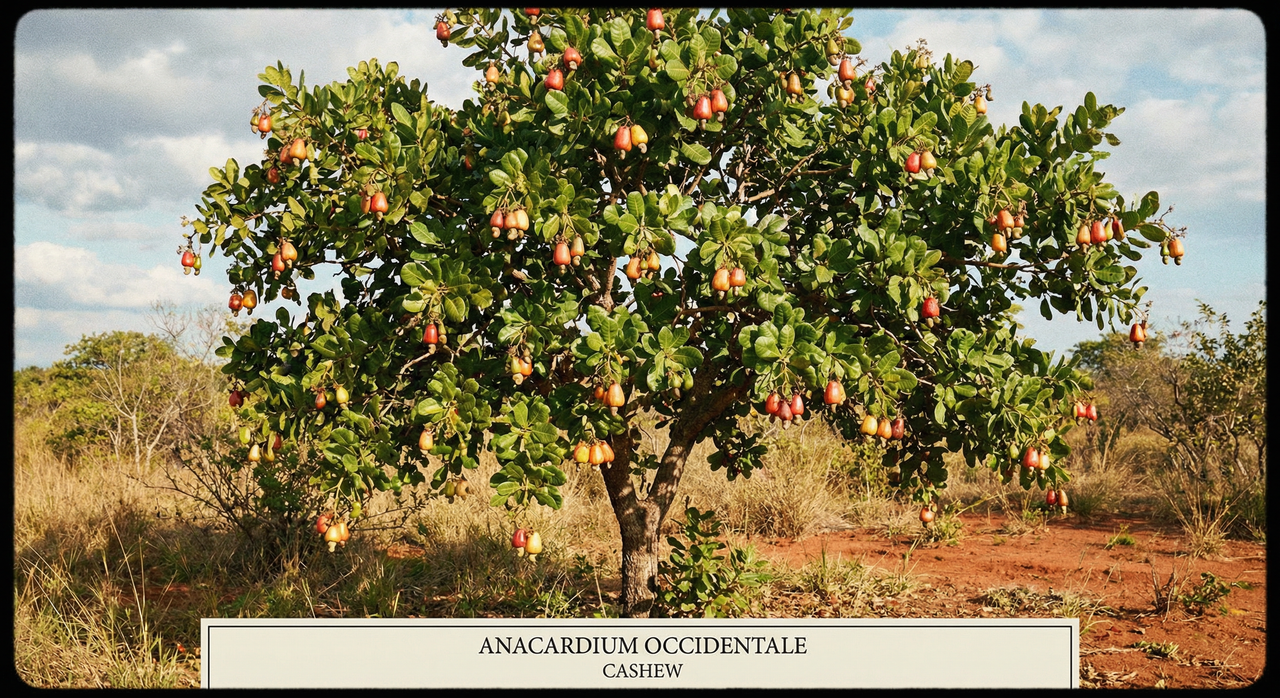
The cashew nut you've eaten your whole life has never actually been a nut. It's a seed, and it grows on the outside of a fruit, dangling beneath a swollen, fleshy pseudofruit called the cashew apple like some botanical afterthought. Flip everything you know about how a fruit works and you're starting to get close. I remember the first time I held a whole cashew "apple" in my hand in southern Florida, this waxy, perfumed thing the color of a ripe mango, and thought: why does nobody talk about this part? It's perishable, yes, and too delicate to ship, but the flavor is extraordinary, somewhere between guava, green mango, and something faintly astringent that grabs the back of your throat.
Here's the part that stops most people cold when I mention it: the shell surrounding that familiar kidney-shaped seed contains urushiol, the exact same compound responsible for poison ivy rash.[1] Every "raw" cashew sold in stores has already been heat-processed to neutralize it; a truly raw cashew, shell-on, can blister skin on contact. This tree is dramatic, generous, and genuinely dangerous all at once, which is exactly why I find it one of the most fascinating plants I've ever grown.
Cashew Origin, History, and Cultural Significance
Botanical Background and Native Range
Anacardium occidentale, the cashew tree, is native to northeastern Brazil, where it evolved across the coastal lowlands, Cerrado, and Caatinga biomes spanning from Maranhão and Piauí south toward Rio de Janeiro.[2][3][4] It's a polycarpic evergreen, meaning it fruits repeatedly over its lifetime rather than dying after a single reproductive effort.[5][6] Most productive trees are grown below 500 meters elevation, though the species tolerates sites up to 1,200 meters.[4] Lifespan varies considerably: under good tropical conditions with well-managed drainage, I've seen references to trees reaching 40 to 50 productive years, but poor soils or neglect can cut that to under 15.[7][8] In my experience, 20 to 30 productive years is a reasonable expectation when pests and drainage are managed well. The scientific name of the cashew nut tree, Anacardium occidentale, situates it in the Anacardiaceae family alongside mangoes and poison ivy, a family affiliation that turns out to be very relevant once you start handling the raw shell.
Visual Characteristics of the Cashew Tree
Cashew is a small to medium-sized evergreen typically reaching 6 to 12 meters, with a low-branching habit and a wide, umbrella-like canopy that can spread 6 to 9 meters.[9][10][7] I've seen mature specimens in botanical collections cast genuinely useful shade over a wide understory footprint, which is worth keeping in mind when positioning one in a food forest design. The leaves are simple, alternate, obovate to elliptical, 5 to 22 centimeters long, glossy, leathery, and often finely pubescent.[11][12] When I grew cashew from seed in a protected subtropical setting, those first true leaves looked deceptively like young mango foliage, which taught me quickly to label seedlings carefully in a mixed nursery. Flowers emerge in terminal panicles 10 to 25 centimeters long, small and greenish-white to pale pink, mildly scented.[13][14]
The fruit structure is what stops most people cold the first time they see it. The cashew apple, a swollen yellow-to-red pseudocarp 5 to 11 centimeters long, is not the botanical fruit at all; it's an enlarged peduncle that develops after fertilization, with the true kidney-shaped nut, 2 to 3 centimeters long, hanging beneath it like an afterthought.[15][16] The apple's sweet-tart fragrance always reminds me of overripe pineapple, another tropical fruit whose juice stains everything it touches. Below ground, a prominent taproot with extensive laterals[10][17] gives established trees their drought resilience, something that makes more sense once you understand where this plant comes from ecologically.
Traditional and Cultural Uses
The Tupi-Guarani peoples of northeastern Brazil domesticated the cashew tree long before any European arrived to write about it. They used every part: the apple as food and fermented beverage, the leaves and bark medicinally for diarrhea, dysentery, stomach complaints, and skin conditions, and the resin and wood in crafts.[18][19][20] The English word "cashew" traces directly to the Tupi word acaju.[18] In Tupi-Guarani creation mythology, the cashew tree symbolized abundance, fertility, and communal sustenance; it wasn't a crop so much as a living cultural anchor.[21]
Portuguese explorers documented the cashew as early as 1500 to 1501, and the first comprehensive botanical description appeared in Historia Naturalis Brasiliae in 1648.[22][23] By the 1550s, Portuguese traders were carrying it along their trade routes into Angola, Congo, Mozambique, and Ghana. Around 1558 to 1560 it reached Goa, India, and by the 19th century it had spread through Southeast Asia into Vietnam, Thailand, and the Philippines.[24][25][26] At each stop, the plant was absorbed into local practice. In West Africa it entered ceremonial life, appearing in initiation rites and marriage customs, while leaf decoctions found use for diabetes and inflammation.[27][28] In India, cashews became woven into Hindu festivals like Diwali as symbols of prosperity, and Ayurvedic practitioners adopted the bark and leaves for skin ailments and digestive complaints.[29][30] Caribbean groups including the Taíno meanwhile used cashew resin to waterproof canoes and treat toothaches.[31]
Today, Africa accounts for roughly 40% of world cashew output and Asia around 55%, with India, Vietnam, Nigeria, and Thailand as the dominant producers.[32] That economic success carries serious costs: deforestation, child labor, inadequate worker protections, and real processing hazards from urushiol-induced contact dermatitis in shelling facilities.[32][33] There are also unresolved questions about industries profiting from millennia of indigenous knowledge without equitable benefit-sharing with the communities that developed it.[34] When I source cashew for edible landscape clients now, I look specifically for cooperatives that document fair labor and benefit-sharing, because the colonial dissemination story did not end in the 16th century.
Fun Facts About Cashew
Part of what makes Anacardium occidentale so well adapted to its native Cerrado and Caatinga habitats is a suite of ecological traits most growers never think about. The tree forms symbiotic relationships with arbuscular mycorrhizal fungi that enhance phosphorus acquisition in the nutrient-poor sandy soils it calls home,[35] which helps explain why it can thrive where other fruit trees simply give up. Its thick bark insulates against the periodic fires that sweep the Cerrado, and when fire does damage the canopy, cashew regenerates through root suckers and epicormic shoots.[36] Once established, it handles annual rainfall anywhere from 1,000 to 4,000 millimeters and tolerates the poor, well-drained sandy soils that would stress most tropical fruit crops.[7][37] For permaculture designers, that combination of fire resilience, mycorrhizal dependency, and drought tolerance once rooted positions cashew as a genuinely useful pioneer species, a tree that improves difficult ground over time rather than demanding ideal conditions from the start.
Cashew Varieties and Cultivars
Notable Cashew Cultivars
The breeding work done on cashew over the past century is genuinely impressive. More than 30 recognized cultivars exist globally,[38][39] developed in Brazil, India, and Australia with an eye toward yield, disease resistance, kernel quality, and dwarfing for high-density systems. From a practical standpoint, the two breeding programs that matter most to a home grower or small-scale permaculturist are the Indian series and the Brazilian cultivars, and they have very different personalities.
India's contributions include some high-performers worth knowing by name: BPP-1 and BPP-2 can hit 10-12 kg of nuts per tree under good conditions, the Ullal series carries 45-50% kernel oil, and Kanesh-1 is specifically selected for anthracnose resistance.[40][41] That last trait is the one I watch for. After growing several Indian and Brazilian cultivars side by side in central Florida, I've noticed that anthracnose-resistant lines stay noticeably cleaner through our punishing humid summers while standard cultivars start looking ratty by August.
On the Brazilian side, dwarf types like ACP-1 and 'Marantao' yield a more modest 5-8 kg per tree but stay compact enough to actually fit into a food forest without dominating it.[42][43] Compare that to Anacardium excelsum, the wild cashew relative, which can reach 30-40 meters,[44] and you understand immediately why a dwarf cashew apple tree fits into a backyard design while its wild cousin does not. The 'Fortaleza' cultivar from Brazil is worth a mention too for anyone in semi-arid subtropical pockets; it was specifically bred for drier conditions and handles dry spells better than most.
Regardless of cultivar, expect to wait 3-5 years from planting to first harvest, with grafted trees coming in at the shorter end of that range.[45] All of this, of course, only applies if you're growing in USDA zones 10-11. Trees can tolerate a brief dip to 28°F but are genuinely frost-sensitive, and cultivation in Florida stays largely experimental due to anthracnose pressure, hurricane exposure, and humidity.[46][47] Hawaii and a few south-Florida homesteads are the realistic U.S. footholds. I protect young cashews with frost cloth during the rare central-Florida cold snap, and I've moved container specimens under cover more than once. It's manageable, but you need to go in clear-eyed.
Where to Buy Cashew Trees and Seeds
Given these zone 10-11 requirements, sourcing is its own small adventure. Grafted saplings are almost always the better choice, both because they fruit earlier and because named cultivars give you predictable traits. A seed-grown cashew is genetically variable; I always label my grafted trees carefully because seedling mix-ups have cost clients years of waiting for the wrong outcome. Top Tropicals and Eureka Farms in Florida carry grafted plants, as do Logee's Plants, Plant Delights Nursery, and the usual online marketplaces. Young plants typically run $30-100; seeds go for $5-20.
One sourcing detail that catches people off guard: the cashew apple is virtually impossible to find fresh outside the tropics because it spoils within 24-48 hours of harvest.[48] If you want the full maranon cashew experience, where you're harvesting both the nut and the sweet, tangy pseudofruit from the same tree, you'll need to grow your own. Raw seeds imported for planting also require heat treatment to neutralize urushiol before they can be shipped legally.[48] For most readers outside Hawaii or southern Florida, the honest answer is that this tree is a beautiful, productive novelty for the home garden rather than a path to commercial yields. And that's still worth doing.
How to Propagate and Plant Cashew Trees
Everything about growing cashew from seed comes back to one biological fact: these seeds evolved to hit the ground in a wet tropical forest and germinate immediately. There's no dormancy strategy here, no hard-coated survival plan for waiting out a dry season in the soil. Cashew seeds are recalcitrant, meaning moisture content dropping below 20-30% kills viability fast, and they can't be conventionally stored or banked.[49][50] Sow them within one to two months of harvest or accept serious germination losses. In my nursery experience, the reported 70-95% germination rates are real, but only when seeds go into warm, moist substrate within weeks of harvest at 25-35°C.[51][52] Wait two months and let them dry out, and you're lucky to see half that.
Cashew Seed Biology, Storage, and Germination
The cashew seed itself is a kidney-shaped structure, 2-4 cm long, with a hard double-layered shell that contains phenolic compounds including anacardic acid and urushiol in concentrations high enough to cause contact dermatitis.[53][54] I wear nitrile gloves every single time I nick a seed coat for scarification. The smell when you do it, that sharp, acrid phenolic note, is an unmistakable reminder that this isn't a typical nut you handle carelessly. Gloves are not optional.
The good news is that there's no real dormancy to break. The hard testa is the main physical barrier, and once you scarify lightly or plant the seed on its side in well-drained sandy loam about 2-3 inches deep, germination typically happens in 3-10 days under ideal conditions, sometimes stretching to 2-4 weeks.[52][55] The seedlings come up looking like little umbrellas with fat, oily cotyledons, and if you're direct-seeding multiple species in a nursery, label everything immediately because young cashew seedlings can look surprisingly like a few other tropical trees at that stage. The seed evolved for bird and rodent dispersal attracted to the cashew apple, not for sitting in a seed bank, and the biology shows.[49][56]
Clonal Propagation: Grafting, Cuttings, Air Layering, and Tissue Culture
Seed propagation gives you genetic diversity and a cheaper start, but it also gives you trees that take 3-5 years to first fruit with no guarantee of quality.[55] Grafting onto a seedling rootstock solves both problems. Commercial orchards use this combination routinely, sowing seeds for rootstocks then grafting elite scion material to get uniform, true-to-type trees that can begin fruiting in 2-3 years.[55][57]
Grafting success sits at 70-90% when conditions are right: warm temperatures between 75-95°F, humidity around 70-90%, and scions taken during active early flush growth.[55][58] After several seasons I consistently hit the upper end of that range when I time grafts to coincide with new leaf flush in humid weather. Rush it during a dry spell and the numbers drop noticeably. Stem cuttings are possible but unreliable at 20-70% even with IBA rooting hormone, and air layering performs better at 40-80% with IBA applied during the rainy season. Tissue culture on MS medium achieves 70-85% but is firmly in the realm of laboratory propagation rather than small-farm practice.[59] For most permaculture-scale growers, the realistic choice is between direct-seeded seedlings and sourcing grafted trees.
Soil, Site Selection, and Planting Requirements
Cashew evolved on sandy coastal Restinga and Caatinga soils in Brazil, and that origin tells you everything about site selection. It develops a taproot that can reach 2-3 meters deep or more, requiring loose, aerated, non-compacted soil with bulk density below 1.4 g/cm³.[60][61] This tree will forgive poor fertility. It will not forgive waterlogging. Heavy clay or any spot where water pools after rain creates the exact conditions for Phytophthora root rot, and the disease moves fast on young trees.[62] I lost several trees the first year I planted in a low corner of a swale before I understood this. Now I do a simple drainage test before siting any cashew: dig a hole about 30 cm deep, fill it with water, and watch. If it doesn't drain within a few hours, I'm planting somewhere else.
Soil pH between 5.5 and 6.5 is the sweet spot. Below 5.0, aluminum and manganese toxicity become real problems; above 7.0 you start seeing iron lockout and chlorosis.[63][64] Get a soil test before planting and amend with lime or sulfur accordingly. Incorporating well-decomposed organic matter improves both drainage in compacted soils and moisture retention in sand, and target about 1-3% organic content.[65] In the nursery, seedlings do well in a mix of roughly 50% coarse sand, 30% peat, and 20% perlite with temporary shade during intense heat.[58] Once established in the ground, cashew wants full sun, at least 6-8 hours daily.[66] Shade is for seedlings only.
Spacing, Staking, and Initial Establishment
A mature cashew tree reaches 20-40 feet tall with a canopy spread to match, and it gets there at a moderate pace of roughly 0.5-1 meter per year in early growth.[67] Standard orchard spacing runs 7-10 meters between trees, commonly 8x8 or 10x10 meter square grids, which works out to about 25-33 feet.[68] That spacing isn't conservative; it's what the canopy genuinely needs for adequate light penetration and air flow, both of which directly reduce fungal disease pressure, particularly anthracnose.
High-density planting at 6x6 meters can boost early yields but commits you to intensive formative pruning and eventual thinning as canopies close.[69] Either way, stake every tree for the first two to three seasons. The taproot takes time to anchor properly, and young cashew trees are more susceptible to wind lean than they look.[70] Formative pruning in years one through three builds the structural scaffold you'll rely on for decades, so it's worth doing carefully rather than leaving trees to branch however they want.
The payoff timeline depends heavily on where you started. Grafted trees I've grown have reliably reached first harvest within 2-3 years of planting, while seed-grown siblings from the same season were still largely vegetative in year three and didn't produce consistent crops until years five through seven.[71][72] Peak production typically arrives in years five through ten. That gap between seed and graft is two to four extra seasons of waiting, which in my experience is reason enough to source a quality grafted plant if you can find one in your region.
Cashew Tree Care Guide
Cashew care is essentially an exercise in reading the seasons. This tree evolved in Brazil's caatinga and cerrado savannas where distinct wet and dry cycles are baked into its genetics, and the growers who work with that rhythm rather than against it get the best results. The ones who don't, including me in my first few seasons, tend to drown their trees in good intentions.
Water Requirements and Drought Tolerance
Cashew's native habitat handles 500–1500 mm of annual rainfall on well-drained sandy soils, and cultivated trees perform best somewhere in the 1000–2000 mm range.[73][74] What that figure hides is how stage-dependent irrigation actually is. Seedlings want frequent, light watering of roughly 20–30 mm per week. Young trees in their first two to three years need water every seven to ten days during dry periods, around 20–40 liters per tree.[75][76] Mature trees shift to deep, infrequent events targeting moisture at two to three feet depth, with an annual water use of 800–1200 mm.[75]
Once established, cashew earns its reputation. Mature trees can tolerate two to three weeks without irrigation at optimal soil moisture of 50–70% field capacity, and under real stress can push through four to six weeks without significant damage.[77][78] I test the top two inches of soil before I ever turn on the hose. After losing two young trees to root rot in my first Florida season, I now wait until those top inches are genuinely dry. The symptoms of overwatering, yellowing leaves, wilting, and dark mushy roots, look almost identical to underwatering at first glance, which is exactly how the mistake compounds itself.[79][80] Underwatered trees give you wilting and scorched leaf margins with reduced nut production as the plant closes stomata to conserve what moisture remains.[81] Keep soil salinity below 2 dS/m and pH between 6.0 and 6.5 for best uptake.[65]
Feeding and Nutrient Management
Cashew is a moderate feeder, which is genuinely good news for backyard growers who have killed things with fertilizer before.[82][83] For mature trees, target 100–200 grams of nitrogen, 50–100 grams of phosphorus, and 100–200 grams of potassium annually, split across two to three applications during the growing season.[82][84] A balanced 10-10-10 split across three to four applications works well for vegetative growth phases.[85]
Nutrient priorities shift meaningfully across life stages: juvenile trees prioritize nitrogen over phosphorus over potassium, while at flowering the order flips to phosphorus over potassium over nitrogen, and during fruiting potassium leads.[86] Learning to read deficiency symptoms is worth the effort. Uniform yellowing of older leaves points to nitrogen; purplish young leaves suggest phosphorus; marginal necrosis on older leaves signals potassium; and interveinal chlorosis on mature lower foliage is magnesium.[87] Among micronutrients, zinc deficiency below 20 ppm causes the distinctive rosetted "little leaf" syndrome with twig dieback; boron shortfall shows as brittle leaves, gummosis, and poor nut set; iron deficiency manifests as chlorosis in young leaves.[88][89] I've walked my rows looking for rosetted terminals specifically, because catching zinc deficiency early prevents yield drops that show up months later.
Resist the urge to push nitrogen. Excess nitrogen produces dark, succulent, fast-growing foliage that looks impressive but tips into leaf burn and marginal necrosis, and it shifts the tree's energy firmly toward vegetative growth at the expense of flowering.[90] On poor sandy soils, cashew's native mycorrhizal associations can supplement phosphorus uptake naturally, a good reason not to sterilize the soil zone around the roots.[91]
Frost Protection for Tropical Cashews
Cashew hardiness zones are USDA 10–11, and that boundary is firm.[92][93] The minimum survival threshold sits around 28°F (-2°C), and even brief dips into that range can cause serious damage, especially to young trees.[94][95] Frost damage shows first as rapid wilting and leaf curl, progressing to browning or blackening, bark cracking, and branch dieback.[96] Young leaves, buds, and tender stems take the hit first, and bud damage can abort an entire season's new growth.[97]
Recovery is possible from a light event that stays superficial, but repeated exposure or a hard freeze that damages vascular tissue causes permanent decline.[96] I think of cashew the same way I think about satsuma mandarins for frost sensitivity: if your neighbors are draping their citrus in frost cloth, your cashew needs the same treatment. Microclimate selection, frost blankets, windbreaks, mulching, and overhead irrigation during light events are your practical toolkit.[98][99] Provenances from higher altitudes show slightly better cold tolerance, and older established trees handle short cold snaps better than juveniles, but neither fact changes the zone 10–11 reality for reliable production.[100]
Heat Tolerance and High-Temperature Management
Cashew's sweet spot is 20–30°C (68–86°F), and it can handle sustained temperatures up to 38–40°C (100–104°F) when conditions are otherwise well managed.[101][102] The flowering window is its vulnerable point: temperatures above 38°C during bloom trigger blossom abortion rates of 50–80%, effectively gutting the crop for that season.[103] I learned that one by watching a week of 95°F days strip flowers off my trees before I had any nuts to show for it. Since then, 40% shade cloth during peak flowering and a thick mulch layer have kept subsequent flushes far more productive.
Heat stress symptoms in cashew include leaf scorching along margins, wilting, canopy thinning from leaf drop, and premature nut drop.[104] Beneath the surface, the tree is dealing with reduced photosynthesis and elevated oxidative stress.[105] Shade cloth in the 30–50% range can reduce canopy temperature by 5–10°C during peak heat,[106] and 4–6 inches of organic mulch at the base drops soil temperature by up to 5°C while holding moisture.[107] In consistently extreme heat, varieties like 'African Giant', 'Jambu', or 'Orelha' offer better performance above 40°C.[106]
Pruning, Maintenance, and Seasonal Rhythm
Start structural pruning one to two years after planting, using an open-center or vase form to build a canopy you can actually walk under and work within.[83] A word from personal experience: always wear gloves and long sleeves. The sap contains urushiol, and one careless branch dragged across a bare forearm teaches that lesson in a way no article ever will. Keep 3–4 inches of organic mulch around the base year-round for moisture retention and weed suppression,[108] and thin developing fruit clusters to four to six nuts per panicle to prevent biennial bearing and improve individual nut size.[58] Long-term productivity ties back to the combined effect of consistent pruning, adequate spacing at seven to eight meters, balanced fertility, and pest management working together.[65]
The seasonal calendar ties all of these practices together. Flowering is triggered by dry-season water stress, typically during the dry-to-wet transition, which is December through March across much of India and West Africa, and August through November in Brazil's native range.[109] Nut development follows two to three months behind flowering, coinciding with the wet season, and dormancy returns during peak dry periods when the tree may partially drop its leaves.[109] Once you internalize that cycle, the timing for fertilization, irrigation cutbacks, and frost vigilance all fall into place naturally.
Cashew Harvesting: Timing, Technique, and Post-Harvest Handling
Patience is the defining feature of cashew growing. The tree won't reach full fruiting maturity for 5-7 years from seed, and peak production doesn't arrive until years 8-12. That's a long wait, which is exactly why I always steer clients toward grafted trees when I can; you're looking at first fruit in 2-3 years instead, and that conversation about patience gets a lot shorter.[98][3] When those years of patience finally resolve into a crop, though, you get a genuinely exciting 60-90 day window from dry-season flowering to mature nuts, and reading that window correctly is everything.[110][111]
When to Harvest Cashews: Ripeness Cues and Regional Seasons
The cashew apple is your best field indicator. As the nut approaches maturity, the pseudofruit shifts from green to yellow-orange or reddish-brown depending on variety, and the nut's testa darkens to a deep brown.[112][113] I've found that first-year color changes can be subtle, especially when you have multiple varieties growing together, so I label every tree in my Central Florida planting and track each one separately. The calendar timing varies considerably by region: India and Vietnam harvest February through April or May, Brazil runs August through December, and here in Florida and tropical U.S. regions, the window generally falls May to August.[114][70] Once you know your region's rhythm, you can plan accordingly, but watch the tree, not just the calendar.
How to Harvest Cashews Safely from Tall Trees
Mature cashew trees run 15-40 feet tall, so most harvesting requires pole pickers extending 10-20 feet to reach the fruit clusters without climbing.[76][115] The more pressing issue is what you're handling when the fruit comes down. The shell contains urushiol, the same caustic compound in poison ivy, and it can cause a serious contact dermatitis that lingers for weeks.[116] I've worked with enough Anacardiaceae to say without hesitation: gloves and long sleeves are not overkill here. Once harvested, the nut must be separated from the apple within 24-48 hours. Delay that step and you're racing spoilage on both ends of the yield.[115][117] Finished kernels need cold storage at 0-10°C with relative humidity below 7% for any meaningful shelf life.[118] The full detoxification and roasting process I'll leave to the preparation section, but understand that this step is not optional.
Cashew Yield, Flavor Transformation, and Why Immediate Processing Matters
Every cashew harvest delivers two distinct products: the true nut and the pseudofruit apple. The apple's flavor is worth experiencing fresh; sweet-tart, a little astringent, with a juicy pineapple-like character and a fragrant floral-citrus aroma.[5][119] In commercial production, most of it gets discarded. In a home permaculture setting, that feels like a genuine waste given the juice value alone. Think of it like harvesting mulberries: the window before it ferments or drops is narrow, so you have to be ready to use it immediately.
The nut's story is really about what roasting does to it. Raw kernels are mild and faintly sweet, but they're never eaten raw commercially because of the urushiol risk in the shell during processing.[120][121] Roasting builds the buttery, toasted character most people associate with cashews, driven by furaneol compounds for sweetness and pyrazines for that deep roasted note.[120][122] Harvesting at true ripeness, indicated by those color changes we covered above, gives you a creamier, less astringent kernel to start with, and that foundation matters.[123] A well-grown tree at peak production can yield up to 50 kg of nuts per year, which makes the patience and the labor of careful harvest genuinely worthwhile.[98]
Cashew Preparation and Uses
Culinary Preparation of Cashew Nuts and Apples
Most people know the cashew kernel; almost nobody outside the tropics has tasted the cashew apple. That glossy, pear-shaped pseudofruit is technically the more nutritious of the two, packing 208.8 mg of vitamin C per 100g, [124] but it's astringent, bruises almost immediately after picking, and doesn't survive shipping. In practice, the apple is best pressed into juice. Its flavor is genuinely surprising: sweet-tart and tropical, somewhere between apple, mango, and pineapple all at once. [5][125] I compare the experience of working with fresh cashew apple to passionfruit: use it immediately or lose it.
The kernel is an entirely different matter, and this is where safety cannot be glossed over. Raw cashews in the shell contain urushiol, the same compound found in poison ivy and poison oak, [5][126] and I learned this firsthand the hard way while pruning young trees. The sap left an itchy, blistering rash that took weeks to clear. Processing neutralizes that risk through roasting at 200-250°C or steam treatment at 200-212°F for 15-30 minutes, [127][115] breaking down the toxic phenolic compounds in the shell before the kernel ever reaches your hands. Those "raw" cashews at the grocery store have already been heat-treated. Home growers in zones 10-11 who want to process their own harvest should treat this step with the same respect they'd give any urushiol-bearing Anacardiaceae relative. Fermentation is another viable method, though far less common commercially. [128]
Once properly processed, the kernel delivers 553 kcal, 18g of protein, and nearly 44g of fat per 100g, [129] with a buttery, creamy flavor raw that deepens into something richer and nuttier after roasting. [125] That neutral creaminess is exactly why cashew works so well in plant-based cooking: blended soaked kernels become cashew cream or cashew butter, strained further into cashew milk, and with nutritional yeast and acid, a convincing cashew cheese. Allergy risk affects roughly 1-2% of the population, with cross-reactivity possible across tree nuts. [130] If you have a known pistachio or mango allergy, approach cashew with real caution; the cross-reactivity is real and I've seen it come up in community gardening groups more than once.
Traditional Medicinal Preparations
Across West Africa, South America, and India, practically every part of the cashew tree has found medicinal application: bark decoctions for diarrhea and toothaches, leaves used in wound care, and the apple infused as a digestive aid and vitamin C source. [131][132][133] Traditional dosage guidelines from ethnobotanical research suggest leaf or bark decoctions at 50-100 ml two to three times daily, infusions at one to two cups, and tinctures at 5-10 drops. [133] Poultices from crushed leaves have been applied topically for warts and skin conditions; tinctures and infusions appear in traditional treatment of gastric ulcers and rheumatism. [133] I treat this body of knowledge with genuine respect, but I also approach potent ethnobotanicals the way I do any unfamiliar plant medicine: with reliable sourcing and no casual self-experimentation. Given the urushiol chemistry running through this tree, I'd sooner buy a prepared extract from a trusted source than attempt a home infusion from bark or shell I've harvested myself.
Non-Food and Industrial Applications
The same phenolic compounds that make raw cashew shells hazardous turn out to be industrially valuable. Cashew nut shell liquid (CNSL) is extracted commercially and used in paints, varnishes, friction materials, biofuels, adhesives, and pharmaceuticals. [127] Indigenous communities in India and Brazil recognized this long before modern chemistry did, using shell liquid traditionally in dyes, varnishes, and craft applications. [134] What the global snack industry discards as waste, a well-designed processing operation treats as a co-product. For the home grower, that's mostly context rather than actionable advice, but it does underscore something I find genuinely compelling about this tree: even the part that requires the most caution has something to offer.
Cashew Health Benefits and Medicinal Uses
Long before cashew became a snack bowl staple, communities across Brazil, West Africa, and South Asia were using virtually every part of the tree as medicine. Leaves, bark, roots, the apple, and even the caustic shell liquid all found their way into traditional treatments for gastrointestinal disorders, diabetes, skin infections, rheumatism, malaria, and more.[135][136][137] As a landscape designer, I've always found it striking how different cultures, working independently on three continents, converged on the same plant for so many overlapping uses. That kind of cross-cultural consensus is worth paying attention to.
Traditional and Modern Medicinal Research
Modern pharmacology has started to validate what those traditions suspected. Cashew extracts show meaningful anti-inflammatory activity through inhibition of TNF-α, IL-6, COX-2, and NF-κB pathway signaling, alongside antioxidant free-radical scavenging, antimicrobial effects against Staphylococcus aureus and Candida albicans, analgesic activity in animal models, and early anticancer potential via apoptosis induction and MMP inhibition in cell lines.[138][139][140] The antidiabetic angle is where human data actually exists: small randomized controlled trials found that fresh cashew apple juice reduced fasting blood glucose and HbA1c in type 2 diabetes patients.[141][142] I'm cautiously optimistic about those findings, but cautiously is the operative word. The bulk of the evidence remains preclinical, drawn from in vitro and animal studies, and researchers themselves call for larger human trials before therapeutic claims can stand.[139][143] Related wild species like Cajuí (Anacardium pubescens) show similar preclinical promise in anti-inflammatory and antimicrobial assays,[135] which suggests the genus as a whole merits serious research attention, even as our focus stays on A. occidentale.
Key Phytochemicals in Cashew
The bioactivity isn't uniform across the plant because the chemistry shifts dramatically depending on which part you're looking at. Leaves concentrate flavonoids like quercetin, kaempferol, and rutin alongside tannins and phenolic acids. The stem bark and nut shell liquid (CNSL) are dominated by anacardic acids (60 to 90% of CNSL), cardanols, and cardols. The apple delivers a dense hit of vitamin C, carotenoids, and phenolic acids. Flowers contain monoterpenes and sesquiterpenes, while roots hold saponins and β-sitosterol.[144][145] The anacardic acids and cardanol fraction is particularly potent: antioxidant activity comparable to synthetic BHT, COX-2 and NF-κB inhibition for anti-inflammatory effects, and membrane-disrupting antimicrobial action with MIC values of 50 to 200 μg/mL against key pathogens.[146][147] Leaf flavonoids also upregulate antioxidant enzymes SOD and CAT while the anacardic acids double as the plant's own herbivore deterrent.[148][149] One thing growers should know: metabolite concentrations aren't static. Phenolic levels often spike during dry seasons or when the tree is under environmental stress,[125] which aligns with what I've observed in stressed landscape specimens producing noticeably more pungent leaves than their well-irrigated counterparts.
Nutritional Profile of Cashew Nuts and Apples
Set aside the pharmacology for a moment and the raw numbers on cashew kernels are already impressive. Per 100 grams, you're looking at 553 kcal, 18.2 g protein, 43.9 g fat (with a favorable unsaturated profile), and 9.5 g fiber.[124] The mineral density is where cashews really pull ahead of most tree nuts I work with in food forest designs: 292 mg magnesium (69% DV), 593 mg phosphorus (85% DV), 5.8 mg zinc (53% DV), 6.7 mg iron (37% DV), and a standout 2.2 mg copper (244% DV).[124] That copper figure is one reason I genuinely value cashews in my own diet for connective tissue support. The kernels also supply tocopherols, phytosterols, and phenolic antioxidants that complement those minerals.[150]
The apple is a separate conversation entirely. Its vitamin C content can reach five times that of oranges,[151] paired with carotenoids and phenolics that give it genuine antioxidant capacity. Most of the world wastes it during commercial nut processing, which strikes me as a real shame for anyone growing cashew at home. A handful of lightly roasted kernels alongside a fresh-cut apple makes one of the most nutrient-dense snacks you can pull straight from the garden, though roasting does modestly reduce heat-sensitive vitamins and some fiber in the kernel.[152]
Safety Considerations and Potential Side Effects
Here's where I have to be direct, because I've learned this firsthand: cashew is not a handle-with-bare-hands plant. Every part of the tree except a properly processed kernel contains urushiol, the same compound responsible for poison ivy reactions. Raw CNSL is 60 to 90% anacardic acid alongside cardol, cardanol, and urushiol; skin contact causes severe contact dermatitis with redness, blistering, and intense itching, while ingestion of raw material causes serious gastrointestinal toxicity.[153][154] I harvest with heavy gloves and never burn shells; the smoke alone can trigger respiratory irritation that will ruin your day. Commercial roasting, steam treatment, or solvent extraction removes essentially all urushiol from the kernel,[155] but a separate issue remains: cashew proteins Ana o 1, 2, and 3 are genuine tree-nut allergens capable of triggering reactions from mild itching to anaphylaxis in sensitized individuals.[156]
Two drug interactions deserve a plain-language callout. Cashew kernels contain roughly 34 mcg vitamin K per 100 g, and if you're on warfarin, keep your intake consistent rather than bingeing after a harvest; even modest dietary swings can shift anticoagulation in clients I've counseled.[157] The mild hypoglycemic activity documented in preclinical and small clinical work also means people on antidiabetic medications should flag regular cashew consumption with their provider.[158] Culinary amounts are generally considered safe in pregnancy, but medicinal extracts are a different matter, and the same caution applies to related species like Cajuí, where possible uterine stimulant effects have been flagged.[159] For most people eating properly processed kernels in normal amounts, cashew is a nutritious and safe food. The risks are real but manageable once you understand them.
Cashew Pests and Diseases
Cultivated cashew sits in an awkward middle ground: moderately disease resistant overall, but genuinely low in pest resistance and highly vulnerable to a handful of pathogens that can devastate yields when conditions line up against you. I've learned from working with tropical perennials that "moderate resistance" often sounds better on paper than it performs in a wet season, and cashew is a good example of that gap. Getting ahead of problems here means understanding which threats are most serious, what triggers them, and why variety selection and site design do most of the heavy lifting before you ever reach for a spray.
Common Diseases of Cashew Trees
Anthracnose, caused primarily by Colletotrichum gloeosporioides, is the one I'd tell any new cashew grower to take seriously first. In susceptible varieties under humid conditions, it can drive yield losses up to 50%.[160][161] I routinely prioritize cultivars like BRS 226 or the Vietnamese VR-1 and VR-2 lines in my designs specifically because of this, pairing them with wide spacing and good airflow to reduce the humidity sitting around foliage and panicles. The anthracnose-resistant Indian releases, Kanaka and Dhanya, perform similarly well where they're available.[162][163]
Below the soil line, Phytophthora meadii is the threat that keeps me firmly in the "raised bed or mounded planting site" camp on anything heavier than sandy loam. Phytophthora root rot hits hard in wet, poorly drained conditions, and canker or gummosis caused by Phytophthora or Lasiodiplodia theobromae creates additional entry points for secondary infection.[164][160] Resistant rootstocks like H-217, Ullal 1, and BRS 226 are a practical answer here, grafting productive scions onto roots with better tolerance for these pathogens.[42] Powdery mildew (Oidium anacardii) rounds out the top tier of concerns, targeting inflorescences and young leaves and causing flower drop at exactly the wrong moment.[160][165] Cashew rust (Hemileia vastatrix) adds defoliation pressure in the most humid growing regions.[166]
The common thread running through all of these is humidity above 80% and poor drainage.[167] Resistance also varies enough by cultivar, soil type, and local climate that no single variety is bulletproof everywhere; I always evaluate site drainage, humidity patterns, and local pest history before recommending planting material, because the research and my own plantings confirm that resistance is highly context-dependent.[160] Integrated management, meaning pruning for airflow, post-harvest sanitation, balanced fertilization, and resistant varieties as a first line, handles most situations without heavy fungicide reliance.[168][169]
Major Insect Pests of Cashew
Pest resistance in cultivated cashew is genuinely low, and that's not a qualification, it's the baseline.[170] The tea mosquito bug (Helopeltis antonii) is the headline problem, feeding on new shoots, panicles, and young nuts during flowering and fruiting and capable of causing 30 to 40% yield loss.[171] The necrotic lesions it leaves on new growth are deceptively easy to overlook until panicles start dropping, so I check tender flushes closely whenever I'm walking orchards during flowering. Cashew stem borer (Plocaederus ferrugineus) is slower and more insidious, with larvae tunneling through wood and often opening doors for the same fungal pathogens discussed above.[172]
Cashew does produce urushiol, anacardic acids, and cardol in its nut shell as a chemical deterrent against some insects, similar to the phenolic armor you see across other Anacardiaceae like mango, but these compounds reduce rather than eliminate pest pressure.[173] Some cultivars, notably VR1 and VR T1, show moderate resistance to tea mosquito bug through polygenic mechanisms, and early-maturing varieties shorten the exposure window during flowering.[171] Integrated pest management combining biological controls like Trichogramma wasps, neem products, and pheromone traps with cultural practices remains essential, particularly since pest severity shifts significantly by region and season.[174][58]
Disease and Pest Resistance in Wild Cashew
Wild cashew (Anacardium excelsum) offers a modest contrast worth understanding, especially for anyone incorporating related Anacardium species into a forest garden or thinking about where cultivated resistance traits originally came from. Its thick bark and phenolic-rich latex provide somewhat better natural anthracnose resistance than cultivated types, and its broader genetic diversity confers some natural tolerance to viral diseases.[175][176] That said, it shares the same Phytophthora vulnerability on poorly drained or acidic soils, and remains susceptible to rusts, powdery mildew, stem canker, and various leaf spots under humid conditions with poor air circulation.[33][177] Common insect pressure includes termites, leaf-cutting ants, shoot borer, aphids, and scale insects, with seedlings particularly vulnerable and insect wounds routinely serving as disease entry points.[178]
No commercial disease-resistant cultivars exist for wild cashew; it remains undomesticated and understudied, with much of what we know inferred from related Anacardiaceae species.[44] Observing where these wild phenolic defenses are strongest has informed my own choices when selecting planting material for resilient polycultures, but it reinforces rather than replaces the case for the proven resistant lines in cultivated cashew breeding programs.
Cashew in Permaculture Design
Cashew is one of those trees that rewards the designer who understands where it came from. It evolved in Brazil's Caatinga and Cerrado, landscapes shaped by fire, seasonal drought, and nutrient-poor soils, and that origin story tells you almost everything you need to know about how to work with it in a food forest system.
Climate Requirements and Suitable Zones
Cashew is happiest in Köppen Aw and Am climates, where temperatures run 20–30 °C (68–86 °F), annual rainfall sits between 1,000–2,000 mm with a clear dry season built in, and humidity hovers at 60–80 %.[179][180] In USDA terms that translates to zones 10–12, with the sweet spot being 10b–11.[181][7]
Frost is the hard boundary. Mature trees can survive a brief dip to around 28 °F (−2 °C), but young trees and extended freezes will kill them outright.[83][11] I learned that the hard way. After losing two young trees to an unexpected north Florida cold snap, I now always plant cashew on the south side of a building or dense windbreak, and I keep frost cloth within reach for any night forecast below 40 °F. The zone map is a starting point, but microclimate is what actually keeps the tree alive. In the continental U.S., cultivation is genuinely marginal, limited to protected sites in southern Florida, coastal southern California, Hawaii, and Puerto Rico, and yields there are typically lower than in the native tropics.[182]
If you encounter Anacardium excelsum, the wild cashew relative, in a botanical garden, don't let it fool you into thinking you're seeing a scaled-up production tree. That species tops out at 30–40 meters and stays firmly in the realm of arboreta and collections, not food forests.[183][44]
Forest Layer, Guilds, and Ecosystem Functions
What I love about cashew from a design perspective is its pioneer character. In the Caatinga and Cerrado it colonizes disturbed sites and degraded land readily, stabilizing soil and jumpstarting succession while it's still producing food.[184][185] I think of it the way I think about beautyberry in Florida restorations: a fast mover that holds the ground while more complex community structure catches up behind it.
Structurally, cashew sits in the canopy or subcanopy layer of a semi-deciduous food forest, typically reaching 6–12 m in true tropical conditions.[184][186] In subtropical Florida it more commonly stays 3–5 m, which actually makes it more manageable in a home-scale design.[11] The spreading canopy casts dappled shade rather than deep shade, which opens up real options underneath. I've interplanted mine with pineapple and sweet potato, and what I've observed is that even during periods of drought stress, the understory keeps producing. That's the deep taproot doing its job; it pushes 3–4 meters down and largely stays out of competition with shallow-rooted companions.[187][188] There are also arbuscular mycorrhizal associations at work that improve phosphorus uptake, potentially benefiting neighboring plants as well.[189]
That said, be honest about the competitive edge during dry spells. Cashew's water demand in drought-prone seasons is real, and it can stress neighbors if you haven't planned for that.[190][191] Label your planting rows and choose companions that can handle seasonal moisture variability. Coffee, turmeric, and pineapple are all reasonable bets; tender herbs that demand consistent moisture are not.
Pollination Ecology and Pollinator Support
Beyond the nuts and the often-overlooked cashew apple, the tree yields cashew nutshell liquid used in industrial resins, material for timber, fodder, and genuine habitat value for restored landscapes.[179] But the ecosystem function I think about most in my designs is pollination, because getting it right is the difference between a mediocre harvest and a genuinely productive tree.
Cashew is insect-pollinated, relying primarily on honeybees and native stingless bees like Melipona and Trigona.[192] The flowers are bisexual, arranged in large panicles, and protogynous, meaning the female phase opens before the male, which nudges the tree toward cross-pollination.[193] Trees are technically self-compatible, but cross-pollination pushes fruit set from 10–20 % up to 40–50 %, and managed hives can boost nut yields by as much as 30 %.[192] I've watched honeybee activity on my trees peak in the morning hours, and I schedule any necessary spray applications strictly to evenings after the bloom period closes for the day. It's a small habit that protects that yield potential significantly.
Optimal pollination happens at 25–30 °C with 60–80 % humidity; above 35 °C, pollinator activity drops and pollen viability suffers.[194][100] In Florida and Hawaii plantings, where native stingless bee populations are limited, managed honeybee hives are often necessary rather than optional.[195] The permaculture response to that dependency is to design for it directly: plant legumes, coriander, or mustard in the understory as companion forage, provide bee nesting habitat, and keep the system diverse rather than monocultural.[196][197] Coconut palm makes a reasonable coastal guild companion, sharing similar zone preferences while contributing its own canopy structure without competing heavily for pollinators.[198] Cashew isn't a low-effort backyard tree for anyone outside the true tropics, but with the right microclimate, a thoughtful guild, and active pollinator support, it's a high-value multi-yield tree that earns its space in a serious food forest design.
The Tree That Taught Me to Slow Down Before I Assumed I Understood It
I'd handled cashews my whole life before I ever stood under a cashew tree, and that gap humbled me. The first time I watched a ripe apple drop in a Florida food forest I was visiting, nobody touched it right away. The grower just looked at me and said, "You have to respect what you don't fully know yet." I think about that every time someone tells me growing food should be simple. Sometimes the most valuable plants are the ones that insist you pay attention.
Sources 198
- Cashew nut shell liquid: A goldmine for functional applications ↩
- Anacardium occidentale - Plants of the World Online (Kew Science) ↩
- Anacardium occidentale - Wikipedia ↩
- USDA PLANTS Database - Anacardium occidentale ↩
- Cashew - Wikipedia ↩
- Anacardium occidentale (Cashew) - CABI Compendium ↩
- Cashew Tree Growth and Lifespan - University of Florida IFAS Extension ↩
- Cashew Nut Production and Lifespan ↩
- Cashew - Anacardium occidentale - North Carolina Extension Gardener Plant Toolbox ↩
- Anacardium occidentale (Cashew) - Missouri Botanical Garden ↩
- Missouri Botanical Garden - Anacardium occidentale ↩
- Kew Royal Botanic Gardens - Anacardium occidentale ↩
- Anacardium occidentale - Missouri Botanical Garden Plant Finder ↩
- Anacardium occidentale - Kew Science Plants of the World Online ↩
- Anacardium occidentale - Plants of the World Online - Kew Science ↩
- Anacardium occidentale (Cashew) ↩
- Root System Architecture of Cashew Trees ↩
- The Cashew Tree: Anacardium occidentale ↩
- Ethnobotany of the Cashew Tree in Brazil ↩
- Journal of Ethnopharmacology study on Anacardium occidentale ↩
- Ethnobotany of the Tupi-Guarani: Plants in Indigenous Brazilian Culture ↩
- Portuguese Exploration of Brazil ↩
- Historia Naturalis Brasiliae ↩
- History of Cashew Introduction ↩
- History of the Cashew Nut in the Old World ↩
- The Cashew Tree: Anacardium occidentale ↩
- Cashew in West African Traditional Practices ↩
- Traditional Medicinal Uses of Anacardium occidentale in Africa ↩
- Cultural Significance of Cashew in India and Asia ↩
- Ayurvedic Applications of Anacardium occidentale ↩
- Traditional Uses of Anacardium occidentale in the Caribbean ↩
- Cashew Production and Sustainability Challenges ↩
- Health Risks in Cashew Nut Processing ↩
- Cultural and Ethical Dimensions of Cashew Cultivation ↩
- Mycorrhizal Associations in Cashew Trees in Brazil ↩
- Adaptations of Woody Species to Fire in the Brazilian Cerrado ↩
- Anacardium occidentale ↩
- USDA Germplasm Resources Information Network - Anacardium ↩
- Breeding and Varieties of Cashew ↩
- ICAR-Central Plantation Crops Research Institute - Cashew Varieties ↩
- Cashew Varieties and Cultivars in India ↩
- Embrapa: Cashew Cultivars in Brazil ↩
- Dwarf Cashew Cultivars and Yield Data ↩
- Anacardium excelsum - Useful Tropical Plants ↩
- FAO: Cashew Nut Production and Processing ↩
- University of Florida IFAS Extension: Cashew Production ↩
- Anacardium occidentale - Florida Fruits for the Gardener ↩
- USDA APHIS Import Requirements for Raw Cashew Nuts ↩
- FAO Seed Storage Guidelines - Tropical Fruits ↩
- Seed Storage of Horticultural Crops ↩
- Cashew Production and Processing Technology ↩
- The Cashew Tree: Propagation and Cultivation ↩
- The Cashew Tree: Morphology and Anatomy ↩
- Toxicity of Cashew Nut Shell Liquid (CNSL) Due to Urushiol ↩
- Propagation of Cashew: Methods and Techniques ↩
- Dispersal Mechanisms in Tropical Anacardiaceae ↩
- Clonal Propagation of Cashew through Grafting ↩
- Cashew Production in Florida ↩
- Micropropagation of Anacardium occidentale ↩
- Anacardium occidentale - Kew Science ↩
- Root System of Cashew Trees - FAO Guidelines ↩
- Cashew Nut Production - FAO ↩
- FAO - Cashew Nut Production ↩
- Soil Management for Cashew ↩
- University of Florida IFAS Extension - Cashew Production ↩
- Radiation Use Efficiency in Cashew Trees ↩
- Cashew Nut Production Manual - FAO ↩
- Cashew Nut Production ↩
- International Journal of Fruit Science: Spacing Trial for Cashew ↩
- Pruning and Training Cashew Trees - University of Florida IFAS Extension ↩
- Cashew Nut Production in India ↩
- Propagation of Cashew ↩
- Anacardium occidentale - Kew Science ↩
- Cashew Cultivation Guide - FAO ↩
- Cashew Cultivation Guide - Water Management ↩
- Cashew Production Guide - University of Florida IFAS Extension ↩
- Cashew Nut Production: Heat and Drought Stress Management ↩
- Cashew Nut Production in India - Drought Tolerance ↩
- Cashew Nut Production - Water Management ↩
- Root Rot in Cashew Trees ↩
- Water Stress Effects on Cashew Nut Trees ↩
- FAO Cashew Production Guidelines ↩
- University of Florida IFAS Extension: Cashew Nut Production ↩
- Embrapa - Cultivo do Caju ↩
- Anacardium occidentale (Cashew) ↩
- Fertilization Guidelines for Brazilian Wild Cashew (Anacardium pubescens) ↩
- Cashew Cultivation in Brazil: Nutrient Management for Anacardium Species ↩
- Micronutrient Deficiencies in Cashew ↩
- Nutrient Deficiencies in Cashew Trees ↩
- Nutrient Management in Cashew ↩
- Ecological Study of Anacardium Species in Brazilian Savannas ↩
- Anacardium occidentale (Cashew) Profile ↩
- Cashew Growing in South Florida ↩
- USDA PLANTS Database - Anacardium occidentale ↩
- University of Florida IFAS Extension - Cashew Nut Production ↩
- Frost Damage in Cashew Orchards: Symptoms and Management ↩
- Cashew Production Manual - Frost Sensitivity ↩
- Cashew Production in Florida ↩
- Frost Protection for Tropical Fruits ↩
- Provenance Variation in Anacardium occidentale Cold Stress ↩
- Cashew Nut Production in India ↩
- Agro-climatic Requirements for Cashew ↩
- Heat Stress Effects on Cashew (Anacardium occidentale L.) Flowering and Yield ↩
- Cashew Nut Production in India ↩
- Physiological Responses of Cashew to Abiotic Stresses ↩
- Cashew Nut Cultivation: Heat Stress Management ↩
- Mitigating Abiotic Stresses in Cashew ↩
- Cashew Tree Care Guide ↩
- FAO Guide on Cashew Cultivation ↩
- Cashew Nut Production Technology ↩
- Phenology of Cashew (Anacardium occidentale L.) ↩
- Anacardium occidentale @ Missouri Botanical Garden ↩
- PLANTS Database: Anacardium occidentale ↩
- Cashew Nut Production in India ↩
- Cashew Nut Production Manual ↩
- Urushiol-Induced Contact Dermatitis from Cashew Nuts - NCBI ↩
- Post-Harvest Processing of Cashew Nuts ↩
- Storage of Cashew Nuts ↩
- Encyclopædia Britannica: Cashew ↩
- Flavor Chemistry of Cashew Nuts ↩
- Influence of Roasting on Cashew Nut Sensory Properties ↩
- Journal of Agricultural and Food Chemistry - Volatile Compounds in Cashew Nut Processing ↩
- Geographic Variation in Cashew Nut Quality and Composition ↩
- USDA FoodData Central - Cashew apple, raw ↩
- Flavor Profile of Cashew Apple and Nut ↩
- Missouri Botanical Garden ↩
- Roasting and Steaming Methods for Cashew Detoxification ↩
- Cashew Nut Processing and Urushiol Removal ↩
- USDA FoodData Central - Nuts, cashew nuts, raw ↩
- Prevalence of Cashew Allergy ↩
- Ethnobotanical Uses of Anacardium occidentale in Africa ↩
- Traditional Medicine Uses in South America ↩
- Traditional Uses of Cashew in Folk Medicine ↩
- Cashew Nut Processing and Uses in Asia ↩
- Ethnobotanical Uses of Anacardium occidentale in Brazil ↩
- Traditional Medicinal Uses of Cashew in Africa ↩
- Ayurvedic Applications of Anacardium occidentale in India ↩
- Pharmacological Review of Anacardium occidentale ↩
- Anacardium occidentale L. (Cashew): A Review on Its Phytochemistry and Pharmacological Applications ↩
- Anacardic Acid: A Promising Chemopreventive Agent ↩
- Effect of Fresh Cashew Apple Juice on Type 2 Diabetes Mellitus: A Randomized Controlled Trial ↩
- Antidiabetic Potential of Cashew Apple Juice in Patients with Type 2 Diabetes ↩
- Systematic Review of Anacardium occidentale in Metabolic Disorders ↩
- Phytochemical and Pharmacological Importance of Anacardium occidentale ↩
- Cashew nut shell liquid: Chemistry and applications ↩
- Antioxidant Activity of Anacardic Acid from Cashew Nut Shell Liquid ↩
- Anti-inflammatory Effects of Cardanol from Anacardium occidentale ↩
- Flavonoids from Cashew Leaf Extract: Antioxidant and Antimicrobial Properties ↩
- Secondary Metabolites from Anacardium occidentale L. (Anacardiaceae): A Review ↩
- Phytochemical Composition and Antioxidant Activity of Cashew Nut (Anacardium occidentale L.) ↩
- Antioxidant Capacity of Cashew Apple (Anacardium occidentale L.) Juice ↩
- Effects of Roasting on Nut Nutrient Composition ↩
- Urushiol-Induced Contact Dermatitis from Cashew ↩
- Urushiol - Toxic Compounds in Anacardiaceae ↩
- Cashew Nut Allergy - StatPearls ↩
- Cashew Allergens and Processing ↩
- Vitamin K Content in Foods Including Nuts ↩
- Hypoglycemic Effect of Anacardium occidentale ↩
- Anacardium pubescens: A Review of Its Phytochemistry and Pharmacology ↩
- Cashew Diseases and Their Management - FAO ↩
- Anthracnose Resistant Cashew Cultivars in Vietnam ↩
- Breeding for Disease Resistance in Cashew ↩
- NRCC Cashew Varieties for Disease Resistance ↩
- Phytophthora on Cashew - APS Journals ↩
- Powdery Mildew Management in Cashew ↩
- Cashew Rust Resistance Studies - Journal of Plant Pathology ↩
- FAO Cashew Production Guidelines ↩
- FAO Cashew Production Guidelines ↩
- Cashew Disease Management - ICAR ↩
- Cashew Insect Pest Resistance Overview ↩
- ICAR Research on Cashew Pests ↩
- Tropical Pest Management Bulletin ↩
- Journal of Chemical Ecology Cashew Study ↩
- Tropical Agriculture Review ↩
- Ecological Requirements of Anacardium Species ↩
- Anacardium excelsum: Ecology and Silviculture ↩
- Diseases of Cashew and Their Management ↩
- Pests and Diseases of Tropical Trees ↩
- FAO - Cashew Nut - Anacardium occidentale L. ↩
- Cashew Production Manual - FAO ↩
- USDA Plant Hardiness Zone Map ↩
- Cashew Production in the United States - USDA ↩
- USDA Plants Database - Anacardium excelsum ↩
- Ecological characteristics of Anacardium occidentale in Brazilian Caatinga ↩
- The ecology of the cashew tree (Anacardium occidentale L.) in northeastern Brazil ↩
- University of Florida IFAS Extension - The Cashew Nut (Anacardium occidentale) ↩
- Agroforestry Systems with Cashew Trees - FAO ↩
- Intercropping Cashew with Understory Crops ↩
- Mycorrhizal Associations in Anacardium occidentale ↩
- Competitive and Facilitative Interactions in Cashew Agroforestry ↩
- Plant Resources of Tropical America (PROTA) - Anacardium occidentale ↩
- Pollination Requirements of Cashew (Anacardium occidentale L.) ↩
- Flower morphology and pollination biology of the cashew Anacardium occidentale ↩
- Effects of temperature on cashew flower and pollinator behavior ↩
- Insect Pollinators and Cashew Production - FAO ↩
- Impact of pesticides on pollinators in tropical orchards ↩
- Habitat fragmentation and pollinator diversity in cashew plantations ↩
- USDA PLANTS Database - Cocos nucifera ↩