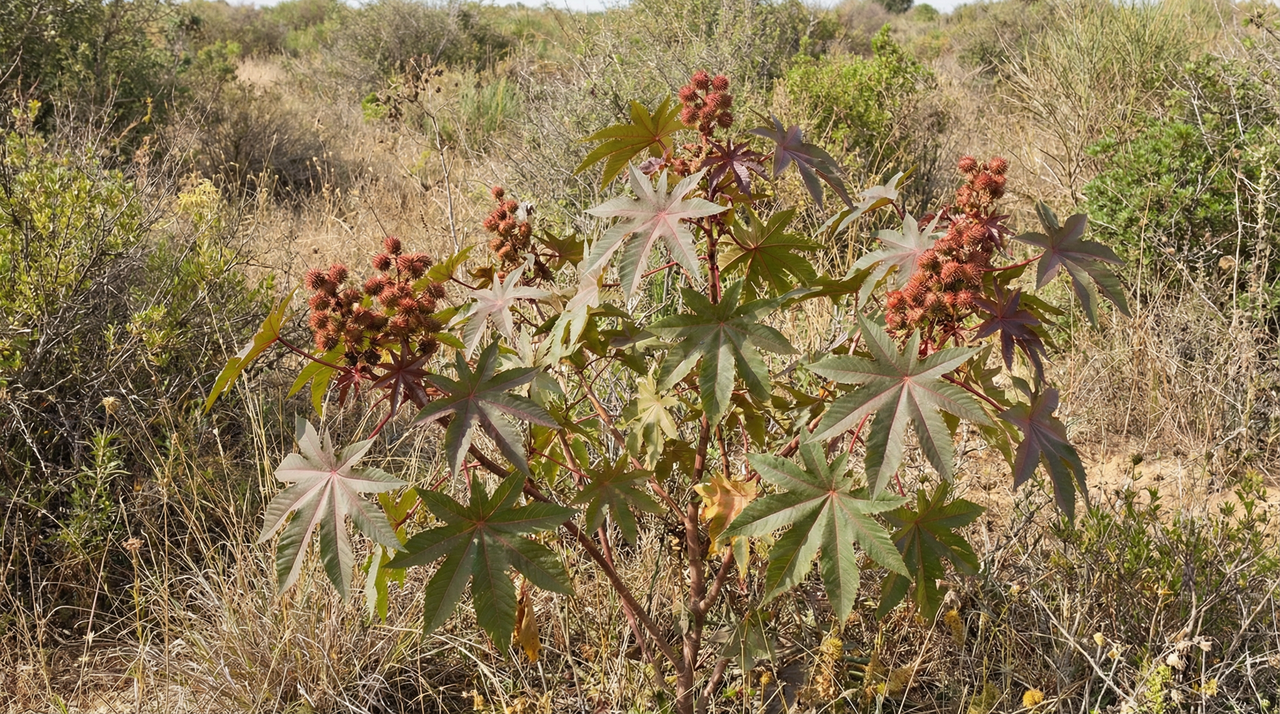
The most poisonous crop plant in common cultivation is also, in the right hands, the source of one of the safest, most widely used oils in the world. I've grown castor bean in zone 9B Florida and in a sheltered courtyard in coastal California, and every single season someone stops at the garden bed, reaches toward those enormous, jewel-toned leaves, and I have to say the same thing: don't touch the seeds. Because while the oil cold-pressed and steam-treated from those mottled beans sits in your lip balm, your brake fluid, and your baby's laxative, the raw seed contains ricin, a protein so lethal that a dose smaller than a grain of salt can kill an adult.[1] That gap between "industrial staple" and "biological weapon" exists in a single seed coat.
What I want you to sit with, before we get into cultivation zones and companion planting, is that contradiction. Castor bean isn't dangerous the way a thorny rose is dangerous. It's dangerous the way a live wire is dangerous: genuinely, consequentially, and with no room for casual handling. Growing it well means holding both things at once, the plant's remarkable ecological generosity and its remarkable capacity for harm, without letting either one eclipse the other. That's the whole conversation.
Castor Bean Origin, History, and Botanical Background
Few plants carry as much drama per square foot as castor bean. It's a species that has fed lamps in ancient Egypt, appeared in sacred Hindu ritual, turned up in bioweapons research, and somehow also made its way into hand cream. Understanding how one plant ended up doing all of that starts with knowing where it came from and what it's actually built to do.
Botanical Background and Native Origins of Ricinus communis
The scientific name of castor bean is Ricinus communis, and its native range centers on the tropical and subtropical regions of eastern Africa, particularly Ethiopia, where it colonizes forest edges, riverbanks, and disturbed ground in sunny spots with sandy, well-drained soils.[2][3][4] That habitat profile tells you almost everything about its personality: it's a pioneer species that thrives on disruption and light, not a forest understory plant waiting patiently in the shade.
In frost-free climates (USDA zones 9-12), Ricinus communis behaves as a perennial shrub or small tree reaching 10-12 meters, sometimes taller under ideal conditions.[5][6] I garden in zone 9B in Central Florida, and I can tell you that these plants don't inch up over a season; they erupt. One I planted in late April had cleared eight feet by September. It genuinely starts to feel like a small tree by midsummer. Optimal growth happens between 70-85°F, with things slowing noticeably once temperatures dip below 50°F.[6] From germination to first flower takes 60-90 days, with full seed production somewhere in the 120-180 day range.[6][2]
A single plant can produce up to 50,000 seeds annually, which is the polycarpic reproductive strategy working exactly as evolved.[4][7] That productivity, paired with drought tolerance driven by deep taproots and osmotic adjustment,[8] helps explain why Ricinus communis has become invasive across Florida, Hawaii, Australia, and Pacific islands. In these regions, it forms dense stands, outcompetes native flora, and releases allelopathic compounds from its leaf litter that suppress surrounding plants.[9][10] As someone who has used it for ornamental structure in Florida landscapes, I feel that tension keenly. Modern genetic research is trying to make the equation cleaner, exploring higher-oil, lower-ricin cultivars alongside its potential for phytoremediation of cadmium and lead in contaminated soils.[11] But responsible use still requires taking its invasive potential seriously from the start.
Visual Characteristics of the Castor Bean Plant
What castor bean looks like depends heavily on your climate. In temperate zones it typically reaches 6-10 feet tall with a spread of 3-6 feet in a single season as an annual.[12][13] Let it overwinter in a warm climate and you're looking at something that can push 40 feet or more over multiple years.[5] The stems are stout and often hollow, green with reddish or purplish tinges when young, marked by prominent leaf scars as the plant matures.[14] Below ground, a taproot can descend 2-3 meters with extensive laterals fanning out around it.[4]
The leaves are what stop people in their tracks. They're massive, palmate, 20-90 centimeters across with 5-12 deeply cut lobes that give the whole canopy a bold, tropical, almost prehistoric feel.[12] Depending on the cultivar, that foliage runs from deep glossy green to rich burgundy, bronze, or purple. My first time pruning a castor bean, I made the mistake of going in bare-handed and ended up with irritated skin from the milky latex the cut stems exude.[2] Gloves are not optional.
The flowers are apetalous and arranged in tall terminal racemes that can reach 1.5 meters, with yellow pollen-heavy male flowers near the top and female flowers below, those bearing striking red feathery stigmas.[12][15] Pollination is primarily wind-driven. The resulting fruit is a spiny three-lobed capsule that starts green and dries to reddish-brown before dehiscing explosively at maturity, flinging the seeds outward.[2][16] The seeds themselves are oval, mottled in grey, brown, and white, with a hard shiny coat and a distinctive white caruncle at one end. They look almost like a polished stone or an ornate bead. Every variety contains ricin in those seeds. There are no exceptions.
Traditional and Cultural Uses Across Civilizations
The documented medicinal history of Ricinus communis goes back at least as far as the Ebers Papyrus, an Egyptian medical text dating to around 1550 BCE, which records castor oil use for laxative effects, eye ailments, wound healing, and lamp fuel.[17][18] The plant appears across classical traditions: Pliny the Elder documented it in Rome, the Chinese Shennong Bencao Jing catalogued it, and the Ayurvedic Charaka Samhita incorporated it into detoxification protocols.[19][20][21]
The applications across cultures are remarkably consistent: castor oil as a laxative and emollient, leaf poultices for wounds and boils, and root preparations for constipation and inflammation, spanning Ayurvedic, African, and Brazilian traditional medicine systems among others.[22][23] Researchers have documented over 100 distinct traditional uses globally, almost all centering on processed oil or dilute preparations rather than raw seeds.[24] The symbolic dimension is equally broad: in Hinduism, castor bean is associated with Lord Shiva and carries meaning around protection, fertility, and purification; across West African traditions it appears in amulets, Vodun practice, and ritual use for resilience; Chinese traditions link it to prosperity.[25][26] I find it fascinating that a plant this dangerous has been woven so deeply into healing and sacred traditions across so many unconnected cultures. What's important to hold onto, though, is that those traditional practitioners understood processing. They weren't eating raw seeds. Any contemporary engagement with castor bean's medicinal history has to respect that the safety came from specific preparation, not from the plant being inherently forgiving.
Fun Facts and Ecological Insights About Castor Bean
Part of what keeps me reaching for castor bean in large-scale ornamental designs is purely visual. The cultivar 'Carmencita' with its deep red stems and dark foliage makes almost everything around it look more dramatic.[12][27] I've used it as a focal "thriller" in large containers and as a temporary tropical screen where clients want instant structure without waiting years for a hedge. But I always label it clearly, explain what it is, and make sure any client with children or pets knows exactly what those mottled seeds represent.
Beyond the garden, castor oil's industrial story is genuinely impressive. Its high viscosity and stability made it a standard lubricant in aviation and automotive applications, and it remains a feedstock for biodegradable plastics, cosmetics, and pharmaceuticals.[28][29] The processed oil is safe; the raw seeds are not. That distinction matters enormously and gets collapsed in casual conversation about the plant more often than it should. As for wildlife, most animals give the seeds a wide berth due to ricin, though some birds like doves may consume them with potential for secondary poisoning downstream in the food chain.[30] Castor bean is not a plant that plays well with the local ecosystem in warm climates where it can establish itself permanently. Its allelopathic leaf litter, dense canopy, and prolific seed production mean it can reduce native plant communities substantially if left unmanaged.[10] The modern research pivot toward phytoremediation and genetic modification for lower ricin content offers some intriguing possibilities,[11] but right now this is a plant that demands respect, clear-eyed assessment, and a commitment to management over the long run.
Castor Bean Varieties and Where to Buy
Check your local regulations before you order anything. In Florida, Ricinus communis is listed as a Category II invasive, and several other southern states flag it as a noxious weed.[31][32] I work in zone 9B Central Florida, and I routinely steer clients away from this plant when kids or pets are in the picture. Once you've confirmed it's legal and appropriate for your site, the cultivar options are genuinely impressive.
Ornamental Cultivars: Foliage Color, Size, and Garden Use
The size range alone is worth understanding before you buy. Dwarf types like 'Little Prince' top out around 2 to 3 feet, which makes them manageable in a mixed border. Mid-size cultivars including 'Carmencita,' 'Red Eros,' and 'White Eros' settle in at 4 to 6 feet. Then there are the giants: 'Gibsonii,' 'Giant Marconi,' and 'Red Giant' can hit 8 to 15 feet in a single season.[31][32] A 10-foot 'Gibsonii' carrying deep burgundy leaves reads in a landscape the way a mature banana or tall canna does: you notice it first and build everything else around it.
Foliage color is where the ornamental selections really diverge. 'Carmencita' (including the seed strain often sold as 'Carmencita Bright Red') offers compact growth with red-flushed leaves and conspicuous red flower clusters. 'Impala' runs dark red to bronze. 'Gibsonii' delivers those large, dark-red or bronze palmate leaves that make it such a statement plant. 'Zanzibarensis' goes in a different direction entirely with large, variegated, finely-cut foliage that looks almost architectural. 'Red Giant' keeps the deep burgundy color but pushes it to a much larger scale.[7][33][34]
Industrial Varieties for Castor Oil Production
Named industrial cultivars are a much shorter list. Lines like 'Hale' and 'Lynn' were selected specifically for high ricinoleate content in the seed oil, and they look and behave quite differently from the ornamental forms most gardeners will recognize.[35] The research literature on these is thinner than on the ornamentals, so I'd describe them as selected industrial lines rather than a well-documented catalog. It's commercial oil production, not garden aesthetics, that keeps this species in large-scale cultivation worldwide, and the processing involved is what renders that oil safe despite the toxicity of the raw seeds.[36]
Sourcing Castor Bean Plants or Seeds Safely
Seeds and transplants are widely available through online retailers like Etsy and Amazon, specialty nurseries such as Plant Delights, and most large garden centers that carry unusual annuals.[37] Availability is not the issue. The issue is that every part of this plant, especially the seeds, contains ricin at concentrations that can be fatal if ingested, and the seeds are the most dangerous part by a significant margin.[38][39] I always tell clients this is a "look, don't touch" plant when small children or curious dogs are part of the household equation.
Mail-order seeds often arrive without much context beyond a germination note, so do your homework before they show up. Source from reputable specialty nurseries where the cultivar names are accurate, handle seeds with gloves, and store them well out of reach. The plant itself is perennial in zones 9 through 11 and grown as a fast annual almost everywhere else,[40] which is part of what makes it so seductive: tremendous visual impact for minimal investment. Just go in with clear eyes about what you're working with.
How to Propagate and Plant Castor Bean (Ricinus communis)
Seed Characteristics and Safety Considerations
Before you ever get seeds in the ground, put on gloves and eye protection. The first time I started castor bean indoors I skipped the gloves because I was in a hurry, and within minutes I was washing my hands at the sink with a new respect for this plant. Every part of Ricinus communis is toxic, and the seeds are the most dangerous of all, containing ricin and ricinine alongside that remarkable seed oil.[12][9] Keep children and pets completely out of your workspace. That's not optional.
The seeds themselves are striking once you know what to look for: oval to oblong, slightly compressed, 8-17 mm long, with a smooth shiny coat that's dark gray to black with a marbled or mottled pattern.[41][42] The detail you'll remember is the caruncle, a small white or yellowish fleshy appendage at one end that evolved to attract ants for dispersal.[42] When you've soaked seeds for scarification, you'll notice the caruncle softens noticeably and the whole coat swells slightly -- that's your visual cue that moisture has had a chance to penetrate. Fresh seed stored under cool, dry, dark, airtight conditions (ideally 5-10°C, around 10-20% relative humidity) holds 80-90% germination rates for two years or more, and properly hermetic storage can extend viability to a decade or longer under gene-bank conditions.[43][44] For most home gardeners, figure on 2-5 years of reliable viability if you keep seed cool and dry. If you're working with older seed and you're unsure, a tetrazolium test on bisected seeds will tell you quickly whether you've got live embryos, or you can simply run a standard germination test at 25-30°C and expect 70-90% from quality fresh seed.[45][46]
Castor bean seeds have a physically hard, impermeable coat, so scarification before sowing is worth the effort. Nick the coat with a file, or soak the seeds in hot (not boiling) water for 24 hours; this bumps germination rates from the 50-70% range up to 70-90%.[47][48] Soil temperature should be 21-27°C (70-80°F) for germination, and with consistent moisture you'll typically see sprouts in 7-14 days, though occasionally stragglers emerge at 30 days.[47][12] Compare that to coral bean (Erythrina herbacea), which I start around the same time and which germinates far more erratically over several weeks; castor bean is refreshingly decisive when given warm soil and a scarified coat. One caveat: because castor bean outcrosses readily, seedlings aren't always genetically identical to the parent plant, so if you're maintaining a specific cultivar, vegetative propagation is the more reliable route.[49]
Propagation Methods
Seed is the standard approach for almost every situation, commercial or garden scale. Start seeds indoors 6-8 weeks before your last frost date, in a well-draining mix at 70-75°F (21-24°C), and plan to transplant outdoors only after all frost danger has passed and nighttime temperatures are reliably above 50°F (10°C).[50][51] In my zone 9B garden that's typically mid-March for indoor starting and early May for outdoor transplanting, with the whole seed-to-harvest cycle running 120-180 days from sowing.[52]
Vegetative methods do exist and have their place. Semi-hardwood stem cuttings taken in late spring or summer, about 4-6 inches long, will root at rates of 50-90% with bottom heat, misting, IBA rooting hormone, and high humidity around 80-90% in a perlite-peat or sand-vermiculite substrate.[53] Tissue culture is also documented, useful for producing disease-free stock or multiplying a rare cultivar at scale.[54] Commercially, though, these approaches are rarely used because the labor cost is hard to justify when seeds germinate so readily and cheaply. Grafting is not standard practice for this species at all.[55]
Before you order seeds, check your local regulations. Castor bean is classified as invasive or a noxious weed in parts of the United States, including California, and it self-seeds prolifically wherever the climate allows.[55][4] That's not a footnote; it's a meaningful pre-planting step.
Soil, Site Selection, and pH Requirements
Castor bean's East African origins gave it tolerance for a wide range of soil textures, sandy, loamy, and clay, but the one thing it will not negotiate on is drainage.[4][2] Waterlogging triggers Fusarium root rot fast, and once that sets in you've lost the plant. I treat its drainage requirement the same way I do with papaya: if water pools for more than a few minutes after heavy rain, that site isn't suitable. In my Central Florida garden I routinely amend even my sandier beds with extra perlite or coarse sand just to guarantee free drainage through our wet season. A fertile, well-drained sandy-loam with 2-4% organic matter is the sweet spot.[47]
For soil pH, target 6.0-6.5; the plant will tolerate a broader range of roughly 5.5-7.5, but outside that window problems emerge quickly.[56][47] Drop below 5.5 and aluminum toxicity stunts growth and burns leaf tips; creep above 7.5 and you'll see interveinal chlorosis on the young leaves from iron deficiency.[56] I test my beds every spring because my soils trend acidic, and I've seen that chlorosis on young castor seedlings firsthand when pH drifts above 7.0. Lime to raise pH, elemental sulfur to lower it, and test before you amend rather than guessing.[57] For containers, a mix of 40-50% loam-based compost, 20-30% coarse sand or perlite, and 20-30% organic matter gives you the drainage and fertility the plant wants.[47] Full sun, at least 6-8 hours of direct light daily, is required for the fastest growth and reliable flowering; anything less and you'll get a leggier, less productive plant.[58] And through all of it, remember: ricin is present in every part of the plant, so keep your gloves on whenever you're working with it in the soil.
Spacing, Planting Technique, and Timeline
Mature castor bean plants reach 6-10 feet tall and nearly as wide in a single temperate growing season, so spacing decisions matter from day one.[59][12] For ornamental use, 3-6 feet between plants gives each specimen room to develop its full canopy. Production spacing runs 3-4 feet within rows and 4-6 feet between rows.[60] You can go tighter, 2-3 feet, if you're using castor bean as a temporary hedge or privacy screen, but reduced airflow at that density raises fungal disease pressure noticeably.[61] I consistently plant at the wider end of the range; those enormous leaves need room to unfurl fully, and generous spacing makes safe harvesting and weeding considerably less awkward.
Transplant outdoors only after your last frost date, when nighttime temperatures are holding reliably above 50°F.[62] In most of the United States, castor bean is grown as an annual, and that frost sensitivity is the hard stop on both ends of the season.[63] In warmer zones where it can persist, or even where it simply dropped seed the prior season, be prepared for volunteers to emerge with enthusiasm. In my experience in zone 9B, I treat every unsolicited seedling as a potential weed and remove it promptly; this is a plant that earns its place deliberately in the garden, not by wandering.[62] Stake tall varieties if your site gets wind, and orient plants so you have clear, unobstructed access from at least one side because you'll need it for monitoring and, eventually, harvesting.
Castor Bean Care Guide
Caring for castor bean is a lesson in feeding a plant that genuinely wants to eat. In ideal conditions it can push several inches of growth per week, and it needs real nutrition to sustain that pace without falling apart. Get the inputs right and you'll have one of the most dramatic specimens in your landscape. Get them wrong and you'll spend the season chasing symptoms.
Fertility and Feeding Needs
Ricinus communis is a heavy feeder, and I learned that the hard way early on. I went light on fertilizer my first season thinking the compost I'd amended with would carry it through. Within six weeks the older leaves were yellowing from the base up, a textbook sign of nitrogen depletion.[64][65] Now I soil test annually and apply a balanced 10-10-10 or 20-10-10 every four to six weeks at about one to two tablespoons per plant, keeping an eye on the leaves as my real-time gauge.[66] Phosphorus deficiency shows up as purplish-red tints on leaf undersides and reduced seed set; potassium shortfall causes interveinal chlorosis creeping toward marginal scorch.[64] In alkaline Florida soils, iron chlorosis on young leaves is also common and worth watching for.[67] Keep pH between 6.0 and 7.0, maintain two to three percent organic matter with compost or aged manure, and resist the urge to over-fertilize. Too much nitrogen produces lush, leafy growth at the expense of flowers and seeds, and tip burn is a reliable sign you've pushed too far.[68][66]
Sunlight Requirements
Full sun, no compromise. Without it castor bean stretches, pales, and loses the structural presence that makes it worth growing. Much like hibiscus in a shaded corner, it just gets leggy and chlorotic rather than developing that bold, upright form.[2] The flip side is that in very hot, dry conditions without adequate moisture, intense sun can trigger photoinhibition and leaf scorch, so full sun works best when water is consistent.[69]
Watering Needs
Aim for one to two inches per week during the growing season, with deep watering reaching twelve to twenty-four inches for established plants.[70][71] Seedlings need checking every two to three days. Once rooted, castor bean handles dry spells surprisingly well, almost like a mature canna that's found its footing, but don't use that drought tolerance as an excuse to neglect it early on. In my subtropical summers I check soil moisture religiously because heavy rains can tip a plant into overwatering just as fast as drought stresses it; yellowing from the base and mushy stems mean you've got too much water, while brown leaf tips and wilting on dry soil mean too little.[72][73] Always check the top inch or two before watering, especially in containers where drainage is everything.
Frost Tolerance and Winter Care
Castor bean is a tropical plant with a tropical plant's relationship to cold: it has none. Its native range across eastern Africa and India means even a light frost at 32°F triggers wilting and blackening starting at leaf margins, and a hard freeze can kill the roots entirely.[33][61] In USDA zones 9 through 11 it behaves as a perennial; everywhere else treat it as an annual or bring containers indoors before temperatures drop.[2] I'm in zone 9B and I still watch forecasts. The moment a 30°F night is in the extended forecast, my potted specimens come inside. I'd rather move them twice than lose an established plant to an unexpected cold snap.
Heat Tolerance
Where it struggles with cold, castor bean thrives in heat, fitting comfortably into AHS Heat Zones 8 through 12 with optimal growth between 68 and 86°F.[74] Above 95 to 104°F, though, prolonged exposure causes wilting, flower drop, and scorch even in well-watered plants.[75] My mitigation toolkit for intense summer heat includes three inches of mulch, occasional afternoon shade during heat domes, and cultivar selection. 'Carmencita' has held up well for me in full subtropical humidity and heat; 'Hale', 'Lynn', and 'Impala' are also solid choices for hot-site plantings.[76]
Pruning, Maintenance, and Safety
Before anything else: I never touch this plant without gloves and long sleeves. Every part of Ricinus communis contains ricin, with seeds holding the highest concentration, and I treat it accordingly every single time.[77][78] It's a strict household rule: no handling without protection, and every cut stem or removed pod goes straight into a sealed bag. On the practical side, lay two to three inches of organic mulch to hold moisture and suppress weeds, thickening to four to six inches where frost is possible.[50] Stake plants once they hit four to six feet. I learned from losing an unstaked eight-foot specimen to a summer thunderstorm that this step is not optional. For pruning, pinch seedlings at twelve to eighteen inches to encourage bushiness, remove frost-damaged wood in early spring, and strip lower leaves periodically for airflow.[61] Remove seed pods promptly if you're not saving seed, both to reduce self-seeding and to limit ricin exposure around the garden.
Seasonal Rhythm
In zones 9 through 11, castor bean follows a perennial arc: germination in early spring, flowering from late spring into summer, seed set extending into fall, and dormancy only if temperatures drop significantly.[4] In colder climates it completes its full life cycle in four to six months as a fast annual.[52] Container gardeners in cool zones can overwinter plants indoors at 50 to 60°F with bright indirect light and minimal water until spring.[79] When you dial in the feeding, watering, and protection, the reward in warm climates is a plant that keeps cycling through dramatic growth with very little encouragement.
Castor Bean Harvesting Guide
Every step of harvesting castor bean seed pods begins with the same prerequisite: gloves on, every time. After several seasons growing this plant as a bold ornamental, I've had enough close calls with drying capsules to take it seriously. Even brushing against a pod with bare skin can cause irritation. The harvest process itself is straightforward once you know what to look for, but the margin for casual handling is essentially zero.
When to Harvest Castor Beans: Timing and Visual Cues
The cues are reliable once you've seen them a few times. Ripe castor bean plant seed pods shift from green to a dry, reddish-brown color, and the spines that felt slightly pliable earlier in the season stiffen noticeably as the capsule dries out.[80][81] That color-and-texture combination is the signal I watch for. The seeds inside should feel hard when you press gently through the capsule wall. When the pods begin to split along their seams, that's dehiscence, and it means optimal harvest time has arrived; wait too long past that point and the capsules will fling seeds several feet in every direction.[80][82] Mature capsules run about 1 to 1.5 inches in diameter at this stage.[82]
In terms of the broader timeline, seeds typically mature 150 to 180 days after planting, which puts castor bean harvesting somewhere between August and October for most spring-sown gardens in temperate climates.[82][83] That final ripening phase from flower to ripe seed takes only 30 to 50 days, faster in warm weather around 25 to 30°C.[84][85] It reminds me of watching okra or sesame near the end of the season, that same compressed urgency in the final weeks before the seed is fully set.
How to Harvest and Process Castor Bean Seeds Safely
Hand-pick the dry capsules before they fully split open, wearing gloves without exception.[82] I collect mine into a paper bag rather than a basket since a paper bag contains any seeds that pop loose during handling. After harvest, spread the pods out in a shaded, well-ventilated area and let them dry for one to two weeks at around 25 to 30°C; this step discourages mold and allows any remaining moisture to escape before storage.[82][86] For longer-term storage of how to store castor bean seeds properly, keep them in a cool space between 10 and 15°C with relative humidity below 60 percent; stored that way, viability holds for two to five years.[82][86] For deeper handling and ricin precautions, the safety subsection of the health benefits section covers the full protocol.
Yield, Toxicity, and Flavor Considerations
A single vigorous plant yields roughly 1,000 to 2,000 seeds, or about 1 to 3 kilograms by weight.[83] In my warm-season trials, the larger cultivars given consistent moisture reliably hit the high end of that range. What those seeds should never be treated as, under any circumstances, is a food source. Ingesting just 4 to 8 raw castor beans can be lethal to an adult human, and ricin is present throughout the plant, with seeds holding the highest concentration.[87][4] Ricin is heat-labile and can be degraded above 80°C with sufficient processing time,[87] but that fact is critical context for understanding industrial processing, not an invitation to experiment at home. The raw seeds are bitter, acrid, and have a nauseating, lingering aftertaste that the plant evolved precisely to discourage consumption.[69][88] I've read enough culinary literature on unrefined castor oil to know what that aftertaste is like, and I have no interest in confirming it firsthand. I treat every part of this plant as potentially hazardous at every stage, harvest included, and that habit has served me well.
Castor Bean Preparation, Uses, and Safety
Toxicity and Why No Raw Parts Are Edible
No part of Ricinus communis is safe to eat raw or unprocessed. Ricin runs through the entire plant, and the seeds hold the highest concentration by far. Ingesting just a few raw seeds can trigger fatal toxicity.[4][89][90] Ricin has an LD50 of roughly 1 mg/kg, and ingestion triggers nausea, vomiting, severe abdominal pain, and seizures within 4 to 6 hours, with organ failure and death possible within 36 to 72 hours if untreated.[89][91][92] If you suspect anyone has ingested castor beans, seek emergency help immediately; waiting is not an option.
Commercial processing -- solvent extraction, degumming, neutralization, bleaching, and deodorization -- does fully remove ricin, making the refined oil safe. The FDA recognizes highly purified castor oil as GRAS for pharmaceutical use and hydrogenated castor oil as GRAS as a food additive, emulsifier, and thickener in processed foods and confectionery.[93][94][95] But home boiling, roasting, or fermentation does not reliably inactivate ricin, regardless of what you have read about traditional West African or Ethiopian methods.[96][97] I've read those ethnobotanical accounts too, and as a horticulturist I feel strongly about leaving oil extraction to commercial facilities. The margin for error with ricin is simply too small.
Even the processed oil is bitter, with an unpleasant earthy edge that makes any culinary use essentially irrelevant to American gardeners.[98] In the U.S., castor bean has no meaningful history as a food crop. It's grown ornamentally, as an industrial source of oil, or it shows up as a weed in warm regions.[99][100] I grow it in my Central Florida landscape as a dramatic foliage annual, and it lives well away from the vegetable beds, the play area, and anywhere my dog might wander, precisely because those seeds are attractive and deadly.
Medicinal Preparations and Traditional Uses
The global medicinal history of castor oil is genuinely impressive. Across Africa, Asia, and Latin America, traditionally processed oil has been used as a laxative, a topical remedy for joint pain and skin conditions, a treatment for wound healing and eye infections, and a support for menstrual regulation and respiratory complaints.[101][102][103] As a laxative, the standard adult dose is 15 to 60 mL taken as a single dose, with effects typically arriving within 2 to 6 hours.[104] That's still in use today as a pharmaceutical product, which reflects how well-established this application is.
Traditional preparation always involved controlled seed processing -- repeated boiling, roasting, or fermentation -- before extraction, with the specific method varying by region and culture.[36] The plant also carries deep ritual meaning in Hindu ceremonies, African healing traditions, and Latin American folk medicine, where it has long been associated with purification and protection.[105][103] I have enormous respect for that knowledge, and I think it deserves to be honored. But those traditional methods were refined over generations by practitioners who understood both the plant and the risks intimately. For anyone outside that context, commercially extracted pharmaceutical-grade oil is the only responsible option.
Non-Food and Industrial Applications
Beyond the medicinal sphere, castor bean has earned its place in human economies through sheer material usefulness. The stems yield a coarse fiber suited for rope, twine, sacking, and rough textiles, while the leaves have historically served as thatching material, green manure, and a natural pest deterrent.[106] The oil's industrial reach is remarkable: lubricants, plastics, cosmetics, biofuels, and historically even lamp fuel and ancient Egyptian embalming preparations.[107][108]
I've watched this plant put on three feet of growth in a single month during a Florida summer, which tells you everything about its biomass potential. That productivity is why some permaculture designers working in appropriate climates consider it for chop-and-drop applications or living screens, always handling every cutting with gloves and keeping the seed heads managed before they shatter. The press cake left after oil extraction still contains residual ricin, so it requires careful disposal rather than casual composting. For most American gardens, the honest answer is that castor bean earns its space as a bold ornamental or a specialist crop, never as a food plant, and every encounter with it deserves the same caution you brought to reading this section.
Castor Bean Health Benefits and Medicinal Uses
Castor bean is the plant in my medicinal landscape toolkit that I treat with the most profound respect, bordering on wariness. I grow Ricinus communis strictly as an ornamental boundary plant, and I source pharmaceutical-grade castor oil rather than attempting any home extraction. That's not timidity; that's knowing what's actually in the seeds.
Key Phytochemicals: Ricin, Ricinoleic Acid, and Ricinine
The chemistry of this plant is genuinely remarkable, and it requires holding two very different realities at once. The seeds contain ricin, a type II ribosome-inactivating protein present at 1-5 mg per gram of seed material, with an LD50 of approximately 1-10 µg/kg body weight.[109][110] To put that in perspective: ricin's A-chain depurinates ribosomal RNA so efficiently that a single molecule can inactivate thousands of ribosomes. The plant also contains ricinine, a pyridine alkaloid found at up to 0.4% in seeds and 0.1-0.3% in leaves, which adds central nervous system toxicity to the picture.[111] These concentrations aren't fixed; warmer and more humid conditions, higher nitrogen in the soil, and certain cultivars all push ricin and ricinine levels higher.[112][113]
The other side of the chemistry is what makes commercial castor oil medicinal. The expressed oil is 85-95% ricinoleic acid, a rare hydroxylated fatty acid, with smaller amounts of oleic and linoleic acids; crucially, ricin is water-soluble and stays in the seed cake rather than the oil.[114][115] Beyond ricin and ricinoleic acid, the plant produces flavonoids including quercetin and kaempferol, phenolic acids like ferulic and p-coumaric acid, saponins, hydrolyzable tannins, the coumarin scopoletin in roots, phorbol esters in seed coats, and lupeol.[116][117][118] These secondary compounds give the plant genuine pharmacological interest, but their presence alongside potent toxins means there is absolutely no place for raw plant material in casual home use.
Evidence-Based Medicinal Research and Traditional Uses
Across Ayurvedic, African, Chinese, and Latin American traditional systems, Ricinus communis has been used for centuries as a laxative, anti-inflammatory, and wound-healing agent.[119][120] The laxative use has the strongest modern clinical support. Ricinoleic acid activates prostaglandin EP3 and EP4 receptors in the intestinal wall, stimulating motility and secretion. The FDA has approved castor oil as an over-the-counter laxative at doses of 15-60 mL, backed by systematic reviews showing moderate short-term efficacy for constipation.[121][122][123]
The anti-inflammatory evidence is also reasonably mechanistic. Ricinoleic acid inhibits NF-κB signaling, activates PPAR-γ, and suppresses pro-inflammatory cytokines including TNF-α, IL-6, and COX-2.[124][125] Topically, the oil promotes wound healing via PPAR-γ-mediated fibroblast proliferation and collagen synthesis, with clinical studies showing faster closure rates especially in diabetic wounds.[125][126] I've noticed that castor oil's viscosity keeps it in contact with skin far longer than lighter carrier oils like rosehip or jojoba; whatever you're making a salve with, castor oil stays put in a way that seems to matter for sustained topical applications. Extracts also show antimicrobial activity against Staphylococcus aureus and antioxidant effects via Nrf2 pathway activation, lending some credibility to traditional wound-care uses.[127][128]
Preliminary in-vitro and animal studies suggest potential anti-diabetic effects through alpha-glucosidase inhibition, hepatoprotective activity, and anticancer properties via caspase and Bcl-2 pathways.[129][130][131] These findings are genuinely interesting, but none have been validated in human trials at the scale needed to make clinical recommendations. Ricin itself has been studied as a targeted cancer therapy due to its cytotoxicity, but extreme systemic toxicity remains the fundamental barrier.
Nutritional Profile and Industrial Context
Castor seeds are never a food. That bears stating plainly before any nutritional numbers. On a dry-weight basis, seeds contain roughly 553 kcal per 100 g, 18 g protein, 36-50 g fat dominated by ricinoleic acid, and substantial minerals including potassium at 1500-2000 mg, magnesium at 350-450 mg, and phosphorus at 500-600 mg.[132][133] That mineral density is impressive, but it's academically irrelevant to home use. Post-extraction seed cake retains 30-40% protein and requires industrial heat, chemical, or fermentation detoxification before it can be used even as animal feed or fertilizer, never for human consumption.[134] What survives safe processing is the oil's unique fatty-acid profile, that 85-95% ricinoleic acid content that gives commercial castor oil its medicinal character.[114]
Safety Considerations and Toxicity Risks
Every part of Ricinus communis contains ricin. The seeds hold the highest concentrations at 1-5 mg per gram, and ingestion of just 1-2 crushed seeds can be fatal to a child; for adults, 4-8 seeds presents lethal risk at the oral LD50 of 1-20 mg/kg.[135][136][137] I never design this plant into a garden where young children or curious pets have access, full stop. Symptoms of ricin poisoning begin within 2-6 hours: severe nausea, vomiting, bloody diarrhea, abdominal pain, electrolyte imbalance, metabolic acidosis, and potential multi-organ failure; pets show accelerated progression including lethargy and seizures.[138][139]
Commercial castor oil is a different matter. Because ricin is water-soluble and remains in the seed cake during pressing, and because hot pressing and refining inactivate any trace toxin, the processed oil is FDA-recognized as generally safe for laxative and topical use.[114][123] That said, I advise every client who is pregnant or on blood-pressure or heart medication to avoid medicinal doses of castor oil entirely and consult their physician. The oil is contraindicated in pregnancy due to its ability to induce uterine contractions and preterm labor, and it can interact with diuretics, antihypertensives, and digoxin by exacerbating electrolyte loss.[140][123] Overuse can cause significant abdominal cramping, and some people develop contact dermatitis or respiratory sensitization from plant dust and pollen.[141]
For anyone growing this plant: always wear gloves when handling any part of the plant, ricin is stable in dust and a documented cause of occupational asthma, and it's worth knowing that ricin is classified as a Schedule 1 toxin under the Chemical Weapons Convention.[142][143] Even so-called low-ricin ornamental cultivars still require exactly the same precautions; I evaluate every variety on those terms regardless of what the marketing says. The medicinal value of this plant is real, but it lives exclusively in carefully processed commercial products, not in the garden.
Castor Bean Pests and Diseases
Castor bean has a genuinely impressive chemical arsenal. The ricin, phorbol esters, ricinine, and lectins packed into its tissues make it far less appetizing to most herbivores than the ornamental plants growing nearby, and the glandular trichomes coating its foliage add a physical layer to that defense. I noticed those trichomes the first time I handled mature castor leaves without gloves: a sticky, slightly resinous residue that transfers immediately to your skin. That viscous film contains toxic compounds that deter quite a few would-be chewers before they even get started. Still, a long list of insects finds ways around it.
Major Insect Pests and Castor Bean's Natural Defenses
The primary pest lineup includes aphids (Aphis gossypii and Myzus persicae), whiteflies (Bemisia tabaci), spider mites (Tetranychus urticae), and several caterpillar species including the castor semilooper (Achaea janata), tobacco caterpillar (Spodoptera litura), and red hairy caterpillar.[144][145] Aphids and whiteflies tend to cluster on young growth, causing leaf distortion and secreting honeydew that invites sooty mold, which then blocks photosynthesis in a compounding cascade.[146] Caterpillars shift the damage profile entirely: seedlings are most vulnerable to sucking insects, while mature plants take the hardest hits from defoliators capable of stripping entire stems.[147] Spider mites become a real problem during hot, dry stretches, leaving stippled, bronzed foliage if populations build unchecked.[148]
How much of this you actually encounter depends heavily on where you garden. Pest pressure in humid tropical climates is substantially higher than what I deal with in a temperate summer, where populations build more slowly and natural predators keep things manageable. It's a similar dynamic to canna or hibiscus in zone 9B: once the heat and humidity stack up, caterpillar attention increases noticeably. Cultivar choice matters too. I've grown both bold ornamental selections and more utilitarian types, and the ornamentals consistently needed more vigilant aphid monitoring in early summer. Industrial hybrids like GCH-4 and GCH-5, along with nematode-tolerant selections like 'Hale,' carry meaningfully better pest resistance than the dramatic purple-leaved types we reach for on aesthetic grounds.[149] An IPM approach fits castor well: monitor early, support beneficial insects, and reserve any chemical intervention as a genuine last resort.[150]
Common Diseases and Environmental Triggers
Disease resistance in castor bean varies considerably by cultivar and environment, and no variety carries complete immunity to anything.[151] Most varieties show moderate tolerance to Fusarium wilt (Fusarium oxysporum f. sp. ricini), which thrives when soil temperatures sit between 25 and 30°C with high moisture.[152] Phytophthora root rot is a different story; most varieties show low resistance to it, and poorly drained soils make it almost inevitable.[153] Fungal leaf spots from Alternaria and Cercospora show up as brown lesions when humidity climbs above 80% and temperatures hover in the 20-28°C range; powdery mildew and gray mold (Botrytis cinerea) round out the common fungal roster.[146] I've learned to scout for early leaf spotting in the days following heavy rain, because catching it at the first lesion is far easier than managing a spread-out infection.
Bacterial leaf spot (Xanthomonas axonopodis pv. ricini) is another common problem, with many commercial types showing high susceptibility even as breeders work on resistant selections.[154] Viral diseases including Tobacco Mosaic Virus and Castor Bean Yellow Mosaic Virus round out the pathogen list, though they're less consistently problematic in temperate settings.[155] Stressed plants in tropical or humid regions face the highest cumulative risk across all of these.[151] My practical response is straightforward: rotate castor out of the same bed every season, clean up fallen debris before it becomes an overwintering site for pathogens, and when designing for clients in high-humidity climates, reach for resistant hybrids like GCH-4 or GCH-5 from the start rather than retrofitting a problem.[156][157] Good drainage and avoiding overhead irrigation handle a surprising share of the disease pressure before it starts.
Castor Bean in Permaculture Design
Every part of this plant can kill. The seeds of Ricinus communis contain ricin, and ingesting as few as one or two of them can be fatal to a human, causing vomiting, diarrhea, and organ failure.[143][7] I treat every part of this plant as if it could harm a child or a pet, because the toxicology data show it can. That reality has to sit at the front of any permaculture conversation about castor bean, because the ecological roles people cite as reasons to grow it are real but so is everything that argues against it.
Climate Suitability and Hardiness Zones
Castor bean is native to tropical Africa and the eastern Mediterranean and behaves as a true perennial only in USDA zones 9 through 11, where it can survive minimum temperatures down to around 20°F before frost damage becomes fatal.[158][159][4] In cooler zones it's grown as an annual or kept in containers that can come indoors before temperatures drop.[160][161] It thrives in full sun between 70 and 85°F and needs soil temperatures above 60°F to get going, with germination most reliable in the 68-77°F range.[162] The plant can handle a fairly wide precipitation range, needing at least 20 to 25 inches of annual rainfall but tolerating considerably more as long as drainage is good, and it grows from sea level up to nearly 8,000 feet in elevation.[163][4]
Living in zone 9B in Central Florida, I've watched castor bean volunteers appear in disturbed lots and roadsides almost as fast as they're cleared. It grows like papaya in pace and stature, but with none of the edible upside and dramatically higher toxicity risk. That self-seeding tendency is exactly why Florida lists Ricinus communis as a Category I invasive species, and why it's classified as a noxious weed or prohibited outright in California, Hawaii, Louisiana, Mississippi, and Tennessee.[164][165] Check your state's regulations before even considering a seed purchase.
Ecosystem Functions and Guild Placement
On paper, castor bean's ecological resume looks impressive. It produces 10 to 15 tons of biomass per hectare annually and functions as a dynamic accumulator, pulling potassium, nitrogen, and phosphorus into its tissues.[4][166] Chopped leaves and stems can be used as mulch to improve soil structure and fertility, and the seed cake left after oil extraction is high in protein, though it requires rigorous detoxification before it's safe to use as animal feed.[167] Castor oil and plant extracts also have documented repellent effects on certain insect pests, moles, and nematodes, which is where the folk wisdom about castor bean plants deterring moles comes from.[168] The plant is primarily wind-pollinated, monoecious with male flowers below female on terminal racemes, but it does provide some support to bees and flies even though the flowers are unscented and produce little nectar.[169]
In practice, those benefits rarely hold up at home-garden scale once you factor in the risk profile. The same properties that suppress pest insects can also depress native biodiversity, and any mulch application from a plant this toxic demands careful handling. Ornamental use in a contained setting in zones 9-11, where the dramatic palmate foliage creates a bold tropical aesthetic, is probably the most defensible design application for most growers. Industrial biofuel systems are another legitimate context, but those are managed at a scale and with protocols most home permaculturists simply don't have.[170]
Forest Layer and Competitive Role
As a pioneer species from tropical Africa, castor bean is built to colonize disturbed ground fast. It reaches 6 to 10 feet in temperate annual cultivation and can hit 30 to 40 feet in warm subtropical conditions, making it a canopy-layer presence in the climates where it's most likely to escape.[171][172] Its competitive mechanisms are formidable. The dense canopy can suppress understory vegetation by 80 to 90%, the root system outcompetes neighbors for water and nutrients, and there's documented allelopathic activity from its leaves, roots, and exudates that actively inhibits the germination and growth of surrounding plants.[173][174][175] I've observed similar suppression dynamics under large tropical trees I've managed, and the research pattern is consistent: a dominant pioneer that reshapes its understory on its own terms.
Invasions by Ricinus communis have been linked to 50 to 70% declines in native plant biomass and significant species diversity losses in affected areas.[175][176] As a designer working in the Southeast, I simply will not specify this species because the ecological cost is too high. It has no place in a food forest or near any edibles, and the idea of building a guild around it ignores the allelopathy research, the toxicity, and the very real possibility that seeds will disperse beyond your site. The verdict here isn't nuanced: this is a plant you observe with respect, not one you weave into a polyculture.
Why Castor Bean Demands Total Respect
I grew castor bean for two seasons before I fully understood what I was working with, and that embarrasses me a little. It was so beautiful, so vigorous, so clearly useful that I let the drama of it crowd out the caution. Now I grow it in exactly one spot, contained, intentional, nowhere near the food garden, and every time I walk past those enormous wine-red leaves I think: some plants don't ask you to be brave. They ask you to be careful.
Sources 176
- CDC: Ricin - Facts About Ricin ↩
- Missouri Botanical Garden - Ricinus communis ↩
- Kew Science - Plants of the World Online: Ricinus communis ↩
- Ricinus communis - USDA PLANTS Database ↩
- Kew Gardens - Ricinus communis Plant Profile ↩
- Castor Bean Plant Care - University of Florida IFAS Extension ↩
- Ricinus communis - Missouri Botanical Garden ↩
- Drought Tolerance in Castor Bean (Ricinus communis L.): Physiological and Morphological Responses ↩
- Castor Bean (Ricinus communis) ↩
- Invasive Plant Atlas: Castor Bean ↩
- Phytoremediation potential of Ricinus communis for heavy metal removal ↩
- Missouri Botanical Garden - Ricinus communis ↩
- Royal Horticultural Society - Ricinus communis ↩
- Missouri Botanical Garden - Ricinus communis ↩
- Royal Horticultural Society - Castor Oil Plant ↩
- Castor (Ricinus communis L.) - USDA Plants Database ↩
- Ebers Papyrus ↩
- Ancient Egyptian Uses of Castor Oil ↩
- Pliny the Elder, Natural History ↩
- Shennong Bencao Jing ↩
- Charaka Samhita ↩
- Traditional Uses and Medicinal Potential of Castor Bean (Ricinus communis L.) – A Review ↩
- Traditional Medicine Use of Ricinus communis in Brazil-Ethnobotanical Insights ↩
- Ricinus communis - Useful Tropical Plants ↩
- Castor Bean Plant: Cultural and Symbolic Significance in India ↩
- Ethnobotanical Uses of Ricinus communis in West Africa ↩
- Ricinus communis - Castor oil plant ↩
- Industrial Applications of Castor Oil ↩
- Castor Oil Plant: A Comprehensive Review ↩
- Ricinus communis (Castor-oil-plant) ↩
- Royal Horticultural Society - Ricinus communis ↩
- Missouri Botanical Garden - Castor Bean ↩
- Ricinus communis - Wikipedia ↩
- Ricinus communis Cultivars - RHS ↩
- Industrial Castor Bean Varieties - USDA ↩
- National Institutes of Health - Castor Oil: Properties, Uses, and Optimization of Processing Parameters ↩
- Plant Delights Nursery - Ricinus communis 'Carmencita' ↩
- CDC - Facts About Ricin ↩
- Poison Control - Ricin Poisoning ↩
- Missouri Botanical Garden - Ricinus communis ↩
- Ricinus communis ↩
- Seed Morphology of Ricinus communis ↩
- Seed Information Database - Ricinus communis ↩
- Castor Bean Seed Viability and Storage ↩
- Peer-Reviewed Study: Seed Viability Assessment in Ricinus communis ↩
- Tetrazolium Testing for Seed Viability - AOSA Methods ↩
- Castor Bean (Ricinus communis) Growing Guide ↩
- Seed Germination of Ricinus communis ↩
- Castor Bean (Ricinus communis L.): Botany, Use and Genetic Variation ↩
- Castor Bean ↩
- Propagation of Castor Bean ↩
- Castor Bean Plants: How To Grow Castor Oil Plant ↩
- Propagation of Ornamental Plants: Ricinus communis ↩
- Micropropagation of Castor Bean (Ricinus communis L.) from Nodal Segments ↩
- Castor Bean ↩
- Effect of Soil pH on Growth and Nutrient Uptake in Ricinus communis ↩
- Soil pH and Nutrient Availability - University of Minnesota Extension ↩
- Missouri Botanical Garden - Ricinus communis ↩
- University of Florida IFAS Extension - Castor Bean ↩
- Castor Cultivation Practices - ICAR ↩
- Royal Horticultural Society - Planting and Caring for Castor Oil Plants ↩
- UC Master Gardener Program - Castor Bean ↩
- Castor Bean - Missouri Botanical Garden ↩
- Castor ↩
- Castorbean Production ↩
- Castor Bean Plant Care Guide ↩
- Castor Bean Production Guide ↩
- Soil Requirements for Castor (Ricinus communis) ↩
- Photoinhibition in Castor Bean Plants under High Light ↩
- Royal Horticultural Society Plant Finder - Ricinus communis ↩
- Irrigation Management for Castor ↩
- Castor Bean (Ricinus communis) - Missouri Botanical Garden ↩
- University of Florida IFAS Extension ↩
- Heat Zone Map for Ricinus communis ↩
- Heat Stress Effects on Castor Bean (Ricinus communis L.) Physiology and Yield ↩
- Castor Bean Production in Hot Climates ↩
- Ricin and Castor Beans - CDC Guidelines ↩
- National Capital Poison Center - Ricinus communis Toxicity ↩
- Castor Bean - Missouri Botanical Garden Plant Finder ↩
- Ricinus communis Plant Profile ↩
- How to Grow Ricinus communis – Castor Bean Plant ↩
- Castor Bean Production ↩
- Castor Seed Production and Harvest - FAO Document ↩
- Castor Bean Production Guide ↩
- Phenology and Seed Development in Ricinus communis ↩
- Castor Seed Harvesting and Storage ↩
- Castor Bean Toxicity - NCBI ↩
- Sensory Evaluation of Castor Oil: Flavor and Texture Profiles ↩
- Ricin Poisoning - CDC ↩
- Missouri Botanical Garden - Ricinus communis ↩
- Toxic Plants: Castor Bean - Cornell University ↩
- Castor Bean Plant Toxicity - ASPCA ↩
- FAO - Castor oil processing ↩
- FDA GRAS Status for Hydrogenated Castor Oil ↩
- Ricinus communis - NCBI Bookshelf ↩
- Scientific Journal: Ricin Inactivation by Heat Treatment ↩
- Traditional Uses of Castor Oil in Ethiopian Cuisine ↩
- Sensory Properties of Castor Oil - Journal of Food Science ↩
- USDA PLANTS Database - Ricinus communis ↩
- University of Florida IFAS Extension - Ricinus communis ecology ↩
- Ethnobotanical Uses of Ricinus communis in Africa ↩
- Traditional Medicinal Uses of Castor Oil Plant in Asia ↩
- Ethnobotany of Ricinus communis: Global Perspectives ↩
- Castor Oil - MedlinePlus Drug Information ↩
- Cultural and Ritual Uses of Ricinus communis in Latin America ↩
- Flora of North America - Ricinus communis ↩
- Castor Oil: Properties, Uses, and Optimization of Processing Parameters in Commercial Production ↩
- Sustainability of Castor Bean Cultivation for Biofuel Production ↩
- Ricin: An Ancient Story for a New Paradigm of Cancer Therapy ↩
- Ricin and Ricin-Like Proteins in Plants ↩
- Ricinine Content in Ricinus communis ↩
- Environmental influences on secondary metabolites in Ricinus communis ↩
- Cultivar Variations in Ricin Concentration in Ricinus communis ↩
- Castor Oil: Properties, Uses, and Optimization of Processing Parameters ↩
- Castor Oil - Chemical Composition ↩
- Flavonoids and Phenolic Acids in Castor Plant (Ricinus communis L.) ↩
- Saponins and Tannins in Ricinus communis: Bioactive Constituents ↩
- Phytochemical and Pharmacological Profile of Ricinus communis L. ↩
- Ethnobotany of Ricinus communis: A Review ↩
- Ethnobotany of Ricinus communis in Traditional Medicine ↩
- Mechanisms of Action of Laxatives: Emphasis on Castor Oil ↩
- Castor Oil for Constipation: A Systematic Review ↩
- Castor Oil - StatPearls - NCBI Bookshelf ↩
- NF-κB Modulation by Ricinoleic Acid in Macrophages ↩
- PPARγ Activation by Ricinoleic Acid and Its Derivatives in Inflammation and Wound Healing ↩
- Topical Castor Oil in Wound Healing: Clinical Study ↩
- Pharmacological Activities of Ricinus communis L. (Euphorbiaceae) – A Review ↩
- Nrf2 activation in Ricinus communis ↩
- Alpha-glucosidase inhibition by castor plant ↩
- Anticancer properties of Ricinus communis ↩
- Pharmacological Activities of Ricinus communis: A Review ↩
- Nutritional composition of castor bean (Ricinus communis L.) seeds and products of their primary processing ↩
- Chemical Composition of Castor Seed (Ricinus communis L.) ↩
- Nutritional Value of Castor Bean Cake ↩
- Castor Bean Plant Toxicity to Children and Pets ↩
- Ricin Toxicity - StatPearls - NCBI Bookshelf ↩
- Ricinus communis Intoxications in Human and Veterinary Medicine ↩
- WHO Technical Report Series (1989), Section on Ricin ↩
- ASPCA Animal Poison Control Clinical Signs ↩
- Effect of Castor Oil on Cervical Ripening and Labor Induction ↩
- Castor Bean Allergy: Occupational Asthma and Contact Dermatitis ↩
- Missouri Botanical Garden Plant Finder ↩
- CDC - Ricin Poisoning ↩
- Insect Pests of Castor and their Management ↩
- Pests and Diseases of Castor Bean (Ricinus communis L.) ↩
- Castor Bean - Ricinus communis ↩
- Journal of Stored Products Research - Pest Incidence in Castor Bean ↩
- Castor Bean Pests and Management - UC IPM ↩
- Missouri Botanical Garden - Plant Finder: Ricinus communis ↩
- Integrated Pest Management for Castor - TNAU Agritech ↩
- Survey of Diseases Affecting Ricinus communis in Tropical Regions ↩
- Fusarium Wilt of Castor Bean: Temperature Effects ↩
- Phytophthora Root Rot in Ricinus communis ↩
- Xanthomonas Leaf Spot on Castor ↩
- Diseases of Castor Bean (Ricinus communis L.) ↩
- Castor Bean Diseases and Management ↩
- Hybrid Varieties for Castor Disease Resistance ↩
- Missouri Botanical Garden - Ricinus communis ↩
- Royal Horticultural Society - Castor oil plant ↩
- Castor Bean Plant Profile - The Spruce ↩
- Ricinus communis - North Carolina Extension Gardener Plant Toolbox ↩
- University of Florida IFAS Extension (Agricultural Research) ↩
- Castor Bean Cultivation Guide - FAO ↩
- Invasive Plant List - Florida Exotic Pest Plant Council ↩
- USDA PLANTS Database ↩
- Biomass Production Potential of Ricinus communis ↩
- Missouri Botanical Garden - Ricinus communis ↩
- Castor as Pest Repellent ↩
- Pollination Biology of Ricinus communis ↩
- Ecological Impacts of Castor Bean Invasion ↩
- Castor Bean - Ricinus communis ↩
- Ecological role of Ricinus communis in African savannas ↩
- Allelopathic Effects of Ricinus communis on Understory Vegetation in Invaded Forests ↩
- Rhizosphere Interactions and Root Competition of Ricinus communis ↩
- Ecological Impacts of Castor Bean Invasion on Forest Understory Diversity ↩
- Invasive Castor Bean: Shading and Competition in Riparian Ecosystems ↩