Nobody who cooks seriously with Indian sweets knows this nut by its botanical name, and almost nobody outside South Asia knows it at all, yet Charoli has been quietly showing up in some of the most celebrated confections on the subcontinent for centuries. The first time I held a handful of the kernels, I assumed I was looking at a pale, slightly squashed almond. Then I tasted one. The flavor sits somewhere between an almond and a pine nut, softer than either, with a faint fruity undertone that I couldn't quite place until someone told me this tree is a close botanical cousin of the mango.[1] That family connection reframed everything I thought I understood about the plant.
Charoli trees can live a hundred years or more in some of the harshest, most fire-prone dry forests in India, yet the seeds inside those small, hard drupes are so delicate that improper drying after harvest can turn them rancid in weeks. A tree built for extremes, producing something that demands almost jeweler-level care once it leaves the branch. That tension between brutal resilience and surprising fragility is really the whole story of this species, and once you understand it, the way people grow, harvest, and cook with Charoli starts to make a lot more sense.
Origin and History of Charoli (Buchanania lanzan)
Botanical Background and Native Range
Charoli chironji, known botanically as Buchanania lanzan, is a deciduous tree native to the tropical dry deciduous forests of India, Bangladesh, Nepal, Sri Lanka, and stretching into Myanmar and Thailand.[2][3] Its heartland is central and western India: Madhya Pradesh, Maharashtra, Odisha, Gujarat, spreading across rocky outcrops and lateritic slopes that receive somewhere between 500 and 1500 mm of rain annually.[4] That climate envelope tells you almost everything about the tree's character before you've even seen it. This is not a pampered orchard species; it's a slow-burning survivor shaped by seasonal drought, poor soils, and periodic fire.
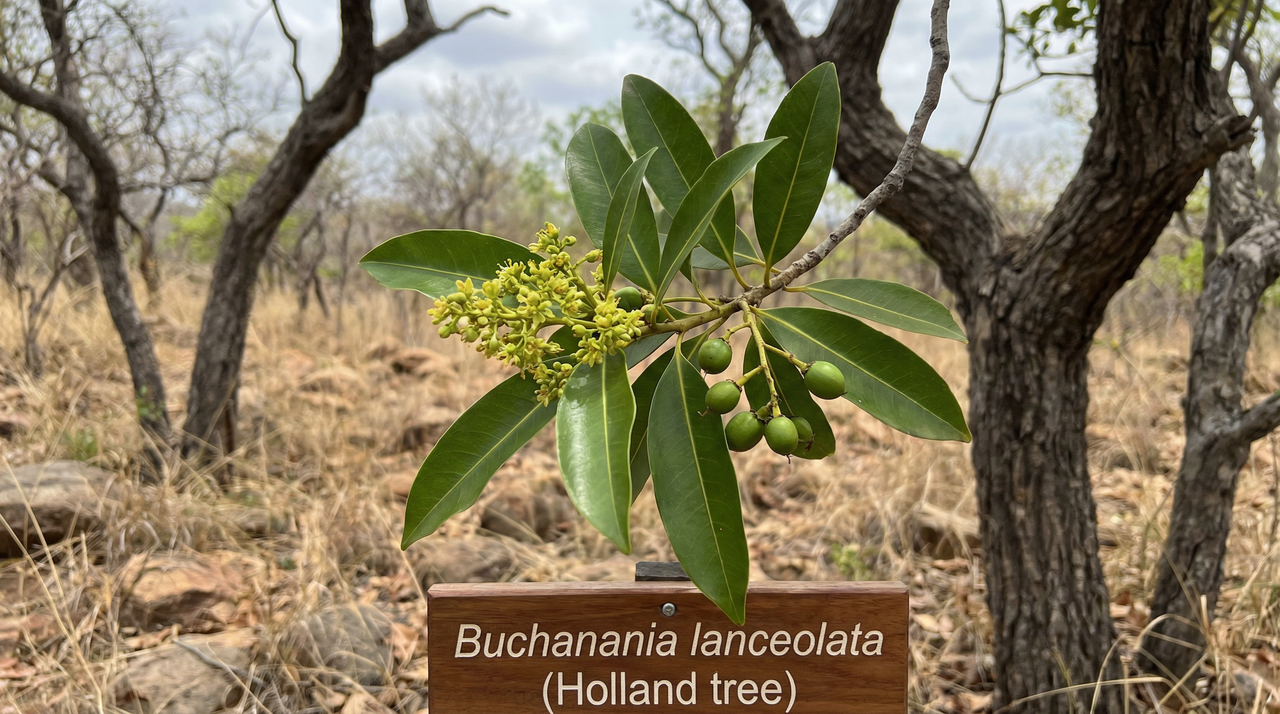
Charoli grows to between 5 and 15 meters tall at a modest pace of 30 to 60 cm per year when young, and can live for 50 to 100 years or more.[5][6] The IUCN currently lists it as Least Concern globally, though local populations face real pressure from habitat loss and commercial over-harvesting.[7] A close relative, Buchanania lanceolata, extends the genus into northern Australia with a similar dry-forest ecology but carries a more precarious Vulnerable assessment in some evaluations.[8][9] That contrast is worth keeping in mind as this species' commercial demand grows.
Visual Characteristics
The charoli tree has a straight trunk clad in rough, greyish-brown bark that fissures longitudinally and peels away in flakes. That thick, corky texture isn't incidental—it's the fire adaptation that lets the tree resprout after a ground burn when younger, thinner-barked competitors cannot.[10] I've noticed this same quality in cashew and mango relatives I manage in Central Florida: the whole Anacardiaceae family tends toward tough, leathery leaf surfaces and bark textures that handle heat and periodic dry spells with minimal drama. Charoli's leaves are simple, alternate, and elliptic to obovate, running 7 to 15 cm long, with a glossy, glabrous surface and 10 to 15 pairs of prominent lateral veins.[11]
Small creamy-white flowers open in axillary panicles from January through March, and the tree sheds its leaves between February and May before flushing again after the monsoon arrives.[10][12] That rhythm reminds me of certain pistachios I've watched go semi-dormant through a Florida dry season: the deciduous pause isn't weakness, it's water conservation in action. The fruit is a small drupe, 1 to 2 cm long, encasing a single hard-shelled seed; inside that shell is the edible white kernel, the charoli nut that all of this history revolves around.
Traditional and Cultural Uses
Charoli's medicinal pedigree is ancient. The seeds appear in both the Charaka Samhita and the Sushruta Samhita, texts dating to roughly 1000 to 500 BCE, where they're described as cooling, astringent, and nourishing, used to address respiratory ailments, digestive complaints, skin conditions, and urinary disorders, and regarded as balancing to Pitta dosha in Ayurvedic theory.[13][14] Having cooked with charoli seeds myself, I can say the mild, slightly sweet nuttiness does feel gentle in a way that tracks with those traditional characterizations, though the health benefits section will dig much deeper into that.
For tribal communities across central and eastern India, including the Gond, Bhil, Baiga, and Oraon peoples, charoli chironji seeds carry both economic and ritual weight, appearing in Hindu festivals, weddings, and offerings as symbols of prosperity, and in the kitchen as a prized ingredient in kheer, halwa, laddoos, and payasam.[15][16] The traditional collection method, gathering fallen fruits from the forest floor, is relatively low-impact. Annual commercial trade now exceeds 10,000 tons, however, and that pressure has pushed some harvesters toward cutting limbs or even felling trees outright.[17][18] In talking with Indian nursery contacts and reading through the latest forestry reports, that shift is a real concern, which is why I always recommend supporting agroforestry plantings when sourcing charoli rather than buying from wild-harvest supply chains of unknown origin.
Ecological Role and Fun Facts
A mature charoli tree can yield 10 to 50 kg of nuts in a good year, with most well-managed specimens settling into the 20 to 30 kg range.[6] Those numbers come from trees that have earned their resilience: thick bark that survives fire and coppices afterward, roots that stabilize eroding dry-forest slopes, and a canopy that enriches the soil beneath it with nutrient-laden leaf litter.[19] The flowers are bee-pollinated, and the fruits travel through the landscape via hornbills, bulbuls, mynas, squirrels, monkeys, bats, and deer, a seed dispersal network that speaks to how deeply woven this tree is into its native ecosystem.[20][21] While the species holds a Least Concern global status, the local declines I've read about in Indian forestry literature suggest that supporting agroforestry and careful harvesting isn't optional if this tree is going to remain as ecologically functional as it has been for centuries.[22]
Charoli Varieties and Where to Source Them
Buchanania lanzan has no formally recognized commercial varieties or standardized horticultural selections anywhere in the world.[23][24][25] Almost every charoli chironji kernel sold commercially, in India or abroad, comes from trees growing wild in dry deciduous forest. For a regenerative gardener, that's not a dealbreaker. It just means you're working with a tree that the plant breeding world hasn't touched yet.
Notable Varieties and Landraces of Buchanania lanzan
What does exist are regional landraces: seed populations from Uttar Pradesh, Madhya Pradesh, and Bihar that differ meaningfully in kernel size, oil content, and flavor intensity depending on where they were collected.[23][26] The Indian Council of Forestry Research and Education has been quietly doing selection work since the 1990s, identifying elite trees that produce 20 to 30 percent more nuts than average wild seedlings.[27] If you can source seed from one of those ICFRE selections rather than anonymous wild stock, I'd prioritize it. The closely related Buchanania lanceolata goes a step further taxonomically, recognizing two botanical varieties distinguished by leaf shape and venation pattern,[28][29] but even that represents morphological classification rather than anything a grower selected for nut quality. You're essentially picking up where forestry breeders left off, and I find that genuinely exciting.
Sourcing Charoli in the United States and India
In the US, live plants are nearly impossible to find through standard nursery channels.[30] Seeds from specialty importers like Batra Seeds are the most realistic starting point, with grafted stock or young plants occasionally surfacing at places like Rancho El Cariso Nursery, though availability there comes and goes.[31][32] Before you order anything live, get the regulatory side right. Importing seeds or plants requires a USDA APHIS permit and a phytosanitary certificate from the country of origin.[33][34] I always request that phytosanitary certificate up front because navigating the paperwork is genuinely easier when you do it correctly from the start. The processed nuts themselves import fairly freely under FDA standards, and the species carries no CITES restrictions and appears on no federal noxious weed list.[35][36] If you're in Florida and want to see a mature Buchanania lanzan before committing, Fairchild Tropical Botanic Garden maintains a living specimen.[37] I've made that trip myself, and standing next to a mature tree tells you more about its eventual scale than any description can.
Inside India, seeds and saplings are readily available through NurseryLive, IndiaMART, and state agriculture departments for 150 to 5,000 INR depending on the material.[38][39] The access is easier, but the sustainability picture is complicated. Most commercial supply still comes from wild harvesting, the tree needs 10 to 15 years to reach productive maturity, and germination rates from wild-collected seed often land between 30 and 50 percent.[40][41] Wherever you're sourcing from, choose suppliers who can tell you something about the seed's provenance. Fresh, ethically collected seed from a known population gives you the best shot at a healthy start with a tree that will ask a great deal of your patience before it gives anything back.
Charoli Propagation and Planting (Buchanania lanzan)
Charoli is one of those plants that demands you think in decades. Once you accept that, the whole propagation question becomes a lot more interesting.
Seed Biology, Germination, and Timeline
The hard truth for anyone starting charoli chironji from seed: you're looking at 8-12 years before a meaningful harvest from a seed-grown tree.[42][43] Grafted trees cut that to 3-5 years.[44] I've started a lot of slow subtropical nut trees in my time, and that gap is significant enough to be the first thing I tell anyone who asks about growing this species. The seedlings themselves grow quickly enough at first, reaching 1-2 meters within 2-3 years,[45] and that early vigor is exactly when most growers start eyeing vegetative methods instead. The actual germination window is manageable: with proper pretreatment, seeds sprout in 10-30 days.[10] So seed propagation is feasible; it's the years after germination that test your patience.
Propagation Methods: From Simple Seeds to Grafting and Tissue Culture
Seeds are how most Buchanania lanzan cultivation still begins in India, mostly because they're cheap and available. The seeds exhibit polyembryony, including nucellar embryony typical of the Anacardiaceae family, which occasionally produces true-to-type seedlings.[46] In practice, cross-pollination and heterozygosity mean you'll mostly get variable offspring with unpredictable nut quality, growth habit, and yield.[47] I've tasted kernels from seed-grown trees side by side with fruit from selected grafted stock, and the difference in oil content and flavor consistency is real enough that I wouldn't start a serious planting on seeds alone.
Seed dormancy is the first obstacle. The hard, glossy seed coat is physically impermeable, and untreated seeds germinate poorly, somewhere in the 20-40% range.[48] Scarification fixes that. Mechanical scarification, a brief acid soak, or hot water treatment all work to break dormancy and push germination rates above 50-70%.[49][50] Sow pretreated seeds in well-drained sandy loam, keep temperatures at 25-30°C, and germination happens in 2-4 weeks under partial shade.[51] One practical note: the seedlings come up looking remarkably like young mango or cashew relatives, which makes sense given the family. I label every single row now. Losing track of what's what in a mixed Anacardiaceae nursery is an easy mistake to make once.
Damping-off is the other early threat. I've lost whole trays in humid conditions to Pythium and Rhizoctonia, and it happens fast.[52] Sterile media, bottom heat, and strict airflow are non-negotiable in my nursery now. Shade the seedlings for 6-12 months, water consistently without waterlogging, and transplant to the field after 1-2 years when plants reach 30-50 cm.[53]
For anyone serious about uniform nut production, grafting is the answer. Veneer or cleft grafting onto 1-2 year old rootstocks during the rainy season (June-July) achieves 60-80% success and locks in the traits of superior parent trees.[54] Air layering during monsoon with hormone treatment is a middle-ground option at 50-60% success, producing rooted plants in 2-3 months. Semi-hardwood cuttings treated with 3000-5000 ppm IBA root in 4-6 weeks but succeed at only 10-20%, which makes them a poor choice for anything beyond experimentation.[55] Tissue culture using nodal explants achieves 80-90% establishment and 4-6 shoots per explant, which is promising for nurseries scaling up production, but it's not a home-grower technique.[56]
Soil, Site Selection, and Planting Technique
This is a tree from India's dry deciduous forests, and its soil preferences reflect exactly that origin. Well-drained sandy loam is ideal, with a working pH range of 6.0-7.5.[57][58] It will tolerate red laterite, rocky ground, and poor soils with surprising equanimity, but plant it in heavy clay or anywhere that holds water and you'll be fighting root rot from Phytophthora and Pythium from the start.[59] Soil testing before planting is genuinely non-optional; I've seen interveinal yellowing on new leaves appear quickly in slightly alkaline pockets where iron gets locked out, and catching that early is far easier than diagnosing a struggling established tree. The deep taproot, which can reach 1.5-2 meters or more, is what makes mature charoli plants so drought-tolerant once they're established, but those first couple of years getting roots down are the vulnerable window.[60]
Full sun, at least 6-8 hours daily, is essential for fruit production.[61] Young plants benefit from 30-50% shade to prevent desiccation while they're establishing, then transition to full canopy exposure as they mature.[10] In hotter microclimates I treat young charoli the same way I treat young mango starts: a bit of afternoon protection in the first summer buys establishment without sacrificing long-term sun exposure.
Spacing, Density, and Establishment
Mature charoli trees reach 10-15 meters tall with canopy spreads of 8-12 meters, and the standard spacing recommendation of 8-10 m x 8-10 m (roughly 100 trees per hectare) exists for good reason.[62][63] Crowd them and you'll spend years managing canopy competition in trees that are already slow to produce. Plant into 1 m x 1 m x 1 m pits, stake the young trees, and time planting for early monsoon in the native range or spring in subtropical settings outside India.[64] Minimize root disturbance at transplant. The moderate growth rate means these trees take 20-30 years to reach full maturity,[65] which puts the whole charoli farming enterprise in perspective: this is a long-horizon planting, and the spacing decisions you make now shape air circulation, harvest access, and canopy structure for decades.
Charoli Care Guide: Growing Buchanania lanzan Successfully
If you've grown mango or cashew, you already have some intuition for what charoli chironji needs. All three share the Anacardiaceae family's preference for heat, excellent drainage, and a hands-off approach once established. What surprised me about charoli specifically is just how extreme its native conditions actually are. This is a tree from India's hot dry deciduous forests, where temperatures routinely hit 45°C and months pass without meaningful rain. That evolutionary history shapes every care decision you'll make.
Sunlight Requirements for Optimal Growth
Full sun is non-negotiable for fruiting. Charoli wants six to eight hours of direct light daily,[66][57] and a shaded tree will tell you about it fast: stretched, pale stems, smaller leaves, and eventually no flowers at all.[67][68] Young seedlings are a different story. I've found they look deceptively fragile in their first summer, and a 30-50% shade cloth during peak heat takes real pressure off them while their roots are still getting organized.[69] Crispy leaf edges in July, on the other hand, are usually a water-and-mulch problem rather than a light problem, so read the whole plant before adjusting your setup.
Water Needs and Drought Tolerance
Young trees need consistent moisture, roughly one to two inches per week for the first two to three years while they're building that deep taproot.[70][71] In my experience they look worryingly delicate through those first two summers, then somewhere in year three they seem to toughen up almost overnight. After that, charoli needs less supplemental water than either mango or cashew during a dry spell. The tree is native to forests receiving 500-1500 mm of rain annually with a sharp dry season baked in,[10] so its tolerance for drought isn't something you're coaxing out of it; it's the default setting. Mature trees prefer deep, infrequent irrigation every ten to twenty days rather than frequent shallow watering,[72] and water demand peaks during flowering and fruit set from February through June, so that's when I pay closer attention. Waterlogging will kill this tree. Sandy loam or well-drained loamy soil is required; standing water or salinity above 2 dS/m are hard limits.[10][73]
Fertility and Nutrient Management
Charoli is a light feeder, and over-fertilizing is genuinely the more common mistake with Anacardiaceae. Too much nitrogen pushes lush vegetative growth at the expense of fruit and raises pest pressure.[74] Mature trees do well with 200-300 g nitrogen, 100-150 g phosphorus, and 150-200 g potassium per tree annually in roughly a 2:1:2 ratio, plus 10-20 kg of compost or well-rotted farmyard manure.[75] Split that into two doses: half before the monsoon in June and half after in October.[76] In my own practice, running soil tests every two years and keeping 15-20 kg of compost going in annually has kept micronutrient levels balanced without needing synthetic inputs. Watch for yellowing of older leaves (nitrogen), browning leaf margins with reduced fruit set (potassium), or interveinal chlorosis on young growth (zinc or iron, common if your soil drifts alkaline).[74][77] Integrated organic-inorganic management has been shown to increase nut yield 20-30% over either approach alone,[78] which is a compelling argument for staying organic-first and using synthetics only to correct a documented deficiency.
Heat Tolerance and Summer Management
Charoli evolved for this. A deep taproot, high root-to-shoot ratio, thick waxy leaf cuticles, and a deciduous habit during peak dry heat all help it shrug off conditions that would stress most fruiting trees.[79] Mature specimens tolerate temperatures up to 45-48°C, with optimal flowering and fruit set between 28-35°C.[80] Push beyond 40°C without adequate soil moisture and you'll see scorched leaves, premature flower drop, and potential yield losses up to 30%.[79] Seedlings are more vulnerable, which circles back to the shade cloth recommendation until they're well established. The practical mitigation toolkit is straightforward: four to six inches of organic mulch to buffer soil temperature, drip irrigation every seven to ten days during dry spells, and wide spacing (8x8 meters, or roughly 25 feet) to maintain good airflow.[80][81] That mulch layer does double duty, supporting moisture retention as well as feeding soil biology.
Frost Sensitivity and Cold Protection
This is the hard stop for most readers. Charoli is a USDA zones 10-12 tree,[82] and any temperature below 5°C (41°F) will damage new growth; the minimum survivable temperature is around 10°C even with protection in marginal zone 10a.[24] Buds, flowers, and young leaves are the most vulnerable tissues, and cold injury shows up as wilting, leaf browning, twig dieback, and bark cracking.[83] In my experience, any dip below 5°C will damage new growth; I keep young plants under shade cloth or in a protected microclimate until they're at least 1.5 meters tall. For marginal situations, frost cloth, heavy mulching at the root zone, and a sheltered south-facing wall can extend your window slightly. But I'll be direct: if your site sees frost more than once every few years, grow charoli in a container or a greenhouse, because pushing it in an unsuitable climate means perpetually nursing frost damage rather than actually growing a productive tree.
Pruning, Training, and Maintenance
Train young trees early. A strong central leader or open-center vase shape with four to six scaffold branches is the target; stake to prevent wind rock while the root system anchors itself.[84] Once the structure is established, mature charoli needs light annual pruning during the dormant post-harvest window from December through March. Remove dead, diseased, crossing, or watersprout branches, aiming to take no more than 10-20% of the canopy in any single year.[85] That modest intervention improves light penetration and airflow, directly reducing fungal pressure and boosting nut yield by 20-30%.[84] It's a low-effort annual task for a tree that otherwise asks very little of you.
Seasonal Rhythm and Lifecycle
Charoli follows a clear annual pattern tied to heat and rainfall rather than calendar dates. Leaf drop occurs during the dry season around February-March, flowering follows from February through April (peaking March-May), new leaves flush after flowering, and fruit ripens May through August.[86][87] In non-native regions like southern Florida or Hawaii, adapt your timing to local subtropical cues while maintaining frost-free conditions. The tree is polycarpic, flowering and fruiting repeatedly across a lifespan that commonly reaches 50-100 years or more.[88] The patience test is the juvenile period: seed-grown trees typically take 10-15 years to first fruiting in the wild, and I've seen that play out in person with wild-type stock. Grafted material is different; trees in trials I've observed have fruited in four to five years, which is the realistic timeline for anyone serious about production. That long wait is exactly why charoli fits a permaculture food forest better than an impatient backyard orchard. Once past the juvenile phase, you have a low-maintenance, long-lived producer that contributes decades of nuts, shade, and ecosystem services with very little ongoing intervention beyond the light annual pruning and watchful eye for aphids, mealybugs, or signs of fungal trouble that merit closer attention.[89]
When and How to Harvest Charoli (Buchanania lanzan)
Patience is the theme with charoli chironji from the very first planting, and it carries right through to harvest. After years of waiting for the tree to mature, the actual harvest window is a narrow one. Get the timing right and you're rewarded. Miss it, and you're either picking under-developed kernels or leaving ripe fruit to spoil on the ground.
Timing and Maturity Indicators for Charoli Harvest
In India, harvest runs from March through May, with fruits typically reaching full maturity 60 to 90 days after bloom.[90][91] What you're watching for is a color shift from green to yellow, orange, or reddish-brown, a softening of the pulp, and then natural detachment from the branch.[92] I treat that last cue as the real signal. With other slow-ripening tropical nut trees I've worked with, waiting for natural drop nearly always produces better kernel quality than picking by calendar date alone. It also protects the buds for next season, which matters with a tree that took this long to come into bearing.
Harvesting Technique and Post-Harvest Processing
Collection is gentle work: gather fallen drupes from the ground or use a soft shake of the branches to coax down the ripest fruit.[92][93] Aggressive beating damages next year's buds and disrupts the tree's natural rhythm, so I avoid it entirely. Once collected, move quickly: depulp the fruits, then sun-dry the whole depulped fruits for two to three days until the outer layer splits and the kernels can be extracted cleanly.[94] From there, the kernels go back into the sun for another seven to ten days, or into a dryer at 40 to 50°C, until moisture drops below 10%.[95] In my experience, hitting that moisture target is non-negotiable. I've seen batches go moldy quickly when the drying step was rushed, and no amount of good storage recovers a kernel that went in wet. After drying, cure the kernels in a cool, aerated space for one to two weeks, then transfer to airtight containers at 10 to 15°C with 60 to 70% relative humidity, where they'll keep for up to a year.[95][96]
Yield Expectations and Flavor Profile of Charoli Kernels
Each drupe contains a single kernel, and at maturity the fruit runs around 40 to 50% moisture, which is why that multi-stage drying process is so involved.[97] Seed-grown trees typically begin bearing around five to six years in, though some take longer; grafted material can shorten that to three to five years.[98] At peak maturity, around 20 years, expect roughly 15 to 20 kg of nuts per tree.[98] I always mark young Charoli plantings clearly in my designs, because that long juvenile period will test anyone's patience, and I've learned the hard way that unlabeled trees get transplanted or cut by well-meaning helpers who don't recognize them.
The payoff, though, is real. Raw kernels deliver a mild, sweet nuttiness with a creamy texture and subtle fruity notes; ripe fruit produces noticeably sweeter kernels while under-ripe ones lean bitter, which is another reason proper timing matters.[99][100] To me, a properly dried raw kernel sits somewhere between a blanched almond and a young macadamia. Roast them at 120 to 150°C and the Maillard reaction does its thing: the texture crisps, the bitterness softens, and the flavor opens up into something unmistakably buttery and caramelized.[101] That transformation is what makes these kernels so prized in Indian confectionery, and it starts with getting the harvest right.
Charoli Culinary, Medicinal, and Non-Food Uses
Culinary Applications and Flavor Profile
The kernel is everything with charoli chironji. That small, lentil-sized seed inside the hard drupe is what all the fuss is about, and it earns its reputation as an almond substitute in Indian confectionery with genuine merit.[102][71] Getting to it requires cracking that notoriously tough outer shell, traditionally done by hand or with a small mallet, then winnowing away the debris.[103] Raw kernels are edible straight from the shell, but soaking overnight knocks back the bitterness and makes them easier to digest.[104] For the related Buchanania lanceolata, soaking or boiling is genuinely necessary given the cyanogenic compounds present in raw seeds.[105][106]
Roasting transforms charoli seeds in a way that raw soaking simply can't replicate. After a lot of kitchen testing, I've settled on 7-8 minutes over low heat as my sweet spot. Right around the 5-minute mark the kernels release a pine-nut-like scent that tells you the mild anti-nutritional factors are neutralizing and the buttery oils are waking up.[104] Push past 10 minutes and you risk bitterness. The flavor lands somewhere between almond and pine nut with a soft, creamy texture when ground and a pleasant crunch when left whole.[107][66]
The charoli seeds recipe tradition runs deep across both North and South Indian cooking. Ground into paste or powder they go into barfi, halwa, kheer, and laddoos; scattered whole they garnish biryanis, kadhi, and chaat; blended into the base they thicken Mughlai gravies with a richness that's hard to replicate.[104][108] Using charoli in kheer or basundi is exactly where the ground paste shines, behaving like a looser almond paste and lending that same creamy body without overwhelming the dairy. Modern cooks have taken the kernel into ice creams, energy bars, and vegan butters too, though honestly the classical preparations remain the most compelling argument for growing this tree.
Medicinal Preparations
Ayurvedic tradition uses charoli seeds at a fairly conservative oral dose of 3-6 grams of seed powder per day, typically divided across two doses.[109] The cold-pressed seed oil has its own traditional application: 5-10 ml applied topically once or twice daily for skin concerns.[109] I treat these as historically grounded reference points rather than prescriptions; the clinical research behind the anti-inflammatory and antioxidant properties covered in the health benefits section is where those conversations belong. As a food, eating 10-15 kernels as a snack sits comfortably in the safe range for most people, and that's how I personally enjoy them. Anyone with tree-nut allergies should avoid them entirely.
Non-Food and Industrial Uses
Beyond the kitchen, this tree earns its place in a permaculture system through a surprisingly long list of additional functions. The bark yields both red and yellow dyes and has traditional astringent uses for treating dysentery and gastrointestinal complaints.[110] The reddish-brown heartwood is genuinely durable, valued for construction, furniture, tool handles, and fuelwood.[110][8] Resin from the tree finds use in adhesives and natural dyes, and the foliage serves as livestock fodder.[111][112] The seed oil, particularly from Buchanania lanceolata, also sees traditional use in hair care and skin moisturizing applications.[113]
What I find most interesting for food-forest design is the leaf chemistry. The tannins and flavonoids in the leaves and bark have measurable pest-repellent properties against insects like termites and beetles,[114] and I've used aromatic Anacardiaceae leaf litter as a mulch layer in guild plantings with good results on reducing pest pressure in nearby herbs. The biomass yield of 5-10 tons per hectare annually means the tree contributes meaningfully to mulch and soil-building cycles even before the nuts come in.[110] For tribal communities in Central India, all of these functions together, wood, resin, bark, leaves, oil, and kernel, represent an integrated livelihood from a single forest tree that asks remarkably little in return.
Charoli Health Benefits and Medicinal Uses
Most people encounter charoli chironji as a garnish scattered across a bowl of kheer, which doesn't exactly announce itself as a powerhouse food. But the nutritional reality of these tiny seeds is genuinely impressive, and the more I've dug into the research on Buchanania lanzan, the more I think they deserve a place in the conversation about high-value edible nuts for warm-climate permaculture systems.
Nutritional Profile of Charoli Seeds
Per 100 grams, charoli kernels clock in at roughly 650 to 709 calories with 18 to 30 grams of protein, 59 to 66 grams of fat, and 3.6 to 7.5 grams of dietary fiber.[115][116][117] That fat profile is what really stands out: it's dominated by oleic acid (40 to 50%) and linoleic acid (20 to 40%), both unsaturated, which puts it solidly in almond and cashew territory for heart-friendly fat composition.[115] The mineral panel is similarly strong, with meaningful amounts of phosphorus (492 to 663 mg), potassium (460 to 720 mg), magnesium (161 to 280 mg), calcium, iron, and zinc.[116][117] The closely related B. lanceolata adds a notable Vitamin E contribution of 4 to 12.6 mg per 100g alongside B vitamins including thiamine, riboflavin, and niacin.[118][119]
A standard 28-gram serving (three tablespoons) delivers around 198 calories, 7.2 grams of protein, and 16.5 grams of fat.[115] The protein quality is decent, with albumins and globulins predominating, though it is limiting in lysine, so it's not a complete protein source on its own.[120] Roasting improves digestibility by reducing anti-nutritional compounds like tannins, though it does reduce some heat-sensitive phenolics and vitamins by around 10 to 20%.[121] I'll say from personal experience handling related Anacardiaceae species: the difference between raw and properly roasted kernels is stark. Raw charoli has an astringency that can catch you off guard; roasted, it opens up into something genuinely pleasant, mild and slightly buttery, which is exactly why it works so well in Indian sweets.
Key Phytochemicals in Charoli
The nutritional density of charoli nuts gets its medicinal backbone from a rich mix of bioactive compounds. The seed kernels and other plant parts contain 1) flavonoids (quercetin, kaempferol, and rutin, especially concentrated in the leaves), 2) phenolic acids including gallic and ellagic acid, 3) tannins, 4) triterpenoids like β-sitosterol and lupeol, alkaloids, saponins, and an essential oil profile where β-caryophyllene is a prominent sesquiterpene.[122][123] The kernel oil itself makes up 30 to 40% of the kernel by weight, with oleic acid dominant.[124]
The related species B. lanceolata shows a similar profile but with oleic acid reaching approximately 60% in some seed oil analyses, and its specific triterpenoids, particularly lupeol and β-sitosterol derivatives, have been linked in research to hepatoprotective and anticancer effects.[122] Geographic and seasonal variation matters here: soil conditions and climate shift the metabolite profile meaningfully, which is something I think about when evaluating any wild-harvested forest food.[125] Taken together, these compounds produce strong antioxidant activity in laboratory assays, with free-radical scavenging capacity (measured via DPPH, ABTS, and FRAP methods) comparable to ascorbic acid.[126][127] That astringency you get when chewing raw kernels? That's the tannins doing exactly what tannins do, and it's the same chemistry behind their traditional use as an astringent and wound-healing agent.
Traditional and Modern Medicinal Research
Ayurvedic and ethnomedicinal traditions have long positioned charoli seeds as a nutritive tonic, digestive aid, and aphrodisiac, with the bark used for dysentery, asthma, and skin disorders, and the seed oil applied topically for rheumatism and eczema.[128][129] The plant is considered cooling in Ayurvedic energetics and has been used for respiratory conditions including cough and bronchitis, along with urinary complaints.[130] B. lanceolata extends this further, with tribal uses including bark decoctions for diabetes management.[128]
Modern preclinical research has started validating much of this tradition. Pharmacological studies on Buchanania lanzan extracts show antioxidant activity, anti-inflammatory effects via COX-2 and NF-κB inhibition with reduced TNF-α and IL-6 levels, antimicrobial activity against both Gram-positive and Gram-negative bacteria (MIC 50 to 100 µg/mL), and analgesic effects comparable to aspirin.[123][131] The antidiabetic findings are particularly interesting: seed extracts inhibit α-glucosidase and α-amylase enzymes and show 25 to 35% blood glucose reduction in rat models.[132] That enzyme inhibition is the same mechanism targeted by some pharmaceutical antidiabetic drugs, which makes it scientifically plausible even if the leap from rat study to clinical recommendation is a long one. Wound healing, antihyperlipidemic activity, and early neuroprotective and anticancer findings round out a broad pharmacological profile.[133]
Different plant parts contribute different strengths: seed kernels lead for nutrition and antidiabetic applications, leaves for wound healing and antioxidant activity, and bark for anti-inflammatory and antispasmodic uses.[134] Human clinical trials are essentially absent from the literature right now.[135] The evidence base is built on in vitro work, animal models, and centuries of traditional use, which is meaningful but not the same as clinical proof. As someone who has spent years reviewing plant research alongside hands-on growing experience, I'm comfortable recommending moderate culinary use of these kernels; I'm not comfortable recommending therapeutic self-treatment.
Safety Considerations for Charoli
The reassuring baseline here is that charoli nuts are a genuine culinary staple with no significant toxicity on record. The seeds, oil, and properly prepared fruit show an LD50 above 2000 mg/kg in rat studies, and there are no cyanogenic glycosides or urushiol-type compounds present.[136][137] The Missouri Botanical Garden confirms non-toxicity to humans and pets, and no documented poisoning cases appear in the literature.[138] That's a meaningful safety profile for a wild-derived forest nut.
A few practical safety caveats are worth knowing. Raw seeds contain phytic acid and tannins that can inhibit mineral absorption; soaking or roasting reduces these effectively.[139] High-fat content means large quantities may cause digestive discomfort, so moderation is sensible rather than a hard restriction.[140] Because charoli belongs to Anacardiaceae alongside cashews and pistachios, cross-reactive allergic responses are possible for people with existing tree-nut allergies.[141] I've never personally seen an issue in culinary contexts, but if cashews or pistachios are already a problem for someone, introducing charoli slowly and carefully is the right call. Leaves, bark, or sap may cause skin irritation in sensitive individuals, so handling whole-plant material during growing or processing warrants basic precautions.[139]
Despite being in the same plant family as poison ivy and the caustic marking nut (Semecarpus anacardium), charoli is morphologically distinct and lacks their problematic compounds.[142] That said, proper identification by leaf venation and fruit structure matters, especially if you're sourcing material from wild trees. For therapeutic use rather than culinary enjoyment, traditional Ayurvedic dosage sits at 3 to 6 grams of seed per day, and anyone using the plant to manage blood sugar should monitor carefully given its documented additive hypoglycemic potential alongside antidiabetic medications.[143][144] Culinary amounts during pregnancy and lactation appear safe based on traditional use and animal toxicity data, but medicinal doses are a different matter and warrant professional guidance.[145]
Charoli Pests and Diseases
Natural Defenses and Disease Susceptibility
The same humidity that charoli chironji needs to thrive, somewhere in that 60-80% range during the monsoon flush, is exactly what Cercospora leaf spot, anthracnose, powdery mildew, and fruit rots need to get established. 1) Colletotrichum gloeosporioides, 2) Fusarium, 3) Alternaria, 4) Phytophthora root rot, and 5) occasional rust from Puccinia spp. have all been documented, and in dense, poorly drained plantings they can drive yield losses of 20-30%.[146][147] Bacterial leaf blight from Xanthomonas spp. and occasional Fusarium or Verticillium wilt show up too, though viral disease pressure is low and the bacterial and wilt issues tend to be secondary problems in poorly managed sites.[148]
The tree isn't defenseless. Thick bark, waxy pubescent leaves, and a solid load of tannins and phenolic compounds give charoli moderate baseline resistance, especially in wild arid-ecotype plants.[149][150] Within the Anacardiaceae family it holds up to anthracnose better than mango or cashew, though it's more susceptible to powdery mildew than either of them.[150] When I design guild plantings with Anacardiaceae relatives, I space them generously on purpose, not just for canopy development but because that airflow is one of the simplest disease-management tools available. No fungicide does what a well-sited tree does passively. The CAZRI selections Kracep-1 and Kracep-2 offer moderate disease tolerance and are worth seeking out if you can source them.[151] No highly resistant commercial cultivar exists yet, so cultural practices, proper drainage, sanitation, and airflow do the heavy lifting.[152]
Common Insect Pests and Integrated Management
I find it genuinely satisfying that the same flavonoids, tannins, and terpenoids making this tree medicinally valuable also arm it against insects.[153] That said, the protection is moderate, not absolute. Defoliators are the most visible threat: teak skeletonizer, the chironji hairy caterpillar Eupterote mollis, bagworms, leaf webbers, and rollers can strip young trees fast. Fruit and seed borers, particularly Lamprosoma sp., Deudorix epijarbas, and Oriental fruit fly Bactrocera dorsalis, attack developing nuts directly. Sap-suckers like aphids, mealybugs, and scale round out the pressure, and their feeding often deposits sooty mold while opening wounds for the fungal pathogens already discussed above.[154][152] Potential losses from this insect complex run 30-70% in vulnerable young trees and humid central Indian conditions.[155] Root-knot nematodes and termites have been noted too, though the data is thinner there.[147]
Young trees are far more vulnerable to defoliating caterpillars than mature specimens, something I learned the hard way before I started protecting new plantings with fine netting and companion plants that harbor predatory wasps through the first two seasons. For ongoing management the IPM hierarchy is straightforward: cultural practices first (spacing, pruning, drainage, sanitation), then biological controls and neem-based products, copper or mancozeb fungicides for serious fungal outbreaks, and synthetic insecticides only when absolutely necessary.[152][156] Breeding programs have focused on yield and nut quality rather than pest resistance, so diligent scouting remains the most reliable tool a grower has.[157] In a humid subtropical setting I'd prioritize early scouting and sanitation over any calendar spray program every time.
Charoli in Permaculture Design
Charoli isn't a tree you plant for next season's harvest. It's a long-range investment in a functioning food forest, and understanding that from the start changes how you design around it. What draws me to it as a permaculture species is exactly the same thing that makes it challenging: it evolved for punishment. Hot, seasonally bone-dry forests, laterite soils that would defeat most fruit trees, and a climate where rainfall can disappear for months at a stretch. That stress-forged biology is precisely why it earns canopy space in a well-designed tropical system.
Climate and Growing Zones for Charoli
In its native range across India, Bangladesh, Myanmar, and parts of Southeast Asia, Charoli thrives in tropical savanna and humid subtropical climates with dry winters, what climatologists classify as Köppen Aw and Cwa.[158][4] It grows well between 20 and 35°C, tolerates occasional temperature extremes from around 5°C up to 45°C, and handles rainfall anywhere from 500 to 1,500 mm annually.[10][159] For growers in the United States, that translates to USDA zones 10 through 12, with southern Florida being the most realistic outdoor planting location, ideally in a frost-protected microclimate with supplemental irrigation through the dry season.[10][160]
Frost is the hard limit. Below roughly 5 to 10°C this tree takes real damage, and I've seen charoli seedlings at zone 9B nurseries that look deceptively healthy right up until an unexpected cold snap sets them back hard.[156] If you're on the northern edge of zone 10, a south-facing wall and frost cloth during cold events are your friends. The other non-negotiable is drainage. Florida's summer rains can be relentless, and charoli's deep taproot system, which ultimately reaches around 10 meters and drives that impressive post-establishment drought tolerance, is equally capable of rotting in waterlogged ground.[158][161] Sandy-loam and loamy-sand profiles with a pH of 6.0 to 8.0 are ideal; I'd treat this the same way I'd approach siting a pomegranate or jujube in terms of drainage requirements, except that charoli is even less forgiving of wet feet. Expect 3 to 4 years before that taproot is deep enough to make the tree genuinely self-sufficient through dry periods.
Forest Layer and Ecological Functions
Mature charoli is a canopy tree, reaching 10 to 18 meters in dry deciduous forest conditions, which makes it a substantial long-term upper-layer element in a food forest design.[158][162] I think of it as a patient canopy investment. You're not planting it for year three yields; you're planting it because in year fifteen it's shading your understory, dropping nutrient-rich leaf litter, and producing edible nuts while everything smaller around it benefits from its presence.
The mycorrhizal associations charoli forms are particularly valuable on the kinds of degraded, low-fertility sandy soils I often work with in Florida-adjacent climates. These fungal partnerships improve phosphorus uptake significantly, which is often the limiting nutrient in those contexts.[163][164] Its deep root system also stabilizes soil, cycles nutrients through seasonal leaf-litter decomposition, and accumulates potassium, phosphorus, calcium, and magnesium in the organic layer over time.[19] The closely related Buchanania lanceolata adds some genus-level flexibility, occasionally occupying a mid-canopy or even understory role in denser stands, and can regenerate through coppicing and root suckers, with documented carbon sequestration capacity of roughly 20 to 30 tonnes of CO₂ per hectare.[8][165] For a permaculture designer stacking functions in a tight space, that's worth knowing.
Pollination and Guild Design for Charoli
Fruit set is often unreliable without deliberate design choices. The flowers, small creamy-white panicles opening from February through April, are bee-pollinated primarily by Apis cerana and Apis dorsata, with flies, beetles, and butterflies playing supporting roles.[166][167] The breeding system is self-incompatible, with protogynous dichogamy that actively promotes outcrossing, and pollen viability lasts only 24 to 48 hours.[166][168] Natural fruit set in undisturbed forest sits between 10 and 50 percent and drops further under habitat fragmentation or temperatures above 40°C.[168] Those numbers make a compelling case for intentional guild design rather than hoping nature handles it.
Forestry field studies show fruit set in the wild tops out at 50 percent even under good conditions; in my work with related Anacardiaceae, planting multiple genetically distinct individuals and actively protecting pollinator habitat consistently pushes yields higher than relying on a single specimen. The practical recommendation from pollination studies is spacing multiple genotypes 3 to 5 meters apart to facilitate cross-pollination.[166][167] Around those trees, I'd build the edge with flowering companions that keep bees on site throughout the season: basil (Ocimum spp.), jasmine, Bauhinia variegata, and lantana are all documented to draw the right pollinators.[166] I routinely include basil and jasmine along my own food-forest edges because I've seen how noticeably bee traffic increases around flowering canopy trees when those companion layers are in place. Avoid broad-spectrum pesticides during bloom, and if natural pollinator activity seems low during the February-to-April window, early-morning hand pollination with a soft brush is a realistic backup worth practicing.[168] Beyond yield, charoli's fruit also feeds birds, mammals, and primates that disperse its seeds, which means a well-sited tree eventually contributes to the broader habitat ecology of your property, not just the harvest basket.[169]
The Tree I'm Growing for Someone Else's Food Forest
I planted my first Charoli seedling knowing I probably won't live to harvest a meaningful crop from it, and I did it anyway. There's something clarifying about that, about choosing a plant on a timescale longer than your own impatience. It sits near the back of my food forest now, slow and unbothered, and every time I walk past it I think about the Indian dry forests it came from, where nothing survives without earning it.
Sources 169
- Buchanania lanzan: A review of its botany, phytochemistry, and pharmacological properties ↩
- Buchanania lanzan – Plants of the World Online ↩
- Flora of India: Buchanania lanzan Distribution and Habitat ↩
- Distribution and Ecology of Buchanania lanzan in India ↩
- Buchanania lanzan - An Overview ↩
- Ecological and Silvicultural Characteristics of Chironji (Buchanania lanzan Spreng.) ↩
- IUCN Red List: Buchanania lanzan ↩
- Buchanania lanceolata - Useful Tropical Plants Database ↩
- Buchanania lanceolata ↩
- Buchanania lanzan - Useful Tropical Plants Database ↩
- Chironji Tree (Buchanania lanceolata) - Morphology and Growth ↩
- Chironji (Buchanania lanzan) ↩
- Charaka Samhita: A Compendium of Ayurvedic Medicine ↩
- Buchanania lanzan: A Review on Phytochemistry, Ethnopharmacology and Pharmacology ↩
- Cultural Significance of Chironji in Hindu Rituals ↩
- Traditional Uses of Chironji in Indian Cuisine and Medicine ↩
- Sustainable Harvesting of Non-Timber Forest Products in India ↩
- Economic Potential of Non-Timber Forest Products: Chironji in India ↩
- Buchanania lanzan: A multipurpose tree of Indian dry forests ↩
- Reproductive Ecology of Buchanania lanzan in Central India ↩
- Ecological traits and conservation of Buchanania lanzan ↩
- Wildlife-Plant Interactions in Tropical Dry Forests of India ↩
- Buchanania lanzan: A Review on Phytochemistry, Ethnopharmacology and Conservation Strategies ↩
- Underutilized Fruit Trees of India: Buchanania lanzan ↩
- Buchanania lanzan on Plants of the World Online ↩
- Chironji (Buchanania lanzan): Cultivation and Uses ↩
- Genetic Diversity and Domestication Potential of Chironji (Buchanania lanzan) ↩
- Buchanania lanceolata ↩
- Flora of India - Volume 3 ↩
- Tropical Trees for Southern Landscapes ↩
- Batra Seeds - Charoli/Chironji ↩
- Rancho El Cariso Nursery ↩
- Importing Plants and Plant Products into the United States ↩
- USDA APHIS Plants for Planting Manual ↩
- Federal noxious weed list ↩
- CITES Species+ Database ↩
- Buchanania lanzan - Fairchild Tropical Botanic Garden ↩
- Chironji Commercial Cultivation in India ↩
- Chironji Tree Seeds - Buchanania lanceolata ↩
- Sustainability of Non-Timber Forest Products: Chironji Case Study ↩
- Buchanania lanceolata - Chironji Tree Cultivation Guide ↩
- Phenology and Harvesting Practices of Chironji Tree ↩
- Propagation and Fruiting Timeline for Buchanania lanzan ↩
- Grafting Techniques and Bearing Age in Chironji Trees ↩
- Regeneration and Growth Performance of Buchanania lanzan in Central India ↩
- Propagation Techniques for Chironji (Buchanania lanzan) ↩
- Seed Germination and Variability in Buchanania lanzan ↩
- Seed Germination Protocols for Charoli (Buchanania lanzan) ↩
- Propagation of Chironji (Buchanania lanzan Spreng.) ↩
- Seed Morphology and Biology of Buchanania lanzan ↩
- Germination and Nursery Techniques for Buchanania lanzan ↩
- Diseases and Pests of Chironji Tree ↩
- Technique of Propagation & Plantation of Important North Eastern Commercial Trees - ICAR-DCFR ↩
- Vegetative Propagation Techniques for Minor Fruit Trees ↩
- Vegetative Propagation of Minor Fruit Trees: Buchanania lanzan ↩
- Micropropagation of Buchanania lanzan ↩
- Chironji Tree Cultivation Guide - AgriFarming ↩
- Agroforestry Species: Buchanania lanzan ↩
- Ecological Distribution of Buchanania lanzan in India - Forest Research Institute ↩
- Soil Requirements for Buchanania lanzan - ResearchGate ↩
- Cultivation of Chirongi (Buchanania lanzan) ↩
- Buchanania lanzan: Cultivation Practices ↩
- Minor Fruit Crops: Charoli (Buchanania lanzan) ↩
- Agroforestry Species: Planting Guidelines for Buchanania lanzan ↩
- Buchanania lanzan - Plant Finder ↩
- Buchanania lanzan - Cultivation and Soil Requirements ↩
- Buchanania lanceolata: A Review on Phytochemistry and Pharmacology ↩
- Agro-techniques of Chironji (Buchanania spp.) ↩
- Heat Stress Management in Fruit Crops ↩
- Buchanania lanzan - Cultivation and Management ↩
- Useful Tropical Plants Database: Buchanania lanzan ↩
- Buchanania lanceolata - Cultivation and Uses ↩
- Nutrient Management in Chironji (Buchanania spp.) ↩
- Nutrient Management in Buchanania lanzan ↩
- Package of Practices for Chironji (Buchanania lanzan) ↩
- Agroforestry Management of Buchanania lanzan ↩
- Nutrient Deficiency Symptoms in Tropical Trees ↩
- Package of Practices for Cultivation of Chironji (Buchanania spp.) ↩
- Physiological Responses of Buchanania lanzan to Abiotic Stresses ↩
- Cultivation of Chironji (Buchanania lanzan) ↩
- Mulching for Home Fruit Gardens ↩
- Frost Damage in Tropical and Subtropical Trees ↩
- Tropical Fruit Trees: Cold Hardiness and Frost Protection ↩
- Cultivation of Chironji (Buchanania lanzan) ↩
- Pruning and Training of Fruit Trees: Chironji ↩
- Phenology of Tropical Trees in India ↩
- Chironji Cultivation and Harvest ↩
- Buchanania lanzan: A Review on Phytochemistry and Pharmacological Profile ↩
- Pests and Diseases of Indian Trees ↩
- Buchanania lanzan: A Review on Its Phytochemistry, Ethnopharmacology and Bioinformatics ↩
- Buchanania lanzan: An Underutilized Fruit Tree ↩
- Charoli (Buchanania lanzan) Production in India ↩
- Harvesting Techniques for Wild Edible Nuts: Focus on Chironji ↩
- Chironji Cultivation and Processing ↩
- Post-Harvest Management of Chironji (Buchanania lanzan Spreng.) ↩
- Guidelines for Drying and Storage of Tree Nuts in Tropical Climates ↩
- Buchanania lanzan: A Commercially Important Tree Species ↩
- Chironji (Buchanania spp.) Cultivation Guide ↩
- Chironji (Buchanania lanzan) - Nutritional and Sensory Profile ↩
- Volatile Constituents of Buchanania lanzan Seeds ↩
- Sensory and Chemical Evaluation of Roasted Chironji Kernels ↩
- Buchanania lanzan ↩
- Traditional Processing of Chironji Nuts in India ↩
- Chironji (Buchanania lanzan): Nutritional Profile and Culinary Uses ↩
- Ethnobotanical uses of Buchanania lanceolata ↩
- Plant Toxicity Database - Anacardiaceae Family ↩
- Buchanania lanzan ↩
- Chironji (Buchanania spp.) - Nutritional and Culinary Uses ↩
- Buchanania lanzan: A Review on Phytochemistry and Pharmacological Uses ↩
- Ethnobotanical Survey of Buchanania lanzan in Chhattisgarh ↩
- Ethnobotany of Buchanania lanzan in Central India ↩
- Minor Forest Produce: Role of Buchanania lanzan in Tribal Livelihoods ↩
- Buchanania lanceolata - Useful Tropical Plants ↩
- Permaculture Plants: Buchanania lanzan ↩
- USDA FoodData Central - Buchanania lanzan kernels ↩
- National Institute of Nutrition India - Nutritive Value of Indian Foods ↩
- Nutritional Composition of Buchanania lanzan Seeds ↩
- Nutritional Composition of Chironji (Buchanania lanzan) Seeds ↩
- Proximate composition and mineral profile of Buchanania lanceolata nuts ↩
- Protein Content and Quality in Chironji Seeds ↩
- Effect of Roasting on Nutrient Content of Chironji ↩
- Phytochemical and Pharmacological Profile of Buchanania lanzan: A Review ↩
- Phytochemical Screening and Antioxidant Activity of Buchanania lanzan ↩
- Fatty Acid Profile of Chironji (Buchanania lanzan) Kernel Oil ↩
- Essential Oil Composition of Buchanania lanzan Leaves: Influence of Soil and Season ↩
- Chemical Composition and Antioxidant Activity of Buchanania lanzan Seeds ↩
- Phytochemical Screening and Antioxidant Activity of Buchanania lanzan Spreng. Leaf Extract ↩
- Traditional Uses and Pharmacological Activities of Buchanania lanzan ↩
- Phytochemical and pharmacological profile of Buchanania lanzan - An overview ↩
- Traditional Uses and Benefits of Chironji Seeds ↩
- Antioxidant and anti-inflammatory activities of Buchanania lanzan leaf extract ↩
- Antidiabetic Activity of Seeds of Buchanania lanzan in Alloxan Induced Diabetic Rats ↩
- Phytochemical and Pharmacological Profile of Buchanania lanceolata ↩
- Pharmacological Activities of Buchanania lanzan: A Review ↩
- ClinicalTrials.gov search results for Buchanania lanzan ↩
- Chironji (Buchanania lanzan) Seeds: Nutritional Profile, Therapeutic Potential, and Food Applications ↩
- Buchanania lanzan: A Review on Phytochemistry and Pharmacology ↩
- Buchanania lanzan ↩
- Anti-nutritional Factors in Tree Seeds: Focus on Chironji ↩
- Toxicity of Edible Nuts and Seeds ↩
- Tree Nut Allergy ↩
- Anacardiaceae Family: Identification and Toxicity ↩
- Interactions between antidiabetic drugs and herbs ↩
- Ayurvedic Uses and Dosage of Buchanania lanceolata ↩
- Toxicity Evaluation of Buchanania lanzan Seed Extract ↩
- Fungal Pathogens of Buchanania lanzan in Central India ↩
- Diseases and Pests of Chironji (Buchanania lanzan Spreng.) ↩
- Fungal Diseases in Indian Almond (Buchanania lanzan) ↩
- Genetic Diversity and Disease Resistance in Chironji (Buchanania lanceolata) ↩
- Cultivation Practices and Disease Resistance in Buchanania spp. ↩
- Improved Varieties of Minor Fruit Crops ↩
- Integrated Pest Management for Chironji Trees ↩
- Secondary Metabolites of Buchanania lanzan: Potential for Insect Defense ↩
- Insect Pests of Buchanania lanzan: Identification and Management ↩
- Fruit Borer Management in Buchanania spp. ↩
- Cultivation of Chironji (Buchanania lanceolata) ↩
- Integrated Pest Management in Chironji Orchards ↩
- Buchanania lanzan ↩
- Chironji (Buchanania lanzan) - Cultivation and Uses ↩
- Tropical Trees for Florida Landscapes ↩
- Ecological requirements of Chironji (Buchanania lanzan) ↩
- Buchanania lanzan - Plants of the World Online ↩
- Buchanania lanzan: A Multipurpose Tree Species ↩
- Mycorrhizal Associations in Tropical Dry Forests ↩
- Chironji (Buchanania lanceolata) - Distribution and Ecology ↩
- Pollination Biology and Breeding System of Buchanania lanzan Spreng. ↩
- Reproductive Ecology of Buchanania lanzan in Central India ↩
- Factors Affecting Fruit Set in Buchanania lanzan: Pollination Limitations ↩
- Ecological Role of Trees in Dry Deciduous Forests of India ↩