Every experienced chaya grower I know has the same story: they handed a leaf to someone, watched that person pop it straight into their mouth, and spent the next thirty seconds genuinely worried. Raw chaya contains cyanogenic glycosides that release hydrogen cyanide during digestion, and that's before you factor in the stinging trichomes on the stems and the oxalate crystals in the tissue.[1] This is not a plant that forgives casual handling. The Maya knew this. They cooked it, thoroughly, for thousands of years before anyone tried to shortcut the process.
What gets me about chaya is that the toxicity isn't the interesting part, it's just the price of admission. Boil the leaves for ten to thirty minutes, discard the water, and you're left with one of the most productive leafy greens I've ever grown in a subtropical climate, a perennial shrub that comes back harder every time you cut it, tolerates heat that would flatten most spinach substitutes by March, and quietly fixes the nutritional gaps that make tropical food security so fragile. I've watched it resprout after a hard freeze, after drought, after being hacked to a stump. The plant is not delicate. It just asks that you respect the one rule it has before you eat it.
Chaya Origin, History, and Botanical Background
If you've never encountered chaya before, you're not alone. Despite being one of the most productive leafy perennials in the tropical world, Cnidoscolus aconitifolius remains genuinely underknown outside of its home territory. That's starting to change, and understanding where this plant comes from goes a long way toward understanding why it behaves the way it does in the garden.
Native Range and Habitat of Chaya
The chaya plant is native to southern Mexico and Central America, with its range extending through Belize, Guatemala, Honduras, El Salvador, Nicaragua, Costa Rica, and Panama, and reaching into parts of northern South America including Colombia.[2][3][4] It evolved in tropical dry forests, moist forests, scrublands, and disturbed sites, typically at elevations up to 1,500 meters, which explains its comfort in both humid lowlands and drier upland conditions.[5]
What makes chaya particularly valuable is its polycarpic, perennial nature. It doesn't flower once and die; it blooms continuously year-round in tropical climates and can persist for five to twenty years under good conditions.[6][7] Beyond its native range, the chaya tree has spread to the Caribbean, South America, Africa, and Asia, but only through human cultivation. It doesn't naturalize on its own; people carry it.[8][9] That tells you something important: wherever you find chaya growing, a person decided it was worth planting.
Visual Characteristics and Identification
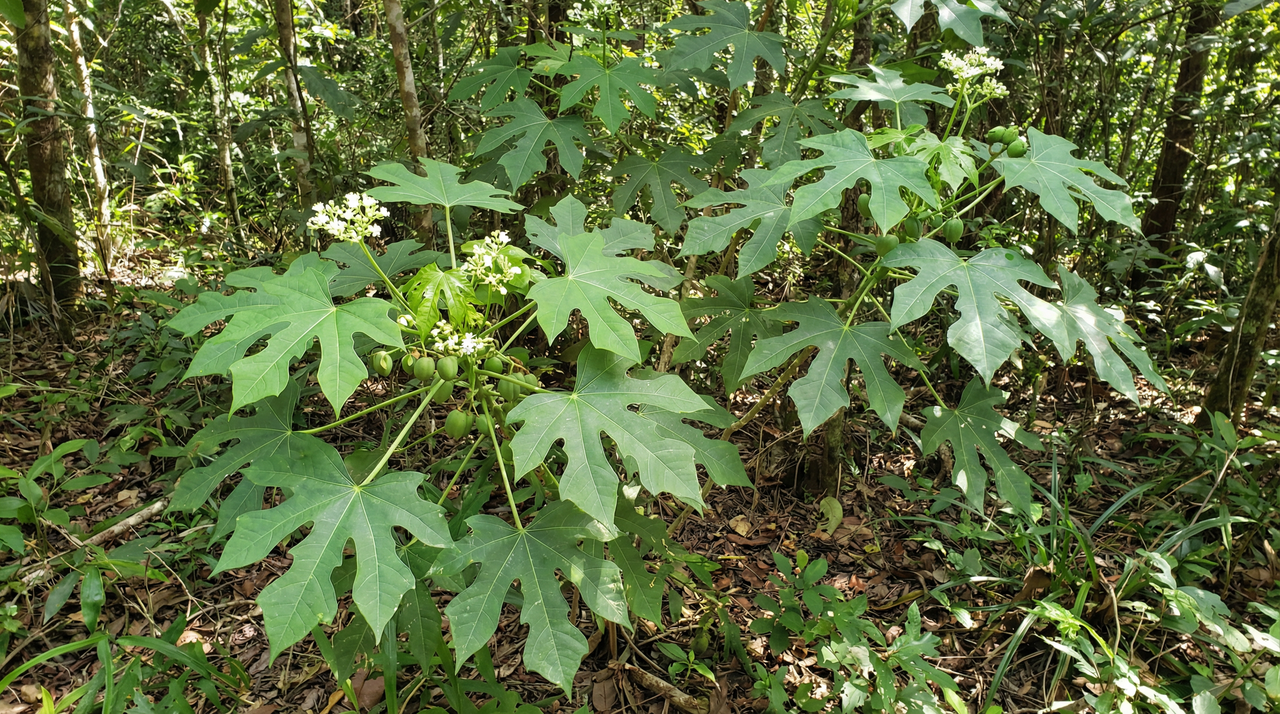
Chaya tree spinach is an erect, multi-stemmed shrub in the Euphorbiaceae family, typically reaching 1.5 to 3 meters in cultivation, though it can push toward 6 meters in ideal conditions.[10][2] The stems are green to reddish, succulent, and armed with stinging trichomes and sometimes short spines, and the whole plant exudes a milky sap when cut, as you'd expect from a Euphorb.[10] The first time I pruned a chaya plant bare-handed, I understood immediately why gloves are non-negotiable. It's a tactile lesson you remember.
The leaves are large, palmately lobed with three to seven triangular lobes, dark green, and can reach 10 to 30 cm across.[11] They remind me of a cross between a fig leaf and a giant spinach, though that comparison only goes so far. Leaf size and color shift noticeably with conditions: bigger and greener in wet seasons, smaller and almost yellowish when the plant is stressed by drought or poor soil.[12] I've seen the same thing in amaranth grown through a dry Florida summer. Flowers are small, white to greenish-white, clustered in racemes up to 15 cm long, and bloom year-round in the tropics.[13] Fruits are three-lobed capsules that split open explosively when ripe. New growers sometimes confuse chaya with bull nettle (Cnidoscolus urens) or stinging nettle (Urtica dioica) because of the shared stinging hairs, but the milky sap and large palmate lobing distinguish it clearly once you know what you're looking for.[14]
Traditional and Cultural Uses of Chaya
Archaeological and ethnobotanical evidence places chaya in Mesoamerican home gardens since at least 1000 BCE, cultivated by the Maya, Aztec, Zapotec, and Mixtec peoples as both a staple vegetable and a medicinal plant.[15][16] It was a famine food in the best sense: reliable, perennial, and nutritious when other crops failed. Traditional uses included treatments for diabetes, anemia, hypertension, and digestive complaints, and it was used as a galactagogue to support nursing mothers.[17]
The first written record in European colonial documentation comes from Spanish physician Francisco Hernández de Toledo, who described its indigenous uses in his survey of the plants of New Spain between 1570 and 1577.[18] What strikes me about that continuity is that Hernández was essentially transcribing knowledge that Mayan communities had already held for centuries, and much of that knowledge is still alive in those communities today. When I incorporate ethnobotanical context into my design work, I find it matters to name that lineage rather than present the plant as a modern discovery.
One thing this tradition has always been clear about: the leaves require proper preparation. Boiling for at least 10 to 15 minutes with the cooking water discarded is essential to neutralize the cyanogenic glycosides present in raw leaves.[19][20] In practice, I treat this as a firm rule from day one with anyone I'm teaching. It's not optional, and it's not a cautious overreaction; it's how this plant has always been safely eaten.
Fun Facts About Chaya
Chaya is a genuinely fast grower. Under active conditions, stems can elongate 5 to 10 cm per week, with the plant reaching full height in one to two years.[21][9] It prefers 800 to 2,000 mm of annual rainfall but handles drought once established, though you'll notice the leaves shrink and thicken during dry spells.[10] That quick maturation is something I factor into guild timing in food forest designs: a plant that's productive within two years is genuinely useful as a pioneer species while slower trees establish around it.
Today, the chaya tree is naturalized across tropical regions in the Caribbean, South America, Africa, and Asia, valued for its edible biomass, soil stabilization, and pollinator support.[8][3] A plant that migrated globally because people kept choosing to bring it with them says a lot about its staying power.
Chaya Varieties and How to Source Them
Notable Botanical Varieties and Cultivars of Chaya
Botanically, Cnidoscolus aconitifolius splits into two recognized varieties: var. aconitifolius, with shallowly cut 3-5 lobed leaves, and var. multilobus, with more deeply divided 7-9 lobed leaves that give the plant an almost tropical-maple look.[22] That botanical split, though, is just the starting point. Two thousand years of Maya cultivation has produced a sprawling collection of named landraces and informally maintained selections that differ in ways a home grower actually cares about: spine presence, leaf color, flavor, and how forgiving they are at harvest.[23]
The selections you're most likely to encounter are 'Spineless Chaya' (a real gift if you're harvesting without gloves), 'Red Chaya' or 'Chaya Roja' (reddish foliage with potentially higher carotenoid content), and the workhorse green types collectively called 'Chaya Verde' or 'Chaya Mansa.'[24][25] I've grown both the standard green and a red-leafed selection side by side in my Central Florida (zone 9B) food forest, and the red types add genuine visual interest while also rebounding noticeably faster after heavy pruning. Could be microclimate, could be the selection itself. Either way, I'd grow both.
Beyond those, there's 'Estrella' with its distinctive star-shaped leaves, 'Crispifolia' with crinkled leaf margins, and the higher-yielding 'Mega' cultivar developed specifically for lower cyanogenic compound levels.[25] That last point matters: nutritional content genuinely varies by cultivar, with protein reaching up to 30% of dry weight in some selections, and red-leafed types tending toward higher carotenoids.[26] It's a bit like choosing between purple sweet potatoes and standard orange ones -- you're selecting for both aesthetics and a slightly different nutritional profile.
This diversity exists because germplasm banks document over 50 accessions showing meaningful variation in agronomic traits, cyanide content, and nutrition.[27][28] Most named selections persist through vegetative propagation rather than formal seed lines, which is why finding a specific cultivar often means tracking down someone who already grows it. Institutions like CIAT and the USDA have targeted this variation deliberately, breeding low-cyanide selections including 'Red Chaya,' 'Ceylon,' and 'H-9.'[29][11] I've cooked older landraces and newer low-cyanide types alike, and while the modern selections do taste a bit milder, I still boil every batch the same way. The research on cyanogenic glycosides is unambiguous, and it's not worth shortcutting regardless of which cultivar you're growing.
Where to Buy Chaya Plants, Seeds, and Cuttings
For US gardeners, the most reliable nursery sources are Almost Eden in Alabama and Logee's in Connecticut, both of which ship live plants.[30][31] I've ordered from Logee's and found their stock to be vigorous; nursery plants do tend to establish faster in my experience than rooted cuttings from casual trades, though home-propagated material from a trusted local grower is a close second. Seeds from Baker Creek or Native Seeds/SEARCH are another option, typically running $5-15 per packet, with live plants from specialty nurseries landing in the $20-50 range depending on size.[32][33][34]
Etsy and eBay sellers also offer cuttings and seeds, sometimes from Mexican growers shipping directly, but availability fluctuates and quality varies.[35][36] If you're importing plant material internationally, USDA APHIS requires phytosanitary certificates; the good news is that chaya carries no federal cultivation restrictions and isn't listed as a noxious weed anywhere in the US.[37][38] Chaya grows best in USDA zones 9-11, so buyers in Florida, coastal Texas, southern California, and Hawaii will have the most success.[39][40]
Whatever your source, look for material with vibrant, undamaged foliage, no signs of pest activity, and firm stems.[41] And regardless of which cultivar arrives at your door, the rule doesn't change: all chaya leaves must be thoroughly cooked before eating.[42] That's true for the fanciest low-cyanide CIAT selection and the oldest Mayan landrace alike.
How to Propagate and Plant Chaya (Cnidoscolus aconitifolius)
Chaya has been moving from garden to garden across Mesoamerica for centuries, almost always as a cutting passed between neighbors rather than a seed packet pulled from a shelf. There's a reason for that. Once you understand how reliably this plant roots from stem cuttings compared to the slow, unpredictable seed route, the traditional method starts to feel less like folk habit and more like accumulated wisdom.
Propagation Methods: Stem Cuttings, Seeds, and Beyond
Stem cuttings are, without question, the way to go for most home growers and small farms.[43][44] You want a semi-hardwood section 15 to 30 cm long with 3 to 4 nodes, taken from a healthy mature stem during warm or rainy season weather.[43][9] Stick those in a sandy loam or sand-peat-perlite mix, keep humidity between 70 and 90 percent, and hold temperatures around 25 to 30°C.[9] IBA rooting hormone at 1000 to 3000 ppm can speed things up if you want it,[45] but honestly, in my warmest beds I rarely bother. Under good conditions you're looking at roots in 2 to 4 weeks and success rates between 80 and 95 percent, sometimes near 100.[43][46] For comparison, I'd put it right alongside hibiscus or bougainvillea cuttings in terms of ease, and most zone 9 to 11 gardeners already know how forgiving those can be.
One thing I learned the hard way on my very first cutting: wear gloves. Chaya's stinging trichomes contain calcium oxalate crystals and cyanogenic compounds that will remind you promptly of their existence the moment you handle fresh stems bare-handed.[47][2] It's not a dramatic reaction, but it's memorable enough that I now keep a dedicated pair of nitrile gloves hanging right next to my chaya bed.
Seeds are a legitimate option, just a slower and less certain one. To get anywhere with them, you'll need to scarify the seed coat mechanically, then soak in warm water at around 30°C for 24 hours.[48] Even with that pretreatment, germination tops out around 60 to 80 percent,[49] and the seedlings that do emerge won't reliably match the parent plant. Chaya's outcrossing nature and high genetic heterozygosity mean you're likely to get variation in leaf shape, vigor, and potentially cyanogenic content.[50] I've seen seed-grown plants come up with noticeably different leaf lobing compared to the mother plant, and that variability matters when you're relying on known characteristics for food production. Soil for germination should be well-draining and fertile with a pH of 6.0 to 7.0, seeds planted about 1 to 2 cm deep, at the same 25 to 30°C temperature range as cutting propagation.[48][49] Grafting and layering exist as techniques for specific goals like disease resistance or improved vigor, but those are mostly commercial or research-context tools rather than something most backyard growers need to think about.[51][25]
Soil, Site Selection, and Planting Technique
Chaya prefers well-drained, fertile loamy or sandy loam soils with a pH in the 6.0 to 7.5 range, though it tolerates a surprisingly wide band from 5.5 to 8.0 and will grow in sandy, clay, and low-organic-matter soils.[9][52] Drainage is the thing I'd prioritize above everything else at planting time. Waterlogging invites Pythium and Phytophthora root rot quickly,[53] so if your site holds water after rain, build a raised bed or mound or choose a different spot entirely. Once roots are established and reaching 1 to 2 meters deep,[2] chaya becomes genuinely drought-tolerant, but it needs consistent moisture during that early establishment window.
pH stress is worth watching for in that first season. In alkaline soils above 7.5, you'll start to see interveinal chlorosis as iron and manganese become unavailable. At the acid end, below 5.5, aluminum toxicity and poor phosphorus uptake become real problems.[54] I test every new bed before planting now because I once spotted early yellowing between the veins on a chaya cutting I'd installed in a slightly high-pH bed. A light sulfur application corrected it within a few weeks. That kind of early catch saves a lot of frustration later. For most soils, incorporating 2 to 5 percent organic matter via compost or aged manure at planting handles both fertility and moisture retention in one step,[43] and full sun of 6 to 8 hours daily will drive the best leaf production.[55]
Spacing, Timing, and Initial Establishment
Chaya grows into a substantial shrub, 3 to 6 meters tall with a spread of 2 to 3 meters, and it gets there faster than most people expect.[43] For garden plantings, a minimum of about 1 meter between plants is workable if you plan to prune regularly, but 1.2 to 1.5 meters gives better airflow and significantly reduces fungal pressure. I planted my first three chaya too close together at roughly 2.5 feet and spent the next season dealing with mildew until I thinned them out and opened the canopy up. Production rows typically use 1 to 2 meters within rows and 2 to 3 meters between rows; for hedging, 0.5 to 1 meter with heavy pruning works well; and in food forest or agroforestry integration, 2 to 4 meters gives the plant room to settle into the mid-layer alongside taller trees.[56]
Regardless of spacing choice, the establishment phase is where you earn the plant's later independence. Keep the soil consistently moist but never waterlogged for the first few months, and protect young cuttings from wind and intense afternoon sun while roots develop.
Timeline to First Harvest
Stem cuttings typically allow a first leaf harvest somewhere between 6 and 12 months after planting, with full production coming in 1 to 2 years under favorable conditions.[9] Compared to the seed route, which stretches to 12 to 18 months or longer just to reach harvestable maturity without any guarantee of true-to-type plants,[3] the cutting path is clearly the more sensible investment. Six to twelve months sounds patient, but for a perennial shrub that can feed a family for decades from a single planting, I find it moves surprisingly fast. A well-rooted cutting pushing out thick new growth in month three already feels like a promise being kept.
Chaya Care Guide: Growing and Maintaining Cnidoscolus aconitifolius
Chaya rewards attentive growers with astonishing productivity, but it does have a few firm requirements. Get the water balance right, feed it well, and respect its tropical roots when cold weather threatens, and you'll have a perennial leafy green producing for years with minimal fuss.
Water Needs and Drought Tolerance
I'll be honest: I killed my first chaya planting with kindness. The young cuttings were in a humid subtropical summer, and I was watering every day because that's what I do with new transplants. Within six weeks I had yellowing leaves from the bottom up, soft stems, and that unmistakable smell of root rot. Lesson learned. Young plants do need consistency, roughly every 2-3 days or whenever that top inch of soil dries out, to build their root systems.[9] But once they're established, you back off dramatically.
Established chaya is genuinely drought-tolerant, capable of surviving 2-3 months of water stress without permanent damage and bouncing back once irrigation resumes.[57][58] The right rhythm is deep and infrequent: about 25-50mm per week during dry periods, or a thorough soak every 7-14 days depending on your rainfall.[59][53] This approach pushes roots down rather than keeping them lazy and shallow near the surface. In cooler months or dormancy, stretch that to every 2-3 weeks and keep mulch over the base to hold moisture without creating the saturated conditions roots hate.[59] The plant will tell you when it's thirsty: leaf edges curl and go crispy, tips brown, and the whole canopy droops. Overwatering reads differently — yellowing starts at the bottom leaves, stems go soft, and if you get to the point of foul-smelling black roots, you've already lost the battle.[59][60] For irrigation water quality, chaya prefers a pH of 6.0-7.5 and has moderate salinity tolerance, though rainwater is always the better choice when available.[61]
Sunlight Requirements
Chaya wants full sun: 6-8 hours of direct light daily, which produces the most vigorous growth and highest leaf yields.[62] In my experience, leaves grown in strong sun also have a more pronounced, earthy flavor once cooked properly — worth keeping in mind if you're growing this for the kitchen. In genuinely scorching conditions, some afternoon filtered shade prevents leaf scorch without sacrificing too much productivity, and for anyone trying to grow chaya indoors, supplement with grow lights if natural light drops below 6 hours.[63][64]
Soil Fertility and Nutrient Management
Chaya is a heavy feeder. With high biomass production and the fact that you're harvesting leaves constantly, it needs real fertility: think 100-200 kg/ha nitrogen annually, with phosphorus and potassium in similar ranges.[65][66] A balanced 10-10-10 or 15-15-15 applied every 3-4 months during the growing season covers the basics.[43][67] I run a soil test before I fertilize anything new in my garden, and chaya is no exception — you want pH in that 6.0-7.0 sweet spot. For organic growers, compost and well-rotted manure work well; just avoid overloading nitrogen, which pushes excessive vegetative growth at the expense of overall plant health.[19][68]
Learning to read nutrient deficiencies has saved me a lot of guesswork over the years. I keep a visual reference on my phone for exactly this reason. Uniform yellowing on older leaves signals nitrogen shortage; a purplish tint with stunted roots points to phosphorus stress; scorched, necrotic leaf margins mean potassium is low.[65][69] If the yellowing is between the veins on older leaves, suspect magnesium; the same interveinal pattern on new growth usually means iron deficiency.[65] Where the yellowing shows up matters as much as the color itself.
Frost Tolerance and Cold Protection
Chaya is a tropical plant and has no real cold hardiness to speak of. It can briefly tolerate temperatures around 28°F (-2°C), but anything below 25°F (-4°C) causes severe damage.[39][70] Frost-damaged foliage turns dark brown to black, wilts, and goes mushy; a hard freeze kills the top growth entirely, though established roots sometimes survive and resprout.[70] USDA zones 9b-11 are where it really belongs, with zone 9a being marginal territory that requires active management.
I learned this the hard way when a surprise dip into the low 20s caught my plants with only a thin layer of straw mulch. The top third of every stem died back. Now my winter protocol is 4-6 inches of heavy mulch over the root zone plus double-layer frost cloth when temperatures are forecast to drop below 30°F — that combination has kept my plants through zone 9b winters reliably.[71][72] In zones below 9, grow it in containers and bring it indoors once temperatures consistently drop below 50°F (10°C).
Heat Tolerance and High-Temperature Care
On the opposite end, chaya genuinely thrives in heat, growing well across a range of 50°F to 104°F (10°C to 40°C) with the sweet spot between 70°F and 95°F.[73][74] Above 95°F, though, you start seeing leaf scorch and wilting, especially when heat combines with dry soil — seedlings and flowering plants are particularly vulnerable around 86-90°F.[75][76] It's similar to what I see in my malanga during peak Central Florida summers: the plant can handle real heat, but only if moisture and airflow are managed.
Practical fixes include 30-50% shade cloth during the most brutal afternoon hours, consistent organic mulch at 5-10 cm depth, and the deep infrequent irrigation already discussed. Good spacing at 1-1.5 meters keeps air moving around the canopy.[77][78] If you're in a consistently brutal climate, the 'Red Chaya' selection has shown decent heat-tolerant characteristics and is worth seeking out.
Pruning, Maintenance, and Seasonal Rhythm
Regular pruning is the single practice that most determines how productive your chaya plant becomes. Cut stems back to 30-50 cm from the ground annually or after each major harvest, ideally during the dry season, and the coppicing response is remarkable: dense, bushy regrowth loaded with tender young leaves.[43][79] I cut mine back to about knee height each dry season and harvest every four weeks from the new flush — a rhythm that has become central to how I manage perennial greens in my garden. Without regular cutting, chaya gets leggy and tall in a hurry, which makes harvest awkward and reduces overall yield from the canopy.
In tropical climates, the plant grows continuously year-round with only sporadic flowering; there's no true dormancy to plan around.[80] In marginal zones with a cold season, the plant naturally slows or dies back to the root zone, then resurges in spring. Plant in spring after any frost risk passes if you're starting new cuttings in a seasonal climate.
One thing that cannot be overstated for daily care: wear gloves every time you prune or handle this plant. The stinging hairs contain calcium oxalate crystals, and the leaves carry cyanogenic glycosides that require thorough boiling before any consumption — minimum 10-15 minutes, every single time.[25] This isn't a step you can skip on a busy day. Gloves for the garden, boiling for the kitchen — those two habits cover the main safety requirements for growing chaya successfully.
Harvesting Chaya Leaves
Patience is the first skill chaya teaches. From a stem cutting, you're looking at 6-12 months before the first real harvest, and full production doesn't hit until the plant is 1-2 years old.[9][81] That wait is worth it. Once established, this plant will keep producing for years with no replanting required.
When to Harvest: Timing, Visual Cues, and Safety Considerations
I watch for two things: color and flexibility. Young leaves ready for harvest are a vivid, saturated green with a slight give when you brush them.[82][83] Once the plant starts flowering, leaf quality drops and tenderness goes with it, so that's my signal to stop cutting for the table.[83] Picking at the right stage also means lower cyanogenic glycoside levels, which matters because cooking is non-negotiable regardless of harvest stage. I never eat chaya raw the way I'd grab a kale leaf straight from the garden. It always gets boiled first.[83][82] If you're growing a red-stemmed variety, it does carry a slight natural advantage here since those types tend toward lower cyanogenic levels than green varieties.[9] Still cook it.
How to Harvest Chaya: Technique and Regrowth Tips
The pinch test is my go-to before I reach for pruning shears. Young leaves that are ready yield immediately under light pressure, almost like soft butter lettuce.[82] When I find that texture, I prune the stem back to a point where at least two nodes remain, which is what keeps the plant from stalling between harvests.[84][81] I learned that through painful experience: cut too low once, and the stem just sits there. Leave two nodes, and new growth comes back strong. In my Central Florida garden I'm harvesting from the same plants every 4-6 weeks through the warm months, though cooler or drier conditions can stretch that out to every 2-3 months.[84][83]
Yield, Flavor, and Texture of Cooked Chaya
Properly cooked chaya has a mild earthiness that reads a lot like spinach, with a quiet umami depth that comes from its high glutamate content.[85] The texture after cooking is more substantial than spinach, a slight chew that holds up nicely in stir-fries and stews rather than dissolving into mush. Older leaves can turn bitter, which is another reason harvesting young matters.[85][86] Scale-wise, mature plantings under good conditions can hit 20-40 tons of leaves per hectare annually.[52][81] On a backyard scale, one established shrub in my climate supplies several pounds of leaves a month once it hits its stride, which translates to a meaningful contribution to the household table for a single low-maintenance perennial.
Chaya: Safe Preparation, Nutritional Power, and Traditional Uses
Critical Safety Rules: Why Chaya Must Be Cooked
Only the leaves and young stems of chaya are edible, and only after proper cooking. Roots, flowers, fruits, and seeds are off-limits entirely due to high toxin levels.[87][88] Raw chaya leaves contain cyanogenic glycosides -- linamarin, lotaustralin, tetraphyllin B, and dhurrin -- that release hydrogen cyanide when the leaf tissue is damaged or chewed, with documented poisoning cases involving nausea, dizziness, and in severe situations, respiratory failure.[89][43] The stinging trichomes are their own reminder: I harvest wearing gloves every single time because those hairs feel exactly like miniature nettles on bare skin.[90]
The fix is simple and non-negotiable. Boil whole, uncrushed leaves in plenty of water for at least 20 minutes, then discard that cooking water before eating.[89][43] I always go a full 20 minutes for peace of mind. The research on cyanide reduction is clear -- proper boiling removes over 90% of the glycosides -- and the habit has become second nature in my kitchen.[91] Don't crush the leaves beforehand, as that accelerates cyanide release before the heat can neutralize it.[84]
Nutritional Profile of Cooked Chaya Leaves
Once you've boiled those hojas de chaya and tossed the water, what's left is genuinely remarkable. Fresh leaves clock in at 5-6% protein, and dried leaves reach 25-30% on a dry-weight basis, which rivals soybeans.[92][81] Calcium runs 300-600 mg per 100g fresh weight, exceeding milk, with iron at 5-10 mg and vitamin C between 100-200 mg.[92] Growing it through a hot, humid Florida summer, I've noticed those deep-green leaves look more vibrant and substantial than almost anything else in my garden at that time of year -- amaranth included. The flavonoids and polyphenols add antioxidant value on top of all that.[93] Adults can safely eat 100-200g of properly cooked chaya per meal, though individual tolerance varies.[2]
Flavor Profile and Culinary Applications
Properly cooked chaya leaves have a mild, spinach-like flavor with earthy, slightly bitter undertones; a quick fry after boiling can bring out a nutty aroma.[19] I think of it as sitting somewhere between malabar spinach and cooked amaranth -- familiar enough to use anywhere you'd reach for a cooked green, but with more body. Don't overcook it past that initial boil or it turns mushy. Traditional Mayan and Yucatecan preparations pair chaya greens with beans, corn, pork, epazote, garlic, and lime, and those combinations exist for good reason.[94] It works equally well stirred into eggs, tucked into tamales, or added to soups and stews.[95] In my own kitchen I've folded boiled chaya into pestos and grain bowls with solid results. Once the boiling step is routine, the chaya plant delivers a protein-rich green that outperforms most alternatives in a tropical garden.
Traditional and Medicinal Preparations
Traditional agua de chaya, leaf decoctions, and dried powders all require the same thorough boiling step as culinary use -- there's no shortcut for medicinal preparations either.[96] Across Mesoamerica, boiled leaf teas and dried powders (around 1-3 grams daily by tradition) have been used for generations, though these draw from ethnobotanical knowledge rather than standardized clinical dosing.[97] I occasionally prepare a simple chaya plant tea from boiled leaves for my own use, and I treat it the same way I treat the food: water discarded, leaves thoroughly cooked. Respect the preparation and the tradition holds up.
Non-Food Uses of Chaya
After harvesting the leaves for the kitchen, the sturdy woody stems still have plenty to offer. Traditionally, chaya stems provide fiber for cordage, textiles, and basketry, and the dense wood pulls duty as fuelwood and charcoal in rural communities.[98][2] In a permaculture context, those pruned stems that don't go into crafts can be chipped for mulch or stacked as biomass -- nothing from this plant has to go to waste.
Chaya Health Benefits and Medicinal Uses
Before I say anything about what chaya does for your body, I need to say this clearly: raw chaya leaves are not food. They contain cyanogenic glycosides that release hydrogen cyanide when the plant tissue is damaged, and eating them uncooked is genuinely dangerous. Boiling for at least 10 to 20 minutes, then discarding the cooking water, is what transforms chaya from a toxic tropical shrub into one of the most nutrient-dense leafy greens you can grow.[99][100] Every benefit listed below depends on that step. I think of it like cassava: same principle, same respect required, extraordinary reward when you follow the rules.
Chaya Nutrition Profile
Once properly cooked, chaya earns its reputation as a nutritional powerhouse. Per 100 grams of raw leaf, it delivers approximately 5.7 grams of protein, 439 micrograms of folate, and up to 1,667 milligrams of calcium.[99][101] That calcium figure is the one that stops people mid-conversation: we're talking five to ten times the calcium found in spinach, from a plant that grows as a perennial shrub in zones where spinach bolts before you can blink.[97] It also contains around 5,570 IU of provitamin A carotenoids, substantial vitamin K (estimated 200 to 400 micrograms), vitamin E, iron, magnesium, potassium, and zinc.[102]
Cooking does reduce some vitamin C, but it actually improves the bioavailability of those impressive minerals.[99] I've been including cooked chaya regularly in my family's meals for years now, and it's become my go-to when I want to round out the mineral profile of a meal without relying on a supplement. That said, exact values will shift depending on variety, leaf age, soil fertility, and how you cook it, so treat published figures as a reliable range rather than a guarantee.
Phytochemicals and Bioactive Compounds in Chaya
The same plant that produces cyanogenic glycosides (primarily linamarin, along with dhurrin, taxiphyllin, and tetraphyllin B) also loads its leaves with soluble oxalates and calcium oxalate crystals that can irritate the mouth and throat raw and reduce mineral absorption.[103][104] These compounds exist, in part, because chaya has been defending itself against herbivores for millennia. Proper boiling addresses both.
On the beneficial side, cooked chaya retains a compelling array of bioactive compounds: phenolics, flavonoids including quercetin and kaempferol, tannins, saponins, alkaloids, coumarins, and plant steroids.[105][106] These are the compounds researchers have been zeroing in on for their antioxidant, anti-inflammatory, and other pharmacological activities. Their concentration varies with soil conditions, season, and cultivation practices, which is one reason I'm careful not to overstate what any single batch of home-grown chaya contains. What I can say from my own kitchen experience is that regularly eating cooked chaya feels different from eating iceberg lettuce. There's substance there, and the science is starting to explain why.
Medicinal Research and Traditional Uses
Mayan and Central American healers have used chaya for centuries to address anemia, diabetes, hypertension, digestive trouble, inflammation, and wound healing, and also as a general tonic.[107][98] What's compelling is how well that traditional knowledge maps onto modern preclinical findings. Lab studies have demonstrated antioxidant activity through Nrf2 pathway activation and free radical scavenging by the plant's flavonoids and polyphenols, anti-inflammatory effects via NF-κB inhibition and reduced cytokine production (TNF-α and IL-6), antidiabetic potential through alpha-glucosidase inhibition and improved insulin sensitivity, and antihypertensive effects via ACE inhibition and vasorelaxation.[108][109][110] Antimicrobial activity against Staphylococcus aureus and E. coli has also been documented.[111]
Here's where I'll be straight with you, though: nearly all of this evidence comes from in vitro studies and animal models, with very limited human clinical trials to back up therapeutic claims.[112] I grow and eat chaya primarily because it's an incredibly productive perennial vegetable, not because I'm treating a condition with it. The research is promising and worth watching, but I'd rather present it honestly than send you down a rabbit hole of overclaimed benefits.
Safety Considerations for Chaya
Eating raw or undercooked chaya can cause acute cyanide poisoning: nausea, vomiting, dizziness, rapid breathing, and in severe cases convulsions or worse.[113] The fresh glycoside levels range from 0.04 to 0.19% by fresh weight, highest in young leaves, seeds, and drought-stressed plants.[103] The stinging trichomes on raw stems and leaves also cause contact dermatitis, so gloves are non-negotiable when harvesting.[114]
The good news is that proper boiling for 15 to 30 minutes, often done twice with the water discarded each time, reduces cyanogenic compounds by 90 to 97% and brings oxalates and other anti-nutritional factors down to safe levels.[115][116] I never serve chaya to guests or children without that full cook. It's the tradition Mayan cooks have followed for centuries and, for good reason, it's still the standard. One to two cups of cooked chaya per serving is a reasonable dietary amount for most healthy adults.
A few populations need extra care. Raw chaya is contraindicated during pregnancy due to potential teratogenic effects and possible uterine stimulation from residual cyanogenic compounds.[117] The very high vitamin K content means anyone on blood thinners should check with their doctor before eating it regularly. Those managing thyroid conditions or taking diabetes medications should also proceed with caution, as thiocyanate can interfere with iodine uptake and the plant's hypoglycemic effects may interact with medication.[117] Finally, make sure you're identifying your plant accurately: chaya can be confused with Jatropha curcas or cassava, neither of which you want to accidentally eat the leaves of.[118] When you follow the preparation protocol correctly, chaya is a safe, genuinely nutritious leafy green worth growing.
Chaya Pests and Diseases
Chaya has a genuinely impressive set of built-in defenses, and I say that as someone who has grown plenty of tropical leafy greens that needed constant babysitting. Between the cyanogenic glycosides in its latex that release hydrogen cyanide when tissue is damaged, the stinging trichomes that cause real irritation on contact, and calcium oxalate crystals that can damage insect mouthparts, this plant makes itself a difficult meal for most would-be attackers.[119][120] That said, "resistant" doesn't mean "immune," and being honest about where it can struggle will save you a lot of head-scratching later.
Chaya's Natural Defenses Against Pests
The insects most likely to find chaya worth the trouble are aphids, whiteflies, leaf beetles, caterpillars, spider mites, leaf miners, flea beetles, and mealybugs.[121][122] In humid tropical regions, chrysomelid leaf beetles can skeletonize leaves quickly, and aphids and whiteflies are worth watching closely because they vector viruses beyond just causing direct feeding damage.[123] In my subtropical setting the leaf beetles haven't been a problem, but I do monitor young plants closely during prolonged rainy periods because that's exactly when I've first noticed curling leaves signaling early stress. Young transplants and stressed plants are the most vulnerable, which tracks with basically every perennial I've grown. Regional pest pressure is higher in humid tropics than drier zones, and cultivars like 'CNID-1' and 'Red Leaf Chaya' have been selected for enhanced resistance through higher latex production, which is worth knowing if you're choosing varieties in a particularly buggy climate.[124]
Common Diseases and Environmental Triggers
Chaya's chemical defenses serve it well against many pathogens too, but high humidity is where the plant's armor starts showing gaps.[125] Fungal issues including leaf spot (Cercospora spp.), downy mildew, powdery mildew, and anthracnose can all appear, along with bacterial wilt and mosaic viruses.[126] The trigger is almost always environmental: humidity above 80%, poor drainage, waterlogged soil, or temperatures drifting outside the 25-32°C sweet spot are what open the door for fungal spread and root rots.[127] I think of it a bit like managing okra or sweet potato in Florida heat: the plant wants warmth and will handle a lot, but stagnant air and wet feet are the real enemies. Major disease problems are genuinely uncommon in well-managed plantings.[128]
Integrated Pest and Disease Management
In my garden, I've rarely needed copper sprays once spacing, sun exposure, and drainage are dialed in. The research backs this up: prevention through full sun (6+ hours), 1-2 m spacing for airflow, moderate watering, well-drained sandy loam, and regular removal of dead or diseased material handles the vast majority of what chaya might face.[129][126] When pest populations do build up, the permaculture toolkit handles them well: ladybugs for aphids, parasitic wasps for whiteflies, and Bacillus thuringiensis for caterpillars, all while keeping beneficial insect populations intact.[130] Copper-based fungicides are an option for stubborn fungal outbreaks, but they're a last resort, not a calendar spray.[126] Chaya rewards attentive observation far more than it rewards intervention.
Chaya in Permaculture Design
Chaya earns its place in a permaculture system by doing a lot of things at once, and doing most of them well. Before getting into the specifics, though, you need to know where it can actually grow, because climate is the hard boundary that determines whether chaya is a low-maintenance perennial powerhouse or a constant frustration.
Climate and Hardiness Zones for Growing Chaya
Chaya is native to tropical and subtropical Mexico and Central America, and that lineage shapes everything about where it performs best. It's squarely at home in USDA zones 9-11, with optimal growth between 70-90°F (21-32°C) and genuine heat tolerance stretching past 100°F (38°C).[43][131][132] In my Central Florida zone 9B garden, I treat it as a reliable perennial with very little fuss on the warm end of things. The heat that punishes other greens barely registers with chaya.
It grows from sea level up to about 1,500-1,800 meters and handles a wide precipitation band of 800-2,000 mm annually, with the established root system providing enough buffer to bridge dry spells.[5][133][52] Soil requirements are forgiving too, covering pH 5.5-7.5 as long as drainage is solid. Florida, South Texas, and parts of Southern California are all workable.
Cold is the real limiting factor. Brief dips to 28°F (-2°C) are survivable for mature plants, but anything prolonged below that causes significant leaf drop or outright death of the canopy.[43][134] I've watched plants recover from light frosts in Central Florida when the roots stayed alive, pushing new growth within weeks once temperatures climbed back up. That resilience is real, but it does have a floor. In marginal zones, heavy mulch, row covers, or container culture through winter are practical workarounds rather than theoretical ones.
Ecosystem Functions and Services
The underground story with chaya is genuinely impressive. It forms arbuscular mycorrhizal associations with 60-80% root colonization, which translates to meaningfully better phosphorus uptake and added drought resilience.[135][136] The taproot runs 2-3 meters deep, anchoring the plant while actively improving soil structure and preventing erosion on slopes or disturbed edges. I think about it the way I think about moringa: fast-growing, deep-rooted, and quietly improving the soil beneath it while you harvest the canopy above.
Chaya doesn't fix nitrogen the way a pigeon pea or leucaena does, so don't build a guild around it expecting that function. What it does do is contribute to nutrient cycling through rapid leaf decomposition and appear to suppress some grass competition through mild allelopathic effects.[137][138][139] Research on pest reduction in maize intercropping suggests a 20-30% decrease in pest incidence, though I'd treat that as a promising finding rather than a guaranteed outcome; your microclimate and pest pressure will vary.
The small white to pale yellow flowers attract honeybees and stingless bees, including Melipona and Trigona species, with flies occasionally contributing.[140][141][142] Since chaya is generally dioecious, seed production in cultivation is unpredictable, but vegetative propagation via cuttings is the norm anyway, so the pollinator support is a bonus rather than a dependency. On the biomass side, a productive plant can yield 10-15 kg of leaves and stems annually, with well-managed plantings reaching 20-30 tons per hectare per year.[21][143] That throughput makes it a serious source of compost material and livestock fodder, with the reminder that leaves require proper boiling before any consumption.
Forest Layer and Guild Integration
In the food forest, chaya slots into the shrub layer or tall understory, reaching 3-6 meters with a multi-stemmed, semi-woody habit that fills space quickly.[39][144][145] It's a pioneer species from tropical forest edges and disturbed areas, which means it establishes fast, tolerates up to 50% shade, and doesn't need coddling through the early years. Full sun gives you the most vigorous growth, but it's flexible enough to tuck into partly shaded positions along a canopy gap edge.
One guild combination I keep returning to: chaya on a sunny boundary edge paired with pigeon pea (for the nitrogen the chaya doesn't provide) and sweet potato carpeting the ground layer below. The pigeon pea feeds the soil, the sweet potato suppresses weeds, and the chaya delivers high-volume leaf production for both the kitchen and the compost pile. It also functions well as a living hedge alongside fruit trees, where its dense growth creates a windbreak and its deep roots stay out of competition with shallower-rooted crops nearby.[136][43]
The main management consideration for guild placement is its growth rate: left unpruned, it shades everything around it. Regular coppicing keeps it in productive, leafy form and prevents it from outcompeting its neighbors. In my experience that pruning isn't a burden; it's built into the harvest cycle. Just remember that every leaf coming off that plant needs to be cooked before anyone eats it, and real-world guild performance will always depend on your specific soil, humidity, and microclimate more than any single study can predict.
The Plant That Taught Me to Respect the Prep
I'll be honest: the first time I harvested chaya, I rushed it. Didn't boil it long enough, tossed the cooking water back into the pan out of habit. Nothing serious happened, but I felt off for hours, and I knew exactly why. That moment of humility stayed with me. Now I grow it along the south-facing edge of my food forest, and every time I harvest I think about how the Maya worked with this plant for centuries, not around it.
Sources 145
- Chaya: A Nutritious Shrub of the Yucatan Peninsula – University of Florida IFAS ↩
- Cnidoscolus aconitifolius ↩
- Cnidoscolus aconitifolius (chaya) ↩
- Cnidoscolus aconitifolius (Mill.) I.M.Johnst. ↩
- Cnidoscolus aconitifolius ↩
- Cnidoscolus aconitifolius ↩
- Chaya (Cnidoscolus aconitifolius): A Nutritious and Resilient Crop ↩
- The History and Distribution of Chaya (Cnidoscolus aconitifolius) ↩
- Cnidoscolus aconitifolius ↩
- Cnidoscolus aconitifolius ↩
- Cnidoscolus aconitifolius ↩
- Cnidoscolus aconitifolius (Mill.) I.M. Johnst. ↩
- Cnidoscolus aconitifolius ↩
- Toxic Plants of North America ↩
- The Ethnobotany of Chaya (Cnidoscolus aconitifolius): A Nutritious Maya Vegetable ↩
- Chaya (Cnidoscolus aconitifolius): A Nutritious and Underutilized Plant in Mesoamerica ↩
- Traditional Uses of Chaya in Mayan Culture ↩
- Rerum Medicarum Historiae ↩
- Chaya: The Mayan Tree Spinach ↩
- Ethnobotanical survey and biological activities of Cnidoscolus aconitifolius ↩
- Chaya: The Tree Spinach ↩
- Cnidoscolus aconitifolius (Mill.) I.M. Johnst. ↩
- Cultivation of Tree Spinach (Chaya) ↩
- Chaya: The Tree Spinach ↩
- Chaya Production and Varieties ↩
- Chaya: Nutritional Value and Use as a Food Source ↩
- Genetic Diversity of Cnidoscolus aconitifolius ↩
- Diversity of Cnidoscolus aconitifolius in Mexico ↩
- Breeding and Selection of Low-Cyanide Chaya ↩
- Chaya - Cnidoscolus aconitifolius ↩
- Chaya Plant (Cnidoscolus aconitifolius) ↩
- Tree Spinach Seeds ↩
- Chaya Plant Seeds ↩
- Live Chaya Plant ↩
- Live Chaya Plant for Sale ↩
- Chaya Plant Cuttings from Mexico ↩
- Importing Plants and Plant Products into the United States ↩
- Plant Import Permits and Phytosanitary Certificates ↩
- Cnidoscolus aconitifolius (Chaya, Tree Spinach) ↩
- Plants Profile for Cnidoscolus aconitifolius (tree spinach) ↩
- Good Agricultural Practices for Leafy Greens ↩
- Cyanogenic Glycosides in Chaya: Processing and Safety ↩
- Propagation of Chaya (Cnidoscolus aconitifolius) ↩
- Chaya: A Productive Perennial Vegetable ↩
- Horticultural Guide to Cnidoscolus aconitifolius ↩
- Chaya: A multipurpose plant for the tropics ↩
- Handling and Cultivation of Stinging Plants like Chaya ↩
- Plant Finder - Missouri Botanical Garden ↩
- Chaya or Tree Spinach: An Introduction ↩
- Propagation Methods for Chaya (Cnidoscolus aconitifolius) ↩
- Grafting Techniques for Perennial Vegetables in the Tropics ↩
- Chaya: A Nutritious Crop for the Tropics ↩
- Growing Chaya: Soil and Water Requirements ↩
- Soil pH and Nutrient Availability for Tropical Crops ↩
- Growing Chaya (Tree Spinach) - Gardening Know How ↩
- FAO: Chaya - A multipurpose plant for tropical regions ↩
- Cnidoscolus aconitifolius: Botanical Profile and Environmental Adaptations ↩
- Water Requirements and Irrigation Management for Chaya in Semi-Arid Regions ↩
- Growing Chaya: A Drought-Tolerant Leafy Green ↩
- Identifying Plant Stress Symptoms ↩
- Water Quality for Irrigated Crops: Salinity and pH Management ↩
- Chaya: The Beneficial Plant ↩
- Cnidoscolus aconitifolius - Useful Tropical Plants Database ↩
- Symptoms of Light Deficiency in Tropical Plants ↩
- Nutrient Management for Chaya (Cnidoscolus aconitifolius) ↩
- Response of Cnidoscolus aconitifolius to NPK Fertilization in Semi-Arid Regions ↩
- Chaya Production in Southern Arizona ↩
- Plant Nutrient Deficiencies and Toxicities ↩
- Chaya Cultivation and Fertilizer Guidelines ↩
- Chaya Production in South Florida ↩
- Frost Protection for Tropical Plants ↩
- Plant Finder: Cnidoscolus aconitifolius ↩
- Chaya: A Nutritious and Productive Perennial ↩
- Chaya (Cnidoscolus Aconitifolius): A Nutritious Crop for Hot Climates ↩
- Environmental Stress Tolerance in Cnidoscolus aconitifolius ↩
- Physiological Responses of Chaya to High Temperature and Drought ↩
- Heat Stress Management in Perennial Vegetables ↩
- Growing Chaya in the Tropics ↩
- Chaya (Cnidoscolus aconitifolius): Cultivation and Uses ↩
- Phenology of Tropical Perennial Crops: Chaya (Cnidoscolus aconitifolius) ↩
- Propagation and Production of Chaya ↩
- Tree Spinach (Chaya, Cnidoscolus aconitifolius) ↩
- Chaya (Cnidoscolus aconitifolius) ↩
- Chaya: Production and Uses ↩
- Sensory Evaluation of Chaya (Cnidoscolus aconitifolius) Leaves ↩
- Nutritional and Culinary Aspects of Chaya Leaves ↩
- Cnidoscolus aconitifolius ↩
- Cnidoscolus aconitifolius 'Chaya' ↩
- Cyanogenic Glycosides in Chaya (Cnidoscolus Aconitifolius) and Effects of Processing ↩
- Contact Dermatitis from Cnidoscolus Species ↩
- Toxicity and Processing of Chaya Leaves ↩
- Nutritional Composition of Chaya Leaves (Cnidoscolus aconitifolius) ↩
- Health Benefits and Bioactive Compounds in Cnidoscolus aconitifolius ↩
- Culinary Uses of Cnidoscolus aconitifolius in Mexican Cuisine ↩
- Culinary Uses of Chaya Leaves in Traditional Cuisine ↩
- Pharmacological Activities of Cnidoscolus aconitifolius ↩
- Cnidoscolus aconitifolius: A Review of Its Nutritional and Medicinal Properties ↩
- Chaya (Cnidoscolus aconitifolius Mill. I. M. R. Johnst.): A multipurpose shrub ↩
- Nutritional Evaluation of Chaya (Cnidoscolus aconitifolius) Leaves ↩
- Chaya (Cnidoscolus aconitifolius): A Dietary Supplement for Humans ↩
- USDA FoodData Central - Chaya Leaves ↩
- Nutritional Composition of Chaya (Cnidoscolus aconitifolius) Leaves ↩
- Cyanogenic Glycosides in Chaya (Cnidoscolus aconitifolius) ↩
- Oxalate and Phenolic Content in Tropical Leafy Vegetables Including Chaya ↩
- Phytochemical Screening and Antioxidant Activity of Cnidoscolus aconitifolius Leaves ↩
- Phytochemical and Pharmacological Profile of Cnidoscolus aconitifolius ↩
- Chaya (Cnidoscolus aconitifolius): A Nutritious and Medicinal Plant from Mexico ↩
- Antioxidant and Anti-inflammatory Activities of Chaya (Cnidoscolus aconitifolius) ↩
- Inhibitory Effects of Tree Spinach on Alpha-Glucosidase and ACE ↩
- Hypoglycemic effects of Cnidoscolus aconitifolius in streptozotocin-induced diabetic rats ↩
- Antioxidant and antihypertensive activity of Cnidoscolus aconitifolius leaf extract ↩
- Pharmacological potential of Cnidoscolus aconitifolius (Mill.) I.M. Johnst. ↩
- Cyanogenic Glycosides in Edible Plants: Chaya Toxicity and Preparation ↩
- Dermatitis from Cnidoscolus spp. ↩
- Toxicity and Processing of Chaya Leaves ↩
- Chaya: A Multipurpose Plant for the Tropics ↩
- Nutritional and Toxic Factors in Cnidoscolus aconitifolius ↩
- Cnidoscolus aconitifolius (Mill.) I.M. Johnst. ↩
- Plant Defense Mechanisms Against Herbivory in Euphorbiaceae ↩
- Trichomes and Chemical Defenses in Cnidoscolus Species ↩
- Insect Pests of Leafy Vegetables ↩
- Pest Management in Chaya (Cnidoscolus aconitifolius) ↩
- Insect Pests of Tree Spinach in Central America ↩
- INIFAP Chaya Varietal Evaluation Report ↩
- Disease Resistance in Underutilized Crops: Focus on Chaya ↩
- Chaya: The Tree Spinach ↩
- Chaya: Production and Uses ↩
- Pests and Diseases of Chaya (Cnidoscolus aconitifolius) ↩
- Chaya: A Productive Perennial for the Home Garden ↩
- Integrated Pest Management for Leafy Vegetables ↩
- Cnidoscolus aconitifolius ↩
- Cnidoscolus aconitifolius ↩
- Chaya: The Tree Spinach ↩
- Chaya Cultivation Guidelines - ECHO Community ↩
- Mycorrhizal associations of Cnidoscolus species in tropical ecosystems ↩
- Agroforestry Potential of Chaya in Tropical Systems ↩
- Agroforestry potential of Cnidoscolus aconitifolius in Mesoamerica ↩
- Intercropping chaya for pest management in smallholder farms ↩
- Soil microbial interactions in neotropical agroforestry ↩
- Pollination Ecology of Cnidoscolus Aconitifolius (Euphorbiaceae) in Tropical Mexico ↩
- Reproductive Biology and Pollination in Chaya (Cnidoscolus Aconitifolius) ↩
- Pollination Biology of Cnidoscolus (Euphorbiaceae) in a Mexican Dry Forest ↩
- Flora of North America: Cnidoscolus aconitifolius ↩
- Agroforestry Uses of Cnidoscolus aconitifolius in Mexico ↩
- Agroforestry Uses and Management of Chaya ↩
About the Author
Timothee is a 28-year-old Naturalist, Agricultural Specialist, and Author. He believes that environmental writing provides the information necessary for the cultural transformation needed to stabilize the climate.