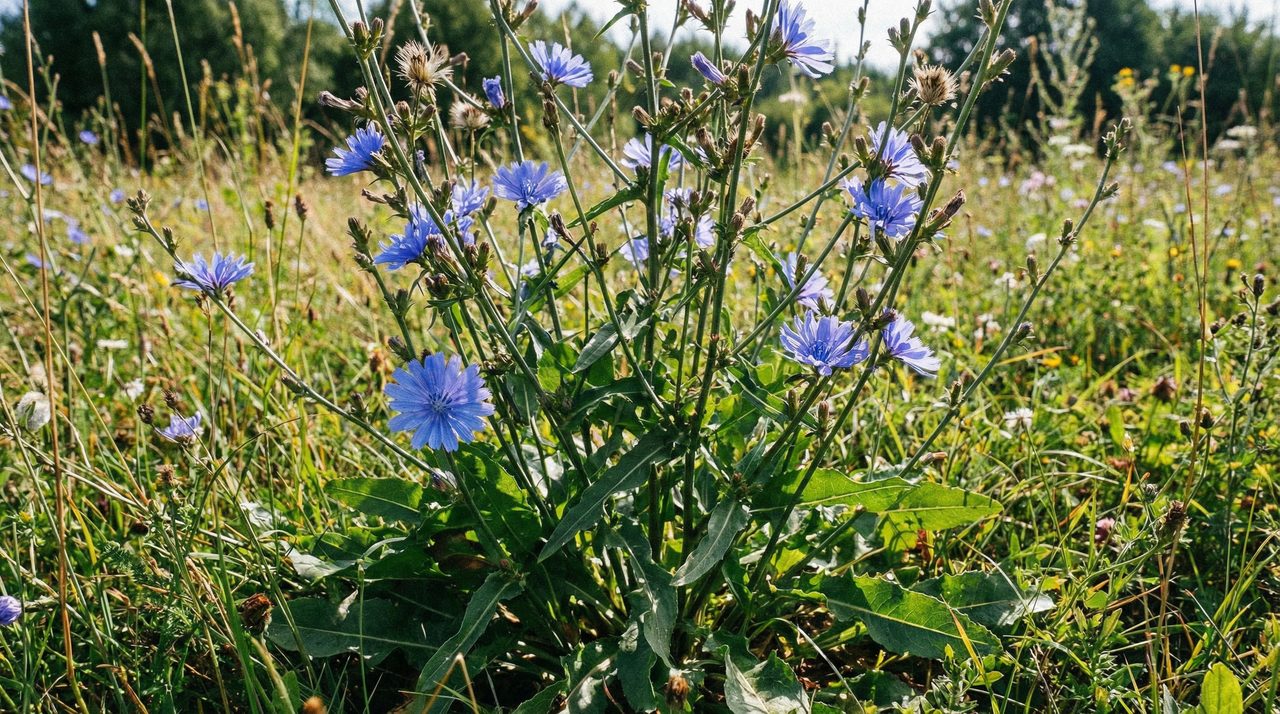
Every summer, driving back roads in the Mid-Atlantic, I'd pass those scruffy roadside plants with the impossible blue flowers and think: weed. It took me embarrassingly long to realize I was blowing past one of the oldest cultivated plants in the world, something the ancient Egyptians were already pressing for medicinal use when most of Europe was still figuring out agriculture.[1] That scrubby, ignored plant clinging to gravel shoulders? It's also the refined radicchio on your restaurant plate, the roasted root in your New Orleans café au lait, and the inulin fiber quietly improving gut microbiomes in functional foods worldwide. Same plant. Completely different story depending on who's looking at it.
What gets me is the contradiction at chicory's core: it thrives on neglect, colonizes disturbed ground like it owns the place, and has spent centuries being dismissed as a weed in the very regions where it's also a beloved culinary tradition. That tension, between wildness and refinement, between bitter and beautiful, is exactly what makes it so worth understanding. Once you see it clearly, you stop driving past it.
Chicory Origin, History, and Traditional Uses
Botanical Background and Native Range
Cichorium intybus is native to Europe, North Africa, and western Asia, where it evolved as a tough opportunist of temperate meadows and disturbed ground before spreading to nearly every corner of the globe.[2][3] A member of the Asteraceae family, it's technically a short-lived perennial, though wild plants often behave as biennials, spending their first year as a ground-hugging rosette before throwing up a flowering stem in year two.[4][5] Cultivated forms grown for Belgian endive, or witloof, are managed as annuals or biennials depending on the desired product, which shows you how much flexibility is baked into this species. I've watched chicory colonize the same roadside embankment near my home garden reliably for over a decade, which tells you everything you need to know about its pioneer instincts: it favors roadsides, grasslands, and disturbed soils with good drainage and a pH of roughly 6.0 to 7.5, and it absolutely refuses to tolerate waterlogging.[6][7] In North America it's now deeply naturalized, and that naturalizing tendency cuts both ways: chicory has invasive potential in several regions, so always verify your state's status before intentionally introducing it to a permaculture system.[4][8]
Visual Characteristics and Identification
If you've ever driven a country road in summer and caught a flash of electric blue in the ditch, you've already met chicory. Those flowers are genuinely hard to mistake for anything else: bright sky-blue capitula about 2 to 3 cm across, each made up of 10 to 20 ligulate ray florets with delicately fringed tips, blooming continuously from June through October but each individual flower lasting just a single day.[5][4] Pink and white forms exist but are rare enough that stumbling across one feels like finding a four-leaf clover.
The plant itself grows 1 to 1.5 meters tall on erect, branched stems, and below ground the real architecture begins: a deep, fleshy taproot that can push past 1.5 meters into the soil, pale yellow-white, waxy, and oozing milky latex when you cut into it.[9][10] Early in my garden life I tried digging up a volunteer plant to move it, and the root just kept going. I eventually gave up, snapped it off, and watched the plant regrow from the stub within a few weeks. Lesson learned. The basal leaves form a rosette of toothed, lanceolate blades during cooler months, then the plant transitions to smaller, narrower stem leaves that clasp the stalk at their base; plants in shadier or moister spots tend toward broader, more lush leaves, while drought-stressed plants in full sun run narrow and tough.[6][7] Early in my foraging years I more than once mistook a first-year rosette for dandelion; the milky sap and slightly hairy, more elongated leaf shape are the tells once you know to look for them.
Lifecycle, Growth Habits, and Adaptations
Under natural conditions chicory lives roughly 3 to 5 years, behaving as a polycarpic perennial: the central rootstock and basal rosette persist season after season while individual flowering stalks rise, set seed, and die back, with the deep taproot fueling regrowth each spring.[6][11] There's something I genuinely admire about that strategy. This is a plant that refuses to put everything into one flower and call it done. Commercially, growers interrupt that rhythm entirely, managing witloof types as annuals or biennials to harvest roots for chicon forcing before the plant has a chance to persist on its own terms. Wild forms, by contrast, soldier on in poor, dry, compacted soils where most garden plants would sulk and fail,[4] which is precisely why chicory keeps showing up in roadsides and abandoned lots with such cheerful indifference to hardship. Check local regulations before planting; its persistence in disturbed habitats is an asset in the right context and a genuine management challenge in the wrong one.[8]
Traditional, Cultural, and Symbolic Uses
Chicory's relationship with humans is old. The Ebers Papyrus, an Egyptian medical text dating to around 1550 BCE, documents its use,[12] and Romans cultivated it as a garden vegetable and medicinal herb after centuries of wild harvesting.[13] The most famous chapter in its cultural biography, though, is the coffee substitute story. During the Napoleonic Wars, the US Civil War, and other periods of shortage, roasted chicory root filled the gap left by unavailable or unaffordable coffee beans, and nowhere did that substitution take deeper cultural root than in New Orleans, where chicory coffee remains a point of civic pride to this day.[14][15] I've brewed it for visitors who expected something thin and medicinal, and watched them reach for a second cup. There's a richness to it that makes the wartime-substitute framing feel almost unfair to the root itself.
What strikes me about chicory's traditional uses across cultures is how consistent they are despite originating independently. European herbalism, Ayurveda (where it's known as Kasani, prescribed for liver and Pitta conditions), Unani medicine, TCM, and various Mediterranean folk traditions all converge on the same cluster of applications: cooling, diuretic, liver tonic, digestive aid, detoxifier.[16][17][18] Modern research has started explaining why, pointing to inulin and sesquiterpene lactones as the bioactive drivers behind many of these traditional observations.[19] Beyond medicine, European folklore wove chicory into love divination rituals and attributed to it qualities of resilience, calmness, and magical protection, which feels fitting for a plant that blooms undaunted in the worst soils imaginable.[20][21]
Fun Facts About Chicory
Wild chicory plants are noticeably more bitter than their cultivated cousins, with deeply lobed leaves and considerably more attitude in the flavor department.[22][23] That bitterness comes primarily from sesquiterpene lactones, and while it's part of the plant's charm in small doses, the inulin content in roots can cause digestive discomfort if you overdo it; people with Asteraceae allergies should approach with caution regardless of form.[24][25] The deep taproot that makes this plant so drought-resilient is the same structure that produces the roasted coffee substitute, stores those prebiotic fibers, and anchors the plant against every attempt to evict it from your garden bed.[4] In my garden, the blue flowers reliably stop people mid-step on summer mornings, which opens the conversation about what chicory actually is, and that conversation almost always ends with someone wanting to grow it. Just remind them, as I always do, to check whether it's flagged as invasive in their county before they scatter seeds with abandon.[8]
Chicory Varieties and How to Source Them
Few plants pull off the double life that chicory does. Cichorium intybus is simultaneously the scruffy blue wildflower colonizing roadsides and the refined European vegetable filling Italian market stalls with jewel-toned radicchio heads and pale, butter-soft chicons. What ties all of these forms together is bitterness, or more precisely, how much of it you're willing to manage. The further you move from wild-type chicory plants toward carefully selected cultivars, the more control you have over that sharp, lactone-driven bite.
Notable Cultivar Groups: Leafy, Radicchio, Endive, and Witloof Types
Chicory intybus varieties fall into four working categories: leafy types for salads and forage, radicchio (var. foliosum), endive-related types, and Witloof (var. sativum) for forcing into Belgian endive chicons.[26] Named cultivars within those groups include 'Pekin' (green and curly), 'Dinant' (broad-leafed), 'Blanc,' 'Rouge,' and the gorgeous variegated 'Castelfranco,' plus popular radicchio and forcing types like 'Sugarloaf,' 'Treviso,' 'Pallo Rosso,' 'Witloof,' and 'Zoom.'[27][28]
Wild chicory is the most intensely bitter of the group. Radicchio types are also quite sharp, while Belgian endive sits at the mild end of the spectrum, with bitterness further reduced by blanching and careful cultivar selection.[29][30] I've tasted enough wild roadside chicory to say that the gap between it and a well-forced 'Witloof' chicon is enormous. If you're new to the plant and bite straight into a wild leaf, don't let it put you off entirely.
Radicchio chicory prefers cool weather in the 50 to 70°F range and performs best in USDA zones 5 through 9, while Witloof forcing requires a dedicated period of three to four weeks in darkness at 60 to 65°F to develop those crisp, mild heads.[26][31][28] The forcing process rewards patience. I start my Witloof roots in late summer so I have them ready to bring into a cool, dark corner of my basement by mid-winter. The chicons that emerge are genuinely worth it. Leafy forage types are hardier by comparison, growing well in USDA zones 3 through 7 on poor soils and producing enough biomass to function as quality livestock feed.[32][33] If you're growing for a permaculture forage guild rather than the dinner table, those vigorous leafy types are where to put your energy. Most modern European varieties have been bred for vigor and yield rather than disease resistance, so don't expect seed catalog listings to highlight specific resistances.
If your interest is the roasted root, that's a different project altogether. The deep taproot develops a nutty, coffee-like flavor after roasting and is best harvested in fall or following a frost.[34] That harvest timing also matters for inulin content, which peaks after cold exposure, but I'll leave that for the harvesting section.
Sourcing Chicory Seeds, Roots, and Planting Stock
Cichorium intybus seeds for specific cultivars are widely available from both European and U.S. seed companies. For radicchio and Witloof types, Johnny's Selected Seeds and similar specialty vegetable suppliers carry reliable forcing varieties. Forage cultivars show up in cover crop catalogs and from companies catering to small-scale livestock operations.[6][28] When I'm evaluating forage cultivars, I look past the biomass claims in the catalog and watch actual performance in the field during the second year, which is when the deep taproot really starts doing its work in a mixed pasture.
If your goal is roasting roots for coffee substitute or maximizing prebiotic benefit, seek out organic-certified root varieties and plan for a post-frost harvest.[32] For permaculture soil-building applications, the wild-type or an adapted perennial forage cultivar will outperform anything bred for tight salad-bowl heads. Forcing stock and roots can also be sourced from specialty growers or dug from established plants you're already growing, which is how I prefer to expand my own Witloof patch rather than starting from seed every season.[6][28]
How to Propagate and Plant Chicory
Chicory is almost always grown from seed, and once you understand the seed itself, you'll understand why that's such a practical choice. The plant does produce viable roots that can be divided, and softwood stem cuttings of 4 to 6 inches treated with rooting hormone will sometimes take, but these are secondary methods most gardeners never bother with.[35][36] Seed is faster, cheaper, and far more scalable whether you're planting a small salad bed or an acre of deer forage.
Seed Characteristics and Storage
Each chicory seed is a small achene, 2 to 5 mm long, pale to dark brown with a tiny white pappus crown at the tip that catches the wind and carries the seed into disturbed ground.[7][4] That pappus is part of why chicory colonizes roadsides so aggressively, and it's also a reminder that stored seed stays viable for a long time. Dried to 5 to 8% moisture content and kept in a sealed container at cool temperatures, chicory seed holds germination capacity for 5 to 10 years.[37][38] I keep mine in glass jars in the back of the fridge and test a small pinch each spring before committing to a full sowing. A jar of four-year-old seed still hitting 70% germination is not unusual at all.
One thing to understand before you buy seed for a specific named variety: chicory is strongly outcrossing, with gametophytic self-incompatibility, which means it has to cross-pollinate with another plant to set viable seed.[39] Open-pollinated seed will give you genetically variable offspring, which is fine for wild-type plantings or forage mixes, but not ideal if you need true-to-type witloof or a specific radicchio head. For those, buy certified seed or source from breeders who use controlled pollination. Some seeds also show physiological dormancy that cold stratification at around 4°C for two to four weeks will reliably break.[40]
Germination Requirements and Timeline
Chicory germinates best between 15 and 20°C (59 to 68°F) and typically emerges in 7 to 14 days when conditions are right.[36][41] Sow at a depth of one-quarter to one-half inch; the seeds are light-sensitive, similar to lettuce, and germinate better when barely covered rather than buried.[42] I think of it the same way I think about lettuce: a thin veil of fine compost or vermiculite, just enough to keep the seed in contact with moist soil, not enough to block the light entirely.
Keep the seedbed evenly moist but never waterlogged until seedlings push through.[43] If you're starting early in a cold frame or starting seeds from a Mediterranean population (which tend toward stronger dormancy), a two-week pre-chill in the fridge before sowing will noticeably improve germination speed and uniformity. I've found that pre-chilled seed emerges in tighter synchrony, which makes thinning a lot more satisfying.
Soil, Site, and Sun Preferences
Drainage matters more than almost anything else here. Chicory tolerates a wide pH range from 5.0 to 8.3, though the sweet spot for productive growth is 5.5 to 7.5.[4][44] In my own garden, soil sitting around pH 6.2 produces noticeably sweeter young leaves than the more alkaline beds at the back of my property. It's a subtle difference, but worth noting if you're growing for the table. What the plant absolutely cannot tolerate is waterlogged or compacted ground because that deep taproot, which can push well past a foot, needs to move through loose, friable soil or it forks and stunts.[45] Before I sow, I work the bed to at least 12 inches, especially if I'm growing for root harvest.
Full sun is non-negotiable for best results. Six to eight hours of direct light daily supports strong vegetative growth, proper taproot development, and good seed set.[46][4] Plants in partial shade survive but grow etiolated and produce fewer flowers, which matters if you're counting on those blooms for pollinators.
Spacing, Sowing Technique, and Establishment
Direct sow after the last frost in spring, or in early fall where winters are mild. Chicory transplants poorly, so resist the urge to start it in trays and move it out later.[47][45] For a kitchen garden, sow seeds 6 to 12 inches apart in rows spaced 18 to 36 inches apart. For forage or pasture systems, broadcast at 4 to 10 pounds per acre or use rows 20 to 30 inches apart with plants thinned to 6 to 12 inches within the row.[48]
I've run the spacing experiment in the same raised bed: 6-inch spacing gave me dense, tender leaf coverage that shaded out most weeds, while 12-inch spacing produced larger roots worth roasting.[48][49] Tighter plantings close the canopy faster, which is particularly useful in fertile soil where weeds move quickly into open ground. From direct sow to a functional, harvestable plant runs about 60 to 90 days.[4][50] One practical tip I wish someone had given me early on: mark your rows clearly at sowing because young chicory seedlings look remarkably similar to dandelion or lettuce, and it's very easy to weed out your entire planting before it gets a chance to establish.
Chicory Care Guide: Growing and Maintaining Cichorium intybus
Chicory is one of those plants that makes you look competent even when you're not paying close attention. Once it's settled in, it's genuinely forgiving. But there's a first month or so where it needs you to show up, and a few seasonal moments where the right intervention makes all the difference between a productive bed and a patch of scraggly, bitter stalks.
Light and Sunlight Requirements
Chicory wants full sun, at least 6-8 hours of direct light daily for good leaf production, flowering, and taproot development.[51][36] It will tolerate partial shade, but expect etiolated stems, washed-out color, and reluctant flowering if the light budget runs short. In hot summers, I do give afternoon shade to prevent leaf scorch, which keeps the harvest going longer without sacrificing overall plant vigor.[52]
Water Needs and Drought Tolerance
That deep taproot is chicory's superpower. Once established, mature plants are surprisingly drought tolerant, showing stress mainly as midday wilting that usually corrects itself by evening.[4] After my first season of watering on a rigid calendar, I learned to wait for real wilt signals before turning on the hose. Established plants need roughly an inch of water per week, bumping to about 1.5 inches during hot dry spells, applied deeply and infrequently to push root development downward.[53] Seedlings are the exception; keep them consistently moist until they're a few inches tall and that tap root has a fighting chance.
Soil, Fertilization, and Nutrient Management
Chicory is a moderate feeder and prefers fertile, well-drained soil with a pH of 5.5-7.5, ideally in the 6.0-7.0 range.[54] Always soil test before fertilizing. For nitrogen, split applications work better than a single heavy dose; too much nitrogen drives vegetative growth at the expense of root quality and can cause nitrate accumulation that's genuinely problematic in forage systems.[55] I keep nitrogen on the lighter side in my kitchen beds, and I've started interplanting chicory with clovers and vetches, which cuts my nitrogen inputs considerably.[56] If you're growing for root inulin rather than leaf production, dial nitrogen back further; high rates favor lush tops over the roots you actually want.[57]
Phosphorus supports root development and potassium backs drought tolerance, both applied to soil test targets rather than guesswork.[54][58] I've learned to read deficiency symptoms quickly in my slightly alkaline soil: pale yellowing on older leaves points to nitrogen, while interveinal chlorosis on new growth usually signals iron lockout from high pH.[59] A foliar iron spray and a pH adjustment usually green things back up within a week or so. Marginal leaf scorch suggests potassium, while small, mottled new leaves can indicate zinc deficiency.[59]
Frost and Heat Tolerance
Chicory is a true perennial in USDA zones 3-9, which puts it in the same resilience category as dandelion: deep-rooted, rosette-forming, and genuinely hard to kill with cold.[4] Light frost actually sweetens the leaves, though prolonged exposure causes the familiar browning and water-soaked tissue damage you'd see on any tender green. In marginal zones, a row cover and an inch or two of straw mulch over the crown is usually enough protection.[60]
On the heat side, chicory's Mediterranean roots give it solid tolerance up to about 86°F before you start seeing bolting, leaf scorch, and quality decline.[61] Brief spikes higher are survivable if nights cool off for recovery. Organic mulch is the single most effective tool here; it visibly reduces soil temperature and has saved my plants from the kind of summer scorch I saw in my first unmulched planting. Cultivars like Witloof and Puntarelle show better heat tolerance if you're gardening somewhere reliably hot.[25]
Pruning, Maintenance, and Seasonal Care
The single best trick I've found for extending chicory's harvest window is pulling off flower buds the moment they appear. I let a row bolt early in my first season and watched bitterness set in practically overnight. Cut outer leaves when they hit 6-8 inches, or cut the whole plant back to 2-3 inches above the crown to trigger a second flush of tender growth.[62] Consistent cut-and-come-again harvesting, combined with flower head removal, has more than doubled my usable leaf window compared to letting plants run their course.[52]
Weeding matters most during establishment and again when plants are flowering and competition spikes. A light straw mulch handles both moisture retention and weed suppression, and in cold climates it doubles as winter crown protection.[63] Chicory self-seeds prolifically, so removing seed heads before they shatter is worth doing unless you want volunteers everywhere the following spring.[64]
Seasonal Rhythm and Growth Cycle
Chicory behaves as a biennial in practice even though it's technically a short-lived perennial: a basal rosette in year one, then bolting and flowering in year two.[4] Care priorities shift with each stage. Seedlings need consistent moisture and light mulch; once the taproot establishes, back off irrigation and add a modest nitrogen application to support vegetative growth; at flowering, maintain soil moisture but hold off on any more nitrogen.[64] In my garden, the plants self-seed so reliably that I think of the patch as self-perpetuating as long as I manage where the seeds land. Once you understand that seasonal rhythm, chicory asks very little of you.
Harvesting Chicory: Leaves, Roots, and Chicons
Chicory is really two harvests in one plant, and understanding that distinction early saves a lot of frustration. The leaves follow a fast, forgiving rhythm from late spring through early fall. The roots are a slower, more deliberate project that culminates with a first frost and some careful storage. Conflating the two timelines is the most common mistake I see new chicory growers make.
When and How to Harvest Chicory Leaves
Leaves are ready 45 to 90 days after sowing, once the plant has formed a rosette of four to six young leaves and stands roughly four to eight inches tall.[65][36] The single most important quality rule is to harvest before the plant flowers. Bitterness climbs steadily with age, heat, and high soil nitrogen, and once a stalk bolts, the window closes fast.[66] I've watched a single overlooked flower stalk make every nearby leaf noticeably harsher within days. One plant bolting in a tight bed is enough to change the character of the whole planting.
I also mark my rows clearly now, because young chicory seedlings look a lot like dandelion or lettuce in the first few weeks, and accidentally harvesting too early robs the plant of the root-development time it needs for a long productive life.
Root Harvest Timing and Technique
For cut-and-come-again leaf harvests, cut outer leaves two to three centimeters above the crown when the plant reaches ten to fifteen centimeters tall, then repeat every two to three weeks through the season.[65][45] Harvest in late morning after the dew has dried. It's one of the more forgiving perennial greens I grow.
Root harvest is a different story. Roots intended for roasting, inulin, or chicon forcing need 90 to 150 days to develop (or a full season for biennial types), and the best moment is after the first frost, once tops begin to yellow and roots reach about three to five centimeters in diameter. In my experience, the flavor of a roasted root dug after a light frost is dramatically better than one pulled in summer. Inulin peaks at roughly 15 to 20 percent of dry weight at this point, and commercial growers harvest before flowering to prevent lignification.[36][67]
Dig carefully to avoid snapping the taproot, then trim the tops. Roots going straight to the kitchen can be used immediately; those going into storage need a one to two week cure at 60 to 70°F with high humidity to heal any wounds.[68][67] For chicons, lift roots after frost and store in the dark at 32 to 40°F with high humidity for two to three weeks to force those blanched pale heads.[36]
Storage temperature is non-negotiable for a quality dried chicory root. Packed in sand or peat moss at near-freezing temperatures and 90 to 95 percent humidity, roots keep well for three to six months.[69] I've learned the hard way that roots left above 5°C lose their sweetness fast; enzymatic activity can strip up to 20 percent of the inulin per week at room temperature.[70] Now I keep a dedicated bin in the coolest corner of my shed and routinely get four to five months of quality out of a fall chicory root harvest.
Flavor, Yield, and Storage
Young chicory leaves have a crisp snap reminiscent of escarole or young radicchio, with a clean herbal bitterness that's pleasant when the timing is right.[71] It's a flavor I've grown to love in salads, though I'll admit most newcomers need a few encounters before they're convinced. Blanching outer leaves under a bucket for a few days before harvest softens the bite considerably without any chemical intervention. Cooler temperatures at harvest time also help.[72]
Roasted roots are a different sensory experience entirely: woody and unassuming raw, they transform into something nutty and coffee-like when dried and roasted, which is why chicory root has found its way into everything from New Orleans café blends to dried chicory root in dog food formulas valued for prebiotic fiber.[15] The harvest-stage flavor cue is simple: young and cool equals mild, mature and hot equals bitter. Everything else follows from there.
Chicory Preparation and Uses
Culinary Uses: From Bitter Greens to Roasted Coffee Substitute
Few plants give you this much to work with in the kitchen. Chicory offers edible leaves, blanched chicons, a root worth roasting, and even the flowers. The challenge with all of it is bitterness, and getting comfortable with chicory really means getting comfortable with sesquiterpene lactones like lactucin and lactucopicrin, the compounds responsible for that sharp, lingering bite.[73][74] I learned early on that wild or mature leaves are in a completely different league from the pale, tender chicons you get by forcing roots in darkness.[75] The chicons are almost sweet by comparison. For raw salads, I stick to young leaves or properly blanched chicons and lean hard on pairing them with sweet and acidic ingredients: pears, apple slices, candied walnuts, blue cheese, citrus vinaigrette.[76] A warm sauté with olive oil and garlic softens the bite considerably for anyone who finds raw chicory too aggressive.
The root is where things get genuinely exciting. Roasted at 180-200°C, chicory root develops woody, nutty, caramelized aromas through Maillard reactions and caramelization that make it a deeply satisfying caffeine-free coffee alternative.[14][77] That roasting also partially hydrolyzes the inulin content, reducing intact fiber by 20-50% while transforming the flavor profile.[78] Home-roasted roots from plants grown in well-drained, sunny ground have a noticeably earthier, less acrid character than commercial roasted chicory root products. The Civil War-era tradition of using roasted chicory as a coffee substitute speaks to how satisfying that cup actually is.[79] The flowers and young buds are also edible raw or brewed as a mild herbal tea, a lesser-known use but worth exploring if you have plants going to flower.[72]
Traditional Medicinal Preparations
Chicory root has been used medicinally for digestive support, liver complaints, and as a diuretic since ancient Egyptian, Greek, and Roman times.[80] For practical home preparation, Health Canada and NCCIH recognize several standard approaches. A decoction uses 1.1-2g of dried root simmered in 240mL of water for 20-30 minutes; an infusion steeps the same amount for 10-15 minutes.[81][82] I've prepared chicory root decoctions many times for digestive support and find that 20-30 minute simmer produces a reliably smooth, earthy tea. A tincture runs 0.5-1mL of a 1:5 extract in 40% ethanol, taken two to three times daily, and dried powder is typically dosed at 1-2g two to three times daily.[83] Start on the lower end, especially if you have gallstones or take medications. The deeper research on mechanisms and safety is in the health benefits section; these preparations are a practical starting point, not clinical advice.
Non-Food Uses
Beyond the kitchen and medicine cabinet, chicory earns its place in pasture systems as a high-biomass forage crop.[84] Sheep, cattle, and deer readily graze it, and its deep taproot makes it more drought-resilient than many shallow-rooted forage options. That said, overgrazing a chicory stand or relying on it as a sole forage source warrants caution; work with extension resources specific to your livestock and region before building a paddock guild around it. For the permaculture designer, this utility as forage pairs naturally with its ecosystem roles discussed earlier in the permaculture design section.
Chicory Health Benefits
Chicory has earned its place in medicine cabinets long before anyone thought to study it in a lab. Ancient Egyptians used it as a laxative, Greek physicians reached for it when treating liver complaints, and Middle Eastern healers applied it to fevers and eye inflammations.[85][86][87] What strikes me about this cross-cultural convergence is that these traditions didn't arrive at the same conclusions by accident. Bitter plants with deep roots tend to accumulate compounds that genuinely do something, and chicory is a textbook example.
Medicinal Research and Traditional Uses
Every part of chicory carries its own therapeutic logic. The leaves function as diuretics and anti-inflammatories, the inulin-rich roots act as prebiotic tonics and appetite stimulants, the flowers contribute antioxidant and anti-inflammatory activity, and even the seeds have traditional laxative uses.[88][89][90] Modern preclinical research has given us the mechanisms to explain what those traditions observed: sesquiterpene lactones suppress NF-κB and COX-2 pathways, reducing pro-inflammatory cytokines, while extracts show hepatoprotective effects against liver toxins through both antioxidant and anti-fibrotic actions.[91][92][93]
The antioxidant picture is equally solid at the preclinical level. Phenolics like chlorogenic acid and chicoric acid scavenge free radicals and activate the Nrf2 pathway, while chicory extracts inhibit α-glucosidase and improve insulin sensitivity in diabetic animal models.[94][95][96] The inulin in chicory roots also ferments in the colon to produce short-chain fatty acids, feeding beneficial gut bacteria and supporting glucose regulation, with clinical studies backing improved gut health outcomes.[97][98] Small-scale human trials (fewer than 100 participants) on metabolic syndrome and type 2 diabetes patients have shown reductions in inflammatory markers and improved antioxidant status with chicory extracts[99][100]; promising results, but larger trials are still needed before firm clinical recommendations can be made.
Like many permaculture gardeners, I've experimented with roasting my own chicory roots during supply disruptions. It echoes its Napoleonic-era and World War II role as a coffee substitute[6][29] and, conveniently, preserves enough inulin for mild prebiotic benefits in your morning cup.
Key Phytochemicals in Chicory
The bitterness you taste when you bite a chicory leaf isn't incidental. It's the sesquiterpene lactones, specifically lactucin and lactucopicrin, doing what they were designed to do, both as herbivore deterrents and, as research now confirms, as anti-inflammatory and analgesic agents.[101][102][103] Alongside these sit phenolic acids (chlorogenic, chicoric, caffeic), flavonoids like luteolin, quercetin, and kaempferol for anti-inflammatory and neuroprotective effects, and inulin making up 15-20% of root dry weight as a prebiotic fructan. Tannins, coumarins, and linoleic-rich seed oils round out the chemistry.[101]
Where these compounds concentrate varies considerably. Leaves are highest in sesquiterpene lactones and phenolics, roots dominate for inulin, flowers carry the most flavonoids, and seeds are richest in phenolics and fatty acids.[104][105][106] Season matters too: phenolic concentrations peak in autumn, and plants grown in slightly acidic, well-drained soils tend to show more pronounced bitterness. I've found this to be true in my own beds. Plants in compacted or overly fertile ground taste milder, and I suspect that reflects lower sesquiterpene content. Peak phytochemical load aligns with flowering stage, so timing your harvest with intention gives you meaningfully different plant medicine depending on what you're after.[104] Together, these compounds drive antioxidant, anti-inflammatory, analgesic, hepatoprotective, antimicrobial, and neuroprotective activity documented across dozens of studies.[107]
Nutritional Profile
Raw chicory leaves clock in at just 23 kcal per 100g while delivering 286 IU of vitamin A, 4mg vitamin C, nearly 300mcg of vitamin K, 110mcg folate, and solid mineral support including 420mg potassium and 52mg calcium.[108] The roots share similar potassium levels and serve as chicory's primary contribution to gut health, with inulin reaching 15-20% of root dry weight under good growing conditions.[109][78] When I harvest after a full 120-150 day temperate season in low-nitrogen beds, the roots are noticeably more prebiotic-dense, turning a simple roast into a more effective gut-support food.[110]
Leaves also contribute meaningful polyphenols: chicoric acid at 50-300mg per 100g fresh weight, alongside chlorogenic acid and flavonoids at 100-500mg per 100g.[111][112] Roasting partially hydrolyzes the inulin in roots but retains enough to preserve mild prebiotic effects, which is why roasted chicory root coffee still earns its reputation as a gut-friendly beverage.
Safety and Considerations
For most people, chicory is genuinely safe. It holds GRAS status from the FDA for both food and inulin use, shows very low acute toxicity in animal studies (LD50 above 5g/kg), and the ASPCA lists it as non-toxic to dogs and cats.[113][114][115] That said, a few conditional caveats are worth knowing.
High inulin intake (around 14-18g per day) can cause bloating, gas, and diarrhea as the fiber ferments in the gut, so ramping up slowly is wise.[116] As a member of the Asteraceae family, chicory carries moderate allergenic potential with cross-reactivity to ragweed, dandelion, and mugwort, potentially causing oral allergy syndrome or contact dermatitis in sensitive individuals.[117] As someone who regularly recommends chicory in edible landscapes, I tell clients with ragweed sensitivities to start with small culinary amounts of the leaves. Most tolerate them fine, but the cross-reactivity is real and worth monitoring.
Avoid medicinal or concentrated doses during pregnancy due to potential uterine stimulant effects and insufficient safety data, though culinary amounts are generally considered fine.[118] Anyone on diuretics or hypoglycemic medications should be aware of possible additive interactions.[119] The last one catches new growers off guard: chicory can bioaccumulate heavy metals including cadmium and lead from contaminated soils.[120] Early on I didn't test my soil thoroughly enough, and I noticed an off-note in the roots I couldn't explain until I had the bed tested. Now I always use raised beds or verified clean ground for any chicory I'm growing for food or medicine.
Chicory Pests and Diseases
Chicory isn't the toughest plant in the garden, but it's not fragile either. What it has is a specific vulnerability profile that responds predictably to how you grow it, which means attentive management goes a long way. The good news is that breeding has given us real tools, and the plant brings a few chemical tricks of its own to the table.
Common Diseases and Disease Resistance
Chicory shows moderate to low resistance to a fairly long list of fungal diseases: powdery mildew, downy mildew (Bremia lactucae), leaf spot (Alternaria and Cercospora), rust, root rots (Rhizoctonia, Fusarium, Pythium, Phytophthora), and white mold (Sclerotinia). Bacterial leaf spot and viral diseases like chicory yellow mottle virus show up occasionally but are less common.[121][122][123] That said, modern cultivar selection has produced meaningful, pathogen-specific protections. Puna II resists leaf spot and Sclerotinia; Oasis handles downy mildew well; Grasslands Choice and Zoom tolerate root rot and Fusarium; Forage Feast offers moderate resistance to both Fusarium and Bremia lactucae.[124][110] I always cross-reference regional extension bulletins before committing to a cultivar, because a variety rated resistant in Minnesota can still struggle badly in a hot, humid southeastern summer with inadequate airflow.
Disease pressure peaks at temperatures between 15 and 25°C with relative humidity above 80% and waterlogged soil.[125][126] Cultural practices are your real frontline here. A two-to-four-year rotation away from other Asteraceae, 30-to-45-centimeter plant spacing for air circulation, drip rather than overhead irrigation, and prompt removal of plant debris can reduce downy mildew incidence by as much as 70%.[127][128] Trichoderma-based biological controls can suppress soil-borne pathogens in organic systems, though most of the supporting data comes from lettuce trials rather than chicory-specific research, so treat those products as promising rather than proven.[127] When cultural methods aren't enough, protectant fungicides like chlorothalonil or sulfur and systemic options like myclobutanil or boscalid can be effective, but I only go that route with strict attention to pre-harvest intervals on edible crops and rotating modes of action to avoid resistance buildup.[127][128] Disease pressure tends to be highest in the humid Midwest and Northeast, and if you're growing forage types you'll want cultivars selected for soil-borne pathogen tolerance, while root types prioritize storage quality in their resistance breeding.[129][124]
Common Pests and Natural Defenses
The insect pest list for chicory is real but manageable. Aphids (Myzus persicae and relatives), flea beetles (Phyllotreta spp.), cutworms, leaf miners, carrot weevils, root maggots, and aster leafhoppers all show up with some regularity, and you may also contend with slugs, snails, and root-knot nematodes (Meloidogyne spp.).[130][131][132] Flea beetles are particularly brutal on young transplants in cool, moist spring weather; I've lost entire seedling rows to them before I started interplanting with pungent alliums and covering young plants with row fabric until they toughen up. Once the foliage matures, the damage drops off considerably.[130][132] Slugs follow their usual logic: damp evenings, bare soil, and dense plantings are an open invitation. Cultivars like Puna II, Atlas, and Zoom offer moderate resistance to aphids and nematodes, though performance varies enough by region that you'll want to test rather than assume.[124][133]
What I find genuinely fascinating about chicory's pest biology is how much it does for itself. The bitter sesquiterpene lactones (lactucin, lactucopicrin) and phenolic compounds that deter insect feeding are the exact same compounds that make chicory roots valuable as a coffee substitute and that foragers and herbalists prize.[134][135] The bitterness isn't a flaw; it's a defense system the plant evolved and that we've co-opted for our own uses. On top of that, glandular trichomes on the leaf surface physically trap small insects (I've watched this happen right in front of me on a warm afternoon), and the plant releases volatile organic compounds that actively recruit natural enemies when herbivores attack.[136] It's essentially running its own integrated defense guild.
Tying everything together is a straightforward IPM approach: scout regularly, choose cultivars with documented resistance for your region, maintain two-to-four-year rotations, support beneficial insect populations, keep drainage solid, and reach for targeted interventions only after economic thresholds are crossed.[137][138] In a home garden, that usually means monitoring twice a week during establishment, hand-picking slugs, and saving any spray decision for situations where the plant is genuinely losing ground.
Chicory in Permaculture Design
Before anything else, the first question any permaculture designer needs answered is simple: will this plant survive my winters? For chicory, the answer is yes for the vast majority of North American climates. Established plants are hardy from USDA zones 3 through 9, tolerating minimum temperatures as brutal as -35°F to -40°F once their roots are settled in.[139][4][36] That's a staggering cold-hardiness range for a plant that looks like a delicate wildflower every June morning.
Climate Adaptability and Hardiness Zones
Chicory prefers its days in the 60-75°F sweet spot and starts showing heat stress above 90°F, so it's genuinely a cool-to-moderate temperate plant at its best.[140][141] Full sun is non-negotiable, at least six hours daily, and the deep taproot that makes it so winter-tough also makes it genuinely drought-tolerant once established. Annual precipitation needs are modest, 400-800mm optimally, and plants can persist on as little as 250-400mm in well-drained soils.[4][142] That's a meaningful advantage on dry edges and slopes where other herb-layer plants struggle.
The humidity piece is trickier. Chicory prefers low to moderate humidity, and in high-humidity conditions with poor airflow it becomes susceptible to powdery mildew and leaf spot.[44][143] I've learned in my own humid-summer garden that prevention through site selection beats treatment every time; I put chicory in the breeziest, best-drained spots on the property and haven't had to deal with fungal problems since making that switch. In the wild, you'll find it across the Midwest, Pacific Northwest, and California, naturalized on roadsides and disturbed ground from sea level up to around 2,500 meters elevation.[4][7] That roadside preference tells you something useful: this is a plant that doesn't need pampering, but it does need light and drainage.
Ecosystem Functions and Soil Benefits
The real story in permaculture design is what's happening underground. Chicory's taproot reaches 1.5 to 2 meters deep, physically fracturing compacted soil layers while simultaneously mining potassium, calcium, magnesium, and phosphorus from subsoil horizons and cycling them back toward the surface when leaves and roots decompose.[144][145][4] After observing chicory's taproot firsthand across several seasons of opening new permaculture plots, I now seed it deliberately into compacted areas before planting anything else. It's essentially a living soil auger, and the mineral accumulation it offers to shallow-rooted neighbors is a genuinely useful gift. That said, chicory is not a nitrogen fixer; it's not a legume, and it won't substitute for one in your guild planning.[146] Pair it with clovers or other legumes if nitrogen is your goal.
Above ground, chicory competes with weeds through density and mild allelopathic compounds, specifically lactucin and chicoric acid, though I'd describe this effect as helpful background pressure rather than a strong suppressive force.[147][148] I've used it in polycultures alongside strawberries and alliums where it seems to reduce pest pressure on those companions, and the evidence for pairing with carrots and onions is consistent enough that I keep coming back to that combination.[36] One companion to skip: corn, which appears sensitive to chicory's allelopathic chemistry.
Here's where I need to be direct, particularly for anyone gardening in the Midwest or Northeast. Chicory is considered invasive in parts of both regions and can escape cultivation readily.[149][150] In North American permaculture systems I treat chicory like a managed volunteer rather than a wild one; containment is non-negotiable. Deadhead before seed sets if you're in a sensitive region, or site it where spread can be monitored and mowed back at boundaries.
Pollinator Support and Floral Ecology
From June through October, chicory throws up a continuous succession of bright blue composite flowers, each about an inch to an inch and a half across, opening each morning and closing by midday.[151][152] The nectar is moderate but the pollen is abundant, and the flowers carry UV patterns invisible to us but highly attractive to bees. Honeybees, bumblebees, solitary bees, and hoverflies are the primary visitors,[153] and chicory's protandry combined with self-incompatibility means 80-90% of seed set depends entirely on pollinator activity.[154][155] The relationship is genuinely mutual. I think of chicory's pollinator draw as comparable to anise hyssop or borage in a summer guild: reliable, long-season, and visible enough that you'll actually watch the bees working it. In designs where I've let chicory run along wildflower strips at field edges, pollinator visitation across the whole guild increases noticeably through midsummer, which tracks with research showing habitat features like those strips amplify bee visitation significantly.
Forest Layer Placement and Guild Design
Chicory sits in the herb layer, and that's where it belongs. As a herbaceous perennial reaching 0.6 to 1.5 meters tall, it demands full sun and open conditions; shade from a closing canopy will reduce flowering and vigor quickly.[4][156][157] I use it most successfully at guild edges, in south-facing openings within food forest systems, and in the open swaths between established tree guilds where light is generous and the soil needs building before more permanent planting goes in.
In agroforestry polycultures, chicory functions well as a forage crop, dynamic accumulator, or nurse species alongside other open-habitat sun-lovers, without aggressively competing with tree roots at the surface.[158][159] Its spreading habit does need periodic management, especially in productive beds, but that's a small trade-off for a plant that genuinely earns its place through soil improvement, pollinator support, and low-input persistence across a wide range of site conditions.
The Plant That Taught Me to Stop Pulling Everything Blue
For years I yanked chicory from my pathways without a second thought, treating it like a weed because it volunteered where I hadn't invited it. Then a dry August came, and while everything else sulked, chicory bloomed on without any help from me. I left it alone after that. Some plants just know where they belong, and eventually you learn to trust them.
Sources 159
- Chicory (Cichorium intybus L.) as a source of food ingredients and bioactive compounds ↩
- USDA Plants Database: Cichorium intybus L. ↩
- Kew Science - Plants of the World Online: Cichorium intybus ↩
- USDA PLANTS Database - Cichorium intybus ↩
- Missouri Botanical Garden - Cichorium intybus ↩
- Cichorium intybus - Wikipedia ↩
- Flora of North America - Cichorium intybus ↩
- Invasive Plant Atlas of the United States ↩
- Missouri Botanical Garden Plant Finder - Cichorium intybus ↩
- RHS Plant Information - Cichorium intybus ↩
- Kew Science - Plants of the World Online: Cichorium intybus ↩
- The Ebers Papyrus: A New English Translation, Commentaries and Glossaries ↩
- Roman Farming ↩
- History of Chicory Coffee ↩
- Cichorium intybus - Kew Gardens Fact Sheet ↩
- Ayurvedic Pharmacopoeia of India ↩
- Chinese Herbal Medicine: Materia Medica ↩
- Native American Ethnobotany Database ↩
- Chicory: From Farm to Pharmacy ↩
- The Folklore of Plants ↩
- Cunningham's Encyclopedia of Magical Herbs ↩
- Cichorium intybus L. ↩
- Morphological Variation in Wild and Cultivated Chicory Populations ↩
- Foraging Chicory ↩
- Missouri Botanical Garden - Chicory ↩
- Chicory Production and Management ↩
- Chicory Varieties - University of Wisconsin Extension ↩
- Witloof Chicory Forcing Techniques ↩
- Varieties of Chicory and Flavor Profiles ↩
- Missouri Botanical Garden - Cichorium intybus ↩
- Radicchio Cultivation Guide ↩
- USDA Plant Guide: Chicory ↩
- Managing Cover Crops Profitably ↩
- California Department of Food and Agriculture (CDFA) - Cichorium Intybus ↩
- Chicory Production and Management ↩
- Propagation of Chicory (Cichorium intybus L.) ↩
- Millennium Seed Bank Partnership Seed Conservation Standards ↩
- FAO Genebank Standards for Plant Genetic Resources for Food and Agriculture ↩
- Pollination Biology of Chicory (Cichorium intybus L.) ↩
- Dormancy and Ecology of Chicory Seeds ↩
- Chicory Seed Germination ↩
- Cichorium intybus ↩
- Horticultural Propagation Techniques for Asteraceae Family ↩
- Chicory (Cichorium intybus) - Missouri Botanical Garden ↩
- Royal Horticultural Society - Chicory Growing Guide ↩
- Chicory (Cichorium intybus) - Missouri Botanical Garden ↩
- Forage Chicory Production - USDA NRCS ↩
- Chicory for Forage - Penn State Extension ↩
- Forage Chicory Establishment and Management ↩
- Chicory Forage Production Guide ↩
- Missouri Botanical Garden Plant Finder ↩
- Royal Horticultural Society: Growing Chicory ↩
- University of California Agriculture and Natural Resources - Irrigation Management for Chicory ↩
- Nutrient Management for Forage Chicory ↩
- Forage Chicory Production and Management ↩
- Chicory Fertilizer Recommendations ↩
- Chicory Cultivation for Inulin Production - FAO Guidelines ↩
- Fertilizer Recommendations for Forage Crops ↩
- Nutrient Deficiency Symptoms in Chicory (Cichorium intybus) ↩
- Frost Damage in Vegetables - University of Minnesota Extension ↩
- Temperature Effects on Cichorium intybus Growth ↩
- Chicory Production and Management ↩
- Growing Chicory ↩
- Chicory Production and Management in the Upper Midwest ↩
- Chicory Production Guide ↩
- Growing Chicory for Leaves and Roots ↩
- Chicory for Pasture and Human Consumption ↩
- Cichorium intybus, Common Chicory ↩
- Optimum Storage Conditions for Chicory Roots ↩
- Postharvest Handling of Chicory Roots ↩
- Volatile Profile of Fresh Cichorium intybus Leaves ↩
- Edible Wild Plants: Chicory ↩
- Chicory (Cichorium intybus L.) as a food ingredient – Nutritional composition, bioactivity and safety ↩
- Sensory Evaluation of Bitter Compounds in Cichorium intybus ↩
- Horticultural Reviews: Endive and Chicory ↩
- Chicory in French Cuisine ↩
- Aroma Compounds in Roasted Chicory and Coffee Substitutes ↩
- Inulin from Chicory Root: Processing, Structure, Function and Applications ↩
- A review of chicory (Cichorium intybus L.) as a food, feed and nutraceutical ↩
- Ethnopharmacological survey of medicinal plants used in traditional medicine by the communities of Mount Hermon, Lebanon ↩
- Cichorii radix Herba Monograph, Health Canada ↩
- Chicory: In Depth, NCCIH ↩
- Chicory Phytochemistry and Pharmacological Applications, IntechOpen ↩
- Chicory Forage Fact Sheet - University of Wisconsin ↩
- Ethnobotany of Chicory (Cichorium intybus L.) ↩
- Medicinal Properties of Cichorium intybus L. Review ↩
- Ayurvedic Uses of Chicory (Kasani) ↩
- Cichorium intybus - Drugs and Lactation Database (LactMed) ↩
- Chicory (Cichorium intybus L.) – a historical and present herbal medicine ↩
- Phytochemical Composition and Pharmacological Activities of Cichorium intybus L. ↩
- Pharmacological Review of Cichorium intybus ↩
- Hepatoprotective Activity of Cichorium intybus in Rats ↩
- Hepatoprotective Mechanisms of Chicory Root Extract ↩
- Antioxidant Activity of Cichorium intybus Root Extracts in Vitro ↩
- Anti-diabetic Potential of Cichorium intybus in Vivo ↩
- Antidiabetic Effects of Cichorium intybus ↩
- Inulin from Chicory Root: Prebiotic Mechanism and Health Benefits ↩
- Inulin from Chicory: Prebiotic Effects in Clinical Studies ↩
- Effects of Chicory Root Extract on Inflammatory Markers in Metabolic Syndrome: A Randomized Controlled Trial ↩
- Antioxidant Effects of Cichorium intybus Leaf Extract in Type 2 Diabetes: A Clinical Study ↩
- Phytochemistry and biological activity of Cichorium intybus: A review ↩
- Phytochemical and Pharmacological Aspects of Cichorium intybus L. ↩
- Sesquiterpene Lactones from Chicory and Their Biological Activities ↩
- Phytochemical and Pharmacological Review of Cichorium intybus L. ↩
- Seasonal Variation of Phenolic Compounds in Chicory Roots ↩
- Phytochemical and Ecological Review ↩
- Chemical Composition and Health Effects of Chicory (Cichorium intybus L.) ↩
- USDA FoodData Central - Chicory greens, raw ↩
- USDA FoodData Central - Chicory roots, raw ↩
- Influence of Environmental Factors on Inulin Content in Chicory Roots ↩
- Phenolic Compounds and Antioxidant Activity in Cichorium intybus Leaves ↩
- Chicory (Cichorium intybus L.)—Traditional and Potential Crop for Nutrition and Industrial Use ↩
- Herbal Medicine: Biomolecular and Clinical Aspects - Chicory ↩
- ASPCA Toxic and Non-Toxic Plants - Chicory ↩
- Safety of Roasted Chicory Root as Coffee Substitute ↩
- Inulin (Chicory Root Fiber): Safety and Side Effects ↩
- Allergic Reactions to Chicory ↩
- Chicory During Pregnancy: Is It Safe? ↩
- Chicory: Uses, Side Effects, Interactions, Dosage, and Warning ↩
- The phytoextraction power of Cichorium intybus L. on metal-contaminated soil ↩
- Chicory Diseases and Pests ↩
- Fungal Diseases of Chicory ↩
- Royal Horticultural Society - Cichorium intybus Growing Guide ↩
- Forage Chicory: Establishment and Management ↩
- Chicory Production Guide - Disease Management ↩
- Fungal Pathogens in Chicory: Environmental Factors ↩
- University of Tennessee Institute of Agriculture - Production Guide for Chicory as Forage ↩
- University of California Integrated Pest Management - Endive and Escarole ↩
- Cornell Extension: Managing Diseases in Forage Chicory ↩
- Insect Pests of Chicory and Endive ↩
- Managing Pests in Chicory ↩
- RHS Gardening - Pests and Diseases of Chicory ↩
- Breeding for Pest Resistance in Chicory ↩
- Sesquiterpene Lactones: More Than Defensive Inhibitors of Herbivory ↩
- Chemical Defense in the Roots of Cichorium intybus ↩
- Volatile Emissions from Chicory (Cichorium intybus L.) and Interactions with Insect Herbivores ↩
- Integrated Pest Management for Chicory ↩
- University of California IPM - Chicory Pests ↩
- Chicory Plant Profile - Missouri Botanical Garden ↩
- Chicory Growing Guide - Missouri Botanical Garden ↩
- RHS Gardening - Chicory (Cichorium intybus) ↩
- Chicory Production Guide - University of Wisconsin Extension ↩
- Royal Horticultural Society - Chicory ↩
- Chicory: A Multi-Purpose Crop for Forage and Soil Improvement ↩
- Soil Health Benefits of Deep-Rooted Forages like Chicory ↩
- Permaculture Research Institute - Chicory in Permaculture ↩
- Biodiversity Support by Weedy Plants in Temperate Grasslands ↩
- Forage and Erosion Control Uses ↩
- USDA PLANTS Database ↩
- Chicory | Invasive Species in the US ↩
- Chicory for Pollinators ↩
- Missouri Botanical Garden Plant Finder: Chicory ↩
- Pollination Ecology of Chicory (Cichorium intybus L.) ↩
- Effects of Pollinator Exclusion on Seed Set in Wild Chicory ↩
- Insect Pollinators of Cichorium intybus in Agricultural Landscapes ↩
- Royal Horticultural Society - Chicory ↩
- Missouri Botanical Garden - Cichorium intybus ↩
- Cichorium intybus in Agroforestry - Permaculture Research Institute ↩
- Kew Science - Plants of the World Online: Cichorium intybus ↩