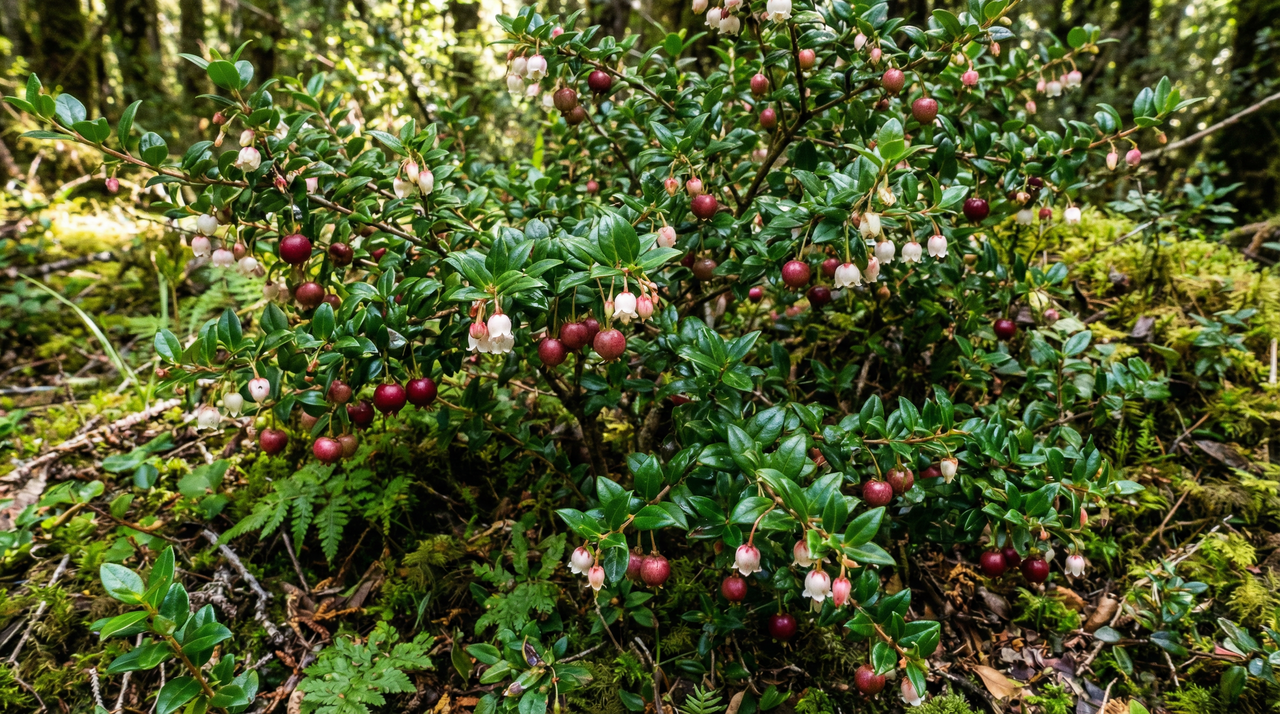
Chilean guava is an exceptionally productive evergreen shrub that produces some of the most aromatically complex berries possible in a temperate climate.[1] That's a fun fact, and I've watched it do real work at farmers markets, but here's what actually stops me in my tracks every time: the moment you pull a ripe berry off the branch, it smells nothing like what you'd expect from a shrub that looks so quietly, politely ornamental. It hits you first as strawberry, then something tropical and faintly floral underneath, and then a note I can only describe as warm spice. I've handed berries to people who had never heard of this plant, and they immediately ask why it isn't in every grocery store. The honest answer is that it's too delicate, too perishable, too much a thing you have to grow yourself to ever really know.
What nobody tells you about Ugni molinae is that it's spent centuries being underestimated. The Mapuche people of southern Chile built a sophisticated relationship with this shrub long before European botanists arrived with their specimen jars, using the fruit, the leaves, and what the plant could do medicinally in ways that modern phytochemistry is only now beginning to catch up with. Then the Victorians arrived, loved the berries, and somehow still managed to relegate the plant to garden borders as a decorative curiosity. It never quite got its due. In a good permaculture food forest, though, this overlooked evergreen understory shrub quietly earns its space year after year, and the first autumn you harvest a full basket and smell that aroma rising up, you'll understand why it stuck around this long.
Chilean Guava Origin and History
There's a particular kind of plant that earns its place in a garden not just through productivity but through sheer staying power. Chilean guava is one of them. Ugni molinae is a perennial evergreen shrub native to the temperate rainforests of southern Chile and Argentina, growing naturally from sea level to roughly 1,800 meters in moist, acidic soils along coastal and mountain zones.[2][3] What sets it apart from many shrubs in its class is that it's polycarpic, flowering and fruiting repeatedly across a lifespan that can stretch 20 to 50 years.[4][5] Plant it once, tend it well, and you're looking at decades of harvests.
Botanical Background and Visual Characteristics of Ugni molinae
As a member of the Myrtaceae family, Ugni molinae shares the clan's signature aromatic character. The compact, rounded shrub typically reaches 1 to 2 meters tall with slender arching stems and bark that exfoliates in strips over time.[2][6] The leaves are small, glossy, and leathery, and if you pinch one on a warm afternoon you'll get an immediate hit of myrtle-like fragrance from the translucent glands on the underside. I've grown mine long enough now to know that the scent is strongest when the sun has been on the foliage for a few hours; that's become my cue for a gentle harvest of leaves. New growth flushes a warm coppery-red before darkening to deep green, which gives the plant an ornamental rhythm beyond just fruiting season.[2][7]
Flowers appear in late spring, small white-to-pink bells nodding singly or in clusters from the leaf axils, followed by berries that ripen from green through reddish to deep purple by late summer.[2][3][8] The fruit is small (4 to 20 mm), aromatic, and unmistakable once you've tasted one. I'll admit I confused the berries with evergreen huckleberry early on in my mild-climate planting work; similar size, similar dark color. One bite settled it immediately. The ugni berry has a sweet-tart complexity that huckleberry simply doesn't, and that flavor cue is now my go-to field confirmation before recommending it to clients.[9][10] The shallow root system, rarely deeper than 30 to 60 cm, informs siting choices in ways that matter for both planting and companion guild design.[2]
Traditional and Cultural Uses by the Mapuche People
The Mapuche people of Chile and Argentina have cultivated a relationship with this plant since pre-Columbian times, roughly 1,000 to 1,500 years ago. They ate the fruit fresh, dried, and fermented into wines and liqueurs, folded it into desserts, and used it in ceremonial preparations.[11] Leaf infusions were the primary medicinal tool, brewed for digestive complaints, diarrhea, stomach pain, urinary infections, and respiratory ailments.[12] Similar traditional uses appear among the Tehuelche and Selk'nam of Patagonia, reflecting how broadly valued this plant was across indigenous cultures of the region.[13] For the Mapuche, murtilla symbolized health, abundance, and resilience, a living connection to the land that I find entirely believable after watching my own plants shrug off neglect that would have finished lesser shrubs.[13]
European botanists formally described the species in 1854, though it had already arrived in Victorian England by the 1820s to 1830s, prized as an ornamental with edible fruit.[14] It's a trajectory I've seen with other once-exotic edibles like pineapple guava: introduced for looks, valued later for flavor, then rediscovered by food-forest designers who want both. Today the plant sits at Least Concern on the IUCN Red List, though wild populations in Chile face real pressure from commercial overharvesting.[15][16] My practical response to that, and the advice I give anyone sourcing this plant, is to buy from nurseries growing it from cultivated stock rather than wild-collected material. It's a small act, but it aligns with the agroforestry and domestication programs working to take harvesting pressure off native forests.[17]
Modern Cultivation, Conservation, and Fun Facts
Outside its native range, the Chilean guava plant poses minimal invasive risk. Its specific preferences for mild, humid conditions with wet winters and warm dry summers, the climate signature of the Valdivian rainforest, mean it doesn't wander far from where it's planted.[4][18] In its native habitat it's pollinated by bees and butterflies, with birds dispersing the seed, a web of relationships that supports forest regeneration and also explains why fruit set improves when you're not gardening in isolation.[19] Growing a Chilean guava today means participating in something that stretches from Mapuche foragers to Victorian kitchen gardens to modern permaculture food forests. That continuity, embedded in a compact shrub that will likely outlast the gardener who planted it, is part of what makes it so worth growing.
Chilean Guava Varieties and Where to Buy Ugni molinae
Notable Cultivars of Ugni molinae
Most of the cultivated forms of Chilean guava we have today didn't come from formal breeding programs. They're selections from wild populations, chosen over time for specific traits that make the plant more useful or beautiful in cultivation.[20][21] That origin story matters because it means you're not working with heavily domesticated genetics; you're working with something close to the wild plant, just nudged in a particular direction.
On the ornamental side, 'Variegata' is the showstopper, with cream-edged foliage that catches light beautifully in shaded understory spots.[22] I've grown it alongside the standard green form, and the difference in fruit production is real. The variegated specimen is gorgeous, but the plain-leaved plants put noticeably more energy into fruiting. If you want fruit, go green. If you want a conversation piece in a food forest border, 'Variegata' earns its space. 'Compacta' is the other ornamental worth knowing, topping out around 1 to 1.5 meters, which makes it genuinely manageable in a large container on a shaded patio.[22][23] I kept one in a pot for several years and it stayed productive without outgrowing its situation.
For fruit-focused growers, the Chilean selections get more interesting. 'Milenio' produces large red berries in the 15 to 20mm range with high yields, which is substantial for a species where most berries clock in around 1 to 1.5 centimeters.[20][24] 'Eliza' leans sweet with orange-red fruit, while 'Riscacan' emphasizes aroma and disease resistance, and 'Pimiento' is the odd one out with a smaller, spicier berry that surprises people who expect straightforward sweetness.[22][25] You'll also see names like 'Henry', 'Wideroe', 'Christine', 'Argentinia', and 'Caro' turn up in specialty catalogs, though performance data for these outside Chile is still thin. North American gardeners are genuinely in early discovery territory here.
Sourcing Chilean Guava Plants and Seeds
Chilean guava is an established plant in U.S. horticulture, but it's solidly in specialty territory.[26] You won't find it at a garden center chain. What you will find, if you're in zones 7 through 10, is a small but reliable network of specialty nurseries that carry it, with the strongest regional availability in the Pacific Northwest, coastal California, and parts of the Northeast.[26][27] One Green World, Raintree Nursery, Burnt Ridge, and Logee's have all carried it at various times. Plants typically sell in 1 to 5 gallon containers during spring and early summer, with 1-gallon plants running $15 to $35 and larger specimens pushing $50.[26] Botanical garden plant sales are another reliable source, often in the $20 to $30 range.
Seeds are available through Sheffield's Seed Company and Rare Exotic Seeds, usually $5 to $15 a packet. The catch is germination rates hovering around 20 to 50%, so I always buy extra. I learned that the hard way after a disappointing batch left me with three seedlings from an entire packet. Budget for redundancy and you'll be fine. If you're importing seeds from Chile or New Zealand directly, import is permitted but requires a phytosanitary certificate, and live plants may need an import permit plus possible quarantine under USDA APHIS rules.[28] The species is not on the federal noxious weeds list, though checking your state's regulations before ordering is always smart.[29] I've imported ugni molinae seeds with the proper paperwork and never had issues, but I always verify current APHIS requirements before each order because those rules can shift. The specialty nurseries listed above are the simpler path for most gardeners, and their stock tends to be well-adapted to temperate North American conditions.
Chilean Guava Propagation and Planting
The single most useful thing I can tell anyone who wants to grow Chilean guava is this: choose your propagation method based on how long you're willing to wait. Seed-grown plants can take 4-6 years to fruit, sometimes pushing 8.[22][30] Vegetative plants from cuttings or layering typically fruit in 2-3 years.[31] That gap changes the whole calculus for a home grower.
Propagation Methods: Cuttings, Seeds, Layering, and Beyond
Semi-hardwood cuttings are the method I reach for first, and most experienced growers I know do the same. Take 4-6 inch shoots from non-flowering wood in late summer, dip them in IBA rooting hormone, and stick them into a sterile perlite-sand or peat-sand mix.[32][33] Keep them at 60-70°F under high humidity, and bottom heat makes a real difference. After losing a whole tray of young plants to damping-off in my first season, I now use only sterile mix and consistent bottom heat for everything I root, seeds and cuttings alike. That one change turned a frustrating 30% success rate into something much more reliable.
Seeds are possible but finicky. The seeds themselves are tiny (1-2 mm), hard-coated, and impose physical dormancy.[34] Fresh seed germinates at 50-80%, which sounds reasonable until you try stored seed without preparation and watch germination drop to 50-70% only after cold stratification at 4°C for 30-90 days, scarification, or gibberellic acid treatment.[35][36] Emergence can take anywhere from 2 to 12 weeks. The deeper problem with seeds is genetic: Ugni molinae is highly heterozygous and outcrossing, so seedlings won't come true to the parent.[33] You're essentially running a genetic lottery, which is fine for a breeding project but frustrating if you want to replicate a named variety. Seeds can be stored long-term if dried to 5-10% moisture and kept at -20°C to 10°C in airtight containers, maintaining viability for 5-10 years under ideal conditions,[37] which makes them worth banking but not necessarily your first propagation choice.
Layering is my favorite low-tech backup. Wound a low branch, peg it into moist soil in spring or early summer, and leave it alone for 6-12 months. Rooting success runs 70-80%.[31] Grafting onto Myrtus rootstocks and tissue culture via shoot tips on Murashige-Skoog medium exist too, but those are commercial tools for nursery uniformity at scale, not something most backyard growers need to think about.[38]
Germination Timeline and Time to First Fruit
That 4-6 year seed-to-fruit window is real, and I'd compare it to growing avocado or citrus from seed: technically achievable, but most gardeners who've done it once decide life is too short. A cutting-grown plant fruiting at year two or three feels like a revelation by comparison.[22][39] The first crop on a young cutting plant is modest, maybe a handful of berries, but it's enormously encouraging. Reliable cropping and overall shrub maturity tend to settle in around years 3-5 under good conditions.[31]
Soil, Site Selection, and Planting Technique
Chilean guava evolved in the coastal mountain ranges of southern Chile and Argentina, growing on well-drained, acidic volcanic and sandy soils with high rainfall.[40] Everything about its soil requirements flows from that origin. Drainage is non-negotiable. Its fibrous root system remains remarkably close to the surface,[22] which means prolonged saturation invites Phytophthora root rot fast. I've seen this both in containers and in-ground beds; if soil stays wet for more than a few days, I lose plants. In heavier soils I always raise beds or work in sharp sand before planting.
The ideal pH sits between 5.5 and 6.5, with tolerance stretching from 5.0 to 7.0.[7] Go below 5.5 and aluminum and manganese toxicity can damage roots; push above 7.0 and iron, manganese, zinc, and phosphorus all become unavailable, causing chlorosis and reduced fruiting.[31] I test pH before planting every time now, after watching a neighbor's planting develop textbook chlorosis on a slightly alkaline slope. Amend heavy clay with coarse grit and ericaceous compost; never add lime. In containers, a mix of 40-50% potting soil, 30-40% perlite or sand, and 20-30% organic matter works well.[41]
For light, full sun maximizes fruit production, but dappled shade that mimics its native forest understory is genuinely tolerated.[2][42] Deep shade, though, leads to leggy growth and poor flowering. In hotter climates, afternoon shade or windbreak protection keeps the plant from stressing, and good air circulation matters wherever humidity is high.
Spacing, Growth Habit, and Initial Establishment
Mature Chilean guava typically reaches 3-6 feet tall and 3-5 feet wide with a slow-to-moderate rate and an upright-then-arching habit.[2] For general garden use, 3-5 feet between plants gives good airflow and room to harvest comfortably. Dense hedges can be planted 2-3 feet apart, and orchard rows typically run 6-10 feet between plants with 5-6 feet between rows.[43] I learned the hard way that planting too close for a hedge results in tangled interior growth and fruit that never gets enough light or airflow on the inner branches. I give 3 feet minimum now, even in informal screens, and I don't regret the extra space.
In USDA zones 8-10, plant in spring after the last frost into your prepared, acidic, well-drained site. Keep the root zone consistently moist but never waterlogged through establishment, and mulch to hold moisture and suppress weeds.[22][39] A light late-winter prune encourages bushy, productive growth. Container plants need pots at least 12-18 inches wide with excellent drainage holes.[31] Once the shrub settles in, yields of 2-5 kg of fruit per year are realistic for a well-sited plant, and generous spacing pays dividends every season once it reaches bearing age.
Chilean Guava Care Guide
Chilean guava rewards attentive gardeners, but it does ask for a few specific conditions in return. Get the soil moisture, acidity, and light right, and this shrub will fruit reliably for decades. Push it outside those preferences and you'll spend your energy troubleshooting instead of harvesting.
Watering and Soil Moisture Needs
The core rule is simple: consistently moist but never soggy. Ugni molinae prefers well-drained, acidic soil with the top inch or two allowed to dry slightly between waterings.[44][2] In its native Chilean habitat, annual rainfall runs 500 to 1500 mm with wet winters and dry summers, so established plants are reasonably drought-tolerant once their roots are settled.[45] First-year plants are a different story. They need about one to two inches of water per week until they're properly established.[7]
During the growing season, deep watering every five to seven days beats shallow daily wetting every time, since it encourages roots to go down rather than hover near the surface.[31] Cut back to every ten to fourteen days through winter. I check my beds by feel, especially after heavy rain, because waterlogged roots are a real risk: overwatering opens the door to Phytophthora and Fusarium root rot, both of which show up as yellowing leaves and unexpected wilting.[46] A two-to-four-inch layer of pine bark mulch helps enormously here, keeping moisture even, suppressing weeds, and slowly acidifying the soil as it breaks down.[31] If you're growing in containers, check daily in summer since pots dry fast. This species is sensitive to salinity and hard water, so if your tap water is alkaline or mineral-heavy, rainwater collection is a worthwhile habit.[47]
Sunlight Requirements
Chilean guava does best with four to six hours of direct sun, and full sun maximizes fruit production.[2] That said, I've watched plants in heavily shaded spots get leggy and produce noticeably fewer berries, so if you're siting this in a food forest understory, lean toward the brighter edge of the canopy gap rather than deep shade. In hotter climates, afternoon protection matters: direct sun past about 2 p.m. in summer can scorch leaves and stress the plant in ways that compound quickly with heat.[48] A spot with morning sun and dappled afternoon shade is the sweet spot when temperatures regularly climb above the mid-80s.
Feeding and Soil Fertility
Because Ugni molinae needs acidic soil in the pH 4.5 to 6.5 range, the fertilizer you reach for matters as much as how much you use.[31] An ericaceous slow-release fertilizer, something in the 10-10-10 or 7-7-7 range, applied at about one to two ounces per plant every four to six weeks through the growing season is enough.[2] Resist the urge to push nitrogen; too much produces lush, soft growth at the direct expense of flowering and fruit.[49]
I'd also recommend annual soil testing, because micronutrient deficiencies are where things quietly go wrong. Iron deficiency causes interveinal chlorosis (yellow leaves with green veins still showing), boron deficiency leads to brittle shoots and poor fruit set, and zinc deficiency stunts growth noticeably.[49][50] I caught early iron chlorosis on one of my plants after amending a bed with compost that turned out to be too alkaline; a foliar iron spray and a switch to pine bark mulch corrected it within a few weeks. Incorporating organic matter like peat moss or pine bark at planting sets the stage well, but testing tells you what's actually happening in your specific soil.[44][51]
Frost Tolerance and Winter Protection
Chilean guava hardiness zones run from USDA 8 through 10, with established plants handling brief dips to about 14°F before showing serious damage.[52][2] For reference, I'd put it somewhere between young citrus and pineapple guava: more cold-tolerant than most citrus but less bulletproof than a well-established feijoa. Flowers and developing fruit are the most vulnerable parts, and cold drying winds can desiccate foliage even when temperatures stay within tolerance.[53]
Frost damage shows up as blackened foliage, bud drop, and twig dieback.[54] A south- or west-facing spot away from frost pockets, combined with two to four inches of mulch over the root zone, goes a long way. Row covers and windbreaks help through cold snaps, and pre-freeze watering around the root zone can buffer soil temperature. Container plants should come indoors in severe cold. Consistent soil moisture through winter also enhances cold hardiness, which is one more reason to keep mulch on year-round rather than pulling it in spring.[53]
Heat Tolerance and Summer Care
This shrub evolved in the cool, humid Valdivian rainforests of southern Chile, where temperatures typically run 59 to 77°F.[55] Prolonged heat above 86°F causes leaf scorch, wilting, flower drop, and reduced fruit quality, though brief spikes into the mid-90s are tolerable and some cultivars show more resilience than others.[56] During unusually hot summers in my zone 9b garden, I've draped 30 to 50% shade cloth over young plants during peak afternoon hours to protect flower set, and it genuinely makes a difference.[57] Deep irrigation of one to two inches per week and a thick mulch layer are the other two tools that turn a heat-stressed plant back into a productive one.[31]
Pruning, Maintenance, and Seasonal Rhythm
Chilean guava grows at a moderate pace of about 12 to 18 inches per year, so pruning is more about shaping than containing.[2] The right moment is right after fruiting in late summer, or alternatively late winter before new growth pushes. The goal is removing dead, damaged, or crossing branches and opening up the center for airflow, not a hard reshape. I learned this the less pleasant way early on: one year I cut back a plant more aggressively than it needed and lost most of the following season's flowers. Light touches after harvest are all it takes to keep the shrub compact and fruitful for the 20-plus-year lifespan it's capable of.[31]
Keep that two-to-four-inch pine bark mulch consistent year-round; it handles moisture retention, weed suppression, and gradual soil acidification all at once.[2] If you're growing in a container, a pot at least 12 to 18 inches wide with an ericaceous mix gives roots room and keeps the pH in range. Watch for yellowing foliage in alkaline soil conditions; chlorosis usually signals either pH drift or micronutrient lockout, both of which are correctable if caught early.[48] The seasonal payoff for all this care arrives in late spring, when the small urn-shaped white-to-pink flowers open to pollinators, followed by summer fruit on a shrub that stays evergreen and ornamental all year.[22][58]
Harvesting Chilean Guava (Ugni molinae)
When to Harvest Chilean Guava: Ripeness Signs and Seasonal Timing
Patience is really the main skill this plant asks of you. After spring flowering, you're looking at 90 to 150 days before the berries are ready, which puts harvest in late summer through early fall for most growers in USDA zones 8 and 9 (August through October), or January to February if you're gardening in the Southern Hemisphere.[59][39] I learned early on not to rush it. My first year with a productive shrub, I harvested a small handful a few weeks too soon and couldn't understand why everyone raved about the flavor. The berries were sharp and astringent, genuinely unpleasant.[60] The sweetness and complexity that make this fruit special develop right at the end of ripening, and picking even slightly early costs you most of what you waited for.
What you're watching for is a color shift from green through red to a deep reddish-purple or near-black, berries that give slightly under gentle pressure, and, most reliably, that scent.[22][61] The first time I stood next to a fully ripe Chilean guava shrub on a warm afternoon, I genuinely stopped walking. The aroma was that striking, a warm tropical sweetness you can catch from several feet away. That smell is your most reliable signal. Once the berries are giving that off, you have a short window: refrigerated at 0 to 5°C with high humidity, they'll keep maybe 7 to 14 days.[62][63] Harvest only what you can eat or process soon.
How to Harvest Chilean Guava Without Damaging the Fruit
The berries are small and their skin is thin, so the technique is closer to picking currants than apples. A gentle twist and lift usually releases a ripe berry cleanly into your palm. I prefer small scissors around any fruit where the persistent floral remnant (that little dried crown at the tip) might tear if you pull awkwardly; snipping keeps both the berry and the next season's growth point intact.[39] For larger shrubs or hedges, you can also shake branches lightly over a shallow collection net, though I find hand-picking more satisfying given the size of the harvest. At perfect ripeness, the fruit often just drops into your hand with barely any coaxing, which tells you everything you need to know about timing.
Yields, Flavor, and Post-Harvest Storage of Ugni molinae Berries
The berry itself is 1 to 2 centimeters across, spherical, with thin waxy skin and juicy aromatic flesh packed with tiny edible seeds. The flavor is genuinely difficult to describe without sounding like you're making it up: pineapple, strawberry, apple, kiwi, and something almost bubblegum-sweet, all in a fruit smaller than a blueberry, with a clean lingering finish.[22][60][64] I always taste one straight off the shrub before I start filling a basket. It's a ritual at this point.
A mature plant takes 3 to 5 years to settle into real productivity, so set your expectations accordingly. Once established, a single shrub typically yields somewhere between 0.5 and 5 kg of fruit per year under good conditions.[65][66] In my experience, a well-sited 4-year-old shrub lands toward the lower end of that range, enough for fresh eating and a jar or two of jam. If you want a meaningful harvest for preserving, plant three or more in a guild. The difference between one shrub and a small hedge is the difference between a taste and a pantry staple.
Chilean Guava Preparation, Culinary Uses, and Non-Food Applications
Culinary Uses and Flavor of Ugni molinae Berries
The first thing you notice when you pop a ripe Chilean guava berry into your mouth is that it doesn't taste like anything else in your garden. There's a flash of strawberry, then something tropical and pineapple-like, followed by a faint apple sweetness and just enough citrus acidity to keep it from being cloying. That aromatic complexity is what makes this fruit special, and it only comes through when the berries have gone fully dark reddish-purple and feel slightly soft to the touch.[67][68] Pick them too early and you'll get astringency and tannins that are genuinely unpleasant, so patience really does matter here.
In the kitchen, these berries shine in traditional Chilean recipes: jams, jellies, pies, ice creams, and liqueurs are all fair game.[69] The one thing I'd tell any first-time preserver is that the fruit is genuinely low in natural pectin, more like blueberries or strawberries than plums or apples, so plan on adding commercial pectin when making jam.[67][70] I've also stirred a simple reduction into savory sauces for duck and lamb, and the floral-fruity notes hold up beautifully against rich meats and aged cheeses.
Traditional Medicinal Preparations and Safety Considerations
Beyond the fruit, traditional Mapuche and Chilean preparations have long included leaf infusions, decoctions, and poultices made from crushed leaves for wound care.[71] Leaf tea is typically made by steeping dried spring or summer leaves in boiling water for five to ten minutes.[72] While these traditions have deep roots, modern science hasn't caught up yet with clinical validation, so I treat leaf preparations as an occasional herbal tea and only after checking with a qualified practitioner. The ripe fruit is a different story; it's the safe, well-understood part of this plant, and that's where I'd focus your kitchen energy.
Non-Food Uses in Gardening and Landscaping
Even after the harvest is done, Chilean guava keeps earning its place in the garden. The plant's natural suckering habit builds low, dense mats over time, and I've used that tendency deliberately to create evergreen ground cover under taller fruit trees where I want year-round weed suppression and a living understory layer. That same dense growth makes it genuinely effective as a low hedge or windbreak in temperate gardens, and the biomass generated by annual pruning goes straight into the mulch pile. It's a plant that rewards you in every season: berries in autumn, fragrant flowers in spring, and useful structure all year long.
Chilean Guava Health Benefits and Medicinal Uses
Before the lab coats arrived, the Mapuche people of southern Chile had already figured out that this little shrub was worth paying attention to. Ugni molinae, the murtilla berry, has been used in traditional Mapuche medicine for digestive complaints, urinary tract issues, inflammatory conditions, and respiratory ailments for generations.[73][74] Modern phytochemical research is now starting to explain why, and for someone like me who has grown both blueberries and Chilean guava in the same food forest beds, the data is genuinely surprising.
Traditional Mapuche Uses and Modern Pharmacological Research
The strongest and most consistent finding across the Chilean guava research is its antioxidant capacity. The fruit is loaded with protective plant compounds, and its free radical scavenging ability through both direct neutralization and metal chelation frequently exceeds that of many berries we consider antioxidant superstars.[75][76][77] I've grown blueberries for years and always pointed to them as the antioxidant benchmark in my edible landscapes. Chilean guava is giving them a real run.
The pharmacological picture builds from there. Animal studies have shown anti-inflammatory effects, including reduced paw edema, tied to suppression of TNF-alpha, IL-6, COX-2, and iNOS activity, with NF-κB pathway modulation implicated as well.[78][79][80] Extracts have also shown antimicrobial activity against Staphylococcus aureus and E. coli, with minimum inhibitory concentrations as low as 0.5 mg/mL and evidence of biofilm disruption.[81][82] Preclinical work on antidiabetic potential is promising too, with flavonoids inhibiting α-glucosidase and α-amylase in ways that could help moderate blood glucose responses.[74][83][82] There's even early-stage research showing cytotoxic effects against certain cancer cells through caspase-mediated apoptosis, though those findings are very preliminary.[84]
none of this has been tested in human clinical trials. There are no published randomized controlled studies on Ugni molinae's health effects in people.[85] The preclinical research is compelling, but I always recommend enjoying Chilean guava as a nutritious, delicious food first, and talking to a healthcare provider before using concentrated extracts or leaf preparations for any therapeutic purpose.
Key Phytochemicals in Chilean Guava
The reason the bioactivity research keeps turning up positive results is that this fruit is genuinely stacked with compounds. The phenolic profile of the ripe berry includes flavonoids like quercetin, myricetin, and kaempferol; anthocyanins including delphinidin-3-glucoside and cyanidin-3-glucoside; and phenolic acids like gallic, ellagic, and chlorogenic acid. Total phenolic content in the fruit typically runs 10-25 mg GAE per gram fresh weight, with anthocyanins at 1-5 mg/g.[86][83][87] The leaves, for their part, yield essential oils rich in monoterpenes including α-pinene, β-pinene, limonene, and 1,8-cineole, though fruits generally outperform leaves on both phenolic content and antioxidant capacity.[88][89]
The profile doesn't stop there. Hydroxycinnamic acids, coumarins, saponins, condensed tannins, and seed oils high in unsaturated fatty acids round out the picture.[90][91] All of these compounds shift with altitude, soil type, harvest timing, and genetics, which tracks with what I've observed in other Myrtaceae: plants grown in full sun with sharp drainage tend to produce more pungently aromatic fruit, almost certainly reflecting higher concentrations of these protective metabolites. These secondary compounds weren't built for us, of course. They evolved to defend the plant against herbivores, pathogens, and UV radiation.[7] We just get to benefit from them.
Nutritional Profile of Chilean Guava Berries
On straight nutrition, the fruit earns its place in an edible landscape. Per 100g fresh weight, you're looking at 89-136 mg of vitamin C, a range that frequently clears 100% of the daily recommended value.[92][93][94] That puts it comfortably ahead of strawberries, which clock in around 59 mg per 100g. The caloric load is modest at roughly 45-60 kcal per 100g, with about 9.5g of carbohydrates, 3.2-7g of dietary fiber, and minimal fat and protein. Minerals include potassium (180-300 mg), calcium, magnesium, iron, and zinc, plus beta-carotene in the 50-100 μg range as a vitamin A precursor.[95][96]
The polyphenol numbers are where things get serious: 250-600 mg GAE per 100g fresh weight, with ORAC values above 10,000 μmol TE/100g and DPPH scavenging in the 80-90% range.[97][98] These figures come from research studies rather than standardized USDA databases, so treat the ranges as directional rather than absolute. A practical fresh handful, somewhere around 50-100g, is a genuinely nutrient-dense snack, which I find encourages people to plant more than one shrub once they've tasted it.
Safety Profile and Considerations
ripe Chilean guava fruit is safe to eat. No cyanogenic glycosides, no highly toxic phenolics, and no well-documented poisoning cases exist at normal consumption levels. The entire berry is edible.[99][100][101] In my experience harvesting these berries, knowing when "ripe" actually means ripe matters more than people expect. Fully colored fruit (deep red to purple-red) is where you want to be. Unripe fruit and non-fruit parts like leaves and stems consumed in large quantities can cause mild gastrointestinal upset due to tannin content, and while leaf teas have traditional uses, standardized data supporting routine leaf consumption simply doesn't exist.[67]
Allergic reactions are rare but possible, including contact dermatitis, with potential cross-reactivity among other Myrtaceae family members.[102][103] For those managing blood sugar or taking anticoagulants, the flavonoid content warrants a conversation with your doctor before consuming large amounts, as the same compounds driving antidiabetic activity in preclinical studies could potentially interact with existing medications.[104][2] Finally, a note for foragers: confirm your identification carefully. Species like Pyracantha carry toxic berries, and some Physalis can cause problems if misidentified. Chilean guava's distinctive aromatic leaves, small pendant flowers, and that unmistakable strawberry-like scent when you crush the fruit are your best field guides, but if you're new to the plant, harvest alongside someone who knows it well.
Chilean Guava Pests and Diseases
Natural Pest Resistance and Common Insect Pests
If you've ever run your fingers along a Chilean guava leaf, you'll notice it feels almost waxy, with a firmness that softer-leaved berries like currants simply don't have. That texture is part of a broader defense system. Ugni molinae brings phenolic compounds, flavonoids, essential oils, and trichomes to the table as chemical and physical barriers against insect pressure, all of which it developed adapting to rugged conditions in southern Chile and Argentina.[105][106][107] Compared to blueberries growing right beside them in my food forests, Chilean guava consistently attracts less casual insect browsing. The aromatic leaves seem to put most pests off before they even settle in.
That said, no plant is completely immune. Aphids can occasionally cluster on new growth, leaving behind honeydew that invites sooty mold. Spider mites show up during dry spells, causing stippling and fine webbing. Scale insects are possible, and fruit flies can target ripe berries, particularly in warmer regions.[22][108] No major, widespread pest outbreaks specific to this shrub have been documented in commercial or landscape settings.[22][2] Regular monitoring catches these issues early. I've had good results releasing ladybugs against aphids on Chilean guava, similar to what I'd do on blueberries, though I find the guava needs intervention less often. When you do need to act, insecticidal soap or neem oil handles most situations before you'd ever consider anything stronger.[109][110] Keeping the shrub well-pruned for airflow is the real first line of defense.
Disease Susceptibility and Management
The disease picture follows a similar pattern: generally resilient, with specific vulnerabilities that almost always trace back to site conditions rather than the plant itself. The biggest threat is Phytophthora root rot, and it's one I learned about the hard way early in my career. A Chilean guava I'd planted in a low spot that collected winter rain declined over one season in a way that puzzled me until I dug around the roots. Wet feet are simply not negotiable with this shrub.[111][112] Since then, I always plant into raised beds or heavily amended hillside positions in humid climates.
Foliar fungal diseases, including leaf spots from Pestalotiopsis, Alternaria, and Septoria, can appear in high-humidity conditions, along with occasional powdery mildew and, more rarely, rust causing orange pustules on leaves.[113][112] Bacterial and viral diseases are possible but genuinely uncommon and rarely significant.[114] If you're selecting plants for a low-intervention guild, it's worth knowing that some cultivars, notably 'Mysterious,' show improved fungal resistance over wild types, and Chilean breeding programs are actively working on better Phytophthora tolerance.[115][116] That kind of resilient genetics aligns well with permaculture principles.
Prevention covers almost everything here. Well-drained, acidic soil (pH 5.5-6.5), good spacing and pruning for airflow, consistent sanitation of fallen leaves and fruit, and avoiding excess nitrogen that pushes soft vulnerable new growth are the core practices.[22][117] I only reach for copper-based fungicide if cultural fixes haven't resolved a persistent problem, because in my experience with this plant and related Myrtaceae, drainage and airflow corrections handle the vast majority of issues before they become outbreaks.
Chilean Guava in Permaculture Design
Every plant has an origin story that explains what it wants from a garden. For Chilean guava, that story starts in the Valdivian temperate rainforests of southern Chile and Argentina,[118][119] where it evolved as one piece of a densely interconnected forest ecosystem. Understanding that context makes all the design decisions fall into place.
Ecological Functions and Habitat
In its native range, Ugni molinae feeds Chilean mockingbirds, Austral mice, and other wildlife, which in turn disperse its seeds and sustain forest diversity.[120] That wildlife-support function translates almost directly to a garden setting. The dense, multi-stemmed habit provides genuine refuge and nesting cover for small birds and beneficial insects, and I've noticed in my own mixed plantings that the aromatic foliage really does seem to reduce nearby insect pressure in a way that feels like more than coincidence. The essential oils in those leaves aren't just fragrant; they appear to work as a low-level deterrent for some pest species.
Below ground, a fibrous root system stabilizes soil on slopes and functions well in disturbed areas where a pioneer species earns its keep.[121] The plant also benefits from mycorrhizal associations, cycling nutrients through leaf and fruit decomposition in a way that feeds the soil food web rather than depleting it. For pollination, bees and hoverflies do most of the work; the plant is self-fertile but sets more fruit with a second plant nearby for cross-pollination.[122][123][124] That's practical advice, not just ecology: plant two if fruit yield matters to you.
Forest Layer Placement and Guilds
In the Nothofagus-dominated forests where it evolved, Chilean guava occupies the understory, thriving at 10-30% of full sunlight.[125] In a food forest, that puts it squarely in the shrub layer, filling the gap beneath taller fruit trees where many plants struggle. At 0.9 to 1.8 meters tall with a rounded, evergreen habit,[126][127] it holds its space without crowding neighbors, and it earns that space twice over: glossy ornamental foliage year-round plus small red berries with that unmistakable strawberry-pineapple complexity.[2]
For companion plants, I've had good results pairing Ugni with clover as a living mulch at its feet. The clover fixes nitrogen, stays low enough not to compete, and the two seem to settle into a comfortable rhythm over multiple seasons. Blueberries are natural guild partners here too, sharing the same acidic soil preferences and benefiting from the same pollinator traffic.[128] I grow blueberries in very similar conditions in my zone 9b garden, and the site requirements are close enough that if one is happy, the other usually is too. Rhododendrons and ferns round out the acid-loving companions well, especially in shadier corners where Chilean guava's shade tolerance makes it the obvious edible choice.
Soil is the non-negotiable. This plant wants acidic, well-drained ground with pH between 4.5 and 6.0, with consistent moisture but never waterlogged roots.[2] Get that right, and most other care decisions become much easier.
Climate Adaptation and Hardiness Zones
Chilean guava is reliably hardy in USDA zones 8 through 10, tolerating down to around -12°C (10°F) once established.[22][2][129] The RHS rates it H7, suggesting survival to -20°C under ideal protected conditions,[130] though I'd treat that as a ceiling for exceptional microclimates rather than a general expectation. Young plants are more vulnerable than established ones, so those first couple of winters matter most.
The plant evolved in mild, humid coastal conditions, and that preference shapes where it performs best.[22][2] In coastal Pacific Northwest gardens (zone 8b with shelter) it does well; Southeast US trials show good results in zones 8 through 10, though heavy soils there are a problem that acidic amendments and raised planting can partly address.[131][53] In my Central Florida garden, afternoon shade and well-drained acidic soil are what keep it content through hot summers. For gardeners pushing into zone 7, a south-facing wall or a sheltered urban spot can make the difference between survival and loss. I've used both oversized containers pulled under cover and south-facing brick walls to get plants through unexpected cold snaps, and either strategy gives you a meaningful buffer. The key is thinking about microclimate from the moment you choose a planting site, because this isn't a plant you want to relocate once it's established.
The Berry That Made Me Stop and Sit Down
I was halfway through a harvest, moving fast the way I always do, when I ate one straight off the branch and just stopped. That scent, that flavor, something between strawberry and something I couldn't name, made me actually sit down in the mulch for a minute. I've grown a lot of fruit, but Chilean guava is one of the few that still does that to me, every single autumn, like it's the first time.
Sources 131
- Chilean guava: the berry Queen Victoria loved | The Guardian ↩
- Ugni molinae ↩
- Ugni molinae Turcz. ↩
- Ugni molinae ↩
- Ugni molinae ↩
- Ugni molinae ↩
- Ugni molinae ↩
- Ugni molinae (Murtilla) ↩
- Myrtaceae Family Overview - Missouri Botanical Garden ↩
- Identification of Berry Shrubs - USDA Forest Service ↩
- Ethnobotany of medicinal plants in Chile: The case of Ugni molinae ↩
- Ethnobotany and Ethnopharmacology of Ugni molinae ↩
- Ethnobotany of Ugni molinae in Mapuche Culture ↩
- Flora de Santiago de Chile ↩
- Ugni molinae (Chilean guava) ↩
- Sustainable Harvesting of Native Berries in Chile ↩
- Commercial Potential of Chilean Guava ↩
- Invasive Plant Atlas ↩
- Flora of Chile: Native Shrubs and Wildlife Interactions ↩
- Ugni molinae: Cultivation and Cultivars in Chile ↩
- Murtilla (Ugni molinae) Commercial Development ↩
- Ugni molinae - Chilean Guava ↩
- Morphological Characterization of Ugni molinae ↩
- Chilean Guava Varieties: A Review ↩
- Chilean Guava Varieties ↩
- USDA PLANTS Database: Ugni molinae ↩
- UC Master Gardeners of Contra Costa County: Strawberry Myrtle ↩
- International Trade - Plants for Planting ↩
- Federal Noxious Weeds List ↩
- Growing Murtilla (Ugni molinae) from Seed ↩
- Ugni molinae Growing Guide ↩
- Ugni molinae - Propagation ↩
- Chilean Guava (Ugni molinae) Propagation Guide ↩
- Seed Morphology of Ugni molinae (Myrtaceae): Implications for Taxonomy ↩
- Seed Germination of Ugni molinae ↩
- Propagation of Native Fruit Plants in Chile ↩
- Seed Storage of Ugni molinae: Orthodox Behavior Confirmed ↩
- Micropropagation of Ugni molinae ↩
- Ugni molinae: Cultivation and Harvesting ↩
- Ugni molinae ↩
- Nutrient Management for Berries in Acidic Soils ↩
- Ecology of Ugni molinae in Chilean Andes ↩
- Murtilla (Ugni molinae) Orchard Management ↩
- Ugni molinae ↩
- Distribution and Ecology of Ugni molinae in Chile ↩
- Growing Chilean Guava (Ugni molinae) ↩
- Chilean Guava: Soil and Water Requirements ↩
- Ugni molinae ↩
- Cultivation of Ugni molinae: Soil and Nutrient Requirements ↩
- Murtilla (Ugni molinae) Production Guide ↩
- Soil and Nutrient Management for Ugni molinae ↩
- Ugni molinae - RHS Gardening ↩
- Ugni molinae in NW Native Plants ↩
- UCMaster Gardener: Frost Protection Methods ↩
- Agronomic Potential and Heat Stress Responses in Ugni molinae ↩
- Heat Stress Effects on Ugni molinae Cultivation ↩
- Growing Chilean Guava (Ugni molinae) ↩
- Phenology of Native Fruits in Central Chile ↩
- Ugni molinae: Cultivation and Phenology ↩
- Sensory Evaluation of Ugni molinae Fruits ↩
- Missouri Botanical Garden Plant Finder ↩
- Murtilla (Ugni molinae): Fruit Development and Post-Harvest Management ↩
- Postharvest Biology and Technology of Ugni molinae Fruits ↩
- Chilean Guava (Ugni molinae): A Review of Its Botanical, Phytochemical, and Pharmacological Properties ↩
- Texas A&M Horticulture - Chilean Guava Production Guidelines ↩
- University of Chile Agroindustrial Institute - Murtilla Cultivation Manual ↩
- Ugni molinae - Missouri Botanical Garden ↩
- RHS Plant Finder entry for Ugni molinae ↩
- Murtilla (Ugni molinae): A Review of Its Botanical Characteristics and Uses ↩
- Royal Horticultural Society: Ugni molinae ↩
- Traditional Medicinal Uses of Berries in Chile ↩
- Traditional Andes Berries for New Food Sources (Weicht & Del Prado, UC ANR) ↩
- Pharmacological Activities of Ugni molinae: A Review ↩
- Ugni molinae - Traditional Uses and Phytochemical Profile ↩
- Antioxidant Activity of Ugni molinae ↩
- Antioxidant Capacity of Ugni molinae: A Review ↩
- Phenolic Compounds in Murtilla (Ugni molinae) and Their Bioactivity ↩
- In vivo anti-inflammatory effects of Ugni molinae extracts in animal models ↩
- Anti-inflammatory Activity of Ugni molinae Extracts ↩
- Anti-inflammatory Effects of Ugni molinae Extract ↩
- Phenolic Composition and Antimicrobial Properties of Ugni molinae ↩
- Antimicrobial and Antidiabetic Potential of Ugni molinae ↩
- Phytochemical Profile, Antioxidant and Antidiabetic Activities of Ugni molinae Berries ↩
- Cytotoxic Effects of Ugni molinae on Cancer Cells ↩
- ClinicalTrials.gov search results for Ugni molinae ↩
- Phenolic Compounds and Antioxidant Activity of Ugni molinae ↩
- Bioactive Compounds in Native Chilean Berries: Focus on Ugni molinae ↩
- Chemical Composition of Essential Oils from Ugni molinae Leaves ↩
- Antioxidant capacity of Murtilla (Ugni molinae) plant parts ↩
- Phytochemical Screening of Ugni molinae: Flavonoids and Saponins ↩
- Seasonal variation in antioxidant capacity of Chilean guava fruits ↩
- Nutritional Composition and Bioactive Compounds of Ugni molinae Turcz. Fruits from Chile ↩
- Nutritional Composition and Antioxidant Capacity of Ugni molinae Fruits ↩
- Nutritional Composition and Antioxidant Properties of Ugni molinae ↩
- Mineral Composition of Native Chilean Fruits ↩
- Mineral Content in Native Chilean Berries ↩
- Phytochemical Composition and Antioxidant Capacity of Ugni molinae Berries ↩
- Chilean Guava (Ugni molinae): A Review of Its Nutritional Composition and Bioactive Compounds ↩
- Ugni molinae Fruit as a Source of Bioactive Compounds - PMC ↩
- Phytochemical Composition and Antioxidant Activity of Ugni molinae ↩
- Toxicity Profile of Berries and Fruits: Chilean Guava ↩
- Allergic contact dermatitis caused by Ugni molinae ↩
- Toxic and Non-Toxic Plants for Dogs and Cats ↩
- Interactions between antidiabetic drugs and herbs - PMC ↩
- Ugni molinae - Chilean Guava ↩
- Phytochemical Composition and Insecticidal Activity of Ugni molinae Leaves ↩
- Trichome Morphology and Chemical Defense in Ugni molinae ↩
- Insect Pests of Berry Crops ↩
- RHS Plant Finder: Ugni molinae ↩
- UC Integrated Pest Management Program ↩
- Ugni molinae Plant Profile ↩
- Phytophthora Species in Native Chilean Fruits ↩
- Fungal Pathogens Affecting Native Chilean Berries Including Murtilla ↩
- Diseases of Ugni molinae in Chilean Orchards ↩
- Disease Resistance in Ugni molinae Selections for Orchard Production ↩
- Ugni molinae: Cultivation and Varieties ↩
- General Properties: Ugni molinae ↩
- Plants of the World Online ↩
- Flora of Chile ↩
- Ecological Roles of Ugni molinae in Patagonian Forests ↩
- Native Plants for Erosion Control in Chile ↩
- Ugni molinae ↩
- Ugni molinae (Chilean Guava) ↩
- Chilean Guava (Ugni molinae) ↩
- Ugni molinae - Missouri Botanical Garden Plant Finder ↩
- Missouri Botanical Garden Plant Finder ↩
- Royal Horticultural Society (RHS) Plant Profile ↩
- Chilean Guava (Ugni molinae) in Permaculture ↩
- Ugni molinae ↩
- Ugni molinae ↩
- Chilean Guava: A Promising Fruit Crop for the Southeast ↩