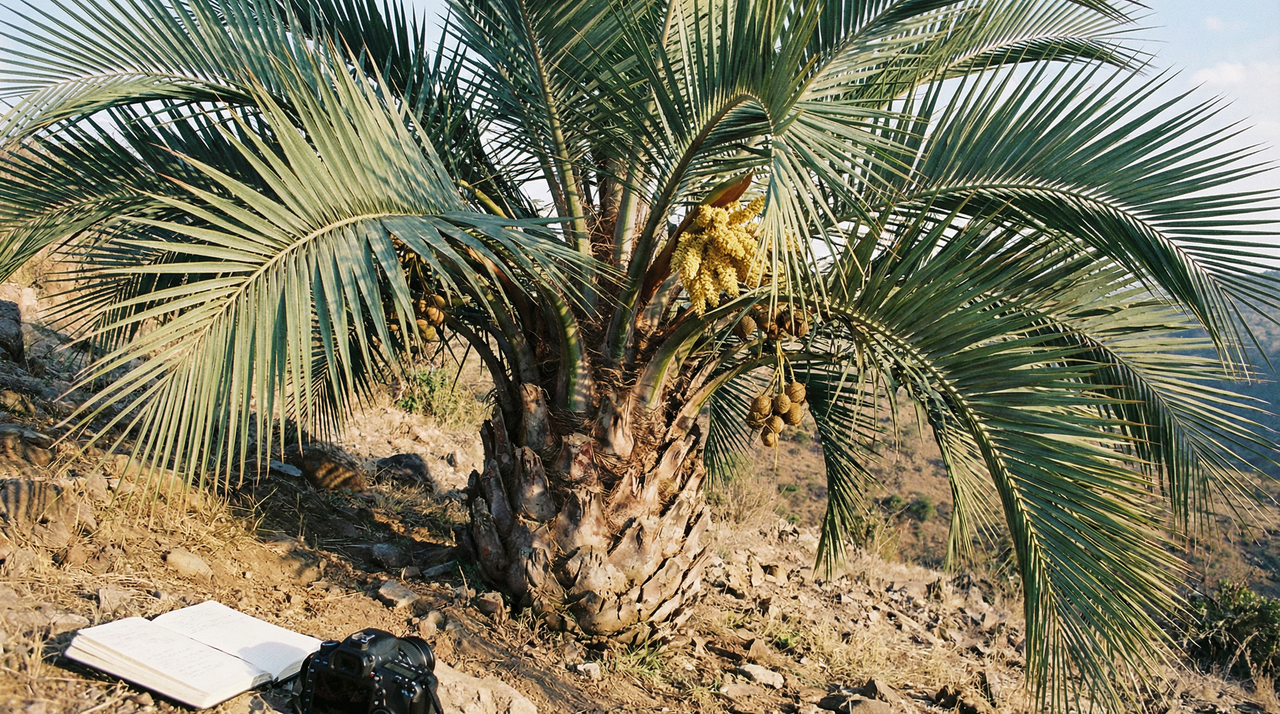
The Chilean wine palm (Jubaea chilensis) is an impressively drought-resilient anchor for mild-climate landscapes. I still think about a photo from central Chile's Cocalán valley: a grove with trunks so massive and barrel-chested they look less like palms and more like the legs of something prehistoric. The indigenous Mapuche and Huilliche people knew this tree could outlive ten human generations, and they harvested every part of it anyway, cutting some trees to bleed out hundreds of gallons of fermented sap.[1] That tension, between deep reverence and near-total destruction, is baked into this palm's entire story. It's the slowest, most patient organism you might ever choose to grow, and for most of its history, the humans who loved it most nearly finished it off.
Gardeners in mild climates still overlook it. People will plant an oak knowing they'll never sit in its shade, but suggest a Chilean wine palm and suddenly a fifty-year timeline feels unreasonable. I've been watching a young specimen in a California food forest for six years now. It's added maybe four feet. It's also the most structurally confident thing on the property, utterly unbothered by summer drought, coastal wind, or my impatience. Some plants teach you to garden differently. This one insists on it.
Origin and History of the Chilean Wine Palm (Jubaea chilensis)
Botanical Background and Native Habitat
Jubaea chilensis breaks expectations compared to palms that die after a single flowering. It's polycarpic, flowering and fruiting repeatedly across its lifespan rather than going out in a single blaze of reproduction.[2][3] And it does this for a very long time: wild specimens can live 500 to well over 1,000 years, with some trunk studies suggesting lifespans approaching 1,200 years.[4][5] The catch, and it's a significant one, is patience. In the wild, Jubaea typically waits 60 to 80 years before flowering for the first time, though optimal cultivation conditions can coax that down to 20 to 30 years.[6][7] I've grown slow-maturing palms before, and the waiting is genuinely humbling, but a 60-year runway before first fruit makes even the most deliberate fruit tree look speedy. This isn't a plant you tuck into a garden and expect to reward you. It's a multigenerational commitment.
That slowness is baked into its biology. Growth averages just 15 to 30 cm per year under ideal conditions, and it slows further as the tree ages, with the most active surges tied to the wetter winter and spring months of its native Mediterranean-type climate.[6][8] That native habitat is a narrow strip of central Chile between roughly 32°S and 38°S, where sclerophyllous scrub and forest margins experience exactly what you'd expect from a Mediterranean climate: cool, wet winters and hot, dry summers. The palm grows on well-drained slopes up to 900 m elevation, developing a deep taproot system that lets established trees ride out drought without complaint, while remaining sensitive to waterlogged soils throughout its life.[9][10] It's the sole species in its genus, Jubaea, a solitary giant shaped by millions of years in a climate that rewards patience and punishes excess. Populations have declined by over 50% in recent generations, earning it a Vulnerable classification on the IUCN Red List.[11]
Visual Characteristics of the Chilean Wine Palm
Nothing quite prepares you for the presence of a mature Chilean wine palm tree. In the wild, these trees reach 20 to 30 m tall with trunks 0.5 to 1.5 m in diameter, often wider at the base where swollen tissue stores water against summer drought.[12][13] Cultivated specimens tend to stay in the 12 to 20 m range, but the trunk remains massive regardless. Up close, that trunk has a quality I can only describe as prehistoric: the persistent fibrous leaf bases interlock tightly across the surface, creating a rough, scaly, armored texture that makes you think of something that outlasted the dinosaurs.[14][15] If you've ever touched the armored base of a mature agave or a deeply ridged barrel cactus, you have some sense of the texture, but Jubaea's scale makes it feel entirely different.
The crown is formal and architectural. Stiff, dark green pinnate fronds arch outward at 3 to 5 m long (up to 6 m on wild specimens), with narrow leaflets 2.5 to 5 cm wide that give the whole canopy a finely textured, feathery look from a distance while feeling leathery and substantial in hand.[16][17] Flowers are small, pale yellow to cream, and borne on pendulous inflorescences 2 to 4 m long that hang from the lower leaf axils in late spring to summer; the tree is monoecious, carrying both male and female flowers.[18] Ripe fruits are oval drupes, 5 to 7.5 cm long, yellowish-brown at maturity, with fibrous sweet flesh surrounding a single hard-shelled seed roughly 2 to 4 cm across.[13] Below ground, the picture is equally impressive: an early taproot develops into a deep anchoring system complemented by fibrous adventitious roots that extend 10 to 15 m horizontally, explaining both the drought tolerance and the tree's imperturbable stability in wind.[19][20]
Traditional and Cultural Uses
Linnaeus formally described the species in 1753, and Alexander von Humboldt documented its economic importance and harvesting practices during his South American expedition of 1799 to 1804.[21] But the Mapuche and Huilliche peoples had been in relationship with this palm long before any European botanist arrived. Archaeological evidence supports use since pre-Columbian times, and in Mapuche cosmology the palm holds a "tree of life" significance, symbolizing abundance in ways that go well beyond food.[22][23] Practically every part of the tree had a role: sap fermented into chicha de palma or distilled into aguardiente, fruit flesh and seeds eaten, palm heart used as an anti-inflammatory tonic, leaves woven into fiber and applied in poultices for wounds and rheumatism, and sap taken medicinally for respiratory complaints, urinary conditions, and digestive troubles.[24][25] I haven't personally tapped a Jubaea for sap, but studying the Mapuche relationship with this tree is a genuinely humbling exercise in how completely a culture can build knowledge around a single organism across generations.
That depth of use, combined with commercial demand for sap, palm heart, and the small seeds known as coquitos, drove intensive overharvesting beginning in the mid-19th century.[26][27] Historically, extracting massive volumes of sap meant felling the tree. Harvesting palm heart also kills it. For a species that takes decades to reach reproductive maturity, losses compound across generations in ways that are genuinely difficult to reverse. Today, protected areas and a shift toward sustainable seed harvesting are central to conservation efforts, but illegal collection continues.[28] The move toward sustainable coquito production feels like a hopeful parallel to how other food systems have had to reckon with their own excesses, and it's one of the more compelling regenerative stewardship stories in the palm world.
Fun Facts About the Chilean Wine Palm
A Jubaea chilensis planted at Kew Gardens in 1845 eventually grew to about 18 m tall with a 90 cm trunk diameter, a living demonstration of what cultivated patience looks like over nearly two centuries.[29][30] For most palms, surviving a UK winter would be unthinkable, but Jubaea is remarkably cold-hardy, capable of tolerating temperatures as low as 5°F (-15°C).[31][32] That cold tolerance, combined with its drought adaptations, is what opens the door to cultivation across much of the Mediterranean world, coastal California, and other mid-latitude climates well outside its native Chilean range. The basal trunk swelling and deep taproot function together like a slow-release reservoir, a design principle you see in pachycaul trees from baobabs to certain desert figs: store water in the body, reach deep for more, and reduce leaf exposure to hot dry air.[33] Having watched slow-growing specimens in landscape settings, I take the IUCN Vulnerable status seriously in a very personal way. Every mature tree we protect represents centuries of growth that no one alive today can replace.
Ecologically, the palm functions as more than an architectural showpiece. Birds are its primary seed dispersers, attracted by the sweet, edible fruit flesh, and in its native habitat it provides structural cover and food resources for a web of species.[30][34] That ecological generosity is part of why permaculture designers are drawn to it as a legacy element, one that gives back to the broader system long after the person who planted it is gone.
Chilean Wine Palm Varieties and Sourcing
Notable Characteristics and Informal Selections
Jubaea chilensis is monotypic, meaning it stands alone in its genus with no recognized subspecies, varieties, or formally named cultivars.[35][36] I've come to see this as a feature rather than a limitation. What you plant is the authentic species, nothing diluted, nothing bred for commercial convenience. Every jubaea palm tree carries that same iconic profile: pinnate leaves reaching 10 to 16 feet long with a distinctive blue-green to silvery-blue cast,[37][13] and that famously massive trunk, which can swell to four feet in diameter with a bulbous, bottle-shaped base on old specimens.[38]
Some specialty growers informally select for more glaucous, intensely blue-gray foliage, and I have seen the difference in mature plants side by side. The silvery-blue forms genuinely stop people in their tracks. Dwarf selections are occasionally mentioned, but treat those claims with skepticism until you see a documented mature specimen. Most plants are simply grown from seed,[16] which means provenance matters enormously. I always ask nurseries where their seed stock originated, because coastal Chilean provenances typically handle temperatures down to around 15 to 20°F, while highland Andean seed sources can push slightly colder. That distinction rarely appears on a plant tag, but it shapes how your jubaea palm performs for decades.
Expect six to twelve inches of height gain per year under good conditions, and fifty-plus years before the tree reaches anything close to maturity.[38][39] For the first five to seven years, the palm looks like an oversized ornamental grass clump. I've watched new clients get impatient at that stage. Hold your nerve. The trunk won't form until the plant has built enough internal mass, and nothing accelerates that biology.
How and Where to Source Chilean Wine Palm
Finding a reputable source is genuinely the hardest part of acquiring this palm. Specialty nurseries in California, Florida, and Arizona carry it most reliably, but supply is thin because the slow maturation creates real commercial limits. Mature specimens, when available, command anywhere from $500 to over $5,000 depending on size, and that price reflects decades of grow-out, not nursery markup.
The IUCN lists Jubaea chilensis as Vulnerable due to severe habitat loss in Chile, and that status creates both ethical and practical sourcing considerations. There are no CITES trade restrictions currently, but USDA APHIS import requirements apply to plant material crossing international borders, and mislabeled or undocumented plants do circulate in the market. I've seen too many beautiful Chilean wine palms in gardens that trace back to questionable origins. My strong recommendation is to buy from botanical gardens with propagation programs, university collections, or nurseries affiliated with the International Palm Society who can tell you exactly where their seed came from. Treating ethical sourcing as an extension of the conservation story isn't idealism; it's how permaculture designers actually practice what they preach about habitat stewardship. Every verified, garden-grown specimen is one small vote for a future where this species doesn't disappear from its native valleys.
Chilean Wine Palm Propagation and Planting (Jubaea chilensis)
There's a particular kind of gardener who gets excited about seeds the size of a golf ball. I am that gardener. But even I had to recalibrate my expectations the first time I worked with Jubaea chilensis seeds, because these aren't just large, they're biologically demanding in ways that catch you off guard if you treat them like any other palm seed you've started before.
Seed Propagation Methods and Germination Requirements
Seed is the only practical path forward here. Cuttings, offshoots, grafting, tissue culture: none of these are reliable options for home growers or even most commercial nurseries.[40][41] So everything depends on getting the seed work right. The seeds themselves are remarkable, measuring 6 to 8 cm long and 5 to 7 cm wide, and they're recalcitrant, meaning they cannot be dried down for storage the way most seeds can.[42][43] If the moisture content drops below roughly 40%, viability plummets fast. After losing a batch I'd been genuinely excited about, I started doing a simple float test and a tetrazolium spot-check on every new lot before committing time to them.
Fresh seeds collected in late summer or autumn give you the best odds. They can be stored for one to three years in moist, cool conditions (5 to 15°C with peat or sphagnum at 40 to 50% moisture content), but orthodox dry-freezing will kill them outright.[44][45] Before sowing, scarify lightly or soak in warm water for 24 to 48 hours to address the physical dormancy.[42][43] Then sow into a sterile, well-draining mix of sand, perlite, and peat, keep it at 25 to 30°C with 70 to 80% relative humidity, and wait.[40][46] Under ideal conditions germination can happen in one to three months. More often it takes six to twelve months, sometimes longer, and success rates remain genuinely variable.[40][46]
One small reward buried in the biology: Jubaea chilensis occasionally displays polyembryony, producing multiple seedlings from a single seed.[47] It's the kind of pleasant surprise that makes a year of waiting feel slightly more forgiving. Once seedlings emerge, I label every pot immediately, because the variability in growth rate, cold tolerance, and general vigor shows up early and you'll want records. Young plants need indirect light initially and are vulnerable to Fusarium and Phytophthora at the root zone.[48][49] My first flat of seedlings was lost to damping-off before I switched to a sterile perlite-peat mix with bottom heat. That lesson cost me about eighteen months of effort.
Because of its Vulnerable status, I only buy verified cultivated seed instead of wild-collected ones.[50] I only work with verified cultivated sources. That's both an ethical position and a practical one, because cultivated seed tends to be fresher and better handled.
Soil, Site Selection, and Spacing for Long-Term Success
The soil requirements flow directly from where this palm evolved. On rocky, granitic and volcanic slopes in central Chile's Mediterranean climate,[30][51] Jubaea developed deep roots, drought resilience, and a strong intolerance for standing water. It needs deep, well-drained sandy-loam or gravelly soil, ideally reaching at least 2 meters down, with moderate organic matter and a pH of 6.0 to 7.5.[52][53] It can tolerate a wider range (5.5 to 8.0), but performance declines at the extremes. Above pH 7.5, iron chlorosis becomes a real issue; I've seen the same yellowing pattern on my citrus in slightly alkaline Florida beds and reach for the same chelated-iron remedy.
Heavy clay, compacted, or waterlogged soils need serious amendment before planting, whether that means working in coarse sand and grit or building raised beds.[54][41] Think of preparing this planting hole as a fifty-year investment, because it is. For container culture, a mix of 40 to 50% potting soil, 30% perlite or coarse sand, and 20% pine or orchid bark works well, with annual pH checks and gradual amendments as needed.[55][56] Site it in full sun, at least six to eight hours of direct light daily.[30]
Spacing deserves more thought than most people give it. Mature Chilean wine palms reach 50 to 80 feet tall with a canopy spread of 20 to 30 feet, and the root system extends laterally 26 to 33 feet from the trunk.[57][16] I once spent an afternoon at a client's property marking out a 30-foot circle with PVC stakes so the homeowner could literally stand inside the future canopy and see the eventual shade footprint. That exercise changed the placement decision immediately. Optimal spacing is 25 to 30 feet between specimens; crowding below 15 to 20 feet compromises air circulation and invites crown rot and foliar disease.[58][59] If you're planting more than one, orient rows to prevailing winds and topography. Plant once, plant far apart, and don't second-guess it later.
Timeline from Seed to Establishment
The honest timeline is this: from seed, expect 15 to 20 years before first flowering and 20 to 40 years before first fruiting in cultivation.[60][61] Grafted specimens can theoretically fruit in 5 to 10 years, but grafting is technically challenging and rarely available to most growers. In the early years, seedlings grow just 1 to 2 cm per month,[50][62] which tests patience in a way few other plants do. That said, I still get genuinely excited when a three-year-old seedling finally pushes out its first true pinnate leaf. That moment, small as it looks, represents years of correct decisions about seed sourcing, germination environment, soil preparation, and restraint. The journey is part of what you're signing up for with this species, and that's not a consolation, it's simply the reality of growing one of the world's most extraordinary palms.
Chilean Wine Palm Care Guide
Everything about caring for this palm makes more sense once you understand where it comes from. Native to central Chile's Mediterranean coastlines and Andean foothills, Jubaea chilensis evolved in a rainfall window of roughly 200-800 mm per year, almost all of it arriving in winter.[63][64] Its massive trunk is essentially a water reservoir; its roots push down 24-36 inches looking for moisture that seasonally disappears.[65] That biology shapes every care decision you'll make.
Watering Needs and Drought Tolerance
The single mistake I see most often in landscapes is planting this palm in heavy or poorly drained soil, and it almost always ends the same way: Phytophthora or crown rot within a few years. Once established, a healthy Chilean wine palm can go 4-8 weeks without supplemental irrigation, drawing on its trunk reserves and deep root system.[63][65] Getting it to that point, though, requires consistent moisture for the first 2-3 years while the root system develops. After that, deep watering every 1-2 weeks during hot weather, tapering to monthly or less in cooler months, is plenty.[16][66] Reduce winter irrigation by roughly half during dormancy.
Diagnosing problems early matters here. Underwatering shows up as frond tip browning, wilting, and stunted new growth.[67] Overwatering is the more insidious killer: watch for yellowing from the leaf tips outward, soft darkened roots, or any softening of the trunk base, all signs of rot taking hold.[67][68] Soil pH should sit between 6.0 and 7.5, well-drained and not saline; if you're in an area with hard tap water, rainwater or dechlorinated water is a better long-term choice.[16]
Sunlight Requirements
This palm wants full sun, ideally 6-8 hours of direct light per day.[69][70] It evolved in open coastal valleys and mountain foothills where sun exposure is essentially unrestricted, and that light drives the trunk girth and dense foliage that make mature specimens so architecturally impressive. Inadequate light causes etiolation and pale, chlorotic leaves; the palm stretches weakly rather than building the stocky form it's capable of.[71] Young plants can scorch in intense afternoon sun, so in my hotter projects I've used strategic afternoon shade during the first season or two, then gradually opened the canopy as the palm hardens off. Full sun is the long-term goal.
Heat Tolerance and Summer Stress Management
Mature Chilean wine palms handle dry heat surprisingly well, tolerating sustained temperatures of 95-100°F and brief spikes to around 110°F when nights cool off.[72] The operative word is dry: this palm prefers the Mediterranean pattern of its native habitat, where coastal fog moderates summers, over the humid tropics where heat and moisture combine badly. Juveniles are a different story. Germination stalls above 86°F, and young plants scorch easily, showing tip burn, frond curl, and wilting that intensifies with any drought stress.[73]
I learned through trial that 40% shade cloth on young plants during their first hot summers dramatically cuts scorch while still letting the palm begin hardening toward full sun over 2-3 years. Pair that with deep, infrequent irrigation reaching 2-3 feet down, and 4-6 inches of organic mulch to buffer soil temperature.[74][75] One more reason to keep heat stress in check: stressed palms become significantly more susceptible to red palm weevil, which I'll cover in more detail in the pests section.[76]
Frost Tolerance and Winter Protection
Chilean wine palm cold hardiness is one of its more appealing traits for gardeners pushing zone boundaries. Mature specimens can survive brief exposure down to 14-18°F (-8 to -10°C), a level of frost tolerance that outperforms many palms in this size class.[77][78] Jubaea chilensis cold hardiness improves markedly with trunk mass, which is why young plants need protection below 23°F while established trees shrug off temperatures that would damage far younger palms. Below 10°F, apical bud necrosis becomes a real risk, and that's effectively fatal.[79][80] USDA zones 8b-11 are the practical range, with zone 9b being the realistic minimum without protective intervention.[79]
Wrapping the trunk on a young palm feels fussy, I'll admit, but I've seen it save spear leaves repeatedly during marginal freeze events. A 6-12 inch mulch ring, trunk fleece or burlap, and a windbreak on the exposed side cover most situations.[81][82] Good drainage reinforces cold resilience too; wet roots in frozen soil are far more damaging than dry cold alone.
Feeding and Fertilization
I always insist on a soil test before the first application with this palm. Its growth is so slow that nutrient imbalances are hard to detect and even harder to correct once they've set in over several seasons. The palm's low natural nutrient demands, consistent with its lean native soils, mean a balanced slow-release palm fertilizer with an NPK ratio around 8-2-12 or 12-4-12 and a full micronutrient package (magnesium, manganese, iron, zinc, boron) is the right foundation.[75] Target roughly 1-2 lbs of nitrogen per mature tree annually, adjusted from your soil test results.
Apply 2-4 times during active spring and summer growth only; stop entirely through winter dormancy.[83][75] Over-fertilizing creates salt buildup and promotes the kind of soft, fast growth that's more vulnerable to stress. With a palm that's already naturally slow, there's no benefit to pushing it harder.
Pruning, Maintenance, and Seasonal Rhythm
At 0.5-1 foot per year, the Chilean wine palm is in no hurry.[84][85] Eventual height of 50-100 feet with a trunk up to 80 cm across is a decades-long project, and I tell clients to think about it the way they'd think about planting an oak: the decisions made today will shape a landscape their grandchildren will inherit. Pruning is genuinely minimal; remove only dead, damaged, or diseased fronds in late spring or early summer, and leave young plants alone as much as possible to let the trunk develop naturally.[86][87] The main watchpoints are red palm weevil, Phytophthora or Ganoderma rots in sites with poor drainage, and potassium or magnesium deficiency showing up as chlorosis or marginal necrosis on older fronds.[88] All three are more easily prevented through site selection and consistent care than treated reactively.
Seasonally, the palm slows noticeably in winter with reduced water needs and no fertilization required.[89] Flowering happens late spring into summer, followed by a 12-18 month ripening period before fruits mature into small yellow-brown nuts.[8][6] Seed-grown plants may take 20 years or more to reach that flowering threshold.[84] Those quiet seasonal pulses, the slight flush of new growth in spring, the long hush of summer dormancy, are part of what makes growing this palm its own reward for anyone patient enough to pay attention.
Harvesting Chilean Wine Palm: Timing, Technique, and Flavor
Timeline to First Harvest and Maturity Indicators
If there's one thing any prospective grower of the Chilean wine palm needs to absorb before anything else, it's this: you will likely wait 20 to 40 years from seed before this tree bears its first fruit.[90][91][55] Flowering may begin somewhere around 15 to 20 years, but fruit doesn't follow immediately. In the wild, maturity for flowering can stretch to 100 years.[92] Garden conditions close that gap significantly, but not entirely. I've worked with clients maintaining established specimens in botanical collections, and the consensus is always the same: this tree operates on its own schedule.
Once flowering begins, add another 12 to 18 months before fruit reaches maturity.[93][94] The ripeness cues are readable if you know what to watch for: fruits shift from green to yellow-orange, the outer husk softens noticeably, and the tree eventually drops them on its own.[95][96] I find the color shift is similar to what you see on ripening date palms, a useful mental reference for readers who've observed those up close. In its native central Chile, harvest falls from late summer into fall (March through June in the Southern Hemisphere).[97][98] For most Northern Hemisphere growers, that window runs July through October.
Yield, Fruit Characteristics, and Edible Parts
When fruit finally arrives, it's genuinely worth the anticipation. The drupes are ellipsoid to spherical, about 2 to 5 cm across, ripening to a yellowish-orange or brownish hue with sweet, juicy pulp that carries notes of pineapple, coconut, date, and apricot.[95][16][6][99] Dried, they deepen into something almost caramel-like. I tell clients who've waited decades for this moment to treat it as a ceremony.
Beyond fruit, the sap is the other sustainably harvestable reward: sweet and honey-like when fresh, fermented into a yeasty palm wine, or reduced into a thick palm honey treasured in Chilean tradition. The seeds yield a gelatinous coconut-water freshness raw, or a roasted chestnut quality when cooked. Full sun matters enormously here; insufficient light produces reduced yields after all those years of waiting.[16][30] I've seen this disappoint growers who underestimated their canopy competition at planting time.
Never harvest the heart of palm, as the extraction process is fatal to the tree. For a species that spent 20 to 40 years reaching this moment and holds Vulnerable conservation status in the wild, that trade-off is simply not acceptable in any responsible permaculture design. Harvest the fruit, tap the sap carefully, enjoy the seeds. Protect the rest.
Chilean Wine Palm Preparation and Uses
The Mapuche people of Chile didn't see Jubaea chilensis as a single-use tree. Every part had a role, from ceremonial to practical, woven into daily life through food, medicine, fiber, and construction.[6][100] I think about that when I'm designing food forests around long-lived anchor species: the most generous plants often become the most endangered, precisely because of that generosity. With this palm, every preparation choice carries a conservation consequence.
Traditional and Culinary Uses of Chilean Wine Palm
The Chilean wine palm fruit is where most people start, and honestly, it's a revelation. Small and orange-yellow, the jubaea chilensis fruit packs a flavor somewhere between pineapple, coconut, and apricot, sweet and genuinely complex for something so unassuming.[6][101] Dried, they deepen into something caramelized and nutty. Traditionally they're eaten fresh, pressed into juice, or made into coquito sweets and preserves.[102] The nutritional profile is solid too, with meaningful vitamin C, potassium, and antioxidant activity from flavonoids and phenolic compounds.[103]
The sap is the showpiece. Tapped carefully from the trunk or inflorescence, which runs 10-15% sucrose, a single tree can yield up to 50 liters per season without being killed.[6][104] Fresh, it's sweet and sterile, a bit like a lighter, more delicate honey. Boiled down, it becomes miel de palma, a 70-80% sugar syrup used in desserts.[102] Fermented over 24-48 hours, it becomes chicha de palma, a palm wine reaching around 4-6% alcohol with a yeasty, fruity character.[38] I've fermented small batches from related species and the timeline is unforgiving if you let it go too long, but when it's right, there's nothing quite like it.
The seeds deserve attention too. Young, the kernel is gelatinous and sweet, almost like fresh coconut water in solid form. Mature seeds need roasting or boiling to soften tannins and saponins, after which they turn starchy and chestnut-like. The Mapuche traditionally ground them into flour.[6][104] The inner pith is edible too, though it needs thorough cooking to become digestible.[105]
Then there's heart of palm. I'll be direct: I've never harvested it from a living tree and don't recommend it. The flavor is genuinely lovely, mild and artichoke-like, tender when cooked into stews or empanadas.[106] But harvesting it kills the tree, and we're talking about a Vulnerable species that may have taken 60 years to reach that size.[107][69] No flavor is worth that in a regenerative system.
Medicinal Preparations and Traditional Remedies
Mapuche traditional medicine drew on the sap for respiratory complaints like coughs and digestive issues including diarrhea, used fruits as a nutritional tonic for malnutrition and anemia, and occasionally employed palm heart for its perceived anti-inflammatory properties.[108][109] These are nutritional and supportive applications, not clinically validated treatments, and modern research hasn't yet caught up to confirm specific mechanisms. I respect the deep knowledge system behind these uses, but I'd frame contemporary application simply: this is a nutrient-dense food plant whose whole-diet role matters more than any targeted remedy.
Non-Food Applications and Conservation Notes
Beyond the kitchen, leaf fibers have long been woven into ropes, baskets, mats, and thatching, while the dense trunk timber has served in construction for houses and bridges.[110][22] Claims about dyes or fuel are less substantiated for this species specifically, and I'd treat those with caution rather than repeat them as established fact. Today, its most widespread non-food role is ornamental. Mature specimens in Mediterranean-climate landscapes are genuinely breathtaking, stately in a way few trees achieve.[111][112]
Growing one ornamentally, or sourcing seeds from ethical nurseries, is itself a conservation act. Wild populations are Vulnerable, and every cultivated tree that reaches maturity supports the species' future without pulling from depleted native stands. I've worked with slow-maturing palms long enough to know that the patience required isn't a drawback. It's the whole point. You're not planting for yourself; you're planting for the landscape that comes after you.
Chilean Wine Palm Health Benefits and Medicinal Uses
The health story of Jubaea chilensis starts in the chemistry, which is surprisingly rich for a plant that spends most of its life looking like an armored column in a dry hillside. Researchers have pulled out phenolic acids, flavonoids, tannins, and a handful of less-studied compounds across nearly every part of the tree, and the pattern that emerges is one of a plant that has evolved a serious biochemical toolkit for surviving the harsh Mediterranean climate of central Chile.
Phytochemicals and Bioactive Compounds in Jubaea chilensis
The phenolic profile is the best-documented aspect of this palm's chemistry. Gallic acid, protocatechuic acid, chlorogenic acid, ferulic acid, and p-coumaric acid have been identified in fruit, leaf, and bark extracts, each contributing to the antioxidant and antimicrobial activity measured in laboratory assays.[113][114][115] Alongside those phenolic acids sit flavonoids including catechin, epicatechin, quercetin, rutin, and kaempferol, concentrated in the fruits and leaves and linked to high antioxidant activity.[116][114] The bark leans heavily toward condensed tannins, proanthocyanidins, and lignans, which the Mapuche recognized as medicinally useful long before anyone ran a DPPH assay on them.[115][116]
Saponins, terpenoids, alkaloids, and coumarins also occur in the plant, but at lower or trace concentrations and with far less published research behind them.[116] The seed oil is a different story compositionally: it runs roughly 45 to 50 percent lauric acid with other medium-chain fatty acids and minor terpenoids, making it chemically closer to coconut oil than to most nut oils.[117] Leaves reach up to 150 mg GAE per gram of phenolic content, the sap carries 15 to 20 percent sucrose with trace phenolics, and fruits bring anthocyanins into the mix alongside their phenolic acids.[114][117][118]
I've grown a number of Mediterranean-climate perennials over the years, and one thing I keep observing is that plants under prolonged drought stress tend to push more secondary metabolites as a kind of biochemical self-defense. A 2015 study on Jubaea chilensis confirms exactly that: phenolic content rises under water stress, with those same compounds also serving as herbivore deterrents and UV screens.[119][120] For a permaculture designer, that's a useful reminder: well-sited plants in their preferred conditions produce the richest chemistry, not plants that are coddled.
Medicinal Research and Traditional Mapuche Uses
The laboratory results are modest but real. Seed and fruit extracts show significant free-radical scavenging capacity across DPPH, FRAP, and ORAC methods, with ORAC values of 1,200 to 2,500 μmol TE per 100g in fruit extracts and total phenolic content reaching 150 mg GAE per gram in seed extracts.[121][122][123] Extracts also inhibit α-amylase and α-glucosidase at IC50 values of 50 to 100 μg/mL for α-glucosidase, suggesting potential antidiabetic applications that align interestingly with the palm's traditional role as a digestive aid.[122][121] Fruit extracts show antibacterial activity against Staphylococcus aureus and Escherichia coli and inhibit fungal growth.[124][102] Seed oil and other extracts also show potential anti-inflammatory properties in vitro, while saponins contribute hemolytic and cytotoxic activities at that same preliminary stage.[24][125][121]
These in-vitro findings are worth knowing but shouldn't be stretched further than they go. Clinical trials haven't followed, and that gap matters. What has been documented for centuries is the Mapuche ethnobotanical record: sap used to treat respiratory complaints and coughs, as well as diarrhea; fruit infusions prepared for malnutrition and anemia relief and as a general strengthening tonic; heart of palm occasionally employed for its anti-inflammatory properties.[108][126] These are nutritive and supportive uses built on generations of careful observation, and I think they deserve both respect and honest framing: they represent traditional knowledge, not validated clinical protocols.
Nutritional Profile and Limitations
Anyone searching for comprehensive nutritional data on this palm will come up empty in the standard databases. USDA FoodData Central has nothing on Jubaea chilensis edible parts, and the only peer-reviewed nutritional source is the 2007 ethnobotanical study by Hofmann and colleagues, which examined specimens from central-north Chile.[127] That study found roasted seed supplies approximately 30 mg vitamin C (around 33% DV), 6 mg α-tocopherol equivalents of vitamin E (about 40% DV), and 80 μg retinol activity equivalents of vitamin A (roughly 9% DV) per 100 grams; heart of palm contributes only trace thiamine and negligible vitamins C and A.[127]
I've roasted palm seeds in small batches, and the mild, pleasant flavor is consistent with those modest vitamin returns. No single component stands out as extraordinary. What the sap does offer is a different kind of nourishment: sugars, vitamins, and minerals in a form that explains its traditional use as a general tonic and restorative.[128][108] No mineral composition data exists anywhere in the published record, and values for all parts shift with ripeness, processing, and geography. Like many palms, the real nutritional story of this tree may lie more in how communities have traditionally combined and prepared its parts than in any single isolated metric.
Safety Considerations for Chilean Wine Palm
The Chilean wine palm is non-toxic to humans and animals, confirmed by Missouri Botanical Garden, the RHS, and the ASPCA.[129][130][131] Ripe fruits are edible, and the sap has a long history of fermentation into palm wine.[132] Traditional Mapuche use also includes sap as a laxative and bark decoctions for respiratory complaints, so some parts have mild physiological effects at therapeutic doses; excessive consumption of any plant material can cause mild gastrointestinal upset, and pollen carries low allergenic potential.[133][134] No comprehensive data on drug interactions or contraindications exists.[135]
I always tell clients that while this palm is far less alarming than something like a Trachycarpus in a tight space, the sharp petiole spines are no joke. Placement away from foot traffic is non-negotiable in a family garden. The deeper concern, though, is ecological: over-tapping for sap can kill the tree, and the species is Vulnerable in the wild.[136][137] I only recommend nursery-grown specimens from reputable, sustainable sources, and I think that commitment to ethical sourcing is itself a health-conscious choice. A plant that took a century to grow isn't something to harvest carelessly, whether you're thinking about the chemistry inside it or the ecosystem it anchors.
Chilean Wine Palm Pests and Diseases
For a palm that can survive a millennium in its native Chilean scrublands, Jubaea chilensis is surprisingly vulnerable to some very avoidable problems in cultivation. Most of what I've seen go wrong with this species traces back to decisions made at planting time, not to anything the palm did wrong. Get the site right, and you'll likely have a healthy tree for decades. Make it sit in soggy soil, and the disease pressure that follows can be swift and devastating.
Major Diseases Affecting Jubaea chilensis
Phytophthora root rot is the one that keeps me up at night with slow-growing palms. Caused by Phytophthora cinnamomi and related species, it thrives in the exact conditions a Chilean wine palm hates most: wet, poorly drained soil with inadequate airflow.[138][139] I've watched it devastate palms in low-lying Florida landscapes where drainage was an afterthought, and it's exactly why I always spec sandy loam or raised beds when siting a specimen like this. Once the root system is compromised, you're fighting a losing battle. Ganoderma butt rot (Ganoderma zonatum) is the other heavy hitter, attacking the base of the trunk and capable of killing even a mature tree when it takes hold.[140][141]
Fungal leaf spots from Bipolaris incurvata and Pestalotiopsis species are common secondary issues, especially in humid conditions with poor air circulation.[142] Young plants in nurseries also face damping-off, which can thin seedling populations significantly before they ever get in the ground.[142] Neither of these is as catastrophic as root rot, but both signal that the plant is stressed, and a stressed Jubaea recovering slowly is a long setback given its growth rate.
No disease-resistant cultivars exist for this species, so prevention through cultural management is the entire strategy.[143] That means well-drained sandy loam, conservative irrigation, good spacing for airflow, and prompt removal of infected material.[144][145] Phosphonate fungicides and biological controls like Trichoderma spp. or Bacillus subtilis can supplement a solid cultural program, but they're not substitutes for it.[144][146]
Common Insect Pests and Natural Defenses
The red palm weevil (Rhynchophorus ferrugineus) is the threat I take most seriously with any high-value palm, and Jubaea's susceptibility is high.[147][148][149] This invasive pest bores into the trunk and crown in ways that can kill the tree before symptoms are obvious, which is why regular trunk inspections are non-negotiable in my maintenance protocols for any specimen worth protecting. Scale insects and mealybugs are a more moderate concern, and the palm holds up better against these than many other ornamental palms.[147]
Part of that resilience comes from defenses the palm developed over millennia in its native habitat. The thick fibrous trunk physically impedes boring insects, and those sharp leaf spines on younger plants (which I can attest are absolutely real when you're doing maintenance without gloves) serve as genuine deterrents.[150] The palm also produces phenolic compounds, tannins, flavonoids, and saponins that deter herbivorous insects and may offer some antimicrobial benefit.[151] These are meaningful protections, but they don't cover everything, especially when you're dealing with an invasive pest that didn't co-evolve with the plant.
Because Jubaea chilensis is endangered in the wild, every cultivated specimen carries real conservation weight.[152] I've propagated these from seed myself, and that experience shapes how I approach pest management: cautiously, with monitoring and biological controls first, and chemical intervention only as a last resort.[153][154] Since no pest-resistant selections exist, the calculus always comes back to the same conclusion: proactive site and cultural decisions made at planting prevent far more problems than any spray program ever will.[155]
Chilean Wine Palm in Permaculture Design
There's a particular kind of excitement I feel when I'm designing around a species that genuinely shapes its ecosystem rather than just occupying a spot in it. The Chilean wine palm is that kind of plant. In its native central Chilean matorral and sclerophyllous forests between 30°S and 38°S latitude, Jubaea chilensis isn't just one tree among many; it's the structural backbone around which everything else organizes itself.[156] Birds like the chucao tapaculo and various thrushes rely on it for seed dispersal.[157] Epiphytes colonize its massive trunk. Its deep taproot, which can extend 10 to 15 meters into the ground, anchors slopes against erosion while drawing up nutrients, particularly potassium, from deep soil horizons.[158] It sequesters carbon, regulates water movement, and moderates local microclimates for everything growing beneath it.[156][159] That's a lot of ecological work for a single tree, and it's why I think of it the way I think about planting a live oak: a decision that will define the system for generations.
Ecosystem Functions and Keystone Role
The pollination biology of this palm is one of the more fascinating wrinkles for anyone trying to grow it for fruit. Jubaea chilensis is monoecious and protandrous, meaning its male flowers shed pollen before the female flowers on the same tree are receptive, which reduces self-fertilization but also complicates fruit set considerably.[160] Its large pendulous inflorescences, reaching 3 to 4 meters in length, rely primarily on weevils in the Curculionidae family to carry pollen between trees, with small nectar rewards drawing them in across several months of progressive flowering at optimal temperatures between 20 and 30°C.[161] Even under ideal conditions, natural fruit set runs only 10 to 30 percent, and habitat fragmentation makes that worse in wild populations.[162] I've seen similar weevil-dependent pollination dynamics in other palm genera, and experience with those has taught me that hand-pollination, which is practical here with short-term pollen storage of one to two weeks, can meaningfully improve yield in small planted groves.[160] It's also a reminder that this palm's whole ecology is built around patience and interdependence, which maps perfectly onto its role as a long-game permaculture element. The IUCN Vulnerable listing, rooted in centuries of overexploitation as covered in the origin section, makes each cultivated specimen genuinely meaningful from a conservation standpoint.
Climate Adaptation and Hardiness Zones
For designers working in USDA zones 8 through 11, the Chilean wine palm is climatically viable, though where within that range you sit matters enormously.[13][163] Mature specimens can tolerate brief temperature drops to -9°C to -12°C (that's around 15°F), earning an RHS H4 rating, but young plants need protection below about -7°C (20°F).[164][165] I think of this split as similar to the cold-hardiness arc I see in established citrus compared to newly planted stock: the trunk mass and root depth that accumulate over decades genuinely change what the plant can survive. The practical implication is that you're committing to years of frost protection before the palm can fully fend for itself.
Siting matters just as much as zone rating. Full sun is non-negotiable, especially in cooler portions of its range, because the warmth accumulation from direct exposure compensates for marginal winter temperatures.[166] Protected spots in Texas zones 8b and 9 can work well, while humid climates like much of Florida tend to push the palm toward root rot and elevated pest pressure, making the naturally well-drained, lower-humidity conditions of Mediterranean-type sites clearly preferable.[167][168] Its native climate tells you exactly what it wants: warm dry summers, mild wet winters, good drainage.
Forest Layer Placement and Guild Integration
In its home forests, Jubaea chilensis grows as an emergent canopy tree alongside species like Quillaja saponaria and Lithraea caustica, topping out at 20 to 30 meters with a trunk exceeding 2 meters in diameter, and living well beyond 1,000 years.[169][69] That's the structural picture to hold in mind when siting it in a food forest or windbreak: not what it looks like in year five, but what it will look like in year fifty, and in year two hundred.
After studying Chilean Mediterranean analogs for years and helping site specimens that are now well-established, I've come to treat this palm the way I treat planting oaks: the decision you make today shapes the system for your grandchildren. In permaculture terms, it occupies the canopy layer and functions as: - a windbreak - a long-term shade provider - a wildlife habitat anchor - a structural element that persists across lifetimes.[170] Those are genuinely valuable functions. The design constraints, though, are real: it takes decades before it contributes meaningfully to the canopy, its footprint is enormous, and its deep taproot competes aggressively for groundwater.[171] Guild plants need to be chosen with that root zone in mind, favoring deep-rooted or genuinely shade-tolerant species rather than shallow feeders that will spend their lives losing a groundwater competition they can't win. Combined with its Vulnerable conservation status, this palm belongs in designs where every placement is intentional and every specimen is sourced responsibly. Plant it once, plant it thoughtfully, and then step back and think in centuries.
The Palm I Planted for Someone I'll Never Meet
I put a Chilean wine palm in the ground eight years ago. It's maybe four feet tall. I've done the math, and I know I won't live to see it fruit. That used to feel like a reason not to plant one; now it feels like the whole point. Some things you tend not for yourself but because the world deserves to inherit them.
Sources 171
- IUCN Red List: Jubaea chilensis ↩
- Palms: Biology and Horticulture - Monocarpic vs. Polycarpic Palms ↩
- The Chilean Wine Palm (Jubaea chilensis): Biology and Horticulture ↩
- Longevity of Jubaea chilensis: A dendroecological approach ↩
- The Chilean Wine Palm (Jubaea chilensis): Growth and Longevity ↩
- Jubaea chilensis - Wikipedia ↩
- The Chilean Wine Palm: Growth and Reproduction - Royal Horticultural Society ↩
- Phenology of Jubaea chilensis in Central Chile - Botanical Journal ↩
- Ecology and Conservation of Chilean Palm Forests ↩
- Plants of the World Online: Jubaea chilensis ↩
- IUCN Red List: Jubaea chilensis ↩
- Jubaea chilensis ↩
- Jubaea chilensis - The Chilean Wine Palm ↩
- Kew's Plants of the World Online ↩
- Jubaea chilensis - Missouri Botanical Garden ↩
- Jubaea chilensis - Chilean Wine Palm ↩
- Chilean Wine Palm (Jubaea chilensis) ↩
- Jubaea chilensis - Chilean Wine Palm ↩
- Jubaea chilensis - Chilean Wine Palm ↩
- The Root System of Palms ↩
- Jubaea chilensis Profile ↩
- Ethnobotany of the Mapuche: The Chilean Wine Palm (Jubaea chilensis) ↩
- Traditional Uses of Jubaea chilensis by Indigenous Peoples of Central Chile ↩
- Ethnobotany of the Chilean Wine Palm (Jubaea chilensis) among the Mapuche ↩
- Jubaea chilensis: Conservation and Ethnobotany ↩
- Historic palm conservation: The case of Jubaea in Chile ↩
- IUCN Red List: Jubaea chilensis ↩
- Conservation of Jubaea chilensis in Chile ↩
- Jubaea chilensis ↩
- Jubaea chilensis - The Chilean Wine Palm ↩
- Jubaea chilensis ↩
- Jubaea chilensis ↩
- Jubaea chilensis: Chilean Wine Palm ↩
- Jubaea chilensis, Chilean Wine Palm or Coquito Palm ↩
- Jubaea chilensis - Royal Horticultural Society ↩
- Jubaea chilensis - Kew Science Plants of the World Online ↩
- Jubaea chilensis - Chilean Wine Palm ↩
- Jubaea chilensis - Chilean Wine Palm ↩
- Jubaea chilensis ↩
- Propagation of Jubaea chilensis ↩
- Jubaea chilensis: Chilean Wine Palm ↩
- Seed Germination Guide for Chilean Wine Palm ↩
- Jubaea chilensis Seed Biology and Germination Requirements ↩
- Seed Storage of Jubaea chilensis: Recalcitrant Behavior ↩
- Germination and Storage of Palm Seeds ↩
- Seed Germination of Chilean Wine Palm ↩
- Reproduction in Jubaea chilensis: Seed Development and Polyembryony ↩
- Jubaea chilensis Propagation ↩
- Ecology and Reproduction of Jubaea chilensis ↩
- Jubaea chilensis IUCN Red List ↩
- Jubaea chilensis ↩
- Jubaea chilensis - Missouri Botanical Garden ↩
- Soil Preferences and Habitat Characteristics of Endemic Chilean Palms ↩
- Root Rot in Palms: Prevention and Management ↩
- Jubaea chilensis (Chilean Wine Palm) ↩
- Iron Chlorosis in Palms Due to High pH ↩
- Palms for California Landscapes ↩
- Jubaea chilensis (Chilean Wine Palm) ↩
- Pacific Horticulture Article: Jubaea chilensis New Garden Palms ↩
- Propagation and Cultivation of Jubaea chilensis ↩
- Grafting Techniques for Palms: Challenges and Opportunities ↩
- Palm Quarantine Regulations ↩
- Chilean Wine Palm (Jubaea chilensis) - University of Florida IFAS Extension ↩
- Jubaea chilensis Distribution and Ecology ↩
- Drought Tolerance of Palm Trees ↩
- Royal Horticultural Society: Jubaea chilensis Care Guide ↩
- University of Hawaii CTAHR - Palm Care: Common Problems ↩
- Plant Care Basics: Palms ↩
- Jubaea chilensis Care Guide ↩
- Jubaea chilensis Care Guide - University of California Agriculture ↩
- Jubaea chilensis Care Guide ↩
- Missouri Botanical Garden - Jubaea chilensis ↩
- Propagation of Jubaea chilensis: Germination and Seedling Care ↩
- Chilean Wine Palm Cultivation ↩
- Heat Tolerance in Palms ↩
- Pest Management in Jubaea chilensis Under Climate Stress ↩
- RHS Plant Finder - Jubaea chilensis ↩
- University of California Agriculture and Natural Resources - Jubaea chilensis ↩
- Palm Frost Damage - Royal Horticultural Society ↩
- Cold Hardiness of Palms - University of Florida IFAS Extension ↩
- Winter Protection for Palms ↩
- Jubaea chilensis Care Guide ↩
- Jubaea chilensis Care Guide ↩
- Jubaea chilensis - Chilean Wine Palm ↩
- Jubaea chilensis ↩
- Jubaea chilensis Care Guide ↩
- Cultivation of Jubaea chilensis ↩
- Palms for Central Florida: Selection, Care & Maintenance ↩
- Ecology and Distribution of Jubaea chilensis in Chile ↩
- Jubaea chilensis ↩
- Chilean Wine Palm (Jubaea chilensis) ↩
- Chilean Wine Palm Cultivation Guide ↩
- Jubaea chilensis: The Chilean Wine Palm ↩
- Reproductive Biology of Jubaea chilensis ↩
- Jubaea chilensis - Chilean Wine Palm ↩
- Phenology of Jubaea chilensis Fruits ↩
- Phenology of Jubaea chilensis in Central Chile ↩
- Chilean Wine Palm (Jubaea chilensis) Plant Profile ↩
- Chilean Wine Palm (Jubaea chilensis) - California Rare Fruit Growers ↩
- Ethnobotany of the Chilean Wine Palm (Jubaea chilensis) among the Mapuche ↩
- Chilean Wine Palm (Jubaea chilensis) - California Rare Fruit Growers ↩
- Chilean Palm Products and Traditional Uses ↩
- Palm Fruits: Nutritional Composition and Potential Uses ↩
- Ethnobotany of Jubaea chilensis - FAO ↩
- Heart of Palm from Chilean Wine Palm ↩
- Chilean Wine Palm (Jubaea chilensis) - Eat The Weeds ↩
- Jubaea chilensis - IUCN Red List ↩
- Ethnobotany of the Mapuche: The Chilean Wine Palm (Jubaea chilensis) ↩
- Traditional Uses of Jubaea chilensis by the Mapuche People ↩
- Ethnobotany of the Chilean Wine Palm (Jubaea chilensis) ↩
- Jubaea chilensis - Missouri Botanical Garden Plant Finder ↩
- Jubaea chilensis - Royal Horticultural Society ↩
- Antioxidant Capacity and Phenolic Compounds in Fruits of Jubaea chilensis ↩
- Phytochemical screening and antioxidant activity of Jubaea chilensis leaves ↩
- Phytochemical Analysis of Chilean Wine Palm (Jubaea chilensis) Bark Extracts ↩
- Secondary Metabolites from Jubaea chilensis: Flavonoids and Tannins ↩
- Chemical composition of Jubaea chilensis fruit and seed oils ↩
- Phytochemical Composition and Antioxidant Activity of Jubaea chilensis Fruit ↩
- Drought Stress Responses in Jubaea chilensis: Role of Phenolics ↩
- Jubaea chilensis - Royal Botanic Garden, Kew ↩
- Phytochemical Composition and Antioxidant Activity of Jubaea chilensis Seed Extracts ↩
- Enzyme Inhibitory and Antioxidant Properties of Jubaea chilensis Extracts ↩
- ORAC Values and Phenolic Content in Palm Fruits from Chile ↩
- Antioxidant and Antimicrobial Activities of Jubaea chilensis Fruit Extracts ↩
- Phytochemical Composition and Pharmacological Potential of Jubaea chilensis ↩
- Mapuche Medicinal Plants ↩
- Hofmann, R.; Jefferson, E.H.; Pérez-Márquez, A. (2007). 'Nutritional and phytochemical analysis of Jubaea chilensis edible parts.' Journal of Ethnopharmacology, vol. 113, pp. 301-309. ↩
- Ethnobotanical Uses of Chilean Palms ↩
- Plant Finder - Missouri Botanical Garden ↩
- Chilean Wine Palm (Jubaea chilensis) ↩
- Jubaea chilensis: The Chilean Wine Palm ↩
- Edible Palms and Their Uses ↩
- Traditional Uses of Chilean Palm (Jubaea chilensis) by the Mapuche People ↩
- Allergenic Potential of Palm Pollen ↩
- Kew Science: Jubaea chilensis (Smooth Wine Palm) Fact Sheet ↩
- Jubaea chilensis Profile ↩
- Palm Wine Production from Jubaea chilensis ↩
- Phytophthora Root and Crown Rot of Palms ↩
- Phytophthora Diseases of Palms ↩
- Ganoderma Butt Rot of Palms ↩
- Ganoderma Butt Rot of Palms ↩
- Diseases of Palms and Their Management ↩
- Missouri Botanical Garden Plant Finder: Jubaea chilensis ↩
- Diseases of Palms and Their Management ↩
- Cultivation of Jubaea chilensis ↩
- Biological Control of Palm Diseases ↩
- Palm Insect Pests ↩
- Red Palm Weevil: A Threat to Palm Trees Worldwide ↩
- Red Palm Weevil Threat to Palms - USDA APHIS ↩
- Defense Mechanisms in Palms Against Insect Pests ↩
- Phytochemicals of Jubaea chilensis and Their Biological Activities ↩
- Jubaea chilensis - Detailed Plant Profile ↩
- Palm Care and Pest Management ↩
- Ornamental Palm Maintenance Guidelines ↩
- Palms and Cycads: Jubaea chilensis ↩
- Ecological Role of Jubaea chilensis in Chilean Mediterranean Ecosystems ↩
- Seed Dispersal by Birds in Jubaea chilensis Forests ↩
- Ecosystem Services of Palms in Chile ↩
- Biodiversity and Conservation of Chilean Palm Forests ↩
- Jubaea chilensis pollination study by E. Romo & J. Gómez ↩
- Pollination ecology of Chilean palms: Jubaea chilensis ↩
- IUCN Red List Assessment for Jubaea chilensis ↩
- Jubaea chilensis Plant Profile ↩
- Jubaea chilensis (Chilean Wine Palm) ↩
- Jubaea chilensis - Chilean wine palm ↩
- Growing Jubaea chilensis in the US ↩
- Palms for Texas Landscapes ↩
- Challenges Growing Jubaea in Florida ↩
- Ecology of the Chilean Palm Forests ↩
- Jubaea chilensis ↩
- Jubaea chilensis ↩