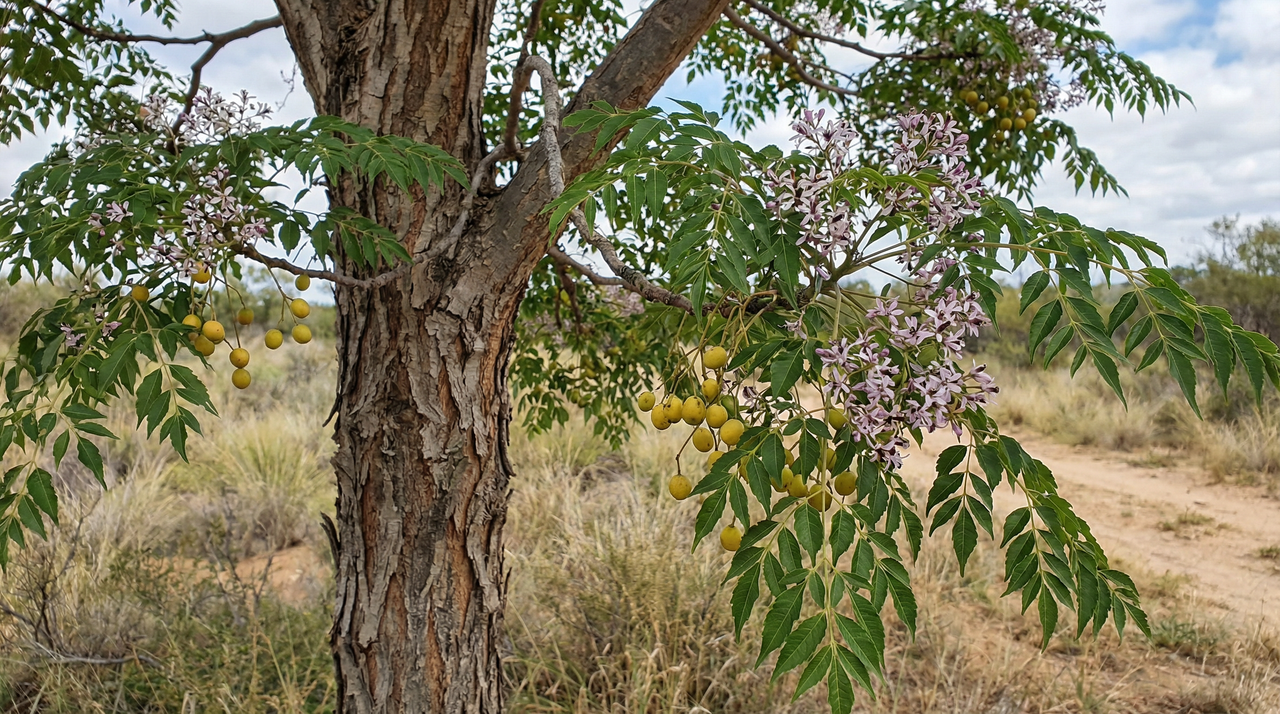
Few landscape trees offer a more difficult trade-off than the chinaberry tree, balancing beautiful, fragrant flowers and hardiness against aggressive invasive tendencies and extreme toxicity. It's beautiful in the way a lot of ecologically complicated things are beautiful: fragrant lilac flowers in spring, a spreading canopy that throws real shade, golden berries that glow against bare winter branches like something you'd see on a holiday card. I've watched people fall for it hard. I've also watched those same people spend years trying to claw it back out of a hedgerow after the birds did what birds do. The tension at the heart of this tree isn't subtle once you know to look for it, and yet it gets planted every season by gardeners who've only ever seen the pretty part.
Here's what stopped me cold the first time I really dug into Chinaberry's chemistry: the compounds making it so toxic to children and pets are structurally related to the same limonoids that researchers are actively investigating for anticancer and antimicrobial properties.[1] The fruit that can send a dog to the emergency vet shares its chemistry with a compound class that's genuinely interesting to pharmacologists. That's not a loophole or a green light; it's a reminder that "natural" and "safe" are not synonyms, and that Chinaberry has never really cared which side of that line we'd prefer it to sit on.
Chinaberry Tree Origins, History, and Spread
The chinaberry tree, Melia azedarach L., has one of those biographical arcs that starts with admiration and ends with a cautionary tale. Native to a broad swath of Asia stretching from the Indian subcontinent through China and into Australia, it has been woven into human landscapes for thousands of years. In its home range, it was prized, planted deliberately, written about in poetry, and honored with layers of symbolism around shade, shelter, and impermanence. I find that context matters a lot when you're trying to understand why a tree this troublesome is still planted with such affection in parts of the American South.
Chinaberry Tree Symbolism and Cultural History
Across South and East Asia, Melia azedarach carried genuine cultural weight. In traditional Chinese and Ayurvedic systems, its bark, leaves, and fruit found medicinal application for centuries, threading the tree into domestic and healing traditions simultaneously. The Sanskrit name "nimba" tied it loosely to neem (Azadirachta indica), a relative with similar bitter chemistry, and that family resemblance shaped how practitioners on the subcontinent viewed its medicinal potential. In parts of China, the tree's lilac-purple flowers in spring became a symbol of seasonal renewal, and its clusters of golden winter berries, often persisting long after the leaves drop, gave it a kind of skeletal winter beauty that made it a recurring subject in landscape painting.
European colonizers and botanists encountered the plant along trade routes and were quickly smitten. By the 18th and 19th centuries, it had been deliberately introduced as an ornamental and shade tree across the American Southeast, the Caribbean, South Africa, and Australia. On Southern homesteads in particular, it was planted close to farmhouses because it grew fast, threw heavy shade, and produced those bead-like seeds that children threaded into necklaces, earning it folk names like "bead tree" and "pride of India." What nobody fully reckoned with at the time was how aggressively it would naturalize. Its berries are irresistible to birds, and every seed that passed through a digestive tract landed somewhere new. That dispersal pattern, combined with the tree's tolerance for disturbed soils and its allelopathic chemistry, turned a beloved ornamental into an invasive problem across much of its introduced range. I've seen it colonizing roadsides in Georgia and abandoned lots in Texas, thriving precisely because the conditions that deter most plants don't faze it at all.
Chinaberry Tree Varieties and Sourcing
There are no widely recognized named cultivars of Melia azedarach in the American horticultural trade, which surprises a lot of people given how dramatically ornamental this tree can be. What you'll find instead is the straight species, and even that is surprisingly hard to come by. Chinaberry sits at "occasional" availability in U.S. nursery catalogs, showing up sporadically through specialty suppliers rather than anything you'd stumble across at a garden center.[2][3][4] The reason is regulatory, not horticultural.
Availability, Regulations, and Responsible Sourcing of Melia azedarach
Florida lists it as a Category II invasive, and California restricts commercial propagation and sale through the California Invasive Plant Council.[5][3][6] The USDA PLANTS Database shows it naturalized across more than 30 states, with the highest invasive pressure concentrated in the Southeast.[7][8] Washington state goes further, prohibiting its sale as nursery stock entirely. There is no national ban, but state and county rules vary enough that I check the invasive plant lists for every state before I specify any tree for a client, and Chinaberry is exactly the kind of plant that explains why that habit matters.
I've noticed over the past decade that sourcing this tree legally for projects in Florida has become genuinely difficult in ways it simply wasn't before. That matches what I've seen with other regulated ornamentals, like certain privets and running bamboos, where a slow tightening of commercial restrictions eventually makes the plant a seed-order-only proposition. For Chinaberry, seeds are available through Sheffield's Seed Company, and saplings can be found through suppliers like TreeHelp.com when stock exists.[9] Budget roughly $3 to $8 for a seed packet, $15 to $30 for small 1 to 3 foot saplings, and $40 to $100 or more for larger specimens, though I'd confirm current pricing directly since specialty stock fluctuates.[10]
When nursery stock isn't an option, propagation from seed is the most practical route, though germination rates of 20 to 50 percent mean you'll want to sow more than you think you need.[11][12] Semi-hardwood cuttings and grafting are also viable when seed isn't available, and the propagation chapter covers all of this in proper detail. The short version: this tree is easy to start if you can legally obtain material. That "if" is doing a lot of work in that sentence.
If you're in USDA zones 7 through 10 and have confirmed that planting is permitted where you live, treat this as a managed landscape element from day one. That means regular monitoring for seedlings volunteering beyond their intended area, not planting near disturbed ground or forest edges where bird-dispersed seeds can establish, and staying honest with yourself about your capacity to keep up with it. A tree this vigorous rewards attention and punishes assumptions.
Chinaberry Tree Propagation and Planting Guide
Before I get into the mechanics of growing a chinaberry tree from seed, I want to say plainly what the varieties section touched on and what I'll keep returning to here: I no longer recommend planting Chinaberry in most southeastern landscapes because I have personally watched it escape into natural areas within five years of a single planting. That said, I know people will grow it, and if you're in a region where it's not invasive or you have a specific managed purpose, you deserve accurate information. So here it is, with eyes open.
Seed Characteristics and Propagation Methods
Melia azedarach seeds are tucked inside a fleshy yellowish drupe, about 1-2 cm across, that ripens from green through yellow to amber. The seed itself is brown, ellipsoid to kidney-shaped, and 8-15 mm long, surrounded by a hard woody pit that is the main obstacle to germination.[13][12] Each seed is polyembryonic, typically housing 2-5 embryos, which sounds like a bonus until you realize it also means high genetic variability in the resulting seedlings.[13]
That hard coat causes physiological dormancy, and untreated seed germinates poorly. The pretreatment ritual that actually works is mechanical scarification (nicking or sanding the coat), followed by a 15-30 minute soak in hot water or concentrated sulfuric acid, then 24-48 hours in warm water.[14][15] Germination improves further with 30-60 days of cold moist stratification at 40°F (4°C).[16] I've grown chinaberry from scarified seed several times and learned the hard way that labeling rows carefully is essential, because the young seedlings look surprisingly similar to certain desirable natives in their first season.
Because Melia azedarach is outcrossing, seed-grown trees will never be identical to the parent.[7][17] If you want a specific form or ornamental trait, cuttings, grafting, or layering are your better options. For those working with stored seed, keep the moisture content between 5-10% in airtight containers at 3-5°C or colder; viability can hold for up to 5-10 years under good conditions, though stored seed will still need the full scarification and stratification treatment.[18][19] I now run a tetrazolium (TZ) chloride test on any batch I haven't used recently: imbibing seeds then staining with 1% TZ solution for 2-4 hours tells you quickly what's still viable.[20][21] I skipped that step once with a batch that had spent a summer in a warm garage, and I wasted an entire spring sowing on dead seed. Not a mistake I made twice.
Because avians eagerly distribute the fruit across large distances,[12] Every seed you handle has the potential to become one of those escapees.
Germination Timeline and Seed Viability
Expect a chinaberry tree sapling to begin fruiting 3-5 years from seed, though trees grown under optimal conditions can produce as early as year two; grafted plants fruit in 2-4 years.[12][22] The species adds 2-3 feet per year in its early years and reaches maturity in 5-10 years, so the gap between germination and landscape impact is shorter than most people assume when they're standing there with a handful of seeds.[12]
After proper pretreatment, germination typically happens within 2-4 weeks at 70-85°F (20-30°C).[23] Pretreated fresh seed can hit 80-90% germination; untreated seed often stays below 20%.[14] Sow seeds about half an inch deep in well-drained soil, keep moisture consistent, and don't stress about light at this stage.[24] In my experience, the Melia azedarach seedling stage passes quickly. Once they break through, those young chinaberry trees push upward with surprising urgency, which is both impressive and a reminder of exactly why their spacing decisions matter so much.
Soil, Site Selection, and Sun Requirements
Start here: Melia azedarach is considered invasive in parts of North America and Australia, and you should check your local regulations before planting it anywhere.[12][25] That is not boilerplate. It is the most important sentence in this section.
In its native subtropical Asian habitat, chinaberry grows on slopes receiving 600-2000 mm of annual rainfall, tolerating a wide pH range from about 5.5 up to 8.0, and thriving on alluvial, granitic, limestone, and volcanic soils alike.[26] That adaptability is part of what makes it a successful pioneer and, outside its native range, an aggressive opportunist. Full sun (at least 6 hours daily) produces the strongest growth and best fruiting; partial shade is tolerated in hotter climates but deep shade leads to leggy, low-vigor trees.[27][28]
The tree adapts to sandy, loamy, and clay soils, performs best in fertile well-drained loam, and tolerates poor or compacted ground reasonably well.[12] What it genuinely cannot handle is prolonged waterlogging, which causes root rot. Its taproot needs at least 1-1.5 m of soil depth to develop properly.[29] For the first 1-2 years, consistent moisture supports root establishment; after that, the tree shifts toward drought tolerance.[25]
pH is worth taking seriously. I always do a soil test before planting any young tree now, after losing a few to micronutrient lockout in alkaline Florida soil before I understood what was happening. Soil above pH 7.5 can trigger interveinal chlorosis from micronutrient deficiency; below 6.0, aluminum toxicity and nutrient lockout can stunt or kill young trees.[30] Amend based on actual test results, not guesswork. For clay soils, incorporate coarse sand or gravel for drainage; sandy soils benefit from well-decomposed organic matter.[31] Responsible siting also means choosing locations well away from natural areas, children's play spaces, and any livestock pasture, regardless of how ideal the soil conditions look.
Spacing, Planting Technique, and Establishment
A mature chinaberry reaches 40-60 feet tall with a spread of 30-45 feet, and it develops brittle wood that becomes a real hazard in storms.[32] I often compare the growth habit to royal paulownia: beautiful, fast, and genuinely problematic if you underestimate the space it needs. Optimal spacing for most landscape situations is 30-35 feet between trees; 15-20 feet is a workable minimum only if you're committed to intensive pruning; naturalized or specimen plantings need 45-50 feet.[33][34] Given that this tree is adding 2-3 feet a year, cramped spacing becomes a regret quickly.
Transplant seedlings when they're 6-12 inches tall, into a hole twice as wide as the root ball but no deeper than it.[24] Plant in spring or fall; in zone 7, either wait until after the last frost or go in September-October for a fall planting. Incorporate organic matter, stake young trees in windy sites, and then commit to consistent watering for the first two years.[12] The fast growth rate that makes this tree so attractive also means it needs that early moisture investment to build a root system that can support the canopy it's racing to create.
The honest summary is this: chinaberry propagation is not technically difficult. The scarification and stratification process is methodical, germination rates are good with fresh pretreated seed, and establishment is straightforward for a healthy site. The harder question, the one every experienced designer has to sit with, is whether planting it is the right call at all. In most cases, especially in the southeastern United States, my answer is no.
Chinaberry Tree Care Guide
Caring for a chinaberry tree is mostly an exercise in patience for the first two years and restraint after that. Once established, it's genuinely one of the lowest-maintenance trees I work with in hot-climate landscapes. The challenge isn't keeping it alive; it's keeping it contained and making sure everyone on the property understands what they're dealing with. That combination of toughness and toxicity runs through every care decision you'll make with this tree.
Watering Needs and Drought Tolerance
Young trees need about an inch of water per week to build the deep root system that will eventually make them so resilient.[12][35][36] After that two-year window, supplemental irrigation is only necessary during prolonged dry spells. I've seen beginners treat chinaberry like a thirsty fruit tree and end up with root rot; it doesn't need coddling, and soggy soil around seedlings is a reliable path to damping-off and failure.[37][28] The tree tolerates a fairly wide pH range in its water and soil, roughly 6.5 to 7.5 being the sweet spot, but in my experience most tap or rainwater falls comfortably within that window as long as drainage is genuinely good.[38]
Feeding and Soil Requirements
The chinaberry tree behaves fundamentally as a pioneer species. It evolved to colonize disturbed, infertile ground, and that background shows up clearly in its nutrient demands: mature trees almost never need supplemental fertilizer unless a soil test points to a specific deficiency.[12][7] For young trees in the first two to three years, a balanced 10-10-10 fertilizer applied once in early spring after the last frost is the standard university-extension recommendation, always preceded by a soil test.[39][40] Over-fertilizing is where good intentions backfire badly: excess nitrogen drives lush vegetative growth at the expense of flowers, reduces cold hardiness, invites pest pressure, and can cause root damage from salt accumulation.[41][42] Slow-release organics like composted bark or well-rotted manure are far more appropriate here, both because they mirror the tree's natural habitat and because they're much harder to overdo. One thing I've learned to watch for in alkaline soils is iron chlorosis, that interveinal yellowing on young leaves, which a spring application of chelated iron after a soil test usually resolves quickly.[12][43] Uniform yellowing of older leaves points more toward nitrogen shortage, which in a tree this naturally tough is usually a drainage or compaction problem rather than a fertilizer gap.
Frost Tolerance and Winter Protection
Mature chinaberry trees are hardy in USDA zones 7 through 11, tolerating short dips to around 10 to 15°F before significant damage occurs; the RHS rates it H5, which puts its lower threshold near -15°C (5°F).[44][45] Young leaves and flower buds are the most vulnerable tissues; look for browning or blackening at the tips, wilting, and dieback after a hard snap.[46][22] The reassuring thing about established specimens is that they often resprout vigorously from the base after dieback, a trait I compare to what I see with marginally hardy citrus or loquat plantings. For zone 7 or colder fringe sites, I use the same strategy I'd apply to any subtropical: 3 to 4 inches of organic mulch around the base (kept a few inches clear of the trunk itself) plus frost cloth during severe cold snaps, sited in a sheltered microclimate with good south-facing exposure.[47][12]
Heat Tolerance and Summer Care
Coming from subtropical and semi-arid Asia, chinaberry handles heat that would stress most ornamentals. It's comfortable in AHS Heat Zones 7 through 10, tolerating average summer extremes of 95 to 105°F, with leaf scorch only appearing around 113°F.[48][12] The peer-reviewed research on its specific heat-stress physiology is thin, but I can tell you from designing with this tree in hot, humid landscapes that consistent mulch and deep, infrequent irrigation during the establishment years make a meaningful difference in reducing scorch during triple-digit stretches.[37][49] Keep 2 to 4 inches of mulch over the root zone to moderate soil temperature. Optional afternoon shade helps in the most extreme desert climates, though once the tree hits that two-to-three-year mark and its drought tolerance is fully developed, it generally takes care of itself through summer.
Pruning, Maintenance, and Mulching
Structural pruning in late winter or early spring is where you either set this tree up for success or create a maintenance problem that follows you for years. On young trees, I focus on establishing a strong central leader or an intentional open form: remove competing leaders, crossing branches, and especially basal suckers as soon as they appear.[41][50] I always remove those suckers in late winter on every chinaberry I install; left unchecked they turn a graceful specimen into a sprawling multi-stemmed thicket within a season or two. On mature trees, the goal shifts to sanitary pruning only: deadwood, diseased or rubbing branches, nothing more. Heavy pruning reduces berry set and adds unnecessary stress.[50][51] A light trim after flowering can actually encourage fruit production, which matters if that's part of your design intent, though for most North American gardeners fewer fruits means less seed dispersal. Refresh the mulch layer each spring to 2 to 4 inches, keeping it away from the trunk, and the tree will largely manage its own moisture and weed suppression from there.[36]
Seasonal Rhythm and Phenology
Chinaberry's annual calendar is worth knowing well, because nearly every part of it connects to a management decision. Flowers open from late April through June, peaking in May, filling the garden with a heavy lilac-like fragrance.[7][52] Fruit sets through summer and matures from August into October, then persists through winter as those pale, marble-like drupes on bare branches. That persistence is part of what makes this tree ecologically problematic in the Southeast: birds eat the fruits and scatter the seeds across disturbed ground, and the root-suckering habit compounds the spread.[25][53] The tree drops its leaves in autumn and enters full dormancy, which is your window for structural pruning before it breaks bud again in spring. Think of the annual rhythm this way: enjoy the May bloom, monitor fruit development through summer, plan for late-winter pruning and sucker removal, and remember that every part of this tree, from the chinaberry tree leaves to the bark to those lingering winter fruits, carries genuine toxicity. Knowing the phenology isn't just about horticultural timing; it's about staying ahead of a plant that rewards attentive management and punishes benign neglect.
Chinaberry Tree Harvesting: Timing, Technique, and Critical Safety Notes
When to Harvest Chinaberry Fruits, Leaves, and Bark
Don't expect fruit the first year, or even the second. Seed-grown chinaberry trees typically take 3-5 years to produce their first fruits, though I've seen well-watered specimens in Central Florida push into fruiting closer to the 2-year mark with consistent irrigation during establishment.[12][54] Once the tree hits its stride, spring flowers arrive in April or May, and the fruits need another 120-180 days to develop from there.[28]
Regional ripening windows run roughly September through November across most southern gardens, with California trees often finishing first and Texas and Florida specimens holding into late fall.[55][56] The color progression is your most reliable cue: hard green drupes shift to yellow-orange, then to a pale yellowish-brown with a slight give when gently pressed.[57][58] I find that in humid subtropical zones the fruits can hang at the yellow-orange stage for weeks before making that final turn, so don't rush the pick. Soil quality and irrigation shift these windows noticeably; a well-fed, watered tree on fertile ground tends to fruit earlier and more reliably than one left to manage on its own.[22] It's a bit like waiting for persimmons to soften past their astringent peak: picking too early leaves you with useless material, but hesitate too long and the birds or the ground claim them first.
Leaves follow an entirely different schedule. They can be gathered throughout the growing season from spring through summer, while bark is best taken from mature trees during dormancy when harvest stress on the plant is minimized.[55]
Safe Harvesting Techniques and Why Most Gardeners Should Think Twice
Every part of this tree is toxic. Full stop. When collecting Melia azedarach fruit for any purpose, wear gloves and long sleeves, collect only fallen or easily reached drupes without climbing, and keep harvested material completely away from children and pets.[12][56] Those golden berries look disarmingly like tiny cherries. They are not. The meliatoxins distributed through every tissue of this plant have caused vomiting, diarrhea, and respiratory failure in children and livestock. I put up "DO NOT EAT" signage on any chinaberry the moment fruit begins to form on a property I'm managing. The same caution applies to bark and leaf collection; the sap is a known skin irritant, and any traditional preparations involving internal use belong strictly in the hands of specialists, not a home garden harvest basket.
Beyond safety, check your local regulations before harvesting or planting. Chinaberry is classified invasive across much of the southern U.S., and many extension services now actively recommend against growing it at all.[55][22] After watching chinaberry seedlings carpet a neighbor's yard within three years of a single fruiting season, I now tell clients plainly: unless you have a contained lot, a strict monitoring plan, and a genuine purpose for the tree's non-food outputs, this one is best admired from a distance.
Chinaberry Tree Preparation and Uses
Safety Warning: Why Chinaberry Is Not Edible
There is no safe way to eat any part of this tree. Every part of Melia azedarach is toxic to humans, from the roots to the fruits, loaded with triterpenoid limonoids, azadirachtin, and meliatoxins that cooking, drying, or fermenting cannot neutralize.[59][60][61] The seeds are the most dangerous part; children have been poisoned after accidental ingestion, triggering the rapid cascade of severe gastrointestinal and neurological effects detailed in the safety profile.[62][63] Skin contact with the sap can cause allergic dermatitis in sensitive individuals, and every authoritative source I've consulted classifies this plant as poisonous with zero established culinary uses.[62][64]
I've seen the nutritional analyses, and yes, the leaves show 15-20% crude protein and the seed oil contains promising ratios of oleic and linoleic acids.[65][66] Those numbers don't change anything. Toxin levels overwhelm any nutritional upside, and no traditional processing method has been shown to fully detoxify the plant for consumption.[61] The fruit's distinctly bitter taste and its bitter-almond scent from cyanogenic glycosides releasing benzaldehyde serve one purpose here: identification.[67][22] I've caught that smell during site assessments while surveying fallen fruit under specimen trees, and it's useful precisely because it keeps you from mistaking this plant for something harmless. After one too many site visits where chinaberry had dropped fruit within reach of small children, I started recommending removal from family properties as a standard practice.
Traditional Medicinal Preparations and Risks
Chinaberry has a genuine and lengthy ethnobotanical history. Traditional Chinese Medicine employed it for malaria and fever; Ayurvedic practitioners knew it as Bakayan and used it for antiparasitic and anti-inflammatory purposes.[68][69] Those traditions deserve respect. They also worked primarily with leaves, bark, and roots, explicitly avoiding the fruits and seeds, and operated within knowledge systems that understood dosage precision as the difference between medicine and poison.[70] After reviewing both the Ayurvedic texts and the modern toxicology reports, I advise clients never to prepare chinaberry medicines at home. No standardized safe doses exist, traditional preparations used very low concentrations of dried material, and modern research focuses on purified isolated compounds rather than whole-plant preparations precisely because the raw plant is so unpredictable.[71][72] The bioactive compounds are real; the risk of getting the preparation wrong is also real.[73]
Non-Food Uses: From Timber to Natural Pesticide
Here's where chinaberry earns back some ground. The wood is durable, termite-resistant, and valued for timber and fuel, producing good charcoal from material that would otherwise be left to spread seeds across a disturbed site.[74] Bark and leaf extracts function as natural pesticides in agriculture, driven by the same azadirachtin-related compounds that make the plant toxic to people.[75] I've worked extensively with neem-derived extracts from related Meliaceae species, and the insect-suppressing chemistry across this family is genuinely impressive for IPM applications. Bark and leaves also yield dyes for fabric.[76] In North American regions where the chinaberry tree is already established as an invasive, the most responsible framing is to treat removal as the harvest: collecting fruits to prevent seed dispersal, milling the felled wood, converting the biomass to mulch or charcoal.[77][78] Use proper PPE throughout; the toxicity doesn't disappear just because you're making charcoal rather than tea. Managed thoughtfully, a tree that poses real hazards on a family property can still yield useful materials on the way out.
Chinaberry Tree Health Benefits and Medicinal Uses
The chinaberry tree is one of those plants that sits at a genuinely uncomfortable crossroads: a rich, documented therapeutic history spanning millennia on one side, and a toxicity profile that has landed children in intensive care on the other. I want to be honest about both, because glossing over either one would be irresponsible.
Traditional and Modern Medicinal Research
Melia azedarach has been used medicinally for over 2,000 years, with documentation reaching back to ancient texts like the Sushruta Samhita.[72][79] Ayurvedic practitioners used it for skin diseases, fever, and digestive complaints; Traditional Chinese Medicine drew on its antiparasitic and antipyretic properties; African ethnomedicine reached for it in cases of malaria, wounds, and gastrointestinal disorders.[80][81] That kind of cross-cultural convergence usually signals real bioactivity, and the laboratory science has started to explain why.
Preclinical research reveals several distinct pathways: strong antimicrobial activity through mechanisms like bacterial cell membrane disruption and biofilm inhibition, anti-inflammatory effects via suppression of TNF-α, IL-6, NF-κB, and COX-2 pathways, antioxidant activity through free radical scavenging, analgesic effects comparable to aspirin in rodent models, and anticancer properties involving apoptosis induction and inhibition of PI3K/Akt and MAPK signaling.[82][83][73][84] Its limonoids also show larvicidal activity against mosquitoes by acting as ecdysone antagonists that disrupt insect development, which adds an ecological dimension to the pharmacological picture.[85][82] Having reviewed a fair amount of the ethnobotanical and pharmacological literature on this genus, I find the research genuinely compelling on a scientific level. However, the gap between animal and cell studies and safe human application is far too wide for me to treat any of this as a basis for home use. Human clinical trials are scarce, and the evidence base remains largely preclinical.[82][86]
Key Phytochemicals in Chinaberry
The chemical complexity here is remarkable. Melia azedarach produces over 100 identified limonoids, including azedarachin, meliantriol, meliacarpin, toosendanin, and azadirachtin-like compounds, alongside flavonoids, triterpenoids, alkaloids, saponins, tannins, phenolic acids, coumarins, and essential oils rich in sesquiterpenes like beta-caryophyllene.[87][88][89] The limonoids are the primary driver of both the medicinal potential and the toxicity. Key flavonoids including quercetin derivatives, kaempferol, rutin, vitexin, and isovitexin contribute to antimicrobial activity against Staphylococcus aureus, Escherichia coli, and Candida albicans, as well as anti-inflammatory cytokine inhibition and antioxidant effects.[87][90]
This chemical profile's variability is particularly interesting from a horticulturist's perspective. Leaves concentrate limonoids and flavonoids; bark is high in tannins and alkaloids; fruits carry the highest toxic limonoid concentrations alongside triterpenoids and saponins; roots hold alkaloids; flowers produce volatile terpene-rich oils.[91] Seasonal timing, soil type, geographic origin, and plant age all shift the ratios: limonoid levels peak in summer and autumn leaves, older plants can carry 20 to 50 percent higher secondary metabolite concentrations, and drought stress concentrates these compounds further.[92][93][94] I've observed in drier subtropical landscapes that stress-hardened specimens tend to fruit heavily, and that heavy fruiting correlates with exactly the kind of elevated compound production the research describes. These same compounds serve the plant ecologically as insect deterrents and allelopathic agents that suppress germination of neighboring plants, which helps explain its invasive behavior in disturbed landscapes.[88][92]
Nutritional Profile and Safety Concerns
There is no positive nutrition story here. No part of the chinaberry tree appears in nutritional databases like USDA FoodData Central as a food item, and no part is considered safe for consumption.[95][96] Phytochemical analyses do show mineral content in the fruit pulp (roughly 200 to 300 mg/100g potassium, 50 to 100 mg/100g calcium, 20 to 50 mg/100g magnesium), but those figures are scientific observations, not dietary recommendations; they exist alongside a toxin load that makes any casual edible framing dangerous.[97] Missouri Botanical Garden does note that ripe fruits may be edible when cooked in some accounts, but processing does not reliably eliminate the risk, and unripe fruits, seeds, and all raw plant material remain toxic regardless.[98][99] Traditional medicinal use of leaves, bark, and roots in low-dose decoctions for malaria and skin conditions has a long history, but self-experimentation based on that history would be extremely dangerous.[100] As a designer, I don't recommend any plant with this profile in landscapes where edible curiosity is likely, particularly with children around.
Safety Profile and Toxicity Risks
This is the part of the chinaberry tree profile where I need you to slow down and read carefully. All parts of the plant are toxic to humans, livestock, and pets, with fruits and seeds carrying the highest concentrations of tetranortriterpene limonoids known as meliatoxins (A1, A2, B1, B2) alongside azadirachtin-related compounds.[101][102] Ingestion of just 6 to 9 fruits can cause serious poisoning in a child.[103] I'd put this in the same category as castor bean or yew in terms of landscape risk: attractive plant parts, accessible to curious children, with consequences that require emergency care.
Symptoms in humans begin within hours as gastrointestinal distress (nausea, vomiting, diarrhea, abdominal pain) and can progress to neurological effects including drowsiness, confusion, seizures, and coma, with cardiovascular complications like hypotension and arrhythmias possible in severe cases.[104][105] Livestock experience weakness, rumen stasis, and respiratory failure; dogs show vomiting, ataxia, and seizures.[106][107] There is no specific antidote; treatment is supportive, relying on activated charcoal, IV fluids, and symptom management.[108] Pregnant women should avoid all contact; teratogenic effects have been documented in animal studies.[102]
Handling precautions matter even for routine pruning. I always wear gloves and long sleeves when working with any Meliaceae family member with known sap irritants, and chinaberry qualifies. Skin contact with sap or pollen can cause contact dermatitis (redness, itching, blisters) or rhinitis in sensitive individuals, and burning pruned material creates inhalation risk from volatilized toxins.[109][110] Potential drug interactions include enhanced hepatotoxicity when combined with other liver-toxic agents and possible effects on cytochrome P450 metabolism, though the human evidence for this is limited.[111] Misidentification with Tree of Heaven (Ailanthus altissima) is a real risk in landscape work; knowing chinaberry's distinguishing features (bipinnate leaves with 5 to 13 leaflets, lilac flowers, yellow drupes) is essential before assuming you're dealing with the less dangerous look-alike.[110] The World Health Organization acknowledges traditional medicinal potential but is explicit that professional medical guidance is required before any use.[112] I take that position seriously. The case reports and toxicology data are unambiguous, and no amount of traditional precedent changes the risk equation for unsupervised home use.
Chinaberry Tree Pests and Diseases
For a tree with such a complicated reputation, chinaberry's relationship with pests and diseases is surprisingly straightforward: its chemistry does most of the defensive work. What gets it into trouble is usually the gardener's fault, not the plant's.
Natural Pest Resistance from Limonoids
Melia azedarach produces a suite of bioactive limonoid compounds, including azadirachtin, gedunin, meliacine, and azadirone, distributed throughout its leaves, seeds, bark, and fruits.[113][114] These compounds interfere with insect hormonal pathways, disrupting feeding, growth, and reproduction in ways that deter a genuinely wide range of attackers. If that sounds familiar, it should: chinaberry is in the same family as neem, and I've observed similar repellent effects when using leaf sprays on aphid-heavy companions in the garden. The concentrations differ, but the mechanism is recognizable.
The practical result is moderate to high resistance to wood-boring insects, termites, and most generalist urban pests.[115][12] Its thick, fissured bark and waxy leaf cuticles add a physical layer on top of the chemical one.[116] Part of why chinaberry spreads so aggressively in places like Florida and coastal California is that it arrives without the co-evolved insect communities that keep it in check at home, giving it an even cleaner run.[117]
That said, it isn't bulletproof. Aphids, scale insects, leaf miners, mealybugs, and fall webworms will all take a crack at a stressed tree, and fruit flies like Bactrocera dorsalis can infest the berries in tropical growing regions.[118][119] In managed settings, infestation rates tend to stay in the 5 to 15 percent range, but humidity, water stress, or poor soil conditions push that number higher.[120] I've found that planting yarrow or fennel nearby reliably draws enough ladybugs to keep aphid pressure negligible without any intervention at all, which fits neatly into how I think about guild design around this tree.
There are no cultivars with documented superior pest resistance; it's a species-wide trait rather than something breeders have selected for.[121] Good cultural care, monitoring, and encouraging beneficial insects will take you further than any named variety.
Common Fungal Diseases and Environmental Triggers
Chinaberry has moderate overall disease resistance, but fungal pathogens are its real vulnerability.[122] The roster includes anthracnose (Colletotrichum spp.), leaf spot from Cercospora and related genera, powdery mildew (Oidium spp.), Verticillium wilt, Phytophthora root rot, and canker or dieback from Botryosphaeria dothidea.[123] Bacterial diseases like Xanthomonas leaf spot show up occasionally, and viral problems are rare enough to be almost theoretical.[122]
The trigger is almost always environmental. High humidity, waterlogged soil, and poor drainage are the conditions that invite leaf spots and root rot.[124] In my experience managing chinaberry in humid subtropical settings, leaf spot symptoms almost always show up first on the lower, shaded interior branches after a stretch of wet weather. That's a useful early warning: by the time it moves to the canopy, you've missed the easy intervention window. Soil pH above 7.5 and temperature extremes outside USDA zones 7 through 9 compound the stress and reduce natural defenses further.[96][22] Once established on a dry, well-drained site, the tree's innate drought tolerance actually works in its favor, keeping root rot at bay almost entirely.[12]
Management and Cultural Practices
There are no commercially available disease-resistant cultivars, so site selection and cultural care are your only real levers.[125] After years of reviewing seedling batches and named forms across different designs, I haven't found any consistent difference in disease performance between selections. Focus on the soil and the drainage, not on hunting down a superior variety.
For leaf spot and anthracnose, prompt pruning of infected branches, removing fallen debris, and opening up airflow has consistently limited spread in my designs without ever reaching for fungicides. When conditions are persistently wet and early symptoms appear, copper-based products or chlorothalonil can be applied, though in states where chinaberry is classified as invasive, there may be regulatory limits on how much investment makes sense for a tree you may ultimately be obligated to remove.[126] For root rot, the answer is drainage first, last, and always. No fungicide corrects a poorly chosen site. Keep IPM practices consistent: monitor regularly, avoid overhead irrigation, and preserve the beneficial insect populations that help manage secondary stress from pest feeding.[118]
Chinaberry Tree in Permaculture Design
Before you place any tree in a food forest design, you need to ask two questions: can it actually survive here, and should it be here at all? With chinaberry, the second question matters far more than the first. But let's start with the climate picture, because it determines whether the conversation is even relevant to your site.
Climate Suitability and USDA Hardiness Zones
Chinaberry is reliably hardy in USDA zones 7 through 11, with its sweet spot sitting squarely in zones 8 to 10 where it fruits consistently and puts on its best show.[7][31] Zone 7 growers can push it with good drainage and heavy winter mulching; I've seen young specimens suffer significant dieback in a cold snap and then come roaring back from the root crown the following spring, which tells you something about how determined this tree is. That determination, though, cuts both ways.
On soil, it's genuinely unfussy. Give it full sun and any reasonably well-drained soil across a pH of 5.0 to 8.0, whether that's clay, sand, or lean subsoil, and it'll get going.[31][22] What it cannot tolerate is soggy feet; root rot in poorly drained situations is the one reliable way to slow it down. Once established, it handles drought and summer heat above 100°F without complaint,[127][12] thriving in the humid subtropics of the Southeast and the drier climates of Southern California alike. It's naturalized across much of the southern and central U.S. from Florida to Texas and northward into Oklahoma and Missouri, with moderate salt tolerance making it viable in coastal Southeast landscapes.[128] That naturalization is precisely the problem. It grows 13 to 24 inches per year under ordinary conditions and up to three to five feet annually when conditions are ideal,[31] and in zones 8 to 10, it's classified as invasive because birds spread its seeds faster than most gardeners realize they have a problem.[7]
Ecosystem Functions and Ecological Roles
The spring flowers are genuinely lovely: small, star-shaped, lilac to purple, and fragrant enough to stop you in your tracks. They attract bees, butterflies, and other pollinators reliably, and the tree's mixed breeding system with protandrous flowers favors cross-pollination, which improves fruit set significantly.[67][12] In its native range across subtropical Asia, it earns its place as a pioneer species: stabilizing soils, sheltering understory, feeding frugivores, and supporting pollinators through seasonal cycles.[129][130] Those are real ecological services. They just don't transfer cleanly when you take the tree out of context.
Outside its native range, the same birds that make the pollination story charming disperse the fruits into disturbed roadsides, forest edges, and riparian corridors, where Melia azedarach has now naturalized in 29 U.S. states and forms dense monocultural thickets that crowd out native flora.[131][12] I've watched saplings colonize a disturbed fence line in one season. By year three, you've got a stand. The allelopathy compounds this problem considerably: root exudates and slowly decomposing leaf litter suppress competing vegetation, inhibit seed germination, and alter soil nitrogen dynamics.[132][12] This is where the comparison to neem comes up often, and I want to address it directly. Both are Meliaceae members, both contain limonoids including azadirachtin-like compounds that give real insecticidal and pest-repellent effects against aphids, whiteflies, and mosquitoes.[7][133] But neem (Azadirachta indica) behaves itself in a mixed guild. Chinaberry does not. Its allelopathy and tendency to produce monocultures make it a poor neighbor in the diverse polycultures permaculture design depends on.
Forest Layer Placement and Guild Considerations
On paper, chinaberry sits in the canopy or overstory layer. It reaches 30 to 50 feet tall with a rounded crown spanning nearly as wide,[12][31] and a fast-growing pioneer species that provides shade, breaks wind, controls erosion, and repels insects has theoretical agroforestry value.[134] The guild design literature does acknowledge these traits.[135] But "theoretical" is doing a lot of work in that sentence. Chinaberry is not a nitrogen fixer,[31] so it brings none of that particular pioneer bonus to a guild. Its allelopathy limits what you can actually grow beneath it, its toxicity rules out livestock forage from the understory, and the bird-dispersed fruit means any "contained" planting is aspirational at best.[136]
I've had clients fall for the flowers. I understand it. But the beautiful spring blooms led me to plant it only once in a client's food forest in zone 9b, years ago, before I fully reckoned with the spread. That regret is what makes me direct now: the chinaberry tree was introduced to North America in the late 1700s as an ornamental,[31] and it has been escaping yards and degrading native plant communities ever since.[137] Any permaculture function you're hoping it will serve, there is almost certainly a canopy species native to your region that provides shade, windbreak, and pollinator support without the allelopathic soil suppression and the ecological liability of invasive spread. For most readers in non-native North American growing regions, the honest design recommendation is to leave this one out of the plan entirely.
The Tree I Keep Recommending Against (And Why I Still Know It By Heart)
I've turned down more requests to source Chinaberry than almost any other plant, and yet I can still picture exactly where one stood at the edge of a farm I worked on in Georgia, its lilac flowers filling the whole lane with something almost indecent in its sweetness. That's the trap of it, honestly. It's gorgeous, it's tough, and it will absolutely take over if you let it. Some plants teach you restraint just by existing, and this one has taught me more than most.
Sources 137
- Biological Activities of Limonoids from the Genus Melia ↩
- Chinaberry (Melia azedarach) - Field Guide: Volume 2 ↩
- California Invasive Plant Council - Melia azedarach Stewardship Survey ↩
- Missouri Botanical Garden Plant Finder: Melia azedarach ↩
- Florida Exotic Pest Plant Council - Plant Classification ↩
- Melia azedarach ↩
- Melia azedarach L. ↩
- Melia azedarach ↩
- Chinaberry Tree Seeds ↩
- Foundation Plant Systems - Chinaberry Seed ↩
- Melia azedarach (Chinaberry) ↩
- Chinaberry Tree (Melia azedarach) ↩
- Melia azedarach L. - Chinaberry ↩
- Propagation of Melia azedarach by Seeds ↩
- Seed Germination of Woody Plants ↩
- Dormancy Breaking in Chinaberry Seeds ↩
- Propagation of Melia azedarach by Seeds and Cuttings ↩
- Effects of Temperature and Seed Storage on Germination of an Invasive Tree, Chinaberry (Melia azedarach, Meliaceae), in Coastal South Carolina, USA ↩
- Seed Storage of Horticultural Crops ↩
- International Rules for Seed Testing ↩
- Tetrazolium Testing for Seed Viability ↩
- Chinaberry Tree (Melia azedarach) ↩
- Propagation of Trees and Shrubs ↩
- Growing Chinaberry Trees ↩
- Melia azedarach - Missouri Botanical Garden ↩
- Melia azedarach - Flora of China ↩
- Missouri Botanical Garden Plant Finder ↩
- Chinaberry Tree (Melia azedarach) - UF/IFAS Extension ↩
- Chinaberry Tree Care - University of Florida IFAS Extension ↩
- Soil pH Preferences for Trees - University of Florida IFAS Extension ↩
- Melia azedarach - Missouri Botanical Garden ↩
- Missouri Botanical Garden – Plant Finder: Melia azedarach ↩
- Indian Horticultural Research Institute – Melia azedarach orchard spacing ↩
- Texas A&M AgriLife Extension – Tree Spacing Guidelines ↩
- Chinaberry Tree (Melia azedarach) ↩
- Chinaberry Tree (Melia azedarach) ↩
- Chinaberry Tree Care and Growing Guide ↩
- Melia azedarach ↩
- Melia azedarach Care Guide ↩
- Chinaberry Tree (Melia azedarach) ↩
- Melia azedarach ↩
- Chinaberry Tree (Melia azedarach) ↩
- Iron Chlorosis in Trees and Shrubs ↩
- Melia azedarach ↩
- Melia azedarach ↩
- Chinaberry Tree Care and Frost Tolerance ↩
- Protecting Plants from Frost ↩
- Plant Heat-Zone Map ↩
- Drought and Heat Stress in Ornamental Trees ↩
- Chinaberry Tree (Melia azedarach) ↩
- Melia azedarach ↩
- Chinaberry Tree (Melia azedarach) - Missouri Botanical Garden ↩
- Melia azedarach - Flora of North America ↩
- Phenology of Melia azedarach L. in Different Climatic Regions ↩
- Melia azedarach: Cultivation and Harvesting Guide ↩
- Melia azedarach Plant Profile ↩
- Melia azedarach ↩
- Melia azedarach - USDA Plants Database ↩
- GRIN - Melia azedarach ↩
- Toxicity of Melia azedarach Fruits ↩
- Ethnobotanical Uses and Toxicity of Melia azedarach ↩
- CHINABERRY: POISONOUS ALL YEAR ↩
- Plant Poisonings: Chinaberry ↩
- Melia azedarach (L.) Druce ↩
- Nutritional and Phytochemical Evaluation of Melia azedarach L. Leaves ↩
- Chemical Composition of Seed Oil from Melia azedarach ↩
- Melia azedarach - Wikipedia ↩
- Melia azedarach L. (Meliaceae) in Traditional Medicine ↩
- Traditional Uses of Chinaberry Tree in Ayurveda ↩
- Ethnobotanical Uses of Melia azedarach in Asia ↩
- Melia azedarach L. (Meliaceae) - Ethnobotanical and Pharmacological Review ↩
- Melia azedarach L. (Meliaceae) Ethnobotany and Ethnopharmacology: A Review ↩
- Toxicity and Pharmacological Potential of Melia azedarach ↩
- Melia azedarach ↩
- Insecticidal properties of Melia azedarach in agriculture ↩
- Ethnobotany of Melia azedarach ↩
- Invasive Plant Fact Sheet: Chinaberry (Melia azedarach) ↩
- Invasive Plant Control Guidelines ↩
- Traditional Uses of Melia azedarach in Indian Systems of Medicine: Ayurveda and Siddha ↩
- Ethnobotany of Melia azedarach in Asia and the Americas ↩
- Melia azedarach L. (Meliaceae) in Traditional Medicine: A Review of Ethnopharmacological Uses ↩
- Pharmacological Activities of Melia azedarach: A Review ↩
- Pharmacological potential of Melia azedarach L. - A review ↩
- Antioxidant and Analgesic Effects of Chinaberry (Melia azedarach) ↩
- Limonoids from Melia azedarach with insecticidal activity ↩
- Traditional Uses, Phytochemistry and Pharmacology of Melia azedarach: A Review ↩
- Phytochemical Constituents and Pharmacological Activities of Melia azedarach ↩
- Secondary Metabolites from Melia azedarach and Their Biological Activities ↩
- Phytochemical and pharmacological review of Melia azedarach ↩
- Antimicrobial and Insecticidal Properties of Melia azedarach Extracts ↩
- Chemical Composition of Melia azedarach Bark and Fruit ↩
- Seasonal Variation of Secondary Metabolites in Melia azedarach Leaves ↩
- Limonoid Variation in Melia azedarach Across Geographic Origins ↩
- Phytochemical Composition and Environmental Influences on Melia azedarach ↩
- Toxicity of Melia azedarach Fruits ↩
- Chinaberry Tree (Melia azedarach L.) ↩
- Nutritional Composition and Phytochemical Screening of Melia azedarach L. Fruits ↩
- Melia azedarach ↩
- Phytochemical Composition of Melia azedarach Fruits ↩
- Chinaberry Tree: Uses and Toxicity ↩
- Melia azedarach - Plant Fact Sheet ↩
- Review of Melia azedarach Toxicity ↩
- Poisoning by the Chinaberry Tree (Melia azedarach) in Children ↩
- Melia azedarach Intoxication: A Case Report ↩
- Chinaberry Tree (Melia azedarach) - Poison Control ↩
- Chinaberry (Melia azedarach) Poisoning in Livestock ↩
- Chinaberry Tree ↩
- Melia azedarach (Chinaberry) Toxicity ↩
- Contact Dermatitis from Plants of the Sapindaceae Family (Including Melia azedarach) ↩
- Chinaberry Tree (Melia azedarach): Identification and Toxicity ↩
- Herbal-Drug Interactions Involving Cytochrome P450 ↩
- Medicinal Uses and Toxicity of Chinaberry Tree ↩
- Limonoids from Melia azedarach: Chemistry and Bioactivity ↩
- Insecticidal Properties of Melia azedarach L. Extracts Against Storage Pests ↩
- Bioactivity of Chinaberry Tree (Melia azedarach) Against Wood-Boring Insects and Termites ↩
- Chinaberry Tree ↩
- Invasive Potential and Pest Interactions of Chinaberry Tree ↩
- Insect Pests of Ornamental Trees in the Southern United States ↩
- Pests and Diseases of Melia azedarach ↩
- Melia azedarach: Biology, Ecology, and Management ↩
- USDA ARS Biocollections - Melia azedarach ↩
- Chinaberry Tree: Pest and Disease Management ↩
- Fungal Pathogens of Melia azedarach ↩
- Chinaberry (Melia azedarach) - Diseases and Pests ↩
- Plant Finder - Melia azedarach ↩
- Chinaberry Tree (Melia azedarach) Diseases and Pests ↩
- Missouri Botanical Garden Plant Finder - Melia azedarach ↩
- Clemson Cooperative Extension - Chinaberry Tree ↩
- USDA-ARS Plant Profile ↩
- Flora of China - Melia azedarach ↩
- Invasive Plant Atlas: Melia azedarach ↩
- Chen et al. (2022) - Allelopathic Mechanisms in Meliaceae ↩
- Melia azedarach - Insecticidal Properties ↩
- Melia azedarach in Agroforestry - FAO ↩
- Permaculture Research Institute - Chinaberry Tree ↩
- University of Florida IFAS Extension - Melia azedarach ↩
- Invasive Plant Atlas - Chinaberry Tree ↩