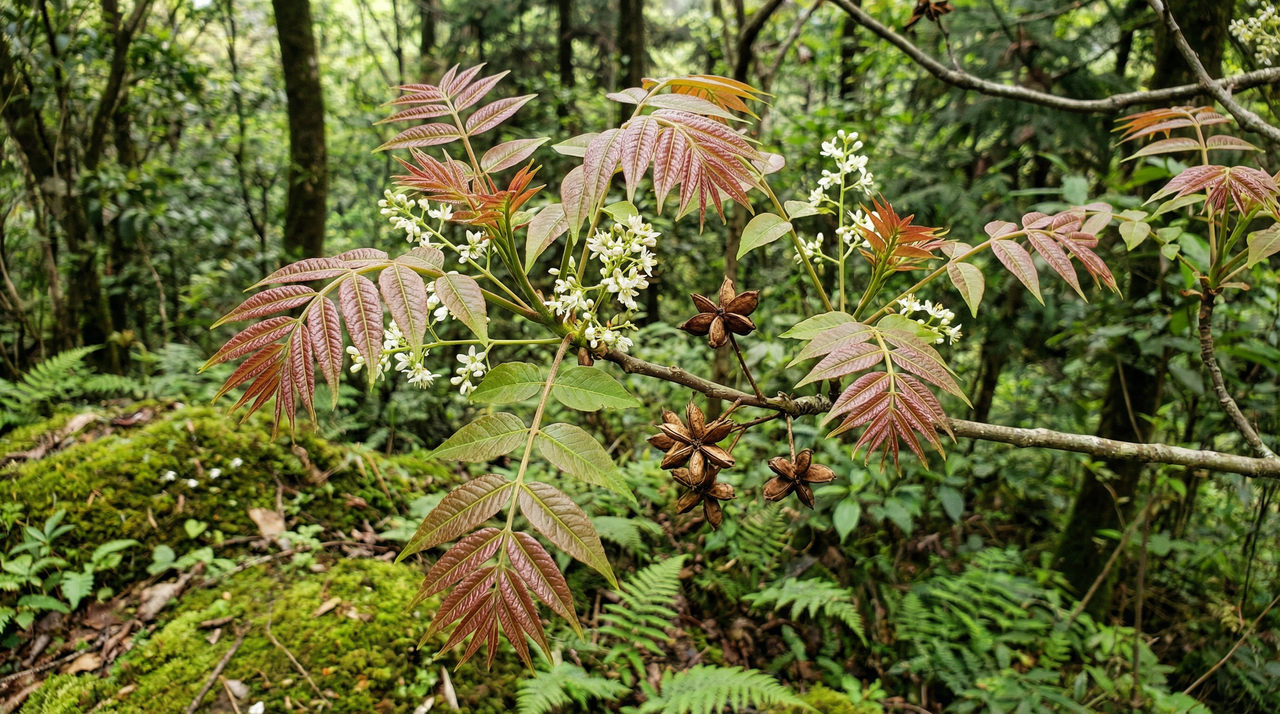
There's a tree that tastes like garlic, smells like an onion, and gets compared to both truffles and body odor depending on who you ask. I've watched people at farmers markets stop mid-stride when they smell Chinese toon shoots before they even see them. Half reach for a bag. The other half back away. That split reaction is, honestly, the most honest preview I can give you of what it's like to grow Toona sinensis: polarizing, ancient, and absolutely unlike anything else you can harvest from a temperate food forest in April.
What surprises most gardeners is that this isn't some obscure forage curiosity or trendy permaculture novelty. Chinese toon has been eaten and prescribed in China for at least 2,000 years,[1] and its spring shoots are still a genuine seasonal event in Chinese markets, the kind of thing people plan meals around the way we might treat ramps or morel mushrooms here. Outside East Asia, though, it's almost invisible. Most North American gardeners I talk to have never heard of it, and the ones who have are usually unsure whether it's safe to eat, whether it's invasive, or whether that mahogany-relative thing they read about online is even the same plant. It is. And there's a lot to untangle.
Chinese Toon Origin, History, and Botanical Background
Chinese toon (Toona sinensis) is a deciduous tree with a presence that commands attention in any landscape: long-lived, fast-growing, and carrying the kind of cultural weight that few edible plants can match. Native to East Asia, from China and the Himalayas through Malaysia and Indonesia, it typically reaches 10 to 25 meters in height with a lifespan of 50 to 100 years or more.[2][3] A member of the Meliaceae family, it's sometimes called Chinese mahogany, a nod to its fine-grained, durable timber that historically furnished Chinese homes and workshops.[4] It's a polycarpic species that flowers reliably year after year once established, typically reaching sexual maturity within three to five years from seed. Furthermore, its growth rate of 30 to 60 centimeters per year means it earns its keep quickly in a food forest design.[5][2] Trees are typically dioecious, though sources vary on this, with some reporting monoecious or bisexual flowers, so I'd recommend labeling your plants during the first flowering season if consistent shoot production is the goal.[6] Its tropical relative, the Australian red cedar (Toona ciliata), grows considerably larger at 20 to 40 meters and can live well over a century, but its subtropical origins make it far less adaptable to temperate gardens.[7][8] For most permaculture designers working outside the tropics, T. sinensis is the practical choice.
Botanical Characteristics and Visual Identification of Chinese Toon
The easiest way to identify Chinese toon in early spring is also the most rewarding one: look for that unmistakable flush of reddish-purple new growth. The pinnately compound leaves carry 11 to 19 lanceolate to ovate leaflets with serrated margins, each around 5 to 10 centimeters long, and they emerge a deep wine-red before maturing to bright green through summer and shifting to yellow before dropping in autumn.[2][9] In my landscape work, I've come to rely on that spring flush as a phenological clock. When the color is right, the shoots are ready. When it fades to green, the harvest window has passed.
Flowers appear as large terminal panicles, 15 to 30 centimeters long, with small fragrant white to pale pink blossoms in spring.[10][11] The fruits that follow are small woody capsules that split into five valves, releasing flat winged seeds well adapted to wind dispersal, which is useful context if you're watching for volunteer seedlings around the garden.[12] Mature bark is dark brown to nearly black, ridged, and exfoliating in thin flakes. Seedlings start with a taproot that gradually gives way to an extensive lateral root network as the tree ages.[13] Having seen T. ciliata up close, the size difference is striking; its leaves run 30 to 60 centimeters with leaflets nearly twice as large, which helps explain why T. sinensis feels so much more at home in a modest-scale planting.[14]
Traditional and Cultural Uses Across East Asia and Beyond
The culinary and medicinal story of Chinese toon runs deep. Its young spring shoots, known as xiāngchūn, appear in records as far back as the Shennong Bencao Jing around 200 to 250 AD, and their use as a seasonal delicacy spans more than two millennia of Chinese food culture, with particular prominence during the Ming and Qing dynasties.[15][16] The shoots appear in poetry and festivals, particularly Qingming, where "tasting spring" is a ritual act tied to renewal and vitality. I find something genuinely moving in that idea: centuries of gardeners timing their harvests by the same reddish flush I watch for in my own designs.
Medicinally, the leaves and buds have been used across Yi, Zhuang, and other ethnic communities, as well as in Korean Hanbang tradition, to treat dysentery, skin conditions, respiratory infections, and digestive complaints, framed through the lens of cooling properties, blood purification, and detoxification.[17][18][19] These are traditional claims, not modern clinical conclusions, but the breadth of independent ethnobotanical convergence across cultures is worth noting. Its cousin T. ciliata tells a parallel story: Aboriginal Australians used the timber for canoes, boomerangs, and shields, the bark for treating dysentery and skin sores, and the leaves for fevers, while Southeast Asian communities turned to its young shoots as food and its wood for boats and furniture.[20][21] That T. ciliata is now Near Threatened due to historical overharvesting is a cautionary mirror for T. sinensis, where wild populations have also declined from overcollection.[7][22] In my regenerative design practice, I always recommend cultivated sources over wild harvest, and I check local invasiveness status before any planting recommendation, because T. sinensis can spread aggressively in certain regions if left unmanaged.[5]
Fun Facts and Ecological Notes on Chinese Toon
The spring shoots carry a flavor unlike almost anything else in a temperate food garden: nutty, peppery, with a garlicky-onion base and faint hints of vanilla or almond.[4] That aroma is the same quality that made the timber a prized furniture wood, carrying a distinctive scent that persists in worked wood. Historically called Chinese mahogany for its fine grain and durability, the timber was used for furniture, tools, and construction across East Asia.[23]
From an ecological standpoint, the tree punches well above its weight in a polyculture. It supports Lepidoptera, attracts birds for seed dispersal, and contributes to wildlife habitat through its flowers and canopy structure.[24] The fragrant white-pink panicles are genuinely ornamental, and the three-season color shift from red to green to gold gives it strong design value alongside its edible function. I've used it as a focal-point guild tree in food forests precisely because it earns its space in multiple ways simultaneously, feeding the table, supporting biodiversity, and giving the garden structure with its bold seasonal foliage changes.[8]
Chinese Toon Varieties and Sourcing
Notable Varieties and Characteristics of Toona sinensis
My first encounter with 'Flamingo' was at a Missouri Botanical Garden plant sale about eight years ago, and I almost passed it by because the label just said "Chinese toon." Then I looked closer at the new growth: this vivid, almost sherbet-pink flush of leaves that looked more like a tropical ornamental than a temperate edible tree. I bought two on the spot. Now I use that flush as my harvest cue every spring. When the color is brightest, the shoots are at their peak tenderness and flavor. That visual signal alone makes 'Flamingo' my preferred form for a food forest where I need both function and beauty.
The species itself, Toona sinensis, is a fast-growing deciduous tree that can reach 20 to 50 feet with a 15 to 30 foot spread, and its spring growth always emerges in shades of reddish-purple before greening out.[25][26][27] 'Flamingo' takes that quality and amplifies it dramatically, which is why it's selected for both ornamental and edible purposes. Beyond 'Flamingo', the named cultivar pool for Chinese toon includes 'Ailaoyou' along with botanical varieties var. glabra and var. siamensis, each selected for traits like improved shoot tenderness, flavor intensity, or disease resistance.[28][29][30] Genetic diversity research supports continued selection work across the genus, so the cultivar list will likely expand as edible-landscape interest grows.
For context on the broader genus: I've also grown Toona ciliata, the Australian red cedar, during an earlier phase of my design work, and the difference in scale and purpose is immediately apparent. It grows considerably larger (50 to 80 feet or more), carries coarser foliage, and is prized primarily for its reddish-brown timber rather than its shoots.[31][32] Unlike Chinese toon, T. ciliata has no standardized horticultural cultivars; it exists in natural regional varieties (var. australis, var. papillata, var. filicifolia) adapted to different rainfall and temperature regimes, and most plants are simply seed-grown.[33][8] Useful context for the genus, but a different plant for a different purpose.
Sourcing Chinese Toon Plants and Seeds
Chinese toon isn't something you'll find at a big-box garden center, and honestly that's kept me from making sourcing mistakes I've watched others make. I've ordered seed from Seed Savers Exchange and picked up young plants at Missouri Botanical Garden sales, and both have been reliable for getting true-to-type, pathogen-free stock.[34][35] The Northeast Sustainable Agriculture Working Group seed library is another solid option worth checking.[36] In my experience, plants from unverified online sellers have arrived with hidden aphid colonies or Verticillium risk; I now insist on stock from public gardens or conservation programs to keep my food forest healthy.
Seed packets typically run $5 to $15 for 10 to 20 seeds; young plants range from $10 to $50 depending on size.[37] The species isn't CITES-listed and faces only standard USDA APHIS import requirements, so there are no unusual regulatory hurdles for most buyers.[38][39] One caveat: if you're in Florida, Georgia, or Hawaii, check current invasive plant regulations before purchasing, as sales restrictions exist in parts of the Southeast.[40] Toona ciliata, by contrast, requires additional USDA APHIS permits when imported from Australia, and while specialty nurseries like Plant Delights and seed suppliers like Sheffield's occasionally carry it, availability is inconsistent and online marketplace listings warrant extra scrutiny for quality and legality.[39][41][42]
Chinese Toon Propagation and Planting (Toona sinensis)
Chinese toon gives you several entry points as a grower, and which one you choose depends almost entirely on what you want from the tree. Seeds are the most accessible starting point, and the species is surprisingly cooperative about being stored and germinated. But if you're after a named form like 'Flamingo' with that showstopping pink spring flush, seeds will disappoint you more often than not. Sexual reproduction means genetic variability, and in a tree pollinated by insects and outcrossing freely, seedlings rarely replicate the specific traits that made the parent worth propagating in the first place.[43][44] I've started hundreds of these from seed and I still label every flat obsessively after losing track of a batch one spring when the first-year seedlings looked frustratingly like half the other things I had going in the greenhouse at the same time.
Propagation Methods: Seeds, Cuttings, Air Layering, and Grafting
The seeds themselves are small, winged samaras, the seed body only 4-6 mm long with papery wings bringing the total to 8-12 mm.[45][46] They're orthodox seeds in the best sense: collect them in autumn, dry them down to 5-8% moisture content, seal them in an airtight container with desiccant, and refrigerate. At 5°C or below they'll hold viable germination rates above 50% for five years or more, and with freezer storage at -18°C you can push that window even further.[47][48] I've kept viable Toona sinensis seed for six years in an old deli container in the back of the refrigerator. I would never trust the same setup for Australian red cedar (Toona ciliata), whose seeds behave more like an intermediate species, sometimes requiring scarification or hot-water pretreatment and showing considerably less predictable storage life.[49][50] The Chinese toon is just more forgiving.
Fresh seed exhibits physiological dormancy, but it responds predictably to cold stratification at 4-10°C for 30-60 days followed by warm germination temperatures of 20-25°C.[51] Under optimal warm, moist conditions, germination rates of 70-90% are achievable within 10-20 days.[48] That's a strong number for a tree this size.
When seeds won't hold cultivar traits, vegetative methods are the answer. Softwood cuttings taken in late spring or early summer, 4-6 inches of new growth, treated with IBA at 1000-3000 ppm and stuck in a perlite-peat mix under 80-90% humidity, root in 4-8 weeks at 70-75°F with 60-80% success.[52][53] Semi-hardwood cuttings in mid-to-late summer perform similarly in a sand-peat mix under mist with bottom heat. Air layering on wounded branches treated with hormone succeeds at 60-80%.[54][55] For named cultivars, though, grafting is my preferred route. Cleft, veneer, or whip-and-tongue grafting onto Toona sinensis seedling rootstocks in early spring on dormant stock, with precise cambium alignment, achieves 70-90% success.[56][57] I consistently hit the upper end of that range when I use a humidity dome for the first two weeks and pay what my apprentices call "obsessive" attention to cambium contact. It's worth the setup.
One non-negotiable across all methods: drainage. Toona sinensis is genuinely susceptible to Phytophthora root rot in waterlogged conditions,[2] so whether you're sticking cuttings in propagation medium or transplanting a grafted tree into the landscape, the medium or soil has to drain freely.
Soil, Site Selection, and Sun Requirements
Chinese toon is not fussy, but it does have opinions. Fertile, well-drained loamy soil rich in organic matter is the ideal, and it'll tolerate sand or clay as long as drainage is adequate.[26][4] The pH window is wide, 5.5-7.5, with optimal performance between 6.0 and 7.5.[58][2] If your soil tests above 7.5, apply elemental sulfur before planting. I've watched yellowing new growth disappear within a season once pH was corrected, so don't skip that soil test if you're gardening on alkaline ground.
Full sun, meaning six or more hours of direct light daily, produces the best growth, spring shoot color, and density.[59][60] Too little light causes etiolation, chlorosis, and reduced leaf size, and the shoots lose the vigor you're harvesting for. In hot, dry climates, light afternoon shade prevents leaf scorch during peak summer heat.[26] In my Central Florida zone 9B summers, I've seen the tips brown on newly transplanted trees before roots are established, so I'll sometimes rig temporary shade cloth through August for the first year, then remove it entirely. Young seedlings from propagation do benefit from dappled light initially, much like Toona ciliata juveniles which also prefer partial shade before moving into full sun as they mature.[61]
Timing, Spacing, and Planting Technique
This tree grows fast. Under good conditions, expect 1-2 meters of new growth per year, and the mature canopy reaches 20-50 feet tall with a 20-30 foot spread.[62][63] That growth rate is a gift, but it means spacing decisions made at planting have real consequences three years out. Commercial orchards typically run 4-6 meters between trees and 5-7 meters between rows, which works out to 250-500 trees per hectare.[64] In home gardens, 10-20 feet between trees is common, though if you have the room, giving them 20-30 feet respects the full canopy spread. I keep my own trees at roughly 15-foot centers so I can comfortably reach the young spring shoots without a ladder, which matters a lot more at harvest time than it sounds during planting.
Plant in early spring after the last frost, March through May depending on your region, or transplant hardened-off seedlings in late spring to early summer once they have 2-4 true leaves and stand 15-30 cm tall.[26] In the first two to three years, select a strong central leader and remove competing lateral branches low on the trunk. Stake trees on windy sites until the root system is established enough to hold the tree steady on its own.[65] Getting that strong single trunk established early pays back in both landscape form and clean shoot production later on.
Germination Timeline and Seed Storage
For indoor starts, sow in late winter, February or March, six to eight weeks before your last frost date. Use a moist seed-starting mix and keep soil temperature consistently at 70-80°F (21-27°C); germination happens in two to four weeks.[26][4] Maintain 80-90% humidity and use a heat mat if your germination space runs cool. Consistent soil warmth above 20°C is the single biggest variable I've found in moving from erratic 40% germination to near-100%. Once the seeds have that warmth, they do their part reliably.
Before committing a flat of potting mix and several weeks of care to old or unknown-provenance seed, test viability first. Standard germination tests are straightforward, but tetrazolium chloride (TTC) assays give you a faster read on whether dormant-looking seeds are actually alive.[66][67] Once your seedlings develop true leaves, pot them up and begin hardening off gradually before transplanting outdoors. The transition from greenhouse warmth to outdoor conditions stresses young trees more than people expect, so take at least a week or two moving them in and out before they go into the ground for good.[68]
Chinese Toon Care Guide
Chinese toon is, at its core, a timber tree that you're convincing to be a productive kitchen garden shrub. Left alone, it wants to hit 40 feet and make beautiful reddish wood. Your job as a gardener is to redirect that energy into spring shoots, keep the canopy at a manageable height, and work with the tree's natural temperate rhythm rather than against it. The good news is that Toona sinensis is surprisingly obliging about all of this, tolerating USDA zones 5 through 9 and handling everything from cold continental winters to humid subtropical summers without much drama.
Water Requirements
Once established, chinese toon develops a deep taproot that makes it considerably more drought-resilient than you'd expect from a tree with such lush foliage.[69] Mature trees in loamy, well-drained soil do well on deep irrigation every one to two weeks during the growing season, letting the top six to eight inches dry out between sessions.[2][26] A fully established specimen can go two to four weeks without water before it starts showing stress, though yield and growth both suffer if drought stretches on.[26][70]
Young plants are a different story. Seedlings need consistent moisture during their first year or two, with water whenever the top two to three inches go dry.[71][24] I check with a finger or an old screwdriver pushed into the soil rather than going by calendar days, especially during that first summer. A three to four inch layer of organic mulch over the root zone is one of the highest-return moves you can make, keeping moisture in, moderating soil temperature, and reducing how often you need to water full-sun trees in hot climates.[63] Know your symptoms: overwatering shows up as yellowing older leaves, progressive wilting despite wet soil, and eventually root rot,[72][73] while underwatering produces curling leaf margins, wilting, and dry brittle foliage, particularly on young plants.[2][74]
Sunlight Needs
Full sun is the target, with a minimum of six hours of direct light daily for vigorous growth and the best shoot production.[63][26] The tree tolerates partial shade, but shoot quality and quantity both drop noticeably in lower light. In very hot climates, though, the calculus shifts a little. Excessive sun exposure, especially on young spring growth during heat spikes, can cause leaf scorch and interveinal chlorosis.[75] I give afternoon dappled shade to seedlings in their first summer and to new spring flush on established trees during unusual heat events, and I rarely see marginal burn when I do.
Feeding and Fertility
Chinese toon is a moderate feeder.[76][77] It thrives in fertile, well-drained soil with a pH of 5.5 to 7.5, ideally sitting between 6.0 and 7.0.[35][78] I always run a soil test before buying a single bag of fertilizer because most problems I've seen in clients' gardens traced back to pH being off rather than an actual nutrient deficit.
For feeding, the practical schedule is straightforward. Apply a balanced 10-10-10 fertilizer in early spring before bud break,[63][79] with roughly half a pound to one pound for young trees under five years and two to four pounds for mature specimens.[80] Young trees benefit from slightly more nitrogen emphasis to drive shoot production, while mature trees are better served by a balanced application that supports overall health without pushing excessive soft vegetative growth.[81][82] I've noticed that applying a quality organic balanced fertilizer right as buds begin to swell in late March gives me noticeably more tender and vigorous first-flush shoots than waiting until green is fully showing. Split your annual nitrogen across two to three applications rather than one large dose.[77]
Learning to read deficiency symptoms saves guesswork. Nitrogen shortfall shows as uniform yellowing moving from older leaves upward toward new growth.[83] Iron deficiency looks quite different: bright yellow new leaves with green veins still intact, the classic interveinal chlorosis.[83] In my slightly alkaline beds I keep chelated iron on hand because locked-up iron is a predictable problem once pH creeps above 7.0. Magnesium deficiency mimics iron deficiency but appears in mature leaves rather than new growth, while potassium shortfall shows as crispy brown leaf margins and weak stems.[83] On the other side, over-fertilizing with nitrogen produces exactly what you don't want: soft, lush, dark-green growth that attracts pests and tip necrosis on tender leaves.[84]
Frost Tolerance
This is where chinese toon separates itself clearly from its tropical relatives. Toona sinensis is hardy in USDA zones 5 through 9, shrugging off winter lows down to -20°F with full dormancy.[85] Compare that to the Australian red cedar (Toona ciliata), where young plants begin showing frost damage around -2°C to -4°C, and even mature trees struggle with anything prolonged below -5°C to -7°C.[86][87] The genus-wide vulnerability is in the juvenile stage and the tender new spring growth, not the mature wood.
I learned this the hard way the spring after I planted my first two young trees without any protection. A late frost caught the emerging red shoots and turned them brown overnight. Now I keep light row cover ready in March for young plants and move any container-grown specimens under a deep eave until nights are reliably above freezing. Mulching the root zone going into winter provides meaningful cold buffering for roots, which matters most in zones 5 and 6.[88] Sheltered microclimates can raise local temperatures by two to three degrees Celsius, which is often the difference between unscathed spring growth and a setback.[88]
Heat Tolerance
Chinese toon handles heat well within its rated AHS Heat Zones 7 through 10, tolerating daytime temperatures up to around 40°C (104°F), but it appreciates cooler nights for recovery.[85][89] Prolonged temperatures above 35°C push it into visible stress territory.[90] Symptoms to watch for include scorched brown margins, downward leaf curling, general wilt during the hottest part of the day, and slowed growth.[90][91]
My most reliable tool against heat stress is consistent soil moisture combined with mulch kept at a five to seven centimeter depth out to the drip line.[92] I water deeply in the early morning before 10 AM during hot stretches, targeting about one inch of water per week including rainfall.[92][93] Young seedlings in their first season do well with 30 to 50 percent shade cloth during peak summer heat, while established trees generally manage in full sun if soil moisture stays adequate.[93] The plants I've grown in humid conditions handle high temperatures noticeably better than photos I've seen from dry western climates, which suggests that atmospheric moisture helps the leaf cooling mechanism function even under heat stress.
Pruning and Maintenance
Late winter dormancy pruning is the central annual maintenance task, and it doubles as your primary harvest setup.[63] Remove dead wood, thin crowded branches, and shape the tree in late winter before any green shows. For young trees, train to a central leader by selecting one strong upright stem and cutting competing side shoots back to encourage a sound structure.[94][95] On established trees, I've found that keeping removal to about 20 to 25 percent of the canopy in any single session prevents shock and keeps the tree productive. I had one large specimen that I got overly enthusiastic with one February, removing closer to a third of the crown, and it spent most of that spring recovering rather than pushing the flush of edible shoots I was counting on.
For kitchen garden use, coppicing some stems hard every few years keeps the tree shrub-sized and brings the new shoots within easy reach without a ladder. That vigorous regrowth produces some of the most tender and flavorful material in the garden. Harvest the edible spring shoots when they reach 10 to 25 centimeters and are still tender enough to snap cleanly, before the leaves fully expand.[96] Avoid over-harvesting any single branch, and follow up with your spring fertilization shortly after to replenish what the flush has drawn from the tree.
Seasonal Rhythm
The tree's natural temperate cycle maps almost perfectly onto the care calendar. Winter dormancy is the quiet season: minimal watering, no feeding, and the ideal window for structural pruning. Then, in early spring, the famous flush of pink-red edible shoots emerges, the cue to harvest quickly before leaves harden. This is also when early spring fertilization lands with the most effect, fueling that initial burst of growth when the tree is most responsive to nitrogen. Summer brings vigorous upward growth and the main heat and water management effort. Autumn brings warm colors as the deciduous canopy prepares to drop, and the tree hardens its new wood ahead of winter. What I love about this rhythm is that the slow season for the garden is also the slow season for this tree, so the care tasks front-load naturally into spring and leave you mostly watching by midsummer. For gardeners in temperate North America, that early spring shoot harvest arrives precisely when almost nothing else fresh is coming out of the edible landscape, which makes it feel like an outsized reward for relatively modest effort.
Harvesting Chinese Toon (Toona sinensis)
Chinese toon gives you a brief, brilliant window each spring, and the gardeners who learn to read it carefully are the ones who get the best flavor. Seedlings can produce their first harvestable shoots within 1-2 years of planting, while grafted trees often yield usable growth in just 1-2 years after a successful graft; full production from seed-grown trees typically takes 3-5 years to develop.[4][68][97] That timeline is part of why I now graft a few trees alongside my seed-starts every season; the earlier harvest more than justifies the extra nursery work.
When to Harvest: Timing, Growth Stages, and Visual Cues
The shoots are ready when they reach roughly 10-30 cm (4-12 inches) long, carry that pale green to whitish coloration, and the leaves haven't fully expanded yet.[98][99] That tender stage arrives roughly 10-25 days after bud break, which puts peak harvest in late April through mid-June across most temperate parts of the US.[100][101] In Central Florida, I've learned to taste-test a shoot tip daily once they hit 10 cm because the warm spring progression can push them from pleasantly pungent to woody and bitter in just two or three days. That's a deadline, not a suggestion.
It's also worth keeping the genus in perspective: while Chinese toon is managed for annual shoot harvests on a 1-5 year establishment cycle, its relative the Australian red cedar (Toona ciliata) is grown for timber and doesn't reach commercial maturity until 20-30 years, with a target trunk diameter of 30-50 cm.[102] Same genus, completely different harvest logic. I think about that whenever I'm snipping shoots in April while a timber grower somewhere is planning for decades out.
How to Harvest and Store for Best Quality and Multiple Flushes
With consistent pruning, you can get multiple rounds of chinese toon shoots from a single tree in one growing season.[100][99] A clean cut just above a node encourages lateral buds to push new growth, so the cut that gives you tonight's stir-fry is also shaping a bushier, more productive form for next spring. Once harvested, wash the shoots in cool water, sort by quality, and decide quickly whether you're using them fresh, drying them, or preserving by another method.[103][104] Delays in handling cost you flavor and shelf life.
Yield, Flavor, and Post-Harvest Considerations
The shoots harvested at that pale, tender stage carry the pungent onion-garlic aroma that makes chinese toon bud one of the most prized spring vegetables in Chinese cuisine, but they're highly perishable once cut.[99][105] I store mine washed and loosely packed in a perforated bag in the refrigerator at 0-5°C, and I've routinely gotten 14-21 days of usable quality that way.[106][107] A well-established, coppiced tree can supply a household with several generous flushes across the spring season, and any overflow dries beautifully for later use. Get the timing right, handle them gently, and the effort rewards you generously.
Chinese Toon Preparation and Uses
Edible Parts and Culinary Applications
The only parts of chinese toon you want on your plate are the young leaves, buds, and tender stems harvested in spring.[10][108] Those early shoots, called xiang chun in Chinese, carry a pungent onion-garlic punch that makes them genuinely distinctive in a kitchen full of spring greens.[109] I've found they pair beautifully with rich, salty flavors: scrambled eggs are the classic pairing, but dumplings, stir-fries, tofu, and braised pork all welcome that slight bitterness as a counterpoint.[110][111]
The nutritional case for eating these shoots is genuinely impressive. The vitamin C density of these shoots is extraordinarily high, well above what you'd get from the related Toona ciliata (Australian Red Cedar), whose shoots run 20-30 mg per 100g.[112][113] In my zone 9B garden, the first vigorous spring flush from warm, humid conditions always yields the most aromatic, nutritionally dense harvest; later flushes taste noticeably flatter. The leaves also carry significant phenolic compounds (up to 50 mg GAE/g dry weight) and flavonoids around 20-30 mg quercetin equivalents per gram,[112][114] along with substantial amounts of potassium, calcium, and iron.[112] That's why the line between culinary use and health support blurs so naturally with this plant.
Toona ciliata's young shoots are edible too, used raw in salads or cooked in stir-fries, soups, and omelets across Asian and Indigenous Australian cuisines.[115][116] The flavor runs in the same onion-garlic direction but with mild nutty undertones and generally less intensity than Toona sinensis,[115] making it a softer starting point for cooks unfamiliar with the genus. Culinary applications mirror each other across species: pickling, fermenting, soups, and fusion pairings with ginger, soy, and chili all work well for both.[117][118]
Now, the part I feel strongly about: blanching or boiling is not optional. Traditional processing is essential to reduce oxalates, saponins, and limonoids before you eat these leaves.[119][116] Raw or underprocessed leaves contain oxalic acid, which poses a real risk for kidney stone formation in susceptible people,[119] and the triterpenoid saponins in Toona sinensis can cause digestive upset if you're eating a lot of non-young material.[120] Seeds, mature leaves, and the small winged samaras are simply not on the menu.[121][122] After one early harvest where I blanched too briefly and got a bracingly bitter mouthful, I now always do a quick test batch first. I also label young Toona sinensis shoots clearly in the garden because the seedlings can look deceptively similar to several other Meliaceae relatives.
On identification: in the US, the most dangerous mix-up is with Ailanthus altissima, Tree of Heaven, which shares compound leaves and similar silhouette.[123] Melia azedarach (Chinaberry) is another look-alike with highly toxic berries that you absolutely do not want to confuse.[124] As with Chinaberry, use the leaf-crush test here: Ailanthus has a distinctive peanut-butter-meets-dirty-gym-sock scent that immediately distinguishes it from the garlic aroma of true toon. Once you've done that comparison once, you won't forget it.
Traditional Medicinal Preparations
In TCM, Toona sinensis has a long record as a warming herb that supports the liver and stomach, used to address dysentery, enteritis, and various skin conditions through its perceived detoxifying and wind-dispersing properties.[125] That culinary-medicinal overlap isn't coincidental; the same phenolic-rich young shoots you eat in spring are the foundation of its traditional therapeutic applications.
Practical preparations center on dried leaf tea (steep 5-10g in hot water for about 10 minutes, with a typical daily dose of 3-9g),[126] or a decoction using 10-30g of dried material for stronger preparations; poultices of crushed fresh leaves have traditionally been applied topically to the skin.[127] Toona ciliata follows a parallel tradition, with bark and leaf decoctions used for gastrointestinal complaints and fever at roughly 1-2 teaspoons of powdered bark taken two to three times daily.[15] I use a light dried Toona sinensis leaf tea occasionally for digestive comfort and find that staying within the lower end of the traditional dosage range works well for me, but I treat any medicinal use as a supplement to proper medical advice rather than a replacement for it. Proper preparation is what makes the difference between a beneficial seasonal food and an uncomfortable experience.
Chinese Toon Health Benefits and Medicinal Uses
What I find remarkable about chinese toon is how seamlessly its kitchen life and its medicine cabinet life overlap. You don't have to choose between eating it and using it therapeutically. The young spring shoots you're blanching for a stir-fry are the same shoots that traditional Chinese herbalists have been reaching for to treat dysentery, enteritis, skin infections, and gastrointestinal complaints for roughly two thousand years.[128][129] That isn't a coincidence. It turns out the compounds that make the shoots medicinally interesting are most concentrated exactly when and where you'd naturally harvest them anyway.
Traditional Uses in Chinese Medicine
TCM applications for Toona sinensis span a surprisingly wide range of conditions: dysentery, enteritis, carbuncles, boils, whooping cough, ascariasis, menstrual disorders, and topical use as an analgesic and hemostatic agent.[128][129] Different plant parts were used for different purposes: leaves and shoots for digestive and skin issues, bark and roots as stronger astringents. This part-specific approach turns out to be pharmacologically sound, as we'll see below.
Key Phytochemicals in Toona sinensis
The leaves are loaded with flavonoids, specifically quercetin, kaempferol, rutin, luteolin, and myricetin, along with phenolic acids including gallic acid and chlorogenic acid.[130][131] The roots and bark contain higher concentrations of limonoids and triterpenoids, including toosendanin and cedrelone, which are signature compounds across the Toona genus.[132] Ecologically, these compounds aren't just for our benefit: they function as the plant's own defenses against insects, herbivores, and pathogens, with limonoids acting as antifeedants and phenolics inhibiting microbial colonization.[133]
Phytochemical concentrations peak in young spring leaves, with phenolics reaching up to 100-200 mg GAE/g, and drop steadily through summer and autumn.[134][135] In my zone 9B garden I've noticed that shoots following a warm, sunny early spring are noticeably more pungent and vivid in color than those from a cool, overcast season. Growing conditions, soil nitrogen, and organic matter all influence final concentrations,[134] which means the way you tend your tree has a direct relationship with how medicinally rich your harvest actually is.
Pharmacological Research and Health Benefits
The best-documented pharmacological actions are anti-inflammatory and antioxidant. Leaf extracts inhibit the NF-κB pathway and suppress inflammatory markers including TNF-α, IL-6, COX-2, and iNOS.[136][137] On the antioxidant side, the phenolic and flavonoid content produces DPPH and ABTS radical scavenging comparable to ascorbic acid, and activates the Nrf2 pathway to upregulate HO-1 and NQO1, the body's own antioxidant enzymes.[138][139] For context, the antioxidant capacity of those early spring shoots compares favorably to spinach and kale, which most gardeners already think of as high-performing greens.
Antimicrobial activity against Staphylococcus aureus and Escherichia coli has been confirmed in vitro, with MIC values of 0.5-2 mg/mL attributed to triterpenoids and flavonoids disrupting cell walls and inhibiting biofilm formation.[140] Preclinical studies show apoptosis induction in breast, liver, and lung cancer cell lines at IC50 values of 10-50 μg/mL through caspase-3/9 activation and Bcl-2 downregulation,[137][141] though these remain cell-culture findings rather than clinical evidence. Antidiabetic effects via α-glucosidase inhibition and AMPK activation are supported by animal models and a small human study reporting mild blood-glucose improvements in type-2 diabetes patients.[142][143] Neuroprotective and cardiovascular effects have also appeared in preclinical models, including ROS reduction, SOD enhancement, and NO-mediated vasodilation linked to coumarins like scoparone.[144][145] I notice steadier energy after meals that include toon shoots, but I hold that observation loosely. The clinical picture for most of these actions remains preliminary, with small-scale human studies on blood glucose and chronic atrophic gastritis being the extent of direct human evidence so far.[143][146] The preclinical pharmacology is genuinely exciting; the human trials just haven't caught up yet.
Nutritional Profile of Young Shoots
Per 100 g of fresh young shoots, you're looking at 37-60 kcal, 3.4 g protein, 2.5 g fiber, and meaningful amounts of calcium (120-148 mg), potassium (380 mg), and iron (1.2-1.5 mg).[147][148] Vitamin content is where this plant really stands out as a spring green: vitamin C ranges from 45 to 300 mg per 100 g depending on harvest timing, alongside 250-500 μg RAE of vitamin A precursors, 100-200 μg of vitamin K, and 2-5 mg of vitamin E.[149] All of those numbers peak in early-spring tender shoots and decline as the season progresses, reinforcing that the first flush matters most.
How you cook the shoots affects how much of this you actually retain. After experimenting with blanching times over several seasons, I've settled on 30-60 seconds in boiling water followed immediately by an ice bath. That window preserves 60-80% of antioxidants and most vitamins while taming any bitterness from slightly older leaves.[150] Prolonged boiling can strip 20-50% of the vitamin C, which is a shame given how high the baseline is.[150] If you're drying for tea or long storage, keep temperatures below 50°C to retain 70-90% of phenolics.[151]
Safety Considerations and Preparation Guidelines
Young shoots consumed in traditional culinary amounts, typically 50-100 g per day, are considered safe, and this has been backed up by toxicology showing an LD50 above 5000 mg/kg in animal models with no genotoxicity in standard assays.[152][153] The plant is also considered non-toxic to dogs and cats, though large ingestions may cause mild gastrointestinal upset.[154] The caution kicks in with mature foliage, bark, roots, and seeds, which carry higher levels of limonoids, saponins, tannins, and cedrelone that can cause nausea, gastrointestinal upset, or liver strain if over-consumed.[155][153] Stick to the spring shoots and you're working with what generations of cooks and herbalists have already field-tested.
One identification warning I take seriously: Toona sinensis can be confused with the highly toxic Melia azedarach, or chinaberry.[156] The quickest field test I know is to crush a leaf. Chinese toon has that unmistakable onion-garlic scent; chinaberry does not. I learned this the hard way during an early foraging walk when a well-meaning participant almost confused the two. Sensory identification is your best safeguard. If you're taking anticoagulants, the high vitamin K content is worth mentioning to your physician, and anyone using antidiabetic medications should be aware of potential additive effects.[157] Pregnant or breastfeeding women and those with liver or kidney conditions should keep use to normal culinary amounts and consult a healthcare provider before moving into concentrated extracts or supplements.
Chinese Toon Pests and Diseases
Chinese toon is one of the cleaner trees I work with in edible landscape design. When it's sited with good air circulation and the spacing outlined in the care guide, it tends to just get on with growing. That said, "mostly trouble-free" isn't the same as "bulletproof," and knowing what to watch for means you catch the occasional problem before it becomes a real one.
Common Pests of Chinese Toon
The insects most likely to show up are aphids on tender new spring growth, scale, spider mites, and occasionally clearwing moth borers targeting trees under stress.[2][26][158] In my experience, aphid flares on chinese toon usually trace back to nearby heavily infested plants rather than the toon itself being especially attractive. Encourage ladybugs, hit a dense colony with horticultural oil early, and the problem resolves. Borers are almost always a stress response; a healthy, well-pruned tree in good soil rarely sees them.
The broader Toona genus story is worth knowing here. Related species like Australian Red Cedar (Toona ciliata) produce bioactive limonoids in their leaves and bark that act as feeding deterrents against many generalist insect herbivores, with concentrations actually increasing after herbivory.[159][160] Those same bitter compounds are part of what makes young chinese toon shoots so interesting in the kitchen, a connection I find genuinely satisfying. Despite this chemical armor, Toona ciliata is highly susceptible to the shoot-boring moth Hypsipyla robusta, which causes dieback, forking, and leader death that's easily mistaken for a fungal disease.[161][162] I've seen similar-looking dieback on young mahogany relatives and the diagnostic reflex is always to look for boring frass at the wound before concluding it's fungal. The lesson transfers directly to chinese toon: sudden shoot death on a young tree deserves a close look before you reach for a fungicide. Monoculture plantings of Toona ciliata also face pressure from leaf beetles, aphids, leaf miners, and root-knot nematodes on saplings,[163] patterns that reinforce why polyculture planting in a food forest is a genuine defense strategy, not just idealism.
Diseases Affecting Chinese Toon
Chinese toon shows moderate to good resistance against most common plant diseases, but that resistance is conditional.[164][165] Poor drainage, overcrowding, high humidity, or mechanical damage tip the balance toward infection. Powdery mildew (Phyllactinia or Erysiphe species) is the most commonly reported fungal issue, showing up as a white powdery coating on leaves, and it's worse in dense plantings where air can't move.[166] Leaf spots from Cercospora or Phyllosticta species, anthracnose (Colletotrichum gloeosporioides), root rots caused by Phytophthora or Fusarium, and Verticillium wilt are the other fungal concerns worth knowing.[166][167] Verticillium in particular is nasty because by the time you see wilting and vascular streaking, the infection is already systemic. Bacterial diseases like leaf spot or bleeding cankers are seldom reported and rarely a primary concern.[165] Monoculture risk amplifies susceptibility across the genus, and Phytophthora root rot becomes a serious concern in acidic, waterlogged soils below pH 5.5.[168]
Prevention and Integrated Management
The prevention story here is straightforward: site selection, spacing, drainage, and monitoring cover the vast majority of risk.[169][165] In my Florida projects I will not install a chinese toon without either a raised bed or a confirmed percolation test. Root rot and Verticillium wilt are soil-borne, largely uncontrollable once established, and entirely avoidable with a 10-minute drainage check before planting. For foliar issues, removing infected debris, avoiding overhead irrigation, and maintaining the spacing recommended in the care guide are usually sufficient. When intervention is genuinely needed, horticultural oils handle aphid and mite pressure, neem or Bacillus thuringiensis covers caterpillars with minimal collateral impact,[170] and protectant fungicides are a last resort for stubborn foliar fungi rather than a routine spray.[166] There are no commercially available disease-resistant cultivars of chinese toon as of now,[165] which means when I'm sourcing stock I focus on provenances with strong, vigorous growth rather than hoping for genetic immunity. Good cultural practice is the cultivar.
Chinese Toon in Permaculture Design
When I'm designing a food forest for a client, I'm always looking for trees that earn their square footage on multiple levels. Chinese toon is one of the few deciduous trees I return to again and again because a single well-placed specimen delivers edible spring shoots, quality timber potential, wildlife habitat, and meaningful soil-building services all from one root system. That's a rare combination in a temperate to subtropical climate.
Ecosystem Functions and Permaculture Roles
At full size, Chinese toon reaches anywhere from 6 to 15 meters, occasionally pushing toward 23 meters in ideal conditions, functioning as a true canopy or subcanopy species depending on how it's managed.[171][172] It won't fix nitrogen the way a black locust or alder will, but its leaf litter decomposes rapidly and releases nitrogen, phosphorus, and organic matter in a way that visibly improves soil structure over just a few seasons.[173] I've noticed in my own designs that the ground beneath a Chinese toon develops a noticeably richer, darker topsoil within two or three years, faster than I see under many other deciduous species. The deep roots also anchor slopes and improve drainage without the aggressive lateral competition that plagues shallower-rooted canopy trees.[174]
The fragrant white to pale pink flowers attract a genuinely diverse pollinator community including bees, syrphid flies, beetles, and butterflies.[175] I'd compare that guild to what I see working citrus blossoms in Florida gardens, which is a good sign for polyculture systems where pollinator diversity matters across species. Wildlife use goes further than pollinators: birds and small mammals feed on the winged samaras, and leaf litter supports the invertebrate community that feeds everything else up the food chain.[176] A 2018 phytochemical analysis cited in the Journal of Phytochemistry found mild pest-repellent properties in leaf and bark extracts against aphids and mosquitoes, which I treat as a bonus rather than a management strategy.[177]
One thing I want southeastern readers to take seriously: Chinese toon produces abundant wind-dispersed samaras and spreads readily via root suckers.[70] In my work with clients in the Southeast I've learned to site it where its root suckers can be managed, along a mowed edge or contained guild planting. It's not aggressively invasive in most situations, but it does spread and needs active monitoring, particularly in Florida and other parts of the humid South.
Forest Layer and Guild Companions
In successional terms, Chinese toon behaves like a pioneer or mid-successional species: it tolerates moderate shade as a sapling, which means it can establish under light canopy cover, but it wants full sun as a mature tree and will eventually shade whatever grows beneath it.[178][179] That dynamic is actually useful in design: plant it as a fast-growing canopy anchor, then choose understory companions that appreciate dappled light once the tree matures. I use the appearance of that pink spring flush as my cue to tuck shade-tolerant herbs like lemon balm or Vietnamese coriander into the understory, because if the new growth is out, the canopy is starting to fill in.
Because it doesn't fix nitrogen, I always pair Chinese toon with leguminous companions in its guild. Siberian pea shrub, black locust planted at a respectful distance, or groundcover clovers can offset that gap in the nitrogen budget while the toon's mild allelopathic root exudates help keep weeds from crowding the guild base.[180] The allelopathy is mild enough that it hasn't visibly harmed companion plantings in my experience, but I wouldn't crowd the root zone with sensitive seedlings either. Fruit trees, berry shrubs, and dynamic accumulators like comfrey all work well in the surrounding guild. In its native Chinese forest habitats it co-occurs with oaks, maples, and birches,[181] which gives you a reasonable template for polyculture companions in temperate North American systems.
Climate Adaptation and Hardiness Zones
Chinese toon is rated for USDA zones 5 through 9, with the sweet spot somewhere around zones 6b to 8a.[171][182] For a tree with subtropical origins, that cold hardiness is genuinely impressive. Established trees can handle winter lows in the range of -15°C to -20°C, though you'll find more optimistic figures in some sources citing protected sites down to -29°C. I'd plan around the conservative end of that range for anything but a sheltered microclimate. The real vulnerability is young growth in spring: a hard frost below -10°C after the tree has leafed out can burn new shoots back significantly, so in zone 5 and 6 I'd keep frost cloth handy through late April.[26] On the heat side, it handles summer temperatures up to 35-40°C comfortably, preferring some afternoon shade relief at the higher end of that range.[183]
For site selection, it wants full sun, well-drained fertile soil in the pH 5.5-7.5 range, and around 30-40 inches of annual rainfall, though established trees show reasonable drought tolerance.[70] The care guide covers those specifics in more detail. If you're gardening in zone 9B like I am in Central Florida, Chinese toon fits the climate well with appropriate site selection and invasiveness monitoring.
If your site falls in zones 9 through 11 and your climate is more genuinely tropical than subtropical, it's worth knowing that Toona ciliata (Australian red cedar) is the genus representative adapted to those conditions. It handles only light frosts down to about -4°C to -6°C, prefers significantly higher annual rainfall in the range of 1000-2500 mm, and can grow into a much larger emergent canopy tree.[184][185] I've researched it for warmer microclimate clients but haven't grown it myself. For most North American permaculture sites in the temperate to warm-subtropical range, the cold hardiness of Chinese toon makes it the more practical choice across the genus.
The Tree That Taught Me to Pay Attention to Spring
I almost pulled my first Chinese toon seedling thinking it was a weed. It had come up between two blueberries, volunteer from a neighbor's tree, and I nearly got the shovel under it before I caught that smell: sharp, green, unmistakably alive. That was seven years ago. Every April since, I've been out there before breakfast, checking the buds, watching for the moment the shoots hit that pale blush and the kitchen starts to smell like something I can't find anywhere else.
Sources 185
- Ethnopharmacology and phytochemistry of Toona sinensis ↩
- Toona sinensis - Missouri Botanical Garden Plant Finder ↩
- Toona sinensis - Kew Science Plants of the World Online ↩
- Plants for a Future: Toona sinensis ↩
- Chinese Toon (Toona sinensis) Production and Utilization - Technical Bulletin ↩
- Reproductive Biology of Toona sinensis - Flora of China ↩
- IUCN Red List: Toona ciliata ↩
- Toona ciliata - Australian Native Plants Society ↩
- Toona sinensis - Royal Horticultural Society ↩
- Toona sinensis - Wikipedia ↩
- Toona sinensis - Useful Tropical Plants ↩
- Flora of China - Toona sinensis ↩
- Missouri Botanical Garden Plant Finder - Toona sinensis ↩
- Toona ciliata ↩
- Toona sinensis in Traditional Chinese Medicine ↩
- Spring Delicacies: The Role of Toona sinensis in Chinese Festivals ↩
- Toona sinensis: A Review on Traditional Uses and Pharmacological Properties ↩
- Traditional Uses of Toona sinensis by Yi and Zhuang Peoples ↩
- Toona sinensis in Korean Folk Medicine ↩
- Ethnobotany of Australian Red Cedar ↩
- Toona ciliata - Useful Tropical Plants ↩
- Conservation Status of Toona sinensis in China ↩
- Flora of China: Toona sinensis ↩
- Toona sinensis: Ecology and Distribution ↩
- Royal Horticultural Society ↩
- North Carolina Extension Gardener Plant Toolbox ↩
- Missouri Botanical Garden Plant Finder ↩
- Kew Gardens Plants of the World Online ↩
- Research on Genetic Diversity in Toona sinensis ↩
- Cultivar Study in the Journal of Horticultural Science ↩
- Toona ciliata (Australian Red Cedar) ↩
- Toona ciliata: Australian Red Cedar ↩
- Plants of the World Online - Toona ciliata ↩
- Seed Savers Exchange ↩
- Missouri Botanical Garden Plant Finder ↩
- Northeast Sustainable Agriculture Working Group Seed Library ↩
- Missouri Botanical Garden Plant Finder ↩
- CITES Appendices ↩
- Importing Plants and Plant Products into the United States ↩
- Toona sinensis – University of Arkansas System Division of Agriculture ↩
- Australian Red Cedar (Toona ciliata) ↩
- Toona ciliata Seeds ↩
- Toona sinensis ↩
- Genetic Diversity and Population Structure of Toona sinensis in East Asia ↩
- Toona sinensis: Morphology and Taxonomy ↩
- Seed Morphology of Toona sinensis ↩
- Seed Storage of Horticultural Plants ↩
- Toona sinensis Seed Germination and Storage ↩
- Toona ciliata: Biology and Cultivation ↩
- Seed Storage Physiology of Toona ciliata ↩
- Seed Biology and Germination of Toona sinensis ↩
- Propagation of Toona sinensis by Cuttings: Effects of Auxin Type and Concentration ↩
- Rooting of Toona sinensis Softwood Cuttings in Response to IBA and Environmental Conditions ↩
- Vegetative Propagation of Chinese Toon (Toona sinensis) ↩
- Air Layering and Grafting Techniques for Chinese Toon ↩
- Propagation of Toona sinensis by Grafting ↩
- Grafting Techniques for Chinese Toon ↩
- Chinese Toon Tree Info ↩
- Toona sinensis - Missouri Botanical Garden ↩
- Toona sinensis (Chinese Toon) Plant Profile ↩
- Royal Botanic Garden Sydney - PlantsOnline ↩
- Toona sinensis - USDA PLANTS Database ↩
- Toona sinensis - Missouri Botanical Garden ↩
- Toona sinensis Cultivation Guide ↩
- Orchard Management for Chinese Toon ↩
- Tetrazolium Chloride Testing Handbook ↩
- Seed Viability Testing: A Review ↩
- Propagation and Cultivation of Toona sinensis ↩
- Missouri Botanical Garden Plant Finder ↩
- USDA Plants Database - Toona sinensis ↩
- Growing Chinese Toon Trees - RHS ↩
- Missouri Botanical Garden Plant Finder ↩
- University of Florida IFAS Extension: Overwatering of Trees and Shrubs ↩
- Drought Stress in Trees - University of Minnesota Extension ↩
- Journal of Plant Research: Photosynthetic responses of Toona sinensis to light quality ↩
- RHS Gardening: Toona sinensis ↩
- Chinese Toon Cultivation Guide - FAO ↩
- Toona sinensis - USDA PLANTS Database ↩
- Growing Specialty Vegetables: Chinese Toon - University of Maryland Extension ↩
- Toona sinensis Cultivation Guide - Purdue University ↩
- Fertilization of Deciduous Trees - Penn State Extension ↩
- RHS Gardening: Toona sinensis ↩
- Nutrient Deficiencies in Trees and Shrubs - University of Maryland Extension ↩
- Nutrient Management for Woody Ornamentals - University of Florida IFAS ↩
- Toona sinensis - Missouri Botanical Garden ↩
- USDA Plant Hardiness Zone Map - Toona ciliata ↩
- Frost Tolerance of Native Trees - Royal Botanic Gardens Victoria ↩
- Frost Protection for Subtropical Trees - Royal Horticultural Society ↩
- Toona sinensis Growing Guide - Royal Horticultural Society ↩
- Response of Toona sinensis to Environmental Stresses ↩
- Heat and Drought Tolerance in Chinese Toon ↩
- Toona sinensis Cultivar Performance in Heat Stress Conditions ↩
- Toona sinensis - Missouri Botanical Garden ↩
- Toona sinensis - Royal Horticultural Society ↩
- Pruning Trees and Shrubs - University of Minnesota Extension ↩
- Missouri Botanical Garden Plant Finder: Toona sinensis ↩
- Chinese Toon (Toona sinensis): Botany, Horticulture, and Uses ↩
- Toona sinensis: Cultivation and Utilization ↩
- Toona sinensis Cultivation and Harvesting Guide ↩
- Phenology and Harvest Timing of Chinese Toon (Toona sinensis) ↩
- Guidelines for Toona sinensis Production ↩
- Australian Red Cedar (Toona ciliata) Plantation Management ↩
- Postharvest Technology of Toona sinensis Shoots ↩
- Drying Methods for Chinese Toon Leaves: Effect on Quality ↩
- Phenology and Quality Indicators for Toona sinensis ↩
- Postharvest Biology and Technology of Toona sinensis Leaves ↩
- Storage and Preservation of Chinese Toon Shoots ↩
- Chinese Toon: A Culinary and Medicinal Gem ↩
- Chinese Toon: A Pungent Spring Delicacy - The Woks of Life ↩
- Chinese Toon Buds in Cuisine ↩
- Toona sinensis in East Asian Cuisines ↩
- Nutritional Composition and Phytochemical Characteristics of Toona sinensis Leaves ↩
- Nutritional Composition of Toona ciliata Leaves ↩
- Antioxidant Activity and Phenolic Compounds in Toona sinensis ↩
- Toona ciliata - Australian Native Plants Society ↩
- Toona ciliata - Australian Red Cedar ↩
- Foraging Australia: Edible Native Plants ↩
- Culinary Uses of Toona sinensis and Relatives ↩
- University of Michigan Herbal Resources ↩
- NCBI PubMed - Saponin Toxicity ↩
- Edible and Medicinal Plants of the West ↩
- Missouri Botanical Garden Plant Finder ↩
- Tree of Heaven (Ailanthus altissima) vs. Chinese Toon (Toona sinensis) ↩
- Melia azedarach Species Profile ↩
- Toona sinensis in Traditional Chinese Medicine ↩
- Toona sinensis: A Review on Traditional Uses and Pharmacology ↩
- Toona sinensis: a comprehensive review on its traditional uses, phytochemistry, pharmacology and toxicology ↩
- Toona sinensis: a comprehensive review on its traditional uses, phytochemistry and pharmacology ↩
- Pharmacological Activities of Toona sinensis: A Review ↩
- Phytochemicals and Biological Activities of Toona sinensis Leaves ↩
- Phytochemical Analysis and Bioactivities of Toona sinensis ↩
- Comprehensive Analysis of Chemical Constituents in Different Parts of Toona sinensis ↩
- Chemical Constituents and Biological Activities of Toona sinensis ↩
- Seasonal Variation in Nutrients of Toona sinensis ↩
- Distribution of Secondary Metabolites in Toona sinensis Plant Organs ↩
- Anti-inflammatory Effects of Toona sinensis Leaf Extract ↩
- Anti-inflammatory and anticancer activities of Toona sinensis: Molecular mechanisms involving COX-2 and NF-κB ↩
- Antioxidant and Antimicrobial Properties of Toona sinensis ↩
- Nrf2 activation by Toona sinensis triterpenoids in oxidative stress models ↩
- Antimicrobial Activity of Toona sinensis Against Pathogenic Microorganisms ↩
- Anticancer flavonoids from Toona sinensis leaves ↩
- Antidiabetic effects of Toona sinensis in streptozotocin-induced diabetic rats ↩
- Hypoglycemic effect of Toona sinensis leaf extract in type 2 diabetic patients: a preliminary clinical study ↩
- Neuroprotective Effects of Toona sinensis Extract Against Oxidative Stress ↩
- Pharmacological Activities and Mechanisms of Toona sinensis - A Review ↩
- Clinical observation on Toona sinensis in treating chronic atrophic gastritis ↩
- Chinese Food Composition Table 2009 ↩
- Nutritional Composition of Toona sinensis: A Review ↩
- Nutritional Composition and Bioactive Compounds in Toona sinensis Leaves ↩
- Effects of Cooking on Antioxidant Activity of Toona sinensis ↩
- Drying Methods and Nutrient Retention in Chinese Toon ↩
- Safety Evaluation of Toona sinensis Extracts in Vitro and in Vivo ↩
- Toona sinensis: An Updated Review of Its Traditional Uses, Phytochemistry, Pharmacology, Toxicology, and Quality Control ↩
- Toona sinensis: Identification, Health Benefits, Uses, Invasive Concerns, and Pet Safety ↩
- Phytochemical Analysis and Toxicity of Toona sinensis ↩
- Distinguishing Toona sinensis from toxic look-alikes - Botanical Safety Handbook ↩
- Herbal Medicine: Biomolecular and Clinical Aspects - Toona sinensis Chapter ↩
- Toona sinensis Care and Pests ↩
- Limonoids from Toona ciliata: isolation and antifeedant activity ↩
- Chemical defense mechanisms in Toona ciliata against insect herbivores ↩
- Hypsipyla robusta: A Serious Pest of Meliaceae ↩
- Hypsipyla Shoot Borers in Meliaceae Plantations ↩
- Pests and Diseases of Australian Red Cedar ↩
- Toona sinensis Disease Resistance ↩
- Comprehensive Review of Toona sinensis Cultivation ↩
- Fungal Pathogens Affecting Toona sinensis ↩
- Soil-borne Diseases of Forest Trees ↩
- Pests and Diseases of Australian Red Cedar (Toona ciliata) ↩
- Disease Management in Toona sinensis Plantations ↩
- Integrated Pest Management for Australian Red Cedar ↩
- Royal Horticultural Society - Toona sinensis ↩
- Toona sinensis in Permaculture - Permaculture Research Institute ↩
- Leaf Litter Decomposition and Nutrient Dynamics of Toona sinensis ↩
- Ecological Role of Toona sinensis in Chinese Forests ↩
- Floral Visitors and Pollinators of Chinese Toon ↩
- Biodiversity and Habitat Support by Toona sinensis ↩
- Toona sinensis: A Review of Its Phytochemistry and Pharmacology ↩
- Flora of China - Toona sinensis ↩
- Permaculture Applications of Toona sinensis ↩
- Agroforestry Uses of Toona sinensis - World Agroforestry Centre ↩
- Ecological characteristics of Toona sinensis in native habitats ↩
- USDA PLANTS Database - Toona sinensis ↩
- Missouri Botanical Garden Plant Finder - Toona sinensis ↩
- Australian Native Plants Society Australia - Toona ciliata ↩
- Toona ciliata - Useful Tropical Plants Database ↩