Chirata might be the most bitter plant I've ever put on my tongue, and I've grown gentians, rue, and boneset. One tiny fragment of dried stem, held there for just a second, and your whole mouth reorganizes itself around the experience. That bitterness isn't incidental. Amarogentin, the compound responsible for it, holds the record as one of the most intensely bitter substances found in nature,[1] and Ayurvedic physicians have been deliberately seeking it out for over two thousand years. So here's the contradiction that stopped me cold when I first started researching this plant: something this valued, this documented, this woven into living medical traditions across South Asia, is quietly sliding toward extinction in the wild.
Wild chirata has been harvested from Himalayan meadows and forest edges for centuries, and demand has only accelerated as global interest in Ayurvedic medicine grows. The plant hasn't kept up. Its germination rates are low, its growth is slow, and climate pressure is pushing its preferred high-altitude niche upward into shrinking territory.[2] Growing it yourself isn't a casual weekend project, but there's a real argument that it's exactly the kind of project serious medicinal plant gardeners should be taking on.
Origin and History of Chirata (Swertia chirayita)
Botanical Background and Native Habitat
Chirata (Swertia chirayita) is a member of the Gentianaceae family, the same lineage that gives us gentian root and other famously bitter medicinals, and it earns its place in that company. Native to the Himalayan region at elevations between 1,000 and 3,000 meters, it colonizes disturbed alpine meadows, grassy slopes, and open woodlands as a pioneer species.[3][4] What I find fascinating about it as a horticulturist is its life-cycle plasticity: it's technically a perennial, but it can behave as a biennial or even an annual depending on conditions. That kind of flexibility is common in high-altitude pioneer plants, where growing seasons are short and unpredictable.
In practice, the plant typically lives three to five years in the wild. Germination happens within 15 to 30 days at 15 to 20°C, vegetative growth fills the first season, and flowering is triggered by vernalization, usually arriving 18 to 24 months after germination.[5][6] I've grown related Gentianaceae species in cool microclimates and noticed how their bitterness deepens under environmental stress; that pattern almost certainly applies here, which helps explain why wild Himalayan chirata is considered so much more potent than cultivated material grown in milder conditions.
The population ecology tells a more sobering story. Each plant can produce 500 to 1,000 seeds, but natural populations show low genetic diversity and limited gene flow, and grazing livestock can reduce seedling establishment by 40 to 60 percent.[7][8] Combined with overharvesting rates that sometimes exceed 20 percent annually and ongoing habitat fragmentation, populations across India and Nepal have declined 30 to 50 percent in recent decades.[9][7] The IUCN now lists the species as Vulnerable, and cultivation is increasingly the only responsible path forward.
Visual Characteristics
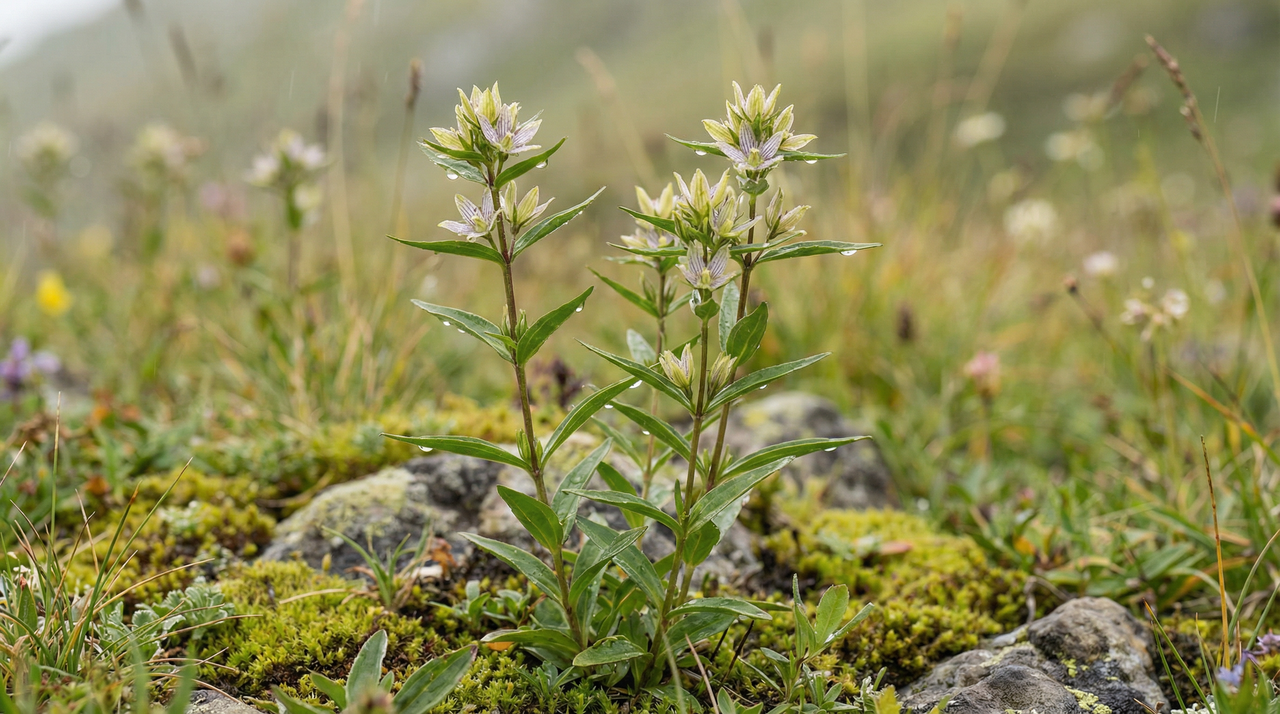
In person, chirata is an elegant, upright herb, typically 0.5 to 1.5 meters tall, with smooth or very lightly hairy stems that often carry reddish or purplish tones.[10] The leaves are opposite on the lower stem, lanceolate to ovate-lanceolate, 2 to 8 centimeters long, sessile, with entire margins and a clearly visible reticulate venation that you can trace with a fingernail, while higher up on the plant, leaves become alternate as the stem transitions into the inflorescence. The flowers are small (12 to 20 millimeters), ranging from greenish-yellow to bluish-purple, and arranged in open, branching terminal cymes; blooming runs from July to October, peaking during or just after the monsoon.[11] After flowering, the plant sets linear-oblong capsules about 1 to 1.5 centimeters long, each containing 100 to 200 tiny brown seeds with a finely reticulate surface.[12]
Traditional and Cultural Uses
The medicinal history of chirata stretches back to around 1000 to 500 BCE, when it appeared in the Charaka Samhita and Sushruta Samhita under the name "Kairata," classified as a Tikta (bitter) dravya prescribed for fevers, digestive disorders, skin conditions, liver and spleen ailments, and as a blood purifier.[13][14] That's a remarkably consistent therapeutic profile to carry across two and a half millennia.
The tradition doesn't stop with Ayurveda. In Tibetan Sowa Rigpa, chirata appears in the Four Tantras as a remedy for hot disorders, infections, and digestion. Unani practitioners used it as a febrifuge and digestive tonic, and numerous Himalayan ethnic groups, including the Sherpa, Tamang, Ladakhi, and Gorkha communities, incorporated it into treatments for malaria, jaundice, and intestinal parasites, sometimes within shamanic and spiritual healing contexts as well.[15][16] The whole plant was traded across the subcontinent for centuries before formal pharmacopoeia recognition arrived; it has been listed in the Indian Pharmacopoeia since 1955, with cultivation trials only beginning in the 1990s as wild stocks started showing the strain.[13][17]
Fun Facts and Conservation Status
One thing that trips up even experienced herbalists is identification. Early in my botanical studies I got turned around trying to distinguish a Swertia species from Kalmegh (Andrographis paniculata) on taste alone; both are aggressively bitter, and the confusion is understandable. Chirata is regularly misidentified with Swertia angustifolia and Kalmegh in the herbal trade, and the situation is complicated by the fact that the genus Swertia itself is polyphyletic; only recent molecular work has sharpened the boundaries around S. chirayita.[3][18] Flower color and seed surface texture are the details that resolve the question at close range.
The conservation picture has shifted considerably from older "Least Concern" assessments. Regional evaluations now classify chirata as Vulnerable to Critically Endangered in parts of India, Nepal, and Bhutan, driven squarely by medicinal demand that wild populations simply can't sustain.[19][20] In my work with medicinal-plant growers, I've seen how shifting even a small percentage of demand to cultivated stock can take real pressure off wild populations; that's why I always recommend verified cultivated chirata when sourcing for any purpose. Community management programs and in vitro propagation research are building the foundation for a more sustainable supply chain, and that's genuinely good news for a plant with this much history behind it.
Chirata Varieties and Sourcing
Notable Varieties and Cultivation Status
Unlike most medicinal herbs in the permaculture toolkit, chirata has no named commercial cultivars to choose from. None. What you'll find instead is a single species, Swertia chirayita, sourced from wild populations or from experimental cultivation plots, with researchers in India and Nepal actively working to select higher-potency lines for swertiamarin and amarogentin content.[21] That breeding work is genuinely promising, but it hasn't yet produced anything that functions like a distinct cultivar in the nursery sense. The distinction that matters right now is wild-harvested versus cultivated material: wild plants tend toward lower biomass but denser concentrations of key bitter compounds, particularly amarogentin, while cultivated material can improve yield and quality together if grown from high-potency selected seed.[22][23] I've noticed the same pattern with other intensely bitter medicinals I've worked with: wild material often has a sharper, more persistent bitterness on the tongue, which tracks with what the phytochemistry suggests. The cultivated path is the future here, both for consistent quality and for keeping pressure off dwindling wild stands.
Sourcing, Conservation, and Market Considerations
Swertia chirayita carries Vulnerable status on the IUCN Red List, reflecting decades of overexploitation and habitat loss across its native Himalayan range in India, Nepal, and Bhutan at elevations of 2,000 to 3,000 meters.[24][25] Cultivation is genuinely difficult: the plant demands cool temperatures, well-drained acidic soils, and high-altitude conditions that simply can't be replicated in a lowland garden.[26] Think of the sourcing challenge the way you'd approach other finicky alpine medicinals like certain gentians; the habitat specificity is the whole problem. That's why wild harvest has dominated trade for so long, with Nepal exporting roughly 20 to 30 tons annually, primarily to India, and why dry herb prices have risen 20 to 30 percent in recent years as demand climbs against a shrinking supply.[27][28]
If you want to grow chirata, your most realistic options are the Millennium Seed Bank through the Royal Botanic Gardens Kew, the Missouri Botanical Garden, or specialist medicinal-plant nurseries in India with alpine species programs.[29][30] Seed bank access often requires a research or institutional partnership, so plan ahead. For live plant material imported into the United States, USDA APHIS permits and inspection are required; dried or processed herb generally clears without permits if it meets sanitary standards.[31][32] I've navigated APHIS paperwork for other medicinal species and the advice is always the same: start the permit process earlier than feels necessary. When you do source material, ask for HPLC data confirming swertiamarin and amarogentin content; Ayurvedic Pharmacopoeia standards target 2 to 5 percent xanthones, and a reputable supplier will have that documentation ready.[33] Government and community cultivation programs through Nepal's Department of Plant Resources and India's National Medicinal Plants Board are actively working to expand cultivated supply and reduce pressure on wild populations.[26][34] Choosing cultivated stock when it's available is one concrete way a grower can support that shift.
Chirata Propagation and Planting (Swertia chirayita)
Growing chirata has taught me that this plant rewards patience and punishes shortcuts. The high market price for wild-harvested material isn't arbitrary; it reflects exactly how difficult the plant is to establish from scratch. Understanding why starts with the seed.
Seed Characteristics and Storage of Chirata
Chirata seeds are tiny, monoembryonic, and distinctly bitter, measuring just 0.5-1.8 mm, dark brown to black, with a thin membranous coat and a slightly tuberculate surface.[35][36] That bitterness is actually a useful identifier when you're sourcing material and wondering whether you have genuine Swertia chirayita or a look-alike. Germination rates are genuinely low: 20-50% under controlled nursery conditions, and only 5-15% in direct field sowing.[37][38] That's not a gardener's error; it's the plant's baseline, as dormancy mechanisms are the culprit, and freshness is your best counter-measure.
Chirata seeds behave orthodoxly in storage.[39] Dried to 5-10% moisture content and sealed in an airtight container at 4°C, they can stay viable for up to 15 years, with documented germination rates of 50-80% even after a decade under optimal cold storage.[40][41] I keep a backup packet in the refrigerator and run a simple rag-and-plate germination trial every two years just to confirm viability before I commit to a full nursery cycle. It takes ten minutes and saves a season of frustration.
Germination and Nursery Techniques for Chirata
Seeds germinate best at 15-25°C with 12-16 hours of light daily, and the sweet spot I've found is a controlled propagator sitting at 20-22°C.[42][43] In my experience, that setup consistently doubles the germination percentage compared to direct field sowing. Surface-sow onto moist propagation medium or filter paper and expect sprouts in 14-30 days. If you're working with older seed, cold stratification at 4°C for 4-6 weeks before sowing can meaningfully improve your odds. Himalayan-sourced commercial seed tends to be more variable than home-saved seed you've dried and stored yourself, so don't be discouraged by an uneven first tray.
Sow in spring or at the start of the monsoon season in nursery beds, then transplant once seedlings reach the 4-6 leaf stage or 5-15 cm in height, typically 4-10 weeks after germination.[44][45] From there, plan on 2-3 years before the plant reaches harvestable maturity, with a rosette forming in year one and flowering beginning in year two.[46][47] That long wait is precisely why wild harvesting has been so destructive; the plant simply can't regenerate fast enough to keep pace with demand. I mark my rows clearly and keep detailed season notes because the first-year rosette is easy to mistake for other Gentianaceae seedlings, and losing track of a planting you've been nursing for 14 months is not a pleasant experience. Vegetative propagation through stem or root cuttings roots in 4-6 weeks, but the time to first harvest remains the same 2-3 years, so it's a useful option for multiplying a proven specimen rather than a shortcut to yield.
Soil, Site, and Spacing Requirements for Chirata
Chirata is native to Himalayan slopes between 1,000 and 3,600 m elevation, which tells you nearly everything about what it needs underfoot: well-drained loamy or sandy-loam soil with 2-5% organic matter and a pH of 5.5-7.5, with 6.0-7.0 being optimal.[44][48] Drainage is the non-negotiable. I learned this the hard way growing in zone 9B, where summer rain events are relentless; I lost several young plants to root rot before I switched to raised beds amended with 30% perlite.[49][50] For containers, a mix of roughly 40-50% loam, 20-30% sand or perlite, 10-20% vermiculite, and 20% compost works well. Heavy clay is simply incompatible with this plant.
Light-wise, aim for morning sun with afternoon shade, or consistent dappled light.[51] In cooler USDA zones 5-7, the plant tolerates more direct sun; in warmer zones, shade protection in the afternoon becomes more critical. I test soil pH before every new planting because even a half-point drift affects the accumulation of bitter principles; amend with lime to raise pH or elemental sulfur to lower it.[52][53] Outside the right range, you're looking at nutrient lockout, chlorosis, and reduced medicinal potency -- a lot of work to end up with a weakened plant.
Transplanting, Spacing, and Establishment Tips
Mature plants reach 0.5-1.5 m tall with a 30-45 cm spread, and the standard spacing recommendation of 30-45 cm between plants and rows (around 20,000-30,000 plants per hectare at scale) reflects that growth habit well.[54][55] Because the plant is slow-growing, giving each individual its full allotment of space from the start pays dividends in root size and overall quality by year three.
Harden off seedlings carefully before transplanting into prepared beds, and keep pruning minimal: remove overcrowded or diseased leaves to maintain airflow, but otherwise leave the plant alone.[56][44] I rarely stake, but I'm always deliberate about spacing because crowded plantings in humid conditions invite exactly the foliar problems you want to avoid. The first eight to ten weeks after transplanting are the most critical window; get the drainage and shade balance right from day one, and the plant will reward you with slow, steady growth toward that eventual harvest.
Chirata Care Guide: Growing Swertia chirayita
Everything about caring for chirata comes back to one fundamental question: does your site feel like a Himalayan meadow? Not literally, of course, but the conditions that shaped this plant over thousands of years at 1,000-3,000 meters elevation are the conditions it still expects. Cool temperatures, moist but never waterlogged soil, good drainage, filtered light. Stray too far from any of those, and you don't just get a struggling plant; you get a plant with reduced medicinal value, which is the real cost of mismatched conditions here.
Sunlight Requirements for Optimal Growth and Medicinal Quality
Chirata needs 6-8 hours of direct sunlight daily to drive vigorous growth and support production of its key compounds like swertiamarin, but in cultivation, partial shade of 30-70% is often the better target, especially as plants mature.[57][58] That range reflects its native habitat along Himalayan forest margins where tree canopy softens direct exposure. Too little light and you get etiolated, pale stems with reduced medicinal output; too much unfiltered sun and the leaf edges scorch, bleach, and photosynthesis actually drops.[59][60] I've found with similar cool-climate medicinals that morning sun combined with dappled afternoon protection is the easiest way to thread that needle without constant repositioning or fussing. It's also forgiving enough that you don't need precision instruments; if the leaves look deep green and the plant isn't leaning hard toward the light source, you're probably close.
Watering Needs and Soil Moisture Management
The simplest watering rule for chirata: check the top inch of soil, and if it's dry, water. The plant prefers consistently moist, well-drained conditions and will tolerate a brief dry spell, but prolonged waterlogging leads quickly to root rot.[61][62] During the growing season, aim for 1-2 inches of water per week, scaling back to once weekly in cooler conditions where evaporation is slower.[63][64] Water at the base rather than overhead; the cool, humid conditions chirata prefers are also exactly the conditions that invite fungal problems when foliage stays wet.
Temperature Tolerance: Heat and Frost Considerations
This is where chirata's alpine origins create the most friction for lowland growers. Its native altitudinal range spans 1,000-3,000 meters, and it thrives at 15-25°C.[65] Above 28-30°C, seedlings begin wilting and scorching. Push past 35°C and photosynthesis can drop 40-60%, flowering fails, germination is suppressed, and, critically, levels of swertiamarin and amarogentin decline measurably.[66][67] The plant does upregulate heat shock proteins and antioxidant enzymes under stress, which buys it some time, but that's a short-term coping mechanism, not a reason to push it into hot summers.[68] Anyone growing it in warmer climates should use 30-70% shade cloth (heavier percentages for seedlings), mulch consistently to buffer soil temperature, and keep irrigation steady. ICAR breeding programs have produced heat-tolerant lines like 'Chirayata Local' hybrids from Uttarakhand and Sikkim, though these are research selections rather than widely available commercial varieties.[69] Think of chirata the way you'd think of a gentian: beautiful, useful, genuinely unforgiving of heat.
Feeding and Nutrient Management
Chirata evolved in nutrient-poor, well-drained Himalayan soils, which makes it a moderate feeder with a very specific vulnerability: excess nitrogen.[70][71] Push too much nitrogen and you get lush, fast-growing foliage that is measurably lower in the bitter compounds you're actually growing it for. I learned this lesson with other medicinal herbs years ago, and now I won't apply a nitrogen top-dressing without a soil test first. The research backs that instinct firmly.
For organic inputs, incorporate 10-15 tons/ha of farmyard manure or 5-8 tons/ha of vermicompost at planting; vermicompost has been shown to increase yield by 20-25%.[72][73] If using chemical fertilizers, phosphorus and potassium go in at planting, with nitrogen split across two or three applications at planting, 30 days, and 60 days after establishment.[74] A 5-10 cm mulch layer of pine needles or grass clippings reduces evaporation by 30-40% and suppresses weeds, and companion planting with nitrogen-fixing legumes supports the guild without overdosing the chirata directly.[75] Watch for interveinal chlorosis (iron deficiency) or general stunting (zinc deficiency), which are common in acidic soils; a foliar spray of 0.5% FeSO4 can correct iron issues and has been shown to boost root biomass by 20-30%.[76][77]
Frost Protection and Cold Hardiness
Chirata's high-altitude origins give it moderate cold tolerance, down to around -5°C to -10°C in established plants, placing it roughly in USDA zones 7-9 with some possibility of zone 6b survival.[78][79] Young plants and new spring shoots are considerably more vulnerable; seedlings should be protected any time temperatures threaten to drop below 0°C. Frost damage shows up as wilting, discoloration, and necrosis, and a hard freeze can set a young plant back significantly.[80][81] I've used fleece and cloches to protect gentian-family plants through unexpected late cold snaps, and the same approach works well for chirata; in genuinely frost-prone areas, overwintering young plants indoors is the safer call. In marginal zones I'd honestly suggest treating chirata as a tender perennial and starting fresh from seed if a hard winter takes it.
Pruning, Maintenance, and Seasonal Rhythm
Chirata doesn't demand much intervention to stay healthy. Pinch stem tips at around 15-20 cm height to encourage a bushier habit, stake any stems exceeding 40 cm to prevent lodging, and deadhead spent flowers if you're not saving seed.[82] Always use sterilized tools. Beyond that, the most important maintenance is understanding the plant's natural rhythm. Active vegetative growth surges through the monsoon months of July and August, flowering follows in September and October, and seed maturation completes by October-November.[83][84] I watch for those yellow-green flowers in early autumn as my cue that the plant is shifting energy from leaf production into its medicinal roots and stems, which aligns with optimal harvest timing. Working with that rhythm rather than against it, minimal pruning, no late-season feeding, and letting the plant complete its cycle, is the low-intervention approach that best preserves what makes chirata worth growing in the first place.
Harvesting Chirata (Swertia chirayita)
When to Harvest Chirata: Timing, Growth Stages, and Peak Bitterness
Chirata gives you clear signals when it's ready. By the second year of growth, the plant stands 60-100 cm tall with bright green leaves, and flowering runs through July and August.[85][86] You don't harvest at peak bloom though. The window that matters comes 60-90 days after anthesis, once seeds have developed, which puts you squarely in the September-to-November post-monsoon season in native Himalayan stands.[87][88] That timing isn't arbitrary. Amarogentin and related iridoid glycosides peak precisely during this flowering-into-fruiting phase, so harvesting early genuinely costs you medicinal potency.[89][90]
I always seek Himalayan-origin seed when sourcing planting material, and this is exactly why. Populations from Nepal and Bhutan can produce 1.5-2 times more amarogentin than plants grown at lower Indian elevations, so provenance genuinely shapes what you're harvesting before you even pick up a knife.[89][91] Altitude and soil will shift the calendar slightly in cultivation, so treat phenology (height, leaf color, seed set) as your primary cue rather than strict calendar dates. The whole aerial portion is cut at ground level; roots can be harvested separately if you want them.[87][92]
Harvest Technique, Yield, Flavor Profile, and Post-Harvest Handling
The first time I tasted a small piece of dried chirata, it stopped me. I've worked with gentian and wormwood and considered myself reasonably comfortable with medicinal bitters, but chirata is something else. The bitterness lingers and lingers, driven by amarogentin concentrations that can reach up to 2% dry weight under optimal conditions, alongside swertiamarin.[93][94] The fresh aerial parts feel slightly succulent in hand, but that changes quickly through drying into something distinctly fibrous and leathery.
How you dry it matters enormously. I use a shaded drying area with good airflow and keep temperatures below 40°C, which consistently preserves more potency than faster sun-drying. Heat or prolonged sun exposure can degrade up to 30% of the bitter compounds, and for a plant you've spent two-plus years growing, that's a loss worth avoiding.[93][95]
Yields are modest, and that's fine. Chirata's role is medicinal, not culinary, so quality over volume is the only metric that makes sense here.[64] I value it in a medicinal guild for its functional potency, not its kitchen potential. I once tried incorporating a small amount of powdered chirata into a digestive tea blend for clients which confirmed that its intense astringency demands specialized handling.[64] That experience clarified something: this plant demands respect on its own terms.
Chirata Preparation and Uses
Chirata as a Bitter Medicinal Herb
Chirata is not a kitchen herb. You won't find it in curry blends or herbal teas at your local café. It's overwhelmingly a medicinal plant, used in Ayurvedic and Tibetan systems in small, purposeful doses as a bitter tonic.[96][97] The aerial parts, leaves, stems, and flowers are the plant parts typically prepared, and the reason people endure the preparation at all comes down to amarogentin, a secoiridoid detectable at concentrations as low as 50 parts per billion and considered one of the most bitter natural compounds known.[98][99] The broader phytochemical profile, xanthones, swertiamarin, swertisin, supports the traditional uses for fever, liver ailments, digestion, and inflammation that keep practitioners reaching for it despite the taste.[96][100] The seeds are not eaten and never have been; they're for propagation only.
Traditional Preparations and Dosage
The most common preparation is a simple decoction or infusion: 1-2 grams of dried aerial parts steeped in hot water for 5-10 minutes, often with ginger and honey stirred in to make it palatable.[101][102] In my work with bitter tonic herbs, I've learned that ginger isn't just a flavor fix; it genuinely helps the digestion receive a cooling, intensely bitter compound without protest. Dairy-based kwath preparations follow the same logic, using fat and warmth to cushion the edge. Standard dosage guidance puts chirata powder at 1-3 grams daily, decoctions at 60-120 ml twice daily, and tinctures at 1-2 ml taken two to three times per day.[103][104] I personally start at the low end of any range and only adjust if the preparation is well tolerated. Supporting cultivated rather than wild-harvested material also matters here. Sustainable collection happens post-monsoon, in September and October, under community-managed protocols designed to reduce pressure on already stressed wild populations.[105]
Flavor, Safety, and Practical Considerations When Using Chirata
The bitterness is sharp, persistent, and not something you adjust to quickly. Traditional pairings with ginger and honey aren't optional niceties; they're how people have managed this herb for centuries without abandoning it.[101] Safety is where I get direct with anyone asking how to use chirata powder or extract: exceeding 2-3 grams of fresh material daily risks nausea, vomiting, and potential liver stress, and swertiamarin at high concentrations is a known gastrointestinal irritant.[96] I keep my recommendations conservative because the research on GI irritation is clear, and this is not a plant where experimentation with larger amounts makes sense. One more thing every careful user should know: adulteration in the chirata herbal trade is common, with Enicostemma littorale, Gentiana kurroo, and related Swertia species all appearing as substitutes.[106] I always verify sourcing before recommending any Swertia chirata extract or swertia japonica extract to anyone. Buy from suppliers who test for identity, and whenever possible, support cultivated sources. The intense bitterness is both this plant's gift and its boundary; it's medicine taken with respect, in small amounts, for good reason.
Chirata Health Benefits and Medicinal Uses
The nickname "King of Bitters" isn't marketing—chirata earns it through sheer biochemical intensity, and that intensity is precisely what 2,000 years of Ayurvedic, Unani, Siddha, and Indian folk medicine have been working with. Across those traditions, Swertia chirayita has been prescribed as a bitter tonic (Tikta in Ayurveda) for fever, liver disorders, digestive complaints, skin diseases, malaria, and jaundice, deployed as a blood purifier and general detoxifier in small, precise doses.[107][108][109] I always tell clients who are new to bitter herbs that chirata sits in a different league from something like gentian root. They share the same tonic tradition of stimulating digestion and liver function, but Himalayan-sourced chirata material harvested at peak flowering has a depth of effect I haven't encountered in most Western bitters.
Traditional and Modern Medicinal Applications
The traditional formulations are straightforward: 1-3 g of dried herb powder or 5-10 ml of decoction daily, standardized to roughly 0.5-1% swertiamarin, typically taken over one to two weeks.[109][110] Modern pharmacology is now providing the mechanistic language for what practitioners observed empirically across those centuries.
The plant contains over 100 identified compounds, predominantly secoiridoid glycosides, with amarogentin (the principal bitter principle), swertiamarin, sweroside, gentiopicrin, and xanthones like swerchirin and methylswertianin among the most studied.[111][112] What strikes me about the research is how directly these compounds map onto traditional indications. Anti-inflammatory activity mediated through NF-κB pathway inhibition and reduction of pro-inflammatory cytokines TNF-α and IL-6 explains the fever and skin disease applications.[113][114] The antioxidant effects, driven by flavonoids and xanthones activating the Nrf2 pathway and increasing SOD and catalase activity, sit squarely behind the liver-protective reputation.[113]
The hepatoprotective data is some of the most compelling. Animal models of carbon tetrachloride and paracetamol-induced liver injury show meaningful reductions in ALT and AST levels, with swertiamarin contributing significantly through Nrf2 activation and inhibition of lipid peroxidation.[115][116] The antidiabetic potential also has solid mechanistic grounding: α-glucosidase inhibition at IC50 values of 50-100 μg/mL, improved insulin sensitivity, and 20-30% reductions in postprandial glucose in animal studies, with small clinical trials suggesting improved glycemic control in type 2 diabetes.[117] Beyond these, antimicrobial activity against E. coli and Candida albicans, antimalarial effects targeting even chloroquine-resistant Plasmodium falciparum strains, analgesic and antipyretic effects comparable to aspirin in rodent models, in vitro cytotoxicity against cancer cell lines, and xanthine oxidase inhibition with potential relevance to gout management have all been documented.[118][119][112][94]
Most of this evidence is preclinical, derived from animal studies and in vitro work. Systematic reviews consistently call for larger, well-designed randomized controlled trials before firm therapeutic claims can be made.[120][121] I'm not running clinical trials in my garden. But the alignment between 2,000 years of observed tonic effects and the emerging mechanistic picture is hard to dismiss, and I always encourage clients who want to explore medicinal use to do so with a qualified practitioner rather than on their own.
Key Phytochemicals and Their Distribution
Where you harvest from the plant, and when, matters enormously for potency. Roots carry the highest amarogentin concentration, 1-2% dry weight; leaves are richer in xanthones (0.3-0.6%) and swertiamarin (0.2-0.4%); stems fall in the middle; flowers contain modest amarogentin around 0.2%; and seeds contribute minimally.[122][123][124] So a root-focused preparation and a leaf tea are genuinely different medicines from the same plant.
Environmental variables drive potency just as much as plant-part selection. Plants grown or wild-harvested above 1,500 meters consistently produce the most potent extracts I've encountered, and the research backs that up: amarogentin levels can climb to 2-4% at higher altitudes (1,500-3,000 m).[125] Harvesting at the flowering stage in late summer to early autumn maximizes levels, acidic loamy soils in the pH 5-6.5 range optimize content, and well-managed cultivation practices can push yields 20-50% above baseline.[126][127][128] Two-year-old plants appear to hit the sweet spot for secondary metabolite accumulation as well.[129] For growers working at lower elevations, these variables are important levers: you may not have the altitude, but soil pH and harvest timing are within your control.
Nutritional Profile of Chirata
Chirata is medicine, not food, and that framing matters for how you interpret its nutritional data.[110] Nobody is eating it by the bowlful. The pharmacology, not the macronutrients, is the story. That said, the mineral profile of the dried aerial parts is genuinely respectable and does lend some credibility to its reputation as a systemic tonic: approximately 2,500 mg potassium, 1,200 mg calcium, 450 mg magnesium, 35 mg iron, and 8 mg zinc per 100 g dry weight, with moderate vitamin C (20-50 mg) and trace provitamin A.[130][131]
Processing affects what reaches you. Shade drying below 40°C best preserves the bioactives; sun drying causes a 20-30% loss of key compounds, and boiling for decoctions degrades 15-40% of vitamin C, though minerals remain more stable.[132][133] At therapeutic dose ranges, the contribution to daily nutritional needs is minor regardless, but for anyone thinking about the whole-plant tonic picture, knowing that shade-dried material is the standard worth insisting on is useful.
Safety, Dosage, and Contraindications
The reassuring starting point is that acute toxicity is low: the LD50 in rodents exceeds 2,000 mg/kg, and the traditional Ayurvedic dosage of 1-3 g of dried powder per day in two to three divided doses reflects centuries of calibrated use, not guesswork.[134][135] Stay within that range and keep courses short, typically one to two weeks, and you're working within a well-established safety window.
Push past 3 g per day and the bitterness compounds become a liability: nausea, vomiting, diarrhea, and abdominal pain are common GI responses.[104][136] The pharmacological literature predominantly shows hepatoprotective effects at standard doses, but chronic high-dose use is a different situation and one that warrants real caution. I always tell clients: with potent bitter herbs, starting low and being patient is the only sensible approach.
The pregnancy contraindication is non-negotiable. Traditional Ayurvedic texts and the modern pharmacological literature are in alignment here: chirata has documented emmenagogue, uterotonic, and potential abortifacient effects.[137][138] I do not recommend chirata during pregnancy or while trying to conceive, full stop. Anyone on antidiabetic or antihypertensive medications also needs to proceed carefully given its additive blood-sugar and blood-pressure lowering effects.[139]
One practical sourcing note: adulteration with lower-potency species like Swertia angustifolia or Andrographis paniculata is a real problem in the market.[105][140] I've encountered adulterated batches. HPLC-verified or pharmacopoeia-grade material is worth the extra effort and cost if you want the amarogentin levels that the research actually describes.
Chirata Pests and Diseases
Natural Chemical Defenses and Their Limits
There's something almost poetic about chirata's situation: the same secoiridoids, xanthones, swertiamarin, and amarogentin that make it so therapeutically potent also give it a genuine, if incomplete, line of defense against insects.[141][104] The bitterness that makes this plant a storied Ayurvedic herb deters a lot of opportunistic feeders. I've noticed something similar with gentian and other Gentianaceae members I grow: the intensely bitter ones tend to sit untouched while sweeter plants nearby get hammered. But that defense has a ceiling, and cultivated chirata bumps against it fast. In the wild at high altitude, the resistance holds up reasonably well; bring the plant into a garden setting with higher humidity and denser planting, and the chemical armor starts showing its gaps, especially against soil-borne fungi that couldn't care less about bitter taste.[142][143]
Common Pests of Chirata
Aphids are usually the first visitors, and in my experience with bitter herbs they arrive exactly when humidity lingers after rain. That tracks with what the research shows: pest pressure spikes during the monsoon season in Himalayan cultivation zones, when warm, wet conditions favor rapid population buildup.[144] The main culprits are Myzus persicae and various Aphis species, but the pest picture is broader than just sap-suckers. Chewing insects, including caterpillars, leaf beetles, and leaf rollers, work the foliage; stem borers and cutworms go after structural tissue; spider mites show up under drier stress.[145][146] Combined losses can reach 30% of harvestable biomass, which is a serious number for a plant that already takes two to three years to reach harvest size. Worse, the feeding wounds left by insects become entry points for Alternaria and Cercospora leaf spot fungi, so a pest outbreak rarely stays a pest problem for long.[147] Good airflow and adequate plant spacing are your first line of defense, because a healthy, well-ventilated plant handles moderate insect pressure without cascading into secondary disease.
Major Diseases and Environmental Triggers
The fungal disease roster is what I'd call the real threat in cultivation. Fusarium root rot and damping-off are the seedling killers; I lost an entire flat of chirata starts in my first attempt because I overwatered into a fine-textured mix with poor drainage, and Fusarium took every one of them within a week. Once plants are established, the threats shift to Alternaria and Cercospora leaf spots, powdery mildew, and rust on the foliage, plus bacterial wilt (Ralstonia solanacearum) and occasional mosaic virus.[148][71] The environmental triggers are predictable: humidity above 80%, temperatures in the 20-25°C range, and any waterlogging or compaction around the roots.[149][150] Severe fungal events can push crop losses past 30%, with marketable yield sometimes falling below 50%. For a slow-maturing medicinal, that's a significant blow. Raised beds solved my damping-off problem completely, and they'll likely solve yours too.
Integrated Management Strategies for Gardeners
I don't rely on a spray schedule with chirata. My approach is prevention: start with disease-free seed, use raised beds with excellent drainage, space plants at least 30 by 30 centimeters for airflow, rotate the planting site each cycle, and remove debris promptly.[151][152] For biological support, Trichoderma inoculant goes into the soil mix at transplanting time, ladybugs handle early aphid pressure, and neem-based sprays cover the gap between biological and chemical intervention if things escalate. Targeted low-impact chemicals are a last resort, not a routine.[153] No disease- or pest-resistant cultivars exist yet, which is the honest reality of where this crop stands commercially. CIMAP and similar institutions are actively selecting wild genotypes for improved foliar resistance and medicinal yield, so that may change.[154][155] In the meantime, I select the most vigorous seedlings from each season's germination and save seed from those, which amounts to informal on-farm selection. It's slow work, but it's how growers have always improved their planting stock before breeders caught up.
Chirata in Permaculture Design
Chirata is not a plant you slot into a design the way you might tuck in a comfrey or a borage. Every decision about where and how to grow it flows from one central fact: this is a high-elevation Himalayan specialist, and it will remind you of that constantly. Working with several Gentianaceae relatives over the years, I've learned that the single hardest thing to replicate is consistent soil moisture without waterlogging, and chirata makes that lesson especially clear. Get it right and you have a remarkable medicinal herb in your guild, but push it into the wrong conditions and it just quietly declines.
Climate Requirements and USDA Hardiness Zones
In its native range, Swertia chirayita grows at 1,000 to 3,000 meters across the temperate and subalpine Himalayas, in cool, moist conditions with humidity running 70 to 90 percent, well-drained loamy soils, and annual rainfall between 1,000 and 2,500 mm.[156][157][158] That combination of ambient chill, humidity, and sharp drainage is the template you're trying to match. The optimal temperature window is 15 to 25°C during the growing season; it can tolerate a range of 10 to 30°C, but anything above 30°C causes real stress and will quickly sap the plant's vigor.[159][160]
In my designs I treat chirata as a cool-climate specialist. Above 30°C it loses vigor fast, which is why I only recommend it for shaded, north-facing microclimates or higher elevations. For North American growers, USDA zones 6 through 9 cover the most realistic range, though some sources stretch that to zones 5 through 10 with adequate winter protection.[48][161] Young plants are especially frost-sensitive; established ones can handle lows around -10 to -15°C with mulching or a cold frame in place.[48][44] The Pacific Northwest and higher elevations in the Rockies are genuinely promising; most of the lowland South and Southwest are not. Outside the Himalayas, cultivation depends entirely on how faithfully you can mimic those cool, humid, high-elevation conditions, and most successful trials beyond India have involved experimental setups rather than casual garden beds.[162][42]
Ecological Functions and Pollination
What chirata offers pollinators is frequently overlooked in medicinal-plant discussions. The flowers are small, only 3 to 5 mm, but they're nectar-rich, greenish-yellow to bluish-purple, and actively visited by bees (both Apis species and bumblebees), butterflies, and syrphid flies.[163][164] It functions a bit like a mountain version of anise hyssop for bees: not showy from a distance, but reliably productive from mid-summer into autumn. Flowering runs July through October,[165] which fills a late-season gap that matters in any pollinator-supporting guild.
The plant is protandrous and self-incompatible, meaning it actively promotes outcrossing rather than setting seed on its own.[163] Natural seed set ranges from 20 to 60 percent under good conditions, but drops below 10 percent where pollinator density is low or habitat is fragmented.[165] Manual pollination can push seed set up by as much as 40 percent, and in small trial plantings I've observed this technique make the difference between a productive patch and one that barely replaces itself.[165] Pollination success is also sensitive to altitude, local habitat connectivity, temperature, and humidity,[166] which is a useful reminder that any design supporting this plant should prioritize native pollinator habitat nearby rather than treating the plant in isolation.
Forest Layer Placement and Guild Integration
Chirata belongs in the herbaceous layer, which in its native context means open grassy slopes, alpine meadow edges, and the light-dappled margins of coniferous or mixed forest.[167] It reaches 30 to 150 cm in height and prefers full sun to partial shade; deep shade is a hard limit.[168] In a food forest context, that means the outer canopy edge or a gap planting rather than anything tucked under a heavy tree canopy.
Specific companion-planting data for chirata is still pretty thin, which I'll be honest about rather than paper over. Evidence for allelopathy is limited and mild, and formal guild trial data is sparse.[168][169] What I have seen is that it holds its own when planted alongside other moisture-loving alpine herbs and low-growing grasses, which also help with soil stability in meadow-edge plantings. Think of it as part of a conservation-minded medicinal guild rather than a high-yield production plant, grouped with species that share its preference for cool, freely draining, moderately humid conditions.
The conservation case for intentional cultivation is genuinely compelling. Wild chirata populations are under significant pressure from overharvesting,[167] and I prefer sourcing and growing it in designed guilds rather than relying on wild-harvested material. Bringing it into cultivation within agroforestry or high-altitude medicinal-plant systems reduces that pressure while contributing real pollinator habitat and on-site biodiversity.[170] That dual function, medicinal yield plus ecological contribution, is exactly the kind of reasoning that earns a plant a place in a thoughtful permaculture design.
The Bitter Plant That Humbled Me
I lost my first chirata seedlings to a warm spell in late spring, and my second batch to overwatering. What finally worked felt less like skill and more like the plant deciding I'd earned it. I keep a small patch going mostly as a reminder that some medicines come from places that don't accommodate us; we accommodate them.
Sources 170
- Phytochemistry and pharmacology of Swertia chirayita ↩
- Swertia chirayita IUCN Red List Assessment ↩
- Swertia chirayita ↩
- Ecological Niche of Swertia chirayita ↩
- Swertia chirayita: The Himalayan Herb of Medicinal Importance ↩
- Population Dynamics of Swertia chirayita in the Indian Himalaya ↩
- Population Dynamics and Conservation of Swertia chirayita in Nepal ↩
- Genetic Diversity and Population Structure of Swertia chirayita ↩
- IUCN Red List Assessment: Swertia chirayita ↩
- Swertia chirayita ↩
- Flora of China, Volume 16 ↩
- Flora of China: Swertia chirayita ↩
- Swertia chirayita: The Himalayan Herb of Ayurveda ↩
- The Ayurvedic Pharmacopoeia of India ↩
- Medicinal Plants in Tibetan Medicine ↩
- Traditional uses and pharmacological properties of Swertia chirayita: A review ↩
- Indian Pharmacopoeia 2022 ↩
- Revision of the genus Swertia (Gentianaceae) ↩
- A Review of Swertia chirayita as a Traditional Medicinal Plant - PMC ↩
- Mini Review on In Vitro Propagation of Swertia chirayita ↩
- Genetic Diversity and Breeding Potential of Chirayita ↩
- Medicinal Yield and Quality of Cultivated vs Wild Swertia chirayita ↩
- Cultivation and Conservation of Swertia chirayita ↩
- IUCN Red List: Swertia chirayita ↩
- IUCN Red List: Swertia chirayita ↩
- Cultivation and Conservation of Swertia chirayita in Nepal ↩
- Medicinal Plants Trade in Nepal: Focus on Chirayita ↩
- Market Analysis of Himalayan Medicinal Plants ↩
- Swertia chirayita ↩
- Millennium Seed Bank: Swertia chirayita ↩
- Plant Import Information ↩
- Plants for Planting Manual ↩
- Quality Standards for Chirayata (Swertia chirayita) ↩
- National Medicinal Plants Board Guidelines for Cultivation ↩
- Flora of China: Swertia chirayita ↩
- Morphological Characterization of Swertia chirayita Seeds ↩
- Propagation and Cultivation Practices of Medicinal Plants: Swertia chirayita ↩
- Seed Germination and Seedling Establishment of Swertia chirayita ↩
- Seed Storage Behaviour of Swertia chirayita ↩
- Conservation of Swertia chirayita: Ex Situ Approaches Including Seed Banking ↩
- Germination and Viability of Swertia chirayita Seeds ↩
- Cultivation of Medicinal Plants in the Himalayas - ICIMOD Report ↩
- Germination Ecology of Swertia chirayita in the Indian Himalaya ↩
- Swertia chirayita Cultivation Guide - ICAR ↩
- Horticultural Guidelines for Medicinal Plants ↩
- Cultivation of Chirayita (Swertia chirayita): A Medicinal Plant ↩
- Swertia chirayita: An Important Medicinal Plant of Himalaya ↩
- Swertia chirayita - Useful Tropical Plants Database ↩
- Cultivation and Propagation of Swertia chirayita ↩
- Agronomy of Chirayita (Swertia chirayita) ↩
- Swertia chirayita (Chirayata) ↩
- pH Effects on Nutrient Uptake in Swertia Species ↩
- Soil Requirements for Medicinal Herbs in India ↩
- Cultivation of Chirayata (Swertia chirayita) ↩
- Agrotechniques for Swertia chirayita ↩
- Medicinal Plant Cultivation Guide: Swertia chirayita ↩
- Cultivation of Chirayita (Swertia chirayita) ↩
- Cultivation Practices for Medicinal Plants: Chirayata ↩
- Light Requirements for Himalayan Herbs ↩
- Missouri Botanical Garden Plant Finder ↩
- Flora of China – Swertia chirayita ↩
- Kew Gardens – Plants of the World Online ↩
- Swertia chirayita: Cultivation and Propagation ↩
- Swertia chirayita: A Review on Phytochemistry and Pharmacology ↩
- Agro-techniques for Cultivation of Swertia chirayita ↩
- Effects of Heat Stress on Medicinal Plants: A Case Study of Swertia chirayita ↩
- Physiological Responses of Swertia chirayita to Heat Stress in Seedlings ↩
- Impact of Abiotic Stresses on Medicinal Plant Swertia chirayita ↩
- Cultivation Practices of Swertia chirayita ↩
- Swertia chirayita: Botanical Description and Ecology ↩
- Cultivation Guide for Swertia chirayita ↩
- Effect of Organic Manures on Swertia chirayita Yield ↩
- Standardization of Agro-Techniques for Swertia chirayita ↩
- Effect of Nutrients on Growth and Yield of Swertia chirayita ↩
- ICAR Guidelines for Medicinal Plants: Nutrient Management ↩
- Micronutrient Management in Cultivation of Swertia chirayita ↩
- Fertilization Studies for Medicinal Herb Swertia chirayita in Hilly Regions ↩
- Swertia chirayita ↩
- Cultivation of Medicinal Plants: Swertia chirayita ↩
- Horticultural Guidelines for Temperate Medicinal Herbs ↩
- Agro-techniques for Swertia chirayita in Subtropical Regions ↩
- Swertia chirayita Fact Sheet ↩
- Phenology and Reproductive Biology of Swertia chirayita ↩
- Seasonal Growth Patterns of Gentianaceae in High Altitudes ↩
- Swertia chirayita: An Important Medicinal Plant of Himalaya ↩
- Swertia chirayita: A Review on Phytochemistry and Pharmacology ↩
- Phenological Studies and Harvesting Time Optimization for Swertia chirayita ↩
- Harvesting and Post-Harvest Management of Medicinal Plants in Nepal ↩
- Geographical Variation in Iridoid Glycosides of Swertia chirayita ↩
- Chemical Composition and Seasonal Variation of Swertia chirayita ↩
- Amarogentin Content and Regional Differences in Swertia chirayita ↩
- Swertia chirayita: The Medicinal Plant of Himalaya - Cultivation and Propagation ↩
- Pharmacognostic and Pharmacological Properties of Swertia chirayita: A Review ↩
- Amarogentin: A Potent Bitter Principle from Swertia chirayita ↩
- Effect of Drying on Bioactive Compounds in Swertia chirayita ↩
- Swertia chirayita: A Review on Phytochemistry and Pharmacology ↩
- Ethnobotanical Survey of Medicinal Plants in Nepal: Focus on Swertia chirayita ↩
- Swertia chirayita (Roxb. ex Flem.) Karst.: A Comprehensive Review on Ethnopharmacology, Phytochemistry and Pharmacology ↩
- The Bitter Taste of Medicinal Plants: A Review ↩
- Medicinal Uses and Nutritional Aspects of Chirayata ↩
- Swertia chirayita: A Review on Phytochemistry and Pharmacology ↩
- Traditional Tibetan Medicine: Chirayita Recipes ↩
- Swertia chirayita: A Review on Traditional Uses, Phytochemistry and Pharmacology ↩
- Swertia chirayita: The Himalayan Herb ↩
- Plants of the World Online - Swertia chirayita ↩
- Adulterants and Substitutes of Swertia chirayita in Indian Herbal Market ↩
- Pharmacological Review of Swertia chirayita ↩
- Traditional Uses of Swertia chirayita in Ayurveda ↩
- Ayurvedic Pharmacopoeia of India, Volume I ↩
- Swertia chirayita: Ethnopharmacological Uses and Phytochemical Profile ↩
- Pharmacological Review of Swertia chirayita ↩
- Amarogentin: A Key Bioactive from Swertia chirayita ↩
- Anti-inflammatory and Antioxidant Activities of Swertia chirayita ↩
- Amarogentin and its Anti-inflammatory Mechanisms ↩
- Hepatoprotective and Antidiabetic Effects of Swertia chirayita ↩
- Hepatoprotective Effects of Swertiamarin via Nrf2 ↩
- Antidiabetic Potential: Enzyme Inhibition ↩
- Antimicrobial and Analgesic Properties of Swertia chirayita ↩
- Anticancer Effects and Apoptosis Induction ↩
- Traditional Uses and Clinical Trials of Chirayata ↩
- Clinical Trials on Swertia chirayita for Malaria and Diabetes ↩
- Quantitative determination of amarogentin, a bitter principle of Swertia chirayita by HPLC. ↩
- Distribution of xanthones in Swertia chirayita: A comparative study of different plant parts. ↩
- Secoiridoid glucosides from Swertia chirayita and their distribution in plant organs. ↩
- Variation in Chemical Constituents of Swertia chirata at Different Altitudes ↩
- Effect of Harvesting Stage on Secondary Metabolites in Swertia chirayita ↩
- Influence of Soil Properties on Amarogentin Content in Swertia Species ↩
- Cultivation Practices for Enhancing Bioactive Compounds in Swertia chirayita ↩
- Ontogenic Variation in Secondary Metabolites of Swertia chirayita ↩
- Nutritional Composition of Some Underutilized Wild Plants ↩
- Antioxidant Activity and Vitamin Content in Chirayata (Swertia chirayita) ↩
- Effect of Drying Methods on Phytochemical Constituents of Swertia chirayita ↩
- Nutrient Retention in Traditional Preparations of Swertia chirayita ↩
- Pharmacological Review of Swertia chirayita ↩
- Ayurvedic Pharmacopoeia of India, Volume I ↩
- Safety and Toxicity Evaluation of Swertia chirayita ↩
- Herbal Medicine Safety in Pregnancy: Focus on Bitter Herbs ↩
- Swertia chirayita: Ethnopharmacological uses, chemical constituents and pharmacological profile ↩
- Ayurvedic Uses and Precautions of Chirayata (Swertia chirayita) ↩
- IUCN Red List - Swertia chirayita ↩
- Bioactive Compounds in Swertia chirayita and Their Role in Pest Resistance ↩
- Swertia chirayita: An Overview of Its Cultivation and Pest Management ↩
- Journal of Ethnopharmacology - Swertia chirayita cultivation challenges ↩
- Insect Pests of Temperate Medicinal Herbs in South Asia ↩
- Insect Pests of Medicinal Herbs in the Himalayas ↩
- Pests and Diseases of Swertia chirayita in Natural Habitats and Cultivation ↩
- Fungal Diseases Affecting Chirayata (Swertia chirayita) in India ↩
- Diseases of Swertia chirayita: A Review ↩
- Diseases of Medicinal Plants in Himalayas ↩
- Diseases of Swertia chirayita and Their Management ↩
- Integrated Pest Management for Medicinal Plants in the Himalayas ↩
- Pest Management in Swertia chirayita Cultivation ↩
- Medicinal Plant Information System: Swertia chirayita Disease Management ↩
- Breeding Strategies for Medicinal Plants: Case of Swertia chirayita ↩
- Horticultural Interventions for Swertia chirayita ↩
- Climate Suitability for Swertia chirayita in the Himalayas ↩
- Ecological Requirements and Conservation of Swertia chirayita ↩
- Habitat and Distribution of Chirayata (Swertia chirayita) in the Indian Himalaya ↩
- Cultivation Practices of Swertia chirayita ↩
- Agro-techniques for Swertia chirayita ↩
- Swertia chirayita - Missouri Botanical Garden ↩
- Swertia chirayita: An Overview ↩
- Pollination Biology and Breeding System of Swertia chirayita ↩
- Insect Pollinators of Himalayan Medicinal Plants ↩
- Manual Pollination for Enhancing Seed Production in Swertia chirayita ↩
- Conservation and Pollination Studies of Himalayan Medicinal Plants ↩
- Swertia chirayita: An Important Medicinal Herb of Himalaya ↩
- Ecological Distribution of Swertia chirayita in the Himalayas ↩
- Medicinal Plants of the Himalaya: Interactions and Uses ↩
- Agroforestry Potential of Medicinal Plants in the Indian Himalaya ↩