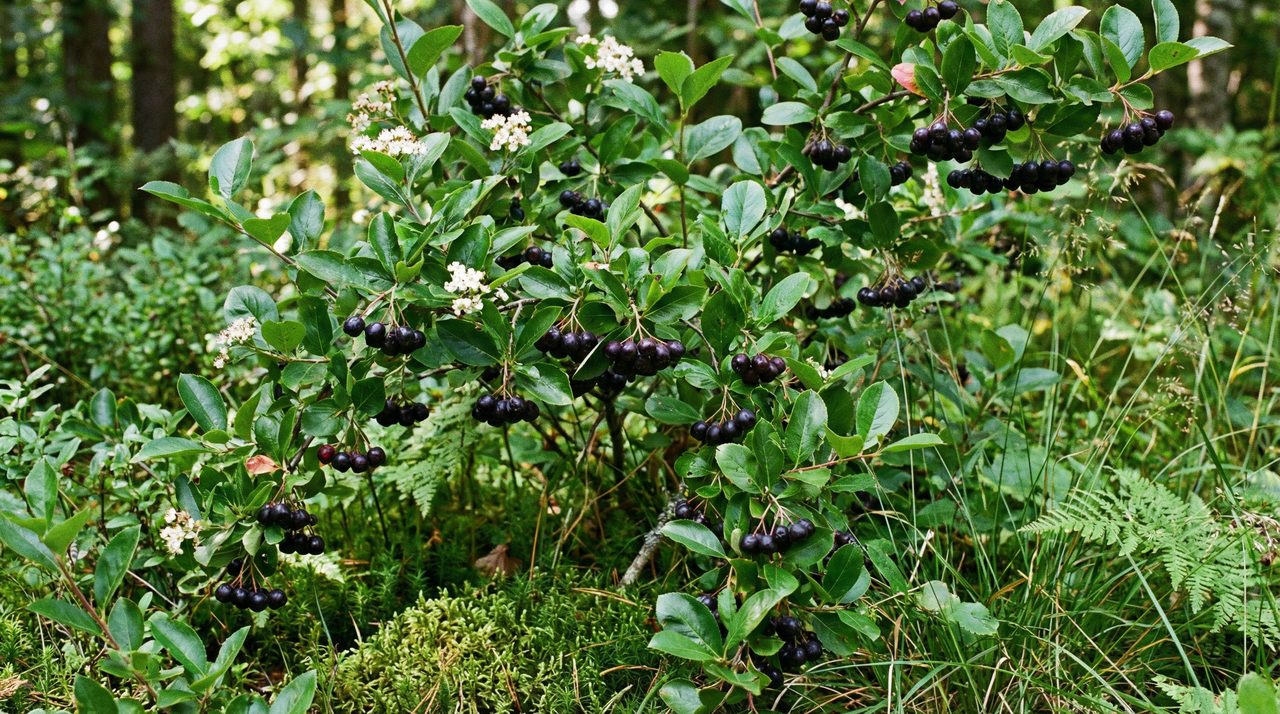
The first time I popped a ripe chokeberry straight off the branch, I made a face I'm not proud of. This is a berry that has been used as food for thousands of years, one that European growers now cultivate on a commercial scale and sell as a premium health product, and my immediate reaction was to spit it out. That contradiction sat with me for a long time. Here's a plant with more anthocyanins per gram than blueberries, elderberries, or açaí[1], a shrub so tough it shrugs off -40°F winters and grows happily in the wet, compacted soil that kills half my other plants. And its fresh fruit tastes like a mistake.
What nobody tells you is that the astringency is basically the whole point. Those same tannins and pigments that make your mouth pucker are the compounds that drew Native American tribes to this plant for centuries and that now have researchers genuinely excited about cardiovascular and metabolic applications. The chokeberry doesn't apologize for being intense. Once I stopped trying to eat it like a blueberry and started treating it like the ingredient it actually is, everything changed. This is one of the most rewarding plants I've worked with in a food forest, and getting there just required relearning what "useful" looks like.
Chokeberry Origin, History, and Botanical Background
If you're new to chokeberry, the first thing to understand is that this is a genuinely North American plant. Not domesticated in Asia, not improved from a European landrace. Aronia melanocarpa evolved here, in the bogs and forest margins of eastern North America, and carries that wild heritage in every thorny-cold-tolerant, stubbornly suckering inch of it.
Botanical Characteristics and Native Range of Aronia melanocarpa
Black chokeberry's native range runs from Nova Scotia and New Brunswick south to Florida and west into eastern Texas and central Oklahoma, spanning humid continental and subtropical climates.[2][3] That sweep tells you a lot about its tolerance for climatic variation. In the wild it gravitates toward wetlands, bogs, swamp edges, and disturbed sites, growing as a multi-stemmed suckering shrub typically three to eight feet tall, sometimes reaching fifteen feet in ideal conditions.[4][2] It spreads via rhizomes and fibrous roots into dense thickets, which I've experienced firsthand as something requiring early management. I learned to mark the colony boundaries in the first couple of seasons because the suckers don't announce themselves politely before crossing into adjacent plantings.
The foliage is dark green, obovate, and finely serrated, turning brilliant red-purple in fall with enough reliability that I use it as a seasonal marker in the garden.[2][5] Flowers are small, white, five-petaled clusters in spring, followed by glossy black pomes five to twelve millimeters across. Those berries are what give the genus its common name: put one in your mouth raw and the name "chokeberry" makes immediate, puckering sense. The related red chokeberry (Aronia arbutifolia) and purple chokeberry (Aronia prunifolia) share much of this profile, reaching six to ten feet with persistent red or purple-black fruit respectively, both hardy in zones 3-9.[6][7]
From a landscape-planning standpoint, the life-history facts matter. Black chokeberry takes three to six years from seed to reach reproductive maturity, which is slower than elderberry or serviceberry, so I always set expectations accordingly with clients.[8][9] Once established, though, the plants are remarkably persistent: they tolerate fire, regenerate readily from rootstock after disturbance, and can live fifteen to fifty years or more.[10] Its role in the landscape is that of a successional pioneer, moving into wet and disturbed ground and holding it.
Traditional Native American Uses and Cultural Significance
The Cherokee, Iroquois, Meskwaki, Potawatomi, Ojibwe, and other tribes developed sophisticated uses for black chokeberry long before European contact.[11] Berries were eaten fresh, dried for winter storage, and mixed with meat and fat to make pemmican, a practice that speaks directly to the fruit's preservative tannins and concentrated nutrition. The deep pigment served as a purple dye. Medicinally, preparations from berries, roots, and bark addressed colds, coughs, fevers, sore throats, digestive upset, wounds, and general debility, with the vitamin C content providing real protection against scurvy through winter months.[12][13] Purple chokeberry received parallel treatment for food, medicine, and dye, though the records for the two species are sometimes conflated in historical sources.[14]
What I find most instructive about the ethnobotanical record is how indigenous cooks solved the astringency problem. They didn't ignore it or breed it out; they worked with it through drying, fat, and combination. That's practical genius, and it's exactly the lens modern cooks should bring to these berries. The same astringency that makes a raw handful nearly inedible becomes an asset in a dried, sweetened, or fat-enriched preparation. European settlers who later adopted some of these uses leaned on the gargling and digestive traditions in particular, which European herbalists eventually documented as part of a broader interest in the plant's anti-inflammatory properties.[15][16]
Introduction to Europe and Modern Cultivation History
Black chokeberry crossed the Atlantic in the 18th century, and what happened next reshaped the plant's identity. Eastern European breeders, particularly in Russia and Poland, recognized that the astringent native shrub could be selected and improved for commercial fruit production. The result was a breeding arc that ran through the 20th century and produced cultivars valued for jams, juices, wines, and health tonics, making aronia a genuine commercial crop across temperate Europe while it remained relatively obscure in its own homeland.[17][18]
Ecologically, the plant's legacy in North America is the stronger story. Cedar waxwings, robins, and thrushes rely on the persistent berries as a late-season food source; bees and butterflies work the spring flowers; and the dense fibrous root system stabilizes slopes and wetland margins where other shrubs struggle.[19][20] The berries themselves are nutritionally extraordinary, with an ORAC value around 16,000 μmol TE per 100 grams and a dense concentration of anthocyanins and phenolic compounds that explain both the historic medicine cabinet uses and modern research interest.[21][22] The one wrinkle in the ecological story is that where chokeberry escapes cultivation it can displace native vegetation; Connecticut lists it as invasive, a reminder that even native-range species can cause problems when planted outside their natural community context.[23] As a designer, I appreciate the ecological services this shrub provides while keeping a close eye on sucker spread in smaller gardens, where compact cultivars are always the more responsible choice.
Chokeberry Varieties and Where to Buy Them
Black chokeberry, Aronia melanocarpa, is the species you'll encounter most often, and for good reason. Native to eastern North America, it grows as an upright multi-stemmed shrub, typically 6 to 8 feet tall and 3 to 6 feet wide, spreading gradually by suckers to form loose colonies over time.[24][2] It's hardy in zones 3 through 8, shrugging off temperatures as low as -40°F, and it handles everything from moist acidic soils to stretches of summer drought once it's settled in.[25][24] Clusters of small white flowers appear in spring, followed by those glossy, deep-black pomes, harvested August through October, that deliver serious anthocyanin density in exchange for a fair bit of astringency.[24][26]
Starting in the mid-20th century, breeding programs in both the U.S. and Europe began selecting cultivars specifically for larger berries, higher yields, stronger disease resistance, and showier ornamental traits.[26] That work gave us the named selections most gardeners reach for today.
Notable Chokeberry Cultivars
If your priority is fruit for the kitchen, 'Viking' and 'Nero' are the two I'd plant first. 'Viking' is a European selection that reaches 6 to 8 feet in both directions and produces some of the largest, juiciest black berries in the species.[27][26] After trialing both in hot, humid conditions, I've found 'Viking' consistently outperforms older seedling plants in berry size and juiciness, which matters a lot when you're making syrup or wine. 'Nero', released by the USDA back in 1951, stays slightly more compact while still delivering high yields of large, flavorful fruit, and it's frequently the top recommendation from extension services for home growers.[26][28]
For smaller spaces or a stronger ornamental emphasis, 'Autumn Magic' leans decorative, with a tidy compact habit, bright white spring flowers, and vivid red fall foliage that puts on a real show, though its berries run smaller.[29][28] One thing I'd flag from personal experience: label your young plants carefully. 'Autumn Magic' and 'Nero' look nearly identical in their first two years, and it's not until fall color develops that you can tell them apart with confidence. 'Ironclad' is another American compact selection, topping out at 4 to 6 feet, with good flavor, excellent disease resistance, and strong four-season appeal.[30] Beyond these four, 'Williams', 'Morke', 'Winter Red', and 'Black Chief' round out the lesser-known selections, each emphasizing a slightly different balance of fruit size, antioxidant density, or winter stem interest.[28][29]
Purple chokeberry (Aronia prunifolia) occupies a middle ground worth knowing about. Its reddish-purple fruits sit between the black and red species in both color and flavor, and it shares many of the same commercial cultivars, including 'Viking' and 'Nero', so the options are familiar.[7][28] Breeders have also developed intentional crosses between A. melanocarpa and A. prunifolia specifically to push fruit size, antioxidant levels, and disease resistance further than either parent alone.[31] Across all three species, disease pressure is genuinely low. I rarely see more than minor leaf spot on my plants and have never reached for a fungicide when spacing and airflow are adequate.[24]
Sourcing Chokeberry Plants
Aronia melanocarpa and its relatives are not classified as invasive in the U.S. and don't appear on any federal noxious weed lists, so you can plant with real confidence.[32][33] Prairie Nursery, Prairie Moon Nursery, High Country Gardens, Nature Hills Nursery, Burnt Ridge Nursery, and One Green World are all reputable sources that carry multiple species and named cultivars, typically as potted stock or bare root with peak availability running March through May.[34][35][36] I prefer bare-root stock from native-plant specialists for early-spring planting; it establishes faster than potted plants in my experience, and reputable nurseries are more likely to carry locally sourced ecotypes rather than generic commercial stock. Before ordering, I always cross-reference suppliers against the Missouri Botanical Garden and University of Minnesota Extension plant finders to confirm I'm getting what the label promises.
How to Propagate and Plant Chokeberry
Black chokeberry gives you more propagation options than almost any other native fruiting shrub. You can start from seed, softwood cuttings, hardwood cuttings, layering, sucker division, grafting, or even tissue culture if you happen to have a lab handy.[25][37] That range of options is genuinely useful, because the right method depends entirely on what you're trying to accomplish.
Propagation Methods for Black Chokeberry
Seed is the most scalable route if you're growing in volume, but there's a catch worth knowing before you fill a flat: aronia seeds are often polyembryonic, meaning a single seed can contain multiple embryos, and the resulting seedlings vary considerably in vigor.[38][39][40] I started my first batch from stratified seed and was genuinely puzzled when seedlings in the same tray grew at completely different rates. Once I understood the polyembryony piece, I started labeling every tray obsessively and now I default to cuttings whenever I'm working with a specific named cultivar. Seed simply doesn't come true-to-type, so for 'Viking' or 'Nero' or any selection you care about, vegetative propagation is the way to go.
Softwood cuttings taken in late spring to early summer are my favorite method for home growers wanting quick, reliable starts. Current-season growth treated with 1,000 to 3,000 ppm IBA, stuck in a sterile perlite-and-vermiculite mix under high humidity with bottom heat around 70 to 75°F, will root at 70 to 90% success in four to eight weeks.[41][25] One hard-won lesson from my hotter summers: sterile media and good airflow aren't optional. Seedlings and cuttings both damp off fast when humidity is high and air is stagnant, so I run a small fan and stay vigilant.
If softwood timing doesn't work for you, hardwood cuttings taken in late winter hit 60 to 80% success with IBA treatment, and layering comes in around 50 to 70%.[4][42] Sucker division is nearly foolproof since established plants produce root suckers freely, which makes it the easiest method once you have a mature plant in the ground.[4] Grafting onto compatible Rosaceae rootstocks, including aronia seedlings, serviceberry, or rowan, succeeds at around 80% using cleft or whip-and-tongue techniques in late winter.[43] Tissue culture is mostly a specialist tool for elite clone multiplication and not something most home growers need to think about.[44] Purple chokeberry, for what it's worth, leans toward hardwood cuttings over softwood in commercial settings, requiring 3,000 to 8,000 ppm IBA for best results.[45][46]
Germination Timeline and Seed Viability
The decision between seed and nursery stock is mostly a patience calculation. Black chokeberry grown from seed takes three to five years to bear its first fruit.[47][45][48] Grafted or container-grown stock cuts that to two to three years with full production arriving around year four or five. For food-forest builders who want harvests sooner, the nursery route makes sense. That said, seed-grown plants establish deep fibrous roots over time and eventually become vigorous, long-lived colony formers that reward patience handsomely.
Seeds themselves are well-behaved from a storage standpoint. They're orthodox seeds, meaning they tolerate desiccation and cold storage, maintaining above 70% viability for two to five years under good conditions and potentially much longer in proper seed-bank storage.[49][9][50] To germinate, they need 90 to 120 days of cold moist stratification at 1 to 5°C before they'll break dormancy, after which germination at 20 to 25°C in well-drained media runs 50 to 80%.[25][51] If you're working with saved or purchased seed and aren't sure of viability, a simple tetrazolium test or germination trial before sowing will save you a lot of frustration.[52]
Soil, Site Selection, and Light Requirements
Black chokeberry is genuinely flexible about soil texture, tolerating everything from clay to sand, but it has opinions about pH and drainage that you'd do well to respect before planting. The sweet spot sits between pH 5.0 and 7.0, with 5.5 to 6.5 being ideal.[7][53][2] Push above pH 7.0 to 7.5 and you'll likely see iron chlorosis; drop below 5.0 and manganese toxicity becomes a risk.[53][54] I ran a basic home soil test before establishing a new planting a few years back and discovered my site was sitting at pH 7.3. A sulfur amendment before planting solved it cleanly. Skipping that step would have meant chasing yellowing leaves for seasons. It's a five-minute task that earns years of trouble-free growth.
The root system is shallow and fibrous, somewhat like highbush blueberry, which means chokeberry appreciates consistent surface moisture and benefits enormously from two to four inches of organic mulch at planting time.[53][55] That same shallow profile means container planting is feasible with a well-draining mix, though you'll want to size up before the roots get cramped. The plant will tolerate moderate waterlogging from rain events but not prolonged standing water, which can tip into root rot.[7]
For light, full sun with six or more hours delivers the best fruit yields and the most vivid fall color.[25][4] Partial shade is workable, but expect reduced fruiting. Full shade produces weak, etiolated growth and barely any berries at all. Red and purple chokeberries share this general preference for moist, acidic, well-drained soil and adapt similarly to the full-sun-to-part-shade spectrum, with slightly broader tolerance for wet and nutrient-poor sites across USDA zones 3 to 8.[6][56]
Spacing, Planting Technique, and Establishment
These plants sucker. That's not a warning so much as a design consideration. Black chokeberry is a colony-forming shrub that can reach six to eight feet tall and wide at maturity, occasionally pushing larger, and it will expand its footprint over time through root suckers.[38][45][57] For general garden use, four to six feet between plants gives each one room to breathe; for a productive hedge, you can close that to three to five feet. Commercial rows typically run three to five feet in-row with seven to ten feet between rows. In a permaculture guild, I plant on the wider end of those ranges without hesitation. The extra space lets understory companions establish without competing, keeps air circulation honest, and means I'm not fighting the colony later to access the interior of the planting.
Timing matters less than people think. Spring planting after last frost and fall planting four to six weeks before first frost both work reliably with bare-root, container, or balled stock.[58] If you're growing aronia berry plants from seed, start stratification in late fall so seedlings are ready to go in the ground the following spring. Purple chokeberry suckers more aggressively than black and may need six to eight feet of spacing or more active management to prevent it from swallowing a small garden bed.[59] I remove about a third of the oldest stems every few years on my established plants, which keeps the colonies open, productive, and far easier to harvest. That pruning rhythm is worth planning for from the moment you decide on spacing, not as an afterthought three years in.
Chokeberry Care Guide
Black chokeberry is one of those plants that rewards a bit of thoughtful attention early on and then largely takes care of itself. I've grown it on soggy clay edges and on dry hillsides, and the two non-negotiable factors I keep coming back to are light and moisture. Get those right from the start and everything else becomes easier.
Sunlight Requirements
Chokeberry performs best in full sun, where fruit production is heaviest, but it handles partial shade without complaint.[53][60] In hotter climates, some afternoon shade is actually beneficial rather than a compromise. I tend to site mine where they catch direct morning sun and filtered light through the afternoon, which mimics the woodland-edge habitat where this plant evolved. Young seedlings are especially vulnerable to sun scorch and benefit from 30-50% shade during their first summer while roots establish.[60]
Water Needs
This plant's native range tells you everything about its moisture personality: wetland edges, swamp margins, and moist acidic soils across USDA zones 3-8.[61] It tolerates periodic flooding on one end and dry spells on the other, which is a wide range for a fruiting shrub. Soil pH between 5.0 and 6.5 is optimal, and if you're on municipal water, letting it sit overnight or collecting rainwater can help since chokeberry shows low tolerance for chlorine.[45]
Young plants need about an inch of water per week, applied deeply and infrequently to push roots downward.[62] Once established, they're drought-tolerant enough that supplemental irrigation is only needed during prolonged dry stretches. I learned this the hard way: I lost two young plants in heavy clay by watering too often, and now I use a simple soil-moisture probe before reaching for the hose. Letting the top inch dry slightly between waterings produces far healthier root systems. Overwatering shows up as yellowing at the base, wilting despite wet soil, and in bad cases, soft blackened roots; drought stress announces itself through leaf curl and browning margins.[63]
Feeding and Soil Fertility
Chokeberry is a genuinely light feeder, adapted to nutrient-poor soils, and heavy fertilization can actually reduce fruiting and compromise winter hardiness.[64] Start with a soil test. In my experience, most established plantings need little more than an annual light top-dressing of compost once pH is dialed in. If you do fertilize, a balanced slow-release 10-10-10 at planting (about 1-2 oz per young plant) and a modest spring application for established shrubs is sufficient.[45] I check leaf color and growth habit before deciding whether to feed at all. Yellowing older leaves suggest nitrogen deficiency; purplish, stunted foliage can mean phosphorus is low; interveinal yellowing on new growth points to iron, usually a pH problem rather than a fertility one.[65]
Frost Tolerance and Winter Protection
Cold hardiness is where black chokeberry genuinely earns its reputation. Established plants survive down to -40°F and are rated for USDA zones 3-8.[66] The vulnerable moment isn't midwinter, it's late spring, when flower buds and young leaves at bud break can be damaged by temperatures below 28°F, reducing that season's yield.[25] Mulching 3-4 inches deep and avoiding frost pockets has, in my zone-5-adjacent conditions, essentially eliminated significant cold damage. Site selection and a good layer of wood chips do most of the heavy lifting; row covers during bloom are useful when a late frost is forecast.[45]
Heat Tolerance and Summer Care
Black chokeberry is rated for AHS Heat Zones 3-8, with optimal growth between 60 and 80°F.[67] Short spikes into the 90s are manageable with adequate moisture, but prolonged heat above 85°F, especially during bloom, reduces pollen viability and fruit set.[68] I've watched the leaves curl and redden in a sustained 90°F stretch the same way highbush blueberries do in my garden, which is a useful reference point if you grow both. The fix is consistent: 2-4 inches of organic mulch, deep early-morning irrigation, and partial shade from a natural canopy in peak summer.[69] In the warmer end of zone 8, cultivars like 'Viking', 'Nero', and 'Moraine' handle heat better than unnamed seedlings.[70]
Pruning and Maintenance
Pruning aronia is simple once you understand the goal: keep the bush open, young, and vigorous. Prune in late winter before bud swell, or immediately after fruiting in early fall. Remove dead, diseased, and crossing branches at the base, and aim to maintain 6-8 productive canes per bush, never removing more than one-third of the plant in a single season.[71] The real payoff comes from renewal: every 3-5 years, thin the oldest canes to the ground to encourage vigorous new shoots from the base.[53] I tag the oldest canes each winter with a bit of flagging tape, then remove about a third every third year. The resulting new growth consistently carries more fruit and better fruit size than the wood it replaces. Hold off on heavy pruning during the first 2-3 years and let the plant establish its structure first.[66]
Seasonal Rhythm
Black chokeberry follows a clean temperate calendar. Bud break and leaf expansion happen in March through April, flowering runs May into June, and fruit matures from late July through September. Dormancy sets in by November and holds through February.[72] This predictable rhythm makes task planning straightforward: apply fresh mulch going into winter, handle any dormant pruning in late February, top-dress with compost in early spring, and do a post-harvest cleanup once the berries are in. Seedlings and young plants appreciate some shade protection and consistent moisture in their first season; once established, they're content with less intervention and respond well to the annual cycle of minimal inputs and watchful observation.[45]
Chokeberry Harvesting Guide: Timing, Technique, Yield, and Flavor
When to Harvest Chokeberries: Maturity Cues and Seasonal Timing
Chokeberry clusters can look deceptively ready weeks before they actually are. The berries turn dark purple-black well ahead of peak ripeness, and I've learned the hard way that color alone isn't enough to go on. What you're actually waiting for is a combination of cues: deep black coloring across 80-90% of each cluster, a slight give under gentle pressure while the berry still feels firm, and seeds that have shifted from pale to dark brown.[73][74] I started using a refractometer a few years back, and it genuinely changed how I harvest. Once the Brix hits 16-18°, which falls within the 15-20% soluble solids range associated with peak anthocyanin content, the berries are ready.[25] Before that, the juice is punishingly bitter even by chokeberry standards.
Seasonally, expect harvest to fall anywhere from August in northern zones to mid-September across much of the Midwest, with the full window running July through October depending on your climate.[45][75] From late-spring flowering to ripe fruit takes roughly 90 to 120 days.[76] If a light frost comes through before you've finished picking, don't panic. A touch of cold can actually soften the astringency and nudge the flavor in a more approachable direction.[77]
Harvesting Techniques and Post-Harvest Handling
For home-scale plantings, I always hand-pick entire clusters with pruners rather than stripping individual berries. It's faster, gentler on the plant, and the clusters hold together well during transport.[78][79] Mechanical over-the-row harvesters make sense for commercial acreage, but for anything under a few dozen bushes, hand harvesting preserves the most quality.[80] Pick in cool, dry conditions, ideally morning or late afternoon. Wet-weather picking is a shortcut to spoilage.
Once the clusters are off the bush, cooling them quickly is non-negotiable. Get berries down to 0-4°C (32-39°F) as soon as possible, then clean with air, sieves, or a brief rinse in cool chlorinated water at 50-100 ppm before drying with forced air.[81][82] I've seen berries cooled immediately hold quality for close to six weeks in the fridge. The same berries left on a countertop overnight? You're racing against the clock by morning. That temperature differential makes all the difference in the world.
Expected Yield, Flavor Profile, and Storage Methods
Mature black chokeberry bushes typically yield 5 to 15 pounds per plant once they hit their stride at years four to five, and production keeps climbing through year ten or fifteen.[45][83] My own established bushes, well-mulched and kept evenly moist, reliably hit 8-12 pounds each by year five, which adds up fast when you've got a hedgerow's worth.
Raw off the bush, chokeberries are genuinely challenging. The tannin content runs 200-800 mg per 100 grams, pH sits between 3.4 and 3.7, and the thick, tough skin means that puckering sensation sticks around.[84][85] I'd compare it to biting into a high-tannin wild persimmon before it's fully ripe, or a more intense version of unripe elderberries. Processing is the unlock. Cooking polymerizes those tannins and draws out jammy cherry and plum notes;[86] cultivar matters too, with 'Nero' and 'Viking' showing real differences in sweetness and astringency.[87]
For storage, fresh berries keep two to six weeks at 0-4°C with 90-95% humidity.[82] Freezing at -18°C preserves them for 12 months or more with minimal nutrient loss, and I find it's the most practical option for home growers who can't process everything at once.[88] Drying aronia berries at 40-60°C down to 10-15% moisture produces dried chokeberry with a concentrated, shelf-stable intensity that works beautifully in recipes calling for dried aronia berries, from granola to spice rubs.[89][81] Freezing right after harvest locks in that antioxidant peak, which is reason enough to get them into the freezer same day if you're not dehydrating.
Chokeberry Preparation and Uses
Culinary Uses and Processing Methods
Raw chokeberries will stop you in your tracks. I've handed them to curious visitors at my food forest and watched their eyes water. That mouth-puckering intensity comes from exceptionally high tannin content, and it means processing isn't optional -- it's the whole point.[90][91] Heat them with a little honey or maple syrup and something remarkable happens: the astringency rounds out into a deep, complex tartness that's almost wine-like. That's the transformation generations of cooks have known how to coax out of this fruit.
Native American tribes including the Ojibwe, Potawatomi, Cherokee, and Iroquois dried the berries, mixed them into pemmican, or combined them with sweeter ingredients to tame the bite.[92] Eastern European and Russian traditions followed the same logic: jams, jellies, wines, and fruit teas where the berry's acidity and antioxidant depth become assets rather than obstacles.[7] I've processed gallons of these berries into syrup and jam over the years, and my most reliable trick is blending them with apples or pears, which provide the natural sweetness that smooths everything out. A little cinnamon and clove doesn't hurt either. Chokeberry also pairs well with honey, nuts, dairy, and game meats.[7] Think of it the way you'd think about crabapples or an unripe persimmon: real potential locked behind serious tannins, waiting for the right handling.
The nutritional payoff for that effort is substantial. Fresh berries come in at around 47 kcal per 100g with an ORAC value of approximately 16,062 µmol TE per 100g, driven by a dense concentration of anthocyanins and polyphenols.[93][94] The seeds contain cyanogenic glycosides, but at concentrations comparable to apple seeds -- well within safe range for normal consumption.[95][96] Leaves can be steeped as a tea, though moderation is sensible there. If you're foraging rather than harvesting from a known planting, identify carefully: chokeberry can be confused with common buckthorn and elderberry, both of which carry real toxicity concerns.[97]
Medicinal Preparations and Dosages
Most clinical research has centered on Aronia melanocarpa, so take recommendations for purple chokeberry as derived from that work rather than direct trials. For dried berry infusions, the standard range is 5-10g per cup steeped 10-15 minutes, up to three cups daily.[98] Tinctures (1:5 alcohol ratio) typically run 2-4ml two to three times daily; powdered extract falls in the 1-3g daily range; fresh juice, 100-250ml daily.[99][100] Clinical trials have generally worked with 100-500mg of standardized extract or 100-200ml of juice per day.[100]
On safety: I always tell friends on blood thinners to talk to their doctor before using concentrated aronia preparations. The antiplatelet effect is real and well-documented, and it's not the kind of interaction to casually dismiss.[100] Pregnancy and lactation are also situations where medical guidance comes first.[101] For most healthy adults consuming reasonable amounts in food or tea form, the risk profile is low -- this is a USDA-recognized safe food crop.[96]
Non-Food Uses
Anyone who has processed a batch of chokeberries knows the juice stains absolutely everything it touches -- countertops, cutting boards, fingernails, that one light-colored shirt you forgot to change out of. That staining power is exactly what made it valuable to the Ojibwe and Cherokee as a natural dye for textiles, baskets, and clothing.[11] I've experimented with the juice as a fabric dye on undyed cotton and linen; the resulting purple-grey is genuinely beautiful, though like most natural dyes it benefits from a mordant to hold. It's a satisfying reminder that this shrub has always offered more than food -- and that the same pigment chemistry driving its antioxidant value once kept it at the center of indigenous craft traditions too.[102]
Chokeberry Health Benefits and Medicinal Uses
I've grown a lot of high-antioxidant fruits over the years, and what keeps pulling me back to chokeberry isn't any single compound but the sheer density and diversity of what's packed into that small, dark berry. Most "superfood" conversations focus on one molecule. With chokeberry, that framing doesn't really hold up.
Key Phytochemicals in Chokeberry
The phenolic chemistry of Aronia melanocarpa is genuinely impressive. Anthocyanins dominate, with cyanidin-3-O-galactoside making up roughly 60% of total anthocyanin content, alongside chlorogenic and neochlorogenic acids, quercetin glycosides, and proanthocyanidins. Fresh fruit typically contains 1-2 g total phenolics per 100 g, and dried fruit can reach 6,000-9,000 mg per 100 g.[103][104][105] Anthocyanin concentrations in black chokeberry typically land between 500-1,500 mg per 100 g dry weight, with peak values exceeding 2,000 mg in high-performing cultivars like Viking and Nero.[106][107]
From a permaculture design standpoint, this is where growing conditions get interesting. Acidic soil (pH 5.0-6.5), high light exposure, and mild drought or UV stress can increase anthocyanins and total phenolics by 10-40%.[108] So a chokeberry planted in a sunny, slightly dry spot with well-amended acidic soil isn't just surviving in suboptimal conditions; it's actually investing more heavily in the compounds that make it medicinally valuable. That's a useful frame when you're deciding where in the garden these shrubs earn their place.
Medicinal Research and Clinical Evidence
All those polyphenols do real work in the body. Chokeberry's antioxidant activity (ORAC values often exceeding 16,000 μmol TE/100 g) comes from multiple mechanisms: direct scavenging of reactive oxygen species, metal chelation, and notably, activation of the Nrf2-ARE pathway that upregulates the body's own antioxidant enzymes like glutathione and superoxide dismutase.[109][110] Anti-inflammatory effects follow the same polyphenol chemistry, with suppression of NF-κB, reduced TNF-α and IL-6, and modulation of MAPK signaling pathways.[111][112]
The human clinical data are where aronia berry benefits become most actionable. Regular consumption of chokeberry juice or extract (typically 100-300 mL/day) consistently produces modest but meaningful reductions in systolic blood pressure of 5-10 mmHg, improved endothelial function, better lipid profiles, and reduced inflammatory markers including CRP and IL-6. The clearest results come from people with metabolic syndrome, hypertension, or overweight.[113][114][115] That 5-10 mmHg drop aligns with what I hear from clients who add a daily glass of diluted aronia juice to a broader heart-healthy diet. It's not a miracle cure, but it's consistent enough to be worth taking seriously.
These effects echo the traditional Native American uses of the berries for colds, fevers, digestive complaints, and general vitality,[11] which is a pattern worth paying attention to. The preclinical picture broadens considerably from there: antimicrobial activity against Staphylococcus aureus, E. coli, and Candida albicans; neuroprotective potential in Alzheimer's models; improved insulin sensitivity in diabetic animal models; analgesic effects; and mild diuretic activity.[116][117][118] These are promising but mostly preclinical findings. I think it's worth being honest that many of these aronia benefits still await robust human trials, even as the foundational chemistry is genuinely well-documented.
Nutritional Profile of Chokeberry
On straight macronutrient terms, chokeberry is solid without being spectacular: roughly 47-50 kcal per 100 g fresh weight, 1.4 g protein, about 5.3 g fiber, and potassium as the standout mineral at 163-287 mg. Vitamin C ranges from 14-35 mg per 100 g depending on growing conditions, with small amounts of B vitamins and vitamin E alongside.[119][120] The real nutritional story, though, is the polyphenol density relative to almost any other fruit you'd grow in a temperate garden.
How you process the berries matters considerably for what actually reaches your body. Freezing at -18°C preserves more than 90% of vitamin C, anthocyanins, and polyphenols for up to a year. Mild juicing or pasteurization retains 70-90% of antioxidant activity. Boiling or prolonged high heat, on the other hand, can destroy 20-70% of vitamin C and 20-50% of anthocyanins.[121][122] I've compared freezer-stored batches against heat-processed ones in smoothies, and the color difference alone is striking; the frozen fruit blends into something deeply purple while the cooked version goes noticeably duller. That color tells you something real about what's happening to the anthocyanins. Red chokeberry (Aronia arbutifolia) shares a broadly similar mineral and macronutrient profile but carries higher tannin levels and lower anthocyanin concentrations, making it much more dependent on cooking or juicing before it's palatable.[123]
Safety Considerations for Chokeberry Consumption
The good news is that ripe chokeberry fruit is very well-tolerated. Regulatory and toxicology assessments classify it as safe at normal food amounts (up to 50-100 g/day of berries or equivalent processed products), with high LD50 values, no genotoxicity, and only mild GI discomfort reported at very high doses, mostly from tannins and fiber in raw or unripe fruit.[124][125] The ASPCA lists chokeberry as non-toxic to pets, which is reassuring for anyone growing it in a household with animals.[126]
Cyanogenic glycosides, including amygdalin, do appear at low concentrations in seeds, stems, and unripe fruit, but ripe fruit pulp contains negligible amounts, and standard processing (cooking, juicing, freezing, or drying) reduces any theoretical risk further.[127][128] Proper identification and waiting for full ripeness in late summer or early fall are the practical safeguards here. I've noticed that chokeberry seedlings can look deceptively similar to other Rosaceae family members when young, so I always confirm ID by leaf serration pattern and wait for fruit to reach full black color before harvesting.
Where I do ask people to pause and get specific advice is around drug interactions. Chokeberry has additive blood-pressure-lowering potential with antihypertensives, may enhance anticoagulant effects with warfarin, and can affect blood sugar management in diabetics.[129][130] If you take any of those medications, have the conversation with your physician before using concentrated aronia extracts. The research on these interactions is clear enough that I don't treat that recommendation as a formality. High supplemental doses are also not recommended during pregnancy or lactation due to insufficient safety data, and anyone with Rosaceae-family allergies should exercise caution.[131] For most people eating ripe, properly processed fruit, though, chokeberry is about as safe a dietary addition as they come.
Chokeberry Pests and Diseases
If you're looking for a fruiting shrub that mostly takes care of itself in the pest and disease department, chokeberry is a strong candidate. Black chokeberry has genuinely good disease resistance across a range of conditions,[25][132] and my own experience growing it in guild plantings backs that up. Once I stopped worrying about it and just made sure it was properly sited, it essentially dropped off my scouting list.
Disease Resistance and Common Fungal Issues
The fungal diseases that do occasionally show up include powdery mildew, leaf spots from Septoria and Alternaria, anthracnose, rust, and botrytis blight.[25][133] Anthracnose is the one worth knowing by sight since it causes dark lesions on leaves, stems, and fruit and can push toward defoliation in bad cases. Canker diseases like Cytospora can cause branch dieback, though bacterial problems such as fire blight and Xanthomonas leaf spot are uncommon.[25][134] That fire-blight tolerance is worth highlighting: across the entire genus, purple and red chokeberries included, the resistance exceeds what you'd see from most apples and pears.[135][134] I've watched fire blight absolutely devastate apple plantings in humid landscapes while nearby Aronia shrubs stood untouched, which still impresses me.
Root rots from Phytophthora and Pythium are the one exception I take seriously. Even though chokeberry handles wet feet better than many shrubs, I always ensure sharp drainage because I've personally watched Phytophthora take otherwise healthy plants in heavy clay.[136][137] The bigger picture though is that in well-managed plantings, fungal disease incidence typically stays below 10-20%.[137] High humidity, poor air circulation, and overcrowding are what push that number up.[60] I noticed this directly when a neighbor's older seedling planting developed persistent leaf spot after the shrubs crowded together, while my 'Viking' and 'Nero' plants, kept to proper 4-6 foot spacing, stayed nearly spotless through the same wet summer. Those cultivars, along with 'Autumn Magic' and 'Brilliantissima', show notably improved resistance to powdery mildew, fire blight, and leaf spot.[135][138] Good sanitation, avoiding overhead irrigation, and mulching handle most of what remains; fungicides are rarely necessary, though copper sprays or myclobutanil can address rust or mildew if things get out of hand. If fire blight does appear, prune 12 inches below visible infection and disinfect your tools between cuts.[139][60]
Managing Occasional Insect Pests
The pest story is even simpler. Chokeberry's tough foliage, astringent berries, and dense leaf trichomes give it natural defenses that most insects find genuinely off-putting, thanks to high concentrations of tannins, flavonoids, and anthocyanins.[140][141] I've held a chokeberry leaf next to a rose or grape leaf and you can feel the difference; it's tougher, less succulent, and clearly less appealing. Japanese beetles, which I've seen strip grapevines to skeletons, do only superficial chewing on chokeberry by comparison.
What you might see: aphids in spring causing some leaf curl and honeydew, Japanese beetles in summer doing cosmetic hole-chewing, and spider mites or leafhoppers in dry periods producing stippling or webbing.[142][143] Defoliation from any of these rarely exceeds 5-10%, and in my experience, light aphid pressure in spring is the most common complaint by far. Purple and red chokeberries share this resilience across North America, with red chokeberry showing particularly strong resistance to aphids and lace bugs through its own chemical and trichome defenses.[140][144] Cultivars like 'Nero', 'Viking', and 'Brilliantissima' reduce pressure further still.[138]
My go-to approach is pure IPM: monitor regularly, keep airflow open, and let beneficial insects do the work. Ladybugs handle spring aphid populations reliably enough that I've never reached for a spray on my own plants. For anything more persistent, insecticidal soap or neem oil covers most situations without disrupting the beneficials.[143][145] Chemical treatments are essentially a last resort here, and in a well-sited planting, that last resort rarely arrives. Your local extension service is the right call if regional pest pressures in your area differ significantly from the general picture.
Chokeberry in Permaculture Design
If I had to name one shrub that earns its place in a designed system through sheer ecological generosity, chokeberry would be near the top of that list. It produces food, feeds pollinators, shelters and feeds birds through winter, stabilizes problem sites, and asks very little in return. The design work really comes down to knowing where to put it and who to put it with.
Climate Adaptability and Hardiness Zones
Black chokeberry's cold hardiness is genuinely remarkable. It's rated for USDA zones 3-8 and tolerates minimum temperatures down to -40 °F, which means it handles climates that would kill most fruit-producing shrubs without hesitation.[7][28] For northern permaculturists working in zones 3-5 who are tired of coddling marginally hardy plants through brutal winters, that number matters. Fruit production is most consistent when summer temperatures stay below 85 °F and optimal growth tends to happen in the 50-70 °F range, so a layer of mulch (2-4 inches) or reliable snow cover helps protect roots in the coldest zones.[28][139] Sweet-spot performance is zones 4-7, but the red chokeberry species pushes the upper end all the way to zone 9, and purple chokeberry is comfortable through zone 8.[2][7][146]
What really sets this genus apart in design terms is its moisture plasticity. Black chokeberry handles annual precipitation anywhere from 20 inches to well over 50, tolerating both periodic flooding and drought once established.[2][7] I've seen it look perfectly comfortable at the edge of a swale and equally fine on a dry hillside where the topsoil isn't much to write home about. Compare that range to highbush blueberry, which shares similar pH and pollinator needs but will sulk through a wet spring in ways that chokeberry simply won't. For sites where moisture is variable or uncertain, chokeberry is the more forgiving bet.
Ecosystem Functions and Wildlife Benefits
The spring flowering is the first gift. Chokeberry's small white-to-pinkish blossoms are borne in dense corymbs and attract honeybees, bumblebees, solitary bees, flies, and butterflies.[2][7][147] The species is self-compatible, but I always plant at least two cultivars together. After noticing measurably larger berries and significantly heavier crops in mixed plantings, I've settled on pairing 'Viking' and 'Nero' as my go-to combination, which lines up with the research showing cross-pollination improves fruit set, yield, and berry size.[25][148] Optimal pollination conditions fall in the 59-77 °F range at moderate humidity, so dense plantings in good sun help stack the odds in your favor.[148]
The berries are among the most antioxidant-dense fruits you can grow, with ORAC values reaching 16,000-80,000 μmol TE/100g,[149] and they persist well into winter on the stems, which makes them a critical late-season food source for birds and small mammals. On a wet-site guild I installed several years ago, I watched cedar waxwings and hermit thrushes strip the red chokeberry shrubs clean by mid-February. Purple and red chokeberries form similar dense thickets that double as nesting shelter and predator cover,[6][150] so the wildlife value holds across all three species. None of them fix nitrogen, which is worth knowing for guild design; they pair well with nitrogen-fixers like Siberian pea shrub or alder rather than competing with them for that niche.
Below ground, fibrous root systems stabilize slopes, riverbanks, and wetland margins across the genus, and the rapid decomposition of leaf litter feeds the soil food web while sequestering carbon.[151][28] For a plant that needs almost no inputs once established, that's an impressive list of services.
Forest Layer Placement and Guild Design
Black chokeberry sits squarely in the shrub layer, growing as a multi-stemmed native deciduous shrub reaching 3-10 feet tall.[7][2] It thrives in full sun to part shade on acidic, moist but well-drained soils with a pH between 5.0 and 6.8, and that shade tolerance is genuinely useful for positioning it under taller fruit trees in a food forest canopy without sacrificing too much yield.[2][7] I've used it on the north-facing side of apple guilds where it gets filtered afternoon light and it still fruits reliably. The dense suckering habit also makes it an effective living windbreak or informal hedge along exposed edges of open guilds.
As a native species, it carries low invasive potential and manages competing herbaceous growth through shading as the thicket matures, while its leaf litter decomposes quickly to build fertility rather than creating a thatch problem.[9][152] Red chokeberry adds some nuance here: it shows evidence of mild allelopathy through phenolic compounds and forms mycorrhizal associations that improve nutrient uptake in acidic soils.[9][153] In practice I just keep any sensitive young herbs planted 3-4 feet away from the base during establishment; after the first two years I've never seen negative effects.
For guild companions, black chokeberry sits naturally alongside nitrogen-fixers like goumi or Siberian pea shrub, dynamic accumulators like comfrey, and spring bulbs that finish before the shrub leafs out fully. Red and purple chokeberries, with their vivid fall foliage and tolerance for periodically saturated soils, are the better choices for rain gardens, swale edges, and riparian buffers where that ornamental multi-season interest is a bonus alongside the ecological function. Whichever species fits your site, the core logic is the same: put it where other shrubs struggle, plant two cultivars for cross-pollination, and let the thicket do most of the work.
The Shrub I Almost Pulled Out in Year Two
I nearly gave up on my first chokeberry planting because nothing about it looked impressive in those early seasons; it just sat there, scraggly and undemanding, while everything around it performed. Then one October morning I walked past and stopped cold. The foliage had gone this deep, arterial red, the clusters hung heavy and almost black, and a cedar waxwing was working through them like it had been waiting all year. I realized I'd been measuring the wrong things.
Sources 153
- Aronia melanocarpa Polyphenols: A Review of Their Chemistry and Bioavailability ↩
- USDA PLANTS Database: Aronia melanocarpa ↩
- Flora of North America - Aronia melanocarpa ↩
- Missouri Botanical Garden - Aronia melanocarpa ↩
- Missouri Botanical Garden Plant Finder ↩
- USDA PLANTS Database - Aronia prunifolia ↩
- Missouri Botanical Garden - Aronia arbutifolia ↩
- USDA Plant Guide: Black Chokeberry (Aronia melanocarpa) ↩
- Fire Effects Information System - Aronia melanocarpa ↩
- Ecology and Life History of Chokeberry ↩
- Native American Ethnobotany Database ↩
- Ethnobotany of Aronia Species ↩
- Traditional Uses of Chokeberry by Indigenous Peoples ↩
- Native American Ethnobotany ↩
- Native American Ethnobotany Database ↩
- European Herbal Monographs on Aronia melanocarpa ↩
- Introduction History of Aronia in Europe ↩
- Royal Horticultural Society - Aronia melanocarpa ↩
- Wildlife Use of Native Shrubs: Black Chokeberry ↩
- Soil Stabilization with Native Plants ↩
- USDA FoodData Central: Chokeberries, raw ↩
- Phenolic compounds and antioxidant activity of Aronia melanocarpa fruits ↩
- Invasive Plants List ↩
- Missouri Botanical Garden - Aronia melanocarpa ↩
- Chokeberry Cultivars for the Home Garden ↩
- Aronia melanocarpa: Botany, Horticulture, and Product Development ↩
- Viking Aronia Berry Plant Profile ↩
- Aronia Cultivars - University of Maine Cooperative Extension ↩
- Black Chokeberry Varieties - Morton Arboretum ↩
- Ironclad Chokeberry Characteristics ↩
- Breeding and Cultivation of Aronia ↩
- USDA PLANTS Database Profile for Aronia melanocarpa ↩
- Federal Noxious Weed List ↩
- Black Chokeberry - Aronia melanocarpa ↩
- Aronia melanocarpa (Black Chokeberry) ↩
- Aronia prunifolia - Purple Chokeberry ↩
- Commercial Production of Aronia Berries ↩
- Aronia melanocarpa ↩
- Seed Morphology of Rosaceae ↩
- Propagation of Aronia: Seeds vs. Cuttings ↩
- Vegetative Propagation of Black Chokeberry ↩
- Propagation of Aronia melanocarpa by Layering and Cuttings ↩
- Propagation of Woody Plants by Grafting ↩
- Micropropagation Protocol for Black Chokeberry ↩
- Growing Aronia Berries from Seed ↩
- Aronia prunifolia Cultivation and Propagation ↩
- Aronia Berry Production Guide ↩
- Aronia Berry Production Guide ↩
- Seed Storage Behaviour Database ↩
- Seed Storage of Horticultural Crops ↩
- Native Plant Network Propagation Protocol ↩
- Tetrazolium Testing for Tree and Shrub Seeds ↩
- Growing Aronia Berries | University of Maine Cooperative Extension ↩
- Iron Chlorosis in Trees and Shrubs ↩
- Aronia Cultivation Guide - Royal Horticultural Society ↩
- Red Chokeberry Plant Guide ↩
- Growing Aronia Berries in Michigan ↩
- Aronia: The Super Antioxidant Berry ↩
- Aronia prunifolia ↩
- Chokeberry (Aronia spp.) ↩
- Black Chokeberry (Aronia melanocarpa) Plant Guide ↩
- Black Chokeberry: Planting and Maintenance ↩
- Aronia melanocarpa Plant Guide ↩
- Growing Black Chokeberry (Aronia melanocarpa) ↩
- Aronia: A Superfruit for North Dakota - Nutrient Management ↩
- Aronia melanocarpa (Black Chokeberry) ↩
- Heat Zone Map ↩
- Heat Stress Effects on Flowering and Fruit Set in Black Chokeberry ↩
- Missouri Botanical Garden Plant Finder ↩
- Heat Stress Responses in Aronia melanocarpa: Antioxidant Defense and Osmotic Adjustment ↩
- Pruning Fruit Bushes: Chokeberry ↩
- USDA Plants Database - Aronia melanocarpa ↩
- Aronia Berry Production Guide ↩
- Maturity Indices for Aronia melanocarpa ↩
- Aronia Berry Production and Marketing ↩
- Phenology of Black Chokeberry (Aronia melanocarpa) ↩
- Harvest and Post-Harvest Handling of Aronia ↩
- Harvesting Chokeberries ↩
- Aronia Berry Production Guide ↩
- Chokeberry Production Guide ↩
- Postharvest Handling of Black Chokeberry (Aronia melanocarpa) ↩
- Postharvest Handling of Aronia Berries ↩
- Aronia: Production, Marketing, Utilization ↩
- USDA FoodData Central - Aronia berries, raw ↩
- Composition and Biological Activities of Black Chokeberry (Aronia melanocarpa) ↩
- Sensory Characteristics and Consumer Perception of Aronia Berry Products ↩
- Cultivar Evaluation of Aronia: 'Nero' and 'Viking' Sensory Analysis ↩
- Storage and Shelf Life of Chokeberries ↩
- Postharvest Processing of Aronia melanocarpa Fruit ↩
- Missouri Botanical Garden Plant Finder ↩
- University of Minnesota Extension: Aronia Production Handbook ↩
- Native American Ethnobotany Database - Aronia prunifolia ↩
- USDA FoodData Central - Aronia berries, raw ↩
- Antioxidant Capacity of Aronia Fruits ↩
- Safety and Toxicity of Aronia melanocarpa Fruits ↩
- Aronia melanocarpa - USDA Plants Database ↩
- Distinguishing Chokeberries from Similar Shrubs ↩
- Herbal Medicine Dosage Guidelines - Aronia ↩
- American Herbal Pharmacopoeia - Antioxidant Herbs Overview ↩
- Clinical Trial on Aronia Extract Dosage and Safety ↩
- Medicinal Plants of the World ↩
- Native American Ethnobotany Database ↩
- Phenolic Compounds in Aronia melanocarpa Fruits and Their Antioxidant Activity ↩
- Anthocyanins and Other Polyphenolics in Aronia melanocarpa Fruit ↩
- Review: Bioactive Compounds in Chokeberry (Aronia melanocarpa) ↩
- Polyphenol composition and antioxidant activities of Aronia berries ↩
- Cultivar Differences in Phenolic Content of Aronia melanocarpa ↩
- Influence of Environmental Factors on Phenolic Compounds in Aronia melanocarpa ↩
- Antioxidant activity of Aronia melanocarpa fruits in relation to their polyphenol content ↩
- Molecular Mechanisms of Aronia Berry Polyphenols in Oxidative Stress ↩
- Antioxidant and Anti-inflammatory Properties of Aronia melanocarpa and Aronia arbutifolia ↩
- Pharmacological Actions of Aronia melanocarpa on Inflammation Pathways ↩
- Effects of Aronia melanocarpa juice on glycemic control and blood pressure ↩
- Aronia melanocarpa Juice Intake Modifies the Metabolic Profile in Volunteers with Metabolic Syndrome ↩
- Chokeberry (Aronia melanocarpa) as a New Functional Food: Systematic Review of the Evidence from Human Studies ↩
- Antimicrobial activity of chokeberry (Aronia melanocarpa) extracts ↩
- Anti-inflammatory and neuroprotective effects of Aronia melanocarpa ↩
- Antidiabetic Effects of Aronia Berry Polyphenols ↩
- USDA FoodData Central - Chokeberry, raw ↩
- Nutritional Composition of Aronia melanocarpa Fruits ↩
- Stability of Anthocyanins in Aronia During Storage and Processing ↩
- Effect of Processing on Bioactive Compounds in Aronia ↩
- Antioxidant Capacity of Aronia Species ↩
- Safety and Efficacy of Aronia melanocarpa in Human Studies ↩
- Toxicological Profile of Black Chokeberry ↩
- ASPCA Toxic and Non-Toxic Plants ↩
- Cyanogenic Glycosides in Rosaceae Fruits: Focus on Amygdalin Content ↩
- Chokeberries: Antioxidant Capacity and Toxicity ↩
- Potential Interactions of Aronia melanocarpa with Cardiovascular Drugs ↩
- Aronia melanocarpa and its role in health ↩
- Aronia melanocarpa: Review of Therapeutic Potential ↩
- Black Chokeberry (Aronia melanocarpa) Production Guide ↩
- Pathogens Affecting Aronia melanocarpa ↩
- Fire Blight Resistance in Woody Ornamentals ↩
- Disease Resistance in Chokeberry Cultivars ↩
- Diseases of Chokeberry ↩
- Diseases of Chokeberry (Aronia spp.) ↩
- Evaluation of Aronia Cultivars for Disease Resistance ↩
- Aronia: A Super Cold-Hardy Plant ↩
- Disease and Insect Resistance in chokeberry (Aronia spp.) ↩
- Aronia melanocarpa: Susceptibility to Insect Damage in Orchards ↩
- Insect Pests of Small Fruits ↩
- Pest Management for Chokeberry Production ↩
- Phenolic Compounds and Antioxidant Activity in Red Chokeberry (Aronia arbutifolia) ↩
- Integrated Pest Management for Woody Ornamentals ↩
- Aronia Cultivars for the Home Landscape ↩
- Pollination Biology of Aronia - Journal of Apicultural Research ↩
- Aronia Berry Production Guide - University of Maine Cooperative Extension ↩
- Antioxidant activity of chokeberry (Aronia melanocarpa) fruits ↩
- Lady Bird Johnson Wildflower Center - Purple Chokeberry ↩
- Ecological Benefits of Native Shrubs: Aronia spp. ↩
- Invasive Potential Assessment ↩
- Red Chokeberry in the Landscape ↩