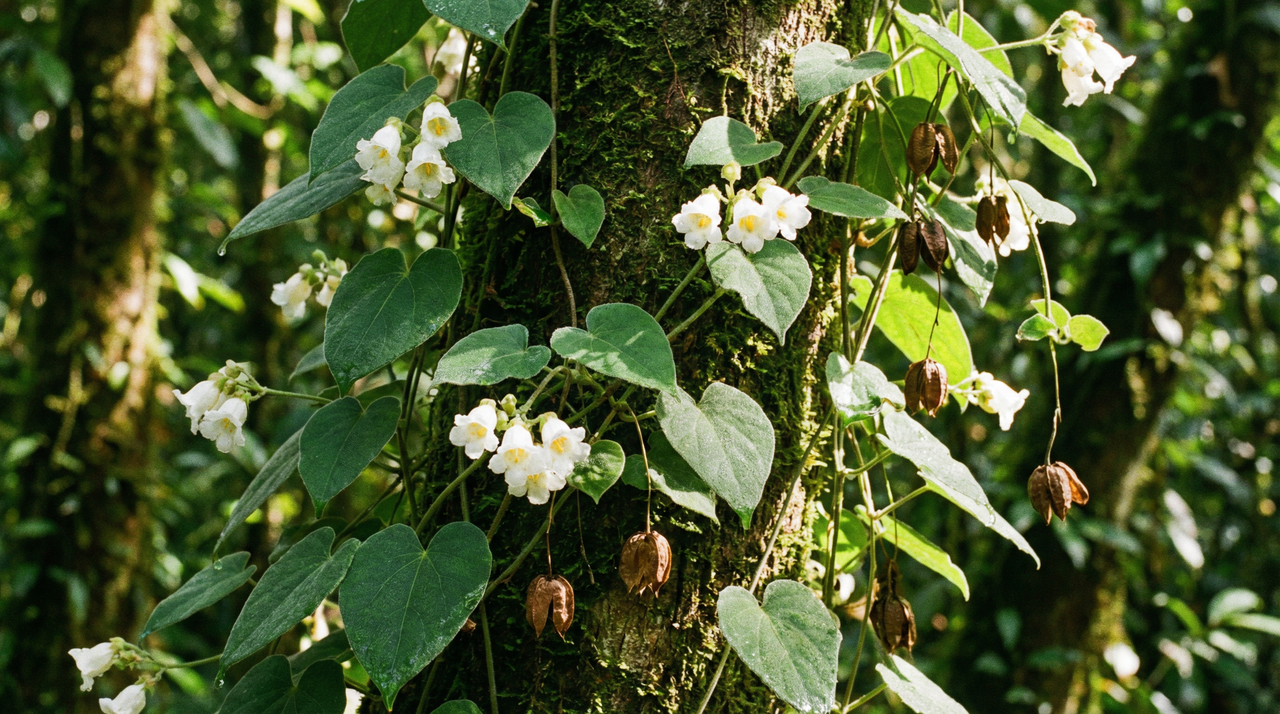
Nobody names an ornamental vine after Christmas unless it does something worth celebrating, and Christmas Vine does: it blooms in white, funnel-shaped flowers that open with the morning light and then, quietly, sets seeds that contain a compound structurally related to LSD. That's not a gardening curiosity. That's a plant with a double life so strange that when Spanish missionaries first documented its use in 16th-century Mesoamerica, they assumed the visions it induced were the work of the devil.[1] The Aztec, Mazatec, and Zapotec peoples who'd been working with it for centuries knew otherwise.
I've grown a lot of plants that come with complicated histories, but Turbina corymbosa sits in a category almost entirely its own. It's a vigorous tropical twiner with heart-shaped leaves and genuine ornamental presence, and it also happens to be one of the most culturally significant psychoactive plants in the pre-Columbian world, still deeply embedded in living indigenous traditions. Most of the gardening internet treats it as either a novelty or a warning label. I think it deserves more care than that, and a lot more context.
Origin and History of Christmas Vine (Turbina corymbosa)
Botanical Background and Native Range
Christmas vine is native to tropical and subtropical Mexico and Central America, with its range stretching from southern Mexico through Guatemala, Honduras, Nicaragua, Costa Rica, and Panama, and some populations reaching into northern Colombia and Venezuela.[2][3] In its native habitat, it's a generalist in the best sense: you'll find it threading through dry deciduous forests, scrambling along riverbanks, colonizing disturbed edges and secondary growth, and climbing into premontane forest at elevations up to about 1,500 meters, though it's most abundant below 1,000 m.[4][5] That affinity for disturbed edges is something I've noticed in vigorous tropical lianas generally — they're pioneer plants at heart, and Christmas vine is no exception.
The naming situation is worth sorting out up front. Turbina corymbosa is the currently accepted name according to Kew, POWO, and the Missouri Botanical Garden; you'll still encounter it in older literature and seed catalogs as Rivea corymbosa or Ipomoea corymbosa.[6][7] A related species, Turbina peruviana, native to the Andean region of South America, is sometimes treated as a synonym or close relative and shares the common name Christmasvine — but the two have distinct ethnobotanical histories, and I'll treat T. corymbosa as the anchor here.[8] In the United States, T. corymbosa has been documented naturalized in parts of Texas and Florida but isn't widely reported as invasive, which distinguishes it from some of its more rambunctious Convolvulaceae relatives.[2][6]
Visual Characteristics
Mature vines reach 3 to 10 meters, occasionally pushing toward 20 feet when they find a generous host, with slender stems that are woody at the base and an enlarged tuberous root system beneath.[9] The leaves are alternate, cordate, 4 to 15 cm long with a smooth, slightly glossy surface — very similar at first glance to common morning glories like Ipomoea purpurea, which can throw off even experienced gardeners.[9][10] The flowers are where it starts to diverge: white, funnel-shaped, fragrant, borne in corymbs, and opening in the morning during the dry season from October through May in its native range.[11] After the flowers fade, small spherical capsules form, each containing three to four small black seeds that are released when the capsule dries and splits.[4] Having worked with several counterclockwise-twining vines in Central Florida, I always recommend giving this one robust support early; that elegant spiral habit can overwhelm a lightweight trellis faster than you'd expect. The related T. peruviana produces flowers that can range from white to pale pink or purple and tend to be larger, which helps gardeners tell the two apart when both are in bloom.[12][13]
Traditional and Cultural Uses
The seeds of Turbina corymbosa carry a name that predates European contact by centuries: ololiuhqui in Nahuatl, first documented in writing in Bernardino de Sahagún's Florentine Codex around 1577, with archaeological seed remains from Aztec-period sites like Tlatelolco confirming cultivation and ceremonial use going back to at least 1300 CE.[14][15] Aztec, Mazatec, Zapotec, and Mixe peoples prepared the seeds for divination, healing, and spiritual communion, often in connection with deities like Xochiquetzal; Mazatec shamans have continued using them in veladas, night-long healing vigils, into the present era.[16][17] The seeds contain lysergic acid amide, an ergoline alkaloid related to LSD, which produces the altered states central to those ritual contexts.[17]
Across the Andes, T. peruviana carries a parallel but distinct tradition: Quechua and Aymara communities have used it in shamanic and visionary contexts and medicinally as a purgative, anthelmintic, and treatment for rheumatism and respiratory ailments.[18][19] I grow several Convolvulaceae ornamentally in my designs, but I approach entheogenic species like this one with a specific kind of care. The turbina corymbosa psychoactive history belongs to living indigenous traditions, not to Western curiosity, and that shapes how I talk about it. On the legal side, the plant isn't explicitly banned at the federal level in the US, though LSA extraction carries different regulatory weight; Mexico treats it as protected cultural heritage.[20] If you're considering growing it, research your local regulations first, and take the cultural context seriously.
Fun Facts
Despite the weight of its ceremonial history, Turbina corymbosa is listed as Least Concern on the IUCN Red List, ecologically resilient through mycorrhizal partnerships and seasonal drought tolerance via deep tuberous roots.[21] The Nahuatl name ololiuhqui is often translated as "round thing," a reference to the small, disc-shaped seeds at the center of the plant's ritual significance. Taxonomically, the confusion between T. corymbosa and T. peruviana traces partly back to early descriptions like Convolvulus peruvianus from 1794, but current botanical authorities have settled the question firmly in T. corymbosa's favor for the ololiuhqui plant.[22][23] LSA concentration in seeds ranges from roughly 0.02 to 0.14 percent, and despite that, the vine shows limited invasive potential outside its native range.[24] In my own trial plantings in Florida, it's been well-behaved compared to some of the aggressive bindweeds I've spent years managing — nothing like the thuggish spread you see with certain Calystegia species. That's reassuring for gardeners who want to grow it ornamentally, but it doesn't change the fact that this is a plant with a profound history that deserves to be grown with knowledge and respect.
Christmas Vine Varieties and Where to Buy Them
Botanical Varieties and Cultivars of Turbina corymbosa
The taxonomy here is a little tangled, so it helps to orient yourself before shopping. The christmas vine you're most likely to encounter goes by several synonyms: Rivea corymbosa, Ipomoea corymbosa, and the traditional seed name ololiuqui all refer to the same species, Turbina corymbosa.[4][25] Two botanical varieties are formally recognized: var. corymbosa, the standard form, and var. grandiflora, which produces noticeably larger flowers.[26] Beyond those, what growers actually encounter in the trade is mostly wild-collected seed, often labeled as the "Hawaiian strain," a vigorous tropical form popular precisely because it's relatively easy to germinate and establishes well in warm climates. Variegated cultivars do exist and carry real ornamental appeal, with cream or yellow patterning on the leaves, but they need brighter indirect light to hold that coloration.[27][28] Like many variegated morning glories I've grown, these will quietly revert to solid green in a low-light spot before you even notice the change.
If you want showier holiday color, the close relative Turbina peruviana (Christmasvine) has no recognized botanical varieties of its own but offers the hybrid 'Christmaspops,' with vivid red and white blooms that genuinely earn the festive name.[29][12] In my zone 9B work, 'Christmaspops' has been considerably easier to source locally in Florida than pure T. corymbosa, and for clients who want the tropical-liana aesthetic without the regulatory complexity, it's usually where I steer them first.
Sourcing Christmas Vine Seeds and Plants
Expect to shop from specialty vendors rather than any garden center. Seeds run roughly $5 to $20 per packet; live plants, when they appear at all, tend to fall between $15 and $40, while T. peruviana cultivars like 'Christmaspops' can push $50 or more given their scarcity. Stock is genuinely intermittent. I've ordered from Strictly Medicinal Seeds, Maya Ethnobotanicals, World Seed Supply, and Logee's Greenhouses at various points, and every one of them sells out seasonally.[30][31][32][33] All of them carry the standard "ornamental or research purposes only" disclaimer, which is both legally necessary and honestly accurate.
The reason big-box stores don't carry christmas vine is straightforward: the seeds contain lysergic acid amide (LSA), a Schedule III substance under the Controlled Substances Act.[34][35] The plant itself is not scheduled, and growing it ornamentally is generally legal at the federal level, but intent matters and state laws vary considerably. I always verify current DEA guidelines and my state's statutes before recommending this vine to a client. Importing seed adds another layer: USDA APHIS and U.S. Customs both regulate untreated planting seed coming across the border, and permits may be required.[36][37]
One practical caution: Hawaiian Baby Woodrose (Argyreia nervosa), a related vine with similar alkaloids, is far more widely available in the U.S. market and sometimes gets substituted or mislabeled in commercial listings. Cross-reference any purchase against Kew's Plants of the World Online or the Missouri Botanical Garden database before you buy, and read the safety section of this article before growing either species for any purpose beyond ornament.[38][39]
How to Propagate and Plant Christmas Vine (Turbina corymbosa)
Christmas Vine is not a difficult plant to propagate, but it will absolutely ignore you if you skip one step: dealing with that seed coat. The hard, impermeable testa that protects Turbina corymbosa seeds is the defining challenge of starting this vine from scratch, and understanding it changes everything about how you approach the process.
Seed Propagation, Scarification, and Germination Timeline
The seeds exhibit physical dormancy, meaning the coat itself prevents water uptake until you mechanically or thermally break it.[40] I use a small nail file to nick the rounded end opposite the hilum, then drop the seeds into room-temperature water for 24 hours before sowing. A hot-water soak (not boiling, more like freshly brewed tea that's cooled slightly) works too. Once properly pretreated, germination at 68–85 °F runs 70–95 % with fresh seed and happens in 7 to 21 days.[40][41] First true leaves show up in 7 to 14 days after germination, vegetative growth accelerates quickly from there, and flowering can begin in as little as 3 to 6 months under warm tropical conditions, with consistent seed production arriving in 1 to 3 years.[42][43] I always label my flats immediately, because scarified seedlings in the first weeks look almost identical to common morning glories and other Convolvulaceae relatives I'm growing nearby.
One advantage of this seed's orthodox storage behavior is real staying power in the seed bank. Stored cool, dry, and airtight at 32–50 °F, Turbina corymbosa seed stays viable 2 to 5 years, and up to 10 years under ideal conditions.[44][45] That said, germination rates drop noticeably after the first year if seeds are kept at room temperature, so refrigerator storage is worth the fridge space.[46] I now do a quick tetrazolium spot-check on any seed I've had in storage more than a year before I bother scarifying a whole batch; it only takes a few seeds and an afternoon, and it saves the effort of running an entire germination tray on seed that's already gone over.
Vegetative Propagation Methods
Seed is the primary route for most growers,[47] but semi-hardwood cuttings are a clean way to bypass the hard-coat hurdle entirely, especially if you have an established plant you're happy with. Take 4 to 6 inch cuttings in spring or early summer, treat the cut end with IBA rooting hormone at 1000 to 3000 ppm, and stick them in a moist, well-draining medium under 80 to 90 % humidity with bottom heat around 70 to 80 °F. Roots establish in 2 to 4 weeks.[12][48] A humidity tent over the pot handles the atmospheric side of things; bottom heat is the piece most home propagators skip and then wonder why their strike rate is low.
The seeds themselves have one quirky structural trait worth knowing: some populations show polyembryony, meaning a single seed can carry multiple embryos and occasionally produce more than one seedling.[49] It's unusual enough that it catches people off guard the first time. For growers who want extra vigor or disease resistance, grafting onto compatible Ipomoea rootstocks is experimentally feasible with 40 to 80 % success using cleft or whip-and-tongue technique, though it's not standard practice outside of specialized propagation work.[50] Most home growers won't need it. Getting soil and drainage right matters far more than rootstock selection.
Soil, Site Selection, and Planting Technique
If I had to distill everything I've learned about siting this vine into one sentence, it would be: drainage before everything else. Turbina corymbosa is native to tropical dry forests, disturbed scrub, and calcareous or volcanic soils from sea level to about 1500 meters,[2] and waterlogging is genuinely fatal to young plants. I lost a full row of first-year vines in a low-lying bed after a single heavy Florida summer rain, no dramatic weather event, just one afternoon of standing water. The roots had started rotting within a week. That particular lesson stuck.
For soil texture, loamy or sandy-loam with 3 to 10 % organic matter and a pH of 6.0 to 7.5 is the sweet spot, though the plant tolerates down to 5.5 and up to 8.0 on well-drained calcareous ground.[51][52] In heavier coastal soils I always amend aggressively with coarse sand or perlite before planting. For containers, a mix of 50 % loam or potting soil, 30 % perlite or coarse sand, and 20 % compost works reliably, and drainage holes are non-negotiable.[53] Yellowing leaves and wilting despite adequate moisture are usually the first signs that roots are sitting wet; mushy roots at the crown confirm it. Full sun, at least 6 hours of direct light daily, is equally important for flowering and strong growth.[12]
Spacing, Support, and Initial Care
Christmas Vine climbs by twining and reaches 10 to 30 feet when given something to grab,[6] which is comparable to moonflower (Ipomoea alba) in terms of sheer ambition once the weather warms up. Anyone who's grown moonflower knows how quickly you can end up with a vine that's reached the roof before you've put the trellis in. I now install support structures the same day I transplant, not a week later when I get around to it. Along a fence or trellis, space plants 12 to 24 inches apart; leave 3 to 4 feet between rows to allow airflow and access.[12][54]
Start turbina corymbosa seeds indoors 6 to 8 weeks before your last frost date, or direct-sow after soil has warmed above 60 °F in spring.[41] Harden seedlings off over 7 to 10 days before transplanting, and get them into the ground only once frost risk has genuinely passed. The vine's vigorous twining instinct kicks in fast once roots establish in warm soil, and directing that energy onto a trellis from day one shapes a much cleaner plant than trying to untangle growth that's already gone sideways. Once established in a warm, well-drained site, christmas vine asks surprisingly little of you beyond consistent warmth and something to climb, but that beginning moment, right soil, right drainage, right support, sets the tone for everything that follows.
Christmas Vine Care Guide
Growing christmas vine well comes down to reading the plant honestly. It's vigorous, it wants warmth, and it will tell you clearly when something is wrong. The trick is knowing how to listen.
Sunlight Requirements
Christmas vine needs at least six hours of direct sun daily to flower well.[55][56] Give it less and you'll get the leggy, pale-stemmed etiolation I've seen on shaded trellises: elongated internodes, sparse foliage, almost no blooms.[57][58] I label all my Convolvulaceae seedlings carefully because young christmas vine looks remarkably like a handful of other morning glory relatives -- and a pot that accidentally ends up under the shade of a larger tray tells you nothing useful until three weeks have passed and the stems are already a mess. But full blazing afternoon sun in a Florida summer is its own hazard. Above 90°F with low soil moisture, you'll see brown leaf tips, yellowing, and that characteristic drooping that looks like drought even when it isn't.[57] In zone 9B heat, I position it where it catches morning sun and gets some shelter from the harshest afternoon glare.
Watering Needs and Drought Tolerance
This vine's origins in Mesoamerican tropical dry forests give it real drought tolerance once established, but "drought tolerant" doesn't mean happy with neglect.[59] My rule is simple: check the top inch or two of soil, and water when it's dry, roughly every five to seven days during active growth.[6] It handles a short dry spell with dignity, but it absolutely hates wet feet. Yellowing leaves combined with wilting despite moist soil, mushy roots at the crown, leaf drop -- those are the waterlogging symptoms I watch for.[60] Underwatering reads differently: the foliage droops and the leaf edges brown and crisp up rather than yellow and soften. Soil should be well-draining sandy or loamy mix at pH 6.0-7.5; avoid water with high salt content, as salinity above roughly 1000 ppm will burn leaf tips over time.[61] Reduce watering noticeably through winter dormancy.
Soil, Fertilizing, and Nutrient Management
Christmas vine is a light to moderate feeder, and excess nitrogen is genuinely counterproductive. I never push it with high-nitrogen fertilizers after midsummer because I've watched the vine respond with a flush of lush leaves and almost no flowers.[62] A balanced 10-10-10 fertilizer applied every four to six weeks through spring and fall, diluted to half strength, keeps it productive without pushing vegetative excess.[63] Phosphorus supports root development and flowering; potassium supports overall resilience. Work compost into the soil rather than relying entirely on synthetic feeds for steady, low-risk nutrient release. Deficiency symptoms are worth knowing: uniform chlorosis on older leaves signals nitrogen shortage, purplish discoloration points to phosphorus, and marginal leaf burn with necrosis suggests potassium deficiency. Interveinal chlorosis on new growth is typically iron.[64] Over-fertilization mimics some drought symptoms -- tip burn, yellowing, stunted growth -- so I always check soil moisture before assuming a nutrient problem.[65]
Heat Tolerance
Optimal growth happens between 70-85°F, and the vine handles up to about 95°F reasonably well when humidity is adequate and roots stay moist.[12] Push past that with dry air and low soil moisture and it responds with scorched leaves, wilting, and a noticeable growth pause -- but in my experience it recovers quickly once deep-watered, drawing on established roots and cycling briefly into a low-activity state the way other tropical vines I grow do.[66] During heat events above 90°F, I use 30-50% shade cloth for temporary protection and increase irrigation to every two to three days.[67] Two to four inches of organic mulch around the root zone -- kept away from the stem -- makes a real difference in keeping soil temperatures down and reducing moisture loss.[68] Flowering is best at 68-82°F, so protecting the plant through extreme heat episodes pays off in bloom quality.
Frost Tolerance and Overwintering
There's no softening this: christmas vine is frost-intolerant. Temperatures below 50-59°F stress it; anything below 41°F, or any actual frost, causes leaf scorch, stem dieback, and potentially death.[69][70] It's reliably perennial in USDA zones 9-11; outside that range, treat it as an annual or bring potted plants inside before temperatures drop.[71] I've overwintered potted specimens indoors successfully -- bright indirect light, kept above 50°F, watered sparingly -- and watched them rebound vigorously come spring. That's the benchmark I'd give any zone 9B gardener who wants to preserve a specimen through a cold snap. The related Christmasvine (Turbina peruviana) shows slightly more cold resilience, tolerating brief dips to around 20-25°F, but it still needs protection below zone 9.[72] For in-ground plants in marginal zones, mulching the root zone heavily before a cold event is worth attempting, but I'd always have a backup plan.
Pruning, Training, and Seasonal Care
Christmas vine twines vigorously to 10-20 feet and needs a sturdy trellis from the start.[56] Gently tie young shoots to guide them early -- I've seen neglected plants turn into a tangled, impenetrable mat on a fence that takes real effort to sort out. Light tip pruning during the vegetative stage encourages bushier coverage; after flowering or in late winter, a modest cutback promotes fresh branching and keeps air circulating through the canopy without the stress of heavy pruning.[73] Space plants six to ten feet apart, keep humidity around 50-60%, and maintain two to four inches of organic mulch around roots -- away from stems -- to suppress weeds and moderate soil temperature.[56]
Seasonal Rhythm
In its native tropical range, christmas vine is an evergreen perennial that lives for years without dormancy.[74] In temperate gardens it follows a simpler pattern: grow, flower late summer through autumn (typically August to October in the Northern Hemisphere), then slow or stop as temperatures drop.[75] In my zone 9B garden, I start reducing water and fertilizer as days shorten, transitioning the plant toward rest rather than pushing growth it can't sustain. Overwintered plants kept above 50°F with good light hold their form through winter and recharge quickly in spring; tubers from annual-treated plants can be stored cool and dry at 50-60°F until replanting.[76] Once you understand that rhythm, the whole care cycle clicks into place.
Harvesting Christmas Vine (Turbina corymbosa)
Because Christmas Vine produces no edible fruit, no harvestable leaves, and no culinary yield of any kind, "harvesting" here means one thing only: collecting the small black seeds for future planting. The vine blooms from June through September, and seeds reach maturity roughly 30 to 45 days after flowering, putting the primary harvest window in late summer through early fall, August through November in most zones.[77][78][79][41] In warmer climates that window can stretch into December.[41] For related species within the genus, fruit development spans 30 to 60 days post-flowering, so treat that 30-to-45-day clock as a reliable baseline rather than a guarantee.[80] With fast-growing tropical vines, I've found that watching the calendar from the last good flush of flowers is more useful than checking the pods daily.
When to Harvest: Timing, Flowering, and Ripeness Cues
The ripeness signals here are nearly identical to what I watch for in common morning glories and other Convolvulaceae relatives, which makes the process intuitive once you know what you're looking for. Pods shift from green to brown or tan, turning papery and dry at roughly 1 to 1.5 cm long, and the surest signal is the rattle: shake a pod gently, and if the seeds knock around inside, they're ready.[77][81] Collect pods just as they begin to split open along their seams rather than waiting for them to dehisce fully, or you'll lose seeds to the wind.[82]
How to Harvest Christmas Vine Seeds
Once you've collected the pods, cure the seeds by spreading them in a single layer in a shaded, well-ventilated spot at room temperature, around 20 to 25°C, for one to two weeks until moisture content drops below 10 percent.[79][82] Keep them out of direct sunlight; heat and UV exposure degrade viability fast. After curing, store them in an airtight container somewhere cool (below 15°C) and dark, where they'll remain viable for two to five years.[82][79] That matches what I've seen with other morning-glory relatives stored under the same cool, dark conditions, so the guidance feels solid even where Christmas Vine-specific data is thin.
Seed Yield, Sensory Profile, and Important Safety Notes
Each pod contains somewhere between 50 and 100 small, hard, shiny black seeds measuring 4 to 6 mm across, discoid in shape and hollow-sounding when the pod rattles.[79][82][77] The seeds carry an earthy, faintly herbal scent that sharpens into something acrid and chemical when ground, and the taste is intensely bitter with a chalky, soapy finish that lingers.[75][83] That bitterness isn't incidental; it's the alkaloids, LSA among them, and it's nature being unambiguous. The vine's flowers smell sweetly of jasmine, and the related Turbina peruviana carries a similar honey-floral fragrance, but fragrance has nothing to do with safety. A beautiful smell does not make a seed edible. These seeds have no culinary use, and the preparation_and_uses section ahead covers the full scope of toxicity risks in detail.
Christmas Vine (Turbina corymbosa) Preparation, Medicinal Uses, and Safety
Let me be direct from the start: Christmas Vine is not a food plant. Turbina corymbosa, native to Mexico and Central America, goes by many names -- Ololiuqui, Rivea corymbosa, Ipomoea corymbosa -- and its South American relative Turbina peruviana shares the common name Christmasvine while carrying its own parallel traditions, but neither species has any role in a kitchen.[4][75][84] The vines and leaves are never consumed. Only the seeds have any historical preparation, and even that is a story about ritual, not nutrition.
Culinary Considerations and Toxicity of Christmas Vine Seeds
I grow a number of morning-glory relatives, and one thing every Convolvulaceae seed has taught me is that extreme bitterness and a chalky, lingering mouthfeel are the plant's way of saying "leave me alone." Turbina seeds take that to a different level entirely. They contain lysergic acid amide, or LSA, an ergoline alkaloid closely related to LSD that produces psychoactive effects alongside significant physical misery.[85][4] Nausea, vomiting, diarrhea, vasoconstriction, and hallucinations are all on the table, and in severe cases the risk escalates to serotonin syndrome or worse -- modern poison control sources consider overdose potentially fatal.[86][87]
Yes, the seeds contain roughly 20-30% protein, meaningful fiber, unsaturated fatty acids, and antioxidant compounds including flavonoids and phenolics.[88][89] That nutritional profile is completely irrelevant. The alkaloid toxicity eclipses every gram of protein in there. As a horticulture professional, I also want to flag that several Ipomoea species look nearly identical to Turbina at a glance, which is exactly why I insist on clear labels for every vine in my designs.[90] Misidentification matters here in a way it simply doesn't with most ornamental climbers. Some sources mention edible flowers from loosely related morning glory species in Peruvian cooking, but that use is not documented for either Turbina species and shouldn't be treated as a green light for experimentation.
Traditional and Medicinal Preparations of Ololiuqui
The only historical "preparation" of these seeds was strictly ceremonial. Traditional Mesoamerican practice involved grinding somewhere between 50 and 100 seeds into a paste, then mixing that paste into a cold-water infusion, sometimes with lime water, to create a beverage consumed during ritual healing or divination.[91][92] Modern accounts occasionally describe defatting the seeds or masking their bitterness with chocolate or juice, but these are accounts of psychoactive use, never culinary ones.[93]
The dosage data is worth understanding precisely because it illustrates how narrow and dangerous the margin is. Mild effects were historically associated with as few as 5-10 seeds; serious visionary experiences required 100-400. Toxicity symptoms begin appearing around 250-500 seeds, and the line between those ranges is not a safe one to walk.[93][87] I'll be direct about the contraindications: if you are pregnant, these seeds are off the table entirely, given their potential for uterine stimulation and teratogenic effects. If you're on SSRIs or MAOIs, the interaction risk for serotonin syndrome is real and serious. Anyone on antihypertensives should likewise stay clear given the vasoconstriction effects.[93] The plant's chemistry is genuinely fascinating from a pharmacological standpoint, but that fascination belongs in academic literature, not in home experimentation.
Non-Food Uses, Cultural Context, and Sustainability
The depth of ritual knowledge surrounding these seeds across Mesoamerica is remarkable. Aztec, Mazatec, Zapotec, and Mixe peoples used Ololiuqui seeds for divination, healing, prophecy, and spiritual communion, preparing them as ground powder mixed with water into a beverage or topical paste.[91][92] Turbina peruviana carried parallel weight in Andean shamanism, where roots and leaves were sometimes used in purgative preparations alongside the seeds in ritual transformation practices.[94][95] These are distinct traditions with their own integrity, and they deserve to be understood in cultural context rather than reduced to a recipe.
Modern pharmacological research has found some intriguing anti-inflammatory and potential antidiabetic activity in the seeds, and traditional healers also applied them to conditions like rheumatism, but large-scale human clinical trials simply don't exist yet.[91] Any future therapeutic interest will need to contend with the same psychoactive and toxic profile that makes casual use irresponsible now. On the sustainability side, T. peruviana is considered locally vulnerable in parts of the Andes due to habitat loss and collection pressure.[96] My own practice is to grow only from cultivated stock when working with native vines that face harvest pressure in the wild, and I'd encourage any reader growing this plant to do the same. Respecting indigenous cultural contexts, sourcing ethically, and never collecting from wild populations are non-negotiable starting points for anyone drawn to Christmas Vine beyond its role as an ornamental climber.
Christmas Vine Health Benefits and Medicinal Uses
I grow christmas vine as a fast-climbing ornamental screen in Central Florida landscapes, and I'll be upfront about something before we get into the pharmacology: I've never grown it for its seeds, and I never would. That perspective shapes everything I'm about to tell you. The medicinal and chemical story of Turbina corymbosa is genuinely fascinating, and it carries real risks that deserve a straight, honest treatment rather than either sensationalism or dismissal.
Key Compounds and Phytochemical Profile of Christmas Vine
The dominant chemistry in christmas vine seeds is a suite of ergoline alkaloids, with lysergic acid amide (LSA, also called ergine) as the primary compound, present at concentrations of 0.02–0.14% by dry weight.[97][98][99] Alongside LSA you'll find lysergic acid hydroxyethylamide, chanoclavine, agroclavine, ergometrine, and isolysergic acid amide, all contributing to a chemical profile that's decidedly not casual.[100] The seeds carry the highest concentrations; leaves, stems, and roots top out at roughly 0.01–0.03%.[101]
What I find ecologically interesting here, as a grower who cares about why plants make the compounds they do, is that these alkaloids almost certainly function as chemical defenses against herbivory. Plants native to tropical dry forests don't invest this kind of metabolic energy accidentally. Concentration varies considerably with environment: seeds from warm, sun-exposed, water-limited conditions in Mexico and Central America can reach 0.13% LSA, while temperate-grown plants often fall in the 0.01–0.05% range.[102] The same vine, in different conditions, can produce seeds with meaningfully different potency. That variability is part of why there are no safe recreational dosage guidelines.
The seeds also contain flavonoids (quercetin and kaempferol glycosides), phenolics, steroids, betaine, and choline, which likely contribute to the antioxidant and anti-inflammatory activity seen in extract studies.[103][104] The closely related Turbina peruviana shares a similar ergoline and flavonoid profile, with LSA and chanoclavine confirmed, though direct studies are more limited.[105][106]
Traditional and Modern Medicinal Research on Christmas Vine
Aztec, Mazatec, and Zapotec healers used ololiuhqui seeds for centuries in carefully structured shamanic rituals for divination, visionary states, and healing, and also in traditional medicine to address diabetes, rheumatism, inflammation, headaches, and gastrointestinal complaints.[107][108] Traditional preparation involved grinding the seeds (often after removing their coats), infusing them in water, and sometimes combining them with lime or chocolate to reduce nausea, a detail that tells you something about how well these cultures understood the plant's rough edges.[109]
Modern pharmacology has mapped the mechanism reasonably well: LSA acts as a partial agonist at serotonin 5-HT2A receptors (with lower potency than LSD) and shows affinity for dopamine D2 receptors, producing hallucinogenic, sedative, and vasoconstrictive effects.[110] Animal and in-vitro studies on seed extracts have found anti-inflammatory activity comparable to ibuprofen in rat paw edema models, antioxidant activity with DPPH IC50 values of 50–100 μg/mL, antimicrobial effects against S. aureus, E. coli, and C. albicans, plus hypoglycemic and analgesic activity.[111][112][19] Turbina peruviana carries parallel traditional uses in the Peruvian Amazon for wounds, fever, pain, and skin conditions, with similar preliminary in-vitro support.[19][113]
None of this has translated into human clinical trials. Regulatory barriers around hallucinogens, combined with taxonomic confusion and lack of standardized extracts, mean the evidence base is almost entirely ethnobotanical records, animal models, and cell assays from the 1960s onward.[105][114] The preliminary findings are scientifically interesting. They are not a green light for experimentation.
Nutritional Profile and Composition
Nutritional research on these seeds is minimal because the scientific community has, understandably, focused on the alkaloids rather than the macronutrients. What proximate analyses exist suggest roughly 20–30% protein, 40–50% carbohydrates, and 10–15% fats, with composition broadly similar to other Convolvulaceae seeds.[115][116] The flavonoids (quercetin and kaempferol glycosides) noted in the phytochemical studies do confer antioxidant capacity on paper, but the presence of LSA makes any nutritional framing of these seeds beside the point.[117] For T. peruviana, unverified anecdotal reports suggest the fruit pulp contains modest potassium, calcium, and magnesium, but that data is sparse and applies to a completely different plant part.[118] The seeds are not a food source. Full stop.
Safety Considerations and Potential Risks
LSA and the accompanying ergolines produce a recognizable toxicity profile: nausea, vomiting, gastrointestinal distress, dizziness, anxiety, hallucinations, tachycardia, vasoconstriction, and at high doses, ergotism-like effects.[119][120] Symptoms typically appear within one to two hours and can last six to twenty-four hours. They're often self-limited, but "often" is doing a lot of work in that sentence when alkaloid concentration varies so dramatically between seeds and growing conditions.[121] As few as five to ten seeds can trigger adverse effects, and traditional ceremony doses ranged from 13 to 400 seeds with no established safe modern equivalent.[122]
I label every plant in my design plans carefully, and I'm especially deliberate with Convolvulaceae vines that carry psychoactive seeds. A maintenance crew or curious child shouldn't have to rely on memory to distinguish this vine from a benign morning glory. If you are pregnant, on SSRIs, taking MAOIs, or managing cardiovascular disease, this is not a plant whose seeds you ever experiment with. The uterine stimulant, vasoconstrictive, and serotonergic mechanisms are well documented, and the interaction risks are real.[123] Pets are equally at risk: seed ingestion causes vomiting, diarrhea, lethargy, ataxia, and possible hallucinations.[124] Direct skin contact with sap can cause irritant dermatitis in sensitive individuals, so I wear gloves when pruning.[125]
On the legal side: LSA is a Schedule III controlled substance under federal law.[35] Ornamental seed sale is generally permitted in the United States, but extraction or consumption for psychoactive purposes is federally illegal, and some states have stricter restrictions. I learned early in my career to check local ordinances before specifying any vine with psychoactive relatives, not out of alarm, but because responsible design means understanding the full profile of what you're putting in the ground. Christmas vine earns its place in a landscape through its extraordinary flowering and vigor, not its pharmacology.
Christmas Vine Pests and Diseases
Natural Resistance Mechanisms in Turbina corymbosa
One of the first things I noticed when I started working with Christmas Vine was the texture of the foliage -- a subtle fuzziness that signals something most gardeners overlook. Those trichomes aren't cosmetic. They physically entangle small insects and can secrete compounds that deter feeding, giving this vine a built-in first line of defense typical of the broader Convolvulaceae family.[126] Layer in the ergoline alkaloids -- particularly the LSA concentrated in the seeds but present throughout the plant -- and you have documented insecticidal, nematicidal, and antifeedant chemistry working quietly in the background.[126][127] None of that makes it bulletproof, but it does mean a healthy, well-sited Christmas Vine comes to the garden with considerably more native armor than most ornamental climbers.
Common Pests and Their Management
The pest list for Christmas Vine largely mirrors what I see on sweet potato vines and other morning glory relatives: aphids causing leaf curl and sooty mold, spider mites stippling foliage in hot dry spells, and whiteflies creating problems especially under greenhouse conditions.[128][129] Aphids and whiteflies matter beyond the direct damage because both transmit viruses that can cause far more lasting harm than the insects themselves. Caterpillars from the Noctuidae family will occasionally defoliate sections, but in my experience with Convolvulaceae this vigorous, the vine rebounds surprisingly well once pressure eases.[128] Leaf miners, scale, mealybugs, thrips, and root-knot nematodes round out the roster, with regional growers in Hawaii also contending with sugarcane borer.[130] Wild-sourced plants from Mexico and Central America tend to carry genetic tolerance to local aphid and whitefly populations that cultivated specimens simply don't have,[19] which is one reason I try to source from reputable ethnobotanical suppliers rather than generic seed banks.
Fungal, Bacterial, and Viral Diseases
Most disease trouble I've seen on this vine traces back to cultural mistakes rather than some unusual pathogen. Leaf spots from Alternaria and Cercospora show up as brown lesions with yellow halos, typically when humidity is high and air circulation is poor.[131] Root rot from Fusarium, Pythium, or Phytophthora is the one that can actually kill the plant, and it moves fast in waterlogged soil -- a lesson I learned the hard way with a young vine I overwatered through its first summer.[132] Powdery mildew appears occasionally, though Turbina corymbosa seems to show somewhat better tolerance than some of its morning glory cousins.[133] Bacterial leaf spot from Xanthomonas and viral infections like cucumber mosaic virus, transmitted by those same aphids and whiteflies, close out the main disease concerns.[134] Honest caveat: species-specific research on Turbina corymbosa is thin, and most of what we know is extrapolated from broader Convolvulaceae pathology.[132] That's a reasonable foundation, but consulting your local extension service for region-specific disease pressure is genuinely worth doing.
Integrated Pest Management and Prevention Strategies
In my years designing tropical guilds, I've found that good air circulation and base watering alone eliminate the majority of fungal problems before they ever start.[132] Full sun, well-drained soil, proper spacing, and organic mulch to buffer soil-borne pathogens are the unglamorous foundation that keeps this vine healthy.[132][6] When intervention is necessary, I work through the IPM ladder: monitor regularly, encourage beneficial insects like ladybugs, lacewings, and parasitic wasps, use Bacillus thuringiensis for caterpillar pressure, and reach for neem oil or insecticidal soap before anything else.[132][135] For an ethnobotanical plant grown in small quantities, this low-intervention approach is almost always sufficient. Chemical controls are a last resort, full stop.
Christmas Vine in Permaculture Design
Before anything else, be honest with yourself about where you live. Christmas Vine is a committed tropical, hardy only in USDA zones 9 through 11, and it genuinely sulks when temperatures drop below 50°F for any sustained stretch.[12] Optimal growth happens between 60 and 85°F, and while the plant can technically survive a brief dip to the low twenties, that tolerance is short-duration-only; any extended cold brings leaf drop, stem dieback, or outright death.[136][137] After growing several vigorous Convolvulaceae vines in my zone 9B garden, I've learned that "technically survives" and "actually thrives" are very different things. South Florida, the Gulf Coast of Texas, Southern California, and Hawaii are where this vine finds its comfort zone; coastal sites within zones 9 and 10 are preferable over inland positions precisely because marine influence smooths out those cold snaps.[6] For gardeners in marginal areas, treat it as a seasonal annual or overwinter a rooted cutting in a container indoors. Its close relative Turbina peruviana offers somewhat broader drought and heat tolerance, managing up to 104°F with adequate moisture and drawing on deep roots and stem water storage to push through dry periods,[138][12] but the same zone realities apply. One note on sourcing: older references may list this plant as Rivea corymbosa or even place it under Ipomoea, which explains why zone data sometimes varies slightly between sources. Any figure below the mid-twenties Fahrenheit should be read as emergency-only tolerance, not a design assumption.
Ecosystem Functions and Wildlife Support
What draws me to this vine from a design perspective is the pollinator story. The flowers are white, trumpet-shaped, 3 to 5 centimeters across, and they open primarily at night, releasing fragrance that targets hawkmoths in the Sphingidae family.[12][139] I think of it the way I think about moonflower or evening primrose: if you want to support a nocturnal pollinator guild, you need plants that open and perfume after dark. But Christmas Vine doesn't stop there. Bees and butterflies work the flowers during daylight hours as well, and the related Turbina peruviana extends the guild further still, attracting hummingbirds and bats in addition to insects.[140] The protandrous flower structure, where pollen matures before the stigma is receptive, promotes cross-pollination and makes the plant a genuine contributor to ecosystem diversity rather than a self-contained dead end.[141] In low-pollinator years, I've hand-pollinated similar morning-glory-type flowers with a soft brush to ensure seed set for propagation, and it works reliably.
Structurally, the vine functions as a liana reaching 5 to 10 meters or more, providing layered cover and habitat for insects, small animals, and birds along forest edges.[142] The root system contributes modest erosion control and slope stabilization,[143] and the plant forms symbiotic associations with arbuscular mycorrhizal fungi, which helps it access nutrients in poor soils.[144] That mycorrhizal connection is a genuine design asset. What it won't do is fix nitrogen; unlike Inga or Gliricidia, this vine takes from the nutrient budget rather than contributing to it, and any honest guild design has to account for that gap. Because this plant contains psychoactive compounds and is not for casual culinary use, I keep it strictly in ornamental and support roles in my designs. The same pioneer vigor that makes it an attractive ecological asset is also what makes it dangerous in the wrong setting. In Florida and Hawaii especially, it has demonstrated the ability to smother vegetation and form dense mats in non-native habitats.[145][146] In my experience with vigorous vines, the same traits that make them useful pioneers also make them aggressive spreaders; monitor and contain, always.
Forest Layer Placement and Guild Integration
Christmas Vine climbs from the understory into the canopy, comfortably occupying the 3 to 10 meter range when given adequate support,[6] which places it in the vertical and upper shrub layers of a food forest system. As a pioneer species adapted to disturbed ground and secondary succession, it establishes quickly on trellises, fences, or established trees and fills structural gaps that might otherwise go to less useful opportunists.[147] The challenge is that a pioneer in permaculture design is only an asset when you're in control of the succession. When I first used a fast-climbing Convolvulaceae relative in a young guild, I underestimated how quickly it would overtop a two-year-old tree. I prune hard now and choose sturdy, leguminous hosts deliberately.
The best pairings I've seen, and experimented with in a small food-forest trial, are nitrogen-fixing trees like Inga edulis, Gliricidia sepium, or Leucaena leucocephala.[148] These hosts compensate for the vine's nitrogen-drawing habit, tolerate its weight, and benefit from the mycorrhizal network the vine participates in. The vine in turn provides a vertical ornamental element, pollinator habitat, and some weed suppression at the base. Turbina peruviana follows a similar pattern in coastal systems, where it can stabilize dunes and support biodiversity, but it carries the same tendency toward dense mat formation that demands active management in any subtropical permaculture design.[149][150] The honest summary: Christmas Vine earns its place in the right climate with the right host and an attentive gardener willing to prune it back before it earns the title of problem plant. The ecological services are real. So is the management commitment.
The Vine That Made Me Slow Down and Actually Read Before I Planted
I almost tucked this one into a client's subtropical food forest without a second thought, charmed by the flowers and the Convolvulaceae habit I already knew well. Then I sat with the ethnobotanical record for an afternoon, and everything shifted. Some plants ask more of you than others, and Christmas Vine is one of them; it rewards the gardeners who come to it with patience and a little humility.
Sources 150
- Ololiuqui: The Ancient Aztec Narcotic ↩
- Turbina corymbosa ↩
- Rivea corymbosa: Distribution and Ecology ↩
- Turbina corymbosa ↩
- Turbina corymbosa (L.) Raf. ↩
- Turbina corymbosa ↩
- Rivea corymbosa - Kew Science Plants of the World Online ↩
- Turbina peruviana (Pers.) Britton & P.Wilson ↩
- Rivea corymbosa ↩
- Rivea corymbosa ↩
- Rivea corymbosa ↩
- Missouri Botanical Garden Plant Finder ↩
- Turbina peruviana - Useful Tropical Plants ↩
- Florentine Codex: General History of the Things of New Spain ↩
- Ololiuqui: A Study of Intoxicating Morning Glories ↩
- Ololiuqui: The Ancient Aztec Psychoactive Plant ↩
- Psychoactive Plants in Mesoamerican Religion and Medicine ↩
- Ethnobotany of the Andes: Morning Glories and Bindweeds ↩
- Ethnobotany of the Andes: Traditional Uses of Turbina peruviana ↩
- Ethnobotany and Cultural Importance of Ololiuhqui: A Review ↩
- Turbina corymbosa ↩
- Flora Peruviana et Chilensis ↩
- The Genus Turbina ↩
- Invasive Species Compendium - Turbina spp. ↩
- USDA Plants Database - Rivea corymbosa ↩
- Rivea corymbosa Varieties - Dave's Garden ↩
- Turbina corymbosa Cultivation Guide ↩
- Growing Morning Glories and Relatives ↩
- Turbina peruviana ↩
- Turbina corymbosa Seeds (Morning Glory, Heavenly Woodrose, Christmas Pops) ↩
- Turbina Corymbosa Seeds ↩
- Buying Exotic Morning Glories: Turbina corymbosa and Relatives ↩
- Logee's Growers - Christmaspops (Turbina peruviana) Product Page ↩
- Lysergic Acid Amide and the Controlled Substances Act ↩
- Controlled Substances Act - List of Controlled Substances ↩
- Importation of Seeds and Seedlings ↩
- U.S. Customs Restrictions on Botanical Imports ↩
- Royal Botanic Gardens Kew - Plants of the World Online ↩
- Missouri Botanical Garden - Plants of the World ↩
- Seed Germination of Rivea corymbosa ↩
- Propagation of Ornamental Morning Glories ↩
- Growing Rivea corymbosa from Seed ↩
- Turbina peruviana: Description and Cultivation ↩
- Seed Storage of Convolvulaceae Species ↩
- Desiccation Tolerance in Convolvulaceae Seeds ↩
- Morning Glories: Ipomoea and Related Genera ↩
- Propagation of Psychotropic Plants: Focus on Convolvulaceae ↩
- Cutting Propagation Techniques for Vines ↩
- The Encyclopedia of Psychoactive Plants ↩
- Grafting Compatibility in the Convolvulaceae Family ↩
- Turbina corymbosa Growing Guide ↩
- Soil Requirements for Morning Glories (Ipomoea and Relatives) ↩
- Growing Tropical Vines: Soil Requirements for Convolvulaceae ↩
- Royal Horticultural Society: Plant Spacing Guidelines for Vines ↩
- Rivea corymbosa Care Guide ↩
- Turbina corymbosa Cultivation and Propagation ↩
- Rivea corymbosa Care Guide ↩
- Etiolation in Plants: Low Light Effects ↩
- Plants of the World Online: Turbina corymbosa ↩
- Rivea corymbosa Care Guide ↩
- Turbina corymbosa Growing Conditions ↩
- RHS Plants: Fertilizing Vines and Climbers ↩
- Royal Horticultural Society: How to Grow Morning Glories ↩
- University of California Agriculture and Natural Resources: Plant Nutrient Deficiency Identification and Management ↩
- Royal Horticultural Society: Overfertilization Symptoms in Tropical Plants ↩
- Physiological Responses of Turbina corymbosa to Abiotic Stresses ↩
- Heat Management in Tropical Ornamentals ↩
- Mulching and Irrigation for Vining Plants ↩
- Rivea corymbosa (Ololiuqui) ↩
- Frost Damage on Tropical Plants ↩
- Turbina corymbosa (Morning Glory) ↩
- Turbina peruviana (Peruvian Trumpet Vine) ↩
- Morning Glories: Pruning and Training ↩
- Turbina corymbosa Fact Sheet - Kew Gardens ↩
- Rivea corymbosa - Wikipedia ↩
- Overwintering Tropical Vines ↩
- Missouri Botanical Garden Plant Finder - Rivea corymbosa ↩
- Rivea corymbosa: A Review of its Botany and Pharmacology ↩
- Rivea corymbosa (Morning Glory) - Cultivation ↩
- Phenology of Tropical Vines in the Convolvulaceae Family ↩
- Flora of North America - Convolvulaceae ↩
- Turbina corymbosa Seed Propagation ↩
- Ethnobotany of Ololiuhqui - Journal of Ethnopharmacology ↩
- Ipomoea peruviana - Kew Science Plants of the World Online ↩
- Psychoactive Plants: Morning Glories ↩
- Toxicity of Ololiuqui (Rivea corymbosa) Seeds ↩
- Toxic Plants: Morning Glory - Poison Control ↩
- Chemical Composition of Rivea corymbosa Seeds ↩
- Antioxidant Properties of Rivea corymbosa ↩
- Identification of Psychotropic Plants ↩
- Ololiuqui: A Study of Intoxicating Morning Glories ↩
- Florentine Codex: General History of the Things of New Spain ↩
- Erowid Morning Glory Vault ↩
- Ritual Plant Uses of the Andean Indigenous Peoples of Peru ↩
- Psychoactive Plants in Peruvian Shamanism ↩
- Overexploitation of Medicinal Plants in Peru: The Case of Psychotropic Vines ↩
- Alkaloids in Turbina corymbosa - Phytochemistry Review ↩
- Ergoline Alkaloids in Morning Glories - Journal of Natural Products ↩
- Chemical Constituents of Ololiuqui (Rivea corymbosa) ↩
- Alkaloids from Ipomoea spp. (Convolvulaceae) ↩
- The Active Principles of the Seeds of Rivea corymbosa ↩
- Variation of Ergoline Alkaloids in Rivea corymbosa Under Different Cultivation Conditions ↩
- Phytochemical and Pharmacological Aspects of the Genus Rivea ↩
- Secondary Metabolites in Convolvulaceae Species ↩
- Pharmacological Potential of Turbina corymbosa: A Review ↩
- Phytochemical Investigation of Turbina peruviana ↩
- Ethnobotanical Literature: Traditional Ritual Use of Ololiuhqui ↩
- Ololiuqui: The Ancient Aztec Psychoactive Plant - Journal of Ethnopharmacology ↩
- Ethnobotany of the Mexican Morning Glories ↩
- Pharmacology of ergolines: receptor binding and functional effects ↩
- Antidiabetic Activity of Rivea corymbosa Extract ↩
- Antioxidant and Anti-inflammatory Activities of Rivea corymbosa - Journal of Ethnopharmacology ↩
- Antioxidant and Anti-inflammatory Activities of Turbina peruviana Extracts ↩
- Ethnopharmacology of Morning Glories - Journal of Ethnopharmacology ↩
- Chemical Constituents of the Seeds of Rivea corymbosa ↩
- Proximate Analysis of Argyreia nervosa Seeds (Hawaiian Baby Woodrose) ↩
- Phytochemical Composition of Ololiuhqui Seeds ↩
- Nutritional Composition of Underutilized Tropical Fruits ↩
- Lysergic Acid Amide Intoxication: Report of a Case ↩
- Morning Glory (Ipomoea spp.) - Poisoning and Toxicity ↩
- Toxicity and Bioactive Compounds in Convolvulaceae Species Including Turbina peruviana ↩
- Morning Glory Seeds Toxicity ↩
- Lysergic Acid Amide (LSA): Systematic Review of Pharmacological Effects, Adverse Outcomes, and Therapeutic Potentials - PMC ↩
- Morning Glory (Ipomoea spp.) Toxicity - Pet Poison Helpline ↩
- Contact Dermatitis from Plants of the Convolvulaceae Family ↩
- Phytochemistry of Ololiuhqui (Turbina corymbosa) ↩
- Insecticidal properties of Convolvulaceae plants including Turbina peruviana ↩
- Pest Management for Morning Glories ↩
- Pests of Morning Glories (Ipomoea spp.) ↩
- Pest Management for Ornamental Vines ↩
- Fungal Pathogens of Tropical Vines ↩
- Pests and Diseases of Morning Glories ↩
- Powdery Mildew on Ornamental Plants ↩
- Diseases of Morning Glory Family Plants ↩
- Integrated Pest Management for Ornamental Vines ↩
- Tropical Vines: Temperature Requirements for Turbina peruviana ↩
- USDA Hardiness Zone Map for Tropical Vines ↩
- Adaptations of Convolvulaceae to Arid Environments ↩
- Nocturnal Pollination in Morning Glories ↩
- RHS Plants - Turbina peruviana ↩
- Pollination Ecology of Tropical Vines ↩
- Missouri Botanical Garden PlantFinder: Turbina corymbosa ↩
- Using Vines for Erosion Control ↩
- Arbuscular Mycorrhizae in Convolvulaceae: A Review ↩
- USDA PLANTS Database Entry for Rivea corymbosa ↩
- Invasive Weeds of the Pacific Islands ↩
- Ecological Notes on Lianas in Peruvian Amazon ↩
- Morning Glories in Agroforestry Systems ↩
- Agroforestry Potential of Coastal Vines ↩
- Ecological Interactions in Peruvian Desert Flora ↩