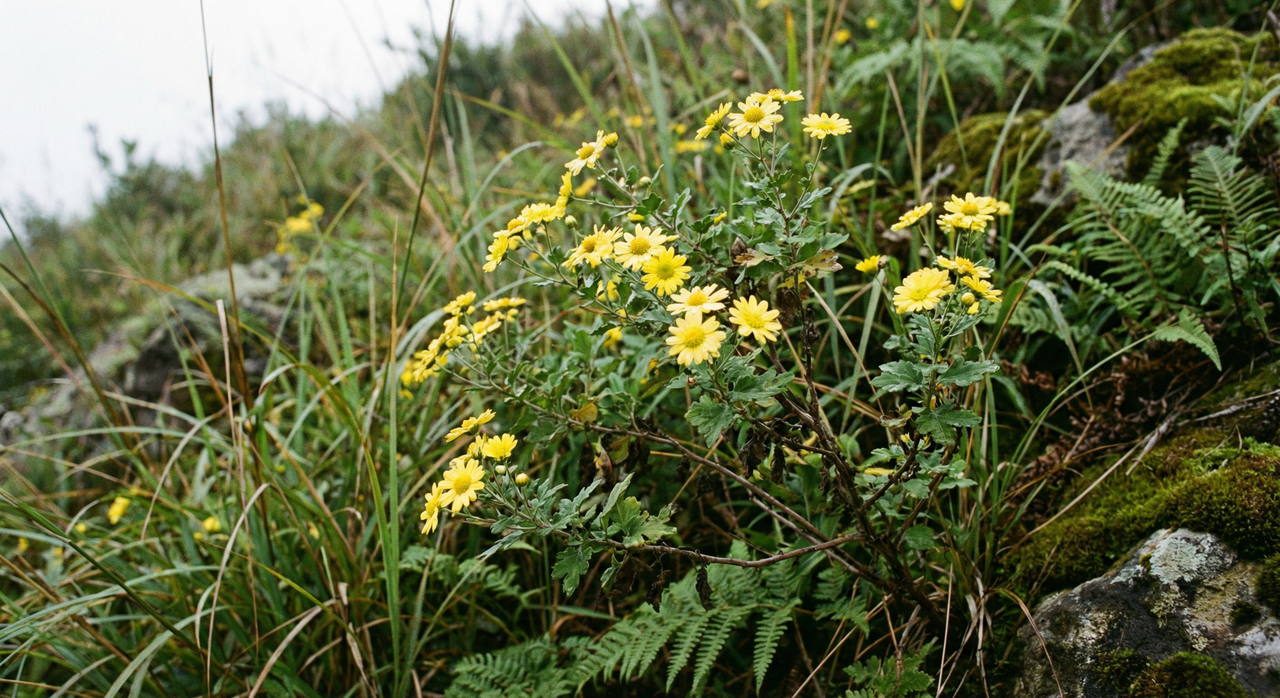
Most people have eaten chrysanthemum without knowing it. That tea labeled "ju hua" at a dim sum restaurant, the pale bitter petals floating in a clear broth at a Korean table, the garnish on a Japanese kaiseki plate that you maybe pushed to the side, that was all Chrysanthemum indicum or one of its close relatives, a plant that has fed and healed people across East Asia for roughly two and a half millennia. Here in the West, we took that same species, spent a few hundred years breeding the flowers enormous and the wild vigor out of them, and then put a "do not eat" sticker on the result. We essentially domesticated a food plant into a decoration and forgot what we started with.
I think about this every autumn when the grocery stores stack up those dense, perfectly round mums in their four-inch pots. Those plants share ancestry with something genuinely useful, something that Chinese herbalists were writing about before Rome was an empire. The wild form is leaner, smaller-flowered, almost weedy looking, and it's honestly one of the more quietly impressive perennials I've grown. Once you know what chrysanthemum actually is, the ornamental cultivar starts to look less like a plant and more like a very beautiful dead end.
Origin and History of Chrysanthemum (Chrysanthemum indicum)
Most people who grow garden mums have no idea they're cultivating the descendants of a scrappy, daisy-flowered perennial that has been earning its keep across East Asian landscapes for millennia. The scientific name of chrysanthemum at the root of that lineage is Chrysanthemum indicum, commonly called Indian chrysanthemum, and it's the wild ancestor behind virtually every garden cultivar you've ever bought at a fall market.[1][2] Understanding where it comes from changes how you grow it, and honestly, how much you respect it.
Botanical Background and Native Habitat of Indian Chrysanthemum
The chrysanthemum botanical name Chrysanthemum indicum points to a species native to China, Japan, Korea, Taiwan, and parts of Russia and Mongolia, with introduced populations established in Europe, North America, and Australia.[1][3] In its homeland it occupies a surprisingly wide ecological range: open forests, roadsides, grasslands, and mountain slopes up to around 2,500 meters, with good drought tolerance once established and a comfortable range from pH 6 to 7.5.[4][5] That adaptability is exactly why it has naturalized so readily wherever it's been introduced.
Depending on climate, C. indicum can behave as a true perennial, an annual, or a biennial, covering USDA zones 5 through 9 and living three to five years or longer under good conditions.[6] It's polycarpic, meaning it flowers and sets seed repeatedly over its lifetime rather than dying after a single bloom cycle. That quality, combined with its genetic diversity, is what made it such a productive parent species for ornamental breeding programs working to develop hardier, disease-resistant cultivars.[7][8]
Visual Characteristics and Identification of Chrysanthemum indicum
In the garden, the wild form grows as a bushy, upright to spreading clump reaching roughly 30 to 100 centimeters tall, with branched stems covered in fine pubescence and a fibrous root system that sometimes sends out short rhizomes.[9] I always label my rows carefully when growing seedlings, because young C. indicum plants are remarkably easy to confuse with other Asteraceae before the foliage matures and that characteristic aroma kicks in. Crush a leaf and you'll know immediately: the scent is sharp, resinous, genuinely herbal in a way that most modern ornamental hybrids simply aren't.
The leaves are alternate, roughly 2 to 10 centimeters long, deeply lobed with serrated margins, and carry that aromatic quality throughout the growing season.[10][11] Flowers are small daisy-like capitula, 2 to 5 centimeters across, with 15 to 30 white to pale yellow ray florets surrounding a tight yellow central disc, blooming from late summer through autumn in response to shortening days.[9][12] Compare those to the 10 to 15 centimeter exhibition blooms of ornamental cultivars like 'Aphrodite' and you're looking at two plants that share ancestry but tell very different stories about what a chrysanthemum flower can be.[13] When I'm specifying plants for pollinator-focused designs versus a formal show garden, that size difference genuinely matters.
Traditional Cultural Significance and Medicinal Uses Across East Asia
Chrysanthemum cultivation in China traces back approximately 2,500 years, with the earliest known written records appearing in the Shennong Bencao Jing around 200 BCE and later elaborated in the 16th-century Bencao Gangmu.[14][15] The plant began, as so many great crops do, as medicine before it became spectacle. By the Song Dynasty (960 to 1279 CE), ornamental breeding had transformed it into a subject of poetry, imperial gardens, and elaborate horticultural festivals.
The meaning of chrysanthemum runs deep across every culture it touched. In China, C. indicum, known as Ye Ju Hua, holds a place among the "Four Gentlemen" flowers alongside plum blossom, orchid, and bamboo, symbolizing resilience, longevity, and the virtues of autumn.[16] The Double Ninth Festival (Chongyang) carried traditions of chrysanthemum wine and communal viewing stretching back to the Han Dynasty, honoring the plant's association with health and the warding off of evil.[17] What does a white chrysanthemum flower mean in many East Asian contexts? Purity and mourning, which explains its common appearance at memorial ceremonies across the region.
By the 8th century CE, the chrysanthemum had reached Japan where the kiku became the imperial emblem and central to the Chrysanthemum Festival, Kiku no Sekku, its use on royal crests traditionally restricted to the emperor's household.[18] In Korea, it symbolized purity and featured in ritual use, while Dutch and English traders eventually carried the genus westward into Victorian gardens during the 17th through 19th centuries.[19]
The practical heart of all that cultural weight is medicinal. In Traditional Chinese Medicine, C. indicum is classified as a cooling herb that clears heat and toxins from the liver and lungs, and it has been prepared as chrysanthemum tea (juhua cha), decoctions, and poultices for respiratory infections, eye inflammation, headaches, and hypertension.[20] Korean Hanbang medicine drew on it similarly for respiratory and skin conditions, while Ayurvedic practitioners employed it to balance Pitta and support detoxification.[21][22] Modern research into its flavonoids, terpenoids, and essential oils has validated much of what those traditions observed.[23]
I source my planting stock exclusively from cultivated nursery stock rather than wild-collected seed, and I'm deliberate about that choice. Wild populations of C. indicum face real pressure from medicinal overharvesting across parts of their native range, even with the species holding IUCN Least Concern status.[24] Frameworks like the Nagoya Protocol exist precisely because indigenous communities hold knowledge and rights tied to these plants that deserve respect, not just legal compliance.[25] Honoring two and a half millennia of accumulated plant knowledge starts with not depleting its source.
Fun Facts and Modern Context for Gardeners
One thing I love telling new growers is that the modestly sized flowers of wild C. indicum are actually far more useful to bees and hoverflies than the enormous globe blooms of exhibition cultivars, where dense petals make the pollen nearly inaccessible. The wild type's aromatic foliage also carries mild pest-repelling properties.[9] After growing wild-type plants alongside modern hybrids for several seasons, the difference in foliage scent is immediately obvious; that aromatic intensity is a reliable field marker and, I'd argue, a reliable indicator of where the real horticultural heritage of this genus actually lives.
Chrysanthemum Varieties and Where to Buy Them
Notable Cultivars of Chrysanthemum indicum and Related Species
If you've ever grown Chrysanthemum indicum from seed and then walked past the mum display at a garden center, the contrast is almost funny. The wild Indian chrysanthemum produces small, unassuming flowers just 2-5 cm across on plants with a relaxed, slightly weedy sprawl.[1] The garden-center mums next to it are practically shouting. What those showy cultivars don't advertise is that most of them owe their existence to C. indicum and a handful of close relatives. Modern Chrysanthemum × morifolium hybrids trace their lineage back through C. indicum, C. lavandulifolium, C. nankingense, and C. zawadskii, centuries of cross-pollination and deliberate breeding producing the enormous palette of colors, forms, and habits we see today.[26][27]
The wild species itself has relatively few named cultivars, but the ones that exist stay honest to its character. 'Dusky Beauty' offers purplish-red semi-double flowers, 'Barbara Murray' is a tight crimson pompon, 'Scotch Mum' goes bright yellow and single, 'Centaureoides Plenus Plenissima' runs pinkish-lavender and fully double, and 'Keock Mistpurple' brings a Korean purple-pink semi-double that I find particularly elegant in autumn light.[28][29] These aren't button chrysanthemum cultivars or spider mum flower types bred for the cut-flower trade; they're closer to what the species actually wants to be.
The practical payoff of staying close to the C. indicum gene pool is disease resistance. Breeders have drawn on this species since the early 20th century specifically to push back against Verticillium wilt and leaf spot pathogens, leveraging the natural tolerance to fungal and viral disease that the wild type carries.[30] In my own humid-summer trials, plants with strong indicum parentage consistently show fewer fungal problems than florist hybrids grown under the same conditions.
If you want something further from the anchor species but still worth growing, Chrysanthemum × morifolium 'Aphrodite' is a good representative of what the dendranthema morifolium breeding lineage can produce. It's an anemone-type with soft pink petals around a pompon center, grows to 2-3 feet, carries good resistance to powdery mildew and Septoria leaf spot, and gives off a mild, fruity-herbal fragrance.[9][31] For cold climates, Chrysanthemum boreale is worth knowing about: a mat-forming perennial only 8-15 inches tall that spreads 12-24 inches and tolerates temperatures down to -20°F, hardy in zones 4-9.[32] I've used similar low-growing chrysanthemums as living mulch under taller perennials with good results; boreale's mat habit makes it a natural fit for that role where indicum would get too tall and assertive.
Sourcing Chrysanthemum indicum Plants and Seeds
Chrysanthemum indicum is an Asian native with limited naturalized populations in parts of the southeastern US, but it's not on any federal noxious weed list and isn't considered invasive here, so there are no special restrictions on buying or growing it.[33][34][35] Seed packets from specialty herb and heirloom chrysanthemum suppliers typically run $3.95-$5.95, while live plants come in around $8.99-$15.99 depending on size and vendor. My preference is to start from reputable seed packets rather than grabbing potted mums at big-box stores; the latter are often treated with growth regulators that compromise their long-term habit, which matters when you're building a perennial guild rather than a seasonal color display.
For hybrid types like 'Aphrodite', you have broader options. It's carried by major nursery suppliers including Monrovia, Proven Winners, and Yoder Brothers, usually available in quart or gallon pots from September through November, priced between $10 and $25.[36][37] Its RHS Award of Garden Merit and documented disease resistance make it worth the slightly higher price if you want a proven performer. Just be aware that importing either species from outside the US requires a phytosanitary certificate confirming freedom from chrysanthemum white rust and other quarantine pests under USDA APHIS rules.[38] For most gardeners, domestic sources are easier and more reliable anyway.
Chrysanthemum indicum Propagation and Planting Guide
Chrysanthemum indicum can be propagated six different ways: seeds, stem cuttings, division, layering, grafting, and tissue culture.[39][40] That's genuinely impressive range for one species, but most home gardeners will never need the full menu. Seeds are for breeders and curious experimenters. Everything else is about speed, reliability, and getting the plant you actually want back in the ground.
Propagation Methods for Chrysanthemum
Division is where I'd tell most gardeners to start, especially if you already have an established clump. Every two to three years in early spring, dig the whole thing up, discard the tired woody center, and replant the vigorous outer sections.[41][19] I've done this with my own clumps every third spring and the difference is striking: the outer portions come back flowering hard while the center just sits there looking exhausted. Division rejuvenates the plant and gives you multiple true-to-type starts in one morning's work.
Stem cuttings are the move for named cultivars or when you want to multiply quickly without dividing an existing plant. Take 4 to 6 inch semi-ripe shoots just below a node in late spring or early summer, keep temperatures at 65 to 75°F with high humidity, and you'll see roots in two to four weeks.[42][39] Success rates run 85 to 95% under good conditions, and I consistently hit the upper end when I take cuttings on overcast mornings from actively growing stems and keep a mist system running. A light dip in IBA rooting hormone helps, but airflow matters just as much: high humidity during rooting invites fungal issues, so good circulation is non-negotiable from day one.[6][43]
Seeds are a longer, messier path. The achenes are small, 1.5 to 2.5 mm, with moderate viability of 50 to 80% that drops off after a year or two in poor storage.[44][45] Many need two to six weeks of cold stratification at around 4°C before they'll germinate reliably, and because the species outcrosses readily, seed-grown plants are highly variable and rarely come true to type.[46][47] If you're breeding or just want to explore what the species throws, seeds are genuinely fun. If you're trying to replicate a specific cultivar, skip them. Layering and grafting exist too; grafting onto compatible rootstocks including C. indicum itself can improve disease resistance with 70 to 90% success,[48][40] but these are specialist techniques. Commercial operations scale with tissue culture using nodal explants on MS medium with cytokinins and auxins,[49] which produces disease-free stock in volume. Useful to know exists; not something most of us need in a backyard food forest.
Soil, Site Selection, and Planting Requirements
Drainage first, always. C. indicum evolved on grassland slopes, roadsides, and riverbanks across East Asia, and it has zero tolerance for sitting in wet feet.[50][19] Fertile, loamy or sandy loam soils at pH 6.0 to 7.0 are ideal, with a sweet spot around 6.2 to 6.5 for optimal nutrient uptake.[51][52] I test my beds every early spring without exception, because I've watched a half-point pH swing in my local soil lock up iron and turn otherwise healthy new divisions yellow within weeks. Pull below 5.5 and you risk manganese and aluminum toxicity; push above 7.5 and iron chlorosis follows.[51] Amend with elemental sulfur to drop pH or agricultural lime to raise it, and add a balanced slow-release 10-10-10 at planting to support establishment.[53][19]
Incorporate compost to hit 3 to 6% soil organic matter and keep bulk density below 1.4 g/cm³; roots need at least 30 to 45 cm of workable depth.[54][55] Heavy clay without amendment is a problem I've seen undermine good plants repeatedly. For containers, a 1:1:1 blend of loam, coir or peat, and perlite works well; mulch around garden plants to hold moisture and keep weeds down.[56] Site the plant where it gets six to eight hours of direct sun daily; partial shade is tolerated but flowering suffers noticeably.[9][57]
Spacing, Timing, and Planting Technique
Space plants 12 to 18 inches apart with 24 to 36 inches between rows for garden beds; tighter 8 to 12 inch spacing suits cut-flower production or containers, though wider gaps earn their keep by improving airflow and reducing disease pressure.[58][59] On my porch containers I run about 10 to 12 inches and it works fine as long as I'm watering from below and not crowding the canopy. Plant in spring once soil reaches 60°F and frost risk has passed, or in early fall for mild-climate gardens.[60][61] Harden off cuttings or seedlings over seven to ten days before transplanting, water in well, and don't skip labeling rows: young chrysanthemum seedlings in their first few weeks look remarkably similar to several common Asteraceae volunteers, and I've made the embarrassing mistake of weeding out my own starts more than once.
Germination Timeline and Establishment
Vegetative starts hit the ground running. Cuttings of cultivars like 'Aphrodite' root in two to four weeks and reach flowering under short-day conditions in eight to twelve weeks total; divisions taken in early spring produce flowering plants that same season.[42][62] Seeds are a different story: germination happens in seven to twenty-one days at 65 to 75°F with light exposure,[41][19] but first bloom typically takes twelve to sixteen weeks from sowing and full garden maturity runs one to two years. In humid climates I find direct-sown seed unreliable; starting indoors under lights and transplanting gives me much better control over that critical germination window. The real reward of getting any of these methods right is the established, overwintered plant that returns each spring with more vigor than the year before.
Chrysanthemum Care Guide: Growing and Maintaining Chrysanthemum indicum
After several seasons of growing Chrysanthemum indicum from seed, cuttings, and divisions, what I've come to appreciate most is how clearly this plant communicates its needs. The leaves, stems, and buds are a running conversation if you learn to read them. The care itself is seasonal rather than static, and getting that rhythm right makes everything else fall into place.
Sunlight Requirements for Healthy Growth and Flowering
Chrysanthemum indicum wants at least six hours of direct sun daily, and in cooler climates it'll take all the light it can get.[41] In USDA zones 7 through 9, though, that full-afternoon exposure becomes a liability. I've watched otherwise healthy plants show scorched, bleached leaf margins by mid-July when they're sited in a west-facing bed with no relief.[63] Moving them to a spot with afternoon shade, or adding a row of taller companions to the west, solves the problem entirely.[5][64]
The opposite problem is subtler but just as damaging. When chrysanthemums aren't getting enough light, they stretch toward it: stems elongate, foliage yellows, and buds stay sparse or fail to form.[19][9] When I see leggy stems and a thin flower count, that's not a fertilizer problem; it's a light problem. Site selection fixes it before anything else will.
Watering Needs and Drought Tolerance
The goal with chrysanthemum watering is consistent moisture without standing water. I check by pressing a finger into the soil; when the top inch or two feels dry, it's time to water.[65] These plants do have some drought flexibility once established and can manage a week or two without supplemental water at reduced vigor, but steady moisture paired with a good layer of mulch is what produces the best growth.[9][66] The roots are relatively shallow, running about 12 to 18 inches deep in well-drained, loamy or sandy soil, so they dry out faster than deep-rooted perennials.[9][11]
I've learned to water at the base in the morning, which keeps foliage dry and sidesteps the fungal issues I ran into early on. Overwatered plants yellow and wilt in ways that look suspiciously like underwatering, so it's worth distinguishing them: true drought stress shows browning leaf edges and reduced bud set,[67] while overwatering produces softer, more generalized yellowing and makes plants vulnerable to root rot.[19] When in doubt, dig two inches down before reaching for the hose.
Soil and Fertilization Guidelines by Growth Stage
Chrysanthemum indicum is a moderate feeder that does best in soil with a pH somewhere between 6.0 and 7.0.[68][52] What it needs from that soil changes as the season progresses. In spring during vegetative growth, it benefits from a nitrogen-forward feed to push leaf and stem development; once buds start forming, you shift to a balanced or potassium-and-phosphorus-richer formula to support flowering rather than foliage.[61][19] A balanced 10-10-10 or 20-20-20 applied every four to six weeks through active growth works well, supplemented with compost to support the soil biology over time.[69][70]
The plant will tell you when something's off. Older leaves that yellow first usually signal nitrogen deficiency, while excessively dark foliage with almost no flower development is nitrogen toxicity.[71] Scorched leaf margins point to potassium shortfall; purplish discoloration in younger growth suggests phosphorus is lacking.[72] I once pushed a bed of mums with weekly 20-20-20 through July and watched the flowering drop by half while the foliage went lush and nearly black. Now I run a soil test every spring and let the numbers guide me rather than a fixed schedule, which also guards against the salt buildup that over-fertilization causes.[61][73] Wild forms, for what it's worth, typically need no supplemental fertilizer at all.[9]
Heat Tolerance and Summer Stress Management
Chrysanthemums are rated for AHS Heat Zones 4 through 9, with optimal growth happening between 18 and 25°C during the day and 12 to 18°C at night.[74][75] Push past 32°C for any sustained stretch and the plant starts aborting flower buds, a response tied to elevated ethylene and disrupted hormone signaling.[76][77] I've seen the same thing happen with gardenias in my beds: both plants drop buds above that threshold unless afternoon shade and steady moisture are maintained, and recognizing that parallel was what finally made me take heat management seriously for my mums.
The toolkit is straightforward once you accept that summer requires active intervention. A 30 to 50 percent shade cloth over exposed beds, a 5 to 10 cm layer of organic mulch (which can drop soil temperature by 3 to 5°C on its own), and bumping irrigation to 2 to 4 liters per plant daily during peak heat will carry plants through the worst of it.[78][79][80] I now put the shade cloth up by mid-June in my zone and take it down after the first week of September. The autumn bloom set on plants that got through summer without stress is noticeably fuller.
Frost Tolerance and Winter Protection
Chrysanthemum indicum is considered tender to half-hardy, viable in USDA zones 5 through 9, and can handle temperatures down to around 20 to 25°F (-6 to -4°C) with proper protection.[81][82][19] Frost damage shows as blackened, water-soaked foliage and stem discoloration; a hard freeze without cover can kill plants to the crown.[83][19]
I've carried plants through brief dips to 22°F using only 4 to 6 inches of pine-straw mulch piled around the base and the shelter of a southeast-facing wall. That's a meaningful real-world result for a plant technically rated zone 5. What I've found matters just as much as the cold itself is drainage; crown rot from sitting in wet soil through winter has cost me more plants than actual frost ever has. Once you've cut stems back to about 6 inches after flowering, mulch the crown generously, ensure water can drain away freely, and the roots will typically wake up just fine in spring.[19][61] Potted plants lose that ground-insulation advantage and usually need to come indoors if temperatures will drop below 20°F.[19][61]
Pruning, Pinching, and Seasonal Maintenance
The biggest difference between a floppy, sparse chrysanthemum and a full, floriferous one comes down to pinching. Once young shoots reach 10 to 15 cm, pinch out the growing tips to force branching; repeat every two to three weeks until mid-July, aiming for three to five pinches total over the season.[84][57][61] The first time I skipped this step entirely I ended up with tall, floppy stems that couldn't support themselves. Now I mark three pinch dates on my calendar in late spring and the plant shape that results genuinely looks like a different species.
Deadheading spent flowers keeps continuous bloom going through the season, and taller varieties benefit from staking once they hit around 30 cm.[85][19] If you want larger individual blooms rather than a mass of smaller ones, remove side buds when the central bud has reached about pea-sized; this directs energy into a single, showier flower.[84][57] After the autumn bloom finishes, cut plants back to roughly 6 inches, then in late winter or early spring remove any remaining dead wood to make way for the new season's growth.[19][84]
Seasonal Rhythm and Lifecycle
Chrysanthemum indicum is a short-day plant, meaning it needs nights longer than 12 to 14 hours to trigger bud formation, which is why blooms arrive naturally from September through November.[86][19] From planting to flowering runs about 90 to 120 days, with the first four to six weeks devoted to leaf and stem development.[41][87] After bloom, the plant dies back to its roots for winter dormancy, then pushes fresh growth again in spring from March through May.[1][88]
Once I understood that arc, caring for chrysanthemums stopped feeling like a series of disconnected tasks. Spring growth is the signal to start pinching and feeding with nitrogen; summer is about managing heat, moisture, and the final pinch before buds set; autumn is the reward; and winter is about protecting the roots and stepping back. Working with that rhythm rather than against it is, honestly, the core of what makes growing perennial mums satisfying rather than frustrating.
Harvesting Chrysanthemum indicum: Timing, Technique, and Flavor
Reading chrysanthemum at harvest is more intuitive than it sounds, but timing does matter more than most people expect. The flowering window for C. indicum in home gardens runs late summer through fall, triggered by shortening days rather than a fixed date on the calendar.[87] Commercial growers manipulate photoperiod to get blooms in 6 to 9 months, but I've always preferred letting my perennials follow the natural rhythm. First-year plants from seed or fresh division often don't bloom until their second autumn, and I find those flowers worth the wait.
When to Harvest for Cut Flowers vs. Medicinal and Culinary Use
For cut flowers, the window is specific: harvest when ray florets are 70 to 80% open, petals are vibrant and unfaded, and the flower head feels firm and turgid.[89][90] I learned this the hard way. Waiting even one extra day past that stage, once ethylene production begins to peak, can cut vase life from two weeks down to a few days.[91] The full bloom window from opening through senescence runs 2 to 4 weeks,[92] so there's a decent harvest period, but earlier in that window consistently gives better results. Early cultivars can reach harvest in 10 to 12 weeks from planting; late ones need 14 to 16.[93]
For culinary and medicinal harvest, the calendar shifts earlier in the season. Young leaves and flower buds are best gathered throughout spring and summer when the growth is most tender.[94] In my garden, that means snipping soft shoot tips from April onward, taking just a few per plant so there's still plenty of foliage to support fall flowering.
Harvest Technique and Post-Harvest Handling
Cut flowers early in the morning before heat builds. Make a 45-degree cut, leave several leaves on the stem, and get those stems into clean water with floral preservative immediately.[95][96] Recut the stems underwater and strip any foliage that would sit below the waterline. Harvesting on this 7 to 10 day cycle actively stimulates new bud development. For storage, keep stems at 0 to 5°C with 90 to 95% relative humidity; under those conditions vase life reliably reaches 10 to 14 days and can stretch to 21 with careful conditioning.[95][97]
One firm distinction: ornamental cultivars like Chrysanthemum × aphrodite use specialized post-harvest chemistry including silver thiosulfate and 8-HQC treatments, and they are not interchangeable with edible C. indicum.[97][98] Different plant, different chemistry, different purpose entirely.
Yield, Flavor Profile, and Safe Use
C. indicum flowers and young leaves are genuinely edible and have a long history in Chinese and Korean cooking as teas, salad garnishes, stir-fries, and leafy vegetables.[99][100] The flavor is bitter and aromatic, driven by flavonoids, sesquiterpene lactones, and volatile oils including camphor and borneol.[101] Petals are milder with a faint sweetness; leaves are more assertive. That camphoraceous edge is something you'd recognize from brushing against the foliage in the garden, and it intensifies in wild-type or late-harvested material. Blanching young leaves for 30 seconds before stir-frying reliably softens the bitterness enough for most palates, and it's become my standard move when cooking for family.[102] Drying method, cultivar, and growing conditions all shift the concentration of those flavor compounds, which is why one gardener's dried chrysanthemum flower tea tastes dramatically different from another's.[103]
On safety, I'll be direct: I only harvest from plants I know have never been sprayed. Ornamental cultivars like 'Aphrodite' are beautiful, but they are not dinner.[104][105] Those hybrids are bred for appearance and often contain pyrethrins at concentrations that make them genuinely toxic if eaten. Pesticide-free C. indicum is what belongs in the kitchen; everything else stays in the vase.
Chrysanthemum Preparation and Uses
Chrysanthemum indicum is genuinely one of the edible chrysanthemums, with flowers, young leaves, shoots, and buds all having centuries of use in Asian kitchens and herbal practice.[106][107][108] That said, I label my edible rows carefully, because the seedlings look nearly identical to other Asteraceae volunteers. I wait for true leaf development before I taste anything new.
Culinary Uses of Chrysanthemum indicum
The leaves have a slightly bitter, herbaceous character with earthy and faintly floral notes when raw; cooking softens that bitterness and brings out a mellow, almost nutty quality.[109] I like young spring shoots blanched quickly and tossed into a miso broth, or chopped raw into a salad where the astringency balances richer dressings. The flowers are a different story: subtly sweet, lightly aromatic, and well-suited to drying for tea.[109][110] Home-grown indicum tea has a more intense, slightly bitter finish than the milder commercial Ju Hua teas you find in Asian grocery stores; if chamomile is gentle watercolor, this is gouache.
Harvest tender spring growth from plants you've grown yourself without pesticides, and only from positively identified C. indicum.[110] That sourcing requirement isn't optional. Garden-center mums, including showy cultivars like 'Aphrodite', are bred for ornament and are routinely treated with systemic pesticides; they have no place in the kitchen.
Medicinal Preparations and Traditional Applications
The same infusion you'd serve at the table has a long history as medicine. In TCM, C. indicum is known as Ye Ju Hua and is used as a cooling herb to address eye inflammations, headaches, fever, and skin irritations, working through what practitioners describe as clearing wind-heat and detoxifying the system.[110][111] A standard preparation is 1-2 teaspoons of dried flowers per 8-ounce cup, steeped 5-10 minutes and taken one to three times daily; dried flower dosages in more formal decoctions run 3-10 g daily, with tinctures typically around 2-5 ml.[112] Treat those figures as a starting framework under qualified guidance, not a prescription.
For drying, I use my dehydrator set below 40°C, which preserves both the delicate floral aromatics and the plant's active compounds.[113] Dried flowers go into labeled glass jars, kept in a cool dark cupboard. They hold their quality for a full season that way.
Non-Food Uses in the Garden and Home
Here's where the permaculture story gets satisfying. C. indicum contains pyrethrins, natural insecticidal compounds concentrated in the flowers and leaves that work against aphids and mosquitoes with considerably lower mammalian toxicity than synthetic alternatives.[114][115][116] I make a simple infusion from my own unsprayed flower heads and it has reliably reduced aphid pressure on my brassicas without the broad-spectrum damage of commercial products, though I do apply it in the evening to limit pollinator exposure. Only clean, pesticide-free indicum flowers belong in that spray bottle; ornamental cultivars are off-limits here too.
Beyond pest management, the plant yields yellow natural dyes from its flowers, used in traditional fabric dyeing,[117] and the cut-back stems and foliage add useful organic matter to the compost pile at season's end. A plant that feeds you, protects your garden, dyes your cloth, and builds your soil is doing a lot of honest work.
Chrysanthemum Health Benefits and Medicinal Uses
Long before anyone was running DPPH assays or measuring cytokine suppression in a lab, people across East Asia were already getting a lot of mileage out of chrysanthemum. The research is catching up to a tradition that's been running for millennia, and what it's finding is genuinely interesting.
Traditional Uses in Chinese Medicine and Asia
In traditional Chinese medicine, Chrysanthemum indicum is known as Ye Ju Hua and classified as a cooling herb that disperses wind-heat and resolves toxicity.[118][119] Practitioners combined it with honeysuckle for boils, carbuncles, and skin infections, and used it for sore throats and respiratory complaints.[118] Across Asia more broadly, it has a documented history as a treatment for inflammation, pain, and infections, and as a diuretic.[120] At the first hint of a sore throat, I brew a simple cup with dried flowers, fresh ginger, and a little honey. It's not a replacement for medical care, but the cooling, slightly bitter quality of the tea does feel like it's doing something, and I'm clearly not the first person to think so.
Key Phytochemicals: Flavonoids, Sesquiterpenes, and Essential Oils
Chrysanthemum indicum produces an impressive array of secondary metabolites: flavonoids, sesquiterpenes, triterpenoids, phenylpropanoids, coumarins, and essential oils, with over 100 compounds isolated from the plant.[121][122] The heavy hitters are luteolin and apigenin, along with chlorogenic acid and quercetin.[123][124] The essential oils from the flowers contain borneol, camphor, germacrene D, and chrysanthemol, with flower oil yields typically running 1-2%.[125]
These compounds aren't evenly distributed. Leaves and stems concentrate the flavonoids (luteolin can reach up to 1.5-2% dry weight), roots hold sesquiterpenes and coumarins, and flowers deliver essential oils and pyrethrins.[126] Flavonoid content also peaks during autumn flowering, running 20-30% higher in fall than in summer.[126] In my Central Florida garden I harvest flowers for tea in late October precisely because the blooms are at their most pungent then. That fragrance intensity is a signal worth paying attention to. Ornamental cultivars like Aphrodite share overlapping flavonoid profiles (luteolin-7-O-glucoside, apigenin, chlorogenic acid), but cultivar-specific concentration data is much thinner than what we have for the anchor species.[127]
Pharmacological Research: Anti-Inflammatory, Antioxidant, and Beyond
Most of this data comes from in vitro and animal studies, with limited human clinical trials completed.[128][119] That caveat in place, the preclinical evidence is genuinely impressive. Anti-inflammatory action works through inhibition of NF-kappaB signaling and COX-2 expression, suppressing pro-inflammatory cytokines like TNF-alpha and IL-6.[129][128] Antioxidant capacity is driven by flavonoids and polyphenols activating the Nrf2 pathway and upregulating protective enzymes like SOD and HO-1, with free-radical scavenging comparable to ascorbic acid in some studies.[130][128] Essential oil constituents show antimicrobial activity against Staphylococcus aureus and E. coli, disrupting bacterial cell membranes with minimum inhibitory concentrations in the 0.25-2 mg/mL range.[131] Animal models have also shown analgesic effects, potentially linked to CB2 receptor agonism from beta-caryophyllene.[132] Anticancer research points to apoptosis induction via caspase activation and Bcl-2 downregulation, with selective cytotoxicity against hepatocellular carcinoma cell lines.[133][134] Across the genus there's also preliminary evidence for neuroprotective, hepatoprotective, antidiabetic, and antihypertensive effects, including ACE inhibition with IC50 values of 0.5-1 mg/mL.[128][135] All of it warrants clinical follow-through, and I always tell clients who want to use chrysanthemum medicinally to loop in a qualified practitioner before they do.
Nutritional Profile of Leaves and Flowers
For dietary use, the leaves are where the nutritional action is. Raw chrysanthemum leaves deliver up to 133% of the daily value for vitamin A (around 166 mcg RAE per 100g) and a respectable 3.5-50 mg of vitamin C, depending on species and how they're prepared.[136][137] The mineral picture is solid too: 100-260 mg calcium, 2-5 mg iron, 300-500 mg potassium, and 34-100 mg magnesium per 100g raw.[138] Overall, the macronutrient profile is light (20-40 kcal, 2-4g protein, around 91g water per 100g), making the leaves a respectable salad green rather than a calorie source.[136] I harvest the young, tender leaves in early spring before flowering for exactly this purpose. The standout outlier is Chrysanthemum boreale, whose leaves contain an extraordinary 648 mg of vitamin C and 889 mg of calcium per 100g raw, which is remarkable but not representative of what most gardeners are growing.[139] A critical point: not all chrysanthemums are edible. Stick to known safe varieties from C. coronarium and C. morifolium lineages, and avoid species like C. arcticum.[140] I grow edible and ornamental types side by side and label them carefully because in spring the foliage looks remarkably similar; that's not a mix-up anyone wants to make.
Safety Considerations and Contraindications
At moderate doses, Chrysanthemum indicum has low acute toxicity, with an LD50 above 5 g/kg in animal models and no hepatotoxicity or nephrotoxicity observed up to 2000 mg/kg.[127] That said, there are real risks that deserve direct attention rather than fine-print disclaimers.
Pet owners need to take chrysanthemum toxicity seriously. The plant causes vomiting, diarrhea, drooling, depression, and potentially seizures in dogs and cats.[105] Cats are especially vulnerable because they lack the glucuronidase enzyme needed to metabolize pyrethrins effectively.[105][141] After a curious cat nibbled a fallen bloom in my garden one early season, I moved every chrysanthemum onto raised benches during bloom. Problem solved, but I wish I hadn't needed the lesson.
For humans, the main concerns are Asteraceae sensitivity and drug interactions. Sesquiterpene lactones like alantolactone can trigger allergic contact dermatitis, hay fever symptoms, and respiratory irritation.[126][142] If you react to ragweed or daisies, skip chrysanthemum entirely; I've seen contact dermatitis in clients who ignored that warning. I also wear gloves when doing heavy pruning work for the same reason. Apigenin and related flavonoids may enhance anticoagulant effects in people taking warfarin, and additive hypotensive effects are possible with blood pressure medications.[143][144] Chrysanthemum tea is contraindicated during pregnancy due to potential uterine stimulant effects and insufficient safety data.[145][146] Finally, ornamental cultivars like Aphrodite are not appropriate for consumption; beyond lower safety documentation, commercially grown ornamentals routinely carry pesticide residues that make them a hard no for the kitchen.[105]
Chrysanthemum Pests and Diseases
There's a productive tension at the heart of growing Chrysanthemum indicum: it's a plant that faces real pest and disease pressure, yet it carries a chemistry and genetic toolkit that makes it measurably tougher than the hybrid garden mums most of us grew up with. I've grown wild-type C. indicum side by side with modern cultivars in Central Florida beds, and the difference in summer aphid pressure is visible enough that I point it out to every client who asks why I keep reaching for the wild form. That resistance isn't magic; it's the product of wild genetic diversity, cell wall reinforcement, antifungal root compounds, and antimicrobial phytoalexins that cultivated C. morifolium has largely traded away in the pursuit of showier blooms.[147][148]
Disease Resistance in Chrysanthemum indicum
C. indicum's strongest disease credentials are in the fungal department. It shows solid resistance to powdery mildew, Fusarium wilt, Alternaria and Septoria leaf spots, and white rust.[149][150][151] Resistance to Sclerotinia rot and Phytophthora root rot is more moderate, and viral susceptibility to chrysanthemum virus B varies enough by strain and ecotype that I wouldn't make a blanket promise about it.[152][153] The one disease I treat as the primary weak point is Verticillium wilt. C. indicum handles it better than cultivated hybrids, but once you see that vascular discoloration and the characteristic one-sided wilting, the plant comes out. There's no recovering from it, and leaving infected material in the bed is an invitation to spread it.[154]
Related wild species like C. boreale carry a similarly strong disease profile, with good resistance to Botrytis blight and tolerance to Pythium and Rhizoctonia, though it shares the wild-type weakness for Phytophthora in waterlogged soil.[155] Contrast that with something like C. × aphrodite, which holds up reasonably well against powdery mildew and leaf spot but shows higher susceptibility to rust and viral infection under stress.[19] That's the cultivar trade-off breeders keep navigating, and why indicum and boreale germplasm still anchor disease-resistance breeding programs.[156]
Keeping chrysanthemum plant diseases in check comes down to conditions as much as genetics. Temperatures between 15 and 25°C with moderate humidity support that natural resistance; push outside those ranges and even a tough wild-type plant becomes more vulnerable.[147] In humid climates especially, spacing plants 12 to 18 inches apart, keeping water off the foliage, and clearing infected debris promptly will do more than any spray.[157][158]
Common Insect Pests and Natural Defenses
The full pest list for chrysanthemums is honestly humbling: the following can all show up:
- aphids
- spider mites
- leafminers
- thrips
- whiteflies
- leafhoppers
- caterpillars
C. boreale carries similar defenses, and specific breeding lines have shown aphid infestation reductions of up to 70 percent compared to commercial cultivars.[163] Garden hybrids like C. × aphrodite don't share that advantage; they tend toward moderate to high susceptibility to aphids, spider mites, thrips, and Japanese beetles.[164]
My approach now is to wait before reaching for even organic sprays. The first time I saw honeydew on the stems and immediately hit the plant with neem oil, I also wiped out the ladybug scouts that were already arriving. I learned to give it a few days. Biological controls like ladybugs, parasitic wasps, and predatory mites do real work when you let them, and neem oil or insecticidal soap should be a last resort rather than a first response.[165][166] Starting with C. indicum's inherent defenses and building outward with good airflow, scouting, and beneficial habitat gives you a system that mostly takes care of itself.
Chrysanthemum in Permaculture Design
Most gardeners know chrysanthemum as a fall porch decoration. What they're missing is a plant with genuine ecological intelligence, one whose wild form has been quietly doing useful work in East Asian landscapes for thousands of years before anyone thought to breed it for bigger blooms.
Climate Adaptation and Hardiness Zones
Chrysanthemum indicum is reliably hardy across USDA zones 5-9, tolerating minimum temperatures down to around -20°F (-29°C) with some winter mulching in exposed spots.[9][81] It performs best when daytime temperatures stay in the 60-75°F range, and starts showing heat stress above 90°F in humid conditions, so placement matters more in the Deep South than in the mid-Atlantic or Midwest.[9][167] That's a design consideration worth noting upfront, because humid subtropical heat changes what the plant can realistically offer.
In its native East Asian range, the species grows from sea level all the way to 2,500 meters, colonizing forest edges, riverbanks, and disturbed ground where annual rainfall runs 800-1,500 mm.[168][169] That origin tells you a lot: this is a plant built for edges and transitions, not manicured beds. For cold-climate designers pushing into zone 4, Chrysanthemum boreale may extend that range with adequate snow cover or protection.[170] Cultivated selections like 'Aphrodite' share the 5-9 hardiness envelope and full-sun preference, but they tend to be less ecologically vigorous than the wild type.[61] Knowing these parameters gives a designer genuine confidence placing chrysanthemums in temperate guilds from the Midwest all the way to the mid-Atlantic coast.
Ecosystem Functions and Services
The strongest permaculture argument for chrysanthemum is its bloom timing. Those composite flowers open July through October, right when most of the garden is winding down, and they draw in honeybees, bumblebees, wild bees from genera like Halictus and Lasioglossum, syrphid flies, butterflies, and beetles in numbers that can genuinely surprise you.[171][172] In my experience, a single mature clump can draw clouds of hoverflies and bees right when the garden most needs them. After watching hoverfly numbers drop in my own yard during a drought year, I now keep a dedicated wildflower strip alongside my chrysanthemum patch to make sure foragers always have somewhere to land. The species is cross-pollinated by insects and shows protandry in its disk florets to reduce selfing, which means it needs that insect traffic to function properly in a garden ecosystem.[173] Note that many modern hybrid cultivars are sterile or propagated vegetatively, so the pollinator benefit belongs mostly to the wild-type and open-pollinated selections.[174]
As a companion plant, chrysanthemum earns its space in vegetable polycultures alongside brassicas, tomatoes, beans, carrots, and lettuce, where its pyrethrin-like compounds and volatile oils deter nematodes and aphids.[175][176] I should say, though, that I avoid making homemade chrysanthemum teas or sprays anywhere near my pollinator beds. The same chemistry that deters aphids can affect beneficial insects if it's used carelessly, so integrated pest management thinking applies here. The pest-repellent properties are a structural benefit of the living plant in a guild, not a license to brew concentrates.
Below the soil surface, the fibrous root system reduces erosion on slopes, and the plant shows phytoremediation potential by accumulating heavy metals like lead, cadmium, and zinc in roots and shoots.[177][178] As a dynamic accumulator, it cycles potassium and calcium back into the system through leaf-litter decomposition.[177] I cut and compost the aerial biomass each fall, which turns that nutrient uptake into practical cycling rather than leaving it as an abstract claim. One genuine caution: chrysanthemum also exhibits allelopathic properties, releasing root exudates that can suppress weed germination and growth in the surrounding soil.[179] That's useful for weed management, but it means you need to think carefully about which guild companions you put nearby. Associations with arbuscular mycorrhizal fungi support nutrient and water uptake, and companion planting with borage, lavender, or asters can boost pollinator visitation significantly.[180][181]
Forest Garden Layer and Guild Placement
Chrysanthemum indicum sits in the herbaceous layer of a food forest or forest garden, where its spreading perennial habit, fall bloom, and multi-functional chemistry make it a genuinely useful guild member when sited thoughtfully.[19] I've paired it with nitrogen-fixers and deeper-rooted perennials in past guild assemblies, and the combination consistently produces improved late-season soil structure alongside the kind of wildlife activity that makes the garden feel alive in October. The wild indicum form has a spreading, slightly weedy nature that the well-bred cultivars don't. I divide and label my clumps every few years specifically to keep them from crowding neighboring herbs, and I'm deliberate about not planting directly next to shallow-rooted annuals where the allelopathy could become a problem rather than an asset.
The good news for anyone hesitant about introducing a non-native spreading perennial: chrysanthemum is not regarded as invasive in the United States, where it remains primarily an ornamental plant with no documented naturalization concerns.[106][182] Its wild populations in East Asia are listed as Least Concern, though habitat loss remains a pressure worth acknowledging when sourcing plants. Planted with its tendencies in mind, and positioned where its spread contributes ground cover and erosion control rather than competition, this is a plant that enhances a system rather than challenging it.
The Mum I Finally Stopped Underestimating
I'll be honest: I planted my first Chrysanthemum indicum mostly to fill a late-season gap, the way you grab something at the nursery without much intention. It came back the following autumn bigger, bushier, and covered in pollinators while everything else in that bed was winding down. I made tea from the flowers that October, standing at the kitchen counter in a flannel shirt, and something about that moment made me feel like I'd finally caught up to what people in China figured out two thousand years ago.
Sources 182
- Chrysanthemum indicum ↩
- Chrysanthemum indicum ↩
- Flora of China: Chrysanthemum indicum ↩
- Flora of China - Chrysanthemum indicum ↩
- Missouri Botanical Garden Plant Finder - Chrysanthemum indicum ↩
- USDA PLANTS Database - Chrysanthemum indicum ↩
- Kew Science - Plants of the World Online: Chrysanthemum indicum ↩
- American Horticultural Society - Breeding Hardy Chrysanthemums ↩
- Missouri Botanical Garden - Chrysanthemum indicum ↩
- Flora of China - Chrysanthemum indicum ↩
- Kew Royal Botanic Gardens - Chrysanthemum indicum ↩
- Royal Horticultural Society - Chrysanthemum indicum ↩
- Royal Horticultural Society - Chrysanthemum 'Aphrodite' ↩
- Origin and Domestication of Chrysanthemum morifolium ↩
- Chrysanthemum: A History and Cultural Significance ↩
- Four Gentlemen: The Symbolism of Chrysanthemums in Chinese Art ↩
- Symbolism of Flowers in Traditional Chinese Culture ↩
- The Chrysanthemum Throne: Symbolism in Japanese Culture ↩
- History of Chrysanthemum Cultivation ↩
- Chrysanthemum indicum: Ethnopharmacology, phytochemistry, and pharmacology of an important traditional Chinese medicine ↩
- Chrysanthemum in Korean Medicine ↩
- Ayurvedic Uses of Chrysanthemum indicum ↩
- Chrysanthemum indicum L.: An insight into ethnopharmacology, phytochemistry, and pharmacology ↩
- Sustainability and Overharvesting of Medicinal Plants like Chrysanthemum indicum ↩
- Cultural Appropriation in Herbal Medicine: Indigenous Perspectives ↩
- USDA PLANTS Database ↩
- Royal Horticultural Society Plant Trials ↩
- Missouri Botanical Garden Plant Finder - Chrysanthemum indicum ↩
- Royal Horticultural Society - Chrysanthemum indicum (group) - CCRAA ↩
- Chrysanthemum Breeding History and Disease Resistance ↩
- Essential Oils of Chrysanthemum ↩
- Kew Gardens Checklist of Iconic Plants: Chrysanthemum boreale ↩
- Chrysanthemum indicum L. ↩
- Federal Noxious Weeds List ↩
- Invasive Plant Atlas of the United States ↩
- Florists' Chrysanthemums ↩
- Chrysanthemum 'Aphrodite' ↩
- Phytosanitary Requirements for Chrysanthemum White Rust ↩
- Chrysanthemum Propagation Guide ↩
- Propagation of Chrysanthemums ↩
- Chrysanthemum indicum ↩
- Propagation of Chrysanthemums ↩
- Horticulture Extension Guide: Chrysanthemums ↩
- Flora of China: Chrysanthemum indicum ↩
- Seed Storage of Horticultural Crops ↩
- Propagation of Chrysanthemums ↩
- Genetic Diversity and Breeding in Chrysanthemum indicum ↩
- Graft Compatibility in Chrysanthemum Species ↩
- Micropropagation of wild chrysanthemum (Chrysanthemum indicum) using nodal explants ↩
- Flora of China - Chrysanthemum indicum ↩
- Chrysanthemum indicum - North Carolina Extension Gardener Plant Toolbox ↩
- Nutrient Management in Chrysanthemums ↩
- pH Management for Chrysanthemum Production ↩
- Soil Compaction Effects on Root Growth of Chrysanthemum Species ↩
- Soil Management for Chrysanthemum Production ↩
- Growing Chrysanthemums in Containers ↩
- Chrysanthemums: How to Grow ↩
- Chrysanthemum Production Guide ↩
- Chrysanthemum indicum Cultivation Guide ↩
- Chrysanthemum (Hardy Garden Mums) ↩
- Growing Chrysanthemums in the Home Garden ↩
- Florist Chrysanthemum Production ↩
- Missouri Botanical Garden Plant Finder ↩
- University of California Agriculture and Natural Resources ↩
- Missouri Botanical Garden - Chrysanthemum indicum ↩
- Horticulture Research - Drought Tolerance in Chrysanthemum Species ↩
- Chrysanthemum Care: Watering and Stress Symptoms ↩
- Chrysanthemum indicum: Agronomic Practices ↩
- Nutrient Management for Chrysanthemum Cultivation ↩
- Organic Fertilization for Floriculture ↩
- Nutrient Disorders in Chrysanthemum ↩
- Nutrient Disorders of Chrysanthemum ↩
- Soil Fertility for Cut Flowers ↩
- AHS Heat Zone Map and Plant Ratings ↩
- Physiological Responses of Chrysanthemum to Heat Stress ↩
- Effects of High Temperature on Flower Bud Development in Chrysanthemum ↩
- Physiological Responses of Chrysanthemum indicum to Heat Stress ↩
- Heat Stress Management in Chrysanthemum Cultivation ↩
- Mulching Effects on Soil Temperature in Flower Crops ↩
- Irrigation Strategies for Ornamental Plants Under Heat Stress ↩
- USDA Plant Hardiness Zone Map ↩
- Missouri Botanical Garden Plant Finder ↩
- University of Minnesota Extension - Protecting Chrysanthemums from Frost ↩
- Growing Chrysanthemum indicum ↩
- Pruning Chrysanthemums for Better Blooms ↩
- Photoperiodism and Flowering in Chrysanthemum ↩
- Chrysanthemums: Outdoor and Greenhouse Production ↩
- Royal Horticultural Society - Chrysanthemum indicum ↩
- Postharvest Biology and Technology of Cut Chrysanthemums ↩
- Phenological Stages and Harvest Maturity in Chrysanthemum indicum ↩
- Ethylene Production and Senescence in Wild Chrysanthemum Species ↩
- Phenology of Chrysanthemum indicum ↩
- Commercial Cut Chrysanthemum Production ↩
- Cultivation and Harvesting of Chrysanthemum indicum ↩
- Postharvest Handling of Cut Flowers ↩
- Growing Chrysanthemums for Cut Flowers ↩
- Postharvest Handling of Cut Flowers ↩
- Chrysanthemum Production Guide ↩
- Edible Flowers: A Review ↩
- Chrysanthemum indicum in Herbal Medicine and Cuisine ↩
- Ethnopharmacological and Phytochemical Review of Chrysanthemum indicum ↩
- Volatile Composition and Odour Profile of Chrysanthemum indicum Flowers ↩
- Effect of Different Drying Methods on the Quality and Flavor Compounds of Chrysanthemum indicum ↩
- Are Chrysanthemums Edible? ↩
- Toxicity of Ornamental Plants ↩
- USDA Plants Database - Chrysanthemum indicum ↩
- Nutritional Composition of Chrysanthemum indicum Leaves ↩
- Edible Flowers: Chrysanthemum ↩
- Chrysanthemum indicum - Useful Tropical Plants Database ↩
- Ethnobotany and Pharmacology of Chrysanthemum indicum ↩
- Pharmacological Activities and Safety of Chrysanthemum indicum ↩
- Chrysanthemum indicum - An Updated Review on Ethnomedicinal Uses and Health-Promoting Activities ↩
- Storage of Medicinal Plants ↩
- Pyrethrins: Natural Insecticides from Chrysanthemums ↩
- Insecticidal Activity of Chrysanthemum indicum Essential Oil Against Aphids ↩
- Pyrethrins as Natural Pest Control ↩
- Natural Dyes from Flowers: Chrysanthemum Species ↩
- Traditional Chinese Medicine: Chrysanthemum indicum ↩
- Chrysanthemum indicum L.: An Insight into Traditional Uses and Pharmacology ↩
- Ethnopharmacological Survey of Chrysanthemum indicum in Asia ↩
- Chemical Constituents and Biological Activities of Artemisia (Chrysanthemum) Species: A Review ↩
- Secondary Metabolites from Chrysanthemum indicum: A Comprehensive Review ↩
- Phytochemical Analysis of Chrysanthemum indicum L. from Different Locations ↩
- Phytochemical and pharmacological review of Chrysanthemum indicum ↩
- Essential oil composition of Chrysanthemum indicum ↩
- Phytochemical Profile of Chrysanthemum indicum ↩
- Phytochemical and Pharmacological Review of Chrysanthemum morifolium ↩
- Pharmacological Activities and Mechanisms of Action of Chrysanthemum indicum: A Review ↩
- Anti-inflammatory and Antioxidant Activities of Chrysanthemum indicum Extract ↩
- Antioxidant Properties of Chrysanthemum indicum through Nrf2 Pathway ↩
- Antimicrobial Activity of Essential Oil from Chrysanthemum indicum ↩
- In Vivo Analgesic Activity of Chrysanthemum indicum in Animal Models ↩
- Anticancer Potential of Chrysanthemum indicum: In Vitro and In Vivo Studies ↩
- Anti-Cancer Potential of Chrysanthemum indicum Extracts ↩
- Pharmacological Activities of Chrysanthemum morifolium: A Review ↩
- Chrysanthemum leaves, raw ↩
- Nutritional Composition of Wild Edible Plants in Korea ↩
- USDA FoodData Central - Chrysanthemum, raw ↩
- Kim et al. (2009) Journal of the Science of Food and Agriculture ↩
- Edible Flowers: Chrysanthemum ↩
- Toxic Plants for Pets: Chrysanthemum ↩
- Sesquiterpene Lactones in Compositae: Causes of Allergic Contact Dermatitis ↩
- Flavonoids in Chrysanthemum and Anticoagulant Effects ↩
- Herbal Drug Interactions: Focus on Anticoagulants ↩
- Chrysanthemum - Uses, Side Effects, and More ↩
- Herbal Medicine Safety in Pregnancy ↩
- Breeding Chrysanthemum Rootstocks Using C. indicum for Disease Resistance ↩
- Comparative Pathogen Susceptibility in Chrysanthemum indicum and C. morifolium ↩
- Evaluation of Chrysanthemum indicum for Resistance to Powdery Mildew ↩
- Fusarium Wilt Resistance in Wild Chrysanthemum Species ↩
- Review of Fungal Diseases in Ornamental Chrysanthemums ↩
- Resistance to Sclerotinia and Phytophthora in Chrysanthemum indicum ↩
- Viral Pathogens in Chrysanthemum indicum ↩
- Verticillium Wilt of Chrysanthemum ↩
- Breeding for Powdery Mildew Resistance in Chrysanthemum using C. boreale ↩
- Environmental Factors Affecting Pest Interactions in C. indicum ↩
- Powdery Mildew on Ornamentals - University of Minnesota Extension ↩
- Chrysanthemum Disease Management - Penn State Extension ↩
- Insect Pests of Chrysanthemum ↩
- Pests of Chrysanthemum ↩
- Pyrethrum and Pest Resistance in Chrysanthemum indicum ↩
- Genetic Diversity and Pest Resistance in Chrysanthemum indicum ↩
- Breeding for Insect Resistance in Chrysanthemum boreale ↩
- Insect Pests of Chrysanthemums ↩
- Integrated Pest Management for Chrysanthemums ↩
- Insect Management on Chrysanthemums ↩
- Growing Chrysanthemums - University of Minnesota Extension ↩
- Flora of China - Chrysanthemum indicum ↩
- Distribution and Habitat of Chrysanthemum indicum in East Asia ↩
- USDA Plants Database - Chrysanthemum boreale ↩
- Pollination Ecology of Wild Chrysanthemum (Chrysanthemum indicum L.) in Korea ↩
- Insect Visitors and Pollinators of Chrysanthemum indicum ↩
- Pollination ecology of Chrysanthemum indicum L. in natural populations ↩
- Environmental Requirements for Chrysanthemum Cultivation - NCBI ↩
- RHS Gardening: Companion Planting Guide ↩
- Companion Planting with Chrysanthemums for Pest Control ↩
- Phytoremediation Potential of Chrysanthemum indicum for Heavy Metals ↩
- Soil Erosion Control with Native Plants ↩
- Allelopathic Effects of Chrysanthemum indicum Extracts on Seed Germination ↩
- Mycorrhizal Associations in Chrysanthemum ↩
- Attracting Pollinators to Your Garden ↩
- IUCN Red List: Chrysanthemum indicum ↩