Most people have never actually tasted cinnamon. I don't mean that as a riddle. I mean that the warm, slightly sharp, almost medicinal powder sitting in your spice cabinet right now is almost certainly cassia, a close relative that dominates grocery store shelves worldwide and shares the name without sharing much else. True cinnamon, Cinnamomum verum, the species that earned the name, is softer, more complex, laced with something almost citrusy and faintly sweet in a way that cassia simply isn't. The first time I rolled a freshly dried Ceylon quill between my fingers and tasted it straight, I genuinely stopped what I was doing. It didn't taste like what I'd been calling cinnamon my entire life.
That gap between the real thing and the global commodity is the whole story of this plant, and it runs deeper than flavor. It shapes where cinnamon gets grown, how it's harvested, whether it's safe to consume daily, and why a tree from the wet rainforests of Sri Lanka ended up at the center of some of history's most ruthless trade wars. I've grown it in two tropical climates now, and every time I peel back that papery outer bark and smell what's underneath, I'm reminded that this is a plant people once valued by the gram the way we value silver. That history didn't happen by accident.
Understanding where Cinnamomum verum actually comes from, and what makes it genuinely different from the cassia relatives crowding it out of the market, changes how you grow it, how you use it, and honestly, how much you enjoy it.
Cinnamon Origin, History, and Botanical Background
Most people have a jar of cinnamon in their spice cabinet without giving much thought to where it actually comes from. But the story behind this spice is genuinely fascinating, and it starts with a distinction that matters more than most cooks realize: the difference between Cinnamomum verum, the true Ceylon cinnamon tree, and its bolder cassia relatives that fill the vast majority of supermarket shelves.
Botanical Background and Native Habitat
Cinnamomum verum is native to the wet zone of southern Sri Lanka, where it grows as an understory tree in tropical rainforests at elevations up to around 600 meters, in conditions of intense annual rainfall, 75 inches or more.[1][2][3] That native-forest context is something I think about every time I'm placing a cinnamon tree in a food-forest design. It's a shade-adapted, moisture-loving understory species at heart, and getting that siting right makes everything else easier. The genus spreads widely across tropical Asia: C. burmannii (Indonesian cassia) hails from the lowland rainforests of Sumatra, Java, and Borneo; C. loureiroi (Saigon cinnamon) from Vietnam, Cambodia, and Laos; C. tamala (Indian bay leaf) from the eastern Himalayas; and C. malabatrum from the Western Ghats of India, each occupying its own distinct elevation band and forest type.[4][5][6][7]
In cultivation, C. verum reliably achieves heights of 6 to 9 meters, though wild trees can push past 15 meters and live well beyond 50 years.[8] It's polycarpic, meaning it flowers and fruits repeatedly throughout its life, reaching reproductive maturity around 4 to 6 years from germination.[9] In natural forests, populations cluster in clumped distributions, with seeds dispersed by birds and mammals, the same ecological dynamic you'd expect from a fleshy-fruited understory tree.[8][10] C. verum itself is classified as Least Concern by the IUCN, and Sri Lankan cultivation increasingly emphasizes organic methods, coppicing cycles, and fair-trade certification to keep it that way.[11][12] Its cousin C. malabatrum, however, is listed as Vulnerable due to deforestation and overharvesting pressure.[13] When I specify cinnamon for a client project, I always prioritize Ceylon sources with fair-trade certification for exactly that reason.
Traditional and Cultural Uses Through the Ages
Cinnamon's documented history as a valued commodity stretches back roughly 3,500 years. The Ebers Papyrus, dating to around 1550 BCE, records its use in Egyptian embalming, perfumes, and medicine.[14] By the time Herodotus was writing in the 5th century BCE, it was a luxury commodity so coveted that traders deliberately obscured its true origins, attributing it vaguely to Arabia rather than acknowledging its Sri Lankan source.[15] Romans priced it equivalent to silver.[16]
Cultivation in Sri Lanka likely predates 2000 BCE based on genetic evidence, and for centuries the island held something approaching a global monopoly on the spice.[17] The Portuguese arrived in the 16th century and formalized that monopoly through colonial control, followed by the Dutch and then the British, each successive power understanding that controlling Ceylon cinnamon meant controlling something genuinely irreplaceable.[18] That traditional harvesting knowledge belonged to the Salagama caste, and the techniques they developed still inform how premium Ceylon cinnamon is produced today, a lineage worth acknowledging rather than glossing over.
Traditional medicinal use runs deep across the entire genus. In Ayurvedic and Unani systems, cinnamon bark (known as Tvak) appears in the Charaka Samhita as a digestive aid, expectorant, and treatment for respiratory and inflammatory conditions.[19] Sinhalese and Tamil communities in Sri Lanka have long used it for digestive complaints, colds, postpartum care, and skin conditions.[19] C. tamala leaves feature in Hindu puja and havan rituals; C. loureiroi appears in Vietnamese Tet celebrations and ancestral worship; C. burmannii holds ceremonial importance in Minangkabau tradition.[20][21] And C. malabatrum, known historically as Malabathrum, was prized in Greco-Roman trade for perfumes and medicines, referenced by both Pliny the Elder and Dioscorides, sometimes valued above cinnamon itself.[22]
Visual Characteristics and Fun Facts
Cinnamomum verum is a handsome tree in its own right, with a spreading, rounded habit and leathery, ovate leaves 7 to 18 cm long that are dark green above and noticeably paler beneath.[23] Crush a leaf and the aromatic oils announce themselves immediately, a quality that makes it genuinely useful in sensory garden designs. During drier periods, leaves develop increased thickness as a water-conservation response, something I've noticed firsthand on specimens I've observed through a dry season; the foliage takes on a more substantial, almost waxy feel compared to wet-season growth.[24] Small yellowish-white flowers appear in axillary panicles in spring to early summer, followed by small dark purple drupes roughly 1 to 1.5 cm across that ripen from green to near-black, those are what the birds and mammals are after for seed dispersal.[25][26]
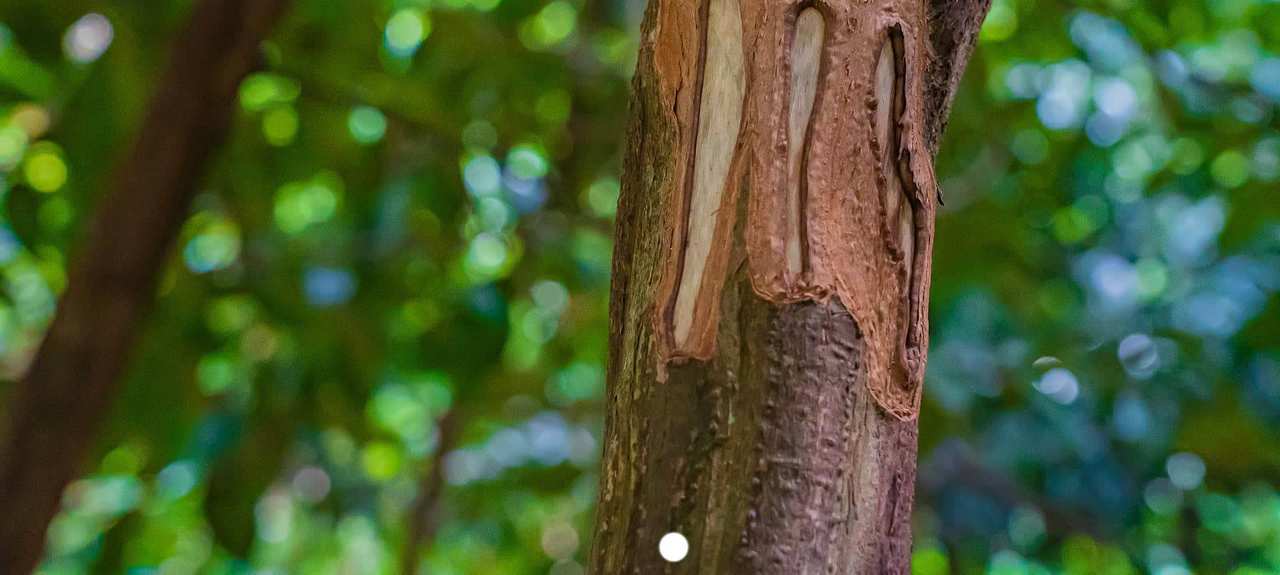
The bark is where the real identification story lives. True Ceylon cinnamon produces thin, papery quills, just 0.5 to 2 mm when processed, that roll into tight nested layers and crumble easily between your fingers.[27] I teach clients to use that simple test when selecting spice plants: if the quill feels fragile and layers like rolled paper, that's Ceylon; if it's thick, hard, and forms a single dense scroll, that's cassia. The chemistry reinforces the distinction. Ceylon cinnamon's essential oil is dominated by cinnamaldehyde in the bark and eugenol in the leaves, with comparatively low coumarin levels relative to cassia relatives.[19] That coumarin contrast is the reason Ceylon remains the prestige choice for frequent use, despite holding a smaller share of global production than C. burmannii or C. loureiroi. Centuries of trade, colonial monopoly, and cultural layering are compressed into every thin, fragrant quill, which is something I find myself thinking about in the quieter moments of a food-forest planting day.
Cinnamon Varieties and How to Source Them
Most of what matters in the cinnamon variety conversation comes back to one fundamental distinction: Cinnamomum verum, the true Ceylon cinnamon from Sri Lanka, versus the broader group of cassia relatives that fill most grocery store spice jars. For home growers and culinary enthusiasts in the US, understanding why that distinction exists starts with the cultivars themselves.
Notable Ceylon Cinnamon Cultivars and Related Species
Sri Lankan cinnamon cultivation relies heavily on vegetatively propagated clones selected for specific traits, and the lineup is more nuanced than most growers expect. The Matale series forms the commercial backbone: MI-2 favored for high yield, MI-6 for exceptional bark quality, and MI-9 as a balanced performer. Sri Gemunu and Sri Wijaya round out the core selections.[28][29] When clients ask me which clone to prioritize, I usually point them toward Maharagama if they want both ornamental value and useful quills with serious aromatic punch -- it can reach up to 2% essential oil content, which is noticeably more fragrant than generic seedling-grown plants even at a young age. Mannar, bred for coastal and saline conditions, is worth knowing about if your site has variable or heavier soils near the coast. Siriyala is prized for aroma, and Nilambur has its own distinct bark characteristics.[30][31]
In cultivation, Cinnamomum verum typically reaches 20 to 30 feet, though wild trees can push past 50 feet. The bark is smooth and light brown when young, and it's harvested as thin quills just 0.5 to 1 mm thick -- noticeably more delicate than anything you'd peel off a cassia tree.[26] That physical thinness directly reflects the chemistry: Ceylon cinnamon contains less than 0.004% coumarin, a compound present at much higher levels in cassia relatives.[26][32] Having dug into the coumarin research myself, I'm confident that for anyone using cinnamon regularly in the kitchen, sourcing true low-coumarin Ceylon cultivars is simply the smarter choice. Selected clones yield 300 to 800 kg of dried bark per hectare annually, with top performers reaching 3,500 kg.[33] Quills are graded by quality and formation, with C5 representing the highest special grade, and Ceylon's milder, sweeter flavor profile has made it the preferred choice in the US market precisely because of that combination of gentler taste and lower coumarin load.[34][35]
The other Cinnamomum species are worth knowing as context. Indonesian cinnamon (C. burmannii) includes the Korintje type from Sumatra's Kerinci region, which is milder and sweeter with coumarin averaging 0.4 to 0.6 mg per gram, and Padang cassia, which is more pungent.[4][36] Saigon cinnamon (C. loureiroi) punches hardest on essential oil content, with selections like Tra My 1 reaching up to 7% oil that's 70 to 85% cinnamaldehyde -- bold and intense, but with a higher coumarin burden.[37] Indian bay leaf (C. tamala) offers regional landraces rather than formal cultivars, with Himalayan types reaching up to 80% eugenol in their leaf oil -- used primarily for leaves, not bark.[38] Malabar cinnamon (C. malabatrum) is similarly leaf-focused, with 1 to 2% leaf oil yield and its localized Nallamala hills variant.[39] None of these match Ceylon's combination of thin, graded quills, delicate flavor, and ultralow coumarin.
Sourcing Ceylon Cinnamon and Related Species in the US
Here's the practical reality: Cinnamomum verum is a specialty tropical plant, not a big-box nursery item.[26][40] The most reliable US sources for live plants include Logee's Plants, Plant Delights Nursery, and RareSeeds (Baker Creek). For seeds and additional species, Sheffield's Seed Co., Strictly Medicinal Seeds, Trade Winds Fruit, Seedman.com, Rare Exotic Seeds, and Etsy sellers fill the gaps, though availability shifts seasonally.[41][42][43] After trialing a few suppliers myself, I've found that plants from Logee's and Plant Delights tend to arrive well-packed and establish more reliably in humid subtropical conditions than those from less specialized retailers -- worth paying a bit more for.
Seeds run $5 to $20 per packet (typically 5 to 10 seeds), while cuttings cost $10 to $50 each, with small bundles of three to five running $20 to $100.[41] Live plants in 6 to 8 inch pots generally cost $20 to $50; larger specimens in 1-gallon-plus containers can reach $100 to $200 or more, typically arriving as 6 to 24 inch plants.[44] Seeds are the most accessible entry point, but be aware that seedlings from multiple Cinnamomum species look remarkably similar in their early weeks -- I label every tray carefully because distinguishing C. verum from C. burmannii at the cotyledon stage is genuinely difficult, and a mix-up will only reveal itself years later when you're trying to peel bark.
Shipping live plants typically involves sphagnum moss wrapping and expedited delivery, usually restricted to the continental US under USDA regulations, with USPS Priority Mail or UPS Ground as standard options.[45][46] On the import side, processed and debarked cinnamon bark moves freely without quarantine restrictions, but unprocessed bark, branches, or live plants may require phytosanitary certificates.[47][48] Cinnamomum verum carries no specific federal import restrictions beyond standard FDA food safety and USDA agricultural compliance, and neither C. tamala, C. loureiroi, nor C. burmannii are listed as federal noxious weeds.[49] For most home growers, buying domestically from a specialist nursery sidesteps import complexity entirely and gets you a hardened plant that's ready to establish rather than a bare-root stress case fresh off an international flight.
Cinnamon Propagation and Planting Guide
Growing cinnamon from scratch teaches you pretty quickly that this plant has strong opinions about how it wants to be handled. The seed biology alone is enough to send most serious growers toward vegetative methods, and once you understand why, the whole propagation picture starts to make a lot more sense.
Cinnamon Seed Morphology, Recalcitrant Biology, and Germination
The fruit is a small indehiscent drupe, 1.0 to 1.5 cm long, with a thin fleshy pericarp that turns purple-black when ripe.[50][25] Each one contains a single seed, and Ceylon cinnamon frequently produces 2 to 5 embryos per seed from nucellar tissue, a trait called polyembryony that it shares with Indian bay leaf but not with Saigon or Indonesian types.[51][52] When I first grew cinnamon from fresh berries, I was astonished to see two or three sturdy shoots emerge from single seeds. I now pot them separately because each can become a true-to-type clone if the nucellar embryos dominate.
The critical factor in propagation is that these seeds are recalcitrant. They cannot tolerate desiccation below roughly 20% moisture content and lose viability within weeks at ambient conditions.[53][50] Viability drops below 50% in as little as 2 to 4 weeks, though storing seeds in moist sand, coir, or sphagnum moss at 15 to 20°C can extend that window to 2 to 8 months. Avoid temperatures below 10°C, which cause chilling injury.[53][54] After losing an entire flat to drying out during a humid Florida summer, I now keep all cinnamon seed trays on a dedicated mist bench and label every row twice. The first true leaves look almost identical to other Lauraceae I've grown, and an unlabeled tray is a genuine mystery.
When you do sow fresh seed, germination is hypogeal and takes 15 to 60 days at 24 to 30°C under high humidity and partial shade. A 24 to 48 hour soak, or light scarification, can push success rates to 50 to 90%, and gibberellic acid improves uniformity if you want a more even flush.[55] Even so, only 20 to 30% of seedlings from Ceylon cinnamon reliably match the low-coumarin, high-oil bark quality that makes this species worth growing in the first place.[56][57] That genetic lottery is exactly why vegetative propagation is the commercial standard.
Vegetative Propagation Techniques for Reliable Clones
If you want to guarantee the clonal traits of a known elite line, there are four practical routes, and the right one depends on your scale and setup.
Semi-hardwood cuttings are the most accessible starting point. Take 10 to 15 cm sections during the rainy season, treat the cut end with IBA at 1000 to 2000 ppm, and stick them into a 1:1 sand-compost mix under 80 to 90% humidity at 25 to 30°C. Done well, you can expect 60 to 80% success within 4 to 6 weeks.[58][59] Air layering is even more reliable for home propagators: girdle a pencil-thick branch, apply 0.8 to 1.0% IBA, pack with moist sphagnum, wrap in plastic, and wait 8 to 12 weeks for 80 to 90% rooting.[60][55]
For nursery-scale work, cleft or veneer grafting onto compatible rootstock achieves 70 to 85% success. I prefer cleft grafting onto C. verum rootstock for home trials because the union calluses reliably in 4 to 6 weeks under a shaded humidity dome, and I can be confident the scion's low-coumarin character will carry through.[61] Tissue culture on MS medium with cytokinins and auxins reaches 90 to 95% success for rapid multiplication of elite lines, though that's squarely in professional lab territory for most of us.[62]
Soil, Site, Light, and Spacing Requirements
Cinnamon is a wet-zone understory tree in its native Sri Lankan habitat, and that origin tells you almost everything you need to know about site selection. It wants well-drained, fertile loamy or sandy-loam soil with 2 to 5% organic matter, a pH of 5.5 to 6.5, good aeration, and at least 60 to 100 cm of rooting depth.[63][64] Waterlogging is the fastest way to lose a plant to Phytophthora root rot, so drainage is genuinely non-negotiable. I test every new bed with an inexpensive probe before planting, because on my native sandy soil, even a modest lime application can push pH high enough to lock out iron within weeks, showing up as interveinal yellowing that's easy to misread as a nitrogen problem.
Light requirements reflect that understory ecology: 4 to 6 hours of morning sun with dappled afternoon shade is the sweet spot for young plants and bark oil quality.[65] Commercial nurseries commonly use 50 to 70% shade cloth for exactly this reason. Once you know the symptom picture, it's easier to diagnose trouble: chlorosis points to pH above 7.0, marginal scorch suggests it's dropped below 5.5, and wilting with wet soil almost always means compaction or poor drainage.[64]
Standard commercial spacing is 3 m by 3 m, yielding roughly 1,111 plants per hectare. Higher-density plantings at 2.5 m by 2.5 m are possible but demand more attention to fertility and airflow.[66][2] My first planting at 2.5 m created a microclimate humid enough to invite leaf spot; wider rows now let me walk the stoolbeds easily for coppicing and give each multi-stemmed plant room to push the thick 2 cm shoots I prefer for quilling. Proper spacing also allows the airflow that keeps fungal pressure manageable in humid climates, and it accommodates the coppicing cycle that keeps plants perpetually productive.[67] Local extension advice is worth seeking before you commit to a layout, since slope, soil fertility, and regional disease pressure all shift the calculus.
Planting Timeline, Transplanting, and Establishment
Plan for patience. Seedlings need 6 to 12 months of protected nursery growth under partial shade and consistent moisture before they're ready for field transplant.[68] Cutting-grown or grafted plants move faster, but even those require a proper hardening-off period before they go in the ground. First commercial bark harvest from cuttings can start at 2 to 3 years, though full, sustained productivity doesn't arrive until years 5 to 7.[69][70] That timeline matters for permaculture planning: a cinnamon guild needs to be designed with companions that earn their keep in the early years while the cinnamon establishes, and harvesting strategies should account for which propagation method got the plants in the ground.
Cinnamon Care Guide and Growing Instructions
Growing cinnamon successfully means accepting one central reality: this is a Sri Lankan rainforest understory tree, and almost every care decision flows from that fact. Get the temperature, humidity, and drainage right, and cinnamon is surprisingly rewarding. Fight its native preferences, and you'll spend a lot of time troubleshooting yellowing leaves.
Sunlight and Light Requirements
Young cinnamon plants genuinely need protection from intense sun. Seedlings thrive under 50-70% shade, and without it they look shockingly etiolated or bleached, which alarms new growers who interpret it as a nutrient problem.[71][72] In my own experience transitioning young plants from a shaded nursery to a garden bed, that gradual shift toward brighter exposure is non-negotiable. Mature trees prefer full sun or at least four to six hours of direct light, ideally morning sun that eases off during the hottest part of the day, and they still benefit from some protection in hot arid conditions.[73] This pattern holds across the genus: all the close relatives appreciate more shade early and more light once established.
Watering Needs
Ceylon cinnamon comes from forests receiving 2,000-4,000 mm of rain annually, so consistent moisture is foundational.[25] For mature plants, deep infrequent watering works best: roughly one to two inches per week, or every seven to fourteen days once the top one to two inches of soil have dried out.[74] Seedlings need lighter, more frequent attention, every two to three days, keeping that top inch evenly moist without ever letting them sit in soggy conditions.[75]
I have learned the hard way that letting the top two inches dry out is non-negotiable in wet summer climates. The first sign of yellowing older leaves tells me air flow needs improving long before I consider reaching for the hose. Overwatering shows up as wilting, yellowing, and foul-smelling soil with real Phytophthora risk underneath.[73][76] Underwatering reads differently: leaf edges brown and scorch, leaves curl, and growth stalls.[77] A shallow fibrous root system makes the plant efficient in humid soils but genuinely vulnerable to waterlogging or prolonged drought, so five to ten centimeters of organic mulch is one of the most useful things you can do: it stabilizes moisture, moderates soil temperature, and reduces how often you're making the watering judgment call.[78]
Feeding and Soil Fertility
Cinnamon is a moderate feeder. A mature tree needs roughly 200-300 g of nitrogen, 100-150 g of phosphorus, and 200-250 g of potassium annually, split into two or three applications timed to the rainy season rather than dumped all at once.[79][80] Excess nitrogen is the trap most home growers fall into: it pushes lush leafy growth at the direct expense of bark quality and essential oil development, which is the whole point of growing this plant.[81] Five to twenty kilograms of compost or well-rotted manure per plant each year builds the organic matter and soil life that supports everything else.[79]
After watching manganese deficiency reduce the aromatic intensity of a previous planting by a startling degree, I now soil-test before every season without exception. Manganese deficiency alone can reduce essential oil content by around 70%.[82] Boron matters too; without it, root rot susceptibility climbs.[83] Keep soil pH between 5.0 and 6.5, EC below 1.5 dS/m, and watch for deficiency patterns: yellowing older leaves signal nitrogen shortage, purpling leaves suggest phosphorus problems, and interveinal chlorosis on young growth points to iron deficiency.[84][85]
Frost Tolerance and Cold Protection
There's no softening this one: cinnamon has virtually no frost tolerance. Optimal growth happens between 20-30°C, growth slows and damage begins around 15°C, and temperatures below 0°C can kill a young plant outright.[86][87] That puts it firmly in USDA zones 10-11, with zone 9b possible only with serious protection.[88] I've seen young cinnamon react to a surprise cold snap exactly like my young citrus does: leaf scorch and wilting overnight, followed by stem dieback if the cold lingers.[89]
For anyone in a marginal climate, container culture is the most practical answer. A minimum 12-18 inch pot lets you move the plant indoors before temperatures drop below 10-15°C, which is the threshold worth taking seriously.[68] Frost blankets, cloches, and thick organic mulch over the root zone provide backup protection for established in-ground trees during brief cold snaps. Related species like Indian bay leaf show slightly better cold tolerance, reportedly surviving to around -7°C with protection, but Ceylon cinnamon isn't that forgiving.
Heat Tolerance and High-Temperature Management
Cinnamon's sweet spot is 20-30°C with 70-80% humidity.[90] It tolerates brief excursions to 35-40°C, but above 35°C you'll see leaf scorch, wilting, curling, and premature drop, with flowering and seedling stages most vulnerable.[91] I've also noticed that prolonged heat stress visibly damps down the aromatic intensity of new growth, which connects directly back to the micronutrient story above: essential oil production suffers when the plant is under multiple stressors simultaneously.
The management toolkit is straightforward. Keep young plants under 50-70% shade cloth during the hottest weeks, which I still use on mine even into their second year during peak summer.[92] Mulch reduces soil surface temperature by up to 5°C, which matters enormously for that shallow root system.[93] Water early in the morning or late in the evening during heat events, roughly 20-30 liters per plant weekly, and consider windbreaks if your site gets hot dry winds.[94]
Pruning, Maintenance, and Seasonal Rhythm
The defining pruning practice for cinnamon is coppicing. Young plants get cut back to 30-60 cm after six to twelve months of growth to encourage four to six lateral shoots rather than a single trunk.[95] Those shoots become your harvest stems. Every one to three years, 50-70% of growth gets cut back to 30-50 cm stumps, keeping the overall plant at two to three meters where bark harvest is practical while the stumps regenerate indefinitely.[96][74] In my humid climate, coppiced stumps reliably push four to six vigorous new shoots within just a few weeks, which is one of the most satisfying things about managing this plant. Between coppicing cycles, annual light pruning removes dead, diseased, or crowded branches to keep air moving through the canopy, which matters especially in humid conditions. Always use sharp sterilized tools, work during dry periods, and limit any single pruning session to no more than 20-30% of the canopy if you're not doing a full coppice.[95]
As a tropical evergreen, cinnamon has no true dormancy to work around.[3] Growth continues year-round with minor slowdowns in the driest months, and flowering in Ceylon cinnamon typically runs March through May, aligned with Sri Lanka's dry season.[97] The plant flushes and flowers in response to wet-dry cycles rather than cold, so in cultivation you're reading rainfall and heat rather than watching for buds after frost.[68] Coppicing and bark harvest are traditionally timed to follow rainy periods when bark peels more cleanly, which ties the pruning calendar directly to weather rather than the calendar date. That evergreen presence, steady and fragrant through the year, is part of what makes cinnamon such a reliable guild member in a food forest despite its tenderness to cold.
Cinnamon Harvesting: Timing, Technique, Yield & Flavor
When to Harvest Ceylon Cinnamon Bark and Leaves
The single most reliable harvest cue I've learned after several seasons of getting it wrong is what I call the slip test: press a thumbnail against the shoot and the outer bark should release cleanly, almost eagerly, without tearing or splitting. That ease of peeling tells you far more than a calendar date. More precisely, you're looking for shoots that are two to three years old, roughly 2 to 5 cm in diameter, with outer bark that's shifted to a light reddish-brown and an aroma that hits you the moment you nick the stem.[98][99] Harvest too early, before 18 to 24 months, and you get thin, oil-poor quills barely worth the effort; wait past three years and the wood lignifies enough that clean peeling becomes nearly impossible.[100]
Sri Lankan growers time bark harvest to the rainy season, May through September, because the added moisture makes the cambium slip freely.[101] Saigon cinnamon follows a similar wet-season logic, peaking September through December, and Indonesian types run March through October with a June-to-August peak.[102][103] The underlying principle is consistent across the genus: peel wet, dry in drier air. If you're growing Indian bay leaf (Cinnamomum tamala) for its leaves, the timing shifts entirely; harvest two to three times per year in the dry season once leaves are fully expanded, dark green, firm, 10 to 15 cm long, and release strong fragrance when crushed, roughly 90 to 120 days after each new flush.[104][105]
Step-by-Step Harvest and Post-Harvest Technique
Once shoots pass the slip test, coppice them at ground level, then begin peeling within 24 hours; the window closes fast as the bark starts bonding back to the wood.[106] Use a sharp knife or a traditional cinnamon peeler to score and loosen the bark in sections, scrape away the rough outer periderm, then gently coax the inner bark free and roll multiple thin strips together into compound quills. The first time I tried this without a proper peeling knife the strips tore and folded back on themselves; good tools genuinely make the difference here. After rolling, dry the quills in shade over four to seven days until they're brittle and moisture drops below 12 percent, or three to four days in sun if humidity is low.[98][100]
The sustainable rule I follow is to cut only 50 to 70 percent of stems per cycle, leaving the rest to continue growing.[107] That restraint is what makes cinnamon a genuinely long-term permaculture investment; a coppiced stand managed this way can stay productive for 40 to 50 years.[108] Leaving 30 to 50 percent of stems uncut each cycle has kept my own small planting vigorous and productive year over year, which answers the question I hear constantly: no, harvesting cinnamon doesn't kill the tree if you're doing it right. Leaf harvest for essential oil offers an additional, gentler yield, taken from one-to-two-year-old branches ideally early morning, and capable of producing 10 to 20 kg of leaf material per tree annually in some species.[100][109]
Yield, Flavor Profile, and How Processing Affects Quality
Ceylon cinnamon delivers a flavor that's genuinely unlike anything you get from a supermarket cassia jar: sweet, warm, and gently spicy with background notes of citrus and honey.[110] That character comes from cinnamaldehyde at 60 to 75 percent of the volatile fraction, softened by supporting eugenol and linalool that contribute the floral-citrus lift.[111] You can feel the difference before you taste it: genuine Ceylon quills crush between your fingertips. Saigon or Indonesian cassia needs a mortar and pestle; the bark is thicker, oilier, and the aroma is louder and more aggressive, with essential-oil content running as high as 5 to 7 percent in some Saigon lots.[112]
Post-harvest handling is where a lot of home growers lose what they worked years to produce. Shade-dried quills consistently outperform sun-dried ones in aroma retention because high heat degrades the same cinnamaldehyde you're trying to preserve.[113] In my humid climate I skip sun-drying entirely, using shaded racks with a fan, and the difference in fragrance is noticeable even months after drying. Airtight storage below 20°C in darkness retains roughly 90 percent of aroma after three months; open storage in ambient conditions drops that to around 70 percent.[114] Whole quills hold up best at 12 to 24 months, sometimes up to four years under ideal conditions; ground powder fades within one to two years regardless.[115][116] Expect roughly 1 to 2 kg of dry bark per tree on a two-year coppice cycle, scaling to 2 to 4 tonnes per hectare in managed plantings, with quality varying meaningfully by geography, maturity at cut, and how carefully you handle everything afterward.[117]
Cinnamon Preparation and Uses
Culinary Uses and Flavor Profile of Ceylon Cinnamon
The culinary magic of Ceylon cinnamon begins in its inner bark. Once peeled, shade-dried on bamboo mats for three to seven days, and rolled into those characteristic thin, papery quills, Ceylon cinnamon reveals a flavor that genuinely surprises people accustomed to the supermarket cassia in the red tin.[118][119] Where cassia hits you with a blunt, peppery warmth, true cinnamon opens with sweet citrus notes, settles into honey and wood, and finishes gently.[120] When I crush a fresh leaf in my garden, I get that same signature, something between cinnamon and bay, delicate and unmistakably alive in a way dried powder never captures. The leaves are genuinely useful too, steeped into herbal teas or tucked into rice dishes, where they contribute a gentler infusion than bark alone.[121] I've blended the leaves with ginger and tulsi for a morning tea that's become a household staple.
Low-temperature shade drying is not merely a cultural tradition; it is fundamental chemistry. The process preserves cinnamaldehyde and eugenol, the volatiles that give Ceylon bark its warmth and complexity.[122][123] Heat those oils away in the drying stage and you're left with beautiful-looking quills that taste flat. Sri Lanka produces between 80 and 90 percent of the world's true cinnamon, and the best comes from sustainable smallholder operations using coppice rotations of one to three years that let shoots regenerate without felling the tree.[124] When I'm sourcing for my own kitchen, I look specifically for certified sustainable Ceylon; it's the same coppicing logic I use with other multi-stemmed shrubs in my food forest designs, and supporting those growers matters to me.
The safety question surrounding cinnamon consumption is straightforward. Ceylon cinnamon contains coumarin levels below 0.004 percent, while Saigon cinnamon runs 0.9 to 1.8 percent and Indonesian cinnamon higher still.[125][126] The European Food Safety Authority sets a tolerable daily intake of 0.1 mg per kilogram of body weight, and Ceylon sits comfortably under that threshold even with daily use.[127] For clients with liver concerns, I always recommend Ceylon over cassia without hesitation. The FDA classifies it GRAS, with no coumarin restrictions attached.[128] It's also worth knowing that the thick, single-layer bark of cassia is one of the easiest visual tells at the spice counter; Ceylon quills are fragile, multi-layered scrolls that crumble when you pinch them.
In Sri Lankan cooking, cinnamon bark appears in curries, spiced rice, and sweets, and carries sacred significance in Hindu ritual and funeral ceremonies.[129] Store your quills in an airtight container at 10 to 15 degrees Celsius, away from light, and they'll hold their essential oils for two to three years; vacuum sealing can push that closer to four.[130]
Medicinal Preparations and Traditional Applications
The simplest preparation is also the one I reach for most: a decoction of one to two grams of bark simmered in 250 ml of water for ten to fifteen minutes.[131] Settled digestion within the hour, every time. For a lighter result, a brief infusion works well too, one to three grams steeped in hot water for five to ten minutes, which is essentially cinnamon sticks for tea done properly.[132] Tinctures, made by macerating bark in alcohol at a 1:5 ratio for two to four weeks, concentrate the actives for longer shelf life and easier dosing.[133]
Clinical trials have generally used one to three grams of powder daily for metabolic support, with a broader traditional range of one to six grams.[134] Ayurveda, which has worked with this genus for centuries, includes the leaf (as Tamalapatra in Cinnamomum tamala) in the Ayurvedic Pharmacopoeia of India at one to three grams of dried leaf powder daily, targeting digestive and respiratory complaints.[135] Ceylon bark has a parallel tradition in those same categories across Sri Lankan, Vietnamese, and Indonesian ethnobotany.[136] Much of the supporting evidence is traditional or preclinical, so I always point clients to the health benefits research rather than make clinical promises here.
Non-Food Uses and Sustainability Considerations
Beyond the kitchen and apothecary, cinnamon's leaf oil finds use in perfumery, soaps, aromatherapy, and as a natural insect repellent, its high eugenol content (up to 70 percent in bark leaf oil) doing the aromatic heavy lifting.[122] The coppice harvest model that produces that oil is the same regenerative practice underlying every sustainable quill operation in Sri Lanka: hand-stripping bark from young shoots on a two-year rotation, allowing complete regrowth, with community-based management maintaining the agroforestry system rather than depleting it.[137][138] Choosing certified sustainable Ceylon cinnamon isn't just a flavor decision; it's a vote for the kind of layered, multi-functional agroforestry I spend my own design hours trying to recreate.
Cinnamon Health Benefits and Medicinal Uses
The health story of cinnamon is almost entirely a story about which cinnamon you're actually using. True Ceylon cinnamon, Cinnamomum verum, has a phytochemical profile and safety record that set it apart from the cassia types most people unknowingly buy. Getting that distinction right is the foundation for everything that follows.
Key Phytochemicals in True Cinnamon
Ceylon cinnamon bark essential oil makes up 0.5 to 2.5% of dry weight, with cinnamaldehyde typically accounting for 60 to 80% of that oil.[139][140] The leaf oil skews differently, dominated by eugenol at up to 80%, while bark oil contains eugenol at a more modest 2 to 10%.[139] Rounding out the picture are linalool, β-caryophyllene, proanthocyanidins, tannins, and a polyphenol load of 200 to 400 mg GAE per 100 g, including quercetin, kaempferol, and rutin.[140] Together these compounds drive DPPH radical scavenging comparable to synthetic antioxidants, metal chelation, and modulation of both NF-κB and Nrf2 pathways.[131][141]
The practical expression of this profile depends heavily on how the bark is handled. Shade drying preserves volatile oils far better than sun drying,[142] and I've noticed exactly that in my own trees: quills dried slowly in the shade have a noticeably sweeter, rounder aroma than commercial samples that smell sharper and more one-dimensional. Phenolic content also climbs during dry periods and varies with altitude and soil,[142] so provenance genuinely matters. And then there's coumarin. Ceylon cinnamon contains less than 0.004% coumarin,[143] a figure almost trivially low compared to Saigon cinnamon at 0.5 to 6% and Indonesian cinnamon at 0.2 to 1.5%.[144][145] That gap is what makes Ceylon the sensible choice for anyone using cinnamon consistently.
Evidence-Based Medicinal Research
The strongest clinical territory is glycemic control. A 2013 meta-analysis in the Annals of Family Medicine found consistent, modest improvements in type 2 diabetes markers: fasting blood glucose falling 10 to 29 mg/dL and HbA1c dropping around 0.5%, mediated by AMPK activation, α-glucosidase inhibition, and improved insulin sensitivity.[146][147] I've had clients who track their morning readings religiously, and the ones who switched from pre-ground cassia to freshly ground Ceylon consistently reported more stable numbers, which at least rhymes with what the literature suggests.
Beyond glycemic control, the pharmacological picture is broad. C. verum demonstrates lipid-lowering activity via HMG-CoA reductase inhibition, antimicrobial action against E. coli, S. aureus, and Candida through membrane disruption, ACE inhibition relevant to heart health, wound-healing stimulation of fibroblasts and collagen synthesis, and neuroprotective acetylcholinesterase inhibition.[148][149][150][151] Preclinical anticancer data shows apoptosis induction in cell lines, which is genuinely interesting but nowhere near clinical application yet.[151] Analgesic effects appear in animal models via opioid and TRPA1 pathways,[152] while adaptogenic and sedative claims remain largely anecdotal.[153] Many trials aggregate across cinnamon species,[154] which is worth keeping in mind; the neuroprotective, wound-healing, and anticancer findings are promising but primarily preclinical.
Nutrition Profile of Cinnamon
A teaspoon of ground cinnamon weighs roughly 2 to 3 grams, yet even at that scale the mineral contribution is real. Per 100 grams, Ceylon cinnamon delivers 1002 mg calcium, 17.5 mg manganese, 8.3 mg iron, and meaningful potassium and vitamin K alongside 53 grams of dietary fiber.[155] Nobody is eating 100 grams of cinnamon, obviously, but a daily teaspoon adds up over a year in ways that aren't trivial. Safe daily intake for adults runs up to 6 grams, with typical culinary use at 0.5 to 2 grams per serving.[131][156] The macronutrient and mineral profiles across the Cinnamomum genus are broadly similar,[131] but it's the coumarin divergence that changes the practical calculus for regular use. Pre-ground powder also loses volatile oils over shelf time, and I've found freshly ground quills noticeably more fragrant and, if the polyphenol literature is any guide, likely more bioactively potent than something that's been sitting in a jar since last year.
Safety Considerations and Dosage Guidance
The EFSA sets a tolerable daily coumarin intake of 0.1 mg per kilogram of body weight, which works out to roughly 7 mg for a 70 kg adult.[157] Ceylon cinnamon's sub-0.004% coumarin content means even 6 grams daily stays comfortably below that threshold; 1 to 2 grams of Saigon or Indonesian cinnamon can approach or exceed it with chronic use, raising genuine hepatotoxicity concerns.[158][143] I always steer anyone using cinnamon daily for blood-sugar support toward Ceylon specifically, because it removes the liver-risk conversation entirely. You can spot it at the store: true Ceylon bark's delicate structure contrasts sharply with cassia's dense, single-layer form.
Ceylon cinnamon is Generally Recognized As Safe (GRAS) at culinary doses.[143] Push past 6 grams per day and mouth sores, GI upset, and nausea become more likely.[143] The essential oil is a different category altogether: never ingest it undiluted, and keep topical applications to 1 to 2% dilution, since cinnamaldehyde and eugenol are common contact allergens.[159][160] Anyone on antidiabetic medication should know cinnamon can potentiate blood-sugar lowering, and mild platelet inhibition raises the stakes slightly for people on anticoagulants.[161] Moderate culinary use appears safe in pregnancy, but high doses, supplements, and essential oils should be avoided due to possible uterine stimulant effects.[162] Pets are a separate concern: cinnamon bark and powder cause oral irritation, vomiting, and possible liver effects in cats and dogs at higher doses, and the essential oil is considerably more dangerous.[163] Keep both out of reach.
Cinnamon Pests and Diseases
Ceylon cinnamon sits somewhere in the middle of the disease-susceptibility spectrum. It's not bulletproof, but it's also not the kind of tree that demands constant intervention. In my experience growing both C. verum and C. burmannii in Central Florida, the biggest threats aren't dramatic or sudden; they creep in when conditions tip the wrong way, usually during a week of unrelenting humidity or after a stretch of summer rains that leave the soil saturated longer than the roots can tolerate.
Common Diseases of Cinnamon Trees
Phytophthora root rot (P. cinnamomi and P. palmivora) is the disease most likely to kill your tree outright. It strikes in poorly drained or waterlogged soils, causing wilting and progressive dieback, and young plants are especially vulnerable.[164][165][166] C. verum is more resistant than C. tamala but more vulnerable than C. cassia, so the species you're growing changes the risk calculus. Once my soil stayed saturated for more than 48 hours during a summer deluge, I watched a young tree decline over two weeks and never fully recover. Now every cinnamon I plant goes onto an 18-inch raised mound, and I haven't lost one to root rot since.
The other major cinnamon fungus problem is the leaf-spot and anthracnose complex: Colletotrichum gloeosporioides, Pestalotiopsis, Phyllosticta, and Cercospora all produce necrotic lesions on leaves and shoots when humidity climbs above 80%.[167][168] In humid conditions, this leaf-spot mold can reduce leaf yield by up to 30%, and it affects the whole genus.[169] When I grew my first verum seedlings, they showed visible spotting within days of a week-long stretch of 95% humidity; the burmannii in the same bed stayed completely clean, which made the relative resistance data very real, very fast.
Bacterial leaf spot (Xanthomonas campestris) appears as water-soaked lesions and is less common than the fungal diseases, though C. burmannii shows variable resistance to bacterial wilt.[170][171] If you garden in the Southeast, there's a more alarming threat to know: laurel wilt, caused by Raffaelea lauricola and vectored by the redbay ambrosia beetle, poses a serious risk to all Lauraceae in affected regions of the Americas.[172] Scout for it, and remove any wilting branches immediately; early sanitation is currently the best defense we have.
Disease pressure rises sharply when temperatures exceed 35°C alongside high humidity, or when soil pH drifts outside 5.5-6.5.[173][166] For growers in subtropical U.S. regions like Florida, disease management is the central challenge, and the tools are fundamentally cultural: excellent drainage, airflow, drip rather than overhead irrigation, and strict tool sanitation.[174] Resistant clones like MI-1, MI-3 from Sri Lanka and Kerala-1, Kerala-2 from India offer Phytophthora tolerance worth seeking out if you can source them.[175]
Major Insect Pests of Cinnamon
The pest roster for C. verum is longer than most growers expect: mealybugs (Planococcus citri), scale insects, aphids, cinnamon butterfly caterpillars, shot-hole borers, leaf miners, leaf rollers, and termites all target the tree at various life stages, causing defoliation, sooty mold, branch dieback, and reduced photosynthesis.[176][177] That's a sobering list. But the tree isn't defenseless. Cinnamaldehyde, which makes up more than 50% of the bark's essential oil, acts as a natural neurotoxin and repellent to many of these bugs, and the thick waxy cuticles and glandular trichomes add physical barriers on top of the chemical ones.[178][179] The first time mealybugs appeared on my trees, they arrived right at the new flush in late spring; I've since learned to start preventive neem applications at bud break rather than waiting for the first sighting.
Across the genus, there's meaningful variation. C. burmannii's thicker bark deters borers better than verum and reduces aphid populations via secondary metabolites, while C. loureiroi's high cinnamaldehyde content (up to 70%) resists stem borers even as it remains more susceptible to mealybugs.[180][181] Certain Seychelles-origin C. verum accessions and the Sri Vijaya clone show improved tolerance to mealybugs and shot-hole borers, though none of these selections are yet dominant in commercial trade.[182]
Integrated Pest and Disease Management for Cinnamon
A layered IPM approach combining cultural, biological, and carefully chosen botanical or chemical controls can reduce pest and disease incidence by up to 50%, and it's the standard recommendation across Sri Lanka, India, Vietnam, and Indonesia.[183][2] The cultural layer does the heaviest lifting: proper spacing (2-5 m depending on species), pruning for airflow, prompt removal of infected debris, drip irrigation to keep foliage dry, and mulching to moderate soil moisture.[184][185] If you've already read the care and permaculture sections, those drainage and spacing principles apply here directly.
Biological controls are the next line of defense. I apply a Trichoderma soil drench every spring to suppress root rot, keep neem oil on hand for the first sign of cinnamon bugs or mealybugs, and welcome lady beetles and lacewings as permanent residents in the guild plantings around my trees.[186][187] That combination has kept my small backyard grove essentially spray-free for three seasons. When caterpillars do appear, Bacillus thuringiensis handles them without touching the beneficial insect population.
Because I harvest both bark and leaves for my own kitchen and teas, I'm extremely cautious about chemical intervention. If a copper-based fungicide is genuinely necessary for persistent leaf spot or a cinnamon plant mold outbreak, use only products labeled for edible crops and observe at least a 30-day pre-harvest interval.[188][189] Metalaxyl or fosetyl-Al can address serious Phytophthora situations, and horticultural oils or insecticidal soaps handle scale and mealybugs when neem alone isn't cutting it, always applied judiciously to protect beneficials. A well-sited tree on fast-draining soil, with good airflow and Trichoderma in the root zone, rarely needs any of it.
Cinnamon in Permaculture Design
Before anything else about cinnamon tree cultivation, you need to be honest with yourself about your climate. True Ceylon cinnamon is a tropical tree, and the permaculture design decisions that follow from that reality are not optional. Get the climate wrong and everything else is irrelevant.
Climate and Hardiness Zones for Growing Cinnamon
Ceylon cinnamon is reliably hardy in USDA zones 10-11, where temperatures stay comfortably in the 20-30°C (68-86°F) range it prefers.[88][26] Zone 9b is possible with meaningful frost protection, but the plant's tolerance bottoms out around 10°C (50°F) and brief dips to -2°C (28°F) are about the absolute limit before you start losing it.[190][25] It also needs serious rainfall, 1,500-2,500 mm annually at 70-90% relative humidity, which is why its native Sri Lankan wet-zone forests are so lush and why it sulks in anything resembling an arid climate.[118][3]
If you're in zone 8 or 9, container growing is a real option, and I know growers who manage it well. I've kept a large potted specimen myself, overwintering it in a sunroom, and I'll tell you plainly: even a few nights below 45°F noticeably sets the tree back the following season. The vigor dip is real and it takes months to recover.[191] It's doable, but it's a commitment. For zone 9b gardeners who want something in the ground year-round, Indian bay leaf (C. tamala) is worth a close look. It shares Ceylon's general frost sensitivity but shows marginally greater cold tolerance and adapts to a wider temperature range.[192][193] The genus isn't monolithic; finding the right species for your specific microclimate is good permaculture thinking.
Ecosystem Functions and Ecological Roles
What I love about placing cinnamon in a food forest design is that you're not just adding a spice tree; you're adding an understory species shaped by millions of years of tropical rainforest ecology. In its native Sri Lankan habitat, it functions as a mid-canopy tree, providing wildlife habitat, supporting pollinators through fragrant flowers, and feeding birds and mammals that disperse its seeds.[194][195] Those ecological roles translate directly into permaculture value.
Cinnamon forms mycorrhizal associations that improve phosphorus uptake and overall soil health, and while it doesn't fix nitrogen, the leaf litter it drops is genuinely impressive for nutrient cycling, water retention, and building humus.[196][197] In my experience, cinnamon litter breaks down faster than live oak and at about the same pace as avocado, which in practical terms means you're building soil beneath the tree relatively quickly without needing to chop-and-drop constantly. The system does part of that work on its own.
The essential oils, primarily cinnamaldehyde in the bark and eugenol in the leaves, also give the tree natural pest-repellent properties against ants, mosquitoes, and various insects.[198] Its root system contributes meaningfully to erosion control and slope stabilization, which matters in the kind of humid tropical or subtropical sites where it thrives.[199]
Flowering is pollinated by bees, flies, and beetles, with small yellowish-white panicles that are delightfully fragrant.[200] In my Central Florida food forest, those flowers reliably pull in both honeybees and native stingless bees every season. It's one of those things you read about in the Sri Lankan pollination studies and then see playing out exactly as described in your own garden. Once you've got pollinator habitat established nearby, hand-pollination is completely unnecessary.
Forest Layer, Guilds, and Companion Planting
In cultivation, cinnamon fits beautifully as a mid-layer or understory species, typically managed at 3-6 m through regular pruning.[201] I keep mine at around 4 m, which is a comfortable height for quill harvest without ladders and lets me manage light distribution to the plants below. Young trees are shade-tolerant, thriving under 30-50% canopy cover during establishment, so you can slot them in beneath existing tall canopy while the guild fills in around them.[202]
There's one design consideration worth taking seriously: cinnamon's cinnamaldehyde and eugenol confer genuine allelopathic effects that can suppress competing weeds and understory plants.[203][204] I learned this the hard way by planting basil too close and watching it struggle for an entire season before I figured out what was happening. Now I maintain a 2-3 m buffer for sensitive herbs, or I use that suppressive quality intentionally, positioning the tree where I want aggressive grasses held back. A design liability becomes an active tool if you plan for it.
The companions that consistently perform well in cinnamon guilds include:
- Bananas
- Coconuts
- Coffee
- Vanilla
- Ginger
- Turmeric
- Black pepper
- Nitrogen-fixing legumes
If your site falls outside the classic tropical range, the supporting Cinnamomum species give you real design flexibility. C. tamala handles elevations up to 2,500 m, making it the right call for subtropical highland guilds.[206] C. loureiroi can reach 10-20 m and functions as a taller canopy element in Southeast Asian systems.[207] C. burmannii works well as a pioneer with rapid litter return.[208] The long game is the point of all of this. Get the guild established, maintain the coppice cycle, and a cinnamon planting yields quills, fragrant leaves, pollinator habitat, and soil-building services for decades.
The Bark I'll Never Stop Being Surprised By
I've peeled a lot of cinnamon shoots over the years, and it still catches me off guard every single time: that clean slip of inner bark lifting away, the smell rising up before the quill even has a chance to curl. It's one of those moments in the garden where the work and the reward happen in the same breath. I grow a lot of useful plants, but very few of them smell like that.
Sources 208
- Cinnamomum verum - Wikipedia ↩
- Cinnamon Cultivation in Sri Lanka - FAO ↩
- Kew Gardens - Cinnamomum verum Factsheet ↩
- Cinnamomum burmannii - Wikipedia ↩
- Cinnamomum loureiroi - Plants of the World Online ↩
- Cinnamomum tamala ↩
- Cinnamomum malabatrum - Plants of the World Online ↩
- Cinnamon Cultivation in Sri Lanka - FAO Report ↩
- Botanical Description of Cinnamomum verum ↩
- Reproductive Biology and Seed Dispersal in Indian Lauraceae ↩
- Cinnamomum verum ↩
- Ceylon Cinnamon Sustainability ↩
- IUCN Red List Assessment for Cinnamomum malabatrum ↩
- Cinnamon in Ancient Egypt ↩
- Herodotus and the Trade of Cinnamon ↩
- The History of Cinnamon ↩
- Ceylon Cinnamon: History and Cultivation ↩
- The Colonial History of Cinnamon Trade ↩
- Cinnamomum verum J. Presl (True Cinnamon): An Updated Review on Phytochemistry, Pharmacology and Ethnobotany ↩
- Traditional Knowledge and Skills in Making Ceylon Cinnamon ↩
- Saigon Cinnamon: Vietnam's Aromatic Heritage ↩
- Malabathrum in Ancient Trade ↩
- Cinnamon (Cinnamomum verum) - Plant Profile ↩
- Morphological variation of cinnamon (Cinnamomum verum Presl) accessions in Sri Lanka ↩
- Cinnamomum verum - Useful Tropical Plants ↩
- Missouri Botanical Garden - Cinnamomum verum ↩
- Cinnamon (Cinnamomum verum) - Royal Botanic Gardens, Kew ↩
- Cinnamon Cultivation in Sri Lanka ↩
- Clonal Selection in Cinnamon ↩
- Sri Lankan Cinnamon Varieties ↩
- Sri Lankan Cinnamon Cultivars: A Review ↩
- Varietal Differences in Essential Oil of Cinnamomum verum ↩
- Agronomy of Cinnamon - ResearchGate ↩
- Ceylon Cinnamon: Production and Quality Standards ↩
- Cinnamon Production and Market Trends - USDA ↩
- Coumarin Content in Cinnamon: Validation of an HPLC Method and Its Application in Real Samples ↩
- Agronomic Evaluation of Cinnamomum loureiroi Accessions in Vietnam ↩
- Kew Science - Plants of the World Online ↩
- Flora of India - Cinnamomum malabatrum ↩
- Cinnamomum verum ↩
- Cinnamomum verum - True Cinnamon ↩
- Ceylon Cinnamon Seeds ↩
- Cinnamomum verum ↩
- Cinnamon Tree - Cinnamomum verum ↩
- Live Cinnamon Plant Availability ↩
- Importing Plants and Seeds ↩
- CBP Agricultural Import Regulations ↩
- Importing Plants and Plant Products into the United States ↩
- Federal Noxious Weeds ↩
- Tropical Tree Seed Manual - USDA Forest Service ↩
- Polyembryony in Cinnamomum Species ↩
- Embryology of Lauraceae: Focus on Cinnamomum ↩
- Storage of recalcitrant seeds: a case study of the cinnamon tree (Cinnamomum verum) ↩
- Recalcitrant Seeds: Their Biology and Storage ↩
- Propagation of Cinnamon (Cinnamomum verum) ↩
- Comparative Study of Seed vs. Vegetative Propagation in Cinnamon ↩
- Genetic Variability in Seedlings of Cinnamomum verum ↩
- Propagation Techniques for Cinnamon (Cinnamomum verum) ↩
- Vegetative Propagation of Cinnamon (Cinnamomum verum) ↩
- Propagation of Cinnamon (Cinnamomum verum) ↩
- Propagation of Cinnamon (Cinnamomum verum) by Grafting ↩
- Micropropagation of Cinnamomum Species ↩
- Cinnamon Cultivation Guide - FAO ↩
- Cinnamon Cultivation Guide - University of Florida IFAS Extension ↩
- Cinnamon Cultivation Guide - University of Florida IFAS Extension ↩
- Cinnamon Cultivation Practices - Spices Board of India ↩
- Cinnamon Production Guidelines ↩
- Cinnamon Cultivation Guide ↩
- Cinnamon Cultivation and Processing ↩
- FAO Guide on Spice Trees ↩
- Ecology of Cinnamomum verum in Sinharaja Forest ↩
- Cultivation of Indonesian Cinnamon (Cinnamomum burmannii) ↩
- Growing Cinnamon Trees: A Guide to Cinnamomum loureiroi ↩
- Cinnamon Cultivation Practices ↩
- Missouri Botanical Garden Plant Finder: Cinnamomum verum ↩
- Root Rot in Cinnamomum Species ↩
- Cinnamon Cultivation in Vietnam: Soil and Water Management ↩
- Cinnamomum verum - Missouri Botanical Garden Plant Finder ↩
- Cinnamon Cultivation in Sri Lanka ↩
- Cinnamon Cultivation Practices ↩
- Nutrient Management for Cinnamomum verum ↩
- Journal of Agricultural Sciences - University of Peradeniya - Vol 40(1) 2015 - Micronutrient effect on Ceylon cinnamon oil quality ↩
- University of Florida (UF/IFAS) - Cinnamomum verum Management ↩
- Nutrient Management in Spice Crops ↩
- Nutrient Deficiencies in Cinnamon (Cinnamomum verum and Relatives) ↩
- Cinnamon Tree Hardiness - University of Florida IFAS Extension ↩
- Cinnamomum verum - Royal Horticultural Society ↩
- Cinnamomum verum - North Carolina Extension Gardener Plant Toolbox ↩
- Ceylon Cinnamon Cultivation Guide - Managing Cold Stress ↩
- Cinnamon Cultivation Practices ↩
- Heat Stress in Tropical Trees: Implications for Cinnamon Cultivation ↩
- Cinnamon (Cinnamomum verum) Production and Management ↩
- Heat Stress Management in Tropical Tree Crops ↩
- Agro-climatic Requirements for Spices ↩
- Ceylon Cinnamon Cultivation Manual ↩
- Cinnamon Cultivation Practices in Sri Lanka ↩
- Phenology of Cinnamon Species in Vietnam - Journal of Tropical Forest Science ↩
- Cinnamon Production Guidelines - Sri Lanka Export Development Board ↩
- Harvesting and Processing of True Cinnamon (Cinnamomum verum) ↩
- Cinnamon Production in Sri Lanka ↩
- Cinnamon Production and Trade ↩
- Production and Trade of Cinnamon in Vietnam ↩
- Cinnamomum burmannii Cultivation and Harvesting in Indonesia ↩
- Cinnamomum tamala: Production Technology ↩
- Tejpatta (Cinnamomum tamala) Cultivation and Harvesting Guide ↩
- Harvesting and Processing of Ceylon Cinnamon ↩
- Harvesting and Post-Harvest Handling of Cinnamon ↩
- Sustainable Bark Harvesting Practices for Cassia Cinnamon ↩
- Essential Oil Production from Cinnamon Leaves ↩
- Chemical Composition and Antioxidant Properties of Essential Oils from Cinnamomum verum ↩
- Ceylon Cinnamon: Benefits, Uses and Side Effects - Healthline ↩
- Chemical Composition and Antioxidant Activity of Essential Oil from Vietnamese Cinnamon (Cinnamomum loureiroi) ↩
- Effect of Drying Methods on Volatile Compounds in Ceylon Cinnamon ↩
- Storage Stability of Volatile Components in Cinnamomum verum Bark Oil ↩
- Post-harvest Processing of Cinnamon ↩
- Postharvest Handling of Cinnamon Bark ↩
- Cinnamon Production in Vietnam: A Guide to Cultivation and Harvesting ↩
- Cinnamon Production and Processing ↩
- Ceylon Cinnamon: Processing Methods ↩
- Cinnamomum verum - Kew Science Plants of the World Online ↩
- Missouri Botanical Garden Plant Finder - Cinnamomum verum ↩
- Essential Oil Extraction from Cinnamon ↩
- Volatile Compounds in Ceylon Cinnamon ↩
- Ceylon Cinnamon: Production and Trade - FAO ↩
- Coumarin Content in Cinnamon Varieties ↩
- Coumarin in Cinnamon and Its Health Implications ↩
- Cinnamomum Species Coumarin Content ↩
- FDA Regulations on Spices and Coumarin ↩
- FAO - Production and Trade of Cinnamon in Sri Lanka ↩
- Cinnamon: Botany, Agronomy, and Biotechnology ↩
- Cinnamon: A Multifaceted Medicinal Plant ↩
- Herbal Medicine: Biomolecular and Clinical Aspects - Cinnamon ↩
- Traditional Uses and Pharmacological Properties of Cinnamon ↩
- Cinnamon: Health Benefits and Dosage ↩
- Ayurvedic Pharmacopoeia of India, Volume I ↩
- NCBI - Pharmacological Actions of Cinnamomum verum (Ceylon Cinnamon) ↩
- FAO Guidelines on Sustainable Spice Production ↩
- Sri Lanka Cinnamon Export Board Sustainability Practices ↩
- Chemical Composition and Antioxidant Activity of Ceylon Cinnamon ↩
- Phytochemistry and pharmacological profile of Cinnamomum verum ↩
- Antioxidant Properties of Flavonoids from Cinnamomum verum ↩
- Effect of drying methods on cinnamon bark oil ↩
- Coumarin Content in Cinnamon: A Safety Concern ↩
- Assessment of Coumarin Levels in Ground Cinnamon ↩
- Discrimination of four Cinnamomum species by chemical profiling ↩
- Meta-analysis of cinnamon in metabolic syndrome ↩
- Cinnamon Improves Glucose and Lipids ↩
- Antioxidant and Anti-inflammatory Properties of Cinnamomum verum ↩
- Anti-inflammatory effects of cinnamon polyphenols ↩
- Antimicrobial properties of cinnamon ↩
- Cardioprotective and Anticancer Activities of Cinnamomum verum ↩
- Cinnamaldehyde as a novel TRPA1 agonist ↩
- Pharmacological Activities of Cinnamaldehyde ↩
- Pharmacological Review of Cinnamomum Species ↩
- USDA FoodData Central - Spices, cinnamon, ground ↩
- Coumarin content in cinnamon varieties - EFSA Journal ↩
- EFSA Panel on Food Additives: Coumarin in cinnamon ↩
- Coumarin in Cinnamon and Its Hepatotoxicity ↩
- Toxicity of Essential Oils: A Review ↩
- Contact Dermatitis from Cinnamon ↩
- Herbal Medicine: Biomolecular and Clinical Aspects ↩
- Cinnamon Safety During Pregnancy ↩
- Cinnamon Toxicity in Pets - ASPCA ↩
- Phytophthora Root Rot in Cinnamon ↩
- Phytophthora Root Rot of Cinnamon ↩
- Phytophthora Root Rot in Cinnamon - Plant Pathology Journal ↩
- Diseases of Cinnamon and Their Management ↩
- Fungal Diseases of Cinnamomum Species ↩
- Cinnamon Diseases and Pests, Description, Uses, Propagation ↩
- Bacterial Leaf Spot in Tropical Trees ↩
- Bacterial Wilt Resistance in Tropical Spices: Focus on Cinnamomum Species ↩
- Laurel Wilt Disease and its Impact on Lauraceae ↩
- Cinnamon Cultivation - Kew Royal Botanic Gardens ↩
- Cinnamon Production Guide - University of Florida IFAS Extension ↩
- Breeding for Disease Resistance in Cinnamon (Cinnamomum verum) ↩
- Pests and Diseases of Cinnamon ↩
- Integrated Pest Management for Spices in Sri Lanka ↩
- Insecticidal Activity of Cinnamomum verum Essential Oil ↩
- Plant Defense Mechanisms in Cinnamomum Species ↩
- Chemical Composition and Insecticidal Activity of Essential Oil from Cinnamomum loureiroi ↩
- Comparative Pest Resistance in Cinnamomum Species ↩
- Cinnamon Cultivation and Pest Management in Sri Lanka ↩
- Integrated Pest Management for Spices in Sri Lanka ↩
- Cinnamon Disease Management Guide ↩
- Indonesian Ministry of Agriculture Extension Service Brochure on Cinnamon ↩
- Integrated Pest Management for Spice Crops ↩
- Mycorrhizal Fungi and Plant Defense in Cinnamomum Species ↩
- Pest and Disease Management in Bay Leaf Cultivation ↩
- UC IPM - Root Rots ↩
- Missouri Botanical Garden - Cinnamomum verum ↩
- Cinnamomum verum - Missouri Botanical Garden Plant Finder ↩
- Cinnamomum tamala - Indian Bay Leaf ↩
- Cinnamomum burmannii - Useful Tropical Plants ↩
- Cinnamomum verum - Plants of the World Online | Kew Science ↩
- Ecological Role of Cinnamon in Sri Lankan Forests - IUCN Sri Lanka ↩
- Mycorrhizal Associations in Lauraceae Family ↩
- Soil Management with Leaf Litter in Tropical Plantations ↩
- Insect Repellent Properties of Cinnamon ↩
- Cinnamon (Cinnamomum verum) in Agroforestry Systems ↩
- Pollination Biology of Cinnamon ↩
- Ceylon Cinnamon Tree: Growth and Cultivation - FAO ↩
- Cinnamon Cultivation in Agroforestry Systems ↩
- Allelopathic Potential of Cinnamomum verum ↩
- Frontiers in Plant Science (2020) - Allelopathy in Lauraceae ↩
- Permaculture Research Institute - Spice Guilds ↩
- Cinnamomum tamala - Useful Tropical Plants Database ↩
- Cinnamomum loureiroi - Useful Tropical Plants ↩
- Agroforestry Guide: Cinnamon Cultivation in Indonesia - FAO ↩
About the Author
Samiksha is a Certified Permaculture Designer and Teacher. Raised on a regenerative farm, she has over 20 years of experience learning and growing with local and indigenous communities.