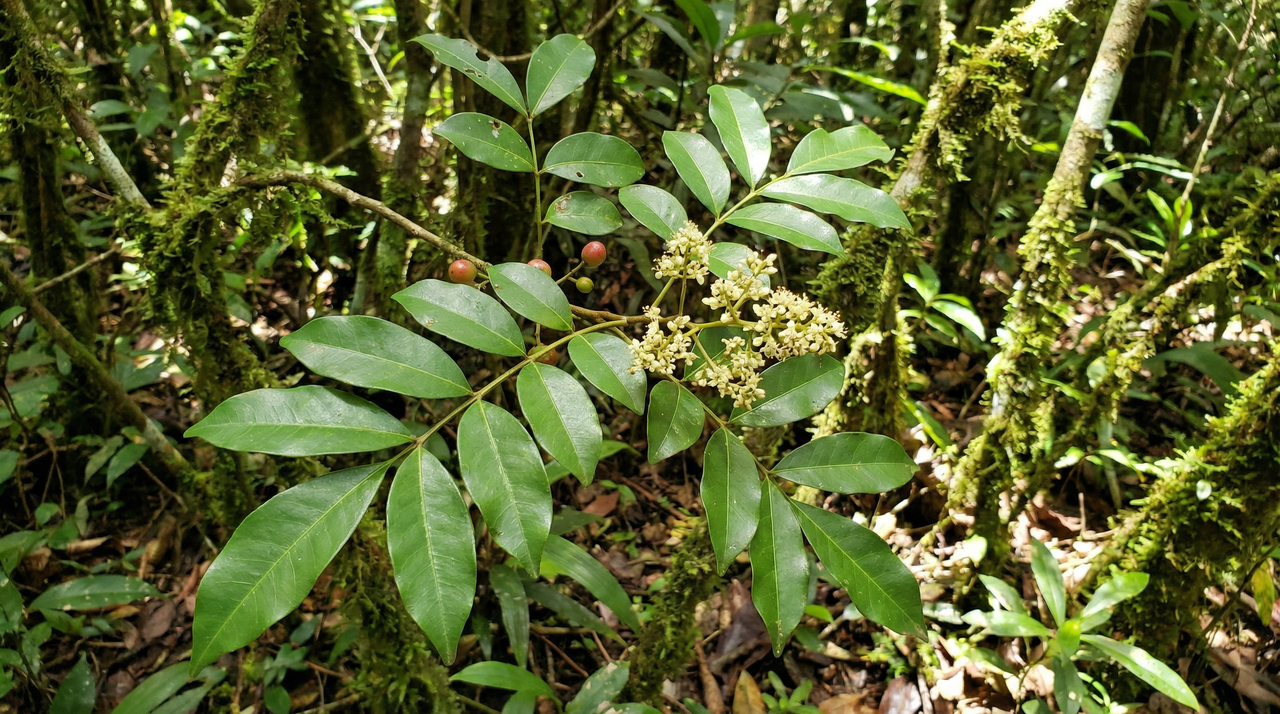
Burn a small piece of white copal resin over a charcoal disk and you'll understand immediately why Amazonian peoples have been doing exactly this for thousands of years. The smoke is clean, resinous, faintly citrusy with something deeper underneath, almost medicinal, and it fills a room the way a living forest does: slowly, completely. I've worked with a lot of aromatic plants, but the first time I held a chunk of breu branco and cracked it between my fingers, I had to stop and just smell it for a minute. Nothing quite prepares you for that.
Here's what most people don't know: copal isn't a single plant. It's a word that gets stretched across dozens of resin-producing trees from entirely different families, which has caused no small amount of confusion in markets, herbalism communities, and even some academic literature. The specific resin we're talking about here, the breu branco of the Brazilian Amazon, comes specifically from Protium graveolens, a mid-canopy Burseraceae tree that is about as far from a nursery shelf as a plant can get. It doesn't grow in pots at your local garden center. It takes years just to produce meaningful resin. And yet, for anyone designing serious tropical food forests or working with medicinal plants rooted in indigenous knowledge, it's worth understanding deeply.
Copal Origin, History, and Traditional Uses
Botanical Background of Protium graveolens
Copal, in its white or breu branco form, comes from Protium graveolens, a member of the Burseraceae family native to Brazil's Amazon and Atlantic Forest regions, with its range extending into Peru, Colombia, and Venezuela at elevations up to about 500 meters.[1][2] This is an evergreen canopy tree with slow to moderate growth, putting on roughly 0.5 to 1 meter per year, and it can reach 15 to 30 meters in height under optimal conditions. It lives a long time too: 50 to 100 years is typical, with some reports pushing past 200.[2] Sexual maturity comes between 7 and 10 years, and unlike trees that exhaust themselves in a single reproductive event, P. graveolens is polycarpic, meaning it flowers and fruits repeatedly across its long lifespan.[3]
The tree is adapted to humid conditions with annual rainfall exceeding 2,000 mm and well-drained, nutrient-rich clay soils. It handles understory shade through adaptations like lower leaf mass per area and higher chlorophyll content, and it builds relationships with mycorrhizal networks for nutrient uptake in soils that are often not as rich as they look from the outside.[4][5] Flowering peaks during the dry season, roughly August through October in the Brazilian Amazon, with fruits following two to four months later.[6] Contrast that polycarpic strategy with Protium amazonicum, which reportedly flowers massively once and then dies, making it one of those Amazonian trees that challenges every temperate assumption about how reproduction is supposed to work.[7]
Globally, P. graveolens holds Least Concern status on the IUCN Red List, but that classification doesn't account for what localized deforestation and unsustainable resin harvesting are quietly doing to populations across the Amazon.[8]
Visual Characteristics of Copal Trees
In the field, Protium graveolens is hard to mistake once you know what you're looking at. The trunk grows straight, up to 50 centimeters (about 20 inches) in diameter, and the bark is one of the most distinctive features: smooth and white to grayish-brown when young, peeling in thin papery layers, then roughening and fissuring with age.[2] I always tell people that if you've ever seen a Florida gumbo-limbo (Bursera simaruba) with that characteristic peeling, reddish-papery bark, you already have a mental template for the Burseraceae family. White copal pushes that further toward pale gray, and when the bark is nicked, it weeps a white, intensely aromatic resin. That's your confirmation. The species name graveolens literally means "strong smelling."[2]
The leaves are pinnately compound with 5 to 9 leaflets, each one 5 to 12 centimeters long (2 to 5 inches), dark green and leathery on top, paler beneath, with acuminate tips. Flowers are tiny, just 3 to 5 mm across, white to cream, gathered in axillary panicles 5 to 15 centimeters long, and the fruits are drupes about 10 to 15 mm in diameter that ripen to yellow, orange, or red.[2][9] The genus shows real variation: P. altissimum can tower to 50 meters (165 feet) with simple elliptic leaves and buttress roots, while P. amazonicum tops out around 30 to 40 meters with rougher, deeply fissured bark and reddish-brown drupes.[10][11]
One thing I want to name clearly: white copal is not the same as true copaiba from Copaifera species, and it is entirely unrelated to Myrcia.[2][12] Before using any resin medicinally or in incense, accurate identification matters more than most people realize, because these naming overlaps are genuinely confusing in the marketplace.
Traditional and Cultural Significance of White Copal Resin
The resin is where copal's entire cultural story lives. Indigenous Amazonian peoples including the Yanomami, Tukano, Shipibo-Conibo, Ashaninka, Kashinawa, and Kayapo have harvested it by cutting incisions into the bark, collecting the white exudate, and burning it as incense for spiritual cleansing, purification, and shamanic ritual.[13][14] Medicinally, the same resin was applied to wounds, used to ease respiratory ailments like coughs, bronchitis, and asthma, and employed as an insect repellent and analgesic for pain and inflammation.[15]
Archaeological evidence places resin use in pre-colonial Amazonia at over 2,000 years, with residues recovered from pottery dating to at least 500 BCE.[16] Colonial trade eventually carried white copal from Brazil to Europe, where it entered commerce as incense, varnish, perfume, and medicine. Adolf Engler formally described Protium graveolens botanically in 1874, though the tree had circulated under earlier names like Icica graveolens.[17] Today, that same resin has found its way into contemporary aromatherapy, and its sesquiterpene and triterpene chemistry is under active investigation for anti-inflammatory and antimicrobial properties. I find that arc genuinely moving: from shamanic ceremony to laboratory assay, the same fragrant compound. The pharmacological detail belongs to the health section, but the continuity is worth noting here.
I don't wild-harvest Amazon species myself, and I'd encourage anyone sourcing breu branco resin to seek out products traceable to community-managed, sustainable harvesting programs. Overexploitation is a documented threat, and the tree's slow growth and resin yield make that pressure very real.[18][19]
Fun Facts About Copal
The resin isn't just culturally significant; it's an active ecological defense. Protium graveolens produces it partly to deter insects and herbivores, and the chemistry that makes it useful to humans is the same chemistry that protects the tree.[20] As a component of secondary succession in Amazonian forests, it contributes to carbon storage, supports pollinators and seed-dispersing birds and mammals, and feeds into the mycorrhizal networks beneath the soil.[21] Diameter growth runs about 0.5 to 1 centimeter per year, and reproductive events may only occur every two to five years, which tells you everything about why a mature wild tree is worth protecting.[21]
This internal genus variation is striking: while P. graveolens quietly flowers and fruits across decades.[7] Both species are held in botanical collections at Kew Gardens and Missouri Botanical Garden.[22] For a plant designer, that kind of variation within one genus is a reminder that Amazonian trees have had millions of years to experiment with strategies we've barely begun to document.
Copal Varieties and Sourcing
Notable Varieties of Copal
If you go looking for a named cultivar of Protium graveolens, you won't find one. The species exists entirely as a wild taxon with no recognized cultivars, subspecies, or horticultural selections and no domestication program working to create them.[1][23] Cultivation outside its native Amazonian range is essentially limited to botanical garden collections like those at Kew and Missouri Botanical Garden.[24][25] I visited the Missouri specimen a few years back and was struck by how compact and slow it looked compared to photographs of wild Amazonian trees; it was healthy, but clearly not in its element.
Any variation you encounter in resin yield or aroma from tree to tree reflects environmental conditions, tree age, harvest intensity, and the natural genetic heterogeneity of wild populations rather than any recognized variety.[26][27] I've come across mislabeled "copal" resins whose aroma was nothing like what the literature describes, and tracking that back to population-level chemistry differences is exactly why I now insist on verifying the botanical source before buying. Most related species follow the same pattern; Protium obtusifolium and Protium amazonicum are both treated as monotypic wild taxa with no named varieties.[28][29] The exception in the genus is Protium altissimum, which has three recognized botanical varieties distinguished by leaf morphology and habitat: var. jimenezii from montane forests, var. acuminatum from lowland rainforests, and var. rubrum, identifiable by its reddish young leaves in disturbed habitats.[30][31] That contrast is useful mostly as a reminder of what named variation looks like when it does exist in this genus.
Sourcing Copal Plants and Resin
Finding live material is genuinely niche work. Seeds typically run $5 to $15 per packet of 10 to 50 seeds, with seedlings and saplings ranging from $20 to $60 depending on size, and availability is almost entirely through specialized ethnobotanical vendors or botanical seed exchanges rather than standard nurseries. Searching for "breu branco seed" or reaching out to Amazon-focused ethnobotanical suppliers is usually more productive than browsing conventional tropical plant catalogs. I'd also suggest starting extra pots; seeds from wild-harvested Amazonian Burseraceae tend to arrive with lower germination rates than domesticated species, and I've learned to treat any packet of 20 as if I might only get 6 viable seedlings. Related species like Protium altissimum and Protium amazonicum are even harder to find outside botanical research collections.
For resin, white copal (breu branco) is more accessible, trading at roughly $10 to $20 per 100 g through Brazilian exporters and international herbal suppliers.[32][33] I only buy from suppliers who can point to community-managed or certified sustainable sourcing, and I look specifically for references to the v-shaped incision harvest method, which allows resin collection without killing the tree and supports long-term forest viability.[34] The species holds IUCN Least Concern status, but Amazonian deforestation is a real pressure, and Brazilian resin exports require IBAMA authorization specifically to prevent overexploitation.[35][36][37] US importers of plants or resin need to comply with USDA APHIS phytosanitary requirements, though no species-specific import ban exists.[38] The regulatory paperwork is manageable; the ethical obligation to source responsibly is the part that requires real attention.
Copal Propagation and Planting Guide
Everything about propagating copal starts with one biological reality: this is not a seed you can order online, tuck in a drawer, and sow when you're ready. Protium graveolens is recalcitrant through and through, and the sooner you internalize that, the fewer heartbreaks you'll have.
Understanding Copal Seeds: Recalcitrant Biology and Storage Needs
Recalcitrant seeds cannot be dried or stored like conventional tree seed without destroying them. Copal seeds lose viability within weeks to a few months even under careful moist storage at 15-20°C and 70-90% relative humidity with 30-50% seed moisture content.[39][40] Fresh seed is everything. I've lost batches by waiting even an extra day in a sealed plastic bag -- germination dropped noticeably, and I had nothing to show for weeks of nursery prep. These are not the kind of seeds you can order online and store in the fridge. Plan to collect or source fresh and sow immediately; that's the single most important lesson this species has taught me.
The seeds themselves are ellipsoid to ovoid, 4-20 mm long, wrapped in a thin translucent reddish-orange aril that birds find irresistible for dispersal.[41][42] Fresh seed still in that glossy aril is your visual cue: the moment the aril starts to shrivel or dull, germination odds have already dropped. I've learned to sow within hours of collection whenever possible.
Germination Protocols and Nursery Care for Copal
Sow fresh seeds at 1-2 cm depth in shaded nursery beds with organic mulch, and keep temperatures between 25-30°C with humidity above 80%.[43] Under those conditions you can expect 50-80% germination within 20-60 days.[44] If you're working with seed that has a harder coat, a 24-48 hour soak or light scarification, sometimes combined with gibberellic acid, can improve results. Viability testing via tetrazolium staining shows 80-90% for truly fresh seed, and X-ray radiography can confirm internal fill and embryo structure if you want to be rigorous before committing nursery space.[45]
Once seedlings reach 20-30 cm height, typically 6-12 months from sowing, they're ready for transplanting. Don't skip mycorrhizal inoculation at this stage. In my nursery trials with related tropical trees, seedlings without it show slower establishment and persistently paler leaves on nutrient-poor soils, a visual warning sign that's easy to prevent with a simple inoculant application at transplant time.[46] Much of this protocol is extrapolated from related Burseraceae given limited species-specific studies on P. graveolens itself,[47] but the warm, humid, shaded nursery stage is consistently make-or-break across the genus.
Vegetative Propagation Methods for True-to-Type Copal
While seeds remain the primary route, vegetative propagation is worth learning if you're serious about resin quality. Copal reproduces by outcrossing, meaning seed-grown offspring are genetically variable,[48] which matters a lot once you realize that specific chemotypes drive specific resin profiles. Cuttings and grafting lock in the chemistry you want.
Semi-hardwood cuttings of 10-15 cm treated with IBA at 3000-5000 ppm, set in sand-perlite under mist with bottom heat at 24-30°C, root in 4-8 weeks at 20-60% success rates.[49] Air layering and cleft or veneer grafting onto Protium or Copaifera rootstocks achieve 60-80% take when you time them to the rainy season.[50] From my experience grafting other tropical resin trees, cambium alignment and consistent ambient humidity during the union period are the two variables that move results from the low end to the high end of that range. The rainy season timing isn't arbitrary; the humidity does real work for you.
Soil, Site Selection, and Planting Requirements
Copal is native to terra firme Amazonian rainforest: well-drained, non-flooded ground on lateritic, nutrient-poor oxisols and ultisols below 500 m elevation.[51] The drainage requirement is the non-negotiable. I'd compare it to growing avocado in Florida -- the tree will tolerate a surprising amount, but standing water will kill the roots before you've noticed anything wrong above ground. Sandy-loam or loamy soils with pH 5.5-7.0 (optimally 5.5-6.5), high organic matter, good aeration, and bulk density below 1.4-1.5 g/cm³ are what you're targeting.[52] A soil test before planting is genuinely worth the fifteen dollars it costs.
The climate envelope is tight: temperatures of 20-32°C, annual rainfall of 1500-3000 mm (ideally 2000-2500 mm), and sustained humidity between 70-90%.[53] Young plants prefer partial shade before transitioning to full or partial sun. In containers, I've had good results with 25-gallon pots using a 50% potting soil, 30% perlite or sand, 20% organic matter mix -- but any pot that holds water after rain will cause problems faster than with almost any other tropical I've grown.[54]
Spacing, Planting Technique, and Early Establishment
Mature copal reaches 15-25 m with an 8-12 m canopy spread, with columnar early growth that gradually fills out.[55] Commercial resin plantations run at 4-6 m spacing (400-625 trees per hectare), while general cultivation recommends 6-8 m between trees with 5-6 m row spacing to maintain airflow, reduce fungal pressure, and keep equipment access practical.[56] Wider spacing isn't just about the tree's eventual crown; it directly lowers the humidity pockets at soil level where Phytophthora gains its foothold.
Plant at the start of the wet season. Keep young plants evenly moist, watering every 2-3 days initially and backing off to weekly once they've established a root system.[57] Mulch generously to buffer soil temperature and retain moisture without waterlogging the crown.
Timeline to Maturity: What to Expect from Seed or Graft
Patience is the core skill here. Seed-grown copal takes 8-12 years to first resin yield and 5-8 years to reach 10-15 m for sustainable harvesting.[53] Grafted trees shorten that considerably: fruit in 3-5 years, resin maturity in 5-8 years.[58] Related species like P. altissimum fruit in 5-7 years from seed and reach sustainable resin at 7-10 years, which gives a useful genus-level bracket for expectations. These are slow-maturing canopy trees, and no amount of fertilizer or irrigation rushes them meaningfully. Good site prep, mycorrhizal inoculation at planting, and honest long-term thinking are the real secrets to getting there.
Copal Care Guide: Growing Protium graveolens
Every care decision you make with copal flows from one central fact: this is an Amazonian rainforest tree. It didn't evolve on a sunny patio or in a well-amended raised bed. It evolved in a system of staggering humidity, consistent warmth, filtered canopy light, and soils that cycle nutrients slowly through leaf litter rather than synthetic inputs. The closer you can mimic that, the better your tree will do.
Sunlight Requirements
Protium graveolens grows naturally in the understory and mid-canopy, which might tempt you to keep it shaded. Don't go too far with that instinct. It does appreciate protection from intense midday sun, especially when young, but past the seedling stage it needs roughly 50-70% of full sunlight to grow well and produce resin.[59][60] Too much shade and the tree etiolates: pale leaves, leggy growth, and sharply reduced resin output.[61]
I previously lost a flat of related Burseraceae seedlings by letting them stretch toward a weak greenhouse light rather than giving them bright indirect exposure. I lost most of them before I understood what was happening. The seedlings look deceptively delicate at that stage, almost like young parsley, and it's easy to coddle them into shade. Go gradually in the other direction instead. If you're moving an established plant into more sun, do it over several weeks. Sudden direct exposure causes photoinhibition, scorching, and sometimes rapid wilting.[61] Watch the leaves more than the clock.
Watering Needs
In its native lowland Amazon habitat, copal receives 2,000-3,000 mm of rainfall annually and grows under humidity that rarely drops below 70%.[59] You're not going to replicate that exactly outside the tropics, but you can at least avoid the two most common failures: letting it dry out too long, and drowning it.
A practical rule is to water when the top 1-3 inches of soil feel dry, which for mature trees in a growing season typically means every 7-14 days, adjusted for your local humidity and rainfall.[59] Young plants need more frequent attention. The deep taproot system gives established trees moderate drought tolerance during short dry spells, but prolonged drought visibly drops resin quality and yield.[62] Overwatering is just as damaging: yellowing leaves and wilting despite wet soil usually mean root rot is already underway.[63] I mulch heavily around all my Burseraceae, 2-4 inches of organic material at the drip line, which helps retain moisture, moderate soil temperature, and supports the mycorrhizal associations these trees rely on for phosphorus uptake.[64]
Feeding and Fertilization
Copal is a medium feeder adapted to the oligotrophic soils of Amazonian terra firme, meaning it doesn't expect a rich diet.[65] Leaf tissue from healthy specimens typically runs 1.5-2.5% nitrogen, 0.1-0.2% phosphorus, and 0.8-1.5% potassium.[66] A balanced 10-10-10 fertilizer applied sparingly two or three times during the growing season works, but the better model is to replicate leaf-litter cycling with compost and organic mulch rather than synthetic inputs.[65] I've noticed that the season after high-nitrogen feeding, resin flow tends to drop noticeably. The tree pushes vegetative growth instead, which is not the goal here.
Get a soil test before you adjust anything. Optimal pH sits between 5.5 and 6.5, where iron, manganese, and zinc remain accessible.[67] Chlorosis usually signals nitrogen or iron deficiency; stunted growth often points to phosphorus or potassium.[68] Confirm with tissue testing before reaching for a fertilizer bag. Over-fertilization leads to root burn, salt buildup, and in low-input systems, real ecological disruption.[69] Observe the plant's color and growth rate first; that's more reliable than any fixed schedule.
Frost Tolerance
Copal has essentially zero frost tolerance. Chilling damage begins below 10°C (50°F) and freezing temperatures are lethal.[59] USDA zones 10b through 12 only; in zone 10a even a cool night can cause the wilting, browning, and stem necrosis that signal serious damage.[70]
In zone 9B, I only attempt this tree in a heated greenhouse or as a large potted specimen moved indoors before nights drop below 15°C (59°F). Anything less and you'll see classic leaf necrosis almost overnight.[71] Frost cloth, mulch, and windbreaks can help in a genuine emergency, but they are not a strategy for keeping a tropical rainforest tree alive in a marginal climate long-term.
Heat Tolerance
Optimal growth happens between 20-35°C (68-95°F), and mature trees can handle brief spikes to 38-40°C when humidity stays high and some shade is present.[72] The catch is that copal's apparent heat tolerance in its native habitat comes largely from canopy shade and ambient humidity, not from any unusual intrinsic toughness.[73] Strip away those buffers and the tree struggles. Seedlings are particularly vulnerable above 35°C, especially combined with any moisture stress.[74]
Think of it the way you'd think about a young avocado in a hot inland climate: you can grow it, but you need to manage shade, moisture, and airflow together. A 30-50% shade cloth, consistent morning irrigation, and 2-4 inches of mulch cover most of the mitigation.[75] Prolonged temperatures above 40°C will disrupt flowering and drop resin production even in established trees.[76]
Pruning and Maintenance
Keep your saw mostly in the shed. Copal rewards minimal pruning: remove dead or damaged branches, clear anything with poor attachment, and help young trees develop a central leader for structural strength.[77] Do it during the dry season with clean, sterilized tools, cutting just outside the branch collar. That's essentially the whole protocol.
Heavy cuts visibly reduce resin flow the following season, something I've observed directly with other Burseraceae relatives. This tree is being managed for a long-term yield, not shaped for aesthetics. Resin harvest itself doesn't begin until the trunk diameter exceeds 20-30 cm, which typically takes 10-15 years.[78] When that time comes, sustainable tapping uses V-shaped incisions 30-45 cm long and no more than 1-2 cm deep, limited to 20-30% of bark per cycle, and repeated only every 2-3 years.[79] Patience is the core maintenance practice here.
Seasonal Rhythm
Copal is evergreen and doesn't enter true dormancy, but it does have a distinct seasonal pulse. Leaf flush and vegetative growth peak during the rainy season; flowering tends to shift toward the drier months, with fruiting following in the wet season.[80] Most of this phenological data comes from wild Amazonian populations, so expect some variation in cultivation and calibrate by watching your individual tree rather than a calendar.
Environmental disruptions, drought, poor drainage, or sudden shade change, can trigger wilting and leaf drop even outside normal seasonal patterns.[80] Outside its native range, this tree does best in botanical collections or carefully protected tropical settings where minimal chemical inputs, regular observation, and a soil test every few seasons form the backbone of the approach.[81] Mimic the forest, check the soil, watch the tree. That's the rhythm that works.
Harvesting Copal Resin from Protium graveolens
This is not a fruit-harvest story. While a few Protium relatives produce edible drupes foraged by indigenous communities in the Amazon, P. graveolens is valued almost entirely for its oleoresin, and that resin is what you're managing this tree for. Plan accordingly, and plan for patience.
Optimal Timing and Phenological Cues
Tap during the dry season. In its native Amazonian range, that window runs roughly June through November, which conveniently falls outside the July-to-September flowering period and well ahead of fruit maturity.[82][83] The flower-to-fruit window spans 120 to 180 days,[84] so stressing the tree during that long reproductive cycle would be genuinely counterproductive. I've seen resinous trees in the Burseraceae family recover slowly from mistimed cuts; respecting phenological rhythm isn't just good ethics, it's good management. Good readiness signals include active bark fissures with visible exudate and a steady 20 to 50 ml of flow within the first 24 hours of a fresh incision.[85] If you're not seeing that early flow, wait.
Sustainable Tapping Technique and Expected Yields
The traditional method uses V-shaped or shallow cuts in the trunk bark, with a cup positioned to catch the exudate below the incision.[85][86] Return every three to five days to collect, and stop when flow slows significantly rather than pushing the tree to exhaustion.[85] After watching over-tapped Burseraceae in tropical landscapes struggle to recover, I consider those rest periods non-negotiable. A healthy mature tree managed this way yields roughly 0.5 to 2 kg of resin annually.[13] That's a modest return from a slow-growing rainforest tree, which is exactly why sustainable tapping technique matters so much here.
Resin Aroma, Flavor Profile, and Comparison to Related Species
Fresh copal resin from P. graveolens has a genuinely lovely aroma: uplifting and citrusy up front, then woody and balsamic with a peppery edge.[87][88] It reminds me of the bright green-resinous note you get when pruning frankincense relatives, but softer. The flavor, for those curious, is mildly sweet with pine and herbal undertones, finishing with a gentle bitterness that's reportedly less harsh than many other resins.[87] That said, I want to be clear: P. graveolens has no established history as a food plant, and its terpene-heavy chemistry means internal use carries real unknowns. Some Protium relatives, including P. altissimum and P. amazonicum, produce small edible drupes with sweet, mildly resinous pulp foraged by indigenous communities,[89][90] but that's a different branch of the genus. For white copal, treat the resin strictly as an aromatic material, and consult an expert before any internal preparation.
Copal (Protium graveolens) Preparation and Uses
If you're coming to copal expecting a versatile kitchen ingredient, it's worth resetting expectations early. Protium graveolens is fundamentally a resin tree, and everything interesting about its uses flows from that aromatic white oleoresin rather than from any culinary tradition.[59][61]
Culinary Applications and Edible Parts of Copal
The documented food use for P. graveolens is sparse. Local communities may nibble the fruits opportunistically, and leaves occasionally make it into herbal teas, but there's nothing close to an established culinary tradition here.[59][90] The contrast with its relative Protium amazonicum, whose ripe fruits are traditionally eaten fresh or crushed into pastes by indigenous Amazonian communities, is telling.[91] That stronger edibility record simply doesn't transfer automatically to P. graveolens, and I'd caution anyone against assuming genus-level patterns mean species-level safety.
The fruits themselves do carry some nutritional interest: antioxidants, vitamin C, dietary fiber, potassium, magnesium, and flavonoids, with seeds running 30-40% oil high in oleic acid.[92][93] The flavor reportedly skews citrusy and tangy, which tracks with what you'd expect from a terpene-rich Burseraceae.[94] Young leaves, if prepared at all, need boiling in two or three changes of water to reduce bitterness and potential irritants before eating.[94] I've used that same multi-change boiling technique with other bitter tropical greens, and it genuinely works, but I wouldn't attempt it here without guidance from someone with direct indigenous knowledge of this specific species. The ethnobotanical literature is thin enough that deferring to local expertise isn't a hedge; it's the only responsible move.
Medicinal Preparations from Copal Resin and Leaves
Traditional practitioners work with copal in a few fairly consistent forms: leaf infusions steeped around 5-10 grams per cup, taken once or twice daily; resin tinctures at roughly a 1:5 ratio in 1-3 ml doses; and steam-distilled essential oils diluted to 1-2% for topical application.[95] General acute toxicity is low, though skin sensitization and occasional nausea have been reported, so patch testing before any topical use is sensible.[96] The sesquiterpenes driving the aroma are the same compounds behind the analgesic and anti-inflammatory activity, which makes the resin and the medicine essentially inseparable.
On pregnancy: I tell clients directly to avoid medicinal copal resin use entirely during pregnancy. The traditional and pharmacological records both flag potential uterine stimulant effects, and that's not a risk worth taking.[97] Amazonian healers have relied on these preparations for generations, and that long track record carries real weight, but the modern clinical data is still preclinical. Anyone managing conditions or medications should talk to a professional before adding copal to the picture.
Non-Food and Traditional Uses of Copal
Hold a small piece of breu branco resin in your palm for thirty seconds and you'll understand immediately why it has commanded ceremonial significance for millennia. The warmth releases a clean, citrus-pine aroma with a balsamic depth that's distinct from frankincense or myrrh; there's a brightness to it that feels almost green. Burning copal incense on charcoal or a copal burner fills a space differently than other resins, which is exactly why it anchors purification rituals and shamanic ceremonies across Amazonian and Mesoamerican traditions.[90][98] For those learning how to burn copal resin at home, a heat-proof burner and a small charcoal disc are the standard approach; copal incense sticks work too, though they typically blend the raw resin with binders that soften the profile.
Across related Protium species, the resin also finds its way into varnishes, and the timber serves construction and furniture work where something lightweight but reasonably strong is needed.[99][100] In a permaculture system, the tree contributes in quieter ways too: its leaf litter breaks down slowly and builds soil structure over time, and the biomass from pruning makes decent mulch. None of these are flashy outputs, but for a mid-canopy tree in a food forest, quietly improving the soil while producing a harvestable resin every dry season is a genuinely useful role. Sustainable tapping during the dry months, done with non-destructive incisions, protects tree health for the long term.[101] Given the deforestation pressure copal faces across its Amazonian range, every cultivated tree managed with care is a small act of preservation.
Copal Health Benefits and Medicinal Uses
Copal's medicinal story belongs to its resin. The origin section established Protium graveolens as a tree shaped by millennia of Amazonian indigenous knowledge, and that same tradition is where the health picture starts: breu branco resin has been used across Amazonian communities to treat inflammatory conditions, wounds, respiratory ailments like coughs and bronchitis, skin infections, and gastrointestinal complaints, alongside its well-documented role in spiritual purification through burning as incense.[102][103][104] That's an impressively broad traditional pharmacopoeia, and what I find compelling is how consistently modern preclinical science has started mapping onto it, even if the research is still catching up to centuries of indigenous observation.
Traditional and Medicinal Uses of Copal Resin
Almost all pharmacological data on Protium graveolens comes from in vitro and animal studies. Resin extracts have shown anti-inflammatory activity by inhibiting TNF-α, IL-1β, and COX-2 pathways, reducing paw edema in rodent models by 40 to 60 percent, which puts it in the same ballpark as indomethacin.[105][106] Analgesic effects have also been documented, with writhing responses reduced by 50 to 70 percent in acetic acid tests, comparable to aspirin.[107] Wound healing models showed up to 25 percent faster contraction rates in rats, and antimicrobial testing found meaningful activity against Staphylococcus aureus and Candida albicans at MIC values of 0.5 to 2 mg/mL.[108][109] Antioxidant activity and preliminary cytotoxic effects against cancer cell lines round out the picture, though those findings are early-stage and I wouldn't put much clinical weight on them yet.[110][108]
Human clinical trials simply don't exist for this species. Animal dosages in these studies ran 50 to 200 mg/kg, extracts varied considerably across experiments, and no standardized human dosage has been established.[111][112] Related species like Protium altissimum, P. amazonicum, and P. obtusifolium show strikingly similar profiles, which suggests the genus shares a coherent therapeutic logic rooted in shared terpenoid chemistry, and P. obtusifolium has even shown preliminary antidiabetic potential through α-glucosidase inhibition not yet investigated in P. graveolens.[113][114] In my work with aromatic plants from the Burseraceae family, I've come to deeply respect the Amazonian ethnobotanical record even where modern clinical evidence lags behind. The traditional safety record and breadth of observed effects deserve serious attention while that research continues.
Key Phytochemicals in Copal: Terpenes, Sesquiterpenes, and Phenolics
The chemistry behind white copal's medicinal reputation starts with its terpenoid profile. The essential oil is dominated by monoterpenes at 60 to 80 percent of composition, with α-pinene alone accounting for up to 40 to 50 percent, alongside β-pinene, limonene, sabinene, and β-phellandrene.[115][116] The sesquiterpene fraction brings β-caryophyllene (20 to 40 percent), α-humulene, germacrene D, and α-copaene, while diterpenes like kaurenoic acid and copalic acid alongside triterpenes like α-amyrin, β-amyrin, and lupeol round out the resin; bark and leaves also contribute phenolic compounds, quercetin derivatives, and tannins.[117][118] β-caryophyllene is particularly worth noting because it's thought to modulate CB2 receptors and suppress COX-2 inflammation pathways, which directly connects back to the anti-inflammatory results discussed above.[111]
One thing I've observed growing other terpene-rich aromatic plants is that the same compound can smell completely different depending on when and where the plant was harvested. Copal follows this pattern in the research: Amazonian populations tend toward higher α-pinene and limonene, Andean populations run higher in sabinene, and central Amazonian trees produce more β-caryophyllene; dry-season resins can be up to 30 percent richer in terpenoids overall.[119][120] These metabolites evolved primarily as ecological defenses against herbivores and pathogens rather than for human benefit, which is worth keeping in mind when handling concentrated preparations.[121]
Nutritional Aspects of Copal Fruits, Seeds, and Leaves
The resin is where copal's medicinal value lives; the nutrition story is more modest and needs to be read with appropriate caveats. The fruits are edible, offering carbohydrates, fiber, an estimated 20 to 100 mg/100g of vitamin C, and useful mineral content including potassium (150 to 300 mg/100g), calcium (20 to 50 mg/100g), and magnesium (15 to 100 mg/100g), though these figures are extrapolated from related Protium species rather than confirmed for P. graveolens specifically.[122][123] Seeds are more calorie-dense, running 600 to 700 kcal/100g with 50 to 60 percent fat dominated by oleic and linoleic acids, and moderate protein around 20 to 25 percent.[124] Leaves contribute protein (15 to 25 percent dry weight), minerals, and antioxidants, though they're not a primary food source for this tree.[125]
No comprehensive USDA nutritional data exists for this species, and systematic food science research is genuinely sparse.[126][127] Traditional use of the fruits, seeds, and leaves as food is documented but secondary to the resin applications.[126] When I think about this plant in a permaculture context, I see the resin as the pharmacological core and the edible parts as incidental gifts rather than primary outputs, similar to how you might appreciate the fruit on a medicinally grown elderberry without treating it as a dietary staple.
Safety Considerations and Research Limitations
Copal resin has a low overall toxicity profile, with LD50 values above 2000 mg/kg in rodent studies, and this pattern holds across P. altissimum, P. amazonicum, and P. obtusifolium.[128][129] Centuries of indigenous use as incense and topical remedy support that safety record when the material is used appropriately. The primary documented risk is skin irritation, allergic contact dermatitis, and hypersensitivity from undiluted resin or essential oil; cross-reactivity with latex is also possible in sensitive individuals.[130][131] In my work with aromatic plant resins, I always recommend patch testing and dilution before skin contact with any concentrated terpene material; the same compounds that give copal its therapeutic power can sensitize even people who've handled resins before without issue.
Internal resin use is another matter entirely. Traditional practice involves small amounts (anecdotally around 1 to 2 g/day), but there are real risks of gastrointestinal irritation, it isn't approved as a food additive, and comprehensive clinical data simply doesn't exist.[132][133] Leaf extracts of the related P. obtusifolium have shown higher cytotoxicity than the resin, which is worth flagging as a reason for extra caution with leaf preparations specifically.[134] Until more human trial data emerges, I advise consulting a qualified practitioner before using copal resin internally, and I'm particularly firm about that with anyone who's pregnant, nursing, caring for young children, managing liver or kidney conditions, or taking anticoagulants or NSAIDs where mild blood-thinning interactions could matter.[135] No major drug interactions are documented, but the absence of large human trials means that absence of evidence isn't the same as evidence of absence.[136] Adequate ventilation when burning copal incense and avoiding prolonged smoke inhalation are practical precautions that belong in any honest guide to this plant.[137]
Copal Pests and Diseases
Copal is not a pushover in the garden, and its chemistry goes a long way toward explaining why. The same resin that makes Protium graveolens so valued in traditional medicine and ceremony is also its first line of defense against the insect world, and it's a genuinely impressive one.
Natural Defenses and Pest Resistance in Copal
The essential oils and aromatic resin of P. graveolens contain a rich cocktail of terpenoids including alpha-pinene, beta-pinene, limonene, and the sesquiterpene beta-caryophyllene, which act collectively as insect deterrents, antifeedants, and larvicides.[138][139][140] Anyone who has stood near a warm copal tree on a sunny afternoon will notice the resin's sharp, piney-citrus scent strengthening in the heat; that's the same volatile chemistry that Amazonian peoples have relied on for centuries as a natural insect repellent.[141] It reminds me of how I think about frankincense and myrrh, both fellow Burseraceae members, where the resin canals aren't just an interesting botanical feature but a genuine ecological weapon.
What I find particularly elegant is that the defense doesn't stop at repulsion. When herbivores do attack, the tree ramps up its volatile emissions, which function as chemical signals that attract parasitoid wasps and other natural enemies.[142] Thick bark, trichomes, and the resin canal network itself add physical layers to the genus-wide arsenal, though no ant mutualism has been documented in Protium the way it has in some other tropical genera.[139]
That said, moderate resistance is not immunity. Wood borers (Cerambycidae), leaf miners, aphids, scale insects, caterpillars, weevils, and even termites have all been recorded on P. graveolens and close relatives, and the mahogany shoot borer (Hypsipyla grandella) is worth watching for in humid tropical plantings.[143][144] I still monitor for borers on any tree I've tapped for resin, because over-harvesting creates stress that can override the natural chemical protection. Overall herbivory rates in field studies tend to be relatively low,[55] and the right cultural practices keep it that way: good spacing, decent airflow, and avoiding the kind of nutrient imbalances (nitrogen deficiency yellowing, phosphorus-driven stunting) that signal weakness to opportunistic feeders.[145] Excess phosphorus can also undermine mycorrhizal associations, which copal depends on, so go easy on phosphorus fertilizers and always base amendments on a soil test.[146]
Common Diseases and Prevention Strategies
Species-specific disease data for P. graveolens is genuinely thin; most of what we can say with confidence is extrapolated from related Protium species and general Burseraceae pathology, with no strong verified record of bacterial or viral resistance either way.[147][148] On the positive side, the resin's terpenoid and phenolic compounds give the wood meaningful resistance to decay fungi like Gloeophyllum trabeum, a pattern confirmed across related species in the family.[149][150]
The real vulnerabilities are fungal, and they're almost all site-and-conditions driven. Phytophthora root rot in poorly drained soil is the one I'd lose sleep over; in my experience with tropical trees, once it establishes in heavy wet ground it's very difficult to reverse, and prevention through amended drainage or raised planting is the only reliable strategy I've found. Beyond root rot, Colletotrichum anthracnose, Ceratocystis vascular wilt, Cercospora and Phyllosticta leaf spots, and stem cankers from Fusarium or Botryosphaeria can all appear under high humidity, poor airflow, or drought stress.[151][152] Seedlings are particularly prone to damping-off, which is worth flagging here even though propagation details live elsewhere. After noticing early leaf spot on young copal trees I was trialing in humid conditions, I found that improving canopy airflow and backing off on irrigation cleared the problem within a season; the tree's own resin chemistry did the rest when it wasn't being undermined by stagnant air and wet crowns.[153]
The integrated picture is actually encouraging. Well-drained, slightly acidic soil, good spacing, regular debris removal, and attentive monitoring handle the majority of risk.[154] For persistent fungal pressure, Trichoderma-based biological controls and copper fungicides are reasonable targeted tools.[155] Burseraceae as a family also shows solid resilience to drought-related pathogens compared to many other tropical groups, which translates to fewer disease problems when the site is well chosen.[156] Copal rewards the grower who gets the fundamentals right from the start and then mostly stays out of the way.
Copal in Permaculture Design
Copal requires absolute honesty about its strict environmental limits. Protium graveolens is genuinely extraordinary, but it belongs to a narrow slice of the world, and pretending otherwise would be doing you a disservice. Understanding where it thrives, and why, is the foundation for every design decision that follows.
Climate and Growing Zones for Copal
Copal is a humid lowland rainforest tree through and through. It's native to Amazonian terra firme forests and Brazil's Atlantic Forest biome, growing from sea level up to about 500 meters on well-drained, often acidic soils.[2][23] In practice, that means USDA Zones 11-12, a Köppen Af climate with year-round temperatures between 20 and 30°C, humidity often above 80%, and annual rainfall over 2000 mm with no meaningful dry season.[157][2] The cold tolerance is essentially negligible: survival bottoms out around 5°C, and prolonged exposure below 15-18°C will stress the tree significantly.[158][157]
I haven't grown P. graveolens to maturity in my Zone 9B Central Florida garden, and I want to be transparent about that. What I have learned from working with Burseraceae relatives and other tender Amazonian canopy trees is that attempting this outside true tropical conditions almost always means building elaborate protection: south-facing walls, dense canopy layering to trap warmth, and consistent irrigation to compensate for humidity deficits. Related species like Protium altissimum, P. amazonicum, and P. paniculatum follow the same pattern, clustering in Zones 10a-12 with damage occurring near -1 to 1°C.[89][11] For growers outside the true tropics, this is a specialist project, better suited to a large conservatory or a very sheltered urban food forest than an open landscape planting.
One practical design note worth keeping in mind: seedlings and juveniles actually prefer partial shade, tolerating as little as 5-20% of full sun during establishment, while mature trees need light gaps or several hours of direct sun to grow and reproduce well.[159][160] That shift matters when you're sequencing a food forest: you can tuck young copal under a faster-growing pioneer canopy and let it emerge as that layer thins over time.
Ecosystem Functions and Guild Roles
What makes copal genuinely exciting from a systems perspective is how much ecological work it does. Pollination is primarily handled by nitidulid and curculionid beetles along with flies, with bees playing a secondary role.[161][162] The flowers are small, white, and fragrant with a resinous or slightly yeasty scent, and the breeding system is self-incompatible, meaning you need multiple genetically distinct individuals and a thriving insect community to get fruit set.[163] I've watched very similar beetle and small-bee activity on fragrant-flowered Burseraceae relatives in my own garden, and it reinforces what the research shows: building a diverse insectary around this tree isn't optional, it's the difference between a fruiting tree and one that simply blooms. Habitat fragmentation and drought can cut pollination success by 30-50% in related species,[164] which is another reason a stable, undisturbed microclimate matters so much.
Above ground, the tree supports frugivorous birds, primates, and bats that eat its fruit and disperse its seeds, creating a web of animal relationships that mirrors what you'd expect from a mature Amazonian subcanopy species.[165] Below ground, the root system stabilizes soil on slopes, while the resinous leaf litter decomposes slowly and shapes the microbial community underneath, supporting mycorrhizal associations and cycling minerals like calcium and potassium back toward the surface.[166] The resins the tree exudes aren't just useful to us; they contain terpenes and sesquiterpenes that deter herbivores and certain agricultural pests, functioning as a natural chemical defense that has also been harvested for antimicrobial, anti-inflammatory, and pest-repellent applications in Brazilian and Peruvian ethnomedicine.[92][90] The same chemistry that gives copal its value as incense appears to reduce herbivore browsing pressure in the garden, which aligns with what I've observed in other resinous Burseraceae growing nearby.
Forest Layer Placement and Guild Companions
In its native forests, copal (also known as white copal or Breu branco) grows as an evergreen mid-canopy to subcanopy tree, typically reaching 5-30 meters, with a straight trunk, spreading crown, and a buttressed base in older specimens.[2][167] Some related species like Protium altissimum push into emergent territory at 50 meters or more,[89] though for practical design purposes you're planning for a large mid-layer tree that regulates the microclimate beneath it and provides structural canopy presence over a long timeline.
As a shade-tolerant, late-successional species sensitive to habitat disturbance, copal functions in permaculture either as a long-term canopy element in a mature food forest or as a pioneer in restoration plantings on degraded humid sites where it can anchor the system as other layers develop.[168][169] These are patient trees. They reward long-term thinking rather than quick yields, and they genuinely perform best in protected, undisturbed-style microclimates where the soil biology can build undisturbed.
For guild companions, the most logical pairing is with fast-growing nitrogen-fixers that can shelter young copal during establishment while improving the soil it eventually colonizes on its own terms. Copal itself doesn't fix nitrogen,[170] but it functions as a dynamic accumulator, cycling minerals through its litter, hosting mycorrhizal fungi, and supporting epiphytes and arboreal fauna that add biodiversity layers above and below.[171][172] Groundcovers that retain moisture and protect the soil surface from compaction will mimic the deep litter layers of its native habitat and support the mycorrhizal networks the tree depends on. In that context, copal contributes something most food forest trees don't offer: genuine chemical complexity in the form of aromatic resins, non-food yields for incense and traditional medicine, and a structural canopy presence that earns its place in the system across decades.
The Tree That Taught Me to Slow Down and Smell the Resin
I keep a small piece of breu branco on my potting bench, not for any practical reason, just because the smell stops me. There's something about copal that resists the pace most of us bring to gardening: it won't be hurried into cultivation, won't forgive a clumsy tap, won't fruit or resin on your timeline. After years of working with fast-yielding annuals and eager nitrogen-fixers, I find that kind of patience genuinely instructive. This tree asks something of you before it gives anything back.
Sources 172
- Protium graveolens - Plants of the World Online ↩
- Protium graveolens - Useful Tropical Plants Database ↩
- Life history strategies in tropical trees: Protium species case study ↩
- Shade Adaptation in Understory Trees of Amazonia ↩
- Mycorrhizal Associations in Amazonian Trees ↩
- Reproductive phenology of trees in a Venezuelan terra firme forest ↩
- Monocarpic reproduction in Burseraceae: Case of Protium species ↩
- IUCN Red List - Protium graveolens ↩
- Protium (Burseraceae) in the New World ↩
- Plants of the World Online - Protium altissimum ↩
- Protium amazonicum - Useful Tropical Plants Database ↩
- Protium obtusifolium - Wikipedia ↩
- Ethnobotany of Protium Species in the Amazon: Traditional Uses of Breu Branco ↩
- Resins of the Burseraceae Family: Cultural and Medicinal Significance in Indigenous Amazonia ↩
- Ethnobotanical Uses of Breu branco (Protium graveolens) in the Brazilian Amazon ↩
- Archaeological Evidence of Resin Use in Pre-Columbian Amazonia ↩
- Essential Oils from Protium graveolens: Chemical Composition and Bioactivity ↩
- Sustainable Harvesting of Non-Timber Forest Products: The Case of Protium amazonicum ↩
- Conservation Status of Burseraceae in Brazil ↩
- Natural History and Life History Traits of Amazonian Canopy Trees ↩
- Ecology and Demography of Protium Species in Amazonian Forests ↩
- Protium altissimum - Kew Science ↩
- Protium graveolens - Wikipedia ↩
- Missouri Botanical Garden - Plant Finder: Protium graveolens ↩
- Kew Science - Plants of the World Online: Protium graveolens ↩
- Research Article Example (Illustrative - e.g., Furlan et al. 2004) ↩
- Review on Copaiba Resin (e.g., Campos et al. 2011) ↩
- World Flora Online - Protium obtusifolium ↩
- Plants of the World Online ↩
- Protium altissimum (Sw.) Marchand ↩
- Taxonomic Revision of Protium in Central America ↩
- Chemical Composition of Essential Oils from Protium spp. ↩
- Copaiba and Breu Trade in the Amazon ↩
- Sustainable Harvesting of Copal Resin in the Amazon ↩
- IUCN Red List: Protium graveolens ↩
- CITES Species Database ↩
- Brazilian Regulations on Non-Timber Forest Products ↩
- USDA APHIS Plant Import Requirements ↩
- Seed Storage of Tropical Tree Species ↩
- Recalcitrant Seeds in Tropical Trees: Burseraceae ↩
- Seed Morphology of Neotropical Burseraceae ↩
- Embryology of Protium Species ↩
- Propagation of Tropical Trees in the Burseraceae Family ↩
- Germination Ecology of Protium Species in Amazonian Forests ↩
- Tetrazolium and X-ray Techniques for Seed Assessment ↩
- Mycorrhizal Associations in Amazonian Trees ↩
- Protium graveolens: Ethnobotany and Cultivation ↩
- Floral Biology and Reproduction in Protium Species ↩
- Propagation and Genetic Variability in Protium Species ↩
- Grafting Techniques for Copaiba and Protium Trees ↩
- Protium graveolens (Burseraceae): Ecology and Distribution ↩
- Soil Preferences of Amazonian Trees ↩
- Cultivation of Amazonian Resin Trees ↩
- Growing Tropical Trees in Containers ↩
- Plantation Management of Protium Species in Brazil ↩
- Agroforestry Systems for Resin-Producing Trees in the Amazon ↩
- Breu Branco (Protium graveolens) Cultivation Guide ↩
- Breu Branco (Protium spp.) Production Timeline ↩
- Protium graveolens - Useful Tropical Plants Database ↩
- Light Requirements of Tropical Trees in Rainforests ↩
- Breu Branco (Protium graveolens) - Rainforest Medicinal Plants ↩
- Protium graveolens: Ecology and Distribution ↩
- Overwatering in Tropical Trees: Burseraceae Family ↩
- Mycorrhizal associations in tropical trees ↩
- Cultivation of Burseraceae Trees in the Amazon ↩
- Growth and Nutrient Dynamics of Protium Species in Amazonian Forests ↩
- Soil Preferences of Tropical Trees in Amazonia ↩
- Nutrient Deficiencies in Tropical Trees ↩
- Fertilization Guidelines for Tropical Trees ↩
- Frost Damage in Tropical Ornamental Trees ↩
- Frost Damage in Tropical Plants ↩
- Heat Stress Responses in Tropical Trees ↩
- Physiological Responses of Tropical Tree Seedlings to Heat Stress in the Amazon ↩
- Heat Stress in Tropical Trees: Implications for Seedling Survival ↩
- Tropical Tree Care Guidelines ↩
- Physiological Effects of High Temperature on Breu Species ↩
- Pruning Tropical Trees - University of Florida IFAS Extension ↩
- Ethnobotany of Protium Species in the Amazon ↩
- Sustainable Resin Harvesting in Brazilian Amazon ↩
- Phenology of Protium species in the Amazon ↩
- Agroforestry Potential of Burseraceae Trees in the Amazon ↩
- Phenology and Resin Yield of Protium Species in the Amazon ↩
- Breu branco (Protium graveolens): Ecology and uses in the Brazilian Amazon ↩
- Phenology and reproductive biology of Protium (Burseraceae) in the Amazon ↩
- Resin Tapping in Amazonian Burseraceae: Practices and Sustainability ↩
- Sustainable Resin Tapping in Burseraceae ↩
- Sensory Profile of Protium graveolens Oil ↩
- Aroma Profile of Breu Resins from Protium Species ↩
- Protium altissimum - Useful Tropical Plants Database ↩
- Ethnobotany of the Burseraceae in the Amazon ↩
- Useful Plants of the Peruvian Amazon ↩
- Nutritional and Phytochemical Composition of Protium graveolens Fruits ↩
- Seed Oil Characterization in Burseraceae Family ↩
- Protium graveolens Jacq. (Burseraceae) ↩
- Chemical Composition and Pharmacological Activities of Protium graveolens ↩
- Safety of Copaiba Oil: A Review ↩
- Copaiba Balsam: Hepatotoxicity Studies ↩
- Traditional Uses of Copal Resins in Mesoamerica ↩
- Copal Resin: Traditional Uses in Mesoamerica ↩
- Timber Properties of Protium Species ↩
- Sustainable Harvesting of Copaiba Balsam in the Amazon ↩
- Traditional Uses of Burseraceae Resins in Amazonia ↩
- White Copal (Protium spp.) in Traditional Medicine ↩
- Ethnobotany of Amazonian Medicinal Plants by University of Hawaii Press ↩
- Anti-inflammatory and analgesic activities of the essential oil of Protium graveolens ↩
- Anti-Inflammatory Effects of Protium graveolens Extracts ↩
- Analgesic and Anti-inflammatory Effects of Protium graveolens Resin ↩
- Wound Healing and Cytotoxic Evaluation of Protium graveolens Extracts ↩
- Antimicrobial properties of Protium graveolens extracts from Brazilian flora ↩
- Antioxidant Activity of Leaf Extracts from Protium Species ↩
- Phytochemical composition and pharmacological potential of Protium graveolens ↩
- Protium graveolens: A Source of Anti-Inflammatory Compounds ↩
- Ethnobotanical Uses of Protium Species in the Amazon ↩
- Wound healing potential of the essential oil from Protium amazonicum in animal models ↩
- Chemical Composition and Antimicrobial Activity of the Essential Oil of Protium graveolens ↩
- Chemical Composition and Bioactivity of the Essential Oil from the Resin of Protium graveolens ↩
- Phytochemical Investigation and Biological Activities of Protium graveolens Resin ↩
- Chemical Composition of the Essential Oil of Protium graveolens from Panama ↩
- Geographic Variation in Essential Oil Composition of Protium Species ↩
- Seasonal Variation of Secondary Metabolites in Protium graveolens ↩
- Secondary Metabolites in Protium graveolens as Plant Defense Compounds ↩
- Nutritional Composition of Amazonian Fruits ↩
- Nutritional Profile of Amazonian Fruits Including Protium graveolens ↩
- Nutritional Composition of Seeds from Amazonian Trees ↩
- Nutritional Potential of Leaves from Amazonian Trees ↩
- Ethnobotany of Protium Species in the Amazon ↩
- Burseraceae Family: Ethnobotany and Phytochemistry ↩
- Toxicity Evaluation of Protium graveolens Resin Extracts ↩
- Toxicological Evaluation of Burseraceae Resins in Traditional Medicine ↩
- Allergic contact dermatitis caused by copaiba oil in an occupational setting ↩
- Case Report: Hypersensitivity to Breu Branco (Protium spp.) Resin ↩
- Traditional Uses and Safety of Copaiba Balsam (Protium spp.) ↩
- Toxicity Evaluation of Breu Resins from Burseraceae Family ↩
- Phytochemical Analysis and Cytotoxic Activity of Protium obtusifolium ↩
- Toxicity of Resins in Protium Species ↩
- Pharmacological Properties of Elemi Resin from Protium Species ↩
- Essential Oil Safety: Copal and Resin Toxicity ↩
- Chemical Composition and Insecticidal Activity of Essential Oils from Protium Species ↩
- Terpenoids from the Resins of Protium Species: Their Role in Chemical Defense ↩
- Resin Defenses in Burseraceae: Terpenes and Herbivore Resistance ↩
- Traditional uses of white copal for pest control in the Amazon ↩
- Leaf Trichomes and Volatile Emissions in Tropical Trees: Protium graveolens Case Study ↩
- Insect Pests of Tropical Trees in the Burseraceae Family ↩
- Pests and Diseases of Tropical Trees ↩
- Pests and Diseases of Tropical Trees in Burseraceae ↩
- Nutrient Management for Resin-Producing Trees ↩
- Pathogen Susceptibility in Tropical Trees: A Review ↩
- Burseraceae Family: Resin and Defense Mechanisms ↩
- Disease Resistance in Burseraceae: Resin as a Defense Mechanism ↩
- Chemical Composition and Antimicrobial Activity of Essential Oils from Burseraceae Resins ↩
- Phytophthora Pathogens in Neotropical Forests ↩
- Diseases of Tropical Trees: Focus on Burseraceae ↩
- Cultivation Guide for Protium Species ↩
- Integrated Pest Management for Tropical Trees ↩
- Integrated Pest Management for Tropical Ornamentals ↩
- Fungal Diseases of Tropical Trees ↩
- Missouri Botanical Garden Plant Finder ↩
- Royal Horticultural Society (RHS) Plant Details ↩
- Light Requirements for Tropical Tree Seedlings ↩
- Shade Tolerance in Tropical Tree Seedlings: Implications for Forest Dynamics ↩
- Pollination Ecology of Protium (Burseraceae) in Amazonian Rainforests ↩
- Insect Pollinators in Burseraceae: Beetles and Flies ↩
- Pollination Biology of Protium Species in Amazonian Forests ↩
- Effects of Habitat Fragmentation on Plant-Pollinator Interactions in Tropical Forests ↩
- Ecology of Protium Species in Amazonia - Biotropica ↩
- Protium Species in Tropical Forests: Ecology and Uses ↩
- Burseraceae - Protium species description ↩
- Ecological Role of Protium in Amazonian Forests ↩
- Permaculture Plants: Copal Trees (Protium spp.) ↩
- Shade Tolerance in Amazonian Tree Species ↩
- Burseraceae in the Neotropics - Smithsonian Institution ↩
- Protium amazonicum in Amazonian Forest Dynamics ↩