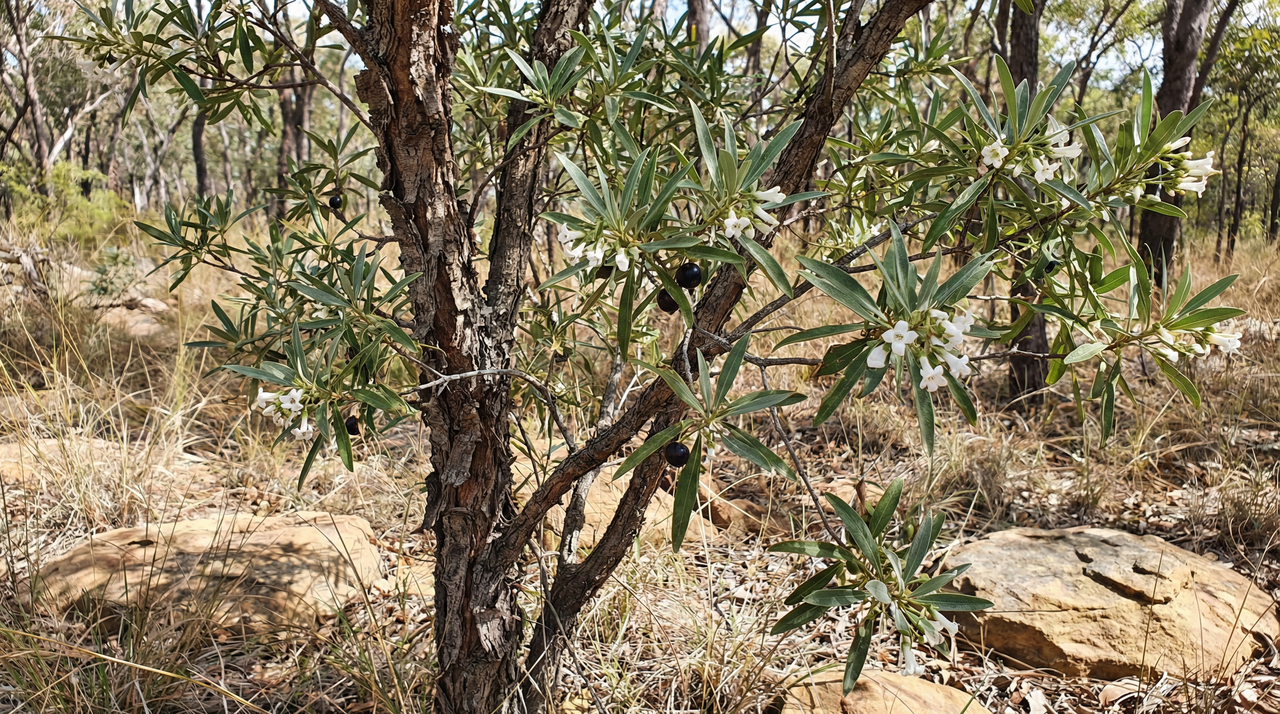
The first time someone handed me a branch of Corkwood and said "smell that," I expected something medicinal, maybe resinous, the way a lot of Australian natives announce themselves. What I got was almost nothing. Soft, hairy leaves, corky pale bark, a quietly pretty shrub that wouldn't stop anyone on a bush walk. And yet this is one of the most pharmacologically significant plants growing on the eastern Australian coast, the source of scopolamine that ends up in the little patch behind your ear on a cruise ship, or in the anesthesiologist's kit before surgery. The gap between what this plant looks like and what it's capable of is one of the more startling contradictions I've encountered in twenty-odd years of working with medicinal and food plants.
What keeps pulling me back to Duboisia myoporoides isn't the pharmaceutical angle, though that story is genuinely fascinating. It's the fact that Aboriginal peoples across Australia had already mapped this plant's chemistry with extraordinary precision, long before any laboratory got involved, developing careful preparation methods and trade networks built around its alkaloids. That's the kind of traditional ecological knowledge that deserves more than a footnote. This plant carries a lot of history in those unassuming leaves, and getting to know it properly means sitting with all of it.
Origin and History of the Corkwood Tree (Duboisia myoporoides)
Botanical Background and Visual Characteristics
The corkwood tree, known scientifically as Duboisia myoporoides, is a perennial shrub to small tree in the Solanaceae family, native to the coastal and near-coastal forests of Queensland and New South Wales in eastern Australia.[1][2] Most plants I encounter in this family announce themselves with drama, think tomatoes or angel's trumpets, but corkwood earns its common name quietly. The bark on mature stems goes dark brown to nearly black, corky, and deeply flaky, a classic hallmark of fire-adapted Australian scrub.[3][4] Young stems and leaves are densely pubescent, almost furry to the touch, with alternate ovate to lanceolate leaves running 5 to 12 cm long. In spring to early summer, small white to cream tubular flowers appear in axillary panicles, fragrant but easy to overlook. They're followed by dry globose capsules packed with tiny, dark, pitted seeds barely half a millimeter across.[3][1]
Height ranges from 3 to 15 meters depending on site, with most mature specimens settling in at 5 to 10 meters.[5] Two subspecies exist: subsp. myoporoides with narrower, less hairy leaves, and subsp. mauricei, which is noticeably broader and more densely hairy. Plants reach reproductive maturity at three to five years and can persist for fifteen to fifty years depending on conditions, reproducing both sexually through insect-pollinated flowers and vegetatively via root suckers.[6][7] After fire, it resprouts from the base, a trait I find ecologically elegant in any landscape plant. Its closest relatives in the genus tell a different story: Duboisia hopwoodii, the true Pituri of arid inland Australia, grows only 1 to 4 meters, produces fleshy reddish-black berries rather than dry capsules, and carries a far more drought-adapted constitution with leathery narrow leaves and smooth stems.[8][9] Duboisia leichhardtii, the Bitter Bark, occupies dry rainforest and eucalypt woodland in between, sharing the corky bark that makes the genus so recognizable.[10] None of these are food plants. All are toxic.
Traditional Aboriginal Uses and Cultural Significance
Long before any European botanist gave it a scientific name, Aboriginal peoples of eastern Australia were working intimately with Duboisia myoporoides. Leaves were dried, mixed with alkaline ash from Acacia or similar plants to boost alkaloid absorption, and chewed as pituri quids for stimulant and appetite-suppressing effects. The plant was also used medicinally for pain relief, respiratory issues including asthma, toothaches, and rheumatism, and its leaves were crushed into water bodies to stun fish.[11][12][13] These uses were embedded in ceremony and social life, not casual experimentation.
The broader genus deepens this picture considerably. Duboisia hopwoodii traveled what researchers now call the Pituri Road, a trade network spanning over 1,000 kilometers across arid Australia, exchanged as a valued commodity between groups.[14] Its alkaloid profile leans heavily on nicotine and nornicotine rather than the tropanes dominant in D. myoporoides, which explains the distinct stimulant character that made it so widely sought.[15] D. leichhardtii overlaps with myoporoides in some medicinal and fish-poisoning applications. Working with Australian native plants has taught me how much pharmacological precision traditional communities developed through observation and time. The ash-mixing technique for enhancing alkaloid uptake is a genuinely sophisticated piece of botanical knowledge, and it directly informed the pharmaceutical research that followed.
Discovery, Taxonomy, and Modern Pharmaceutical Development
Robert Brown formally described Duboisia myoporoides in 1810, with Ferdinand von Mueller contributing later studies across the genus.[16] Wild harvesting continued well into the twentieth century, but overharvesting concerns eventually pushed production toward dedicated Queensland and New South Wales plantations, where alkaloid content, particularly scopolamine and hyoscyamine, could be managed at scale.[17][18] Those compounds now supply global pharmaceutical markets for motion sickness treatment, anti-nausea medication, and anesthesia premedication. The plant is currently listed as Least Concern by the IUCN, relatively secure across its range though not without local pressures.[19]
The shift from wild collection to cultivation is the right direction, and agreements like the Nagara Agreement represent an important step toward ensuring Indigenous communities share in the benefits derived from knowledge they developed over thousands of years.[20] In any regenerative growing context, that's a standard worth holding. Alkaloid content varies by species, individual, and growing conditions, functioning as the plant's primary chemical defense against herbivores,[21] which is part of why corkwood sits so confidently in disturbed landscapes without much help from anything else.
Corkwood Tree Varieties and Sourcing
Subspecies and Notable Cultivars of Duboisia myoporoides
Corkwood tree splits into two recognized subspecies along a geographic line that roughly tracks Australia's east coast climate gradient: Duboisia myoporoides subsp. myoporoides occupies the northern range, while subsp. australis covers the southern form.[22][23] If you're hoping this means there are two garden-ready selections with distinct ornamental traits, I have to disappoint you. The distinctions that matter to breeders are almost entirely biochemical.
Commercial selection for scopolamine content has driven virtually all cultivar development, with breeding programs targeting higher alkaloid yields and broader environmental tolerance rather than anything a home grower would care about.[22][24] Lines like 'Hopewood' have been developed to push yields 20 to 30% above unimproved stock, and hybrids with Duboisia leichhardtii are part of ongoing industrial breeding work.[25][22] Even then, scopolamine content ranges from 0.5% to 3% dry weight depending on subspecies and growing conditions,[26] which tells me that even if you get good seed, expect variation rather than consistency without real chemical testing. Leaf scent intensity and overall plant vigor across different microclimates will hint at what you're dealing with, but only laboratory analysis confirms alkaloid levels.
The related Pituri (Duboisia hopwoodii) has no formally named horticultural cultivars to speak of, with only selections like 'Desert Hope' existing in the alkaloid-production context.[27][9] Neither species has ever been bred toward the kitchen garden or the food forest. Compare that to something like Moringa or Neem, where cultivar selection has given home growers genuinely useful options for productivity, palatability, or climate adaptation. Here, industrial selection has run in a completely different direction.
Sourcing Corkwood Tree: Regulations, Availability, and Where to Buy
Don't expect to find this at your local native plant fair. Corkwood is commercially cultivated in New South Wales and Queensland almost exclusively for pharmaceutical alkaloid extraction, which means the entire production chain runs toward bulk processing, not retail.[28][29] General nurseries simply don't stock it.[30] Botanical gardens occasionally display specimens for educational purposes but don't sell them.[30]
Regulations complicate things further depending on where you are. Australia requires licenses for pharmaceutical cultivation purposes,[28][29] and the EU prohibits cultivation and possession under pesticide and health risk regulations.[31] US importers need an APHIS import permit and phytosanitary certificate for plants going into the ground; federal possession isn't prohibited and scopolamine isn't scheduled under the DEA's Controlled Substances Act, but the paperwork is real.[32][33] I'd never bring this species onto a property without having that documentation sorted first, and I'd keep it well away from anything I couldn't account for. The plant contains scopolamine. That's not a liability I'd take casually.
If you're genuinely committed to sourcing it, your best route is direct inquiry to specialized Australian native plant nurseries (Yamina Rare Plants, Wildseed Australia, and Lamington Native Nursery are places worth contacting) or germplasm repositories like the Millennium Seed Bank at Kew, Australian PlantBank, or BGCI for research purposes.[9][34][35][36] Stock is sporadic, so calling ahead beats browsing online catalogs. One more thing worth knowing at the nursery: misidentification with Pituri is common in the trade, since D. myoporoides is more available and sometimes substituted.[37] I've learned to check for pubescent (hairy) stems and smaller leaf size when trying to distinguish Pituri from corkwood in person; the two have meaningfully different alkaloid profiles, nicotine-dominant versus tropane-dominant, and that difference matters.
Corkwood Tree Propagation and Planting Guide
Getting a corkwood tree established starts with understanding what you're working with: a subtropical Australian native whose seeds are engineered by evolution to survive fire, drought, and disturbance before they'll commit to germinating. Once you internalize that, every propagation decision makes more sense.
Seed Characteristics and Storage
Duboisia myoporoides seeds are small, around 1-2 mm long, ovoid, smooth, and dark brown to nearly black with a hard, impermeable seed coat that creates physical dormancy.[38][39] The first time I held a pinch of them in my palm, I thought someone had accidentally dropped in a few grains of black pepper. Label your flats on day one; you will thank yourself later.
The good news is that these seeds store exceptionally well. Dried to 5-10% moisture and kept at 5-10°C, they hold viable for 3-5 years, and under true seed-bank conditions at -18°C, viability can extend beyond a decade.[40][41] That said, fresh duboisia seeds are always going to outperform stored material. Fresh seed germination rates run 60-80% under good conditions, with optimized trials pushing toward 90%.[42][43] If you're sourcing duboisia hopwoodii seeds or comparing notes with anyone growing the arid-zone relative Pituri, expect lower baseline germination and a stronger response to smoke or gibberellic acid cues -- the genus shares dormancy mechanics, but each species is tuned to its own disturbance regime.
Germination and Propagation Methods
Scarification is non-negotiable. The hard coat will not let water in without help. I've tried sulfuric acid on larger batches and it works, but for small home-scale lots I now reach for a fine sanding block and gently abrade each seed just enough to dull the surface sheen. It takes a few minutes longer than a chemical soak, but the control is worth it, and honestly there's something satisfying about feeling exactly when you've done enough. A 24-hour warm-water soak after scarification also helps, and some growers add smoke water to that soak for an extra germination nudge.[43][44]
Sow scarified seeds about 0.5 cm deep in a 50:50 sand-perlite mix, keep them at 20-25°C with consistent bottom heat, and maintain moisture without saturation.[45] Spring is the ideal sowing window. Emergence typically happens in 2-4 weeks.[43] In my early trials I lost an entire flat to damping-off because I kept the medium too wet. The seedlings resemble tiny tomato transplants at first (both are Solanaceae, after all), but corkwood is slower out of the gate and far less forgiving of soggy roots. "Just moist" is the standard I hold myself to now, and germination rates improved immediately once I made that adjustment.
For faster results and genetic uniformity, semi-hardwood cuttings taken in late summer are the method I trust most. Cut 10-15 cm sections, treat with IBA at 3000-5000 ppm, and stick them into a 1:1 perlite-peat or sand-perlite mix under 80-90% humidity with 21-24°C bottom heat. Rooting takes 4-8 weeks with 60-80% success.[46] Grafting onto compatible Duboisia rootstocks (cleft or whip-and-tongue) pushes success rates to 70-90% and is the method commercial alkaloid growers prefer because grafted plants reach first leaf harvest in 12-24 months compared to 18-36 months from seed.[47][48] I've achieved 80%+ take on my own grafts when cambium alignment is precise and I keep humidity high for the first three weeks post-graft. Tissue culture on Murashige-Skoog medium with cytokinins and auxins exists for commercial mass production of high-alkaloid clones,[49] but that's firmly out of scope for most home growers.
Soil, Site Selection, and Site Preparation
Corkwood's native haunts are well-drained sandy and loamy soils, often over basalt or volcanic parent material, and that preference translates directly into cultivation requirements. The target pH is 5.5-7.0; the plant tolerates up to 7.5-8.0, but above 7.5 you risk iron chlorosis and a measurable drop in plant vigor.[43][50] I test local soil pH before planting now as a matter of routine because I once grew a batch on slightly alkaline unamended clay and watched the yellowing start within a season. Testing takes ten minutes and prevents months of remediation.
For containers or raised beds, a mix of 50% sandy loam, 30% perlite or coarse sand, and 20% organic matter gives the drainage this plant expects.[43] Heavy clays and waterlogged positions are a hard no. The taproot goes deep, ideally into 60-90 cm of workable soil and more if you can manage it,[51] so a compacted or shallow profile will cap performance even if everything else is right. Once established, corkwood is genuinely drought-tolerant and handles moderate salinity, but it needs that taproot depth to get there.
Spacing, Planting Technique, and Establishment
Commercial alkaloid operations run 500-800 plants per hectare at 3-4 m within rows and 4-5 m between rows, with higher-density configurations reaching 3000 plants/ha on fertile sites at 1-1.5 m within rows.[52][53] For home gardens and landscape plantings, give each plant 3-5 m to accommodate the eventual 4-10 m height and spread, with closer spacing only on very fertile, well-drained sites.[43] In my experience, tighter spacing in humid subtropical summers invites fungal pressure; the air circulation that wider gaps provide is worth the square footage.
Plant in spring or early summer after the last frost risk has passed, stake young plants on exposed or windy sites, and plan for annual pruning once the plant is established to maintain a bushy, productive form.[43][54] Grafted or cutting-grown plants settle in faster and reach usable size well ahead of seedlings, so if speed matters to your planting timeline, vegetative propagation is worth the extra early effort.
Corkwood Tree Care Guide
I'll be honest with you: this is not a plant for the impatient or the heavy-handed gardener. Growing a corkwood tree successfully is really about restraint. Restraint with water, restraint with fertilizer, and a clear-eyed understanding of what the plant actually needs versus what your instincts tell you to give it. Get those fundamentals right and you'll have a striking, chemically potent shrub that practically looks after itself.
Sunlight Requirements for Optimal Growth and Alkaloid Production
Corkwood wants light, and plenty of it. Full sun to partial shade works, but at least six hours of direct sun daily is where it performs best.[43][4] There's a reason for this beyond basic photosynthesis: bright direct light actively enhances hyoscyamine content and keeps the plant compact rather than sprawling and leggy.[55] In my subtropical garden, the specimens that get full sun produce foliage that's noticeably more pungent and aromatic than those in partial shade. You can literally smell the difference.
Those hairy leaves aren't just texture for texture's sake. The pubescence reflects UV radiation and slows water loss, an elegant adaptation to high-light and seasonally dry conditions.[56] Shade it too much and you'll see the consequences: elongated weak stems, yellowing foliage, and measurably lower alkaloid content.[57] On the other end, in genuinely brutal summers, morning sun with afternoon shade prevents leaf scorch and photoinhibition.[58][4]
Water Needs and Drought Tolerance
Think rosemary or lavender: drought-tolerant once the roots are established, but deeply unhappy with wet feet. Root rot from poor drainage or overwatering kills more home-grown specimens than anything else, and I've watched it happen fast in containers.[59][4] Excellent drainage isn't optional; it's the whole game.
During the first year or two, water every seven to ten days or so to encourage a deep fibrous root system that can eventually extend one to two meters into the soil.[59] Once established, occasional deep soaks during prolonged dry spells are all it needs. Rainwater is preferred over high-mineral tap water, and mulching helps retain moisture without keeping the soil surface wet.[59][60] Soil pH between 5.5 and 7.5 suits it fine, and it shows moderate salinity tolerance up to around 4 dS/m.[61]
Fertilizer and Soil Fertility Management
Here's where I differ from many gardeners: I actively under-fertilize this plant. Corkwood is adapted to the low-to-moderate fertility soils of open Australian woodlands, and heavy feeding pushes lush vegetative growth at the direct expense of alkaloid production.[4][59] I've seen this pattern repeatedly with Australian natives: rich soil, gorgeous foliage, disappointingly dilute chemistry.
If you do feed, a balanced NPK formula around a 2:1:1.5 ratio applied conservatively during the growing season is the research-backed approach.[62][63] Well-rotted compost or aged manure is my preference; it improves soil structure while releasing nutrients slowly enough to avoid the surge that triggers excessive leaf growth.[64] If using a synthetic formula, keep soil EC below 2.0 dS/m to avoid salinity stress, and test regularly rather than guessing.[63] Over-fertilization shows up as leaf burn, tip necrosis, and root damage; nitrogen deficiency as uniform yellowing; potassium shortage as marginal leaf scorch.[65]
Heat and Frost Tolerance
Corkwood handles heat reasonably well, tolerating up to 40°C, though above that threshold you'll see leaves curl inward, wilt, or scorch at the tips without adequate water.[66] Its sweet spot is daytime temperatures between 15 and 30°C with nights staying above 10°C. Rated for USDA zones 9b through 11, it can handle summers with up to 120 days above 30°C, which puts it comfortably in a Florida or coastal California climate,[67][43] but new growth is always the most vulnerable when temperatures spike unexpectedly.
Frost Protection and Cold Hardiness
Frost is the hard limit. Even a light frost below 0 to 5°C can damage corkwood, and prolonged freezing is genuinely fatal.[4] Young plants are considerably more vulnerable than established specimens; damage appears as blackened leaf tips, wilting, and dieback from the branch ends inward.[68] I treat mine exactly like my container citrus: when nights drop below 7°C, they come onto the porch into a bright, cool spot with watering dialed right back. For in-ground plants, a 10 to 15 cm mulch layer and frost cloth over the crown gets most mature shrubs through a brief cold snap.[43] Outside zones 9 to 11, plan for container growing or accept it as an annual.[69]
Pruning, Maintenance, and Seasonal Rhythm
Left unpruned, corkwood will eventually push five to ten meters tall.[70] For most home gardeners, keeping it to two or three meters is far more practical, and regular pruning is how you get there. Cut back by 30 to 50 percent after flowering or in late winter to early spring; this removes dead wood, encourages dense branching, and, from a commercial perspective, increases leaf yield from subsequent growth flushes.[71][72] Avoid heavy pruning all at once; it stresses the plant unnecessarily. I aim for a multi-stemmed shrub form rather than a single-leader tree, which makes maintenance and any future leaf harvest far more manageable.
Seasonal Growth Cycle
The corkwood tree flowers primarily from late spring into early summer (September through December in Australia), producing small tubular blooms in white to pale purple that attract native bees.[73] Fruit capsules follow through midsummer, ripening around December to February and holding the small seeds you'll need for propagation. Active vegetative growth tracks the warmer months, slowing in cooler periods when the plant may shed some foliage during extended dry spells, though it persists as an evergreen from the same root system year after year.[74][75] Pruning in late winter, just before that spring growth push, keeps you one step ahead of the season and sets the plant up for its most productive flush of new foliage.
Harvesting Corkwood Tree (Duboisia myoporoides)
Before anything else: this is not a plant you harvest for the kitchen, the medicine cabinet, or even casual experimentation. Every part of the corkwood tree carries potent tropane alkaloids, and I treat it the same way I treat any pharmaceutical crop -- with strict boundaries and a great deal of respect. The leaves are harvested exclusively for industrial extraction of scopolamine and hyoscyamine, full stop. Any discussion of harvest technique here is oriented toward licensed commercial production, not backyard use.
When to Harvest Corkwood Leaves for Maximum Alkaloid Content
Patience is genuinely required with this species. From seed, corkwood typically needs 18 to 24 months before the first meaningful leaf harvest is possible, with full commercial production not really kicking in until years two or three. Grafted plants can shave that timeline to 12 to 24 months,[76][77] which is one reason commercial growers favor vegetative propagation.
Once established, the timing of each cut matters as much as the timing of the first one. Peak alkaloid content in duboisia leaves aligns with two windows: the spring and summer flowering period, when leaves are fully expanded and a deep, uniform green without any yellowing, and a second cooler peak running May through August in Australia.[78][79] That color check -- fully expanded, dark green, no chlorotic edges -- is something I look for in any alkaloid-producing plant I monitor. It's a reliable field indicator that the chemistry is where you want it. The related Pituri (D. hopwoodii), adapted to arid inland conditions rather than subtropical coastal habitat, peaks differently: growers look for leaves 5 to 10 cm long with a leathery, deep to yellowish-green texture, with the harvest window shifting to late summer through autumn.[80] That divergence reflects climate adaptation, not contradiction. The subtropical species responds to humidity and heat cycles; the arid one responds to the rhythm of dry-season stress.
Harvest Techniques and Sustainable Yields
Commercial harvest follows a selective hand-pruning model: outer mature leaves are removed with shears, ideally before 10 AM when alkaloid concentrations are at their daily peak.[54][81] It's a technique that reminds me of sustainable tea or yerba mate harvesting -- always working the outer canopy, leaving the inner growing structure intact. Established plants can support three to four harvests per year on four to six week cycles without significant stress.[24] Push beyond that and you'll see it: new growth becomes visibly weakened, wilting or yellowing in ways that signal the plant is being asked for more than it can give. I've seen similar responses in fast-regrowing shrubs managed on aggressive cutting schedules, and the lesson is always the same -- restraint preserves yield over time. This is a regulated industrial crop, and the discipline that commercial operators bring to cycle management is exactly what keeps it productive across a multi-year harvest life.
Understanding the Yield, Flavor, and Toxicity Profile
If the timeline hasn't made it clear: these leaves are not food. The plant is toxic, and the sensory profile communicates that immediately. Chewing a corkwood leaf delivers bitterness, an acrid pungency, and a numbing sensation; combusted, the smoke is earthy and tobacco-like.[82][22] Those signals are the alkaloids talking. Scopolamine alone accounts for 60 to 80 percent of total alkaloid content, concentrated highest in young foliage. I would never experiment with this plant at home -- the toxicology is too well-documented, the therapeutic window too narrow, and the risks too real.[83]
Commercial operations working within that reality average 1 to 2 kg of dry leaf per mature plant annually, with well-managed plantations reaching up to 2.5 tons per hectare under optimized conditions.[84][85] Those numbers are achievable only with careful selective harvesting and the kind of long-term plant management that respects both the crop's recovery cycles and the regulatory framework around its alkaloid content. This is professional pharmaceutical agriculture, and the harvest reflects that.
Corkwood Tree Preparation and Uses
Why Corkwood Tree Is Not Edible
Let me be direct: Corkwood Tree is not food, not a cooking ingredient, and not something you should ever experiment with in the kitchen or herb garden. Duboisia myoporoides contains scopolamine, hyoscyamine, and nicotine in concentrations that can cause severe anticholinergic poisoning from even casual handling of fresh material, let alone ingestion.[86][10][87] There's no nutritional data to share here, no vitamins or minerals worth cataloguing, because toxicity removes it from the conversation before nutrition ever enters it.[10] In all my years working with medicinal and native plants, including plenty of other Solanaceae that look deceptively familiar, I've never encountered a species where the warning needs to be this absolute. I grow Corkwood in a protected spot in my garden and I can tell you from personal experience that chewing even the smallest fragment of leaf leaves an intense, acrid bitterness and a numbing sensation that your body is immediately telling you to spit out. That reaction is a useful teacher. Listen to it.
Traditional Aboriginal Processing and Modern Medicinal Preparations
What Aboriginal peoples developed with related Duboisia species over thousands of years represents genuinely sophisticated pharmacological knowledge. Traditional preparation of pituri involved mixing dried leaves with alkaline ash, which enhanced nicotine absorption through the oral mucosa, alongside soaking, cooking, and other techniques refined through generations of careful observation.[88][89][90] I've read first-hand accounts of this tradition and I find the ingenuity genuinely remarkable. That said, I want to be careful here: acknowledging the depth of that knowledge is very different from suggesting anyone attempt to replicate it.
The problem is that alkaloid concentrations vary enormously between individual plants, seasons, and growing conditions, which means no safe or standardized crude-leaf dose exists today.[91] Even the traditional ash-mixing methods don't make home preparation safe for contemporary use.[88] The pharmaceutical industry sidesteps that variability entirely through precision extraction: commercial Duboisia plantations in Queensland now supply purified scopolamine and hyoscyamine used in motion-sickness patches, eye drops, and anesthesia at controlled therapeutic doses between 0.3 and 1.2 mg.[91] That process involves laboratory controls no backyard grower can replicate. I've seen what happens when people misjudge medicinal plants with narrow therapeutic windows, and the Corkwood's power is best honored by leaving direct use to Indigenous custodians and licensed pharmaceutical producers.
Corkwood Tree Health Benefits
I want to be honest with you upfront: this is not a plant with a list of teas you can brew or tinctures you can make at home. The health story of Corkwood Tree is inseparable from its toxicity, and understanding one means understanding the other. What makes Duboisia myoporoides medically remarkable is exactly what makes it dangerous in untrained hands.
Phytochemical Profile: Tropane Alkaloids in Duboisia myoporoides
The chemistry that defines this plant begins with its tropane alkaloids. Dried leaves contain somewhere between 0.5 and 3% scopolamine (also called hyoscine) and 0.5 to 1% hyoscyamine, with smaller amounts of nicotine, nornicotine, and minor compounds like cuscohygrine and apoatropine.[92][93][94] Those numbers aren't fixed. Alkaloid concentrations peak in summer, run highest in subtropical Queensland populations, climb in response to drought stress by up to 40%, and increase when soil nitrogen is rich.[95][96] I've watched similar stress-response alkaloid surges in other Solanaceae I grow, like angel's trumpet after a dry spell. It's a reminder that what you'd be harvesting from the wild is chemically unpredictable in ways that controlled pharmaceutical extraction is not.
Beyond alkaloids, the leaves also contain flavonoids and phenolic compounds with measurable antioxidant activity in vitro, and those alkaloids themselves function as chemical armor against herbivores and pathogens.[97][98] The related Pituri (Duboisia hopwoodii) has a completely different alkaloid identity: 0.2 to 1.5% nicotine and 0.5 to 3% nornicotine, with only trace tropane alkaloids below 0.1%.[80][99] Confusing the two in a planting guild isn't just a botanical error; the pharmacological consequences are genuinely different. Duboisia leichhardtii sits closer to myoporoides but skews toward hyoscyamine dominance at 60 to 80% of total alkaloids, with scopolamine playing a supporting role.[100]
Medicinal Research and Pharmaceutical Applications
The most clinically supported application of Duboisia alkaloids is scopolamine for motion sickness prophylaxis, postoperative nausea management, and sedation in anesthesia.[101][102] The operative word is "isolated scopolamine" -- administered in pharmaceutical-grade patches or tablets at precisely controlled doses of 0.3 to 0.65 mg, not as any form of crude plant preparation.[103] Corkwood is commercially cultivated in Queensland specifically to supply this pharmaceutical pipeline, producing alkaloids for products treating motion sickness, gastrointestinal disorders, and Parkinson's symptoms.[87][104]
The mechanism behind these effects is muscarinic acetylcholine receptor antagonism -- the alkaloids competitively block those receptors to produce mydriasis, reduced gastrointestinal motility, bronchodilation, and sedation, with animal studies also supporting analgesic and anti-inflammatory effects through central nervous system modulation.[105][106] There's also preliminary in vitro data showing antimicrobial activity against Staphylococcus aureus and Candida albicans, plus cytotoxic effects against cancer cell lines via apoptosis induction.[107] I find those results genuinely interesting, but there are zero published clinical trials on whole plant extracts in humans.[108] Until human trials exist on crude preparations, I treat that data as scientifically intriguing rather than anything a grower or home practitioner should act on.
Nutritional Aspects and Limitations
There's not much to say here, and that's the honest answer. Duboisia myoporoides has no edible uses, no entries in the USDA FoodData Central, and no meaningful nutritional profile to report.[109][110] Traditional Aboriginal use involved chewing or smoking minute quantities of leaves mixed with wood ash -- a practice that enhanced alkaloid bioavailability for analgesic, stimulant, or ceremonial purposes, never for nutrition.[111] Extrapolated dry-weight estimates from related studies suggest roughly 15 to 20% protein and 30 to 40% carbohydrates, but those figures aren't derived from food analyses and mean nothing in practice because the alkaloid load makes consumption dangerous regardless of any macronutrient content.[98] This plant's value is pharmaceutical, full stop.
Safety and Toxicity Considerations
This is where I speak plainly. Duboisia myoporoides is a genuinely dangerous plant, and I never recommend any form of home experimentation with it. All species in the genus are highly toxic due to alkaloid content, and ingestion causes anticholinergic poisoning: dry mouth, blurred vision, dilated pupils, rapid heart rate, confusion, hallucinations, delirium, seizures, and potentially respiratory failure, coma, or death.[112][113][114] Livestock and dogs are just as vulnerable, showing ataxia, cardiac irregularities, and potential death after exposure. There is no established safe dose for raw plant material.
Treatment is supportive and symptomatic; activated charcoal can assist with decontamination, and physostigmine is used for severe anticholinergic crisis, but no specific antidote exists.[103][115] Contraindications for pharmaceutical scopolamine derivatives are extensive -- pregnancy, narrow-angle glaucoma, myasthenia gravis, cardiac arrhythmias, seizure disorders -- and significant drug interactions occur with other anticholinergics, antipsychotics, and tricyclic antidepressants.[116] Even handling the plant warrants protective gear to prevent dermal or ocular alkaloid absorption.[117]
Traditional Indigenous use did involve carefully controlled, minute quantities passed through specific cultural protocols with deep generational knowledge of dosage and preparation.[89] That knowledge is not casually transferable. The same alkaloids that give this plant its extraordinary pharmaceutical value create a narrow therapeutic window that demands regulated extraction and professional medical oversight. If you suspect exposure in a person or animal, contact emergency medical or veterinary services immediately.
Corkwood Tree Pests and Diseases
Natural Pest Resistance from Tropane Alkaloids and Trichomes
Most plants in the Solanaceae family get eaten. Corkwood mostly doesn't. The same tropane alkaloids -- scopolamine, hyoscyamine, nicotine -- that make this plant so pharmaceutically valuable also make it genuinely unpleasant to feed on, and field observations in native Australian habitats back that up: aphid infestation rates run below 5 percent in wild populations, a number that would make any grower of tomatoes or eggplant jealous.[118][119] The glandular trichomes add another layer, physically deterring contact and releasing alkaloids when damaged.[120][96] I've seen comparable low pest pressure in other alkaloid-rich Solanaceae relatives I've worked with in subtropical landscapes, and it always has the same explanation: chemical deterrence works.
That said, cultivation shifts the odds. Young seedlings haven't yet accumulated full alkaloid concentrations, which creates a brief window of vulnerability.[121] In stressed or crowded plants, aphids (including Myzus persicae), thrips, spider mites, scale insects, and root-knot nematodes (Meloidogyne spp.) can all establish if conditions invite them.[122] Across the genus, D. leichhardtii tends to show more vulnerability to leaf beetles, Helicoverpa armyworms, and whiteflies in cultivation than the anchor species, while D. hopwoodii's arid adaptation gives it a slight edge overall, though it's not immune to spider mites.[123] Think of pest pressure here as a stress response rather than a baseline condition.
Common Diseases and Environmental Triggers
Corkwood's disease resistance holds reasonably well in its preferred conditions, but the plant's tolerance shifts fast when drainage fails or humidity spikes outside the 15--30°C comfort zone.[124] The most serious threat is Phytophthora root rot (P. cinnamomi), which is essentially a waterlogging disease: give this plant wet feet and the clock starts ticking.[125] In humid subtropical regions, bacterial wilt from Ralstonia solanacearum can cause sudden wilting and vascular discoloration with significant losses, while Alternaria and Cercospora leaf spots show up as necrotic lesions that chip away at photosynthetic capacity.[126][122] Viral infections can layer on top, typically vectored by aphids, which is one reason aphid monitoring matters more than the low baseline numbers might suggest.[127]
Breeding programs have made real inroads here. Commercial hybrids selected for alkaloid yield often carry improved resistance to root rot, Verticillium wilt, and Phytophthora cinnamomi specifically, which is worth knowing if you can access them through regulated channels.[128] Most data on disease incidence comes from Australian plantations; U.S. growers should treat Solanaceae family protocols as the nearest reliable reference until regional data catches up.
Integrated Pest and Disease Management
The foundation of any management strategy here is site selection. Well-drained sandy or loamy soils, raised beds in high-rainfall zones, and consistent avoidance of overhead irrigation eliminate most of what can go wrong.[129] In my guild designs for susceptible Australian natives, good airflow and elevation from seasonal wet are the first lines of defense, and corkwood is no different. From there, IPM sequencing goes cultural first: proper spacing, removal of infected debris, and rotation where the site allows.[130] Ladybugs and lacewings handle aphid pressure well without any intervention if you're not disrupting the local predator population. When something does need treating, neem oil or phosphonates applied selectively are the sensible reach before any broad-spectrum chemical option, both to protect pollinators and to preserve the alkaloid quality in foliage destined for any medicinal use.[131][132] Chemical controls are a last resort here, not a reflex.
One practical note I always give clients working around Solanaceae: get your identification right before you touch anything. I've helped people distinguish corkwood from its look-alikes in the field -- the leaf texture and branching pattern become reliable once you know them -- because misidentification in this family carries real consequences.[133] Datura, black nightshade, tree tobacco, and other Duboisia species can all cause confusion, and the toxicity stakes are not trivial.[134] Know what you're growing.
Corkwood Tree in Permaculture Design
Corkwood sits in an interesting middle ground for permaculture designers. It's not a food plant, it doesn't fix nitrogen, and its alkaloid content demands some care around plant placement. But dismiss it too quickly and you miss a shrub with genuine ecological muscle: built-in pest deterrence, reliable pollinator value, slope stabilization, and a chemistry profile that can reduce your overall pest management workload just by being present. Understanding how to place it well starts with climate.
Suitable Climates and USDA Hardiness Zones for Corkwood
Duboisia myoporoides is fundamentally a humid subtropical and temperate coastal Australian species, native to the eastern seaboard from Queensland down through New South Wales and occasionally into Victoria.[135][136] It wants warmth and moisture: an optimal growing-season range of 18 to 32 °C, annual rainfall between 1000 and 2000 mm, and winters that stay mild.[137][68] In USDA terms that translates to zones 9b through 11, with established plants tolerating brief light frosts down to around -2 °C before needing protection.[73][43] I grow mine in zone 9b and I've learned to cover young plants with shade cloth during the occasional cold snaps we get in winter; once they're two or three years old and properly woody, they shrug off a brief frost much better.
If you're in an arid climate and have been eyeing the Duboisia genus, the related Pituri (Duboisia hopwoodii) tells a very different story. That species thrives on just 150 to 400 mm of annual rainfall in hot inland Australia, handles greater frost exposure down to about -5 °C, and has dramatically smaller, more water-efficient leaves.[27][138] I've trialed Pituri in a greenhouse to observe it firsthand, and the contrast with my coastal Corkwood specimens is striking. They barely look related. So if you're in a desert-edge climate, Pituri is worth investigating; if you're coastal subtropical, myoporoides is your candidate.
Ecosystem Functions and Services of Corkwood
The tubular white-to-purple flowers, each 5 to 8 mm long and arranged in terminal panicles, are more ecologically significant than they look.[22] Flowering peaks from September through December in Australia (spring into early summer), and pollination happens primarily through buzz pollination, where bees grip the poricidal anthers and vibrate their flight muscles to shake out the sticky yellow pollen.[139][96] I've watched Leioproctus bees working Corkwood flowers in exactly the same way they work my tomatoes and eggplants; that characteristic high-pitched buzz is unmistakable once you know it. Beyond native bees, hoverflies, butterflies, and even honeyeaters visit the blooms, and cross-pollination improves fruit set noticeably over self-pollination.[140]
The pest-resistance story is where Corkwood's corkwood tree adaptations really shine in a polyculture context. Leaf concentrations of nicotine, nornicotine, and anabasine can reach 2 to 3 percent of dry leaf weight, creating what I think of as a living pesticide perimeter.[141] Aphids and caterpillars largely avoid plants in close proximity, which reduces pest load on neighboring species without any intervention from me. This doesn't mean it's toxic to beneficial insects at low exposure; the pollinators visiting those flowers make that plain. It does mean that positioning Corkwood thoughtfully at the shrub layer can buffer more vulnerable plants from herbivory pressure.
Soil services round out the picture. Its root system stabilizes slopes and controls erosion, and the leaf litter breaks down into humus that builds organic matter over time.[142] There's no nitrogen fixation here, which is worth knowing upfront; you'll need to supply that function through companion plantings. Its fast growth makes it useful for biomass accumulation, and the canopy structure provides habitat and shelter for small fauna.[143] Pituri pulls off similar services in arid systems, with the added resilience of fire adaptation and rootstock resprouting after disturbance.[144]
Forest Layer Placement and Guild Design
Corkwood is a multi-stemmed spreading shrub reaching 1 to 4 meters in most garden conditions, occasionally stretching to 10 meters in ideal situations.[145][146] In the wild it occupies the shrub and understory layers of open eucalypt woodlands, coastal scrubs, and rainforest edges; in a designed system that translates cleanly to a mid-layer position beneath taller canopy trees. Pituri fills the same structural niche in mallee shrublands and mulga woodlands, where it also acts as a seral colonizer of disturbed ground.[147]
Guild design with Corkwood requires thinking around two facts simultaneously: it brings pollinator support and chemical defense, but it doesn't contribute nitrogen.[75] My approach is to pair it with nitrogen-fixing species to balance that gap. Acacias are the obvious Australian-inspired choice, and I've seen measurably improved soil nitrogen in beds where I've interplanted nitrogen-fixers like Acacia farnesiana alongside alkaloid-rich shrubs over two seasons. The structural pairing mimics what you'd find at the edge of an Australian sclerophyll forest anyway, so it's ecologically coherent, not just convenient. One note of caution: the same alkaloid profile that makes Corkwood valuable as a pest deterrent may affect understory herbs planted very close. I treat it similarly to how I'd position any strong Solanaceae shrub; give neighboring plants a bit of breathing room and watch how they respond before committing to a permanent layout.
The Plant That Taught Me to Respect What I Can't Fully Know
I've spent years putting plants to work, eating from them, propagating them, pressing cuttings into the hands of anyone who'll take them. Corkwood stopped me. There's something clarifying about a plant that says: not everything is yours to use. I grow it for the flowers, for the structure, for the reminder that some of the deepest plant knowledge on this continent belongs to people who spent generations earning it, and that's exactly where it should stay.
Sources 147
- Kew Science Plants of the World Online - Duboisia myoporoides ↩
- Atlas of Living Australia - Duboisia myoporoides ↩
- Flora of Australia - Duboisia myoporoides ↩
- ANPSA Plant Profile - Duboisia myoporoides ↩
- Flora of Australia - Duboisia myoporoides ↩
- Reproductive Biology of Duboisia Species ↩
- Population Ecology of Australian Solanaceae ↩
- Plants of the World Online - Duboisia hopwoodii ↩
- ANPSA Plant Profile - Duboisia hopwoodii ↩
- Flora of Australia - Duboisia ↩
- Ethnobotany of Duboisia Species in Australia ↩
- AIATSIS - Pituri ↩
- Ethnobotany of Duboisia in Australia ↩
- The Pituri Trade of Central Australia ↩
- Pituri: The Indigenous Tobacco of Australia ↩
- Prodromus Florae Novae Hollandiae ↩
- The Alkaloids of Duboisia myoporoides ↩
- Sustainable Cultivation of Duboisia Species ↩
- IUCN Red List - Duboisia myoporoides ↩
- Bioprospecting and Indigenous Rights: The Case of Duboisia ↩
- CSIRO - Duboisia Research ↩
- Duboisia myoporoides ↩
- Flora of Australia: Duboisia myoporoides ↩
- Duboisia species: Alkaloid Production and Commercial Cultivation ↩
- Horticulture of Duboisia for Pharmaceutical Use ↩
- Alkaloid Production in Duboisia myoporoides ↩
- Duboisia hopwoodii - Wikipedia ↩
- Duboisia - Alkaloid Production in Australia ↩
- Commercial Cultivation of Duboisia Species ↩
- Duboisia myoporoides Profile ↩
- EU Pesticides Database ↩
- USDA APHIS Plants for Planting Manual ↩
- DEA Controlled Substances List ↩
- Millennium Seed Bank ↩
- Australian PlantBank ↩
- Botanic Gardens Conservation International ↩
- Misidentification in Trade: Duboisia spp. in Nurseries ↩
- Flora of Australia: Duboisia myoporoides ↩
- Seed Morphology and Germination in Duboisia spp. ↩
- Seed Storage of Australian Native Plants ↩
- Orthodox Seed Storage Protocols ↩
- Australian Native Seed Germination Protocols ↩
- Propagation of Duboisia myoporoides by Seed and Cuttings ↩
- Seed Dormancy and Germination of Australian Native Plants ↩
- Propagation of Australian Native Plants ↩
- Propagation of Duboisia myoporoides and Duboisia leichhardtii by cuttings ↩
- Propagation of Duboisia Species ↩
- Cultivation and Management of Duboisia myoporoides ↩
- Tissue Culture Techniques for Duboisia Species ↩
- Duboisia Cultivation Guide ↩
- Cultivation of Duboisia species - NSW Department of Primary Industries ↩
- Cultivation of Duboisia myoporoides ↩
- Horticultural Guidelines for Duboisia ↩
- Duboisia Cultivation Guide ↩
- Growing Duboisia for Pharmaceutical Use ↩
- Plants of the World Online: Duboisia myoporoides ↩
- Duboisia: Cultivation and Utilization ↩
- Photoinhibition in Solanaceae Plants ↩
- Horticulture of Duboisia spp. ↩
- Water Requirements for Native Australian Shrubs ↩
- Duboisia myoporoides - QR DOB Flora Virtual Atlas ↩
- Cultivation of Duboisia Species for Alkaloid Production ↩
- Nutrient management in Duboisia myoporoides ↩
- Fertilizer Recommendations for Native Australian Plants ↩
- Nutrient Toxicity in Woody Plants ↩
- Duboisia myoporoides ↩
- USDA Plant Hardiness Zone Map ↩
- Growing Duboisia Species ↩
- Duboisia myoporoides - Plant Profile ↩
- Duboisia myoporoides ↩
- Cultivation of Duboisia myoporoides ↩
- Duboisia Cultivation Guide ↩
- Corkwood (Duboisia myoporoides) ↩
- Flora of Australia: Duboisia ↩
- Australian Native Plants: Duboisia ↩
- Cultivation of Duboisia Species ↩
- Duboisia Cultivation and Management (AU Dept. of Agriculture) ↩
- Alkaloid Production in Duboisia myoporoides: Harvesting Strategies for Optimal Yield ↩
- Duboisia Cultivation in Australia ↩
- Alkaloid Content in Duboisia hopwoodii: Variation with Leaf Maturity ↩
- Commercial Production of Duboisia for Alkaloids ↩
- Tropane Alkaloids in Duboisia: Biosynthesis and Accumulation Patterns ↩
- Ethnobotany of Duboisia Species ↩
- Commercial Production of Duboisia: Agronomy and Harvesting ↩
- Cultivation of Duboisia species ↩
- Tropane Alkaloids in Duboisia Species - PubMed ↩
- Duboisia - Kew Science ↩
- Pituri: Use of Duboisia hopwoodii by Australian Aboriginals ↩
- Ethnobotany of Duboisia species - Journal of Ethnopharmacology ↩
- Traditional Use of Duboisia Species by Australian Aborigines ↩
- Duboisia Species: A Review on Traditional Uses and Pharmacological Properties ↩
- Duboisia myoporoides R. Br. (Solanaceae) – A phytochemical and pharmacological review ↩
- Alkaloid Content and Pharmacology of Duboisia myoporoides ↩
- Tropane Alkaloids in Duboisia Species ↩
- Alkaloids of Duboisia Species - Journal of Natural Products ↩
- Alkaloid Content and Variation in Duboisia myoporoides ↩
- Chemical Ecology of Duboisia Species ↩
- Phytochemical Composition and Antioxidant Activity of Duboisia myoporoides ↩
- Variation in Alkaloid Content in Duboisia hopwoodii (F. Muell.) Populations from Arid Australia ↩
- Alkaloid Content of Duboisia leichhardtii ↩
- Scopolamine from Duboisia in Motion Sickness Therapy ↩
- Scopolamine: A Review of Pharmacokinetics and Clinical Applications ↩
- Scopolamine - DrugBank Online ↩
- Cultivation of Duboisia for Alkaloid Production ↩
- Tropane Alkaloids in Duboisia myoporoides: Pharmacology and Biosynthesis ↩
- Phytochemistry and Biological Activities of Duboisia Species ↩
- Cytotoxic and Antimicrobial Effects of Duboisia Alkaloids ↩
- Tropane Alkaloids from Duboisia myoporoides - Journal of Natural Products ↩
- Plants of the World Online: Duboisia myoporoides ↩
- USDA FoodData Central ↩
- Ethnobotany of the Australian Acacia and Duboisia Species ↩
- Duboisia myoporoides: A Review of Its Pharmacology and Toxicology ↩
- Poisonous Plants of Australia ↩
- Anticholinergic Toxicity - StatPearls - NCBI Bookshelf ↩
- Management of Anticholinergic Toxicity ↩
- Tropane Alkaloids: Chemistry, Pharmacology, and Toxicology ↩
- Duboisia - an overview | ScienceDirect Topics ↩
- Australian Journal of Botany: Tropane Alkaloids as Defense Mechanisms in Duboisia ↩
- Herbivory Resistance in Australian Duboisia Species ↩
- Chemical Defense in Duboisia hopwoodii: Role of Nicotine and Nornicotine Against Insect Herbivores ↩
- Pests and Diseases of Duboisia Species ↩
- Pests and Diseases of Duboisia in Australian Cultivation ↩
- Pests and Diseases of Duboisia Species in Australian Cultivation ↩
- Diseases of Duboisia Species in Australian Plantations ↩
- Phytophthora Root Rot in Native Australian Plants ↩
- Management of Bacterial Wilt in Solanaceous Crops Including Duboisia ↩
- Diseases of Duboisia Species in Australia ↩
- Breeding for Disease Resistance in Duboisia myoporoides ↩
- Duboisia Cultivation in Australia ↩
- Pest and Disease Control in Duboisia myoporoides Plantations ↩
- Integrated Pest Management for Medicinal Plants ↩
- Management of Fungal Diseases in Native Plants ↩
- Toxic Plants of Australia - Solanaceae Family ↩
- Toxic Plants of Australia ↩
- Duboisia myoporoides ↩
- Australian Plant Census: Duboisia myoporoides ↩
- Growing Duboisia in Australia - AgriFutures Australia ↩
- Growing Native Plants: Duboisia hopwoodii ↩
- Pollination ecology of Duboisia species ↩
- Pollination in Duboisia myoporoides ↩
- Alkaloids and Pest Resistance in Solanaceae ↩
- Ecological Role of Duboisia in Australian Flora ↩
- Biomass Production of Duboisia Species ↩
- Ecological Role of Duboisia in Arid Ecosystems ↩
- Duboisia myoporoides R. Br. ↩
- Flora of Australia: Duboisia ↩
- Flora of Australia Volume 29: Solanaceae ↩