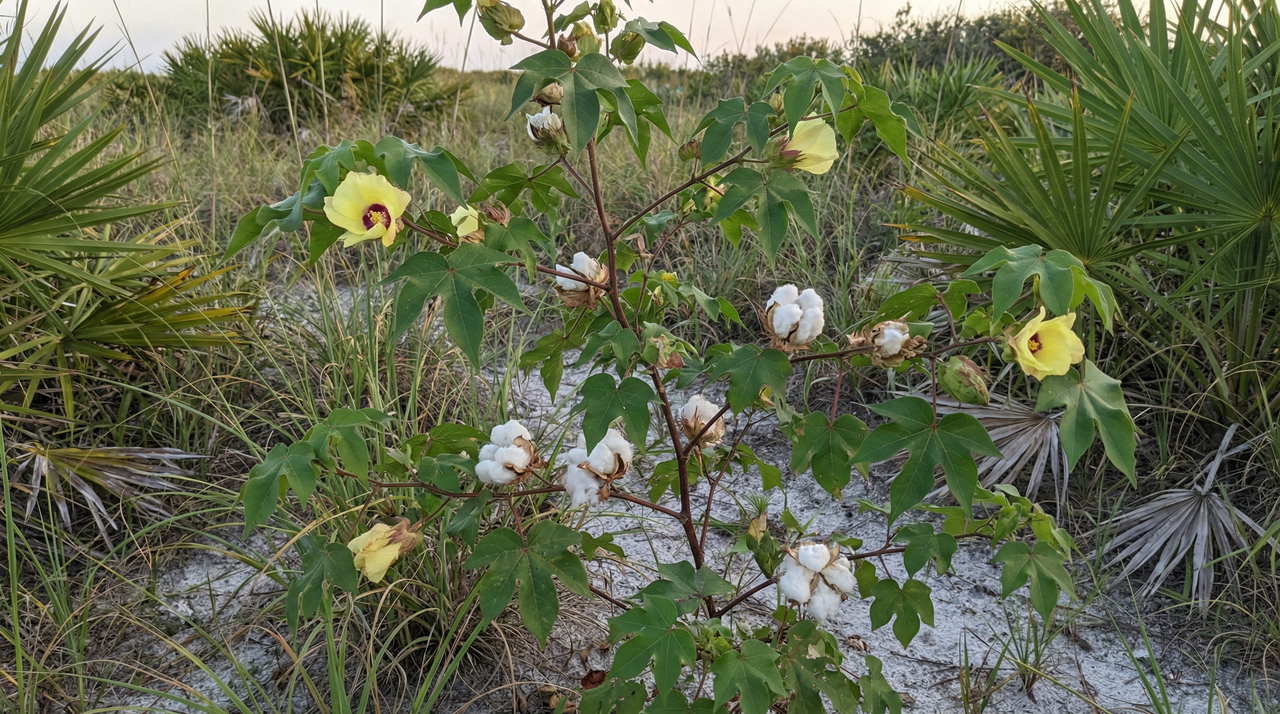
Cotton is the plant that clothed the modern world, and almost nobody growing it today knows what it actually looks like when it's allowed to be itself. Strip away the 150-day annual production cycle, the defoliants, the mechanical strippers, and what you have is a woody perennial shrub that can live a decade in frost-free conditions, flowering and setting bolls repeatedly across multiple seasons the way a rose keeps blooming.[1] I didn't fully appreciate that until I let a plant overwinter in a container in my greenhouse and watched it come back in spring, branching out like a small ornamental tree covered in flowers that open yellow, flush pink by afternoon, and drop burgundy by the next morning.
That three-color flower progression happens every single day across the plant's long bloom period, and most people have never seen it. Most people have never seen cotton growing at all, which is strange given that it's woven into nearly every piece of clothing they own. There's something worth sitting with in that disconnect, especially if you're thinking about bringing this plant into a permaculture system. Because this species isn't just a fiber crop with a complicated history; it's a deep-rooted, pollinator-rich, chemically sophisticated perennial that we've been forcing into an annual's life for the sake of industrial convenience, and growing it any other way opens up a completely different set of possibilities.
Origin and History of Cotton (Gossypium hirsutum)
Botanical Background and Native Range
Most people picture cotton as a tidy row-crop annual, but in its native range the plant is something else entirely: a tough, woody perennial shrub of disturbed roadsides and tropical margins throughout Mexico, Central America, northern South America, and the Caribbean islands.[2][3][4] Left to its own devices in frost-free conditions, upland cotton is a polycarpic perennial that can live three to ten years or more, flowering and fruiting repeatedly across multiple seasons and resprouting from the base after cutting.[5][6] The 150-to-180-day annual cycle we associate with commercial production is a human invention born of frost sensitivity, not the plant's preference.[7]
I've seen this firsthand doing landscape design work in Central Florida, where a cotton plant protected from the occasional light frost will come back a second season and flower again with real enthusiasm. It changes how you think about the species entirely. That perennial potential is genuinely useful in permaculture contexts where zone 9b or warmer allows you to skip the annual replanting cycle altogether.
The genetic story behind that adaptability is fascinating. Upland cotton carries an allotetraploid genome, the product of an ancient hybridization roughly one to two million years ago between an A-genome African diploid ancestor and a D-genome American diploid progenitor.[8][9] That doubled genome is likely a big reason G. hirsutum handles drought, pests, and variable soils better than the diploid Old World relatives like G. herbaceum (Levant cotton, native to semi-arid Africa and the Arabian Peninsula)[10][11] and G. arboreum (tree cotton, native to tropical South Asia and parts of Africa).[12] Sea Island cotton (G. barbadense), native to coastal Peru, Ecuador, the Galápagos, and parts of Central America, rounds out the four cultivated species, each with its own habitat preferences and growth personality.[13] All four share that polycarpic, indeterminate flowering habit, and some G. barbadense and G. arboreum specimens have been reported living twenty years or more.[14][15]
Visual Characteristics of Cotton Plants
In cultivation, upland cotton is an erect, multi-stemmed shrub, usually 0.6 to 1.5 meters tall (though it can push toward 2.4 meters in ideal conditions), with brown glandular hairs on the stems and alternate, palmately lobed leaves that run three to seven lobes and measure roughly five to fifteen centimeters across.[16][17] The flowers are hard to miss: large, funnel-shaped, creamy white to pale yellow with a darker center and purple styles, followed by the familiar dehiscent boll that matures from green to yellowish-brown before splitting open to reveal twenty to forty seeds wrapped in white or cream lint fibers.[18][19] Below ground, a prominent taproot reaches one to three meters deep with a broad lateral network alongside it, which is part of why cotton handles dry spells better than its shallow-rooted garden neighbors.[20]
The other species look noticeably different once you know what to look for. G. barbadense tends toward taller, more upright growth with reddish stems, sometimes reaching four to six meters in the wild.[21] G. arboreum lives up to its name, growing distinctly woody and tree-like at two to five meters with smaller bolls and short, dense lint.[22] Where upland cotton leaves are relatively green and only moderately hairy, the leaves of G. arboreum carry a silvery underside from dense stellate pubescence, and G. herbaceum shows that same heavily pubescent, grayish leaf texture that hints at its semi-arid African origins.[23][24] I always tell clients labeling young seedlings matters more with cotton than most crops, because across species the early growth stages can look deceptively similar before those textural differences really assert themselves. The denser pubescence on those Old World diploids isn't just visual interest; it's functional armor against desiccation, and you can feel the difference when you run a leaf between your fingers.
Traditional and Cultural Uses
Upland cotton was domesticated in Mesoamerica, with the earliest archaeological fiber evidence from the Tehuacán Valley of Mexico dating to around 4200 to 3500 BCE.[25][26] From there it became deeply woven into Maya, Olmec, and Aztec societies as clothing, ritual garment, trade currency, and status marker, with weaving practiced primarily by women as a culturally central, gendered skill.[27][28] Meanwhile, indigenous groups in the southern United States including the Caddo, Chickasaw, and Choctaw gathered wild upland cotton for fiber and medicine,[29] while entirely independent domestications were underway on the other side of the world: G. barbadense in the Andes around 5000 to 4000 BCE, and G. herbaceum and G. arboreum in Africa, Arabia, and the Indus Valley from roughly 5000 to 3000 BCE. The latter was recorded as karpasa in the Rigveda and woven into khadi cloth, Ayurvedic medicine, and rituals of purity.[30][31]
Cotton's symbolic weight stretched across virtually every culture that encountered it: purity and renewal in ancient Egyptian ritual,[32] fertility and protection in Ethiopian folklore,[33] spiritual devotion in Hindu traditions, and the practical backbone of Andean Quechua material culture.[34] After European contact, Spanish colonists introduced upland cotton to the Caribbean following 1492, and 16th-century trade routes carried it to West Africa and Asia.[35] Sea Island cotton arrived in the Georgia and South Carolina Sea Islands in the 1700s through colonial trade, and its cultivation depended entirely on enslaved African labor.[36][37] I think it's essential to hold that history consciously when we talk about heirloom cotton varieties today. Choosing ethically sourced seed and supporting regenerative growers isn't a footnote to cotton's story; it's a direct response to it.
Upland cotton now accounts for over 90% of global commercial production,[38] a dominance driven by the Industrial Revolution's preference for yield over resilience. G. arboreum persists in arid regions of India, China, and parts of Africa as Desi cotton, valued for pest and drought tolerance, traditional handloom khadi production, and seed oil used in Ayurvedic treatments for skin ailments and rheumatism.[31][39][40] There's something I find genuinely instructive about that: the variety that lost the industrial arms race is often the one best suited to low-input, climate-adapted growing. It's a pattern I see across the plant world, and cotton is one of the clearest examples of it.
Cotton Varieties and Where to Buy Them
Notable Cotton Species and Cultivars
The genus Gossypium contains four cultivated species, and understanding what separates them comes down to one thing above almost everything else: fiber length. That single trait explains why commercial acres look the way they do, and it'll help you decide which cotton actually makes sense for your garden.
Start with Gossypium herbaceum, the Levant or Asiatic cotton, a compact diploid shrub topping out around three to six feet with small bolls and short-to-medium staple fibers running 15 to 38 mm.[41][42] It's drought-tolerant, salt-tolerant, and perfectly adapted to the kind of marginal arid land that upland cotton struggles on.[43] Landraces like Kochi (pest resistance), Macedonia (drought), and the Ethiopian Hararghe types (bollworm tolerance) show real resilience baked in over centuries.[44] Still, it's fallen to just five to ten percent of global production because its yields simply can't compete with upland.[41]
The upland cotton plant, Gossypium hirsutum, is what you'll find on virtually every seed rack and what accounts for over ninety percent of commercial acreage. Its staple fiber runs 25 to 33 mm, shorter than Sea Island but long enough for most textile applications, and early-maturing varieties like DP 1050RR finish in 140 to 150 days while late-season types like FiberMax 906 need 170 to 190 days.[45][46] There's also ongoing research into low-gossypol lines like G. hirsutum var. una for potential culinary uses, though proper processing still matters enormously with any cottonseed.[47] I've handled a lot of Malvaceae seeds over the years and I want to be clear: only specifically bred low-gossypol lines are appropriate for any culinary experimentation, full stop.
At the luxury end sits Gossypium barbadense, the Sea Island and Pima cotton plant, producing extra-long staple fibers of 33 to 50 mm that are finer, stronger, and more lustrous than anything upland cotton grows.[48][49] I've grown a Pima-type side by side with upland and the difference in hand-spun yarn is immediately obvious, noticeably smoother and with more sheen. Cultivars like Pima S-6, Pima S-7, and Sea Island 428 are selected for regional adaptation and fiber quality, but pima cotton care comes with a catch: it needs a 150 to 180 day frost-free season to perform.[48][50] Finally, Gossypium arboreum, Tree cotton, rounds out the cultivated species with short staple fibers (15 to 28 mm) and natural brown or green coloration in some landraces, along with impressive resistance to Fusarium, Verticillium wilts, and bollworms that makes it genuinely valuable in breeding work.[51]
Sourcing Cotton Seeds and Plants
If you want upland cotton, you're in luck. Heirloom cotton seeds from G. hirsutum are widely available through Baker Creek, Johnny's Selected Seeds, Seed Savers Exchange, Southern Exposure Seed Exchange, and Park Seed, typically running three to ten dollars a packet for seed or eight to twenty-five dollars for starts.[52][53] I look for certified seed with germination rates of 85% or higher and no signs of mold or shriveling before I order.[54]
The other three species are a different story. G. herbaceum, most G. barbadense beyond standard Pima lines, and G. arboreum are rarely stocked by mainstream vendors and are mostly sourced through specialty suppliers, seed banks, botanical gardens, or the USDA National Plant Germplasm System, which primarily serves researchers and breeders rather than home gardeners.[55][56] Live G. barbadense plants occasionally appear from specialty nurseries at twenty to fifty dollars when you can find them at all.[57]
One more practical note: interstate movement of cotton plants may require USDA APHIS permits to prevent the spread of pests like boll weevil, and non-hirsutum species can face stricter import regulations including phytosanitary certificates.[58] In my work with clients across the Southeast, a few garden plants have never raised a regulatory flag, but if you're moving material across state lines it's worth checking APHIS first. And one more thing I've learned the hard way: label your seedlings immediately. Cotton seedlings look nearly identical to okra and hibiscus in the early stages, and after one frustrating spring of mixed-up rows in my own propagation trials, I now tag every flat before the first true leaf appears.
Cotton Propagation and Planting Guide
Cotton is, at its core, a seed-sown crop. Everything I know about establishing it successfully comes back to understanding a narrow set of non-negotiable conditions: warm soil, good drainage, and enough frost-free days to let the plant finish what it starts.
Seed Morphology, Germination, and Timeline
Upland cotton needs 150-180 days from planting to first harvest, with flowering typically beginning around 50-70 days after sowing and bolls requiring another 50-70 days to mature.[59][60][17] I think of it like sweet potato or okra in zone 9B: it wants every warm day it can get, and there's no rushing the back half of the season. The minimum soil temperature for germination is 15°C (59°F), with seedlings emerging reliably in 3-10 days once soil hits 20-30°C.[59] In my experience in Central Florida, my soil thermometer hitting 65°F is the real starting gun, not the calendar.
The Old World species tell a different story on timing. Gossypium herbaceum reaches first harvest in 120-150 days but needs a slightly warmer minimum of 18-20°C to germinate well, while G. barbadense stretches the season to 180-200 days with first bloom not appearing until 75-90 days after sowing.[61][62] Sea Island types are beautiful, but that extra month of season requirement rules them out for most of the cotton-curious gardeners I talk to.
One trait of upland cotton seed that surprises beginners is polyembryony: seeds frequently carry one zygotic embryo plus one or more nucellar embryos, unlike the predominantly monoembryonic seeds of the other major Gossypium species.[63] Practically speaking, this means G. hirsutum saved seed is highly self-pollinating (only 1-5% outcrossing) and comes back largely true-to-type, which is great for seed savers.[64] G. barbadense is the exception: it outcrosses more readily, so progeny from saved seed can vary meaningfully.
Propagation Methods
Hold a raw, undelinted upland cotton seed and you'll immediately understand why commercial growers delint theirs. The seeds are fuzzy, ovoid to kidney-shaped, 8-14 mm long, coated in both long lint fibers (1-2.5 cm) and shorter fuzz, with a moderately oily embryo inside.[65][66] They remind me of a rough okra seed that someone wrapped in steel wool. Acid-delinting strips that fuzz and allows for fungicide seed treatment, which matters enormously in humid conditions.[67] I learned this the hard way in my first Florida planting: I sowed untreated, fuzzy seeds into soil that stayed cool at night, and Pythium took out half my stand before the first true leaf appeared. Damping-off from Pythium and Rhizoctonia can drag germination rates below 70% without proper seed treatment.[68]
Cuttings, grafting, and tissue culture exist as propagation options but are genuinely specialist territory. Softwood or semi-hardwood cuttings (10-15 cm) treated with IBA and rooted under warm, humid conditions achieve 20-50% success over 3-6 weeks.[69] Air-layering hits 70-90% success and tissue culture on MS medium can achieve 70-95% regeneration for micropropagation purposes.[70][71] I'd only bother with any of these if I were trying to preserve a specific ornamental or breeding line. For everyone else, direct-sown, treated seed is the path.
Cotton seed stores exceptionally well if you give it the right conditions. Dried to 5-8% moisture and kept at 5-10°C in an airtight container, viability holds well short-term; for longer storage, -18 to -20°C can preserve seed for decades.[72][73] My own approach is much simpler: small lots go into labeled airtight jars in the refrigerator, and every spring I run a quick between-paper-towel germination test on ten seeds before committing to a full sowing. If I'm seeing fewer than seven sprout, I source fresh seed.
Soil and Site Requirements
Drainage is the variable that trumps almost everything else. Upland cotton needs well-drained loamy or sandy-loam soil, at least 60-120 cm deep for its taproot, with a pH of 6.0-7.5 (tolerating the wider range of 5.5-8.0) and 1-3% organic matter.[74][75] Air-filled porosity should stay above 10-15% and bulk density below 1.6 g/cm³; compact or waterlogged conditions shut down root oxygen and invite Phytophthora rot fast.[76] I've watched cotton seedlings in poorly drained Florida beds go from looking fine to yellow and wilted in under a week during a wet stretch. The roots looked like they'd been boiled.
pH problems are insidious because they show up as nutrient symptoms, not immediately as pH symptoms. Below 5.5, aluminum and manganese become toxic and phosphorus locks up, producing stunted roots and chlorosis.[77] Above 7.5, iron and zinc deficiencies cause interveinal chlorosis on young leaves and poor boll set.[78] I always run a soil test before planting cotton because I once watched a bed turn pale and sickly in what I initially blamed on sun exposure, only to discover the pH was sitting at 7.9. A soil test would have caught it months earlier.
Fixing pH takes time, so amendments need to go in 2-3 months before planting. Agricultural lime at 1-2 tons per acre raises pH in acidic soils; elemental sulfur or organic matter brings down alkaline conditions; gypsum at 1-4 tons per acre addresses sodic soils without shifting pH.[79][80] All rates should be based on actual test results, not guesswork. G. herbaceum and G. arboreum handle drought, salinity, and alkaline soils much more forgivingly than upland cotton, while G. barbadense is actually stricter about drainage than G. hirsutum.[81][82]
Spacing, Technique, and Planting
Wait until after the last frost and soil temperatures are consistently at 15-18°C (60-65°F) before direct sowing. Sow seeds 1.3-3.8 cm deep.[83] Standard spacing for upland cotton is 76 cm rows with plants 10-15 cm apart in the row, targeting 30,000-50,000 plants per acre, though narrower 50-76 cm rows can increase yield in some situations and wider 91-102 cm rows suit certain irrigation setups.[83][84] Canopy spread typically runs 60-90 cm at maturity, so I plan accordingly to avoid competition.
G. arboreum is a different situation entirely. As a larger woody perennial reaching 2-6 m, it needs 60-250 cm of spacing depending on how you're growing it, especially in agroforestry arrangements where it might serve as a structural element.[85] Having trialed both upland and tree cotton side by side, I can say the difference in habit is dramatic and anyone switching between species needs to rethink both spacing and annual pruning strategy from scratch.
Cotton seedlings look a bit like certain weeds early on, so I mark my rows clearly. Upland cotton is grown as an annual in USDA zones 8-11 and is completely frost-sensitive below 0°C, requiring the full 150-180 day frost-free window to complete its cycle.[86] Commercial growers use ethephon or sodium chlorate to chemically defoliate and synchronize boll opening 3-4 weeks before mechanical harvest,[87] but most home growers will simply hand-harvest bolls as they crack open, which is honestly the more satisfying way to do it.
Cotton Care Guide: Growing Gossypium hirsutum Successfully
Cotton is a subtropical perennial that most of us grow as a warm-season annual, and that dual identity shapes every care decision you'll make. Get the big inputs right and the plant rewards you with bolls from late summer into fall. Miss the mark during flowering and boll-fill and you'll end up with a tall, leafy ornamental that produces almost nothing worth harvesting.
Sunlight Requirements for Cotton
Cotton needs at least 6 to 8 hours of direct sun daily, and I'd push toward the upper end of that range whenever possible.[88] In Central Florida gardens I've watched plants receiving fewer than six hours slowly etiolate, putting energy into stem length rather than reproductive structures, with boll set suffering noticeably. The plant's open canopy and pubescent leaves aren't accidental; they're adaptations for handling intense tropical light without overheating the boll-bearing nodes underneath.
Optimal daytime temperatures sit between 70 and 95°F (21 to 35°C), with nighttime temperatures ideally dipping below 70°F (21°C) so the plant can recover from the day's metabolic load.[89] When the heat climbs above 95°F, you'll see symptoms that can look like light stress or water stress simultaneously, so check all three variables before adjusting your management.
Watering Needs and Drought Tolerance
On loamy soils in zones 8 through 10, cotton wants 1 to 2 inches of water per session delivered every 7 to 10 days, deep enough to wet the root zone to about 12 inches, with total seasonal demand running 20 to 30 inches including rainfall.[90][91] I use a soil moisture probe and wait until the top 2 inches have dried before triggering the next deep watering. That approach builds the taproot downward rather than keeping it shallow and dependent.
The plant can tolerate short deficits of 10 to 15 days during vegetative growth without catastrophic damage, but that window closes completely once flowering begins.[92] Water stress during flowering and boll development causes leaf curling, marginal scorch, and yield losses of 20 to 50 percent; it's the stage where skipping an irrigation session costs the most. Soil pH should stay between 6.0 and 7.5 for optimal nutrient availability, and the species handles moderate salinity up to about 2,000 to 4,000 ppm EC before yields start declining.[93] If you're interested in a more drought-forgiving option, Levant cotton (G. herbaceum) manages on as little as 300 to 500 mm per season thanks to its deep roots and waxy leaves, though it will show lower-leaf yellowing and root rot quickly if overwatered.[94]
Feeding and Nutrient Management for Cotton
Cotton is a heavy feeder. Upland varieties need roughly 60 to 120 lbs of nitrogen, 30 to 60 lbs of P₂O₅, and 40 to 80 lbs of K₂O per acre, with phosphorus and potassium applied pre-plant based on a soil test and nitrogen split so that 20 to 30 percent goes in at planting and the remainder is sidedressed at squaring, around 4 to 6 weeks after emergence.[95][96][97] Early in my gardening I front-loaded all my nitrogen at once and ended up with beautiful four-foot plants and almost no bolls. Splitting the applications and following a proper soil test changed everything.
Knowing what each nutrient does helps you read the plant accurately. Nitrogen drives leaf area and photosynthesis, phosphorus supports root and boll development, and potassium governs water uptake, disease resistance, and ultimately fiber quality.[98] Uniform yellowing on older leaves signals nitrogen deficiency; marginal leaf scorch points to potassium; interveinal chlorosis on young leaves usually indicates iron or manganese issues. For micronutrient targets, aim for roughly 30 to 50 ppm phosphorus, 120 to 150 ppm potassium, and 0.8 to 1.5 ppm zinc in a Mehlich-3 soil test, and retest every 2 to 3 years.[99] For permaculture-oriented growers, integrating 5 to 20 tonnes per hectare of compost alongside reduced synthetic fertilizer can cut nutrient leaching by up to 30 percent and builds long-term soil health, particularly useful if you're growing Tree cotton (G. arboreum) as a perennial system.[100]
Heat and Frost Tolerance in Cotton
Upland cotton is native to arid and semi-arid Mesoamerica and thrives in AHS Heat Zones 10 to 12, tolerating brief spikes up to 105 to 110°F (41 to 43°C).[101][102] Sustained temperatures above 95°F are where the trouble starts: boll shed, reduced fiber quality, and yield losses of 20 to 50 percent. I've seen the same pattern in my zone 9B garden when night temperatures stay above 75°F for weeks on end, which is functionally analogous to what I observe with heat-stressed okra or roselle. Both are Malvaceae, and the family's general heat response is recognizable once you've grown a few members.
Mitigation is practical rather than complicated. Timely deep irrigation is your first tool, followed by 30 to 50 percent shade netting if temperatures stay extreme, which can drop canopy temperature by 4 to 8°C, and 5 to 10 cm of organic mulch at the base.[103] Heat-tolerant cultivars like Siokra, FiberMax, or TAM 94L-18 are worth seeking out for consistently hot summers. If you're working on the hotter, drier end of the spectrum, Levant and Tree cotton both show superior tolerance; G. arboreum maintains over 70 percent germination at 40°C and carries stress-response genes that upland varieties simply lack.[104]
On the cold end, upland cotton is genuinely frost-tender. Temperatures below 28 to 32°F (around 0°C) will kill the plant outright, with seedlings being especially vulnerable and mature plants tolerating only very brief dips to 28 to 30°F once the fiber has begun setting.[105][106] Floating row covers reliably add 4 to 6°F on clear nights; I combine them with a heavy mulch layer for extra insurance when a cold snap is forecast.[107] Container plants should come indoors once nights drop below 50 to 60°F (10 to 15°C). In zones 6 through 8, Tree cotton shows marginally better cold tolerance than upland when given overhead protection, but it still needs careful management through winter.
Pruning, Maintenance, and Seasonal Rhythm
Understanding how fast cotton grows makes the crop calendar feel less abstract. Squaring begins 35 to 45 days after planting, first bloom appears at 50 to 70 days, bolls set around 20 to 25 days after bloom, and the total season runs 150 to 180 days to maturity for upland varieties.[59] That timeline gives you two critical intervention points: sucker thinning after emergence and topping at 45 to 60 inches of height (or 15 to 30 days before anticipated harvest) to redirect energy from vegetative growth into existing bolls and synchronize maturity across the plant.[75] In my own garden I top plants at roughly shoulder height before hurricane season; it keeps the plants manageable and pushes boll development earlier.
If you're growing Tree cotton (G. arboreum) as a true perennial rather than an annual, dormant-season pruning to maintain 1.5 to 2 meters height, removal of crowded branches, and retention of 4 to 6 productive shoots can increase boll yield by 20 to 30 percent season over season while improving airflow and reducing disease pressure.[108] I've maintained a small Tree cotton specimen through three winters now using exactly this approach, and the branching structure genuinely does improve each year.
Most gardeners don't realize that upland cotton is naturally perennial and persists across multiple seasons when protected from frost.[109] With balanced fertility, integrated pest management, and frost protection in zones 8 through 11, multi-year cultivation is achievable and worth exploring. The annual habit is a commercial convenience, not a biological requirement, and once you've kept a cotton plant through its second season you start thinking about it quite differently.
Cotton Harvesting: Timing, Technique, and Yield
Days to Harvest and Maturity Timeline for Cotton
Upland cotton runs on a long clock. From the day seeds go into warm soil to the first open bolls, expect 160-180 days under good conditions.[110][111] That arc breaks into two distinct phases: the push from planting to bloom, then another 45-60 days from pollination to a physiologically mature boll, which requires consistent temperatures in the 70-90°F range to stay on schedule.[59][112] I've watched the same variety finish three weeks earlier in a blistering, dry July than it did the previous year during a cooler, wetter season. The calendar gives you a ballpark; your actual plants give you the answer. Short-season Levant cotton (G. herbaceum) can wrap up in 140-160 days, while Tree cotton (G. arboreum) behaves as a perennial in tropical climates, offering multiple harvests across a 3-5 year lifespan with its first bolls opening just 100-150 days after planting.[59][113][114]
Visual and Tactile Cues for Ready-to-Harvest Cotton Bolls
The plant tells you when it's ready, and the signals are surprisingly readable once you know what to look for. A harvestable boll splits open naturally, exposing white or creamy fiber; the boll itself has shifted from green to a papery yellow-brown, and the seeds inside have darkened to brown or black.[115][116] Seed moisture should be down to around 8-10%, with overall boll moisture at 10-12%.[115] The tactile test is the one I trust most: a properly dry boll pops open with a gentle tug and the fiber practically lifts out in your hand, light and fluffy. An immature or damp boll resists, the fiber sticks together, and you can feel the density. It's a bit like checking a roselle calyx for tightness or pressing an okra pod to test for woodiness, familiar territory for anyone who grows in the Malvaceae family. Wait for that effortless release before you pick.
Optimal Harvest Windows by Region and Species
In the Southeast, peak harvest runs August through September, wrapping by early October.[117] The Mid-South stretches that window into October, while Sea Island and Pima types (G. barbadense) growing in warmer, longer-season states like Arizona and California don't come in until September through November.[118][119] I start checking my plants around day 160 for that first natural boll crack, then begin selective rounds from there. It's an observation practice more than a harvest date.
Cotton Harvesting Techniques: Hand vs. Mechanical
At commercial scale, spindle pickers are the standard for Upland cotton because they preserve fiber quality while moving efficiently through large stands.[116][120] For most permaculture growers with a few rows or a demonstration planting, hand-picking is both the practical method and the quality choice. The smaller, bushier habits of G. barbadense and G. herbaceum make mechanical harvest impractical anyway; those species need careful selective rounds over 2-3 weeks as bolls open unevenly.[112][121] I pick in passes every few days, working gently to keep the fiber clean and dry. Home-scale cotton is about learning the plant's rhythm as much as anything else.
Typical and Record Yields for Cotton
The record lint yield for Upland cotton sits around 2,685 pounds per acre under optimal irrigated conditions, though typical commercial farms land between 800 and 1,200 lbs/acre.[122] Sea Island and Levant types run lower, closer to 500-800 kg/ha, which helps explain why Upland dominates global production so completely.[123][124] My own small-plot totals have been a fraction of those numbers, yet I've spun enough fiber from a single season's hand-harvest to make a scarf. At garden scale, that feels like plenty.
Cotton Preparation, Culinary Uses, and Non-Food Applications
Most people never think of cotton as a food plant, and honestly, that's a reasonable instinct. Gossypium hirsutum and its relatives carry gossypol, a polyphenolic compound concentrated in the seeds and much of the plant tissue that is highly toxic to humans and non-ruminant animals.[125][126] The health benefits section of this profile covers that toxicity in depth, so I won't repeat it here. What I will say is this: the research from FAO, USDA, and WHO is extensive and clear, and I always treat raw cotton plant parts as non-edible unless they've been properly processed at industrial scale.
Culinary Uses of Cotton: Processing Gossypol for Safe Consumption
The story of cotton as a food source is really a story about processing. Refining methods including solvent extraction, heat treatment at 120-200°C, boiling, alkaline treatment, and fermentation can reduce free gossypol by 70-95%, bringing levels down to below the FAO and FDA threshold of roughly 450 ppm considered acceptable for human consumption.[127][128][129] Simple water washing alone removes 70-80% of gossypol, which gives you a sense of how much that compound actually wants to leach out, but "mostly reduced" isn't the same as "safe" when no established daily intake for humans exists.[130] My honest advice: buy refined cottonseed oil rather than experimenting at home. Industrial refining is not something a kitchen replicates reliably.
Once properly processed, the nutritional case for cottonseed becomes genuinely compelling. Raw kernels provide around 346 kcal per 100g with roughly 33g protein, 37g fat (rich in linoleic acid), significant fiber, and minerals including 603mg phosphorus and 429mg magnesium.[131] The refined oil that results is flavor-neutral and nearly odorless with a smoke point around 420°F, which is why it appears in so many commercial frying applications.[132] Cottonseed meal after oil extraction holds 40-44g protein per 100g and can substitute for up to 30% of wheat flour in gluten-free baking with a mild, slightly nutty character.[133] Low-gossypol varieties bred with levels below 450 ppm ease some of this processing burden, though careful handling still applies.[129]
Traditional edible uses do exist but they're narrow. Young leaves of Gossypium species have been consumed as a cooked green in parts of Mexico, Africa, India, and the American Southwest, where they offer a mild, slightly bitter flavor comparable to spinach after thorough cooking.[134][135] Having grown quite a few Malvaceae, I'd compare the cooked texture loosely to malva or young hollyhock leaves: slightly mucilaginous, definitely better wilted than raw. Immature bolls have occasionally been eaten raw or cooked for a crisp, vegetal bite, though documentation is sparse and safety is not established.[136] Andean peoples processed Sea Island cotton seeds into flour and cakes through soaking, fermentation, and roasting dating back roughly 5,000 years, mostly during food scarcity.[137] These are ethnobotanical data points worth respecting, not casual foraging invitations.
Traditional Medicinal Preparations from Cotton
The seed hull mucilage has a history of use as a demulcent syrup or infusion for coughs and sore throats, which is one of the gentler traditional applications and makes intuitive sense given the mucilaginous quality the Malvaceae family is known for.[138] Across species, traditional preparations include root decoctions (typically 10-20g boiled in 200-400ml water), leaf infusions, bark powder around 2-5g, and poultices from crushed leaves, generally used 1-3 times daily.[139] Refined cottonseed oil has also been applied topically for skin conditions including eczema and wounds.[138] I appreciate the depth of this ethnobotanical record, but the gossypol content across plant parts means these preparations are best left to knowledgeable practitioners. The health benefits section covers the pharmacology and contraindications in the detail they deserve.
Non-Food Uses: Fiber, Ornamental, and Industrial Applications
The dominant reality of cotton's uses is fiber. Upland cotton accounts for roughly 90% of global textile output, with seeds processed into vegetable oil and high-protein livestock meal as byproducts of that primary mission.[140][141] Sea Island cotton occupies the premium tier with extra-long staple fibers for high-end textiles, while its seed hulls find secondary use in erosion control and mulch and its linters go into medical products and plastics.[142] Levant cotton's seed cake serves as a high-nitrogen fertilizer or feed amendment after oil extraction, a useful function in low-input systems.[143]
The ornamental dimension is genuinely underused. Upland cotton grown in USDA zones 8-11 gives you creamy white flowers that blush to pink, followed by those unmistakable bursting bolls that make spectacular dried arrangements.[144][145] I've designed it into warm-climate cottage borders and containers specifically for that three-season arc from bloom to boll, and clients are always surprised by how striking it is. Levant and Sea Island cotton carry the same showy appeal for Mediterranean-style gardens and botanical collections.[144][85] In a permaculture context, spent plants become solid biomass for mulch or compost once seeds are safely managed, which closes the loop neatly on a plant that repays attention at almost every stage of its life.
Cotton Health Benefits and Medicinal Uses
Cotton is one of those plants that surprises people. Most gardeners think of it as a fiber crop, full stop, and never consider that the same plant has a documented history of medicinal use across multiple continents. After years working with fiber and oil crops, I've come to think of Gossypium hirsutum as nature's double-edged sword: genuinely remarkable pharmacological potential wrapped around one of the more potent plant toxins you'll encounter in a home garden. Understanding both sides isn't optional here. It's the whole story.
Traditional Medicinal Uses Across Cultures
Long before anyone ran a Western clinical trial, healers across Mexico, Texas, West Africa, and Asia were using virtually every part of the cotton plant therapeutically. Leaf decoctions and poultices appeared for wounds, skin ailments, and inflammation. Root infusions served as emmenagogues for menstrual disorders and treatments for venereal disease. Bark and leaf preparations addressed dysentery, fever, and respiratory complaints.[146][147][148] The Old World species tell a similar story: G. barbadense and G. herbaceum both appear in ethnobotanical records for gastrointestinal and respiratory conditions, menstrual support, wound healing, diarrhea, urinary tract infections, and even as a galactagogue to support milk production.[149][150] These aren't isolated folk remedies from a single culture. They're convergent uses across independent traditions, which tends to signal that something real is happening biochemically.
Key Phytochemicals: Gossypol, Flavonoids, and Phenolics
The compound doing most of the heavy lifting, for better and worse, is gossypol, a sesquiterpene aldehyde concentrated in the plant's pigment glands. Seed concentrations run highest, from about 0.3% to 2.5% depending on species, with G. hirsutum, G. barbadense, and G. arboreum at the top of that range. Leaves carry far less, typically 0.01 to 0.8%, and roots and other parts fall somewhere in between.[151][125] The plant evolved it as a broad-spectrum defense against insects and pathogens in its native semi-arid habitat in Mexico and Central America, which explains why drought, salinity, UV stress, and high temperatures all push concentrations up, sometimes by 20 to 50%, while adequate irrigation and nitrogen tend to pull them back down.[152][153] I've noticed this firsthand growing cotton through Central Florida summers: plants that hit a dry stretch produce noticeably more bitter, pungent leaf material. That's gossypol talking.
Leaves also carry a meaningful supporting cast of flavonoids, quercetin, kaempferol, gossypitins, and gossypin at around 1 to 2% of dry weight, along with phenolic acids that contribute antioxidant and anti-inflammatory activity independently of gossypol.[154][155] Seeds have lower flavonoid levels (mainly isoflavones at 0.05 to 0.5%), and various species add tannins, saponins, terpenoids, and in some cases phytosterols or coumarins.[156] Breeding programs have produced low-gossypol and glandless cultivars specifically to unlock that nutritional and feed potential while trying to preserve the pest-defense advantage that gossypol provides.[157]
Pharmacological Research and Potential Benefits
Modern preclinical research has started to explain what traditional healers observed. The anti-inflammatory evidence is probably the strongest thread: leaf and seed extracts reduce pro-inflammatory cytokines (TNF-α, IL-1β, IL-6) and inhibit both COX-2 and the NF-κB and MAPK signaling pathways in animal models, with efficacy in rat paw edema tests described as comparable to diclofenac.[158][159] Antioxidant activity is well-documented too, with DPPH free radical scavenging (IC50 roughly 50 to 100 μg/mL) attributed to the phenolic and flavonoid content, alongside metal chelation and upregulation of the enzymes SOD and catalase.[160] Antimicrobial activity against Staphylococcus aureus, E. coli, and Candida albicans has been observed at MIC values of 0.5 to 2 mg/mL in some preparations, linked to gossypol disrupting bacterial cell membranes.[161] Wound healing studies in animals show accelerated epithelialization, collagen synthesis, and fibroblast proliferation from topical extracts, which ties the antimicrobial and anti-inflammatory effects together neatly.[162]
Beyond these core mechanisms, gossypol has also attracted attention in more specialized areas. Chinese clinical trials in the 1970s and 1980s tested it as a male contraceptive at 20 mg/day and found it induced reversible azoospermia, but development stalled because of serious side effects including hypokalemia, fatigue, and potential irreversibility in some men.[163][164] I always tell people this research is genuinely fascinating, but gossypol is not a safe DIY supplement under any circumstances. Anticancer research is ongoing, with gossypol showing cytotoxicity against breast and prostate cell lines by inhibiting Bcl-2 and inducing apoptosis, though human trials remain limited.[165] Preliminary studies also suggest antidiabetic effects (α-glucosidase inhibition, blood glucose reduction in diabetic rats), hepatoprotective activity against chemically induced liver damage, and analgesic properties.[166] Most evidence is preclinical, human trials are scarce and often interrupted by safety concerns, and traditional applications, extensive as they are, still await rigorous clinical validation.[167][168] Any medicinal application belongs under professional guidance, full stop.
Nutritional Profile of Cottonseed Oil and Meal
Raw cottonseeds are not safe to eat. That needs to be the starting point. Gossypol content in unprocessed seed runs 0.5 to 2%, which is enough to cause serious harm in humans and non-ruminant animals.[169] Processing changes the picture dramatically. Solvent extraction, heat treatment, alkali processing, and fermentation can reduce gossypol by 50 to 95%, and low-gossypol and glandless cultivars eliminate much of the concern from the start.[170] After working with cottonseed as an oil-crop byproduct for years, I've seen firsthand how thoroughly proper refining transforms it from a hazardous industrial residue into a genuinely high-value food and feed ingredient.
Refined cottonseed oil is edible, with a fatty acid profile weighted toward linoleic acid (50 to 60%), followed by palmitic (20 to 25%) and oleic (15 to 20%), a high smoke point useful for cooking and frying, and natural vitamin E contributing antioxidant properties.[171][172] Processed low-gossypol kernels and meal are impressively nutritious, with protein content of 30 to 50% in meal and around 33 grams per 100 grams in kernels, energy density of 486 to 547 kcal per 100 grams, and strong mineral profiles including high phosphorus (715 to 1584 mg), magnesium, iron, zinc, and calcium, plus vitamin E at 25 to 70 mg per 100 grams.[173][174] Young leaves of G. arboreum have a history of being cooked and eaten like spinach in some South Asian traditional diets, though this is a narrow exception rather than a general permission to eat cotton greens.[148]
Safety Considerations and Toxicity Risks
Gossypol is not something to experiment with casually. In humans and non-ruminant animals it causes gastrointestinal distress, weight loss, fatigue, hypokalemia, cardiac complications, liver and kidney damage, and antifertility effects including disruption of spermatogenesis.[175][176] Ruminants tolerate it better because rumen microbes detoxify much of it, which is why cottonseed meal has a long history in cattle feed but not in poultry or swine rations without careful limits. The contraindications for humans are serious: gossypol is a uterine stimulant with teratogenic effects, making it absolutely off-limits during pregnancy; it's also contraindicated for breastfeeding, children (growth risks), and anyone with compromised liver or kidney function.[177][178] Possible drug interactions include anticoagulants, oral contraceptives, and fertility treatments.
Refined cottonseed oil occupies a different regulatory category. The FDA considers it generally recognized as safe (GRAS) when free gossypol is at or below 450 ppm (≤0.045%), and most commercial refined oil falls well within that threshold.[179] Beyond gossypol, cotton presents additional hazards worth knowing: allergenic proteins (including gossypin, with possible cross-reactivity to peanut), pollen and cotton dust allergies, occupational byssinosis from chronic dust exposure, and potential aflatoxin or pesticide residues in improperly stored or conventionally grown seed.[180][181] The research gaps here are real: precise pediatric thresholds and the long-term effects of low-dose human exposure remain understudied, and on those questions I defer to FAO and FDA guidance rather than extrapolating from preclinical data. The practical upshot is that refined oil and certified low-gossypol products are the only forms of cotton you should be consuming without medical supervision.
Cotton Pests and Diseases
In twenty years of working with these species, I've never encountered a truly immune cotton. The best performers simply slow the pathogen down enough for the plant to set a decent crop. That's the honest starting point for any conversation about disease resistance in Gossypium hirsutum: resistance means reduced severity, cultivar-specific, and almost always shaped by what's living in your soil and what the weather has been doing.[182][183] Regional pressure matters enormously here. Verticillium and Fusarium wilts dominate conversations in California's San Joaquin Valley and parts of Texas; bacterial blight is more of a Southeast headache; and cotton leaf curl virus is almost entirely an Asian and African problem.[184] Choose your threats before you choose your variety.
Disease Resistance in Cotton Cultivars
Verticillium wilt is the pathogen I'd worry about first in cooler, heavier soils. Verticillium dahliae thrives when soil temperatures hover around 20-25°C and becomes more aggressive as soil pH climbs above 7.0, which is one more reason to keep cotton at its preferred 6.0-6.5 sweet spot.[185][186] Modern Upland lines like PHY 844 and DP 1050 carry moderate to high polygenic resistance, but even those cultivars still need excellent drainage and timely scouting during prolonged wet periods — something I've watched growers in humid subtropical conditions learn the hard way.[187][188] Old World diploids frequently outperform Upland here: Sea Island (G. barbadense) rates 6-8 on a standard 1-9 resistance scale compared to Upland's 3-5, and Tree cotton accessions like AKA-5 and AKA-7 show moderate to high resistance in select varieties.[189][190]
Fusarium wilt flips the temperature and pH picture almost exactly. Fusarium oxysporum f. sp. vasinfectum runs hard above 28-32°C and is suppressed below 20°C in acidic soils, so your Verticillium management and your Fusarium management can sometimes pull in opposite directions depending on the season.[98] Resistance in modern Upland lines varies widely by race and region, but breeding programs have pulled useful genes from G. barbadense to improve performance against races 1 and 4.[191] Levant cotton (G. herbaceum) evolved in arid environments and carries inherent soil-borne pathogen resistance that breeders continue to mine for exactly this reason.[192] Tree cotton accessions AKA-5 and AKA-7 can approach immune status in some field evaluations, which is a remarkable trait for a domesticated crop.[182]
Bacterial blight, caused by Xanthomonas citri pv. malvacearum, loves high humidity above 80% and temperatures of 25-30°C, making it a recurring frustration in the humid Southeast.[193] Resistant Upland cultivars offer only moderate protection, while Sea Island's B gene linkage pushes resistance into the high range and Tree cotton lines show near-immune responses in most evaluations.[194][195] Cotton leaf curl virus is a different beast entirely: resistance genes like CUC and transgenic RNAi approaches can deliver high protection, but the virus mutates quickly and new variants have repeatedly overcome deployed resistance in South Asian production regions.[196]
Root-knot nematodes and root rots round out the picture. Some Upland cultivars with G. barbadense-derived genes can reduce root-knot galling by up to 50%, while Levant cotton landraces show similar field-level resistance; Tree cotton remains susceptible and should be avoided on known nematode-pressure sites.[197] Phytophthora root rot is almost always a drainage problem first and a pathogen problem second, associated with waterlogged soils in the pH 5.5-6.5 range.[198] In humid conditions, Cercospora leaf spot can cause 5-20% yield loss through premature defoliation, and both Alternaria blight and Cercospora become much worse when canopies stay wet.[199] When someone asks me why their cotton plant is turning yellow mid-season, excess soil moisture combined with one of these fungal diseases is usually the first place I look.
Across all of these threats, the management framework is consistent: resistant cultivars matched to local disease pressure, crop rotation of two to three years with non-host species, drip irrigation to keep foliage dry, and vigilant drainage management.[200] I've watched rotating cotton with legumes do double duty, breaking nematode cycles while visibly improving soil structure and subsequent cotton vigor the following season. Biological controls like Trichoderma pair particularly well with Tree cotton accessions where soil solarization is also practical.[201] Consulting your local extension service for the specific races and strains active in your region is genuinely non-negotiable before selecting a cultivar; the variety charts change faster than most of the literature.
Major Insect Pests and Natural Defenses
The primary insect threats to Upland cotton are boll weevil, pink bollworm, cotton aphid, thrips, and bollworm. The boll weevil deserves a footnote here: sustained USDA eradication programs have largely removed it from U.S. production, which is one of the genuine success stories of coordinated agricultural pest management.[202][203] That leaves pink bollworm, aphids, and thrips as the persistent headaches for most North American growers.
What I find genuinely fascinating about cotton is how much pest defense it's already carrying before you do anything. The plant deploys several integrated defenses: gossypol and related allelochemicals, leaf trichomes (those fine hairs that make some leaves feel almost fuzzy), endophytic bacteria, jasmonic acid signaling cascades, and extrafloral nectaries that actively recruit predatory insects.[204][205][206][207] I see the same trichome logic playing out in okra and certain tomato varieties; when leaves are physically harder to feed on, pest populations stay lower between spray intervals. In a permaculture context, those extrafloral nectaries function as guild infrastructure, and pairing cotton with companion plants that support parasitic wasps has consistently lowered my observed pest pressure on both diploid and tetraploid types.
On the cultivated defense side, modern Upland lines carrying Bt genes deliver over 95% control of susceptible bollworm and pink bollworm populations, and varieties with aphid tolerance can reduce infestations by 30-50%.[208][209] Thrips resistance remains low to moderate in most cultivars and typically needs supplementing with seed treatments.[210] The Old World species are where things get really interesting: Sea Island cotton sees 20-50% lower aphid and whitefly infestation rates than Upland, driven by higher gossypol levels and denser trichomes, while Levant and Tree cotton show 30-50% less bollworm damage through dense pubescence, phenolics, tannins, and compact boll architecture.[211][212] Tree cotton's herbivore-induced volatile organic compounds alone can reduce insecticide needs by up to 40% in field conditions, which is exactly the kind of trait that makes it worth keeping in a breeding program even if its fiber quality doesn't compete commercially.[213]
Good IPM on cotton means combining those varietal assets with disciplined scouting, economic thresholds (treating for tobacco budworm, for example, when 8% of squares are damaged during the squaring stage), targeted biological controls, and resistance monitoring when insecticides are applied.[214] Breeding programs at USDA, Texas A&M, and the University of Arizona continue pulling resistance genes from G. arboreum and G. herbaceum into commercial Upland lines.[210] Fostering mycorrhizal networks and supporting predatory insect habitat around your cotton patch rounds out what the plant is already doing on its own. Choosing a cultivar with both the fiber traits you want and real resistance to the pests active in your region is one of the highest-leverage decisions you'll make before you ever put seed in the ground.
Cotton in Permaculture Design
Most people encounter cotton as a commodity, a monoculture row crop defined by chemical inputs and industrial harvest. Growing it in a permaculture system asks you to look past that history and back toward what the plant actually does ecologically, which turns out to be quite a lot. The ecological services story for Gossypium hirsutum is genuinely interesting: deep taproots mining nutrients from subsoil layers, flowers that draw pollinators at dawn, root exudates feeding a complex underground community, and a secondary metabolite that manages pests without a spray tank. None of that requires monoculture. It does require understanding where cotton wants to live and what it wants from its neighbors.
Climate and Growing Zones for Cotton
Upland cotton's native ecology is tropical savanna and hot semi-arid conditions, specifically Köppen types Aw and BSh, from sea level up to about 1,000 meters in Mesoamerica.[215][3] Translated into practical terms, that means USDA zones 8 through 11, where it needs 150 to 220 frost-free days and daytime temperatures running between 70 and 95°F with nights staying above 60°F.[3][216][217] It accumulates 1,800 to 2,500 growing degree days (base 60°F) to reach maturity, which is why zone 9b summers in humid subtropical Florida work so well for finishing a full cycle.[218] In zone 8, upland cotton behaves as a dependable annual; in zones 10 and 11, it can overwinter and persist as a short-lived perennial shrub.
Across the genus, all four major species prefer full sun and well-drained fertile soils, sandy loams or clay loams, with a pH of 6.0 to 7.5.[3] G. arboreum adds useful salt tolerance for coastal or saline sites in places like Texas, Florida, and Louisiana, a meaningful contrast for designers working marginal land near tidal influence.[219][220] G. barbadense and G. herbaceum are generally perennial in zones 9 to 11 and worth trialing in zone 8 with protection, though zone 7 and cooler really does require either container culture or treating them as frost-tender annuals.[144][221] Relative humidity is worth watching: cotton prefers 40 to 70%, and I've noticed that once you push consistently above 80% you're inviting the fungal problems that make hot, wet summers in the Southeast so tricky.[217]
Ecosystem Functions of Cotton in Permaculture
The pollination story alone justifies a place for cotton in any warm-climate food forest edge. Flowers open between 5 and 7 AM with peak pollen release at dawn, and they carry extrafloral nectaries that draw beneficial insects even before the blooms are fully open.[222][223] I've watched honey bees, bumble bees, and a rotating cast of halictid and leafcutter bees work cotton flowers in mixed plantings during July and August, and the numbers are genuinely impressive for a single species. Cotton is primarily self-pollinating, selfing at rates above 90%, but cross-pollination from insect visitation can increase boll weight and lint yield by 10 to 25%.[224][225][226] That research is clear enough that I treat the 5 to 9 AM bloom window as a no-spray zone, full stop.
Below ground, the services are just as compelling. Upland cotton's taproot reaches 1.5 to 2.5 meters, pulling potassium, phosphorus, and other minerals up from subsoil layers and cycling them back through leaf litter and biomass decomposition.[227][228] Root exudates, including flavonoids, actively recruit arbuscular mycorrhizal fungi and nitrogen-fixing bacteria while suppressing soil pathogens.[229][230] That mycorrhizal association improves phosphorus uptake and builds rhizosphere health in ways that benefit companion plants too, not just the cotton itself.
Then there's gossypol. This terpenoid aldehyde in the glands repels aphids, boll weevils, and various beetles while also inhibiting competing weeds through allelopathic activity.[231][232] In polyculture it also supports the natural enemy complex, predators and parasitoids that regulate pest populations across the whole guild.[233] The allelopathy cuts both ways, which I'll come back to in the guild design discussion below.
The other species add meaningful variation on these themes. G. herbaceum excels as a pioneer on disturbed arid sites, stabilizing soil, preventing erosion, and contributing organic matter while tolerating moderate drought once established.[81][234] G. barbadense's deep taproot (up to 2 meters) improves soil structure and aeration, and its larger cream-to-yellow flowers provide abundant nectar and pollen for high pollinator diversity in coastal agroecosystems.[235][236] Tree cotton (G. arboreum) brings the most structural weight, producing 5 to 10 tons per hectare of dry biomass for mulch, fodder, or fuel while its deep roots stabilize slopes and its height supports windbreak and edge functions in taller agroforestry systems.[237][238] One real limitation across all of them: large-scale monocultures reduce local biodiversity considerably, and the genus earns its permaculture keep only in diverse polycultures where these ecological services can actually function as intended.[239]
Forest Layer Placement and Guild Design
Upland cotton sits in the shrub or herbaceous layer, typically 0.9 to 1.8 meters tall with an upright, non-spreading habit native to well-drained tropical and subtropical soils in Mexico and Central America.[3][240] If you grow okra or roselle, you already have an intuitive sense of how cotton occupies space: upright, moderately branched, not sprawling, not shading its neighbors aggressively. That compact vertical form is useful in the shrub layer of a food forest edge, but it also makes clear that cotton is not a ground cover or living mulch candidate.
For companion planting, it pairs well with nitrogen-fixing legumes, okra, peppers, and marigolds, the marigolds specifically for nematode suppression in the soil.[241][242] Keep solanaceous crops like tomatoes and peppers at some distance; they share several key pest species with cotton, and clustering them invites problems. The gossypol-driven allelopathy is the other thing to plan around carefully. I've learned to give cotton an 18 to 24 inch buffer from sensitive companions during the first season, after watching it effectively suppress volunteer weeds nearby while also slowing germination of small-seeded herbs I'd hoped to establish in the same bed. Once you've seen it happen once, the spacing discipline becomes second nature.[232] Legumes intercropped with cotton improve nitrogen fixation and nutrient-use efficiency for both partners.[243]
The genus offers real design flexibility through root-depth partitioning. G. herbaceum at 0.5 to 2 meters with a shallower root system (60 to 90 centimeters) can slot into disturbed or partially shaded understory edges where its pioneer tolerance earns its keep.[244][245] G. barbadense's deep taproot extends the soil-building function lower into the profile, reducing direct competition with shallower-rooted companions when the two are grown together in layered guilds.[244] Tree cotton stands apart structurally: at 2 to 5 meters with a multi-stemmed upright habit, it belongs in the taller shrub or small tree layer, where it functions as a windbreak, pollinator resource, biomass producer, and habitat element for birds and insects while benefiting from associative nitrogen-fixers planted at its feet.[246][237] I primarily grow the more compact upland types, but my experience with other tall Malvaceae confirms that Tree cotton's agroforestry role is credible and worth exploring in larger warm-climate systems where a productive windbreak with pollinator value would otherwise be a missed opportunity.
The Plant That Made Me Reckon With Where I Stand
I grew cotton in my Florida garden for three seasons before I let myself sit quietly with its history, really sit with it. The bolls were beautiful. The bees were everywhere. And none of that absolved me of the work of knowing what this plant carried into the world and what it cost. I grow it still, but carefully, and with something I can only call accountability.
Sources 246
- USDA ARS: Cotton Growth and Development ↩
- Gossypium hirsutum ↩
- USDA PLANTS Database: Gossypium hirsutum ↩
- Flora of North America: Gossypium hirsutum ↩
- The Biology of Cotton ↩
- Perennial Nature of Gossypium Species ↩
- Cotton Growth and Development ↩
- The Origin and Domestication of Cotton (Gossypium spp.) ↩
- USDA PLANTS Database: Gossypium hirsutum ↩
- Gossypium herbaceum L. - Levant cotton ↩
- Gossypium herbaceum - Plants of the World Online ↩
- Gossypium arboreum - Kew Science ↩
- Gossypium barbadense L. (Malvaceae) ↩
- Interspecific Hybridization in Cotton: Achievements and Challenges ↩
- Domestication and Evolution of Cotton ↩
- Missouri Botanical Garden Plant Finder ↩
- Cotton Growth and Development ↩
- Missouri Botanical Garden - Gossypium hirsutum ↩
- Kew Science - Plants of the World Online: Gossypium hirsutum ↩
- Root Architecture in Cotton (Gossypium hirsutum L.) ↩
- USDA PLANTS Database - Gossypium barbadense ↩
- Tree Cotton (Gossypium arboreum) ↩
- Cotton Morphology and Variability - Kew Royal Botanic Gardens ↩
- Gossypium herbaceum ↩
- Origin and Early Cultivation of Cotton (Gossypium L.) in the Americas ↩
- Archaeological Evidence for the Domestication of Cotton in Mesoamerica ↩
- The Cultural Significance of Cotton in Ancient Mesoamerica ↩
- Cotton and the Maya ↩
- The Domestication of Cotton ↩
- The Origins of Cotton Domestication ↩
- Ethnobotany of Gossypium arboreum in India ↩
- Cotton in Ancient Egypt ↩
- The Cultural Role of Gossypium in Ethiopian Folklore ↩
- Cultural Significance of Cotton in Andean Rituals ↩
- Origins of Upland Cotton ↩
- Sea Island Cotton: The Fabric of Freedom ↩
- Sea Island Cotton: A Historical and Technical Review ↩
- The Domestication of Cotton: Genetic and Archaeological Perspectives ↩
- Ayurvedic Applications of Cotton Seed Oil ↩
- Historical Cultivation and Uses of Tree Cotton in Asia ↩
- Gossypium herbaceum - Wikipedia ↩
- Fiber Quality in Asiatic Cotton Species ↩
- Abiotic Stress Tolerance in Gossypium herbaceum ↩
- Cotton Landraces in Ethiopia ↩
- Gossypium Species Characteristics ↩
- Variety Selection Guide for US Cotton ↩
- Low-Gossypol Cottonseeds for Food and Feed ↩
- Gossypium barbadense: The Extra-Long Staple Cotton ↩
- Pima Cotton: Fiber Properties and Production ↩
- Pima Cotton Production Guide ↩
- Gossypium arboreum: A Reservoir for Biotic Stress Resistance ↩
- Heirloom Cotton Seeds ↩
- Gossypium hirsutum ↩
- Cotton Seed Exchange ↩
- National Plant Germplasm System ↩
- Gossypium herbaceum L. Levant cotton ↩
- Growing Cotton as an Ornamental Plant ↩
- Cotton and Cotton Products ↩
- Cotton Growth and Development ↩
- Upland Cotton Production Guide ↩
- Temperature Tolerance in Cotton (Gossypium spp.) ↩
- Pima Cotton Production Guide ↩
- Polyembryony and Embryo Development in Gossypium hirsutum ↩
- Outcrossing Rates in Upland Cotton (Gossypium hirsutum L.) ↩
- Cotton Production Manual ↩
- Cottonseed Morphology and Structure ↩
- Cotton Production and Protection ↩
- Management of Pests and Diseases in Upland Cotton Seedlings ↩
- Propagation of Cotton by Cuttings ↩
- Micropropagation of Cotton (Gossypium spp.) ↩
- Air Layering in Cotton: A Viable Technique ↩
- Seed Storage Handbook ↩
- Genebank Standards for Acquisition, Storage and Management ↩
- Cotton Production in Texas ↩
- Cotton Soil Fertility and pH Management ↩
- Soil Aeration and Its Effects on Root Growth of Upland Cotton ↩
- Aluminum toxicity and tolerance in higher plants ↩
- Management of Root Rot Diseases in Cotton ↩
- Cotton Production Manual ↩
- Soil Fertility Suggestions for Cotton ↩
- Gossypium herbaceum ↩
- Gossypium barbadense Production Guide ↩
- Cotton Planting Guide ↩
- Row Spacing and Plant Population for Cotton ↩
- Gossypium herbaceum ↩
- Growing Cotton ↩
- Cotton Defoliation Management ↩
- Cotton Growth and Development ↩
- Cotton Physiology: Temperature Effects on Growth and Development ↩
- Cotton Irrigation Management ↩
- Irrigation of Cotton in Texas ↩
- Drought Tolerance in Cotton: Gossypium hirsutum ↩
- USDA PLANTS Database - Gossypium hirsutum profile ↩
- Drought Tolerance in Cotton Species ↩
- Nutrient Management for Cotton ↩
- Cotton Fertilization in Oklahoma ↩
- Macronutrients for Cotton Production ↩
- Nutrient Deficiencies and Plant Symptoms in Cotton ↩
- Cotton Soil Fertility and Nutrient Management ↩
- Organic Cotton Production Guide ↩
- Heat Stress in Cotton: Effects on Physiology and Yield ↩
- Heat Stress in Cotton: Thresholds and Management ↩
- Managing Heat Stress in Cotton Production ↩
- Heat and Drought Tolerance in Cotton Species ↩
- RHS Plant Finder: Gossypium hirsutum ↩
- Frost Damage to Cotton ↩
- Frost Protection for Cotton ↩
- Cultivation of Gossypium arboreum ↩
- Cotton Plant Life Cycle ↩
- Cotton Production Guide ↩
- Upland Cotton: Biology and Production ↩
- Cotton Production Manual ↩
- Gossypium herbaceum: Cultivation and Maturity ↩
- Phenology and Growth Stages of Gossypium arboreum ↩
- Upland Cotton Maturity and Moisture Management ↩
- Cotton Harvesting in Texas ↩
- Cotton in Georgia ↩
- Pima Cotton Production Guide ↩
- Cotton Harvesting ↩
- Mechanical Harvesting of Cotton: Spindle vs. Stripper Systems ↩
- Cotton Harvesting and Ginning ↩
- Record-Breaking Cotton Yields in the U.S. ↩
- Pima Cotton Production Guide ↩
- Egyptian Cotton: Climate and Cultivation ↩
- Gossypol in Cotton: Nutritional and Health Implications ↩
- Gossypol and Its Toxicity in Humans ↩
- Gossypol in Cottonseed: Processing and Utilization ↩
- FDA Regulations on Cottonseed Products ↩
- Detoxification of Cottonseed Meal for Human Consumption ↩
- Gossypol Toxicity in Animals and Humans ↩
- Cottonseed kernels, raw ↩
- Cottonseed Oil: Composition and Uses ↩
- Nutritional Composition of Cottonseed Meal ↩
- Ethnobotany of the Mountain Regions of Mexico ↩
- Edible Uses of Cotton Leaves in African Traditional Diets ↩
- Wild Edible Plants of the World ↩
- The Domestication of Cotton in Peru ↩
- Gossypium hirsutum L. (Prota 2000) ↩
- Ethnobotany of Gossypium Species in Traditional Medicine ↩
- Gossypium hirsutum L. ↩
- Cotton ↩
- Cotton Byproducts ↩
- Levant Cotton: Gossypium herbaceum L. ↩
- Gossypium hirsutum (Upland Cotton) Profile ↩
- Ornamental Uses of Cotton Plants ↩
- Medicinal Uses of Gossypium hirsutum ↩
- Traditional uses of Gossypium hirsutum in Texas and Southwestern US ↩
- Ethnopharmacological survey of Gossypium hirsutum in Mexican traditional medicine ↩
- Ethnobotanical Uses of Gossypium barbadense in Traditional Medicine ↩
- Ethnobotany of Gossypium Species ↩
- Distribution of Gossypol in Cotton Plant Parts ↩
- Genotypic and Environmental Effects on Gossypol in Cotton Species ↩
- Stress-Induced Changes in Cotton Secondary Metabolites: Drought and Salinity ↩
- Flavonoid Composition in Leaves of Gossypium hirsutum ↩
- Phytochemical Composition of Cottonseed (Gossypium hirsutum L.) ↩
- Secondary Metabolites from Gossypium barbadense L. and Their Bioactivities ↩
- Development of Low-Gossypol Cotton Cultivars ↩
- In Vivo Anti-inflammatory Effects of Gossypium hirsutum Extracts ↩
- Anti-inflammatory effects of gossypol in vitro and in vivo ↩
- Antioxidant and Anti-inflammatory Properties of Cotton Leaf Extracts ↩
- Antimicrobial Activity of Gossypol from Gossypium hirsutum ↩
- Wound Healing Potential of Gossypium hirsutum in Animal Models ↩
- Gossypol as a male contraceptive in China: A review ↩
- Clinical trials of gossypol as a male contraceptive agent ↩
- Anticancer Potential of Gossypol from Cottonseeds ↩
- Hepatoprotective and Antidiabetic Potential of Gossypium hirsutum ↩
- Pharmacological Potential of Gossypium barbadense: A Review ↩
- Pharmacological screening of Gossypium hirsutum for potential therapeutic uses ↩
- Gossypol Content and Toxicity in Cottonseeds ↩
- Processing Technologies for Gossypol Removal in Cottonseed Oil ↩
- USDA FoodData Central - Oil, cottonseed, salad or cooking ↩
- Cottonseed Oil Composition and Properties ↩
- USDA FoodData Central - Seeds, cottonseed kernels, raw (glandless) ↩
- USDA FoodData Central - Cottonseed meal, partially defatted (cooked) ↩
- Gossypol Toxicity in Livestock ↩
- Gossypol: Pharmacology and Toxicology ↩
- Gossypol Toxicity from Cottonseed Products - PMC ↩
- Reproductive Toxicity of Gossypol: A Review ↩
- Cottonseed Oil - Food Safety and Inspection Service ↩
- Cottonseed Allergy: Clinical Features and Diagnosis ↩
- Byssinosis and Cotton Dust Exposure ↩
- Disease Resistance in Gossypium Species: A Review ↩
- Cotton Disease Resistance Breeding ↩
- Texas A&M AgriLife Extension - Cotton Disease Management ↩
- Verticillium Wilt of Cotton ↩
- Cotton Diseases and Pests Management ↩
- USDA ARS. 'Fusarium and Verticillium Wilt Resistance in Cotton' ↩
- Cotton Disease Management - USDA ARS ↩
- Disease Resistance in Cotton: Gossypium barbadense vs. hirsutum ↩
- Verticillium Wilt Resistance in Old World Cottons ↩
- Fusarium Wilt Resistance Sources in Cotton ↩
- Genetic Diversity and Resistance to Fusarium Wilt in Gossypium herbaceum ↩
- Bacterial Blight of Cotton ↩
- Mechanisms of Bacterial Blight Resistance in Cotton ↩
- Bacterial Blight Resistance in Gossypium Species ↩
- Breeding for Cotton Leaf Curl Virus Resistance in Gossypium spp. ↩
- Disease and Nematode Management ↩
- Phytophthora Root Rot in Cotton ↩
- Cercospora Leaf Spot in Cotton ↩
- Integrated Pest Management for Cotton in California - UC IPM ↩
- Integrated Disease Management in Gossypium arboreum ↩
- Boll Weevil Eradication and IPM in the US ↩
- USDA ARS: Cotton Insect Pests ↩
- Gossypol and Other Allelochemicals in Cotton: Defense Against Insect Pests ↩
- Trichomes and Insect Resistance in Gossypium hirsutum ↩
- Endophytic Bacteria Enhance Cotton Resistance to Lepidopteran Pests ↩
- Symbiotic Interactions in Cotton for Pest Defense ↩
- Pink Bollworm Resistance Management ↩
- Texas A&M AgriLife Cotton Pest Resistance ↩
- USDA ARS Cotton Pest Management ↩
- Comparative Resistance of Gossypium Species to Heliothis virescens and Helicoverpa zea ↩
- Natural Resistance to Insects in Cotton Species ↩
- Insect Resistance in Tree Cotton (Gossypium arboreum L.) ↩
- Managing Cotton Insects in Texas ↩
- Köppen-Geiger Climate Classification Map (Global) ↩
- Growing Cotton in the Home Garden ↩
- Cotton Production: Temperature and Frost Tolerance ↩
- Growing Degree Days for Cotton ↩
- Alternative Cottons for Saline Environments ↩
- Horticultural Potential of Gossypium arboreum in Florida ↩
- Gossypium barbadense (Pima Cotton) ↩
- Gossypium hirsutum ↩
- Environmental Effects on Cotton Pollination ↩
- Cotton Pollination ↩
- Insect Pollinators of Cotton: A Review ↩
- Pollination Ecology of Cotton (Gossypium hirsutum L.) ↩
- Nutrient Contributions from Cotton Leaf Litter ↩
- Dynamic Accumulators in Permaculture ↩
- Arbuscular Mycorrhizal Fungi and Cotton Root Exudates ↩
- Root Exudates and Soil Microbial Communities in Cotton ↩
- Role of Gossypol in Cotton Pest Resistance ↩
- Allelopathy in Gossypium hirsutum: Role of Gossypol ↩
- Pest Dynamics and Natural Enemies in Cotton ↩
- Ecological Roles of Cotton in Semi-Arid Ecosystems ↩
- Soil Health Benefits of Pima Cotton Farming ↩
- Floral Morphology and Pollination Biology of Gossypium barbadense ↩
- Biodiversity Support by Gossypium arboreum in Agroforestry Systems ↩
- Agroforestry Potential of Gossypium arboreum ↩
- Biodiversity and Cotton Production ↩
- Cotton Growth and Development ↩
- Companion Planting for Cotton ↩
- Permaculture Plants: Cotton ↩
- Nutrient Cycling in Cotton Intercropping Systems ↩
- Intercropping Cotton with Legumes in Semi-Arid Regions ↩
- Agroforestry Systems for Cotton Production ↩
- Gossypium arboreum - Useful Tropical Plants ↩