Nobody warned me that cowpea could fix more nitrogen per season than I was adding with compost, cover crops, and chicken manure combined. I'd been hauling amendments across my Central Florida food forest for years before I finally planted a serious mass of cowpea as a summer understory, mostly because it was cheap and the heat didn't bother it. What happened to the soil afterward genuinely changed how I design warm-season systems. Some legumes fix nitrogen modestly, almost politely. Cowpea does it like it has something to prove, pulling up to 150 kg per hectare in a single season[1] while simultaneously shading out weeds, feeding native bees with those quiet yellow flowers, and handing you a harvest of protein-dense beans in under ninety days.
Here's the contradiction I keep running into: cowpea is simultaneously one of the most important food crops on Earth and one of the most overlooked plants in Western permaculture design. It feeds hundreds of millions of people across sub-Saharan Africa, has been doing so for thousands of years, and carries enough cultural weight that a specific variety still shows up on New Year's tables across the American South as a symbol of luck and prosperity. Yet somehow it gets treated like a footnote, a filler crop you throw in while waiting for something more interesting to mature. That's a mistake I'd encourage you to stop making.
Cowpea Origin, History, and Botanical Background
Few crops carry their history as visibly as the cowpea. That small black eye on a cream-colored seed isn't just a botanical quirk; it's a marker of one of humanity's oldest cultivated legumes, and one whose story begins squarely in West Africa. Vigna unguiculata is the cowpea's scientific name, and its center of origin and domestication traces back to West Africa around 2500-2300 BCE. Archaeological evidence from sites like Birimi in Ghana and Qasr Ibrim in Nubia confirms it was already a food crop by approximately 2300-2150 BC.[2][3][4] That's a 4,000-plus year cultivation record, and it shows. The plant behaves like something that has been working with humans for a very long time: adaptable, generous, and deeply embedded in the cultures that developed it.
Botanical Characteristics and Life Cycle of Cowpea (Vigna unguiculata)
Botanically, cowpea is a member of the Fabaceae family and behaves as an annual herbaceous plant in cultivation, completing its full cycle within a single growing season.[5][6] Wild subspecies like V. u. subsp. spontanea can persist as short-lived perennials for two to three years in mild tropical conditions, but the cultivated forms you'll find at a seed supplier are reliably annual.[7] For most growers, maturity comes somewhere between 60 and 90 days from planting, though early varieties can finish in 50-70 days and some late types push past 120.[8][5] Flowering typically kicks off 40 to 60 days after germination, which in my experience makes cowpea a dependable succession crop after early spring plantings clear out; you're watching it bloom just as summer heat fully arrives.
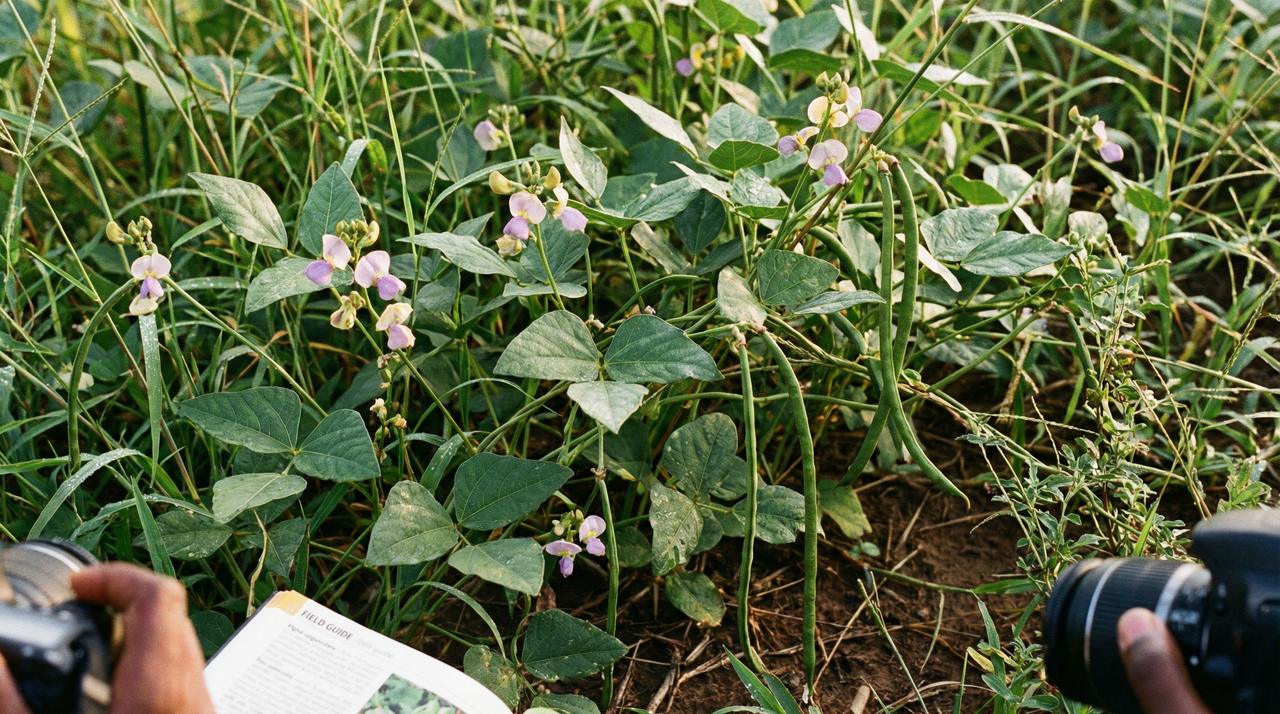
What I love about this plant's physical form is how much variety it packs into a single species. Growth habits run the full spectrum from compact erect bush types, ideal for tight kitchen garden beds, to sprawling prostrate forms and vigorous climbers that can reach 3 to 4 meters (occasionally more), needing the same trellising support as a pole bean.[6][9] The leaves are alternate and trifoliate with leaflets roughly 5 to 10 cm long, and the flowers are small papilionaceous blooms, pale yellow to purplish, carried in axillary racemes.[10] Pods run 10 to 30 cm long and hold 6 to 15 seeds, globular to kidney-shaped with that characteristic black or pale hilum. Below ground, a deep taproot can push 1 to 2 meters in favorable conditions, which says a lot about how this plant handles drought.
Cowpea sits within the broader Vigna genus alongside some fascinating relatives. Bambara groundnut (Vigna subterranea) shares West Africa's semi-arid savannas as its homeland, reinforcing the genus's African roots.[11] Adzuki bean (Vigna angularis), by contrast, was domesticated independently in East Asia's Yangtze River valley around 3000 to 2000 BCE, following a remarkably parallel trajectory on a different continent.[12] Adzuki produces shorter 7 to 13 cm pods with 4 to 10 red kidney-shaped seeds and takes 90 to 120 days to mature, while mung bean finishes faster with tiny 2 to 4 mm seeds and a 60 to 120 day window.[13][14] Having grown all three, I'd say the Vigna genus's knack for producing culturally significant, visually distinctive seeds across wildly different geographies is one of its most striking qualities. The red of adzuki and the black eye of cowpea both carry centuries of human meaning.
Traditional Uses, Cultural Significance, and Global Journey of Cowpea
Cowpea has been cultivated in Africa for over 3,000 years, and in West African societies it means far more than protein.[15] The plant carries layered symbolism of resilience, prosperity, fertility, and protection, appearing in festivals, rituals, and folk medicine for everything from diabetes and hypertension to skin infections and inflammation, with leaves used topically and infusions taken for internal ailments.[16][17] These aren't peripheral uses; they're woven into the fabric of communities that developed the crop and selected it over millennia for local conditions.
The transatlantic slave trade carried cowpea to the Americas between the 16th and 18th centuries, and with it came that accumulated cultural knowledge.[18] In the American South it became the black-eyed pea, eaten on New Year's Day for good luck; in Brazil's northeast it's Feijão de Cravo; in India it arrived as lobia, at home in dals and curries.[19] Having grown cowpeas for both their culinary appeal and their soil-building roots, I see the New Year's tradition as more than folklore. It's a living thread connecting the plant's African origins to diaspora communities who kept that knowledge alive when so much else was taken from them. Modern commercialization sometimes strips that context away, which is why the International Treaty on Plant Genetic Resources for Food and Agriculture's framework for equitable benefit-sharing of cowpea germplasm matters.[20] The communities who developed this crop deserve recognition.
Adzuki bean's parallel story in East Asia adds useful perspective here. Its red seeds carry ritual meaning in Japanese wagashi, Korean winter solstice porridge, and Chinese festivals, with TCM applications as a cooling, diuretic herb for edema quite distinct from cowpea's African medicinal applications.[21][22][23] Two legumes, two continents, the same genus, and centuries of people deciding that a small seed was worth carrying into their most important ceremonies.
Fun Facts and Modern Relevance of Cowpea
Global cowpea production reaches around 7 to 8 million tonnes annually, with over 70% coming from sub-Saharan Africa, a figure that reflects just how central this crop remains to regional food systems.[24] The FAO has described it as "small but mighty," and that framing holds up: the beans, leaves, flour, fodder, and soil-improvement benefits have fed communities and rebuilt soils for millennia across the continent where it was born.[25] In my intercropping guilds I keep coming back to cowpea precisely because that resilience is real and observable at the garden scale, not just in production statistics. A plant with 4,000 years of proven service to human food security earns its place in any regenerative system.
Cowpea Varieties and Where to Source Them
Few vegetables I've grown pack this much diversity into a single species. Cowpea (Vigna unguiculata) is technically a complex of multiple subspecies: the familiar southern peas, black-eyed peas, and crowder types all sit under subspecies unguiculata, while the dramatic yardlong or asparagus bean belongs to subspecies sesquipedalis, producing pods that can stretch close to a meter long.[6][26][27] That taxonomic range matters practically, because the growth habits span just as wide: compact bush types mature in 60-70 days and need no support, semi-vining types trail outward, and full climbers can reach ten feet given something to grab, producing their heaviest biomass but requiring 80-100 days to finish.[28][29]
I've grown bush black-eyed peas and vining yardlong beans side by side, and the trade-off is real. The bush types were done and out of the bed while the yardlongs were still climbing their cattle-panel trellis, but once those vines hit the top, the pods just kept coming. Seed colors across the species run white, cream, black-eyed, red, brown, and speckled; pods typically hold 6-15 seeds and range from 4 to 12 inches in most types, with the yardlong strains at the extreme end.[28][27] Flavor is nutty, earthy, and mildly sweet; young pods cook like green beans while dry seeds go creamy and rich.
Notable Cowpea Varieties and Related Vigna Species
For low-input and organic gardens, the named US cultivars are where I'd focus first. Pinkeye Purple Hull is a beloved southern heirloom with good disease tolerance and reliably sweet flavor at the fresh-shell stage. Iron and clay cowpea is the go-to for cover-cropping, with aggressive weed suppression and strong nitrogen fixation.[30] Red Ripper cowpea is a vining heirloom that handles heat and drought better than most, continuing to set pods weeks into a dry spell that would stall a bush bean; that extra persistence comes down to root architecture, and I've watched it happen in my own beds. California Blackeye, Blackeye 27, Blackeye 44, and Mississippi Silver round out the options, with several of these carrying resistance to anthracnose, Fusarium wilt, and root-knot nematodes.[31][32] The USDA National Plant Germplasm System holds thousands of additional accessions if you ever want to go deep into breeding territory.[33]
The broader Vigna genus shows how different these cousins can get. Mung bean (V. radiata) is a compact 24-36 inch bush with green seeds and a 60-120 day window; adzuki (V. angularis) tops out at 1-3 feet with its characteristic bright-red seeds in 90-120 days; Bambara groundnut (V. subterranea) grows its pods underground, taking 120-180 days to mature round seeds that can be red, black, white, or speckled.[34][35][36] All of them share cowpea's roughly 20-25% protein profile, but cowpea still has the widest adaptation range, the fastest typical harvest window, and the deepest seed library for warm-climate growers.[37]
Sourcing Cowpea Seeds and Plants
Finding good cowpea seed in the US is genuinely easy. Johnny's Selected Seeds, Baker Creek Heirloom Seeds, Southern Exposure Seed Exchange, Seed Savers Exchange, and Native Seeds/SEARCH all carry multiple cultivars, including California Blackeye, Iron Clay, Red Noodle yardlong, Dixilee, and Orient Wonder.[38][39][40] Packets typically run $3-7 for home gardeners; bulk seed for cover-cropping runs $5-25 per pound, and USDA/NRCS programs sometimes distribute seed for conservation plantings at reduced cost.[39][41] I personally prefer ordering heirloom cowpea seeds from Southern Exposure or Seed Savers because their southeastern-adapted varieties establish noticeably more reliably in humid subtropical conditions than generic commercial packets.
If you're tempted to import seed directly, know that USDA APHIS requires a PPQ Form 525 permit plus a phytosanitary certificate, and all material must be free of soil and plant debris; small lots under 50 seeds for personal use may qualify for simplified procedures, but it's not worth the hassle when domestic sources are this good.[42][43] Whatever you order, target germination rates at or above 80% and look for certified, disease-free stock. I hot-water treat cowpea seed at 50°C for about 20 minutes even when it comes from reputable suppliers, ever since I lost an entire early planting to anthracnose traced back to the seed lot itself.[44][45] That extra step costs ten minutes and has saved me from a very frustrating June more than once.
Cowpea Propagation and Planting Guide
Cowpea is a direct-seeded annual, full stop. Unlike tomatoes or brassicas, it doesn't want to be started indoors and transplanted out; that sensitive taproot doesn't forgive being disturbed, and every time I've seen a grower attempt it, they end up with stunted plants that take weeks to recover, if they recover at all.[46][47] Stem cuttings and grafting exist in research papers, but they have no place in a real garden. Just sow directly into warm soil and let cowpea do what it does best.
Seed Characteristics and Viability
Good cowpea seed is distinctive in the hand. The seeds are reniform, slightly kidney-shaped, running 5.5 to 7.5 mm long, and many cultivars carry that classic white or cream hilum that gives the black-eyed pea its name.[48] They feel a little larger and smoother in the palm than you might expect, and that prominent eye is a reliable visual cue when I'm checking saved seed for trueness-to-type. Those large cotyledons make up 70 to 80 percent of total seed weight,[49] which is part of why cowpea seedlings establish so confidently even in lean soils.
Cowpea seeds are orthodox, meaning they tolerate drying down to 3 to 7 percent moisture and store well under cool, dry conditions.[50] Under ambient conditions you can expect viability for three to five years; under refrigerated, hermetically sealed storage, cowpea seed can remain viable for decades.[51] My low-budget version of that: save the silica-gel packets from seed catalog orders and drop one into a sealed mason jar with your saved seed. I've kept germination rates above 85 percent through three Florida summers that way. Quality fresh seed hits 80 to 95 percent germination under ideal conditions,[52][53] and unlike some Vigna relatives where hard-seed dormancy can complicate things, most cowpea cultivars have little innate dormancy and need no scarification.
Before sowing, I always dust seeds with a cowpea-specific rhizobium inoculant. It takes about thirty seconds and the payoff is visible: noticeably darker foliage and heavier pod set compared to uninoculated plants in the same bed.[46]
Soil and Site Selection
Cowpea's West African savanna heritage explains its strong preference for well-drained, medium-textured soils. Sandy loam to loam with a pH between 5.5 and 7.0 is the sweet spot, with 6.0 to 6.5 being optimal.[54] It tolerates coarse sandy soils better than most legumes, but waterlogging is the one condition it genuinely cannot handle. After a three-day summer downpour I have watched cowpea leaves turn chlorotic within 48 hours when the bed wasn't raised; lifting beds six to eight inches eliminated that problem for me entirely. Compaction above 1.5 g/cm³ bulk density causes similar root-rot setbacks.[55]
That deep taproot, which reaches 60 to 90 cm and sometimes 120 cm in loose soils, is exactly why cowpea handles dry spells once it's established.[56] Organic matter around 2 to 3 percent keeps soil structure and microbial activity healthy without loading up on nitrogen that would suppress nodulation.[57] Full sun is non-negotiable, at least six to eight hours of direct light daily; shade produces etiolated, spindly plants that barely flower.[54] If you're amending your soil, do it four to six weeks before planting so lime and compost have time to work.
Planting Methods, Spacing, and Timing
Before you plant a single seed, know whether you have a bush or a vining type, because that distinction drives every spacing decision. Bush cultivars are compact, typically 0.5 to 1.5 meters tall, and can be planted at higher densities. Vining types sprawl or climb to five meters and need room to breathe.[58] For bush types, I work with 30 to 45 cm between rows and 10 to 20 cm between plants in the row. Vining types want 60 to 90 cm between rows, or up to 1.5 meters when trellised, with 20 to 30 cm between plants.[59] That extra airflow isn't just comfort for the plant; it's your first line of defense against the fungal issues that will come up in a later section.
Sow seeds 2.5 to 5 cm deep once soil temperatures reliably hit 18 to 24 °C (65 to 75 °F).[59] I mark my rows with stakes when the seeds go in, because the first true leaves look deceptively similar to other young Vigna seedlings. I once mixed up a row of 'Iron Clay' with another legume and didn't realize it until the plants were knee-high.
Germination and Early Growth Timeline
The 65 to 75 °F soil temperature window isn't a suggestion; it's where the magic happens. Below 15 °C (60 °F), germination slows dramatically and seeds may rot before they sprout.[60] In my Central Florida beds, once the soil thermometer reads 70 °F I expect seedlings in seven to ten days, and most summers I see emergence on the faster end of that range. From there the timeline moves quickly: first pods set 30 to 45 days after planting under warm conditions, with flowering starting 35 to 60 days in depending on the cultivar.[61]
Put those numbers on a garden calendar: plant on the right date into warm, well-drained soil with inoculated seed, and you're looking at fresh pods before summer's halfway done. Get the soil temperature wrong, and the whole timeline stretches or stalls. A five-dollar soil thermometer is genuinely one of the better investments a cowpea grower can make.
Cowpea Care Guide: Growing Vigna unguiculata Successfully
Cowpea is one of those plants that rewards you for understanding where it comes from. Its West African savanna heritage means it genuinely loves heat, tolerates drought once established, and fixes its own nitrogen. But that same heritage makes it completely unforgiving of cold, waterlogged soil, or a shady spot. Get the fundamentals right and growing cowpeas is genuinely low-effort. Get them wrong and you'll wonder why your plants are sulking through summer.
Sunlight Requirements for Cowpea
Full sun is non-negotiable. Cowpea needs 6-8 hours of direct sunlight daily to drive photosynthesis, support nitrogen fixation, and fill pods properly.[62] In my experience, even light afternoon shade produces noticeably leggier plants with a thinner pod set. Shade stress shows up fast as etiolated stems, pale or yellowing leaves, reduced flowering, and stunted growth overall.[63] If you're seeing those symptoms, the fix is a better site, not more fertilizer.
Water Needs and Irrigation for Cowpea
During active growth, aim for about 1 to 1.5 inches of water per week, applied when the top 2-3 inches of soil feel dry.[64][65] Deep, infrequent irrigation encourages the strong root development that gives cowpea its drought resilience. The three moments when consistent moisture matters most are germination, flowering, and pod fill; good irrigation timing during those windows can improve yields by 20-30%, while letting things dry out causes flower drop and pod abortion.[54][66]
One thing I've learned the hard way in humid climates: cowpea's drought tolerance makes it easy to overwater. Waterlogging causes chlorosis, wilting, root rot, and invites fungal problems fast.[67] Well-drained soil is essential, not optional. Once established, mature plants can survive 7-14 days without water through deep roots and stomatal regulation, though prolonged drought stress during flowering shows up as leaf curling, browning, and pod abort.[54][68] Soil pH should stay between 6.0 and 7.0 for best performance.[69]
Feeding and Nutrient Management
I always inoculate my cowpea seeds with rhizobia before planting, and the difference in plant vigor compared to years I've skipped it is striking. When nodulation fires on all cylinders, the symbiotic relationship with Bradyrhizobium bacteria can supply 50-200 kg of nitrogen per hectare, which largely eliminates the need for nitrogen fertilizer.[70][71] Avoid heavy nitrogen applications because excess nitrate suppresses nodulation; if you need a starter fertilizer, go low-nitrogen like a 10-20-10.[72]
The nutrients that actually need watching are phosphorus, potassium, and key micronutrients. Phosphorus drives root development and efficient nodulation; deficiency shows as purple leaf discoloration, poor roots, and delayed maturity.[73] Potassium supports pod fill and stress tolerance; deficiency causes leaf margin burn and poorly filled seeds.[74] Run a soil test first, then adjust; typical targets are 40-60 kg/ha P and 40-80 kg/ha K, with soil levels around 20-40 ppm P and 80-120 ppm K.[75]
Among the micronutrients, molybdenum is the one most growers overlook. It's essential for the nitrogenase enzyme that drives nitrogen fixation, and in acidic soils deficiency appears as pale leaves and poor nodulation.[76][77] I once had a patch where the plants looked fine early on, then older leaves developed interveinal chlorosis and one or two showed that tell-tale fishhook curl. A heavy rain had leached the magnesium out of my sandy soil.[78] For organic growing, 5-10 tons per hectare of composted manure builds the organic matter and buffered fertility that cowpea thrives in.[79]
Frost Tolerance and Cold Protection
Cowpea does not tolerate frost. It's killed at 32°F (0°C) and suffers damage well before that, with prolonged exposure below 50°F (10°C) causing serious stress.[79] Soil temperature at planting needs to reach at least 60°F (15-16°C), and seedlings are especially vulnerable to damage anywhere from 28-30°F (-1 to -2°C).[80] I wait until the soil is genuinely 60°F and the forecast is stable before putting seed in the ground. Cowpeas do not forgive impatient planting.
In zones 8-11, the cowpea growing season is comfortable from late spring through fall with 60-90 frost-free days needed to reach maturity.[81][82] In zones 3-7, you're racing that window. Frost damage looks like water-soaked lesions turning brown or black, wilting, and leaf necrosis.[83] If a late frost threatens, floating row covers buy you 4-8°F of protection; 2-3 inches of straw mulch helps insulate the soil, and a south-facing, well-drained site gives you the warmest microclimate.[84][85] I learned to get those row covers on before nightfall, after losing an early planting to a forecast that looked fine at sunset and then dropped hard.
Heat Tolerance in Cowpea
This is where cowpea earns its reputation. Native to the hot savannas of West Africa, it's rated for AHS Heat Zones 8-11 and grows best at daytime temperatures of 70-95°F (21-35°C) with nights around 68-77°F (20-25°C).[86][79] It can handle short stretches above 95°F (35°C) for 7-10 days with minimal yield loss when moisture is adequate.[87]
The vulnerable point is reproductive: temperatures above 95°F combined with hot nights above 82°F (28°C) cause flower abortion, reduced pollen viability, and pod failure, with potential yield losses of 50-70%.[88][89] During a brutal 10-day stretch above 95°F with warm nights one summer, I kept deep watering on schedule and added extra mulch around the base of plants. Most of my pod set survived. Deep soil moisture and a cool root zone give the plant just enough buffer to keep going through conditions that would devastate a bean or pepper. Intercropping for partial shade during peak heat hours is another tool that works.[90]
Pruning, Maintenance, and Seasonal Rhythm
Cowpea comes in two broad growth habits: compact bush types that need minimal support and stay tidy through the season, and vining indeterminate types that climb 1-2 meters or more and will sprawl across everything nearby if you let them.[62] I learned this distinction the hard way my first season with a vining variety. I let it sprawl across the ground, airflow was poor, and I ended up fighting fungal pressure all summer and harvesting on my hands and knees. After installing simple bamboo trellises and training the vines up, disease pressure dropped noticeably and harvest became genuinely pleasant.
For vining types, provide sturdy supports 1-2 meters high and start training early. Light tip pinching at that height every 2-3 weeks promotes branching, improves airflow, and can increase yields 20-30%.[91][92] Bush types need little more than occasional shaping to prevent lodging. Regardless of type, keep weeds suppressed through mulching or shallow cultivation, and rotate your cowpea patch each season to reduce pest and disease buildup in the soil.[72]
Cowpea Harvesting Guide: Timing, Techniques, and Yields
One thing I've learned after growing cowpeas through a lot of Florida summers is that the calendar is a rough guide at best. Most varieties produce harvestable pods somewhere between 60 and 80 days from direct seeding under warm conditions, with early types like California Blackeye coming in as quick as 65-70 days.[93][80] But what I actually watch is the plant. Once flowering starts, typically 40-60 days after sowing, pods reach harvestable size within another 30-35 days.[94][95] That flowering-to-pod window is what I track now, not the date on the seed packet.
When to Harvest Cowpeas: Timelines and Readiness Indicators
There are really two different harvests happening on the same plant, and they require completely different timing. For fresh snap pods, you want to catch them young and tender, before the seeds start to bulge and harden, which usually means 60-70 days from planting.[72] A pod that snaps cleanly is ready. One that bends is past its prime for fresh eating. Miss a couple of days in 90°F heat and what was perfect for a stir-fry becomes a dry-bean candidate overnight.
Dry beans need a completely different set of cues. You're waiting for the pods to shift from green to yellow or brown, turn dry and brittle, and for the seeds to rattle inside when shaken.[96][97] The leaves will be senescing, and seed moisture should be below 15% for good storage stability.[98] I've learned not to start pulling plants until 80-90% of the pods look ready, and I always wait for a dry stretch in the forecast. Here in Central Florida, our afternoon thunderstorms can delay dry-down considerably, so I let the rattling pods tell me when the season has done its work rather than guessing by weeks. The peak U.S. cowpea harvest runs July through September, with southern gardeners in zones 8-10 sometimes starting as early as May or June.[99][70]
How to Harvest Cowpeas for Fresh or Dry Use
For fresh pods, the method is simple and familiar if you've ever grown green beans: pick every 1-3 days and the plant keeps producing.[72] Regular picking is genuinely the whole strategy. A productive plant in good conditions can yield 1-3 kg of fresh pods over a season when harvested consistently. Skip a few rounds and the plant shifts energy toward seed maturity and slows down.
Dry-bean harvest is a different rhythm entirely. When most pods are ready, pull the whole plant, move it somewhere dry and well-ventilated, and let it cure before threshing. In a good year from a well-spaced 4x8 bed, I easily put up enough dried black-eyed peas to carry my kitchen through winter, which makes the per-hectare yield figures (500-1500 kg/ha under commercial conditions)[72] feel very real even at garden scale. The critical post-harvest step is getting seeds below 15% moisture before storage.[98] I learned this the hard way in my first few seasons: humid subtropical summers and inadequately cured beans are a recipe for mold. A dry, airy shed beats a sealed container every time until you're confident the moisture is out. The harvest stage you choose, tender pod or dried seed, determines the culinary path ahead, which is exactly where we're heading next.
Cowpea Preparation and Uses
Culinary Uses and Flavor Profile of Cowpea
An immense benefit of growing cowpea is how much of the plant is actually edible. The dry or fresh seeds are the obvious prize, but young pods cook up beautifully as snap beans, and the tender leaves make a mild, pleasant leafy green when sautéed or added to soups.[26][6] I've learned to label my rows carefully after spending a confused season trying to remember which vines were cowpea and which were other beans -- young plants look surprisingly similar, and you really don't want to harvest the wrong leaves.
Before anything else: cook them thoroughly. Raw mature seeds contain lectins and phytic acid that cause genuine digestive distress, and a slow simmer won't save you. A full rolling boil for at least 10-15 minutes is what it takes to neutralize those compounds.[100][101] I learned this the hard way early on with a batch of undercooked black-eyed peas -- the stomach ache was convincing enough that I've never rushed the boil since. Soaking overnight or 6-12 hours before cooking shortens your time at the stove and improves digestibility further;[102] sprouting for 2-3 days boosts vitamin C and protein digestibility, though it requires real attention to sanitation to avoid foodborne risk.[103]
Once cooked properly -- typically 20-40 minutes after soaking -- cowpea seeds deliver a mild, earthy flavor with subtle nutty and slightly sweet notes and a soft, creamy texture.[104][105] Cultivar choice actually matters here. In my experience, black-eyed peas cook faster and turn beautifully creamy in Southern-style stews and braises. Crowder types are a different animal -- sweeter, a bit more robust, and they hold their shape better, which makes them my go-to for salads or anything where you want the beans to stay distinct.[106]
The cultural kitchen traditions around cowpea run deep. West African preparations like akara (deep-fried cowpea batter) and fermented fura dough have sustained communities for centuries, and Southern U.S. cooking has made black-eyed peas a New Year's ritual across generations.[107] The plant's protein content -- roughly 20-25% by dry weight -- makes it a genuine nutritional anchor in those traditions, not just a side dish.[108] Classic pairings that work across cuisines include onions, tomatoes, garlic, cumin, and cayenne; the earthy base of the bean takes spice extremely well.[109]
Traditional Medicinal Preparations
Traditional practitioners across sub-Saharan Africa have long prepared cowpea leaves and seeds as decoctions, typically simmering 10-20 grams of dried material in 500-1000 ml of water down to roughly half the original volume, taken as one to two cups daily.[110][111] Related Vigna species follow similar patterns: adzuki bean appears in Traditional Chinese Medicine at 9-30 grams per day as a seed decoction,[112] suggesting shared genus logic even across continents. I respect this ethnobotanical heritage deeply, and I think it deserves honest engagement rather than dismissal -- but I'm equally clear with anyone who asks me about it: these are traditional reports, not clinical prescriptions, and none of them replace qualified medical care. The health benefits section covers the research evidence and safety considerations in much more depth.
Non-Food Uses and Agricultural Functions
Some of the most useful things cowpea does, it does quietly underground. As a nitrogen-fixing legume, it's a dependable soil-builder I reach for whenever I need to restore a depleted bed or create living mulch between hungry crops. In my Central Florida plots I've run cowpea between rows of okra and tomatoes, and the improvement in soil texture and organic matter after a single season is genuinely noticeable -- the vines shade out weeds while the roots do their quiet work, and when I chop them back the biomass feeds the compost pile almost faster than I can use it. That kind of functional stacking is exactly why cowpea earns its place in a food forest guild rather than just a vegetable patch. Related Vigna species like mung bean and Bambara groundnut pull similar duty as cover crops and forage in drier or cooler systems, confirming this is a genus-wide pattern rather than a cowpea quirk. At the end of any season where you're not saving dry seeds, consider the whole plant a gift to your soil.
Cowpea Health Benefits
The nutritional and medicinal value of cowpea isn't a recent discovery. Communities across sub-Saharan Africa and South Asia have been working with this plant for centuries, and the accumulated ethnobotanical knowledge is remarkably specific, right down to which part of the plant addresses which condition.
Traditional Medicinal Uses Across Africa and Asia
Across African and Asian traditions, virtually every part of the cowpea plant carries a distinct medicinal role. Leaves get applied to wounds and skin infections. Seeds have long been used for their blood-sugar-lowering effects. Pods serve as a diuretic. Roots are prepared to address parasitic infections.[113][114][115] In India, practitioners have historically reached for cowpea preparations specifically to manage diabetes and digestive complaints, while in West African ethnobotany the seeds and leaves double as treatments for diarrhea, dysentery, hypertension, and infection. That's not one plant doing one thing. That's a plant that generations of farmers and healers knew intimately.
Pharmacological Research and Bioactivities
Modern research is catching up, and a lot of what it finds lines up with traditional use. Cowpea extracts show significant antioxidant activity through free-radical scavenging, confirmed in standard DPPH and FRAP assays. Extracts also demonstrate anti-inflammatory effects by inhibiting the NF-κB and MAPK pathways and reducing pro-inflammatory markers including TNF-α, IL-6, IL-1β, and COX-2.[76][116] Antimicrobial activity against E. coli and Staphylococcus aureus has been documented with MIC values in the 0.5-2 mg/mL range.[117] On the metabolic side, cowpea inhibits α-glucosidase and α-amylase, which slows sugar absorption, and has lowered blood glucose in diabetic rat models; ACE-inhibitory peptides point toward the antihypertensive uses recorded in traditional practice.[118][119] The honest caveat here is that most of this evidence is in vitro or animal-based. Human clinical trials are limited, so I wouldn't overstate the therapeutic claims, but the mechanistic groundwork is genuinely interesting.
Related Vigna species show similar patterns. Adzuki bean demonstrates NF-κB-mediated anti-inflammatory effects and is classified in traditional Chinese medicine as Chi Xiao Dou for reducing swelling and clearing dampness. Bambara groundnut produced a 35% blood glucose reduction at 200 mg/kg in rat studies and holds a parallel wound-healing role in African traditions.[120][121] The genus-wide pattern is consistent enough that it feels less like coincidence and more like a shared biochemical signature.
Key Phytochemicals in Cowpea
The bioactivities above trace back to a rich phenolic fraction. Cowpea seeds and leaves typically contain 5-15 mg GAE/g of phenolic compounds, with flavonoids (vitexin, quercetin, kaempferol glycosides, catechins), phenolic acids (ferulic, p-coumaric), tannins, and isoflavones all contributing.[122] Leaves and seeds show the highest concentrations, with phenolics around 2.5-3.0 mg/g in leaves and tannins around 2.0-2.5 mg/g in seeds, followed by pods; roots and flowers run lower.[123]
What I find genuinely useful for growers is that these numbers aren't fixed. Genotype matters considerably, and drought or salinity stress can reportedly double phenolic content.[124] In my zone-9B summers, I've noticed that cowpeas grown through a dry stretch produce noticeably darker, more flavorful seeds come harvest -- which lines up with what the stress-response research describes. Red-seeded cultivars tend to run higher in flavonoids, which is one reason I keep a few of those in rotation alongside the standard black-eyed types. Soil nutrition, season, and altitude all add further variation.[125] Cooking reduces antinutrients substantially and can modestly affect some beneficial metabolites, a tradeoff the safety section below addresses directly. For comparison, pigmented adzuki seed coats reach 12-25 mg/g polyphenols with notable anthocyanin content, and pigmented ricebeans run 3-5 times higher in anthocyanins than cowpea, showing where the broader Vigna genus can take these profiles when breeding for color.[126]
Nutritional Profile of Cooked Cowpeas
A one-cup serving of cooked black-eyed peas (about 160 g) delivers roughly 186 kcal, 12.4 g protein, 33.2 g carbohydrates, and 10.6 g dietary fiber, with 0.85 g fat.[127] Per 100 g, that shakes out to 278 mg potassium, 2.11 mg iron, 24 mg calcium, and 127 µg folate, along with useful amounts of thiamin and niacin and a small hit of vitamin C at 0.9 mg.[127] The folate is worth highlighting specifically for anyone gardening through pregnancy, because it contributes meaningfully to daily requirements from a humble pot of beans. Boiling does cause a 20-40% loss of water-soluble vitamins, though minerals survive largely intact; pressure cooking and canning retain 70-90% of heat-sensitive vitamins by comparison.[128] I save the pot liquor from my boiled cowpeas and use it as a soup base or dilute it to water greenhouse seedlings -- that way the leached nutrients stay in the food system rather than going down the drain, which feels right from a permaculture standpoint.
The flavonoid and polyphenol fraction connects back to the antioxidant and antidiabetic effects discussed above, though again, the strongest supporting evidence remains in lab and animal work rather than clinical trials.[122] For genus context, mung bean sprouts push vitamin C up dramatically (to 13-30 mg/100 g), and adzuki beans hit 532 mg potassium per 100 g cooked, a notably higher figure than cowpea.[129] Different beans for different nutritional goals, but cowpea holds its own as a reliable, everyday staple.
Safety and Considerations
Properly cooked cowpeas have a long, safe track record as a staple food. The concern with raw seeds is real but straightforward to address: raw cowpea contains phytohaemagglutinin (a lectin) along with trypsin inhibitors, phytates, tannins, and saponins, all of which can cause nausea, vomiting, diarrhea, and reduced nutrient absorption.[130][131] Boiling for 10-30 minutes or pressure cooking inactivates lectins and reduces antinutrients by 70-90%.[132] Leaves and fresh pods carry a much lower antinutrient load than mature dry seeds. In fifteen years of teaching garden workshops I've never seen a reaction from properly cooked cowpeas, but I always caution people with known legume allergies to start with a small portion, since cross-reactivity with peanut or soy is possible.[133]
A few other things worth keeping in mind: large servings can cause the typical legume bloating from fiber and oligosaccharides, which is manageable by building up intake gradually. Cowpea contains moderate vitamin K, so anyone on anticoagulant therapy should keep serving sizes consistent rather than suddenly eating large quantities -- though to put it in perspective, the vitamin K in a cup of cowpeas is a fraction of what's in a serving of kale or spinach, which are the plants in the kitchen garden that actually require attention on that front.[134] People managing kidney disease should be mindful of potassium and oxalate intake. Adzuki beans typically carry lower lectin levels than cowpea, which is useful to know if you're comparing species for specific culinary or dietary purposes. The message across all of this is consistent: cook it properly, and cowpea is a safe, nutritious legume with a long history of doing exactly what it's always done -- feeding people well.
Cowpea Pests and Diseases
Cowpea holds up reasonably well against pests and diseases compared to common beans or soybeans, but "reasonably well" is relative when you're gardening in Central Florida in August. I've watched a planting look textbook-healthy on a Monday morning, then come back after a week of afternoon thunderstorms to find aphid colonies packed into every growing tip and the lower leaves showing the early bronzing of thrips damage. The plant has genuine defenses. It's just that warm, humid conditions can overwhelm them fast if you're not paying attention.
Common Diseases and Resistance
The disease pressure cowpea faces in the humid South is real: Fusarium wilt, bacterial blight, anthracnose, leaf spot, powdery mildew, cowpea mosaic virus, and root-knot nematodes all show up regularly, and the conditions amplify in poorly drained soils and dense plantings.[135][136][137] Fungal pathogens like anthracnose and Fusarium wilt peak right in that 75-85°F band with humidity above 80 percent, which describes most of my summers from June through September.[138][139] Anthracnose alone can take out up to 80 percent of yield in a susceptible planting without any intervention.[140]
The most practical response is cultivar selection, and there are genuinely good options. CB 50, Iron Clay, CB 27, CB 46, and Superior are among the lines bred specifically for resistance to anthracnose, rust, and Fusarium wilt in southern US conditions.[137][141][142] I've grown Iron Clay and CB 27 in the same beds where I've lost susceptible varieties to wilt, and both consistently showed fewer symptoms even through the worst humidity stretches. That said, resistance is cultivar-specific and never absolute; it varies by region and season, so treat those ratings as a starting point rather than a guarantee.[143][144] Breeding programs at the University of Florida, Texas A&M, NC State, and USDA-ARS continue stacking multiple resistance genes using marker-assisted selection and wild relatives, so the options keep improving.[140][57]
Prevention layers matter too: two to four year rotations with non-host crops, removal of infected plant debris, virus-free seed, reflective mulches, and good drainage reduce baseline pressure significantly.[145][146][147] The raised beds and spacing I discuss in the care guide aren't just for root health; they're your first line of defense against fungal disease. For context, other Vigna species including adzuki bean share many of these vulnerabilities to Fusarium and anthracnose, which tells you something about the genus-wide susceptibility under humid conditions rather than any special weakness in cowpea specifically.[148]
Major Insect Pests and Resistance Mechanisms
The main insect threats to cowpea are aphids (Aphis craccivora), thrips, leafhoppers, pod borers (Maruca vitrata), pod-sucking bugs, and the cowpea bruchid (Callosobruchus maculatus) in storage.[149][150][147] Aphids and thrips also vector viruses, which makes a low-level aphid population more concerning than its numbers suggest. Aphid pressure tends to spike in drier conditions, while pod borers favor humid environments -- which means if you're in a climate like mine, pod borers are a real concern at flowering time.[149] Root-knot nematodes round out the soil-borne pest picture, and some cultivars do carry genetic tolerance via antibiosis.[151]
Here's what I find genuinely impressive about cowpea: the plant comes loaded with its own pest-deterrence toolkit. Protease inhibitors disrupt insect digestion, lectins bind gut epithelia, and phenolic compounds deter feeding at the chemical level; physically, trichomes trap and injure small insects, and tough pod walls resist egg-laying.[152][153] Compared to common bush beans with their smoother leaf surfaces, cowpea's trichomes alone make it a more resilient companion legume in a hot, buggy guild planting. Resistance varies considerably by cultivar though, so variety choice again does most of the heavy lifting. For aphids, IT81KD-388, TVX 3236, and IT89KD-288 have performed well in trials; for pod borers, IT90K-277-2 and IT84S-2246 show useful resistance; and for bruchids in storage, TVu 2027 and IT81D-994 are solid options, with multi-resistant lines like IT97K-556-6 and CB27 offering broader coverage.[95][154] Most of these lines come from IITA and ICRISAT breeding programs, and their performance ratings reflect West African and US trial data, so expect some regional variation in your own garden.
My IPM approach leans heavily on prevention and observation. I scout the undersides of new growth every few days after summer rains, because that's exactly when aphid populations surge fastest on my plants. I don't reach for neem or pyrethrin until I'm seeing ten or more aphids per plant across two consecutive scouting rounds; below that threshold, resident ladybugs and parasitic wasps typically handle the load on their own. When I do treat, I've had three seasons of good results combining Beauveria bassiana with a neem drench, with no visible harm to the native bees working the flowers. Intercropping, sanitation, and encouraging natural predators can reduce insecticide use by up to 50 percent when combined consistently.[155][156][157] The plant is resilient. With an attentive eye and the right variety in the ground, cowpea can deliver reliably even through difficult summers.
Cowpea in Permaculture Design
Every food forest needs workhorses, and in my subtropical garden designs cowpea earns that title faster than almost anything else I grow. I've used it as a living mulch beneath young papaya and banana for three seasons running, and the difference is visible within weeks: a dense carpet of foliage that shades out weeds so effectively I've cut my hand-weeding time roughly in half, while the pale yellow flowers bring in carpenter bees and other native pollinators that benefit everything around them. That combination of soil service and biodiversity support is why cowpea keeps showing up in my guild designs year after year.
Ecosystem Functions and Soil Building
The headline function is nitrogen fixation. Through its symbiotic relationship with Bradyrhizobium bacteria, cowpea contributes 50-150 kg of nitrogen per hectare depending on variety, soil conditions, and whether you've inoculated.[6][158] I've found that inoculating with the correct strain in my sandy Florida soils consistently pushes performance toward the higher end of that range, and it costs almost nothing at planting time. That range holds fairly consistently across the Vigna genus, with Bambara groundnut and adzuki bean operating in the same 50-150 kg N/ha window under optimal low-nitrogen conditions.[159]
The soil-building story doesn't stop at nitrogen. As a cover crop or green manure, cowpea suppresses weeds, prevents erosion, and conserves soil moisture while generating 2-5 tons of dry biomass per hectare.[160][161] When you turn that biomass in or allow it to decompose in place, subsequent maize yields improve by 20-50% from residual nitrogen alone.[160] Cowpea also acts as a dynamic accumulator, pulling phosphorus and other nutrients from deeper soil layers and making them available at the surface once the plant breaks down.[162][161] That's a lot of work from a plant that asks for very little in return.
Pollination fits naturally into this picture. Cowpea is primarily self-compatible, so it sets seed even without insect visits, but bee visitation still boosts yields by 20-30%.[17][163] In practice, that means a cowpea planting is quietly supporting your broader garden ecosystem whether you're tracking it or not.
Climate Adaptation and Growing Zones
Cowpea traces its roots to the West and Central African savanna,[164][6] and that origin explains both its strengths and its hard limit: frost. Even a light freeze is lethal, with meaningful damage beginning at 32°F and plants generally failing below 28°F (-2°C).[6][165] That pins reliable cowpea production to USDA zones 7-11, requiring at least 60-100 frost-free days to complete a full cycle.[166] I wait until soil reaches 65°F before I sow, and in my three-plus years of doing that in Central Florida I have not once lost an established planting to drought.
On the heat side, cowpea thrives between 77-95°F and can handle temperatures above 100°F once it's established.[166][167] It prefers 400-1200 mm of annual rainfall but performs in drier conditions down to around 500 mm, thanks to a deep taproot that accesses subsoil moisture when surface soils bake hard.[167][168] In the driest weeks of a Florida summer, my established plants show almost no wilting once that taproot is down 18 inches or so.
If your summers are warm but your winters push into zone 5 or 6, adzuki bean (Vigna angularis) extends the genus northward, tolerating USDA zones 5-10 and requiring 120 frost-free days at a cooler optimum of 68-86°F.[169][170] At the opposite end of the moisture spectrum, Bambara groundnut (Vigna subterranea) operates down to 250 mm of rainfall, making it the specialist for genuinely arid zones 9-11.[171][172] One humidity note worth keeping in mind, particularly for humid subtropical climates: cowpea's sweet spot for flowering and pollination is 60-80% relative humidity, and pushing above that threshold raises fungal disease pressure noticeably.[173] After a poorly drained early trial where root rot took out half my planting, I now grow cowpea on raised beds with wider spacing whenever humidity is reliably high.
Forest Layer Placement and Guild Design
One of the things I genuinely appreciate about cowpea as a design element is its physical flexibility. Bush types stay compact at 0.3-0.6 m and function beautifully as ground-cover or herbaceous-layer plants; vining types reach 1-3 m with support and slot into the climber layer.[174] Add 30-50% shade tolerance to that picture and you have a plant that can work as an understory crop beneath young fruit trees, not just out in full sun.[174] In practice, a single vigorous vining cowpea can cover 4-6 square feet of ground and drop a noticeable layer of organic matter by season's end.
Classic cowpea guilds pair it with maize, sorghum, or cucurbits, where the vines climb the corn stalks while fixing nitrogen for the squash sprawling below.[161][175] This is essentially the Three Sisters model extended into tropical climates, and it consistently boosts overall polyculture productivity by 20-30%.[161] Pairing cowpea with marigolds adds nematode deterrence to the mix, a combination I've started using wherever I've had prior nematode pressure in Central Florida beds.
For designers working across different climates or looking for genus-level diversity within a food forest, Bambara groundnut fills the true ground-cover role with its trailing 20-50 cm stems and underground pods, reducing erosion by up to 70% in savanna-style understories.[176][177] Adzuki bean, by contrast, adapts to either herbaceous or climber roles, brings 5-10 t/ha of green manure biomass to cooler systems, and serves double duty as a trap crop for root-knot nematodes.[178][179] The one design caution across all of these: don't crowd multiple vigorous nitrogen-fixers into the same guild pocket. Their Bradyrhizobium associations compete under low-nitrogen conditions, and you'll get better results spreading them across different zones of the system.[159][180]
Why Cowpea Belongs in Your Food Forest
I've planted cowpea in exhausted sandy soil that nothing else wanted, and watched it fix nitrogen, shade out weeds, and hand me dinner all in the same season. There's something quietly humbling about that. A plant with this much history, carried across an ocean in the worst possible circumstances, still showing up every summer in my food forest like it belongs here. Because by now, it does.
Sources 180
- FAO: Cowpea Vigna unguiculata ↩
- The Origin and Domestication History of Cowpea (Vigna unguiculata L. Walp.) ↩
- Archaeological evidence for cowpea (Vigna unguiculata L. Walp.) consumption in ancient Nubia ↩
- Cowpea (Vigna unguiculata L. Walp.): A Food and Environmental Perspective ↩
- Cowpea (Vigna unguiculata L. Walp.) ↩
- USDA Plants Database: Vigna unguiculata ↩
- Vigna unguiculata subsp. spontanea - Kew Science ↩
- Cowpea Production ↩
- Morphological Variability in Cowpea Cultivars - FAO Document ↩
- Vigna unguiculata - Missouri Botanical Garden ↩
- Vigna subterranea (Bambara groundnut) ↩
- Domestication and Dissemination of the Cultivated Adzuki Bean (Vigna angularis) ↩
- Adzuki Bean Production ↩
- University of Florida IFAS - Mung Bean Production ↩
- Cowpea: Cultural and Economic Importance in Africa ↩
- Traditional Uses of Cowpea (Vigna unguiculata) in Africa ↩
- Vigna unguiculata ↩
- Cowpeas in the Americas: African Legacies and New World Adaptations ↩
- Black-Eyed Peas and New Year's Luck: African Roots in American Tradition ↩
- International Treaty on Plant Genetic Resources for Food and Agriculture ↩
- Cultural Significance of Red Beans in Chinese Festivals ↩
- Adzuki Bean in Traditional Chinese Medicine ↩
- Ethnobotany of Vigna angularis in Japan and Korea ↩
- Cowpea: A Versatile Legume for Food Security and Sustainability ↩
- FAO - Cowpea: Small but Mighty ↩
- FAO - Cowpea (Vigna unguiculata) Information ↩
- Cowpea Varieties and Production Guide | NC State Extension ↩
- Cowpea | Texas A&M AgriLife Extension ↩
- Cowpea: A Versatile Legume for Global Food Security ↩
- Managing Cover Crops Profitably - Cowpea ↩
- Cowpeas (Southern Peas) | UGA Cooperative Extension ↩
- Breeding Cowpea for Pest Resistance in the USA ↩
- Germplasm Resources Information Network (GRIN) - Vigna unguiculata ↩
- Mung bean - Wikipedia ↩
- Bambara groundnut - Wikipedia ↩
- Vigna angularis ↩
- Nutritional Value of Cowpea Grains and Forage ↩
- Cowpea Seed Suppliers ↩
- Cowpeas ↩
- Cowpea ↩
- USDA Cowpea Production Guide ↩
- Importing Plants and Plant Products into the United States ↩
- Seeds for Planting Manual ↩
- Seedborne Diseases of Cowpea ↩
- National Organic Program Standards ↩
- Cowpea Production Guide ↩
- Cowpea: Botany, Culture, and Utilization ↩
- Morphological Characterization of Cowpea (Vigna unguiculata (L.) Walp.) Accessions ↩
- Cowpea: Vigna unguiculata ↩
- FAO Seed Storage Guidelines ↩
- Seed Storage of Cowpea (Vigna unguiculata): Orthodox Behavior and Longevity ↩
- AOSA Seed Testing Handbook ↩
- ISTA Rules for Seed Testing ↩
- USDA NRCS Plant Guide: Cowpea ↩
- Cowpea Production Guide - USDA ↩
- Cowpea Root System and Drought Tolerance ↩
- Cowpea Production in North Carolina ↩
- Growth Habits of Cowpea Varieties ↩
- Cowpea Production Guide ↩
- Germination Temperature Responses in Legumes ↩
- Cowpea Production and Utilization ↩
- Missouri Botanical Garden - Vigna unguiculata ↩
- Missouri Botanical Garden Plant Finder ↩
- Texas A&M AgriLife Extension - Cowpea Irrigation Management ↩
- University of California Agriculture and Natural Resources - Cowpea Production ↩
- Texas A&M AgriLife Extension - Cowpea Production ↩
- FAO Agricultural Services Bulletin - Cowpea Production Guide ↩
- Texas A&M Extension - Cowpea Water Stress Symptoms ↩
- USDA Plants Database - Vigna unguiculata ↩
- USDA PLANTS Database - Vigna unguiculata ↩
- Nitrogen Fixation in Cowpea: A Review ↩
- Cowpea Production Guidelines - USDA ARS ↩
- University of Florida IFAS - Soil Fertility for Legumes: Cowpea ↩
- University of Florida IFAS Extension - Cowpea Production ↩
- Cowpea Fertilizer Management - Oklahoma State University Extension ↩
- Micronutrients and Nitrogen Fixation in Legumes ↩
- Role of Molybdenum in Symbiotic Nitrogen Fixation ↩
- Texas A&M AgriLife Extension: Cowpea Nutrient Management ↩
- Cowpea Production Guide - Texas A&M AgriLife Extension ↩
- Growing Cowpeas in the Home Garden - NC State Extension ↩
- USDA Plant Hardiness Zone Map ↩
- Cowpea Production Guide - USDA ↩
- Frost Damage in Legumes - NDSU ↩
- Frost Protection for Vegetables - University of Georgia Extension ↩
- Using Row Covers and Other Season Extension Techniques - Cornell University ↩
- AHS Plant Heat Zone Map ↩
- Heat Tolerance in Cowpea: Physiological and Molecular Mechanisms ↩
- Reproductive Stage Heat Tolerance in Cowpea ↩
- Nighttime Temperature Effects on Cowpea Heat Stress Recovery ↩
- Cowpea: A Versatile Legume for Hot Climates ↩
- Pruning and Training of Legume Crops - UC ANR ↩
- Cowpea Production Guide - NC State Extension ↩
- Cowpea Production Guide ↩
- Cowpea Crop Management ↩
- Vigna unguiculata: Maturity and Harvest ↩
- Cowpea Production in Florida ↩
- Harvesting and Storing Dry Beans ↩
- Vigna unguiculata Plant Profile ↩
- Cowpea Production for Home Gardeners ↩
- Lectins in Legumes: Toxicity and Mitigation ↩
- FAO - Anti-Nutritional Factors in Legumes ↩
- Sprouting of Legume Seeds: Effects on Nutritional Quality ↩
- Foodborne Illness Risks in Sprouts ↩
- Cowpea (Vigna unguiculata) - Nutritional and Sensory Properties ↩
- Flavor profile of Vigna unguiculata (L.) Walp. seeds from different geographic origins ↩
- Sensory Evaluation of Cowpea Cultivars ↩
- Journal of Ethnobiology and Ethnomedicine ↩
- Cowpea (Vigna unguiculata): Genetics, genomics and breeding ↩
- Missouri Botanical Garden Plant Finder ↩
- Medicinal properties of Vigna unguiculata ↩
- Ethnobotanical uses of cowpea in Africa ↩
- PubMed - Review on Vigna angularis in Traditional Medicine ↩
- Ethnobotanical Survey of Medicinal Plants Used by Hausa Ethnic Group of Northern Nigeria ↩
- Traditional Medicinal Uses of Legumes in Asia and Africa ↩
- Pharmacological Activities of Cowpea (Vigna unguiculata): A Review ↩
- Anti-inflammatory and Antimicrobial Effects of Vigna unguiculata ↩
- Antioxidant Properties of Cowpea (Vigna unguiculata) Extracts ↩
- Pharmacological Potential of Vigna unguiculata: A Review ↩
- Antidiabetic Activity of Cowpea Seed Extracts ↩
- Anti-inflammatory effects of Vigna angularis extract via NF-κB and MAPK pathways ↩
- Bambara Groundnut (Vigna subterranea): A Review of Its Nutritional and Health Benefits ↩
- Vigna unguiculata: A Comprehensive Review on Nutritional Composition and Health Benefits ↩
- Phytochemical Profile and Antioxidant Capacity of Vigna unguiculata L. (Cowpea) in Different Cooking Methods ↩
- Genotypic Variation in Phenolic Content of Cowpea ↩
- Postharvest Processing of Cowpea Antinutrients ↩
- Phenolic Compounds and Antioxidant Properties of Adzuki Bean (Vigna angularis) ↩
- USDA FoodData Central: Cowpeas, common (blackeyes, crowder, southern), mature seeds, cooked, boiled, without salt ↩
- Effect of Domestic Processing on the Nutritional and Antinutritional Factors of Cowpea (Vigna unguiculata) ↩
- USDA FoodData Central - Adzuki beans (azuki), mature seeds, cooked, boiled, without salt ↩
- Nutritional and Anti-Nutritional Composition of Cowpea (Vigna unguiculata L. Walp.) ↩
- Phytohaemagglutinin in Cowpeas ↩
- Antinutritional factors in cowpea (Vigna unguiculata): Varietal differences and effect of method of processing ↩
- Identification of IgE-binding proteins in cowpea (Vigna unguiculata) seeds ↩
- Vitamin K content in legumes including cowpea and anticoagulant interactions ↩
- Cowpea Diseases in the Southern United States ↩
- Managing Cowpea Diseases in Warm Climates ↩
- Cowpea Production in Florida ↩
- Cowpea Diseases and Environmental Factors ↩
- Influence of Temperature and Humidity on Cowpea Pathogens ↩
- Cowpea Diseases and Management - USDA ARS ↩
- USDA Germplasm Resources Information Network (GRIN) - Cowpea ↩
- Breeding Cowpeas for Rust Resistance ↩
- Management of Fusarium Wilt of Cowpea ↩
- Cowpea Disease Resistance Breeding ↩
- Clemson Univ. Southern Pea Production Guide ↩
- UF/IFAS Cooperative Extension: Cowpea Production ↩
- Integrated Pest Management for Cowpeas ↩
- Diseases of Adzuki Bean (Vigna angularis) ↩
- Management of Insect Pests of Cowpea: A Review ↩
- ICRISAT Cowpea Pest Management in West Africa ↩
- Nematode Resistance in Legumes: Focus on Vigna Species ↩
- Role of Lectins and Phenolics in Cowpea Defense ↩
- Trichomes and Cuticle as Physical Barriers in Legumes ↩
- Breeding for Resistance to Insect Pests in Cowpea ↩
- Cowpea Production Guide - Texas A&M AgriLife Extension ↩
- Insect Management for Cowpeas - University of Florida IFAS Extension ↩
- Integrated Pest Management for Cowpea in Sub-Saharan Africa ↩
- Nitrogen Fixation by Legumes ↩
- Nitrogen Fixation in Legumes ↩
- Cowpea as Green Manure and Cover Crop ↩
- Cowpea in Sustainable Agriculture ↩
- Permaculture Applications of Cowpea ↩
- Biodiversity and Pollinators in Legume Crops ↩
- Vigna unguiculata - Kew Science ↩
- Growing Cowpeas ↩
- Cowpea | NC State Extension Publications ↩
- Cowpea Production and Management - Texas A&M AgriLife Extension ↩
- Drought Tolerance in Cowpea ↩
- Adzuki Bean Production Guide ↩
- Growing Adzuki Beans in the Midwest ↩
- Bambara Groundnut: An Underutilized Legume with Huge Potential ↩
- FAO - Bambara Groundnut Production Guidelines ↩
- Cowpea (Vigna unguiculata) - Crop Production Guide ↩
- Agroforestry Species Profile ↩
- Permaculture Research Institute - Legumes in Design ↩
- USDA PLANTS Database - Vigna subterranea ↩
- FAO - Bambara Groundnut ↩
- Vigna angularis (Adzuki Bean) ↩
- Agroforestry Practices with Vigna Species for Sustainable Farming ↩
- Nitrogen Fixation by Bambara Groundnut ↩
About the Author
Samiksha is a Certified Permaculture Designer and Teacher. Raised on a regenerative farm, she has over 20 years of experience learning and growing with local and indigenous communities.