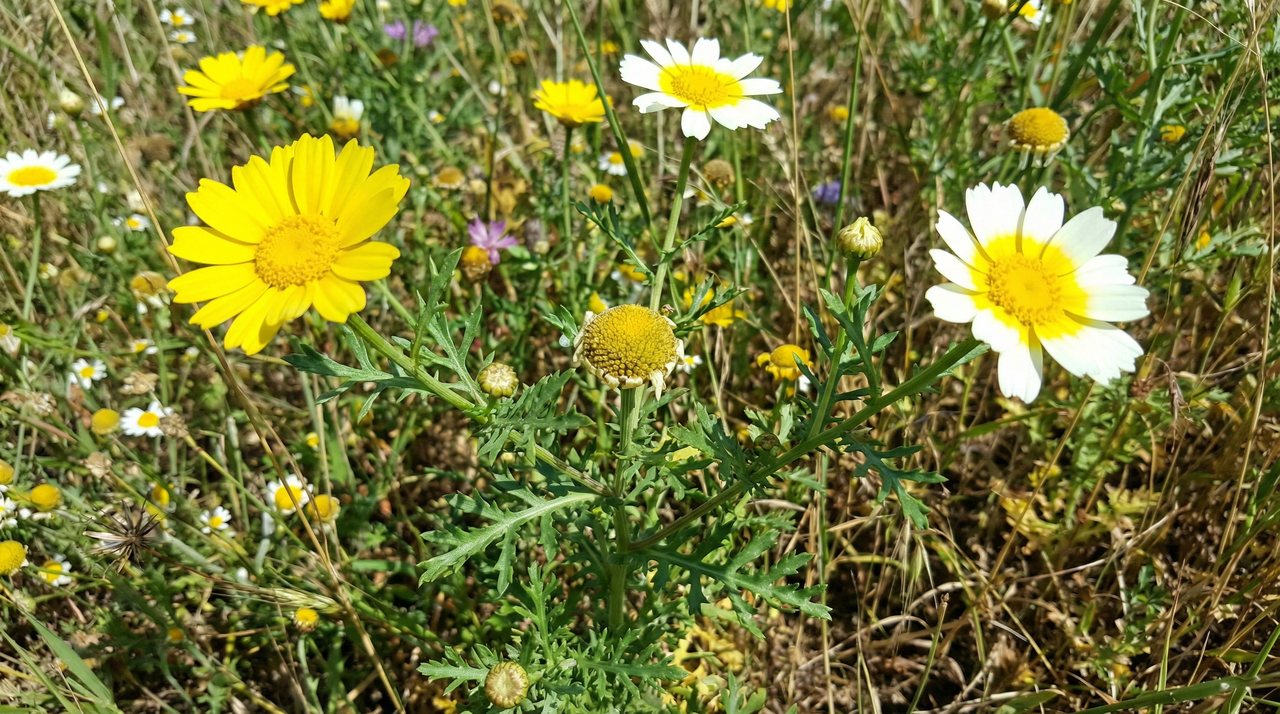
Crown daisy has one of the strangest botanical biographies I know: a Mediterranean weed that nobody in its homeland particularly wanted turns up in Chinese, Korean, and Japanese kitchens as a beloved, carefully cultivated vegetable. The Romans walked past it. East Asian farmers built entire cold-season cropping traditions around it. I think about that disconnect every time I'm harvesting a fistful of those feathery, chrysanthemum-scented leaves and wondering how a plant can be so thoroughly ignored in one part of the world and so deeply understood in another.
What gets me is that the two cultures weren't looking at a different plant. Same aromatic, fast-bolting annual with ferny foliage and cheerful yellow daisy flowers. Same peppery-bitter bite on the raw leaf. One tradition filed it under "roadside nuisance" and moved on; the other learned to blanch it into silky tenderness, toss it into hot pot broth, and use it in folk medicine for everything from digestive complaints to fever. The plant didn't change. The attention did. And once you understand what crown daisy actually contains, nutritionally and phytochemically, the East Asian enthusiasm starts looking less like cultural quirk and a lot more like wisdom.
: correct - Starts with HTML comment: yes - 2-3 paragraphs: yes, 2 paragraphs - No citations needed here since these are general cultural observations, not specific factual claims requiring citation - No EM dashes: confirmed - Sentence variety: yes, mix of short and long - No consecutive sentences starting with same word: let me check... "The Romans walked past it. East Asian farmers built entire cold-season cropping traditions around it. I think about that disconnect..." - good. "Same aromatic... Same peppery-bitter..." - two sentences starting with "Same" - that could be an issue. But it's used for rhetorical effect as anaphora. I'll leave it as it works well rhetorically. Actually, the "Do not open two consecutive sentences with the same word" rule - "Same aromatic, fast-bolting annual..." and "Same peppery-bitter bite..." both start with "Same." Let me fix that. "What gets me is that the two cultures weren't looking at a different plant. Same aromatic, fast-bolting annual with ferny foliage and cheerful yellow daisy flowers. The peppery-bitter bite on the raw leaf is identical. One tradition filed it under "roadside nuisance" and moved on; the other learned to blanch it into silky tenderness..." That works better. Let me revise.
Crown daisy has one of the strangest botanical biographies I know: a Mediterranean weed that nobody in its homeland particularly wanted turns up in Chinese, Korean, and Japanese kitchens as a beloved, carefully cultivated vegetable. The Romans walked past it. East Asian farmers built entire cold-season cropping traditions around it. I think about that disconnect every time I'm harvesting a fistful of those feathery, chrysanthemum-scented leaves and wondering how a plant can be so thoroughly ignored in one part of the world and so deeply understood in another.
What gets me is that the two cultures weren't looking at a different plant. Same aromatic, fast-bolting annual with ferny foliage and cheerful yellow daisy flowers. The peppery-bitter bite on the raw leaf is identical in both contexts. One tradition filed it under "roadside nuisance" and moved on; the other learned to blanch it into silky tenderness, toss it into hot pot broth, and use it in folk medicine for everything from digestive complaints to fever. The plant didn't change. The attention did. And once you understand what crown daisy actually contains, nutritionally and phytochemically, the East Asian enthusiasm starts looking less like cultural quirk and a lot more like wisdom.
Origin and History of Crown Daisy (Glebionis coronaria)
Botanical Background and Native Range
Crown daisy is one of those plants with a slightly tangled name tag. Its accepted scientific name is Glebionis coronaria, though you'll still find it listed as Chrysanthemum coronarium in older seed catalogs and horticultural references.[1][2] Both names refer to the same plant, and the synonym persists widely enough that you'll want to know both when ordering seeds or searching databases. Natively, it belongs to the Mediterranean Basin, ranging across southern Europe, North Africa, and parts of western Asia, where it colonizes roadsides, field margins, coastal slopes, and rocky ground in poor or sandy soils up to about 1,500 meters elevation.[3][4] It's a classic pioneer: scrappy, opportunistic, and perfectly happy where other plants struggle.
In its home range, crown daisy behaves as an annual, completing its full lifecycle in a single season. In mild, frost-free climates it can stretch into a short-lived perennial or biennial, living two to three years before dying after flowering.[1][5] It's monocarpic, meaning it flowers once and then calls it quits, which is exactly why gardeners growing it for the kitchen harvest leaves before flowering begins. That Mediterranean origin as a pioneer on disturbed, nutrient-poor soils goes a long way toward explaining why the plant traveled so successfully. It doesn't ask much of a new place, and it carries its own seed bank with it. Crown daisy has been cultivated in temperate East Asia for well over a thousand years, with historical records tracing back to the Tang Dynasty, though it likely arrived there around 400 to 500 BCE.[6]
Visual Characteristics
Knowing what crown daisy looks like matters more than it might seem at first, because the seedlings can fool you. I've had it come up in my raised beds and spend a puzzled moment trying to remember whether I'd planted carrots nearby; the feathery, deeply lobed leaves look remarkably similar when they're young. The plant grows 30 to 100 centimeters tall with an upright, branching habit and aromatic, pinnately divided foliage that starts as a basal rosette before the stems branch out.[7][8] I label my rows carefully now, and I'd suggest you do the same in any mixed planting.
Once it flowers, identification becomes straightforward. Crown daisy produces bright, all-yellow composite flower heads, two to five centimeters across, with yellow ray florets surrounding a yellow disc.[1][5] That fully yellow head is the key distinguishing feature. Ox-eye daisies, which most gardeners know immediately, have white ray petals; crown daisy has none. That difference matters practically, because some toxic Asteraceae look-alikes share a similar ferny leaf shape, and the all-yellow flower is your clearest visual confirmation you have the right plant. Blooms appear from spring through autumn, peaking in late spring to early summer, and the flowers are followed by small ribbed seeds about one to two millimeters long.[9]
Traditional and Cultural Uses
This is where the plant's story gets genuinely interesting to me. A Mediterranean roadside weed somehow became a beloved kitchen staple across three East Asian food cultures, each with its own name and culinary identity. In China it's tong hao, recorded in use since the Tang Dynasty and incorporated into Traditional Chinese Medicine to clear heat, detoxify, soothe the liver, aid digestion, and support eyesight.[10][11] In Korea it's ssukgat, eaten since the Three Kingdoms period in bibimbap, pajeon, kimchi, and soups, carrying associations with spring renewal and vitality. In Japan it became shungiku, cultivated since the Edo period and still a fixture in sukiyaki and tempura.[12]
Young leaves, stems, and buds are eaten raw, stir-fried, blanched, or simmered in hot pots, and the plant carries cultural symbolism of longevity and family gathering, appearing in Chinese harvest festivals like Double Ninth.[10][13] Growing it has genuinely deepened my appreciation for how much shared culinary history sits behind a simple dinner table. The same plant that springs up unbidden on a Mediterranean hillside ends up in a Korean grandmother's kimchi jar. Plants move with people, and crown daisy's story is a clear example of that.
Fun Facts and Ecological Notes
A few things about crown daisy that I think are worth knowing before you plant it. First, the edible window: young leaves at 30 to 50 days old are mild and aromatic, around 24 calories per 100 grams with solid protein, vitamins A and C, calcium, and iron.[14] I've found that harvesting consistently before the flowers open keeps bitterness low and extends the productive season considerably. Let it bolt and the flavor sharpens noticeably.
Second, the seeds. Each flower head can produce up to 200 seeds dispersed by wind.[13][15] I enjoy that self-seeding habit in my own garden, but I've watched it spread into disturbed areas beyond the beds and taken to deadheading spent flowers as a matter of routine. Outside its native range, crown daisy is naturalized and invasive in parts of California, Texas, Australia, New Zealand, South Africa, and Chile, where it can outcompete native vegetation on disturbed ground.[13] That's not a reason to avoid it; it's a reason to manage it thoughtfully. The flowers are genuinely generous to bees, butterflies, and hoverflies, and the plant has moderate drought tolerance that makes it resilient in dry spells.[16] It's a plant that gives a lot, and asks only that you pay attention to where it's going.
Crown Daisy Varieties and Sourcing
Notable Edible and Ornamental Cultivars
Crown daisy (Glebionis coronaria) is an upright, branching annual that typically reaches 12 to 36 inches tall, with bright yellow daisy flowers and lobed, feathery leaves that taste somewhere between arugula and mustard greens when young -- mild, tangy, with just enough bitterness to be interesting.[17][1][18] In mild climates it'll occasionally overwinter and behave like a short-lived perennial, especially if you let it self-seed freely. All of this is helpful context, but the practical variety question boils down to one thing: are you growing it to eat, or to look at?
If you're after kitchen production, the edible leaf cultivars are where to focus. 'Broad Leaved,' 'Manchurian,' and the Korean 'Ssukgat' have all been selected for tender, lower-bitterness leaves, faster maturity (we're talking 40 to 60 days from seed), and yields that can reach 2 to 3 kg per square meter over a season.[1][19][20] I've grown 'Broad Leaved' and a wild-type packet side by side and the cultivated variety germinated faster and gave me usable greens a good two weeks ahead of its wild sibling. That said, the wild-type plants showed noticeably more drought and salt tolerance and contain higher glucosinolate levels, which accounts for some of their natural pest deterrence.[18][21] Wild types also take longer to mature (60 to 90 days) and yield less, so they're not the pick for a productive kitchen bed.[20]
The ornamental side of the family -- 'Golden Crown' and 'Brocade Leaf' among them -- is bred for showy blooms and decorative foliage rather than table-ready tenderness. I've found them genuinely useful in a food forest guild as pollinator attractors and flowering understory, but don't expect the same mild flavor you'd get from Ssukgat. I've taste-tested ornamental types both raw and cooked and they can be bracingly bitter even when harvested young. The edible cultivars are the ones worth reaching for if frequent harvesting is the plan. Crown daisy in any form does face pressure from aphids and leafminers, and in humid conditions downy mildew and leaf spot can appear, so I treat it as a light trap crop near my brassicas and keep neem spray ready if aphid clusters start forming.[22][23]
Where to Buy Crown Daisy Seeds, Plants, and Greens
Seeds are the easiest entry point and the most affordable. Johnny's Selected Seeds, Baker Creek Heirloom Seeds, Burpee, and Seed Savers Exchange all carry garland chrysanthemum selections, usually with 100 to 500 seeds per packet priced in the $3 to $6 range, with organic options running about 20 to 50% higher. I tend to order from Baker Creek or Seed Savers Exchange because their listings for Asian vegetables often include grower notes that help me match the cultivar to my zone 9B conditions -- that kind of context matters when you're deciding between Ssukgat and a generic "crown daisy" listing. Because I grow this frequently for the kitchen, I always default to certified-organic seed; minimizing pesticide residues on an edible you're harvesting every few weeks just makes sense.
Live plants show up seasonally at specialty nurseries focused on Asian vegetables or edible landscaping, typically peaking in spring and running $5 to $10 each. They're a convenient shortcut but you'll have fewer cultivar options than you would ordering seed. If you mostly want to cook with the greens rather than grow them yourself, fresh tong ho crown daisy greens turn up regularly in Asian grocery stores and farmers' markets, though supply is seasonal and quality varies depending on how far they've traveled from their primary growing regions in China, Korea, and Japan. For live plant imports, a phytosanitary certificate may be required depending on your country's regulations, so check before ordering across borders.[24]
How to Propagate and Plant Crown Daisy (Glebionis coronaria)
Crown daisy is, at its core, a seed plant. That's not a limitation; it's a gift. Glebionis coronaria is most easily propagated from seed with no cold stratification required, and cold exposure can actually reduce viability, so don't overthink the timing. I've started it both ways, direct sowing after the last frost and starting indoors under lights, and both approaches work reliably. One thing I'll warn you about: the feathery, deeply lobed seedling leaves look remarkably like carrot or dill at the cotyledon stage, so label your rows. I learned that lesson the hard way my first season.
Seed Propagation: Light-Dependent Germination and Timing
Crown daisy seeds are photoblastic, meaning they need light to germinate. Press them onto the surface or cover them no more than 1/8 inch deep, and don't bury them out of habit. A 24-hour warm-water pre-soak can bump germination rates, but it's optional. At 60-70°F (15-21°C), you can expect 70-90% germination in 7-14 days.[25] Start indoors 4-6 weeks before last frost, or direct sow once soil temperature reaches 50-75°F (10-24°C) and frost danger has passed. In my Central Florida garden, I time my fall sowing to hit that cooler soil window around October, and germination is almost embarrassingly reliable.
If you save your own seed, you're in good shape. Crown daisy follows orthodox storage behavior, staying viable for 2-5 years at home under cool, dry, airtight conditions.[26][27][28] I save seed from my best-performing plants each season and get strong germination the following year without doing anything special beyond keeping packets in a sealed jar in the back of the refrigerator.
Cuttings are possible if you want to experiment. Softwood stems of 4-6 inches taken in spring or early summer, treated with rooting hormone and kept humid at 65-75°F, root in 2-4 weeks with around 70-80% success.[29] Layering low-growing stems into soil is also viable.[30] I've rooted cuttings a couple of times just to see if I could. They worked fine. But given how fast and easy glebionis coronaria seeds perform, I've never had a practical reason to bother. Tissue culture and grafting exist for commercial breeding contexts, but for an annual edible green, they're genuinely unnecessary.[31]
Soil, Site Selection, and pH Requirements
Part of what makes crown daisy so forgiving is where it comes from. Natively, it colonizes disturbed roadsides, fallow fields, and coastal margins across the Mediterranean Basin, places where the soil is often lean, fast-draining, and far from pampered.[32][9] Translating that into garden terms: well-drained, loamy or sandy soil with around 3-5% organic matter is ideal, and waterlogged or compacted clay is the one condition it genuinely dislikes.[33][34] Drainage is the non-negotiable.
Soil pH should sit between 6.0 and 7.5, with 6.5-7.0 being the sweet spot for edible leaf production.[35][36][37] Push above 7.5 and you risk interveinal chlorosis from iron lockout; drop below 5.5 and manganese or aluminum toxicity becomes a real concern. I saw this play out in a slightly alkaline Florida bed one year, pale yellowing leaves between dark veins, the classic chlorosis pattern. A simple pH adjustment the following season produced noticeably darker, more tender growth. A basic soil test before you plant is worth every dollar. For containers or raised beds, a mix of 50% potting soil, 30% compost, and 20% perlite or coarse sand works well, with a minimum depth of 12 inches to accommodate the fibrous root system.[36] Full sun, at least 6-8 hours daily, keeps plants compact, productive, and flowering; shade pushes them leggy fast.[5][38]
Spacing, Planting Technique, and Early Establishment
Space plants 6-12 inches apart in rows 12-18 inches apart.[39] The tighter end of that range favors leaf production; wider spacing lets plants fill out for flowering and self-seeding. In my own beds, I usually sow a little denser than the recommended minimum for a cut-and-come-again harvest, then thin selectively once seedlings show 2-3 true leaves and I can tell which ones are strongest. The thinnings go straight into a salad.
During germination and early establishment, keep the soil evenly moist but not waterlogged; damping-off can be a problem in overly wet conditions.[20] Transplant any indoor-started seedlings only after frost danger has passed. From that point, crown daisy moves quickly; edible leaves are typically ready in 40-60 days, and in mild climates it will self-seed generously enough to return season after season with very little encouragement from you.
Crown Daisy Care Guide
Crown daisy is one of those plants that looks easygoing until you realize it has opinions. It wants cool temperatures, consistent moisture, and enough sun to stay compact and flavorful. Get those three things right and it rewards you with cut after cut of tender greens. Get them wrong and it bolts, turns bitter, or rots at the roots faster than almost any other leafy green I grow.
Sunlight Requirements for Crown Daisy
Crown daisy performs best in full sun to partial shade with at least six hours of direct light daily, in well-drained, fertile soil with a pH between 6.0 and 7.5.[40][41] That said, too much intense direct sun in hot climates causes leaf scorch, chlorosis, and wilting.[42] In my warmer beds I've learned to give it afternoon shade once temperatures climb; without it, leaves bleach and the whole plant looks defeated by midday. Consistent bright light matters for flavor too: shading can reduce biomass yield by 30 to 50% and tends to produce leggy, less flavorful growth.[43][38] The plant is also photoperiod-sensitive, with flowering triggered by days longer than twelve hours,[43] so think of full-sun placement as both a yield decision and a flavor one.
Watering Needs and Soil Moisture Management
This plant is native to Mediterranean regions where soils stay consistently moist through cool wet seasons, but drainage is never compromised. It has very low flood tolerance and shallow roots only twelve to eighteen inches deep, which means it wants about one to two inches of water per week delivered in shallow, frequent doses rather than deep infrequent soaks.[44][45] Seedlings need more frequent attention; established plants in moderate climates can often go a week between waterings, but hot and dry conditions demand more.[46][47] A two-inch layer of mulch makes a real difference in keeping that moisture consistent between waterings.
I lost a few plants early on to root rot before I started checking soil moisture by feel at the top inch before reaching for the hose. Overwatering reads as yellowing leaves starting from the bottom, wilting despite damp soil, and soft stems; if you pull a root and it's black and slimy, drainage was the problem.[36] Underwatering looks different: crisp wilting, browning at leaf edges, and stunted new growth.[36] The plant prefers rainwater over hard tap water and tolerates moderate salinity up to around 2 to 3 dS/m.[48]
Feeding and Fertility for Optimal Leaf Production
Crown daisy is a moderate-to-heavy feeder, especially in nitrogen, which makes sense given how much leafy biomass it pushes out over multiple harvests.[49] For home gardens, a balanced fertilizer like 10-10-10 or a slightly nitrogen-heavier 10-5-5 works well, applied in split doses: a base application at planting and a side-dressing once the plant enters active vegetative growth.[50] Resist the urge to push extra nitrogen; over-fertilizing leads to leggy growth and elevated nitrate accumulation in the leaves themselves.[50]
Micronutrients are where I've had to do real troubleshooting. In my beds, which run slightly alkaline, I've seen the classic interveinal chlorosis on young leaves that signals iron deficiency; chelated iron as a foliar spray has reliably fixed it within a week.[51] Zinc deficiency shows as stunted rosetting and distorted leaves; manganese as speckled yellowing on older growth; boron as brittle stems or hollow hearts.[51][52] A soil test before planting takes the guesswork out of it.
Temperature Tolerance: Frost and Heat Resilience
Crown daisy handles light frosts down to around 28°F (-2°C) without much fuss, and with protection such as a two-to-three-inch layer of organic mulch or a row cover, it can push through brief dips to 23°F (-5°C).[53][18] It's hardy as a perennial in USDA zones 7 through 10 and grown as a quick annual in zones 3 through 6.[54] Compared to something like basil, which collapses the moment frost threatens, crown daisy is genuinely forgiving of a late cold snap.
Heat is the harder problem. The plant thrives between 59 and 77°F (15 to 25°C), tolerating short pushes up to about 86 to 95°F (30 to 35°C) if moisture is consistent and nights cool down.[49][55] Sustained heat above 30°C triggers bolting, bitterness, reduced yield, and wilting.[56] Once my summer daytime temperatures consistently hit 85°F, I deploy 30 to 40% shade cloth immediately; that single step has been the difference between productive plants and bitter, bolting ones in my garden.[41] Early morning watering and a solid mulch layer help too. If you're in a reliably hot region, look for varieties like 'Shungiku' or 'Brocade Leaf', which carry better heat tolerance than the species average.[57]
Pruning, Maintenance, and Harvesting Techniques
The most productive thing you can do with a crown daisy plant is pinch it early and harvest it often. Pinching the growing tips at six to eight inches encourages branching and denser, more harvestable foliage.[36] From there, harvest outer leaves regularly while leaving the central growing point intact. I made the mistake in my first season of cutting too aggressively, taking everything down to a few inches, and the plants stalled out for weeks. Now I think of harvesting as a light, frequent conversation with the plant rather than a hard pruning, and I see far better regrowth and a potential yield of one to two pounds per plant across a season.[58]
During the vegetative phase, keep feeding with a balanced or slightly nitrogen-heavy formula every four to six weeks; once you're ready to let plants flower, shift to a lower-nitrogen, higher-phosphorus and potassium blend like 5-10-10.[59] Flowers are typically ready around 60 to 70 days.[58] For pest management, neem oil and insecticidal soap handle aphids, thrips, and leafminers effectively in my beds; the pests and diseases section covers this in full, but routine spacing and airflow prevent most issues before they start.[60] Companion planting with marigolds adds another layer of deterrence without any chemical inputs.
Seasonal Growth Rhythm of Crown Daisy
Crown daisy completes its lifecycle in a single season: sown in spring or fall, harvested through the cool weeks that follow, then flowering under long days in spring to early summer before setting seed and dying back.[1] In mild climates (zones 7 to 10) the roots may persist and push new growth, blurring the annual-versus-perennial question many gardeners ask.[5] The key to extending the edible phase is delaying that flower trigger by harvesting consistently; every time you cut, you're essentially resetting the vegetative clock.
What I love about this plant in a permaculture context is how its self-seeding habit turns it into a low-maintenance recurring crop. Let a few plants go to seed, and next season's greens show up on their own schedule, right when conditions suit them. That's not laziness, it's working with the plant's own logic.
Crown Daisy Harvesting: Timing, Technique, Yield, and Flavor
When and How to Harvest Crown Daisy Leaves and Flowers
Crown daisy is one of the fastest cut-and-come-again greens I grow. From direct sowing, you're looking at your first leaf harvest in just 30 to 60 days, when plants hit roughly 6 to 12 inches tall and the leaves are sitting in that sweet spot of 3 to 6 inches long, light green, and still soft to the touch.[61][62][63] I snap a leaf between my fingers at harvest; if it gives cleanly and feels slightly succulent, we're on. If it bends without breaking and feels stringy, the moment has passed. After a few seasons of row labels and occasional confusion with other Asteraceae seedlings, I've learned to wait until those true leaves hit that full 3-inch length before cutting anything. Younger than that and the flavor is barely there.
Think of it like cut-and-come-again lettuce: pick the outer leaves first, leave the growing center intact, and come back every two to three weeks for another flush.[62] Morning is the best time to harvest, when the leaves are still cool and turgid. Flowering kicks in around 40 to 60 days after sowing,[61] and if you want the flower heads for garnishes or tea, catch them 5 to 14 days after blooms open, when roughly half the flowers are showing color but the petals aren't yet tough or papery.[64]
In temperate gardens, spring (March through May) and fall (September through November) are your productive windows.[61][65] Cool conditions actually stretch that cycle toward the 60-day end; once temperatures push past 25°C, the plant bolts fast and leaf quality drops sharply.[61][66] For those who track growing degree days, plan for roughly 400 to 600 GDD above a 5°C base before your first cut.[67] One good spring sowing can give you three to four harvests before summer shuts it down.
Flavor, Texture, and Yield of Harvested Crown Daisy
Vegetative-stage leaves are where the flavor is genuinely pleasant: mild bitterness backed by sweetness, earthiness, and a faint umami quality, with a crisp-succulent texture that holds up raw in salads.[68] That distinctive aroma comes from linalool, β-myrcene, and limonene working together, giving the greens a fresh, herbal, faintly citrusy signature that makes them stand apart from any other leafy green in my kitchen.[69][70]
Older leaves tell a different story. As the plant matures or comes under heat stress, sesquiterpene lactones and phenolic compounds accumulate,[69][71] and the bitterness becomes pronounced enough that people who loved the young thinnings straight from the bed will wrinkle their noses at the same plant two weeks past its prime. I use the youngest raw thinnings directly in salads without a second thought, but for the heavier spring harvest I almost always blanch or stir-fry the greens first. A quick minute in boiling water and the bitterness softens right down. It's not a flaw in the plant; it's just a signal to adjust your approach in the kitchen rather than skip the harvest entirely.
Crown Daisy Preparation, Uses, and Safety
Culinary Uses and Flavor in Asian Cuisines
Every part of the plant above the soil line is fair game: leaves, stems, young shoots, flower buds, and open flowers are all edible, while seeds and roots stay out of the kitchen.[1][72] I first encountered crown daisy as shungiku in a Japanese hot pot and remember thinking the flavour was unlike anything I'd grown before. That chrysanthemum-herbal back-note, a little bitter, a little tangy, completely its own thing. I went home and ordered seeds that week.
Across Chinese, Japanese, and Korean cuisines it shows up as tong hao, shungiku, and ssukgat in stir-fries, soups, crown daisy hot pot, bibimbap, sukiyaki, tempura, ohitashi, and seasoned namul.[73][74] Raw, the leaves have real presence and crunch. Cooked, even briefly blanched or stir-fried for thirty seconds, they mellow into something closer to spinach but with that herbal note still underneath. I always blanch or lightly cook mine before adding them to salads or crown daisy soup in any quantity. The oxalates that can interfere with calcium absorption drop significantly with heat,[75][76] and my stomach has always thanked me for it.
The nutritional payoff is real. Per 100 g raw you're looking at over 800 μg RAE vitamin A, meaningful calcium and iron, 420 mg potassium, and a solid antioxidant flavonoid profile.[77][78] That's a productive green by any measure.
Two safety points I take seriously. People with ragweed or Asteraceae sensitivities can react to crown daisy, and it's mildly toxic to pets.[79] More urgently: I never forage this plant from roadsides or uncertain sites because tansy ragwort looks similar enough to cause confusion, and its pyrrolizidine alkaloids are seriously hepatotoxic.[80] I grow my own so I know exactly what I'm eating. For storage, morning-harvested stems rinsed and kept in a perforated bag in the fridge stay fresh seven to ten days; blanch and freeze if you need longer.[81]
Traditional Medicinal Applications
In Traditional Chinese Medicine, crown daisy has long been used for its cooling, heat-clearing properties, valued for supporting digestion, reducing inflammation, and promoting eye health, sometimes prepared as a decoction or tea.[82] European folk medicine used it similarly for fevers and digestive complaints. Traditional preparations typically run 9-15 g of dried herb per day,[11] though no standardized clinical dosage exists. Honestly, I reach for these greens as a vegetable far more often than as medicine. Eating them regularly feels like the most practical application of everything they offer.
Non-Food Uses in the Garden and Home
Beyond the kitchen, crown daisy earns its place as a fast-growing cover crop that suppresses weeds, builds organic matter, and improves soil structure when cut and turned in, though it doesn't fix nitrogen the way legumes do.[83] I let beds run to flower before slashing them as green manure between successive plantings. The bright yellow blooms also yield a natural dye for textiles,[84] and pollinators find them reliably. In a regenerative garden, a plant that feeds you, feeds the bees, and then feeds the soil on its way out is exactly the kind of company worth keeping.
Crown Daisy Health Benefits and Medicinal Uses
What I find genuinely compelling about crown daisy as a food plant is that its chemistry tells a coherent story. This isn't a green where you have to choose between flavor and function; the same compounds that give Glebionis coronaria its aromatic, slightly bitter edge are the ones showing up in the research literature as biologically active.
Phytochemical Profile: Flavonoids, Phenolics, and Sesquiterpene Lactones
Crown daisy's leaves and flowers pack a dense array of bioactive compounds: flavonoids including quercetin, luteolin, apigenin, and kaempferol and their glycosides; phenolic acids including chlorogenic and caffeic acid; carotenoids including lutein and β-carotene; sesquiterpene lactones including coronopilin and corsilactone; plus coumarins, saponins, and tannins.[85][86][87] Total leaf polyphenols run 50 to 70 mg per gram of dry material, with flowers actually outpacing leaves in total phenolic content.[88]
Growing conditions shift these numbers meaningfully. Higher sunlight intensity, warmer temperatures, and later harvest stages near bolting or flowering all push secondary metabolite concentrations upward; excess soil nitrogen can dilute phenolics even while supporting lush growth.[89][90] I've grown crown daisy in both full sun and part shade in my Central Florida beds, and the difference is unmistakable: the full-sun plants are noticeably more pungent and richer in color, which lines up with what the research would predict about phytochemical density.
Antioxidant, Anti-Inflammatory, and Other Pharmacological Research
In Traditional Chinese Medicine, crown daisy (tong hao) has been used for centuries to clear heat and toxins, calm wind-heat colds, soothe sore throats and eye inflammation, support digestion, and address hypertension, prepared as teas, decoctions, and poultices from leaves and flowers.[10][91] Modern preclinical work gives those traditional claims a mechanistic foundation worth taking seriously.
The antioxidant case is strong. Extracts show DPPH and ABTS radical-scavenging activity comparable to ascorbic acid and spinach, activate the Nrf2 cytoprotective pathway, and inhibit lipid peroxidation, all driven by those high phenolic and flavonoid levels.[92][93] Anti-inflammatory effects have been demonstrated through inhibition of TNF-α and IL-6, downregulation of COX-2 and iNOS expression, and suppression of NF-κB and MAPK signaling, though this work has been done primarily in cell and animal models.[10] Antimicrobial activity against Staphylococcus aureus and Escherichia coli has also been recorded, with minimum inhibitory concentrations of 0.5 to 2 mg/mL attributed to essential oils, flavonoids, and terpenoids.[92]
Further down the evidence chain, rodent pain models show analgesic effects roughly comparable to aspirin, while traditional diuretic use for edema has only modest preclinical backing.[94] Preliminary data also point to cytotoxicity in breast and colon cancer cell lines via caspase activation, hepatoprotection against chemically induced liver damage, and improved blood glucose and insulin sensitivity in diabetic animal models.[95][96] A single small clinical study suggested benefit for reducing inflammation in IBD patients, but robust randomized controlled trials are still lacking.[10] I treat crown daisy as a nutritious vegetable that may support overall wellness rather than a proven pharmaceutical; the majority of the research I review remains in cell and animal models, and that distinction matters.
Nutritional Value of Crown Daisy Greens
Per 100 grams of raw greens: 24 kcal, 3 grams of protein, 4 grams of carbohydrate, and 3 grams of fiber. The standout figures are vitamin K at 346 micrograms (289% of the daily value), vitamin A at 460 micrograms RAE (49% DV), folate at around 110 micrograms (28% DV), potassium at 330 to 467 milligrams, and iron at 2.2 to 2.5 milligrams.[97][98] In my own kitchen, I find it easiest to think of crown daisy as offering more vitamin K per 100 grams than kale, with antioxidant capacity in spinach's neighborhood.
How you prepare these greens changes what you actually absorb. Boiling leaches 50 to 70% of vitamin C and water-soluble minerals, while brief stir-frying improves carotenoid bioavailability (fat-soluble compounds absorb better with a little oil in the pan) and minimizes losses of heat-sensitive vitamins when kept short.[99] I usually blanch the leaves for about 30 seconds before adding them to soups or stir-fries; this reduces bitterness and oxalates while preserving most of that vibrant green color and the bulk of the vitamin content. Speaking of oxalates, they're present in raw leaves at levels worth noting for anyone eating large quantities regularly.
Safety Considerations and Potential Side Effects
Crown daisy has been eaten safely across Asia for centuries as a conventional vegetable, and normal culinary consumption of young leaves and shoots carries no documented fatal risk.[100][101] That said, a few genuine cautions deserve clear attention rather than a footnote.
As an Asteraceae species, crown daisy contains sesquiterpene lactones (specifically coronopilin and chrysartemin) that can trigger allergic contact dermatitis, respiratory symptoms, or oral allergy syndrome in people sensitive to ragweed, daisies, or related plants.[100][102] I have friends with ragweed allergies who react to daisies, and I always advise them to start with a small cooked portion rather than a raw salad. Habitual large consumption of raw leaves can increase kidney stone risk through oxalate loading; cooking reduces oxalate content and is worth doing for anyone with a history of calcium oxalate stones.[79] The plant is toxic to dogs, cats, and horses, causing vomiting, diarrhea, and dermatitis, so it shouldn't be planted where pets graze freely.[79]
Unlike pyrethrum-producing ornamental chrysanthemums, Glebionis coronaria doesn't contain significant pyrethrins, but it does have look-alikes worth knowing about, including certain Senecio species that contain pyrrolizidine alkaloids.[101] Traditional Chinese medicine advises against medicinal doses during pregnancy due to possible emmenagogue effects.[103] I follow that guidance and suggest pregnant readers enjoy it only as an occasional cooked vegetable rather than in the larger concentrated amounts used therapeutically. Brief blanching before cooking remains the simplest way to reduce bitterness, lower anti-nutrient load, and make the most of what this green genuinely offers.
Crown Daisy Pests and Diseases
Natural Pest Deterrence from Pyrethroid-Like Compounds
One of the reasons I genuinely enjoy growing crown daisy in polyculture beds is the smell. Brush against the foliage on a warm afternoon and you get this sharp, resinous hit that's hard to forget, and it turns out there's real chemistry behind it. Glebionis coronaria contains pyrethroid-like compounds, including pyrethrins and pseudopyrethrins, that give it measurable insecticidal and repellent properties against common garden pests.[104][105] Controlled assays have shown moderate to high deterrence against aphids, whiteflies, and spider mites, with the spider-mite effects linked specifically to glandular trichomes and volatile oils that disrupt acetylcholinesterase in arthropods.[104] That's part of why it earns its place as a companion plant rather than just a salad green.
That said, the picture is more complicated than "plant it and pests disappear." Crown daisy relies on generalist constitutive defenses, the same phenolics and terpenoids found across the Asteraceae family, rather than highly specialized anti-insect metabolites.[106] That's why pyrethroid efficacy reports in the literature sometimes conflict with each other. The defense is real, but it's not a fortress.
Common Insect Pests and Their Management
Despite those built-in compounds, crown daisy is susceptible to aphids, thrips, leafminers, whiteflies, and flea beetles, with aphids and thrips being especially problematic during cool-season growth.[23][107][108] I've grown crown daisy and broccoli raab side by side, and the difference with aphids is noticeable; far less leaf curling and almost no honeydew residue on the daisy.[109] Leafminers are another story, though; they find it just as appealing as anything else in the bed. A few Japanese 'SP' series cultivars show partial resistance to aphids and leafminers, but no widely available variety offers strong protection across the board.[110][111]
In my garden I rarely need anything beyond insecticidal soap and good sanitation because I catch problems early with weekly scouting. The full IPM toolkit here includes insecticidal soaps, horticultural oils, neem, reflective mulches, and row covers, with chemical intervention as a genuine last resort.[112][35][113][36]
Fungal and Bacterial Diseases
This is where humidity and crowding really catch up with crown daisy. The plant is moderately susceptible to powdery mildew, downy mildew, Fusarium and Verticillium wilts, root rots from Pythium and Rhizoctonia, Alternaria leaf spot, bacterial leaf blight, bacterial wilt, and viruses including Chrysanthemum virus B and cucumber mosaic virus, with most of these problems made significantly worse by poor drainage, overhead irrigation, or dense plantings.[114][115][116][117][118] I'll admit I learned the mildew lesson the hard way with a crowded spring planting; now I space plants at least 12 to 18 inches apart and treat good airflow as non-negotiable. One silver lining: the plant shows some tolerance to root-knot nematodes, which I find genuinely useful when rotating into beds that previously grew tomatoes or peppers.[119]
Korean and Japanese breeding programs have produced a few cultivars with improved resistance, 'Bicolor' for leaf spot, 'Kuroda' for downy mildew, and 'Nuruk' for viral and fungal pathogens, though none is immune to everything.[120][116] Be aware that specific disease research on Glebionis coronaria is thin; a lot of what's published is inferred from ornamental chrysanthemum cousins or broader Asteraceae relatives.[121]
Prevention Through Integrated Pest Management (IPM)
The cultural framework matters more than any spray. Full sun, well-drained soil at pH 6.0 to 7.0, adequate spacing, drip or base irrigation instead of overhead watering, and a two-to-three-year rotation away from previously affected areas are the practices that genuinely move the needle.[122][114][123] Remove infected debris promptly; crown daisy is a quick-cycling annual and leaving diseased material in place only seeds the next round. Targeted fungicides have a role when thresholds are genuinely reached, but for an edible crop grown in small-to-medium quantities, the cultural approach is both safer and more reliable.[123][124]
Crown Daisy in Permaculture Design
Climate Adaptation and Suitable Zones
Crown daisy is fundamentally a Mediterranean plant, and understanding that shapes every placement decision. Native to climates with mild, wet winters and hot, dry summers, it prefers around 500-760 mm of annual rainfall and moderate humidity in the 40-60% range.[4][20] Those conditions translate pretty neatly to USDA zones 7-10, with the real sweet spot being zones 8-10, where it can return as a short-lived perennial rather than starting over from seed each year.[5][20] It handles light frost down to about 20-25°F without flinching, but prolonged temperatures above 30-35°C are where things go sideways fast: bolting, bitterness, and leaf quality taking a noticeable dive.[125]
I've found in my Central Florida garden (zone 9B) that crown daisy is essentially a cool-season crop masquerading as a warm-season annual. Its optimal growth window sits between 15-25°C, which in my climate means fall through spring is prime time.[5] One trick I've leaned on: positioning it where taller guild members cast afternoon shade keeps the soil cooler, delays bolting by a week or two, and honestly makes the leaves more pleasant to eat. In colder fringe areas like zone 7, a layer of mulch or a low hoop house over winter can mean the difference between a plant that survives and one you're starting from scratch in spring.[126][127]
Ecosystem Functions and Guild Roles
This is where crown daisy earns its keep beyond the dinner plate. Those cheerful yellow daisy flowers, 2.5-5 cm across and blooming from spring through autumn, are a genuine pollinator hub.[128] Every time mine comes into flower, I notice an immediate uptick in hoverfly activity around the surrounding beds, and the honeybees, solitary bees, butterflies, and beetles are right there with them. Pollination activity peaks around midday in warm, sunny conditions, which lines up with the 15-25°C sweet spot where the plant is happiest anyway.[129][130]
Below ground, the root system is doing useful work too. Crown daisy accumulates potassium and calcium, aerates the soil, and helps with erosion prevention on sloped or disturbed ground.[131] Its pyrethrin-like compounds offer a genuine pest-deterrent effect, particularly against aphids and nematodes, which is why it shows up reliably in companion planting literature alongside brassicas, legumes, and nightshades.[132][133]
Now, the part that needs saying plainly: in non-native regions, including parts of California, Australia, and New Zealand, crown daisy can produce up to 1,000 seeds per plant and form dense, competitive stands with mild allelopathic effects that suppress neighboring plants.[128][20] I've learned to deadhead it before seeds ripen; five minutes of timely snipping saves hours of weeding later, and it keeps those ecosystem services working for you rather than against your neighbors.
Forest Layer Placement and Companion Planting
Crown daisy occupies the herbaceous layer, sitting 30-100 cm tall with roots that rarely go deeper than 50 cm.[20][5] It's a sun-lover with low shade tolerance, so deep forest understory placements won't work; it wants to be in the open gaps, under young canopy trees, or at the edges where light is generous for most of the day.[20][36]
One guild design I've used with good results places crown daisy between young citrus trees and pigeon pea. The pigeon pea fixes nitrogen and casts dappled afternoon shade that prevents bolting; the crown daisy contributes its potassium and calcium accumulation to the soil as it chops and drops, and the citrus trees benefit from both over time. Since crown daisy doesn't fix nitrogen itself, that pairing isn't optional in low-input systems; it needs a nitrogen-fixer nearby to balance what it asks from the soil.[134][135] Its natural habit in disturbed Mediterranean soils makes it a solid pioneer and fast-cycling cover crop where you need quick ground cover and green manure between perennials getting established.[20][136] The key is siting it with intention: managed well inside a guild, it feeds the ecosystem and your kitchen simultaneously; left to its own devices, it can become the very weed problem you were hoping to avoid.
The Plant That Taught Me to Stop Apologizing for "Weeds"
I used to yank crown daisy out of client gardens before they noticed it, embarrassed by its self-seeding persistence like it reflected poorly on my design. Then I started eating it, right there in the bed, leaves still cool from the morning, and something shifted. It feeds the pollinators, it feeds you, it builds the soil, and it asks almost nothing in return. I've made my peace with that kind of generosity.
Sources 136
- Glebionis coronaria - Wikipedia ↩
- Chrysanthemum coronarium ↩
- Glebionis coronaria (L.) Cass. ex Spach ↩
- Chrysanthemum coronarium (Garland Daisy) ↩
- Crown Daisy (Glebionis coronaria) ↩
- Flora of China - Glebionis coronaria ↩
- Glebionis coronaria ↩
- Glebionis coronaria ↩
- Glebionis coronaria ↩
- Glebionis coronaria: A Review of Its Ethnobotanical and Pharmacological Properties ↩
- Glebionis coronaria - Traditional Uses and Phytochemistry ↩
- Chrysanthemum coronarium in Traditional Chinese Medicine ↩
- Glebionis coronaria (crown-daisy) ↩
- FoodData Central: Chrysanthemum, raw ↩
- Glebionis coronaria ↩
- Drought Stress Tolerance in Crown Daisy (Chrysanthemum coronarium L.) ↩
- Missouri Botanical Garden - Glebionis coronaria ↩
- Royal Horticultural Society - Crown Daisy ↩
- Crown Daisy Varieties - Seed Savers Exchange ↩
- USDA PLANTS Database - Glebionis coronaria ↩
- Genetic Diversity and Glucosinolate Content in Glebionis coronaria ↩
- Crown Daisy (Glebionis coronaria) Diseases and Pests ↩
- Aphid Control in Edible Greens ↩
- Importation of Plants and Plant Products ↩
- Garland Chrysanthemum Growing Guide ↩
- Seed Storage of Horticultural Crops ↩
- Longevity of Vegetable Seeds ↩
- Millennium Seed Bank: Glebionis coronaria/Chrysanthemum coronarium Storage Protocol ↩
- Vegetative Propagation Methods for Chrysanthemum coronarium ↩
- Micropropagation of Edible Chrysanthemum ↩
- Interspecific Grafting in Chrysanthemum for Abiotic Stress Tolerance ↩
- Glebionis coronaria ↩
- Missouri Botanical Garden Plant Finder ↩
- Glebionis coronaria - Kew Science Plants of the World Online ↩
- Chrysanthemum coronarium Soil Requirements - University of Florida IFAS Extension ↩
- Crown Daisy Cultivation - RHS Gardening ↩
- Soil pH and Nutrient Availability for Vegetable Crops ↩
- Crown Daisy (Glebionis coronaria) Production Guide ↩
- How to Grow Garland Chrysanthemum ↩
- Growing Edible Chrysanthemum ↩
- Growing Edible Chrysanthemum Greens ↩
- Glebionis coronaria Plant Profile ↩
- Growing Edible Chrysanthemums: Sunlight and Photoperiod ↩
- Plants of the World Online, Royal Botanic Gardens Kew ↩
- Missouri Botanical Garden Plant Finder - Glebionis coronaria ↩
- Glebionis coronaria - Crown Daisy ↩
- Growing Garland Chrysanthemum ↩
- Chrysanthemum coronarium - Crown Daisy ↩
- Nutrient Requirements of Vegetable Crops ↩
- Crown Daisy (Glebionis coronaria) Production Guidelines ↩
- Nutrient Management for Chrysanthemum coronaria ↩
- Micronutrient Deficiencies in Leafy Vegetables ↩
- Frost Tolerance of Edible Chrysanthemum ↩
- Glebionis coronaria ↩
- Temperature Responses of Chrysanthemum coronarium ↩
- Physiological Responses of Chrysanthemum coronarium to Heat Stress ↩
- Growing Garland Chrysanthemum in Subtropical Climates ↩
- Growing Garland Chrysanthemum ↩
- Fertilization of Leafy Vegetables ↩
- Crown Daisy (Glebionis coronaria) - Pests and Diseases ↩
- Crown Daisy (Glebionis coronaria) Growing Guide ↩
- Growing Garland Chrysanthemum ↩
- Chrysanthemum coronarium: Edible Chrysanthemum Cultivation ↩
- Edible Flowers: Chrysanthemum Greens Harvest Guide ↩
- Chrysanthemum Greens Production Guide ↩
- Edible Chrysanthemum: Planting and Harvest ↩
- Edible Chrysanthemum Production Guide ↩
- Missouri Botanical Garden Plant Finder - Chrysanthemum coronarium ↩
- Chemical Composition and Antioxidant Activity of Essential Oil from Leaves of Glebionis coronaria L. ↩
- Volatile Constituents of Chrysanthemum coronarium L. and Their Insecticidal Activities ↩
- Sensory and Chemical Evaluation of Edible Chrysanthemum Greens ↩
- Crown Daisy (Glebionis coronaria) - Eat The Weeds ↩
- Chrysanthemum Greens (Shungiku) - Japanese Cooking ↩
- Ssukgat (Korean Crown Daisy) - Maangchi ↩
- Oxalic Acid in Vegetables - Healthline ↩
- Crown Daisy (Glebionis coronaria) - Eat The Weeds ↩
- USDA FoodData Central - Chrysanthemum, raw ↩
- Nutritional Composition of Chrysanthemum coronarium Leaves - Research Article ↩
- ASPCA Animal Poison Control Center ↩
- Tansy Ragwort - King County, Washington ↩
- Royal Horticultural Society: Chrysanthemum coronarium ↩
- Garland Chrysanthemum: A Review of Its Culinary and Medicinal Uses ↩
- Using Chrysanthemum coronarium as a Cover Crop ↩
- Ornamental Horticulture and Dye Production from Crown Daisy ↩
- Phytochemical Analysis of Glebionis coronaria L. (Asteraceae) ↩
- Phytochemical Profile and Antioxidant Activity of Glebionis coronaria (L.) Cass. ex Spach ↩
- Phytochemical Profile and Biological Activities of Glebionis coronaria ↩
- Phytochemical Characterization of Leaf and Flower Extracts of Glebionis coronaria ↩
- Effects of Harvest Time on Growth, Physiological Characteristics, and Bioactive Compounds of Chrysanthemum Greens (Glebionis coronaria) Cultivated under Simulated Sunlight Conditions ↩
- Environmental Modulation of Phytochemical Diversity in Higher Plants ↩
- Ethnopharmacology and Phytochemistry of Glebionis coronaria ↩
- Antioxidant and Anti-inflammatory Effects of Chrysanthemum coronarium Flavonoids ↩
- Antioxidant and Anti-inflammatory Effects of Crown Daisy Extracts ↩
- Analgesic and Diuretic Activities of Chrysanthemum coronarium ↩
- Apoptosis Induction by Glebionis coronaria in Cancer Cells ↩
- Hepatoprotective and Anti-Diabetic Activities of Glebionis coronaria Extracts ↩
- Chrysanthemum greens, raw ↩
- Nutritional Composition of Edible Chrysanthemum (Glebionis coronaria L.) ↩
- Effects of cooking methods on nutrient retention in vegetables ↩
- Phytochemical Profile and Health-Promoting Effects of Glebionis coronaria ↩
- Toxicity and Safety of Edible Asteraceae Plants ↩
- Sesquiterpene Lactones and Contact Dermatitis ↩
- Herbal Contraindications in Pregnancy ↩
- Phytochemical Analysis of Chrysanthemum coronarium Extracts ↩
- Biopesticide Properties of Asteraceae Family Plants ↩
- Phytochemical analysis of Glebionis coronaria leaves ↩
- Thrips ↩
- Pest Management Guidelines for Vegetables - Leafy Greens ↩
- Comparative Pest Resistance in Asteraceae Edibles ↩
- Pest Management in Chrysanthemum coronarium ↩
- Breeding for Insect Resistance in Leafy Vegetables ↩
- Chrysanthemum—Pests and Diseases ↩
- Pest Management for Asian Vegetables ↩
- Diseases of Crown Daisy (Glebionis coronaria) ↩
- Powdery Mildew on Crown Daisy ↩
- Cultivar Evaluation of Crown Daisy for Downy Mildew Resistance ↩
- Fungal Diseases of Glebionis coronaria and Management Strategies ↩
- Viral Diseases in Chrysanthemum coronarium ↩
- Nematode Management in Vegetable Crops ↩
- Breeding for Disease Resistance in Edible Chrysanthemum (Glebionis coronaria) ↩
- Pathogen Susceptibility in Edible Chrysanthemum ↩
- Powdery Mildew on Ornamentals ↩
- Integrated Pest Management for Floriculture and Nursery Crops ↩
- Chrysanthemum: Cut Flower Production ↩
- Temperature Effects on Growth of Edible Chrysanthemum ↩
- USDA PLANTS Database - Chrysanthemum coronarium ↩
- Royal Horticultural Society - Crown Daisy ↩
- Ecology of Glebionis coronaria ↩
- Pollination Biology of Crown Daisy (Glebionis coronaria) ↩
- Pollination Ecology of Glebionis coronaria ↩
- Dynamic Accumulators in Edible Landscaping ↩
- Crown Daisy in Permaculture Systems ↩
- Companion Planting Guide for Chrysanthemum coronarium ↩
- Agronomic Practices for Chrysanthemum Greens ↩
- Companion Planting in the Asteraceae Family ↩
- Glebionis coronaria ↩