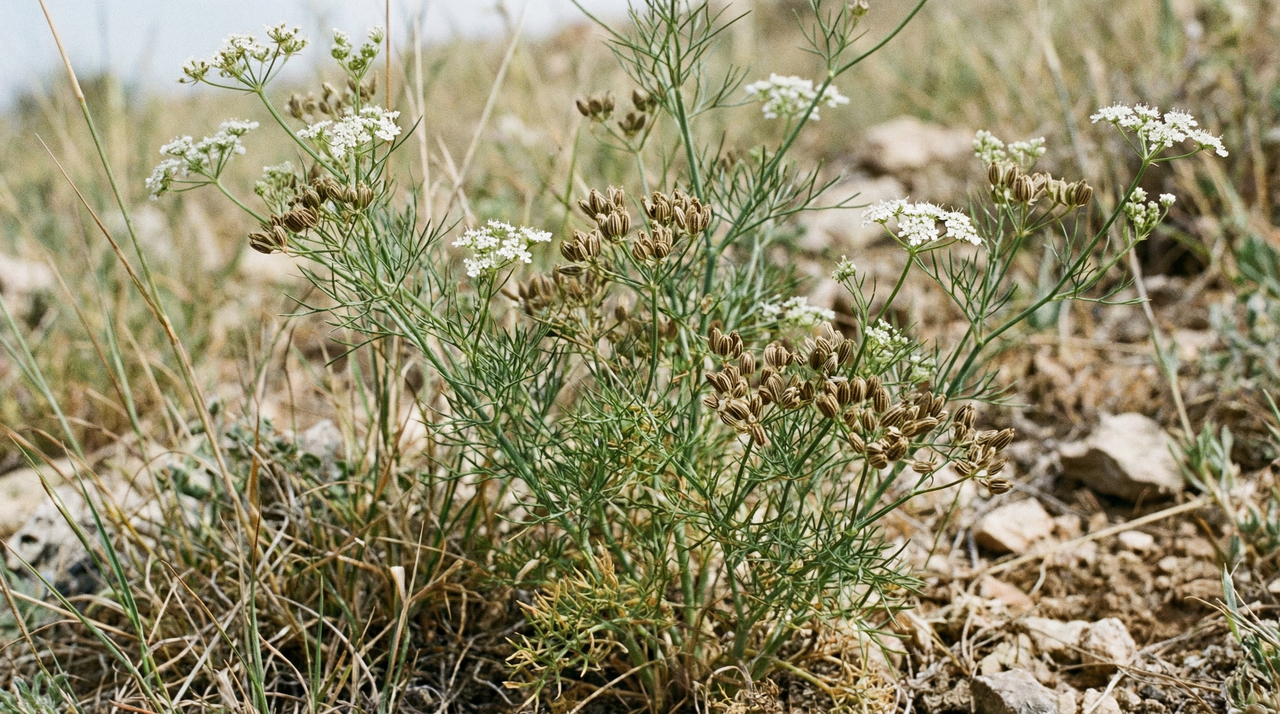
Nobody expects cumin to be difficult. It's a spice so common it practically disappears into the pantry, and yet the first time I tried to grow it, I planted it the way I'd plant almost anything else in my kitchen garden: spring soil, regular water, a little hope. What I harvested was a handful of pale, flavorless seeds that smelled faintly of disappointment. The problem wasn't my technique. It was that I'd completely misread what cumin actually is. This plant didn't evolve in a kitchen garden. It evolved in a semi-arid landscape baking under relentless sun, and it carries that origin in its genetics like a grudge.
Cumin seeds have been found in Egyptian tombs dating back over 4,000 years,[1] tucked alongside mummified pharaohs as a provision for the afterlife. Not because it was exotic or precious in the way saffron was, but because it was essential, reliable, woven into daily life so thoroughly that you'd want it wherever you were going next. That kind of staying power doesn't come from a pretty plant. It comes from a tough one. And growing it well means finally taking that toughness seriously.
Origin and History of Cumin (Cuminum cyminum)
Botanical Background
Cumin (Cuminum cyminum) is a frost-sensitive annual in the Apiaceae family, native to the eastern Mediterranean and Southwest Asia, with its natural range stretching across Egypt, Syria, Turkey, Iran, and North Africa.[2][3][1] It completes its entire life cycle in a single season, typically 90-130 days from sowing to harvest: seeds germinate in 7-14 days under warm conditions, the plant flowers roughly 50-60 days after planting, and seeds reach full maturity around day 120-130.[4][5] For a spice grower, that short window is one of cumin's quiet selling points. I've found it fits neatly between a late spring planting and an early-fall harvest, making it a surprisingly practical quick-turn crop in warm-season beds, comparable to coriander or dill in pace if not in temperament.
Visual Characteristics
In the garden, cumin is a slender, upright herb reaching 15-60 cm tall, with a taproot, branched striated stems, and finely divided feathery leaves 2-8 cm long.[3][6][7] Small white or pinkish-white flowers only 1-2 mm across form in compound umbels, eventually giving way to the oblong schizocarps we call seeds, 3-6 mm long and ribbed with 10 longitudinal ridges. While mature foliage is distinctive, the early leaves strongly resemble other Apiaceae crops, making identification tricky. The aroma is the real giveaway once the plants have any size at all; even before flowering, rubbing a leaf releases that unmistakable warm, earthy note.
The plant also shows considerable phenotypic flexibility depending on conditions. Heat shortens the cycle, drought reduces height and leaf area, and stress can actually concentrate essential-oil content in the seeds.[8][9] What you get in a cool, moist season is a taller, leafier plant; what you get in a hot, dry one is shorter and more pungent. The seeds I harvest after a long, hot summer always seem more fragrant under the mortar and pestle, which lines up with research on stress-induced volatile concentration.
Traditional and Cultural Uses
Cumin has been woven into human life for over 4,000 years. Seeds appear in the Ebers Papyrus around 1500 BCE, were used in Egyptian mummification to preserve bodies and repel evil, and are referenced in both the Old and New Testaments as items of tithe and religious offering.[10][1] There's something genuinely humbling about growing this plant and knowing that the same ridged little seed has been important to people across four millennia of civilization.
Greek and Roman writers including Theophrastus, Hippocrates, Dioscorides, and Pliny all documented its medicinal and culinary roles.[11][12] Cumin moved into India along Bronze Age trade routes, where it became central to Ayurvedic medicine and Vedic ritual, used for digestion and purification, and later reached the Americas through the Columbian Exchange.[13] In medieval Europe, seeds were carried as talismans for protection and fidelity, thought to prevent theft.[14] The carminative and digestive uses recognized across Ayurvedic, Unani, Chinese, and Middle Eastern traditions have since drawn serious scientific attention, explored further in the health benefits section.
Fun Facts and Cultivation Notes
India currently produces roughly 70% of the world's cumin, with global output around 700,000 metric tons annually.[15][15] That dominance traces directly back to ecology: cumin is deeply drought-tolerant with a taproot built for arid soils, thrives in well-drained sandy or loamy ground at pH 6.8-7.7, and performs best between 15-38 °C, though yields suffer above 35 °C.[16][17] I've had plants sail through dry spells without complaint once established, though I learned the hard way on heavier soil that poor drainage invites root rot far faster than drought does.
The tiny compound-umbel flowers attract bees, butterflies, and flies, making cumin a useful pollinator plant in a spice guild.[18] The seeds themselves contain 2-5% essential oil dominated by cuminaldehyde (15-45%), with γ-terpinene, p-cymene, and β-pinene rounding out the profile, and these compounds are responsible for both the characteristic aroma and the pharmacological activity you'll find discussed in the health section.[19] On the cultivar side, selections like RZ-19 and GC-4 are bred for yield, seed size, and wilt resistance.[20] I'd also flag one common source of confusion: I've grown both Cuminum cyminum and Nigella sativa side by side, and they are completely different plants. The leaf shapes, flower colors, and aromas are nothing alike once you know them, but the shared "black cumin" label trips up a lot of gardeners and shoppers.
Cumin Varieties and Sourcing
Notable Cumin Cultivars and Landraces
Cuminum cyminum is a single species with no formally recognized botanical subspecies or varieties.[21][22] What growers and farmers actually work with are landraces and cultivated selections shaped over millennia by regional climate, soil, and culinary preference rather than formal breeding programs.[20] So when a seed catalog lists three or four "types," you're really choosing between regionally adapted populations, not distinct species.
The practical differences matter quite a bit in both the garden and the kitchen. Indian selections like RZ-19 and GC-1 tend toward high yield and punchy, intense aroma; they're the backbone of bold spice blends and can yield 20-30% more than traditional landraces.[23][20] Iranian and Persian types run milder and larger-seeded, better suited to dishes where cumin is a background note rather than the star. Egyptian and Mediterranean landraces tend to be smaller-seeded and surprisingly aromatic in a more delicate way.[24][23] I've grown Indian and Iranian lots side by side and found the Indian types bolt faster and set seed with noticeably sharper fragrance in a long hot summer, while the Iranian material stayed compact longer and yielded a mellower, almost sweeter result.
For US growers in the arid Southwest, UC Cumin-1 is worth knowing about. It's a cultivar developed by USDA-ARS breeding programs specifically for hot, dry conditions in California and Arizona,[25][26] and it's a good example of targeted selection paying off where generic selections struggle.
Regarding the "black cumin" confusion mentioned earlier: a darker-seeded, slightly smoky and bitter form of Cuminum cyminum does exist, but the name is also applied to Nigella sativa and Bunium persicum, both of which are completely different genera with different flavor profiles and different uses.[27][1] Getting that wrong means growing the wrong plant. Read the Latin name on anything you buy.
Growing and Sourcing Cumin in the United States
Cumin is an introduced annual in the US with limited naturalized presence, mostly in California and Arizona where the climate most closely mirrors its native range.[3] As an annual crop, it can be grown across USDA Zones 5-10 as long as daytime temperatures stay in the 60-90°F range during its growing window,[28][29] though the Southwest is where it really performs. University extension trials in California and Texas have documented irrigated yields of 500-800 lbs/acre,[30][31] useful benchmarks if you're thinking beyond a kitchen patch.
For home gardeners, seeds are the realistic and frankly the better starting point. Live plants are rarely available commercially, and cumin establishes easily from direct sowing anyway. A $3-5 packet from Johnny's Selected Seeds, Baker Creek, or Seed Savers Exchange gets you started,[32][33] and certified organic options are widely available at similar prices.[34][35] Bulk seed runs $4-8 per pound with seasonal fluctuation.[36][37]
If you're ever tempted to source seed internationally in bulk, know that imported cumin requires phytosanitary certification, and the FDA maintains Import Alert 24-20 specifically targeting Salmonella contamination in cumin shipments, with regular testing for aflatoxins as well.[38][39] I stick to reputable domestic seed houses specifically because of those contamination risks. A small garden trial from a trusted supplier tells you everything you need to know before committing to more seed or more space.
Cumin Propagation and Planting Guide
Every cumin plant starts with a seed, and the more you know about that seed before you sow it, the better your results will be. I've started cumin from seed more times than I can count, and most of the failures I've witnessed (including a few of my own) come down to not understanding what you're actually working with.
Understanding Cumin Seeds: Morphology, Dormancy, and Viability
Cumin's seeds are technically mericarps, the two halves that split from the schizocarp fruit typical of the Apiaceae family. Each small, boat-shaped piece is 3-6 mm long, curved, light to dark brown with a grayish cast, and marked by 8-10 prominent longitudinal ridges running the length of the surface.[40][41] They look exactly like what you buy at the grocery store, because they are the same thing. That tactile familiarity is useful: if you pinch a seed between your fingers and it still smells distinctly of cumin, you're looking at a viable candidate.
The challenge is that cumin seeds exhibit physical dormancy caused by a hard, relatively impermeable seed coat.[42][43] Left untreated, germination can be slow and uneven. Breaking that dormancy is simple: scarification or a 24-hour pre-soak in room-temperature water does the job.[42][44] I soak mine every single time now. The difference in germination speed and uniformity is reliable enough that I've made it a non-negotiable step in my process.
Because cumin is largely self-pollinating, with only occasional insect cross-pollination, saved seed comes back true to type.[45][46] That's good news for seed savers. Store any leftover seed in a cool, dry place (think 5-10 °C, around 20-30% relative humidity) and it stays viable for 3-5 years; at room temperature, that window shrinks to 1-2 years because cumin's high oil content makes it susceptible to oxidation.[47][48][49] Direct seeding is by far the standard propagation method, for home growers and commercial operations alike.[50][51] Stem cuttings and tissue culture exist in research settings, but I've never had any reason to go that route in a home garden when a soaked seed germinates so readily.
Germination Timeline and Growing Cycle
Cumin is a 100-120 day crop from sowing to seed maturity, and that number should be your planning anchor.[52][53] In the US Southwest, most growers sow between February and April; cooler climates should expect the full cycle to stretch toward 150 days.[54][55]
Once soil temperature hits 20-30 °C, germination happens in 7-14 days.[52][56] Here's the thing nobody warns you about: those first true leaves look almost identical to young dill or carrot fronds. Feathery, threadlike, easy to confuse. I learned to label my rows the same morning I sow, because by the time the seedlings emerge I've completely forgotten which bed is which, and cumin unlabeled becomes a guessing game. Flowers appear around 45-50 days after sowing, and then it's anywhere from 30-75 more days to ripe seed depending on heat and moisture conditions.[57] Watch the plants, not the calendar. The internal milestones tell you more than a date ever will.
Soil, Site Selection, and Planting Technique
If I had to identify the single biggest predictor of cumin success or failure, it would be drainage. This plant evolved in calcareous, arid Mediterranean soils, and it shows: waterlogging invites Fusarium, Rhizoctonia, and Pythium root rots fast.[58][59] Aim for well-drained sandy loam or loamy soil with full sun, at least 6-8 hours daily, and a pH between 6.5-8.5 with a sweet spot of 7.0-7.5.[60][61]
I test my beds before planting cumin every time, because even a half-point drift outside that pH window noticeably affects seed set. One pH-related issue worth knowing about before you're staring at a harvest of hollow, light seeds: boron deficiency, common in low-organic-matter soils below 0.5 ppm boron, causes exactly that problem.[58] I caught it once in a sandy bed I hadn't amended well, and now a light foliar borax spray (0.1-0.2% solution) is part of my soil-test follow-up if levels look borderline. Prevention is far easier than disappointment at harvest.
For container growing, use a mix of roughly 50% potting soil, 30% coarse sand or perlite, and 20% compost, with pH adjusted to 6.8-7.5.[62] Cumin has a taproot, so aim for at least 20-30 cm of soil depth if you can manage it; 8-10 inches is a workable minimum.[63] Get the drainage and the pH right, and you'll find that established cumin is a fairly resilient plant once it's settled in.
Spacing, Density, and Establishment Tips
Cumin tops out at 20-50 cm with a spread of 30-45 cm, so it doesn't need a lot of room per plant, but it does need airflow.[64] Sow seeds 0.6-1.3 cm deep, space them 10-15 cm apart within the row, and keep rows 30-45 cm apart.[65][66] Those wider rows also leave room for intercropping if you're integrating cumin into a guild, which I often do; the compact, feathery habit tucks nicely at the feet of taller companions without competing for light.
Thin seedlings around 20-25 days after emergence.[66] Closer spacing yields more plants per square meter, but it traps humidity and drives up disease pressure, a trade-off that rarely pays off in high-moisture climates.[67][68] I've started sowing in small blocks rather than long rows, partly for weeding ease and partly because a block of mature cumin with its white umbels open actually looks beautiful interplanted with taller perennials along a food forest edge. Good spacing decisions pay off all the way through to harvest access and drying, so it's worth thinking through before the seeds go in the ground.
Cumin Care Guide: Growing Cuminum cyminum Successfully
Cumin lives on a tight schedule. You're working with a 90-to-130-day window between last frost and first fall cold snap, and every care decision you make has to keep that countdown in mind. Get the fundamentals right from day one and this compact little annual will reward you with aromatic seeds. Get distracted for a few weeks during flowering and you'll have a lot of feathery foliage and not much else.
Sunlight Requirements for Healthy Growth and Seed Production
Cumin wants full sun, 6-8 hours minimum daily.[56][69] Long-day conditions of 12-14 hours support the best vegetative development before the plant shifts to flowering.[70] In practice, Central Florida summers give me that photoperiod easily, but by mid-June I'm often providing light afternoon shade because intense heat becomes the bigger threat. More on that below.
Watering Needs and Drought Tolerance
Irrigation strategy changes at every growth stage. During germination, light watering every 2-3 days keeps the seedbed consistently moist without drowning those shallow roots. Once plants are established and growing vegetatively, roughly an inch to an inch and a half of water per week across 2-3 applications is the target. At flowering and seed fill, bump that up to closer to 1.5 inches per week.[71][66][72] Stress during that seed-development window can cut yields hard, so don't ease off when the flowers open. Drip irrigation is my preferred method since it keeps foliage dry and reduces fungal pressure. Cumin is moderately drought-tolerant once established, but "tolerant" doesn't mean "unbothered." A 3-inch straw mulch layer stretches my irrigation intervals noticeably in hot summers.
Feeding and Nutrient Management
Cumin is a moderate feeder, and that word "moderate" matters. The target soil nutrient range for good seed production is roughly 20-30 ppm available nitrogen, 15-25 ppm phosphorus, and 120-180 ppm potassium.[66][73][74] I apply a balanced organic amendment at sowing, then watch the plants for cues before any nitrogen top-dress at 20-45 days.[66][74] In my sandy Florida soils, older leaves will start yellowing before a calendar would ever tell me to act, and that's when I add a dilute liquid feed. Excess nitrogen is genuinely counterproductive here: it pushes lush vegetative growth, delays seed set, and reduces essential oil content in the final harvest.[66][75] The other visual symptoms worth knowing: purplish leaf discoloration suggests phosphorus shortfall, marginal yellowing with browning edges points to potassium, and interveinal chlorosis on young leaves is usually iron.[76] A soil test before planting saves a lot of guesswork.
Heat and Frost Tolerance
Cumin is comfortable in heat. Vegetative growth handles 35-40°C reasonably well, and germination is optimal between 20-30°C.[77][78] The problem arrives at flowering. Above 35°C, pollen sterility and flower abortion set in. Above 38°C, seeds develop smaller and oil content can drop by 20-50%.[77][78][79] I learned this the uncomfortable way. Now, the moment flower buds appear and the forecast is showing anything above 95°F, I put 40% shade cloth over the bed. Combined with consistent drip irrigation and mulch, this has saved more than one planting from a heat-induced yield collapse.
Frost Sensitivity and Cold Protection
There's no ambiguity here: cumin is killed by frost. Temperatures below 0°C will blacken young shoots overnight, and the flowers, buds, and developing fruits are even more vulnerable than mature foliage.[80][24][22][81] It needs 120-150 frost-free days to complete its cycle. I treat it exactly like basil in terms of cold sensitivity. Soil temperature needs to be solidly above 65°F before I sow; a cool spring several years ago taught me that a late cold snap doesn't just slow germination, it kills seedlings outright and resets the whole clock. In zones 5-8, that means being ruthlessly patient in spring and strategic about variety selection to fit the available warm-season window.
Pruning, Maintenance, and Seasonal Rhythm
Heavy pruning has no place in cumin's short life. What does help is a light pinch of the growing tips around 20-30 days after sowing to encourage bushier branching, and deadheading spent flower heads to redirect the plant's energy into seed fill, where it can improve yield by 10-15%.[82][56][69] Once flowering starts in earnest I leave the plants alone; cutting back at that stage shortens the already brief seed-development window. My straw mulch goes down early, usually right after thinning, at about 3 inches thick to suppress weeds and moderate soil temperature. In exposed or windy spots, light staking prevents the slender stems from lodging. At season's end I pull and destroy every plant rather than composting residues. The research on pathogen carryover is clear, and rotating the bed to a legume the following year keeps the soil biology cycling productively.[83] That end-of-season cleanup is not optional; it's part of the care routine.
Harvesting Cumin Seeds: Timing, Technique, and Maximizing Flavor
Cumin doesn't send you a calendar invite. It signals readiness through color and texture, and if you miss the window, the seeds shatter onto the soil before you've picked up your harvest knife. Learning to read those signals is what separates a satisfying yield from a frustrating one.
When to Harvest Cumin: Reading the Plant's Signals
The visual cues are what I trust most. Cumin is generally ready somewhere between 90 and 120 days after planting, when the umbels shift from green to brown or golden, the stems begin to yellow, and the seeds inside feel hard between your fingers.[84][54][85] In U.S. growing regions, that window typically falls between August and October.[54] Heat accelerates the whole cycle, so counting days alone will mislead you; walk your rows daily once stems start yellowing.
What I watch for is a specific color transition in the umbels, the shift from sage-green to a toasted, papery brown. You only learn to read that shift through repetition. The critical caution: don't wait for the plant to dry completely on its feet. At full dryness, seeds shatter and fall. Cut when 50 to 80 percent of umbels have browned,[84] which in practice means harvesting when the plant still looks slightly unfinished. My early harvests taught me the hard way; I lost a frustrating amount to shattering by waiting for that last 20 percent to catch up.
How to Harvest and Process Cumin for Best Results
For home gardeners, the method is straightforward: pull entire plants by hand or cut at the base with a sharp knife, preferably in the morning when seeds are less likely to shake loose.[85][86] Bundle the cut plants and hang them or spread them in thin layers somewhere dry and airy to finish curing, then thresh immediately to knock seeds free from the chaff.[87][88] A simple rubbing over a mesh screen, or some light flailing inside a pillowcase, gets the job done at small scale.
Clean the threshed seeds by winnowing or sieving to remove debris, immature seeds, and chaff.[87][89] Then dry the cleaned seeds down to 8 to 10 percent moisture, spread in thin layers under shade or with gentle artificial heat kept below 45°C.[87][90][91] I learned that temperature ceiling the unpleasant way; a batch dried too hot came out smelling flat and faintly baked, missing the sharp volatility that makes cumin worth growing yourself.
Cumin Yield, Flavor Profile, and Storage
Expect roughly one gram of seeds per plant under typical home garden conditions, with a range of about 0.5 to 2 grams depending on growing conditions.[92] That's modest, and worth acknowledging before you plant a single row for your whole year's supply. But the flavor payoff is disproportionate to the yield. Properly dried seeds carry a warm, earthy, nutty pungency with a slight bitterness and a lingering heat, all driven by cuminaldehyde, a compound whose intensity shifts with cultivar and growing conditions.[93][27] Your soil, your climate, and your harvest timing all shape the final flavor in the seed.[94][95] Home-grown cumin I've dried and ground myself is noticeably more vivid than anything from a grocery shelf; the difference is real and worth the small space it takes in the garden.
For storage, bring moisture below 7 percent and keep seeds in airtight containers in a cool, dark spot. At 10 to 15°C, properly dried seeds stay viable for up to five years; colder storage around 0 to 5°C extends viability further.[96][97] Grind only what you'll use in a week or two. The aroma starts fading the moment the seed coat cracks open.
Cumin Preparation, Culinary Uses, and Traditional Applications
Flavor Profile and How Preparation Transforms Cumin
If you've only ever used cumin powder shaken from a grocery store jar, you haven't fully met this spice yet. Raw whole seeds carry a mild, grassy warmth with a distinct citrusy edge, pleasant but restrained. Toast them in a dry skillet until they start to shift and hop around, though, and the kitchen fills with something else entirely: deep, nutty, almost smoky warmth with the bitterness dropping away and a caramelized sweetness rising up in its place.[98][99] That shift happens because heat triggers Maillard reactions and releases cuminaldehyde along with γ-terpinene and α-pinene, the volatile compounds responsible for cumin's signature character.[98]
Ground cumin distributes flavor more evenly and hits the nose immediately with sharp pungency, but it can taste slightly harsher than seeds you toast and grind yourself.[98] Infusing whole seeds in warm oil or a brine mellows everything out, yielding an integrated, rounded flavor without raw bite. I've experimented with all of these at home, and my honest take is that dry roasting your own seeds and grinding them fresh produces something cumin powder from a bottle simply cannot match.
Across global cuisines, cumin shows up in almost every form. It's foundational in Indian garam masala, essential in Mexican chili and tacos, and woven through North African tagines and couscous.[100] Its natural pairings share its earthy warmth and let it anchor a dish rather than just season it, including:
- garlic
- onion
- coriander
- chili peppers
- turmeric
- tomatoes
Traditional Culinary and Medicinal Preparations
Cumin has been used as a carminative remedy for bloating and sluggish digestion for thousands of years, showing up in Ayurvedic formulas, ancient Greek texts, and Egyptian medical papyri long before the word "spice" entered English. Traditional preparations are straightforward: grinding seeds into powder for use in pastes and spice blends, steeping them in hot water as a simple tea, or infusing them into oils. A cup of cumin tea sipped after a heavy meal is one of those old remedies that still makes a lot of practical sense. That said, cumin is not FDA-approved to treat or prevent any condition, and the compelling research on its metabolic and digestive effects is still working its way through clinical trials.
Safety, Look-Alikes, and Ethical Considerations
One thing I tell every gardener who grows in the Apiaceae family: wait for the aroma before you trust an identification. Cumin's relatives include some dangerously toxic plants, and the feathery seedlings can be difficult to tell apart by sight alone. I label every umbel-bearing row in my garden, not because I'm forgetful, but because the family earns that respect. Proper identification at harvest is non-negotiable.
Allergy risk is real, particularly for people sensitive to other Apiaceae plants like celery or fennel. Concentrated essential oil is far more potent than culinary use warrants and can cause toxicity if misapplied. Pregnancy is a context where caution is warranted, given cumin's traditional use as an emmenagogue in concentrated forms. For everyday cooking, these risks are minimal, but they're worth knowing.
On sourcing: I buy organic, tested cumin when I'm not using my own harvest, because commercial bulk cumin has documented issues with heavy-metal contamination and adulteration. Choosing fair-trade or direct-sourced cumin also matters; wild populations face overharvesting pressure, and the supply chain for cheap imported spice carries real labor concerns. Spending a little more for a trusted source improves both the flavor in your kitchen and the conditions for the people who grew it.
Cumin Health Benefits and Medicinal Uses
Cumin has been trusted as a medicinal spice for thousands of years, but what I find fascinating is how thoroughly modern chemistry is catching up to that intuition. The benefits aren't vague or folkloric; they trace back to a specific and well-characterized set of compounds, and that makes the plant unusually interesting to study alongside growing it.
Key Phytochemicals and Bioactive Compounds in Cumin
The essential oil fraction of cumin seeds makes up roughly 2 to 5 percent of their weight by mass, and within that fraction, cuminaldehyde typically dominates at anywhere from 20 to 50 percent depending on where and how the seeds were grown.[101][102][103] This observation lines up perfectly with agronomic research: cuminaldehyde content peaks when seeds are harvested at full maturity from loamy soils rich in nitrogen and phosphorus, and it varies significantly by geography and extraction method.[104][105]
Cuminaldehyde doesn't work alone. Cumin seeds also carry a dense array of secondary metabolites: flavonoids including quercetin, kaempferol, and luteolin; phenolic acids like ferulic, caffeic, and rosmarinic; terpenoids, saponins, tannins, and the coumarin umbelliferone, among others.[101][106] Together, cuminaldehyde, p-cymene, γ-terpinene, and those flavonoids are responsible for most of cumin's documented antioxidant activity, its antimicrobial reach against organisms like E. coli and S. aureus, and its anti-inflammatory effects through COX-2 inhibition.[102][107][108] These same compounds also function ecologically as plant defenses, which is a detail I love: the chemistry that protects cumin from insects and competing weeds in the field is the same chemistry that researchers are studying in the clinic.
Cumin in Medicinal Research and Clinical Studies
The mechanistic picture starts at the cellular level. Cumin extracts suppress inflammatory signaling through NF-κB and COX-2 inhibition, and on the antioxidant side, they activate the Nrf2 pathway, which upregulates protective enzymes including HO-1 and NQO1.[109][110][111][112] Preclinical work extends this into a wide range of actions: antimicrobial activity against bacteria and fungi through membrane disruption, analgesic effects comparable to standard drugs via opioid and TRPV1 pathways, diuretic activity without major electrolyte imbalance, accelerated wound healing through collagen synthesis, and gastroprotective effects via prostaglandin modulation.[113][114][115] Most of these effects come from animal or in-vitro studies, so I hold them as promising signals rather than proven clinical outcomes.
The human evidence is where things get genuinely compelling. Randomized controlled trials show that cumin seed powder can significantly improve glycemic control in type-2 diabetes, reducing fasting blood glucose and HbA1c through α-glucosidase inhibition, lower LDL cholesterol and triglycerides through a mechanism similar to statins (HMG-CoA reductase inhibition), and modestly reduce systolic blood pressure in hypertensive patients.[116][117][118][119] I mention this to readers who come in having seen social media posts promising dramatic results, because the effects in these trials are real but modest, and they were achieved with culinary-scale amounts rather than megadose supplements. That measured, consistent effect across multiple studies is actually more meaningful to me than a single dramatic outlier. Neuroprotective signals also exist, with cumin flavonoids showing acetylcholinesterase inhibition in vitro and some adaptogenic effects possibly involving GABA modulation, but these remain preliminary.[120][109]
Nutritional Profile of Cumin Seeds
Cumin is a spice, not a staple food, so the nutrition numbers need context. Per 100 grams, the seeds deliver 375 calories, nearly 18 grams of protein, 10.5 grams of dietary fiber, 66 milligrams of iron, 931 milligrams of calcium, and impressive levels of magnesium, potassium, and B-vitamins.[121] Nobody eats 100 grams of cumin in a sitting, but the point is that even a teaspoon added to a pot of beans or a stew contributes meaningful iron alongside its antioxidant vitamins E and C, beta-carotene, and the flavonoids already introduced above.[121][122] As someone who designs edible landscapes with nutrient density in mind, I often point out that for vegetarians or anyone with lower iron stores, building cumin into daily cooking isn't just a flavor choice; it's a quiet dietary contribution that adds up across the week.
How you handle the seeds in the kitchen matters more than many people realize. Roasting at 150 to 180°C for 10 to 15 minutes can increase total phenolic content by 10 to 20 percent, though some heat-sensitive B-vitamins will decline.[123] Grinding improves bioavailability but accelerates oxidation; antioxidant capacity can drop 15 to 30 percent within 30 days at room temperature. Once I started storing whole seeds in small opaque jars and grinding only what I need, both the aroma and the staying power improved noticeably in my pantry. Airtight, opaque containers below 25°C extend optimal shelf life to around six months.[123]
Safety Considerations and Potential Side Effects
Cumin is Generally Recognized as Safe by both the FDA and EFSA for typical culinary use, which the research generally places at 0.5 to 4 grams of seed per day.[124][125] A teaspoon in curry is fine for almost everyone. Where things change is at concentrated medicinal doses or with cumin essential oil, and that distinction matters a lot.
Excessive intake can cause mild gastrointestinal upset. People with sensitivities to the Apiaceae family (carrots, celery, parsley) should be aware of moderate allergenic cross-reactivity.[126] At therapeutic or supplemental doses, cumin may potentiate hypoglycemic drugs and anticoagulants, so anyone on those medications should check with their doctor before adding concentrated cumin to their regimen.[127] Pregnancy is a specific caution: at therapeutic levels, cumin may stimulate the uterus, and medicinal quantities should be avoided during lactation as well.[128] The essential oil requires particular care; high doses have shown hepatotoxicity in animal models, and topical use should be diluted to 1 to 2 percent, with internal use limited to 1 to 2 drops in a carrier.[126]
Always know your Apiaceae. Cumin shares its family with some genuinely dangerous plants, including poison hemlock and water hemlock.[129] If you're foraging or growing from seed you didn't source yourself, positive identification is non-negotiable. And if you have pets, keep the essential oil out of reach; concentrated cumin oil can cause gastrointestinal distress or vomiting if ingested in large amounts.[130] None of this should discourage you from cooking with cumin freely. It just means the same respect you'd give any potent plant should apply here when stepping beyond the kitchen.
Cumin Pests and Diseases
Cumin's essential oils, rich in cuminaldehyde and gamma-terpinene, give it a genuine chemical defense against many insects and pathogens.[131][132] That's real, but it's not enough on its own. The same plant that smells wonderful to us remains genuinely vulnerable to a long list of fungal opportunists and sap-sucking insects, especially when growing conditions drift outside its comfort zone.
Common Fungal and Bacterial Diseases of Cumin
The fungal roster is long, with documented threats including:
- powdery mildew
- Fusarium wilt
- damping-off
- downy mildew
- Alternaria leaf blight
- rust
With powdery mildew, I've learned to check lower leaves first during humid spells. The white coating appears there before it travels up, and removing those affected leaves early, combined with better airflow through thinning, has stopped spread more reliably than waiting and reaching for a fungicide. Resistant cultivars help considerably: GC-3 and RZ-19 carry Fusarium wilt resistance, while SZ-1 and GC-4 show solid powdery mildew tolerance.[140][141][133] That said, field resistance ratings run 20–50%, so these cultivars are part of a system, not a guarantee.
Major Insect Pests and Nematodes
Fungal diseases tend to be the bigger yield robbers, but insect pressure can be just as discouraging. Aphids (Myzus persicae, Aphis gossypii), thrips, whiteflies, leaf miners, cutworms, and the cumin borer all target this crop, with the borer capable of causing up to 40% yield loss by attacking flowers and developing seeds directly.[142][143][144] The very compounds that make cumin smell so good are working constantly to discourage many of these insects, but drought stress, high temperatures, and dense plantings all undermine that defense.[143][8]
Cumin seedlings look deceptively like tiny parsley or carrot tops in their first two weeks, and because the root system is shallow, early-season pest damage can be severe before you even notice something is wrong. I lost a full row once to cutworms I'd mistaken for slugs on nearby crops. Now I scout the base of seedlings every few days through the first month. Cultivars like GC-4, RZT-1, and SZ-16 show improved tolerance to key insect pests, which is another reason GC-4 sits at the top of my sourcing list.[145][146]
Integrated Pest and Disease Management for Cumin
The foundation is cultural: a two-to-three-year crop rotation, resistant seed selection, well-drained sandy loam at the right pH, and consistent field scouting with economic threshold monitoring before any intervention.[136][147] Following the soil and irrigation guidelines already discussed dramatically lowers risk on its own. For biological and low-input tactics, Trichoderma seed treatments or metalaxyl address damping-off and Fusarium before they start, copper-based sprays or neem handle foliar diseases and aphid pressure, and drip irrigation keeps canopy humidity down in arid conditions.[135][148][149]
I avoid broad-spectrum insecticides on cumin entirely because they kill the ladybirds that keep aphid populations in check. Targeted neem or insecticidal soap at the first sign of infestation has always been sufficient in my garden, and the beneficial insect community recovers faster for it. After harvest, hermetic storage or careful fumigation protects the dried seeds from the cumin seed weevil.[150] The honest takeaway: in my experience, consistent scouting and smart spacing pay bigger dividends than any single spray, and ongoing breeding programs stacking resistance genes are making the cultivar choices easier every year.
Cumin in Permaculture Design
Cumin doesn't demand much real estate in a food forest, and that's a feature, not a limitation. At 15-50 cm tall with a slender, branching habit and finely divided foliage, it slots naturally into the herbaceous layer without shading neighbors or muscling into space meant for larger guild members.[151][3] What it contributes is disproportionate to its size, and once I started thinking of it as a support species rather than a main crop, it became one of my go-to annuals for filling gaps in a guild design.
Cumin's Forest Layer and Companion Guilds
Below ground, cumin's taproot aerates compacted or sandy soils and, when turned in at season's end, contributes phosphorus and iron back into the system as a dynamic accumulator.[152] Do not expect a single annual planting to transform your soil chemistry overnight. But over successive seasons I've noticed improved tilth in sandy beds where I've been turning cumin residue in consistently, and I think the taproot deserves more credit than it usually gets in herb gardening conversations.
Above ground, the companion planting picture is solid. Cumin grows well alongside carrots, onions, legumes, tomatoes, and marigolds, with reported benefits ranging from pest deterrence to subtle flavor enhancement in neighboring crops.[153][154] One pairing I'd steer clear of: fennel and dill. I learned this the hard way early on when cross-pollination between family members left me with off-flavored seeds that were baffling until I traced the problem back to a poorly spaced planting plan. Apiaceae relatives should be kept well apart in the garden layout, full stop.[155] The good news is cumin poses zero invasive risk in North American gardens; it's native to the eastern Mediterranean and South Asia, doesn't naturalize readily here, and won't escape a guild and become a management headache.[3][156]
Ecosystem Functions: Pollinator Support and Soil Benefits
The umbel flower form is the ecological superpower here. Those small white to pink-tinged blooms arranged in compound umbels produce nectar that's perfectly accessible to short-tongued insects, and the plant relies primarily on insect cross-pollination to set seed.[3][157] Honeybees are the dominant visitors, but bumblebees, solitary bees, and hoverflies all show up reliably when the plant is in full bloom.[158] When I've had cumin flowering between marigold and basil rows during peak June heat, the bee activity on those umbels is genuinely impressive -- it becomes one of the most visited spots in the entire garden. Field studies on cumin pollination biology confirm this: maintaining adequate pollinator density during bloom can push seed yield up 20-30%.[158][159]
Pollinator activity peaks under conditions that cumin already prefers: 25-30°C, 40-60% relative humidity, and at least 6-8 hours of full sun.[160][82] On humid days when the air sits heavy above 70%, I've watched bee activity on those same plants drop off noticeably -- which is one more reason cumin doesn't belong in a coastal or high-humidity guild regardless of whether it technically survives there. To maximize both harvest and habitat value, position cumin near existing pollinator corridors, keep flowering borders nearby, and avoid any pesticide applications during bloom.[161] If you're in an area with low wild bee populations, even a single nearby hive can make a visible difference in seed set.[162] Beyond pollinators, the taproot improves soil aeration and supports microbial activity, contributing to guild health in arid beds where biological life can otherwise be sparse.[163]
Climate Preferences and Suitable Zones for Cumin
Frost kills cumin. That's the non-negotiable design constraint that shapes everything else. It's typically grown as a warm-season annual in USDA zones 5-10, and in zones 9-11 it may persist as a short-lived perennial where winters stay mild, but any dip to 0°C ends it outright.[64][3] In my zone 9B garden, cumin sails through mild winters just fine, but the moment a real cold front moves through I lose the plants. I treat it strictly as a warm-season annual now and start fresh each spring rather than gambling on overwintering.
Optimal growth happens between 20-30°C, with germination best achieved at 20-25°C; prolonged heat above 35°C can compromise seed quality, so timing the crop to mature before the harshest summer stretch matters in hot climates.[164][165] The soil and water picture is equally specific: full sun for at least 6-8 hours, well-drained sandy loam at pH 6.5-8.5, and annual rainfall in the 200-500 mm range.[166][23] Excessive rainfall above 635 mm tips conditions toward disease rather than productivity, which is why cumin thrives in Arizona, New Mexico, California, and Texas but struggles in wetter regions regardless of temperature.[167][168] The plant dominates spice production out of South Asia for good reason -- those arid, sun-drenched conditions are exactly what it evolved to thrive in.[15] For permaculture designers, the clearest path to success is building guilds that replicate those origins: dry air, sharp drainage, reflected heat, and full exposure. Trying to coax cumin into a humid food forest or shaded polyculture usually ends in disappointment, and in my experience, that disappointment is entirely avoidable.
The Seedling I Almost Pulled Thinking It Was a Weed
My first season growing cumin, I nearly yanked the whole row in week two because I was convinced I'd gotten a bad seed batch. The seedlings looked like threadbare carrot tops, and nothing about them suggested the warm, smoky payoff waiting 110 days out. I'm glad I left them. There's something quietly humbling about a plant that asks for so little, looks like nothing for so long, and then hands you a harvest that makes every jar of grocery store cumin feel like a pale imitation.
Sources 168
- Cumin | Britannica ↩
- Cuminum cyminum - Kew Plants of the World Online ↩
- Cuminum cyminum - USDA PLANTS Database ↩
- Missouri Botanical Garden Plant Finder ↩
- Cumin Production Guidelines ↩
- Royal Horticultural Society - Cumin ↩
- Cuminum cyminum L. - Kew Science Plants of the World Online ↩
- USDA PLANTS Database - Cuminum cyminum ↩
- Kew Gardens - Cuminum cyminum fact sheet ↩
- Cumin in Ancient Egypt ↩
- Spices in Ayurveda: Historical Perspectives ↩
- Pliny's Natural History on Culinary Herbs ↩
- Cultural Significance of Cumin in India ↩
- Cuminum cyminum: A review on nature, processing, products and its applications - PMC ↩
- Cumin Production Statistics ↩
- Drought Tolerance in Cumin ↩
- Physiological Responses of Cumin to Water Stress ↩
- Chemical Composition and Antioxidant Properties of Cumin Essential Oil ↩
- Cumin (Cuminum cyminum L.): A Review of Chemical Composition and Ethnopharmacology ↩
- Cumin Cultivation: Varieties and Yields in India ↩
- Integrated Taxonomic Information System ↩
- USDA PLANTS Database ↩
- Cumin Production and Varieties - FAO ↩
- Cumin - Wikipedia ↩
- USDA ARS - Cumin Research ↩
- Cumin Production in California ↩
- Chemical Composition of Essential Oils of Cuminum cyminum L. from Different Origins ↩
- USDA Plant Hardiness Zone Map ↩
- Growing Cumin in the Home Garden ↩
- Cumin Production in California ↩
- Cumin Production in the United States ↩
- Cumin Seeds ↩
- Cumin Growing Guide ↩
- Organic Cumin Seeds ↩
- Heirloom Cumin Seeds, Organic ↩
- Buy Cumin Seeds for Planting ↩
- Cumin Seed Prices - USDA Agricultural Marketing Service ↩
- Importing Plant Material into the United States ↩
- Import Alerts ↩
- Cumin - Cuminum cyminum ↩
- Seed Morphology of Apiaceae Family ↩
- Seed Dormancy and Germination in Cumin: Breaking Physical Dormancy ↩
- Fruit and Seed Morphology of Apiaceae: Cuminum cyminum ↩
- Germination and Seedling Emergence of Cumin (Cuminum cyminum L.) ↩
- Cumin (Cuminum cyminum L.) Production and Breeding ↩
- Genetic Diversity and Pollination in Cuminum cyminum ↩
- Seed Storage Behaviour: Seed Storage Behaviours ↩
- Seed Storage of Spice Crops: Cumin (Cuminum cyminum L.) ↩
- USDA Seed Storage Guidelines ↩
- Growing Guide for Cuminum cyminum ↩
- Cumin Production Guidelines ↩
- Cumin Production ↩
- Cumin (Cuminum cyminum L.) ↩
- Cumin Production in Arizona ↩
- Growing Cumin in California ↩
- Cumin (Cuminum cyminum L.) Production Technology ↩
- Phenology and Growth Stages of Cumin ↩
- Soil Management for Cumin ↩
- Cumin (Cuminum cyminum L.) Production Guidelines ↩
- Cumin Cultivation Practices - FAO ↩
- USDA Plant Guide for Cumin ↩
- Growing Cumin Plants: How To Grow And Harvest Cumin Seeds ↩
- USDA PLANTS Database: Cuminum cyminum ↩
- Cumin Plant Profile - Missouri Botanical Garden ↩
- Cumin Production Guidelines - USDA ↩
- Cumin Cultivation Practices - ICAR ↩
- Agronomy of Cumin Crop ↩
- Spice Crops: Planting and Spacing Guidelines ↩
- Cumin Production Guide ↩
- Cuminum cyminum L. (Cumin) - Cultivation ↩
- Cumin Cultivation Practices ↩
- Cumin (Cuminum cyminum) - Missouri Botanical Garden ↩
- ICAR - Nutrient Management in Cumin ↩
- Cumin Production Guidelines - ICAR ↩
- Nutrient Management in Cumin ↩
- Visual Identification of Nutrient Deficiencies in Cumin (Cuminum cyminum L.) ↩
- Heat Stress Effects on Cumin (Cuminum cyminum L.) Growth and Yield ↩
- Temperature Tolerance in Spice Crops: A Review ↩
- Cumin Production Guide ↩
- Cumin Production Guide ↩
- Cumin (Cuminum cyminum) - Missouri Botanical Garden ↩
- Cumin Cultivation Guide ↩
- Cumin Production Guide ↩
- Cumin Production Guide ↩
- Cumin Production Guide ↩
- Harvesting and Post-Harvest Handling of Cumin ↩
- Post-Harvest Management of Spices ↩
- Cumin Crop Profile ↩
- Seed Cleaning Techniques for Umbelliferous Crops ↩
- Drying and Storage of Cumin Seeds ↩
- Harvesting and Storing Herbs ↩
- Royal Horticultural Society (RHS) Gardening ↩
- Cumin (Cuminum cyminum L.) and its Flavor Chemistry ↩
- Varietal Differences in Cumin Essential Oil Profiles ↩
- Missouri Botanical Garden Plant Finder ↩
- Seed Storage of Horticultural Crops ↩
- USDA Seed Storage Handbook ↩
- Royal Horticultural Society (RHS) - Cuminum cyminum ↩
- Missouri Botanical Garden - Plant Finder: Cuminum cyminum ↩
- Cumin in the Kitchen - University of Minnesota Extension ↩
- Phytochemical Constituents and Pharmacological Activities of Cuminum cyminum L.: A Review ↩
- Chemical Composition and Antioxidant Activity of Cuminum cyminum Essential Oil ↩
- Chemical Composition and Antioxidant Properties of Essential Oil of Cuminum cyminum L. ↩
- Influence of Soil Type and Harvest Time on Cumin Essential Oil Yield ↩
- Variation in Cuminaldehyde Content in Cuminum cyminum from Various Regions ↩
- Phenolic Compounds in Cuminum cyminum L. Seeds from Different Regions of Iran ↩
- Antimicrobial Properties of Cumin Essential Oil Components ↩
- Anti-Inflammatory Flavonoids in Cuminum cyminum ↩
- Pharmacological Review of Cuminum cyminum: A Commonly Used Traditional Indian Spice ↩
- Anti-inflammatory and Antioxidant Activities of Cuminum cyminum Seeds ↩
- Cuminaldehyde Inhibits Inflammatory Responses via NF-κB Pathway ↩
- Antioxidant Effects of Cumin via Nrf2 Activation ↩
- Antimicrobial Activity of Cuminum cyminum Essential Oil ↩
- Analgesic and Anti-inflammatory Effects of Cumin Extract ↩
- Gastroprotective Mechanisms of Cuminum cyminum ↩
- The effect of cumin seed powder on blood glucose and lipid profile in type 2 diabetic patients: A randomized double-blind placebo-controlled clinical trial ↩
- Clinical Effects of Cuminum cyminum in Type 2 Diabetes ↩
- Effects of Cuminum cyminum L. on metabolic syndrome components: A systematic review and meta-analysis ↩
- Antihypertensive effect of Cuminum cyminum seed extract in hypertensive patients: A pilot study ↩
- Flavonoids from Cumin and Acetylcholinesterase Inhibition ↩
- USDA FoodData Central - Spices, cumin seed ↩
- Phenolic Compounds in Cumin Seeds ↩
- Journal of Agricultural and Food Chemistry: Effects of Processing on Cumin Nutrients ↩
- FDA GRAS Status for Cumin ↩
- EFSA Opinion on Cumin Safety ↩
- Cumin (Cuminum cyminum L.) from Traditional Uses to Potential Health Benefits ↩
- Cuminum cyminum: A Comprehensive Review on Botany, Phytochemistry, Pharmacology, and Application in Metabolic Syndrome ↩
- Cuminum cyminum: A Review on Ethnopharmacology, Phytochemistry and Therapeutic Uses ↩
- Poison Hemlock Identification - USDA Forest Service ↩
- Pet Poisoning from Spices ↩
- Insecticidal Activity of Cuminum cyminum Essential Oil Against Stored-Product Pests ↩
- Insect Repellent Properties of Cumin Essential Oil ↩
- Cumin Diseases and Management ↩
- Diseases of Cumin ↩
- Cumin - Diseases and Management ↩
- Cumin Production Guidelines - Texas A&M AgriLife Extension ↩
- Cumin Cultivation Practices and Disease Management ↩
- Diseases of Cumin and Their Management ↩
- Release of Disease-Resistant Cumin Varieties in India ↩
- Breeding for Fusarium Wilt Resistance in Cumin ↩
- Powdery Mildew Management in Cumin Cultivars ↩
- Insect Pests of Cumin ↩
- CABI Compendium: Cuminum cyminum ↩
- Pests and Diseases of Cumin ↩
- Evaluation of Cumin Genotypes Against Major Insect Pests ↩
- ICAR-DMAPR Cumin Varieties ↩
- Integrated Pest Management for Spices - UC IPM ↩
- Integrated Pest Management in Cumin ↩
- Fusarium Root Rot of Cumin in Arizona ↩
- Cumin Cultivation and Pest Control Strategies ↩
- Missouri Botanical Garden - Cuminum cyminum ↩
- Cumin in Permaculture and Companion Planting ↩
- Cumin Plant Profile - University of Minnesota Extension ↩
- Permaculture Plants: Cumin - Permaculture Research Institute ↩
- Companion Planting for Herbs - Royal Horticultural Society ↩
- Cuminum cyminum - Missouri Botanical Garden ↩
- Pollination Biology of Apiaceae ↩
- Pollination Biology of Cumin (Cuminum cyminum L.) ↩
- Role of Honeybees in Cumin Seed Production ↩
- Bee Pollination Temperature Preferences ↩
- Cumin Production Guide ↩
- Insect Pollinators of Cumin ↩
- Ecological Roles of Herbs in Mediterranean Agroecosystems ↩
- Cumin (Cuminum cyminum L.) - A Review ↩
- Cumin (Cuminum cyminum L.) Production Guidelines ↩
- Growing Cumin in Texas - Texas A&M AgriLife Extension ↩
- Cumin Cultivation Practices ↩
- Missouri Botanical Garden Plant Finder - Cuminum cyminum ↩