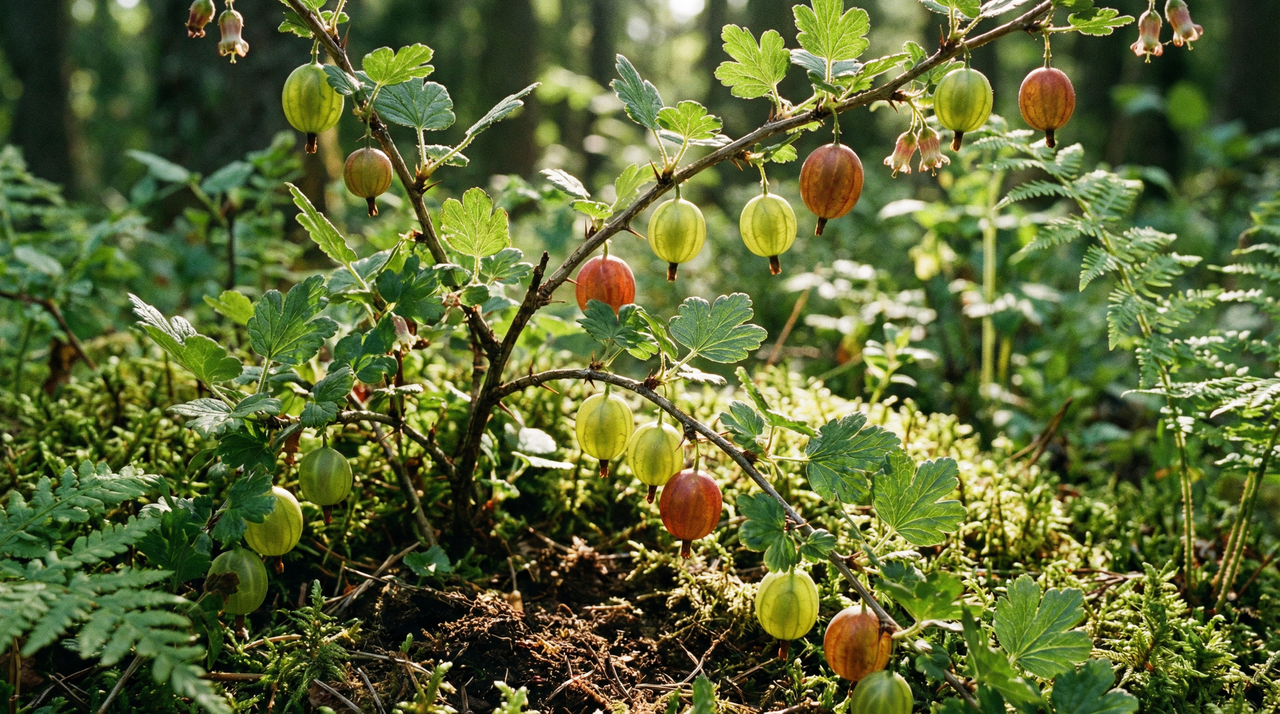
Nobody banned a fruit in America because it was too dangerous to eat. But in 1911, the federal government made it illegal to grow gooseberries and currants across much of the United States, and the ban stuck in many states for decades.[1] The reason was white pine blister rust, a fungal disease that uses Ribes as an alternate host and threatened the timber industry's most valuable trees. Entire orchards were pulled up. A cottage industry of gooseberry breeding, preserving, and eating, one that had crossed the Atlantic with European settlers and was quietly thriving, got stopped cold. I find this history genuinely fascinating, not because prohibition makes a plant more romantic, but because it explains something I hear constantly from American gardeners: "I didn't even know you could grow those here."
You can. And once you do, it's hard to understand how they ever fell off the radar. There's nothing quite like a sun-warmed gooseberry eaten straight off the bush, that initial pucker softening into something almost floral, a little tropical, nothing like the underripe green spheres most people associate with the name. Currants have their own case to make, tart and vivid, practically bursting with the kind of flavor that makes commercial berries taste like a polite suggestion. These are plants with centuries of human devotion behind them, and they've earned it in the most honest way possible: by being genuinely useful, in the garden, in the kitchen, and in the landscape.
Origin and History of Gooseberry (Ribes uva-crispa)
Botanical Background
The gooseberry is one of those plants that feels genuinely ancient, and in a sense it is. Ribes uva-crispa, a deciduous shrub in the Grossulariaceae family, is native to a sweeping arc of cool, moist habitat stretching from the British Isles and Scandinavia south to the Mediterranean and east to the Caucasus Mountains and western Himalayas.[2][3] It evolved in the understory and woodland edges of that broad temperate range, which tells you almost everything you need to know about siting it in a modern garden.
From a design standpoint, its longevity is remarkable. A typical gooseberry lives 10 to 30 years, and with good drainage, consistent pruning, and decent disease management it can push 50 years or more.[4][5] I've seen 15-year-old bushes that still outproduce younger shrubs planted beside them. It's polycarpic, meaning it fruits year after year without exhausting itself in a single reproductive effort.[6] Cuttings and grafts typically begin fruiting in the second or third year, while seed-grown plants ask for 3 to 5 years of patience.[5][7] Once established and pruned each late winter, harvests typically peak in July and keep coming for decades.[8][9]
Visual Characteristics
In the garden, gooseberry is compact and assertive. The shrub reaches roughly 1 to 1.5 meters in height and spread, forming a rounded, bushy mound with stems that arch outward as the plant matures.[10][4] Those stems carry sharp axillary spines, typically in clusters of one to three at the base of each leaf petiole, measuring anywhere from 5 to 20 mm.[10] I think of the thorns as its natural security system, and after years designing edible hedges, I've come to genuinely appreciate them. Planted along a property edge, a mature gooseberry is as effective as any fence at discouraging deer, while simultaneously offering songbirds a safe nesting site.
The leaves are palmately lobed, bright green through summer, hairy on the underside, and they turn a clean yellow in autumn.[11] Spring flowers arrive in April and May: small, nodding, greenish-yellow bells sometimes flushed with red or purple, dangling in short racemes of one to three.[4] They're easy to miss, but bumblebees don't miss them. Then come the berries. Cultivated fruits range from 1.3 to 3.8 cm across and come in green, yellow, red, pink, purple, and occasionally white or orange, with many shifting color as they ripen on the bush.[12] The wild ancestors are smaller and more intensely flavored; the large dessert types bred in 18th-century England are showier. Both have their place, depending on whether you're feeding people or the ecosystem.
Traditional and Cultural Uses
Gooseberry's relationship with humans goes back at least to Roman times. Pliny the Elder referenced similar fruits around 77 AD, and by the 13th through 15th centuries, European monasteries had taken on the serious work of domesticating the plant for both culinary and medicinal purposes.[13] Systematic breeding for larger, sweeter fruit followed in 16th- to 18th-century England, France, and the Low Countries, eventually producing the full-flavored dessert cultivars that still dominate European gardens. Gooseberries became a culinary staple across the continent.[13]
Medicinal traditions ran parallel to the culinary ones. Before vitamin C had a name, gooseberries were prescribed against scurvy. Leaf infusions served as diuretics for kidney stones, gout, and rheumatism. Fruits and leaves were applied as poultices for wounds and inflammation, and the cooling, fever-reducing qualities of the fresh fruit were widely appreciated in folk medicine. These are historical uses; the modern pharmacological story gets its own treatment in the health benefits section.
European settlers carried the plant to North America in the 17th century, where it filled roles as food, hedge, and medicine and was widely grown by the 18th century.[14] Then white pine blister rust arrived, and North American commercial production collapsed. It's a bittersweet chapter, though modern resistant varieties have largely rewritten that story for home growers. Colonial exchanges also brought the plant to Australia and New Zealand in the 19th century. Today, Ribes uva-crispa is assessed as Least Concern on the IUCN Red List, with stable wild populations across its native range.[15]
Fun Facts
Somewhere in European rural tradition, gooseberry bushes planted near the home were thought to ward off evil, and their branches appeared in folk love charms. Whether or not you subscribe to that, there's something satisfying about a thorny, fruit-laden shrub guarding the garden gate. The same spines that kept livestock out of medieval kitchen gardens make modern gooseberry an ideal candidate for wildlife corridors in permaculture designs; I've tucked them into hedgerow guilds specifically because small birds nest and shelter in them safely.
The fruit's history as a winemaking ingredient is long and legitimate; gooseberry wine was a serious home production staple across Europe, prized for its tart base. The color diversity alone across cultivated varieties is staggering, with more than 1,500 named cultivars representing centuries of selection for flavor, size, and resilience. And that North American blister rust story? It wiped out entire commercial industries, yet the plant persisted in home gardens and on roadsides, quietly waiting for growers to come back to it. They are.
Currant and Gooseberry Varieties and Where to Buy Them
Centuries of deliberate cultivation have turned Ribes uva-crispa from a thorny woodland shrub into a sprawling family of cultivars differentiated by nearly every trait you can think of: fruit color and size, flavor intensity, growth habit, thorniness, and resistance to the diseases that most commonly take gooseberries down.[16][17] That diversity is genuinely useful, because the "right" cultivar for your garden depends on your climate, your disease pressure, your kitchen goals, and honestly, whether you want to be pulling thorns out of your hands every harvest.
Popular Gooseberry Cultivars: Characteristics and Selection Guide
As a rough organizing principle, I find it helpful to think by fruit color, because color tends to track with other traits pretty reliably. Green-fruited types generally offer the highest yields and the strongest disease resistance.[18] 'Invicta' is the classic example: an English cultivar that produces abundantly, shrugs off mildew better than most, and makes excellent jam even if it's not a berry you'd pop fresh by the handful.[5] Red cultivars tend toward sweeter, more dessert-friendly flavor. 'Hinnonmäki Red', developed in Finland, is mildew-resistant and genuinely pleasant eaten fresh off the bush.[7] 'Poorman' ripens early and produces sweet, dark red berries that I've seen convert self-described gooseberry skeptics on the spot. If thorns are a dealbreaker, 'Captivator' and 'Chester' are both nearly thornless; 'Captivator' also carries resistance to white pine blister rust, which matters enormously depending on where you garden.[7] After growing both thorny and thornless types, I strongly prefer the latter for anything near foot traffic or in a family garden. Harvest becomes something you look forward to instead of something you brace for.
I've observed mildew pressure firsthand during humid summers, and choosing resistant cultivars like 'Invicta' or 'Hinnonmäki Red' genuinely reduced my need for intervention compared to susceptible types I trialed earlier.[5] University extension programs are your best resource for region-specific recommendations; what performs beautifully in Minnesota may sulk in the mid-Atlantic.[19]
Sourcing Gooseberry Plants: Nurseries, Seeds, Regulations, and Pricing
The most commonly available cultivars at US nurseries are 'Pixwell', 'Invicta', 'Captivator', 'Poorman', and 'Hinnonmäki Red', with spring being the main shipping window for bare-root stock.[7] For a broader selection, One Green World and Raintree Nursery are worth bookmarking; Burnt Ridge and Fedco are reliable for bare-root stock at honest prices. I've had my best establishment rates ordering bare-root plants in dormancy rather than potted plants arriving in active growth during warm weather. Seeds are available through Baker Creek and similar sources, but seedlings won't come true to cultivar, so I'd reserve that route for experimenting rather than building a productive patch.
Pricing runs roughly $5 to $15 for bare-root and $8 to $25 or more for potted plants, with named cultivars like 'Pixwell' typically falling around $12 to $18 and 'Invicta' closer to $15 to $25 depending on the vendor and plant size.
Before you order anything, check your state regulations. Many states restrict or outright prohibit Ribes cultivation because these plants serve as alternate hosts for white pine blister rust, a serious fungal disease of five-needled pines.[20] Restricted states include Washington, Oregon, Idaho, Montana, Maine, Massachusetts, Michigan, Minnesota, New York, Pennsylvania, Vermont, Wisconsin, and others, with rules ranging from full bans to proximity restrictions within 1,000 feet of white pines.[21][22][23] If you live in a restricted state, don't risk it. The rules exist to protect white pine forests, and there are often permitted resistant cultivars or alternative Ribes species that achieve the same landscape function. Your local extension office will know the current rules and which cultivars are approved.[24]
Gooseberry Propagation and Planting (Ribes uva-crispa)
Getting a new gooseberry or currant established starts well before a plant goes in the ground. The method you choose to multiply your Ribes shapes everything that follows: how true-to-type the plant will be, how long before you're actually picking fruit, and how much trouble you'll have in the first few seasons. I've tried most of the options over the years, and my honest take is that cuttings are where most home gardeners should put their energy.
Propagation Methods for Gooseberries
Gooseberries can be propagated from softwood or hardwood cuttings, by layering, by grafting, or from seed, but not all of those options make equal sense for a home grower who wants plants that reliably perform like the parent.[5][23][25] My go-to is hardwood cuttings taken during winter dormancy, anywhere from October through February. You stick them directly in prepared soil, they need almost no attention, and they root at 70-80% success rates.[5][26] When I pull one gently in early spring and feel that satisfying resistance, and then see plump white roots when I ease it out of the ground, I know it's worked. A cutting that comes out clean with no roots at the base usually tells the story without any further digging.
If you prefer to work in summer, softwood cuttings taken in June or July are also effective. Cut 4-6 inch pieces with 2-3 nodes, treat the base with IBA rooting hormone at 1000-3000 ppm, and set them in a well-draining peat-perlite mix kept at 65-75°F under high humidity. With that setup, expect 60-80% success in 4-8 weeks.[5][23][27] Layering in spring is even simpler if you already have a mature bush. Bend a low stem to the ground, pin it, and wait; success rates run 80-100% with almost nothing required from you.[28] Grafting onto compatible Ribes rootstocks using whip-and-tongue or cleft methods gives 70-90% success and can improve vigor and disease resistance, but it's a technique most home growers don't need to pursue.[29][30]
Seed is worth understanding even if you're unlikely to use it. Gooseberry seeds are tiny orthodox seeds, 1-2 mm long, that need 60-90 days of cold stratification at 34-41°F before they'll germinate at all, and then only at cool temperatures of 40-60°F.[31][32] Germination rates are low (20-40%), and because Ribes crosses freely, seedlings are rarely true to type.[28][33] Seeds do store well, dry at -18°C to -20°C for up to 15 years,[34] which is useful if you're breeding or conserving genetics, but for a productive garden bush, stick to cuttings. On new plantings, I've had good results choosing disease-resistant cultivars like 'Captivator' after watching European types struggle through humid summers; selecting resistant stock from the start means fewer headaches once the bush is in the ground.[7]
Soil and Site Requirements
Gooseberries have a shallow, fibrous root system concentrated in the top 12-24 inches of soil, which means drainage is non-negotiable.[5][35] Heavy clay or compacted ground holds water against those shallow roots and invites Phytophthora root rot, which can kill a young plant fast.[5][4][7] I always dig in a generous amount of compost before planting any Ribes. The ideal is a fertile, loamy or sandy-loam soil with 4-6% organic matter; if you're working with clay, amend with grit and compost or consider a raised bed. Aim for at least 18-24 inches of workable soil depth, and mulch 2-4 inches deep at planting to hold surface moisture and moderate root-zone temperature.[5][35]
I now carry an inexpensive soil test kit in my kit whenever I'm siting new Ribes, because I once lost a batch of young plants to undetected alkalinity in an old garden bed. The plants yellowed within weeks, and I couldn't figure out why until I finally tested. Gooseberries want a pH of 6.0-7.0, with peak performance usually between 6.0 and 6.5. Above 7.0, iron chlorosis becomes a real problem; below 5.5, manganese and aluminum can reach toxic levels.[5][23][4] Use elemental sulfur to lower pH or lime to raise it, always based on test results rather than guesswork.
For light, gooseberries are adaptable. In cooler zones (3-5), full sun produces the best crops. In warmer zones (7-8), afternoon shade protects foliage from scorch and keeps fruit from sunscalding.[5][4] That dappled light preference echoes their native woodland-edge habitat and is part of why they fit so naturally into the shrub layer of a food forest guild.
Spacing, Support and Planting Technique
Mature gooseberry bushes reach 3-6 feet tall and wide, so the spacing decision matters more than it might seem at planting time when everything looks small.[36] For most home gardens, 4-6 feet between plants with rows spaced 6-8 feet apart gives enough airflow to keep mildew pressure down; in fertile, irrigated soil or warmer climates where plants put on more growth, lean toward the wider end of that range.[5][23] I've seen people plant gooseberries closer than they'd plant currants and then spend years regretting it when the bushes merge and airflow disappears; that extra foot of spacing is where disease prevention actually begins.
Training method changes the math. Open-center bushes need the full 4-6 feet between plants, but cordons can be set 2-3 feet apart along a wall or fence.[5][37] Whatever form you're growing, put in a stake or a single-wire trellis at planting. I learned this from watching unprepared gooseberry branches split under a heavy crop in year three; installing support at the start has prevented that problem in every mature bush I've grown since. Proper spacing also leaves room for understory companions without crowding roots, which the permaculture_design section covers in more depth.
Timeline to First Harvest
Seed-grown gooseberries can take 3-5 years from germination to first fruit.[23][5] My first attempt at seed-grown plants tested my patience for exactly that long before I saw a real crop; that experience is why I now almost exclusively use cuttings or purchase grafted stock for clients. Plants grown from cuttings or grafted rootstocks typically produce light crops by year two and reliable yields by year three or four.[23][5] Don't push for heavy pruning or heavy fertilizing in year one; let the root system establish first, and give the plant an inch of water weekly during that first season.[7] The wait is genuinely worth it. Well-sited, properly spaced bushes started from good cutting stock have been reliable producers in my gardens for well over a decade, and that long productive lifespan is what makes the upfront care in propagation and planting such a sound investment.
Currant and Gooseberry Care Guide
Gooseberries are not demanding plants. I've grown them alongside much fussier shrubs and they reliably produce with relatively little intervention, but "low maintenance" doesn't mean "no attention." Getting the basics right, fertility, frost protection, heat management, and water, makes the difference between a bush that limps along and one that earns its space for decades.
Feeding and Fertility Needs
Gooseberries are moderate feeders that respond well to consistent but restrained fertility.[5][23] I use a simple home soil-test kit every three years and adjust only what the results indicate; targeting a pH of 6.0 to 6.8 with good organic matter content is usually enough to keep plants productive without triggering the rank vegetative growth that invites disease.[38][39] A light application of balanced 10-10-10 in early spring before bud break, just one to two ounces per plant, handles most situations.[5][40] Skip fertilizer entirely in year one and let the roots establish first.
Knowing what deficiency symptoms look like saves a lot of guesswork.
- Yellowing on older leaves usually signals nitrogen
- Purplish foliage with poor vigor points to phosphorus
- Marginal leaf scorch with uneven ripening suggests potassium
Frost Tolerance and Cold Protection
Few fruiting shrubs match gooseberry's cold hardiness. Ribes uva-crispa handles winter lows to around -40 °F when fully dormant, making it reliable across USDA zones 3 through 8.[7][43][44] I've never lost a mature gooseberry to winter cold, but I have watched flower buds blacken after a late-spring frost, which is where the real vulnerability lives. Buds, open flowers, and young fruitlets can be damaged at temperatures between -10 and -20 °F, and the damage shows up as shriveled buds, blackened shoot tips, or split bark.[45][7]
Site selection is the most powerful tool here; avoid frost pockets where cold air pools. Beyond that, two to three inches of wood-chip mulch applied each fall protects roots even when snow cover is thin, and a row cover thrown over bushes during a late-bloom cold snap can save the entire fruit crop.[46][47] The late-summer nitrogen rule comes back here too: soft growth heading into fall is far more frost-susceptible than well-hardened wood.
Heat Tolerance and Heat-Stress Management
Gooseberries evolved in cool, moist European woodlands and genuinely prefer summer temperatures between 59 and 77 °F.[5][48] They'll tolerate brief highs into the upper 80s if nights cool off, but sustained heat shows up fast: leaf scorch, wilting, fruit sunscald, flower abortion, and lower sugar content are all signs the plant is struggling.[49][32] Flowering and fruit-set are especially vulnerable windows.
In warmer zones I've found that repositioning a planting to receive morning sun with afternoon shade from a taller shrub guild made a noticeable difference in fruit set during a hot summer. Cultivars like 'Invicta' and 'Hinnonmäki Red' handle heat and humidity better than many others, especially when paired with consistent moisture and 30 to 50 percent shade cloth during heat events.[5][50] Deep mulch and drip irrigation supplying one to two inches per week round out the toolkit for warm-climate growers.
Sunlight Requirements
Six to eight hours of direct sun produces the best yields and flavor, with full sun being the clear preference in cool climates.[5][23] Drop below four hours and you'll see etiolated growth, pale leaves, and poor fruit set. The other extreme causes its own problems: too much sun combined with high heat leads to leaf scorch and fruit sunscald.[51] The good news is that the mulch and afternoon-shade strategies that manage heat also address excess sun, so you're often solving both problems with the same adjustment.
Water Needs
Once established, gooseberries have moderate drought tolerance, but they'll drop leaves or abort fruit under prolonged stress as a self-preservation response.[52] I water deeply once a week during dry spells rather than lightly every day, and consistent mulch has done more for evening out soil moisture than any irrigation tweak. Shallow, frequent watering tends to keep roots near the surface where they're most vulnerable to heat and drought; deep, infrequent watering encourages the plant to root down.
Seasonal Rhythm and Chill Requirements
Gooseberries need 800 to 1,500 chilling hours below 45 °F to break dormancy reliably, with around 1,000 to 1,200 hours producing the most uniform bud break, typically in March or April in temperate regions.[53][54] For most gardeners in zones 5 through 7, that requirement is met automatically. It's in zone 8 and warmer where chill hours become something worth tracking, and why low-chill cultivar selection matters if you're gardening at the warm edge of the range. Understanding this annual clock helps everything else fall into place: you prune while the plant is fully dormant, feed as buds swell, protect flowers from late frosts, and manage heat as summer arrives.
When and How to Harvest Currants and Gooseberries
From bloom to ripe berry runs roughly 60 to 90 days, depending on variety and how warm your summer gets, with most cultivars hitting their window somewhere between late June and July.[55][23] I mark bloom time on my garden calendar every spring precisely because the countdown matters. Miss the window on a warm year and you'll find berries that have tipped from sweet-tart into soft and insipid before you knew it.
Timing and Ripeness Cues
The practical ripeness checklist I've settled on after growing several Ribes cultivars goes like this: full size, a color shift toward translucent yellow, pink, or red depending on variety, and a texture that gives slightly under thumb pressure without collapsing.[56][57] That translucency is the single most reliable visual tell I know. But visual cues alone can mislead, especially in a warm, humid summer when color changes fast and sugar hasn't fully followed. So I've learned to do a taste-test walk every three days once the berries start shifting, because there's no substitute for putting one in your mouth.
Fruits ripen progressively from the top of the bush downward, which means multiple passes every three to five days rather than one big harvest.[7] I pick in the early morning while the berries are still cool; the skins are firmer then and bruise less in the bowl. For jam or pie, pull them green and firm, when acidity is at its peak and the higher organic acid content means you'll need less added pectin.[57] For fresh eating, wait for the full color change and that sugar-acid balance the research puts at roughly 8 to 12 percent Brix.[56] The ripeness stage you target is really a decision about culinary destination.
Flavor, Texture, and Cultivar Differences
A green gooseberry carries up to 2 to 3 percent organic acids and only around 5 to 7 percent soluble solids, which is why it puckers you into next week.[58] As the berry ripens, sugars climb toward 10 to 15 percent and acidity softens, producing that layered tart-sweet balance that makes them so useful as a currant or gooseberry in European kitchens.[59] The aroma shifts too, from the sharply green, herbal, almost grassy volatiles of an underripe berry toward something fresher and more fruity as those C6 compounds mellow.[60] Texture goes from fuzz-covered and firm to slightly translucent with a softer skin that still has some structure, with juicy flesh and the small hard seeds you feel rather than see.[61]
That lingering sour finish people complain about? I've come to appreciate it. I've learned not to judge a gooseberry by the first bite; the sharp, persistent aftertaste is exactly what makes them so useful in the kitchen once you start cooking with them.[62] Cultivar choice matters here more than most people realize. Green types are high-acid and sharp, my go-to for pie. Red types like 'Hinnonmaki Red' hit a balanced sugar-acid sweet spot that I find genuinely pleasant straight off the bush. Yellow types are the mildest of the three, with a honeyed quality that surprises first-time tasters.[5] Knowing which you're growing tells you almost everything about when to pick it and what to do with it.
Currant and Gooseberry Preparation and Uses
Culinary Applications and Flavor Profiles
Ripe gooseberry fruit is safe to eat, full stop.[11][63] Unripe berries are another matter -- the high acidity and tannins can cause mild stomach upset, which is exactly why I tell people to taste before they harvest a full bowlful. The flowers are also edible and lovely scattered over a salad, but stems and roots are off the table entirely. The plant's usable map is actually pretty simple once you know it.
What I love about cooking with gooseberries is how much they behave like rhubarb: raw, they pucker your whole face, but apply a little heat and sugar and they transform into something bright and intensely flavored. I always reach for slightly underripe fruit for jam because the pectin is higher and the set is firmer, with a tang that fully ripe berries can't quite match.[8][9][64] That fuzzy skin and the slightly gritty seeds disappear entirely once cooked, though they're noticeable enough raw that most people prefer eating the fully ripe dessert types fresh.
The European culinary tradition here is genuinely deep. Gooseberry fool, gooseberry pie, chutneys alongside mackerel or pork, wine, and preserves of every description have centuries of kitchen history behind them.[5][65][7] Red currant jelly alongside lamb, black currant jam stirred into yogurt or spread on toast -- these aren't trendy; they're generational. The fruit also freezes exceptionally well, which makes it easy to stockpile a summer harvest for winter baking.
Traditional Medicinal Preparations
Herbalists have long prepared gooseberry and currant as infusions and simple decoctions, drawing on the same vitamin C and polyphenol content that made them scurvy remedies in pre-refrigeration Europe. These are folk preparations rather than standardized pharmaceutical formulas -- no Commission E monograph exists for Ribes uva-crispa -- so I treat them as food-forward wellness habits rather than clinical medicine. For any leaf-based tea, I cook the leaves first; the research on oxalic acid is clear enough that I'm not willing to serve raw leaf preparations to friends with kidney stones or anyone prone to kidney issues.[66][67] Honestly, a simple berry infusion is more pleasant anyway and carries far less risk.
Non-Food and Garden Uses
Winter prunings from gooseberries feed the garden right back. Shredded, they break down into decent mulch, and the thorny branches that would be annoying to handle whole become harmless once run through a chipper. That permaculture loop -- prune, chip, mulch, feed the soil -- is one of my favorite things about maintaining these shrubs. Historically, the bark yielded a yellow dye and the pliable young stems supplied basket weavers across rural Europe, which gives you a sense of how thoroughly communities once used every part of a plant they grew.
Currant and Gooseberry Health Benefits
Traditional Medicinal Uses in European Folk Medicine
Long before anyone was running DPPH assays or measuring COX-2 inhibition, European herbalists were already putting gooseberries to work. Historically, Ribes uva-crispa was used to treat scurvy, fevers, rheumatism, diarrhea, and urinary tract infections, with leaves brewed into infusions for their anti-inflammatory and depurative effects.[68][69][70] The scurvy connection makes immediate sense when you look at vitamin C levels: the fruit can contain anywhere from 100 to 400 mg per 100g fresh weight, with some reports running as high as 500 mg/100g.[71][72] That's a remarkable range for a backyard shrub.
I value traditional uses as one kind of evidence, and modern pharmacology as another. Most current research on gooseberry comes from in vitro and animal studies, with very few large-scale human clinical trials.[73][74] That doesn't invalidate centuries of careful folk observation, but it does mean I'd encourage people to enjoy gooseberries as a time-tested food and gentle tonic while the clinical picture fills in over time.
Modern Research on Antioxidant, Anti-inflammatory, and Other Effects
The strongest mechanistic research clusters around antioxidant and anti-inflammatory activity. Gooseberry extracts scavenge free radicals, boost endogenous antioxidant enzymes, and activate the Nrf2 pathway,[68][75] while the plant's polyphenols (20-30 mg/g dry weight in leaves) suppress pro-inflammatory cytokines and inhibit both COX-2 and the NF-κB pathway.[76][72] Those mechanisms map fairly neatly onto the traditional anti-rheumatic and digestive uses, which is the kind of convergence I find genuinely satisfying. Antimicrobial studies add another layer, with extracts showing activity against Staphylococcus aureus and Candida albicans through disruption of microbial membranes.[68] Animal studies also point toward analgesic effects, diuretic action comparable to furosemide, promoted wound healing via collagen synthesis, antidiabetic potential through α-glucosidase inhibition, and early-stage anticancer signals through caspase-mediated apoptosis.[68][77] Promising, all of it, and all still waiting on human trials.
Key Phytochemicals and Bioactive Compounds
The fruit's phenolic profile reads like a who's-who of plant bioactives. Flavonoids (quercetin, kaempferol, myricetin), anthocyanins (cyanidin-3-rutinoside, delphinidin-3-rutinoside), phenolic acids (gallic, chlorogenic, ellagic), and tannins all contribute to a total phenolic range of 200-600 mg GAE/100g fresh weight, running higher in unripe berries.[78][79][80] The rest of the plant contributes its own chemistry: leaves bring chlorogenic acid, rutin, and quercetin glycosides; seeds carry gamma-linolenic acid and linoleic acid (up to 70% of seed oil fatty acids); bark features proanthocyanidins and ellagic acid with documented antimicrobial properties.[81][82][83]
What I find especially useful from a design standpoint is how strongly cultivar selection and growing conditions shape these numbers. 'Invicta' can show 20-30% higher total phenolics than 'Hinnonmaki Red' or 'Whinham's Industry,' and fruit harvested during the July-August peak, or after periods of high light stress, tends to accumulate more anthocyanins.[84][85][86] In my experience, you can actually taste it. Berries ripening in a sunnier spot have a deeper, more complex tartness that correlates with those visibly richer colors, and that flavor intensity is a real-world proxy for what the phytochemical data is telling us. Those same compounds scavenge free radicals with DPPH activity up to 80%, inhibit COX-2 and Candida, and signal pollinators into the bargain.[87][88]
Nutritional Profile of Gooseberries
A standard cup serving (about 150g) of raw gooseberries delivers 44 calories per 100g, roughly 10g of carbohydrates, 4.3g of dietary fiber, and minimal fat.[89][90] Vitamin C is the standout at 27.7 mg per 100g (31% DV from the raw fruit, far more in high-C cultivars), with meaningful contributions of vitamin K (12% DV), vitamin A, and several B vitamins including folate and pantothenic acid.[90] On the mineral side, potassium leads at 198 mg per 100g, alongside calcium, magnesium, phosphorus, and a solid dose of manganese.[91][92]
The fiber content connects directly back to those traditional digestive uses, and the vitamin C alone goes a long way toward daily goals. When I'm making a quick batch of gooseberry preserves and keeping the cook time short, I find the berries hold their color and brightness well, which is a reasonable sign that you're preserving a good portion of those heat-sensitive compounds alongside the flavor.
Safety Considerations and Contraindications
Ripe gooseberry fruit is safe, widely consumed, and classified as safe in culinary amounts during pregnancy and lactation by the American Herbal Products Association.[93][63] That said, the leaves, stems, and unripe green fruit are a different matter. Oxalic acid concentrations in those parts run 2-5% dry weight versus 0.5-2% in ripe fruit, and the tannin load is high enough to cause gastrointestinal distress.[94][95] Anyone prone to kidney stones should be cautious even with ripe fruit given the moderate oxalate content. The spines and bristly fruit hairs are a mechanical irritant for sensitive skin, nothing more sinister than that, but worth wearing gloves during a heavy harvest.[96]
Gooseberry contains no cyanogenic glycosides or highly toxic alkaloids, and allergic reactions are rare, though documented in people with sensitivities to other Ribes species or salicylates.[95][97] No drug interactions are firmly documented, but the vitamin K content raises a theoretical concern for anyone on warfarin, and the anthocyanins could theoretically affect CYP enzyme metabolism of certain drugs.[98][99] Eat 1-2 cups of ripe fruit daily as part of a normal diet and you're in well-trodden territory. If you're foraging, know that white baneberry (Actaea pachypoda) and bittersweet nightshade (Solanum dulcamara) can fool an inattentive eye in North American woodlands.[100]
Currant and Gooseberry Pests and Diseases
Every plant has its nemeses, and Ribes has a few persistent ones. Most of the serious threats are manageable once you understand what you're dealing with, and cultivar selection alone can take a lot of the drama out of growing these fruits. The bad news is that neglect catches up fast, especially in humid climates where disease pressure can escalate from "early white fuzz" to defoliated branches in a single wet fortnight.
Major Diseases and Their Management
Powdery mildew (Podosphaera mors-uvae) is the headline threat for gooseberries specifically, showing up as that characteristic white powdery coating on young leaves, shoot tips, and eventually the fruit itself.[101][102] I learned this the hard way with a pair of older European-type bushes that I planted in my first food forest. I thought shade tolerance meant I could tuck them into a tighter spot. Within two seasons both were chronically mildewed and eventually pulled. I've grown 'Invicta' and 'Hinnonmaki Red' ever since, and I haven't reached for a fungicide once.[5][102] Modern breeding programs, including long-running work by USDA-ARS, have deliberately targeted mildew and blister rust resistance, and the results are genuinely useful for home growers.[103]
Beyond mildew, the fungal roster includes rust species causing orange spotting and defoliation, anthracnose producing sunken fruit lesions, and canker leading to branch dieback; viral infections such as Gooseberry latent virus add mosaic symptoms to the mix.[101] White pine blister rust (Cronartium ribicola) is a separate and more serious concern for anyone planting Ribes near five-needled pines; some states still maintain quarantine restrictions, and I always check with my local extension office before siting any new planting near white pines.[104][23] On the cultural side, proper spacing around 1.5 meters, annual pruning to open the center of the bush, avoiding overhead irrigation, and thorough fall cleanup of infected debris all reduce spore overwintering significantly.[101][105] In humid summers I've found that opening the canopy by 30 to 40 percent makes a measurable difference. Preventive sulfur-based fungicides applied in early spring can help when disease pressure is high, but they work best as one tool within a broader program, not a standalone fix.[101][23]
Key Insect Pests and Natural Defenses
The three insects I watch for most closely are gooseberry sawfly (Nematus ribesii), gooseberry mite (Cecidophyopsis ribis), and aphids. Sawfly larvae can skeletonize a bush with alarming speed; gooseberry mite causes the swollen, distorted "big bud" galls that also vector viruses; aphids curl leaves and similarly pass along pathogens.[106][107][108] As harvest approaches, spotted-wing drosophila and gooseberry fruitworm join the party, while two-spotted spider mites tend to flare during hot, dry stretches.[106][109]
Ribes uva-crispa isn't entirely passive about all this. It produces phenolics, tannins, and other allelochemicals that deter feeding and disrupt insect digestion, and its trichomes and thorns physically trap or deter smaller pests.[110][111] Cultivars like 'Invicta' and 'Hinnonmaki Red' show improved tolerance to aphids and sawflies under moderate pressure, though no cultivar handles spotted-wing drosophila particularly well.[5][112] Think of resistance as a spectrum, not a guarantee.
Integrated Pest Management Strategies
The most effective approach stacks resistant cultivars, good cultural practices, and biological allies before reaching for any spray. Lady beetles, lacewings, parasitic wasps, and predatory mites all provide meaningful pressure on aphids and mites when the planting is diverse and not over-treated.[113][114] Targeted narrow-spectrum options like insecticidal soap, horticultural oil, or spinosad are available when monitoring shows genuine need, but the emphasis belongs on monitoring first. Birds, especially bullfinches, will strip buds and fruit without hesitation, so physical netting once fruit begins to color is straightforward and reliable.[115] For spotted-wing drosophila, harvesting every other day during peak ripeness is the most practical defense I know. The healthiest Ribes plantings I've seen share a few common traits: diversity in the surrounding guild, good airflow through the center, and a grower who's comfortable with low-level pest presence rather than treating every aphid colony as a crisis.
Currant and Gooseberry in Permaculture Design
Walk through any old European hedgerow or the edge of a woodland and you'll find gooseberry doing what it does best: filling that awkward middle layer with spiny, productive density. Ribes uva-crispa is a deciduous shrub that tops out around 3-5 feet at maturity, forming thorny thickets that occupy the shrub layer in its native understories, hedgerows, and forest edges across Europe and western Asia.[11][4] That ecology is the whole design argument in one sentence. It already knows how to live in partial shade under taller canopy, tolerate cold winters, and hold its ground in a competitive planting. We're not forcing it into a role; we're placing it where it already evolved to thrive.
Forest Layer Placement and Guild Companions
In a temperate food forest, gooseberry slots naturally into the shrub layer beneath fruit trees, tolerating partial shade to full sun and preferring moist, well-drained soil with a slightly acidic to neutral pH around 5.5-7.0.[11][116] A well-placed, mature bush can yield 4-10 pounds of berries annually, and while it's partially self-fertile, cross-pollinating multiple varieties can push yields up by 20-50%.[117][118] For that reason alone, I rarely plant just one.
The guild I keep coming back to pairs gooseberries with comfrey at the drip line, clover or strawberries as ground cover, and borage or yarrow nearby as insectary plants.[119] The comfrey does double duty: its deep roots mine potassium and phosphorus, and the chop-and-drop mulch visibly improves vigor in my plantings over a season or two. Gooseberry itself forms vesicular-arbuscular mycorrhizal associations that help it pull phosphorus and water from the soil,[120][121] so keeping the ground around it mulched and biologically active matters more than feeding it heavily.
One lesson I learned early: don't crowd these shrubs hoping the canopy will sort itself out. Gooseberry is genuinely susceptible to mildew in humid or stagnant conditions, and tight planting is the fastest way to guarantee it.[117] My first attempt with a close-planted hedgerow turned into an annual mildew battle. Now I give each bush enough space to breathe and treat the pruned-out wood as a resource: it goes straight to the chop-and-drop pile or into compost. The thorny biomass also discourages larger browsers in ways I've come to genuinely appreciate.
Climate Suitability and Hardiness Zones
Gooseberry is cold-hardy to a degree that surprises most people. It's rated for USDA zones 3-8 and can tolerate dormant temperatures down to around -40°F (-40°C),[5][122] which means cold-climate gardeners who struggle with many fruit crops can grow this one confidently. The vulnerability isn't winter cold, it's late spring frosts that catch the buds once they've broken dormancy. I've watched a promising early-spring flush get knocked back by an April freeze, and now I keep row covers nearby during that window when the weather is unpredictable.
It also needs a proper chilling period, roughly 800-1,500 hours below 7°C, to fruit well.[23] That requirement is a feature in cold climates but a real barrier in warmer ones. Optimal growth happens in the cool temperate range of 59-75°F (15-24°C), and heat above 86°F (30°C) degrades both fruit quality and yield noticeably.[5][123] I've sited them on northeast-facing slopes and under light canopy in warmer microclimates to buffer against summer heat, and they've held on reasonably well, but the Pacific Northwest and similar cool-summer regions are where this plant genuinely excels.
For moisture, it prefers 30-50 inches of annual rainfall distributed evenly, with ideal humidity around 40-60%.[5][23] In marginal or exposed sites, windbreaks, mulching, and sheltered microclimates are worth the extra effort at establishment.[4]
Ecosystem Functions and Pollination Ecology
What I love about gooseberry flowers is how easy it is to underestimate them. They're small, greenish-brown, and frankly not much to look at. But in early to mid-spring, when almost nothing else is open, those inconspicuous little bells are working hard. Bumblebees especially seek them out, capable of buzz-pollinating even in the cool, damp conditions that ground many other pollinators.[124][125] Honeybees, hoverflies, and solitary bees visit too, and the early bloom timing means gooseberry fills a genuine gap in the pollinator calendar when support matters most.
The flowers themselves are hermaphroditic, with partial self-fertility rates running around 50-70%, but multiple varieties together push fruit set significantly higher.[5][118] In isolated plantings without much insect traffic, gently shaking the branches during bloom can help. It's a simple trick and it works.
Beyond pollination, gooseberry earns its place through a wider set of services. Thrushes and blackbirds eat the berries and disperse seeds, dense thorny growth provides nesting cover, and small mammals use the shrub layer for shelter.[126][127] Its root system helps stabilize soil and reduce erosion, and the leaf litter contributes organic matter over time. Permaculture lists often tag it as a dynamic accumulator of potassium, phosphorus, and trace minerals,[128] though I'd characterize that as a supporting role rather than its primary function; the leaves and fruits do cycle those minerals back into the system when composted or chopped in place. It contains tannins and aromatic compounds that appear to deter some aphid pressure,[119] which is a quiet bonus in an integrated planting where you're already managing for biodiversity rather than relying on sprays.
The Bush That Finally Made Me Stop Apologizing for Thorns
I spent years steering clients away from gooseberries, mumbling something about mildew and difficult harvests, and I'm still a little embarrassed by that. Then I ate a ripe Hinnonmäki Red straight off the cane on a cool July morning, and the whole apology dissolved. There's something about a plant that makes you bleed a little to reach its fruit that feels honest, even fair. I've never once regretted giving them space.
Sources 128
- Currants and Gooseberries | Penn State Extension ↩
- Ribes uva-crispa L. ↩
- Gooseberries - Ribes uva-crispa ↩
- Ribes uva-crispa ↩
- Royal Horticultural Society - Gooseberries ↩
- Ribes uva-crispa - Wikipedia ↩
- Growing Gooseberries from Seed - University of Minnesota Extension ↩
- Ribes uva-crispa - Missouri Botanical Garden Plant Finder ↩
- Gooseberry (Ribes uva-crispa) - Kew Gardens ↩
- Ribes uva-crispa L. ↩
- Ribes uva-crispa ↩
- Gooseberry (Ribes uva-crispa) Fact Sheet ↩
- The Oxford Companion to Food ↩
- American Gooseberry Cultivation ↩
- IUCN Red List: Ribes uva-crispa ↩
- Missouri Botanical Garden Plants of the World Online ↩
- The RHS Latin Plant Name Database ↩
- Gooseberries (Ribes uva-crispa) ↩
- Growing Gooseberries in California ↩
- State Regulations on Currants and Gooseberries ↩
- White Pine Blister Rust Quarantine Regulations ↩
- Ribes Regulations for Blister Rust Control ↩
- Gooseberry Planting Restrictions ↩
- Ribes Species and White Pine Blister Rust ↩
- Propagating Gooseberry ↩
- Gooseberry Propagation Methods ↩
- Propagating Plants by Cuttings ↩
- Gooseberry Propagation ↩
- Graft Compatibility in Ribes ↩
- Gooseberries ↩
- Ribes uva-crispa L. (European gooseberry) ↩
- Ribes uva-crispa L. seed morphology and dimensions ↩
- Growing Gooseberries ↩
- Seed Information Database - Ribes uva-crispa ↩
- Growing Gooseberries ↩
- Ribes uva-crispa ↩
- Support for Fruit Bushes ↩
- Gooseberry Production Guide ↩
- Nutrient Requirements for Ribes Species ↩
- Cornell Cooperative Extension ↩
- Nutrient Deficiencies in Fruit Crops ↩
- Nutrient Management for Berry Crops ↩
- Gooseberry (Ribes uva-crispa) ↩
- USDA Plant Hardiness Zone Map ↩
- Frost Damage to Fruit Trees and Bushes ↩
- Cold-Hardy Fruits: Gooseberries ↩
- Michigan State University Extension: Frost Protection Methods for Fruit Crops ↩
- AHS Heat Zone Map and Plant Suitability ↩
- Managing Heat Stress in Berry Crops ↩
- Irrigation and Mulching for Fruit Crops in Hot Climates ↩
- Sun Damage in Fruit Crops ↩
- European Gooseberry (Ribes uva-crispa) ↩
- Chilling Requirements for Fruit Crops - USDA ARS ↩
- Ribes uva-crispa - Royal Horticultural Society ↩
- Ribes uva-crispa - Gooseberry ↩
- Gooseberry Production Guide ↩
- Harvesting and Storing Gooseberries ↩
- Physiological Changes During Ripening of Gooseberry (Ribes uva-crispa L.) ↩
- Biochemical Composition of Gooseberry Fruits at Different Ripeness Stages ↩
- Volatile Composition of Gooseberry (Ribes uva-crispa L.) Cultivars ↩
- Ribes uva-crispa L. ↩
- George Cooper Plant Guide: Ribes uva-crispa (Gooseberry) ↩
- Gooseberry Plant Toxicity ↩
- Gooseberries in the Home Garden ↩
- Gooseberry Nutrition and Uses ↩
- Oxalic Acid in Plants: Safety Considerations ↩
- Oxalic Acid in Edible Plants ↩
- Ethnobotany of Ribes uva-crispa in European Folk Medicine ↩
- Ethnobotany of Gooseberries - European Traditional Uses ↩
- Traditional Uses of Gooseberry in European Herbal Medicine ↩
- Phenolic Compounds in European Gooseberry Fruits and Their Antioxidant Potential ↩
- Antioxidant and Anti-inflammatory Activities of Ribes uva-crispa L. Extracts ↩
- Ribes uva-crispa overview ↩
- Systematic review on berry fruits ↩
- Antioxidant and Anti-inflammatory Activities of Gooseberry Extracts ↩
- Anti-inflammatory and Antioxidant Activities of Ribes uva-crispa Extracts ↩
- Pharmacological Properties of Ribes Species: A Review ↩
- Phytochemical Composition of European Gooseberry ↩
- Phenolic Compounds and Antioxidant Activity in Gooseberry (Ribes uva-crispa L.) ↩
- Phytochemical Composition and Biological Activities of Gooseberry (Ribes uva-crispa) ↩
- Phenolic Compounds in Gooseberry (Ribes uva-crispa L.) Leaves ↩
- Fatty Acid and Lignan Composition of Gooseberry Seed Oil ↩
- Secondary Metabolites in Ribes uva-crispa Bark ↩
- Seasonal Variation of Phenolic Compounds in Gooseberry Cultivars ↩
- Cultivar Differences in Flavonoid and Anthocyanin Content of Gooseberries ↩
- Impact of Environmental Stress on Secondary Metabolites in Ribes uva-crispa ↩
- Antioxidant Activity of Flavonoids from Ribes uva-crispa ↩
- Antimicrobial Properties of Gooseberry Extracts ↩
- Gooseberries, raw ↩
- Gooseberries, raw ↩
- Gooseberries, raw ↩
- Phytochemical Profile and Antioxidant Properties of Gooseberry (Ribes uva-crispa L.) ↩
- American Herbal Products Association Botanical Safety Handbook ↩
- Oxalate Content of Foods - Oxalosis and Hyperoxaluria Foundation ↩
- Ribes uva-crispa (Gooseberry) in Human Health and Disease ↩
- Missouri Botanical Garden Plant Finder: Ribes uva-crispa ↩
- Plants of Concern - Ribes species (Gooseberry, Red Elderberry) ↩
- Vitamin C and Warfarin Interaction ↩
- Anthocyanins: Pharmacology and Interactions ↩
- Toxic Plants: Baneberry ↩
- Gooseberry Diseases - Royal Horticultural Society ↩
- Gooseberry Disease Management - University of Minnesota Extension ↩
- Ribes Species Disease Resistance - USDA ARS ↩
- White Pine Blister Rust - USDA Forest Service ↩
- Powdery Mildew on Gooseberries - Oregon State University ↩
- Insect Pests of Gooseberries - University of Minnesota Extension ↩
- Gooseberry Mite Management - Royal Horticultural Society ↩
- Gooseberry Sawfly - UC IPM ↩
- Pest Management in Gooseberry Crops - UC ANR ↩
- Chemical Defenses in Ribes uva-crispa Against Insect Herbivores ↩
- Trichomes and Phenolics in Ribes Defense Mechanisms ↩
- Disease-Resistant Gooseberry Varieties - Oregon State University ↩
- Currant and Gooseberry Disease Management - Cornell University ↩
- Integrated Pest Management for Currants and Gooseberries - Washington State University ↩
- Managing Pests on Currants and Gooseberries - University of Minnesota Extension ↩
- Gooseberry Habitat and Cultivation - Royal Horticultural Society ↩
- Royal Horticultural Society - Ribes uva-crispa ↩
- Pollination Biology of Ribes Species ↩
- Permaculture Research Institute - Gooseberry Guilds ↩
- Missouri Botanical Garden Plant Finder ↩
- Ecological Role of Ribes Species in Forests - USDA Forest Service ↩
- Cold Hardiness of Ribes Species ↩
- Oregon State University Extension - Gooseberry Cultivation in the Pacific Northwest ↩
- Pollination Ecology of Ribes uva-crispa in European Woodlands ↩
- Wildlife Trusts - Gooseberry Ecology ↩
- Ecological Interactions of Ribes uva-crispa with European Fauna ↩
- European Forest Institute - Shrub Roles in Biodiversity ↩
- Dynamic Accumulators in Permaculture ↩