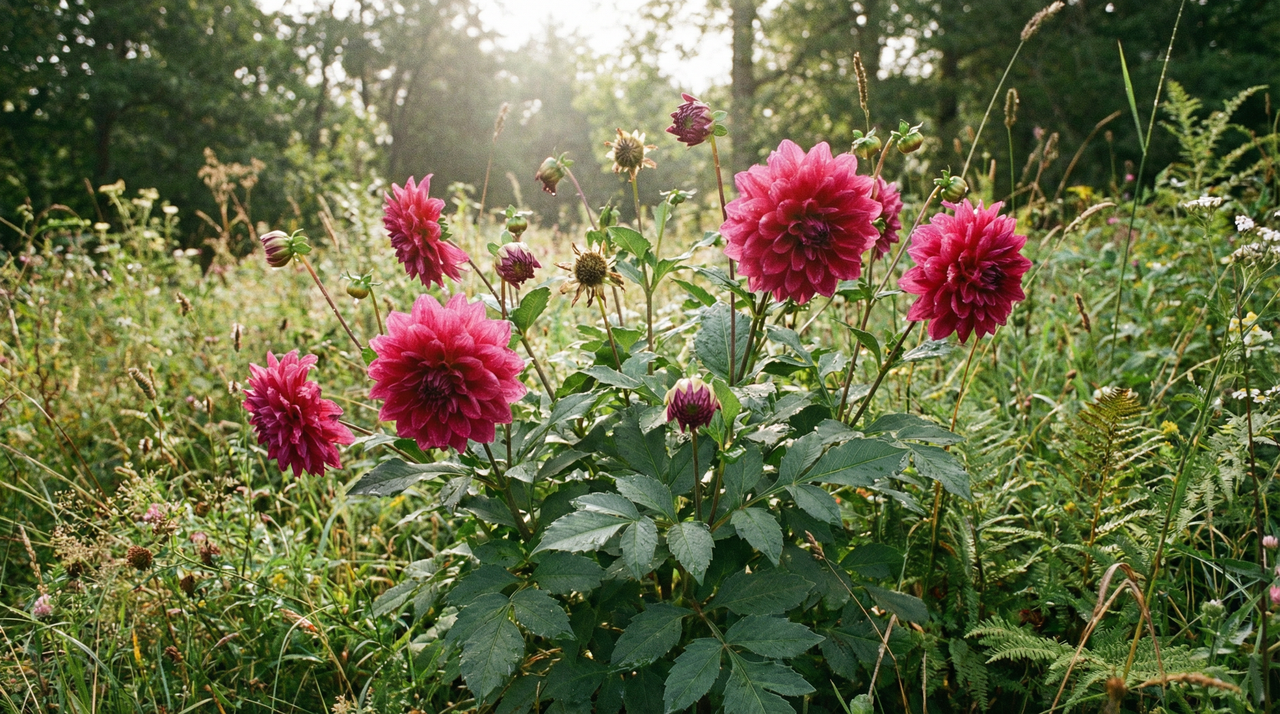
Every dahlia you've ever admired in a garden center, a wedding bouquet, or a neighbor's late-summer border traces back to a tuberous weed growing in the volcanic highlands of Mexico, where the Aztecs weren't growing it for flowers at all. They were growing it for dinner. The tubers were a starchy staple, something like a potato with a faintly sweet, earthy bite, eaten through droughts and kept as a hedge against famine.[1] When Spanish botanists shipped specimens back to Europe in the late 1700s, the plan was apparently to cultivate them as a food crop there too. That plan failed, spectacularly, because Europeans found the taste unremarkable. What they couldn't ignore was the flower.
Three centuries of obsessive hybridization later, we have somewhere north of 57,000 named cultivars[2] and almost nobody remembers you can eat the thing. I find that genuinely strange, and also a little wonderful, because it means most gardeners are sitting on a plant with far more history, usefulness, and ecological value than they realize. That's exactly what we're going to get into here.
Dahlia Origin, History, and Botanical Background
If you want to understand why dahlias behave the way they do in your garden, you have to start in the mountains. Dahlia pinnata, the species behind virtually every cultivar you'll find in a catalog, is native to the highlands of Mexico and Central America, growing naturally at elevations between 1,500 and 2,500 meters in pine-oak forests with sharp drainage, full sun, and frost-free winters.[3][4][5] That montane origin is exactly why it behaves as a tender perennial in temperate gardens. It didn't evolve for cold; it evolved for altitude.
Native Habitat and Botanical Characteristics of Dahlia pinnata
The wider genus echoes that same highland preference. Species like Dahlia coccinea (the Red Dahlia) and Dahlia mollis (Fernleaf Dahlia) share similar montane habitats across central and southern Mexico, with ranges extending into cloud forests and grassy slopes at elevations up to 3,000 meters, where wet summers and dry winters dominate.[4][6] That seasonal rhythm is baked into the genus's DNA, which is something I keep in mind every time I'm planning where to site dahlias in a guild edge.
As a plant, D. pinnata is immediately recognizable to anyone who's grown zinnias or sunflowers. The composite flower structure is classic Asteraceae: ray florets surrounding a central disc, blooming midsummer through first frost, in heads ranging from 5 to 15 cm across in shades of pink, red, white, yellow, and purple.[7][3] The leaves are opposite and pinnate, the whole plant reaching anywhere from two to six feet depending on conditions. But what sets it apart from a zinnia is what's happening underground. The tubers, those fleshy finger-like roots two to four inches long with rough, scaly skin, are where the plant banks its energy across seasons.[7][8] I always tell people: when you lift tubers in autumn and they feel dense and weighty in your hand, that's the plant telling you it had a good season. A light, hollow-feeling tuber is a warning sign. In frost-free climates they persist year after year in the ground; everywhere else, you're digging, storing, and replanting each spring.[8]
The genus also includes some striking outliers worth knowing. Dahlia tenuicaulis, the Tree Dahlia, carries woody rhizomatous rootstock rather than the fleshy tubers of D. pinnata, grows to nearly two meters, and produces small lavender to white flower heads barely 2 to 5 cm across.[9][10] It's also Critically Endangered, which I think about every time someone asks me about sourcing unusual species. Wild collection is not the answer. Stick to reputable nurseries for named cultivars, full stop. Dahlia mollis goes in another direction entirely, with deeply dissected fern-like leaves up to 12 inches long and soft lilac daisy flowers, growing in the cloud forests of Puebla and Veracruz.[11][12] The diversity within this genus is genuinely underappreciated.
Traditional Aztec Uses and Cultural Significance
Long before dahlias were a garden ornamental, they were groceries. The Aztecs called D. pinnata acocotli and cultivated it extensively in chinampas, eating the tubers raw, boiled, roasted, or ground into flour as a carbohydrate-rich staple.[13][14] The tubers contain inulin, which gives them a slightly sweet flavor and made them useful for managing blood sugar, a use that persisted in traditional medicine alongside treatments for stomach ailments, diarrhea, and abdominal pain.[15][16] Flowers appeared in ceremonies and ritual offerings as symbols of divinity and status, and stems were even used to create paint pigments.[17] This was a plant woven into daily life at every level.
These uses extended across the genus. Dahlia coccinea contributed food, medicine for fevers and digestive complaints, ceremonial offerings, and red dyes, and it remains culturally significant in Day of the Dead rituals today.[18][19] Archaeological evidence confirms pre-Columbian cultivation, and in 1963 Mexico formally recognized this heritage by declaring the dahlia its national flower, a symbol of dignity and elegance.[20][8] Victorian flower language later layered on its own meanings: elegance, inner strength, and for pink varieties, appreciation and admiration.[21] Seeing a field of dahlias in full bloom, I always think about the indigenous breeders who looked at this highland wildflower and saw both a meal and a ceremony in the same plant.
Introduction to Europe, Hybridization, and Modern Legacy
The European chapter began in 1789, when seeds of D. coccinea arrived at Madrid's Royal Botanical Garden, flowering the following year.[22] Seeds of D. pinnata followed to England in 1804, the same year the species was formally described. Antoine Laurent de Jussieu had already named the genus in 1791 to honor Swedish botanist Anders Dahl.[23] Spanish accounts from as early as 1525 had described dahlias in Aztec gardens, so European botanists were actually centuries behind the curve.
What followed that introduction was one of the most dramatic breeding explosions in horticultural history. The Royal Horticultural Society now recognizes over 42 species and more than 42,000 registered hybrid cultivars, with D. pinnata and D. coccinea as the primary parent species behind nearly all of them.[24] Flower forms span singles, decoratives, balls, cactus types, and more, in sizes from two inches to over eight, in every color the rainbow offers plus bicolors. Some cultivars, like the deep red 'Bishop of Llandaff', have been maintained by tuber propagation for over a hundred years.[24] That's a living thread connecting an Aztec chinampa to a kitchen garden today, which, honestly, is exactly the kind of plant heritage I want in my food forest edges.
Dahlia Varieties and Where to Buy Them
Nearly every dahlia you'll find in a catalog traces back to Dahlia pinnata, a tuberous perennial from the pine-oak highlands of Mexico, Guatemala, and Central America at elevations between 1,500 and 2,500 meters.[25][26] Centuries of breeding, much of it drawing on the heat tolerance and vivid color range contributed by wild relatives like D. coccinea, transformed that single highland species into a genus spanning thousands of named cultivars.[27] Modern breeding has pushed the color palette well beyond the original pinks and whites into reds, purples, yellows, and near-blacks, while also improving resistance to powdery mildew, verticillium wilt, and viruses that frustrated earlier growers.[28][26]
Dahlia pinnata Cultivars and Classification Groups
The Royal Horticultural Society and American Dahlia Society classify dahlias by flower form into groups like Single-flowered, Collarette, Decorative, Ball, Pompon, Cactus, and Semi-Cactus, then subdivide each group by bloom size from miniature (under 10 cm) up through giant (over 25 cm).[25][29][30] Think of the system less as dry taxonomy and more as a shopping filter. Dinner plate dahlias sit in the giant Decorative or Semi-Cactus categories; pompon dahlias are their own compact, globe-shaped group. Knowing a plant's form group also hints at its care needs: Ball types tend to appreciate consistent moisture, while Cactus types with their rolled, pointed petals prefer things a bit drier between waterings.[25][31]
Growth habit varies just as dramatically as flower form. Dwarf selections under two feet work well in containers, while tall growers exceeding six feet will absolutely need staking.[25] I always check the cultivar tag for mature height before I plant because I've been caught out more than once with a back-of-border giant that muscled forward into everything else. Among my personal favorites, 'Bishop of Llandaff' (scarlet Single-flowered, around three feet, famously dark foliage) pairs beautifully with silver-leaved companions like artemisia, and the whole Bishop series has shown noticeably better mildew resistance in my hot, humid summers compared with older decorative types.[30][27] 'Café au Lait', a large Decorative type, is as popular as ever for a reason; the blush-to-cream blooms photograph like a dream and hold well as cut flowers.[30] 'Arabian Night' is another one I reach for when I want deep crimson-maroon drama in a mixed border. Keep in mind that performance can vary slightly by microclimate, so treat any height or timing claims as a starting point rather than a guarantee.[32]
If you want to go beyond the standard catalog offerings, the genus has a few fascinating outliers. Dahlia mollis, the fernleaf dahlia, brings soft feathery foliage and lavender-pink flowers on a shrubby plant to about two meters, hardy in zones 8-10.[33] Dahlia tenuicaulis, sometimes called the tree dahlia, is rare in commerce and carries small yellow-orange flowers; it's mainly of interest for breeders chasing new hybrid possibilities.[34][35] These species are genuinely interesting, but they're niche plants with narrower hardiness and more limited sourcing than the pinnata hybrids most of us grow.
Sourcing Dahlia Tubers and Plants
Dahlia pinnata and its cultivars are widely available in the US and carry no invasive concerns.[36][37] Standard tubers typically run $3 to $7 each, with specialty Cactus and intermediate types ranging from $5 to $15 or more depending on variety, size, and whether the stock is organically certified (expect to add 15-30% for that).[38][39] Prices peak in late winter and early spring, so ordering early gets you both better selection and often better stock.
I've learned to order from specialist growers rather than big-box stores. Suppliers like Swan Island Dahlias, Old House Gardens, and Halladay's Dahlias ship tubers that arrive firm, plump, and true to name.[40][41][42] The shrink-wrapped bargain bags at garden centers can be fine, but I've had enough limp, rotted, or mislabeled tubers from those bins that I now consider the premium from an ADS member nursery a form of crop insurance. I'm also willing to pay the extra for verified disease-free stock because introducing a virus through a cheap tuber can affect everything sharing that bed for years. For D. coccinea specifically, Old House Gardens and Swan Island both carry tubers in the $8 to $15 range, with started plants running $12 to $25; seeds are also available through Burpee, Johnny's, and Baker Creek, though importing seed from outside the US requires an APHIS permit.[43][44] Rare species like D. tenuicaulis are a different search entirely; expect to pay $15 to $35 per tuber from specialists like Plant Delights Nursery, and plan for limited seasonal availability.[45][46]
Whichever cultivar or species you choose, most dahlias grown in USDA zones 8-11 share the same basic needs: full sun, well-drained soil, and consistent water.[47][48] The variety selection is genuinely vast, but I find that reassuring rather than overwhelming: once you nail the fundamentals, switching between a pompon and a dinner plate dahlia is mostly a matter of staking height and stem length, not a whole new learning curve.
Dahlia Propagation and Planting Guide
There are a few different ways to get dahlias into the ground, and the method you choose shapes everything from how long you wait for flowers to whether you get the exact cultivar you paid for. Most home growers, and honestly most nurseries, reach for tuber division first, and for good reason.
Propagation Methods for Reliable Results
Tuber division in early spring is the gold standard for Dahlia pinnata and its cultivated descendants. You divide dormant tubers into sections, each carrying at least one visible eye or bud, and what grows is genetically identical to the parent plant.[25][49][50] I've been dividing tubers for years, and I still remind myself to slow down and look carefully for the eyes. Early in my gardening life I separated a piece that looked perfectly healthy, planted it with confidence, and waited. Nothing came up. The tuber had no viable bud at all. One bud per division, minimum, and make sure you can actually see it.
Stem cuttings are the next most accessible option, especially if you want to multiply a single tuber into many plants. In spring, once new growth is 3 to 4 inches long, cut just below a node, strip the lower leaves, dip in rooting hormone, and stick the cutting into a peat-perlite-sand mix under high humidity. Roots typically form in 2 to 4 weeks.[51][52] Grafting and tissue culture exist for commercial disease-free stock production using rootstocks like Dahlia merckii, but these belong firmly in the lab and the commercial nursery, not a weekend afternoon in the potting shed.[53][54]
Growing dahlias from seed is genuinely fascinating, and genuinely frustrating if you expect to reproduce a named cultivar. Because D. pinnata is highly heterozygous and cross-pollinates readily, seed-grown plants don't come true to type.[25][55] I compare it to saving seed from a named tomato variety versus buying fresh transplants of that variety. You might get something wonderful. You might get something unrecognizable. Seed propagation is really a breeder's tool, valuable for producing new forms rather than replicating specific ones. Dahlia seeds are achenes with a papery pappus and, botanically, can carry multiple embryos per seed through polyembryony.[56][57] Stored cool and dry at 4 to 10°C in airtight containers with silica gel, they can remain viable for several years, up to a decade or more under ideal seed-bank conditions.[58][59] For species enthusiasts, layering works with Dahlia tenuicaulis and D. coccinea by wounding stems and pegging them to moist soil, though it's rarely necessary given how willingly tubers multiply.[60]
Germination Timeline and Starting Techniques
If you're starting dahlias from seed, you need warmth and light from day one. Seeds germinate in 7 to 14 days at 70 to 75°F with consistent moisture and a well-draining seed-starting mix; no cold stratification required for fresh seed.[61][55] Fresh seed performs best, with germination rates of 60 to 90 percent; once seeds are 2 to 3 years old, viability drops noticeably, so start with the freshest stock you can source.[62] Seedlings are ready to transplant about 4 to 6 weeks after sowing.[61]
Here's the practical payoff of that timeline: tubers planted in spring typically flower in 60 to 90 days, while seed-grown plants can take 70 to 120 days to reach first bloom.[25][55] If you want flowers this season and you want a specific variety, tubers are the obvious answer. Seeds are for the patient and the experimentally minded.
Soil, Site Selection, and Planting Strategy
Dahlias evolved on volcanic slopes in the Mexican highlands, which tells you almost everything you need to know about their soil preferences: excellent drainage, real fertility, and enough aeration that roots can breathe. In the garden, that means well-drained loamy or sandy loam soil with around 5 to 10 percent organic matter and a pH of 6.0 to 6.5.[25][32] Push the pH above 7.0 and you risk iron chlorosis, that yellowing between leaf veins that tells you the plant can't access what's already in the soil. I've used a simple soil test every few years to stay ahead of that problem, and it has saved me more than a few puzzling seasons of unexplained leaf yellowing.
Heavy clay is a genuine obstacle. You need to amend it thoroughly with compost, coarse sand, or grit, and raised beds are worth the extra effort because waterlogged tubers rot quickly.[55] Soil compaction is equally damaging; dahlia roots can reach 30 to 60 centimeters deep, and they need loose, open structure to develop the tuber clumps that sustain the plant through the season. Till to 12 to 18 inches before planting.[63][64]
Full sun, meaning 6 to 8 hours a day, is the baseline for strong flowering, but in climates where summer afternoons push above 85°F, some afternoon shade matters. In my zone 9B summers I've watched exposed plants develop scorched leaf margins and washed-out flowers by mid-July. Now I site dahlias where a taller plant or structure cuts the sun after about 2 p.m., and the difference in late-season performance is significant.[65][66]
Spacing, Depth, and Establishment Tips
Plant tubers 4 to 6 inches deep with the eyes facing up, and wait until after the last frost date when the soil has warmed to at least 50 to 60°F. Cold, wet soil at planting is one of the most reliable ways to lose tubers before they ever sprout.[25][66] Space most cultivars 18 to 24 inches apart with 24 to 36 inches between rows, enough to allow air movement, tuber development, and room to actually reach in for deadheading and cutting.[67] If you're growing tree dahlias like Dahlia imperialis, that spacing jumps to 6 to 10 feet. I grow both compact border types and tree dahlias, and the experience couldn't be more different in scale. Label your rows at planting; young tuber shoots and seedlings look deceptively similar and equally unremarkable until they get some height on them.
Once planted, apply 2 to 3 inches of organic mulch across the bed to hold moisture and moderate soil temperature, but keep it pulled back from the stems themselves to prevent rot at the crown.[68][32] Most cultivars settle into a mature spread of 1 to 3 feet, but choose your spacing based on the variety's stated mature size rather than guessing. Starting from named tubers or cuttings rather than seed means you can actually trust those catalog dimensions and plan your polyculture planting accordingly.
Dahlia Care Guide: Growing and Maintaining Healthy Plants
Dahlias reward attention. They're not fussy in the way that makes you want to give up, but they do follow a distinct seasonal rhythm, and understanding that rhythm is what separates a sprawling, short-lived display from a bed that flowers for months and returns reliably for years. The core needs are consistent across the genus: bright light, well-managed moisture, stage-specific feeding, and a clear plan for what happens after frost.
Sunlight Requirements for Optimal Blooming
Dahlias need at least 6 to 8 hours of direct sun daily for strong stems, good tuber development, and the dense flowering most growers are after.[25][32] I've seen the difference in my own yard: the same cultivar in a morning-sun-only bed gets leggy and blooms sparingly, while the identical plant in full sun stays compact and covered in flowers. Full sun is really non-negotiable for most garden dahlias. That said, once temperatures climb above 85°F, that same intense light starts working against you. In my zone 9B Central Florida garden, I run 30 to 40 percent shade cloth from July onward because the afternoon heat scorches foliage and accelerates flower fade fast.[69] If you're growing Dahlia tenuicaulis or D. mollis, they handle partial shade more gracefully than most species, which makes them useful in spots where filtered afternoon light is unavoidable.[70]
Watering Needs and Drought Tolerance
The target is roughly 1 inch of water per week during the growing season, applied deeply every 2 to 5 days depending on your soil type and weather.[25][66] I learned the hard way not to water on a fixed calendar. Sandy soil dries out in two days; clay holds moisture for five or six. A finger pressed an inch into the soil tells you more than any schedule. Established plants can tolerate a short dry spell of three to seven days without permanent damage, but consistent moisture is what produces the biggest, longest-lasting blooms.[32]
Overwatering is the more common mistake. Yellowing leaves, soft stems, and a plant that wilts despite wet soil are all signs of root rot setting in.[71] Always water at the base, not overhead. A 2 to 3 inch layer of organic mulch slows evaporation, keeps roots cooler, and reduces the splash that spreads fungal spores. As fall approaches, deliberately cutting back on irrigation signals the plant toward dormancy and helps firm up the tubers before lifting.
Feeding and Fertilization Schedule
Dahlias are genuinely heavy feeders, and the type of fertilizer matters as much as the frequency.[25] From planting through early summer, a balanced 10-10-10 supports vigorous vegetative growth. Once buds start forming in midsummer, switch to a higher-phosphorus formula like 5-10-10 or 10-20-20 to fuel flowering. Apply every 4 to 6 weeks, and in late season drop to a low-nitrogen option like 0-10-10 to encourage tuber health rather than more foliage.[72][32] Too much nitrogen at any stage produces exactly the wrong result: lush, dark-green leaves, weak hollow stems, and almost no flowers.
Before any of that, soil-test. I say this because I once lost an entire bed to phosphorus lockout I didn't see coming. The leaves looked slightly off, flowering was poor, and I kept feeding more balanced fertilizer, which did nothing. A soil test revealed pH creeping toward 7.5, which was tying up the phosphorus already in the ground. Dahlias want a pH between 6.0 and 7.0 for efficient nutrient uptake.[25][73] I now test every spring before the first tuber goes in. If you spot interveinal yellowing on older leaves, suspect magnesium or iron before reaching for more fertilizer.[74] Foliar sprays of chelated micronutrients can correct a confirmed deficiency quickly. Organic options like bone meal, fish emulsion, and compost work beautifully alongside or instead of synthetics, and they're far more forgiving if you slightly over-apply.[75]
Frost and Heat Tolerance
Frost is the hard boundary. Any temperature at or below 32°F will blacken and collapse the above-ground growth; tubers can survive brief exposure down to around 20°F when well protected, but you don't want to test that.[25][68] In zones 8 to 9 with excellent drainage, a 4 to 6 inch mulch layer can carry tubers through a mild winter in the ground. Anywhere colder, plan to lift. My own protocol is to wait for the first hard frost to kill the tops, cut the stems back to about 6 inches, then lift the clumps and cure them on newspaper in the garage for a week or two before boxing for storage.
Heat is a subtler threat. Optimal daytime temperatures sit between 60 and 75°F.[71] Once the thermometer consistently clears 85°F, midday wilting, bud drop, and reduced flower size follow quickly.[76] In my garden, 40 percent shade cloth combined with reflective mulch drops bed temperatures noticeably and extends the bloom season by several weeks. Deep early-morning watering and heat-tolerant cultivars from the Bishop or Figaro series round out the strategy for hot-summer gardeners.[69]
Pruning, Staking, and Seasonal Maintenance
Pinching is the single highest-return maintenance task you'll do all season. When plants reach 12 to 18 inches tall, cut out the central growing tip just above the second or third leaf pair. That one cut redirects energy into multiple lateral branches, which means dramatically more flowers.[77][25] I mark it on my calendar every spring because I skipped it once with a dinner-plate variety and ended up with tall, single-stemmed plants carrying a handful of blooms each. Never again. Stake anything that will grow beyond 3 feet, and do it early before the stems are long enough to catch wind and snap.
Deadheading spent blooms by cutting back to the first leaf node below the flower keeps new buds coming through fall.[31] Strip the lower yellowing leaves as they appear to improve airflow around the base. For exhibition blooms, disbud the secondary buds and limit each stem to two or three flowers for maximum size. Every two to three years, divide your tubers in spring, making sure each section carries at least one viable eye; this keeps plants vigorous and gives you more stock to plant or share.[25][78]
Seasonal Rhythm and Overwintering Dahlias
Plant tubers after the last frost when soil temperature reaches 50 to 60°F. Flowering typically begins 8 to 12 weeks after planting and continues from midsummer through the first frost with consistent deadheading.[25][79] That's a long season, and it's one of the best things about growing dahlias. Once frost blackens the foliage, lift the clumps, cure them for one to two weeks at 60 to 70°F in a dry, ventilated space, then pack them in barely moist vermiculite or peat at 40 to 50°F through winter.[80] I store mine in labeled plastic crates and do a quick check each month, pulling out anything that shows soft spots or mold before it spreads.
With good storage and regular division, a single tuber can sustain a planting for 2 to 5 years, sometimes longer.[81] Once you've got the overwintering routine dialed in, dahlias stop being an annual expense and become a genuinely perennial part of the garden, expanding every year you bother to save them.
Harvesting Dahlias for Cut Flowers and Tubers
Few plants give as generously as a dahlia in full swing. Dahlia pinnata blooms from midsummer through first frost, typically peaking between July and October with a flowering window that can run 60 to 120 days depending on your climate and when you got the tubers in the ground.[82][83] That's a long run of cuttable flowers, and making the most of it comes down to knowing exactly when to reach for the shears.
Timing Your Cuts: When Dahlia Flowers Are at Their Peak
The difference between a vase that lasts five days and one that lasts ten usually happens before the flower even gets inside. Cut at one-third to one-half open, when petals are firm and the center is still visible but not fully expanded; the RHS recommends waiting until half to three-quarters bloom for best results.[83][84][25] Those heavy-headed dinner-plate types that look so tempting fully open? I've watched them collapse in the vase within two days when I cut them too late. The more disciplined I am about cutting just before I think they're ready, the longer they last.
On the plant itself, D. pinnata flowers hold for 4 to 7 days before declining.[83] Tree dahlias (D. tenuicaulis) tend to stay fresh a bit longer, around 5 to 10 days, while the wild D. coccinea comes in on the shorter end at 3 to 5 days.[83][84] That's useful context if you're growing multiple species, but for most home gardeners, D. pinnata and its cultivated hybrids are the whole show.
When that first hard frost finally ends the season, the tuber harvest begins. Wait one to two weeks after frost kills the foliage before digging; that brief dormancy period matters. Tubers are generally ready 120 to 180 days after planting, and in USDA zones 8 through 10 you can often skip lifting altogether.[55]
Proper Harvesting Techniques for Long-Lasting Blooms and Healthy Tubers
Cut flowers early in the morning while stems are fully turgid and temperatures are still cool. There's a noticeable difference in how the stems feel at 7am versus 2pm, and that internal hydration translates directly into vase longevity. Use sharp, clean shears and cut at a 45-degree angle, leaving 12 to 18 inches of stem with at least 3 to 4 leaves below the cut.[25][85] Avoid harvesting in direct sun, high humidity, or wet weather.
The stage of opening shifts a bit by species. For many D. pinnata cultivars, cutting at the "paintbrush" stage, when buds are just showing color or barely cracking open, gives the longest vase life. D. coccinea and D. spectabilis are often better cut when outer florets are already opening, while D. tenuicaulis performs best at the colored-bud stage before petals unfurl.[25][86]
For tubers, use a garden fork and slide it well under the clump before levering up. Piercing a tuber with a tine is one of those frustrating mistakes you make once. Cut foliage back to about 6 inches, brush off loose soil gently, and resist the urge to wash them aggressively.[87][88] I always leave that short stem stub and tie a label to it right in the field. Tubers look nearly identical once the foliage is gone, and losing track of your best performer is a regret I've learned to avoid.
Post-Harvest Handling, Vase Life, and Tuber Yields
Immediately after cutting, plunge stems into lukewarm water around 110°F with floral preservative, or sear the cut ends briefly to prevent air embolisms. Condition in a cool, dark space for 12 to 24 hours before arranging, recut stems every few days, and keep arrangements away from fruit, drafts, and direct sun.[85][89] Follow that protocol and D. pinnata reliably delivers 5 to 8 days in the vase; D. tenuicaulis selections can stretch to 7 to 14 days, while D. coccinea and D. spectabilis average 5 to 7.[83][84]
On the tuber side, look for clumps that are firm, plump, and at least 2 to 4 inches across. Store them at 34 to 38°F with 90 to 95% humidity after curing.[55] There's real satisfaction in lifting a heavy, intact clump in October knowing those same tubers powered months of flowers. D. coccinea and D. tenuicaulis tubers have a long history as edible crops in Mexico, with a mild, nutty, slightly sweet flavor somewhat like a Jerusalem artichoke when roasted.[90] I only eat tubers I've grown myself without any sprays, and I've noticed bitterness can creep in when the soil ran dry mid-season. Modern ornamental hybrids vary widely and should never be assumed safe for eating without that same due diligence. The inulin content and safety nuances covered in the health benefits section above apply here too.
Dahlia Culinary Uses, Recipes, and Medicinal Preparations
Edible Parts of Dahlia: Tubers, Petals, and Young Shoots
Before the dahlia became Europe's favorite garden spectacle, it was feeding people. Aztec and pre-Columbian Mexican communities relied on the starchy tubers of Dahlia pinnata and close relatives like D. coccinea as a genuine carbohydrate staple, slicing, soaking, drying, and grinding them into flour or cooking them directly in soups, stews, moles, and pozoles.[91][92] That processing tradition exists for good reason. Raw tubers contain saponins that can cause mild gastrointestinal discomfort, so soaking and cooking are non-negotiable steps, not optional ones.[93][94] After reading the saponin research, I never serve raw dahlia tubers even to myself; a quick blanch or roast is non-negotiable in my kitchen.
Once properly cured for one to two weeks after fall harvest and then cooked, the tubers are genuinely pleasant to eat. Think roasted parsnip crossed with a mild radish, with a faint nuttiness and a softly sweet earthiness underneath.[95][96] Freshly scrubbed and raw, the texture surprises people: crisp and juicy, almost exactly like a water chestnut. I find that reference helps set expectations before anyone takes a bite of something they weren't prepared for. But flavor and bitterness vary considerably by cultivar, soil, and harvest timing.[97] The showy modern hybrids most of us grow are not the same as the old food-form varieties, and they tend to carry higher saponin loads. When I select dahlias with any edible intention, I prioritize older single-flowered heirloom types over the giant pom-poms precisely because they align more closely with documented food uses and lower bitterness profiles. Only eat what you've grown yourself without sprays; florist dahlias are never a safe source.
The petals are a lighter proposition entirely. Flowers from pesticide-free plants offer a mild, slightly sweet to lightly peppery floral flavor, useful mainly as edible garnishes in salads and desserts or infused into vinegars for color.[98][99] Young shoots and buds, blanched or briefly boiled, have a mild bitterness reminiscent of artichoke hearts.[100] Leaves and stems, though, are off the table; they are not considered edible and may cause irritation.[26][101]
Traditional Medicinal Preparations from Dahlia
Indigenous Mexican communities developed a parallel medicinal tradition around the same plants they were eating. Decoctions of D. pinnata tubers and roots, infusions of flowers, and poultices from various plant parts appear in ethnobotanical records for digestive complaints, fever, inflammation, wounds, and blood-sugar regulation, all drawing on the same inulin, flavonoids, phenolics, and anthocyanins that modern preclinical research is beginning to characterize.[102][103] The research, as covered in the health benefits section, remains at the preclinical stage; there are no human clinical trials behind these traditional applications, and modern ornamental cultivars lack the documented medicinal value of the traditional food forms.
What I find meaningful about this history is how completely it was severed when the dahlia became an ornamental crop. The same inulin-rich tubers that once sustained highland communities now sit in my garden primarily as cutting flowers, occasionally making their way into the kitchen as an experimental ingredient. That's a kind of botanical reclamation worth taking seriously. If you grow the right material, know its history, process it correctly, and approach it with curiosity rather than certainty, you're participating in something that connects directly back to the Mexican highlands where this plant was never just a pretty face.
Dahlia Health Benefits and Medicinal Uses
Most people who grow dahlias think of them purely as ornamentals, which makes sense given how spectacular they are in bloom. But there's a deeper story here, one rooted in Aztec and Mexican highlands culture where Dahlia pinnata was known as "acocotli" and used medicinally for centuries before it ever appeared in a European garden catalog.
Traditional Medicinal Uses in Mexican and Aztec Ethnobotany
Traditional Mexican and Aztec healers applied dahlias across a striking range of conditions: diabetes management, diarrhea, fever, stomach disorders, urinary complaints, wound healing, liver ailments, respiratory issues, and as a diuretic and anti-inflammatory remedy.[104][105][106] That breadth of use isn't coincidence. It reflects generations of careful observation by people who depended on these plants. The honest caveat, though, is that every pharmacological finding we have today comes from in vitro or animal studies. There are no human clinical trials for any dahlia species, and a search of ClinicalTrials.gov returns nothing.[107][108] I say that not to dismiss traditional knowledge but to be straight with you about what the science can and can't confirm yet.
Phytochemical Profile: Flavonoids, Phenolics, Anthocyanins and Inulin
Dahlia pinnata is chemically richer than its reputation as a garden flower suggests. The leaves carry flavonoids including quercetin, kaempferol, and rutin at up to 2 to 5 percent of dry weight, while tubers contain phenolic acids like chlorogenic and caffeic acid at around 10 to 20 mg/g. The vivid flower pigments come from anthocyanins including cyanidin, pelargonidin, and delphinidin glycosides. Inulin, a prebiotic fructan, makes up 15 to 40 percent of tuber dry weight under typical conditions. Seed oil runs about 60 percent polyunsaturated fat, primarily linoleic acid, and trace alkaloids, saponins, tannins, and coumarins round out the profile.[58][109][110][111]
These compounds aren't static. Phenolics and flavonoids increase by 20 to 30 percent under drought stress, peak during flowering, and run higher in red-flowered cultivars and loamy soils with a pH of 6.0 to 7.0.[112][113] I've noticed this in my own Central Florida beds: the seasons where I've kept consistent moisture and slightly acidic soil consistently produce richer, deeper flower color and more vigorous plants. Ecologically, these compounds serve the plant as UV shields, herbivore deterrents, and pollinator signals, but they also underpin the in vitro bioactivities researchers keep finding.[114]
Preclinical Research on Antioxidant, Anti-inflammatory and Other Activities
In vitro studies show meaningful antioxidant activity across D. pinnata, D. tenuicaulis, D. coccinea, and D. spectabilis, with DPPH and FRAP assay results sometimes comparable to ascorbic acid and phenolic concentrations reaching up to 45 mg GAE/g in certain extracts.[115][116] Animal models show anti-inflammatory effects, including reduced paw edema and inhibition of TNF-α, IL-6, COX-2, and NF-κB pathways at efficacy levels comparable to indomethacin in some trials.[58][117] Antimicrobial activity against S. aureus, E. coli, and C. albicans has been documented, though MIC values range widely (125 to 2000 μg/mL) depending on the plant part, extraction solvent, and species.[118][119] Preclinical hypoglycemic findings, including blood glucose reduction in diabetic rats and enzyme inhibition linked to inulin and flavonoids, give some scientific weight to the Aztec diabetes applications, as do analgesic, hepatoprotective, and wound-healing results.[120][121] Selective cytotoxicity against certain cancer cell lines (IC50 10 to 100 μg/mL) has also been reported.[115] None of this translates cleanly to human therapeutic use, and results vary substantially with preparation method and plant part.[122] The traditional use record is compelling context. The lab data is a beginning, not a conclusion.
Nutritional Value of Edible Dahlia Tubers
Before dahlias were a florist's staple, the tubers were a famine food and everyday starchy vegetable in pre-Columbian Mexico, eaten boiled, roasted, or fried under the names chago and acocotli.[123][124] Per 100 g fresh weight, cooked tubers deliver roughly 70 to 100 kcal, 15 to 25 g carbohydrates, 4 to 15 g fiber, and notable potassium (300 to 1,500 mg), along with moderate vitamin C, phosphorus, magnesium, and iron.[125][126] The standout is inulin, which provides a low glycemic impact that would have mattered even before anyone knew what glycemic index meant.[127] If you're familiar with Jerusalem artichoke (another Asteraceae tuber with strong prebiotic properties), the comparison is apt, though dahlia tubers are milder and less likely to cause the, shall we say, memorable digestive episodes that Jerusalem artichokes can produce if eaten raw in quantity.
Cooking matters here. Boiling or roasting reduces oxalate content by 30 to 50 percent, partially hydrolyzes inulin to fructose (which is why the flavor becomes sweeter and nuttier with heat), and can actually enhance antioxidant activity from the phenolics present.[125][110] The numbers I've cited vary widely across cultivar, soil type, climate, and preparation, and dahlia tubers aren't in the USDA nutrient database, so treat all values as approximations from regional studies rather than standardized data.[125][124] Start with small cooked portions if you're trying them; the high fiber content can cause digestive upset if you overdo it.
Safety Considerations and Toxicity
The ASPCA and Poison Control both classify dahlias as mildly toxic to humans, dogs, cats, and horses. All plant parts contain irritants including saponins, polyacetylenes, sesquiterpene lactones, and compounds like costunolide, with the highest concentrations in the tubers.[101][128] Human ingestion typically causes nausea, vomiting, diarrhea, and abdominal pain. Pets show similar GI symptoms plus drooling and appetite loss.[128] I've never seen more than brief digestive upset when a dog has gotten into a leaf, but I keep my dahlias well out of reach of curious animals and children because the irritant compounds are real even if acute toxicity is low.
Skin contact is its own issue. The sap can cause contact dermatitis with redness, itching, or blistering in sensitive individuals.[129] I always wear gloves when deadheading or dividing large clumps because Florida's heat seems to make the sap more irritating against my forearms. Dahlia also belongs to the Asteraceae family, so anyone with ragweed or daisy allergies should be aware that cross-reactions are possible.[130][131]
The key distinction for anyone considering eating tubers: traditional Mexican varieties prepared by boiling or roasting to reduce irritants have a long history of safe consumption, but modern ornamental hybrids are a different matter entirely.[124][132] Breeding for flower size and color has changed these plants, and potential pesticide residues on ornamental stock add another layer of risk.[133] Acute toxicity is low (LD50 above 2000 mg/kg in rat studies), and effects are generally self-limiting,[134] but dahlia preparations are contraindicated during pregnancy and breastfeeding, and caution is warranted for anyone on antidiabetic medications given the potential hypoglycemic activity.[135] Wear gloves when handling, wash your hands afterward, keep plants away from children and pets, and confirm your identification carefully before eating anything. Cosmos, zinnia, and tithonia can look similar in a mixed border.[71]
Dahlia Pests and Diseases
Dahlias aren't especially fragile, but they're not bullet-proof either. Dahlia pinnata sits somewhere in the middle of the ornamental spectrum for disease and pest resistance, and that "moderate" rating hides a lot of variation: a well-grown plant in full sun with excellent drainage can sail through an entire season nearly untouched, while the same cultivar crammed into a shady, waterlogged bed with overhead irrigation is practically an invitation for trouble. In my experience, almost every serious problem I've seen on dahlias traces back to a cultural mistake, not bad genetics.
Common Diseases and Resistance
The diseases that cause the most heartbreak are the fungal wilts and rots. Fusarium wilt is the worst of them, causing rapid collapse and telltale vascular browning that moves fast enough to lose a plant in days.[136][137] Verticillium is slower, showing up as creeping chlorosis and partial leaf drop rather than a dramatic crash.[138] Root and crown rots caused by Phytophthora, Pythium, and Rhizoctonia are the ones that gutted my early dahlia beds in Central Florida. The symptom is maddening: plants wilt despite moist soil, then the roots come up soft, brown, and foul-smelling. Soil drainage of at least one to two inches per hour is the threshold that keeps these pathogens in check.[139] Once I moved to raised beds with deeply amended, fast-draining soil, root rot basically disappeared from my planting calendar.
Powdery mildew and Botrytis blight pile on in humid conditions with poor air circulation, and Dahlia mosaic virus adds an especially cruel dimension: there's no cure, and aphids carry it from plant to plant, so a virus outbreak is really a pest management failure that shows up as a disease problem.[140][141] Bacterial soft rot is a lower-level threat, mostly triggered by tuber injury or improper storage; keeping storage conditions around 60 to 75°F and relative humidity between 40 and 60 percent goes a long way.[142]
Wild relatives do carry some useful genetics. Dahlia tenuicaulis shows meaningful resistance to Verticillium, which is why it was used in developing the 'Bishop' series, and 'Gallery Pablo' also performs better against that particular wilt.[143][136] I've noticed 'Bishop of Llandaff' holds up noticeably better against powdery mildew in my humid summers compared to older double cultivars, which matches what the breeding data suggests. That said, no dahlia is immune to anything, and resistance claims all come with the caveat "varies by conditions." The real levers are proper spacing at 18 to 24 inches for air circulation, avoiding overhead watering, removing infected tissue promptly, and starting with clean, disease-free tubers every season.[144]
Major Pests and Natural Defenses
On the pest side, aphids are the most persistent nuisance, and the stakes are higher than just curled leaves and sticky honeydew because they vector the mosaic virus described above.[145] I check the undersides of new growth every week once dahlias hit knee height in early summer; a hard spray of water handles small colonies before they snowball. Thrips cause silvery scarring and distorted flowers, slugs shred young foliage after rain events, and the Dahlia Bud Moth is worth knowing by name because its larvae bore directly into buds and destroy them from inside before you even notice something is wrong.[146] Spider mites become a moderate problem in hot, dry spells; the 'Karma' series tends to handle them better than most.[136]
The genus does produce some genuine chemical defenses, including sesquiterpene lactones, phenolics, and glandular trichomes that deter certain feeders and attract beneficial insects.[147][148] Wild species like D. tenuicaulis carry these traits in stronger concentrations and face fewer of the common garden pests that target cultivated forms. For garden dahlias, though, stress undermines whatever natural resistance exists: poor drainage, nutrient imbalances, and high humidity all lower the plant's defenses and invite opportunists.[149]
My approach is an IPM pyramid: prevention first (site selection, drainage, spacing, sanitation), then mechanical controls like hand-picking slugs and copper barriers, then biological agents like ladybugs, lacewings, and predatory mites.[150] I reach for insecticidal soap or neem oil maybe once or twice a season, if that. When spacing is right and I'm clearing out infected debris at season's end, the system largely manages itself.
Dahlia in Permaculture Design
Dahlia pinnata didn't start its life as a garden showpiece. It started on steep, seasonally wet slopes in the Mexican highlands, where its tuberous roots held soil together and its open composite flowers fed whatever was flying. That original ecological role still matters when we talk about where and how to place it in a designed system. It's not the most utilitarian plant in my food forest, but it earns its spot every season.
Climate and Hardiness Zones for Growing Dahlias
The honest starting point is frost sensitivity. Dahlia pinnata is reliably perennial only in USDA zones 8-11; below that, tubers need to come out of the ground after the first frost and spend the winter in dry, frost-free storage before going back in spring.[151][152][47] Related species like D. tenuicaulis, D. coccinea, and D. spectabilis share this same broad hardiness profile, so there's no sneaking around it with a different species.[153]
Zones 9 and 10 are genuinely the sweet spot. Mild winters let tubers overwinter in the ground naturally, and the extended bloom season means more months of pollinator traffic without the annual dig-and-store cycle.[154] I garden in zone 9b, and a 4-6 inch layer of pine-straw mulch has reliably carried my tubers through mild winters without lifting, but any forecast dipping below 28°F still sends me out to dig a few as insurance. Think of it the way you think about basil: both collapse at roughly the same temperature, and both need the same mental trigger to act.
Heat is the less-discussed problem. Prolonged exposure above 95°F causes wilting, reduced flower production, and in wet soils, tuber rot.[32] The plant is originally adapted to highland cloud-forest conditions, with daytime temperatures of 15-25°C and nights that stay above 10°C, receiving 800-1,500 mm of rainfall annually during a distinct wet season.[4][155] In humid subtropical gardens, afternoon shade and a thick mulch layer become the two best tools once summer heat kicks in.[71][156] For gardeners in zone 7 pushing the boundary, 6-8 inches of heavy mulch and a sheltered microclimate can extend effective frost tolerance by 2-3°C, though I'd still keep a few tubers stored just in case.[55][157]
Ecosystem Functions and Benefits
The strongest case for dahlia in a permaculture system is its pollinator value. Those open, nectar-rich composite flowers draw bees most reliably, but butterflies, hoverflies, and the occasional hummingbird also visit regularly.[158][159] If you want hummingbird specialists, D. tenuicaulis with its pendant tubular blooms is more targeted to that pollination syndrome, while D. coccinea functions as a generalist attractive to both insects and birds.[160] For most food-forest designers, the insect traffic that D. pinnata brings is the headline function.
The tuberous root system does help anchor soil on slopes and contributes modestly to potassium and phosphorus cycling, but Dahlia is not a nitrogen-fixer and not a powerhouse dynamic accumulator.[161] I stopped listing it as a significant fertility plant after watching how much more vigorously comfrey and borage perform in the same bed. Any soil benefit is secondary to what the flowers are doing above ground.
In its native pine-oak and cloud-forest habitat at 1,500-2,500 m elevation, D. pinnata grew as part of a biodiverse edge community that is now under real pressure from habitat loss and agricultural expansion.[162] Wild relatives like D. tenuicaulis are genuinely threatened.[163] Most cultivated forms are non-invasive when managed properly, which is reassuring, but it's one more reason I think there's value in growing and preserving these plants thoughtfully rather than treating them as disposable annuals.
Traditional Mexican communities ate dahlia tubers as a carbohydrate source and used them medicinally for digestive complaints, as a diuretic, and for anti-inflammatory effects.[164] That secondary edible yield is real and worth knowing about, but for specific safety guidance and precautions, particularly around blood-sugar and diuretic effects, I always point readers to the health benefits section of this profile.
Forest Layer Placement and Guild Companions
In a food forest, dahlia belongs in the herbaceous layer. Most cultivars settle into the 3-5 ft height band, with dwarf forms closer to 12-18 inches and taller types reaching up to 6 feet, and the plant handles 30-60% light reduction reasonably well, which makes it a natural fit for forest edges and partially shaded sunny openings rather than deep canopy.[32][165] That's exactly where it would have grown in its native highland forests, on the sun-catching margins where canopy breaks open.
As a companion plant, dahlia pairs well with beans for the nitrogen those legumes fix in soil dahlia can then access, with corn and tomatoes where the flower traffic improves pollination rates, and with aromatic herbs like basil and marigolds that add pest-confusion to the guild.[166][167] I've grown dahlias deliberately inside tomato polycultures for several seasons and the beneficial insect counts around those beds are noticeably higher than in sections without them. The flowers deliver that benefit reliably.
Dahlia also associates with arbuscular mycorrhizal fungi, which helps it scavenge nutrients in leaner soils, and the tuberous root mass provides genuine erosion resistance on sloped ground.[168] D. tenuicaulis adds similar slope-stabilizing value in highland guilds, and D. coccinea supports early-successional insect biodiversity at the establishment phase of a system.[169] None of them are guild dominants. What they are is reliable supporting players that bring seasonal color, consistent pollinator traffic, and a bonus underground yield to a system that's already doing the heavy fertility lifting with other plants.
The Plant That Taught Me to Stop Treating Beauty as a Bonus
I spent years treating dahlias as the pretty distraction in my food forest, something to placate visitors while the "serious" plants did the real work. Then I found myself standing in a wet October bed, hands muddy to the wrist, pulling up tubers I was genuinely excited to cook, surrounded by bees working the last open blooms like they had nowhere better to be. That's when I stopped apologizing for how good-looking this plant is. The beauty was never separate from the function. It was always the whole point.
Sources 169
- Dahlia ethnobotany and Aztec use, Biodiversity Heritage Library ↩
- American Dahlia Society Classification ↩
- Dahlia pinnata - Royal Horticultural Society ↩
- Dahlia pinnata - Wikipedia ↩
- Dahlia pinnata - Kew Science ↩
- Flora of North America: Dahlia ↩
- Dahlia pinnata - Missouri Botanical Garden ↩
- Flora of North America - Dahlia pinnata ↩
- Dahlia tenuicaulis - IUCN Red List ↩
- Flora of North America: Dahlia tenuicaulis ↩
- Dahlia mollis - Wikipedia ↩
- Flora of North America - Dahlia mollis ↩
- Dahlia: An Introduction to the History and Cultivation of the Species ↩
- The Ethnobotany of the Aztecs ↩
- Traditional Uses of Dahlia in Mexico ↩
- Medicinal Plants of Mexico ↩
- Ethnobotany of the Dahlia Genus ↩
- Dahlia coccinea in Traditional Mexican Medicine ↩
- Dahlia coccinea ↩
- Dahlia: The National Flower of Mexico ↩
- Victorian Flower Symbolism ↩
- Dahlia pinnata ↩
- The Dahlia: Its History and Cultivation ↩
- Dahlias - Award of Garden Merit ↩
- Dahlia Classification ↩
- Dahlia ↩
- Dahlia coccinea - Royal Horticultural Society ↩
- Dahlia Breeding and Genetics ↩
- Dahlia Varieties and Groups ↩
- The RHS Encyclopedia of Garden Plants ↩
- Growing Dahlias ↩
- Dahlia imperialis - Missouri Botanical Garden ↩
- Dahlia mollis - RHS Gardening ↩
- Dahlia tenuicaulis - Wikipedia ↩
- American Dahlia Society - Species Dahlias ↩
- Dahlias: Plant Care and Collection ↩
- Dahlia pinnata ↩
- Dahlia Tuber Buying Guide ↩
- Organic Dahlia Cultivation and Pricing ↩
- American Dahlia Society Vendor List ↩
- Swan Island Dahlias Catalog ↩
- Old House Gardens Dahlia Collection ↩
- Dahlias - Species and Heirlooms ↩
- Importation of Plants and Plant Products ↩
- Rare Dahlias for Sale ↩
- Dahlia Tubers - Rare Varieties ↩
- USDA Hardiness Zone Map ↩
- Growing Dahlias ↩
- Dahlia pinnata ↩
- Propagation of Dahlias ↩
- How to Propagate Dahlias from Cuttings ↩
- Dahlia Propagation Guide ↩
- Grafting Techniques for Dahlias ↩
- Micropropagation of Dahlia Species ↩
- Propagation of Dahlias ↩
- Polyembryony in the Genus Dahlia ↩
- Dahlia pinnata ↩
- Seed Storage of Dahlia Species ↩
- Seed Storage of Dahlia spp. ↩
- Propagation of Dahlias ↩
- Growing Dahlias from Seed ↩
- Seed Viability Testing Handbook ↩
- Dahlia pinnata Care Guide ↩
- Soil Compaction in Gardens ↩
- Dahlia pinnata Growing Guide ↩
- Growing Dahlias ↩
- How to Grow Dahlias ↩
- Dahlia Production Guide ↩
- Growing Dahlias in the Heat ↩
- Dahlia mollis - Missouri Botanical Garden ↩
- Dahlia Care - Royal Horticultural Society ↩
- Dahlia Fertilizer Guide ↩
- University of Minnesota Extension - Nutrient Deficiencies in Plants ↩
- Micronutrient Deficiencies in Flower Crops ↩
- Organic Fertilizer for Dahlias - The Spruce ↩
- Heat Stress in Ornamental Plants: Focus on Dahlia ↩
- Dahlia Care: Pinching and Disbudding ↩
- Overwintering Dahlias ↩
- Dahlia ↩
- Overwintering Dahlias ↩
- Royal Horticultural Society (RHS) Plant Finder ↩
- Dahlias: Planting, Growing, and Caring for Dahlias ↩
- Dahlia Production and Post-Harvest Handling ↩
- Growing Dahlias for Cut Flowers ↩
- Cut Flower Production: Dahlias ↩
- Cut Flower Dahlias ↩
- Dahlia Cultivation Guide ↩
- Dahlia Tuber Harvest and Storage ↩
- Postharvest Handling of Cut Dahlias ↩
- Edible Dahlias: A Forgotten Food Crop ↩
- The Edible Dahlia: A Forgotten Crop of the Aztecs ↩
- Aztec Food Plants: Dahlia as a Pre-Hispanic Staple ↩
- Edible Dahlias: A Forgotten Crop? ↩
- Saponins in Dahlia Species ↩
- Dahlia: The Genus Dahlia ↩
- Edible Plants: Dahlia ↩
- Edible Dahlias: Traditional Mexican Uses ↩
- Edible Flowers: Dahlia ↩
- Edible Flowers: A Kitchen Companion ↩
- Flora of North America - Dahlia ↩
- Toxicity of Dahlia Species ↩
- Ethnobotany of the Mexican Dahlia Species ↩
- Dahlia pinnata: Traditional Uses and Pharmacology ↩
- Ethnobotany of Dahlia in Mexico ↩
- Traditional Uses of Mexican Dahlia Species in Folk Medicine ↩
- Traditional Medicinal Uses of Dahlia Species in Mexico ↩
- ClinicalTrials.gov Search Results ↩
- Ethnopharmacological survey of Dahlia spp. in Mexico ↩
- Flavonoids from Leaves and Roots of Dahlia Species ↩
- Nutritional Composition and Antioxidant Properties of Dahlia Tuber ↩
- Seed Oil Analysis of Ornamental Dahlia pinnata ↩
- Seasonal Variation of Phenolics in Ornamental Dahlia Cultivars ↩
- Effects of Drought Stress on Antioxidant Compounds in Dahlia pinnata ↩
- Secondary Metabolites in Asteraceae: Defense and Ecology ↩
- In Vitro Antioxidant and Cytotoxic Activity of Dahlia pinnata Cav. Flower Extract ↩
- Antioxidant and Antimicrobial Properties of Dahlia tenuicaulis Extracts ↩
- Anti-inflammatory Potential of Leaf Extracts from Dahlia coccinea ↩
- Antioxidant and antimicrobial activities of Dahlia pinnata ↩
- Antioxidant and antimicrobial properties of Dahlia spectabilis extracts ↩
- Antidiabetic activity of Dahlia pinnata tuber extract in diabetic rats ↩
- Antioxidant and antidiabetic activities of Dahlia pinnata ↩
- Bioactive Compounds in Dahlia coccinea: Potential for Drug Development ↩
- The Edible Tuber of the Dahlia ↩
- Edible Dahlias - UC Master Gardeners ↩
- Nutritional Composition of Edible Dahlia Tubers ↩
- Nutritional Evaluation of Edible Dahlia (Dahlia spp.) Tubers ↩
- Inulin Content in Dahlia Tubers - Journal of Agricultural and Food Chemistry ↩
- Dahlia Toxicity - Poison Control ↩
- Contact Dermatitis from Dahlia - Journal of the American Academy of Dermatology ↩
- Asteraceae Family Allergens ↩
- Allergic Contact Dermatitis to Compositae ↩
- Dahlia pinnata: Edible Uses and Toxicity ↩
- Ornamental plants as vectors of pesticide exposure ↩
- Toxicity evaluation of Dahlia pinnata tuber extracts ↩
- Safety Considerations for Herbal Remedies in Pregnancy: Asteraceae Family ↩
- Dahlia Diseases and Management ↩
- Dahlia: Fusarium Wilt and Other Diseases ↩
- Verticillium Wilt Resistance in Dahlia Species ↩
- Managing Dahlia Root Rot ↩
- Virus Diseases of Dahlias ↩
- Dahlia Diseases and Insect Pests ↩
- University of California Integrated Pest Management ↩
- Disease Resistance in Wild Dahlia Species ↩
- Managing Diseases in Dahlias ↩
- Pests and Diseases of Dahlias ↩
- Dahlia Pests and Diseases ↩
- Sesquiterpene Lactones in the Genus Dahlia: Biosynthesis and Insect Defense ↩
- Phytochemistry of Dahlia Species ↩
- Dahlia - Care and Culture ↩
- Dahlia Pest Management ↩
- Dahlia care guide ↩
- Plant Finder - Dahlia pinnata ↩
- Dahlia tenuicaulis ↩
- Dahlia Care Guidelines ↩
- Native Habitats of Mexican Dahlias ↩
- Growing Dahlias in Hot Climates ↩
- University of California Extension - Dahlia cultivation and soil temperature adaptation ↩
- Pollination Biology of Dahlia pinnata ↩
- Dahlias and Pollinators ↩
- Pollination Biology of Dahlia tenuicaulis (Asteraceae) in Central Mexico ↩
- Permaculture Functions of Dahlia Pinnata ↩
- Reproductive Biology and Habitat Disturbance in Endemic Dahlia Species ↩
- IUCN Red List: Dahlia tenuicaulis ↩
- Ethnobotany of Dahlia ↩
- Light Adaptation in Mexican Dahlia Species ↩
- Companion Planting with Dahlias ↩
- Dahlias in Permaculture ↩
- Kew Science: Dahlia pinnata ↩
- Wild Dahlias of Mexico: Ecology and Conservation ↩