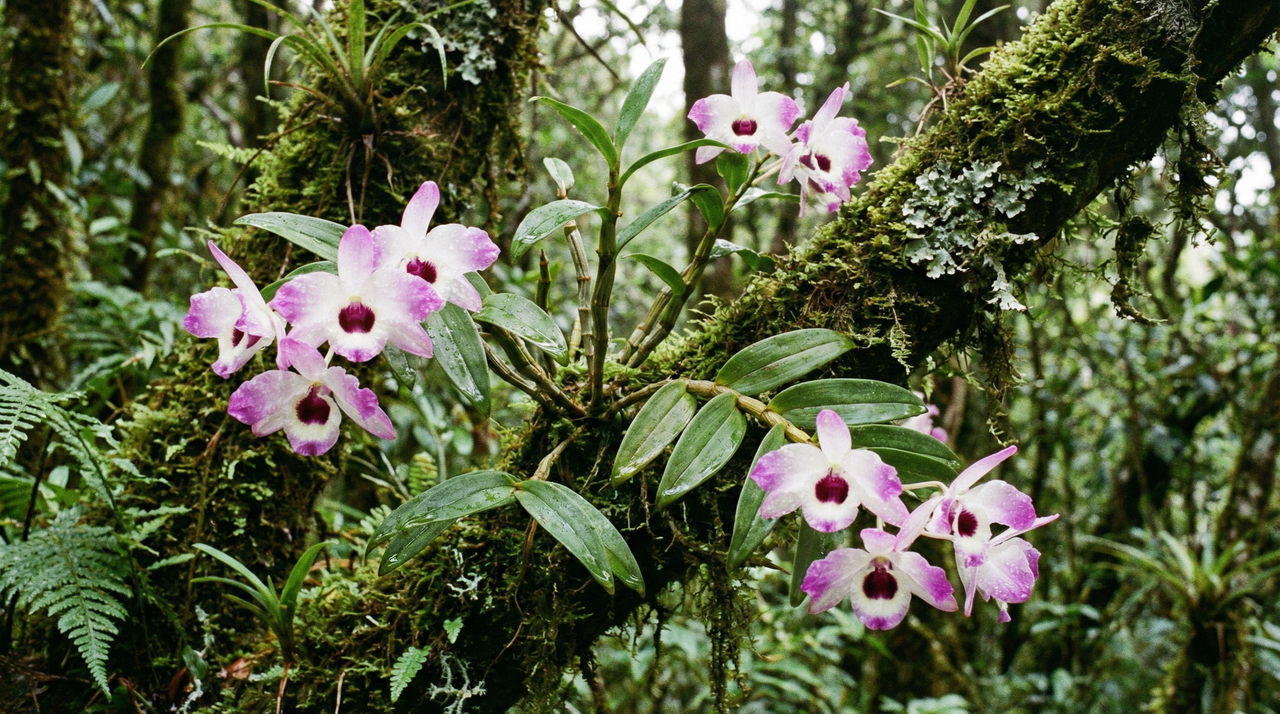
Most people grow the dendrobium orchid for its striking flowers, and I completely understand why. But here's what stopped me cold the first time I really dug into this plant: it's been used as medicine for over 2,000 years, documented in one of the oldest pharmacopeias in the world, the Shen Nong Ben Cao Jing, and yet most Western growers treat it like nothing more than a pretty windowsill orchid.[1] The gap between what this plant actually is and how we tend to relate to it in contemporary horticulture is genuinely startling once you notice it.
What makes that gap stranger is how the plant itself practically announces its complexity. Every winter, it drops its leaves, looks half-dead, and then explodes into fragrant bloom the moment temperatures warm back up, a deciduous epiphyte perched on rocks and tree bark somewhere between 1,000 and 2,500 meters in the eastern Himalayas.[2] Nothing about that life strategy is accidental. Once you understand where this orchid actually comes from and what it's survived, you start growing it differently. And honestly, you start respecting it a lot more.
Origin and History of Dendrobium nobile
Botanical Background and Native Habitat
The dendrobium orchid has one of the more compelling origin stories in the horticultural world. Dendrobium nobile, its botanical name and the scientific name you'll see across every serious reference, is a perennial epiphyte native to a sweeping arc of montane Asia: northeastern India (Assam, Sikkim, Arunachal Pradesh), Nepal, Bhutan, Myanmar, Thailand, Vietnam, Laos, and the southern Chinese provinces of Yunnan, Guangxi, and Guizhou.[3][4] It clings to trees and rocky outcroppings anywhere from 1,000 to 2,500 meters elevation, spending its life in the canopy mist rather than in soil, riding out monsoon surges and cool dry winters with equal composure.[5]
What makes this plant structurally fascinating is its sympodial growth habit. Each year it pushes out new cane-like pseudobulbs from a creeping rhizome, cylindrical and segmented, typically 10 to 25 cm long, built to store water and nutrients through the lean dry season.[6][4] Those pseudobulbs persist for three to five years, and the plant is deciduous, dropping its leathery leaves during the cool dry winter before bursting into bloom the following spring.[7] I've learned the hard way that skipping this dormancy period by keeping plants too warm and wet through winter produces weak or absent flowering. The plant is polycarpic, flowering once yearly from mature two- to three-year-old pseudobulbs without dying afterward, a rhythm that can sustain itself for 20 to 50 years in cultivation.[7][8] First formally described in 1789 and accepted within Orchidaceae with no recognized subspecies, it entered Western horticultural consciousness early and commercial hybridization in the United States began in earnest through the early 1900s.[9][10]
Visual Characteristics and Ecological Adaptations
Mature plants reach 30 to 60 cm tall, occasionally pushing 90 cm under ideal conditions, with erect pseudobulbs carrying two rows of lanceolate, leathery leaves, each 5 to 10 cm long.[11][12] The flowers are the obvious draw: 4 to 6 cm across, occasionally reaching 8 cm, in whites, pinks, lavender, and purple with a darker three-lobed lip often marked with yellow or orange.[13][4] They carry a sweet, lily-like fragrance that intensifies in the evening, something I'd compare to jasmine with a softer edge, and they emerge in short clusters of one to five from the upper nodes of mature canes, blooming from late winter into early spring.[7]
Ecologically, this plant is deeply specialized. Its aerial roots are wrapped in velamen, a multilayered spongy tissue that absorbs atmospheric moisture and nutrients directly from passing rainfall and mist.[14] It uses CAM photosynthesis to minimize water loss during the dry season, storing carbon dioxide at night and fixing it by day, a smart metabolic trick for a plant perched in open canopy light with no soil reservoir beneath it.[15][3] Understanding these adaptations is exactly what informs smarter cultivation choices, which I'll leave for the care and design discussions ahead.
Traditional Uses and Cultural Significance
This orchid's botanical pedigree carries real weight in Asia. Known as Shi Hu in Traditional Chinese Medicine, Dendrobium nobile has been documented for over 2,000 years, appearing first in the Shen Nong Ben Cao Jing (circa 200–250 CE) and later in Li Shizhen's monumental Bencao Gangmu of 1578.[16][17] Classified as a superior herb, it was prescribed to tonify stomach yin, generate fluids, nourish the lungs, and clear heat, with applications ranging from dry mouth and chronic thirst to yin deficiency and cough.[18] The depth of that pharmacopoeia tradition speaks to how seriously Asian physicians regarded this plant, long before Western botanists gave it a Latin name.
Culturally, it carries associations of longevity, nobility, purity, and friendship in Chinese art, poetry, and festival tradition, often linked to Taoist ideas about immortality.[19] Beyond Han Chinese culture, ethnic groups including the Yi, Bai, Miao, and Tibetan communities have long used it in folk medicine for fever reduction, wound care, digestive complaints, and as a rejuvenative tonic.[20] That's a lot of independent convergence on the same plant.
Wild populations have suffered for it. Overharvesting for both medicine and the ornamental trade has caused population declines of 50 to 90 percent in some parts of its native range, and the species now sits on CITES Appendix II.[21][22] In my work with rare ornamentals, I've seen firsthand how choosing responsibly propagated cultivated stock is the most direct thing a grower can do to protect wild populations like this one.
Fun Facts About the Noble Dendrobium
Pollination in the wild falls mostly to Amegilla bees drawn in by those fragrant, colorful blooms.[11] The seeds they eventually help produce are almost impossibly small, 0.3 to 0.5 mm, and completely lack endosperm. They cannot germinate at all without mycorrhizal fungi from the family Tulasnellaceae, a dependency that makes natural regeneration both elegant and precarious.[23][24] For home growers, that's one reason I prefer division over seed-starting in design projects: seed to bloom takes three to five years under optimal conditions, while a well-timed division can flower the following season.[7]
The leaf drop that precedes flowering isn't a sign of trouble; it's the plant doing exactly what four to six weeks of cool (10 to 15°C), dry conditions have cued it to do.[25][26] Mature pseudobulbs ripen during that rest and then produce their clusters of blooms, occasionally reaching 15 to 20 flowers per cane in prime Himalayan specimens.[27] When I've replicated those cool dry conditions in my own setups, the difference in flowering response is striking. The plant's whole architecture is built around seasonality, and respecting that rhythm is where everything starts.
Dendrobium nobile Varieties and Where to Buy Them
Popular Cultivars and Hybrids
The cultivated world of the dendrobium nobile plant is richer than most newcomers expect. Over 100 registered cultivars and hybrids exist, with names like 'Anneliese', 'Charlesworthii', 'King of Nord', 'Snow Flake', 'Elizabeth Leons', and the elegant pure-white 'Alba' giving collectors a genuinely wide palette to chase. The cultivar 'Anna' even holds RHS Award of Garden Merit status, which is about as close to an official endorsement as the orchid world gets.[28][29]
Not every name you'll see in catalogs refers to a true species variant. The standard orchid dendrobium nobile form carries those classic purple-magenta flowers, while var. candidum produces white blooms with a yellow center. 'Alba' is a genuine color form of the species with pure white flowers. 'Kramer's Splendid', on the other hand, is an interspecific hybrid between D. nobile and D. kingianum, a cross that gives it different growth habits than either parent.[29][30] I've grown a standard purple-magenta form and 'Alba' side by side in my Central Florida setup, and while they respond to the same winter cool period, the white form tends to feel just a touch more sensitive to temperature swings.
Vigor differences between selections are real and worth factoring into your decision. I learned this the hard way with var. candidum, a season where I overwatered a particularly delicate specimen and watched it decline faster than any of my other plants would have. 'Snow Flake', by contrast, is notably vigorous and more forgiving of minor care inconsistencies.[31][4] If you're newer to orchid culture, I'd lean toward a robust cultivar before exploring the more delicate forms.
Sourcing Healthy Dendrobium nobile Plants
Despite its Himalayan origins, the noble dendrobium is a staple of the U.S. ornamental trade and not difficult to find.[32][11] The regulatory picture is worth understanding, though. Because D. nobile is listed under CITES Appendix II, international trade is regulated to protect wild populations, and U.S. imports require USDA APHIS phytosanitary certificates alongside CITES permits.[21][33][34] Plants propagated domestically from tissue culture or division sidestep most of that paperwork entirely.[21] I always choose U.S.-propagated stock for exactly this reason; knowing my purchase supports conservation rather than wild collection matters to me, and it should simplify things practically too.
For reputable sources, the American Orchid Society maintains a current list of member nurseries and vendors on its website, and AOS-affiliated sellers are generally a reliable starting point.[35] Availability shifts seasonally, so if a specific cultivar isn't showing up, it's often worth a direct inquiry to a specialty nursery rather than settling for whatever big-box stores happen to stock.
At the nursery, I squeeze pseudobulbs gently and check root tips under whatever light is available. What you want is firm, plump pseudobulbs, vibrant green foliage, and roots that look clean and intact. Walk away from anything showing soft rot, shriveling, or any sign of pests.[36][37] A plant that struggles from day one rarely recovers to be the specimen you were imagining when you picked it up.
Dendrobium Orchid Propagation and Planting Guide
Before you propagate a dendrobium orchid, it helps to understand why the commercial world does it so differently from the way you and I do it at home. Tissue culture dominates large-scale production because it produces genetically uniform, disease-free plants at a speed and volume no greenhouse hobbyist could match.[38][39] That's the method behind most of the plants you'll find at a nursery. Seed propagation sits at the other extreme: the seeds are essentially nutrient-free dust (picture fine pepper grains that disappear if you breathe too hard near the tray), and in the wild they only germinate through a precise partnership with mycorrhizal fungi like Tulasnella or Ceratobasidium.[38][40] Asymbiotic lab methods exist for research and conservation work, but they're not something you're running in your kitchen. For home growers, the real conversation starts with pseudobulbs and canes.
Propagation Methods for Dendrobium nobile
Division is where I always send beginners, and it's where I keep returning myself. I've divided mature Dendrobium nobile several times in my zone 9B greenhouse right after the last flowers drop, and without fail, new growth appears within weeks when each division carries at least three to four healthy pseudobulbs.[41][42] It's clean, it's quick, and it rewards you with blooming-size plants on the shortest possible timeline. Use a sterile blade, make your cuts decisively, and resist the urge to divide into tiny fragments to maximize plant count. Fewer divisions, each with adequate reserves, outperform many weak ones every time.
Cane cuttings take a bit more patience and a bit more humility. Select mature canes that are at least a year old, cut them into sections of 7 to 10 cm with two to three nodes each, and then set them aside in a shaded spot before you do anything else.[43][44] I learned the hard way that planting immediately invites rot at the cut ends. Letting them callus for a full 24 hours in a shaded, ventilated space before laying them horizontally (or setting them vertically) into a moist mix of sphagnum, perlite, and bark makes a real difference. A light application of IBA rooting hormone at 0.1 to 0.3 percent concentration can nudge things along, but it isn't essential if your conditions are right.
Air layering is a worthwhile skill to develop for particularly vigorous canes you don't want to sever entirely. Make an upward-slanting cut one-third through the cane just below a node, apply rooting hormone, pack the wound with damp sphagnum, and wrap it in plastic to hold humidity. At 70 to 80°F with high ambient humidity, expect roots in three to six months.[45][46] Grafting onto compatible rootstocks like Dendrobium kingianum or D. moniliforme is an advanced option that can accelerate growth, with success rates above 70 percent when done under high humidity with sterile tools,[47][48] though most home growers never need to go there.
Whatever method you choose, sterile technique and rot prevention aren't optional extras. This orchid evolved clinging to tree bark and exposed rock faces in the Himalayas, with its roots exposed to moving air between monsoon downpours. Substrate compaction, overwatering, and stagnant air are the three fastest ways to lose a new plant.[49][50] I've watched more orchids lost to kindness than to neglect, and most of that kindness took the form of a watering can.
Soil, Site, and Substrate Requirements
Dendrobium nobile is both epiphytic and lithophytic across its native Himalayan range at 800 to 3,000 meters elevation, which means its roots are adapted to tree bark and rocky outcrops, never to dense, moisture-retentive garden soil.[49][51] Replicate that ecology in your mix and you solve half your problems before they start. A reliable substrate runs 40 to 70 percent coarse fir or pine bark, 20 to 30 percent perlite or coarse sand, 10 to 20 percent horticultural charcoal, and up to 20 percent sphagnum moss or coconut husk chips, with total organic content kept between 20 and 30 percent.[52][53] In my humid subtropical greenhouse I dial the sphagnum component down toward the low end of its range; the ambient moisture does enough work without the moss holding additional water against the pseudobulbs. Renew the mix every one to two years after flowering, because bark breaks down and the mix tightens around roots in ways that quietly strangle them.
Substrate pH should land between 5.5 and 6.5, with 6.0 as the sweet spot.[54][55] I learned to check this after seeing leaf chlorosis creep in on a batch I'd potted into an unbuffered bark mix; once the pH drifted outside that window, iron and manganese became unavailable and the plants showed it in their foliage before they showed it anywhere else. Bright indirect light in the 1,000 to 2,500 foot-candle range, humidity sitting at 50 to 70 percent and nudging up to 80 percent during active growth, and reliable air movement complete the picture.[49][7]
Pot choice matters more than most growers expect. Containers of 10 to 15 cm with drainage holes and no more than 5 to 10 cm of substrate depth suit the shallow root system well; overpotting creates excess medium that stays wet long after the top layer dries and rot follows predictably from below.[56][52] Repot every one to three years in spring after flowering, and always into a container that feels slightly too small rather than one that feels generous.
Spacing, Potting Technique, and Timeline to First Bloom
Dendrobium nobile grows sympodially, meaning each season adds new pseudobulbs that fan outward from a central rhizome, eventually reaching 30 to 60 cm in both height and spread at maturity.[8][57] In a greenhouse collection, I keep 30 to 45 cm between plants in rows so air moves freely between them. Crowding is one of those slow mistakes: the plants look fine for months and then fungal problems appear on multiple specimens almost simultaneously. Plant divisions with pseudobulbs spaced 2.5 to 5 cm apart within their pot, and time everything for early spring just after flowering ends.[56][58] For mounted or basket-grown specimens, leave 8 to 15 cm of clearance around the arching canes so they have room to do what they naturally want to do without pressing against a neighbor.
Germination and Growth Timeline
If you're growing from seed under laboratory conditions, asymbiotic germination on a supplemented medium can produce protocorms in four to eight weeks, but seedlings still take six to twelve months to establish, and first flowers won't appear for four to six years even under optimal greenhouse care.[59][60] Seed propagation is genuinely fascinating and I respect growers who pursue it for conservation purposes, but it's not how most of us will experience this plant.
Division is the fastest realistic path to flowers. A well-made division carrying three to four pseudobulbs from a vigorous parent typically blooms within one to two years.[41][42] Cane cuttings root in four to eight weeks and reach flowering size in two to three years, which is still manageable for anyone willing to keep good records.[41] Grafted plants on vigorous rootstocks like D. kingianum can flower in as little as one year under ideal conditions.[41] I label my divisions meticulously because when the parent plant was particularly strong, that first bloom can arrive earlier than the guidebooks suggest, and there's nothing worse than being caught off guard by flowers you weren't expecting to see yet. Start with division, know your timeline, and adjust your expectations based on how well the plant was growing before you touched it.
Dendrobium Orchid Care Guide
Everything about caring for dendrobium orchids traces back to one central idea: this plant evolved on Himalayan slopes where the weather does all the heavy lifting. Warm, wet summers trigger vigorous growth. Cool, dry winters trigger spectacular flowers. Your job as a grower is to replicate that rhythm as faithfully as your climate and windowsill will allow. When you do, the plant rewards you generously. When you don't, it just sits there looking politely unimpressed and refuses to bloom.
Sunlight Requirements
Dendrobium nobile wants 4-6 hours of indirect light daily, or morning direct sun followed by afternoon filtered shade.[54][61] I keep a light meter app on my phone, and I've found that right around 1,800 foot-candles under my east-facing window produces the perfect medium-green foliage that signals healthy, bloom-ready pseudobulbs. Too little light and the leaves go dark, limp, and slightly elongated; too much and they bleach, curl, or drop early.[62][63] Medium green is your target. Dark green means move it closer to the window; pale, washed-out, or scorched means pull it back.
If you need to adjust light exposure, do it gradually.[63] Sudden moves from dim to bright or bright to shade send the plant into a kind of shock that can trigger premature leaf drop. A few feet at a time over a couple of weeks is plenty.
Watering Needs and Seasonal Schedule
This is where most beginners lose their plants. During active spring and summer growth, water every 7-10 days, waiting until the medium has nearly dried and the pseudobulbs just begin to look slightly wrinkled.[49][64] Then in winter, cut back to every two to three weeks or less, letting the medium dry completely between sessions to mimic the Himalayan dry season the plant depends on.[49] After losing my first two plants to winter root rot, I now mark my calendar for early November as the day I start cutting back water significantly. That single habit changed my success rate entirely.
Use soft water: rainwater, distilled, or reverse osmosis at room temperature and a pH between 5.5 and 6.5.[65][43] Yellowing pseudobulbs and soft black roots mean you've been too generous; shriveled pseudobulbs and limp leaves mean the opposite. The pseudobulbs function a bit like a camel's hump, storing reserves against short dry spells, but they do best when humidity stays in the 50-70% range even during dormancy.[66][67]
Feeding and Fertilizer Requirements
Dendrobium nobile is a moderate feeder, and the "weakly, weekly" approach from the American Orchid Society is the right instinct. During active vegetative growth from spring through early fall, apply a balanced 20-20-20 or 10-10-10 fertilizer at half strength every one to two weeks, always watering the medium first.[68][69][70] Shift to a high-phosphorus bloom booster like 10-30-20 at quarter strength in late summer to nudge the plant toward flowering. Then stop feeding almost entirely during winter dormancy, dropping to once monthly at most.[71][72]
I learned the hard way one midsummer when I over-applied a bloom booster and watched the leaf tips scorch within days. Now I flush the medium with plain water every few weeks regardless of season to prevent salt buildup, keeping the EC below 1.0-1.5 mS/cm.[71] If you see tip burn, that's toxicity. Interveinal yellowing on older leaves points to nitrogen or magnesium deficiency; on young leaves with green veins, suspect iron. Brown leaf edges suggest potassium is running low.[72][73] Deformed buds or outright bud failure often trace back to boron, which is corrected with a complete micronutrient formula rather than a standard NPK feed.[74]
Temperature, Frost Tolerance, and Heat Tolerance
The day-to-night temperature swing is everything. During active growth, aim for daytime temperatures between 60-75°F (15-24°C) and nights between 50-60°F (10-15°C).[11][75] Winter dormancy requires cool nights of 40-55°F (4-13°C) to actually initiate buds; skip that chill and the plant skips the flowers.[11] For USDA zones 9-11, brief dips to around 30°F (-1°C) are survivable with some protection, but anything sustained below 32°F (0°C) blackens new growth and wilts flowers almost immediately.[76][77] Any plant left outside when nights approach 35°F for more than a couple of hours will show that irreversible blackening on the newest pseudobulbs first. Bring it in, or wrap it in fleece before the temperature drops.[78][76]
Heat is often a bigger day-to-day threat in warmer zones. Sustained temperatures above 82°F (28°C) paired with low humidity will cause wilting, accelerated leaf drop, pseudobulb shrivel, and bud blast.[79][80] Plants in flower are especially vulnerable. I've rescued more than a few that were sitting on windowsills above heat registers in early spring, their buds blasting before they opened. Shade cloth, improved airflow, and cool-night recovery help enormously.[81]
Pruning, Maintenance, and Repotting
After the flowers finish, prune spent spikes just above the second or third node using sterilized tools, and remove any dead or yellowing pseudobulbs at the same time.[65][82] I sterilize between every cut, alcohol wipe or quick flame, because a contaminated blade is how fungal and bacterial problems start. Taller canes benefit from gentle staking with clips or soft ties to prevent wind damage and breakage.[49]
Repotting dendrobium orchids every two to three years in spring after bloom keeps the root system healthy and the bark medium from breaking down into a soggy, oxygen-poor mess.[65] That timing matters; repotting too early interrupts the bloom cycle, and waiting too long means roots start circling and degrading. Mounting on cork bark or tree-fern slabs is another excellent option that more closely mimics natural epiphytic conditions and improves airflow around the roots.[52][8] Either way, keep humidity in the 50-70% range with good air circulation to discourage rot.
Seasonal Rhythm and Growth Cycle
The whole year makes sense once you see it as a single connected cycle. New pseudobulbs form through warm wet summers from June through September, then leaf drop signals the shift into cool dry dormancy from November through February.[7][8] Flowers emerge from the previous season's canes in late winter, peaking through March and April after the plant has had its required chill and rest.[7] Every care parameter covered above, watering frequency, feeding schedule, temperature targets, is just you adjusting to serve whichever phase the plant is moving through.
During active growth, provide 10-14 hours of light, water and feed regularly, and let temperatures stay warm. As autumn arrives, shorten light exposure, begin tapering water, and stop fertilizing. Resume generous care only when new growth appears in spring.[11][52] Forcing continuous growth without that winter pause is the most common reason a healthy-looking dendrobium orchid simply refuses to bloom year after year. Mature pseudobulbs and established roots handle cold better than new leaves or young canes, which is exactly why protecting new growth when nights threaten to drop near freezing matters so much.[78][76] Trust the cycle, follow it faithfully, and the spring display will justify every careful adjustment you made through the quiet winter months.
Harvesting Dendrobium nobile Orchids
There are really two harvests happening with Dendrobium nobile, and they pull in opposite directions. One is about catching beauty at its peak; the other is about waiting for a plant to finish its annual cycle entirely before taking anything at all. Understanding which harvest you're aiming for shapes every decision you make from late autumn onward.
When to Harvest: Timing for Flowers vs. Medicinal Canes
The cool, dry winter rest that triggers blooming is the same phenological event that makes both harvests possible. Flowers emerge on those mature, leafless pseudobulbs from late winter through early spring, roughly February to April in the Northern Hemisphere, and the ideal cut-flower window is when buds are 80 to 100% open but pollen hasn't yet released.[83][84][85] That's your spring harvest, March through May. Medicinal cane harvest is a completely different timeline: post-flowering, after the leaves drop, once the pseudobulbs turn golden-yellow or grayish. That puts you in late autumn through winter, October to February, or the post-senescence window of May through July.[86][87]
The tension is real: cutting flower spikes for the vase means you enjoy the display but remove what would otherwise become harvestable medicinal canes.[88] Most home growers I know, myself included, default to the ornamental experience first and reserve cane harvest for pseudobulbs that have already bloomed out. When you do go medicinal, target one to two year old canes that have reached that golden color. Green, immature canes have lower bioactive concentration[87] and honestly the decoctions from them taste thin and unconvincing compared to properly matured material. And please, only harvest from cultivated plants. Wild collection is restricted under CITES Appendix II and I won't touch wild material on principle.[86]
How to Harvest and Post-Harvest Handling
For cut flowers, I use the same technique I apply to Phalaenopsis and other cut orchids: a 45-degree angle cut made underwater with clean sharp shears, just above the second or third node from the base so the cane retains potential for future growth.[84][89][90] Morning is the right time; stems are fully hydrated and the blooms are at their most turgid. Immediately move them into a hydration solution of distilled water with 2% sucrose and 200 ppm 8-hydroxyquinoline sulfate, then store at 10 to 13°C with 85 to 95% humidity.[89][91][92] Done right, vase life runs 7 to 14 days. Don't let the temperature drop below 7°C or you risk chilling injury.
For medicinal canes, cut at the base during dry weather, full stop. Wet-season cuts invite mold into the freshly exposed tissue before it even has a chance to cure.[93][94] Leave all younger, green growth completely alone; the plant needs it to sustain the next growth cycle. Dry harvested canes in shade at temperatures below 40°C.[93][94] In both cases, sterile tools aren't optional; this plant doesn't forgive a contaminated cut.
Yield, Flavor, and Texture of Dendrobium Stems
Fresh pseudobulbs are crisp and crunchy with a mild sweetness, a subtle bitter edge, and a lingering sweet-cooling aftertaste that is genuinely distinctive.[95][96] The aroma is mild floral-honey with faint citrus and woody undertones.[97] Dried, the canes are woody and tough; simmer them for less than an hour and you'll wonder why anyone bothers. I made that mistake the first time I tried a decoction and pulled them out at thirty minutes while they were still leathery and barely yielding. Full 2 to 3 hours of simmering is what transforms them into something soft, slippery, and properly gelatinous.[98][99] That mucilaginous quality is also noticeably better when you've waited for the full golden-yellow stage before cutting, something I confirmed through my own trial batches in my Central Florida greenhouse.
Flavor and potency shift with harvest timing, drying method, and even where the plant was grown,[98][100] so growers willing to keep notes across seasons will learn a lot about their own plants. The seed capsules, elongated and pendulous, ripening from green to yellowish-brown before splitting open,[101][102] are not the harvest target here. The cane is where the value lives, as Shi Hu practitioners have understood for two thousand years.
Dendrobium Orchid Preparation and Culinary Uses
Most of the orchids in my collection are purely decorative, but Dendrobium nobile occupies a different category in my mind. It's simultaneously a living sculpture and a plant with real medicinal weight behind it, and that duality shapes how I think about every stem I grow.
Traditional Chinese Medicine Preparation
Dendrobium nobile retains a prominent role in modern herbalism, documented in foundational texts as a remedy to nourish Yin, clear heat, benefit the stomach, and generate body fluids.[103][104] After a few years growing these plants through Central Florida winters, I've noticed that the pseudobulbs that went through a proper cool dry rest come out noticeably thicker and more gel-like inside, which reinforces exactly why traditional harvest timing favors canes that are two to three years old.
The standard preparation is decoction: simmer 6 to 15 grams of dried stems in 500 to 1,000 ml of water for 20 to 30 minutes.[103][104] I've made this in my own kitchen with a piece of ginger and a few jujube dates, the way it's commonly done in restorative soups with pork or chicken, and the result is surprisingly pleasant. The science behind why it works centers on polysaccharides, which make up 20 to 35 percent of the stem's dry weight, alongside alkaloids including dendrobine and a range of flavonoids and phenanthrenes.[105][106] Modern studies have identified antioxidant, anti-inflammatory, and immunomodulatory effects that align well with those traditional indications, though most of this data comes from in vitro and animal models rather than large human trials.[103][104]
Culinary Applications and Recipes
Raw consumption is not recommended. The dendrobine alkaloid content can cause gastrointestinal irritation, and drying below 60°C is what makes the stems both safe and palatable.[103][107] I dry mine at 50°C in a food dehydrator, and I've seen firsthand that going much above that threshold dulls both the subtle sweetness and what I'd describe as the "coating" quality the tea leaves on your palate. The texture, once rehydrated, is distinctly mucilaginous, mildly sweet with a faint bitter undertone.[108] Nutritionally it's modest but meaningful: meaningful amounts of prebiotic-like polysaccharides, trace B vitamins and vitamin C, and minerals including potassium, calcium, and magnesium.[109]
In the United States, culinary use is essentially limited to TCM-inspired herbal teas and supplements.[110] Don't expect a Western recipe tradition to draw from here. The cultural weight of this plant in Chinese herbalism is where it earns its place, not in a smoothie bowl.
Non-Food and Ornamental Uses
For most growers outside of Asia, Dendrobium nobile is primarily an ornamental plant, and there's nothing wrong with that being the whole story.[110] In Chinese cultural tradition it carries deep symbolism as an emblem of purity, elegance, and longevity, and dried flowers occasionally appear in Buddhist temple offerings.[111][112] That symbolic status has actually worked in the plant's favor from a conservation standpoint, since the same reverence that drives demand for cultivated specimens has helped build a culture of sustainable growing rather than wild harvest.
Safety, Dosage, and Sustainable Sourcing
Keep daily dried herb use within the 6 to 15 gram range for decoctions, or 100 to 300 mg for standardized extracts.[103][104] Overuse can cause mild gastrointestinal upset, some people experience allergic reactions, and there are potential additive effects with diuretics or blood sugar-lowering medications worth mentioning to your healthcare provider.[113] Correct identification also matters. D. nobile's nodding blooms on cane-like pseudobulbs are quite different from the flat pseudobulbs of a Phalaenopsis, which many readers already own, but it can be confused with relatives like D. moniliforme or D. chrysanthum, and none of those substitutions are advisable.[114][115]
On the sourcing side, Dendrobium nobile is listed under CITES Appendix II, meaning international trade requires proper permits.[21][116] I only purchase nursery-propagated stock and always verify documentation before buying. Wild-collected plants are an ecological problem, and with tissue-culture-propagated specimens so widely available from reputable U.S. growers, there's simply no justification for anything else.[117] Grow it properly, in bright indirect light with excellent drainage and the winter rest it needs, and you'll have a plant that's both genuinely beautiful and, when the time comes, ready to prepare responsibly.[118]
Dendrobium Orchid Health Benefits
There's a particular kind of respect I have for plants with a paper trail measured in millennia rather than decades. Dendrobium nobile earns that respect easily. Before any laboratory ran a Western assay on it, historic apothecaries were already prescribing these stems as a foundational yin-nourishing tonic used to clear deficiency heat, generate fluids, ease dry mouth and thirst, soothe stomach yin deficiency, calm dry cough, and relieve fatigue.[119][120][121] Vietnamese folk medicine independently developed overlapping traditions, using the stems for digestive complaints and as an adaptogen.[120] Two thousand years of consistent, documented use across multiple cultures isn't anecdote. It's signal worth paying attention to.
Traditional and Medicinal Uses in TCM and Southeast Asian Traditions
The medicinal part is the stem, harvested after two to three years of growth and prepared as a decoction. Traditional TCM dosage runs 3 to 9 grams of dried stem per day, with decoctions sometimes using up to 15 grams.[122][123] Modern chemistry has started catching up to what those physicians observed. Researchers have now identified over 100 bioactive compounds in the stems, with alkaloids (primarily dendrobine, present at roughly 0.1 to 0.5% in stem tissue), polysaccharides at around 20 to 35 mg per gram, flavonoids, phenanthrenes, and bibenzyls as the primary drivers.[124][125][126]
Preclinical work, meaning in vitro studies and animal models, has demonstrated anti-inflammatory activity via suppression of TNF-α, IL-6, NF-κB, and COX-2; antioxidant effects through radical scavenging and upregulation of Nrf2 pathways; immunomodulation from polysaccharide fractions enhancing macrophage activity; neuroprotective actions on neurotransmitter regulation and BDNF; and hypoglycemic, gastroprotective, and adaptogenic effects tied to HPA axis modulation.[127][128][129] The human evidence is thinner. Small clinical trials suggest possible benefits for dry mouth in Sjogren's syndrome, blood sugar support in type 2 diabetes, reduced osteoarthritis pain, and improved fatigue and immune function, but these trials are limited in scale and design.[130][131][132] The gap between exciting lab results and robust human trials is real, and I think it's worth being transparent about that rather than glossing over it.
Wild populations have been pushed to the edge by overharvesting for both medicinal and ornamental markets. The species now sits under CITES Appendix II protection.[21][133] From a permaculture standpoint, that matters as much as any pharmacological claim.
Key Phytochemicals and How Growing Conditions Affect Potency
As someone who has spent years thinking about how site conditions shape plant chemistry, the phytochemical variability in Dendrobium nobile genuinely fascinates me. The alkaloid dendrobine, the polysaccharides, phenanthrenes, flavonoids like rutin and quercetin, and bibenzyls don't exist in fixed concentrations. They shift depending on where and how the plant grows.[134][135]
Dendrobine content ranges from around 0.1% in lowland cultivated stems to over 1.2% in some Yunnan highland samples.[136] Plants grown at higher altitude experience temperature and UV stress that appears to trigger secondary metabolite production as a defense response. Alkaloid levels also peak in summer, when light intensity is highest.[137][138] I've seen analogous patterns in other medicinal plants I work with: calendula pushed hard by heat and sun produces noticeably richer resins, and the same logic applies here. Organic cultivation practices and controlled shading can enhance bioactive compound content by 20 to 30%, while pollution or drought stress can reduce it by up to 40%.[139] The practical implication for growers is real: how you manage light, soil health, and seasonal temperature swings directly influences what you're harvesting from a medicinal standpoint.
Nutritional Profile and Edible Qualities
The fresh stems are used in herbal teas and restorative soups across East and Southeast Asia, and they do carry a meaningful nutritional fingerprint on a dry-weight basis. Roughly 100 grams of dried stems provides an estimated 300 to 350 kcal, 12 to 15 grams of protein, 60 to 70 grams of carbohydrates with a useful 20 to 30 grams of fiber, and notable minerals including exceptionally high potassium alongside calcium, magnesium, iron, zinc, and phosphorus.[140][141] Take those numbers with appropriate caution though; the data comes from limited studies with variable methodology, and processing changes the profile considerably.
The real nutritional story isn't vitamins (it isn't a significant source compared to common produce) but rather the tonic polysaccharides, which bridge the gap between food and medicine. These contribute to immunomodulatory, anti-fatigue, and liver-protective effects observed in preclinical work, and flavonoids add further antioxidant value.[106] I've added a small amount of dried stem to mushroom broths and found the result gently sweet and slightly mucilaginous, which aligns with its TCM reputation for generating fluids. Wild-harvested material, however, carries a real contamination risk. Heavy metal accumulation up to 5 to 10 ppm has been documented in wild plants from polluted environments.[142] For me, that settles the sourcing question: cultivated nursery stock only, every time.
Safety, Dosage, and Responsible Use
Dendrobium nobile is generally considered safe within the traditional dosage window of 3 to 9 grams of dried stem per day, prepared as a decoction, based on both historical use and short-term studies showing no major adverse events at these levels.[86][104] I'd frame that range, as documented in the Chinese Pharmacopoeia, as the responsible starting point to discuss with a practitioner rather than a ceiling to push against.
The reason that ceiling matters is dendrobine's mechanism. It acts as a competitive antagonist at glycine, taurine, and beta-alanine receptors, a strychnine-like action distinct from the GABA pathways more commonly associated with sedatives.[143] At low doses the effect tends toward sedative and analgesic; at high doses it crosses into neurotoxicity, convulsions, and respiratory depression in animal models, with an LD50 for dendrobine in rodents of roughly 100 to 300 mg/kg.[144][145] Moderate use respects tradition; excess crosses into genuine toxicity. Human overuse reports describe gastrointestinal upset, dizziness, or rarely neurological symptoms, though no fatalities are documented.[146]
Pregnancy is a firm contraindication; animal data and TCM practice both flag potential uterine-stimulating and emmenagogue effects, and alkaloid transfer during breastfeeding is a real concern.[147][148] Caution is also warranted for anyone on antihypertensives or sedatives given potential additive effects. And if you're handling plants regularly, know that the sap and flowers contain phenolic compounds like dendroflorin capable of triggering contact dermatitis, a type IV hypersensitivity reaction presenting as redness, itching, or blistering.[149] I treat it the way I treat any latex-adjacent plant in a design project: gloves are non-negotiable until you know your own sensitivity. Pets can experience mild gastrointestinal upset from contact but serious toxicity is uncommon.[150]
Always use decoction rather than raw consumption, source from cultivated stock to avoid heavy metals and support CITES-listed species conservation, verify identification carefully since close relatives like D. catenatum and D. officinale exist and are sometimes substituted,[151][152] and loop in a practitioner experienced in TCM or integrative medicine before incorporating it therapeutically. The preclinical promise is real, but so is the gap between lab results and clinical proof.
Dendrobium nobile Pests and Diseases
Noble Dendrobium isn't especially fragile compared to other orchids, but the warm, humid conditions it thrives in are precisely the conditions that pathogens and pests love too. I lost a prized specimen to Botrytis gray mold during a particularly brutal Florida summer, and that experience taught me something I now tell every orchid grower: a small fan running constantly does more disease prevention work than any fungicide. The plant's own defenses help — its waxy cuticle and secondary metabolites including alkaloids like dendrobine and flavonoids offer some insecticidal and repellent activity[153][154] — but cultural practice is what decides success.
Common Pests of Dendrobium nobile
The five pests I see most often on dendrobium orchids are mealybugs, scale insects, thrips, spider mites, and aphids.[155][156] Learning to spot them early is the entire game. Mealybugs show up as white cottony clusters on stems and leaf axils; their honeydew drip feeds sooty mold, which compounds the problem fast. Scale insects look like small immobile bumps and cause yellowing and slow decline before most growers even notice something's wrong. Thrips leave silvery streaks or cause bud drop. Spider mites produce fine stippling and webbing, usually after a dry spell — I've found that bumping humidity slightly while keeping foliage dry at night resolves most early infestations without any spray. Aphids cluster on new growth and distort it.[155][157]
For scale and mealybugs caught early, my first tool is a cotton swab dipped in rubbing alcohol, dabbed directly on each individual. It's low-tech and it works. Neem oil applied weekly handles broader infestations organically, and for spider mites, releasing predatory mites is a genuinely effective biological option. Aphids respond well to ladybugs or a simple insecticidal soap spray. If you need to escalate, abamectin or spinosad are targeted chemical options used strictly per label — not routine treatments.[157][158] Some hybrids like 'Charlesworthii' and 'King of Denmark' have thicker pseudobulbs and waxier leaves that seem to shrug off early pest pressure more effectively than standard nobile forms — something I've observed firsthand and that aligns with documented moderate tolerance in those cultivars.[154][159]
Common Diseases of Dendrobium nobile
Fungal diseases are the most common category, and the list is long: Fusarium wilt, Phytophthora root rot, anthracnose, Botrytis gray mold, and black rot caused by Pythium.[160][161] Root rot and black rot in particular are almost always tied directly to overwatering — soggy medium with poor drainage is a near-guaranteed invitation.[162] Bacterial diseases including soft rot and bacterial leaf spot caused by Erwinia and Xanthomonas species follow a similar environmental logic: standing water on leaves or stems in warm conditions is the trigger.[163]
Viral infections — primarily Cymbidium mosaic virus and Odontoglossum ringspot virus — are the ones I genuinely fear, because there's no cure.[164] An infected plant comes out of the collection permanently. Every environmental stressor accelerates disease susceptibility: temperatures above 30°C, humidity without airflow, humidity dropping below 40%, and any overwatering all compound the risk.[165] Prevention means sterilizing tools between cuts, removing infected material immediately, maintaining 1,000 to 2,000 foot-candles of light, and letting the medium dry appropriately between waterings.[165] When intervention is necessary, thiophanate-methyl handles fungal infections, copper-based bactericides address bacterial issues, and metalaxyl targets Phytophthora specifically — all used exactly per label.[166] On the encouraging side, cultivars like 'Anna' and 'Charlesworthii' show improved resistance to anthracnose and bacterial soft rot, and marker-assisted breeding continues developing hybrids with better Fusarium and virus tolerance — though long-term field data on those programs is still thin.[167][168]
Integrated Pest and Disease Management for Dendrobium nobile
The single practice that has protected my collection more than anything else is quarantining every new orchid for two full weeks before it goes near existing plants. Aphids and viruses enter collections on new acquisitions more often than any other route. Beyond that, consistent weekly inspection — running a finger along stems, checking leaf undersides, looking for stippling, silvering, cottony masses, or honeydew — catches problems when they're still small.[155][157] Good airflow, appropriate watering, sterile potting media, and clean tools are genuinely 80% of the battle.[169] Biological controls come next. Targeted chemistry comes last, and rarely. That hierarchy, held consistently, keeps a dendrobium orchid collection healthy without turning every growing session into a spray schedule.
Dendrobium Orchid in Permaculture Design
Most permaculture plant profiles start with what a plant gives you. I find it more useful to start with where a plant actually comes from, because the two are inseparable. Dendrobium nobile is native to oak and rhododendron forests stretching across the Himalayan foothills and into Southeast Asia, growing at elevations between 800 and 2,800 meters in cool, moist, dappled light.[4][170] Understanding that ecology turns a lot of otherwise confusing orchid behavior into obvious logic.
Native Ecology and Ecosystem Functions
Out in the wild, this orchid doesn't live in soil at all. It perches on tree trunks and lower branches, pulling moisture and nutrients from rain, air, and bark through specialized velamen roots, then banks that energy in thick cane-like pseudobulbs that carry the plant through the dry season after leaf drop.[171] The entire structure of the plant is a seasonal storage and release system, shaped by decades of monsoon rhythms. Below the surface, its seeds can't germinate without mycorrhizal partners, specifically fungi in the Tulasnella and Ceratobasidium genera that supply the phosphorus and nitrogen a nutrient-poor epiphytic substrate simply can't deliver on its own.[172] These are not incidental relationships. They're the foundation.
The pollination strategy is equally sophisticated. Bees, including bumblebees and stingless bee species in genera like Scapheodes and Tetragonula, are briefly trapped by the hooded labellum so pollen is deposited precisely on the thorax.[173][174] Hawkmoths handle secondary nocturnal pollination, drawn in by methyl salicylate and indole volatiles.[173] I mounted a specimen on a mature citrus trunk in my Central Florida landscape a few years ago, and watching native bees investigate that labellum trap during bloom was one of the better reminders that designing for pollinators means designing for the specific insects a plant actually evolved with. The alkaloids, flavonoids, and bibenzyls in the plant's tissue also serve a function here: they deter aphids, herbivores, and fungal pathogens, so the plant is doing some of its own pest management without any help from me.
Habitat fragmentation and heavy overcollection for Traditional Chinese Medicine have put real pressure on wild populations, even though the species currently holds an IUCN Least Concern rating.[175][4] Every ethically sourced cultivated plant I install for a client is one fewer reason to reach into a Himalayan forest for medicine. That's not a small thing, and I say it plainly when clients ask why provenance matters.
Forest Layer and Guild Placement
At 30 to 90 cm tall with a sympodial, clumping habit, this orchid naturally occupies the understory and mid-canopy layers without competing for light from above or ground space below.[176][177] In a food forest, that means it can sit on a mature avocado limb or a coffee tree trunk and contribute medicinal yield, pollinator habitat, and genuine beauty from a niche that almost nothing else in the system is using.[178] I've started recommending it to clients with shade-grown coffee polycultures specifically because the humidity and filtered light those systems generate mirrors the orchid's native forest microclimate almost perfectly.
Most permaculture literature focuses on terrestrial orchids when it mentions orchids at all. Epiphytes like D. nobile open up vertical growing space that's otherwise just air, and they do it while producing real medicinal material from pseudobulbs that can be harvested from mature canes. That's a meaningful functional yield from a niche most designers overlook entirely.
Climate Adaptation and Suitable Zones
The native range sits squarely in monsoon-driven climates, with 1,000 to 2,000 mm of precipitation falling mostly between June and September, followed by cool, relatively dry winters that can include brief light frosts at higher elevations.[3][179] Replicating that seasonality is genuinely the most important thing a grower can do. The plant can tolerate temperatures down to about -2°C (28°F) briefly, but the winter rest it really needs sits in the 10 to 13°C (50 to 55°F) range, with daytime growth-season temperatures between 15 and 25°C.[180][11] I've noticed that my established specimens develop noticeably plumper pseudobulbs after a properly dry, cool winter, and those are exactly the plants that bloom most reliably in spring. The connection between that temperature dip and flowering isn't subtle once you've grown it through a few seasons.
Outdoor cultivation works best in USDA zones 10 and 11, with zone 9 being workable in sheltered spots and zone 8 requiring deliberate winter protection.[118][11] Analogous climates in Queensland, northern New Zealand, coastal India, and Southeast Asia work well internationally.[181] For growers in cooler regions, a greenhouse that can be kept cool and dry in winter without dropping below freezing is a realistic path to flowering. The species wants humidity between 50 and 70 percent and bright indirect light year-round; what it won't tolerate is wet roots during the cool rest, which is the single mistake I see most often derail what should have been a spectacular spring bloom.
The Orchid That Taught Me to Trust a Bare Stem
My first Dendrobium nobile dropped every leaf in November and I panicked, convinced I'd killed it. I nearly watered it back to death trying to fix something that wasn't broken. When the buds came in February, crowded along those same naked canes, I understood for the first time that dormancy isn't decline; it's the whole point. I've been a more patient gardener ever since.
Sources 181
- Dendrobium officinale and Dendrobium nobile: A Review on Their Ethnopharmacology and Phytochemistry ↩
- IUCN Red List: Dendrobium nobile ↩
- Dendrobium nobile ↩
- Dendrobium nobile - Noble Dendrobium ↩
- Dendrobium nobile Lindl. ↩
- Dendrobium nobile ↩
- Orchid Care: Dendrobium nobile ↩
- Cultivation and Longevity of Dendrobium Orchids ↩
- History of Dendrobium Breeding ↩
- Dendrobium nobile Lindl. ↩
- Dendrobium nobile ↩
- Dendrobium nobile ↩
- Dendrobium nobile ↩
- Orchid Roots: Structure and Function ↩
- Water Storage and CAM Photosynthesis in Dendrobium Species ↩
- Dendrobium: A Review on Traditional Uses, Pharmacology, and Bioactivities ↩
- Compendium of Materia Medica (Bencao Gangmu) ↩
- Dendrobium nobile in Traditional Chinese Medicine ↩
- Symbolism of Orchids in Chinese Culture ↩
- Ethnobotanical Study of Dendrobium Species in China ↩
- Appendices I, II and III ↩
- Dendrobium nobile ↩
- Mycorrhizal Fungi in Orchids: Dendrobium Species ↩
- Orchid Seed Morphology and Dispersal ↩
- Dendrobium nobile ↩
- Dendrobium nobile ↩
- Orchid Flora of the Himalayas ↩
- International Orchid Register ↩
- Dendrobium nobile Cultivars ↩
- Orchid Cultivar Registration ↩
- Dendrobium nobile ↩
- Dendrobium nobile ↩
- Importing Plants and Plant Products ↩
- Orchid Import Guidelines ↩
- Plants for Sale: Orchid Societies and Nurseries ↩
- Dendrobium nobile ↩
- Dendrobium nobile Care ↩
- Micropropagation of Dendrobium nobile Lindl. ↩
- Orchid Propagation Guidelines ↩
- Mycorrhizal Associations in Dendrobium Orchids ↩
- Propagation of Dendrobium Orchids ↩
- Dendrobium nobile Care and Cultivation ↩
- How to grow dendrobiums ↩
- Propagation of Dendrobium Orchids ↩
- Propagation of Dendrobium Orchids ↩
- Layering Propagation for Sympodial Orchids ↩
- Orchid Grafting Techniques ↩
- Propagation of Dendrobium Orchids ↩
- Dendrobium nobile ↩
- Dendrobium nobile ↩
- Dendrobium nobile Lindl. ↩
- Dendrobium Culture Sheet ↩
- Growing Dendrobium Orchids ↩
- Dendrobium nobile - Missouri Botanical Garden Plant Finder ↩
- Orchid Care: pH for Dendrobiums - American Orchid Society ↩
- Dendrobium nobile Care Guide ↩
- Cultivation and Management of Dendrobium Orchids ↩
- Growing Dendrobium Orchids ↩
- Propagation of Dendrobium Orchids from Seed ↩
- Asymbiotic Seed Germination of Dendrobium Species ↩
- Dendrobium nobile ↩
- Light Requirements for Orchids ↩
- Dendrobium nobile - RHS Gardening ↩
- Dendrobium nobile ↩
- Dendrobium Care Guide ↩
- Drought Tolerance in Dendrobium Species ↩
- Dendrobium nobile Care Guide ↩
- Orchid Care: Fertilizing and Feeding Orchids ↩
- American Orchid Society - Dendrobium Culture ↩
- University of Florida IFAS Extension - Orchid Fertilization ↩
- Orchid Media pH and EC Testing - UC Cooperative Extension ↩
- RHS Orchids: Nutrient Deficiencies ↩
- Symptoms of Nutrient Toxicity in Orchids ↩
- American Orchid Society - Fertilizer Deficiencies ↩
- Dendrobium nobile Care - Royal Horticultural Society ↩
- Dendrobium nobile Care Guide ↩
- Dendrobium nobile - RHS Gardening ↩
- Cold Tolerance in Orchids - American Orchid Society ↩
- Thermal Stress Effects on Orchids: Growth and Reproduction - HortScience ↩
- Dendrobium nobile ↩
- Heat Stress in Orchids: Management Strategies ↩
- How to Prune Dendrobium Nobile Orchids ↩
- Dendrobium nobile Care Guide ↩
- Orchid Horticulture Guide: Dendrobium Species ↩
- Post-Flowering Management and Cane Harvest in Dendrobium Orchids ↩
- Dendrobium nobile Lindl. (Orchidaceae): A Comprehensive Review on Ethnobotany, Phytochemistry, Pharmacology and Quality Control ↩
- Harvesting Medicinal Orchids: Dendrobium Species ↩
- Dendrobium nobile ↩
- Postharvest Handling of Cut Flowers ↩
- Orchid Cut Flower Production and Postharvest Management ↩
- Postharvest Handling of Ornamental Plants ↩
- Storage Conditions for Dendrobium Orchids ↩
- Cultivation and Harvesting of Dendrobium nobile ↩
- Orchid Harvesting Guidelines for Medicinal Plants ↩
- Dendrobium Species as Potential Therapeutic Agents for Diabetes Mellitus and Its Complications ↩
- Shi Hu (Dendrobium) in Chinese Herbal Medicine ↩
- Volatile Constituents of Dendrobium nobile Flowers: Their Insecticidal and Repellent Activities ↩
- Effect of Harvesting Time and Drying Methods on the Quality of Dendrobium nobile ↩
- Anti-aging effects of Dendrobium Nobile Lindl. - polysaccharides and their structures ↩
- Geographical Variation in Secondary Metabolites of Dendrobium Species in China ↩
- The Genus Dendrobium: A Guide to Dendrobium Species ↩
- Flora of China: Dendrobium nobile ↩
- Dendrobium nobile Lindl.: A Review on Ethnopharmacology, Phytochemistry and Pharmacology ↩
- Chinese Pharmacopoeia 2020 Edition - Volume I ↩
- Chemical Constituents and Pharmacological Activities of Dendrobium nobile ↩
- Polysaccharides from Dendrobium nobile: Extraction, Structure, and Bioactivity ↩
- Processing of Traditional Chinese Medicinal Materials: A Review ↩
- Edible Orchids: Dendrobium Species ↩
- Nutritional Composition of Dendrobium Species ↩
- Medicinal Uses of Dendrobium nobile ↩
- Cultural Significance of Orchids in China ↩
- Cultural Importance of Orchids - Missouri Botanical Garden ↩
- Safety and Toxicity of Dendrobium Species: A Review ↩
- Identification of Dendrobium Species ↩
- Look-Alike Orchids: Distinguishing Dendrobium nobile ↩
- Orchids in the United States: Legal Considerations ↩
- Sustainable Cultivation of Dendrobium Orchids ↩
- Growing Dendrobium Orchids in the Home ↩
- Dendrobium nobile: A Review on Ethnopharmacology, Phytochemistry and Pharmacology ↩
- Traditional Uses of Dendrobium Species in Southeast Asia ↩
- The Compendium of Materia Medica (Bencao Gangmu) ↩
- Dendrobium nobile: A Review on Ethnopharmacology, Phytochemistry and Pharmacology ↩
- Traditional Uses and Pharmacological Properties of Dendrobium nobile ↩
- Pharmacological Activities of Dendrobium nobile: A Review ↩
- Bioactive Compounds and Pharmacology of Dendrobium nobile ↩
- Medicinal compounds in Dendrobium species: A review ↩
- Anti-Inflammatory Effects of Dendrobium Extract ↩
- Antioxidant and Anti-inflammatory Properties of Dendrobium nobile ↩
- Polysaccharides from Dendrobium nobile: Immune modulation and Nrf2 activation ↩
- Clinical Study on Dendrobium nobile in Sjogren's Syndrome ↩
- Clinical Study on Dendrobium nobile Polysaccharides in Type 2 Diabetes ↩
- Randomized Controlled Trial of Dendrobium nobile Extract for Osteoarthritis Pain ↩
- Sustainable cultivation of Dendrobium nobile: challenges and solutions ↩
- Effects of Environmental Factors on Secondary Metabolites in Dendrobium nobile ↩
- Altitude and Soil Effects on Dendrobium nobile Metabolites ↩
- Variation in Alkaloid Content of Dendrobium nobile from Different Regions ↩
- Influence of Light and Temperature on Alkaloid Content in Dendrobium Species ↩
- Seasonal Dynamics of Dendrobine in Dendrobium nobile ↩
- Effects of Cultivation Practices on Bioactive Compounds in Dendrobium Species ↩
- Nutritional Composition and Bioactive Components of Dendrobium Species ↩
- Proximate Analysis of Dendrobium nobile Lindl. ↩
- Heavy Metal Accumulation in Medicinal Orchids ↩
- Dendrobine, an antagonist of beta-alanine, taurine and of presynaptic inhibition in the frog spinal cord - PMC ↩
- Toxicity and Safety Evaluation of Dendrobine from Dendrobium Species ↩
- Toxicity and Safety of Dendrobium nobile ↩
- Dendrobium nobile Lindl. Alkaloids: A Mini Review and Updates ↩
- Chinese Herbal Medicine: Materia Medica ↩
- Dendrobium Poisoning ↩
- Contact Dermatitis Caused by Orchids (Orchidaceae) ↩
- Orchids - Toxic and Non-Toxic Plants ↩
- Using Dietary Supplements Wisely - NCCIH ↩
- Dendrobium nobile ↩
- Chemical constituents and biological activities of Dendrobium nobile ↩
- Defense Mechanisms in Orchid Species Against Herbivores ↩
- Orchid Pests and Diseases - Royal Horticultural Society ↩
- Insect Pests of Orchids - Kew Gardens ↩
- Managing Insect Pests on Dendrobium Orchids ↩
- Pest Management for Orchids Using Neem Oil ↩
- American Orchid Society - Pest Management for Orchids ↩
- Diseases of Dendrobium Orchids: A Review ↩
- Fungal and Bacterial Pathogens Affecting Dendrobium Species ↩
- Dendrobium nobile Care Guide ↩
- Diseases of Orchids: Bacterial Leaf Spot and Soft Rot ↩
- Viral Diseases in Orchids ↩
- Dendrobium nobile Care Guide ↩
- Fungicide Recommendations for Orchids ↩
- Breeding for Disease Resistance in Dendrobium nobile ↩
- Breeding for Resistance to Fusarium oxysporum in Dendrobium Orchids ↩
- Integrated Pest Management for Orchid Growers ↩
- Dendrobium nobile ↩
- Flora of China - Dendrobium nobile ↩
- Mycorrhizal Fungi in Epiphytic Orchids ↩
- Royal Horticultural Society Pollination Biology Factsheet ↩
- Pollination Biology of Dendrobium nobile ↩
- Dendrobium nobile ↩
- Dendrobium nobile ↩
- Dendrobium nobile ↩
- Permaculture Plants: Orchids in Edible Landscapes ↩
- Distribution and Ecology of Dendrobium nobile ↩
- Dendrobium nobile Care Guide ↩
- Orchid Growing in Tropical Climates - Australia ↩