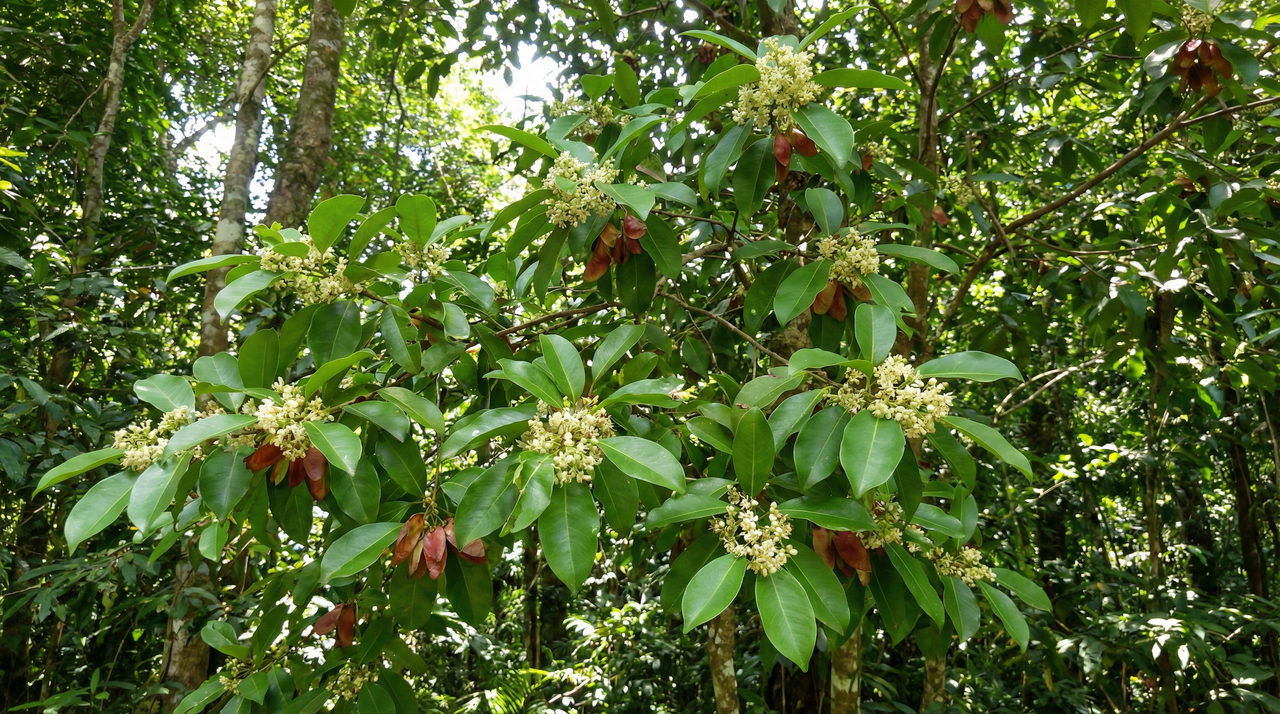
Derum earns its place in a permaculture food forest by being almost indestructible in conditions that would humiliate most trees. Cratoxylum arborescens colonizes peat swamps, waterlogged lowlands, and logged-out forest edges across Southeast Asia, and it does it fast, with a canopy presence and a medicinal chemistry that indigenous communities have relied on for centuries. What stopped me in my tracks the first time I really dug into this species wasn't the timber or the traditional wound treatments; it was learning that the same xanthone compounds responsible for its antimicrobial properties are also what make the leaves taste the way they do, bitter and astringent and weirdly compelling when cooked right. The plant's chemistry isn't separable from its flavor, its medicine, or its ecology. It's one integrated system.
Here's the thing nobody mentions: this is fundamentally a wetland pioneer, the tropical equivalent of a birch muscling into disturbed ground, except it's doing it in acidic, oxygen-poor peat while simultaneously producing a pharmacologically interesting suite of polyphenols and providing canopy structure for everything growing beneath it. If you garden in zones 10b through 12 and you've been looking for a fast canopy species that pulls ecological and utilitarian weight in a humid, low-nutrient site, Derum deserves a serious look. And if you've never heard of it, that gap in your plant knowledge is about to close.
Origin and History of Derum (Cratoxylum arborescens)
Botanical Background and Native Habitat
Derum, known botanically as Cratoxylum arborescens and colloquially as Geronggang across Malaysia and much of the Malesian region, is a quintessential Southeast Asian lowland tree.[1][2] Its native range stretches across Malaysia, Indonesia, Borneo, Sumatra, the Malay Peninsula, Thailand, and into Vietnam and the Philippines, where it colonizes peat swamp forests, freshwater swamps, riverine corridors, mixed dipterocarp forests, and secondary disturbed edges, almost always below 600 m elevation.[1][3][4] Think of it the way temperate gardeners think of birch or native sumac: a fast-moving pioneer that rushes into gaps left by disturbance, stabilizes soil, and starts cycling nutrients back into the system before slower species can find their footing.
Taxonomically, Cratoxylum arborescens sits in the Hypericaceae family (the same family as St. John's Wort) within the order Malpighiales, in a small genus of roughly six to eight species.[5][6] The IUCN currently assesses it as Least Concern overall, though local populations face real pressure from logging, agricultural conversion to oil palm, and ongoing habitat loss.[7][8] Related species including Cratoxylum cochinchinense and Cratoxylum acuminatum share overlapping ranges across Thailand, Vietnam, Laos, Cambodia, and the Indonesian archipelago, filling similar wet tropical niches, and face comparable fragmentation pressures despite their own Least Concern ratings.[9][10]
Visual Characteristics of Derum
In the forest, derum commands attention. It reaches 20 to 40 m tall with a straight bole, a narrow conical crown, and buttress roots that can extend up to 1.5 m from the trunk base, a practical adaptation for anchoring into the shallow or waterlogged soils of peat swamps.[4][11] The bark is greyish-brown, relatively smooth when young but developing fine fissures and conspicuous lenticels with age. Nick it, and a reddish to yellowish sap bleeds out almost immediately, a detail I find oddly satisfying as a fieldwork observation because it's the kind of thing that sticks in your memory once you've seen it.[3]
The leaves are simple and opposite, elliptic to lanceolate, leathery, and glossy, running 4 to 12 cm long. Young growth emerges reddish before settling into deep green, and if you hold a leaf to the light you can just make out the translucent glands scattered across the blade.[12] Flowers are small, fragrant, and pinkish-white to pale yellow, appearing in terminal and axillary clusters during the dry season (typically March through June).[11] Fruits follow as small woody capsules, around 8 to 15 mm long, splitting into three valves at maturity to release tiny, lightly winged seeds built for wind dispersal.[3] For comparison, related Yellow Cow Wood (C. acuminatum) tends toward a broader crown and bright yellow to pinkish-white flowers, while C. cuneatum is generally a smaller tree or shrub with narrower leaves, showing just how much variation the genus holds across the region.[13][10]
Traditional and Cultural Uses
Among Orang Asli, Temuan, Dayak, and Malay communities, derum has long been a practical medicine cabinet. Bark decoctions and leaf poultices were traditionally used for a range of gastrointestinal and inflammatory conditions, while the bark also served as a fish stupefacient and as a source of yellow to orange-brown dye.[14][15] These are uses that modern phytochemical research is beginning to validate, though the full clinical picture belongs to a later discussion.
The timber tells its own story. Derum's heartwood is yellowish, durable, and moderately hard, with a density of 400 to 700 kg/m³, making it serviceable for construction, furniture, boat building, flooring, and tool handles.[16] Beyond the practical, the tree carries cultural weight in indigenous communities, appearing in protective plantings near homes to ward off evil spirits and in shamanic rituals.[17][18] When I source Southeast Asian species for projects, I always look for suppliers who work with indigenous communities on benefit-sharing, and the research on derum makes that approach feel non-negotiable. Overharvesting and habitat loss are real threats to localized populations regardless of the species' overall conservation status, and the traditional knowledge embedded in these communities deserves both credit and protection.[19][20]
Interesting Facts About Derum
First formally described in the early 19th century, this tree is most widely known by its common name, Geronggang, across Malaysia and Indonesia.[5][6] What genuinely impresses me about this tree, from a resilient systems perspective, is how well its adaptations map onto the difficult environments it occupies. Buttress roots handle shallow peat soils; permeable lenticels on the bark facilitate gas exchange when roots sit in waterlogged conditions; mycorrhizal associations help it scavenge nutrients from notoriously oligotrophic peat swamps; and some related species resprout from lignotubers after fire.[21][22] In a permaculture guild, those traits translate into exactly the kind of resilience you want from a canopy species anchoring a restoration planting.
Pollination comes from bees, flies, and butterflies drawn to the dry-season flowers, and the lightweight winged seeds disperse by wind, birds, and small mammals, giving the tree multiple pathways for regeneration.[23][24] Ecologically, it functions as a nurse species in disturbed and secondary forests, building soil organic matter through leaf litter decomposition, supporting carbon sequestration, and creating habitat structure where little previously existed.[25] Growth rate under good conditions runs roughly 0.5 to 1.5 m per year in early stages, and lifespan is estimated at several decades to possibly over a century, though exact figures are difficult to nail down because tropical trees rarely produce the distinct annual rings that temperate researchers rely on.[26][27] While derum has been cultivated outside its native range in limited contexts, it remains fundamentally a Malesian tree, centered in the wet tropical landscapes that shaped it.[28]
Derum (Cratoxylum arborescens) Varieties and Sourcing
Notable Species in the Cratoxylum Genus
There are no named cultivars or recognized subspecies within Cratoxylum arborescens or its closest relatives in current botanical taxonomy.[29][30] What this section offers instead is genus-level diversity, which for a permaculture designer is actually the more useful frame anyway.
The anchor species, Cratoxylum arborescens, is a substantial presence: a tropical evergreen in the Hypericaceae family reaching 20 to 30 meters with a straight trunk up to 60 cm across and a dense crown native to Malaysia, Indonesia, Thailand, and parts of southern China.[31][32] Its reddish-brown wood is genuinely hard and decay-resistant, used traditionally in construction, furniture, and boat-building,[33][34] while the leaves and bark have served Malay and Indonesian communities for generations as treatments for fever, wounds, and diarrhea, backed by a rich load of bioactive xanthones with anti-inflammatory and antimicrobial properties.[35][36] That combination of durable timber and medicinal chemistry in a single canopy tree is exactly why I keep it on my radar for tropical food-forest designs.
Cratoxylum cuneatum, locally called Geronggang gajah (elephant's geronggang), offers a smaller-stature option at 10 to 20 meters with a canopy typically 5 to 10 meters wide.[37] I've seen specimens in Southeast Asian botanical collections, and those white-to-deep-rose flowers with golden stamens blooming from June through November are genuinely striking against the glossy dark foliage. Where the anchor species wants well-drained lowland forest, C. cuneatum is built for peat swamp conditions with acidic, waterlogged soils in the pH 3.5 to 5.0 range, growing at roughly 0.5 to 1 meter per year in wet seasons.[38][39] For anyone designing a wetland guild in USDA zones 10 to 12, that flood tolerance is a real functional advantage. Cratoxylum acuminatum overlaps in general form with the anchor species but is even harder to source and less studied in cultivation contexts.[40]
The absence of formal cultivar selection across the genus actually suits restoration work well. Wild-type provenance from local Southeast Asian seed sources tends to carry region-adapted genetics that no cultivar program has had the chance to flatten out.
Availability, Sourcing, and Conservation Notes
If you're based in the US or Europe, expect a genuine search. Derum and its genus relatives are rarely if ever stocked by standard nurseries in the West,[41][42] and I've found that the most reliable path is networking through tropical-plant societies or reaching out directly to Southeast Asian specialty suppliers. Seedlings where available typically run $5 to $15 USD, with seed packets in a similar range from vendors who carry them.[43][44] Stock fluctuates with season and supplier, so checking current listings with the Millennium Seed Bank at Kew or contacting botanical gardens like Missouri Botanical Garden is worth doing before you get your heart set on a specific species.[45][46]
The regulatory picture is relatively clean. Cratoxylum arborescens appears on no CITES appendix and carries no special USDA APHIS restrictions beyond standard plant import requirements,[47][48] which makes ethical international sourcing straightforward for growers in appropriate zones. Conservation status is Least Concern on the IUCN Red List,[49] though habitat loss from deforestation remains a genuine pressure on wild populations.[41] The way I see it, that gap between Least Concern status and real habitat pressure is precisely the opening for home-scale growers to contribute something meaningful, because every tree established from ethically sourced seed is a small act of ex-situ conservation.
Derum Propagation and Planting Guide
Derum is one of those plants that teaches you patience on one end and urgency on the other. Getting a tree established takes years. Getting the seed viable? You have maybe hours.
Propagation Methods for Derum
Seed is the most common and reliable way to propagate derum, and fresh seed performs remarkably well, with germination rates running 40 to 90% when conditions are right.[50][51] The catch is that "fresh" means it almost literally. These are recalcitrant seeds, losing viability rapidly once the capsules dehisce, so they must be sown immediately after collection with no dormancy break required.[52][53] I've collected from splitting capsules in humid tropical nurseries and the instinct is right: sow the same day. A 24-hour soak can help, but scarification is generally unnecessary.[54] The seeds themselves are tiny, just 1 to 2 mm in the body with thin membranous wings for wind dispersal, and the species exhibits polyembryony, meaning a single seed may carry multiple embryos.[55][56] Sow into a sand-compost or well-drained acidic mix and keep temperatures between 25 and 30°C under partial shade that mimics rainforest understory.[57]
Once you have established mother plants, vegetative methods open up. Air layering is where I'd start: success rates reach 80 to 90% within 2 to 3 months using rooting hormones, and I'd check for callus formation around the 6 to 8 week mark before assuming things are working.[58] Semi-hardwood cuttings treated with IBA at 1000 to 3000 ppm under mist give 40 to 70% success, a worthwhile option if air layering feels fiddly.[59] Cleft or veneer grafting onto congeneric rootstock achieves 60 to 80% success and becomes relevant when you want to preserve a specific flower color or timber form.[60] Tissue culture via shoot tips on MS medium with BAP and NAA is the most technically demanding option, suited to institutional settings rather than home nurseries.[61] All of these methods respond best during the rainy season under high humidity, and success rates vary considerably by location; consulting local forestry expertise is genuinely worth doing across Southeast Asia's microclimatic range.[52]
Soil, Site Selection, and Growing Conditions
Derum's native peat swamp origins create a tension every cultivator has to resolve: the tree is adapted to acidic, waterlogged conditions in the wild, but in a nursery or garden setting, you want drainage to prevent root rot while still maintaining moisture and acidity. The target soil pH sits between 4.5 and 6.0, tolerated up to 6.5, and the soil should be organic-rich, loose, and either peaty or a sandy loam with low bulk density below 0.8 g/cm³.[62][63] I learned the pH lesson from watching chlorosis develop in an early batch when my mix drifted too alkaline. Adding sulfur and switching to pine bark as a structural component brought things back quickly. Derum tolerates seasonal waterlogging through specialized breathing roots and aerenchyma, but you don't want standing water around roots long-term in cultivation.[64]
For containers, a mix of roughly 40 to 50% peat moss or coco coir, 30% perlite or coarse sand, and 20% pine bark or compost replicates those native conditions well. Mycorrhizal inoculation at planting can meaningfully benefit seedlings in nutrient-poor substrates.[65][66] Climate requirements are non-negotiable: annual rainfall above 2000 mm, temperatures between 20 and 35°C, humidity consistently above 70%, and zero frost tolerance.[2] Young plants prefer partial shade; mature specimens handle or actively prefer full sun.[67]
Planting Spacing and Technique
How you space derum depends entirely on what you're asking the tree to do. Timber plantations typically run 3 to 4 meters apart, which works out to roughly 1,111 trees per hectare at a 3 by 3 meter grid and keeps competition high enough to encourage straight upward growth.[68] For ornamental or home garden use, 8 to 12 meters gives the canopy room to express itself. Wider agroforestry or restoration plantings work at 10 to 20 meters, which accommodates the mature canopy of a tree that typically reaches 15 to 30 meters at full height.[69][70] Adequate spacing also reduces the fungal pressure that poor airflow creates in humid tropical conditions, something worth keeping in mind if you're planting into a dense polyculture guild.
Germination Timeline and Early Care
Sow fresh seeds into warm, moist, acidic media and you can expect germination in 7 to 21 days, with most seeds sprouting in the 10 to 14 day window at 25 to 30°C.[50][54] That 40 to 90% success rate drops fast if the seed isn't fresh, which circles back to the recalcitrant urgency mentioned above. Seedlings need partial shade in the first weeks; direct sun at this stage invites damping-off.[51] I label my trays carefully with derum because the first true leaves look deceptively like several other tropical pioneers and it's easy to lose track of what's what before the canopy form becomes distinctive. First fruiting from seed or grafted plants generally arrives at 3 to 5 years, so this is a long-game tree by any measure, and its pioneer ecology means it's built for exactly that kind of patient, incremental establishment.[50][71]
Derum Care Guide: Growing Cratoxylum arborescens
Everything about growing derum traces back to a single fact: this tree evolved in the peat swamp forests of Southeast Asia, and it remembers that. Get the climate, soil, and moisture right, and the tree rewards you. Ignore those fundamentals, and no amount of attention to pruning schedules or fertilizer programs will save it.
Climate, Hardiness Zones, and Temperature Tolerance
Geronggang is strictly a tropical tree, thriving between 24-32°C (75-90°F) and suitable only for USDA zones 10b-12.[41][72] Below 10-15°C (50-59°F), the tree begins sustaining damage, and there is no frost tolerance whatsoever.[73] I once left a containerized specimen outside when the forecast said 38°F, thinking it would be fine for one night. The leaf scorch the next morning taught me that "just above freezing" is still well inside the danger zone for these trees. If you're outside zones 10b-12, plan for greenhouse or indoor overwintering, and use frost cloth, burlap, and 4-6 inches of mulch if a cold snap threatens before you can move it.[74][75]
On the upper end, derum handles temperatures up to 35-40°C reasonably well through stomatal regulation and heat-shock proteins, provided humidity and soil moisture stay consistent.[76] Prolonged heat above that threshold combined with drought stress causes leaf scorch, chlorosis, and wilting, with seedlings and flowering trees being most vulnerable.[77] The tree has the physiology to handle tropical heat; it just needs the water and humidity to go with it.
Sunlight Requirements and Light Management
Young derum plants want 50-70% shade or dappled light, which mirrors the broken canopy conditions of their native forest gaps.[41] As they mature, they shift toward full sun or partial shade, needing at least 4-6 hours of direct sunlight daily to develop proper structure and eventually flower.[78] You'll see the warning signs early: leggy, elongated stems and yellowing leaves signal too little light, while leaf scorch on exposed margins tells you the tree isn't getting enough moisture to keep pace with the sun load. Neither problem is catastrophic if you catch it promptly.
Among the genus, Cratoxylum cuneatum behaves more like an aggressive pioneer, colonizing full gaps, while Cratoxylum acuminatum naturally tolerates lower light levels but gains sun tolerance in coastal settings when moisture is adequate.[79][40] Geronggang sits between those extremes, wanting more sun as it matures but always pairing that light with consistent moisture.
Watering Needs and Moisture Management
The peat swamp origin tells you everything here. Derum needs consistently moist, well-drained soil without standing water or waterlogging.[41] That sounds contradictory until you picture a peat swamp: water-saturated but freely draining through the organic matrix, never stagnant. Aim for 1-2 inches per week, increasing in hot or dry periods, and let the top 1-3 inches dry slightly before rewatering.[80] I find a simple finger-test in the top few inches prevents most moisture mistakes with tropical wetland trees like this one.
Drought tolerance is genuinely low, especially in young plants, which show wilting and tip burn quickly during dry spells.[81] Overwatering creates the opposite problem: root rot, yellowing leaves, and leaf drop follow when roots sit in stagnant moisture.[82] Use rainwater or dechlorinated water when possible, and avoid saline or alkaline sources entirely. The related species C. acuminatum and C. cuneatum build moderate drought resilience after a year or two of establishment; Geronggang stays more dependent on consistent irrigation throughout its life.
Soil Preferences and Fertility Needs
Derum is native to oligotrophic peat swamps, which means it evolved in genuinely low-nutrient conditions and is very good at extracting what it needs from acidic organic soils. Target a pH of 4.0-6.5, with a tolerance ceiling around 7.0, in loamy, sandy, or peaty soils rich in organic matter.[41][83] In my landscape work, I think of it the same way I think about bald cypress or similar Florida wetland species: heavy mulching and annual pH testing prevent most of the nutrition headaches. Once you drift into alkaline territory, iron, manganese, and zinc become locked up in the soil and the tree shows it through interveinal chlorosis that no amount of fertilizer will fix until the pH comes down.
Over-fertilizing a plant adapted to low nutrients is one of the fastest ways to lose it. Use a balanced slow-release NPK (10-10-10) at roughly 50-100 g per mature tree, two or three times per growing season, supplemented with organic compost or mulch.[84][85] Soil test every one to three years and treat those rates as a starting point, not a prescription.[81] I catch manganese deficiency early in my own projects with periodic foliar observation; interveinal yellowing on younger leaves is the tell. Excess nitrogen or salt buildup causes leaf burn and stunting that can be mistaken for disease, so when in doubt, do less.
Pruning, Maintenance, and Seasonal Rhythm
Patience is the core skill with derum. Reproductive maturity arrives somewhere between 4-10 years, with first flowering often appearing at 3-5 years once the tree reaches 4-8 meters.[86] Flowering typically runs April through June, synchronized to monsoon cycles, with leaf flush following the rainy season.[87] In my guild designs, I pair slow-maturing trees like this with faster-growing nitrogen-fixers and ground covers that mimic early peat-swamp succession, keeping the system productive while the canopy species establishes.
Prune lightly during the dry season to remove dead, crossing, or damaged branches, and time any structural cuts after flowering to protect the following season's buds.[88][89] I never remove more than 25% of the canopy in a single year; this keeps the tree healthy and aligns with reduced-impact standards whether you're managing for timber, medicinal leaf harvest, or just landscape structure. Keep tools sharp and clean to prevent infection pathways.
Watch for wood borers, termites, caterpillars, and fungal issues like Phytophthora root rot and Cercospora leaf spot, all of which are more likely when drainage or air circulation is poor.[90][91] Good site selection and proper spacing head off most of these problems before they start. Most of what we know about Geronggang in cultivation comes from Southeast Asian forestry research, so if you're growing it outside its native range, start with small trials and consult local tropical horticulturists before scaling up.
Harvesting Derum (Cratoxylum arborescens)
Derum follows a dependable tropical rhythm: flowering runs from March through May, with fruits developing over the next 3-6 months and the harvest window falling between June and October, right in the thick of the wet season.[92][93] Growing in humid subtropical conditions, I've found that wet-season fruiting patterns like this are actually pretty legible once you know what you're watching for. The color shift is your clearest cue: Geronggang fruits move from green toward reddish-brown to dark as they ripen, while related species show a progression from green to yellowish-brown before capsules begin splitting to release their winged seeds.[94][95]
Timing and Cues for Derum Harvest
Peak productivity doesn't arrive until around 5-7 years of age, at which point a well-grown specimen can yield roughly 10-20 kg annually.[50][96] I always tell people to interplant with faster-maturing guild companions in the early years rather than waiting around for Derum to step up. At full maturity the tree can reach 10-30 meters over 10-25 years[97], so fruit harvest at height eventually requires either a very young tree or a very long pole.
Yield, Flavor, and Harvest Technique for Derum Leaves
The leaves, not the fruits, are the primary culinary target in traditional Southeast Asian use. Raw, they're tough and fibrous with a bitter, astringent quality that tannins are largely responsible for; cooked or boiled, they soften into something herbal and earthy with a mild sourness that gets compared to tamarind.[2][98] I've worked with familiar souring agents like tamarind and hibiscus for years, so that flavor profile makes some intuitive sense to me, but I still treat Derum primarily as a medicinal tree in my designs and only experiment with leaves in small, thoroughly cooked batches. The fruits tell a similar story: largely medicinal rather than culinary, with only sparse traditional reports of young fruits from related species being edible.[2][37] Scientific validation for edibility remains thin across the board[99], and tannin content can vary meaningfully by region and specimen.[100] Pinching young shoots regularly encourages the tender new growth that's actually palatable; older leaves get progressively woodier and more intensely bitter. Approach any culinary use with caution and, ideally, with guidance from someone who has prepared it before.
Derum (Cratoxylum arborescens) Preparation and Uses
Culinary Uses and Edibility of Derum
Derum is not a food plant in any meaningful sense. The fruits are small, dry, dehiscent capsules with no fleshy material worth eating, and there are no reliable records confirming their edibility.[2] Before even getting to the leaves, the Hypericaceae family background deserves a mention. Some members contain hypericin-like compounds that can be irritating, and while no acute toxicity has been reported for this species specifically, the absence of comprehensive safety data means potential photosensitivity, herb-drug interactions, and gastrointestinal upset from large amounts are all real concerns.[101][15] I always recommend starting with very small amounts and consulting someone with local traditional knowledge before experimenting with the leaves or bark for any purpose. The leaves themselves contain xanthones and phenols with demonstrated bioactivity, which tells you something: this is more a medicine tree than a kitchen ingredient.[102]
That said, the young leaves and shoots do have a documented place in traditional Southeast Asian cooking, particularly in Malaysia, where they appear in soups, stir-fries, and ulam (eaten raw or after blanching) and are occasionally added to asam pedas for a souring note.[103][104] Related species flesh out what to expect. The leaves of Cratoxylum cuneatum are mildly bitter and astringent with a crisp texture when young and a slightly sour, tangy edge.[105] Those of C. acuminatum, traditionally boiled for 5 to 10 minutes before eating, carry a similar slightly acidic character and a respectable nutritional profile in dried form: roughly 10 to 15 percent protein, 20 to 25 percent carbohydrates, 5 to 8 percent fiber, meaningful levels of vitamins C and A, and minerals including potassium and iron.[15][106] That vitamin C and mineral density helps explain why these leaves earned a place in traditional diets at all.
Preparation technique matters here more than with most greens. Boiling, blanching, or steaming reduces bitterness and improves texture; drying deepens earthy notes while fermentation can introduce sour or umami tones.[2][107] I think about this the way I approach certain wild mustards or bitter amaranth: a quick blanch followed by a stir-fry with aromatics transforms what would otherwise be unpleasantly sharp into something genuinely good. The same principle applies here. Rigorous modern safety data for Geronggang specifically remains thin, so treat everything above as ethnobotanical record rather than a green light, and connect with local traditional practitioners before working these leaves into your kitchen.
Traditional Medicinal Preparations
The same leaves that find their way into soups also form the basis of traditional medicinal preparations, which is where the tree's real cultural weight sits. Malaysian ethnobotanical practice describes leaf decoctions made from 20 to 30 grams of dried leaves simmered in 600 to 900 ml of water down to around 200 to 300 ml, taken once or twice daily.[108][109] Crushed fresh leaves are applied as poultices for wounds. Bark decoctions use 10 to 20 grams per liter boiled for 15 to 20 minutes, and across related species tinctures in 40 to 60 percent alcohol are also recorded.[35] None of these have standardized pharmaceutical dosages behind them. I present them here as a record of indigenous practice, not as instructions for home use. The lack of human clinical trials means anyone interested in medicinal applications should be working alongside a qualified practitioner who knows both the plant and the person, not extrapolating from traditional dosage ranges found in ethnobotanical surveys.
Non-Food Uses of Derum
Where derum truly earns its place in human cultures is as a timber tree. The reddish-brown wood is durable, moderately dense, and resistant to termites, which makes it useful for construction, furniture, boat-building, fuelwood, and charcoal production.[89][110] Having seen straight-grained Cratoxylum lumber in Southeast Asian markets, I'd describe it as somewhere between a lighter mahogany and a dense teak in appearance, warm-toned and with a quiet elegance that explains why it ends up in furniture workshops. The bark of some species yields a yellow textile dye, which is one of those facts that consistently surprises people unfamiliar with the genus.[111] As an ornamental, the pink-red flowers and clean form make it a genuinely attractive specimen for tropical landscapes, while its potential as a shade provider, windbreak, and leaf-litter mulch producer in permaculture systems is real for growers in zones 10b through 12.[112][3] In its native range, this tree has always been worth far more standing than sawn, and that perspective translates well into a permaculture ethic.
Derum Health Benefits and Medicinal Uses
What makes derum pharmacologically interesting isn't any single compound but the sheer density of its secondary metabolite profile. The tree produces a remarkably rich suite of xanthones, flavonoids, phenolics, tannins, triterpenoids, and chromones across its leaves, bark, and roots, with alkaloids and steroids conspicuously absent from the picture.[113][114][115] That chemistry underpins essentially every documented health application of this tree, from wound poultices to fever decoctions, so understanding the compounds first makes the traditional uses much easier to evaluate.
Key Phytochemicals in Derum: Xanthones, Flavonoids, and Phenolics
Xanthones are the headliners here. More than 20 derivatives have been identified in Cratoxylum arborescens, including cratoxylumone A and B, jacareubin, and the mangostin family (α, β, and γ), with concentrations running highest in the leaves, bark, and roots.[116] Research on Malaysian populations suggests that acidic lowland soils (pH 5.5–6.5) and dry-season water stress push xanthone production higher, which tracks with what I'd expect from stress-induced secondary metabolism in other Southeast Asian medicinal trees I work with.[117][118] If you're wild-harvesting or sourcing dried material, late dry season from acidic-soil populations is likely your most potent window.
Leaves consistently outperform bark on antioxidant metrics, with total phenolics reaching up to 185 mg GAE/g dry weight and flavonoids in the 45–65 mg/g range in related species.[119][120] Those numbers matter because the xanthones and flavonoids (quercetin, kaempferol, and their glycosides) aren't just academic curiosities; they're the direct drivers of the anti-inflammatory, antimicrobial, and cytotoxic activities documented in laboratory studies.
Traditional Medicinal Uses Across Southeast Asia
Across Malay, Thai, Malaysian, and Indonesian traditional medicine, Geronggang has a well-established record as a practical remedy for a specific cluster of conditions: diarrhea, fever, skin infections and wounds, inflammation, post-partum recovery, and gastrointestinal complaints.[121][122] The preparations are straightforward: leaf poultices applied directly to wounds and skin, or decoctions made from 5–10 g of dried bark or leaf material for internal complaints.[111] That dosage range appears throughout the ethnobotanical literature and, as I'll note in the safety section, seems to keep intake conservative enough to avoid high-dose concerns.
Documented Pharmacological Activities
The preclinical research on Cratoxylum arborescens benefits is genuinely compelling, even if it hasn't yet crossed into human trials. On the anti-inflammatory side, bark extracts inhibit COX-2, TNF-α, IL-6, NF-κB, and nitric oxide production in LPS-stimulated macrophages, with carrageenan-induced paw edema reduced by up to 65% at 200 mg/kg in rodent models.[122][123] That's a meaningful result, and it maps cleanly onto the traditional wound and inflammation applications. Antioxidant capacity is similarly strong, with DPPH IC50 values in the 10–20 μg/mL range and ferric-reducing power comparable to ascorbic acid.[123][120]
Antimicrobial activity covers both Gram-positive organisms (Staphylococcus aureus, Bacillus subtilis) and Gram-negative (Escherichia coli), plus Candida albicans, with MIC values of 12.5–200 μg/mL and consistently stronger effects against Gram-positives, likely through membrane disruption.[124][125] Leaf extracts also show analgesic effects in mouse models and antidiabetic activity via α-glucosidase inhibition (IC50 below 50 μg/mL for isolated flavonoids), with improved glucose uptake in diabetic rat studies.[126][126] The isolated xanthones induce apoptosis and G2/M cell-cycle arrest in HeLa and MCF-7 cancer cell lines at IC50 values of 5–30 μg/mL, with wound-healing studies in animals showing accelerated closure and collagen synthesis consistent with the traditional topical record.[127][128]
All of it, every single result listed above, comes from in-vitro assays or animal models. No human clinical trials exist for derum or any Cratoxylum species.[121][129] The preclinical data validates the traditional applications as plausible rather than proven.
Nutritional Profile of Derum Fruit and Leaves
The fruit's nutritional profile is modest by any measure: roughly 45–55 kcal per 100 g fresh weight, 0.5–1.2 g protein, minimal fat, around 10–13 g carbohydrates, and 15–25 mg vitamin C, with moisture content between 85–90%.[130][131] That vitamin C figure is in the neighborhood of a guava or soursop, but nowhere near exceptional. Having eaten around with similar Southeast Asian understory fruits, I'd say derum fits squarely in the "pleasant minor edible" category rather than anything you'd grow primarily for nutrition. Comprehensive nutrient tables don't exist yet, and all values remain preliminary.[132] The fruit and leaves do contribute phenolic antioxidants through the same flavonoid chemistry described above, which adds modest functional value on top of the basic macro picture. Young leaves of related species are occasionally eaten as a cooked vegetable in local cuisines, while the anti-nutritional tannins and oxalates present in some Cratoxylum relatives are reduced by cooking.[111]
Safety Considerations and Toxicity Profile
Acute toxicity is genuinely low. Oral LD50 values in rodents exceed 2000 mg/kg, subchronic evaluations show no significant organ toxicity at therapeutic doses, and the traditional use record contains no documented cases of human poisoning or severe adverse events.[133][122] That said, low acute toxicity is not the same as blanket safety, and I want to be direct about where the gaps are.
High tannin content can cause mild gastrointestinal upset, nausea, and abdominal discomfort, and xanthones show hepatotoxicity signals at elevated doses in vitro.[134][135] Safety during pregnancy, lactation, and concurrent medication use is entirely undocumented.[136][137] My experience working with other xanthone-rich plants has taught me that traditional decoction dosages (5–10 g dried leaf or bark) keep intake at a level that appears to sidestep the high-dose cytotoxicity signals visible in vitro. Preparation method matters. Because human safety data remains limited, I'd always recommend consulting a qualified practitioner before using derum medicinally, and approaching any unfamiliar wild plant with appropriate caution regardless of its traditional history.
Derum Pests and Diseases
Natural Resistance and Common Pests of Derum
One of the first things I noticed when growing Derum seedlings in my nursery setup was how little insect pressure they attracted once they pushed their first true leaves. Crush a leaf and you'll understand why: there's a sharp, resinous scent that signals exactly why bugs leave this tree largely alone. That's the phytochemical arsenal at work. Geronggang produces a rich mix of xanthones, phenolic compounds, tannins, and essential oils that provide genuine biochemical deterrence against many common insects.[138][139] In native and cultivated settings alike, severe insect outbreaks are poorly documented and appear genuinely uncommon.[140][141]
That said, no tree is untouchable. Young saplings and plants under stress are the most realistic targets, and the genus-level data flags defoliating caterpillars, leaf beetles (including Oides brousi on related species), aphids, scale insects, wood-boring cerambycids, bagworms, and termites as conditional threats.[142][143] Most of this data comes from related hardwoods and plantation forestry rather than Derum specifically, so I'd treat the list as a watch-for rather than an expect-soon. In my experience, growing Derum within a diverse guild rather than in isolated monoculture rows does a lot of the pest management work passively; good airflow through mixed plantings noticeably reduces aphid pressure without any targeted intervention. When monitoring is needed, an IPM approach emphasizing proper spacing, drainage, neem-based sprays, and biological controls covers most scenarios.[144]
Disease Vulnerabilities and Integrated Management
The same secondary metabolites that deter insects also confer meaningful antifungal and antimicrobial activity, so Derum's disease resistance profile has a similar story: moderate and real, but conditional.[145] The vulnerabilities that do appear are almost always tied to environmental stress rather than any inherent weakness. Fungal leaf spots (Cercospora, Colletotrichum, Pestalotiopsis), anthracnose, canker, dieback, and root rots from Phytophthora and Fusarium all become realistic concerns under prolonged high humidity, poor air circulation, or waterlogged soil.[146][147] Bacterial leaf blight and Xanthomonas-type spots can also appear in high-humidity conditions, though no major viral issues are widely reported.[148]
I learned this lesson the hard way with an early over-watered planting: leaf spots showed up fast, and wider spacing with better drainage fixed the problem before the next season. Growing analogous Hypericaceae relatives taught me that even a gentle grade for water runoff prevents Phytophthora issues across multiple seasons. No disease-resistant cultivars exist for this species, and much of the pathology data is inferred from C. cuneatum, C. acuminatum, and general tropical forestry research rather than direct Derum trials.[149] That research gap doesn't worry me much; the genus-level phytochemical data combined with my experience growing comparable tropical canopy trees gives me confidence this is a low-maintenance tree when sited thoughtfully. Management centers on prevention: well-drained acidic soil, adequate spacing, vigilant monitoring of young plants, and copper-based fungicides or biological controls reserved for when cultural fixes aren't enough.[150][151]
Derum in Permaculture Design
Derum is a tree that rewards designers who do their homework before they plant. Its ecological story is coherent and fascinating, but the conditions it demands are non-negotiable, and understanding them up front will save you a lot of heartbreak.
Climate and Growing Zones for Derum
Cratoxylum arborescens is built for the wet tropics, and it doesn't apologize for that. Optimal annual rainfall sits between 2000 and 3000 mm, with survival possible down to around 1000-1500 mm per year.[152][153] It's predominantly a lowland species, growing from sea level up to about 500-800 m elevation.[154] Soils in its native range are acidic, often waterlogged peat, with a pH between 4.5 and 6.5.[154][155] Humidity above 80% is the norm, and in cultivation it performs best in full sun to partial shade, with reliable warmth year-round.[78]
Cold is simply not part of this tree's vocabulary. All Cratoxylum species show low cold tolerance and require a strictly tropical environment to thrive.[41][156] Frost of any kind is fatal. I'd only attempt this tree in a reliably warm USDA zone 10b or above, and even then I'd be reaching for the most sheltered microclimate on the property, somewhere with reflected warmth, consistent moisture, and no cold air drainage. Southern Florida represents about the outer edge of viable cultivation in the continental U.S., and even there it's uncommon outside botanical collections.[78][157] If your zone has any real winter bite, this isn't the tree for your open garden. That's not a limitation to work around; it's a design parameter to respect.
Ecosystem Functions and Pollination Ecology of Derum
Within its climate envelope, derum earns its place several times over. It's a fast-growing, light-demanding pioneer that colonizes gaps in lowland dipterocarp rainforests and peat swamp forests, actively facilitating regeneration rather than just occupying space.[10] Mature trees push 20-40 m with straight trunks up to a meter in diameter and dense canopies that moderate light, temperature, and moisture for everything growing below.[88]
Its pollination ecology is one of the things I find genuinely compelling about this genus. The flowers are small, white to pinkish, with numerous stamens and abundant nectar, arranged in terminal or axillary panicles.[158] Bees are the primary and most effective pollinators, with flies, beetles, and moths showing up as secondary visitors; bee-mediated pollination yields noticeably higher fruit set.[159] Flowering is diurnal and tends to peak in the dry season. I've watched stingless bees and syrphid flies work similar small white tropical flowers with real intensity in Southeast Asian-style food forests, the kind of quiet, purposeful pollinator activity that tells you a plant is genuinely supporting the local insect community rather than just tolerating it.
The tree exhibits a mixed mating system that favors outcrossing through protandry or protogyny, which means a single isolated specimen isn't going to perform as well as a small grove or a connected planting.[160] Habitat fragmentation is a documented threat to pollination success, which has direct implications for permaculture designers.[159] In every design I do in tropical or subtropical climates, I advocate for connected plantings and pesticide-free buffer zones specifically because of this kind of dependency. An isolated tree surrounded by chemical monoculture isn't functioning ecologically, regardless of how well it's watered.
Once pollinated, fruits are dispersed primarily by birds, particularly hornbills and barbets, with secondary contributions from mammals, ants, and wind.[161] The tree supports epiphytes, provides habitat for insects and small mammals, and stabilizes peat soils through its root system while contributing to nutrient cycling via mycorrhizal associations and relatively fast-decomposing leaf litter that releases nitrogen and phosphorus back into the system.[162][163] Derum is not a nitrogen fixer. Its soil-building contribution comes through litter decomposition and mycorrhizal phosphorus uptake, not through fixing atmospheric N.[164]
Forest Layer and Guild Placement for Derum
In a tropical permaculture food forest, derum belongs in the canopy or upper subcanopy layer. It typically grows 15-30 m tall with a straight bole up to 60 cm in diameter and a dense, upright-to-rounded crown.[41] Seedlings are moderately shade-tolerant, managing at around 20-30% light, but the tree is light-demanding overall and will push upward fast once established, much like Macaranga or Cecropia species I've observed in regenerative tropical plantings.[165] Give it a sheltered start, then get out of its way.
It forms ectomycorrhizal associations that are particularly valuable in the acidic, phosphorus-poor soils it favors, and it co-occurs naturally with dipterocarps like Shorea and Dipterocarpus, making those species logical guild companions in a restoration-oriented planting.[166][167] The fast-decomposing leaf litter is a genuine advantage I'd lean into for acidic-soil bed building; where slower canopy trees leave you waiting years for meaningful litter accumulation, this one gets to work relatively quickly.[168]
For designers working with the broader genus, it's useful to know that not every Cratoxylum occupies the same layer. Cratoxylum cuneatum tends toward a smaller 5-20 m subcanopy form suited to swamp margins, while Cratoxylum acuminatum can function anywhere from shrubby understory to early-successional canopy depending on conditions and site.[37][169] That variation gives designers some flexibility in layering the genus across a guild, with the anchor species anchoring the top and congeners filling mid and lower strata where light and moisture conditions allow. As a pioneer in any of these roles, the tree's primary gift to a young food forest is successional momentum: it establishes the shade, microclimate, and soil biology that more demanding species need to follow.
The Tree That Reminded Me to Sit With "I Don't Know Yet"
I came to Derum through the medicinal literature first, chasing those xanthone profiles, and what stopped me wasn't the chemistry but the gaps around it. A tree this ecologically generous, this deeply woven into Orang Asli and Dayak life, and we're still barely past preclinical. That humility is its own kind of lesson. Some plants don't need me to advocate for them; they need me to pay attention, go slowly, and say that plainly.
Sources 169
- Cratoxylum arborescens (Blanco) Blume ↩
- Cratoxylum arborescens - Useful Tropical Plants ↩
- Hypericaceae in Malesia ↩
- Tree Flora of Sabah and Sarawak ↩
- Plants of the World Online - Cratoxylum arborescens ↩
- Hypericaceae in Malesia ↩
- Cratoxylum arborescens ↩
- Cratoxylum arborescens ↩
- Flora of China: Cratoxylum cochinchinense ↩
- Cratoxylum acuminatum ↩
- Cratoxylum arborescens ↩
- Flora Malesiana Series I - Volume 5: Guttiferae ↩
- Cratoxylum cuneatum - Useful Tropical Plants Database ↩
- Ethnobotanical Uses of Plants in Peninsular Malaysia ↩
- Ethnobotany of Hypericaceae in Southeast Asia ↩
- Timber Properties of Malaysian Trees ↩
- Ethnobotanical Survey of Medicinal Plants Used by the Temuan Indigenous Community in Malaysia ↩
- Cultural Significance of Geronggang in Dayak Folklore ↩
- Indigenous Knowledge and Cultural Appropriation of Southeast Asian Plants ↩
- Medicinal Plants of Malaysia: Uses and Sustainability ↩
- Ecological Adaptations of Cratoxylum Species in Southeast Asian Wetlands ↩
- Peat Swamp Forests of Southeast Asia: Ecology and Conservation ↩
- Pollination Biology of Tropical Trees ↩
- Seed Dispersal by Vertebrates in Tropical Forests ↩
- The Ecology of Tropical Rainforests in Southeast Asia ↩
- Flora Malesiana ↩
- University of Malaya, Tropical Tree Database ↩
- Cratoxylum arborescens (tree) - World Agroforestry ↩
- Plants of the World Online - Cratoxylum cuneatum ↩
- World Flora Online ↩
- Cratoxylum arborescens (Geronggang) ↩
- Geronggang - Timber Species ↩
- Timber Properties of Geronggang ↩
- Timber Trees of Southeast Asia ↩
- Ethnobotany of Cratoxylum Species ↩
- Phytochemistry of Cratoxylum arborescens ↩
- Cratoxylum cuneatum - Useful Tropical Plants ↩
- Peat Swamp Forests and Associated Flora ↩
- Cratoxylum cuneatum in Southeast Asian Flora ↩
- Cratoxylum acuminatum - Useful Tropical Plants Database ↩
- Cratoxylum arborescens - Useful Tropical Plants Database ↩
- Cratoxylum cuneatum ↩
- Geronggang (Cratoxylum arborescens) Seedlings for Sale ↩
- Cratoxylum cuneatum Seeds ↩
- Millennium Seed Bank - Kew Gardens ↩
- Cratoxylum cuneatum ↩
- CITES Species + ↩
- International Trade in Plants: APHIS Regulated Imports ↩
- IUCN Red List: Cratoxylum arborescens ↩
- Propagation and Cultivation of Tropical Trees: Cratoxylum Species ↩
- Propagation of Cratoxylum arborescens: Seed Germination and Early Growth ↩
- Propagation of Tropical Trees: Cratoxylum Species ↩
- Seed Storage Behaviour of Forest Tree Species of South and Southeast Asia ↩
- Seed Germination and Vegetative Propagation of Cratoxylum cuneatum ↩
- Flora Malesiana: Cratoxylum arborescens ↩
- Polyembryony in Cratoxylum (Hypericaceae) ↩
- Seed Germination and Nursery Techniques for Southeast Asian Timbers ↩
- Propagation Techniques for Southeast Asian Timber Trees ↩
- Vegetative Propagation Techniques for Southeast Asian Flora ↩
- Grafting Compatibility in Cratoxylum Genus ↩
- Micropropagation of Medicinal and Aromatic Plants: Cratoxylum arborescens ↩
- Ecology of Cratoxylum arborescens in Malaysian Peat Swamps ↩
- Peat Swamp Forests of Southeast Asia ↩
- Soil Requirements for Dipterocarp and Associated Trees in Borneo ↩
- Horticultural Guidelines for Southeast Asian Trees ↩
- Cultivation Guide for Tropical Trees: Cratoxylum spp. ↩
- Peat Swamp Forest Flora of Malaysia ↩
- Plantation Guidelines for Cratoxylum arborescens ↩
- Cratoxylum spp. Cultivation and Silviculture ↩
- Cultivation and Management of Tropical Hardwoods ↩
- Phenology and Growth of Geronggang (Cratoxylum cuneatum) ↩
- USDA Plant Hardiness Zone Map ↩
- Missouri Botanical Garden Plant Finder - Cratoxylum arborescens ↩
- Frost Damage in Tropical Plants - University of Florida IFAS Extension ↩
- Tropical Plant Frost Damage - University of Florida IFAS Extension ↩
- Physiological Responses of Tropical Trees to Heat Stress ↩
- Heat Tolerance in Peat Swamp Forest Species: Cratoxylum arborescens ↩
- Tropical Trees: Light Requirements and Deficiency Symptoms ↩
- Flora Malesiana ↩
- Cratoxylum arborescens - Missouri Botanical Garden Plant Finder ↩
- Symptoms of Water Stress in Ornamental Trees - University of Florida IFAS Extension ↩
- Drought Tolerance in Tropical Trees - Journal of Ecology ↩
- Peat Swamp Forests of Malaysia: Nutrient Dynamics ↩
- Nutrient Management for Tropical Trees - FAO Guidelines ↩
- Micronutrient Deficiencies in Southeast Asian Timber Species ↩
- Life History of Southeast Asian Trees: Reproductive Phenology ↩
- Flora of China - Cratoxylum cochinchinense ↩
- Cratoxylum arborescens: Ecology and Silviculture ↩
- Cultivation of Southeast Asian Timber Trees - FAO Report ↩
- Pests and Diseases of Tropical Timber Trees in Southeast Asia ↩
- Sustainable Management of Non-Timber Forest Products in Southeast Asia ↩
- Phenology of Cratoxylum arborescens in Southeast Asian Forests ↩
- Fruiting Patterns of Hypericaceae in Borneo ↩
- Cratoxylum cuneatum: Morphology and Ecology ↩
- Cultivation Guide for Geronggang (Cratoxylum cuneatum) ↩
- Geronggang (Cratoxylum arborescens) Plantation Guide ↩
- Silviculture of Cratoxylum Species in Southeast Asia ↩
- IOP Conference Series: Earth and Environmental Science (Ethnobotanical Study) ↩
- Plants of the World Online ↩
- Aroma Profiles of Tropical Hypericaceae Plants ↩
- Toxicity of Hypericaceae Species ↩
- Ethnobotanical Uses of Cratoxylum arborescens in Malaysia ↩
- Ethnobotanical Uses of Cratoxylum arborescens in Malaysia ↩
- Traditional Vegetables of Southeast Asia - Geronggang ↩
- Edible Wild Plants of Malaysia ↩
- Bioactive Compounds in Tropical Fruits and Leaves ↩
- Culinary Herbs and Wild Edibles in Malaysian Forests ↩
- Medicinal Plants of Sabah, Malaysia ↩
- Traditional Uses of Mampat in Malaysian Folk Medicine - ResearchGate ↩
- Uses and Silviculture of Cratoxylum Species ↩
- Ethnobotany of Cratoxylum species ↩
- Cratoxylum arborescens (Geronggang) ↩
- Phytochemical Constituents and Pharmacological Activities of Cratoxylum arborescens ↩
- Xanthones from Cratoxylum arborescens and Their Biological Activities ↩
- Phytochemical and Pharmacological Review of Cratoxylum genus ↩
- Phytochemical and Pharmacological Review of Genus Cratoxylum ↩
- Influence of soil and environment on xanthone production in Cratoxylum ↩
- Seasonal Variation in Secondary Metabolites of Cratoxylum formosum Leaves ↩
- Quantitative Analysis of Phenolics and Flavonoids in Cratoxylum Species ↩
- Antioxidant Activity of Leaf Extract from Cratoxylum arborescens ↩
- Ethnopharmacological Survey of Cratoxylum arborescens in Malaysian Traditional Medicine ↩
- Traditional Uses and Toxicity Profile of Malaysian Medicinal Plants: Cratoxylum spp. ↩
- Antioxidant and anti-inflammatory activities of Cratoxylum arborescens extracts ↩
- Antimicrobial screening of Malaysian medicinal plants including Cratoxylum arborescens ↩
- Phytochemical Investigation and Antibacterial Properties of Cratoxylum arborescens ↩
- Analgesic and phytochemical evaluation of Cratoxylum arborescens ↩
- Xanthones from Cratoxylum arborescens and Their Cytotoxic Effects ↩
- Wound Healing Activity of Cratoxylum cuneatum Bark Extract ↩
- Anticancer Potential of Cratoxylum Species: A Review ↩
- Nutritional Composition of Selected Underutilized Fruits in Malaysia ↩
- Wild Edible Fruits of Southeast Asia: Nutritional Profiles ↩
- Nutritional and Phytochemical Composition of Selected Wild Fruits in Malaysia ↩
- Toxicity Evaluation of Cratoxylum arborescens Leaves Extract ↩
- Toxicity Assessment of Cratoxylum Species Extracts ↩
- Traditional Medicinal Plants of Malaysia: Safety and Efficacy ↩
- Traditional Medicinal Plants of Malaysia: An Ethnopharmacological Review ↩
- Toxicity Evaluation of Southeast Asian Medicinal Plants ↩
- Phytochemical and Pharmacological Review of Cratoxylum arborescens ↩
- Phytochemical Defenses in Cratoxylum Species ↩
- Pests and Diseases of Tropical Trees ↩
- Insect Pests of Tropical Forestry ↩
- Insect Pests of Tropical Trees in Southeast Asia ↩
- Insect Pests of Tropical Trees in Southeast Asia ↩
- Integrated Pest Management for Tropical Trees ↩
- Phytochemical and Pharmacological Review of Cratoxylum Species ↩
- Forest Pathology in Southeast Asia ↩
- Pestalotiopsis Leaf Spot on Woody Plants ↩
- Diseases and Pests of Tropical Forest Trees ↩
- Plants of the World Online: Cratoxylum arborescens ↩
- Management of Pink Mampat in Southeast Asia ↩
- Diseases of Tropical Hardwoods in Southeast Asia ↩
- Flora Malesiana ↩
- Plants of the World Online ↩
- Cratoxylum arborescens ↩
- Plants of the World Online: Cratoxylum arborescens ↩
- Geronggang (Cratoxylum arborescens) - Plant Profile ↩
- Missouri Botanical Garden Plant Finder ↩
- Pollination Biology of Cratoxylum Species in Malaysian Dipterocarp Forests ↩
- Pollination Biology of Cratoxylum arborescens ↩
- Floral Morphology and Breeding Systems in Hypericaceae ↩
- Seed Dispersal and Pollination in Hypericaceae Family Trees ↩
- Cratoxylum arborescens (Blume) Blume ↩
- Mycorrhizal Associations in Tropical Trees ↩
- Nutrient Cycling in Southeast Asian Rainforests ↩
- Shade Tolerance and Regeneration of Pioneer Trees in Tropical Asia ↩
- Mycorrhizal Associations in Hypericaceae ↩
- Soil Nutrient Dynamics and Tree Species in Dipterocarp Forests ↩
- Functional Traits and Conservation Value of Peat Swamp Trees ↩
- Ecology of Cratoxylum in Peat Swamp Forests ↩