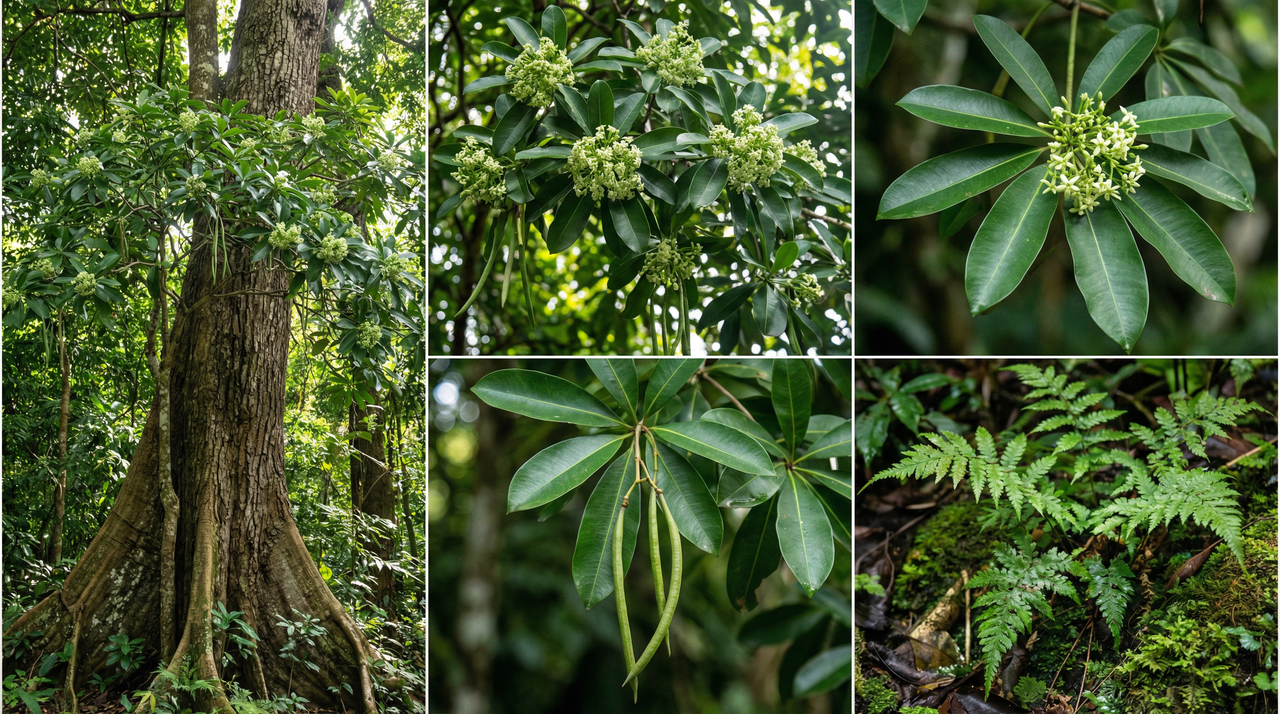
The name Devil Tree alone stops people cold. I've watched it happen at nurseries, at plant swaps, even at design consultations where I'd slip it into a guild sketch and wait. "Devil Tree?" And then comes the look, somewhere between fascination and suspicion, which is honestly the most accurate first response you can have to Alstonia scholaris. What gets me, though, is that the very same tree earned its other common name, Scholar Tree, because rural communities across tropical Asia used its wide, pale leaves as a surface to write on, a kind of living blackboard.[1] One plant, two names pulled from opposite ends of human experience: the classroom and the ghost story.
That contradiction isn't just folklore trivia. It tells you something structurally true about this tree, that it's generous and difficult in equal measure, and that the cultures living alongside it for centuries figured that out long before Western horticulture started cataloging its alkaloids or flagging it as invasive in Florida and Hawaii. I've spent a lot of time with plants that carry complicated reputations, and the Devil Tree earns every layer of its.
Devil Tree Origin, History, and Cultural Significance
Botanical Background and Native Range
The devil tree, known botanically as Alstonia scholaris, is a tropical evergreen native to an impressively wide arc of territory: the Indian subcontinent, southern China, Southeast Asia, northern Australia, and scattered through the Pacific Islands.[2][3][4] In its native habitat it grows from sea level to around 1,200 meters, colonizing lowland rainforests, secondary forests, and disturbed edges with the easy confidence of a true pioneer.[4][5] Mature trees reach anywhere from 10 to 40 meters, with a straight trunk, a dense pyramidal to rounded canopy, and occasional buttresses at the base.[6][7] In cultivation it tends toward the shorter end of that range, but it is still a substantial canopy tree.
What makes this tree immediately recognizable is its leaf arrangement. The glossy dark green leaves, elliptic and 5 to 15 cm long, radiate outward in whorls of four to eight at each branch tip.[8][9] I always tell people to think of frangipani or oleander, both of which use a similar whorled arrangement, providing a helpful visual anchor. The flowers are small, creamy white, funnel-shaped, and intensely fragrant, carried in large terminal clusters.[10] Cut the bark anywhere and a milky latex bleeds out, immediate and unmistakable.[11] The fruit are paired cylindrical pods, up to 30 cm long, that split open to release seeds trailing silky parachute-like hairs designed for wind travel.[12][13] On a humid evening, the flower scent carries surprisingly far. That combination of spectacle and fragrance is a lot of what keeps this tree in cultivation despite its size and complicated reputation.
Historical and Traditional Cultural Uses
In Ayurveda, Alstonia scholaris goes by the name Saptaparna, meaning "seven leaves," a reference to its whorled foliage. The Charaka Samhita, compiled roughly between 300 BCE and 200 CE, already documented its bark as an antipyretic treatment.[14][15] The tree holds sacred status in both Hinduism and Buddhism, planted near temples and associated with Lord Shiva; its leaves, bark, and latex appear in rituals, weddings, and purification ceremonies across India and Southeast Asia.[16][17] That's a long time for a plant to accumulate both reverence and ritual caution, and I've noticed the same pattern with other potent medicinal trees in subtropical landscapes: the communities closest to them tend to develop very specific rules about when and how you interact with them.
Living ethnobotanical practice keeps this knowledge grounded. Tribal communities including the Santal in Odisha and the Kani in Kerala use the bark, leaves, and latex to treat malaria, fevers, dysentery, asthma, skin ailments, and rheumatism, typically as decoctions or poultices.[17][18] The bioactive alkaloids in the bark are what underpin all of these applications, though the pharmacology runs deep enough that it deserves its own treatment. Joseph Banks introduced the tree to Europe around 1770 to 1780, and it was cultivated at Kew not long after.[19] By that point, it had already been a cornerstone of traditional medicine across Asia for roughly two millennia.
Fun Facts and Folklore About the Devil Tree
The scientific name of Alstonia scholaris tells its own story. "Scholaris" refers to one of the tree's most charming historical uses: in rural Indian schools, the smooth, glossy leaves served as reusable writing surfaces, written on with chalk or charcoal and wiped clean afterward.[20][16] In Thailand, the lightweight wood was used to make actual blackboards. That leaf surface really is remarkable, firm and waxy enough that I can imagine it working better than most improvised materials. The "Devil Tree" name comes from a very different cultural association: the potent milky latex spooked communities into linking the tree with evil spirits, and folklore held that cutting one without the proper rituals would invite misfortune.[17] Sacred tree in one tradition, haunted tree in another, classroom supply in a third. Few plants carry that many identities.
The modern counterpart to that haunted reputation is its invasiveness. Alstonia scholaris is a declared weed in Queensland, Hawaii, parts of the Pacific Islands, and Florida, where its rapid growth and wind-dispersed seeds allow it to form dense thickets and shade out native vegetation.[21][22][23] Having seen how quickly pioneer species like this can take over disturbed subtropical ground, I'd urge real caution about planting it outside its native range. The same traits that made it a resilient colonizer of forest gaps for millions of years are exactly what makes it a problem in Florida or Queensland. Its pioneer strategy is a feature and a warning in equal measure.
Devil Tree Varieties and Sourcing
Taxonomic Varieties of Alstonia scholaris
Alstonia scholaris has a surprisingly rich taxonomic record for a tree that most growers encounter only as a single wild-type form. Kew's Plants of the World Online lists recognized varieties including var. scholaris, var. alnifolia, var. bussei, var. glutinosa, var. alba, var. grandifolia, var. macrocarpa, and var. differens.[24][25] That list looks impressive until you dig into current taxonomy, where many of those varieties have been folded into synonyms or subspecies as genetic studies reshape the picture.[24] Unlike citrus or fig, where dozens of named selections exist for every climate and end use, the devil tree has no serious breeding program behind it. Most ornamental and agroforestry plantings rely on the straight species or wild-sourced material.[26] There's an occasionally mentioned variegated form called 'Argentea' with silver-white foliage, but I've never seen it commercially available in any quantity, and it's not standardized in any meaningful way.
Where provenance actually matters for growers is in regional ecological adaptation. Australian populations tend toward thicker bark and better drought tolerance, while Southeast Asian populations show stronger performance under flooding and high-moisture conditions.[27] When I'm designing guild plantings for a dry subtropical site versus a seasonally waterlogged one, that distinction is worth tracking down if you can get any provenance information from your supplier.
Where to Find and How to Buy Devil Tree
This is a specialty plant, full stop. Alstonia scholaris shows up occasionally through specialty tropical nurseries and online suppliers, but you won't find it at a garden center.[28][29] In the US, the best odds of finding live plants are in Florida, Hawaii, southern California, and Puerto Rico; anywhere colder, you're looking at conservatories or rare plant sales.[28][29] Young plants in the 1-3 foot range typically run $25-$60, with seed packets available for $5-$15 when you can find them. I recommend ordering early in the growing season because supply is genuinely limited and many vendors only ship during warm months.
On the regulatory side: Alstonia scholaris is not listed under CITES, and there's no federal ban in the United States, but USDA APHIS does regulate plant and seed importation, so any international order needs to arrive clean and properly permitted.[30][31] Invasiveness is the other check I always run before specifying a plant for a client's landscape. Currently, Alstonia scholaris is not on California's invasive plant inventory, but it's been flagged in some Florida contexts, though it hasn't made the official FL-EPPC list.[32][33] Lists change; always verify before you plant. The tree's narrow hardiness window in USDA zones 10-12 is ultimately the biggest limiter on availability.[28][29][34] A tree that wants genuine tropics and eventually grows enormous is never going to be a big-box staple.
Devil Tree Propagation and Planting
Seed Characteristics and Propagation Methods
If you've ever stood under a devil tree in late dry season and watched what looks like tiny white helicopters spiraling down from the canopy, you've already understood the plant's reproductive strategy. Each seed is small, just 4-6 mm long and 2-3 mm wide, flattened and elliptical, fringed with long silky white hairs and a membranous wing that catches the slightest breeze.[35][4] They're released from paired, slender follicles 10-20 cm long, and the wind does the rest. It's an elegant design for a pioneer species that wants to colonize disturbed ground fast.
The catch, and it's a significant one, is that these seeds are recalcitrant. They're highly sensitive to desiccation and cannot be dried and stored the way you'd bank tomato or pepper seed. Even under ideal moist storage at 80-90% relative humidity and 15-25°C, viability holds for 6-12 months at most before it drops off sharply.[36][37] I've watched this same pattern with Apocynaceae relatives I grow in zone 9B: seeds that sit in a paper envelope for even a few weeks lose viability in ways that fresh-sown seed simply doesn't. Sow them as soon as you collect or receive them. Fresh seed germinated at 25-30°C under partial shade and consistent moisture achieves 70-90% germination, with 50% often up in as little as 7-10 days; nursery-conditioned fresh seed typically runs 60-80%.[38][39] If you're working with older seed, a brief GA3 soak or light scarification can help move things along by countering pericarp phenolics that accumulate with age.
Seed is great for restoration and genetic diversity, but because Alstonia scholaris is an outcrossing species, the progeny are variable. You will not get a true copy of the parent tree from seed.[38][40] For most permaculture growers who want a specific growth form or medicinal bark trait, that variability is manageable. For anyone propagating elite clones, vegetative methods are non-negotiable.
For home gardeners, I'd recommend starting with semi-hardwood cuttings before anything else. Cuttings of 10-15 cm taken in late spring, summer, or the rainy season, treated with IBA at 1000-3000 ppm and stuck into a 1:1 sand-to-peat or perlite mix under mist, bottom heat of 25-30°C and high humidity, root in 4-8 weeks at 40-60% success.[41][42][43] Air layering on mature branches gives 50-70% success in humid conditions over 2-3 months, and it's forgiving enough that even a gardener new to the technique can pull it off.[44] Serious cultivators who want fruiting trees fast should look at grafting. Cleft, veneer, or whip-and-tongue grafts onto the same species or compatible rootstocks like Alstonia macrophylla achieve 70-80% success when done in the rainy season with careful cambial alignment and shaded aftercare.[45][46] My experience grafting Plumeria and other latex-bearing Apocynaceae has taught me that getting the cambium lined up precisely, and not letting that cut surface dry even for a minute, is the single biggest determinant of take. The milky sap makes this trickier than grafting a dry-stemmed tree, so work quickly. Micropropagation through nodal or shoot-tip explants on MS medium with BAP and NAA can yield 5-10 shoots per explant, but that's lab territory, not the home garden.[47]
Soil, Site Selection, and Planting Technique
In its native range across tropical and subtropical monsoon forests, riverbanks, and secondary vegetation of Southeast Asia through to northern Australia, devil tree grows on seasonally moist alluvial soils where structure is loose and drainage is good even when water moves through regularly.[9][48] That ecological context tells you everything you need to know about site selection: fertile, loamy or sandy-loam soil, 2-5% organic matter, pH ideally between 6.0 and 7.5 (it tolerates a range of 5.5-8.0), and above all, excellent drainage.[49][50]
I learned the drainage lesson the hard way early in my landscape career, planting a young tropical tree from this same family into Florida clay that I hadn't amended nearly enough. Within a season I had chlorosis, stunted growth, and a plant that looked like it was giving up. The devil tree's roots want to breathe. Prolonged waterlogging invites root rot and fungal problems that are genuinely difficult to reverse.[51] If your native soil is heavy, mound the planting site, incorporate coarse amendments generously, and test drainage first by digging a hole, filling it with water, and seeing how fast it disappears. That single step prevents more failures than anything else I know.
The taproot is substantial and wants depth, so aim for at least 1-2 m of workable, uncompacted soil.[52][53] Before planting, incorporate compost generously, apply 5-10 cm of organic mulch to maintain moisture and moderate soil temperature, and amend pH with lime if you're running acidic or gypsum if your clay is compacted. Soil testing before you plant saves considerable guesswork.
Spacing, Timeline, and Establishment
Before you decide how far apart to plant, sit with the mature dimensions for a moment. This tree reaches 20-40 m tall with a canopy spread of 15-25 m, growing at 1-2 m per year once it finds its footing.[54][55] Planting two of these 3 m apart feels fine in year one and becomes a dense, airless problem by year five. For most permaculture and agroforestry uses, 5-6 m between trees is the minimum that makes sense, allowing adequate air circulation and leaving room for companion planting in the guild. Timber plantations run tighter at 3 m x 3 m to 4 m x 4 m (roughly 1,111 trees per hectare), while avenue and urban settings work best at 4-5 m.[56][57][58] In humid settings, keeping density below 100 trees per hectare meaningfully reduces fungal disease pressure.
On timeline, the propagation method you chose earlier in this section comes back around here. Seed-grown trees take 5-8 years to reach fruiting maturity under optimal humid conditions; grafted trees get there in 2-3 years.[59][46] In a food forest or productive permaculture system, that difference matters. Plant in spring or early summer in subtropical zones, or year-round in pure tropics, in full sun to partial shade. Young plants benefit from temporary shade cloth and wind protection while they harden off. Water deeply and regularly through establishment, then ease back as the roots anchor. I'd also suggest planting young saplings grown in air-pots or fabric containers rather than standard plastic nursery pots; minimizing root disturbance at transplant makes a real difference for a tree that ultimately wants to become a 30 m emergent.[43]
Devil Tree Care Guide
The devil tree is a committed tropical. Before anything else about light schedules, fertilizer ratios, or pruning timing matters, you have to reckon with that core fact: Alstonia scholaris evolved in warm, humid conditions between 20-30°C with humidity running 60-90%,[60][61] and every care decision flows from that reality. I've designed tropical guilds with this species in South Florida and similar climates, and the growers who struggle are almost always fighting the climate rather than working with it.
Sunlight Requirements for Devil Tree
Mature devil trees want full sun, but young plants need some shelter from intense midday exposure. I typically use 50-70% shade cloth for seedlings and saplings, easing them into direct light as their canopies fill out.[62][63] Too little light produces the same leggy, yellowed growth I've seen in shaded spots that seemed fine on paper; I've relocated a few young specimens from overstory shadow to a sunnier edge and watched them visibly recover within a season. Too much direct sun on young foliage is equally punishing, showing up as bleaching, scorch, or photoinhibition that sets plants back by months.[64] Once the tree hits its stride, full sun is the default.
Water Needs
The devil tree wants consistently moist soil with drainage that prevents water from sitting around the roots.[65] Those two requirements have to coexist, and getting that balance right in the first two years is what separates thriving trees from struggling ones. In my experience, monitoring the top couple of inches of soil is a much better guide than any fixed schedule. For seedlings and young plants, every 2-3 days during the growing season keeps things evenly moist without tipping into saturation.[66][67] Established trees are more forgiving, tolerating stretches of 5-7 days between deep waterings, and genuine drought tolerance develops over time.[68] In winter, back off to every 10-14 days; overwatering in cooler months is the fastest path to Phytophthora root rot, which I've seen wipe out otherwise healthy specimens.[67][69] Wilting and tip browning signal underwatering; yellowing with soft roots means you've gone too far the other way.
Soil and Feeding Requirements
Well-drained, fertile loam with a pH between 5.5 and 7.5 is the target, and the devil tree is a moderate feeder that does a lot on its own when the soil is rich in organic matter.[4][70] In my permaculture design work, I've found that adjusting pH down to around 6.0-6.5 with compost amendments reliably improved vigor and reduced the interveinal chlorosis that plagued plants on unamended alkaline sites. Heavy fertilizing just pushes soft, lush growth at the expense of structure and flowering, which is a pattern I've watched play out on over-fed specimens more than once.
For young plants, diluted higher-nitrogen liquid fertilizer (around 20-10-10) every 2-4 weeks at half strength gets them moving. Mature trees do fine on a balanced NPK like 10-10-10 applied 2-3 times through the growing season, split around the drip line and watered in well.[71][72] Organics, compost, or vermicompost are my preference for ongoing soil health; a layer of mulch that mimics the forest floor goes further than any bag of synthetic fertilizer. Soil testing before you start removes the guesswork. Nitrogen deficiency shows as uniform yellowing in older leaves, iron deficiency as interveinal chlorosis in new growth, and fertilizer burn as scorched brown tips with wilting from salt buildup.[73][74] Treat those symptoms as a diagnostic tool, not a reason to add more fertilizer.
Heat and Frost Tolerance
This tree is built for heat. Native across tropical and subtropical Southeast Asia, India, Sri Lanka, and northern Australia, it grows best between 18-35°C, and seedlings prefer the upper end of that range, around 25-30°C.[75] It can push through 40°C but starts showing leaf scorch and wilting above 35°C, particularly in young plants with shallow root systems. By year five or so, the deep taproot that develops lets the tree access soil moisture I can't easily replicate with irrigation, and that's when you see struggling saplings become genuine landscape anchors. For seedlings in heat spikes, 5-10 cm of mulch, partial shade, and consistent irrigation make the difference.[76]
On the cold end, the devil tree is not frost-hardy. It's suited to USDA zones 10-12, and anything below about 10°C for a prolonged stretch causes leaf yellowing, browning, wilting, and dieback.[77][78] The RHS rates it H1c, meaning greenhouse protection is needed in any climate with cool winters.[41] For marginal zone 9B edges, I've used the same blanket-and-mulch protocol I rely on for young mangoes: 3-4 inches of mulch over the root zone, frost cloth on the canopy, and a south-facing sheltered site away from frost pockets. Container specimens come indoors once temperatures approach 10-15°C.[79] It's workable, but this is fundamentally a warm-climate tree.
Pruning, Maintenance, and Seasonal Care
The alstonia tree growth rate is genuinely impressive, 0.5-2 meters per year under good conditions, reaching mature heights of 20-40 meters over a lifespan that can stretch past a century.[7] That pace rewards attention to structural pruning in the early years, shaping the crown and clearing crossing branches before they become a problem. In containers for overwintering, use a well-draining potting mix in at least a 12-18 inch pot, and reduce watering and fertilizer once cool weather arrives.
For medicinal bark harvesting, the tree needs to be at least 10 years old, and I never take more than a quarter of the circumference from any section, always working different sides in rotation. The recommended sustainable limit is 20-30% removal in patches without girdling, with 3-5 years allowed for regrowth.[80][81] Harvesting during the dry season, roughly October through March, minimizes sap flow stress and is thought to concentrate the alkaloids that make the bark medicinally valuable.[82] The trees I've harvested from have recovered visibly within two seasons when I've been disciplined about it.
Seasonal Rhythm of the Devil Tree
Watching the devil tree's seasonal rhythms has genuinely helped me time care decisions better. Flowering typically runs April through June in much of its range, shifting to late summer and fall in others, with fruiting peaking October through November when the long cylindrical pods brown and split to release their wind-carried seeds. Growth slows below 18°C without a true dormancy period, so care adjustments should be gradual rather than abrupt. This is a good time to ease back on fertilizer and water, anticipating that a tree with over a century of potential lifespan has its own pace, and your job is mostly to not interrupt it.
Harvesting Devil Tree (Alstonia scholaris)
Growing a devil tree to fruit is genuinely a long game. From seed, you're looking at 5 to 8 years before the tree produces its first pods.[83][84] Grafted trees cut that wait to 2 to 3 years, which matters when you're designing a food forest and want to see results within a reasonable planning horizon. Once you do reach maturity, the annual cycle runs about 180 to 240 days from flower to ripe pod, sometimes longer in subtropical climates where temperatures stay cooler.[83][84]
Timing, Maturity Cues, and Yield
In its native Asian range, flowering happens March through May, with pods maturing from June into November as post-monsoon conditions set in.[85][86] Outside that native range, I'd treat those dates as a starting point and pay more attention to what the tree is actually doing. Seasonality shifts. The cues themselves don't.
Those cues are straightforward once you know what to look for. The pods turn from green to brown or yellow, feel dry and papery when you press them, and the seeds inside have developed their distinctive silky, parachute-like hairs.[87][88] Harvest before the pods split open fully. Once they dehisce, those silky seeds catch the slightest breeze and scatter immediately. I've watched similar wind-dispersed seeds disappear in seconds on a calm day; with Alstonia you're working against that same clock. The pods themselves are impressive, running 40 to 60 centimeters long and usually hanging in pairs, so there's real yield when you time it right.
Well-timed seed collection pays off in storage, too. Viability holds for 1 to 2 years under proper conditions, giving you flexibility for propagation or sharing with other growers.[89] One practical note on scale: at 20 to 40 meters tall, mature devil trees aren't backyard ladder jobs. In my experience with large canopy specimens, pod collection usually means working with a crew, long-handled tools, or simply gathering what falls and winnowing quickly before the wind does it for you.
Devil Tree Preparation and Uses
Culinary Considerations and Toxicity Warnings
No part of Alstonia scholaris belongs in your kitchen. Leaves, bark, roots, seeds, flowers, sap, none of it is recommended for human consumption.[67][90] The reason is the alkaloid load: echitamine, alstonine, picrinine, and related compounds can trigger nausea, vomiting, hypotension, and cardiac arrhythmias even at modest doses.[91][92] I've scored the bark on young trees while scouting for harvest windows, and the smell alone stops you cold: intensely medicinal, bitter, almost resinous. That's the alkaloid chemistry making itself known before you've even tasted anything.
There is a narrow ethnobotanical record of young leaves or seeds being prepared through boiling or roasting in parts of India and Southeast Asia, but these are conditional practices carried out under expert supervision, not routine food traditions.[93] Seeds contain 15-20% protein and some useful fats and vitamins on paper, but toxic alkaloids dominate the profile and make routine consumption a genuine hazard.[94] If you grow near oleander or periwinkle, you already know this alkaloid family; Devil Tree belongs to the same Apocynaceae clan, and the same vigilance applies.[95][96] Keep it out of the edible layers of your food forest entirely.
Medicinal Preparations and Traditional Dosages
The traditional medicinal record for this tree is genuinely impressive. Across Ayurveda, Unani, Siddha, Traditional Chinese Medicine, and multiple Southeast Asian systems, bark and leaf preparations have been used for centuries to address fever, malaria, diarrhea, dysentery, asthma, and respiratory infections.[90][97] The most common preparation is a bark decoction: 3-15 grams of dried bark simmered and reduced, taken in divided doses through the day.[98] Some Thai traditions include a 2-3 day bark fermentation before boiling, and honey or spices are commonly added to counteract the sharp bitterness.[99] Tinctures run around 5-10 ml of a 1:5 preparation in 60% alcohol, well diluted.[98]
A mentor of mine always said to start at the lowest end of the traditional range and stay there until you understand how the plant behaves. With Devil Tree, I take that seriously. Bark harvested from trees at least 5-7 years old during the dry season carries the highest alkaloid concentration (up to 2-3% in bark versus 1-2% in the rainy season), and sustainable practice means removing no more than 20-30% of any trunk's circumference.[100] If you are pregnant, breastfeeding, dealing with hypotension, or taking antihypertensive medications, do not use these preparations. The contraindications here are clear, and I don't take chances with them.[92] Work with a qualified practitioner who knows this plant; chronic use data is thin and that gap should make anyone cautious.
Non-Food and Practical Uses
This is where the Devil Tree genuinely earns its keep. The inner bark yields strong fiber for rope and cordage, and the bark can also produce a yellow textile dye.[101] The wood itself is lightweight and straight-grained, suited to boxes, crates, matchsticks, tool handles, and paper pulp, historically also shaped into actual blackboards.[101] The large, glossy leaves are remarkably durable and hold temporary ink well, making them superb improvised plant labels in a modern garden.[102] I love that detail. There's something quietly elegant about a leaf that held knowledge before paper was common; I've used fresh leaves as temporary plant labels in the garden, and they hold a marker beautifully.
From a permaculture perspective, its most practical non-medicinal value is structural. A mature Devil Tree reaches up to 40 meters with a dense evergreen canopy, making it an effective windbreak and shade provider in agroforestry systems.[101] Biomass production runs 10-20 tons per hectare per year, with timber yields of 200-300 cubic meters per hectare over 20-30 years.[101] In zone 10+ subtropical gardens where wind is a real problem, few canopy trees establish as fast or grow as tall. Respect the scale, manage for invasiveness where it's flagged, and this tree rewards you with genuine utility that has nothing to do with eating it.
Devil Tree Health Benefits and Medicinal Uses
Devil Tree has been taken seriously as medicine for a very long time. Known as Saptaparna in Ayurvedic practice, it appears in both the Charaka Samhita and Sushruta Samhita as a treatment for fevers, malaria, respiratory complaints, dysentery, rheumatism, skin conditions, and wounds, with bark decoctions traditionally prepared at around 5-10 g of bark or 1-3 g of powdered bark daily.[103][104][105] Unani and Traditional Chinese Medicine have parallel traditions. I've had the chance to prepare bark decoctions under the guidance of an Ayurvedic practitioner, and the intensity of the bitterness tells you immediately that you're dealing with something pharmacologically serious.
Traditional Medicinal Applications and Pharmacological Evidence
The pharmacological backbone of those traditional uses is a suite of indole alkaloids, chiefly echitamine, alstonine, picraline, scholarine, and strictosidine.[106][107] Preclinical work has been extensive. Anti-inflammatory studies show inhibition of TNF-α, IL-6, the NF-κB pathway, and selective COX-2 suppression, with results comparable to indomethacin in carrageenan paw edema models.[108][109] Antioxidant activity from leaf and bark extracts reaches DPPH IC50 values of 25-50 μg/mL, roughly on par with ascorbic acid, driven by high phenolic and flavonoid content.[110]
Antimicrobial activity against Staphylococcus aureus and several fungi is attributed largely to echitamine and alstonine.[111] Analgesic effects in writhing and tail-flick tests match standard drug comparators and are partially mediated through mu-opioid receptors, since naloxone partially reverses them.[108][112] The plant has also shown adaptogenic, sedative (via GABA and dopamine D2 modulation), diuretic, expectorant, antispasmodic, and wound-healing properties.[106] At the more targeted end, a 2011 study in Malaria Journal demonstrated antimalarial activity against Plasmodium falciparum through hemozoin inhibition, antidiabetic effects via alpha-glucosidase inhibition comparable to acarbose, and anticancer mechanisms involving Bax/Bcl-2 modulation and caspase activation in leukemia and colon cancer lines.[113][114][115] The alignment between these mechanisms and centuries of Ayurvedic indication is genuinely compelling. The problem is that virtually all of this evidence is preclinical. Human clinical trials remain limited and preliminary, and systematic reviews consistently call for rigorous RCTs before any therapeutic claims can be made with confidence.[116][98]
Key Phytochemicals in Devil Tree
Researchers have identified over 100 compounds across the plant's tissues, spanning indole alkaloids (echitamine, alstonine, picrinine, scholarine, strictosidine, alstophylline), flavonoids like quercetin, kaempferol, and rutin, terpenoids including ursolic acid and lupeol, phenolic acids, saponins, tannins, and coumarins.[97][117] The bark and roots are where alkaloid concentrations peak; bark runs 0.5-2% dry weight and roots can reach 3-5%, while leaves carry a mixed profile of alkaloids plus flavonoids, and flowers yield sesquiterpene- and monoterpene-rich essential oils.[118]
Those concentrations aren't fixed. Geography matters; Indian specimens tend to run higher than others. Alkaloid levels peak during the dry season and winter months by roughly 20-30%, soil nitrogen availability shifts the profile, and mature plants generally outperform younger ones.[119][120] Having worked with other alkaloid-rich trees, I've learned to monitor harvest timing carefully; the difference between a potent winter bark harvest and a summer one is not subtle, and it matters for both efficacy and safety. The alkaloids themselves exist primarily as chemical defense against herbivores and pathogens, and the plant also displays allelopathic effects on surrounding vegetation.[121] Quality standards for medicinal preparations require a minimum of 0.5% echitamine to confirm potency.[105]
Nutritional Profile and Considerations
Devil Tree is not a food plant. It doesn't appear in standard food databases like the USDA's, and the alkaloid load that makes it medicinally interesting also makes casual consumption genuinely risky.[122] Analytical work does show that seed kernels contain 25-35 g protein and 20-30% oil per 100 g dry weight, though that oil is considered industrial rather than dietary, and leaves carry 15-20% crude protein alongside modest amounts of Vitamin C (15-25 mg/100 g), beta-carotene, and Vitamin E.[122][123] The more useful framing is that those nutrients are embedded in a tissue that also contains compounds requiring expert handling. Any nutritional value here is secondary to medicinal context, not a reason to experiment with eating it.
Safety Profile and Precautions
The same alkaloids that drive Devil Tree's therapeutic potential also define its toxicity profile. Acute oral LD50 in rats exceeds 2000 mg/kg, which signals low acute risk in that model, but high doses or prolonged use can produce nausea, vomiting, diarrhea, hypotension, and potentially neurological or hepatic effects; rodent studies have flagged hepatotoxicity at elevated levels.[124][125] I never recommend this plant during pregnancy or lactation, and I say that directly: the traditional uterotonic and abortifacient reputation is backed by modern developmental toxicity data in animal models.[126][127] Children under 12, people with hypotension, and anyone on antihypertensives, CNS depressants, or antimalarials should also avoid it.
I treat this tree with the same respect I give any Apocynaceae. Gloves are non-negotiable when collecting bark or handling leaves; I learned that lesson after a mild bout of contact dermatitis from the latex, and I haven't forgotten it.[128] The milky latex also creates a misidentification risk with Euphorbia species; look for whorled leaves in groups of four to eight with an elliptic-lanceolate shape and white, fragrant, tubular flowers to confirm what you have.[20] Given the scarcity of robust human trials across all of the Alstonia boonei benefit and Alstonia scholaris medicinal uses literature, professional supervision isn't a suggestion here; it's the floor.
Devil Tree Pests and Diseases
Common Insect Pests and Natural Defenses
The pest lineup you're most likely to encounter on a devil tree reads like a typical tropical ornamental hit list: leaf beetles (including the oleander leaf beetle), mealybugs, scale insects, aphids, whiteflies, caterpillars, and spider mites.[129][130] In severe infestations, defoliation can hit 50-70%, with sooty mold from honeydew deposits making the damage look even worse than it is.[129][131] Whiteflies are worth particular attention because they can vector viral diseases on top of the usual feeding damage.[129]
That milky sap that oozes from any broken stem or pruning cut isn't just a nuisance on your gloves; it's loaded with toxic terpenoids and alkaloids that trap and repel insects on contact.[132][133] I've noticed that the caterpillars I regularly chase off neighboring ornamentals seem to mostly ignore well-established devil trees, and I suspect the latex is a big reason why. The broader alkaloid profile, including alstonine, echitamine, and picrinine distributed through bark, leaves, and sap, adds antifeedant and insecticidal effects particularly against lepidopteran pests.[132][134] Some wild forms also carry thick leaf cuticles and dense pubescence that physically discourage egg-laying, and the tree can upregulate these compounds after herbivory as an induced response.[135][136]
That said, the natural armor has real limits. Wild types tend to outperform cultivated stock, resistance drops noticeably under drought, poor soil, or greenhouse conditions, and there are no commercially available pest-resistant cultivars yet, though breeding programs are exploring hybrids.[136][137] My own approach in humid Central Florida guild designs is to lean hard on biological controls first. Ladybugs and parasitic wasps do a remarkable job keeping aphid and whitefly pressure in check on unstressed trees, and I've rarely needed to reach for neem when conditions are right. When pest pressure does escalate, neem-based products like azadirachtin are a sensible organic step before considering targeted systemic options like imidacloprid, always keeping broad-spectrum insecticides off the table to protect the beneficials doing the heavy lifting.[138][139][140]
Fungal Diseases and Cultural Prevention
The disease picture for devil tree follows the same general pattern as the pest picture: moderate baseline resilience from thick bark, latex chemistry, and deep roots,[141] but real vulnerability when conditions tip the wrong way. The disease roster includes Cercospora and Colletotrichum leaf spots, anthracnose, powdery and downy mildews, Fusarium and Verticillium wilt, and Phytophthora cinnamomi root rot, with waterlogging and high humidity being the accelerants for nearly all of them.[142][143][144] In plantations without proper management, disease incidence can reach 20-30% under humid tropical conditions.[144][145] In my experience, trees planted in well-drained sites with decent airflow stay nearly disease-free; the root rot failures I've diagnosed have almost always traced back to waterlogged nursery stock or heavy clay with nowhere for water to go.
Prevention is the entire strategy here, since no cultivars bred for disease resistance are commercially available and specific chemical controls are poorly documented for this species.[4][146] The cultural checklist is straightforward: full sun with good air circulation (I give mine at least 15 feet of clearance from neighboring canopy species), base watering rather than overhead irrigation to keep foliage dry, mulch pulled back from the trunk base, and prompt removal of fallen leaves and diseased wood.[147][7][144] Prune diseased branches with sterilized tools during dormancy, and keep the tree growing in that 68-95°F sweet spot with consistent but never saturated moisture and moderate humidity.[7][144] Fungicides are strictly a last resort, applied per label and local extension guidance when cultural measures haven't been enough. The tree's own defenses are genuinely capable when the growing environment gives them something to work with.
Devil Tree in Permaculture Design
The devil tree is one of those plants that earns genuine admiration in a permaculture system, but only if you're honest with yourself about where you actually live. Its ecosystem contributions are real and significant. So are its limitations. Getting clear on both before you plant is what separates a thriving canopy anchor from an expensive disappointment.
Climate and Hardiness Zones for Devil Tree
The hardiness window here is narrow. Alstonia scholaris is reliably at home in USDA zones 10-12, tolerating brief dips to around 28-30°F (-1 to -2°C) but struggling whenever temperatures linger below 50°F (10°C) for any extended period.[77][148][7] Its sweet spot sits between 68-86°F (20-30°C), and it's native to humid tropical regions of the Indo-Malayan zone up to about 1,000-1,200 meters elevation.[4] I've lost young tropical canopy trees to surprise dips below 40°F, so I now only plant Alstonia where I can genuinely guarantee true zone 10+ conditions or have solid frost protection in place.
On the water side, it wants 1,000-3,000 mm of annual rainfall and prefers relative humidity between 60-90%.[4] Once established it has moderate drought tolerance, but it will not tolerate waterlogged soils, so drainage is non-negotiable.[4] That combination of decent drought resilience and salt tolerance actually makes it interesting for humid coastal food forests in south Florida or Hawaii, where it's currently being grown successfully.[5] It performs best in well-drained sandy, loamy, or clay soils with a neutral to slightly acidic pH and full sun, though young trees appreciate some afternoon shade.[2][5] Marginal zone 9b placements near water bodies or south-facing walls are experiments worth trying, but go in with clear eyes.
Ecosystem Functions and Services
Where this tree genuinely earns its place is in the services it delivers after dark. The flowers are designed for nocturnal hawkmoths (Sphingidae), opening at night with a powerful fragrance and producing copious dilute nectar from dense terminal clusters.[149][150] Bees, butterflies, and occasionally bats also visit, but the moth-pollination syndrome is the primary driver.[151] Since observing moth activity around other night-fragrant Apocynaceae in my Central Florida landscape, I've started deliberately including evening-blooming companions near large canopy trees to amplify those nocturnal pollination networks. The devil tree rewards that approach. Planting fragrant night-bloomers nearby and keeping pesticide use minimal are practical ways to support the hawkmoth populations this tree depends on.[152]
The breeding system itself requires some design consideration. Alstonia scholaris is self-incompatible and protandrous, meaning it needs cross-pollination from another tree to set good fruit.[153] Isolated specimens may need hand-pollination during the evening hours when flowers are receptive. Optimal conditions for pollination run between 25-35°C and 60-90% humidity.[154]
Beyond pollination, the tree builds soil through leaf litter that adds organic matter along with calcium, potassium, phosphorus, and magnesium as it decomposes.[101] Its root system also contributes to erosion control and slope stabilization, which is useful near waterways.[101] This is not a nitrogen-fixer. I think in whole-system nutrient budgets, and assuming every large canopy tree is a soil builder in the legume sense leads to design gaps. The devil tree will improve soil structure and mineral cycling, but you'll still need nitrogen inputs from other guild members. The alkaloids in its bark do offer some natural deterrence against insects like mosquitoes and termites,[101] which is a genuine bonus in a food forest context, but weigh that against its documented invasiveness in Florida before celebrating every ecosystem service uncritically.
Forest Layer and Guild Companions
In its native habitat, this tree reaches 20-30 meters, occasionally touching 40 meters, functioning as a canopy dominant in tropical moist forests.[4] In cultivation it typically stays closer to 10-15 meters,[155] which is still substantial. Think of it like a large mango in terms of canopy footprint and light interception, except with a denser, more formal whorled crown. That crown, with leaves arranged in characteristic whorls of 5-7, creates deep shade beneath it, and the straight trunk develops into a firm vertical axis through the upper layer of any system you're designing.[156]
The mycorrhizal associations it forms can support nutrient uptake and resilience, and the canopy shelters birds, epiphytes, and arboreal mammals.[157] Those are genuine guild contributions. The caution worth flagging is allelopathy: leaf and seed compounds can suppress competing understory plants.[158] From working with other allelopathic canopy species, I've learned to position understory herbs at least 5-6 meters from the drip line and choose tolerant companions. Certain gingers, comfrey, and deeper-rooted perennials tend to hold their own better than shallow-rooted annuals directly beneath the canopy. The wind-dispersed samaras are another design factor: they're ecologically effective at colonizing gaps, which is part of why this tree needs active monitoring for spread in regions like Florida.[156]
Ultimately, the devil tree rewards careful placement in larger tropical systems where its scale, its nocturnal wildlife value, and its canopy presence can be used intentionally. It's a specialist anchor for the right food forest, not a tree you slot into a modest suburban guild.
The Tree That Made Me Rethink What "Useful" Really Means
I'll be honest: I spent years dismissing Alstonia scholaris as too large, too risky, too culturally complicated for the kind of gardens I design. Then I stood under one in full nocturnal bloom, that strange sweet scent rising up through the dark, and something shifted. It doesn't feed you. It won't fix your nitrogen. But it holds ground, shelters moths, and carries centuries of human meaning in its bark. That's not nothing.
Sources 158
- Alstonia scholaris: Ethnobotany, Phytochemistry and Pharmacology ↩
- Alstonia scholaris ↩
- Alstonia scholaris (Devil Tree) ↩
- Alstonia scholaris - Distribution and Ecology ↩
- Alstonia scholaris (Devil Tree) ↩
- Alstonia scholaris ↩
- Alstonia scholaris ↩
- Alstonia scholaris - Flora of China ↩
- Alstonia scholaris - Useful Tropical Plants Database ↩
- Alstonia scholaris - Missouri Botanical Garden ↩
- Royal Botanic Gardens, Kew - Alstonia scholaris Fact Sheet ↩
- NSW Flora Online - Alstonia scholaris ↩
- Flora of China - Alstonia scholaris ↩
- The Ayurvedic Pharmacopoeia of India ↩
- Ethnobotany of India: Historical Uses of Medicinal Plants ↩
- Plant Finder - 'Devil's Tree, Blackboard Tree, Scholar's Tree' ↩
- Ethnobotanical Uses of Alstonia scholaris in India ↩
- Alstonia scholaris: Phytochemistry, Biological Activities and Alkaloids ↩
- Kew Gardens Historical Archives: Introduction of Tropical Plants ↩
- Alstonia scholaris - Devil Tree ↩
- Alstonia scholaris (devil tree) ↩
- Invasive Plant Species in Queensland ↩
- Global Compendium of Weeds ↩
- Alstonia scholaris ↩
- Flora of China: Alstonia scholaris ↩
- The Plant List: Alstonia scholaris varieties ↩
- Agroforestry Systems: Growth Performance of Alstonia scholaris ↩
- Alstonia scholaris ↩
- Alstonia scholaris ↩
- CITES Appendices ↩
- Importation of Plants and Plant Products ↩
- California Invasive Plant Council Inventory ↩
- Florida Exotic Pest Plant Council Invasive Species List ↩
- Blackboard Tree ↩
- Flora of China ↩
- Seed Storage of Tropical Tree Species ↩
- Recalcitrant Seeds: A Status Report ↩
- Seed germination of Alstonia scholaris in relation to temperature and light ↩
- Germination of Alstonia scholaris Seeds ↩
- Propagation and Variability in Alstonia scholaris Seedlings ↩
- Propagation of Alstonia scholaris by Cuttings ↩
- Alstonia scholaris ↩
- Growing Alstonia scholaris ↩
- Vegetative Propagation of Tropical Trees ↩
- Propagation Techniques for Alstonia scholaris ↩
- Alstonia scholaris (L.) R. Br. ↩
- Micropropagation Techniques for Medicinal Plants ↩
- Flora of China: Alstonia scholaris ↩
- Alstonia scholaris (L.) R. Br. ↩
- Alstonia scholaris - Missouri Botanical Garden ↩
- Effects of Waterlogging on Tropical Tree Seedlings ↩
- Soil Requirements for Tropical Trees ↩
- Horticultural Guidelines for Alstonia scholaris ↩
- Alstonia scholaris L. (White Cheesewood) ↩
- Missouri Botanical Garden Plant Profile: Alstonia scholaris ↩
- Cultivation of Alstonia scholaris ↩
- Propagation and Cultivation of Alstonia scholaris ↩
- Urban Forestry Manual: Spacing for Avenue Trees ↩
- Propagation and Management of Alstonia scholaris ↩
- Alstonia scholaris - Cultivation and Care ↩
- Physiological Responses of Alstonia scholaris to Environmental Stress ↩
- Shade and Irrigation Requirements for Alstonia spp. ↩
- Alstonia scholaris Care Guide - Missouri Botanical Garden ↩
- Light Requirements for Tropical Trees - University Extension ↩
- Alstonia scholaris - Cultivation and Care ↩
- Alstonia scholaris Care Guide ↩
- Alstonia scholaris Cultivation Guide ↩
- Alstonia scholaris - Missouri Botanical Garden ↩
- Soil and Water Requirements for Apocynaceae Family ↩
- Nutrient Requirements for Tropical Trees: Alstonia scholaris ↩
- Cultivation Practices of Alstonia scholaris ↩
- Fertilizer Guide for Ornamental Trees ↩
- Nutrient Toxicity in Ornamental Trees ↩
- Soil Requirements for Medicinal Trees in India ↩
- Alstonia scholaris (Blackboard Tree) ↩
- Horticultural Management of Tropical Trees ↩
- Alstonia scholaris - Devil Tree ↩
- Alstonia scholaris - RHS Gardening ↩
- Frost Protection for Tropical Plants - University of Florida IFAS Extension ↩
- Sustainable Harvesting of Medicinal Plants: Guidelines for Alstonia Bark ↩
- Indian Medicinal Plants: Alstonia scholaris ↩
- Alstonia scholaris: Propagation and Cultivation ↩
- Reproductive Biology of Alstonia scholaris ↩
- Alstonia scholaris: Ecology and Silviculture ↩
- Alstonia scholaris: Phenology and Ecology in Tropical Forests ↩
- Flora of India: Alstonia scholaris ↩
- Alstonia scholaris ↩
- PoWO - Alstonia scholaris ↩
- Propagation and Cultivation of Alstonia scholaris ↩
- Medicinal properties of Alstonia scholaris ↩
- Alstonia scholaris (L.) R. Br. - A comprehensive review on ethnopharmacological, phytochemical and pharmacological studies ↩
- Toxicity and Safety Evaluation of Alstonia scholaris ↩
- Ethnobotanical Uses of Alstonia scholaris in Traditional Medicine ↩
- Phytochemical and Nutritional Analysis of Alstonia scholaris Leaves ↩
- Nerium oleander Toxicology ↩
- Catharanthus roseus Toxicity in Humans ↩
- Pharmacological Activities of Alstonia scholaris ↩
- Alstonia scholaris in Traditional Medicine ↩
- Medicinal Plants of Thailand: Alstonia scholaris ↩
- Alstonia scholaris: Phytochemical, Pharmacological, and Toxicological Profile ↩
- Alstonia scholaris: Botanical and Ecological Overview ↩
- Plants of the World Online - Alstonia scholaris ↩
- Alstonia scholaris: A comprehensive review on its ethnopharmacology, phytochemistry and pharmacological activities ↩
- Traditional uses of Alstonia scholaris in Ayurveda and folk medicine ↩
- Alstonia scholaris: A comprehensive review on ethnopharmacological and pharmacological aspects ↩
- Pharmacological Review of Alstonia scholaris ↩
- Pharmacological Activities of Alstonia scholaris: A Review ↩
- Anti-inflammatory and Analgesic Activities of Alstonia scholaris ↩
- Mechanism of Anti-inflammatory Action of Alstonia scholaris: Inhibition of NF-κB Pathway ↩
- Antioxidant and Free Radical Scavenging Activity of Alstonia scholaris (L.) R. Br. Leaves ↩
- Antioxidant and Antimicrobial Properties of Alstonia scholaris Bark Extract ↩
- Analgesic Effects and Opioid Interactions ↩
- Antimalarial Properties of Alstonia scholaris ↩
- Alpha-Glucosidase Inhibition by Alstonia scholaris ↩
- Anticancer Mechanisms of Alstonia scholaris Extracts ↩
- Alstonia scholaris in Traditional Medicine and Modern Pharmacology ↩
- Phytochemical Constituents and Ethnopharmacological Properties of Alstonia scholaris ↩
- Phytochemical and Pharmacological Profile of Alstonia scholaris ↩
- Phytochemical Variation in Alstonia scholaris Across Geographies ↩
- Seasonal Dynamics of Alkaloids in Alstonia scholaris ↩
- Ecological Roles of Secondary Metabolites in Alstonia scholaris ↩
- Chemical Composition and Nutritional Evaluation of Alstonia scholaris Seeds ↩
- Phytochemical and Proximate Analysis of Alstonia scholaris Leaves ↩
- Toxicity Studies of Alstonia scholaris Extracts ↩
- Toxicity Studies of Alstonia scholaris in Rats ↩
- Pharmacological Activities of Alstonia scholaris: A Review ↩
- Herbal Medicine Safety in Pregnancy ↩
- Contact Dermatitis from Plants of the Families Ranunculaceae and Apocynaceae ↩
- Insect Pests of Ornamental Trees: Alstonia scholaris ↩
- Insect Pests of Alstonia scholaris and Their Management ↩
- Defoliating Insects on Tropical Trees: A Case Study of Alstonia scholaris ↩
- Chemical Defenses of Alstonia scholaris Against Insect Herbivores ↩
- Missouri Botanical Garden: Plants of the World Online ↩
- Alkaloids from Alstonia scholaris and Their Insecticidal Activity ↩
- Ecological Role of Secondary Metabolites in Alstonia scholaris ↩
- Chemical Ecology and Pest Resistance in Alstonia scholaris ↩
- Breeding for Resistance in Ornamental Trees: Alstonia scholaris Case Study ↩
- Integrated Pest Management for Tropical Trees ↩
- Insect Pests of Ornamental Trees in India ↩
- Pests and Diseases of Alstonia scholaris ↩
- Plant Finder - Alstonia scholaris Tree ↩
- Diseases of Alstonia scholaris in India ↩
- Phytophthora Diseases in Tropical Trees ↩
- Diseases of Alstonia scholaris ↩
- International Network for Advancing Plant & Soil Sciences (INAPS) ↩
- Horticulture of Tropical Trees: Alstonia ↩
- Plants of the World Online ↩
- Alstonia scholaris ↩
- Pollination Biology of Alstonia scholaris ↩
- Moth Pollination in Tropical Trees: Case Study of Alstonia scholaris ↩
- Floral Morphology and Ecology of Alstonia scholaris (Apocynaceae) ↩
- Pollinator Conservation for Gardens ↩
- Floral Biology and Breeding Systems in Apocynaceae ↩
- Effects of Habitat Fragmentation on Plant-Pollinator Interactions in Alstonia scholaris ↩
- Alstonia scholaris Profile ↩
- Alstonia scholaris ↩
- Alstonia scholaris - USDA PLANTS Database ↩
- Allelopathic potential of Alstonia scholaris leaf extracts ↩