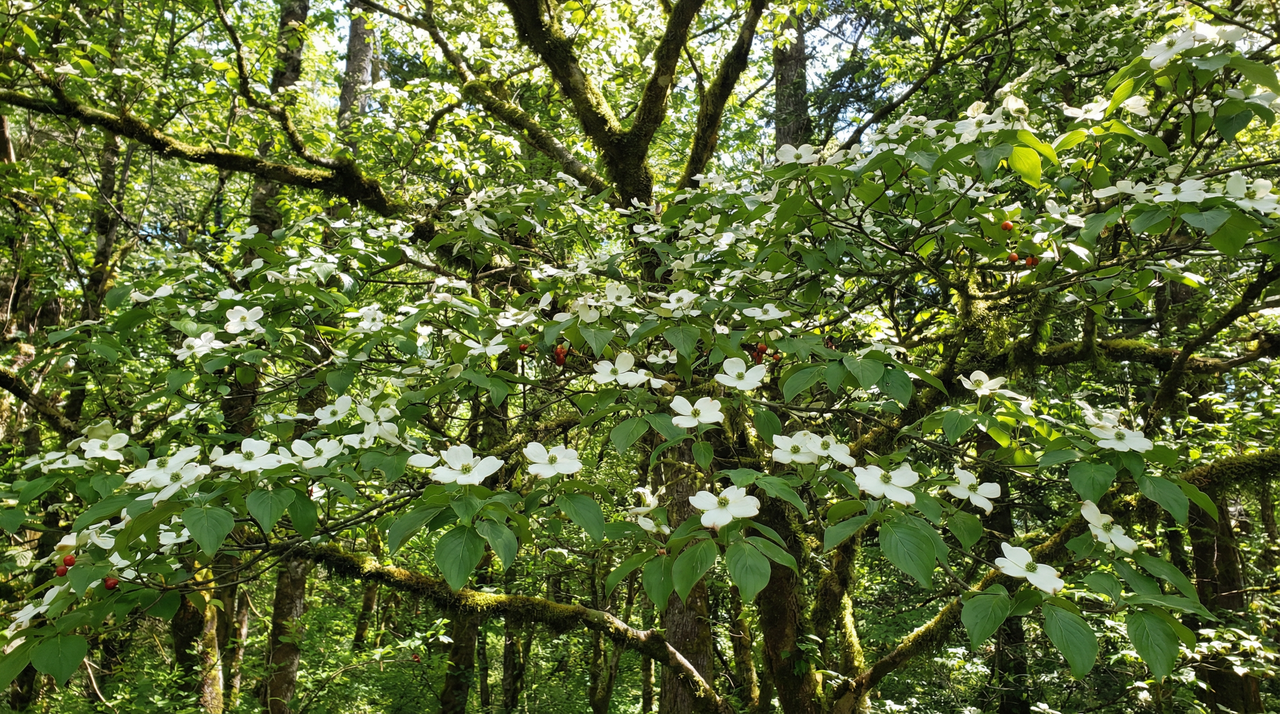
Every spring, people fall in love with flowering dogwood for the wrong reason. Those brilliant white "petals" aren't petals at all; they're bracts, modified leaves whose whole job is to flag down pollinators on behalf of the tiny, almost invisible cluster of true flowers sitting at the center. I find that genuinely delightful, not as a botanical technicality but as a reminder that dogwood has been running a long, elegant con on casual observers for millennia, and we keep falling for it. The tree looks fragile, almost theatrical, like it was designed purely for April Instagram. It wasn't.
What most gardeners don't realize is that the same tree producing those cloud-white bracts is also feeding migrating birds on fat-rich red drupes in October, fixing calcium back into the forest floor through decomposing leaves, and hosting mycorrhizal relationships that quietly support the oaks and hickories towering above it. I've planted it in food forests, restoration sites, and shady kitchen gardens across different climates, and its reputation as a delicate ornamental has always undersold what it actually does in a landscape. That said, it does have real vulnerabilities, and understanding them is the difference between a thriving native understory tree and a slow, expensive disappointment. There's a lot to get right here.
Origin, History, and Cultural Significance of Dogwood
Few trees carry the weight of stories the way dogwood does. Before I get into the folklore and the state symbols, though, I want to start where I always start with a plant: the ecology. Because once you understand where Cornus florida actually comes from and what role it plays in a living forest, everything else about it makes a lot more sense.
Botanical Background and Native Range of Flowering Dogwood
Flowering Dogwood is native to eastern North America, ranging from southern Ontario and Maine south to northern Florida and west into eastern Texas and Oklahoma.[1][2][3] It's an understory tree through and through, an early- to mid-successional species that finds its niche beneath the canopy of oaks, hickories, and maples rather than competing with them for the sky. That's exactly the ecological niche I exploit when placing it in permaculture food forests: it belongs in that shrub-to-small-tree layer, and it behaves accordingly.
In good conditions, a Flowering Dogwood grows 1 to 2 feet per year and reaches 15 to 30 feet at maturity, occasionally stretching to 40, with a spread that often mirrors its height.[1][4] Wild specimens commonly live 80 to 120 years, with exceptional individuals pushing past 200.[1][2] The Cornus florida scientific name was formalized by Linnaeus in 1753, but the tree itself has been doing its slow, steady work in eastern forests for far longer than that. It prefers moist, well-drained, acidic soils in the pH 5.5 to 6.5 range, thrives in USDA zones 5 through 9, and does not tolerate compaction, alkalinity, or waterlogged roots.[5][3] Seeds are dispersed by birds and require cold stratification to germinate; plants reach reproductive maturity at 5 to 8 years.[1][2]
Visual Characteristics and Ornamental Appeal
I've used the layered horizontal branching of Cornus florida in more shade garden designs than I can count, and the reason is simple: it's one of those trees with four-season interest that actually delivers on that promise. In early spring, before the leaves fully emerge, four large white to pink petal-like bracts (they're not actually petals, a fact I enjoy sharing with clients) open around a tight cluster of small greenish true flowers.[4][6] Those bracts reach 1.5 to 2.5 inches, and they glow. By late summer, clusters of bright red drupes take their place, persisting into winter and feeding birds long after most other food sources are gone.[4] Fall color swings toward vibrant red to purple, or yellows under drought stress.[3][7]
And then there's the bark. Young trees have smooth grayish bark that, over decades, transforms into a deeply fissured, blocky texture that's regularly described as alligator skin.[4][3] In winter, when the bracts and leaves are long gone, that bark is what carries the garden. The related Pagoda Dogwood (Cornus alternifolia) offers a different visual grammar: alternate leaves instead of opposite, flat-topped white flower clusters without any showy bracts, blue-black fruit, and shreddy bark.[8] Both are beautiful, but they read very differently in a landscape.
Traditional and Cultural Uses
The Cherokee, Iroquois, and other Native American nations found this tree genuinely useful in ways that go well beyond ornament. The wood is extraordinarily dense and hard (I've experienced this firsthand pruning dogwood branches; a good bypass pruner feels like it's working), and it was used for arrows, tools, skewers, and even dental instruments. Bark and root decoctions treated fevers, malaria, headaches, toothaches, and digestive complaints; the berries were eaten sparingly, mostly as famine food.[9][10][2] In Native American tradition, the tree carried symbolism of protection, healing, and endurance.[11]
European settlers layered a different story onto the same tree. The Christian crucifixion legend held that dogwood's wood had once been used for the cross, and as punishment the tree was condemned to stay small forever, its four-bracted blooms eternally shaped like a cross, each bract tip marked with what the story describes as nail prints and bloodstains.[11] I find it quietly remarkable that a single tree carries both Indigenous healing wisdom and European religious mythology with equal conviction. That layered cultural identity is part of what makes this species feel like a living bridge in American landscapes. It became Virginia's state tree in 1956 and serves as the state flower of North Carolina, Missouri, and Virginia as well.[12][13]
Fun Facts and Genus-Wide Context
The national champion Flowering Dogwood grows in Hudson, New York: 42 feet tall, with a trunk circumference of 108 inches and a 36-foot crown spread.[14] That's a specimen that's pushed well past the average lifespan, which makes sense when you know the tree also has some quiet ecological tricks: drought adaptations including sunken stomata and thick cuticles, and mild allelopathic effects through root compounds that subtly influence what grows around it.[15]
The Cornus genus is wider than most gardeners realize. Cornelian Cherry (Cornus mas) is a European and West Asian relative with a documented cultivation history stretching back over 7,000 years; Neolithic archaeobotanical remains have been found across the Balkans, and Theophrastus, Dioscorides, and Pliny all wrote about it.[16][17] Where flowering dogwood offers showy spring bracts, Cornelian Cherry blooms on bare wood in late winter with small yellow flowers that remind most people of forsythia, though its edible red drupes packed with vitamin C and polyphenols make it far more useful as a food crop.[18][19] In Slavic and Balkan folklore it carries its own protective symbolism, used in Easter rituals and planted near homes to ward off evil.[20] The human relationship with the Cornus lineage is genuinely ancient, continent-spanning, and still very much ongoing.
Dogwood Varieties and How to Source Them
Notable Cultivars of Flowering Dogwood and Related Species
Cornus florida, the white dogwood native to eastern North America, tops out at 15 to 30 feet with a graceful horizontal branching habit, showy white bracts in mid-spring, red fall berries, and some of the most reliable autumn color in the understory plant palette.[21] From that one species, breeders have developed over 100 cultivars selected for bract color, bloom timing, growth habit, and disease resistance, particularly to dogwood anthracnose and powdery mildew.[22][23] After losing my first white dogwood cornus florida to anthracnose in a humid garden in the Southeast, I stopped planting anything without at least some documented resistance. 'Appalachian Spring' is now my default for those conditions: compact, reliable, with clean white bracts and real anthracnose resistance.[4][23] 'Cherokee Chief' offers deep red bracts and early bloom but tends to decline in humid heat; 'Cherokee Brave' gives you pink-red bracts with a bit more staying power. For pure white drama, 'Cloud 9' and 'Plena' (double flowers) are standouts, while 'Prairie Pink' and 'Rubra' serve the pink crowd. Hybrid selections from Cornus × rutgersensis, including 'Jeanne L.' and 'Kay's Appalachian Mist,' push disease resistance further still, with some extending hardiness toward zone 4.[24] No cultivar is fully immune, and local conditions always have the final word.
The genus offers a genuinely different direction in Cornelian Cherry (Cornus mas), a multi-stemmed small tree reaching 15 to 25 feet that flowers weeks earlier than any flowering dogwood, produces bright red edible fruits, and shrugs off most of the disease pressure that makes C. florida management a project.[18] In zone 5 to 6 gardens I've worked in, 'Golden Glory' (cornus kousa-adjacent in its ornamental appeal but far easier to establish) outperforms many C. florida selections for consistent spring interest without winter setbacks. For edible production, 'Pioneer' can yield 10 to 20 pounds per mature plant,[25] which is a meaningful difference from the variegated 'Aurea' or 'Variegata' forms bred for foliage at the expense of fruit.[26][27] That distinction matters when I'm helping clients choose between ornamental and edible guild roles. Pagoda dogwood (Cornus alternifolia) rounds out the native options with 'Argentea' (white-margined leaves) and 'Golden Shadows' (yellow-edged) for tiered foliage interest.[28]
Sourcing Dogwood Plants and Cultivars
The good news for gardeners in the eastern and midwestern U.S. is that Cornus florida and its strongest cultivars, including 'Appalachian Spring,' 'Cherokee Chief,' and 'Cherokee Brave,' are widely available from commercial nurseries, garden centers, and landscape suppliers.[29][30] Cornus mas is equally accessible through reputable mail-order nurseries like Nature Hills, One Green World, and Raintree, as well as seed suppliers; it's non-invasive in the U.S. and moves through commerce without restriction.[31] Across the genus, seed packets typically run $5 to $20, one-gallon containers $25 to $40, and larger three- to five-gallon stock $80 to $150. I always recommend container-grown stock from local nurseries over bare-root mail-order when you can get it, especially if you're working in heavier soils; the establishment difference I've seen in clay is hard to overstate. Whatever you're buying, verify disease resistance claims, confirm hardiness for your specific zone, and whenever possible, ask about the propagation source so you're not inadvertently bringing pathogen pressure home with the plant.
Propagating and Planting Flowering Dogwood
Flowering Dogwood is one of those plants that rewards you generously once it's established, but asks for genuine effort and patience on the front end. I've grown Cornus florida from both stratified seed and grafted stock over the years, and I'll be honest: the two experiences could not feel more different. Understanding why starts with the seed itself.
Propagation Methods: Seeds, Grafting, Cuttings, and Layering
Here's a botanical quirk that still delights me every time I mention it: Flowering Dogwood seeds are polyembryonic, meaning a single seed can contain anywhere from one to five embryos through cleavage polyembryony.[32][33] In theory that sounds like a bonus. In practice, because C. florida is self-incompatible and outcrossing is the norm, seed-grown plants show significant genetic variability and will not come true to any named cultivar.[34][35] I always label my seedling rows meticulously, because first-year Cornus florida foliage looks maddeningly similar to half a dozen other woodland species, and you will lose track of what you planted.
The seeds themselves are small reddish-brown drupes, roughly 6-8 mm long, with a hard smooth endocarp.[1] Birds disperse them readily through endozoochory, which is how the tree naturally regenerates across the eastern forest understory.[7] Collecting fresh seed in fall and treating it immediately is essential, because these seeds are recalcitrant: if moisture content drops below roughly 20-30%, viability collapses fast.[36][37] I keep a small container of moist peat-sand mixture in my refrigerator every winter specifically for this purpose, and I've watched viability drop sharply after the second year of storage. The one-to-two-year window isn't pessimism; it's just what these seeds do.[36]
Breaking dormancy requires a two-stage stratification: 60-90 days of warm treatment at 20-30°C, followed by 90-120 days of cold stratification at 2-5°C.[38][39][40] Skip either phase and you'll get poor results. Done properly, germination rates under controlled protocols can reach 50-80%, though in natural habitat only 15-30% of seeds typically germinate.[41][39] Cornus mas has its own dormancy story for comparison: it may also require scarification of the hard ridged endocarp in addition to cold stratification, and its seeds show similar variability from seedling to seedling.[42][43]
For true-to-type plants, grafting is the gold standard. Whip-and-tongue or cleft grafting onto Cornus florida seedlings or Cornus kousa rootstock (preferred for its anthracnose and borer resistance) in late winter to early spring achieves commercial success rates of 80-90%.[44][45] My own home-bench success grafting onto C. kousa rootstock runs around 70-80%, which I consider respectable for a home grower without a climate-controlled mist bench. Cuttings are less reliable: softwood taken in late spring to early summer with IBA rooting hormone at 1,000-3,000 ppm under mist and bottom heat can root anywhere from 30-70% depending on conditions and timing.[46][47] Layering (simple, stool, or air) gives 50-80% success and roots in roughly 6-8 weeks with IBA and moist sphagnum moss; I've found the extra labor pays off when I want a specific cultivar without a graft union.[48][49] Tissue culture achieves 70-95% success but is a commercial operation, not a backyard one.[50] Whatever method you use, start seedlings in sterile media with good drainage; young plants are genuinely susceptible to damping-off, root rot, and anthracnose before they have any size to absorb a setback.[51]
Soil, Site Selection, and Planting Technique
Almost every site requirement for Flowering Dogwood flows from one anatomical fact: its root system is shallow and fibrous, concentrated in the top 12-24 inches of soil.[52][2] That architecture makes it exquisitely sensitive to soil compaction, poor drainage, and drought in ways that other landscape trees simply are not. I made the mistake once of siting a young tree too close to a garden path. A season of wheelbarrow traffic over the root zone was enough to invite root rot and dieback that cost me two years of growth. I now treat the area under any dogwood's canopy as genuinely off-limits to heavy foot traffic or machinery.
The ideal soil is well-drained, humus-rich loam or sandy loam with a pH between 5.5 and 6.5.[11][3] The tree will tolerate up to pH 7.0-7.5 in a pinch, but vigor declines and chlorosis can appear above 7.0; below 5.0, aluminum and manganese toxicity become genuine risks.[11] Target organic matter around 4-6%, which mirrors the leaf-litter-rich forest floor where the species evolved, growing on gentle slopes under the deciduous canopy with 2-5 cm of decomposing litter building humus beneath it.[2][53] Cornus mas by contrast tolerates a much wider pH range (5.5-8.0) and handles moderate urban compaction without flinching,[28] which is worth remembering if you're working on a difficult site. Cornus alternifolia is even more moisture-demanding than C. florida and equally sensitive to compaction, so neither species is a substitute for careful preparation.[28]
For planting preparation, till 12-18 inches deep, incorporate 3-4 inches of compost or leaf mold (skip the lime, it will push pH in the wrong direction), and mulch 3 inches deep kept well away from the trunk.[52][54] Raised planting beds or gentle slopes aren't just aesthetic choices; they're a practical way to keep Phytophthora root rot from gaining a foothold in heavy or poorly draining soil.[55] The mulch ring does double duty: it retains moisture and acidity while physically protecting those shallow roots from compaction and temperature swings.
Spacing, Timing, and Establishment
Mature Cornus florida reaches 15-30 feet in height and spread, with moderate annual growth of 13-24 inches per year.[56] Standard spacing for healthy canopy development and adequate air circulation is 15-25 feet between trees; tighter spacing of 10-15 feet is workable in higher-density designs but requires active pruning and vigilant monitoring for the fungal diseases that thrive when airflow is restricted.[57][58] For hedgerow configurations, 6-10 feet within rows and 10-15 feet between rows gives reasonable density without sacrificing the air movement these trees need. If you're growing C. mas as a fruiting specimen rather than an ornamental, plan for 15-20 feet; for hedge use, 4-6 feet works well and it responds readily to shaping.[28]
Fall planting (September-November) and early spring planting (March-April) are both solid windows for establishing a new tree.[21] Fall gives the roots weeks of cool-season growth before dormancy; spring planting is fine as long as you commit to consistent irrigation before summer heat arrives. Plan on 1-1.5 inches of water per week through the first one to two years, especially during dry spells.[46] In my experience, consistent establishment watering in those first two growing seasons is genuinely the difference between a tree that flowers on schedule around year five versus one that sulks, stalls, and stays vulnerable to disease. The shallow roots make spacing, mulch management, and irrigation discipline non-negotiable, not optional.
Germination Timeline and Seedling Development
Patience is a legitimate requirement here. Seed-grown Cornus florida typically takes 4-7 years to flower and 5-10 years to produce its first meaningful fruit crop under optimal conditions.[59][46] Grafted trees close that gap considerably, usually flowering within 2-4 years after a successful graft with reliable production by year three to five.[45][60] Cornus mas follows a similar pattern: grafted plants can fruit within 2-3 years, while seed-grown specimens are equally variable and slow, and the hard endocarp means stratification alone may not be enough without scarification.[61][43]
The variability argument for vegetative propagation is real, especially if you've invested in a disease-resistant cultivar. Seed-grown plants simply will not reliably reproduce the parent's bract color, disease resistance, or form. For restoration plantings where genetic diversity is actually the goal, growing from local-provenance seed makes perfect sense. For a named garden specimen or a food forest where you want predictable performance, a grafted or layered plant is the practical choice. Either way, label everything, stay patient, and plan your establishment care around those shallow roots from day one.
Dogwood Care Guide
Caring for a dogwood tree starts with understanding what it actually is: a native understory species that evolved beneath taller canopy trees, filtered light, and the leaf-duff soils of eastern North America's deciduous forests. Get the site right, and most of the other decisions fall into place.
Sunlight and Site Requirements for Flowering Dogwood
Cornus florida thrives with four to six hours of direct sun, ideally the morning kind, followed by afternoon shade.[3][62] I plant every new dogwood on the east side of a structure or larger tree for exactly this reason. The one I put in full sun years ago looked great in April and terrible by August, with scorched leaf margins and a general look of exhaustion. Full sun is technically tolerable, but in hotter southern climates it pushes the tree toward chronic stress.[63] Too little light creates the opposite problem: etiolated growth and poor flowering.[63] The sweet spot is dappled or partial shade that mirrors the forest edge where this tree naturally belongs.
Watering Needs and Drought Tolerance
Overwatering is the mistake I see most often from gardeners in humid climates, and it's genuinely worse than underwatering. Established trees want about an inch of water per week during the growing season in well-drained, acidic soil, with much less in winter.[64][3] Young trees need more, closer to one to two inches weekly delivered deeply to encourage root establishment.[64][65] Once established, dogwoods have moderate drought tolerance, managing two to four weeks without irrigation before showing stress, though prolonged dry spells cause scorched leaf margins and twig dieback.[64][65] In heavy clay, overwatering causes root rot, yellowing, and wilting that looks almost identical to drought stress.[65][66] A two-to-four inch layer of organic mulch over the root zone helps regulate both moisture and temperature, and keeping irrigation at ground level rather than overhead also reduces anthracnose pressure considerably.[67][2]
Feeding and Soil Fertility for Dogwoods
I lost my first dogwood to what I thought was disease. It turned out to be iron chlorosis from soil that was too alkaline, and a simple pH test would have caught it. Dogwoods are light feeders, and most nutrient problems trace back to pH rather than outright deficiency.[68][21] The target range is pH 5.5 to 6.5; above 7.0, iron becomes unavailable and young leaves yellow between the veins.[22][69] Excess nitrogen is its own problem, pushing lush vegetative growth at the expense of flowers and opening the tree to pests and fungal disease.[68] If a soil test actually shows deficiency, a half-strength slow-release balanced fertilizer applied in early spring is appropriate, nothing after midsummer.[70][71] In a woodland or food forest setting, I skip the synthetic fertilizer entirely and rely on compost and leaf mulch to build organic matter slowly. Testing every two to three years keeps you honest and saves money.[22][72]
Frost Tolerance and Winter Protection
The wood of a healthy dogwood is cold-hardy through USDA zones 5 to 9, surviving down to around -20°F.[4][73] The vulnerability is the early-spring show. I've watched a late freeze roll through in April and kill every bract and emerging leaf while leaving the tree itself completely intact. The flowers and bracts open before the foliage is fully out, which makes them first in line for frost damage.[74][65] A breathable fabric cover during predicted frost events protects the bracts without harming the tree, and the two-to-four inch mulch layer recommended for moisture also insulates roots in winter.[74] If you're in zone 5 or 6 and want extra insurance, northern-sourced cultivars like 'Cherokee Chief' offer improved cold hardiness.[75] Cornelian cherry is hardier down to zone 4 and -30°F, though its early flowers face the same late-freeze risks despite the more resilient stems.[75][76]
Heat Tolerance and Summer Stress Management
Cornus florida is rated for AHS Heat Zones 7 to 9, meaning it can handle up to thirty days annually above 86°F, but stress symptoms appear well before that ceiling.[18] Temperatures above 85°F combined with humidity cause leaf scorch, wilting, and premature flower drop, with seedlings and actively flowering trees taking the hardest hit.[2][77] I've seen this play out clearly in my own landscape: trees with generous mulch sailed through a 95°F stretch without visible damage while nearby unmulched specimens looked ragged by noon. That two-to-four inch organic mulch layer is doing real work. For young trees in hotter climates, thirty to fifty percent shade cloth during heat waves buys them critical establishment time, and afternoon shade through siting is a longer-term fix.[57][65] In southern zones where summers are intensifying, cultivars like 'Appalachian Spring' and 'Rutdan' (Stellar Pink) show better heat adaptation and are worth seeking out.[57]
Pruning, Maintenance, and Seasonal Rhythm
Pruning a dogwood tree is less about shaping and more about keeping the canopy healthy. The right time is late winter to early spring before bud break, and the rule is simple: remove dead, diseased, damaged, or crossing branches only, staying under twenty-five percent of the canopy in any single season.[78][79] Good airflow through the canopy is the single best cultural defense against dogwood anthracnose, the fungal disease caused by Discula destructiva that thrives in cool, humid springs.[80] I don't spray for anthracnose. Resistant cultivars like 'Appalachian Spring' and 'Cherokee Brave', combined with proper siting and open canopy structure, have kept my trees clean for years without any chemical intervention.[80][81] Dogwood borer pressure increases when trees are stressed from drought or pruning wounds in summer, which reinforces why timing matters.[81]
The seasonal calendar gives you a useful rhythm for staying ahead of problems. Leaf-out begins in March to April, with bracts opening before the foliage fully expands, peak flowering running from late April through early June.[4][7] That cool, wet spring window is exactly when anthracnose pressure peaks. Fruit ripens in September to October for the birds, and October to November brings the red-purple fall color that makes the whole year feel worth it.[4] Winter care is straightforward: renew the mulch layer, add a deer guard on young trees in deer-heavy areas, and protect young specimens from desiccating wind.[82][83] Watching the bracts open bare in April, before a single leaf has unfurled, is one of the better reminders of why the extra attention this tree demands is genuinely earned.
Dogwood Harvesting: Flowers, Fruit, and Fall Foliage
If you're growing Cornus florida, your primary harvests aren't from the kitchen garden, they're from the flower garden and the bird feeder. The spring bracts, the fall foliage color, and the wildlife value of those red drupes are what this tree gives most generously. I've spent years cutting dogwood branches for spring arrangements, and I'll be honest: that's the harvest I look forward to most.
Timing and Ripeness Indicators for Cornus florida
Flowering dogwood blooms April through May in zones 5 through 9,[84][7] and fruit follows roughly 120 to 150 days after anthesis, ripening in September and October.[85] In warmer climates, that window compresses. My zone 9B trees tend to push ripe fruit by mid-September; the Northeast data in extension publications often points to late October. Use the calendar as a rough guide, not a deadline. Watch the fruit: it moves from green to glossy bright red, then dulls to a reddish or purplish-black as it fully matures, detaching easily under gentle pressure.[86]
Cornelian cherry (Cornus mas) runs on a different clock entirely, flowering in February through April and producing harvestable fruit by July through September.[61] Ripe Cornus mas fruit turns deep red to purple-black, softens slightly, twists free easily, and reaches 12 to 18 percent Brix.[87] That sweetness level tells you everything about why it has a culinary tradition and C. florida doesn't.
Harvest Techniques and Post-Harvest Handling
For cut-flower use, harvest dogwood bracts just as they reach full color, before any hint of green shows at the base. I've found that timing makes a real difference in how long they last. Cut 6 to 12 inch stems and get them into water immediately; with floral preservative and cool storage, you'll get 7 to 10 days of vase life.[88] If you wait until the bracts look perfect standing in the garden, you've waited too long for a long-lasting arrangement.
For those harvesting Cornelian cherry fruit, fresh storage at 30 to 32 degrees Fahrenheit with high humidity holds the fruit for three to four weeks; frozen at negative four degrees Fahrenheit it keeps up to two years.[89] C. florida fruit needs no such handling plan, because most of it goes straight to the birds.
Yields, Flavor Profiles, and Best Uses
The fruit of Cornus florida is small, clusters of three to eight red ellipsoid drupes, each just 6 to 13 mm long with a fleshy pulp and a hard central stone.[7][11] I've tasted them. They're bitter, astringent, mealy, and genuinely unpleasant; in my experience even the birds sometimes leave them until late fall when nothing better is available. Raw consumption can cause gastrointestinal irritation, and they're best considered wildlife food rather than human food.[90][11]
The fall foliage is a different kind of abundance. Cornus florida turns vibrant red to purple in autumn, with intensity varying by cultivar, site conditions, and that year's weather.[4] In a permaculture context, I grow this tree primarily for spring flowers and bird habitat, and the autumn color is a bonus I photograph every year.
If edible fruit is your goal, the genus delivers it elsewhere. Cornelian cherry produces bright red oblong drupes with a tart cherry-cranberry flavor that works well raw and holds up beautifully in jams, sauces, and liqueurs; mature trees can yield 50 to 100 or more pounds in a good season.[91][92] Kousa dogwood (Cornus kousa) goes further still, with ripe fruit that reads as sweet-tart and tropical, somewhere between raspberry and papaya in texture.[93] It reminds me of biting into a very ripe mulberry, same kind of jammy give. The caveat with Kousa is patience: unripe fruit is just as astringent as C. florida, so you wait until it's soft, deeply colored, and practically falling into your hand before you taste it.
Dogwood Preparation and Uses
Edibility, Culinary Uses, and Safety of Dogwood Fruits and Plant Parts
Let me be direct here: Cornus florida is not a food plant, and trying to make it one is genuinely risky. Only the thin fleshy aril surrounding the seed of a fully ripe fruit is considered non-toxic, and only in small raw amounts.[11][94] The seeds contain cyanogenic glycosides that can trigger nausea, vomiting, and abdominal pain, and the leaves, bark, roots, and pollen are off the table entirely.[53][2] After years of growing this tree in my landscape, I've watched cedar waxwings and robins strip the branches clean within days of ripening, and that's really the point: this fruit is wildlife forage, not pantry stock.
The berries do carry respectable phytochemistry, quercetin, kaempferol, anthocyanins, and roughly 20-30 mg of vitamin C per 100 grams alongside modest potassium and calcium,[95][96] but antioxidant potential doesn't override toxicity risk. Cherokee people did consume the berries fresh or in preserves historically,[97] though by all accounts they were tart and not particularly appealing, and there is no modern culinary tradition built around them.[98] There is also no evidence that cooking, drying, fermenting, or any other processing makes the seeds or other plant parts safe to eat.[94]
If Cornus florida leaves you hungry for something in the genus to actually cook with, its relatives deliver. Cornelian cherry (Cornus mas) produces tart, sour-cherry-adjacent fruit with no significant toxins in the flesh, high pectin content that makes jam-setting effortless, and a long tradition across Eastern Europe, the Mediterranean, and Central Asia of wines, jellies, syrups, and ferments.[99][100] Its nutritional profile is genuinely impressive: 300-400 mg of potassium per 100 grams, solid dietary fiber, and an ORAC antioxidant value above 10,000.[101] Kousa dogwood (Cornus kousa) similarly lends itself to jams, chutneys, sauces, and pies once cooking breaks down the pulp and caramelizes the sugars.[102] Think of them the way you'd approach cranberries: raw and borderline aggressive, but genuinely delicious once heat gets involved. Identification matters here too; Cornus florida is sometimes confused with Kousa and other species, so confirming what you're actually growing before eating anything is non-negotiable.[103]
Traditional Medicinal Preparations from Dogwood
The Cherokee and other Native American peoples brewed the inner bark of Cornus florida into a decoction used for fevers, malaria-like symptoms, and headaches, essentially treating it as a quinine substitute when quinine itself was scarce.[97][104] The preparation involved simmering bark for 10 to 15 minutes and consuming the tea in small doses; topical bark applications for skin conditions also appear in the ethnobotanical record.[105] I'll be honest: out of curiosity I once simmered a tiny test batch, took one whiff of the bitter result, and decided this knowledge belongs firmly in the ethnobotany books rather than my kitchen. I respect this heritage deeply, but the unknown safety margins and the absence of any modern clinical guidance make self-medication here inadvisable.
Kousa dogwood carries its own traditional medicinal identity in Korean and Japanese practice, where the fruit has been consumed fresh, dried, or fermented into wines and teas, and used for cooling properties, inflammation, and digestive support.[106] Anyone with Cornaceae allergies should approach the genus cautiously, and pregnant people should consult a healthcare professional before using any dogwood medicinally. As covered in the health benefits section, the preclinical research is promising but human clinical evidence across the genus remains thin.
Non-Food Uses: Dyes, Wood, and Other Applications
Where Flowering Dogwood genuinely earns its keep outside ornamental beauty is in its wood and bark. Native American tribes extracted a red to purple dye from the bark for coloring fabrics and baskets,[2][107] and Pagoda dogwood bark yields a similar purple for textiles and was shaped into arrows and small implements.[108][109]
The wood itself is a revelation if you've ever actually held a pruned dogwood branch. It's unusually dense and tight-grained, which is why it historically went into tool handles, mallets, golf club heads, and textile mill rollers, and why it burns hot as firewood.[2] Cornelian cherry wood shares those qualities and extends into furniture and walking sticks.[110][111] Prunings from any dogwood species are worth keeping for biomass rather than chipping away carelessly. For most gardeners, though, the honest reason to grow Flowering Dogwood has nothing to do with harvest: it's the spring bracts, the fall fire, the birds, and the ecological work it quietly does in the understory that justify every square foot of space it occupies.
Dogwood Health Benefits and Medicinal Uses
As a landscape designer, I get a lot of questions about the medicinal history of native plants, and flowering dogwood comes up often. Clients see the tree growing wild in eastern forests and want to know if it's as useful as it is beautiful. My honest answer is always: the history is real and genuinely compelling, but temper your expectations about what the modern science actually confirms for human use.
Traditional and Medicinal Research on Flowering Dogwood
The Cherokee, Creek, and Delaware peoples all used Cornus florida bark as a fever treatment and as a substitute for quinine against malaria-like illness, and they prepared bark, leaves, and fruit for digestive complaints like diarrhea, colic, and dysentery, as well as topically for wounds, ulcers, and insect bites.[112][113] Related species carry similar traditions: Cornus alternifolia was used by many tribes for comparable purposes,[109] and Cornus mas has a long Balkan, Caucasian, and Turkish folk medicine record as an astringent for gastrointestinal disorders and wound care.[114]
Preclinical research has since found some meaningful signals behind these traditions. In vitro and animal studies on C. florida extracts document antioxidant activity via free radical scavenging, anti-inflammatory effects through suppression of TNF-α, IL-6, COX-2, and the NF-κB pathway, and antimicrobial activity against Staphylococcus aureus and Candida albicans linked to iridoids like loganin.[115][116] Researchers have also observed antidiabetic potential via enzyme inhibition, cytotoxic effects on MCF-7 and HeLa cancer cell lines, hepatoprotective activity in liver stress models, and neuroprotective action in Parkinson's disease models via the Nrf2 pathway.[117][118][119]
That's genuinely exciting. It's also almost entirely lab-dish and rodent data. No large-scale human clinical trials exist for Cornus florida, and the plant is not FDA-approved to treat anything.[115][120] Cornus mas has more small-scale human data on metabolic syndrome markers and glycemic control, but even there the evidence base needs stronger trials before clinical recommendations make sense.[121] I recommend flowering dogwood to clients for beauty, wildlife habitat, and ecological function. Not as a medicinal crop.
Key Phytochemicals in Dogwood Species
The research findings above aren't random. Cornus florida is rich in flavonoids including quercetin, kaempferol, and rutin; iridoid glycosides such as loganin, cornin, and cornuside; phenolic acids including chlorogenic, gallic, and caffeic acids; condensed and hydrolyzable tannins that can reach up to 20% dry weight in bark; triterpenoids; and lignans like pinoresinol.[122][123] Cornus alternifolia adds additional coumarins like esculetin and scopoletin, while C. mas stands out for exceptionally high anthocyanin content in its fruits, reaching 5.4 to 7.1 mg per gram dry weight, along with higher overall iridoid levels than C. florida.[124]
These compounds don't appear uniformly across the plant or across the year. Bark and fruits concentrate the highest tannin and iridoid levels; leaves peak in flavonoids; anthocyanins in C. mas hit their maximum in September.[125] I've noticed that dogwoods on slightly drier, sunnier sites in my designs tend to show more saturated fall color than heavily shaded specimens, which tracks with the research showing that environmental stressors like drought and UV exposure can push flavonoid and anthocyanin production upward.[126] Organically grown plants show phenolic concentrations up to 20% higher than conventionally managed ones.[127] For what it's worth, these compounds exist primarily to protect the plant from herbivores, pathogens, and UV, not to benefit us; it's a lucky coincidence that they also happen to have interesting pharmacological properties.[128] Human clinical evidence linking these compounds to health outcomes remains limited across the whole genus.[129]
Nutritional Profile of Dogwood Fruits
The red drupes of Cornus florida are technically edible in very small quantities, though "edible" is doing some heavy lifting there. The thin fleshy pulp around the hard seed is the only part with any food history, and Native Americans used it sparingly in preserves and jellies. Per 100 grams of pulp, you're looking at roughly 45 calories, 10 grams of carbohydrates, moderate vitamin C around 20 to 30 mg, some carotenoids, and a reasonable mineral contribution with 50 to 100 mg calcium and 1 to 2 mg iron.[130] Where the fruit genuinely impresses is antioxidant capacity: total phenolics estimated at 1,200 to 1,500 mg GAE, flavonoids around 800 to 1,000 mg, and DPPH radical scavenging in the 70 to 85% range.[131] Practically speaking, the fruit is bitter enough that most people, and most dogs, stop after one.
Compare that to Cornus mas or Kousa dogwood and the contrast is sharp. Cornelian cherry fruits offer similar calorie counts but deliver higher vitamin C, strong anthocyanin concentrations, and ORAC values above 5,000 µmol TE per 100 grams, with centuries of documented culinary use in Eastern European jams, juices, and wines.[132] Kousa dogwood is even higher, with ORAC values reaching 10,000 to 15,000 µmol TE and notable ellagitannin content alongside iridoids.[133] If you want a dogwood relative you can actually cook with, those are the ones to grow. The seeds of C. florida can cause gastrointestinal upset, so the fruit is emphatically not a primary food source.[134]
Safety and Precautions with Dogwood
Here's the reassuring news for anyone who has Cornus florida in their yard and shares it with children or animals: the ASPCA classifies it as non-toxic to dogs, cats, and horses.[135] To the question I hear constantly, are dogwood trees toxic to dogs, the honest answer is no, not in any meaningful sense. I've planted these trees in family gardens throughout my career without a single incident. Its pollen is heavy and sticky rather than airborne, so allergenic potential is extremely low.[136] Eating large quantities of berries could cause mild nausea, vomiting, or diarrhea from the astringent tannins and iridoids, but the bitterness is a reliable deterrent; I once watched a toddler pop a fallen drupe into her mouth and spit it out so fast her parents barely registered what happened.[53] The sap can cause mild skin irritation in sensitive individuals, so gloves are worth wearing when you prune.[137]
The responsible compounds for that mild irritation are iridoid glycosides like cornin and the concentrated tannins, not cyanogenic glycosides; documented cyanogenic content in C. florida is low to absent compared to some other species.[138] Acute toxicity studies found no adverse effects in mice at doses up to 2,000 mg/kg of aqueous extract, which is a wide safety margin for typical landscape exposure.[139] Birds consume the fruits freely and safely, which is one of the main reasons I keep recommending this tree.
Where I get more serious is with medicinal use. If you're on blood-sugar-lowering medication or anticoagulants, do not use dogwood bark extracts without talking to your doctor first; the potential interactions are real enough that self-experimentation isn't worth the risk.[140][141] Pregnancy and breastfeeding are clear cases for precautionary avoidance of medicinal doses; the safety data simply isn't there.[142] Children under two and anyone on medications should avoid any medicinal use entirely.[143] The bark has a long, legitimate traditional history, but modern evidence is preliminary and this tree is not a substitute for proven medical treatment. Grow it for what it reliably gives you: stunning spring bloom, fall color, wildlife habitat, and four full seasons of beauty.
Dogwood Pests and Diseases
Cornus florida is genuinely beautiful, and genuinely vulnerable. Of all the native understory trees I've worked with in Eastern and Southeastern landscapes, this one demands the most honest conversation about what can go wrong and how to stay ahead of it. The good news is that most problems trace back to the same root causes: stress, poor siting, and mechanical injury. Get those right, and a flowering dogwood can stay healthy for decades.
Major Diseases of Flowering Dogwood
Dogwood anthracnose, caused by the fungus Discula destructiva, is the headline threat for Cornus florida in humid climates. It thrives in the 60-70°F range with sustained moisture, producing leaf spots edged in tan to purple, shoot blight, and cankers that spread down into major branches if left unchecked.[144][145][146] A stressed tree in a low spot with poor air circulation can go from spring flush to partial defoliation by midsummer. I've watched it happen.
Powdery mildew is the secondary fungal concern, showing up as white coating on new foliage during warm, humid stretches, though it's generally less damaging than anthracnose.[145][147] Phytophthora root rot rounds out the major disease concerns, and this one I've seen trip up even experienced gardeners. C. florida is highly susceptible in poorly drained soils, and keeping pH between 5.5 and 6.5 genuinely supports resistance; push into neutral or alkaline territory and you've compounded the problem.[145][148]
Cultivar selection helps. Appalachian Spring, Cherokee Brave, and Appalachian Mist have all shown improved anthracnose resistance through breeding programs.[22][149] I still recommend monitoring for early symptoms even with these selections, because no dogwood cultivar is completely immune. Appalachian Spring has been the most consistently resilient in humid sites I've designed for, but it's not fire-and-forget. By comparison, Cornus mas rates around 8-9 out of 10 for overall disease resistance, shrugging off anthracnose and showing only mild susceptibility to leaf spots,[150][151] while Cornus alternifolia sits somewhere in between, rarely developing severe infections but still vulnerable to Phytophthora and cankers in poor conditions.[152][153]
Key Insect Pests and Natural Defenses
The dogwood borer (Synanthedon scitula) is the insect threat I warn clients about most. It bores into the trunk and can girdle a tree, with infestation rates reaching 50% in stressed specimens, especially those with wounds from mowers, string trimmers, or improper pruning.[154][155] In my landscape design work, I've noticed borers almost always hit trees with scars at the base from careless maintenance equipment. That observation alone changed how I install young dogwoods for clients: trunk guards go on at planting, no exceptions. Cultivars like Appalachian Spring and Cherokee Brave, with their tighter bark, show better resistance here too.[22]
Secondary pests include the dogwood twig borer causing dieback, clubgall midge reducing bloom, scale insects that invite sooty mold, sawfly larvae, flatheaded borers, and lace bugs causing leaf stippling.[156] None of them individually spell disaster in a healthy tree. C. florida does have some evolutionary tricks: phenolic compounds including tannins, flavonoids, and chlorogenic acid reduce insect palatability, bark thickness deters boring insects, and herbivore-induced volatile compounds actually recruit parasitic wasps as backup.[157][158] I've seen vigorous specimens bounce back from lace bug pressure that would have finished off a stressed neighbor. Cornus mas carries similar phenolic and coumarin-based defenses and is generally far less susceptible to borers and scale,[150][159] making it my go-to recommendation for lower-maintenance food forest edges where intervention isn't practical.
Deer are a real concern with young C. florida. The tree has low deer resistance, and white-tailed deer, raccoons, and squirrels will browse or disturb new plantings.[22] The glucosides present throughout the plant offer some deterrence to livestock and larger herbivores, but I always advise clients with animals or young children that the attractive red berries warrant caution if ingested.[160]
Prevention and Integrated Management for Diseased Dogwood Trees
The most effective thing you can do for a flowering dogwood is give it the right conditions from day one. Site it where morning sun and afternoon shade mimic woodland edge conditions, with well-drained soil at the right pH, good air circulation, and a ring of mulch kept away from the trunk.[150][161] Avoid overhead irrigation and any mechanical damage to the root zone or trunk. In my experience with understory plantings, cultural practices alone address the vast majority of disease and pest pressure without ever reaching for a spray bottle.
When intervention is necessary, work through the ladder: encourage biological controls like parasitic wasps first, then consider targeted options like horticultural oils for scale or, as a last resort, imidacloprid for active borer infestations.[162][163] Preventive fungicide applications using chlorothalonil or propiconazole in spring can help where anthracnose has been a recurring problem, but healthy trees in right-fit sites rarely need them.[164] Choose a resistant cultivar like Appalachian Spring, keep the soil in that 5.5-6.5 pH range, protect the bark, and you're working with the tree rather than constantly reacting to it.
Dogwood in Permaculture Design
Flowering dogwood is one of those plants that earns its place in a design not through a single flashy trait but through the sheer number of ecological roles it fills simultaneously. Before you plant one, though, you need to be honest about where you are on the map, because this tree has a clear comfort zone and doesn't quietly tolerate being pushed outside of it.
Climate Adaptability and Hardiness Zones
Cornus florida is cold-hardy from USDA zones 5 through 9, withstanding minimum temperatures down to -20°F, but its real sweet spot sits squarely in zones 5-8.[11][165][166] That upper limit matters more than the lower one in practical design. Temperatures above 85°F cause heat stress and leaf scorch, and sustained heat above 90°F in humid conditions can do real damage.[11][165] In the Southeast, particularly across Georgia, North Carolina, and Tennessee, zone 7 and above brings compounded pressure: heat stress and anthracnose arrive together in warm, wet springs, and the combination is genuinely hard on the tree.[11][167][168] My approach in those hotter, wetter designs is to provide afternoon shade within the canopy layer and choose anthracnose-resistant cultivars from the start, treating those two moves as non-negotiable rather than optional.
When the site pushes into those marginal conditions, the broader Cornus genus offers real alternatives worth layering in. Cornelian cherry (Cornus mas) extends cold hardiness to zone 4, tolerating down to -25°F or colder, and shows notably better resistance to both anthracnose and powdery mildew while still producing reliably through zone 7.[28][169][170] For colder-zone designers working in zones 3-7, pagoda dogwood (Cornus alternifolia) goes all the way to -40°F and brings a completely different architectural presence to a planting.[171][172] Knowing these options means that a climate limitation on the anchor species doesn't force you to abandon the genus entirely.
Ecosystem Functions and Wildlife Support
This is where flowering dogwood really justifies its place in a food forest. Its fibrous root system stabilizes soil across the understory and creates shaded, moist microhabitats that benefit a whole community of shade-tolerant species beneath it.[173] The structure above ground is equally productive: dense branching provides shelter and nesting sites for birds and small mammals, and the bright red drupes that ripen in fall are consumed by more than 30 bird species, including cardinals, blue jays, cedar waxwings, and robins, making it a seed-dispersal hub within the guild.[11][174][3] I've watched cedar waxwings and robins strip the berries off my dogwoods within days of ripening, which taught me quickly to plant multiple individuals if you want any fruit to linger into the season. That's not a problem to solve; it's just the design reality of planting for wildlife as well as harvest.
Spring brings a different kind of productivity. The showy white or pink bracts attract native bees including Andrena, Osmia, and Bombus species, along with honeybees, beetles, flies, and butterflies.[175][176][11] The tree is self-incompatible, so it requires cross-pollination to set fruit, and pollination works best in spring conditions between 59-77°F with moderate humidity; anthracnose pressure, late frosts, and declining pollinator populations can all reduce flower and fruit production.[177][178][179] I always install at least two genetically distinct flowering dogwoods in any planting, or pair the species with a compatible companion like serviceberry that blooms on a similar timeline. The self-incompatibility isn't a flaw; it's a nudge toward richer polyculture. Beyond pollinators, the tree serves as a larval host for the dogwood butterfly (Mitoura virginiensis) and the Io moth (Automeris io), adding another thread into the local food web.[180] And when the leaves drop, they decompose quickly, releasing calcium and nitrogen back into the soil and fueling microbial activity throughout the understory.[173]
Layering in other Cornus species extends these functions across the calendar. Cornelian cherry blooms in late winter on bare branches, feeding bees and hoverflies before almost anything else is open, and its fruits later support thrushes, blackbirds, and robins.[18][181] The phenological contrast between Cornelian cherry's February bloom and flowering dogwood's April bracts is something I actively plan around when designing for pollinators; together they cover a span that a single species simply can't. Pagoda dogwood fills a complementary niche with its tiered horizontal branching and blue-black late-summer berries for wildlife in zones 3-7.[182][183] Kousa dogwood, flowering from May into June, extends the nectar window into early summer and is better adapted to urban conditions, though it can hybridize with C. florida in mixed wild populations.[184][185]
Forest Layer Placement and Guild Integration
Flowering dogwood sits naturally in the understory layer, reaching 15-30 feet with moderate shade tolerance and a preference for acidic, moist, well-drained conditions around pH 5.5-6.5.[186][3] It forms partnerships with arbuscular mycorrhizal fungi that improve phosphorus uptake, and I've found that inoculating transplants with a native mycorrhizal blend at planting produces visibly better establishment in the first two seasons, especially on lean or disturbed soils.[187] In its native eastern forests, it grows naturally beneath oaks, hickories, and maples, participating in nutrient cycling and soil stabilization while competing for resources in denser canopies.[7][173]
In a permaculture food forest, that same relationship translates cleanly: tuck the dogwood beneath a canopy of oaks or hickories, pair it with nitrogen-fixing shrubs in the mid-layer, and fill the ground plane with shade-tolerant perennials like ferns or native sedges.[111][188] After years of working with woodland-edge plantings, I've learned that giving dogwood enough dappled light so its bracts develop fully, while still protecting the canopy above it, is the balance that rewards both the tree and the birds that depend on its fruit. Too much shade and bloom suffers; too much sun in a hot zone and you're managing scorch and disease all season. Cornelian cherry works well alongside it in hedgerows or as a windbreak element, contributing earlier bloom and edible fruit while tolerating up to 50-70% shade.[111] For colder-zone guilds, pagoda dogwood's tiered, architectural branching provides visual structure and late-season wildlife forage that flowering dogwood can't offer below zone 5.[189] Kousa rounds out the sequence with later flowering that supports pollinators into early summer and handles urban stress more gracefully than the native species.[190] The sensitivities of flowering dogwood, heat stress, disease pressure, pollinator dependence, become design prompts when you plan around them rather than against them.
The Dogwood That Almost Broke My Heart
I lost my first one to anthracnose in a site I should have known better than to choose, too much humidity, not enough air movement, and I replanted anyway. That second tree bloomed last April while I was having a genuinely terrible week, and I stood under it longer than I'm willing to admit. Some plants earn their place through utility; this one earns it by doing something to you that you can't quite explain afterward.
Sources 190
- Silvics of North America: Cornus florida ↩
- Flowering Dogwood (Cornus florida L.) ↩
- Cornus florida L. ↩
- Flowering Dogwood (Cornus florida) ↩
- Cornus florida ↩
- Cornus florida ↩
- Cornus florida ↩
- Cornus alternifolia - North Carolina Extension Gardener Plant Toolbox ↩
- Native American Ethnobotany ↩
- Ethnobotany of the Cherokee Indians ↩
- Dogwood Tree: History and Folklore ↩
- Virginia State Tree ↩
- Species Plantarum by Carl Linnaeus ↩
- National Register of Big Trees - Flowering Dogwood ↩
- Dogwood Trees for the Home Landscape ↩
- History and Domestication of Cornelian Cherry ↩
- Archaeobotanical evidence of Cornelian cherry (Cornus mas L.) in the prehistoric Balkans ↩
- Cornus mas - Missouri Botanical Garden ↩
- Cornus mas L.: A Comprehensive Review on Nutritional Composition, Health Effects, and Industrial Applications ↩
- Cornus mas in European Folklore and Medicine ↩
- Cornus florida - Missouri Botanical Garden Plant Finder ↩
- Cornus florida Cultivars ↩
- Dogwood Cultivars for the Home Landscape ↩
- Dogwood Hybrids for Disease Resistance ↩
- Cornus mas Cultivars for Fruit Production ↩
- Cornus mas ↩
- Cornelian Cherry Cultivars ↩
- Cornus alternifolia - Pagoda Dogwood ↩
- Cornus florida - Plant Finder ↩
- Cornus florida ↩
- Cornus mas L. ↩
- Embryology of Seed Development in Cornus florida ↩
- Polyembryony in Dogwoods (Cornus spp.) ↩
- Genetic Diversity of Flowering Dogwood in the Southeastern United States ↩
- Self-Incompatibility in Flowering Dogwood (Cornus florida L.) ↩
- Seeds of Woody Plants of the United States ↩
- Kew Gardens Seed Information Database ↩
- Propagation of Flowering Dogwood (Cornus florida) ↩
- Seed Dormancy and Germination in Flowering Dogwood ↩
- Germination of Dogwood Seeds ↩
- Seed Propagation of Native California Plants ↩
- Growing Cornelian Cherry from Seed ↩
- Propagation of Cornus mas ↩
- Dogwood Grafting Techniques ↩
- Grafting Flowering Dogwoods ↩
- Propagation of Woody Plants by Cuttings ↩
- Rooting Cuttings of Ornamental Trees ↩
- Air Layering Techniques for Woody Ornamentals ↩
- Propagation of Dogwood (Cornus spp.) ↩
- Micropropagation of Cornus florida ↩
- Diseases of Dogwood ↩
- Flowering Dogwood (Cornus florida) in the Landscape ↩
- Dogwood (Cornus florida) ↩
- Flowering Dogwood (Cornus florida) ↩
- Flowering Dogwood (Cornus florida) - Diseases and Insects ↩
- Cornus florida ↩
- Dogwoods for the Home Landscape ↩
- Planting and Care of Flowering Dogwood ↩
- Propagation of Flowering Dogwood ↩
- Flowering Dogwood: Production and Marketing ↩
- Cornus mas (Cornelian Cherry) Production and Marketing ↩
- Missouri Botanical Garden - Cornus florida ↩
- North Carolina Extension - Dogwood Care ↩
- Missouri Botanical Garden - Cornus florida ↩
- Flowering Dogwood - University of Georgia Extension ↩
- Missouri Botanical Garden - Cornus florida ↩
- Flowering Dogwood Care - University of Florida IFAS Extension ↩
- Ohio State University Extension - Growing Flowering Dogwood ↩
- University of Minnesota Extension - Iron Chlorosis ↩
- Missouri Botanical Garden Plant Finder - Cornus florida ↩
- Dogwood Tree Care and Fertilization - University of Missouri Extension ↩
- University of Maryland Extension - Kousa Dogwood Care ↩
- USDA Plant Hardiness Zone Map ↩
- Virginia Tech Tree Farm - Dogwood Frost Protection ↩
- Missouri Botanical Garden - Cornus mas ↩
- University of Maryland Extension - Cornelian Cherry ↩
- Missouri Botanical Garden - Cornus florida ↩
- Missouri Botanical Garden - Pruning Deciduous Trees and Shrubs ↩
- USDA Forest Service - Flowering Dogwood ↩
- USDA Forest Service - Dogwood Anthracnose ↩
- Missouri Botanical Garden - Dogwood Borer ↩
- Missouri Botanical Garden - Cornus florida ↩
- University of Minnesota Extension - Dogwood Care in Winter ↩
- Cornus florida L. ↩
- Flowering Dogwood (Cornus florida) Phenology and Fruit Development ↩
- Cornus florida ↩
- Cornelian Cherry (Cornus mas L.) Fruits as a Source of Bioactive Compounds ↩
- Cut Flower Production: Dogwood Bracts ↩
- Cornus mas (Cornelian Cherry) ↩
- Missouri Botanical Garden Plant Finder ↩
- Cornus mas ↩
- Cornus mas - Kew Gardens ↩
- Cornus kousa - Missouri Botanical Garden ↩
- Cornus florida (Flowering Dogwood) - Plant Guide ↩
- Chemical Composition and Antioxidant Activity of Cornus florida Fruits ↩
- Phytochemical Profiling of Flowering Dogwood (Cornus florida) Berries ↩
- Ethnobotany of the Cherokee Indians ↩
- RHS Plant Selector: Cornus florida ↩
- Cornelian Cherry: The Edible Dogwood ↩
- Folklore and Culinary Uses of Cornelian Cherry in the Balkans ↩
- Nutritional Composition and Antioxidant Properties of Cornelian Cherry (Cornus mas L.) Fruits ↩
- Cornus kousa: Culinary Uses of the Fruit ↩
- Cornus Species Comparison ↩
- Flowering Dogwood (Cornus florida) - Ethnobotany and Pharmacology ↩
- Medicinal Plants of Native America ↩
- Traditional Uses of Cornus Species in Korean Medicine ↩
- Ethnobotany of the Cherokee Indians ↩
- Pagoda Dogwood (Cornus alternifolia) - Minnesota Wildflowers ↩
- Ethnobotany of Cornus Species - Native American Ethnobotany Database ↩
- The Wood Database: Cornelian Cherry ↩
- Permaculture Plants: Cornelian Cherry ↩
- Ethnobotany of the Cherokee Indians ↩
- Traditional Uses of Flowering Dogwood in Folk Medicine ↩
- Cornus mas L. (cornelian cherry), an important European and Asian traditional food and medicine: Ethnopharmacology, phytochemistry and economic utilization ↩
- Antioxidant and Anti-inflammatory Activities of Cornus florida L. ↩
- Antimicrobial Properties of Cornus florida ↩
- Pharmacological Properties of Dogwood (Cornus spp.) ↩
- Antidiabetic Potential of Cornus florida Fruit Extract ↩
- In Vitro Cytotoxicity and Antimicrobial Evaluation of Flowering Dogwood ↩
- ClinicalTrials.gov Search for Cornus florida ↩
- Effects of Cornus mas fruit on metabolic syndrome: A randomized, double-blind, placebo-controlled trial ↩
- Iridoid Glycosides from the Stem Bark of Cornus florida ↩
- Phytochemical and Pharmacological Review of Cornus Species ↩
- Phytochemical Characterization of Cornus mas L. Fruits ↩
- Seasonal Variation in Phenolic Compounds of Cornus florida Leaves ↩
- Geographic Variation in Secondary Metabolites of Flowering Dogwood ↩
- Impact of Cultivation Practices on Secondary Metabolites in Cornus mas ↩
- Ecological Roles of Secondary Metabolites in Cornus Species ↩
- Secondary Metabolites from Cornus Species: Distribution and Biological Activity ↩
- Nutritional Composition of Wild Fruits: Dogwood Berries ↩
- Phytochemical Composition and Antioxidant Activity of Cornus florida Fruits ↩
- Phenolic Compounds and Antioxidant Activity of Cornus mas L. Fruit ↩
- Nutritional Composition and Antioxidant Activity of Cornus kousa Fruit ↩
- Cornus mas - Wikipedia ↩
- ASPCA - Toxic and Non-Toxic Plants: Dogwood ↩
- OPALS Tree Allergen Scale ↩
- Missouri Botanical Garden Plant Finder: Cornus florida ↩
- Cornus mas L.: A Review of Chemistry and Pharmacology ↩
- Acute Toxicity Study of Cornus florida in Murine Models ↩
- Cornus florida - Flowering Dogwood ↩
- Pharmacological Effects of Cornus mas L. Fruit ↩
- Safety of Herbal Medicines During Pregnancy and Lactation ↩
- Traditional Uses and Ethnopharmacology of Dogwood Species ↩
- Dogwood Anthracnose ↩
- Diseases of Dogwood ↩
- Dogwood Anthracnose and Its Management ↩
- Powdery Mildew on Dogwood ↩
- Flowering Dogwood (Cornus florida) in the Landscape ↩
- Disease-Resistant Dogwood Cultivars ↩
- Dogwood Diseases and Insects ↩
- Disease Resistance in Dogwoods ↩
- Dogwood Anthracnose and Its Control ↩
- Diseases of Dogwood ↩
- Dogwood Borer ↩
- Dogwood Borer ↩
- Dogwood Pests and Diseases ↩
- Chemical Defense Mechanisms in Flowering Dogwood (Cornus florida) Against Insect Herbivores ↩
- Volatile Organic Compounds in Dogwood: Herbivore-Induced Defenses ↩
- Secondary Metabolites from Dogwood Species: Defense Against Pests ↩
- APGA Toxicosis (Cornus florida) ↩
- Anthracnose of Dogwood ↩
- Dogwood Borer Management ↩
- Scale Insects on Dogwood ↩
- Dogwood Anthracnose and Other Dogwood Diseases ↩
- Cornus florida (Flowering Dogwood) ↩
- Dogwood Trees: Planting and Care ↩
- Dogwood (Cornus spp.) ↩
- Dogwood Anthracnose and Environmental Stress ↩
- Cornus mas L. ↩
- Disease Resistance in Dogwoods ↩
- USDA Plants Database - Cornus alternifolia ↩
- Missouri Botanical Garden - Pagoda Dogwood ↩
- Ecological Roles of Dogwood in Eastern Forests ↩
- Flowering Dogwood (Cornus florida) ↩
- Missouri Botanical Garden - Plant Finder (Cornus florida) ↩
- Pollination Biology of Cornus florida ↩
- Pollination Biology of Cornus florida ↩
- Dogwood Anthracnose - Plant Diseases and Pests ↩
- Range-wide Pollinator and Pollination Assessment of Cornus florida ↩
- Flowering Dogwood (Cornus florida) - Insect/Animal Interactions ↩
- Pollination of Cornus mas ↩
- USDA Forest Service - Pagoda Dogwood ↩
- Pagoda Dogwood for Wildlife ↩
- Pollination Biology of Flowering Dogwoods (Cornus florida and C. kousa) ↩
- Hybridization Between Native Cornus florida and Introduced C. kousa ↩
- Cornus florida ↩
- Mycorrhizal status and diversity of woody plants ↩
- Cornus mas in Agroforestry Systems ↩
- Pagoda Dogwood - Missouri Botanical Garden ↩
- Kousa Dogwood Care and Pollination - Extension Service ↩