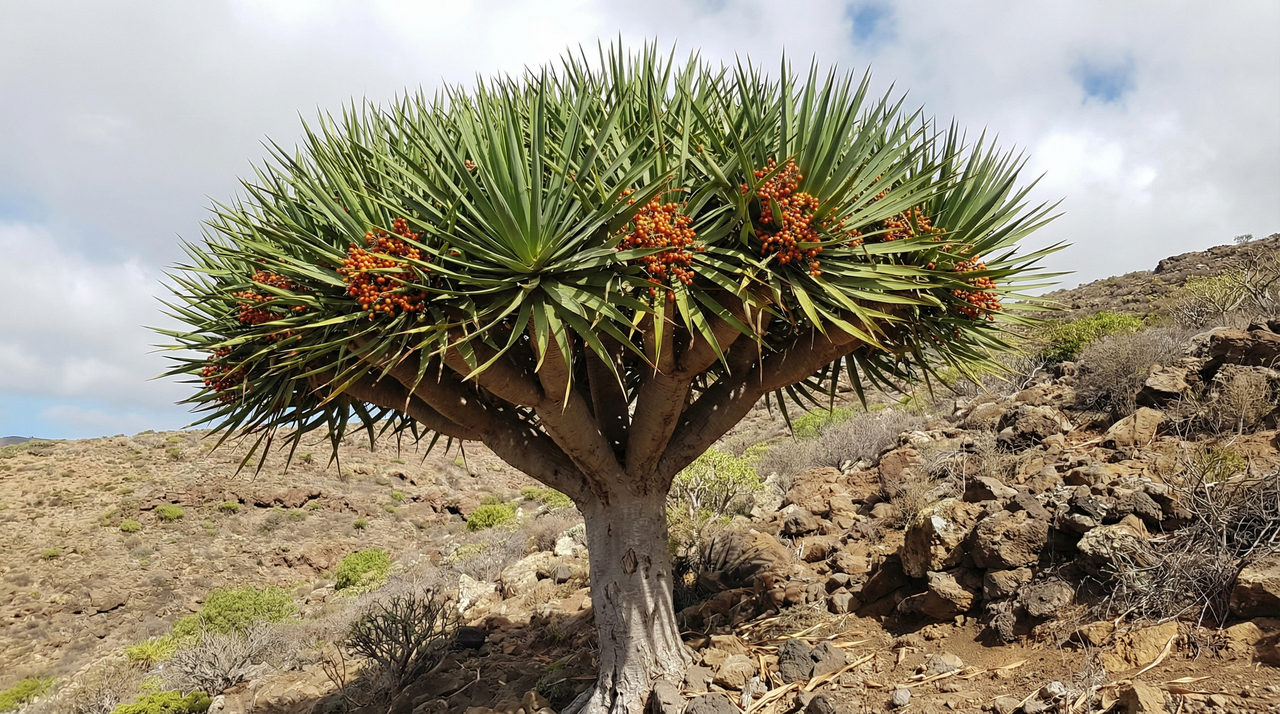
There's a tree on Tenerife that was already old when Columbus was born. The Dragon Tree at Icod de los Vinos, Dracaena draco, is estimated to be somewhere between 650 and 1,500 years old depending on who you ask, and the truth is nobody really knows, because this plant doesn't make annual growth rings the way a proper tree should.[1] It's technically a giant monocot, more closely related to asparagus than to an oak, yet it grows into something that looks like a dragon's canopy carved from stone. That contradiction sits at the heart of everything strange and wonderful about this genus.
Cut the bark, and it bleeds. The resin that oozes out oxidizes to a deep arterial red, and ancient Mediterranean cultures didn't waste any time turning that into legend. Pliny the Elder wrote about it. Dioscorides listed its medicinal uses. Canary Island healers were packing wounds with it centuries before pharmaceutical antiseptics existed. And meanwhile, the plant most people call a "dragon tree" at their local garden center probably isn't Dracaena draco at all, and the one sold as "lucky bamboo" isn't bamboo by any stretch. This genus has been misnamed, mythologized, and misunderstood at almost every turn, which, honestly, makes it one of the more fascinating plants I've ever worked with.
Dracaena Origin, History, and Cultural Significance
Botanical Background and Native Habitat of the Dragon Tree
Few plants feel as genuinely prehistoric as Dracaena draco. Native to the Macaronesian islands of the Canary Islands, Cape Verde, Madeira, and pockets of western Morocco, the Dragon Tree has carved out its niche in arid, rocky volcanic soils from sea level all the way up to about 1,400 meters elevation.[2][3] These are landscapes of seasonal extremes: mild, wet winters and long, bone-dry summers. The Dragon Tree doesn't just tolerate those conditions; it was shaped by them over millions of years.
What makes this plant truly staggering is its timeline. Dracaena draco can live 600 to 1,000 years or more under good conditions, yet it won't flower for the first 10 to 20 years of its life, and once it does, blooms may only appear every 10 to 15 years.[3][4] I've worked with long-lived trees for years, and even by those standards, this flowering rhythm is extraordinary. Watching one bloom in a botanical garden always feels like catching something unrepeatable. Each event ends with small orange-red berries ripening in autumn, then the tree slips back into its unhurried vegetative existence.
That slow pace, paired with habitat loss and relentless grazing pressure from goats on young plants, has pushed the species to Vulnerable status on the IUCN Red List.[5] In my work with rare-plant clients, protecting young Dragon Trees from browsing animals is one of the most effective and immediate interventions you can make, something the research on goat herbivory confirms directly. Some populations are now legally protected, which tells you how serious the situation is.
For contrast, consider Dracaena sanderiana, the familiar Lucky Bamboo. It originates from humid rainforest understories in Central and West Africa, growing along riverbanks and swamps in Cameroon, Gabon, Nigeria, and neighboring countries, a world away ecologically from volcanic Macaronesian cliffs.[6][7] The two species share a genus name and almost nothing else. That breadth is worth keeping in mind as context for everything that follows.
Visual Characteristics of Dracaena draco
A mature Dragon Tree is less a plant than a monument. In the wild, specimens reach 20 to 25 meters tall with an umbrella-shaped canopy stretching up to 15 meters wide, the whole structure supported by a single stout trunk covered in rough, corky, deeply fissured bark.[8][4] Cut that bark and a vivid blood-red resin bleeds out, which is precisely where the mythology comes from. The trunk branches only after first flowering, so a single-stemmed specimen is telling you something: it hasn't bloomed yet. Once I understood that, I started reading Dragon Trees like a timeline.
The leaves are sword-shaped, leathery, dark to blue-green, arranged in dense terminal rosettes at the tips of every branch.[4][9] Under drought stress they shrink in size and thicken, a visible adaptation that makes the plant's origins legible. When it does flower, the blooms are small, cream-white, and clustered in panicles up to a meter long, followed by those distinctive orange-red berries.
Compared to that, Lucky Bamboo is almost comically modest: slender green canes rarely topping a meter indoors, with glossy lance-shaped leaves and stems flexible enough to be trained into spirals for the gift market.[10][11] I tell clients who only know Dracaena from a desk plant: the Dragon Tree is to Lucky Bamboo what an ancient olive tree is to a sprig of rosemary. Same broad family, completely different scale of presence in a landscape.
Traditional and Cultural Uses Through the Ages
The Dragon Tree's cultural history is inseparable from its resin. Pliny the Elder documented it in the first century CE in Naturalis Historia, and Dioscorides covered its wound-healing applications in De Materia Medica, recording it under uses that included stanching bleeding and dyeing hair.[12][13] The consistency between two such different classical sources gives me real confidence in that wound-healing history. These weren't speculative entries; they were practical field notes from cultures that traded dragon's blood resin across the Mediterranean.
That trade persisted for centuries. In the Canary Islands, the tree became a symbol of longevity and endurance, its resin woven into ritual, medicine for digestive complaints, and dye production.[14][15] Roman gardens cultivated specimens for ornament as early as the classical period, and from there global spread followed: through colonial trade routes to the Azores, the southern United States, Hawaii, and East Asia.[16] Understanding that history of overexploitation helps explain why modern conservation efforts around this species are so urgent.
Lucky Bamboo carries none of this classical baggage. It was introduced to European horticulture only in the late 19th century, named after the orchid grower Henry Sander, and had no documented ethnobotanical use in its native Central African range before that.[6] Its cultural meaning is entirely modern, rooted in mid-20th-century East Asian Feng Shui traditions where the number of stalks signals luck, prosperity, or, if you hand someone four, misfortune.[17] It's a fascinating case of a plant acquiring symbolic weight through commerce and gift culture rather than centuries of lived use.
Fascinating Facts About the Dragon Tree
The most celebrated Dragon Tree on Earth stands in Icod de los Vinos, Tenerife: roughly 20 to 21 meters tall, with a trunk circumference of 13 meters, and an estimated age of 600 to 1,000 years.[14] It's protected as a national monument, and rightly so. Every time I see photographs of it, I think about how many generations of landscape designers never got to plant a mature specimen, only to inherit one. That tree has outlasted empires. It's shaped my thinking about what truly long-lived planting can mean for public landscapes: the slow work of putting something in the ground that your great-grandchildren will photograph.
The name itself carries the mythology well. Ancient cultures saw the red resin weeping from a wound in the bark and concluded this could only be the blood of dragons. The Latin genus name Dracaena traces back to the Greek drakaina, meaning female dragon, a detail that still delights me every time I introduce the plant to a new client who's only ever seen it labeled as a houseplant in a garden center.
Dracaena Varieties and Where to Buy Them
If you've gone looking for named cultivars of Dracaena draco, you've probably come up mostly empty. That's not a gap in your research. The Dragon Tree is recognized as a single species without widely documented botanical varieties or cultivars, though you may occasionally find informal selections at specialist nurseries, things loosely labeled as dwarf forms or variegated types.[18][19][20] Treat those trade labels with healthy skepticism; they're typically not formal botanical designations. What you're shopping for is the species itself, and frankly, one well-grown Dracaena draco specimen is enough to anchor an entire garden.
Notable Varieties of Dracaena draco
The contrast with its cousin Lucky Bamboo (Dracaena sanderiana) is almost comical. Where Dracaena draco stays botanically singular and unadorned, Dracaena sanderiana has spawned a full lineup of cultivated forms: 'Variegata' with white-striped leaves, 'Aurea' in golden yellow, 'Gold Margin' edged in yellow on green, 'Compacta' as a dwarf option, and 'Hawaiian Sun' bred for brighter light tolerance.[10] When clients ask me about dracaena variety, I often find myself explaining that the genus really does serve two completely different audiences: the patient landscape designer hunting for a living sculpture, and the indoor gardener who wants something leafy and low-maintenance on a shelf by Friday. Lucky Bamboo delivers the latter instantly. The Dragon Tree rewards the former over decades.
Sourcing Dracaena draco and Related Species
Before you pull out a credit card, know what you're buying into. Dracaena draco is classified as Vulnerable on the IUCN Red List[21] and listed on CITES Appendix II, which means international trade is regulated to prevent unsustainable harvesting.[22] Botanical gardens specifically caution against purchasing dragon's blood resin sourced from wild populations, and I give clients the same advice: always ask your supplier for cultivated-origin verification.[23] I've seen enough overharvested species move through the ornamental trade to know that the question is worth asking even when it feels awkward.
The slow growth that makes this tree so architecturally magnificent also makes large specimens genuinely rare and expensive. A plant that can eventually reach 20 meters tall with a 15-meter spread over many decades[10][24] simply takes time to produce. Seeds run $5 to $20 per packet, young plants $20 to $100, and mature specimens can easily hit $300 to $2,000 or more.[25] Compare that to Lucky Bamboo, where single stalks cost $3 to $8 and potted arrangements rarely exceed $50.[26] I started my own draco from seed purchased through a specialty supplier, and watching the first branching "dragon head" finally form after years of patient growth was genuinely thrilling. Starting small is the practical choice here, financially and logistically.
In the US, Dracaena draco is hardy in USDA zones 10 and 11, with outdoor cultivation mostly limited to southern Florida and coastal California.[27][10] I'm in zone 9B in Central Florida, which means mine needs a sheltered microclimate and frost cloth on cold nights; anything below 10°C puts it at real risk.[28] That cold sensitivity also complicates shipping, so factor temperature-controlled transit into your purchase timing. If you're importing from abroad, expect to navigate phytosanitary certificates and USDA APHIS compliance on top of the CITES documentation.[29][30]
For sourcing, skip the big-box stores; genuine Dracaena draco rarely appears there.[31] Specialty online nurseries like Top Tropicals and Rare Exotic Seeds, along with vetted Etsy sellers focused on rare exotics, are your most reliable options.[32][33] Whatever you order, inspect incoming plants carefully for mealybugs and spider mites before bringing them near anything else in your collection. That's a step I take with every new Dracaena acquisition without exception.[34][35] Lucky Bamboo, meanwhile, is stocked at Home Depot, Amazon, Bloomscape, and essentially anywhere houseplants are sold, propagated easily from vegetative cuttings and available year-round.[36][37] For clients who want the genus presence immediately while a true draco specimen develops, I recommend it without hesitation.
Propagating and Planting Dragon Tree (Dracaena draco)
Before you can make any sensible decision about how to start a Dragon Tree, you need to understand a few biological realities about the plant. Dracaena draco is dioecious, meaning you need both a male and a female plant for seed production, which happens via wind pollination.[4][38] Each seed is monoembryonic with standard monocot anatomy, a single embryo, shoot apex, radicle, and cotyledon, and there's no confirmed apomixis or polyembryony to simplify things.[4][39] In the wild, those seeds travel inside bright red berries dispersed by birds, arriving at new sites fresh and viable.[4][40] That freshness isn't incidental; it's the whole story.
Propagation Methods for Dragon Tree
Dracaena draco seeds are recalcitrant, which means they cannot survive drying or cold storage the way most temperate seeds can.[41][42] I've lost entire batches of tropical seeds by misjudging storage conditions, and now I treat every fresh-collected seed as essentially irreplaceable. For draco, viability drops rapidly after six to twelve months even under the best short-term conditions (cool, dark, 4-10°C with moisture content held at 20-50%), and anything colder than 5°C accelerates decline rather than preserving it.[42][43] Sow fresh, or don't bother.
If you do have viable fresh seeds, scarification is non-negotiable. A 24-48 hour warm water soak, or light mechanical nicking, breaks physiological dormancy; some growers add gibberellic acid or use alternating temperature regimes for better results.[43][40] Sow into a well-draining perlite-vermiculite or sandy medium at 20-25°C with 70-80% humidity and bright indirect light. Then wait. Germination is hypogeal and slow, typically two to six months, sometimes pushing eight, with success rates between 40-80% under good conditions.[43][44] Remove pulp immediately after harvest, surface-sterilize with a 10% bleach solution, and work in sterile conditions to prevent fungal losses.[41][45] For conservation programs, cryopreservation and tissue culture are the serious tools because conventional seed banking simply doesn't work for this species.[41]
Most home growers, reasonably, skip all of this and reach for vegetative propagation. Offsets or basal suckers, which emerge at the base of mature plants, are your best bet at 80-90% success when divided with roots intact.[46] Air layering is next in line, achieving 60-80% success after two to three months: girdle the stem, apply rooting hormone, wrap in moist sphagnum moss, and maintain humidity until roots develop before severing.[46] Stem cuttings are technically possible but genuinely difficult, around 20% success, because monocot physiology limits vascular cambium activity.[47] If you try it, use semi-ripe 10-15 cm cuttings in late spring or summer, cut just below a node, treat with IBA rooting hormone at 3000-5000 ppm, and provide bottom heat; rooting takes four to eight weeks when it works at all.[47][48] Having propagated related dracaenas in my Florida landscape, I can confirm that bottom heat and IBA make a real difference at the margins. Skipping either drops already-low success rates toward near-failure.
The contrast with Dracaena sanderiana is almost comical. Propagating dracaena sanderiana means dropping a 4-6 inch stem cutting into a jar of water, changing it every week or two, and watching roots appear in two to six weeks at 80-95% success.[49] Lucky Bamboo's seed propagation is rarely practical anyway since viable seeds are scarce in cultivation and seedlings show significant genetic variation, so most commercial stock stays vegetative.[49][44] That effortless water-rooting is a feature of its understory, moisture-adapted origins, not a baseline for the genus. For tissue culture enthusiasts, micropropagation of draco from shoot tips using Murashige and Skoog medium with cytokinins and auxins achieves 70-95% success in lab settings, the realistic option for mass conservation production.[50]
Whatever method you use, the seedling or rooted cutting that emerges will grow at roughly 1-2 cm per year initially.[49][44] I've grown a lot of slow plants, and draco is genuinely in a category of its own. That pace isn't a sign something is wrong; it's the species' signature. The commitment you're making when you start one of these from scratch is measured in decades, not seasons.
Soil, Site Selection, and Planting Technique
Because seeds and cuttings are so slow, you want to get the planting site or container right the first time. Root rot from poor drainage can erase months of patient propagation work in a matter of weeks, and with this plant, that loss is not easily recovered. Dracaena draco evolved on volcanic slopes in the Canary Islands with annual rainfall of only 300-600 mm, which means it is constitutionally adapted to lean, fast-draining soil and periodic drought.[4][51] It tolerates poor, nutrient-deficient, even saline soils with ease, but heavy clay, compaction, or waterlogging will kill it.[4][52]
Native habitat soils run alkaline, pH 7.0-8.5 on volcanic and limestone substrates, but in cultivation a slightly acidic to neutral range of 6.0-7.5 works well.[53][54] For containers, a cactus or succulent mix amended with 20-30% organic matter is a solid baseline; equal parts potting soil, sand or perlite, and pumice works well in my experience for plants in heavy Florida soils where I've had to compensate aggressively for drainage.[44] The taproot runs deep, so give it a minimum of 24-36 inches of soil depth in containers or beds.[44]
Full sun is the requirement: at least six to eight hours of direct light daily.[10][55] This is a pioneer species from open rocky landscapes, not a shade-adapted plant, and I've seen the etiolated, weak habit that develops when these are underlit indoors versus the sturdy, compact form of outdoor sun-grown specimens. Young plants tolerate a little protection from harsh midday sun while establishing, but the long-term trajectory is toward maximum light exposure. Compare that to Dracaena sanderiana, which thrives in bright indirect light as an understory plant and grows hydroponically in containers on office desks.[6][56] Same genus, entirely different design brief.
For landscape placement, space mature specimens 15-20 feet apart to accommodate their eventual 10-30 foot canopy spread and wide-ranging shallow root system.[44][57] In a windbreak configuration, 10-15 feet within rows works with 20-30 feet between rows; generous spacing reduces competition and cuts fungal disease risk from poor air circulation.[44] When I'm training Lucky Bamboo stalks for a client's living room, I'm working in groupings of 1-6 inches between stems; placing a Dragon Tree is the exact opposite conversation. Get the spacing generous now, because a properly sited specimen can persist for centuries, and you won't want to move it later.
Dracaena draco Care Guide: Growing the Dragon Tree
Every care decision you'll make for Dracaena draco traces back to a single image: a gnarled, umbrella-crowned tree clinging to volcanic cliffs on the Canary Islands, baking in the sun, its roots threading through nutrient-poor rock with almost nothing to drink for weeks at a time. That's the plant you're working with. Once I started designing around that image rather than treating it like a generic houseplant, my clients' Dragon Trees became the dramatic, long-lived specimens they're supposed to be.
Sunlight Requirements and Light Management
Dracaena draco needs 6 to 8 hours of direct sun daily, and its thick waxy leaves evolved specifically to handle the intensity that would torch most garden plants.[58][4] Deprive it of that light and you get etiolation: spindly elongated stems, pale yellowing leaves, and sparse growth as the plant stretches desperately toward whatever source it can find.[10] Young plants and anything in a container do have one real vulnerability here, which is leaf scorch showing up as brown leathery patches when they're moved abruptly from shade into full exposure.[58] Transition them gradually over two to three weeks and you'll avoid most of those problems.
I bring this up because the single most common care mistake I see is people applying "Dracaena" advice generically. Lucky Bamboo (Dracaena sanderiana) prefers 4 to 6 hours of bright indirect light and suffers crispy edges and bleaching from direct sun,[10][59] which is the exact opposite situation from its genus-mate. One thrives on a sunny rock garden; the other belongs on an office desk. They share a genus name and not much else in terms of what they want from you.
Watering Needs and Drought Tolerance
The swollen trunk isn't just dramatic, it's a water reservoir. Dracaena draco stores water in its trunk tissue, reduces transpiration with succulent-like leaves, and in extreme conditions uses CAM photosynthesis to minimize water loss, allowing it to survive weeks without irrigation and even occasional fire in its native semi-arid habitat.[4] Once you watch that trunk do its job through a dry spell, you'll never reach for the hose on instinct again.
The practical rule: water only when the top 2 to 4 inches of soil are completely dry, roughly every 2 to 4 weeks during the growing season and even less in winter.[10][60] Use well-draining sandy or loamy soil in containers with drainage holes, keep pH between 6.0 and 7.5, and if possible use rainwater or low-salinity soft water rather than fluoride-heavy tap.[61][10] Overwatering is almost always what kills these plants in cultivation. Yellowing older leaves, wilting despite moist soil, and mushy brown stems point to root rot already in progress; crispy brown leaf tips and consistently dry soil are underwatering.[62][4] The symptoms can look similar at first glance, so always check the soil profile before drawing conclusions.
Soil, Fertilizing, and Nutrient Management
This is where I'll confess an early-career mistake. I once treated a young Dragon Tree with the same balanced 10-10-10 fertilizer schedule I was using on Lucky Bamboo water culture, and what I got was soft, fast, structurally weak growth that looked nothing like the compact architectural form I was designing toward. The problem is that Dracaena draco evolved in volcanic soils that are genuinely poor in nutrients, and it's wired for that scarcity.[63][4]
Feed it a diluted balanced or potassium-enhanced fertilizer (something like a 10-4-8 or 12-4-8 ratio) every 4 to 6 weeks during spring and summer only, and stop entirely in fall and winter.[63][51] Potassium supports drought tolerance and root development; excess nitrogen produces exactly the leggy, unbalanced growth I described above.[44][64] Always apply to moist soil and water thoroughly afterward; fertilizing dry roots causes salt burn and tip browning.[65] If you're seeing yellowing in older leaves, that's often nitrogen deficiency, but before reaching for fertilizer, rule out overwatering because the symptoms overlap considerably.[44][66] Chlorosis in younger leaves usually points to iron deficiency in alkaline soils rather than a feeding problem per se. A light hand with organic options like compost tea or diluted fish emulsion reduces salt buildup risk considerably if you're nervous about over-application.[67]
Temperature, Frost, and Heat Tolerance
For all its toughness in drought, Dracaena draco is genuinely tender to cold. It's rated for USDA zones 9 to 11, tolerates brief dips to about 28°F (-2°C), and should be kept above 50°F (10°C) as a practical minimum.[68][69] Frost damage shows up as browning or blackening of leaf tips and edges, wilting, stem dieback, or mushy tissue, and once tissue goes mushy, it's gone.[36] I learned years ago that moving large containers inside for winter is absolutely worth the effort. One hard freeze can set a young Dragon Tree back years, and given how slowly this plant grows, that's not a setback you want to absorb.
On the heat end, the optimal range is 59 to 86°F (15 to 30°C), and while the tree can handle short spikes to 104°F (40°C), sustained temperatures above 95°F (35°C) cause scorch, wilting, and bleaching, especially in younger plants.[10][70] In Central Florida summers, a 30 to 50% shade cloth over young specimens during peak afternoon heat is non-negotiable in my experience. Deep watering every 7 to 10 days during those extreme stretches, paired with 5 to 10 cm of mulch kept clear of the trunk, takes the edge off considerably.[71][72] The plant's CAM photosynthesis, antioxidant enzymes, and waxy cuticle do real work here, but they're not infinite protection.[71]
Pruning, Maintenance, and Seasonal Care
The annual rhythm for Dragon Tree care is simple once you accept the plant's pace. In zones 9 to 11, the active growing window opens in late spring to early summer when soils reach 70 to 80°F, and that's when you plant, fertilize, and pay closest attention to watering.[73][16] As cooler months arrive, reduce watering frequency and stop fertilizing entirely, keeping soil on the drier side to support cold hardiness.
Pruning should be minimal and purposeful. Remove dead, damaged, or diseased branches only, using sterilized sharp tools and cutting cleanly above a node.[74][10] Because this tree grows so slowly, an aggressive or mistimed cut doesn't heal in a season. It heals over years. I use it as a living sculpture in drought-tolerant landscapes, and the clients who leave it alone, water maybe once a month in summer, and skip the autumn fertilizer end up with the most structurally compelling specimens. The ones who fuss over it rarely do. Watch the plant rather than the calendar, and let what you observe guide your decisions. That one principle covers most of caring for Dracaena draco better than any rigid schedule could.
Harvesting Dracaena (Dragon Tree)
If you're growing Dracaena draco hoping to harvest something in the next few years, I want to set expectations right at the start: this is one of the slowest plants I've ever worked with, and its harvesting timeline is almost as legendary as the tree itself.
Timing: From Decades to Decades for Dragon Tree Fruit and Resin
Seed-grown Dragon Trees typically require 10 to 15 years before producing their first fruits under optimal conditions, and in poor sites that window can stretch to 50 years or well beyond.[75][76][77] I always label my young grafted specimens with the planting date because even grafted trees, which shorten the wait considerably, still need 5 to 15 years before fruiting begins.[78][79] It's a multi-year wait no matter how you start. When flowering does finally occur, the window in the Canary Islands runs April through June, and from that bloom to ripe fruit is another 6 to 12 months.[10][40][80] For most growers, the more accessible harvest is resin. Dragon's blood tapping becomes practical on trees 10 to 20 years old or more, and I've noticed that dry spells seem to increase resin flow noticeably on the large landscape specimens I've worked with in Florida, which aligns with reports that drought stress can boost yield.[81][82]
The contrast with Lucky Bamboo (Dracaena sanderiana) couldn't be sharper. Cuttings can be ready for ornamental stalk harvest in as little as 6 to 9 months in water, and seed-grown plants reach usable size within 3 to 5 years.[44][83] Lucky Bamboo rarely fruits in cultivation, but when it does, berries mature in roughly 120 to 180 days.[84][85] When I'm designing a system and someone wants a fast return, I steer them toward Lucky Bamboo for ornamental harvest and treat the Dragon Tree as the long-game structural specimen it was always meant to be.
How to Harvest Dracaena Berries and Dragon's Blood Resin
Dragon Tree berries are ready when they've turned fully orange-red and give very slightly under gentle pressure.[78][86] Handle them with care; the goal for most growers is seed collection rather than consumption, and rough handling damages viability. Resin harvest is a gentler affair than it sounds: small incisions in bark allow the bright red exudate to flow and harden, though any deeper work risks damaging a slow-to-recover tree. For Lucky Bamboo stalks destined for ornamental sale or gifting, the practical benchmark is 12 to 24 inches tall, at least 4 to 6 nodes, vibrant green color, firm texture, and a diameter somewhere between a quarter and a half inch.[87][88][89] Any safety questions around handling resin or plant sap are better answered in the health benefits section, which covers the phytochemistry in detail.
Yield, Flavor, and Why Dracaena Is Rarely Eaten
The berries of Dracaena draco are not considered edible for humans. Birds eat them readily, and there are occasional local reports of a faintly sweet flavor, but the fruit may be toxic or at minimum quite unpalatable, and human consumption remains extremely rare and should be approached with real caution.[16][90][71] In all my years growing and designing with dracaena, I've never considered the berries table fare. They belong to the birds.
The resin is a different story, though still not a culinary one. Dragon's blood is intensely bitter and astringent from its dense load of phenolics, flavonoids, and tannins, with a balsamic, spicy, woody aroma that occasionally carries citrus undertones.[91][92][93] Fresh resin flows as a thick, sticky liquid before hardening to a brittle solid, and its bitterness deepens with age and oxidation. That flavor profile tells you everything about its role: this is a medicinal and artisanal material, not an ingredient. Any internal use belongs strictly to traditional practice and should always be approached with modern safety awareness and in very small quantities.
Dragon Tree Preparation, Medicinal Uses, and Safety
Culinary Uses and Toxicity of Dragon Tree
Every time I specify a Dracaena for a client's courtyard or indoor planting, my first conversation is about the saponins. Most parts of Dracaena draco contain toxic steroidal saponins that cause nausea, vomiting, diarrhea, and abdominal pain in both humans and pets.[94][95][96] The effects are usually self-limiting, but I've seen enough anxious calls about pets who chewed a leaf to make this a non-negotiable part of any site handoff.
The only real exception in the entire plant is the small orange-red fruit. The indigenous Guanches of the Canary Islands consumed these berries seasonally,[97][98] and I've sampled enough bland subtropical fruits in my work to believe the descriptions: mild, watery, faintly sweet with no real culinary payoff. Think of a fruit that's technically food but offers nothing a kitchen would want. No recipes exist, and no nutritional analysis has ever been published.[99] Even that narrow edibility is largely moot, because the tree is protected throughout its native range and grows painfully slowly; I never recommend harvesting from wild or conserved specimens regardless.[100]
The resin has a marginal historical footnote as a bitter colorant in Canary Island cordials and wines,[101] but modern sources are consistent: internal use is inadvisable, no safe dosage exists, and the intensely bitter, astringent character discourages experimentation.[102] Lucky Bamboo (Dracaena sanderiana) reinforces the pattern. Its saponins and possible cyanogenic glycosides produce the same gastrointestinal symptoms with zero edible parts or safe preparation methods.[94][103] Across this genus, ornamental is the operating assumption.
Traditional Medicinal Preparations
Dragon's blood resin does have a genuine ethnobotanical record of medicinal preparation. Traditional methods include tinctures at roughly 1 to 2 ml daily, decoctions of 1 to 3 grams of resin boiled in water, simple infusions, powdered resin, topical poultices, and diluted essential oil applications around 1 to 2 percent for skin use.[104][105] I've seen this resin sold in specialty herbal shops, and I always tell clients the same thing: these are ethnobotanical records, not clinically standardized protocols. The preparations exist; the oversight doesn't. Anyone interested in medicinal use deserves guidance from a qualified practitioner, not a plant label.
Non-Food Uses of Dragon's Blood Resin
This is where the resin earns its reputation. Historically, dragon's blood served as a topical astringent and anti-inflammatory for wounds, skin infections, and ulcers, and was taken internally for gastrointestinal complaints.[16][91] Beyond medicine, it functioned as a natural dye for textiles and cosmetics, a colorant for artists, and a varnish for wood preservation.[106] I'll add a practical note for anyone who has ever pruned one of these trees: the resin stains. Tools, skin, gloves. That red is not coming out of a cotton shirt.
Geographic origin shapes the resin's character in subtle ways; Canary Islands specimens tend to produce a more aromatic resin with faint citrus notes compared to North African populations.[101] Natural dye enthusiasts and conservation-minded craftspeople still work with it today for exactly these qualities. That's the legacy that holds up. Dracaena belongs in the landscape, the apothecary cabinet, and the artist's studio, not anywhere near the kitchen.
Dracaena Health Benefits and Medicinal Uses
The health story of dracaena plants is really the story of one species and one extraordinary substance. Dracaena draco, the Dragon Tree, produces a deep red resin from its trunk and branches that has been used medicinally for centuries. Most other species in the genus, including the ever-popular Lucky Bamboo (Dracaena sanderiana), carry no comparable ethnomedicinal tradition. If you're growing the Dragon Tree for its resin, you're working with something genuinely ancient. If you're growing Lucky Bamboo, you have a lovely ornamental with no established medicinal legacy.
Traditional Medicinal Uses of Dragon's Blood Resin
In the Canary Islands and across North Africa, dragon's blood resin was the kind of remedy that covered everything. Traditional healers used it topically as a poultice for cuts, burns, and ulcers, and internally for diarrhea, dysentery, and gastritis.[107][15] It appeared in treatments for arthritis and sprains, as an expectorant for coughs, and as a hemostatic agent to stop bleeding.[105] There were even gynecological applications, including regulating menstruation and supporting postpartum recovery. That's a wide pharmacopeia for a single resin.
Modern lab research has started catching up with some of that traditional use. Preclinical studies show dragon's blood exhibits anti-inflammatory effects through NF-κB inhibition, antioxidant activity via Nrf2 activation, broad-spectrum antimicrobial effects against pathogens including Staphylococcus aureus, and enhanced wound healing through collagen synthesis.[108][109] There's also preliminary cytotoxic activity against breast and colon cancer cell lines, hepatoprotective effects against acetaminophen-induced liver damage, and possible anti-diabetic potential.[110][111] The catch: all of this is preclinical. No human clinical trials exist.[112] We have promising pharmacological data and centuries of traditional use, not controlled evidence of efficacy in humans. Lucky Bamboo, for contrast, has no documented traditional medicinal use at all and is grown purely as an ornamental.[113]
Phytochemical Profile and Modern Research
What makes dragon's blood so chemically interesting is its density of secondary metabolites. The resin runs roughly 50-60% diterpenoids, including dracene and dracoidin, which account for that distinctive red pigmentation, alongside 20-30% flavonoids, more than twenty identified, among them dracochromes, dracoflavonoids, dracorubin, and various homoisoflavonoids.[114][115] Phenolic compounds, proanthocyanidins, steroids, alkaloids, and coumarins round out the profile. It's a remarkably complex mixture for something that bleeds out of a tree wound.
Those ratios aren't fixed. Diterpenoid concentrations tend to be higher in dry seasons, while flavonoids increase during wetter periods.[116] I've observed that resin collected from plants under drought stress tends to run deeper red and more astringent, which tracks with those seasonal phytochemical shifts. Leaf extracts tell a different story chemically, containing quercetin glycosides, rutin, kaempferol, and hyperoside rather than the diterpenoid-dominated resin profile.[117] Those phenolics drive the potent free-radical scavenging that underpins the antioxidant activity seen in lab studies.[118] Lucky Bamboo shares some overlapping compounds, rutin, quercetin, ferulic acid, but its leaf profile leans heavier on saponins and alkaloids, with antioxidant capacity confined to lab extracts and no translation to clinical applications.[119]
Nutritional Aspects and Toxicity Risks
Dracaena is not a food plant. The only part of Dracaena draco with any reported edible use is the small orange-red berry, eaten in very small quantities historically in the Canary Islands.[120] Nutritional estimates are approximate and heavily extrapolated, roughly 50-70 kcal per 100g with modest carbohydrates and minerals.[121] Even then, the seeds are numerous and there are mild toxicity concerns, so "snack lightly and cautiously" is the most generous framing. The leaves are not edible and are considered toxic.[3] The resin is a medicinal and dye product, not a food item. The same phytochemicals responsible for its impressive bioactivity, saponins, flavonoids, phenolics, also contribute to gastrointestinal toxicity that makes casual consumption inadvisable without expert guidance.[122] Lucky Bamboo lands in the same category: non-edible, mildly toxic if ingested, not a food source under any interpretation.[123]
Safety Considerations for Humans and Pets
Here's where I spend a lot of time with clients, especially those with cats, dogs, or young children. All dracaena species, including both Dracaena draco and Lucky Bamboo, are mildly toxic to humans, cats, dogs, and livestock. The culprits are steroidal saponins concentrated in the leaves and sap, along with calcium oxalate crystals.[94][124] In humans, ingestion typically produces nausea, vomiting, diarrhea, and abdominal pain; sap contact can cause skin irritation or contact dermatitis. In pets the picture is more pronounced: cats and dogs can experience depression, weakness, incoordination, dilated pupils, and excessive salivation.[103] Think of the oxalate effect as similar to what you'd see with Dieffenbachia, another common houseplant, where the crystals cause immediate oral irritation. Rarely life-threatening in small exposures, but genuinely unpleasant, and veterinary attention is always the right call.[125] I've designed pet-friendly gardens long enough to know that dracaena toxicity in cats is avoidable if you simply place the plant where curious animals can't reach it.
The resin has its own safety profile separate from the leaf and sap toxicity. Raw dragon's blood can be caustic on skin, and based on available pharmacological data and traditional precautions, I'd recommend avoiding any internal medicinal use during pregnancy or lactation and steering clear if you're on blood-thinning medications or antidiabetic drugs given possible anticoagulant and hypoglycemic interactions.[126][127] Acute toxicity is low (LD50 above 2000 mg/kg in rats), but high doses carry hepatotoxicity risk. For anyone handling these plants regularly, wear gloves when pruning to avoid sap contact, wash hands thoroughly afterward, and be aware that environmental stress like drought or poor soil can influence toxin levels in the tissue.[128][129] I've learned to label containers clearly when working with multiple dracaena species in a design, because early-stage seedlings of resin-producing types can look deceptively similar to ornamental relatives, and you don't want anyone handling toxic foliage under the assumption they're working with something benign.
Pests and Diseases of Dracaena Draco
Natural Resistance and Defense Mechanisms
Compared to softer-leaved relatives like Dracaena marginata or D. sanderiana, the Dragon Tree carries itself with a quiet toughness that gardeners tend to underestimate until they watch it shrug off a minor infestation that would flatten a ficus. Its thick, leathery leaves, slow growth rate, and arid-adapted constitution give it moderate natural pest resistance right out of the gate.[130][131] When I'm evaluating pest vulnerability at a glance during landscape design, leathery foliage is always a good sign.
The chemistry behind that resilience is genuinely fascinating. Dragon's blood resin contains phenolic compounds, flavonoids, and dracoresinotannols with documented insecticidal, repellent, and antimicrobial properties.[132][133] During maintenance pruning I always pause when I nick a branch and see that vivid red seep out; it's a quick visible reminder that the plant is actively defending itself. The thick, scaly bark on a mature trunk adds a physical layer to these chemical defenses, making it genuinely difficult for insects to penetrate.[134][135] In its native Canary Island habitat, with low humidity and minimal disease pressure, these defenses are usually more than enough.
Common Pests and Their Management
The usual suspects, spider mites, mealybugs, scale insects, aphids, whiteflies, and thrips, mostly target plants that are already under stress.[136][130][137] Spider mites show up as stippling and fine webbing in dry conditions; mealybugs leave white cottony masses and the honeydew they excrete invites sooty mold; scale causes yellowing and wilting with the same sooty mold problem.[138][139] Pest pressure rises sharply with low humidity, poor air circulation, and indoor or greenhouse conditions, so young plants and container specimens need closer monitoring than mature outdoor trees.[130][131] I label every new dracaena that comes into my care because early stress is the real invitation; a plant that arrived from shipping, sat in the wrong light, or got watered inconsistently is far more vulnerable than one that's been properly sited from the start.
No cultivars of Dracaena draco have been bred for enhanced pest resistance, and variegated forms like 'Variegata' may actually be more susceptible due to reduced photosynthetic efficiency under stress.[140][85] The watering and air circulation principles covered in the care guide are your first line of defense here; there's no shortcut that replaces getting those fundamentals right.
Major Diseases and Prevention Strategies
Root rot is the single most preventable killer of dracaena in cultivation, which is almost ironic for a drought-adapted tree. Phytophthora, Pythium, and Fusarium are the primary culprits, and they need just one thing to get established: excess moisture around the roots.[141][142][140] After losing several young plants to root rot in my first seasons working with tropicals, I now double-check drainage on every container before planting a dracaena. I haven't lost a mature specimen since.
Leaf spot diseases from Fusarium, Alternaria, Cercospora, Botrytis, and bacterial pathogens like Erwinia produce brown or black lesions, often with yellow halos, and thrive where humidity is high and airflow is poor.[143][144] If you're seeing brown or black leaves with that characteristic halo effect, look at your watering habits and ventilation before reaching for a fungicide. Water quality matters too: fluoride levels above 1 ppm from tap water or certain fertilizers can cause the tip burn and marginal necrosis that sometimes gets misdiagnosed as disease.[140][145] I let tap water sit out overnight before using it on my dracaena collection, and the difference in leaf margin clarity is genuinely noticeable.
Integrated Pest Management for Dragon Tree
Good IPM for Dracaena draco starts before you see any problem. Well-draining soil, restrained watering, temperatures above 15°C (59°F), adequate air circulation, clean water, and balanced fertilization without excess nitrogen form the foundation.[146][130] Always quarantine new plants before they join an established collection. These habits become second nature after a couple of seasons, and a well-sited Dragon Tree genuinely needs very little intervention once they're in place.
When treatment is necessary, I reach for insecticidal soap or neem oil first because they handle most soft-bodied insects and mites without disrupting the beneficial insects I've worked to encourage in my gardens.[138][147] Copper-based fungicides address fungal issues; hydrogen peroxide drenches can help with early-stage root rot; predatory mites handle spider mite populations well in enclosed spaces.[148] Systemic insecticides are a last resort, reserved for true emergencies and used strictly per label. The long potential-problems list in this section shouldn't intimidate anyone; a properly cared-for Dragon Tree is, in practice, one of the more trouble-free specimen trees you can grow in a warm-climate garden.[149][150]
Dracaena in Permaculture Design
Most plants I design with have obvious roles in the food forest stack: fruit, nitrogen fixation, dynamic accumulation, ground cover. The Dragon Tree does almost none of those things, and I love it anyway. What Dracaena draco offers is something rarer and, in a long-lived regenerative landscape, arguably more valuable: structural permanence, deep ecological grounding, and the kind of quiet drama that makes a designed landscape feel intentional decades after it's been planted.
Climate Preferences and Hardiness Zones for Dracaena
The Dragon Tree is a warm-climate specialist, full stop. It evolved in the hot semi-arid and Mediterranean zones of the Canary Islands and Macaronesia, thriving where annual rainfall runs between 200 and 500 mm and temperatures sit comfortably between 18 and 24°C (64-75°F).[3][151] It handles drought by storing water directly in its trunk, much like a large agave stores reserves in its core tissue, so you get a plant that genuinely thrives on neglect once established. Salt air and coastal winds don't faze it, which makes it an excellent candidate for exposed seaside gardens. What does faze it is waterlogged soil, and I've seen spectacular specimens collapse from root rot when someone decided they needed summer irrigation "just to be safe."[2][140]
In North American contexts, it's reliably hardy in USDA zones 9b through 11, which covers coastal California, coastal Florida, and the Texas Gulf Coast.[27][152] It can tolerate brief dips to around 25°F (-4°C) in marginal zone 9, but it needs help: a south-facing wall for reflected warmth, excellent drainage to minimize cold-wet stress, or container culture you can wheel into shelter.[3][153] I've pushed the envelope myself a few times with south-wall placement in marginal spots, and it's worked, but I'd call it a calculated risk rather than a reliable strategy.
Lucky Bamboo (Dracaena sanderiana) sits at the opposite end of the genus's climatic range, originating from humid Central African rainforests that deliver 1,500 to 3,000 mm of annual rainfall and prefer temperatures of 18-32°C with 40-60% humidity.[6][154] It's an outdoor plant only in zones 10-11, which means almost everyone else is growing it in a pot on a windowsill. The same genus, radically different climate envelopes. That's worth keeping in mind when someone asks you for a "dracaena" without specifying which one.
Ecosystem Functions and Habitat Benefits of the Dragon Tree
In its native Canary Island thermophilous forests, Dracaena draco is a keystone species. It provides shelter and habitat for endemic birds including the Canary Island blue chaffinch, supports a suite of insects and epiphytes, and its deep root system stabilizes steep volcanic slopes, retains moisture, and contributes to carbon sequestration and slow nutrient cycling through leaf litter decomposition.[4][40] These aren't abstract ecological functions: a single mature specimen moderates the microclimate beneath its canopy, reducing temperature extremes and slowing soil moisture loss, which benefits every plant in its understory guild.
The flowering ecology is fascinating and genuinely rewards patience. When it finally blooms (typically after 10 or more years) the small greenish-white tubular flowers open in large terminal panicles and release a powerfully sweet, honey-like fragrance after dark.[155][156] I've stood in a garden at dusk when a Dragon Tree was in bloom, watching hawk moths and beetles arrive as the light dropped, and it's genuinely one of the more striking sensory experiences in subtropical horticulture. If you care about supporting nocturnal pollinators, this tree is worth siting where you can observe it in the evening. Bees and beetles work the flowers during daylight too, so the daytime generalist pollinator community gets fed as well.[157]
Keep your fruit expectations realistic, though. The Dragon Tree is dioecious, relying on cross-pollination between separate male and female trees, and natural fruit set is low even where pollinators are present.[158] After watching several mature trees over the years, I've come to think of hand-pollination or simply enjoying the flowers for their scent as more realistic goals than counting on a heavy berry crop. The berries that do set are dispersed by birds, which is ecologically generous, but it doesn't contribute much to the human food system. The tree doesn't fix nitrogen either.[159] Its yield to the system comes through structure, shade, windbreak function, dragon's blood resin harvest, and that slow steady nutrient release from leaf litter.[160]
Lucky Bamboo fills a different ecological niche entirely. As an understory species in Central African rainforests, it stabilizes soil with fibrous roots, acts as a dynamic accumulator of potassium and nitrogen, supports invertebrate habitat, and in cultivation it's been shown to remove VOCs including benzene and formaldehyde from indoor air in the NASA Clean Air Study.[161][162] Two plants sharing a genus, each serving genuinely useful permaculture functions, just at completely different scales and in completely different environments.
Forest Layer Placement and Guild Design with Dracaena
In open Macaronesian woodlands, the Dragon Tree occupies the canopy or emergent layer, reaching 20 to 65 feet with its characteristic umbrella-shaped crown.[16] In a warm-climate food forest, that puts it in the role of structural anchor: a slow-growing upper-story specimen that provides shade, windbreak function, and focal interest while the faster-growing fruit trees and shrubs around it do the caloric heavy lifting. I think of it the way I think about any legacy tree in a design. You're not planting it for yourself; you're planting it for the system it will anchor in 20 years.
Its deep taproot and extensive root system do compete for water and nutrients with neighboring plants, so spacing matters.[16] I routinely keep Dragon Trees at least 20 to 30 feet from heavy-feeding fruit trees in my designs, a spacing I arrived at through trial and observation rather than textbook guidance. The good news is there's no evidence of strong allelopathy, so the competition is purely physical: roots competing for water in dry soils. Its compatibility with lavender, rosemary, cistus, and rockrose is well-established, which makes a Mediterranean drought-tolerant understory guild the natural pairing.[16] These companions share its preference for sharp drainage and minimal summer water, and they fill the ground and shrub layers without crowding the root zone in ways a thirsty fruiting tree would.
The berry production, while technically edible in small quantities, yields too little for the human food system to count on it meaningfully. Birds appreciate them; that's ecologically sufficient. The Dragon Tree's permaculture value is structural and biodiversity-oriented rather than caloric, and designing with that honesty in mind avoids frustration.
Lucky Bamboo, by contrast, demonstrates just how far the genus stretches vertically. At 1.5 to 2 meters in its native rainforest understory, it forms mycorrhizal associations that boost nutrient uptake and thrives in exactly the shaded, humid conditions where a Dragon Tree would struggle and decline.[163][164] From emergent canopy tree to mycorrhizal understory herb, the genus covers a remarkable vertical range. Knowing which species you're working with, and respecting the climate it actually came from, is the first and most important design decision you'll make with any dracaena.
The Plant That Taught Me to Stop Rushing the Garden
I put in my first Dragon Tree seedling over a decade ago, and it's still shorter than my kitchen counter. Every year I walk past it and feel something I can only describe as respect. There's a specimen on Tenerife that was already ancient when the Romans were writing about its resin, and mine is just getting started. Knowing that keeps me honest about what "long-term thinking" actually means in a food forest.
Sources 164
- Age estimation and growth of Dracaena draco ↩
- Dracaena draco - Plants of the World Online | Kew Science ↩
- Dracaena draco - Wikipedia ↩
- Dracaena draco - Royal Botanic Gardens, Kew ↩
- Dracaena draco - IUCN Red List ↩
- Dracaena sanderiana - Wikipedia ↩
- Dracaena sanderiana - Kew Science ↩
- Dracaena draco ↩
- Ecophysiology of Dracaena draco in Arid Environments ↩
- Dracaena sanderiana ↩
- Dracaena sanderiana ↩
- Naturalis Historia ↩
- De Materia Medica ↩
- The Dragon Tree of the Canary Islands ↩
- Dragon's Blood: Botany, Chemistry and Therapeutic Uses ↩
- Dracaena draco - Historical Cultivation ↩
- Royal Horticultural Society - Home & Garden: Chinese Lucky Bamboo ↩
- Dracaena draco ↩
- Dracaena draco ↩
- Flora de Canarias - Dracaena draco ↩
- Dracaena draco ↩
- CITES Appendix II Species: Dracaena draco ↩
- SDCC: Dracaena draco ↩
- Royal Botanic Gardens, Kew: Dracaena draco ↩
- Dracaena Draco - Dragon's Blood Tree Care and Price Guide ↩
- Dracaena Sanderiana - Lucky Bamboo ↩
- Dracaena draco ↩
- Missouri Botanical Garden: Dracaena draco ↩
- Importing Plants into the United States ↩
- Plants for Planting Manual ↩
- Dracaena Plants ↩
- Dracaena Draco - Dragon Tree - Seeds ↩
- Dracaena draco Seeds ↩
- Dracaena draco Care Guide ↩
- Common Pests of Dracaena ↩
- Dracaena sanderiana (Lucky Bamboo) ↩
- Lucky Bamboo (Dracaena sanderiana) ↩
- Dracaena draco ↩
- Seed Morphology and Polyembryony in Dracaena Species ↩
- Seed Morphology and Germination in Dracaena draco ↩
- Recalcitrant Seeds: Biology and Conservation ↩
- Germination and Storage of Dragon Tree Seeds ↩
- Propagation of Dracaena draco: Seed Germination Techniques ↩
- Propagation Techniques for Dragon Tree ↩
- Conservation Biology of the Dragon Tree (Dracaena draco) ↩
- Propagation of Dracaena draco ↩
- Dracaena draco (Dragon tree) ↩
- Rooting Cuttings of Ornamental Trees ↩
- Propagation Techniques for Dracaena sanderiana ↩
- Micropropagation of Dragon Tree (Dracaena draco L.) from Shoot Tip Explants ↩
- Dracaena draco ↩
- Soil Preferences of Dracaena draco in the Canary Islands ↩
- Dracaena draco Care Guide ↩
- Planting and Care of Dracaena draco ↩
- Ecological Profile: Dracaena draco in the Canary Islands ↩
- Soil Requirements for Dracaena Sanderiana ↩
- Dracaena draco ↩
- Dracaena draco (Dragon Tree) ↩
- Dracaena sanderiana ↩
- Dracaena draco ↩
- Dracaena draco (Dragon Tree) Care Guide ↩
- Dracaena draco ↩
- Dracaena draco (Dragon Tree) ↩
- Dracaena draco (Dragon Tree) ↩
- Dracaena Care Guide ↩
- Identifying Plant Nutrient Deficiencies ↩
- Fertilizing Succulents and Cacti ↩
- Dracaena Draco Care Guide ↩
- USDA Plant Hardiness Zone Map ↩
- Temperature Requirements for Dracaena Species ↩
- Physiological adaptations to drought and heat stress in Dracaena species ↩
- Dracaena draco ↩
- Dracaena draco Factsheet ↩
- Dracaena draco Care Guide ↩
- Dracaena draco - Plant Care & Culture ↩
- Dracaena draco - RHS Plant Selector ↩
- Dracaena draco Ethanobotany ↩
- Propagation and Cultivation of Dracaena draco ↩
- Fruiting Timeline for Grafted Ornamental Palms and Trees ↩
- Phenology of Dracaena draco in the Canary Islands ↩
- Dragon's Blood Resin: History and Harvest ↩
- Dragon's Blood Resin Production and Harvesting ↩
- Lucky Bamboo Care and Growth Guide ↩
- Dracaena Sanderiana: Care and Cultivation ↩
- Flowering and Fruiting in Ornamental Dracaenas ↩
- Harvesting and Seed Collection for Succulents ↩
- Lucky Bamboo Care and Propagation ↩
- Growing Lucky Bamboo (Dracaena sanderiana) ↩
- Commercial Production of Ornamental Lucky Bamboo ↩
- Dracaena draco L. ↩
- Ethnopharmacology of Dragon's Blood: A Review of the Traditional Uses and Pharmacological Activities of Dracaena spp. Resins ↩
- Chemical Composition of Dragon's Blood Resin ↩
- Dracaena draco ↩
- Dracaena Toxicity ↩
- Toxic Plants: Dracaena ↩
- NCBI - Saponins in Dracaena ↩
- Ethnobotany of the Canary Islands ↩
- Dracaena draco - Dragon Tree ↩
- Missouri Botanical Garden Plant Finder ↩
- Kew Gardens — Plants of the World Online ↩
- Ethnobotanical Uses of Dragon's Blood in the Canary Islands ↩
- Dragon's Blood Resin: Uses and Safety ↩
- Dracaena Sanderiana (Lucky Bamboo) Toxicity ↩
- Dragon's Blood: Botany, Phytochemistry and Potential Therapeutic Uses ↩
- Traditional Uses of Dragon's Blood Resin in the Canary Islands ↩
- From Myth to Medicine: The Many Faces of Dragon's Blood ↩
- Journal of Ethnopharmacology (2018) - Ethnopharmacological survey of medicinal plants used in the Canary Islands, Spain ↩
- Anti-inflammatory activity of Dragon's blood resin from Dracaena draco through NF-κB inhibition ↩
- Wound Healing Effects of Dracaena draco Resin ↩
- Antioxidant and Cytotoxic Effects of Dragon's Blood on Cancer Cell Lines ↩
- Cytotoxic and Analgesic Activities of Dracaena draco ↩
- Journal of Ethnopharmacology review on dragon's blood resin pharmacology ↩
- Ethnobotanical review of Dracaena species. Journal of Ethnopharmacology, 250: 112477. ↩
- Phytochemical and Biological Activities of Dragon's Blood Resin: A Review ↩
- Chemical Composition of Dragon's Blood Resin from Dracaena draco ↩
- Phytochemical Variation in Dracaena draco: Geographical and Seasonal Aspects ↩
- Flavonoids from the Leaves of Dracaena draco ↩
- Antioxidant and Anti-inflammatory Properties of Dracaena draco Resin ↩
- Secondary Metabolites from Rice Water Bamboo (Dracaena sanderiana) ↩
- Edible Wild Plants of the Canary Islands ↩
- Nutritional Composition of Underutilized Fruits ↩
- Dracaena draco: A Review of Its Phytochemistry and Biological Activities ↩
- Lucky Bamboo Toxicity - ASPCA ↩
- Occurrence, types and distribution of calcium oxalate crystals in leaves and stems of some species of poisonous plants ↩
- Plants with saponins toxic to dogs, cats and horses ↩
- Dragon's Blood (Resin) - WebMD ↩
- Toxicological Evaluation of Dracaena draco Resin ↩
- Royal Horticultural Society - Dracaena draco Care ↩
- Houseplant Toxicity ↩
- Pests and Diseases of Dracaena Species ↩
- Dracaena draco Care and Pests ↩
- Chemical Composition and Biological Activities of Dragon's Blood Resin from Dracaena draco ↩
- Defensive Role of Resin in Dracaena Species ↩
- Plant Defenses in Arid Environments: Case of Dragon Tree ↩
- Secondary Metabolites in Dracaena Species: Defense Against Herbivores ↩
- Common Pests of Dracaena Plants ↩
- Pests and Diseases of Dracaena ↩
- Mealybugs Management Guidelines ↩
- Spider Mites on Ornamentals ↩
- Dracaena draco - Dragon Tree ↩
- Pests and Diseases of Dracaena ↩
- Dracaena Diseases and Pests ↩
- Fungal Diseases of Dracaena Species ↩
- Fungal Diseases of Dracaena ↩
- Water Quality for Hydroponic Plants like Lucky Bamboo ↩
- Integrated Pest Management for Indoor Plants ↩
- Pest Management for Dracaena ↩
- Dracaena Pests: Identification and Control ↩
- Dracaena draco (Dragon Tree) Plant Profile ↩
- Dracaena draco - Kew Gardens ↩
- Dracaena draco (Dragon Tree) - Gardenia.net ↩
- Subtropical Plants for Florida Landscapes ↩
- Growing Dracaena draco in Temperate Climates ↩
- Dracaena sanderiana (Lucky Bamboo) ↩
- The Dragon Tree (Dracaena draco L.) ↩
- Reproductive Ecology of the Dragon Tree ↩
- Pollination Ecology of Dracaena Species ↩
- Pollination Biology of Dracaena draco (Asparagaceae, Nolinoideae) in the Canary Islands ↩
- Conservation Status and Threats to Dracaena draco in the Canary Islands ↩
- Permaculture Plants: Dracaena draco ↩
- Soil and Nutrient Dynamics in Tropical Understory Plants ↩
- NASA Clean Air Study ↩
- Dracaena sanderiana (Ribbon Plant) ↩
- Mycorrhizal Associations in Dracaena Species ↩