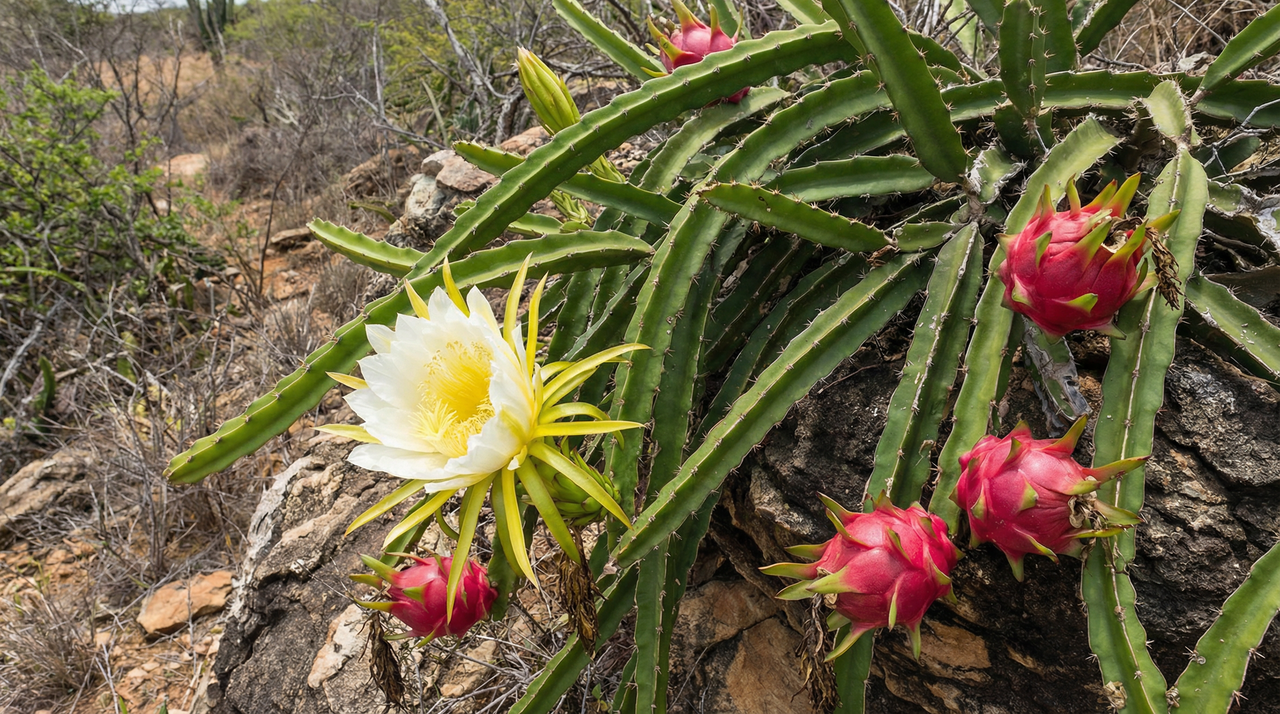
Nobody told me dragon fruit blooms exactly once. One night, for maybe six hours, and then it's over. The flower is enormous, maybe a foot across, white and luminous and faintly sweet in the dark, and by the time the sun comes up it's already collapsing in on itself. I stood in my Central Florida garden at midnight with a paintbrush in my hand, transferring pollen between blossoms I could barely see, and I remember thinking: this plant evolved alongside bats. It has nothing to do with me. That's the thing about dragon fruit that most people miss when they buy a pretty pink orb at Whole Foods and assume it's simple. It isn't. It's a night-blooming epiphytic cactus from the cloud forests of Central America that hitches its aerial roots to trees, photosynthesizes in near-silence using a water-conserving trick called CAM metabolism, and relies on moths and bats to make a single flower's brief window count.
The fruit you see stacked in pyramids at Asian grocery stores barely hints at what this plant actually is. And once you understand what it actually is, growing it becomes a completely different conversation.
Origin and History of Dragon Fruit (Hylocereus undatus)
Botanical Background and Native Habitat
Dragon fruit is native to the tropical forests, rocky slopes, and limestone outcrops of Central America, with confirmed wild populations across Mexico, Costa Rica, Belize, El Salvador, Guatemala, Honduras, Nicaragua, and Panama.[1][2][3] Related species including Hylocereus guatemalensis, H. polyrhizus, and H. costaricensis share much of this range, though all face mounting pressure from deforestation and habitat loss.[3]
In the wild, H. undatus grows as an epiphytic or hemiepiphytic cactus, threading its aerial roots into tree bark or wedging itself into cliff faces and rocky outcrops under 50 to 80 percent canopy cover.[3][2] It climbs without parasitizing its host, using well-drained sandy-loam or humus-rich soils when rooted at the base, and tolerating filtered or dappled light that most people would consider shade. That ecology tells you everything about what the plant needs in cultivation. After installing dragon fruit on several subtropical food-forest projects, I learned fast that a flimsy trellis is an invitation to chaos. The vines grow 1 to 3 meters per month in optimal tropical conditions,[2] and if your support structure isn't built for the long haul on day one, you'll be rebuilding it while managing an increasingly thorny tangle.
As a perennial polycarpic plant, dragon fruit can live 20 to 30 years in cultivation, and under ideal conditions potentially much longer, though commercial productivity typically declines after 15 to 25 years.[2][4] You're planting a commitment, not an annual. And every growing season, it announces itself with flowers that are genuinely spectacular: blooms up to 30 centimeters across, white, intensely fragrant, opening at dusk and gone by morning.[2][5]
Taxonomic History and Traditional Cultural Uses
The plant entered Western science in 1819 when Adrian Hardy Haworth described it as Cereus undatus.[6] Britton and Rose moved it into the genus Hylocereus in 1909,[7] and more recently DNA-based revisions have shifted many species in the group, including H. undatus, into Selenicereus.[8] I'll admit I still catch myself writing Hylocereus out of habit. Keeping up with DNA-based reclassifications is part of the job when you're specifying plants professionally, but it doesn't make the transition any less disorienting when a genus name you've used for years quietly gets retired.
Long before any of that taxonomy happened, indigenous peoples across Mexico and Central America were already eating and using these plants. Pre-Columbian traditions document the fruit as food and medicine, with stem decoctions used for joint pain, flower teas for respiratory complaints, and the fruit itself for digestive support.[9][10] Ethnobotanical documentation is particularly strong for Maya, Bribri, and Cabécar communities, who used related species for conditions ranging from diabetes and hypertension to wound care and inflammation.[11] The fruit also carried ritual weight, appearing in symbolism tied to fertility and abundance across Mesoamerican cultures.[12]
French missionaries or colonizers introduced dragon fruit to Vietnam around 1868 to 1870,[2][13] where it became "thanh long," or green dragon, and found a second cultural home as a symbol of good fortune displayed at Lunar New Year and offered at festivals. It reached Florida around 1907 to 1910, then Hawaii in the 1920s.[2] Vietnam now produces over a million tons annually.[14] That's the story of a colonizer's curiosity item becoming an entire country's agricultural backbone. When I source dragon fruit plants for clients, I make a point of seeking out nurseries that acknowledge the plant's Mesoamerican indigenous roots, because that knowledge deserves recognition, not quiet erasure. The Nagoya Protocol exists precisely to address concerns about commercialization occurring without benefit-sharing with the communities who stewarded these plants for generations.[15]
Visual Characteristics and Fun Facts
In cultivation, dragon fruit vines reach 6 to 10 meters, though wild plants can climb to 20 meters.[2] The fleshy, three-ribbed stems anchor themselves with aerial roots, and the shallow fibrous root system spreads horizontally just 20 to 30 centimeters deep rather than diving downward.[16] I've learned to label young plants carefully at installation because juvenile vining stems look strikingly similar across species and cultivars until that first bloom finally shows you what you've got. The flowers are unmistakable: 20 to 35 centimeters long, white-petaled, heavy with a vanilla-like sweetness, and open for just 8 to 24 hours before collapsing.[5][2] Hand-pollinating at dusk has genuinely become one of my favorite late-summer garden rituals. It's meditative, a little absurd, and enormously satisfying when it works.
The pollinators that do this work in the wild are bats (particularly Leptonycteris species) and moths drawn in by the night fragrance.[17] Without intervention, many cultivars are self-incompatible and natural fruit set hovers around 20 percent; hand-pollination can push that up to 80 percent.[17] Birds, bats, and other mammals then disperse the seeds, which is how the plant spreads through forest systems and likely how it naturalized in Florida and Hawaii without becoming a serious invasive concern.[18][19]
After pollination, fruit matures in 30 to 50 days into those iconic scaled, bright-skinned ovals weighing 200 to 600 grams, occasionally heavier.[5] The flesh of H. undatus is white; red-fleshed species like H. polyrhizus and H. costaricensis carry higher concentrations of anthocyanins and betalains along with noticeably more sweetness.[20][21] I've tasted them side by side many times, and the red-fleshed types really do feel like a different fruit in your mouth. The whole plant runs on CAM photosynthesis, storing water in its thick stems and limiting gas exchange to nighttime hours, which gives it impressive drought tolerance once established.[22] That combination of long productive lifespan, low water input, and genuine wildlife value is exactly what draws permaculture designers to this plant in warm climates.
Dragon Fruit Varieties and Where to Buy Them
Most dragon fruit sold commercially traces back to Hylocereus undatus, the white-fleshed baseline species native to Central and South America.[23] It's reliable, widely adapted, and productive. It's also, frankly, the least exciting option once you've tasted what the broader genus can do. Hybridization with relatives like H. polyrhizus and H. costaricensis has produced a wildly diverse palette of cultivars that span flesh colors from snow-white to deep magenta, sweetness levels of 12 to 20° Brix, and flavor profiles ranging from subtle melon to something almost berry-like.[24][2]
White-Fleshed vs. Red-Fleshed Dragon Fruit Cultivars
White-fleshed types are generally milder and sweeter, while red- and magenta-fleshed cultivars, which typically carry genes from H. polyrhizus or H. costaricensis, bring higher betalain content, stronger antioxidant capacity, and a slightly more complex, tangy profile.[24][25] I've grown both extensively, and the plants sold at big-box stores are almost always un-named H. undatus clones. They fruit reliably, but they won't give you that deep crimson interior or the nutritional punch of a named red-fleshed cultivar like 'American Beauty' or 'Physical Graffiti.'
Among white-fleshed types, 'Vietnam White' is worth knowing for its superior drought tolerance.[26] On the red side, 'American Beauty' is widely considered the benchmark for flavor and antioxidant depth, while 'Physical Graffiti' grows vigorously but is self-sterile, which matters at planting time. 'Sugar Dragon,' 'Dark Star,' 'Neon Tiger,' and 'Condor' (noted for high yields) round out the cultivars with strong performance records in University of Florida and California trials.[2][24] In my subtropical Central Florida garden, 'American Beauty' and 'Vietnam White' have consistently outperformed generic nursery stock in both vigor and fruit quality.
One note on species worth keeping in mind: H. guatemalensis produces few commercially grown cultivars on its own but is prized as a grafting rootstock for its disease resistance and vigorous establishment.[2] I've grafted more tender red-fleshed varieties onto H. guatemalensis rootstock sourced from a specialty breeder and seen noticeably faster establishment and cleaner stems compared to own-rooted cuttings in the same bed. For long-term garden plantings, it's a worthwhile consideration.
Sourcing Dragon Fruit Plants, Cuttings, and Seeds
For US growers, named cultivars are available from specialty nurseries like Logee's Plants, Pacific Tropical Plant Nursery, and regional suppliers in Florida and California, with seeds running $3 to $20, cuttings $5 to $50, and established plants anywhere from $10 to over $100 depending on size and rarity.[27][28] I now buy exclusively from Florida or California nurseries with similar heat and humidity profiles to my own garden, having learned the hard way that plants grown in drier climates struggled badly with establishment after shipping.
Cuttings are almost always the smarter buy. Seeds can take five to seven years to reach fruiting size, while a quality cutting from a named cultivar can fruit in as little as 6 to 18 months.[29] If you're importing live material, know that a USDA APHIS permit and phytosanitary certificate are required, though none of the Hylocereus species are CITES-listed.[30] And if you're in Florida, note that while H. undatus is cultivated freely without restrictions, H. costaricensis has shown some invasive potential in the state, so check your local guidelines before planting it outside contained beds.[31][2]
Dragon Fruit Propagation and Planting
The single most consequential decision you'll make when starting dragon fruit isn't what variety to choose or where to put your trellis. It's how you propagate. Get that right, and you could be harvesting fruit in your second season. Get it wrong, and you might be waiting half a decade while a seed-grown plant slowly figures out what it's doing.
Choosing Your Propagation Method: Cuttings, Grafting, or Seeds
Stem cuttings are the workhorses of pitaya propagation, and for good reason. Commercial nurseries rely on them almost exclusively because they maintain genetic uniformity and get plants into fruit production within one to two years at success rates of 80 to 95%.[2][32] The process itself is straightforward. Select a healthy, mature stem about 20 to 40 cm long, make a clean cut, and then do the thing most impatient gardeners skip: let the cut end callus in a dry, shaded spot for three to seven days before planting, or up to two weeks in cool or humid conditions.[2][33] I've started dozens of cuttings in Central Florida and I can tell you from hard experience that skipping the callus step in humid subtropical conditions is almost a guaranteed invitation to rot. Once callused, plant vertically or at a 45-degree angle with five to fifteen centimeters buried into a well-draining cactus mix, keep temperatures between 24 and 30°C, and roots typically appear in two to four weeks. A rooting hormone like IBA or NAA at 1000 to 3000 ppm speeds things along, but it's optional.
Grafting onto rootstocks like Hylocereus undatus or Selenicereus grandiflorus is worth considering if disease resistance or extra vigor matters to you, with success rates of 70 to 95% and the potential to get fruit in as little as six to eighteen months.[34] Most home growers don't need to bother, but in a landscape with known Phytophthora pressure, a resilient rootstock can make the difference.
Seeds are a different story. Each dragon fruit contains up to 500 small, black, hard-coated seeds embedded in the pulp,[35] and while H. undatus seeds store well for years under proper conditions,[36] the real problem isn't germination. Germination actually goes fine with scarification, warm temperatures, and some light, reaching 70 to 90% success in one to three weeks.[35][37] The problem is that dragon fruit doesn't come true to type from seed. High outcrossing rates and genetic variability mean fewer than 20% of seedlings will resemble the parent plant in any meaningful way.[38][39] I learned this firsthand when fruit from my own saved seed varied so wildly in sweetness and color that I couldn't predict what I'd get. Seed propagation is genuinely useful for breeders developing new cultivars, but if you want a named variety performing the way you expect, cuttings are the only reliable path.
Soil, Site Selection, and Planting Technique
Understanding that dragon fruit is naturally an epiphytic cactus explains everything about what it needs in the ground. Its adventitious roots are shallow, typically reaching just 30 to 60 cm deep, and they evolved clinging to rocks and tree bark where water drains away immediately.[2][40] Put those roots in clay or compacted soil and rot follows quickly. Sandy loam or coarse-textured soil with a pH between 5.5 and 7.0 (ideally 6.0 to 6.5) is the target.[2][41] In containers or raised beds, a mix of roughly 50% coarse sand and 50% organic matter, or a high-perlite cactus mix, replicates those native conditions well. Aim for two to five percent organic matter to feed the plant without waterlogging the root zone.
I always start with a soil test, and not just out of habit. I once lost young plants to iron chlorosis because I assumed my sandy Florida soil was still within the safe range. It wasn't. Below pH 5.5, phosphorus locks out and aluminum toxicity becomes a real risk; above 7.0, iron and manganese deficiencies show up as interveinal chlorosis fairly quickly.[2][42] Elemental sulfur can bring pH down; lime or gypsum can bring it up. Test first, amend specifically, and test again before planting.
For light, mature plants want full sun, at least six to eight hours of direct sunlight daily for strong flowering and fruit set. Young plants and those in very hot, arid climates benefit from twenty to thirty percent shade cloth to prevent sunburn while they establish.[43][44] Wind protection matters too, particularly for young cuttings before they've anchored themselves to a support structure.
Spacing, Supports, and Timeline to First Harvest
Because pitaya is a climbing epiphyte, a support structure isn't optional. Plants need trellises or sturdy poles at least 1.5 to 2 meters tall, and mature vines spread six to ten feet wide, so spacing deserves real thought.[2][45] The reliable baseline for most gardens is six to ten feet between plants within rows and ten to fifteen feet between rows. Crowd them tighter and you're inviting the fungal pressure that humid conditions already encourage. I've seen it happen in my own landscape: plants that were spaced too closely started showing stem lesions within a season because air simply couldn't move through the canopy. If your chosen variety is self-incompatible, you'll also need a pollinizer planted every four to six plants in the row.
Germination and Establishment Timelines
Here's the number that makes every dragon fruit grower I know convert to cuttings immediately: seed-grown plants take five to seven years to fruit under typical conditions.[2][46] A well-rooted cutting, by contrast, can flower and fruit within twelve months, and grafted plants can get there in as little as six to eighteen months.[34] The satisfaction of harvesting from a cutting in year two versus waiting most of a decade from seed isn't a small thing. It's the entire argument for vegetative propagation in a single sentence.
Timing your planting matters too. In USDA zones 9 through 11, late spring to early summer is the sweet spot, from March through June in Florida, once soil temperatures clear 60°F and nighttime lows stay above 50°F.[43][2] Rooted cuttings transplanted during active spring growth establish quickly. Give them a gradual transition to full sun, water moderately but infrequently, hold off on heavy nitrogen fertilizing until they're settled, and make sure that trellis is already in place before the vine starts reaching for it.
Dragon Fruit Care Guide
Dragon fruit rewards growers who understand one central tension: this is a plant built for the understory of a humid tropical forest, yet it needs generous sun, excellent drainage, and reliable warmth to produce fruit in cultivation. Get those fundamentals right and you're looking at a productive vine for 15 to 25 years. Let any one of them slip, and the plant will tell you about it quickly.
Sunlight Requirements for Dragon Fruit
Aim for 6 to 8 hours of direct sunlight daily.[2][47] Less than that and you'll see the same stretched, pale growth I notice on my Christmas cactus when it gets shunted to a dim corner: elongated stems, yellowing tissue, and almost no flowers. Too much unfiltered sun, especially in arid or peak-summer conditions, causes bleached patches and scorched stems that never fully recover. I learned that one by moving a container plant too abruptly from a shadehouse to full sun.
In regions with intense summer heat, a 30 to 50 percent shade cloth can drop canopy temperature by 3 to 5°C and prevent the worst sunburn.[24][48] Pull it back in cooler months when the plant needs every photon it can get. Gradual acclimation, a week or two of increasing exposure rather than a sudden move, prevents the photo-oxidative damage that looks dramatic and takes months to grow out.[49]
Watering Needs and Irrigation for Dragon Fruit
The cardinal rule is deep and infrequent. Let the top inch or two of soil dry out before you water again, because this is a succulent cactus with CAM physiology and a genuine tolerance for drought once established.[2][50] During active growth and fruiting, that typically means watering every 7 to 10 days in the ground, every 1 to 2 weeks in containers, and tapering to every 2 to 4 weeks through winter. Seedlings need more frequent attention, roughly every 2 to 3 days, but established vines are far more forgiving than they first appear.
The failure mode I've seen most often is overwatering during summer rainy seasons. The warning signs are a soft, blackened stem base and a faintly sour smell near the roots. That's root rot, and by the time the smell is obvious you're already in trouble.[2][51] Underwatering shows up differently: shriveled, wrinkled stems, browning tips, and aerial roots dropping off. Ideal annual rainfall sits around 1000 to 1200 mm, and the plant tolerates up to 2500 mm if drainage is genuinely excellent.[22] Keep irrigation water pH between 6.0 and 7.5 and salinity below 1.5 to 2.0 dS/m; a drip system delivering roughly 1 to 2 gallons per mature plant weekly during fruiting hits the mark without waterlogging the root zone.[52]
Feeding and Nutrient Management for Dragon Fruit
Dragon fruit is a heavy feeder, and I mean that literally. A mature plant working through multiple fruiting flushes needs balanced NPK nutrition through the growing season, shifting formula as it moves from vegetative growth to fruit development. I use a 10-10-10 or similar balanced fertilizer early in the season, then transition to something higher in phosphorus and potassium (a 5-10-20 or 10-20-20) as buds form.[52][53] Rates run about 1 to 2 pounds per plant per year for mature vines, split into 3 to 4 applications from March through October in zones 9 to 11, with half-rates for younger plants.[2]
I've learned to watch for pale, washed-out new growth as my first signal that nitrogen is running low, and older leaves with interveinal yellowing point the same direction. Purpling on older leaves suggests phosphorus deficiency; marginal leaf scorch often means potassium is short. Calcium, magnesium, boron, and iron deficiencies each have their own signatures too, from tip burn and flower drop to chlorosis on young growth.[54][55] Organic inputs (compost, fish emulsion, bone meal, and wood ash at 5 to 10 pounds per plant annually) provide a useful baseline, especially for micronutrients.[52] Annual soil testing is the only way to know for certain what's missing; Florida's sandy soils in particular can test fine on paper while draining nutrients faster than the report reflects. Stop fertilizing through winter dormancy entirely.[53]
Temperature Tolerance: Heat and Frost for Dragon Fruit
The sweet spot is 25 to 35°C (77 to 95°F) during the day with cooler nights around 15 to 20°C (59 to 68°F) to trigger proper flowering and fruit set.[56] Growth slows noticeably below 15°C and essentially stops below 10°C. Brief spikes to 38 or 40°C are survivable, but sustained heat above 35°C causes flower abortion, scorched stems, and malformed fruit.[57] I had a particularly brutal stretch one summer where I watched flower buds drop over three nights running. Adding a 30 percent shade cloth over the trellis and switching to evening irrigation restored blooming within two weeks.
On the cold end, dragon fruit is damaged below 0°C (32°F) and shows stress at sustained temperatures below about 2°C (36°F): blackened tissue, water-soaked lesions, and delayed dieback that can take weeks to fully appear.[2][58] USDA zones 10 and 11 are the true home; zone 9b works with protection. I treat my dragon fruit the same way I treat my bougainvillea during a cold snap: frost blanket, deep pre-freeze watering, and mulch at the base. Container growers in zones 5 to 7 should plan on overwintering indoors at 60 to 80°F.[59] Seedlings are more vulnerable than established vines, so give younger plants extra protection their first two winters.
Pruning, Training, and Seasonal Maintenance
As a climbing epiphyte, dragon fruit will reach 10 to 15 feet on a trellis and up to 30 feet in its native habitat.[2] That means a sturdy support structure isn't optional. A concrete post with a cross-arm, or a heavy-gauge trellis, holds the weight of mature stems and fruit without flexing. Train vines upward and outward in a fan shape using soft ties, aiming to maintain 4 to 8 productive primary stems per plant.[45]
Prune once or twice a year, in late winter or early spring before the growing season begins, or again after the main harvest flush ends. The goal is removing dead, damaged, or overcrowded growth and cutting vigorous stems back to about 1 to 1.5 meters to encourage branching lower on the plant where fruiting is most accessible.[2][60] Never remove more than 20 to 30 percent of total growth at once, and never prune while buds are forming or flowers are open. I've made that mistake once. The flush I pruned into was my best that season, and losing it to impatience still stings a little.
In warm, humid climates dragon fruit grows near-continuously with no true dormancy, which means the productive window stretches long but the plant also accumulates stress over time.[2] Productivity typically peaks over a 15 to 25 year span before declining from cumulative disease pressure.[61] Slowing down on watering and fertilization through cooler months, monitoring tissue color, and staying consistent with annual pruning are what separate a vine that peaks for two decades from one that limps along at half potential.
Harvesting Dragon Fruit (Hylocereus undatus): Timing, Technique, and Flavor at Peak Ripeness
Dragon fruit doesn't give you much room for error at harvest time. Unlike apples or mangoes that can ripen on a countertop, pitaya wants to finish its flavor development on the vine, and a fruit pulled too early will stay bland and slightly acidic no matter how long you wait. Getting the timing right is the whole game.
When to Harvest Dragon Fruit: From Flower to Fruit in 30-50 Days
From the moment that spectacular night-blooming flower fades, the clock starts. Fruit typically reaches maturity in 30 to 50 days after pollination, sometimes stretching to 55 days depending on species and how warm the season runs.[2][62] In my Central Florida garden, the harvest season runs June through December with the real flush hitting August through October, which gives me a long window to stagger pickings across multiple vines.[2]
What you're watching for is a definitive color shift: skin transitions from green to a vivid, uniform pink or red, and the scales or bracteoles begin to curl slightly at their tips and flush red rather than staying green. Give the fruit a gentle squeeze; it should yield just a little under pressure without feeling mushy. A ripe fruit in that 300 to 600 gram range will also release easily with a gentle twist rather than clinging.[63][2] I've learned to watch for that scale curl specifically, because waiting even a day past that window in Florida's heat invites splitting and fruit flies. At full ripeness, sugars have climbed to 12 to 18 degrees Brix while titratable acidity drops to around 0.2 to 0.5 percent, delivering sweetness without sharpness.[2]
Realistic yield expectations matter here. Plants started from cuttings typically begin fruiting in one to two years, but a mature vine at three to five years old is where production really opens up, delivering 15 to 30 fruits per season and up to 15 kilograms total when well-supported and properly cross-pollinated.[2][52] My third-year vines hit that range reliably. Always harvest in the early morning before heat builds; afternoon harvests in subtropical climates stress the fruit and shorten its life.[2]
How to Harvest Dragon Fruit Without Bruising or Infection
I learned this lesson the hard way in my first planting: never pull. Use sharp, sanitized pruning shears or a knife and cut the stem, leaving about half a centimeter of stem attached to the fruit.[63][2] Pulling tears tissue and opens a direct infection route. I started sanitizing my shears between plants after seeing stem-end rot claim several fruits in an early season, and the problem essentially disappeared.
Once cut, cool the fruit to 10 to 13 degrees Celsius within 24 hours, ideally sooner. Store with 85 to 90 percent relative humidity in ventilated containers and keep it away from ethylene-producing fruits like bananas or apples, which accelerate deterioration.[64][65] Handled this way, according to FAO and UF/IFAS research, shelf life runs two to three weeks. I move mine into the fridge within an hour of cutting; Florida's ambient humidity and heat will undo a careful harvest surprisingly fast. Don't push below 10 degrees Celsius though, since chilling injury sets in and the texture suffers.[64]
Dragon Fruit Flavor Profile, Yield, and Post-Harvest Handling
The honest flavor description for a well-timed pitaya harvest is mild and refreshing rather than bold. Expect something like a very ripe pear crossed with kiwi and a hint of melon, with a soft, juicy, slightly seedy texture and no aggressive sweetness or bitterness.[66][67] I find that fruits hitting 16 to 18 degrees Brix taste noticeably better in smoothies than anything pulled earlier; the difference between 10 and 16 Brix is the difference between "interesting" and "actually delicious."
That flavor journey is a chemistry story: sugars like fructose, glucose, and sucrose climb while citric and malic acids fall as the fruit ripens, so an unripe dragon fruit isn't just less sweet, it's actively more sour and it won't correct itself off-vine.[68] Red-fleshed species like Hylocereus polyrhizus tend to run sweeter and more aromatic than white-fleshed H. undatus, and fruit grown in warmer tropical zones (Vietnam, Thailand, Guatemala) tends toward higher sugar concentrations.[69] The aroma is delicate: ethyl acetate gives a fruity-sweet note, linalool and benzyl acetate add a soft floral quality, and all of it intensifies as the fruit reaches full maturity.[70] Proper cold storage with controlled humidity locks those volatiles in; cultivars like 'American Beauty' lean toward a creamier sweetness worth preserving carefully.[71]
Dragon Fruit Preparation and Uses
Culinary Uses and Flavor Profile of Dragon Fruit
The flesh and seeds are the star here, full stop. When you cut a ripe dragon fruit in half, that's your edible territory: the pulp, those tiny black seeds distributed throughout (completely edible, no need to pick them out), and nothing else you need to worry about.[72][73] The flowers occasionally appear in traditional preparations, but the evidence for widespread culinary use is thin; I'd treat them as ornamental unless you're working from a specific regional recipe.[74] The stems are fibrous and tough; skip them.[74]
Flavor-wise, think mild and refreshing: a soft sweetness with notes of kiwi, pear, and melon, low acidity, and a juicy texture that makes it genuinely thirst-quenching on a hot day.[75][2] I've grown both white-fleshed Hylocereus undatus and red-fleshed polyrhizus types in my Central Florida landscape, and the flavor difference is real: the reds tend toward a deeper sweetness with a visual punch from their betacyanins that makes every smoothie bowl look like it was designed by a graphic artist. Nutritionally it's a solid daily fruit rather than a superfood miracle: about 57 calories per 100 grams, around 9 mg vitamin C, 1.8-3 grams of fiber, and useful amounts of potassium, magnesium, and iron.[76][77] The phenolic compounds add meaningful antioxidant activity, particularly in red-fleshed cultivars.[78]
How to eat dragon fruit is the simplest question to answer: halve it, scoop, and eat it cold. Beyond that, pitaya smoothie recipes and pitaya bowl recipes are probably the most popular applications right now, and for good reason since the color alone makes them worth photographing. It's equally at home in fruit salads, sorbets, jams, salsas, and even alongside seafood. In Vietnam it's a fixture in desserts and smoothies; in Costa Rica you'll find it in ceviches and tropical beverages.[79][80] Central American communities have long used it for hydration and gentle digestive support, and Mexican traditional medicine has incorporated pitaya juice for blood pressure and gastrointestinal complaints.[81][82]
A few practical cautions: allergic reactions are rare but possible, especially for people sensitive to other cacti or plants in the Caryophyllales order.[83] The fiber content is real, so eating very large amounts at once can cause digestive discomfort. Diabetics should consume it in moderation and monitor blood glucose. I always wear gloves when handling the stems and rinse the fruit thoroughly before cutting; the plant latex can irritate skin, and the spines are not to be underestimated.[84] If you're sourcing from a garden rather than a grocery store, make sure you know exactly what you've got; some lookalikes like Euphorbia tirucalli carry toxic latex and are worth knowing how to distinguish.[85]
Medicinal Preparations from Dragon Fruit
Traditional preparations span a wider range than most people expect: fresh pulp, peel decoctions, powdered extracts, and even topical poultices from mashed fruit all appear in the ethnobotanical record.[86][87] Documented dosages range from 200-400 grams of fresh pulp daily to 50-100 ml of peel decoction for antioxidant benefits, with standardized extracts typically dosed at 100-500 mg.[88] I personally enjoy a bowl of the fresh fruit for its hydrating qualities and the mild digestive ease I notice afterward, but when the conversation turns to concentrated extracts or therapeutic teas, I consult a professional. The preclinical research is promising, but human clinical data is still catching up to what indigenous communities have observed for generations, and that gap matters when you're talking about dosing.
Non-Food Uses of Dragon Fruit Plant Parts
The plant's utility doesn't stop at the kitchen. Stems of some Hylocereus species contain extractable fibers with potential for textiles and paper, and the fruit skin can yield natural dyes.[89][90] Some indigenous traditions used starchy stem tissue in construction and dye-making, though these are genuinely niche applications compared to the fruit itself.[91] I'd think of it the way I think about banana fiber: interesting, culturally real, but not the reason you're growing the plant. The fruit is the reason you're growing the plant.
Dragon Fruit Health Benefits
Dragon fruit occupies an interesting niche in the functional food conversation because its health story isn't driven by the anthocyanins you'd find in blueberries or açaí. Instead, Hylocereus undatus gets its biological activity from betalains, a structurally distinct class of red-violet and yellow pigments that plants in the Caryophyllales order use in place of anthocyanins. Understanding that difference helps you evaluate the research more honestly, and it explains why the red-fleshed varieties often behave differently than the white-fleshed types in lab assays.
Key Phytochemicals: Betalains, Polyphenols, and Flavonoids
The phytochemical profile of H. undatus is genuinely layered. The fruit contains 20-50 mg of betalains per 100g fresh weight, with betacyanins (the red-pigmented fraction) accounting for 15-30 mg of that total, alongside polyphenols in the range of 100-250 mg gallic acid equivalents per 100g.[92][93] Flavonoids including quercetin, rutin, kaempferol, and catechin round out the mix, as do polysaccharides that make up roughly 2-5% of dry weight and show early promise for immunomodulatory and hypoglycemic effects.[94][95]
Red-fleshed relatives like H. polyrhizus and H. costaricensis carry measurably higher betacyanin concentrations than white-fleshed H. undatus, which translates to stronger free radical scavenging in comparative assays.[94][96] In my own garden during hot, dry summers, I notice the fruit develops deeper pigmentation and a more pronounced floral aroma, which tracks with research showing that temperatures between 25-30°C and mild irrigation stress can increase total phenolic content by up to 15%.[97] It's one of those moments where what you see in the garden actually lines up with what the studies describe.
One thing worth mentioning: the peel contains 2-3 times the polyphenol and betalain concentration of the pulp.[98][99] I've experimented with drying and powdering the skins to add to smoothies, and while the antioxidant activity on paper is genuinely impressive, the mucilaginous texture is an acquired taste. Most people discard the peel entirely, which means a significant fraction of the pitaya fruit's phytochemical value literally goes in the compost. Something to sit with.
Medicinal Research and Evidence
Traditional medicine systems across Central America, Mexico, Southeast Asia, and Guatemala have used dragon fruit for wound healing, digestive complaints, diabetes management, and hypertension for generations.[100] Modern research has started mapping the biochemical mechanisms behind some of those uses, though the depth of evidence varies considerably by application.
The strongest data sits in three areas. Antioxidant activity is well-characterized, with DPPH assay IC50 values of 20-50 μg/mL and documented Nrf2 pathway activation.[101][102] Anti-inflammatory effects are documented through inhibition of TNF-α, IL-6, NF-κB signaling, COX-2, and iNOS, with 40-60% reductions in rat paw edema models at 200-400 mg/kg doses.[102][103] The antidiabetic evidence is the most clinically relevant: animal models show 25-35% blood glucose reductions, and small human trials found that 8 weeks of dragon fruit juice lowered fasting blood glucose by 15% in type 2 diabetes patients, with measurable α-glucosidase and α-amylase inhibition.[104][105]
Beyond those three, the picture thins out quickly. Animal models show lipid-lowering effects including 22-25% LDL reductions and HMG-CoA reductase inhibition from seed oil.[106] Phenolic compounds demonstrate antimicrobial activity against Staphylococcus aureus and E. coli.[107] Preliminary in-vitro work shows betacyanin-induced apoptosis in colon (HT-29) and breast (MCF-7) cell lines, though the researchers are clear this needs human validation.[94] There's also preclinical data on neuroprotective activity via acetylcholinesterase inhibition, wound healing acceleration, and gut health synergies with probiotics.[108][109][110]
The wound-healing data is interesting to me because it connects to historical Central American poultice traditions, but while the mucilaginous flesh makes biological sense as a wound protectant, conversations with tropical-plant colleagues keep pulling me back to the same honest conclusion: only 5-8 randomized human trials exist across all these applications, and most of the mechanistic work is in vitro or rodent-based.[111] The benefits of dragon fruit for health look genuinely promising, but extrapolating cell-dish results to clinical recommendations is a stretch this plant doesn't need us to make.
Nutritional Profile
The dragon fruit nutritional value is honest and practical rather than dramatic. Per 100g of raw pulp, you're looking at roughly 57-60 calories, 3.1g of fiber, 1.18g protein, 9.2g natural sugars, and about 9-13mg of vitamin C (roughly 10% of the daily value).[112][113] Vitamin C content roughly doubles from immature to ripe fruit (10 mg to 25 mg per 100g), so letting it fully ripen on the vine actually matters nutritionally.[114] Potassium comes in at 277-350 mg per 100g, with useful amounts of magnesium, iron, and B vitamins rounding out the mineral picture.[112]
The high water content (80-90%) means you're getting a hydrating, low-calorie snack with genuine phytonutrient value rather than dense macronutrients.[115] In my humid subtropical garden, it's the fruit I reach for on a hot afternoon. The pitaya nutritional value is real but complementary; the betalains and polyphenols are where the biological interest lies, not the macro breakdown. Juicing reduces fiber substantially, so eating the fresh flesh whole is always going to outperform a processed product.[116]
Safety Considerations
Dragon fruit is FDA GRAS-listed, contains negligible cyanogenic glycosides or harmful alkaloids, and its oxalate levels (10-50 mg per 100g) are low enough that moderate consumption poses no kidney stone risk for healthy people.[117][118] For context, spinach delivers several hundred milligrams of oxalate per 100g; dragon fruit barely registers by comparison. The real hazards, in my reading of the toxicology literature and from years of handling these plants, are mechanical: the spines on immature fruit and stems cause skin irritation, and the sap can trigger contact dermatitis.[119]
A few populations need specific guidance. If you take metformin or insulin, monitor your blood sugar carefully when adding dragon fruit regularly to your diet. The 15% fasting-glucose reduction seen in human trials is real enough that I advise anyone with diabetes to loop in their doctor before treating it as a daily staple.[120] People with chronic kidney disease should note the 277-350 mg potassium per 100g.[120] Rare allergic reactions occur, particularly in people with latex-fruit syndrome or sensitivity to Cactaceae, and red-fleshed varieties will turn urine and stool a striking pink or red color that is harmless but reliably alarming if you weren't expecting it.[121] For everyone else, 100-200g daily of properly washed fruit is considered safe including during pregnancy and for children.[122]
Dragon Fruit Pests and Diseases
Dragon fruit isn't a fussy plant once it's happy, but its epiphytic origins come with a structural trade-off: that thin stem cuticle that makes it so efficient at absorbing moisture from humid air also gives fungal and bacterial pathogens a much easier entry point than you'd find on a thick-skinned succulent.[123][124] I've grown dragon fruit in humid subtropical conditions, and I'll tell you honestly: most of the serious problems I've seen trace back to drainage failures and poor airflow, not to some inherent fragility in the plant itself.
Major Diseases of Dragon Fruit
Root and stem rots are the big ones. Fusarium and Phytophthora both thrive in waterlogged or compacted soils, and H. undatus has low resistance to both.[2][52] I learned this the hard way early on, pushing too much water through a heavy clay mix and watching a young vine go soft at the base almost overnight. Now I default to raised beds or gritty mixes for every new planting, full stop. Red-fleshed H. polyrhizus shows moderate Fusarium resistance but is actually highly susceptible to Phytophthora stem rot, which matters if you're grafting it as rootstock for improved vigor.[124][125] H. guatemalensis offers some tolerance thanks to thicker stems that slow lesion development, though it's not immune.[126]
Anthracnose from Colletotrichum species (including C. gloeosporioides and C. fructicola) shows up as dark stem cankers and fruit rot, with losses that climb sharply under humid conditions.[127][52] When I've grown Vietnamese Red alongside standard white-fleshed varieties during rainy stretches, the Vietnamese Red consistently showed less spotting after wet weather. Cultivar selection is genuinely one of your best tools here, even though no variety is fully immune. American Beauty shows high anthracnose resistance, PDR-001 handles fruit rot well, and Vietnamese Red has demonstrated stronger Fusarium and powdery mildew tolerance.[52][128]
Beyond those two major threats, stem canker from Neoscytalidium dimidiatum, bacterial soft rot from Pectobacterium spp. (to which H. undatus is highly susceptible), Botrytis in stagnant humid air, and black spot from Alternaria alternata round out the disease roster.[129][52] In Florida-like climates, unmanaged fungal pressure can cause up to 50% yield loss in a bad season.[130] Cultural prevention does more work than any spray program: proper drainage, 2-3 meter spacing for airflow, drip irrigation instead of overhead watering, and removing infected tissue promptly.[131][52] When chemical intervention is genuinely needed, copper-based fungicides and azoxystrobin rotated to prevent resistance are the most common tools, but I've had better long-term results pairing strict sanitation with Trichoderma soil drenches and Bacillus subtilis applications.[131][132]
Common Pests and Integrated Management
On the insect side, mealybugs are the pest I watch most closely, and I've learned that ants are usually the early warning sign. If I see ants marching steadily up the stems, I start checking the joints and shaded sections immediately for the white cottony masses underneath, before sooty mold has a chance to establish. Scale insects, spider mites, thrips, fruit flies, and fruit-piercing moths all show up in the dragon fruit pest lineup too, and their real danger is often less the feeding damage itself and more the wounds they leave behind that let bacterial and fungal pathogens in.[2][126]
Management here follows the same philosophy as the disease side: start with cultural practices, reach for biological controls before harsh chemicals, and treat sanitation as a non-negotiable habit rather than an occasional fix.[2][52] Neem oil and insecticidal soaps handle most soft-bodied pests without disrupting the beneficial insects you want around for pollination. Nutrient imbalances and waterlogging stress the plant in ways that make every pest and disease problem worse, so balanced fertilization and consistently good drainage aren't just care basics; they're part of your pest management strategy too.[2]
Dragon Fruit in Permaculture Design
Before you can design well with dragon fruit, you need to understand what it actually is: not a typical fruit shrub or tree, but a climbing cactus that evolved to scramble up through the understory of Central American tropical forests, anchoring itself to tree trunks and rocky outcrops with aerial roots that grip without harming the host.[133][134] It uses CAM photosynthesis, opening its stomata at night to fix carbon dioxide while minimizing water loss during the day, which is why it handles dry spells far better than its lush green cladodes suggest.[2][135] That evolutionary background shapes every design decision: site selection, support structures, companion planting, and pollination management all flow from understanding this plant as an opportunistic forest climber rather than a conventional fruit crop.
Ecosystem Functions and Biodiversity Contributions
Dragon fruit's contribution to a food forest's ecological web is real, though I'd caution against overselling it. On the generous side: those spectacular nocturnal flowers, which can reach 30 centimeters across and release a rich fragrance after dusk, are specifically adapted to attract bats and hawkmoths.[136][16] In a designed landscape, that means your dragon fruit planting actively supports nocturnal pollinator populations, including Mexican long-tongued bats and sphinx moths, which are often overlooked in discussions of garden biodiversity.[137] The ripe fruit then feeds frugivorous birds, bats, and small mammals that disperse seeds and contribute to forest regeneration dynamics.[136][138] If you're building a food forest with an eye toward wildlife corridors or supporting native bat populations, dragon fruit earns its place on that basis alone.[139]
On the more modest side: dragon fruit does not fix nitrogen, is not a dynamic accumulator in any meaningful sense, and its aerial root system offers only minor soil stabilization on slopes, primarily useful when combined with ground covers in agroforestry contexts.[140][141][142] What it does do well is accumulate calcium and potassium from poor soils and contribute organic matter as spent cladodes break down, which is useful if you're working with degraded subtropical soils.[143] Pair it with nitrogen-fixing legumes like pigeon pea or Inga to cover what it can't do itself. I've designed several food forest edges this way and the combination works well: the legume feeds the soil, the dragon fruit provides the vertical production layer and nocturnal wildlife value, and neither competes aggressively with the other.
One species-level nuance worth knowing: red-fleshed H. polyrhizus shows partial self-compatibility, while H. costaricensis is strictly self-incompatible, requiring cross-pollination from a different genotype for any fruit set at all.[144][145] As a Central Florida designer, I also take seriously the fact that H. guatemalensis is listed as a Category 2 invasive by the Florida Invasive Plant Council, capable of forming dense thickets that crowd out native vegetation.[146] I only recommend it in contained designs, well away from natural areas. That vigorous growth reaching up to 20 feet on a single structure in a good season is genuinely impressive in a managed setting and a genuine problem if it escapes into a scrub habitat.[147][141]
Climate Requirements and Hardiness Zones
Dragon fruit is a tropical plant with a narrow climate comfort zone, and this is where a lot of first-time growers get tripped up. The core range is USDA zones 10a to 11, with an optimal growing temperature of 65-85°F (18-29°C) and a hard lower limit of around 32°F for any extended period.[23][2] It can push briefly into zone 9b with protection, but "protection" means a warm microclimate against a south-facing wall, frost cloth ready, and someone paying attention when temperatures dip. Cold damage shows up fast: stems turn dark or blacken, tips die back, and soft rot can set in within 24 to 48 hours of frost exposure.[2][52]
Heat stress is the other end of the same problem. Above 95°F (35°C), leaves curl, fruit develops sunscald (those discolored, sunken spots), and flowering drops off. A brief spike to 100°F is tolerable, but sustained heat combined with drought is genuinely damaging.[52][148] The plant wants humidity in the 60-80% range and about 20-40 inches of annual rainfall, matching its native tropical savanna and monsoon climate origins.[2] Elevation matters too: optimal performance runs from sea level to around 3,000 feet (1,000m), with H. polyrhizus preferring lower coastal elevations and H. costaricensis handling slightly cooler upland conditions.[24]
Soil is non-negotiable: well-drained sandy loam or a cactus-style mix, pH 6.0-7.0, and never waterlogged.[149][150] Beyond Florida and Hawaii, successful cultivation happens in coastal Southern California, parts of Arizona and Texas, and internationally from Vietnam to Queensland to Israel, with commercial yields reaching 20-30 tons per hectare under optimal management.[151][149] For clients on the cooler edge of zone 9, I've had better luck with H. guatemalensis in large containers that can be rolled to a sheltered patio before a freeze than with H. undatus, which shows cold stress noticeably sooner. Containers need to be at least 24 inches deep with excellent drainage, and they can be moved indoors for winter in genuinely cold areas.[149][2]
Pollination Ecology and Management
The flowers open once, at dusk, and by morning they're done. That single-night window is the central fact of dragon fruit pollination management, and everything else follows from it.[152] The flowers are protandrous, meaning pollen is shed on the first night while the stigma doesn't reach peak receptivity until the second night, which is part of why self-pollination is unreliable even in self-compatible varieties.[153] In natural habitats, bats achieve over 60% fruit set; bees, which are diurnal, are largely useless here.[154]
In cultivation, especially outside native bat ranges, hand-pollination becomes essential. Commercial operations achieve up to 90% fruit set this way, and I've found that doing it in the early evening when the flowers first open gives the best results because the pollen is freshest and the stigma is most receptive at that moment.[2][155] If you want to support natural pollination, plant mixed varieties spaced 2-3 meters apart to allow cross-pollination, consider night-blooming companion plants to attract moths, and where bat populations are low, artificial roosts can be installed to encourage them to take up residence.[2][156] Optimal conditions for pollination, whether by wildlife or by hand, are temperatures between 65-80°F and humidity around 70-90%.[2]
Forest Layer Placement and Guild Integration
In a food forest, dragon fruit occupies the vine layer, climbing into the mid-stratum in exactly the same way it behaves in its native Central American understory: using adventitious aerial roots along its cladodes to grip tree trunks, fences, rocks, or purpose-built trellises without parasitizing anything it climbs.[134][157] Wild plants reach 20 meters on host trees; cultivated plants top out around 6-10 meters on a sturdy trellis or support tree.[2] That ceiling is important because the growth is fast enough that an undersized support becomes a problem in the first season or two. I always install heavy-duty trellises rated for substantial weight before planting rather than retrofitting later.
For guild design, the most productive combinations I've worked with pair dragon fruit with nitrogen-fixing species like Inga or pigeon pea, shade providers like bananas, and ground covers that prevent moisture loss at the root zone.[158][159] The plant itself prefers dappled sunlight to full midday exposure, particularly in hot climates, so positioning it where it climbs into partial shade from a taller companion tree actually mirrors its native conditions and reduces heat stress.[2][160] Red-fleshed species are commonly intercropped with coffee or other fruit trees in agroforestry systems for exactly this reason.[161]
The one design caution I'd emphasize above all others: dragon fruit is vigorous, and without regular management it will outgrow its space and begin shading or physically overrunning neighboring plants. The 20-30 tons per hectare yield figures from commercial production only materialize with structured pruning, cross-pollination management, and contained growth.[162] Design it into a guild where the vertical space is intentionally assigned and the support structure is substantial, and it rewards you with years of productive vertical stacking, habitat value, and those unforgettable dusk-blooming flowers that remind you why you planted it in the first place.
The Night I Finally Watched One Bloom
I'd grown dragon fruit for two seasons before I actually stayed up late enough to see it happen: that enormous white flower unfurling in the dark, faintly fragrant, completely indifferent to whether anyone was watching. It bloomed for one night, for the bats, and then it was done. Something about that has stayed with me. This plant doesn't perform for us. We just get to be nearby if we're paying attention.
Sources 162
- Plants of the World Online - Kew Science ↩
- Dragon Fruit Growing in the Florida Home Landscape ↩
- Hylocereus undatus (Dragon Fruit) - CABI Compendium ↩
- Dragon Fruit (Hylocereus undatus): Botany and Horticulture ↩
- Hylocereus undatus (Dragon Fruit) ↩
- Synopsis Plantarum Succulentarum ↩
- The Cactaceae: Descriptions and Illustrations of Plants of the Cactus Family ↩
- Taxonomic revision of the genus Selenicereus (Cactaceae) in South America and the Caribbean ↩
- Traditional Uses of Cactaceae in Latin America ↩
- Ethnobotany of the Pitahayas (Hylocereus spp.) in Mesoamerica ↩
- Traditional Uses of Hylocereus guatemalensis ↩
- The Cultural Significance of Dragon Fruit in Vietnam ↩
- Dragon Fruit: Botany, Cultivation and Uses ↩
- FAO STAT: Production of Pitahayas and Dragon Fruit ↩
- The Nagoya Protocol on Access and Benefit-Sharing ↩
- Dragon Fruit: Botany, Horticulture, and Nutrition ↩
- Pollination Ecology of Hylocereus undatus in Central America ↩
- Wildlife Interactions with Hylocereus undatus Fruits ↩
- Hylocereus undatus (pitahaya) ↩
- Fruit Quality Variation in Dragon Fruit Cultivars ↩
- Dragon Fruit: Botany, Horticulture, and Nutrition ↩
- Hylocereus undatus (Dragon Fruit) ↩
- Hylocereus undatus (Dragon Fruit) ↩
- Dragon Fruit Cultivars Comparison - University of Florida IFAS ↩
- Pitaya Varieties - Bioversity International ↩
- Temperature and Drought Tolerance in Pitahaya Cultivars ↩
- Logee's Plants ↩
- Pacific Tropical Plant Nursery ↩
- Importing Plants and Plant Products into the United States ↩
- How to Obtain a Permit for Importing Plants and Plant Products ↩
- Florida Exotic Pest Plant Council's List of Invasive Species ↩
- Propagation Techniques for Pitaya (Dragon Fruit) ↩
- Dragon Fruit Production in Hawaii ↩
- Grafting Techniques for Pitaya (Dragon Fruit) ↩
- Seed Morphology and Anatomy in Hylocereus Species (Cactaceae) ↩
- Seed Storage Behaviour of Hylocereus undatus (Dragon Fruit) ↩
- Seed Morphological Characteristics of Dragon Fruit ↩
- Propagation of Dragon Fruit (Hylocereus undatus): A Review ↩
- Growing Dragon Fruit in Florida ↩
- Dragon Fruit: Botany, Cultivation and Uses ↩
- Soil Requirements for Pitaya (Dragon Fruit) ↩
- Soil pH and Nutrient Availability for Fruit Crops ↩
- Dragon Fruit Growing in the Florida Home Landscape ↩
- Hylocereus undatus: Light and Shade Tolerance in Cultivation ↩
- Pitaya (Dragon Fruit) Production Guidelines ↩
- Propagation and Cultivation of Hylocereus spp. ↩
- Dragon Fruit: Botany, Horticulture, and Nutrition ↩
- Shade Netting for Tropical Fruits ↩
- Sunlight Acclimation in Pitaya Cultivation ↩
- Dragon Fruit Production Guidelines ↩
- Physiological Responses of Dragon Fruit to Heat and Drought Stress ↩
- Dragon Fruit Production in Florida ↩
- Nutrient Management for Pitaya (Dragon Fruit) ↩
- Nutrient Management for Dragon Fruit ↩
- Fertilization of Pitaya (Dragon Fruit) ↩
- Dragon Fruit: Botany, Horticulture, and Nutrition ↩
- Effects of Heat Stress on Growth and Physiology of Dragon Fruit ↩
- Cold Tolerance of Pitaya (Dragon Fruit) ↩
- Growing Dragon Fruit in Containers ↩
- Growing Dragon Fruit ↩
- Growing Dragon Fruit ↩
- Dragon Fruit Production in Florida ↩
- Dragon Fruit (Pitaya) Production in the United States ↩
- Postharvest Handling of Dragon Fruit ↩
- Postharvest Biology and Handling of Dragon Fruit (Hylocereus spp.) ↩
- Composition and texture of Hylocereus species (dragon fruit) and their correlation with traditional consumer perception ↩
- Sensory Evaluation of Pitaya Fruits from Different Species ↩
- Flavor Compounds and Sensory Characteristics of Dragon Fruit (Hylocereus undatus) at Different Ripeness Stages ↩
- Chemical Composition and Antioxidant Activity of Dragon Fruit (Hylocereus spp.) ↩
- Volatile Compounds and Aroma Characteristics of Dragon Fruit (Hylocereus spp.) ↩
- Postharvest Biology and Technology of Dragon Fruit ↩
- USDA PLANTS Database: Hylocereus undatus ↩
- Dragon Fruit Production in Florida ↩
- Edible Cacti and Succulents ↩
- Dragon Fruit (Hylocereus undatus) Sensory Characteristics ↩
- FoodData Central - Dragon fruit, raw ↩
- Nutritional Composition of Dragon Fruit ↩
- Nutritional composition and antioxidant properties of pitaya (Hylocereus spp.) ↩
- Dragon Fruit: Botany, Production and Uses ↩
- Hylocereus Species in Central American Cuisine ↩
- Traditional Uses of Dragon Fruit in Central America ↩
- Medicinal Uses of Dragon Fruit in Mexican Traditional Medicine ↩
- Dragon Fruit Production in Florida ↩
- Dragon Fruit: Botany, Horticulture, and Potential ↩
- Food Safety of Exotic Fruits: Hylocereus spp. ↩
- Medicinal Properties of Dragon Fruit (Hylocereus undatus) ↩
- Nutritional and Therapeutic Potential of Dragon Fruit (Hylocereus spp.) ↩
- Dragon Fruit in Traditional Medicine and Dosage Recommendations ↩
- Fiber Extraction from Dragon Fruit Cactus ↩
- Ethnobotany of Hylocereus Species in Central America ↩
- Dragon Fruit: Botany, Cultivation, and Uses ↩
- Phytochemical Composition and Antioxidant Properties of Dragon Fruit (Hylocereus undatus) ↩
- Betalains and Polyphenols in Pitaya (Hylocereus spp.) Fruits: A Review ↩
- Phytochemical Composition and Pharmacological Properties of Dragon Fruit ↩
- Polysaccharides from Hylocereus undatus Fruit: Extraction and Structural Characterization ↩
- Antioxidant activity and bioactive compounds of dragon fruit (Hylocereus spp.) ↩
- Influence of Environmental Factors on Secondary Metabolites in Hylocereus undatus ↩
- Phytochemical Composition and Antioxidant Properties of Hylocereus undatus ↩
- Antioxidant Properties of Peel, Pulp, and Seeds of Dragon Fruit ↩
- Traditional Medicinal Uses of Pitaya (Hylocereus undatus) ↩
- Phytochemical and antioxidant analysis of Hylocereus undatus ↩
- Antioxidant and Anti-Inflammatory Activities of Hylocereus undatus ↩
- Anti-Inflammatory Effects of Betacyanins from Hylocereus polyrhizus ↩
- Hypoglycemic effects of Hylocereus undatus peel in diabetic rats ↩
- Clinical Trial on Dragon Fruit Powder for Diabetes ↩
- Cardiometabolic benefits of dragon fruit consumption ↩
- Antimicrobial Activity of Hylocereus undatus Extracts ↩
- Acetylcholinesterase Inhibition by Pitaya Fruit ↩
- Wound healing activity in rat models ↩
- Probiotic effects with Hylocereus undatus on gut health ↩
- Health Benefits of Dragon Fruit (Hylocereus undatus and Hylocereus polyrhizus): A Systematic Review ↩
- Nutritional Composition of Dragon Fruit (Hylocereus undatus) ↩
- Pitahaya (dragonfruit), raw ↩
- Changes in Bioactive Compounds and Antioxidant Activity during Ripening of Dragon Fruit (Hylocereus undatus) ↩
- Antioxidant Properties of Hylocereus guatemalensis Peel and Pulp ↩
- Antioxidant Activity and Phenolic Content of Dragon Fruit Peel and Pulp ↩
- Oxalic Acid Content in Tropical Fruits Including Dragon Fruit ↩
- Safety Assessment of Pitaya (Hylocereus undatus) Fruit ↩
- Hylocereus undatus (Dragon Fruit) in Human Health: An Updated Review ↩
- Hylocereus undatus: A Review on Nutritional and Pharmacological Properties ↩
- Allergic Reactions to Exotic Fruits ↩
- Fruit Consumption in Pregnancy: Safety Considerations ↩
- Missouri Botanical Garden Plant Finder ↩
- Diseases of Dragon Fruit (Hylocereus spp.) ↩
- Management of Phytophthora in Hylocereus ↩
- Pests and Diseases of Dragon Fruit ↩
- Anthracnose Disease Incidence on Hylocereus undatus ↩
- Cultivar Selection for Hylocereus spp. ↩
- Susceptibility of Hylocereus undatus to Bacterial Soft Rot ↩
- Dragon Fruit Production in Florida ↩
- Dragon Fruit Production in California ↩
- UF/IFAS Extension - Growing Dragon Fruit in Florida ↩
- Hylocereus undatus ↩
- Hylocereus undatus (Dragon Fruit) ↩
- Ecology of Epiphytic Cacti in Neotropical Forests ↩
- Ecology and Pollination Biology of Dragon Fruit ↩
- Pollination and Dispersal Ecology of Hylocereus spp. ↩
- Seed Dispersal Mechanisms in Dragon Fruit Cacti ↩
- Ecological Roles of Climbing Cacti ↩
- Ecological Roles of Cacti in Tropical Ecosystems ↩
- Dragon Fruit (Hylocereus undatus) Production in Florida ↩
- Soil Stabilization by Vining Succulents ↩
- Permaculture Companion Plants for Dragon Fruit ↩
- Pollination Biology of Dragon Fruit (Hylocereus spp.) ↩
- Pollination Ecology of Hylocereus undatus and Hylocereus costaricensis ↩
- Florida Invasive Plant List: Hylocereus spp. ↩
- Plants of the World Online ↩
- Royal Horticultural Society - Hylocereus undatus ↩
- Dragon Fruit Production in California ↩
- Dragon Fruit Production Guide - Texas A&M ↩
- Global Production of Dragon Fruit ↩
- Dragon Fruit: Botany, Horticulture, and Nutrition ↩
- Pollination of Dragon Fruit ↩
- Bat Pollination in Hylocereus undatus: Efficiency and Limitations ↩
- Dragon Fruit Pollination Techniques ↩
- Dragon Fruit Pollination Guide ↩
- Hylocereus undatus (Dragon Fruit) - Cactaceae ↩
- Peer-Reviewed Paper on Agroforestry Systems with Cacti ↩
- Agroforestry Systems for Dragon Fruit Cultivation ↩
- Pitaya (Hylocereus spp.): A New Crop for the Americas ↩
- Agroforestry Systems for Pitaya - FAO Publications ↩
- Permaculture Design for Tropical Fruits: Including Pitaya ↩