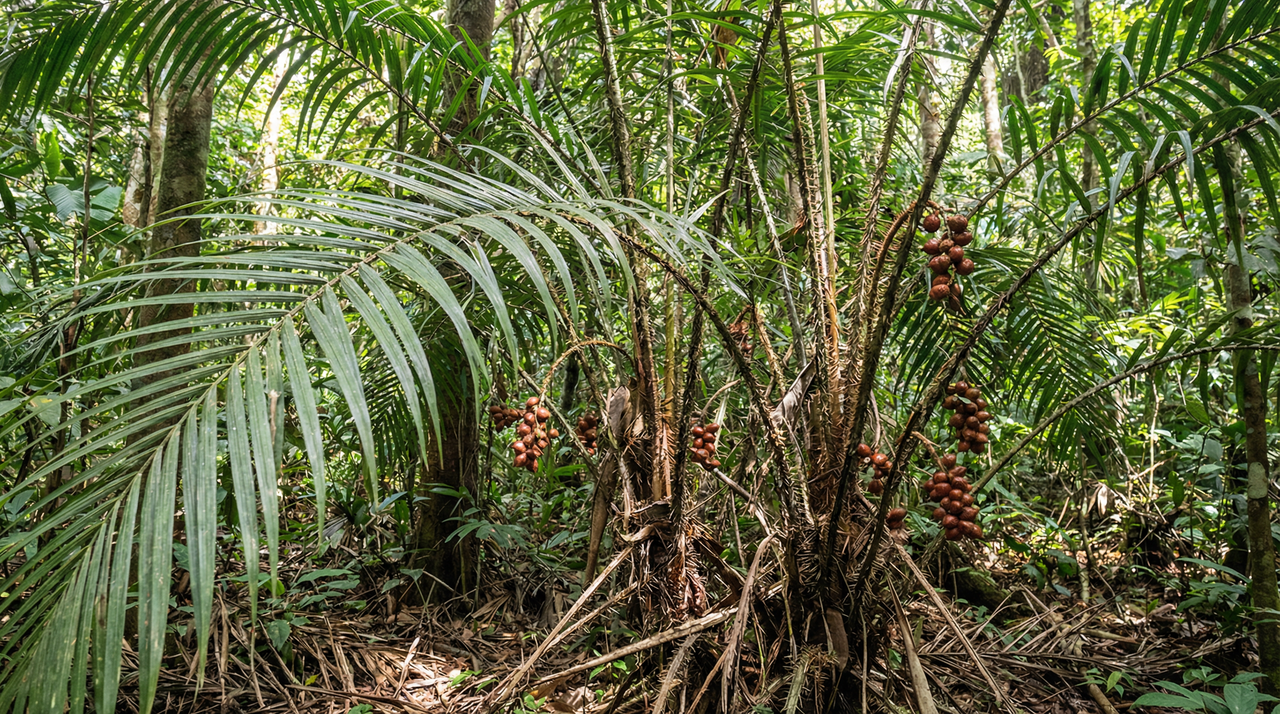
Dragon's blood palm is a climbing tropical rattan grown for its remarkably useful resin. It bleeds red—not rust, not orange, not the pale pink of a scraped knee. Red like something you'd expect from a wound in a mythology textbook, which is probably why the people who first traded it across ancient sea routes called it dragon's blood and didn't feel the need to elaborate. What I find quietly astonishing is that for centuries, Egyptian embalmers, Roman glassmakers, and Renaissance violin finishers were all reaching for this same crimson substance without most of them knowing exactly where it came from.[1] The source was a spiny, hooked, climbing rattan palm tangled into the humid lowland forests of Borneo and Sumatra, and it was doing something botanically unusual: bleeding color from the scales of its own fruit.
I've worked with climbing palms in multilayered tropical guild plantings, and I can tell you that Daemonorops draco is not a plant you stumble into casually. It's slow, it's demanding, it's covered in recurved spines that will remind you of your hubris, and in the wild it's now under genuine conservation pressure from centuries of that same demand that made it famous. But understanding what this plant actually is, where its chemistry comes from, and why its history matters changes how you think about growing it responsibly. That shift in perspective is where this article starts.
Dragon's Blood Palm Origin, History, and Botanical Background
There are plants that carry a mythology proportionate to their drama, and Dragon's Blood Palm is one of them. Daemonorops draco, the species responsible for the most prized of the resins called "dragon's blood," is a spiny, whip-limbed climbing rattan palm native to the humid lowland and hill dipterocarp forests of Sumatra, Borneo, Java, Peninsular Malaysia, and neighboring Southeast Asian islands, growing from sea level up to about 1,000 meters in deep, humus-rich loams derived from volcanic or sedimentary parent material.[2][3][4] This is not a polite garden palm. The canes reach 10 to 20 meters and, under good conditions, can sprawl to 50 meters or more, hauling themselves up through the forest canopy on recurved spines and whip-like cirri that hook into neighboring vegetation like grappling hooks.[3][5]
What makes the timeline especially sobering for growers is that the plant doesn't even begin to flower until 7 to 15 years after germination.[6][7] I've worked with several rattan species in tropical food forest designs, and even the faster-growing ones test your patience. For D. draco, that decade-plus wait to reproductive maturity is a core reason why wild populations can't recover quickly once overharvested, and why it now sits as Vulnerable on the IUCN Red List, with international trade regulated under CITES Appendix II.[8][9] Habitat loss from logging and palm oil conversion compounds the problem. The genus includes other species with similarly constrained ranges: D. collarifera is endemic to Borneo and itself listed as Vulnerable, while D. aruensis exists only in the Aru Islands' lowland forests.[10][11][12]
Botanical Background and Visual Characteristics of Daemonorops draco
The defining field mark of this palm is its fruit: ovoid drupes, 15 to 30 mm across, covered in overlapping scales that weep a brilliant red resin as the fruit ripens.[3][13] I always label my rattan specimens carefully precisely because photographs don't prepare you for how vivid the resin actually is in person. Those hardened red tears against dark green pinnate foliage are genuinely arresting, and in a large conservatory planting, the effect would be theatrical. That said, if you've ever bought something labeled "dragon's blood" without scrutinizing the source, there's a real chance it came from Dracaena draco, the Canary Island dragon tree, which is an unrelated upright monocot that also produces a red resin historically traded under the same name.[3][14] Historical records often conflated the two, and the marketplace still does. Knowing the difference matters when you're sourcing for cultivation or for resin quality.
Traditional and Cultural Uses of Dragon's Blood Resin
The resin's journey out of the rainforest and into global trade is ancient. Dioscorides and Pliny the Elder both documented it in the 1st century CE; Arab and Indian merchants carried it across trade routes to Egypt, where it dyed textiles and possibly mummy wrappings, and eventually to Renaissance Europe, where it colored oil paintings, varnished the bellies of Cremonese violins, and appeared in pharmacopoeias as a treatment for dysentery and hemorrhage.[15][16][17] Chinese medicine codified it in the 16th-century Bencao Gangmu under the name xue jie, valuing it for stopping bleeding and regenerating tissue after trauma.[18] Most of those ancient sources didn't distinguish between Daemonorops, Dracaena, or other resin-producing plants, which adds layers of complexity to interpreting the historical record.
Closer to the plant's source, Dayak communities in Borneo have used the resin as a wound antiseptic, hemostatic, and anti-inflammatory, and woven it into protective amulets, spiritual cleansing ceremonies, and incense intended to repel evil spirits.[19][20] I think about that indigenous knowledge framework as something that has sustained these forest systems for centuries; the communities who developed it understood the plant's slow ecology in ways that industrialized harvesting has repeatedly ignored. That tension between ancient, careful use and modern extraction pressure is really the core of this plant's story.
Fun Facts About Dragon's Blood Palm
The resin itself is produced in specialized laticifers within the fruit scales and stems, exuding naturally at injury or collected by traditional harvesters through V-shaped incisions cut during the dry season, then left to harden into those characteristic translucent red drops over one to two months.[21][22] The chemistry behind it is genuinely interesting: dracoresinotannol, dracoresene, and a suite of flavonoids that together deliver antioxidant, anti-inflammatory, antimicrobial, and astringent properties.[23][13] That's a lot of biological activity packed into what was once described in trade records simply as a pigment.
Ecologically, the plant earns its place: its spiny architecture shelters epiphytes, insects, and small vertebrates, while its fleshy fruits feed civets, primates, and birds that disperse the seeds across the forest floor.[24][25] When I'm evaluating any slow-growing tropical palm for a design project, I ask whether the investment in time and space delivers ecosystem value proportionate to the wait. For Daemonorops draco, the answer is complicated: the value is enormous, but wild populations are still paying the price for centuries of extraction that never accounted for a 15-year reproductive window. If you're sourcing resin or live plants, I only recommend cultivated stock or certified sustainable suppliers, full stop. The Appendix II listing exists for a reason.[26] Confusion about sources persists in the commercial market, with products labeled "dragon's blood" still frequently sourced from related Daemonorops species or from Dracaena without transparency about origin.[27] Knowing exactly what you have, and where it came from, is the first act of stewardship with this plant.
Dragon's Blood Palm Varieties and Sourcing
Notable Varieties of Daemonorops draco
There are no named cultivars or recognized varieties of Daemonorops draco in botanical literature. None.[28][29] This isn't a gap that horticultural breeding has simply overlooked; it reflects the fact that the species exists almost entirely in its wild form, harvested from Borneo and Sumatra rather than selected and propagated for garden traits. Closely related species like Daemonorops collarifera and Daemonorops asteracantha are in the same situation, known primarily from the wild with no recognized varieties in cultivation.[30][31]
The most promising sign of where this genus might go comes from Daemonorops collarifera, which has shown 70 to 80 percent survival rates in mixed agroforestry plantations in Indonesia and can yield one to two liters of resin per plant annually once established at four to six years of age.[29][32][33] That's genuinely encouraging for permaculture designers interested in resin-producing species. When clients ask me about dragon's blood for natural dyes or traditional varnishes, I always steer them toward verified sustainable sources rather than wild-harvested material, and knowing that related rattans are being trialed in productive agroforestry systems makes that conversation easier.
Sourcing Dragon's Blood Palm in the United States
Finding Daemonorops draco in the U.S. is genuinely difficult. It's not like sourcing a pygmy date palm, where you can walk into almost any nursery and choose from a dozen sizes. This species rarely appears commercially, and when it does, seedlings from specialty tropical nurseries typically run $20 to $60 each.[34][35] Availability fluctuates, so verifying current stock directly with the nursery before planning around it is worth the extra step.
The regulatory picture is worth understanding before you buy. Because it is listed under CITES Appendix II, specific import permits and sustainable sourcing documentation do apply.[36][37] Imports do require standard phytosanitary certificates under USDA APHIS regulations,[38] and the species doesn't appear in the USDA PLANTS Database at all, as it isn't naturalized here.[39] Florida growers face an additional layer of complexity: the species has been flagged as potentially invasive there, which discourages commercial propagation in parts of the state.[39] Whenever I've helped clients in zone 9b source rattans like this, my first call is always to local extension or state ag authorities to check current status, because regulations shift and the last thing anyone wants is to establish a plant that creates problems down the road.
Globally, Daemonorops draco sits at Least Concern on the IUCN Red List,[40] but local populations in its native range face real pressure from overharvesting and habitat loss.[41] That gap between global status and local reality is exactly why sourcing from reputable suppliers who can speak to sustainable collection practices matters more here than with many other species.
Dragon's Blood Palm Propagation and Planting Methods
If you've worked with recalcitrant seeds before, you already know the anxiety of watching a batch go from viable to worthless in a matter of days. Dragon's Blood Palm takes that anxiety and amplifies it. I've tested fresh versus week-old daemonorops draco seeds with tetrazolium stain, and the drop-off in red-staining is exactly as dramatic as the literature predicts. Fresh collection isn't a preference here; it's the whole game.
Seed Propagation and Germination Timeline
The seeds are recalcitrant, meaning they're intolerant of desiccation or freezing and lose viability rapidly after ripening.[42][43][44] If you absolutely must hold them, maintain 35-50% moisture content at 15-20°C; even then, expect significant viability decline somewhere between 3 and 12 months.[45][46] I now label every propagation flat meticulously after once mixing up a recalcitrant-seed batch with faster-germinating species and couldn't tell which flat had been waiting three weeks too long. Don't repeat that mistake.
Sow fresh daemonorops draco seeds into a sterile, well-draining mix of sand plus peat or perlite, placing them 1-2 cm deep. Clean the pulp off immediately after collecting from ripe red fruits, because leftover fruit material invites rot fast.[47][3] Under warm conditions of 25-30°C with 80-90% humidity, germination typically takes 1 to 3 months, though you may wait up to 6-12 months on stubborn seeds, so keep the flats moist and resist the urge to give up.[48][49]
The hard, dark-brown to black woody endocarp creates physical dormancy, so pretreatment genuinely matters.[50] Soak seeds in warm water (around 30°C) for 24-72 hours with daily water changes, or give the coat light scarification; either approach significantly improves germination rates, and gibberellic acid treatment can push success even further.[3][51] One pleasant surprise: the seeds occasionally show polyembryony, producing multiple seedlings per seed, which is a nice bonus when your germination rate is already fighting against recalcitrance.[52][53]
Seed is the default propagation method for home growers, and I prefer it for the genetic diversity it produces. Vegetative options exist: sucker division, stem cuttings treated with IBA at 1000-3000 ppm (expect 2-4 months to root), and tissue culture for commercial uniformity. Grafting rarely works given the monocot palm structure, with success rates below 20%.[54][55] I've toured commercial rattan nurseries using tissue culture to excellent effect, but for a home collection, seed gives you something micro-propagation can't: variability that might produce an especially vigorous resin producer.
Soil and Site Requirements
Think about where this palm evolved: the shaded, humid understory of Southeast Asian lowland tropical rainforests, rooted in acidic, organic-rich soils.[56][57] Replicate that baseline and you've cleared the second biggest hurdle after germination. Target pH 5.5-6.5, with a workable range of 5.0-7.0 before you start seeing real trouble.[3] Above pH 7.0, iron and manganese become unavailable, and you'll see the same interveinal yellowing on new growth that I recognize from chlorotic ixora and gardenia in Florida landscapes; same mechanism, same fix. I always do a soil test before planting because one bad batch on an alkaline site taught me exactly how much catch-up sulfur amendment costs in both money and time.
The root system is fibrous and spreads horizontally, so you need at least 50-100 cm of soil depth and, critically, no compaction or waterlogging.[56][58] For containers or prepared beds, a mix of equal parts coco coir, perlite or coarse sand, and pine bark keeps drainage excellent while holding the 3-6% organic matter this palm expects.[59][60] Mycorrhizal inoculation at sowing is worth doing; it aids early root establishment in a species that already has a slow start.[61]
Spacing, Supports, and Planting Technique
Space plants 2-3 m within rows and 3-6 m between rows in larger plantings, roughly 400-1,000 plants per hectare depending on canopy density and intended use.[62][63] For home gardens, I'd err toward the wider end to give the climbing stems room to breathe. And speaking of climbing: install your supports at planting time. I once waited a season before putting in poles, reasoning I'd do it once the plants were growing well. I ended up with tangled, hooked stems that had grabbed onto everything nearby and sustained real damage during detangling. That lesson is now non-negotiable for me: sturdy bamboo poles, live trees, or timber posts 10-15 m tall, placed every 2-5 m, go in before the seedlings do.[64][65]
Keep young plants under 70-80% shade and consistently moist without waterlogging.[3] A light balanced palm fertilizer every 2-3 months once established covers early nutritional needs, and intercropping with bananas or legumes for the first 3-5 years does double duty: it provides shade and keeps the soil biologically active.[66][67] I interplant mine with bananas for exactly this reason, and they've provided excellent nurse-crop cover while I wait out the long establishment period. Get the seeds, soil, and supports right from the start, and this species will repay your patience with decades of growth.
Dragon's Blood Palm Care Guide
Getting this plant to thrive is less about following a checklist and more about honestly asking whether you can recreate a Southeast Asian rainforest floor in your growing space. I've been working with rattans long enough to know that Daemonorops draco will tell you immediately when something is off. The question is whether you can read what it's saying before real damage is done.
Sunlight and Light Requirements
Dragon's Blood Palm needs 4-6 hours of indirect or filtered light daily, ideally between 1000 and 2500 foot-candles, replicating the dappled canopy light of its native forest understory.[68][69][70] It can adapt to surprisingly low light levels (as dim as 200-500 lux) through high chlorophyll density and wide, thin fronds,[71] but push it into direct sun and you'll see brown, crispy leaf margins fast.[68] The same scorching appears across related species like D. asteracantha and D. aruensis, so this is a genus-wide sensitivity, not a quirk of your particular plant.[69] On the other end, too little light brings its own misery: etiolated stems, chlorotic fronds, and sparse, undersized leaves that signal the plant is struggling to photosynthesize enough to sustain itself.[59] A 50-70% shade cloth, or placement beneath taller canopy plants, is the practical solution.[72] Acclimate seedlings gradually; in my experience the first two weeks after any light transition are when things go wrong.
Water Needs and Humidity
Water when the top inch or two of soil dries out, typically every 2-4 days in humid summer conditions or every 5-7 days during the growing season, always keeping the soil consistently moist without letting it sit wet.[73][74] Water quality matters more than most growers expect. Dragon's Blood Palm has low tolerance for chlorine and salt, so rainwater, distilled water, or tap water left to off-gas for 24 hours keeps pH in the preferred 5.5-7.0 range and avoids the invisible tip-burn that stumped me for months before I made the switch.[75][76] Humidity is the inseparable partner to watering: this plant demands 70-95% ambient humidity, ideally closer to the 80-95% end, and misting, pebble trays, or a dedicated humidifier are not optional in most indoor settings.[77] Seedlings need more frequent watering to establish, while mature plants show moderate drought tolerance; the warning signs to watch are wilting and browning tips from underwatering, versus yellowing from the base and soft, mushy roots from going too wet.[78][79]
Feeding and Nutrient Management
Feed with a balanced palm fertilizer at 50-100 g per plant every 3-4 months through spring and fall, always watering thoroughly before and after to prevent root burn.[80][81] Young plants benefit from lighter, monthly applications rather than fewer heavy ones. My strong preference is a high-potassium mix like 10-10-20 over a balanced 10-10-10: in my experience, higher-K feeding noticeably strengthens the climbing stems and increases resin flow compared to nitrogen-heavy programs, which produce lush soft growth but suppress the very compounds you're cultivating this palm for.[82][83] Diagnostically, uniform yellowing on older fronds signals nitrogen deficiency; purplish or very dark older leaves point to phosphorus; orange-brown spotting, tip burn, and what looks like frizzle top means potassium is low.[84] This species is especially salt-sensitive, so keep soil EC below 2 dS/m and don't skip soil tests every 6-12 months.[85] Supplementing with 5-10 kg of compost or well-aged manure annually rounds out the micronutrient picture that commercial palm fertilizers sometimes miss.[3]
Heat Tolerance and Temperature
Daemonorops draco thrives between 24-32 °C (75-90 °F) and can handle brief spikes to 35-40 °C when humidity stays high, placing it firmly in USDA zones 10-12.[86][87] The catch is that heat stress symptoms look almost identical to sun stress: yellowing and browning leaf tips, wilting, and reduced resin production, all of which worsen sharply when humidity drops or wind picks up.[88] Seedlings are the most vulnerable; mortality rises sharply when temperatures exceed 30 °C without adequate shade, which is exactly the mistake that cost me my first batch.[78] After that loss, I moved to 70% shade cloth and consistent misting for the first six months, and establishment rates improved considerably. Mitigation for established plants means 5-10 cm of organic mulch at the base, early-morning or late-evening irrigation, windbreaks, and well-drained acidic soil maintained at pH 5.5-6.5.[86][89]
Frost Tolerance and Cold Protection
There's no softening this: Dragon's Blood Palm has virtually no frost tolerance. Damage begins below 10 °C (50 °F), and the species belongs only in USDA zones 10-12 or a heated greenhouse.[52][90] Cold damage shows as yellowing and browning fronds, tip burn, wilting, and eventually blackened foliage with structural weakening of the stems.[91] A single cold event caught early, with the plant moved promptly to protection, can result in recovery; repeated exposure causes cumulative decline with no real comeback.[92] I roll my potted specimen into the greenhouse the moment nighttime temperatures start approaching 10 °C, and the difference between plants that get that early move versus ones left out even through a mild dip is stark. For growers outside true tropical zones, treat this as a large, permanent indoor plant rather than a gamble on borderline outdoor siting.
Pruning, Maintenance and Seasonal Rhythm
Prune sparingly. Dragon's Blood Palm is a slow climber, and every frond you remove is months or years of growth gone.[66] Remove only dead, damaged, or genuinely overcrowded fronds, cut back basal suckers to maintain a single climbing stem, and do it during the dry season with sterilized tools to keep fungal infection risk low.[93] Keep organic mulch around the base to retain moisture and suppress weeds, but keep it clear of the stem itself.[94] I also label every plant with the date it was established, because D. draco progresses slowly: it demands years of vegetative growth before reaching reproductive maturity, unlike faster-growing relatives.[95][96] Knowing exactly how old a plant is shapes every maintenance decision. In equatorial conditions, growth continues year-round with flowering peaking in the wet season and fruits maturing 6-8 months later in the dry season, when resin production is also highest.[97] In cultivation, stable temperatures between 24-32 °C, annual rainfall equivalents of 2000-3000 mm, and consistent high humidity replicate the environmental cues that support its 30-50 year wild lifespan.[98] Patience isn't optional with this plant. It's the whole practice.
Harvesting Dragon's Blood Palm Resin
Patience is the first tool you need for this plant. Dragon's blood palm doesn't offer up its resin quickly; most sources place the window for first harvest at 5 to 8 years from establishment, with fruiting and flowering typically beginning somewhere in that same range.[99][100] For sustainable tapping of mature canes, the timeline stretches to 8 to 12 years, when trunks reach 5 to 8 cm in diameter.[66][101] I only seriously consider growing a plant if I can harvest it responsibly for 20 or more years; anything less and the effort-to-reward math gets hard to justify. Daemonorops draco rewards that long-term thinking, but only if you treat the early years as an investment.
When to Harvest: Maturity, Timing, and Ripeness Cues
Traditional harvesters in Southeast Asia schedule their work during the dry season, roughly June through October, when higher temperatures and lower humidity encourage resin to exude freely and peak phenolic content makes for the most potent material.[102][103] That's both ancient wisdom and practical chemistry working together. The fruits themselves tell you when they're ready: watch for the color shift from green to orange, then to a deep, glossy reddish-black with a noticeably soft texture.[104] Fruit development from flower to full ripeness takes about 120 to 180 days, so you can start watching the calendar once flowering occurs.[105]
Traditional Harvesting Techniques for Dragon's Blood Resin
The core method, refined over centuries in Indonesian and Malaysian forests, involves making careful V-shaped incisions into the fruit stalks or mature canes during the dry season, then returning every 2 to 3 days over a period of one to two months to collect the hardened red droplets, ideally in the cooler morning hours before the heat of the day.[27][100][106] It reminds me of maple tapping or pine resin collection in terms of the rhythm, that regular, careful return to the same plant to gather what's ready, except the stakes feel higher because the wound management is so critical.
Sustainable protocols limit each tapping session to no more than 20 to 30 percent of the trunk's circumference, space incisions to allow healing between rounds, and keep the total number of cuts per plant low enough to protect the vascular system.[107][95] Poor technique kills the vine. Good technique lets it produce for decades. That's the whole calculus. For the rattan canes themselves, mature stems are cut at ground level with 1 to 2 meter stubs left in place to allow regrowth, enabling re-harvest from the same clump every 2 to 3 years.[95][61]
Yield, Texture, Aroma, and Flavor of the Resin
Fresh resin is sticky and viscous with a pungent, earthy, green aroma. Once sun-dried, it hardens into brittle red granules or lumps that can be powdered, and the scent shifts toward something more concentrated and balsamic, with camphorous and medicinal notes.[108][109] I've stored dried resin-producing plant material from similar tapping work in my own garden and found those earthy-herbal notes hold for months, which is part of what makes this product valuable even after long transit. The flavor profile of the dried resin runs sweet, spicy, and slightly bitter with a long, intensely bitter finish; younger plants tend toward milder, sweeter output while older, mature specimens produce more potent material.[110][111] Regional origin matters too: Indonesian sources tend toward spicier profiles, Malaysian ones lean earthier, and the resin itself dissolves readily in alcohol and oils.[112] Those solubility properties matter quite a bit for what you do with it next.
Dragon's Blood Palm Preparation and Uses
Culinary Applications and Edibility of Dragon's Blood Palm
Let me be upfront about something: Daemonorops draco is not a food plant. The fruits aren't considered edible for human consumption, and the resin has almost no documented culinary history.[113][52][114] I've seen visitors to botanic collections ask whether the vivid fruits are good to eat, and the honest answer is: please don't experiment. The resin, even in modest quantities, can cause gastrointestinal upset, may interact with blood-thinning medications, and isn't appropriate during pregnancy or breastfeeding.[115][113] And I'd always advise double-checking identification with a local botanist, because confusing this palm with the more toxic Dracaena draco, or mistaking related species for toxic look-alikes like Smilax or Philodendron, is a risk nobody should take casually.[116][117]
Closely related rattans are a different story. Young shoots of Daemonorops collarifera are eaten in Southeast Asian kitchens, boiled, stir-fried, or added to curries much like bamboo shoots.[118][119] The fruit pulp of that species has a mildly sweet, aromatic flavor, and seed kernels of D. calicarpa are also consumed after cooking.[120][121] Thorough cooking is non-negotiable with these relatives; tannins and other irritants require heat to neutralize, and raw consumption isn't recommended. Still, that's a different genus chapter. With D. draco specifically, the value is entirely in the resin.
Medicinal Preparations from Dragon's Blood Resin
The resin's traditional medicinal reputation is long and well-documented: wound healing, relief from diarrhea and dysentery, treatment of skin conditions, and use as an astringent, anti-inflammatory, antimicrobial, and antiviral agent.[122][123][124] Those effects trace back to its bioactive compounds: flavonoids, tannins, and antioxidants working together in a matrix that modern pharmacology is still characterizing.[125] When I handle dried daemonorops resin, the first thing I notice is the aroma, a deep earthy-balsamic scent unlike anything else on my workbench, and when it dissolves in alcohol it turns a vivid, saturated crimson that makes turmeric look timid by comparison.
Traditional preparation methods give home users a few reproducible approaches. Tinctures are made by dissolving the resin in alcohol at roughly a 1:5 ratio; decoctions involve boiling in water; poultices combine the powder with oil or water for direct topical application.[126][127] Processing raw resin typically involves boiling and straining the sap or filtering and sun-drying to remove plant debris and impurities.[113] Traditional dosage guidelines reference 0.5 to 3 grams of resin powder daily in divided doses, or 1 to 5 ml of tincture two to three times daily diluted in water.[113] These come from traditional knowledge, not standardized clinical trials, and none of it is FDA-approved. My strong recommendation, especially for clients interested in home remedies, is to start at the lowest end and work with a qualified practitioner rather than self-dosing based on internet research.
Non-Food and Traditional Uses of Dragon's Blood Palm
The resin's most historically significant role may have nothing to do with medicine at all. As a natural red dye it has colored textiles, batik fabric, cosmetics, and wood for centuries; as a varnish it has protected carved artifacts and furniture; as incense it carries deep ritual meaning across cultures throughout its native range.[128][129][106] The staining power is genuinely impressive; it transfers to skin and tools the moment you handle unprotected resin, which is the kind of thing you only learn once.
Beyond the resin, the daemonorops rattan canes themselves are structural workhorses. Strong, flexible stems support basketry, furniture, weaving, rope-making, matting, and even construction and thatching across Southeast Asia, sustaining local economies where sustainable harvesting practices remain intact.[130][131][132] In my tropical permaculture designs I've used rattan canes as natural trellises, and they hold up remarkably well given how little processing they need. Contemporary exports from Indonesia and Malaysia continue to supply international markets for incense, cosmetics, traditional remedies, daemonorops draco resin extracts, and dyes.[133] Given that wild-harvesting has driven the species toward vulnerable status in parts of its range, sourcing cultivated or traceable material isn't just an ethical preference; it's the only approach that makes sense if you want this plant to still exist for the next generation of growers.
Dragon's Blood Palm Health Benefits
The health story of the dragon's blood palm isn't about its fruit or young shoots. It's almost entirely about the resin. That deep crimson dragon's blood is where the chemistry lives, and the chemistry is genuinely remarkable.
Phytochemical Profile of Dragon's Blood Resin
The resin of Daemonorops draco contains an unusually dense matrix of bioactive compounds, including specialized flavonoids (dracoflavonoids, loureirin A, B, and C, dracoflavan A, catechin and epicatechin derivatives), phenolic compounds, the red pigment dracorhodin, dracoresinotannol, proanthocyanidins, tannins, the steroid β-sitosterol, and triterpenes.[134][135][136] These aren't random compounds. They're the plant's own chemical armor, produced in response to physical damage and environmental stress. That matters to growers, because resin phenolic content is actually higher in dry-season harvests, and palms older than ten years yield measurably stronger antioxidant activity and higher dracochrome levels than younger specimens.[137][138] I've seen the same principle play out with other medicinal plants in my landscape work: a rosemary or oregano pushed by heat and drought stress produces noticeably more aromatic resin. Stress chemistry is real, and in D. draco it's exceptionally well-documented. While the resin concentrated in fruit scales and stem incisions carries the highest load, bioactive compounds are also present in stems, heartwood, and to varying degrees in the leaves and fruits of closely related species like D. collarifera and D. calicarpa.[139][140]
Medicinal Research and Traditional Uses
Across Indonesia, Malaysia, and surrounding island communities, dragon's blood resin has been applied to wounds, burns, and skin infections; taken internally for diarrhea, dysentery, and ulcers; and used for hemorrhoids, respiratory complaints, and general inflammation for centuries.[141][142][143] That traditional record isn't just anecdote; preclinical research has started filling in the mechanistic explanations.
The strongest evidence sits in wound healing. Rat model studies show the resin promotes collagen synthesis, fibroblast proliferation, and epithelialization while simultaneously reducing local inflammation, with analgesic effects in animal models comparable to aspirin.[144][145] When I work with high-tannin astringents like witch hazel or oak bark in clients' first-aid contexts, the tissue-tightening and inflammation-calming effects are visibly fast. The wound-healing research on dragon's blood suggests a similar mechanism, just with a broader phytochemical toolkit driving it. Anti-inflammatory activity runs through COX-2 inhibition, lipoxygenase suppression, NF-κB pathway interference, and reduction of pro-inflammatory cytokines, with animal studies reporting paw edema reduction comparable to indomethacin.[111][146] Antioxidant activity is also well-established, with DPPH radical scavenging in some assays comparable to vitamin C equivalents, attributed directly to the high phenolic and flavonoid load.[147][148] Antimicrobial activity against Staphylococcus aureus, Escherichia coli, and various fungi at low concentrations rounds out the preclinical picture, lending scientific support to those centuries of antiseptic topical use.[149]
Most of this pharmacological data comes specifically from D. draco; properties attributed to related species like D. collarifera and D. calicarpa are largely inferred from shared phytochemistry and overlapping traditional uses rather than independent clinical investigation.[150] And no large-scale human clinical trials have been conducted on Daemonorops draco resin at all.[151][152] The lab results are genuinely promising, but I await robust human data before recommending it beyond first-aid and traditional topical applications.
Nutritional Aspects
This palm is valued for its resin, not its table merits. The young shoots and fleshy fruits are eaten locally in parts of Borneo and Sumatra, and the resin has traditionally been taken internally in very small amounts (roughly a quarter to half a teaspoon of powdered resin, around 0.5 to 1 g per day, diluted in water) for digestive complaints.[153][113] Specific nutritional data for D. draco is limited, so values drawn from related rattans give the closest approximation: young shoots offer modest protein (4 to 6 g per 100 g), useful dietary fiber (3 to 5 g), and around 10 to 20 mg of vitamin C, while the fruits are low-calorie with roughly 20 to 50 mg vitamin C, potassium in the 200 to 300 mg range, and some calcium and magnesium.[154][155] Treat those numbers as directional rather than definitive. From a permaculture ethics standpoint, I'd also note that I source only cultivated or sustainably certified resin in my designs; wild-harvested dragon's blood carries real conservation costs that the modest nutritional profile of the fruit and shoots doesn't justify.
Safety Profile and Considerations
The reassuring news first: acute toxicity is low, with an LD50 above 2000 mg/kg in mouse studies, and the resin isn't flagged as poisonous by major toxicology databases.[156][157] Used topically in moderate amounts or taken in traditional small oral doses, it's generally considered safe. That said, excessive ingestion can cause GI irritation, nausea, diarrhea, or vomiting, and sensitive individuals may experience allergic contact dermatitis from skin exposure to the resin or plant parts.[158][159]
The contraindications are specific and non-negotiable. The resin is contraindicated in pregnancy due to potential emmenagogue effects and inadequate safety data, and use during breastfeeding or in children isn't recommended.[160][161] If you or a client is on blood thinners or antiplatelet medication, talk to a physician before using dragon's blood internally. The flavane constituents that inhibit platelet aggregation are well-characterized enough in the research that this isn't a theoretical concern.[162] The resin is also not FDA-approved as a food additive or medicine. Most safety knowledge still rests on traditional use patterns, animal studies, and preliminary in vitro work, with significant gaps in pharmacokinetics, long-term use data, and standardized clinical validation.[163][164] A strong traditional record and promising preclinical science deserve respect; they don't replace human trials.
Dragon's Blood Palm Pests and Diseases
For a plant that exudes a bioactive resin evolved partly as a chemical shield, Dragon's Blood Palm holds its own surprisingly well in the right conditions. The keyword there is "right." Move it into poor drainage, strip away its guild companions, or crowd it in a monoculture, and those natural defenses stop being enough. What I've seen with other climbing palms in my designs holds true here: a stressed plant is practically a pest invitation.
Major Insect Pests of Dragon's Blood Palm
Red palm weevil (Rhynchophorus ferrugineus) is the threat I'd lose sleep over. It bores into the trunk, destroys vascular tissue from the inside out, and by the time you notice the wilting, the damage is already severe.[165][166][167] I've watched it devastate sabal and royal palms in Florida landscapes, and Daemonorops draco shares the same vulnerability across the subfamily. Pheromone traps and early monitoring are your best tools; by the time you're pruning out damage, you're already behind.
Scale insects, particularly Aspidiotus destructor and related Coccidae and Diaspididae, are the everyday nuisance in nursery and botanical garden settings, coating stems and leaves and quietly draining the plant.[168][169][170] Spider mites become a problem when plants are kept indoors in dry air, producing telltale stippling and fine webs on the foliage; bumping up humidity usually pushes them back.[168][171] Young plants are especially vulnerable to mealybugs and aphids, which tend to colonize the soil line and new growth where tissue is softest.[169][171] I check my seedlings obsessively at that stage for exactly this reason.
Stem borers, including cerambycid beetles and Zeuzera moths, are a particular concern in cultivation because they go straight for the vascular tissue and directly suppress resin production.[165][172][83] Rhinoceros beetles and rattan hispine beetles round out the list of opportunists that pile on when a plant is already stressed.[173]
That crimson resin isn't purely ornamental. Its bioactive compounds, including dracoresinotannol and dracocidine, confer genuine insect-deterrent properties, and the plant's recurved spines and tough fibrous structure add a physical layer of defense.[17][174][175] Having handled the fresh resin, I can tell you it's astringent and distinctly uninviting, which tracks with its traditional reputation as both wound sealant and repellent. These defenses hold up in a diverse forest setting but erode fast in monoculture conditions where ecological balance is lost.[176][177]
Common Diseases and Fungal Pathogens
The fungal diseases are where things get genuinely serious. Ganoderma basal stem rot, caused by Ganoderma boninense, is the slow killer: it moves in through roots and the base of the trunk, causing gradual wilting and eventual collapse, and there's no reliable cure once it's established.[178] Phytophthora root rot follows a similar logic, triggered by waterlogging, soil compaction, and poor aeration, the exact conditions this plant's native understory ecology never experiences.[179][180] In my designs I always prioritize guild companions that help aerate soil and shed excess moisture, because once Ganoderma or Phytophthora gets a foothold the battle is already half lost.
Leaf-level fungal problems, particularly anthracnose from Colletotrichum spp. and leaf spot diseases from Pestalotiopsis and Curvularia, are common in the humid conditions this palm needs to thrive, which is an uncomfortable irony.[179] They're manageable with sanitation and airflow but can become persistent in poorly ventilated plantings. Bacterial and viral diseases are not a primary concern for this species or rattans generally, which is at least one worry you can set aside.[172] The resin's antimicrobial properties may provide some baseline resistance to foliar pathogens, though that advantage disappears when the plant is environmentally stressed and wounds from pest feeding open new entry points.[172]
Prevention, Resistance, and Integrated Management
Specific cultivar resistance trials for Daemonorops draco are essentially nonexistent, at least compared to the commercial rattan research done on Calamus species.[172] That research gap is real, but the patterns across related Daemonorops species are consistent enough that I confidently apply the same cultural practices that have worked in my subtropical plantings: proper spacing of two to three meters, excellent drainage, regular removal of dead fronds, and tool sterilization after every cut.[95][181] Sterilizing tools religiously has honestly saved more palms in my designs than any fungicide spray ever has.
For biological controls, I've shifted strongly toward inoculating seedlings with Trichoderma spp. early in their root development rather than reaching for copper-based fungicides later.[95] Early in my practice I over-relied on copper sprays and watched the soil food web suffer for it. A complete IPM approach, combining monitoring, sanitation, pheromone traps for weevils, and neem oil for sucking insects, handles the vast majority of problems without sacrificing soil health.[182][166] Chemical fungicides like mancozeb or copper compounds exist as a last resort for active infections, but prevention through intercropping, balanced fertility, and thoughtful siting will do more work than any spray program.
Permaculture Design with Dragon's Blood Palm
Most climbing plants I work with are opportunists. Dragon's blood palm is something different. It's a plant that has co-evolved with a specific kind of forest architecture, and when you design around that fact rather than against it, it rewards you with yields, structure, and ecological function that few other lianas can match. Getting there, though, starts with being honest about where it can actually grow.
Climate and Hardiness Zones for Daemonorops draco
Daemonorops draco is strictly a zones 10b-12 plant, thriving in consistent warmth between 24 and 32°C (75-90°F) with no tolerance for frost.[183][184] Growers occasionally report that brief dips to around -1°C (30°F) can be tolerated with protection, but I wouldn't test that in practice. This is a plant whose native range spans the humid lowland forests of Borneo, Sumatra, Malaysia, and the Philippines, where the humidity runs 70-90% and annual rainfall sits between 2,000 and 4,000 mm with no serious dry season.[113][185] That's the baseline it's asking for.
In the United States, realistic in-ground cultivation is limited to frost-free southern Florida and Hawaii.[186] For everyone else, including those of us in zone 9B who are tempted to push limits, this is a greenhouse or conservatory plant. When I've advised on humid conservatory builds, I always recommend humidity trays, misting systems, and dappled shade over direct sun to mimic the forest understory this plant actually calls home. Related species like Daemonorops asteracantha and D. collarifera share the same preference for shaded, moist conditions in zones 10-12, confirming this is a genus-wide pattern rather than a quirk of one species.[187][12] Set expectations accordingly before you fall in love with the design possibilities.
Ecosystem Functions and Forest Layer Integration
Here's what makes dragon's blood palm so compelling from a design standpoint: it doesn't just occupy vertical space, it connects layers. As a climbing liana reaching 10-20 meters using hooked spines on its leaf sheaths to ascend support trees, it threads through the understory and into the lower canopy, creating physical linkages that a stand-alone tree simply cannot provide.[188][130] I've placed climbing palms in layered tropical guild designs and the difference in canopy texture and light interception is immediate. Those recurved spines that make harvesting an adventure also create dense, protective micro-habitat that birds and lizards use in a way they never do with smooth-stemmed plants.
The ecological contributions go well beyond structure. Its root system stabilizes slopes and reduces erosion, leaf litter decomposes quickly to cycle nutrients back into the soil, and the whole plant functions as a dynamic accumulator, drawing up potassium and nitrogen that return to surrounding plants when fronds and stems break down.[189][190] The bright red fruits feed hornbills, civets, squirrels, bats, and various rodents, which disperse seed and pull wildlife into the food forest system.[191] That kind of wildlife magnetism has downstream effects on pest control and pollination that are harder to quantify but very real in practice.
On pollination: D. draco is dioecious, meaning you need both male and female plants to get fruit, and pollination is primarily carried out by beetles (Scarabaeidae and Curculionidae among them), with flies, bees, and thrips playing supporting roles.[192][193] I'll be honest: species-specific pollination studies on D. draco are sparse, and much of what we know is extrapolated from related rattans.[194] That gap is worth noting not to discourage you, but because it means field observation in cultivation settings is genuinely valuable right now. What I do know is that beetle pollinators respond to floral resources, so a guild rich in beetle-attractive flowering plants is going to serve this palm better than a sparse planting.
The conservation context matters here too. Daemonorops draco is listed as Vulnerable on the IUCN Red List, pressured by overharvesting for its resin and by ongoing habitat loss from logging and agriculture.[195] Cultivating it thoughtfully is a small but meaningful counterweight to that pressure.
Guilds, Pollination, and Sustainable Cultivation
In permaculture terms, dragon's blood palm slots into the understory-to-subcanopy layer as a shade-tolerant structural climber, comfortable at just 2-20% of full sunlight.[71][130] That tolerance level puts it in the same light-preference neighborhood as gingers, shade-grown coffee, and forest ferns I've used throughout zone 10 designs. It genuinely thrives where many plants sulk.
Early in my design career I badly underestimated how far rattans climb. A plant that looks manageable at two meters in a nursery pot is eventually looking for a 15-meter host. I learned to plan support structures into the guild design from day one, choosing robust nitrogen-fixing canopy trees that can take the weight and the physical abrasion of those hooked spines without suffering. Gliricidia, Leucaena, and similar fast-growing fixers work well as living trellises; they add fertility to the system while giving the rattan something solid to climb, and their leaf-litter decomposition complements the dynamic accumulation the palm itself contributes.[196]
At the guild's ground level, shade-tolerant crops like ginger, turmeric, and coffee fit naturally beneath the climbing palm's canopy, taking advantage of the dappled light and the enriched soil from leaf-litter decomposition.[113] The ornamental value of the pinnate leaves with their silvery undersides and the vivid fruit clusters adds another yield layer: visual structure and habitat that makes the whole system feel intentional rather than overgrown.
Because the plant is dioecious and beetle-pollinated, I deliberately weave beetle-attracting flowering plants throughout any guild where I'm hoping for fruit set. Hand pollination is also worth doing if you have both sexes and want reliable yields in cultivation.[197] And because wild populations are under real pressure, I only ever source nursery-grown stock and treat resin harvesting as a careful, limited yield rather than a primary crop. Cultivating this plant well, with good guild support and ethical sourcing, is a genuine conservation act. That framing keeps me honest every time I'm tempted to harvest more than the plant can spare.
The Palm That Taught Me to Think in Centuries
I've stood in enough greenhouses, sweating beside plants that barely tolerate my presence, to know when something isn't meant for me personally. Dragon's Blood Palm is one of those. But I keep coming back to it anyway, because every time I dig into its history, I remember that the resin dripping from those fruit scales crossed ancient trade routes before most of Europe had a word for it. That kind of deep time humbles me in exactly the way a good food forest should.
Sources 197
- Dragon's blood: Botany, chemistry and therapeutic uses - Journal of Ethnopharmacology ↩
- Daemonorops draco ↩
- Daemonorops draco ↩
- The Rattans of Sarawak ↩
- Flora Malesiana - Daemonorops ↩
- Rattan: Ecological and Economic Importance ↩
- Biology and Cultivation of Rattans ↩
- IUCN Red List Entry on Daemonorops draco ↩
- CITES Species Trade Database ↩
- Daemonorops collarifera - Wikipedia ↩
- Daemonorops aruensis - Wikipedia ↩
- IUCN Red List - Daemonorops collarifera ↩
- Dragon's Blood Resin from Daemonorops draco: Chemical Composition and Bioactivity ↩
- Plants of the World Online - Daemonorops draco ↩
- The Trade in Dragon's Blood Resin from Southeast Asia ↩
- Historical Uses of Dragon's Blood in Europe ↩
- Historical Uses of Dragon's Blood Resin in Ancient Civilizations ↩
- Compendium of Materia Medica (Ben Cao Gang Mu) ↩
- Dragon's Blood: Botany, Chemistry, and Therapeutic Uses ↩
- Ethnobotany of Rattans in Peninsular Malaysia ↩
- Dragon's Blood Resin from Daemonorops draco: Production and Uses ↩
- Traditional Harvesting of Dragon's Blood in Indonesia ↩
- Dragon's Blood: Botany, Chemistry and Therapeutic Uses ↩
- The Ecology and Conservation of Rattans (Palmae: Calamoideae) ↩
- Ethnobotany and Ecology of Rattans in Southeast Asian Rainforests ↩
- Sustainability of Dragon's Blood Harvesting in Indonesia ↩
- Dragon's Blood Resin: Sources, Uses and Traditional Harvesting ↩
- Daemonorops draco ↩
- Plants of the World Online (Kew Sciences) ↩
- Plants of the World Online - Daemonorops collarifera ↩
- Plants of the World Online - Daemonorops asteracantha ↩
- Daemonorops collarifera - Palmpedia ↩
- Rattan Species of Asia: Daemonorops - IPGRI Handbook ↩
- Daemonorops draco ↩
- Daemonorops draco - Dragon's Blood Palm Seedlings ↩
- CITES Appendices for Plants ↩
- CITES Species+ Database ↩
- Importing Plants and Plant Products ↩
- USDA PLANTS Database Search Results ↩
- IUCN Red List: Daemonorops draco ↩
- FAO: Rattan Production and Trade ↩
- Seed Storage of Woody Tropical Species ↩
- Rattan Seed Storage and Germination ↩
- Seed Storage of Recalcitrant species: Challenges and Strategies ↩
- Seed Storage of Non-Orthodox Seeds: Examples from Palms ↩
- Recalcitrant Seeds: Biology and Storage ↩
- Propagation of Palms ↩
- Propagation of Rattan ↩
- Biology and Cultivation of Daemonorops draco ↩
- Daemonorops draco - Useful Tropical Plants ↩
- Rattan Cultivation and Propagation Methods ↩
- Daemonorops draco ↩
- Anatomy of Rattan Fruits and Seeds ↩
- In Vitro Propagation of Daemonorops draco ↩
- Propagation of Rattan Palms ↩
- Rattan Cultivation Practices ↩
- Royal Botanic Gardens, Kew - Daemonorops draco ↩
- Soil and Root System Requirements for Rattan Palms ↩
- Soil Requirements for Palms - University of Florida IFAS Extension ↩
- Container Growing Tropical Palms ↩
- Cultivation and Propagation of Rattan ↩
- Rattan: Ecological and Economic Considerations ↩
- Cultivation and Management of Rattan ↩
- Cultivation of Dragon's Blood Rattan (Daemonorops draco) ↩
- Rattan Cultivation Guidelines ↩
- Rattan Cultivation and Management ↩
- Rattan: Ecology, Production and Utilization ↩
- Daemonorops draco - Dragon's Blood Palm Care Guide ↩
- Growing Rattan Palms: Light and Sun Exposure ↩
- Rattan Ecology and Light Adaptation in Tropical Forests ↩
- Shade Tolerance in Tropical Palms: Arecaceae Understory Dynamics ↩
- Ecology and Habitat of Southeast Asian Rattans ↩
- Rattan Palm Watering and Soil Requirements ↩
- Rattan Cultivation Guidelines ↩
- Soil and Water Requirements for Palms ↩
- Rattan Cultivation Guidelines ↩
- Daemonorops draco ↩
- Rattan Cultivation and Management ↩
- Root Rot in Palms: Prevention and Treatment ↩
- Palm Nutrient Management ↩
- Rattan Cultivation Guidelines ↩
- Nutrient Requirements for Tropical Palms ↩
- Dragon's Blood Resin Production from Daemonorops draco ↩
- Nutrient Deficiencies of Palms ↩
- Soil Requirements for Tropical Palms and Rattans ↩
- Cultivation of Rattan Palms ↩
- USDA Plant Hardiness Zone Map ↩
- Palms and Cycads: Heat Stress Management ↩
- Propagation and Management of Daemonorops spp. ↩
- Daemonorops draco - Kew Science ↩
- Frost Damage to Palms ↩
- Cold Damage in Palms ↩
- Pruning Techniques for Climbing Palms ↩
- Guidelines for the Sustainable Management of Rattan ↩
- Rattan Cultivation and Harvesting ↩
- Flowering and Fruiting of Rattans ↩
- Reproductive Biology of Rattans ↩
- Daemonorops draco ↩
- Dragon's Blood Palm: Cultivation and Resin Production ↩
- Ethnobotany of Daemonorops draco Blume: Resin Tapping Practices in Indonesian Rattan Forests ↩
- Rattan: Ecological and Economic Considerations ↩
- Rattan Production and Harvesting in Indonesia ↩
- Traditional Uses of Daemonorops draco in Southeast Asia ↩
- Dragon's Blood Resin: Production and Uses ↩
- Reproductive Biology of Rattan Palms in Southeast Asia ↩
- Daemonorops draco: Botany and Economic Importance ↩
- Harvesting Techniques for Rattan Palms ↩
- Daemonorops draco - Botanical Description ↩
- Peer-Reviewed Study on Dragon's Blood Resin Aroma ↩
- Dragon's Blood Resin: Chemical Composition and Bioactivity ↩
- Daemonorops draco: Botany and Traditional Uses ↩
- Phytochemical and Pharmacological Potential of Dragon's Blood Resin: A Review ↩
- Daemonorops draco - Useful Tropical Plants ↩
- Dragon's Blood Resin: Traditional Uses and Safety ↩
- Dragon's Blood: Botany, Chemistry and Therapeutic Uses ↩
- Dracaena draco: The Dragon Tree ↩
- Smilax - North Carolina Extension Gardener Plant Toolbox ↩
- Rattan Palms: Edible Uses in Southeast Asia ↩
- Myanmar Indigenous Foods: Rattan Preparation ↩
- Daemonorops collarifera - Kew Royal Botanic Gardens ↩
- Edible Fruits of Southeast Asian Palms ↩
- Dragon's Blood: Botany, Chemistry and Therapeutic Uses ↩
- Dragon's Blood Resin: A Review of Processing Techniques and Chemical Composition ↩
- Daemonorops draco: A Review of Its Phytochemistry and Pharmacology ↩
- Antioxidant Activity in Dragon's Blood Resin ↩
- Traditional Preparation Methods for Dragon's Blood Tincture ↩
- Dragon's Blood - Daemonorops draco and Related Species ↩
- Dragon's Blood Resin: Botany, Phytochemistry and Potential Therapeutic Uses ↩
- Historical Uses of Dragon's Blood in Southeast Asia ↩
- The Rattan handbook ↩
- FAO/UNEP The World's Rattans ↩
- Sustainable Rattan Harvesting in Indonesia ↩
- Ethnobotany of Rattans in Eastern Indonesia ↩
- Chemical Constituents of the Resins of Daemonorops Draco ↩
- Bioactive Compounds and Molecular Targets of Daemonorops draco ↩
- Chemical Composition and Bioactivity of Daemonorops draco Resin ↩
- Seasonal and Age-Related Variations in Resin Composition of Daemonorops draco ↩
- Seasonal Variation in Phenolic Content of Climbing Palms ↩
- Ethnopharmacological Survey and Phytochemistry of Daemonorops collarifera ↩
- Dragon's Blood from Rattan Palms: Phytochemistry and Biological Activities ↩
- Traditional Uses of Dragon's Blood in Chinese Medicine ↩
- Dragon's Blood: Botany, Phytochemistry and Therapeutic Uses ↩
- Ethnobotany of Daemonorops Species in Southeast Asia ↩
- Wound Healing Potential of Dragon's Blood Resin ↩
- Wound healing activity of dragon's blood resin from Daemonorops draco in rats ↩
- Anti-Inflammatory Effects of Daemonorops draco via NF-κB Pathway Inhibition ↩
- Antioxidant and Anti-inflammatory Properties of Daemonorops draco Extract ↩
- Pharmacological Activities of Dragon's Blood Resin from Daemonorops Species ↩
- Antimicrobial properties of dragon's blood resin from Daemonorops draco ↩
- Phytochemical and Pharmacological Review of Dragon's Blood Resin from Daemonorops draco ↩
- Traditional uses and pharmacological properties of Daemonorops draco ↩
- ClinicalTrials.gov search for dragon's blood ↩
- Dragon's Blood Resin Uses and Safety - WebMD ↩
- Nutritional Composition of Rattan Palm Edible Parts ↩
- Ethnobotany and Nutritional Potential of Rattan Fruits ↩
- Toxicological Evaluation of Daemonorops draco Resin ↩
- Dragon's Blood - LiverTox - NCBI Bookshelf ↩
- Dragon's Blood Resin Safety ↩
- Contact Dermatitis from Rattan Palms ↩
- Safety and Toxicity of Herbal Medicines ↩
- Dragon's Blood Resin: Uses and Safety ↩
- Anti-platelet aggregation effects of Dragon's Blood flavanes ↩
- Pharmacological Activities of Daemonorops draco ↩
- Dragon's Blood: Botany, Phytochemistry and Potential Therapeutic Uses ↩
- Pest Management in Rattan Palms ↩
- Insect Pests of Palms and Their Management ↩
- Red Palm Weevil on Palms ↩
- Pests and Diseases of Rattan Palms ↩
- Insect Pests of Palms and Their Management ↩
- UC IPM - Common Palm Pests ↩
- Pest Management in Palms: Mealybugs and Mites ↩
- Rattan Pests and Diseases in Southeast Asia ↩
- Pests and Diseases of Palms ↩
- Insect Repellent Properties of Dragon's Blood from Daemonorops draco ↩
- Rattan Palms: Structural and Ecological Adaptations ↩
- Defense Mechanisms in Rattan Palms ↩
- Pests and Diseases of Rattan Palms in Southeast Asia ↩
- Ganoderma Diseases of Palms: Pathogen Biology, Epidemiology, and Management Strategies ↩
- Diseases and Pests of Rattan Palms ↩
- Diseases of Palms and How to Manage Them ↩
- Royal Horticultural Society (RHS) - Climbing Palms ↩
- Pest and Disease Management in Rattan Cultivation ↩
- Missouri Botanical Garden - Daemonorops draco ↩
- Daemonorops draco (Dragon's Blood Palm) ↩
- Rattan Palms of Borneo ↩
- Growing Tropical Palms in the United States ↩
- Daemonorops asteracantha - Palm and Cycad Societies of Australia ↩
- Plants of the World Online ↩
- Ecosystem Services Provided by Climbing Palms ↩
- Nutrient Dynamics in Rattan-Dominated Forests ↩
- Ecological Roles of Rattans in Southeast Asian Forests ↩
- Pollination Mechanisms in the Arecaceae Family ↩
- Pollination Biology of Palms ↩
- IUCN Red List - Daemonorops draco ↩
- Daemonorops draco ↩
- Agroforestry with Rattan in Southeast Asia ↩
- Reproductive Biology of Rattans ↩