Twenty million people depend on a plant most Western gardeners buy at a nursery for thirty dollars and stick in a container by the pool. That's the thing about Ensete ventricosum that stops me cold every time I think about it. I've grown it in Central Florida for years, watched visitors do a double-take at those enormous red-ribbed leaves, heard them say "oh, cool banana tree" and move on. And I never quite know how to explain in a single breath that what they're looking at has fed Ethiopian highland communities through droughts and famines for at least five thousand years,[1] that it's not a banana at all, and that the edible part isn't even the fruit.
It doesn't fruit its way to the table. It ferments its way there. The pseudostem and corm, scraped and buried and left to undergo lactic fermentation for months, become kocho and bulla, the dense fermented staples that can carry a family through a season when everything else fails. Raw, the plant can poison you. Processed the right way, through a tradition refined over millennia, it becomes one of the most drought-resilient food crops on earth. That gap between ornamental curiosity and life-or-death staple is the whole story of enset, and it's one I think every permaculture grower should sit with before they decide what this plant means for their garden.
Origin and History of Enset (Ensete ventricosum)
Botanical Background and Visual Characteristics
Enset is not a banana, and the sooner we get that out of the way, the better. Ensete ventricosum belongs to the Musaceae family, yes, but the genus Ensete is distinct from Musa, and this plant has its own remarkable story to tell. Native to the highlands of Ethiopia and scattered across parts of East Africa, from southern Sudan down through Uganda, Kenya, and Tanzania, its center of domestication sits squarely in southwestern Ethiopia at elevations between 1,500 and 3,000 meters.[2][3][4] That highland origin matters enormously for understanding how it grows, what it tolerates, and why it looks the way it does.
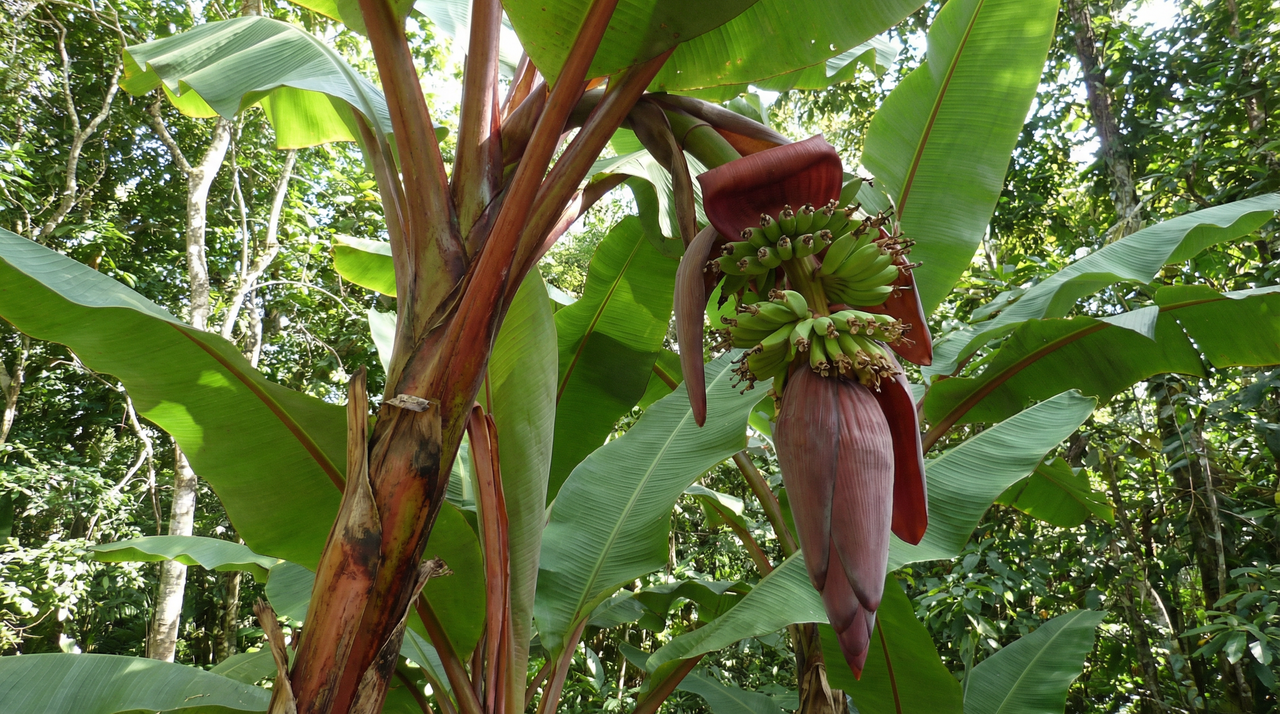
Visually, the plant is a showstopper. It reaches 4.5 to 9 meters tall with a spread up to 4.5 meters, built around a massive pseudostem that can be 30 to 90 centimeters in diameter.[5][6] That pseudostem isn't woody. It's built entirely from tightly packed leaf sheaths, and I've noticed with banana relatives generally that this structure shifts as the plant ages, moving from something smooth and almost succulent-feeling to fibrous and bark-like. The leaves themselves are enormous: 3 to 5 meters long and up to a meter wide, spirally arranged, with stout channeled petioles often flushed reddish-purple at the base.[7][6] That reddish coloring is exactly what makes certain cultivars so striking as ornamentals, which we'll get to shortly.
Enset is monocarpic, meaning each plant flowers once and then dies, after 5 to 10 years in the wild and typically 6 to 8 years in cultivation.[2] When it does flower, it sends up a pendulous inflorescence 2 to 5 meters long with reddish-purple bracts and inedible, seedy berries.[7][8] But in traditional Ethiopian cultivation, farmers almost never let it reach that point. The plant is harvested before flowering, which is when the starch content in the corm and pseudostem peaks. The species thrives in humid highland microclimates on fertile volcanic soils with reliable moisture, relying on its corm and pseudostem for water storage through drier spells.[9][2]
Traditional and Cultural Uses in Ethiopia
Archaeological phytolith evidence places enset in cultivation around 5,000 years ago, roughly 3000 BCE, making it one of Africa's most ancient domesticated crops.[10] Today it sustains an estimated 20 million people across Ethiopia's southern highlands, a region sometimes called the "enset belt," where it serves as the cornerstone staple for the Gurage, Sidama, Kaffa, Gedeo, and other peoples.[11][12] In some communities, fermented enset products provide up to 80% of caloric intake.[13] That statistic is genuinely staggering.
The plant's roles extend well beyond the kitchen. Leaf fibers are woven into ropes and used for thatching; decoctions from various plant parts treat diarrhea, wounds, and malaria in traditional medicine; and enset carries profound cultural weight as a symbol of wealth and social status, appearing at weddings, funerals, and childbirth ceremonies, and even structuring land-tenure arrangements.[14][15] What strikes me as a regenerative designer is how completely this plant is woven into the fabric of life for these communities, not just as nutrition but as material culture, spiritual practice, and social infrastructure.
Its drought resistance made enset critical during the devastating 1980s Ethiopian famine, and it continues to buffer communities against climate variability today.[16] Generations of farmer-selectors have developed hundreds of distinct cultivars, each adapted to specific microclimates, soil types, or processing qualities, representing a depth of agrobiodiversity that took millennia to assemble.[17] The sophistication of that selection process puts most modern breeding programs to shame. Which is exactly why the growing concern around biopiracy matters: this knowledge belongs to Ethiopian farming communities, and frameworks like the Nagoya Protocol exist specifically to ensure that any commercial interest in enset's genetics or compounds flows back to the people who cultivated and conserved it.[18] That's not a peripheral ethics question. For anyone sourcing or researching this plant, it's central.
Fun Facts About the Ethiopian Banana
What makes enset ecologically brilliant is the same set of traits that made it culturally indispensable. Its fibrous roots reach 1 to 2 meters deep, its corm and pseudostem store water through osmotic adjustment and antioxidant defenses, and its waxy leaf cuticles reduce transpiration under stress.[19] The first time I encountered a plant with a water-storing stem like this, it reminded me of how succulents bank moisture against dry seasons, except here the mechanism is scaled up to something the size of a small tree. In landscapes where cereal crops fail, enset stands.
Wild plants can live 15 to 25 years, while cultivated plants are typically harvested at 4 to 10 years before they flower; propagation from vegetative suckers cuts years off that timeline compared to growing from seed.[20] Outside Ethiopia, Ensete ventricosum arrived in Europe around 1775 and has since spread to botanical gardens, specialty nurseries, and subtropical landscapes worldwide, grown almost exclusively as an ornamental.[6][21] The cultivar 'Maurelii,' with its deep burgundy-red pseudostem and richly colored leaves, holds the RHS Award of Garden Merit and is the form most likely to turn up in a nursery outside Africa.[22] I've seen it anchoring subtropical garden beds as a dramatic focal point, drawing attention the way few plants can. The contrast between that ornamental role and its life-or-death importance in Ethiopia is something I find genuinely humbling every time I think about it.
Enset Varieties and Where to Buy Them
Ethiopian Landraces vs. Ornamental Cultivars
Enset lives two very different lives depending on where you're standing. In Ethiopia, it exists as an extraordinary mosaic of over 200 distinct landraces, developed by farmers over centuries and sorted into broad functional categories: 'kore' types selected for fiber, and 'weine' types valued for food production, fermentation quality, and drought resistance.[23] Named landraces like 'Goma', 'Ayiba', 'Bulla', 'Gena', and 'Diramo' each carry generations of selection pressure behind them, fine-tuned to specific soil conditions, altitudes, and community needs.[23] I've never grown these food types myself, but studying FAO materials and talking with ethnobotanists has genuinely deepened my respect for what Ethiopian farmers have accomplished here. This isn't casual selection; it's sophisticated agronomy without a laboratory.
For ornamental growers outside Africa, the list of available cultivars is remarkably short.[24] 'Maurelli' is by far the most widely available, with deep burgundy-red pseudostems and leaves flushed red-purple, particularly vivid in full sun and high humidity. I've grown it for several seasons and the color contrast against dark mulch is genuinely dramatic. It originated from selections made in Italy before finding its way into Western horticulture.[25] 'Red Zebra' offers a different effect, with vivid red striping on the petioles that reminds me of the way bold cannas or certain Alocasia show off their patterning. Var. glaucum takes the opposite direction visually, with waxy, glaucous blue-gray foliage that photographs beautifully. 'Montgomery' rounds out the ornamental options, though it's less common in the trade.[26][27] The gap between these four garden cultivars and 200+ Ethiopian landraces tells you everything about how differently one species can be understood by different cultures.
Sourcing Enset in the United States
In the US, enset is classified and sold purely as an ornamental landscape plant, full stop.[28] Seed packets typically run $5 to $15 for 10 to 20 seeds, young plants fall in the $20 to $60 range, and mature specimens can reach $80 to $200 or more depending on size and supplier.[29][26] I'll add from personal catalog-shopping experience: shipping costs on large specimens can nearly double the base price, so factor that in before you get excited about a good sticker price. For reliable domestic sources, I'd start with Plant Delights Nursery, Logee's Plants for Home and Garden, and Rare Exotic Seeds, then look at broader online marketplaces if needed.[30]
I've always opted for domestically propagated plants over imports, and not just for convenience. Bringing plants, bulbs, or seeds from foreign sources into the US requires USDA APHIS permits, phytosanitary certificates, and inspections. The risk of inadvertently introducing pathogens like Xanthomonas simply isn't worth it when healthy, tissue-cultured domestic stock is readily available.[31] Once you have a plant, keep in mind that enset is hardy outdoors in USDA zones 8 through 11; in cooler zones it works well as a container specimen you can bring inside before temperatures drop below 50°F.[32] Those containers fill up fast, by the way. Give it a season and you'll understand why. Right out of the nursery, prioritize consistent moisture without waterlogging and keep an eye out for early signs of bacterial wilt or fungal rot; sanitation and drainage matter far more than most people expect from something this dramatic.[32]
Enset Propagation and Planting (Ensete ventricosum)
If you take one thing from this section, let it be this: enset is propagated vegetatively, almost without exception. Whether you're looking at traditional Ethiopian highland farming or a permaculture food forest in zone 9, sucker division from the corm is the method that works. Everything else is either laboratory science or an experiment with a modest success rate at best.
Propagation Methods: Suckers vs. Seeds
Separating offsets from the mother corm is the nearly universal approach, and for good reason. It's reliable, it produces genetically identical plants, and in my experience you can expect roughly 80-90% success when timing and technique are right.[33][34][35] Ethiopian farmers have relied on this method for centuries precisely because each sucker carries the full genetic profile of the parent plant, which matters enormously when you're selecting for yield, fiber quality, or fermentation characteristics in a specific landrace. For ornamental growers working with 'Maurelii', it's equally important: you want those burgundy pseudostems, and seeds won't give them to you reliably.
Seed propagation is biologically possible but uncommon in both commercial and traditional production because of low viability, highly variable offspring, and slow, erratic germination.[36][37] Tissue culture achieves success rates above 90% and is used in research and conservation to produce disease-free plants at scale, but it requires specialized lab facilities with MS medium supplemented with cytokinins and auxins, so it's simply not an option for home growers.[38] Stem cuttings and grafting have been tried experimentally with success rates below 50% and aren't worth attempting outside a research context.[39]
Seed Characteristics, Storage, and Germination
Enset seeds are large, roughly 1.2 cm long, hard-coated, angular or ellipsoid, and jet black with a distinctive white fleshy aril wrapping around a small embryo nested in starchy endosperm.[40][37] They're recalcitrant, meaning they don't tolerate drying or cold storage the way tomato or bean seeds do. I think of them the way I think of avocado pits: you sow them fresh or you largely lose them. Under moist conditions at 15-25°C, viability typically lasts only 3-12 months.[41]
Even with fresh seed, germination is slow and uneven. Without scarification or a gibberellic acid soak, germination rates often fall in the 10-50% range; under optimal warm, humid conditions (25-30°C) with proper pretreatment, rates can reach 70-90%, but you're still waiting 1-3 months or longer for germination to complete.[42][43] The seedlings you get will be genetically diverse and will take 7-10 years to reach harvestable maturity, compared to 4-8 years from a sucker. Unless you're doing breeding work or conservation, the math simply doesn't favor starting from seed.
Soil, Site Selection, and Light Requirements
Enset evolved in the deep, fertile volcanic soils of the Ethiopian highlands, and it shows. It wants a well-drained loamy or clay-loam soil rich in organic matter (ideally 3-5% or higher), with a pH between 5.5 and 7.0, optimally 6.0-7.0.[44][45] Alkaline conditions above pH 7.5 stress the plant and lock up iron and other micronutrients, while compaction and waterlogging are genuinely dangerous. I've lost enset to Phytophthora root rot in spots I didn't drain properly, and it happens faster than you'd expect.[46] Now I always use raised beds in heavier soils and add significant perlite to any container mix alongside loam and compost, keeping pH between 6.0 and 7.0.[47]
For light, full sun to partial shade works, with a minimum of 4-6 hours of direct sun daily.[36] In hotter climates, afternoon shade or 30-50% shade cloth prevents leaf scorch; in cooler climates, give it all the sun you can. I treat enset similarly to how I treat bananas in my designs, but I watch drainage more closely because of its highland origins. These plants don't come from lowland tropical swamps; they come from well-drained volcanic slopes with good rainfall and cool nights.
Spacing, Planting Technique, and Establishment Timeline
Enset can reach 10-15 feet tall with a canopy spread of 8-12 feet, and it can hit 3-5 meters of pseudostem height in just 12-24 months once established.[48][49] Traditional Ethiopian farmers plant at 1.5-3 meters between plants; in my landscape designs I give enset at least 8-10 feet of breathing room so its enormous leaves don't crowd companions or block light to understory layers I'm trying to establish beneath it.
When separating suckers, I wait until the offset has 3-4 leaves and its own visible roots before cutting it away from the mother corm. A clean, careful separation matters here; you don't want to damage the corm of the parent plant or mangle the sucker's root base. Plant during the warm wet season to give it the best possible start.[43][50] Young plants in exposed spots benefit from staking, and I always mulch heavily around the base to retain moisture and regulate soil temperature. One practical note: label your suckers, because in the first season young enset plants look remarkably similar to other Musaceae, and it's easy to lose track of which offset came from which parent in a mixed planting.
From sucker to first harvest typically takes 5-7 years, sometimes stretching to 8. In my zone 9B garden I never leave young plants unprotected once temperatures drop toward 10°C; I cover them with frost blankets or move containers indoors rather than gamble on a mild night turning sharp. The first year is the most vulnerable window, and losing a two-year-old plant to a cold snap you could have prevented is a frustrating setback in a crop with this kind of timeline.
Enset Care Guide: Growing and Maintaining Ensete ventricosum
Caring for enset well means thinking about where it came from: cool, misty Ethiopian highlands between 1,500 and 3,000 meters, with rich volcanic soils, high humidity, and temperatures that rarely bake or freeze. Replicate that general logic in your garden and the plant rewards you with astonishing growth. Ignore it and you'll spend the season diagnosing problems that were entirely preventable.
Watering Needs and Soil Moisture Management
The goal is consistent moisture without sogginess, which sounds obvious until you're dealing with a plant this large in a pot or a heavy clay border. I water mature plants when the top inch or two of soil feels dry, which usually works out to every seven to ten days during the growing season and every couple of weeks once temperatures drop.[36][50] Young seedlings need more attention, often daily or every other day, until that large starchy corm develops enough to buffer stress. Once it does, established plants can tolerate four to eight weeks of drought without collapsing, which is genuinely impressive for a plant with leaves this size.[36][51]
Overwatering is the more common mistake with container specimens. Tip-and-margin yellowing, soft stems, and a sour smell from the root zone all point to waterlogging; persistent wilting despite wet soil is the clearest red flag.[52][53] Underwatering shows differently: leaf edges scorch, lower leaves yellow, and growth just stops. One thing I'd pass on from my own pots is to let municipal tap water sit out overnight before using it, or collect rainwater if you can. Enset has low salinity tolerance and is sensitive to chlorine, and I've seen tip burn on young leaves in containers watered straight from the hose.[54][55] A thick layer of organic mulch around the base helps retain moisture, moderate soil temperature, and keep that 5.5 to 7.0 pH sweet spot stable over time.
Sunlight Requirements and Light Management
Enset wants at least four to six hours of direct sun daily, and insufficient light shows quickly: leaves become smaller, petioles stretch and lean, and that rich foliage color fades noticeably.[56] The flip side is that full afternoon sun in hot, dry conditions scorches the enormous leaf blades fast. I lost a beautiful young 'Maurelii' to bleaching in its first summer before I understood that dappled highland light is really what this plant evolved for. Now I run 30 to 50 percent shade cloth over young plants from July through August, and the difference in summer leaf quality is stark.[36][52] In zone 9 and south, the east-facing side of a building or beneath light canopy from taller trees often gives exactly the bright, indirect morning light that produces the best growth without the scorch risk.
Feeding and Nutrient Management
Enset is a genuinely heavy feeder. In intensive Ethiopian systems it absorbs 150 to 200 kg of nitrogen per hectare annually, and balanced NPK fertilization has been shown to increase yields 20 to 50 percent over unfed plants.[57][58] For container plants, a balanced 10-10-10 water-soluble fertilizer every four to six weeks through the growing season keeps growth moving; in-ground plants benefit more from heavy compost incorporation at planting and top-dressing through the season. I soil-test every spring before applying anything because the difference between a responsive and non-responsive application often comes down to what's already in the ground.[57][36]
Reading the leaves is the most practical diagnostic skill you can develop. Nitrogen deficiency yellows the older leaves from tips and margins inward; phosphorus deficiency turns leaves dark green to purplish with poor root development; potassium deficiency shows up as orange-yellow spots and marginal necrosis on older foliage with increased disease susceptibility.[59][60] I find the symptoms very similar to what I see in bananas and cannas, which makes them easier to catch early. Interveinal chlorosis on older leaves points to magnesium; on young leaves it suggests iron or zinc deficiency, often tied to pH creeping too high.[59][61] If you've been generous with fertilizer and see leaf-tip burn, flush the soil thoroughly; salt accumulation is the usual culprit. Healthy nutrition also reduces susceptibility to the pests and diseases covered in their own section.
Frost Tolerance and Cold Protection
Enset grows perennially in USDA zones 9 through 11, with sustained growth requiring temperatures above 10°C (50°F). It tolerates brief dips to around 5°C and can survive light frost down to about -6°C without dying outright, though the foliage will blacken and the pseudostem may split.[62][63] The corm is more cold-hardy than the above-ground structure, and I've watched a specimen I thought was finished come back from the base after a surprise January freeze here in central Florida. But repeated exposure usually wins, so don't test it more than once.[64][63]
For overwintering ensete maurelii and other ornamental forms in the UK or zone 8 and cooler, the practical options are container growing so you can move plants indoors, 12 to 18 inches of heavy mulch over the crown for in-ground plants, plus burlap or frost blanket wrapping during hard freezes.[65][63] Overwintering ensete maurelii indoors at 10 to 15°C after cutting back the foliage is reliable and prevents the plant from exhausting itself trying to maintain large leaves in low light. Even a frost-free garage works if it stays above freezing.
Heat Tolerance and Temperature Management
Because enset is native to cool highlands with ideal temperatures between 15 and 25°C, it handles heat less gracefully than most tropical-looking plants.[57] Above 30 to 35°C, especially in combination with low humidity or dry soil, you'll see leaf scorch, midday wilting that only partially reverses overnight, chlorosis, and stunted growth.[66] Seedlings and flowering-age plants are most vulnerable. My first summer growing these without shade cloth was a useful, if frustrating, lesson: the leaf edges were brown and crispy by mid-July. Now I use 40 percent shade cloth over young plants from late June through August, pair it with a 5 to 10 cm mulch layer, and deep-water every seven to ten days during dry spells rather than light daily watering.[67] A windbreak on the southwest side reduces desiccation significantly in exposed sites.
Pruning, Maintenance, and Seasonal Care
The seasonal rhythm is straightforward: consistent moisture and feeding every two to three weeks through spring and summer, then a gradual pullback on both water and fertilizer as temperatures drop in autumn.[68][69] During the growing season, remove any suckers you don't want to keep, leaving one to two strong ones if you're propagating vegetatively, and use a sterilized knife every time to avoid introducing pathogens. Enset can reach 10 to 15 feet in a good season, so staking and wind protection matter more than most people expect.[70]
The overwintering decision is the one that separates growers who keep their specimens long-term from those who start over every spring. I've moved large plants in and out of my greenhouse for years, and the container strategy genuinely simplifies everything: cut the leaves back to reduce transpiration, let the soil dry slightly, and bring them in before the first frost. In-ground plants in zone 9 can usually stay put with heavy mulching, but I keep burlap and frost cloth within reach whenever a cold front is forecast. Stay alert to the bacterial wilts, Fusarium, and banana weevil activity covered in the pests and diseases section; cultural hygiene, sterilized tools, and healthy soil are your first line of defense.[71][72] Get the fundamentals right and enset maurelii's growth rate will surprise you, sometimes dramatically so in a warm, humid summer.
Enset Harvesting: Timing, Technique, Yield, and Flavor
Patience is the defining skill of every enset grower. You're committing years, not months, to a plant before you see a single harvest, and that's a trade-off worth understanding before the first sucker goes in the ground.
When to Harvest Enset – Maturity Cues and Seasonal Timing
Planted from suckers, enset reaches harvest readiness after 4–7 years, with corm starch peaking at 20–30% dry weight roughly 6–12 months after pseudostem removal.[73][74] What you're watching for is a cluster of cues rather than any single signal: a pseudostem standing 4–6 meters tall with a girth of 30–50 cm, lower leaves yellowing or browning while the upper crown stays green and vigorous, and the emergence of the inflorescence.[73][75] Think of it the way you'd read a banana plant: a big, heavy pseudostem with lower-leaf senescence tells you the plant has done its work and is starting to shift energy. Flowering, which begins after 3–5 years of vegetative growth, is the strongest single indicator that starch is at its maximum.[76] For a home grower, these visual cues are far more practical than any lab test.
Traditional Ethiopian practice times harvest to the dry season, roughly October through March, when lower humidity reduces rot risk during the labor-intensive processing that follows.[77][78] Staggered planting is standard in household systems for exactly this reason: with plants at different stages, there's always one approaching harvest without everything maturing at once.
Traditional Enset Harvesting Technique
The harvest itself happens in two stages, and that sequence matters. The pseudostem is cut and processed first; the corm stays in the ground for another 6–12 months after that removal, allowing starch to continue accumulating before excavation.[73][79] This is one of the smartest permaculture strategies I've come across in any starchy crop system: the act of harvest itself becomes a curing step, and the grower extracts maximum yield from a single long-term investment. Don't excavate the corm the same day you cut the pseudostem. Let it finish its job.
Yield Expectations and Kocho Flavor Profile
The corm and pseudostem are the targets, and neither is edible raw. Tough texture, high starch, and bitter compounds including oxalates and tannins make raw enset unpalatable and potentially harmful.[6][79] Proper fermentation is non-negotiable. It breaks down the bitter and potentially toxic compounds, including cyanogenic glycosides, and transforms the raw material into kocho, a lactic-fermented staple that is genuinely delicious when made correctly.[80][81] In my reading of the Ethiopian fermentation research and small-scale trials with similar starchy crops, skipping or rushing this step is the most common beginner mistake.
The flavor that emerges is earthy and starchy with mild acidity, subtle sweetness from natural sugars, and occasional hints of acetic acid that give it depth.[82][83] I'd describe it as closer to a mild sourdough flatbread than anything aggressively sour. Cultivar choice, fermentation duration, and the microbial communities present all shape the final taste; longer fermentation intensifies sourness, and there's real regional variation in how Ethiopian communities manage those variables.[81][84] The final product runs 70–80% carbohydrate with moderate protein, and a single mature plant can sustain a household through a dry season when annual crops fail entirely.[84][85] That's the whole point of waiting seven years. No annual crop I've worked with comes close to that kind of resilience per plant.
Enset Preparation and Uses
Culinary Uses and Traditional Processing of Enset
In the Ethiopian highlands, enset isn't a side crop or a curiosity. For millions of people across the Gurage, Sidama, and Gedeo regions, it supplies up to 50% of daily calories and functions as a living food reserve that outlasts drought and famine.[86][3] What's remarkable is that none of this nutrition comes from fruit. Despite looking uncannily like a banana tree, the fruits are seedy, bitter, and high in tannins; they're left entirely alone.[87][88] I grow Musa relatives in my zone 9B designs, and the visual resemblance genuinely fools people into expecting edible fruit. With enset, the entire food story lives underground and in the pseudostem.
The edible parts are the corm and the pseudostem, which together can yield 40-50 kg of food per plant after processing.[89] Processing is not optional, and I want to be clear about that. Raw enset contains cyanogenic glycosides capable of releasing hydrogen cyanide, as well as oxalates, tannins, and phytates that make the raw plant genuinely toxic.[90][91] This is similar to working with cassava or unprocessed taro, where the traditional preparation isn't a cultural preference but a safety requirement. The enset fermentation, lasting one to three months, reduces oxalate levels by up to 70% and drives down the other anti-nutritional compounds through sustained microbial activity.[92][93] The sophistication of that method, developed across centuries without a laboratory in sight, deserves real respect.
Traditional processing involves scraping and pulverizing the pseudostem and corm, then fermenting the mass for weeks until lactic acid bacteria bring the pH down to around 4-5.[94][95] The primary product is kocho, a fermented bread-like staple with a mildly sour, earthy flavor profile that reminds me of a dense sourdough flatbread. The secondary product, bulla, is a dried starch used in soups and porridges.[92] Kocho runs 60-70% carbohydrate, including a meaningful 20-30% dietary fiber and plenty of resistant starch, with modest protein and a mineral profile worth noting: potassium up to 500 mg per 100g, calcium, magnesium, and iron.[96][97] As a horticulturist, that potassium density makes complete sense to me; enset grows in nutrient-rich volcanic highland soils and clearly concentrates minerals the way other starchy crops do in similarly rich ground. Kocho is typically eaten alongside meat stews like doro wot or key wot, acting as the starchy base that absorbs sauce, much as injera does.[98]
Medicinal Preparations from Enset
Beyond the kitchen, enset has a long ethnobotanical record across Ethiopian highland communities. Leaf decoctions prepared by boiling fresh leaves treat diarrhea and respiratory complaints; leaf ash is applied to wounds for healing; root decoctions serve as anthelmintics; and crushed fresh leaf poultices address skin and wound conditions.[99][100] Dosages vary by region and rest entirely on empirical knowledge passed down through communities like the Gedeo and Sidama rather than standardized formulations.[101] I approach this as an ethnobotanical overview, not clinical advice; the pharmacological evidence behind these uses is covered separately in the health benefits section of this profile.
Non-Food Applications and Cultural Significance
The usefulness of enset extends well past the fermentation pit. Fibers stripped and retted from the leaf sheaths and pseudostem become ropes, mats, sacks, textiles, and thatching material; leaves serve as packaging and roof cover; and the plant even provides a bittering agent used in traditional Ethiopian beer.[102][13] The fiber strength reminds me of other banana-family plants I've worked with, though the sheer scale of enset's pseudostem means there's considerably more of it to work with. Spent plant material feeds livestock and supports erosion control on steep highland slopes.[103] Outside Ethiopia, the conversation shifts entirely to ornamental value: the massive paddle-shaped leaves and striking red-backed foliage make it a dramatic specimen in tropical and subtropical gardens.[50]
Culturally, enset carries weight that no amount of botanical description quite captures. It symbolizes household wealth and social standing, appears in marriage rituals and ceremonies, and is read as a direct measure of a family's prosperity.[99][104] When you understand that a single plant feeds a family through famine and provides fiber, medicine, fodder, and ceremonial meaning all at once, the Ethiopian name "tree against hunger" stops sounding like hyperbole.
Enset Health Benefits and Medicinal Uses
The laboratory story of Ensete ventricosum begins where the plant itself thrives: in the volcanic highlands of Ethiopia. What researchers have found inside its tissues is a genuinely impressive phytochemical arsenal, and understanding that chemistry explains a lot about why this plant has been medicine as well as food for thousands of years.
Phytochemical Profile of Ensete ventricosum
Enset's leaves and pseudostem contain phenolic compounds, flavonoids, tannins, saponins, alkaloids, coumarins, and glycosides, with leaves showing the highest concentrations of tannins and phenolic acids.[105][106] The specific compounds are worth naming: gallic acid, ferulic acid, chlorogenic acid, dopamine, catechol, quercetin, and kaempferol.[105][107] That's not a generic polyphenol profile; those are specific, well-studied molecules with measurable biological actions. I've grown Musa relatives for years, and when I crush a fresh enset leaf, the astringency hits you immediately in a way banana leaves simply don't. That's tannin load you can feel on your tongue, and it's a direct sensory signal of the chemistry at work.
Here's a detail I find genuinely fascinating: plants grown above 2,000 meters in acidic volcanic soils accumulate higher levels of phenolics and flavonoids, while dry-season stress elevates cyanogenic glycosides.[108][109] Ethiopian highland cultivation, in other words, produces plants with enhanced medicinal compound concentrations. The environmental stress that makes farming harder is simultaneously making the medicine stronger. Traditional fermentation reduces those beneficial-but-also-irritating tannins in the edible portions, which is a neat bit of processing wisdom we'll get to shortly.
Traditional Medicinal Uses in Ethiopia
Among the Gedeo, Hadiya, and Sidama peoples, enset has long served a dual role as food and pharmacy. Decoctions of cooked corm address gastrointestinal complaints including diarrhea, dysentery, and stomachaches; fresh leaves applied as poultices treat wounds, skin conditions, and inflammation; and roots are occasionally prepared for fever and respiratory infections.[110][100][101] What strikes me about this is that every application maps cleanly onto the plant's known chemistry: the tannin-rich leaves as a wound astringent, the antioxidant-loaded corm as a digestive aid. Generations of observation landed on exactly what the pharmacology would later confirm.
Pharmacological Research on Enset
The strongest preclinical evidence is in the anti-inflammatory and antioxidant departments. Leaf and pseudostem extracts inhibit TNF-α and IL-6, modulate NF-κB pathways, and downregulate COX-2, reducing paw edema by up to 60% in rat models, results comparable to indomethacin.[111][112] Antioxidant assays show IC50 values under 100 μg/mL with upregulation of the Nrf2 pathway and enhanced SOD and CAT enzyme activity, driven by phenolic content ranging 20-50 mg GAE/g in leaves.[113][114] That the preclinical anti-inflammatory results align so tightly with what traditional users have observed for generations is, to me, one of the more compelling examples of ethnobotany and laboratory science telling the same story from opposite ends.
Beyond inflammation, extracts show antimicrobial activity against both E. coli and S. aureus (MIC 0.5-2 mg/mL, inhibition zones of 10-20 mm) with preliminary antiviral potential against HSV, attributed to the tannins, saponins, alkaloids, and flavonoids introduced earlier.[115][116] The antidiabetic data is worth noting: α-amylase and α-glucosidase inhibition at IC50 15-30 μg/mL, with 30-50% blood glucose reductions in diabetic rat models, plus hepatoprotective and analgesic effects.[117][118] Preliminary cytotoxic effects against HeLa and MCF-7 cell lines (IC50 20-50 μg/mL) round out the picture.[119] I want to be direct here, though: this is rich in-vitro and rodent data, not human clinical trials. The research is genuinely promising, but we don't yet have the large-scale evidence that would let anyone make strong therapeutic claims for people.
Nutritional Value of Processed Enset
Fermented kocho and bulla deliver 200-300 kcal per 100g, mostly from a 60-80% starch base that includes meaningful resistant starch for gut health.[120][121] The mineral profile is what really catches my attention as someone who thinks comparatively across staple crops: potassium at 900-1,200 mg per 100g dry weight puts it well above both rice and white potato, with calcium at 150-250 mg and useful amounts of magnesium and iron.[122] For reference, a baked potato delivers around 900 mg potassium per serving; enset is in the same league from a fraction of the agricultural footprint. Fermentation does more than detoxify: it improves protein digestibility above 85% and enhances the bioavailability of those polyphenols we talked about earlier, while also making this a naturally gluten-free staple suitable for vegan diets.[120][121]
Safety Considerations and Proper Preparation
Raw Ensete ventricosum is not food. I want to say that plainly: I would never recommend consuming any part of this plant raw, and I emphasize this to every grower who asks. The cyanogenic glycosides linamarin and lotaustralin can release hydrogen cyanide, and the tannins, saponins, and phytates in raw tissue cause gastrointestinal irritation.[123][124] Concentrations shift with altitude, soil pH, and season, with higher cyanogen loads during dry periods and in acidic soils.[109]
Traditional processing, the scraping and 1-4 week lactic fermentation that Ethiopian farmers have practiced for millennia, reduces cyanogenic glycosides by 50-90% and inactivates the anti-nutritional factors, rendering the food safe.[125][126] Animal toxicity studies put the LD50 above 2,000 mg/kg, and millions of Ethiopians consume properly prepared enset daily without incident. This is, to my mind, exactly the kind of traditional knowledge system that deserves respect rather than skepticism: the fermentation step isn't a suggestion, it's the technology that makes a potentially dangerous plant into a safe, nourishing staple. Properly processed enset has low allergenic potential, though people with latex-fruit syndrome may want to be cautious given possible cross-reactivity.[127][128] Pregnancy data is insufficient to make a firm call either way, and the flavonoid load suggests theoretical interactions with antihypertensives or anticoagulants worth discussing with a healthcare provider.[127] The detailed fermentation and preparation steps are covered in the preparation section, but the core principle is simple: ferment first, always.
Enset Pests and Diseases
The Royal Horticultural Society notes that Ensete ventricosum is "seldom troubled by the pests and diseases that so often affect cultivated bananas,"[129][130] and in my experience that holds true outside Ethiopia. In a garden setting, enset tends to get on with life while neighboring Musa species are fighting off one thing or another. But "seldom troubled" isn't the same as "untouchable," and there are real threats worth knowing before you plant one.
Major Diseases of Enset
Fusarium wilt caused by Fusarium oxysporum f. sp. ensete is the one that commands real respect. In susceptible stands it can cause 70-100% plant mortality, with annual losses in Ethiopia exceeding $3 million USD.[131][132] Enset does show higher resistance to this pathogen than commercial bananas face against Panama disease,[133] but wilt pressure spikes in warm soils (25-30°C) with pH below 6.0.[134] I always test soil before planting any large rhizomatous species, and raising beds or improving drainage where the soil sits wet has been one of the single most effective things I've done to reduce wilt pressure in my zone 9B garden.
Bacterial wilt from Ralstonia solanacearum causes 30-50% yield losses on susceptible clones,[135] though losses in vulnerable landraces can reach 80%.[136] It thrives above 25°C with high humidity, so good airflow and spacing matter.[134] Cultivars 'Arasa', 'Bingela', and 'Dorose' show meaningful resistance and are worth seeking out if you're in a bacterial wilt zone.[137] Phytoplasma bunching disease is reported to cause 50-90% yield reductions through stunting and sucker proliferation, vectored by leafhoppers and worst at higher altitudes.[138] Fungal leaf blights from Cercospora enseti and Septoria enseti can shave 20-40% off pseudostem yield in humid, low-lying sites,[139] and crown rot from Phytophthora or Rhizoctonia moves in quickly when soils stay waterlogged.[135] Enset shows natural tolerance to banana bunchy top virus, with minimal symptoms in Ethiopian highland conditions, though susceptibility increases somewhat at moderate altitudes.[140]
Common Insect Pests
The pest roster includes banana weevil (Cosmopolites sordidus), root mealybugs, aphids, leafhoppers, thrips, caterpillars, and stem borers.[141][142] Banana weevil is the one that keeps growers up at night. Its larvae bore into the corm and pseudostem, causing tunneling, rot, and sometimes sudden structural collapse.[141][143] I've seen similar damage in large cannas, where the first sign is a plant that looked fine one week and is flopped over the next. Early trapping and sanitation are worth establishing before you ever see symptoms. Root mealybugs are subtler but weaken plants by impairing nutrient and water uptake, particularly in weedy conditions, and open the door to secondary infections.[141] Aphids and leafhoppers do direct feeding damage, but their bigger impact is as vectors of viral and phytoplasma diseases.[141] Stem borers round out the threat list by creating galleries that structurally weaken the pseudostem over time.[144]
Natural Defenses and Resistance
Enset isn't defenseless. It produces phenolics, tannins, flavonoids, alkaloids, and terpenoids that function as antimicrobial and antifeedant compounds, backed up physically by thick leaf cuticles and a robust pseudostem.[145] Those defenses are real, but they're not uniform across all landraces. 'Arkya' and 'Bullo' carry moderate Fusarium tolerance; 'Wollayta' and 'Gurage' show moderate banana weevil resistance; highland types from Sidama and Hadiya generally perform better across most threats.[137][146] Selecting the right material from the start is more effective than anything you can spray on later. I monitor new plantings closely for the first two seasons and pay attention to which individuals shrug off pressure that bothers their neighbors.
Integrated Management Strategies
Cultural controls come first: clean planting material, sanitation, removal of infected pseudostem stubs, proper spacing for airflow, crop rotation, and intercropping with deterrents like legumes or pepper.[147][64][148] Biological options include parasitic wasps, entomopathogenic nematodes, and Beauveria bassiana; targeted, low-impact inputs like neem oil are reserved for genuine outbreaks.[148] I don't reach for broad-spectrum sprays in my food forest because they knock back the beneficial insects I depend on for everything else. Ethiopian breeding programs are developing multi-resistant hybrids using traditional selection and molecular markers, drawing on the extraordinary genetic diversity locked up in local landraces.[149] Start with resistant, certified-clean material, keep the garden floor tidy, and enset will generally reward you by being one of the least demanding large perennials in a subtropical food forest.
Enset in Permaculture Design
There's a particular kind of plant that permaculture designers dream about: one that does many things at once, anchors an entire system, and earns its space on every level from the soil up to the canopy. Enset is that plant for the Ethiopian highlands. Understanding how it functions ecologically is what separates using it as a dramatic specimen from actually integrating it into a living, productive system.
Climate and Hardiness Zones for Growing Enset
In its native range, enset grows at elevations of 1,500 to 3,000 meters across the Ethiopian highlands, with most cultivation clustered between 1,800 and 2,800 meters where the climate is cool, humid, and seasonal.[2][150] These are Köppen Cwb conditions: mild annual temperatures hovering between 15 and 25°C, humidity consistently above 60%, and rainfall in the 900 to 2,000 mm range concentrated in a wet season.[151] That's a specific climate signature, and translating it to a USDA zone map puts enset squarely in zones 9 through 11, with some success in sheltered zone 8 microclimates.[50][52]
I've watched large-leafed tropicals get caught by surprise cold snaps in zone 9B, and enset responds the way you'd expect from a highland plant: it sulks badly when temperatures drop below 10°C for any length of time, showing yellowing and browning leaf margins, and a hard freeze below -2°C causes the kind of blackening that means you're reaching for the pruning saw.[27][50] In marginal climates, the standard tropical toolkit applies: a thick 30-centimeter mulch layer over the root zone, pseudostem wrapping with frost cloth, or overwintering containerized plants at 45 to 55°F indoors.[27][52] Southern Florida, southern Texas, and humid coastal California are the obvious sweet spots. If you're gardening near the coast, salt spray tolerance data for enset is limited and its native range is entirely inland highland, so treat coastal siting cautiously.[152]
Ecosystem Functions and Services of Enset
What earns enset its keystone status in Ethiopian highland agroecosystems is the sheer range of ecosystem services it delivers simultaneously.[153][154] The FAO recognizes it as a climate-resilient crop central to food security and famine prevention, and communities in the Ethiopian highlands have relied on it for over 6,000 years.[155][156] That longevity in cultivation is itself evidence of how well it integrates into productive landscapes.
Below the soil surface, enset's fibrous root system is doing serious work: improving structure, increasing water retention, and actively reducing erosion on sloped terrain.[157][158] In sloped permaculture designs I've planned, I think of this function similarly to vetiver grass: dense, fibrous, and tenacious enough to hold a hillside in place while the rest of the system establishes. Dense planting and the continuous fall of nutrient-rich leaf litter further load the soil with organic matter and feed microbial communities over time.[157] It's more accurately valued for that biomass and erosion function than as a classic dynamic accumulator, since the evidence for deep mineral accumulation is limited.
Above ground, the canopy tells an equally productive story. At 5 to 10 meters tall, enset casts dense shade that suppresses weeds, reduces surface moisture loss, moderates the temperature underneath, and provides genuine wind protection.[159][160] I've noticed the same effect under large Heliconia and mature bananas in humid subtropical gardens: the air literally feels cooler and more humid a meter beneath the leaf canopy, and the soil stays moist noticeably longer. Enset produces 15 to 30 tons of biomass per hectare annually from leaves and pseudostem, most of which can feed back into the system as mulch, compost, or fodder for livestock.[161]
The pollination picture is worth a quick aside because it explains something practical. In native habitats, sunbirds are the primary pollinators, drawn to nectar-rich flowers with colorful bracts; insects, bats, wind, and limited selfing fill supporting roles.[162][163] Flowering happens after 3 to 5 years under good conditions, but outside its native range, pollinator availability drops sharply and seed production becomes unreliable.[2] That's exactly why vegetative propagation via suckers dominates in cultivation everywhere. If you do get a flowering specimen in a conservatory or botanical garden setting, local nectar feeders will often investigate those bracts with genuine enthusiasm.
Forest Layer, Guilds, and Companion Planting with Enset
In Afromontane forests and traditional agroforestry systems, enset occupies the understory to mid-canopy layer, behaving like a tree while remaining entirely herbaceous.[164][165] Think of it the way you'd position a mature banana cluster in a food forest, except enset grows taller and doesn't produce edible fruit, which shifts its role entirely toward structural and soil services rather than fruiting outputs.
Guild placement follows naturally from that structure. Nitrogen-fixing legumes planted at the perimeter offset its heavy feeding; coffee and cardamom thrive in the dappled shade it creates; maize, taro, ginger, and turmeric can be intercropped at various distances depending on how much light filters through.[159][154] The understory logic here is similar to siting taro under a mature banana: you want plants that welcome filtered light and appreciate the moisture retention that comes with canopy cover, not crops that need six-plus hours of direct sun. Leaf litter cycling from the large leaves continuously adds nitrogen, phosphorus, and potassium back into the soil, which is especially useful in nutrient-poor volcanic or highland soils.[166][158]
The one non-negotiable in design planning is space. A mature enset at 5 to 10 meters commands serious real estate, and its root competition radius is proportional.[164] Anyone who has planted large tropicals too close together and watched the whole guild collapse into a light-starved tangle knows this lesson the hard way. Site it as you would any mid-canopy anchor: generously, with intention, and with its neighbors' light and root needs mapped out before you plant. Given its frost sensitivity and substantial water needs, it's most at home where subtropical humidity is reliable rather than marginal, but where those conditions exist, enset pulls serious weight in a layered food system design.
The Plant That Made Me Rethink What "Useful" Means
I grow enset in Central Florida mostly for its drama, and I'll admit that used to feel a little embarrassing. Here's a plant that kept entire populations alive through famine, a crop so trusted it's called the tree against hunger, and I'm using it as a focal point near my pond. But the longer I work with it, the more I think growing it anywhere, for any reason, keeps the conversation about it alive. That feels like enough.
Sources 166
- Ensete ventricosum (Welw.) Cheesman: Review on its value chain and uses in Ethiopia ↩
- Ensete ventricosum (Enset) - Distribution and Ecology ↩
- Enset: An underutilized crop of the Ethiopian highlands ↩
- Ensete ventricosum on Plants of the World Online ↩
- Ensete ventricosum - Missouri Botanical Garden ↩
- Ensete ventricosum ↩
- Ensete ventricosum (Ethiopian Banana) ↩
- Ensete ventricosum - Royal Horticultural Society ↩
- Agroecology of Enset (Ensete ventricosum) in Ethiopia ↩
- Ensete ventricosum: Archaeological and Ethnobotanical Evidence ↩
- Enset in Ethiopia: The Sociocultural and Nutritional Base of Households ↩
- Enset in Ethiopia: The Tree Against Hunger ↩
- Ethnobotany of Ensete ventricosum in Southern Ethiopia ↩
- Traditional Uses of Ensete ventricosum: Food, Medicine, and Culture ↩
- FAO - Enset in Ethiopia: Culture, Production and Potential ↩
- Ensete ventricosum and Climate Change Adaptation in Ethiopia ↩
- The enset food system: Diversity, ecology and management in Ethiopia ↩
- Biopiracy and Traditional Knowledge: The Case of Enset in Ethiopia ↩
- Drought Tolerance Mechanisms in Ensete ventricosum ↩
- Enset: The Ethiopian Banana - Cultivation and Use ↩
- Ensete ventricosum: A Multipurpose Crop against Hunger in Ethiopia — PMC ↩
- Ensete ventricosum Maurelii — RHS Plant Database ↩
- Ethiopian Enset Landraces - FAO Report ↩
- Ensete ventricosum ↩
- Royal Horticultural Society - Ensete ventricosum 'Maurelii' ↩
- Ensete ventricosum Cultivars - Plant Delights Nursery ↩
- Horticultural Varieties of Ensete - RHS ↩
- Ensete ventricosum ↩
- Ensete Ventricosum Seeds ↩
- Ensete ventricosum - Abyssinian Banana ↩
- Importation of Plants and Plant Products ↩
- Ensete ventricosum ↩
- Enset: A Versatile Ethiopian Crop ↩
- Ensete ventricosum ↩
- Propagation of Ensete ventricosum ↩
- Ensete ventricosum Propagation Guide ↩
- Reproductive Biology and Genetic Diversity in Ensete ventricosum ↩
- Tissue Culture of Ensete ventricosum ↩
- Vegetative Propagation Techniques for Banana-like Plants ↩
- Seed Morphology and Anatomy of Ensete ventricosum ↩
- Seed Storage Behaviour of Ensete ventricosum ↩
- Seed Propagation and Germination of Ensete ventricosum (Welw.) Cheesman ↩
- Enset Cultivation in Ethiopia ↩
- Enset (Ensete ventricosum) in Ethiopia: A Review ↩
- Soil Fertility Management for Enset Production ↩
- ncbi.nlm.nih.gov ↩
- Nutrient Deficiencies in Ensete ventricosum ↩
- Enset Cultivation Guidelines - FAO ↩
- Ensete ventricosum - Royal Horticultural Society ↩
- Ensete ventricosum ↩
- Drought Tolerance in Ensete ventricosum ↩
- Watering Problems in Tropical Plants ↩
- Ensete ventricosum ↩
- Enset Cultivation in Ethiopia ↩
- Ensete ventricosum ↩
- Ensete ventricosum ↩
- Enset (Ensete ventricosum) - Cultivation and Utilization ↩
- Soil Fertility and Enset Yield in Southern Ethiopia ↩
- Diagnosis of Nutrient Deficiencies in Banana and Enset Crops ↩
- Nutrient Management for Enset (Ensete ventricosum) Production in Ethiopia ↩
- Ensete ventricosum Care and Cultivation ↩
- Ensete ventricosum - Ethiopian Banana ↩
- Cold Hardiness of Tropical Plants: Ensete ventricosum ↩
- Frost Damage on Tropical Plants: Bananas and Ensete ↩
- Ensete ventricosum - Missouri Botanical Garden ↩
- Heat Stress Effects on Ensete ventricosum in Ethiopian Agroecosystems ↩
- Mulching and Irrigation Effects on Enset Growth Under Drought and Heat ↩
- Ensete ventricosum Care Instructions ↩
- Ensete ventricosum - Missouri Botanical Garden ↩
- Ensete ventricosum - Missouri Botanical Garden Plant Finder ↩
- Enset Pests and Diseases Management ↩
- Cultivation of Enset in Ethiopia ↩
- Maturity Indices and Harvesting Techniques for Enset (Ensete ventricosum) ↩
- Enset Cultivation Practices in Ethiopian Highlands ↩
- Enset: A Versatile Crop for Food Security in Ethiopia ↩
- Enset: A Unique Food Plant in Ethiopia ↩
- Enset in Ethiopia: The Case for Production and Improvement ↩
- Agroecology and Harvesting Practices of Ensete ventricosum ↩
- Enset: The Ethiopian 'False Banana' - A Review of Its Biology, Cultivation, and Utilization ↩
- FAO (2018) Enset (Ensete ventricosum) ↩
- Fermentation of Enset (Ensete ventricosum) in Ethiopia ↩
- Nutritional and Sensory Characteristics of Kocho, a Fermented Product from Enset ↩
- Fermentation and Sensory Characteristics of Kocho from Ensete ventricosum ↩
- Chemical Composition and Sensory Properties of Enset Foods ↩
- Enset: A Versatile Crop for Food Security in Ethiopia ↩
- Enset: A Domesticated Giant Banana ↩
- Enset: A Poor Man's Banana or a Staple Crop? ↩
- Ensete ventricosum - Useful Tropical Plants ↩
- Enset in Ethiopia: The Ethiopian Banana ↩
- Cyanogenic Glycosides in Ensete ventricosum ↩
- Toxicity and Anti-Nutritional Factors in Enset ↩
- Anti-nutritional Factors in Enset and Their Reduction During Processing ↩
- Traditional Processing of Enset (Ensete ventricosum) in Ethiopia ↩
- Traditional Fermentation of Kocho from Ensete ventricosum ↩
- Processing and Nutritional Composition of Enset (Ensete ventricosum) ↩
- Nutritional Composition of Ensete ventricosum ↩
- FAO Ensete ventricosum: The Ethiopian Food Security Crop ↩
- Enset: A Versatile Crop for Food Security in Ethiopia ↩
- Traditional uses of Ensete ventricosum in Ethiopia ↩
- Traditional medicinal uses of enset in Ethiopia ↩
- Ensete ventricosum (Welw.) Cheesman: a multipurpose crop for the Ethiopian highlands ↩
- The multi-purpose enset plant in Ethiopia: an ethnobotanical review ↩
- Fiber Production from Enset Plant ↩
- Cultural and Economic Importance of Enset in Ethiopia ↩
- Phytochemical Screening and Antioxidant Activity of Ensete ventricosum ↩
- Phytochemical profile and antioxidant activity of Ensete ventricosum domesticated Ethiopian banana ↩
- Phytochemical Analysis of Musaceae Species ↩
- Phytochemical Variation in Ensete ventricosum across Ethiopian Altitudes ↩
- Seasonal Dynamics of Cyanogenic Glycosides in Enset Leaves ↩
- Ethnobotanical Study of Gedeo Cultural Landscape, Ethiopia ↩
- Anti-inflammatory and Antioxidant Activities of Ensete ventricosum Leaf Extract ↩
- Anti-inflammatory Activity of Leaf Extracts from Ensete ventricosum ↩
- Phytochemical Analysis and Antioxidant, Anti-inflammatory, and α-Amylase Inhibitory Activities of Ensete ventricosum Extracts ↩
- Antioxidant and Nrf2-Mediated Cytoprotective Effects of Ensete ventricosum Phenolics ↩
- Phytochemical Screening and Antimicrobial Activity of Ensete ventricosum (Welw.) Cheeseman ↩
- Phytochemical Analysis and Antimicrobial Properties of Ensete ventricosum Pseudostem ↩
- Bioactive Compounds from Ensete ventricosum: Potential for Anti-Diabetic and Anti-Cancer Applications ↩
- Antidiabetic and hepatoprotective effects of Ensete ventricosum in animal models ↩
- Analgesic and Antidiabetic Effects of Ensete ventricosum in Animal Models ↩
- Nutritional Composition of Enset (Ensete ventricosum) Food Products ↩
- Nutritional composition and safety of enset ↩
- The nutritional quality of traditional enset (Ensete ventricosum) foods prepared in southwest Ethiopia ↩
- Toxicity of Ensete ventricosum: Cyanogenic glycosides in Ethiopian false banana ↩
- Cyanogenic glycosides in Ensete ventricosum ↩
- Traditional Processing of Enset for Food Safety in Ethiopia ↩
- Enset Processing and Reduction of Cyanogenic Compounds: A Review ↩
- Traditional uses and toxicity of enset in Ethiopian folk medicine ↩
- Banana allergy and latex fruit syndrome ↩
- Bananatree.com - Royal Horticultural Society (RHS) Plant Pages ↩
- Plants Profile - Missouri Botanical Garden ↩
- Fusarium Wilt of Ensete ventricosum ↩
- Enset: A Staple Food Crops of Ethiopia ↩
- The Genomics of Resistance in Ensete ventricosum to the Fusarium Wilt Race TCV ↩
- Impact of Altitude and Climate on Enset Diseases ↩
- Disease Data: Ensete ventricosum ↩
- Screening Enset Clones for Resistance to Bacterial Wilt ↩
- Screening of Enset Landraces for Resistance to Bacterial Wilt in Ethiopia ↩
- Phytoplasma Diseases in Enset ↩
- Fungal Diseases of Enset and Resistance Breeding Strategies ↩
- Ensete ventricosum: A Potential Host for Banana Bunchy Top Virus? ↩
- Pests and Diseases of Enset in Ethiopia ↩
- Integrated Pest Management for Banana and Enset ↩
- Management of Banana Weevil in Enset ↩
- Enset Pests and Diseases ↩
- Secondary Metabolites in Ensete ventricosum: Implications for Pest Resistance ↩
- Evaluation of Ensete ventricosum Genotypes for Fusarium Wilt Tolerance ↩
- Disease Management in Banana and Enset ↩
- Integrated Pest Management Options for Major Pests of Enset (Ensete ventricosum) in Ethiopia ↩
- Enset in Ethiopia: A Potential Food Security Crop ↩
- Ensete ventricosum ↩
- Ensete ventricosum ↩
- Kew Science - Ensete ventricosum ↩
- The ecological role of enset in Ethiopian highlands ↩
- Ecosystem Services Provided by Enset-Based Homegardens in Ethiopia ↩
- Enset in Ethiopian Agriculture: FAO Perspective ↩
- Food and Agriculture Organization of the United Nations (FAO) - Enset ↩
- Soil conservation effects of enset landraces in Ethiopia ↩
- Enset in Ethiopian Agroforestry: Roles in Soil Conservation and Biodiversity ↩
- Agroforestry Systems Involving Ensete ventricosum in Ethiopia ↩
- Enset: A Multi-Purpose Crop for Ethiopian Highlands ↩
- Enset as Fodder and Its Integration in Livestock Systems of Ethiopia ↩
- Pollination Ecology of Ensete ventricosum ↩
- Avian Pollinators in Ethiopian Flora ↩
- The Ecology of Enset in Ethiopia ↩
- Ensete ventricosum ↩
- Nutrient Cycling in Enset-Based Home Gardens ↩