Most people who grow black pepper, long pepper, or Sichuan pepper have never heard of Ethiopian pepper, and that oversight is genuinely strange to me, because Xylopia aethiopica was spicing West African soups and treating fevers centuries before most of those better-known species had any foothold outside their native ranges. But here's the thing that keeps nagging at me: despite a documented history stretching back at least six centuries, despite being a staple in Yoruba, Igbo, and Akan kitchens, and despite preclinical research validating antimicrobial and anti-inflammatory activity that traditional healers figured out long ago, this tree remains almost invisible in Western permaculture design. You can spend an hour on any major seed retailer and find nothing. Ask at a specialty nursery and you'll likely get a blank stare.
What's stranger still is that the same pungent, resinous chemistry that makes the seeds so medicinally potent is exactly what gives them that layered, almost impossible-to-describe flavor: peppery heat, yes, but threaded with citrus, pine, and something faintly nutmeg-like underneath. I first encountered it ground into a Nigerian pepper soup, and my immediate reaction was to wonder why I'd spent years designing food forests around plants with a fraction of this kind of cultural depth and ecological function. If you've been looking for a long-lived canopy tree that earns its space on multiple levels, this one deserves a much closer look.
Ethiopian Pepper Origin, History, and Traditional Uses
Botanical Background and Native Range
Ethiopian pepper (Xylopia aethiopica) is a tropical evergreen in the Annonaceae family, native to West and Central Africa, with a range that stretches from Senegal in the west across to Sudan, then south through Angola and Tanzania.[1][2] That's an enormous footprint for a species most Western cooks have never heard of. It occupies a striking variety of habitats, from lowland rainforest and riverine gallery forest to savanna margins and dry secondary woodland, typically between sea level and about 1,500 m elevation.[3][4] As a permaculture designer, I find that habitat plasticity genuinely useful intelligence; a tree comfortable on a riverbank and a savanna edge is one that can adapt to a range of designed systems, provided the climate is warm enough.
It's a polycarpic long-lived perennial, meaning it flowers and fruits repeatedly across a lifespan that can reach 30 to 100 years in the wild, with cultivated trees tending toward the shorter end of that window.[5] Reproductive maturity arrives somewhere between 3 and 6 years under good conditions, a timeline worth keeping in mind if you're planning around it.[5] Currently listed as Least Concern by the IUCN, the species faces a quieter threat that the global status obscures: local populations can decline by up to 30% where fruits and bark are overharvested alongside ongoing habitat fragmentation.[6][7] That's a distinction worth sitting with.
Physical Characteristics
In the forest, this is a straight, purposeful tree. It reaches 10 to 20 m under typical conditions, occasionally pushing toward 30 m in optimal coastal rainforest settings, with a bole 15 to 50 cm in diameter, rough dark-gray to brown fissured bark, and a dense pyramidal-to-rounded crown.[5][8] Trees in wetter, coastal areas tend to be larger and more robust, with bigger fruits and leaves, while drier inland sites produce more compact, almost shrub-like forms.[9] If the cultivated specimen in your garden looks nothing like the towering forest giant in an online photo, that's why.
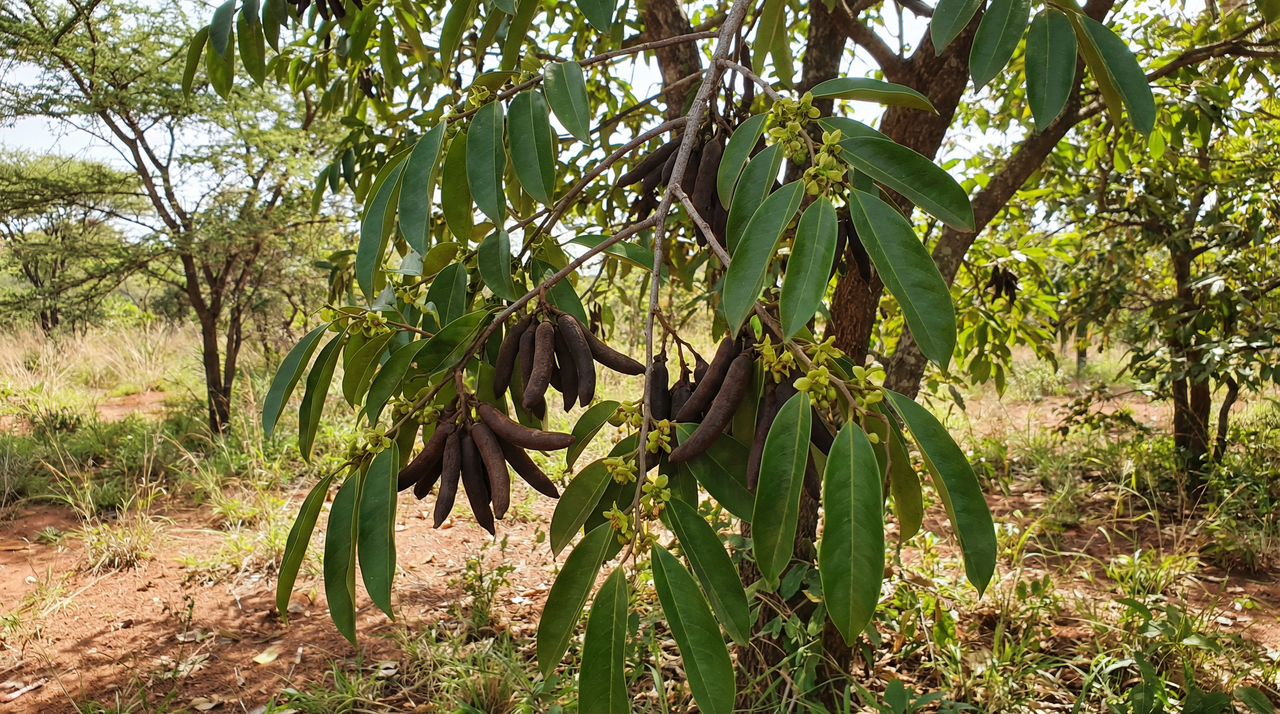
The leaves are alternate, elliptic to oblong-lanceolate, 5 to 15 cm long, dark green above and paler beneath, and they carry a strong peppery aroma when crushed.[1][10] I use that scent as a teaching cue when introducing this tree in food-forest designs; once a client has brushed a leaf and caught that resinous, peppery hit, they never need a label again. The flowers are small, cream to yellowish, about 8 to 12 mm, clustered in the leaf axils. Fruits are the showpiece: pendulous aggregates of 6 to 12 woody, reddish-brown follicles, each holding several small dark seeds that are the actual spice.[1][10] The related Xylopia lepidota is similar in use but often taller, with a distinctive scaly indumentum on the leaf underside that makes identification straightforward once you know what to look for.[11]
Traditional and Cultural Significance
The clearest historical records tie Ethiopian pepper to 15th-century West African trade routes, though the depth of its cultural embeddedness in Yoruba, Igbo, Edo, Ashanti, Bamileke, and Oromo communities suggests a far older relationship.[12][13] In Yoruba it's known as eeru alamo; in Twi it goes by hwentia; in Nigeria's Igbo tradition it's called uda. These aren't incidental names, they're embedded in recipe traditions, postpartum care protocols, and ritual vocabularies that oral communities have maintained across generations without a single published paper to back them up.
The seeds function as a pungent substitute for black pepper across West African soups and stews, and the whole fruit acts as a preservative. Every usable part of the tree, fruits, seeds, bark, and leaves, enters traditional medicine for respiratory infections, digestive complaints, rheumatism, fever, wound care, and postpartum recovery, and the plant has a well-documented role as a galactagogue.[14][15] The aromatic fruits and bark also appear in spiritual protection rites, fertility ceremonies, purification rituals, and as incense or amulets, a dimension of use shared by the closely related Xylopia lepidota and suggesting genus-wide cultural importance rather than a single community's preference.[16][17] Through the transatlantic slave trade and spice commerce, the tree reached Jamaica and Cuba, where it has naturalized, carrying those cultural meanings with it across the ocean.[14]
When I select trees for long-term polycultures, I now prioritize species that have both a deep cultural history and viable cultivation pathways, precisely because wild stocks of trees like Xylopia aethiopica are under growing pressure. The IUCN's 1998 Least Concern assessment predates current harvesting intensity, and researchers are already raising calls for updated evaluations and equitable benefit-sharing under the Nagoya Protocol with the communities that have stewarded this plant for centuries.[18][19] Enjoying this spice today and supporting its future aren't opposing impulses, but the latter takes intention.
Fun Facts and Ecological Role
Taxonomically, Xylopia aethiopica has gone by several names over the centuries, including Xylopia aromatica, Xylopicra aromatica, and Unona aethiopica, yet its identity as the primary Guinea pepper or Ethiopian pepper has stayed remarkably stable in both trade and botanical literature.[20] The genus name Xylopia derives from the Greek for "bitter wood," which gives you a reasonable preview of what the seeds taste like before you've ever tried one.
In the forest, the tree earns its keep ecologically through its relationship with seed dispersers. Hornbills, turacos, monkeys, and rodents eat the fleshy fruit pulp and carry the seeds away, making Xylopia aethiopica a genuine agent of forest regeneration rather than a passive inhabitant.[21][22] That zoochorous dispersal strategy is part of what makes this family so interesting; if you've grown cherimoya or soursop, you've seen a similar fruiting logic at work in the Annonaceae. Trees from wetter coastal populations tend to produce noticeably larger, more pungent seeds, a concrete example of how environment shapes secondary metabolite concentration, which any cook who has sourced Ethiopian pepper from different suppliers has probably experienced without realizing the ecology behind it.
Ethiopian Pepper Varieties and Sourcing
Notable Varieties and Landraces of Ethiopian Pepper
If you're coming to this section hoping for a tidy list of named cultivars, I'll save you some scrolling: there aren't any. Xylopia aethiopica has no formally recognized cultivars or standardized horticultural varieties; it remains almost entirely wild-harvested or grown from regional seed stock with no commercial breeding program behind it.[23][24][25] What does exist are regional ecotypes shaped by local conditions across West and Central Africa, with observable variation in fruit size, aroma intensity, and yield that growers and traders have long recognized, even if no one has given them formal names. I've corresponded with smallholder growers in Ghana and Nigeria who describe seed from forest-edge trees as notably more fragrant than seed from trees in disturbed secondary growth, the kind of nuance you only get from people who've been handling this spice for generations.
A closely related species worth knowing is Xylopia lepidota, which gets confused with Ethiopian pepper often enough that the two share common names in some markets.[26][11] Its culinary uses are similar, and it begins fruiting around 3 to 5 years after planting, with recommended plantation spacing of 4 to 6 meters to accommodate its mature size.[27] For a permaculture designer, having a second species in the same functional guild isn't a bad thing; it builds resilience and gives you a direct comparison for aroma and productivity in your specific microclimate.
How to Source Ethiopian Pepper Seeds and Plants
Seeds are your most realistic entry point in the US. Live plants and seedlings show up occasionally, but the supply is thin and unpredictable; seeds from specialty ethnobotanical retailers, African spice importers, and platforms like Etsy are where most growers actually start. Sheffield's Seed Company, World Seed Supply, and MySpicer.com are worth checking, though I'd treat any supplier list as a starting point rather than a guarantee since availability shifts. Seed packets typically run $5 to $30 for 5 to 20 seeds, with seedlings priced anywhere from $20 to $100 and mature plants potentially $200 or more, reflecting just how uncommon this tree is outside its native range. When I sourced Xylopia seeds through an ethnobotanical supplier a few years back, I paid a premium and still had to be patient through several restocking cycles. It's similar to tracking down Grains of Paradise (Aframomum melegueta): the West African aromatics category is genuinely thin on the commercial side, but persistent searching pays off.
On the regulatory side, importing seeds or plant material requires compliance with USDA APHIS phytosanitary regulations, which generally means a phytosanitary certificate from the exporting country.[28][29] The good news: Xylopia aethiopica is not listed under CITES[30] and doesn't appear on the federal noxious weeds list,[31] so there are no species-level import bans to navigate. I've worked through APHIS paperwork for other imported tropicals and the process is manageable; budget extra time and possibly a small fee for documentation when ordering internationally. Buying from a US-based specialty supplier sidesteps that entirely, which is one reason those domestic options are worth pursuing first even when the selection is limited.
How to Propagate and Plant Ethiopian Pepper
Growing a Xylopia aethiopica plant from scratch is genuinely rewarding, but it requires you to work with the tree's biology rather than against it. This is not a plant you can treat like a tomato or even most other tropical spices. The seeds are peculiar, the seedlings are slow, and the tree itself will eventually top out between 15 and 25 meters. If you go in with realistic expectations, you'll be fine. If you treat it casually, you'll lose your seed batch inside a week.
Seed Characteristics and Why They Matter
When I cracked open my first ripe ethiopian pepper pod, the thing that stopped me was the contrast: small dark seeds, almost black, each cradled in a glossy white fleshy aril that looks almost too clean to be real. Each follicle holds anywhere from 10 to 20 of these seeds, packed into a pulpy matrix, and the seeds themselves are tiny (roughly 3 to 8 mm long) with an irregular, pyramidal or heart-shaped form and a hard, thin testa.[32][33] That hard coat is the first problem you'll face. New growers often assume the seeds are dead because nothing happens for weeks; usually, the coat is just impermeable and needs help.
The species is also an outcrosser, with protogynous flowers pollinated primarily by nitidulid beetles.[34] That beetle-driven cross-pollination produces significant genetic variability in seedlings, so don't expect a uniform batch. If you need predictable fruit size or aroma, vegetative propagation is the more reliable path.
Recalcitrant Seed Handling and Storage
Here's the lesson I learned the hard way: I once set a handful of fresh seeds aside on a paper towel to dry "just for a day" while I prepped my flats. Germination was nearly zero. Ethiopian pepper seeds are recalcitrant, meaning they carry 40 to 60 percent moisture at maturity and lose viability rapidly the moment they dip below 30 to 40 percent moisture content.[35][36] They cannot go into a conventional seed bank. Period.
If you can't sow immediately, pack seeds in moist sand and store them at 10 to 15°C with around 90 percent relative humidity. Under those conditions they'll hold viability for three to six months, sometimes up to a year.[35][36] Longer than that requires cryopreservation or in vitro methods, which are outside the reach of most home growers. The practical takeaway: source fresh seed, sow fast.
Before sowing, scarify the hard testa lightly with sandpaper or soak seeds in warm water for 24 to 48 hours to break physical dormancy.[37][10] I prefer warm soaking because it's gentler and easy to control. Use it in combination with a well-drained sandy loam nursery mix and keep humidity high throughout.
Germination and Nursery Care
Under ideal conditions, 25 to 30°C with consistent moisture and high humidity, the first radicle typically appears somewhere around day 14 to 28. In my experience with heat-mat flats kept at around 78°F with daily misting, I usually see the first signs closer to day 18. Fresh seeds handled properly can hit 70 to 90 percent germination under nursery conditions; real-world rates are more realistically 60 to 80 percent once you account for provenance variation and handling.[38][10] Drop below 20°C and germination stalls almost entirely, which is one of the sharper contrasts I've noticed compared to soursop or cherimoya, other Annonaceae relatives that tolerate slightly cooler nursery conditions.
Seedlings want shade for the first three to six months, mimicking the filtered light of the forest understory. They look deceptively fragile early on, but given well-drained media and consistent warmth, they'll reach 30 to 50 cm within six to twelve months and be ready for transplanting.[5][39]
Vegetative Propagation Options
If genetic uniformity or faster fruiting matters to you, cuttings and grafting are worth exploring. Semi-hardwood cuttings of 10 to 15 cm, treated with IBA at 1,000 to 3,000 ppm and stuck in a perlite-sand mix under high humidity, root in four to eight weeks.[40][41] Grafting onto compatible Annonaceae rootstocks, using whip-and-tongue or cleft techniques, can push first fruiting to two to five years rather than the three to eight years typical from seed.[42][43] In my nursery trials using compatible Annona rootstocks, grafted trees have consistently shown better uniformity and earlier cropping, which makes a meaningful difference when you're looking at a multi-year establishment timeline.
Tissue culture using nodal segments on MS medium with BAP and NAA is an emerging option for clonal conservation, and air layering is feasible, but neither is common practice yet for most growers.[44][45] Cuttings and grafting remain the practical vegetative backups for most small-scale growers outside West Africa.
Soil, Site, and Planting Technique
In its native habitat, this tree occupies lowland rainforest understory from sea level to about 1,300 meters, where soils are well-drained loamy or sandy loam with 1,000 to 2,500 mm of annual rainfall and consistent warmth.[10][46] Your job is to approximate that. Aim for pH 5.5 to 7.5, with 6.0 to 6.5 as the sweet spot, and 2 to 4 percent organic matter with good aeration throughout.[10] I never skip a soil test before planting because even a half-point pH swing outside that optimum range has caused visible interveinal chlorosis in my young trees within a single growing season.[47]
Waterlogging is the single fastest way to kill this plant. Heavy clay, compacted subsoil, or any site that holds water after rain will cause root rot before you know it.[10] The deep taproot, which can eventually reach two to three meters, requires at least 60 to 90 cm of workable soil for establishment and 150 cm or more for mature trees.[48][49] On marginal sites, raised beds with compost amendments are a practical workaround and worth the extra effort at planting time.
Young xylopia aethiopica plants prefer partial shade while they establish, mimicking the forest understory they naturally recruit in. Once established, they tolerate full sun to partial shade, maintaining 50 to 70 percent field-capacity soil moisture without ever sitting in saturation.[5][50] Outside USDA zones 10 to 12, container culture or greenhouse protection is the only realistic option; temperatures below 15°C reliably slow the tree, and any frost is fatal.[25][51]
Spacing and Long-Term Establishment
This is a big tree. Mature specimens reach 15 to 25 meters tall with a canopy spread of 3 to 6 meters, occasionally wider.[52] In a food forest or agroforestry planting, standard spacing is 4 to 6 meters between trees and rows, which works out to roughly 200 to 800 trees per hectare depending on management intensity.[53][54] That spacing isn't generosity for the tree's sake alone; it keeps air moving through the canopy, reduces disease pressure, and preserves enough light penetration for the shrub and herb layers below in a multi-strata design.
Transplant seedlings when they've reached 30 to 50 cm and harden them off gradually before moving from nursery shade to the field.[5] Dig generous planting holes and work in compost before backfilling. Denser plantings are possible under intensive management, but the tradeoff in disease risk and canopy competition usually isn't worth it. Patience and good spacing now set the tree up for a productive, decades-long life; the care and pruning practices that follow will build on that foundation.
Ethiopian Pepper Care Guide
Everything about caring for Ethiopian pepper comes back to one mental image: the humid, well-drained forest floor of West and Central Africa. That's the environment this tree evolved in, and the further your garden strays from those conditions, the harder you'll work to keep it happy. USDA zones 10–12 are the true home here, with minimum temperatures staying reliably above 10–15 °C.[5] I'll be honest about the gaps in formal cultivation data too: because most Xylopia aethiopica is still wild-harvested rather than orchard-grown, much of the guidance below is adapted from related Annonaceae and field observations rather than long-running agronomic trials.
Water Requirements and Drought Tolerance
The single biggest mistake I see beginners make with tropical trees like this one is treating "moist soil" as permission to overwater. Young Ethiopian pepper plants need regular moisture, but the roots must never sit in standing water.[55][56] In practice, I check the top inch or two of soil; if it's dry, I water. During the growing season that works out to roughly every five to seven days, tapering off in cooler months.[57] Once the deep taproot establishes, the tree tolerates seven to ten day intervals without complaint.[58] Yellow leaves, wilting despite moist soil, and white fungal growth on the surface are all signs the roots are drowning, so act fast if you spot them.[59] Annual rainfall equivalent of 1,000–2,500 mm and humidity at or above 70% will keep it thriving; prolonged dry spells beyond three months suppress both growth and yield noticeably.[60]
Sunlight and Light Exposure Needs
Mature trees fruit best in full sun, but seedlings are a different story. Young plants benefit from 30–50% shade to prevent heat stress; push them into full midday sun too early and you'll see the leaf margins turn brown within days.[61][5] I always label my young Annonaceae seedlings carefully because they can look deceptively similar at the cotyledon stage; a misidentified plant under the wrong light regime sets you back months. Once established, aim for at least six hours of direct sun daily, with morning sun and afternoon shade in the hottest climates.[5] Insufficient light pushes the tree toward leggy, chlorotic growth, while excessive exposure causes the photoinhibition and marginal scorch you'd rather avoid.[62]
Fertilizing and Nutrient Management
Ethiopian pepper is a moderate feeder. For young trees, 50–100 g of balanced NPK (10-10-10 or 15-15-15) every three to six months during the rainy season, supplemented with compost or aged manure, covers the bases well.[63] Mature trees take 200–500 g on the same schedule.[64] I always soil-test before the rainy season; the research on salt buildup is clear, and I've watched over-fertilized trees push excessive leafy growth at the direct expense of the aromatic seeds that make this plant worth growing.[65] Watch the leaves for deficiency cues: nitrogen shortage shows as yellowing on older leaves first, phosphorus deficiency turns foliage purplish with poor root development, and potassium deficiency appears as marginal yellowing with weak stems.[66] Early in my first season growing this tree from seed, I caught nitrogen chlorosis on the older leaves and corrected it with a compost side-dressing; the color returned within a few weeks. Soil testing every one to two years keeps you ahead of those problems rather than chasing them.[63]
Heat Tolerance and High-Temperature Management
Peak growth happens between 25–32 °C; above 35 °C, especially with low humidity or drought stress, the tree starts showing its displeasure through leaf scorch, wilting, and blossom drop.[67][68] Seedlings and young plants are far more vulnerable than mature specimens, so the mitigation toolkit matters most early on: 30–50% shade cloth, 5–10 cm of organic mulch to buffer soil temperature and hold moisture, and deep watering every seven to ten days rather than frequent shallow passes.[69] Ethiopian pepper reacts to prolonged heat and drought much like a young avocado: leaf margins crisp before the plant drops foliage, something I've seen in both species during especially hot, dry Florida summers. Skip fertilizing during peak heat stress; pushing nutrient uptake when roots are already struggling only compounds the problem.[61]
Frost Sensitivity and Cold Protection
There's no softening this one: Ethiopian pepper has essentially zero frost tolerance. Chilling below 12–15 °C inhibits photosynthesis and slows growth; actual frost produces rapid leaf browning, stem dieback, and can kill the plant outright.[5][58][25] USDA zones 10–12 are the non-negotiable outdoor range. From my zone-9b experience with other tender tropicals, there's a meaningful difference between a brief dip to -2 °C that a frost blanket, string lights, and heavy mulch can carry a potted specimen through, and a sustained hard freeze where the plant simply won't make it.[70][71] If you're outside the true tropics, container culture with winter overwintering in a heated greenhouse or bright indoor space is the realistic path forward.
Pruning, Maintenance, and Seasonal Care
Light pruning after harvest, during the dry season, is the reliable maintenance rhythm for this tree. Remove dead, diseased, or crossing branches to improve airflow and set the plant up for the next fruiting cycle; formative pruning in the first two to three years to establish a single leader can improve eventual yield by 20–30%.[55][72] Avoid pruning during active growth or the rainy season; open wounds in humid conditions invite the fungal pathogens worth keeping out. A 5–10 cm mulch layer around the base handles moisture retention, weed suppression, and soil temperature regulation in one step.[55] Space trees 4–6 m apart to allow adequate airflow and give the canopy room to develop; at that spacing the tree also pulls useful duty as a windbreak in a food forest guild.[73] The tree is evergreen through most of the year, though it may shed leaves during extreme dry periods; flowering peaks in February and March, with the broader dry-season window running January through April.[74] Once you internalize that seasonal rhythm, the whole care calendar clicks into place: prune after harvest, mulch before the dry season, feed at the start of rains, and let the tree do the rest.
Harvesting Ethiopian Pepper
There's no shortcut with this tree. Ethiopian pepper demands years of patience before it gives you a single pod, and then, once it finally does fruit, it asks you to pay close attention at every step from ripeness to storage. That attention is what separates a truly aromatic batch of dried spice from a mediocre one.
When to Harvest Ethiopian Pepper: Timing, Maturity Indicators, and Yield
Expect to wait. Trees grown from seed typically take 4-7 years to fruit at all, with peak production not arriving until 10-15 years of age.[72][75] Flowers emerge April through June, and from there fruit development runs 4-6 months, sometimes longer depending on local rainfall and soil conditions.[76][77] In native West and Central African growing regions, the harvest window runs November through March, with the highest yields concentrated between January and March.[78][79]
After growing several Xylopia species from seed, I've learned to trust two cues above all others: color and aroma. Pods shift from green to reddish-brown or dark brown and begin to split open, while the seeds inside transition from white to dark brown or black.[77][80] At the same time, you'll notice a sudden, sharp increase in pungent aroma around the pods. That's your signal. Harvest too early and you'll get underdeveloped, bitter flavor. Wait too long and splitting pods scatter seed before you can collect it. The window is real and worth respecting.
How to Harvest and Process Ethiopian Pepper Pods
Traditional practice calls for selective hand-picking directly from branches during the dry season, ideally in the early morning or late afternoon when temperatures are lower and aromatic oils are most stable.[81][82] Ground collection is possible but selective branch-picking preserves both tree health and spice quality, so it's worth the extra care.
What happens in the 24-48 hours after picking matters just as much as the harvest itself. Pods need to be dried down to below 12% moisture content, ideally under 10%, as quickly as possible using sun or shade drying.[83][75] In my experience, delaying drying beyond 48 hours in humid conditions quickly leads to mold that ruins the batch. I now prioritize getting pods onto drying racks the same day they're picked. Once dried, the fruits become woody and hard; seeds are then extracted and stored in airtight containers in a cool, dry spot, where they'll hold quality for 1-2 years.[75]
Flavor Profile and Yield of Ethiopian Pepper
The edible part of the Xylopia aethiopica fruit is the reddish-brown to purplish-black aril surrounding the seed, not the seed itself, which is generally considered unpalatable.[84][85] A mature tree yields roughly 5-10 kg of dried fruit per year, with that figure improving steadily after year seven.[73][86] Don't expect the commercial figures of 10-20 kg from a young backyard tree; 5 kg from a mature specimen is a solid, usable home-garden return that keeps getting better after year seven.
The flavor payoff for all that patience is genuinely complex. The dried spice delivers peppery heat layered with nutmeg, juniper, citrus, pine, and floral undertones, with sweet, sour, and umami sensations running underneath.[87][88] Much of that aroma comes from β-pinene, which can reach up to 40% of the essential oil fraction, alongside limonene, sabinene, and p-cymene.[87] The aftertaste is lingering and mildly numbing, milder than Sichuan pepper but more persistent than black pepper, which gives a useful sensory reference point for anyone trying to describe it to a cook who hasn't encountered it before.[89] I've also noticed that drier growing seasons push the peppery heat forward while wetter, more humid ones seem to amplify the citrus character, which aligns with what the research shows about regional variation between Ghanaian and Ethiopian-grown material.[90] Ripe fruits are less bitter and considerably more aromatic than immature ones, and toasting or grinding just before use releases those volatile oils further.[89][91] The quality of everything in that final grind traces directly back to the ripeness call you made on the tree and how fast you got those pods onto the drying rack.
Ethiopian Pepper Preparation, Uses, and Benefits
Culinary Uses and Flavor in West African Cooking
The dried fruits and seeds are the heart of every Xylopia aethiopica use that matters in the kitchen. Across Nigeria, Ghana, and Ethiopia, these small woody pods anchor some of the most complex soups in West African cooking: Nigerian pepper soup, egusi, palm nut soup, grilled meats, rice dishes.[92][93][94] In Ghana it goes by hwentia; in Yoruba kitchens it's often simmered whole before grinding is even considered. The leaves occasionally show up in flavored teas and bark decoctions enter some traditional preparations, but neither comes close to the fruit's culinary dominance.[89]
The flavor is what keeps cooks coming back. Think peppery heat as the base, then layer in citrus brightness, pine resin, and a whisper of nutmeg. It's often compared to black pepper, but that comparison sells it short; the woody, resinous finish is its own thing entirely.[95][96] I've been experimenting with Ethiopian pepper in my Central Florida food forest kitchen for a few years now, and the single best thing I've learned is to toast whole pods in a dry pan for 30 to 45 seconds before grinding. That brief heat hit dramatically brightens the citrus note and mellows any lingering bitterness in a way that's hard to explain until you smell it for yourself. Traditional preparation confirms this instinct: drying, toasting, grinding into powder, or simmering whole pods are all standard approaches, and each suits a different dish.[97][91]
The nutritional profile adds quiet substance to what's primarily a flavoring. Seeds run roughly 10 to 15% protein, 20 to 30% fats, and 40 to 50% carbohydrates, with meaningful fiber and a solid lineup of calcium, magnesium, potassium, iron, zinc, and vitamins C, E, and several B vitamins.[98] Total phenolic content sits around 150 to 200 mg GAE per gram, with strong DPPH free-radical scavenging activity, which partly explains why long-cooked soups that use Ethiopian pepper tend to hold up so well aromatically even after hours on the stove.[98][99]
One sourcing caution: the first time I bought a bag labeled "Guinea pepper" it turned out to be grains of paradise (Aframomum melegueta) rather than Xylopia at all. Now I always check for the characteristic hooked beak on the dried pod. Piper guineense (Ashanti pepper) and Monodora myristica (African nutmeg) are other common mix-ups.[100] Xylopia lepidota is the closest relative you might encounter; its fruits are smaller, slightly fruitier, and a touch less pungent, but it shares the same culinary tradition and functions as a reasonable substitute across much of West Africa.[101][102] Culinary amounts carry no known significant toxicity, though pregnant and lactating women should stay at seasoning levels and avoid medicinal concentrations until stronger safety data exists.[89]
Medicinal Preparations and Traditional Dosages
Across West African communities, Ethiopian pepper addresses a broad range of health concerns: digestive complaints, respiratory congestion, fevers, pain, and infections are the most consistently documented applications.[92][103] Ethnopharmacological reviews document typical traditional dosages as: dried powder at 1 to 3 grams per day, a decoction using 10 to 20 grams of dried fruit in 500 ml of water, or an infusion of 5 to 10 grams per cup.[104][105] I share these figures as cultural reference, not as prescriptions; there are no standardized clinical doses and no completed human trials.
The essential oil sits in a different category entirely. It's not intended for internal use and should be applied topically only at 1 to 2% dilution in a carrier oil.[104] I'm pretty direct about the pregnancy caution in my classes: pharmacological reviews flag potential uterine-stimulating activity at medicinal doses, so I avoid therapeutic-strength preparations during pregnancy and recommend others do the same until clinical data catches up to the traditional knowledge.[89]
Non-Food and Cultural Applications
The tree offers more than a spice. Its wood is durable and termite-resistant, used traditionally for construction, tool handles, and furniture.[103] In my permaculture guild designs I actually factor this in: a mature Xylopia can eventually yield poles and handles with natural pest resistance, which is a nice bonus when you're trying to build trellis infrastructure without treating wood with synthetic preservatives. The attractive foliage, flowers, and fruits also give it genuine ornamental value in tropical landscaping.[106]
Post-harvest handling deserves serious attention because the volatile oils that carry all that citrus-pine complexity are fragile. Fruits harvested in the late dry season should be sun-dried until brittle at temperatures no higher than 40°C; going above 50°C drives off the essential oils you spent years cultivating.[107][108] After drying, a one-to-two-week cure in a sealed container stabilizes the flavor before long-term storage. Keep dried seeds below 25°C with humidity under 65%, in opaque airtight containers away from light, and they'll hold quality for one to two years.[109][107] In my experience with similar aromatic seeds, pantry-shelf conditions in a warm kitchen cut that window roughly in half.
Bark can be sustainably harvested year-round from mature trees for medicinal decoctions, though wild population pressure across parts of West Africa makes cultivation a genuine conservation act alongside a culinary one.[92] Beyond medicine and timber, the tree holds deep cultural weight: it appears in purification ceremonies, protection rites, and ancestral veneration across multiple West African traditions.[76] That ceremonial presence across centuries says something about how thoroughly this tree has woven itself into human life, not just human kitchens.
Ethiopian Pepper Health Benefits and Medicinal Uses
Across West and Central Africa, Xylopia aethiopica has never been just a spice. For centuries, healers and home cooks alike have reached for its aromatic pods to treat coughs, bronchitis, and asthma; to calm stomach cramps, flatulence, and diarrhea; to ease rheumatic pain, headaches, and infected wounds; and even as a diuretic and expectorant.[110][111] That breadth of traditional use, spanning respiratory, digestive, musculoskeletal, and infectious conditions, is exactly what drew modern pharmacologists to it.
Traditional Uses and Pharmacological Research
The alignment between ancestral practice and lab findings is genuinely satisfying. Preclinical studies show Ethiopian pepper inhibits the NF-κB pathway and COX-2 enzyme while suppressing pro-inflammatory cytokines like TNF-α and IL-6, which directly explains its traditional role in managing arthritis and rheumatism.[112][113] Its antioxidant activity operates through Nrf2 pathway activation and significant free-radical scavenging, driven by high phenolic content.[114] The analgesic effects shown in animal models are comparable to aspirin, and extracts demonstrate antispasmodic action on gastrointestinal smooth muscle that backs up generations of use for cramping and loose bowels.[115][116] Broad-spectrum antimicrobial activity against both bacteria (including Staphylococcus aureus and E. coli) and fungi like Candida albicans has also been documented.[117] More recent work has found inhibition of α-amylase and α-glucosidase enzymes pointing to antidiabetic potential, alongside evidence of apoptosis induction and cell-cycle arrest in cancer cell lines.[118][119]
All of that said, every piece of this evidence comes from in-vitro studies and animal models. No human clinical trials have yet validated these effects.[120] While the preclinical data is exciting, I always remind readers and students that we still need well-designed clinical studies before making strong therapeutic claims. The science is promising, not conclusive. One interesting aside: the closely related Xylopia lepidota shows neuroprotective potential through acetylcholinesterase inhibition in animal models, a property not yet documented in X. aethiopica itself.[89]
Key Phytochemical Compounds in Ethiopian Pepper
The chemistry here is unusually rich for a spice tree. The fruits and seeds contain alkaloids (xylopine, anonaine, liriodenine), flavonoids (quercetin, kaempferol, rutin), lignans (sesamin, pinoresinol), tannins, saponins, sterols, phenolic acids, and coumarins.[121][122] The essential oil is dominated by monoterpenes, primarily β-pinene (40-50%) and α-pinene (10-20%), with limonene, sabinene, and sesquiterpenes like β-caryophyllene rounding out the profile.[123][124] The fixed oil brings fatty acids including oleic and linoleic, while diterpenes like kaurenoic acid and xylopic acid show up as prominent bioactives across the genus.[125]
I've noticed that when I toast the seeds, the intensity of that resinous, almost piney aroma is a reliable cue for how volatile-oil-rich a particular batch is. That sensory signal maps directly onto the monoterpene concentration responsible for much of the antimicrobial activity. It also tracks with the research showing that phytochemical profiles shift meaningfully with growing conditions: soil type, climate, and season all influence potency, with monoterpene levels tending to peak in the dry season.[126] Spice sourced from different regions can smell and behave quite differently in a dish or a remedy, which is worth keeping in mind when you're working with it.
Nutritional Profile of Ethiopian Pepper
Ethiopian pepper is used in small quantities, typically 0.5-2 g ground or one to three whole pods per dish, so it's not a nutritional cornerstone in the way leafy vegetables are.[127] Still, its mineral density is notable for a spice. Per 100 g dried seeds: roughly 350-400 kcal, 10-20% protein, significant dietary fiber (10-25%), and standout mineral levels including potassium at 800-1200 mg, iron at 7-20 mg, calcium up to 400 mg, and magnesium up to 250 mg.[128][129] To put that iron figure in perspective, cumin and coriander sit at roughly 66 mg and 17 mg per 100 g respectively, and both are used in similarly small amounts; the per-serving mineral contribution from any of these spices is modest, but they do add up in a diet built around diverse seasonings. Vitamins are present in smaller amounts, and drying and grinding likely reduce vitamin C retention while potentially improving mineral bioavailability.[130] Comprehensive USDA data don't exist for this spice yet, so these figures come from regional studies and should be understood as approximate ranges rather than definitive values.
Safety and Cautions When Using Ethiopian Pepper
The reassuring news first: Ethiopian pepper has a long culinary history across West Africa, and animal studies confirm low acute toxicity with an LD50 above 2000 mg/kg and no significant liver or kidney damage at doses up to 500 mg/kg over 90 days.[131] In culinary amounts, roughly 1-2 g per day, it's generally considered safe for healthy adults with no widespread reports of poisoning.[132]
Higher doses are a different story. Exceeding around 5 g, or using concentrated extracts, can cause nausea, abdominal pain, diarrhea, or skin irritation from the essential oils and alkaloids.[131][133] The fruits and seeds are the safest parts; leaves and bark concentrate bioactive compounds at levels that warrant more caution.
Pregnancy is the clearest contraindication. Medicinal doses carry potential uterotonic and emmenagogue effects that could stimulate uterine contractions or risk miscarriage.[134] Given that, I advise pregnant readers to enjoy it only as a light culinary seasoning and to consult their midwife or doctor before using it in any medicinal capacity. The same caution applies to breastfeeding individuals, young children, and anyone with a liver condition.
For those on medications, the interactions worth knowing about involve anticoagulants, antidiabetic drugs, and sedatives, owing partly to compounds like kaurenoic acid and possible CYP3A4 inhibition at higher doses.[134][135] Subchronic high-dose studies have shown some liver enzyme changes, though paradoxically some data also suggest hepatoprotective effects at lower doses. I also always label sourced Xylopia carefully in my own collection, because other species in the Annonaceae can look similar and misidentification is a real risk when buying from unfamiliar markets.[136] As a spice used the way it has traditionally been used, in small amounts, cooked into food, Ethiopian pepper poses minimal risk to most people.
Pests and Diseases of Ethiopian Pepper
Natural Defenses and Insect Pests
Ethiopian pepper has a genuinely impressive chemical arsenal. Its essential oils carry diterpenoids like xylopic acid and kaurenoic acid, alkaloids, sesquiterpenes, flavonoids, and phenolics that give the tree documented insecticidal, repellent, antifeedant, and larvicidal activity against everything from stored-grain weevils to Anopheles mosquitoes.[137][138][139] Physical leaf trichomes and mycorrhizal associations add another layer of protection.[140][141] In my experience with other Annonaceae, this kind of broad-spectrum chemistry means casual browsers and most soft-bodied insects tend to move on. Related species like X. lepidota show the same pattern: pest pressure in native forest settings or greenhouse conditions stays genuinely low.[7][142]
Monoculture or stressed plantings are a different story. Aphids, scale insects, fruit flies (Bactrocera spp.), pod borers (Maruca vitrata), stem borers (Hypsipyla robusta), leaf beetles, caterpillars, weevils, termites, and seed borers all show up when plants are crowded or grown under suboptimal conditions, and losses of 30 to 50 percent of foliage or yield have been recorded in humid tropical plantings.[143][144] I monitor young shoots and developing pods closely because stem borers in particular are the most consistent challenge I've seen across Annonaceae relatives. Root-knot nematodes (Meloidogyne spp.) can also form galls and impair nutrient uptake, especially in tired or compacted soils.[143]
Fungal, Bacterial, and Nematode Diseases
Fungi are the primary concern in cultivation. Anthracnose (Colletotrichum spp.), Cercospora leaf spots, powdery mildew, damping-off in seedlings, root and stem rots (Phytophthora, Fusarium, Pythium), and post-harvest rots from Aspergillus and Penicillium all thrive when humidity exceeds 80 percent, soils stay waterlogged, temperatures push above 30 to 35°C, or pH drifts outside the 5.5 to 6.5 sweet spot.[143][145] I've seen seedlings look deceptively healthy for weeks before collapsing almost overnight when drainage is even slightly inadequate; raised beds or well-amended planting holes are non-negotiable in humid climates. Bacterial wilt and Xanthomonas leaf spot can appear as water-soaked lesions that turn necrotic, and both become more aggressive in poorly drained or otherwise stressed conditions.[90]
The tree's alkaloids, tannins, and antimicrobial oils do buffer disease pressure, but that protection erodes quickly under stress; disease incidence stays low to moderate in native forest ecosystems yet can spike sharply in intensive cultivation.[146][147] No disease- or pest-resistant cultivars exist anywhere, since the species is still predominantly wild-harvested with no active breeding programs.[148] Because of that, I select the most vigorous-looking wild-type seedlings I can find and put my energy into building soil life rather than waiting for a resistant variety that doesn't exist yet.
Integrated Pest and Disease Management
Everything starts with site selection and soil health. Well-drained planting sites, pH held between 5.5 and 6.5, generous spacing for airflow, prompt removal of infected material, and consistent compost applications to feed soil biology are the first line of defense.[149][150] Intercropping with legumes and avoiding overhead irrigation both reduce fungal pressure meaningfully in my guilds; I've noticed noticeably less aphid activity when nitrogen-fixing companions are woven through the planting. For active pest pressure, neem-based sprays and habitat for predatory beetles, parasitoid wasps, and ants handle most outbreaks without compromising the harvest.[151][152] The plant's own aromatic prunings can be dried and scattered as mulch around young plants, turning its repellent chemistry into a practical tool.
I avoid copper fungicides on plants destined for medicinal or culinary use because residues can concentrate in the bark and pods; good airflow and compost do more long-term work anyway. Synthetic chemicals stay off my list entirely for this species, where the very phytochemicals worth protecting are the ones most at risk from indiscriminate inputs.
Ethiopian Pepper in Permaculture Design
Designing with ethiopian pepper means starting with an honest reckoning about where you live. This is a tree shaped by the humid lowland rainforests and gallery woodlands of West and Central Africa, native across a sweep from Senegal to Tanzania and from sea level up to about 1,500 m elevation.[153][154] That origin story matters for every design decision that follows.
Climate and Hardiness Zones for Ethiopian Pepper
Xylopia aethiopica wants to live between 24 and 30°C year-round, with its sweet spot around 25–28°C.[58] Drop below 15°C and you'll start seeing reduced vigor and leaf drop; push below 10–12°C and the damage becomes real.[155][156] That puts it firmly in USDA zones 10b–12, with zone 9 being a stretch that requires a genuinely protected microclimate and a willingness to intervene with frost cloth on cold nights.[157][58]
I've pushed other tender Annonaceae relatives through mild zone 9B winters by tucking them against a south-facing masonry wall, piling on deep mulch, and draping frost cloth over the canopy when temperatures threaten to dip. It works, but it's not low-maintenance gardening. For most zone 9 growers, treating ethiopian pepper as a large container specimen that spends winter under cover is probably the more honest strategy. In southern Florida and Hawaii, though, it grows in-ground without much drama, and those are realistically the only places in the continental US where you'd consider planting it out permanently.[158]
Rainfall in the 1,000–2,000 mm range suits it well, and it handles seasonal dry spells reasonably well through its deep root system. What it won't forgive is waterlogged soil.[58][159] If your site has poor drainage, fix that before you plant anything else. Related species like Xylopia lepidota prefer even higher rainfall and humidity, and X. acutiflora rarely leaves botanical collections, but both share the same zone 10b–12 requirements.[160][161] They're worth knowing about if you're designing in the wetter end of the tropics and want to diversify your Xylopia plantings.
Ecosystem Functions and Pollination of Ethiopian Pepper
The pollination biology here is one of the more dramatic stories in the Annonaceae family, which is saying something. Ethiopian pepper flowers are beetle-pollinated through a process called cantharophily: the blossoms generate heat, emit a yeasty or fruity scent, and physically trap beetles (primarily sap beetles in the family Nitidulidae) inside a petal chamber during the female phase, then release them loaded with pollen during the male phase.[162][163] If you've grown pawpaw, you already have a mental model for this kind of fly- and beetle-dependent pollination syndrome; the practical challenges are similar, just with a different cast of insects. Flowering peaks often coincide with dry seasons but varies regionally.[164]
In fragmented landscapes, natural fruit set can collapse below 5% and seed set can drop by up to 50%.[165][166] For a designed system that means planting more than one or two trees, maintaining canopy cover to provide beetle habitat, and keeping broad-spectrum pesticides completely out of the picture. A density above ten trees per hectare meaningfully improves outcomes.[165] When I've hand-pollinated Annonaceae relatives during the brief female phase using a small, soft paintbrush, the results were noticeably better than leaving everything to chance. Research confirms that approach can boost fruit set three to six fold.[166] It's fiddly work, but it's the kind of attentive gardening that separates a productive specimen from a beautiful ornamental that rarely fruits.
The plant doesn't fix nitrogen, which is the one service tropical food-forest designers often assume they're getting from a large companion tree.[167] I compensate by pairing it explicitly with nitrogen-fixers like pigeon pea or gliricidia in the guild. What it does offer is mycorrhizal associations that support nutrient uptake in acidic tropical soils, meaningful leaf-litter fertility, and habitat value for birds and mammals that later disperse its seeds.[167][168] I also avoid synthetic fertilizers in these guilds specifically to protect those fungal partnerships; the mycorrhizal network is doing real work and it's worth letting it.
Forest Layer and Guild Integration for Ethiopian Pepper
In its native habitat, Xylopia aethiopica occupies the understory to mid-canopy of tropical rainforests and secondary forests, reaching 10–20 m with occasional individuals stretching to 25–30 m.[10] It's an evergreen that prefers partial shade, particularly when young, which is exactly the kind of tree you want anchoring the middle layer of a multi-story food forest in the humid tropics.
In agroforestry practice across West Africa, it's already integrated as a shade provider in cocoa systems, a windbreak, and an intercrop companion for yams and cassava, where its canopy moderates temperature and humidity while its leaf litter builds fertility over time.[169][170] For a permaculture designer, those are ready-made guild templates. Position it to cast afternoon shade over shade-tolerant understory crops, let it back up against a windbreak species on the windward edge, and plant nitrogen-fixers in the gaps around it to compensate for what it doesn't supply itself.
Related species like X. lepidota mirror the anchor plant in height, layer positioning, beetle pollination, and rapid leaf-litter decomposition, with X. lepidota showing somewhat more adaptability to savanna edges.[171][172] If you're designing a zone 10–12 food forest and want genus-level redundancy, they slot into the same structural position and bring the same general suite of ecological services, which is useful design thinking when you're working with a tree that can take years to establish and fruit.
The Tree That Made Me Rethink What "Rare" Really Means
I keep a small jar of ground Ethiopian pepper next to my desk, not my stove. It's there to remind me that some plants carry centuries of human relationship in their chemistry, and that when I complain about a 4-7 year wait for first harvest, I'm being impatient about something that was never designed for my timeline in the first place. That scent, resinous and bright and a little wild, resets my perspective every time I open the lid.
Sources 172
- Xylopia aethiopica: Distribution and Ecology ↩
- Xylopia aethiopica (Dunal) A.Rich. ↩
- Xylopia aethiopica ↩
- Plants of the World Online: Xylopia aethiopica ↩
- Xylopia aethiopica: Botanical Description and Ecology ↩
- IUCN Red List Assessment: Xylopia aethiopica ↩
- Ethnobotanical Survey and Conservation of Xylopia aethiopica in Nigeria ↩
- Xylopia aethiopica - Missouri Botanical Garden ↩
- Plants of the World Online - Xylopia aethiopica ↩
- Xylopia aethiopica - Useful Tropical Plants Database ↩
- Xylopia lepidota - Useful Tropical Plants Database ↩
- Spices in Medieval West Africa: Trade and Uses ↩
- Xylopia aethiopica: A Review of Its Phytochemistry and Pharmacology ↩
- Ethnobotanical Survey of Medicinal Plants Used by the Ibibio People of Akwa Ibom State, Nigeria ↩
- Xylopia aethiopica: A Review of Its Phytochemical and Pharmacological Profile ↩
- Xylopia aethiopica: A Review of Its Traditional Uses in Africa ↩
- Ethnobotany of Xylopia lepidota in West Africa ↩
- Sustainable Harvesting of Medicinal Plants in Ghana: The Case of Xylopia aethiopica ↩
- Ethical Issues in the Trade of African Spices: Benefit Sharing and Indigenous Knowledge ↩
- Xylopia aethiopica (Dunal) A.Rich. ↩
- Seed Dispersal by Vertebrates in African Tropical Forests ↩
- Ecology of Xylopia aethiopica in West African Forests ↩
- Xylopia aethiopica (Dunal) A.Rich. ↩
- Xylopia aethiopica - Missouri Botanical Garden ↩
- Xylopia aethiopica - USDA PLANTS Database ↩
- Xylopia lepidota (Rich. & A.Rich.) Engl. & Diels ↩
- Non-Timber Forest Products in West Africa ↩
- Importing Plant Products into the United States ↩
- Importing Plants and Plant Products into the United States ↩
- CITES Appendices ↩
- Federal Noxious Weeds List ↩
- Morphological Characterization of Xylopia aethiopica Fruits and Seeds ↩
- Seed Morphology and Anatomy of Xylopia aethiopica (Dunal) A. Rich. ↩
- Pollination Biology of Xylopia aethiopica (Annonaceae) in Ghana ↩
- Seed Storage Behaviour of Xylopia aethiopica (Dunal) A. Rich. ↩
- Recalcitrant Seeds of Tropical Tree Species: The Need for Better Understanding ↩
- Propagation of Xylopia aethiopica: Seed handling and germination ↩
- Seed Germination and Seedling Establishment of Xylopia aethiopica ↩
- Propagation Techniques for African Indigenous Trees: Focus on Xylopia spp. ↩
- Vegetative Propagation of Annonaceae Species ↩
- Propagation Techniques for Xylopia aethiopica ↩
- Propagation of Xylopia aethiopica by Grafting ↩
- Propagation of Xylopia Species in Tropical Agroforestry ↩
- In Vitro Propagation of Ethiopian Pepper (Xylopia aethiopica) ↩
- Air Layering and Grafting in Tropical Hardwoods ↩
- Xylopia aethiopica (Dunal) A.Rich. ↩
- Xylopia aethiopica Cultivation Guide ↩
- Root Architecture and Soil Compaction in Tropical Forests ↩
- Soil Requirements for Tropical Tree Species in West Africa ↩
- Soil and Habitat Preferences of West African Annonaceae ↩
- Cultivation Guide for Guinea Pepper (Xylopia spp.) ↩
- Xylopia aethiopica ↩
- Propagation and Cultivation of Xylopia aethiopica ↩
- Cultivation and Management of Xylopia aethiopica ↩
- Xylopia aethiopica: Propagation and Cultivation ↩
- Propagation and Management of Ethiopian Pepper ↩
- Xylopia aethiopica Care Guide ↩
- Xylopia aethiopica - Useful Tropical Plants ↩
- Xylopia aethiopica - Kew Science Plants of the World Online ↩
- FAO - Xylopia aethiopica Cultivation Guide ↩
- Cultivation of Xylopia aethiopica (Dunal) A. Rich in West Africa ↩
- Photoinhibition and Leaf Scorch in Tropical Trees ↩
- Xylopia aethiopica: A Review of Its Cultivation and Uses ↩
- Agronomic Characteristics and Nutrient Requirements of Xylopia aethiopica ↩
- Nutrient Management in Annonaceae Fruits: Toxicity and Deficiency Symptoms ↩
- Deficiency Symptoms in Xylopia Species ↩
- Heat Stress Effects on Tropical Spices in Sub-Saharan Africa ↩
- Physiological Responses of Xylopia aethiopica to Abiotic Stresses ↩
- Agroforestry Practices for Guinea Pepper (Xylopia aethiopica) ↩
- Growing Tropical Plants in Florida ↩
- Tropical Plants and Frost Protection - Royal Horticultural Society ↩
- Cultivation and Management of Xylopia aethiopica ↩
- Cultivation of Xylopia aethiopica in West Africa ↩
- Phenology and Reproduction of Xylopia aethiopica in West African Forests ↩
- Harvesting and Processing of Ethiopian Pepper ↩
- Ethnobotany and Cultivation of Xylopia aethiopica ↩
- Xylopia aethiopica (Dunal) A. Rich. ↩
- Agronomic Practices and Production of Xylopia aethiopica (Dunal) A. Rich. in Nigeria ↩
- Phenology and reproductive biology of Xylopia aethiopica (Dunal) A. Rich. (Annonaceae) in a semi-deciduous forest in Nigeria ↩
- Xylopia aethiopica: A Review of Its Phytochemistry and Pharmacology ↩
- African Spices: Harvesting and Processing of Guinea Pepper ↩
- Guinea Pepper (Xylopia aethiopica and Related Species): Harvesting and Post-Harvest Handling ↩
- Medicinal Plant Working Group Technical Papers ↩
- The genus Xylopia in Africa. A review of biological and ethnopharmacological activities ↩
- Spice botanicals used in Uganda: Edible uses, processing and quality ↩
- Guinea Pepper: Agronomic Practices and Yield Potential ↩
- Ethiopian Pepper (Xylopia aethiopica): A Review of Its Phytochemistry and Pharmacology ↩
- Chemical Composition and Aroma Profile of Xylopia aethiopica Fruits ↩
- Xylopia aethiopica: A Review of Its Phytochemistry and Pharmacology ↩
- Regional Variations in Essential Oils of Xylopia Species ↩
- Spices of West Africa: Guinea Pepper in Traditional Cuisine ↩
- Xylopia aethiopica: botanical, ethnobotanical and ethnochemical review ↩
- Traditional Uses and Nutritional Composition of Xylopia aethiopica ↩
- African Journal of Food Science - Culinary Uses of Xylopia aethiopica in Nigerian and Ghanaian Diets ↩
- Xylopia aethiopica: A Review of Its Phytochemistry and Pharmacology ↩
- Ethnobotany of Xylopia aethiopica and Xylopia lepidota in West Africa ↩
- Guinea Pepper: Culinary Applications in West African Cooking ↩
- Nutritional Composition and Antioxidant Properties of Xylopia aethiopica Fruits ↩
- Antioxidant and Antimicrobial Activities of Guinea Pepper (Xylopia aethiopica) ↩
- Ethnobotany of African Pepper Plants ↩
- Xylopia lepidota: A Review of Its Phytochemistry and Pharmacology ↩
- Spices of West Africa: Xylopia Species ↩
- Medicinal Uses of Xylopia aethiopica in West Africa ↩
- Xylopia aethiopica: Ethnopharmacology and Phytochemistry Review ↩
- Traditional Preparation Methods of Xylopia aethiopica in West Africa ↩
- Ethiopian Pepper Tree Horticulture - Missouri Botanical Garden ↩
- Post-Harvest Management of Spices in West Africa ↩
- Processing and Preservation of Xylopia aethiopica Seeds ↩
- Post-Harvest Handling of Spices in Africa ↩
- Ethnopharmacological survey of Xylopia aethiopica in inflammation treatment ↩
- Pharmacological Review of Xylopia aethiopica (Dunal) A. Rich (Annonaceae) – A Typical African Medicinal Plant ↩
- Anti-inflammatory and Analgesic Activities of Xylopia aethiopica Fruit Extract ↩
- Anti-inflammatory Activity of Xylopia aethiopica via NF-κB Inhibition ↩
- Antioxidant properties of Xylopia aethiopica: A review ↩
- Analgesic and Anti-inflammatory Effects of the Essential Oil from Xylopia aethiopica Fruits ↩
- Antispasmodic and Anti-diarrhoeal Properties of the Aqueous Extract of Xylopia aethiopica ↩
- Antimicrobial Properties of Xylopia aethiopica Essential Oil ↩
- Inhibitory Effects on Diabetic Enzymes by Xylopia aethiopica ↩
- Apoptosis Induction by Xylopia aethiopica in Cancer Cells ↩
- Xylopia aethiopica (Dunal) A. Rich. (Annonaceae): A Comprehensive Review of Its Phytochemistry, Pharmacology and Toxicology ↩
- Phytochemical Constituents of Xylopia aethiopica (Dunal) A. Rich Fruits ↩
- Phytochemical and Pharmacological Review of Xylopia Species ↩
- Chemical Composition of the Essential Oil from Seeds of Xylopia aethiopica (Dunal) A. Rich ↩
- Chemical Composition and Biological Activities of Xylopia aethiopica (Dunal) A. Rich Essential Oil ↩
- Chemical Composition of the Essential Oil and Fixed Oil of Xylopia aethiopica Fruits ↩
- Seasonal Variation in Essential Oils of African Pepper (Xylopia aethiopica) ↩
- Culinary Applications of Guinea Pepper ↩
- Nutritional and Phytochemical Composition of Xylopia aethiopica Fruits ↩
- Proximate and Mineral Composition of Xylopia aethiopica Fruits ↩
- Phytochemical and Nutrient Evaluation of Xylopia aethiopica Fruits ↩
- Toxicity profile of Xylopia aethiopica A. Rich. (Annonaceae) in Wistar rats ↩
- Phytochemical and pharmacological review of Xylopia aethiopica ↩
- Contact Dermatitis from Spices: Xylopia aethiopica ↩
- Pharmacological Review of Xylopia aethiopica ↩
- In Vitro and In Vivo Effect of Xylopic Acid on Cytochrome P450 Enzymes (2022) ↩
- Toxicity Assessment of Xylopia Species ↩
- Larvicidal activity of Xylopia aethiopica essential oil against Anopheles mosquitoes ↩
- Insecticidal Activity of Xylopia aethiopica Essential Oil ↩
- Secondary Metabolites in Leaves of Xylopia aethiopica and Insect Interactions ↩
- Leaf Trichomes and Defense in Annonaceae ↩
- Mycorrhizal Associations in Xylopia Species ↩
- Herbivory Patterns in Tropical Annonaceae: A Case Study in Northeastern Brazil ↩
- Pests and Diseases of Xylopia aethiopica in West Africa ↩
- Insect Pests of Annonaceae in West Africa ↩
- Fungal Pathogens Affecting Xylopia Species in Humid Tropics ↩
- Horticultural Pathology of Medicinal Plants: Focus on Annonaceae Family ↩
- Ethnobotanical Survey and Antimicrobial Activity of Xylopia lepidota ↩
- Xylopia aethiopica (Dunal) A. Rich. - An overview of its cultivation and utilization ↩
- Integrated Pest Management for Tropical Trees ↩
- Cultivation Practices for Guinea Pepper (Xylopia lepidota) in West Africa ↩
- Pest management in Xylopia aethiopica plantations in West Africa ↩
- Integrated Pest Management for Guinea Pepper in West Africa ↩
- Xylopia aethiopica - Negroe Pepper ↩
- Plants of the World Online ↩
- Royal Horticultural Society: Xylopia aethiopica Cultivation ↩
- Cultivation of African Spices: Temperature Requirements ↩
- University of Florida IFAS Extension: Spices in Florida ↩
- Growing Tropical Trees in the Southern US ↩
- African Journal of Biotechnology: Xylopia aethiopica Ecology ↩
- Xylopia lepidota (African Grain of Selim) ↩
- Xylopia acutiflora - Useful Tropical Plants Database ↩
- Pollination Biology of Annonaceae ↩
- Beetle Pollination in Annonaceae: A Review ↩
- Pollination Ecology of Annonaceae in Tropical Africa ↩
- Effects of Habitat Fragmentation on Plant-Pollinator Interactions in Annonaceae ↩
- Reproductive Ecology of Xylopia Species in Africa ↩
- Mycorrhizal Associations in Tropical Trees ↩
- Fruit Dispersal Mechanisms in African Annonaceae ↩
- Agroforestry Systems in the Humid Tropics of Africa ↩
- Agroforestry Uses of Xylopia aethiopica ↩
- Plants of the World Online - Xylopia lepidota ↩
- Agroforestry Potential of Understory Species in West Africa ↩