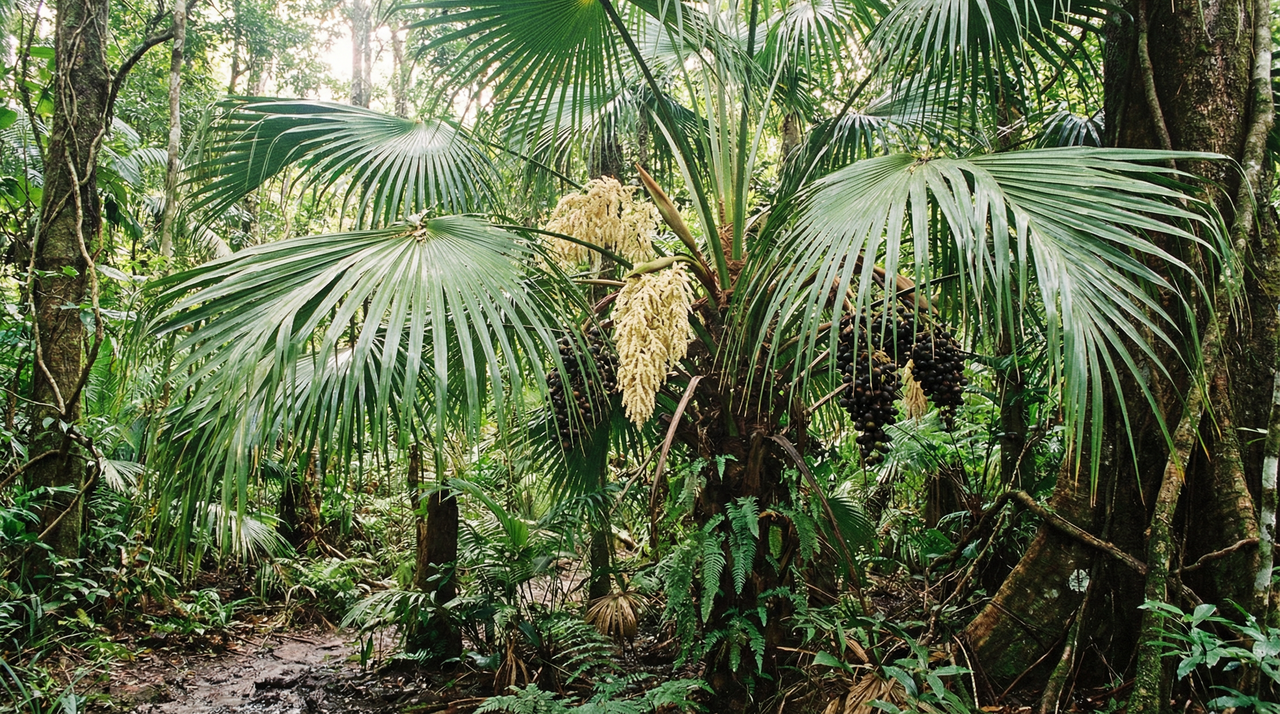
Nobody warned me about the spines. The first time I went to prune a wayward frond off a young Chinese fan palm, I ran my hand along the petiole the way you naturally would, and those serrated teeth along the stem edge caught me before I even registered what was happening. That's the contradiction at the heart of Livistona chinensis: a plant that has graced classical Chinese gardens for over a thousand years as a symbol of elegance and longevity, yet defends itself like it means business. It's been cultivated and admired longer than most trees Europeans were even aware it existed, woven into Tang Dynasty aesthetics and feng shui well before 18th-century botanists started arguing over what to call it.
What I find genuinely compelling is that most people growing this palm today, whether it's anchoring a Florida courtyard or slowly claiming a corner of a bright sunroom, have almost no idea they're tending something with that kind of cultural weight behind it. They bought it because it looked good, which is fair, and it undeniably looks extraordinary. But there's a lot more going on beneath those drooping, fan-shaped leaves than a pretty silhouette, and once you start pulling on that thread, the whole plant shifts in your perception.
Origin and History of Chinese Fan Palm (Livistona chinensis)
Botanical Background and Native Range
The naming of this palm took a detour through the Caribbean before it landed on a binomial that actually made sense. Nikolaus Joseph von Jacquin first described it in 1797 as Latania chinensis, lumping it with the Mascarene fan palms, and it wasn't until Robert Brown corrected the placement in 1810 that it became Livistona chinensis — the scientific name it holds today.[1][2][3] Those thirteen years of taxonomic confusion are easy to forgive when you're looking at a plant this striking, but getting the name right matters when you're sourcing plants or looking up research.
In the wild, this is fundamentally a southern Chinese species. Its native range covers Guangdong, Guangxi, Hainan, Fujian, and Taiwan, extending into northern Vietnam and adjacent Indochinese areas, where it grows in lowland forests, river valleys, coastal regions, and sheltered hillsides up to roughly 1,000 meters elevation.[4][5][6] That habitat profile tells you a lot: partial shade, humidity, good drainage, warm temperatures year-round. When you understand where it comes from, its preferences in cultivation stop being arbitrary and start making sense.
What I find remarkable about this species from a design perspective is its sheer longevity. Livistona chinensis is polycarpic — it flowers and fruits repeatedly over its lifetime without dying back the way monocarpic palms do — and typically lives 50 to 100 years in cultivation, with some specimens exceeding 150 years under ideal subtropical conditions.[7][8] My own 12-year-old specimen barely clears my roofline, which gives you a sense of the pace. Compare that to a Washingtonia at the same age and you start to appreciate the difference between a plant that hurries and one that endures. Germination takes one to three months under warm, moist conditions, with reproductive maturity typically arriving somewhere between five and ten years from seed, and meaningful trunk development not until ten to fifteen years in.[9][10]
The genus Livistona has real geographic breadth. The closely related Livistona australis, for instance, is native to coastal eastern Australia from central Queensland south into New South Wales, growing in subtropical rainforests, wet sclerophyll forests, and riparian zones[11][12] — a different continent, a different ecological niche, but recognizably the same elegant lineage.
Visual Characteristics of the Chinese Fan Palm
In cultivation, most people are working with a palm that reaches 15 to 25 feet, occasionally pushing to 30 feet in genuinely tropical conditions, with a canopy spread of 6 to 10 feet and a slender single trunk 6 to 12 inches across.[13][14] Young trunks are green and a little rough with persistent fibrous leaf bases; older trunks go grayish-brown and ring-scarred, developing that unmistakable aged-palm character over decades. The whole plant has a quiet architectural confidence that photographs beautifully but reads even better in person.
The leaves are the main event. Each costapalmate fan reaches 60 to 90 centimeters across (up to 2 meters in ideal conditions), glossy deep green on top, slightly glaucous beneath, divided into 30 to 50 rigid segments that droop at their tips in that characteristic weeping arc.[10][15] The petioles reach 1.5 to 2 meters and carry sharp, curved spines near the base. I've planted these along a property edge where deer pressure is real, and those spines do exactly what you'd expect — casual browsers don't linger.
Flowers are small greenish-white to creamy bisexual blooms about 5 mm across, borne on branched inflorescences that can reach 3 meters long emerging from below the leaf crown.[16][17] The fruits that follow are small ovoid drupes, 10 to 15 mm across, ripening to orange-yellow with a single large brown seed inside. Light conditions visibly shift how the plant grows — full-sun specimens develop broader, more rigid leaves with shorter petioles, while shaded plants reach longer petioles and narrower, more flexible leaves.[18][19] The root system is fibrous and adventitious, forming a shallow mat with no taproot — something worth remembering at planting time.
For scale contrast: Livistona australis can exceed 25 to 30 meters in height with a trunk base of 30 to 50 centimeters across, and its fruits shift from green through orange to a deep blackish-purple at maturity.[12][11] Same genus, very different scale.
Traditional and Cultural Uses Across Asia and Australia
Livistona chinensis has been cultivated in China since at least the Tang Dynasty (618–907 CE), valued in classical gardens and literati culture for its graceful fan fronds that symbolized elegance, longevity, prosperity, and harmony with nature.[1][20][21] In feng shui, it represents the wood element — growth, vitality, protection against negative influences.[22] I'll admit I've leaned into this intentionally: when I'm designing around a water feature in a subtropical garden, placing one of these where its wood energy balances the water element is good feng shui and, honestly, just good design. The vertical line and the movement of those drooping leaf tips do something compositionally that few other plants can replicate.
Traditional Chinese medicine incorporated the plant practically as well as symbolically. Leaves, fruits, and seeds appear in historical records for what TCM practitioners would describe as cooling and blood-regulating properties.[23][24][25] The earliest Western botanical records appear in 18th-century European herbals, and by the 19th century the palm was traveling via trade networks and institutions like Kew into European ornamental collections.[26] What was a garden classic in Guangdong for a millennium became a fashionable exotic in Victorian England within a few generations. The health benefits angle gets its own proper treatment later in this article; what I want to emphasize here is the cultural depth — this is a plant with a documented relationship with people stretching back over a thousand years.
The genus tells a parallel story in the Southern Hemisphere. Livistona australis holds significant cultural importance for Indigenous Australian peoples including the Bundjalung, Wiradjuri, Dharawal, and Gundungurra nations, who harvested the edible apical bud as a vegetable, wove leaves into baskets, mats, and thatch, twisted trunk fibers into ropes and fishing lines, and wove the palm into creation stories and ceremony.[27][28][29] Different continent, different species, the same pattern of a fan palm woven into the fabric of human life for generations. That's not coincidence — it's a testament to what this genus offers wherever it grows.
Fun Facts and Ecological Notes
Wild specimens of Livistona chinensis can reach 20 to 25 meters (65 to 82 feet), though cultivated plants are typically a fraction of that height.[15][30] The spiny petioles and recurrent leaf segments aren't just ornamental quirks — they're adaptations that confer real wind resistance and deter herbivores in the palm's humid coastal native habitats.[31] Mature plants are cold-hardy down to roughly 20 to 25°F (-6 to -4°C) and perform reliably in USDA zones 9 through 11.[32] Under genuinely optimal subtropical conditions, longevity records of 150 to 200 years have been documented, though those numbers are partly anecdotal and vary significantly with growing conditions.[33] My 8-year-old specimen is still in its gangly adolescence, which puts those numbers in perspective.
Ecologically, the palm earns its place. Flowers are pollinated primarily by beetles and flies, while the orange fruits are dispersed by birds — I've watched local mockingbirds and cedar waxwings strip a mature specimen bare over the course of a week in late summer, which tells you everything about its role in supporting urban wildlife.[34][35] The related Livistona australis shows moderate fire resistance, capable of resprouting from its protected terminal bud after low-intensity burns[36] — a survival trait that speaks to the genus's overall toughness. When you plant a Chinese fan palm today, you're not just adding a tree to a yard. You're participating in a living design tradition that connects subtropical gardens in Florida or California directly back to Tang Dynasty courtyards in southern China.
Fan Palm Varieties and Sourcing
Notable Varieties and Cultivars of Fan Palms
The Chinese fan palm is, practically speaking, a species you'll grow in its standard form. Livistona chinensis reaches 15-25 feet outdoors and stays a manageable 6-10 feet in containers, with a rounded canopy of glossy, dark green fan-shaped fronds spread across roughly 6-10 feet of width.[10][37] Cultivar selection is limited compared to many other ornamentals, and that's honestly fine -- the species does most of what you need without needing to hunt down named selections.[38][39] Where cultivars do exist, they're worth knowing: 'Variegata' brings cream-striped leaves that add visual punch in a shaded courtyard, and 'Hesper' is a compact dwarf selection well-suited to pot culture.[38][39] When I'm shopping young specimens of 'Hesper,' I always check that the emerging fronds still have those characteristic spiny petioles intact -- it's a quick visual cue that the plant was grown properly and will develop the elegant form I want in a design.
After years of specifying palms for Central Florida clients, I've learned that scale matters more than almost anything else. The california fan palm (Washingtonia filifera) hits 30-50 feet, sometimes 80, with a trunk 2-3 feet thick and leaves spanning 6-10 feet across.[40][41] It's cold-hardier than Livistona chinensis, surviving down to around 10-20°F in USDA zones 8-11,[40][42] and it does come in interesting variants including the rare compact var. sotocantensis and the feathery-leaved var. plumosa.[43] The mexican fan palm (Washingtonia robusta) goes even taller, reaching 50-80 feet, and offers the most cultivar diversity in the genus, with selections like 'Golden Pony,' 'Variegata,' and 'Compacta.'[44][45] The australian fan palm (Livistona australis) is a close relative that can reach 50-65 feet with enormous 3-5 meter fronds; its prized 'Variegata' form is genuinely stunning.[46][47] I've specified both in designs, and the Australian form creates a massive tropical statement -- but it needs serious room. The chinese fan palm delivers similar elegance on a scale most homeowners can actually manage, and that's why it remains my go-to for residential work. Hardy in USDA zones 9-11 with minimum temperatures around 20°F,[10][37] it has good general pest resistance, though spider mites, scale, and root rot from poor drainage are worth keeping in mind when choosing your site.[10][37]
Sourcing Fan Palm Plants and Seeds
Livistona chinensis is widely available throughout the US horticultural market, particularly in Florida and California, as nursery stock, containerized specimens, and seed.[48][30] Pricing scales significantly with size: small plants in the 1-3 foot range typically run $20-50, 3-5 gallon containers fall around $40-80, and mature specimens over 6 feet can reach $100-500 or more depending on season and whether you're buying retail or wholesale.[49] Seeds cost far less, usually $5-15 per packet, and are worth considering if you have patience -- though I'd point you toward the propagation section for details on germination.
My standing advice to clients: skip the big-box stores. I've seen too many young palms come off those shelves with spider mites or scale already established, and they're genuinely hard to spot on small plants until the damage is done.[50][51] Reputable Florida growers consistently produce healthier root systems with far fewer disease issues in my experience. When inspecting any specimen, look for fronds that are a clear, deep green without browning tips or yellow patches, check the trunk for firmness (no soft spots), confirm the container has proper drainage holes, and look underneath for circling roots that signal a plant that's been sitting too long.[52] Fusarium wilt is a real heartbreak when drainage has been ignored, and I've watched clients lose trees that could have been saved by a better growing medium from the start.[50][53] The good news for gardeners thinking about sustainability: Livistona chinensis is not CITES-listed and carries an IUCN Least Concern assessment, so you can source it without ethical hand-wringing.[53][54] If you're specifically after the australian fan palm or related Livistona species, specialty retailers like RarePalmSeeds.com, Plant Delights Nursery, and Logee's carry seeds and plants;[55][56] bare-root options are cheaper but need to go into a pot promptly.
Chinese Fan Palm Propagation and Planting (Livistona chinensis)
Growing a Chinese fan palm from scratch is genuinely satisfying, but it starts with understanding the seed, and these seeds have real personality. The whole process rewards patience and attention from the moment those orange-red drupes ripen on the tree.
Seed Characteristics and Propagation Methods
The fruits of Livistona chinensis are small drupes, roughly 1.5 to 2.5 cm across, ripening from green through orange-red with dark seeds tucked inside measuring about 1.0 to 2.0 cm in diameter.[57][58] Birds are the primary dispersers, eating the fleshy coating and dropping seeds across the landscape.[59] Because the species is wind-pollinated and outcrossing, seed-grown plants show genuine genetic variability in vigor and foliage, so don't expect every seedling to be identical to its parent.[59][60] There's a pleasant compensating quirk, though: Livistona chinensis can exhibit nucellar polyembryony, where a single seed produces multiple genetically identical embryos from somatic cells.[61][62] You might sow one seed and find two seedlings pushing up. I always label those pots clearly, because early palm seedlings look remarkably like grass blades and it's easy to assume you're looking at a weed. The characteristic fan shape takes a while to show up.
The most critical thing to know about these seeds is that they're recalcitrant. Viability drops sharply within weeks of ripening, and seeds that have been stored more than a few months are essentially dead.[63][64][65] Fresh seed is non-negotiable. If you're sourcing from another grower, ask when the fruits were harvested.
My method is straightforward: soak seeds in warm water around 35°C for 48 hours with one water change at the halfway point, and remove all the outer pulp before sowing to prevent fungal issues.[63][66] I've consistently hit the upper end of the germination range this way. Sow about 1 to 2 cm deep in a mix of equal parts coarse sand and peat (or perlite), keep humidity around 70 to 90%, and maintain a steady 25 to 30°C with bright indirect light.[63][67][64] With bottom heat steady at 27°C, I've seen germination in as little as four weeks, though one to three months is the realistic window and success rates run 50 to 80% under good conditions.[63] Gardeners growing the Australian fan palm (Livistona australis) in cooler climates will need a heated propagator to hit those temperatures, as its seeds behave similarly and won't rush without warmth.[12][68]
Vegetative propagation is essentially off the table for home growers. Palms lack the vascular cambium that makes cuttings, air-layering, and grafting work in other trees, and grafting success rates are typically below 20%.[69][70] Tissue culture is used commercially but requires sterile lab conditions that are simply not practical outside a research setting.[71] Seed is your path. Keep it fresh, keep it warm.
Soil, Site Selection, and Planting Technique
Before I plant any palm, I dig a 12-inch hole, fill it with water, and watch the clock. If that water is still sitting there an hour later, I know I've got a drainage problem that needs fixing before anything goes in the ground. Chinese fan palm will tolerate a lot, but sitting in soggy soil is where it fails, often fatally. Phytophthora and related root rots move in fast when drainage is poor, and the first signs, tip browning, wilting, and stunted growth, can be mistaken for underwatering right up until you pull the root ball and find black mush.[57][72]
The ideal soil is a sandy loam or loam with good organic matter content, amended with coarse sand, peat, or pine bark if you're working with heavy clay.[57][10] The palm's fibrous root system spreads laterally up to 3 to 6 feet but rarely goes deeper than 2 feet, so you need at least 18 to 24 inches of quality soil depth and you need to keep it uncompacted.[57] This is a root system that explores sideways, not down, so the zone immediately around the planting hole matters as much as the hole itself.
Test your soil pH before planting. The optimal range is 6.0 to 7.0, and problems show up predictably outside it: soils below 6.0 risk manganese toxicity with characteristic leaf spotting and necrosis, while alkaline soils above 7.5 tend to cause iron chlorosis, that interveinal yellowing on new fronds that's so common in high-pH Florida landscapes.[57][73] Amend with peat to lower pH or lime to raise it, and test again before you're satisfied. Once the tree is established, let the top inch or two of soil dry between waterings; young transplants need more consistent moisture while that fibrous root mat is finding its footing.[74][10]
Spacing, Timeline, and Establishment
I tell clients to treat spacing decisions for fan palms the way they'd treat planting an oak: think thirty years ahead. Livistona chinensis is slow to moderate growing, eventually reaching 20 to 30 feet tall with a canopy spread up to 15 feet in USDA zones 9b through 11.[75][10] That eventual footprint is similar to a mature citrus tree, which helps zone 9 gardeners visualize it, and you want the same kind of elbow room. For general landscape planting, 10 to 15 feet between individuals allows for canopy development and air circulation. Specimen or orchard-style plantings benefit from 15 to 20 feet, and hedging rows work at 6 to 10 feet within a row with 10 to 15 feet between rows.[76] The Australian fan palm can push 33 to 49 feet at maturity with a canopy to match, so if you're siting L. australis, go even more generous.[12]
Spring planting is ideal, giving the palm a full warm season to establish before facing either summer heat stress or winter cold at the cooler edges of its range.[63] Young transplants appreciate partial shade and consistent watering for the first season; the fibrous roots need time to colonize the surrounding soil before the palm can fend for itself. Seedlings from your propagation batch are ready to transplant once they reach 4 to 6 inches tall, typically 6 to 12 months after germination.[12]
First fruiting takes 10 to 15 years, sometimes longer.[63][77] I've made peace with that timeline. I plant fan palms knowing I may not be the one to see the first black drupes develop, but the spacing I give them now means the next gardener inherits a generous, well-structured tree rather than a crowded, root-bound problem. That long view is exactly what regenerative planting asks of us.
Chinese Fan Palm Growing and Care Guide
Getting Livistona chinensis care right is less about following a rigid checklist and more about understanding where this palm comes from. Everything it wants traces back to the humid, warm coastal forests of southern China and Taiwan, where rainfall runs 1,500 to 2,500 mm a year and soils stay consistently moist but never waterlogged.[10][78] Mirror those conditions and the palm practically takes care of itself. Deviate too far in either direction and it'll tell you about it quickly.
Water Needs and Drought Tolerance for Livistona chinensis
The baseline rule is moist but not soggy, and that top-inch check is your best diagnostic tool. When the top one to two inches of soil are dry, it's time to water; in practice, outdoor plants in active growth typically need deep watering every one to two weeks, while container plants often land closer to every seven to fourteen days depending on pot size, humidity, and light.[10][79] Underwatering shows up as drooping fronds, brown and curling leaf tips, and reduced new growth, symptoms that get worse fast in bright light or low humidity.[80] Overwatering is usually more destructive once a plant is established: yellowing lower leaves, wilting despite wet soil, and that telltale soft mushy root system that means rot has already set in.[81][63] I've learned to catch both early with a simple weekly finger-check rather than watering on a fixed schedule.
City tap water can also cause problems. Livistona chinensis is moderately sensitive to chlorine and fluoride, and I started noticing tip burn on plants I was watering straight from the hose.[73] Now I either let water sit out overnight or use collected rainwater, and the difference in leaf quality is real. Once established, this palm can tolerate a dry spell of two to four weeks, but it's never quite happy about it; a two-inch layer of organic mulch and deep, infrequent irrigation help encourage roots to go down rather than stay shallow and vulnerable.[82][83]
Sunlight, Heat Tolerance, and Site Selection
Chinese fan palm is flexible about light, tolerating full sun through partial shade, but site selection matters more than the sun-or-shade binary.[84] Good air circulation reduces fungal pressure, but strong desiccating winds are hard on the wide fan leaves. In zone 9B I routinely give younger plants afternoon protection, the same instinct I apply to citrus in exposed spots. The species is classified in AHS Heat Zones 12 through 8 and handles 35 to 40°C well when humidity is high, which tracks with its native understory origins.[85][45]
Heat Tolerance and Summer Stress Management
Above 90°F with low humidity, even mature plants show stress: scorched leaf margins, frond curl, and a general bronzing that can look like drought even when soil moisture is fine.[83] Young plants are especially vulnerable above 86°F. I think of it similarly to bananas: both benefit from deep early-morning irrigation and afternoon shade during the worst of summer, and both will look noticeably happier for it. Mulch moderates root temperatures, well-draining humus-rich soil prevents additional stress, and maintaining good airflow keeps fungal opportunists at bay.[86][63]
Feeding, Nutrient Deficiencies, and Soil Requirements
A palm-specific granular fertilizer with micronutrients is non-negotiable here. Generic balanced fertilizers miss the magnesium, manganese, and iron that Livistona chinensis genuinely needs; look for NPK ratios around 8-2-12 or 12-4-12 with chelated micronutrients, and apply every two to three months through spring and summer at roughly half the recommended dose.[72][87] Stop feeding in fall and hold off entirely through winter. I've seen "frizzle top" (that crinkled, necrotic emerging spear that signals potassium or manganese deficiency) in local zone 9B landscapes more times than I can count, often in alkaline or compacted soils that lock up nutrients even when they're present.[72] A single corrective application of the right palm fertilizer with micronutrients produced visibly healthy new growth within a few weeks in cases I've followed. Always water thoroughly before and after fertilizing, keep soil pH between 5.5 and 7.0, and don't push high-nitrogen formulas; they encourage weak, fast growth that's more pest-prone than it's worth.[63]
Frost Tolerance, Cold Protection, and Winter Care
Livistona chinensis is genuinely hardy in USDA zones 9 through 11, with mature plants surviving brief dips to 25 to 28°F; with protection, some growers push them through 20 to 25°F, though young plants are far more vulnerable and may need to come indoors.[88][63] Frost damage appears as browning or blackening of young leaves and the bud, which is the part you absolutely cannot afford to lose on a solitary-trunk palm. In Central Florida I've successfully carried young specimens through 28°F nights using frost cloth layered over outdoor lights; the key is getting the cloth on before temperatures drop and making sure it extends to the ground to trap soil warmth. Thick mulch over the root zone, a sheltered southern exposure, and pre-frost watering all help.[89] Good drainage remains non-negotiable during cold snaps because wet, cold soil is far more damaging than cold alone. For reference, the closely related Livistona australis tolerates similar temperatures when sheltered, while Washingtonia filifera pushes all the way to zone 8 and about 10°F, showing just how much hardier the desert fan palms are by comparison.[45]
Pruning, Pest and Disease Management, and Maintenance
Fan palm pruning should be minimal and deliberate. Remove only dead, damaged, or fully yellowed fronds in spring or early summer, cutting close to the trunk with clean, sharp tools without nicking the bud.[10][90] Early in my practice I made the classic beginner mistake of removing too many green fronds at once to "tidy things up," and it cost me a full season of growth on a specimen I'd been nurturing for two years. The palm draws nutrients from those fronds; take them too soon and you're essentially pulling food out of a slow-growing plant. Never remove more than 20 to 25% of the canopy at one time, and sterilize your tools between plants to avoid spreading disease.[83]
The pest and disease risks here are closely tied to cultural conditions. Red palm weevil, scale insects, mealybugs, and spider mites are the most common animal pests; Ganoderma butt rot, Fusarium wilt, and various leaf spots round out the disease list.[91][92] Over-pruning, poor drainage, and overhead watering create exactly the entry points these problems need. Ganoderma in particular has no cure; if you see the shelf-like conk at the base, the plant needs to come out. For everything else, improved airflow, neem oil, and horticultural oils handle most cosmetic issues before they escalate.[93]
Seasonal Growth Rhythm and Lifecycle Care
Once you know Livistona chinensis's rhythm, the whole care calendar becomes intuitive. Active growth runs through the warm spring and summer months, and that's when new fronds emerge with a beautiful silvery-green sheen before they harden to glossy dark green. In my climate, I start seeing flushes of new growth in April and May that make all the winter-protection fuss feel completely worthwhile. Flowering follows from May through August, cream-colored inflorescences that aren't showy but attract enough attention from insects to make them worth noting. Fruit ripens from late summer into autumn, green drupes that gradually turn black and disappear quickly once birds find them.[94][32] Growth slows considerably in cooler months, which is exactly why you withhold fertilizer and back off irrigation in winter. In tropical climates the cycle compresses into something closer to year-round growth; in temperate margins metabolism slows visibly.[95] Once you're tuned into that seasonal pulse, the care adjustments feel obvious rather than prescribed, and this palm settles into being a long-lived, low-drama presence in the landscape.
Harvesting Fan Palm Fruit and Hearts from Livistona chinensis
If you're growing a Chinese fan palm with hopes of a fruit harvest, the first thing I'd tell you is to get comfortable with patience. Real patience. We're talking a decade or more before you see the first fruit cluster.
Timeline to First Harvest and Seasonal Cues for Livistona chinensis
Livistona chinensis typically takes 10 to 15 years from germination before producing its first fruit, and in less-than-ideal conditions that window can stretch to 20 years.[96][97][98] In my zone 9B landscape in Central Florida, I've found that consistent warmth and humidity can nudge things toward the shorter end of that range, but even under good conditions you're planting this tree for your future self, not your current garden wish list. The related Australian fan palm, Livistona australis, follows a similarly slow road, with fruit development from flowering to maturity taking anywhere from 6 to 12 months compared to the 4 to 6 months typical for the Chinese fan palm.[99][100][12] In climates where conditions stay warm and humid year-round, a mature specimen can produce fruit continuously, with spring and summer flowering and fruits ripening by late fall or winter.[101]
When fruit does appear, knowing what ripe looks like matters more for cleanup and seed collection than for the dinner table. The drupes shift from green through reddish-brown to a deep purple-black at full maturity, the fleshy mesocarp softens noticeably, and ripe fruits detach easily from the cluster.[102][103][12] Each fruit is a small drupe, only about 1 to 2 centimeters across, with a fibrous exterior, a softening fleshy layer inside, and a hard seed at the center.[102][103][104] After a decade of raking those dark purple-black drupes out from under my palm's canopy each winter, I treat it as a seasonal maintenance rhythm rather than a harvest. The color cue is reliable; the reward, less so.
Yield, Flavor Profile, and Safety Considerations
I've never been tempted to eat these fruits after reviewing consistent warnings across botanical and horticultural sources, and I advise clients the same. While the fruit is technically edible when fully ripe, descriptions of the flavor range from mildly sweet with faint astringency to outright bitter and sour.[105][104][106] The honest consensus is that they're unpalatable, low in nutritional value, and potentially irritating to the digestive system, with unripe fruits carrying possible toxicity risks.[107][108] The related Australian fan palm has more documented traditional use among Indigenous Australians, with some accounts describing processable edibility through soaking or cooking, but that's a meaningfully different plant with a different cultural and botanical story.[109][110]
For the Chinese fan palm, harvest means saving ripe seeds for propagation or keeping the ground tidy before the wildlife finds them. Unlike a Sabal palm, whose hearts and fruits have genuine traditional food roles, this species functions more as a majestic ornamental whose small drupes exist mainly to remind you why you planted it for the leaves, not the basket. Palm heart is occasionally mentioned as a secondary harvest, but I've only seen it discussed in the context of specimen removal, never routine foraging. The preparation and uses section covers that territory more fully, including the significant trade-offs involved.
Fan Palm Preparation and Uses
Culinary Potential and Edibility of Chinese Fan Palm
The fruit is the first thing people ask about, yet the dark bluish-black drupes of Livistona chinensis are not for eating.[104][45] They ripen into attractive 1-2 cm clusters that could fool you into thinking they're edible, but the potential for digestive upset is real enough to leave them alone. If you've got dogs or cats wandering under your fan palm, that's less of a concern. The ASPCA lists Chinese fan palm as non-toxic to pets, though the high fiber content can still cause mild stomach upset if an animal eats a significant amount.[111] After years of installing these palms in client gardens with both dogs and cats on the property, I've found it's one of the safer large foliage plants you can choose.
The one genuinely edible part is the palm heart, the apical meristem at the growing tip. It has a mild, nutty flavor and can be eaten raw or cooked much like commercial hearts of palm.[112] Here's the hard truth from a permaculture standpoint: harvesting it kills the tree. This is a single-stemmed palm with no way to regenerate from the base, so that one harvest ends a plant that may have taken decades to reach maturity. I never include this in design conversations as a yield to plan around. The related Australian fan palm tells a richer food story, with Indigenous traditions of harvesting its cabbage heart raw (crisp and slightly sweet) or cooked (tender and creamy),[12] and even fermenting the fruits into beverages after processing, though its seeds remain toxic without proper preparation.[113] The Chinese species carries a much thinner ethnobotanical food record; what traditional culinary use exists is limited and not commercially significant.[114] The primary gift of Livistona chinensis in my work has always been its architectural form and wind resilience, not its edible yield.
Traditional Medicinal Preparations
Traditional Chinese medicine has a documented history of using fan palm leaves as a cooling, cleansing preparation. The standard preparation involves 10-30 g of dried leaves decocted in boiling water and used for coughs, dysentery, and wound healing, with trunk sap applied topically to skin injuries as well.[25][115] I approach these uses with genuine respect for the tradition behind them while still recommending that anyone considering medicinal preparations consult a qualified practitioner. The phytochemical research behind these applications is covered in the health benefits section of this profile.
Non-Food and Practical Uses
This is where Chinese fan palm earns its depth. The large fan-shaped leaves have been woven into fans, hats, mats, and baskets across East and Southeast Asia for centuries, and the same leaves make excellent thatching material.[114][25] From my own work with similar palm materials in Central Florida landscape installations, I can say the leaf fibers split cleanly and stay flexible when properly dried, which makes them genuinely useful beyond purely decorative applications. The Australian fan palm took this further, with its trunk providing durable timber for shelters and its seeds strung into necklaces or used in traditional games.[116]
As an ornamental, Livistona chinensis has few rivals for tropical presence in a subtropical garden or container setting, and its feng shui associations with prosperity have kept it prominent in designed landscapes across Asia and beyond.[117] The sturdy trunk offers light construction and fuel uses in native growing regions, and the species performs reliably in windbreaks and soil stabilization roles, contributing to biomass production from both leaves and trunk material.[118][119] Those functional contributions are where this palm genuinely pulls its weight in a permaculture system, offering decades of structural, ecological, and craft value from a plant that asks very little in return.
Fan Palm Health Benefits and Medicinal Uses
Most people plant a Chinese fan palm for its sculptural beauty and ask questions about its medicine later. But Livistona chinensis has a genuine therapeutic tradition behind it, one that predates its arrival in Western botanical gardens by many centuries. Understanding what the research actually shows, and where it still has gaps, matters whether you're growing one in a food forest or just curious about a plant you've had in your backyard for years.
Traditional Medicinal Uses of Livistona chinensis
In Traditional Chinese Medicine, the fan palm was valued specifically for its cooling and detoxifying character. Leaf decoctions were prepared to treat high fever, coughs, sore throats, skin eruptions, dysentery, and other gastrointestinal and respiratory complaints.[120][121][122][123] That pattern of use, cooling fevers and calming inflamed tissues, turns out to align reasonably well with what modern in-vitro work has found.
Contemporary pharmacological studies demonstrate anti-inflammatory, antioxidant, antimicrobial, and hepatoprotective effects in Livistona chinensis extracts, though the bulk of that evidence comes from cell cultures and early animal models rather than human clinical trials.[124][125][126] Specifically, extracts inhibit pro-inflammatory cytokines including TNF-α and IL-6 through NF-κB pathway suppression, observed in RAW 264.7 macrophage models.[126][127] Preliminary cytotoxic activity has also been recorded against HeLa and MCF-7 cancer cell lines via apoptosis induction, and α-glucosidase inhibition comparable to the diabetes drug acarbose has been observed at IC50 values around 120 μg/mL.[128][129] These are genuinely interesting findings. They're also nowhere near ready to translate into treatment advice, and I think it's important to say that plainly.
Related palms show similar genus-wide patterns. Australian fan palm (Livistona australis) has documented Aboriginal use in wound care and skin poultice applications, while the California fan palm (Washingtonia filifera) was used by Cahuilla and other Native American groups as a mild laxative, expectorant, diuretic, and wound poultice.[12][130][131] The through-line across cultures and species is consistent: cooling, anti-inflammatory, and antimicrobial applications that echo what we're now seeing in labs. Promising research that echoes centuries of traditional use, certainly, but well-designed human trials are still what we need before anyone should reach for a leaf decoction in place of a doctor's visit.
Phytochemical Profile and Pharmacological Research
The chemical story behind Livistona chinensis is genuinely rich. Leaves and other plant parts contain a broad suite of flavonoids (luteolin, apigenin, quercetin, kaempferol, vitexin, isoorientin, rutin, orientin, and their glycosides), phenolic acids (chlorogenic, ferulic, gallic, protocatechuic, caffeic), terpenoids (β-sitosterol, lupeol, α-amyrin, stigmasterol), saponins, tannins, alkaloids, and polysaccharides.[124][132][133][134] Distribution shifts by plant part: leaves carry the highest flavonoid and phenolic concentrations (total phenolic content up to 150-200 mg GAE/100g), fruits add polysaccharides and essential oils, seeds yield oils with roughly 40-50% lauric acid, and bark concentrates tannins and steroids.[135][136][137]
The phenolics and flavonoids are the workhorses here. They drive strong free radical scavenging activity (DPPH IC50 around 50 μg/mL for ethanolic extracts), activate the Nrf2 pathway to upregulate antioxidant enzymes like HO-1 and NQO1, and disrupt microbial cell membranes against pathogens including Staphylococcus aureus, Escherichia coli, and Candida albicans (MIC values typically 100-200 μg/mL).[138][139][140][141] Stress actually increases these compounds. Full sun exposure, drought, salinity, and summer heat push the plant to produce more flavonoids and phenolics as a defensive response.[142][143] I've noticed this in landscape specimens grown in exposed positions, deeper leaf color, resinous sap, and denser leaf texture, which makes the in-vitro Nrf2 data feel immediately recognizable even if human trials are still pending. The Australian fan palm shows a comparable phytochemical profile with catechins, quercetin, rutin, kaempferol, and triterpenoids contributing to antioxidant and COX-2 inhibitory effects, its seed oil notably richer in oleic acid than its Chinese cousin.[144][145][146]
Nutritional Value of Edible Parts
The Chinese fan palm is an ornamental first, and its nutritional story is a thin one. The fruits are not considered edible for humans, are absent from major nutritional databases like the USDA, and can cause mild gastrointestinal upset if eaten.[10][147] Any macronutrient estimates for the fruit (roughly 50-80 kcal, 10-15g carbohydrates, 2-4g fiber per 100g fresh weight) are extrapolated from related palms and should be treated as rough approximations at best.[148][149]
Palm heart, the apical meristem, is more nutritionally interesting and has traditional use in related Livistona species, though harvesting it kills the tree. When properly prepared, heart of palm runs about 20-30 kcal per 100g, with 3-5g of fiber, meaningful amounts of vitamin C (11-18 mg/100g), B vitamins, potassium (200-300 mg/100g), and useful levels of calcium, magnesium, and iron.[150][151][152] The texture is mild, somewhere between tender cabbage and a bamboo shoot, which I find more appealing than I expected the first time I encountered it at a Florida market. That said, harvesting the heart is a terminal event for the tree, and one worth sitting with carefully before you act on curiosity.
Safety Profile and Potential Risks
Livistona chinensis is non-toxic to humans, cats, dogs, and horses according to the ASPCA, with toxicology studies reporting an oral LD50 above 2000 mg/kg in rats and no hepatotoxicity or genotoxicity observed at relevant doses.[111][153][14] No known drug interactions have been documented at ornamental or typical exposure levels, and the plant is considered safe around pregnant women, children, and pets when physical hazards are managed.[154][155] If you're pursuing any medicinal use of the leaves, that's a conversation worth having with your doctor, but for ornamental growing you're on solid ground. Consuming large quantities of fruit or seeds may cause mild, self-limiting GI symptoms from indigestible fiber, trace saponins, or mechanical irritation rather than true chemical toxicity.[79][156]
The practical hazards worth knowing about are mechanical and identificatory. Pollen can trigger respiratory irritation or dermatitis in sensitive individuals.[157] The serrated petiole spines are no joke; they've nicked my gloves more than once even when I thought I had a good grip, and they deserve respect especially around kids and pets.[158] The more serious concern, one I always raise when consulting for families with young children or pets, is misidentification. The Chinese fan palm is sometimes confused with the sago palm (Cycas revoluta), which causes severe liver failure if ingested and is one of the most dangerous plants you can have around a dog.[159][158] They look nothing alike once you know what you're looking at, but confirming your identification before you assume safety is non-negotiable. Get familiar with the fan-shaped fronds and the graceful, arching leaf tips that distinguish Livistona chinensis, and you'll never confuse the two again.
Fan Palm Pests and Diseases
Livistona chinensis is reasonably resilient in the right conditions, and I want to lead with that because the pest-and-disease literature can read like a horror list if you're not careful. Most of the serious problems I've seen on these palms trace directly back to cultural stress. Poor drainage, overcrowding, nutrient deficiency, drought, a bad transplant. Get the growing conditions right and you'll likely never deal with most of what's listed below.
Common Diseases of Chinese Fan Palm
Fungal leaf spots are the most frequent issue in humid subtropical gardens. Bipolaris, Pestalotiopsis palmarum, and Phoma herbarum all produce brown to black necrotic lesions with yellow halos, and they love overhead irrigation and still, humid air.[160][161] Cosmetically unpleasant but rarely fatal on their own. The bigger concern is Phytophthora root and crown rot, driven by Phytophthora palmivora, which causes wilting fronds, yellowing, and serious root decay in poorly drained soils.[162][163] I lost two young fan palms in heavy Florida clay before I learned to always mound the planting site a few inches above grade. That single habit change has kept every planting since clean.
Stressed trees are also vulnerable to Ganoderma zonatum butt rot, which announces itself through shelf-like conks at the base of the trunk and causes internal decay that can eventually compromise the whole structure.[164][93] There is no cure once it takes hold. Phytoplasma-associated lethal yellowing has been reported in Livistona chinensis, but it's uncommon compared to its impact on coconut or date palms, and not a primary concern for most growers.[161] Mexican fan palms, for comparison, show considerably better lethal yellowing resistance.[165][166]
Key Insect Pests and How to Manage Them
Moderate pest resistance is the baseline for this species, but that resistance drops noticeably when the palm is stressed by dry, windy, or low-nutrient conditions.[167] The most serious threat by severity is the red palm weevil (Rhynchophorus ferrugineus), which bores into the trunk and can cause sudden structural collapse, particularly in young or compromised trees.[168][169] What I tell clients is to watch for a crown that droops or tilts quickly without any obvious weather event. That sudden chinese fan palm drooping is weevil damage until proven otherwise, and pheromone traps placed early are your best diagnostic tool.
Scale insects including Aspidiotus destructor and mealybugs, along with spider mites, are far more common but less catastrophic. They show up as leaf stippling, sooty mold, and bronzing, with outbreaks clustering in dry, dusty conditions or very humid stagnant air.[170][171] I've noticed that palms sourced from native-plant nurseries often shrug off scale pressure better than standard nursery stock, and it makes sense when you look at the research on related species: Livistona australis carries physical defenses like tough sclerenchymatous leaf tissue and recurved petiole spines,[46] plus chemical defenses including condensed tannins, phenolics, and terpenes that actively deter herbivores and pathogens.[172][173] A vigorously grown, well-sited fan palm has something of this built-in resistance working in its favor.
Prevention and Integrated Management Strategies
Cultural practices do the heavy lifting here. Well-drained soil, ground-level or drip irrigation rather than overhead watering, generous spacing for airflow, and prompt removal of infected fronds are the foundation of any sound management plan.[160][174] In my experience, the healthiest fan palms in any landscape are the ones that were given generous spacing from day one and watered deeply but infrequently. That approach builds root depth and keeps the crown dry.
When targeted treatments are necessary, horticultural oils and insecticidal soaps handle scale and mites well. Leaf spot outbreaks respond to mancozeb, copper hydroxide, or propiconazole applied on a 7-14 day cycle, while Phytophthora in the root zone calls for phosphorous acid soil drenches.[160][175] Always check label rates and loop in your local extension service for regional timing. One thing I'd caution against is chasing disease-resistant cultivars as a shortcut: no varieties of Livistona chinensis are documented with strong foliar disease or bud rot resistance, and breeding work in this species lags well behind other palms.[176] Select the most vigorous, locally-adapted specimen you can find, give it a well-prepared site, and let good culture do what no cultivar marketing can promise.
Fan Palm in Permaculture Design
Palms occupy a peculiar space in permaculture thinking. They're not nitrogen fixers, they don't produce abundant edible harvests in temperate climates, and yet in the right system they're genuinely hard to replace. The Chinese fan palm earns its place through structure, longevity, and the microclimate it quietly engineers around itself over decades. Knowing where it fits starts with knowing what it can actually handle.
Climate and Hardiness Zones for Fan Palms
Livistona chinensis sits comfortably in USDA zones 9b through 11, with a cold tolerance floor around 25°F (-4°C) for brief exposures, and optimal growth happening between 65-85°F (18-29°C).[177][178] Once temperatures dip below 50°F (10°C) with any regularity, growth slows noticeably. I've worked with specimens in zone 9b along the Gulf Coast where a hard freeze rolled through without warning, and the unprotected palms showed real leaf burn at the crown margins. The ones planted on the south-facing side of a building or near a pond came through clean. Microclimate selection is not a minor detail here; it's often the deciding factor at the edge of the range.
Rainfall matters too. The species performs best with 40-60 inches of annual precipitation, and struggles if it drops below roughly 30 inches without supplemental irrigation.[179] In native habitats across southern China and Vietnam, it experiences 39-79 inches annually, so high humidity is genuinely part of its DNA.[179] It can adapt to drier conditions over time, but let humidity fall below 30% for extended periods and you'll see the leaf margins tell you about it with browning.[180] In humid coastal and urban sites across Florida, eastern Australia, and similar climates, the species has established reliably once matched to appropriate drainage.[6]
If you're working a drier system and still want a fan palm silhouette, the Washingtonia species open different doors. Mexican fan palm (Washingtonia robusta) thrives on as little as 6-10 inches of annual rain once established and handles temperatures above 115°F without complaint,[181][182] while California fan palm (Washingtonia filifera) is a cold-tougher choice, with mature specimens able to handle temperatures down to around 10°F (-12°C).[83] The Australian fan palm (Livistona australis) threads the needle between its Chinese cousin and the Washingtonia group, tolerating brief dips to 25-28°F with protection and occupying a broadly similar zone 9-11 range.[183] My own practice centers on humid subtropical sites, but knowing this genus-level spread helps me spec the right palm for the right client before a shovel goes in the ground.
Ecosystem Functions and Pollination Ecology
The flowers are modest, cream to pale yellow, each only 1-2 mm across, carried on branched inflorescences that can stretch up to 1.5 meters out from between the leaves.[184][1] Wind does the heavy lifting on pollination; the exposed stamens and lightweight pollen are textbook anemophilous design.[184] On a breezy spring morning I've watched visible clouds of pollen drift from mature specimens, which is when I stopped worrying about fruit set and started trusting the process. Beetles, flies, and bees do contribute as secondary visitors, and in the species' native subtropical China insect pollination by beetles and flies carries more weight than it does in introduced populations.[185] For successful pollination and fruit set, the species wants temperatures between 75-90°F, humidity in the 70-90% range, and light wind movement.[186] Pollen viability runs high for three to five days after anthesis under good conditions, and the plant is primarily monoecious so you generally don't need multiple trees for fruit production, though hand-pollination with a brush is feasible for intentional seed collection.[186]
Below the flowers, the physical functions are where permaculture designers really take notice. The deep fibrous root system anchors soil and reduces erosion meaningfully, and the palm's coastal salt-spray tolerance makes it a legitimate option for windbreak plantings where other species struggle.[119][187] The canopy provides fruit for frugivorous birds and shelter for invertebrates and nesting avians, quietly building biodiversity just by being present over decades.[188] The Australian fan palm amplifies this pattern further, with its long-lived structure and dense canopy contributing to carbon sequestration while generating the same shaded, humid understory conditions.[12] California fan palm (Washingtonia filifera) performs a similar role in arid systems, functioning as a keystone that creates microhabitats sustaining moisture, shade, and diverse flora and fauna in landscapes where almost nothing else does this.[189]
Forest Layer Placement and Guild Companions
In its native subtropical evergreen forests, Livistona chinensis grows along streams and on valley slopes from low elevations up to about 800 meters, reaching 20-40 feet with its single slender trunk topped by a crown of fan-shaped leaves one to two meters across.[10][190] That native context tells you exactly where to put it in a designed system: primary placement is in the understory to lower subcanopy layer, where its shade tolerance lets it thrive under taller emergents while still casting meaningful dappled shade beneath it.[191] The Australian fan palm scales this up considerably, growing 15-25 meters and genuinely occupying the subcanopy layer in subtropical rainforest and wet sclerophyll systems along eastern Australia.[12] For most garden-scale designs, the Chinese fan palm is the more manageable choice.
What makes it a pleasure to design around is the root system. Non-invasive and fibrous, it poses minimal competition to neighbors, which means you can plant right up to the drip line without sacrificing the understory guild.[63] In my designs I've consistently underplanted Chinese fan palm with bird's nest ferns (Asplenium australasicum) and calathea species; after three seasons the ferns had doubled in size while the palm held steady without crowding them out. The humid microclimate the canopy generates does real work, and I've watched those understory beds stay noticeably moister than surrounding beds even through dry spells. Begonia varieties round out a shade guild beautifully in this kind of layered planting.[63] Climbers can use the ringed trunk for support if they're managed so they don't smother the crown, though I steer clear of anything aggressive. The trunk is an asset, not a trellis for thugs.
That microclimate effect is worth sitting with. The shade, humidity, and stable root zone created beneath a mature fan palm are exactly the conditions that allow sensitive medicinal and ornamental understory plants to thrive in climates that would otherwise be too harsh or erratic for them. Designing around this palm isn't just about filling vertical layers; it's about engineering a pocket of reliable conditions that ripple outward into everything planted nearby.
The Palm That Taught Me to Think in Decades
I planted my first Livistona chinensis knowing I wouldn't see it fruit. That's a strange thing to accept when you're used to harvesting something every season, but it changed how I move through my food forest now. Some plants ask you to slow down and trust the timeline. This one doesn't negotiate on that point, and honestly, I've come to respect it for that.
Sources 191
- Livistona chinensis (Chinese Fan Palm) ↩
- The Palms of China ↩
- Flora of China: Arecaceae ↩
- Plant Finder: Livistona chinensis ↩
- Flora of China: Livistona chinensis ↩
- Plants of the World Online - Kew Science ↩
- Livistona chinensis ↩
- Palms of the World: Arecaceae ↩
- Propagation of Palms ↩
- Chinese Fan Palm Growth Stages ↩
- Livistona australis ↩
- Cabbage Tree Palm - Livistona australis ↩
- Livistona chinensis ↩
- Chinese Fan Palm ↩
- Livistona chinensis (Chinese Fan Palm) ↩
- Livistona chinensis - Chinese Fan Palm ↩
- Livistona chinensis in Plants of the World Online ↩
- Livistona chinensis ↩
- Livistona chinensis - The Chinese Fan Palm ↩
- History of Ornamental Palms in China ↩
- Palms in Chinese Garden Design ↩
- The Cultural Significance of Palms in Asian Traditions ↩
- Chinese Medicinal Plants ↩
- Plants Used in Taiwanese Folk Medicine ↩
- Livistona chinensis in Traditional Uses ↩
- Traditional Chinese Medicine: Materia Medica ↩
- Aboriginal Uses of Australian Flora ↩
- Indigenous Cultural Significance of Livistona australis ↩
- Indigenous Uses of Australian Fan Palms ↩
- Livistona chinensis ↩
- Palms of the World ↩
- Livistona chinensis - Chinese Fan Palm ↩
- Palm Longevity and Life Span ↩
- Pollination and Dispersal in Palms ↩
- Pollination and dispersal of Livistona australis (Arecaceae) in subtropical rainforest of south-eastern Australia ↩
- Livistona australis ↩
- Livistona chinensis ↩
- Livistona chinensis ↩
- Livistona chinensis ↩
- Washingtonia filifera - Missouri Botanical Garden Plant Finder ↩
- California Fan Palm (Washingtonia filifera) - Kew Science ↩
- Washingtonia filifera - USDA PLANTS Database ↩
- Washingtonia filifera Varieties - Palm Society ↩
- Royal Horticultural Society (RHS) Palm Finder ↩
- Missouri Botanical Garden - Washingtonia robusta Cultivars ↩
- Livistona australis - Cabbage Palm ↩
- Livistona australis 'Variegata' ↩
- Livistona chinensis ↩
- Nursery and Annual Crop Production and Sales ↩
- Palm Pest Management ↩
- Pests and Diseases of Palms ↩
- Chinese Fan Palm Care Guide ↩
- The CITES Appendices ↩
- Livistona chinensis ↩
- Livistona australis Seeds ↩
- Livistona australis Availability ↩
- Livistona chinensis - Florida Palm Trees ↩
- Palms of the World - Livistona chinensis ↩
- Propagation of Palms ↩
- Livistona chinensis: The Chinese Fan Palm ↩
- Polyembryony in the Palms (Arecaceae): A Review ↩
- Seed Morphology and Polyembryony in Livistona Species ↩
- Growing Chinese Fan Palms from Seed ↩
- Propagation of Palms ↩
- Seed Storage of Australian Native Plants ↩
- Propagation of Livistona chinensis from Seed - Royal Horticultural Society ↩
- Seed Germination of Palms ↩
- Propagation Guide for Australian Fan Palm (Livistona australis) ↩
- Propagation of Palms ↩
- Palm Propagation Techniques ↩
- Micropropagation of Livistona australis via Shoot Tip Culture ↩
- Palm Soil Requirements and Nutrient Management ↩
- Palms and Nutrient Deficiencies ↩
- RHS Gardening - Chinese Fan Palm ↩
- Livistona chinensis - Chinese Fan Palm ↩
- Livistona chinensis - Chinese Fan Palm ↩
- Propagation of Palms ↩
- Royal Horticultural Society - Livistona chinensis ↩
- University of Florida IFAS Extension: Palm Care ↩
- Royal Horticultural Society - Livistona chinensis Watering Tips ↩
- Royal Horticultural Society - Livistona chinensis Care Guide ↩
- Royal Horticultural Society - Livistona chinensis ↩
- University of Florida IFAS Extension: Drought Tolerance of Palms ↩
- Royal Horticultural Society - Livistona chinensis ↩
- Flora of China - Livistona chinensis ↩
- University of Florida IFAS Extension - Livistona chinensis ↩
- Missouri Botanical Garden: Livistona chinensis Care ↩
- Gardenia.net: Livistona chinensis ↩
- Palms.org: Frost Protection for Palms ↩
- University of California: Pruning Palms ↩
- University of Florida IFAS Extension: Red Palm Weevil ↩
- University of Florida IFAS Extension: Palm Pest and Disease Management ↩
- University of Florida IFAS Extension: Ganoderma Root and Butt Rot of Palms ↩
- Royal Horticultural Society: Livistona chinensis ↩
- Kew: Livistona australis ↩
- Livistona chinensis - Propagation and Care ↩
- Palm Trees: Time to Maturity from Seed ↩
- Growing Chinese Fan Palms Indoors and Out ↩
- Livistona chinensis - The Chinese Fan Palm ↩
- Phenology of Palms in Tropical and Subtropical Regions ↩
- Livistona chinensis Cultivation ↩
- Livistona chinensis - Chinese Fan Palm ↩
- Fruit Development in Arecaceae ↩
- Livistona chinensis - Wikipedia ↩
- Fruits of Palms - Palm Society ↩
- Edible Palms and Their Uses - FAO Document ↩
- Livistona chinensis - Missouri Botanical Garden ↩
- Toxicity of Palm Fruits - Palm Society ↩
- Edible Palms of Australia ↩
- Edible Palms and Their Uses ↩
- ASPCA - Toxic and Non-Toxic Plants: Chinese Fan Palm ↩
- Edible Palms and Their Uses ↩
- Bush Tucker Guide: Cabbage Palm ↩
- Ethnobotany of Palms in Asia ↩
- Livistona chinensis - Useful Tropical Plants ↩
- Aboriginal Uses of Australian Flora ↩
- Missouri Botanical Garden Plant Finder ↩
- Functional Traits of Palms: Leaf Morphology and Ecological Roles ↩
- Palms in Erosion Control and Windbreaks ↩
- Traditional Uses of Palms in Chinese Medicine ↩
- Ethnobotany of Palms in China ↩
- Traditional Medicinal Uses of Livistona Species in Asia ↩
- Medicinal Plants of China ↩
- Phytochemical and Pharmacological Profile of Livistona chinensis ↩
- Antioxidant and antimicrobial activities of Livistona chinensis ↩
- Anti-inflammatory potential of Livistona chinensis extracts ↩
- Flavonoids from Livistona chinensis Induce Apoptosis via NF-κB Inhibition ↩
- Cytotoxic effects of Livistona chinensis on cancer cell lines ↩
- Phytochemical screening and α-glucosidase inhibition by Livistona chinensis ↩
- Native American Ethnobotany Database - Washingtonia filifera ↩
- Ethnobotany of California Fan Palm by Cahuilla People ↩
- Phytochemical Constituents and Biological Activities of Livistona chinensis ↩
- Phytochemical constituents and antioxidant activity of Livistona chinensis leaves ↩
- Isolation and identification of flavonoids from Livistona chinensis ↩
- Phytochemical Analysis and Antioxidant Activity of Livistona chinensis Leaves ↩
- Seed Oil Extraction and Fatty Acid Profile of Chinese Fan Palm (Livistona chinensis) ↩
- Secondary Metabolites from Bark of Livistona chinensis and Their Bioactivities ↩
- Antioxidant Activity of Livistona chinensis Extracts ↩
- Nrf2 Activation by Livistona chinensis Extracts in Oxidative Stress Models ↩
- Antioxidant Activity of Leaf Extracts from Livistona chinensis ↩
- Phytochemical Investigation and Antioxidant Activity of Livistona chinensis Leaf Extract ↩
- Secondary Metabolites in Palms: Environmental Influences ↩
- Phytochemical Variation in Livistona Species under Stress ↩
- Antioxidant Activity of Leaf Extracts from Australian Native Palms ↩
- Chemical composition of fruits and seeds from Australian native palms including Livistona australis ↩
- Triterpenoids and saponins in Livistona species: Isolation and bioactivity ↩
- Nutritional Composition of Palm Fruits ↩
- Nutritional Composition of Palm Fruits ↩
- Edible Palms and Their Uses ↩
- Heart of Palm: Nutritional Profile of Various Species ↩
- Hearts of Palm Nutrition Facts ↩
- Nutritional Composition of Palm Hearts ↩
- Toxicity assessment of Livistona chinensis leaf extracts ↩
- Botanical, phytochemical and pharmacological aspects of Livistona chinensis - ScienceDirect ↩
- Poison Control - Houseplants and Children ↩
- Saponins in Palm Fruits and Their Effects ↩
- Allergenic Pollen from Palms ↩
- Missouri Botanical Garden - Livistona chinensis ↩
- Pet Poison Helpline - Sago Palm Toxicity ↩
- Palms: Diseases and Disorders ↩
- Diseases of Palms and Dates ↩
- Diseases and Pests of Palms ↩
- Phytophthora Root and Crown Rot of Palms ↩
- Ganoderma Root and Butt Rot of Palms ↩
- Palm Diseases and Disorders ↩
- Lethal Yellowing of Palms ↩
- Missouri Botanical Garden Plant Finder – Livistona chinensis ↩
- Red Palm Weevil Management ↩
- Red Palm Weevil ↩
- Insects and Mites of Palms ↩
- Pests of Palms and Cycads ↩
- Phytochemical Analysis of Livistona australis Leaf Extracts ↩
- Secondary Metabolites in Australian Fan Palms ↩
- Pests and Diseases of Palms ↩
- University of Florida IFAS Extension – Palm insect pests ↩
- Diseases of Palms and Their Management ↩
- Missouri Botanical Garden - Livistona chinensis ↩
- Royal Horticultural Society - Livistona chinensis ↩
- Missouri Botanical Garden Plant Finder ↩
- Missouri Botanical Garden - Plant Finder ↩
- USDA PLANTS Database - Washingtonia robusta ↩
- Royal Horticultural Society - Mexican Fan Palm ↩
- Cold Hardiness of Palms - University of Florida IFAS ↩
- Pollination Biology of Palms ↩
- Pollination in Palms: Ecology and Evolution ↩
- Livistona chinensis Cultivation Guide ↩
- Ecological Role of Palms in Restoration Ecology ↩
- Plants of the World Online (Royal Botanic Gardens, Kew) ↩
- Native Plants of the Southwest - Desert Fan Palm Ecology ↩
- Flora of China ↩
- Livistona chinensis - The Chinese Fan Palm ↩