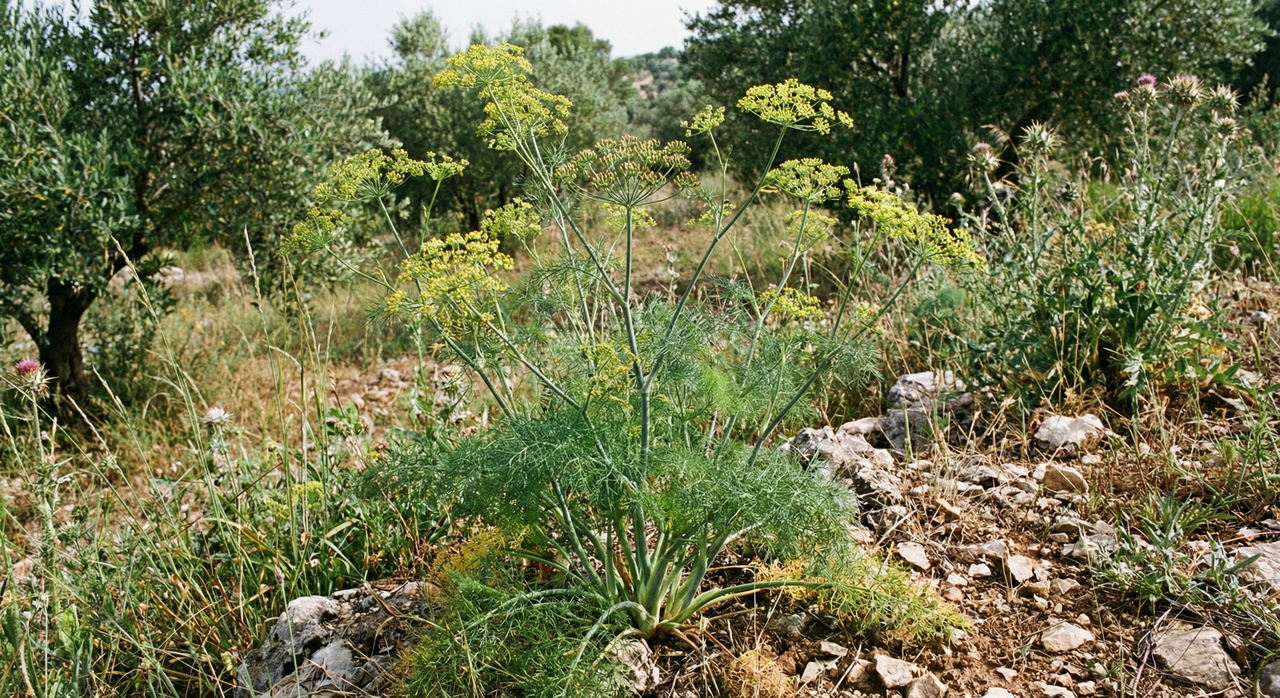
Most gardeners who grow fennel are actually growing the wrong kind and don't know it. They plant it near their tomatoes, their peppers, their basil, and then spend the rest of the season wondering why everything looks slightly off. Fennel is one of the few herbs I actively warn clients about before they put it in the ground, not because it's difficult, but because it has a well-documented allelopathic streak: the roots release compounds that suppress the growth of nearby plants, and it will not apologize for this.[1] I've watched a mature fennel plant quietly bully a raised bed over a single season, and I've watched people blame their soil for it.
Here's the contradiction that keeps me growing it anyway: fennel is also one of the most generous plants in a well-sited garden. The flowers are a magnet for parasitic wasps, hoverflies, and swallowtail caterpillars. Every part of it is edible, from the crunchy raw bulb to the feathery fronds to the pollen. The seeds smell like a Mediterranean kitchen. It's the plant that rewards you deeply once you stop treating it like a well-behaved herb and start treating it like what it actually is: an opinionated, aromatic, ecologically complex perennial that thrives on its own terms.
Fennel Origin, History, and Traditional Uses
Botanical Background and Native Range of Foeniculum vulgare
The fennel plant scientific name, Foeniculum vulgare, carries its Mediterranean identity right in the taxonomy. This is a plant of sun-baked coastal scrublands, rocky roadsides, and open hillsides stretching across southern Europe, North Africa, and western Asia, which is exactly the kind of bright, free-draining habitat where it developed its deep taproot and drought-tolerant constitution.[2][3] In mild climates, it behaves as a short-lived perennial with a lifespan of roughly three to six years, flowering and setting seed repeatedly; in cooler gardens it tends toward a biennial pattern, leafing out in year one and bolting in year two.[4][5]
Wild fennel, the weedy subspecies gardeners encounter escaping from old homesteads and roadsides, tends to have thinner stems, no real bulb to speak of, and a sharper, more concentrated licorice bite than cultivated types. That intense flavor is part of what foragers seek out, but it also signals how chemically assertive this plant is, a trait that becomes relevant when we start talking about where it grows best and, more importantly, where it shouldn't be left unchecked.
Through centuries of trade and European colonization, fennel traveled far beyond the Mediterranean Basin and naturalized across North America and other regions.[3][6] In California, Oregon, Washington, and Hawaii especially, that same self-seeding vigor that made it a beloved garden herb has earned it invasive status, where dense stands can outcompete native plants and even alter fire behavior.[7][8] After years of designing edible landscapes, I've learned to treat fennel as a beneficial opportunist: genuinely useful in the right guild, genuinely problematic in the wrong spot. In warmer climates where it rarely dies back fully, I now recommend growing it in large containers or alongside sterile cultivars, because the taproot and prolific seed production that make it resilient also make it nearly impossible to fully remove once it's established.
Visual Characteristics and Identification Features
Foeniculum vulgare is hard to mistake once you know it. Plants reach four to six feet tall with hollow, glaucous-green stems that branch near the top, and the overall effect is airy and almost luminous in good light because of those finely dissected, thread-like leaves.[9][10] The foliage is alternate and pinnately cut into segments four to eight inches long, giving that characteristic blue-green haze, topped in season by wide compound umbels of bright yellow flowers with fifteen to fifty rays spanning two to five inches across.[3][6] The fruits are small, oval, greenish-brown schizocarps, three to five millimeters long, with the stout taproot anchoring everything below.
The aroma is the real identifier. When I brush against a mature fennel plant in the garden, that sweet licorice scent releases instantly and tells me I'm in the right spot before I even look down. Plants grown in full sun with modest water stress tend to be noticeably more aromatic than shaded or over-watered ones, something I've observed consistently across different sites. That intensity in the essential oils matters, both for culinary quality and for the plant's ecological interactions with surrounding species.
Traditional, Cultural, and Historical Uses of Fennel
Fennel has been in human hands for a long time. The Ebers Papyrus, dating to around 1500 BCE, records its use for digestive complaints and eye treatments, and classical authors including Hippocrates, Dioscorides, and Pliny the Elder each documented it for stomach pain, vision, poison antidotes, and more.[11][12] That's over three and a half thousand years of documented use before anyone called it an herb garden staple.
The mythology runs just as deep. Prometheus, in Greek legend, carried stolen fire from the gods concealed inside a hollow fennel stalk, binding the plant to ideas of knowledge and vital force.[13] Romans wove fennel into victory garlands, and across European folklore it hung over doorways as a protective amulet. The same plant that warmed ancient hearths was also trusted to calm colicky infants, support nursing mothers as a galactagogue, and season Roman sausages and breads.[14][15] Ayurvedic and Traditional Chinese Medicine systems both incorporated it as a cooling digestive herb, and the gripe water tradition for infants persists in various forms today.
What I find striking is the contrast between that revered, almost mythic status and the weedy reputation fennel now carries in parts of North America. One plant's ancient medicine is another ecosystem's management problem. The IUCN lists Foeniculum vulgare as Least Concern given its wide native range and global cultivation,[16] but that security in its native Mediterranean home is precisely what gives it the vigor to outcompete everything around it when it lands somewhere without natural checks. Planting fennel mindfully means holding both truths at once: deep cultural roots and real ecological responsibility.
Fennel Varieties and Where to Buy Them
Notable Fennel Varieties and Types
Fennel divides neatly into three types, and knowing which one you're actually buying changes everything about how the plant will behave in your garden. Common fennel (Foeniculum vulgare var. vulgare) is the tall, wispy herb grown for leaves and seeds, reaching 4 to 6 feet and tolerating dry, poor soils with cheerful indifference.[17][18] Florence fennel (F. vulgare var. azoricum) is the compact vegetable type, topping out around 2 to 3 feet and putting its energy into a swollen bulb-like base that can hit 4 to 6 inches across before bolting; it's milder in flavor, likes richer, moister soil, and is far less prone to self-seeding itself across your garden.[17][19] Then there's the ornamental bronze group, cultivars like Foeniculum vulgare 'Purpureum' reaching that same 4 to 6 foot height but grown primarily for their smoky bronze-purple foliage and the clouds of pollinators their umbels attract.[20]
I grow 'Purpureum' in my pollinator beds, and one thing I've noticed that you won't read on a seed packet: the foliage color deepens dramatically in full sun versus light shade. In partial shade it's greenish-bronze; in full sun it turns a deep, almost reddish-purple that looks striking next to silver-leaved herbs. Worth knowing before you site it.
For kitchen gardeners who want the bulb, modern Florence cultivars like 'Zefa Fino', 'Solaris', and 'Perfection' have been bred for bolt resistance and consistent bulb formation within 60 to 90 days, which is a genuine improvement over older strains that would shoot to flower the moment temperatures climbed.[20] In gardens with limited space, or anywhere common fennel has a reputation for escaping, I routinely steer people toward these Florence types. The common herb variety is the most ecologically aggressive of the three; in California it's formally listed as invasive, and I've watched it seed itself well beyond garden boundaries in mild, coastal conditions.[21][18]
Sourcing Fennel Seeds and Plants
Good fennel seed is easy to find in the U.S. from reliable suppliers like Johnny's Selected Seeds, Burpee, Baker Creek, and Seed Savers Exchange, all of which carry both herb and Florence types in conventional and organic forms.[22][23][24][25] Seed packets typically run $3 to $6 and live plants $5 to $10, so the investment is low.[26][27] What costs you is buying the wrong thing. After planting what turned out to be an unlabeled common fennel from a big-box supplier years ago (the tag just said "fennel"), I now always check that the packet specifies the exact variety. That mystery plant became a 6-foot self-seeding fixture in a client's perennial border before we caught it.
If you garden in the western U.S., check your county guidelines before ordering common fennel; beyond California's invasive listing, some jurisdictions restrict its sale or propagation outright, and imports require USDA APHIS permits and phytosanitary certificates regardless of state.[28][29] The Florence types are a much safer bet in those regions.
My personal quality check at any garden center: I rub a few seeds between my fingers. Fresh fennel seed releases a strong, sweet anise scent immediately. If you get nothing, or something faintly musty, put the packet back. Viable seed should also look plump and feel slightly firm, not hollow or shriveled. Beyond freshness, look for suppliers who screen for fungal pathogens like Fusarium, which can devastate seedlings before you ever notice a problem.[30][31] That sniff test has saved me from bad stock more than once.
How to Propagate and Plant Fennel
Fennel is one of those plants that practically wants to grow. In my experience, the gardeners who struggle with it are almost always fighting the plant's preferences rather than working with them, and those preferences start at the seed level.
Seed Characteristics and Germination Requirements
Pick up a handful of fennel seeds and you'll notice them immediately: ribbed, crescent-shaped little schizocarps, 3 to 5 mm long, pale greenish-yellow or light brown, with five to ten prominent longitudinal ridges running their length.[32][6][33] They feel almost like tiny ridged canoes, and once you know what they look like, you'll spot a self-sown fennel seedling before it's an inch tall. That matters, because the first true leaves look remarkably similar to young dill or carrot seedlings, and I've watched gardeners weed out an entire row of fennel they'd been waiting for. Label your rows. Trust me on this one.
For germination, fennel needs light, so sow seeds at no more than a quarter inch deep, or simply press them onto the soil surface and tamp them in.[5][34] Optimal soil temperature sits between 15 and 21°C (59 to 70°F), with germination typically arriving in 7 to 14 days and success rates of 60 to 80% under good conditions.[5][32] One wet, cool spring early in my gardening life, I lost nearly a full flat of seedlings to damping-off before I figured out the problem was cold soil holding moisture overnight. Now I pre-warm beds with row cover for a week before sowing, and I've consistently hit that 70-plus percent germination rate since. Keep soil moist but never waterlogged, and watch for aphids even on very young seedlings.[32][35]
Seed is always your primary method here. Division of established clumps in spring works as a backup, and softwood cuttings of 4 to 6 inches are technically possible, but neither is as reliable or as easy as direct sowing.[5][36] Fennel seeds are orthodox and desiccation-tolerant, meaning they store beautifully: kept cool (around 3 to 5°C) with low humidity and seed moisture below 6%, they remain viable for 3 to 5 years, and even longer in controlled conditions.[37][38] If you're saving seed from your own harvest, a sealed paper envelope in the back of the fridge is genuinely all you need.
Soil, Site Selection, and Sunlight Needs
Before I put fennel in the ground anywhere, I test the soil. I learned this the hard way after planting into a slightly acidic clay bed and watching the leaves go yellow within a month. What I was seeing was iron chlorosis, classic symptoms of a pH problem. Fennel wants well-drained, loamy or sandy loam soil with a pH between 6.0 and 7.5, though it can manage a broader range of 5.5 to 8.0 if it has to.[32][39][5] Below pH 6.0, phosphorus becomes unavailable; above 7.5, iron chlorosis follows. Neither is a fun problem to diagnose mid-season. A soil test takes the guesswork out entirely; amend with lime to raise pH or elemental sulfur to lower it, and staying within that optimal window can improve bulb and seed yields by 20 to 30%.[40][41] If you're working with heavy clay, incorporate compost or coarse sand for drainage; waterlogged roots rot fast.[42]
On sunlight: fennel wants a full 6 to 8 hours of direct sun daily, and it's not negotiating.[5][32] Plants given less get leggy and pale, and the seeds they produce taste noticeably flatter. I've grown fennel in partial shade as an experiment, and the aromatic difference in the seeds at harvest was enough to convince me never to compromise on siting again. In very hot climates, a little afternoon shade is tolerable, but expect some yield and aroma loss.[35] Once established, fennel is genuinely drought-tolerant, a Mediterranean trait it hasn't lost despite centuries of cultivation.
Spacing, Planting Technique, and Ongoing Establishment
Fennel sulks when moved. That taproot does not appreciate being disturbed, so direct sowing is the standard approach rather than starting transplants indoors and shifting them out.[35][43] Sow 2 to 4 weeks before your last frost date, or after it in cooler regions, and thin seedlings to 12 to 18 inches apart once they reach 2 to 3 inches tall, with rows spaced 24 to 36 inches apart.[35][32] Mature plants reach 3 to 6 feet tall with an 18 to 24 inch spread, and when I'm designing fennel into a guild, I always account for that full height so it doesn't shade low-growing companions as the season progresses.
Adequate spacing does more than give plants room to grow; it keeps air circulating and reduces disease pressure significantly. For containers, use a pot at least 12 inches deep and wide, one plant per container, in a free-draining mix.[44] One companion note worth flagging: keep fennel away from dill and coriander to prevent cross-pollination, which will muddle the seed flavor of all three.[45] Get the siting, spacing, and sowing depth right from the start, and fennel takes care of the rest.
Fennel Care Guide
Fennel is genuinely low-maintenance once you understand what it's after: full sun, decent drainage, and consistent but not excessive water. Get those three things right and the plant mostly takes care of itself. Where I've seen gardeners run into trouble is usually overcomplicating one of these, so let's take the care elements in order of how much they actually matter.
Watering Needs for Healthy Fennel Growth
Established fennel wants about an inch of water per week during the growing season, delivered as deep, infrequent irrigation rather than a light daily sprinkle.[32][46] Seedlings are a different story: for the first four to six weeks, I keep the top inch of soil consistently moist, watering one to two times a week until the roots get their footing.[47][32] Once that deep taproot (which can reach 12 to 36 inches down) establishes itself, the plant becomes surprisingly forgiving of short dry spells, surviving a week or two without irrigation, though regular moisture will improve seed yield if that's your goal.[48][3] I've watched fennel bounce back after a dry spell that had neighboring herbs looking crispy, and it's a good reminder that this is a Mediterranean plant at heart.
I've also lost young fennel to root rot by keeping the soil too wet. The tell is wilting even though the ground is moist. That combination, soggy soil plus a drooping plant, is your cue to back off immediately. Overwatering also produces yellowing leaves and can invite fungal problems at the crown. On the flip side, chronic underwatering shows up as curling, browning leaf margins and brittle stems.[32][46] A 2- to 3-inch mulch layer does a lot of work here, moderating soil moisture, suppressing weeds, and buffering temperature swings all at once.
Sunlight, Soil, and Feeding Requirements
Fennel is a moderate feeder that performs well in fertile, well-drained soil with a pH between 6.0 and 7.5, ideally closer to 6.5 to 7.0.[49][35] Since soil prep and pH were covered in the planting section, what I want to focus on here is the feeding side, because I've seen more gardeners over-fertilize than under-fertilize this plant.
Test your soil before adding anything. If you need to feed, apply 0.5 to 1 lb of a balanced fertilizer like 10-10-10 per 100 square feet at planting, then side-dress once more four to six weeks later during active vegetative growth or at flowering, keeping total seasonal nitrogen around 0.5 to 1.0 lb per 100 square feet.[35][50] I've diagnosed nitrogen shortage in my own fennel by comparing it to nearby parsley: yellowing on the older, lower leaves, smaller than expected plants, generally tired-looking growth.[51][52] Phosphorus shortage tends to show as purplish tones on leaf undersides with slow maturity; potassium deficiency causes marginal browning on older leaves and weak stems. Those are the three I watch for most.[51]
Excess nitrogen is the bigger risk with fennel. Too much and you get lush, floppy, leggy growth, reduced essential oil content, and in Florence types, delayed or poor bulb formation.[53][54] When I see fennel getting leggy with lush but weak stems, excess nitrogen is usually my first suspicion, and it connects directly to the staking problem I'll describe below. When in doubt, less fertilizer is almost always the right call here.
Frost Tolerance and Winter Protection
Fennel is hardy in USDA zones 4 through 9, rated H5 by the RHS, meaning established plants can handle temperatures down to around 14°F (-10°C) and will often regrow from the roots even after the foliage dies back completely.[55][56][3] In borderline zones, I mulch established plants heavily in late fall (2 to 3 inches of straw or shredded leaves over the crown) and have reliably seen them push back up in spring from those hardy roots.[5][57] That's the perennial nature showing itself, and it's a genuinely useful trait.
Seedlings, though, are far more vulnerable. Frost damage can appear at 28 to 32°F (-2 to 0°C), showing up as blackened or water-soaked leaf tips, sudden wilting, or necrotic patches.[35][58] Flowers and developing seed heads are especially sensitive, so a late frost can cut your seed harvest significantly. Row covers that raise temperature by 4 to 8°F buy you meaningful protection without much effort, and siting plants away from low-lying frost pockets and on well-drained ground reinforces all the cold resilience the genetics already provide.[5][57]
Pruning, Maintenance, and Seasonal Rhythm
Fennel grows 4 to 6 feet tall, and the taller varieties genuinely do need staking with 3- to 5-foot supports when they're exposed to wind.[46][35] I've learned to pinch growing tips when plants are 4 to 6 inches tall, which encourages bushier, sturdier stems that need less staking later. Getting ahead of the legginess is much easier than staking a floppy 5-foot plant after the fact. If you're growing for leaves rather than seeds, trimming flower buds as they form redirects the plant's energy back into foliage. For seed crops, leave the umbels alone and let the plant do what it wants to do.
Fennel flowers 60 to 90 days after seeding, typically July through September, with seeds maturing by September or October.[59] That shift from leafy vegetative growth to flowering is triggered by heat above 75 to 85°F and day lengths over 12 hours, much like cilantro bolting in a summer heat wave.[60][61] Once that clock starts, you can't stop it, so early pinching and starting plants in cool weather extend the leaf harvest as long as possible. After frost knocks the plant back, cut spent stalks to ground level and apply that 2- to 3-inch mulch layer to protect the crown through winter.[59] Where you're treating it as an annual, this is also the moment to collect seeds for next year before anything shatters.
How to Harvest Fennel for Peak Flavor and Yield
Fennel gives you three completely different harvests from a single plant, each with its own timing window and consequences if you miss it. I label my fennel rows carefully in the first few weeks of the season because those feathery seedlings look so much like dill or carrot tops that I've seen them get accidentally weeded or ignored past their first harvest opportunity. Once you know what to watch for, though, the cues are clear.
Timing and Visual Cues for Leaves, Bulbs, and Seeds
Leaf harvest starts earliest, once plants are 6 to 12 inches tall, typically 60 to 90 days after planting, and quality is best well before any flowering begins.[62][63][44] I've found that harvesting before any hint of a flower bud keeps the anise flavor bright and genuinely sweet; once the plant starts putting energy into reproduction, the fronds turn a little bitter and the aromatic lift fades. Florence fennel bulbs are ready when they reach 2 to 4 inches in diameter and feel solid and firm, generally 60 to 100 days from seed.[19][44][35] My rule is to pull them the moment they hit about 3 inches across and still feel solid; wait even a week longer in warm weather and the texture turns woody. Seeds come last, 90 to 120 days after sowing, when the umbel heads have turned brown and the seeds are firm and grayish-brown.[62][35][64] In temperate parts of the U.S. (roughly zones 5 to 7), that arc runs from late spring leaf cuts through midsummer to fall bulb harvest and into late summer for seeds,[35][46] though your microclimate will shift those windows; check with your local extension service if you're unsure.
Harvesting Techniques and Sustainable Practices
For leaves, I harvest in the morning when the essential oils are most concentrated, using scissors to cut outer fronds or tips close to the base, never taking more than one-third of the plant at once.[62][35] That limit matters: regular cuts done this way actually push bushier regrowth through the season. Bulb harvest is a single decisive event; cut or pull the whole plant when the bulb is firm and well developed, again ideally in the cool of the morning to preserve tenderness.[19][62] Seeds require their own approach: cut entire umbels once the heads are fully brown and dry, then hang them upside down in a paper bag in a warm, ventilated spot for one to two weeks before rubbing the seeds free and winnowing out the chaff.[62][35][64] I learned to use the paper bag method after losing a whole batch to shattering one humid season; the bag catches everything that drops during drying. If you want fennel to self-seed the following year, leave a few umbels on the plant entirely.
Flavor Profiles, Yields, and Post-Harvest Storage
All three harvests taste like fennel but in distinctly different ways. The flavor across every part is driven by anethole, which makes up 80 to 90 percent of the seed's essential oil and gives that characteristic sweet-licorice character.[32][65][66] Fresh fronds are herbaceous and green with a mild anise lift; a just-harvested bulb is crisp and high in water content with a gently peppery sweetness; dried seeds are concentrated and pungent, closer to a spice than a vegetable. Sweet cultivars run milder than wild types, and intensity also shifts with growing conditions and how carefully you handle the harvest.[67][65][3] For storage: fresh fronds wrapped in a damp paper towel keep in the refrigerator for about a week; bulbs trimmed to 1 to 2 inches of stalk and wrapped in damp towels last up to two weeks refrigerated; and properly dried seeds stored in an airtight jar in a cool, dark spot will hold their flavor for one to two years.[19][35] I always label my dried fennel jars with the harvest date because the difference between a jar from this season and one from two years ago is immediately obvious the first time you open it.
Fennel Preparation, Uses, and Benefits
Culinary Uses and Flavor Profile of Every Edible Part
One thing I love about growing fennel is that almost nothing goes to waste. Every above-ground part is edible, from the crunchy bulb to the fronds, stems, flowers, and seeds.[32] Only the roots get composted in my kitchen. That's a lot of pantry from a single plant.
The bulb is where most cooks start, and a good fennel bulb salad recipe will almost always call for it raw and thinly shaved, where it's crisp and bright with that characteristic anise edge. I've made a simple fennel salad with shaved bulb, orange segments, and a lemon vinaigrette more times than I can count; the citrus softens the licorice note beautifully, which is why fennel pairs so naturally with citrus and fish throughout Mediterranean cooking.[68][69] If you want to know how to cook a fennel bulb to mellow that intensity, roasting at 400°F for 20 to 30 minutes is the answer. I once pulled a batch too early and wondered why it still tasted sharp; the caramelization is the whole point. Give it the full time, and you get something sweet and yielding that barely resembles the raw vegetable.
The fronds are milder than I first expected, more like a delicate dill than anything aggressively licorice-like, driven by the same essential oils (anethole and estragole) that define the plant but in gentler concentration.[70] I chop them into salads, drape them over roasted fish, or steep them in white wine vinegar for a herb-forward condiment. Seeds deserve a dry toast before you use them, just like cumin or coriander -- a technique I've applied across the whole Apiaceae family grown in my garden. That brief heat in a dry pan cracks the surface and releases the essential oils in a way that grinding cold seeds simply doesn't match. Fennel seeds show up in sausages, bread, and pickling brines across Mediterranean, Indian, and Middle Eastern kitchens for exactly this reason. And if your plants flower before you harvest them, collect the pollen. I gather mine in small batches by shaking the umbels into a paper bag; a single pinch over roasted vegetables or fresh ricotta is one of those disproportionate moments in the kitchen where the aroma hits before you've even tasted anything.
For storage, keep fresh fronds in a perforated bag in the crisper at 32 to 40°F with high humidity; they'll hold one to two weeks. Bulbs store the same way, wrapped loosely in plastic.
Medicinal Preparations and Dosages
Fennel tea is the preparation most gardeners reach for first, and the EMA guidelines give a clear starting point: one to two teaspoons of lightly crushed seeds per 250 ml of boiling water, steeped five to ten minutes, up to two or three times daily.[71] I make a cup occasionally for digestive comfort after heavy meals and always stay in that range. The flavor is gentler than you'd expect, something like a mild chamomile-adjacent warmth with an anise edge. Tincture preparations run 0.5 to 2 ml (1:5 in 45% alcohol) three times daily, and a simple decoction uses one to two grams of dried seeds simmered in 250 ml of water for ten minutes.[71] The essential oil is a different matter entirely; internal use requires professional guidance at very small doses, and I don't go there on my own. The deeper research on fennel's therapeutic properties is covered in the health benefits section, but for everyday home use, the seed infusion is where I'd start and probably stay.
Non-Food Uses and Storage Guidelines
Well-dried seeds are the workhorse of fennel's non-kitchen life. Dry them at 100 to 110°F to preserve the essential oils, then store in an airtight container somewhere cool, dark, and dry; kept below 60% humidity, they'll hold fragrance and viability for two to four years. I've found that properly dried seeds from my own harvest still smell intensely sweet three seasons later, which makes them useful far beyond cooking. Small sachets tucked into linen drawers carry that light anise scent, and the same aromatic chemistry that makes fennel useful in the kitchen has a traditional history of repelling insects. Using every part of the plant from bulb to dried seed also means less waste from a harvest that can be considerable once a planting is established. Grow it thoughtfully, harvest it fully.
Fennel Health Benefits and Medicinal Uses
Every part of fennel does something useful, and understanding why starts with its chemistry. The plant's essential oil is dominated by trans-anethole, which makes up anywhere from 50 to 90% of the total composition depending on which part you're working with and where it was grown.[72][73] Seeds run highest in anethole (up to 80-90%), while leaves sit lower (20-40%) and carry more alpha-pinene and myrcene alongside it.[73] I've noticed this difference firsthand: seeds from plants I've grown in well-drained, slightly alkaline beds have a noticeably more intense aroma than those from heavy clay or acidic soils, and the research bears that out -- optimal soil pH around 6.5-8.0 enhances anethole and flavonoid development, and organic cultivation practices can increase flavonoid content by 15-20%.[74][75] That's a genuinely compelling reason to grow fennel organically if you're using it medicinally.
Key Phytochemicals in Fennel: Anethole, Flavonoids, and Phenolics
Beyond anethole, fennel carries a rich supporting cast of secondary compounds. Flavonoids including quercetin, kaempferol, rutin, apigenin, and isorhamnetin glycosides appear alongside phenolic acids like chlorogenic, caffeic, ferulic, and rosmarinic acid, with total phenolics ranging roughly 50-100 mg GAE/g in both leaves and seeds on a dry weight basis.[72][76] Coumarins, tannins, and saponins round out the picture, while alkaloids are essentially absent.[72] The minor component fenchone (5-20% of seed oil) contributes its own spasmolytic and carminative properties, and quercetin actively suppresses pro-inflammatory cytokines via NF-κB pathway inhibition.[77][78] One compound worth flagging is estragole (1-10% of seed oil): while its potential hepatotoxic and genotoxic effects in rodents at very high doses sound alarming, human epidemiological data shows low risk from typical culinary exposure.[79] Growing your own, in good soil, is the best way to know exactly what you're getting.
Evidence-Based Medicinal Benefits of Fennel
The strongest clinical evidence for Foeniculum vulgare centers on two things: digestive relief and menstrual pain. Anethole's antispasmodic action via voltage-gated calcium channel blockade has been confirmed in randomized trials for dysmenorrhea, with fennel preparations outperforming placebo on pain scores by a meaningful margin.[80][81] The carminative and antispasmodic effects on the gut -- relieving bloating, gas, and cramping -- have extensive traditional support backed by EMA approval for digestive symptoms, and they hold up in practice; fennel tea after a heavy meal is something I reach for regularly.[82][83] Human studies have also confirmed diuretic activity -- increased urine output without significant electrolyte disruption -- and the antioxidant capacity, comparable to ascorbic acid in some in vitro models, reflects the combined work of anethole's free radical scavenging and Nrf2 pathway activation alongside the phenolic fraction.[84][85] Antimicrobial activity against E. coli and S. aureus at concentrations below 1 mg/mL is well-documented in vitro,[86] and fennel seed extract has accelerated wound healing in animal models, though these findings haven't yet made the leap to robust human trials.[87] The most intriguing emerging territory is blood sugar management: fennel phenolics inhibit α-amylase with IC50 values of 50-100 μg/mL, suggesting a potential role in moderating postprandial glucose, but clinical validation is still needed before anyone should treat this as established.[88]
Nutritional Profile and Antioxidant Contribution
The bulb, fronds, and seeds each bring something different to the table nutritionally. Raw fennel bulb is mostly water (90.4%), genuinely low-calorie at 31 kcal per 100g, and a decent source of fiber (3.1g), potassium (414mg), and vitamin C (12mg, about 13% DV).[89] I often compare the raw bulb to celery -- similarly crisp, hydrating, mild -- but fennel's anethole-driven aroma and significantly higher phenolic content give it a more interesting antioxidant profile in raw preparations. It's not the most nutrient-dense vegetable you'll grow, and I won't pretend otherwise, but it holds its own. Cooking knocks out 30-70% of that vitamin C,[90] which is worth knowing if you're eating it for that specifically. Anethole, on the other hand, stays relatively stable through gentle cooking,[91] which is why sautéed fennel still delivers that characteristic flavor and functional benefit even after heat. The seeds concentrate everything: 2-6% essential oil by weight, flavonoids at 5-25 mg/g dry weight in leaves, and total phenolics across plant parts correlating with strong DPPH radical scavenging (IC50 around 20-50 μg/mL).[91][92] Drying preserves 70-90% of phenolics while destroying most of the vitamin C, so how you process what you harvest genuinely changes what you end up with.[93]
Safety Considerations and Potential Side Effects
Fennel is GRAS-classified and EMA-approved for digestive symptoms, and when you're eating the bulb in a salad or sipping fennel tea, the risk profile is genuinely low.[94][95] The picture changes with concentrated forms. High doses of fennel essential oil can cause seizures, nausea, vomiting, hallucinations, or liver damage; these are not theoretical concerns.[96] Never ingest fennel essential oil undiluted. On estragole: EFSA and EMA recommend minimizing exposure given the genotoxic data from rodent models, but water-based preparations like teas contain substantially less estragole than oils, putting them in a much lower risk category.[97][98] The phytoestrogenic activity of anethole is real enough that anyone with hormone-sensitive conditions like breast cancer, endometriosis, or uterine fibroids should consult their provider before using fennel medicinally.[99][100] I enjoy fennel regularly for its digestive properties, but I'm direct with people: medicinal doses and essential oils are contraindicated in pregnancy due to possible uterine stimulation, and that's a boundary I take seriously regardless of how traditional the use is.[101] Drug interactions are worth a mention too: fennel can reduce ciprofloxacin absorption, may increase bleeding risk alongside anticoagulants like warfarin, and has possible CYP3A4 inhibition effects.[102][103] If you have Apiaceae family sensitivities (carrots, celery), cross-reactivity is possible.[83] One final point I feel strongly about from early foraging experience: fennel can be confused with poison hemlock or water hemlock, both potentially fatal. The sensory check is fast and reliable -- fennel smells unmistakably of licorice, while poison hemlock has a distinctly unpleasant mousey odor and shows hollow stems with purple-red spotting.[104] Confirm multiple traits before you harvest anything in the wild. Used with that kind of informed attention, fennel is a safe and genuinely rewarding plant to work with.
Fennel Pests and Diseases
Fennel sits in the Apiaceae family, which means it shares a lot of the same pest and disease vulnerabilities as carrots, parsley, and dill. That said, its dense aromatic chemistry gives it some real built-in armor. The trans-anethole and other essential oils that concentrate in every part of the plant have genuine insecticidal properties,[105] and in my experience, that fragrance does a lot of quiet work. Most seasons, by the time I spot the first aphids building up on new growth, the ladybugs are already there ahead of me.
Common Insect Pests of Fennel
Aphids are the most consistent pest pressure I see on fennel, particularly during hot, dry stretches. Aphis gossypii, Aphis fabae, and green peach aphid all show up, clustering on soft new growth and flower stalks.[60][20] Spider mites follow the same pattern; dry, dusty conditions invite them in. My first sign is never webbing -- it's a faint dusty look on the lower leaves, almost like the plant needs a rinse. It usually does. A good blast of water at the base of the plant early in the day catches both problems before they escalate.
Carrot rust fly larvae (Psila rosae) can affect fennel, though it's generally less susceptible than carrots or parsley,[60] which tracks with what I've seen growing multiple umbellifers side by side. Other caterpillars on fennel plants worth watching for include cutworms and armyworms at the soil line, plus flea beetles, leaf miners, thrips, slugs, and snails rounding out the list of occasional visitors.[60][20] Most of them stay minor when beneficial insects are present. Fennel's umbels are excellent at recruiting parasitic wasps, lacewings, and ladybugs,[105] so the plant is genuinely pulling its own weight on defense. I've also noticed that bronze fennel ('Purpureum') tends to shrug off early leaf-spot pressure better than green types -- it seems to bounce back faster, which aligns with observations that it often shows greater vigor under stress,[105] even if no variety has been formally bred for resistance.
Fungal, Bacterial, and Viral Diseases
The disease list for fennel is longer than most gardeners expect. Fungal threats include downy mildew, powdery mildew, Fusarium wilt, Alternaria leaf spot, Botrytis gray mold, and root rots caused by Rhizoctonia and Pythium.[106][107][60][108] I used to lose young bronze fennel to downy mildew until I stopped overhead watering after noon; now I water at the base in the morning and almost never see it. Bacterial leaf spot (Xanthomonas campestris pv. fennelli) and occasional viral infections like Cucumber Mosaic Virus also occur, though viral documentation on fennel is thin and real-world pressure tends to be low.[106][109] Some varieties show moderate tolerance to Fusarium and powdery mildew, but no cultivar has been specifically bred for disease resistance,[105][66] so cultural conditions matter far more than variety selection here. Disease pressure drops significantly when daytime temperatures stay in the 60--75°F range, humidity stays moderate, drainage is excellent, and the soil is allowed to dry slightly between waterings.[35][20]
Prevention and Integrated Management
I rarely reach for neem or insecticidal soap on fennel because the cultural steps almost always handle things before they get serious. Start with certified disease-free seed, rotate fennel out of any bed that's hosted Apiaceae family members in the past three to four years, and give plants real spacing -- I've found that wide spacing, similar to what I use for basil, nearly eliminates the mildew that used to appear after every humid summer rain. Good airflow, morning watering at the base, and clean sanitation at season's end cover most of the remaining risk.[106][105][110] When the beneficial insect guild is in place and the site conditions are right, fennel is genuinely low-maintenance -- a plant where vigilance and good siting are the actual intervention, not the spray bottle.
Fennel in Permaculture Design
Fennel sits in that uncomfortable category of plants that can genuinely pull its weight in a well-designed system and also become a genuine problem if you're not paying attention. I've grown it in multiple climates and designed it into client landscapes on both coasts, and my relationship with it has evolved from enthusiastic to cautiously respectful. That's probably the right place to land.
Climate Adaptation and Hardiness Zones
Fennel is hardy across USDA zones 4-9, though how you grow it shifts considerably depending on where you fall in that range.[3][111] In zones 6-9, it behaves as a perennial, dying back and returning reliably. In zones 4-5, treat it as an annual or give it serious winter protection, because while an established plant can survive lows down to -30°F, seedlings and young plants are surprisingly frost-sensitive and need the same coddling you'd give tomatoes in early spring.[112][113] That distinction matters; the hardiness figures are for roots that have had a full season to establish, not for the wispy seedling you set out in April.
Fennel is at its best in Mediterranean-like conditions: mild, wet winters and long, dry summers with temperatures in the 60-75°F range and moderate annual rainfall around 20-30 inches.[35] On the West Coast, especially in coastal California and the Pacific Northwest, it genuinely thrives; in the humid Midwest, it tends to be sulkier, showing more disease pressure and less of the drought-tolerant vigor it displays in drier air.[114] For site selection purposes, that means prioritizing a spot with excellent drainage and good air circulation if you're gardening east of the Rockies.
Ecosystem Functions and Ecological Roles
On a warm midsummer morning, fennel's yellow compound umbels are genuinely alive. I've stood next to a mature plant and counted honeybees, bumblebees, hoverflies, and at least two species of solitary wasps working the flowers simultaneously. The research backs up what any attentive grower sees: honeybees are the primary pollinators, but the broader community of beneficial insects that the flowers attract, particularly predatory and parasitic wasps, provides real secondary pest control throughout the surrounding planting.[115][116] Its aromatic oils also repel aphids and slugs directly, giving it a dual function as both attractor and deterrent.[117]
Its deep taproot draws potassium, phosphorus, and iron from lower soil layers, and the substantial leafy biomass makes excellent chop-and-drop material or a high-quality addition to a compost pile. Those are genuinely useful functions in a food forest or kitchen garden context.
Here's where the enthusiasm has to pump the brakes, though. Fennel produces allelopathic compounds, including trans-anethole, through both root exudates and essential oils, and those compounds actively suppress germination and growth in nearby plants. Tomatoes, carrots, beans, lettuce, and coriander are all documented victims.[118][119] I compare it to black walnut in this respect: a plant that is genuinely useful in the right place but quietly toxic to neighbors that haven't evolved alongside it. And outside its native Mediterranean range, fennel doesn't just suppress its neighbors; it can overwhelm them entirely. In California, Hawaii, and parts of Australia, it forms dense monocultures that outcompete native vegetation, alter soil nutrient cycling, and increase fire risk.[18][120] It self-seeds prolifically and requires active, ongoing management to contain. In my Central Florida garden, I've found myself pulling volunteers almost weekly during the long growing season; I now treat it functionally as an annual and deadhead aggressively before seed set.
Forest Layer Placement and Guild Design
In a food forest context, fennel belongs at the sunny edge or in a dedicated herb spiral where it gets full sun and you can physically intervene if it starts moving where it shouldn't. At 1.5-2.5 meters tall, it occupies the herbaceous layer visually but functions like a tall accent at a forest margin, and that feathery vertical texture genuinely does add structure and interest. I often place it at the transition between cultivated space and a path or wildflower strip, where the beneficial insects it draws can disperse into adjacent plantings without fennel itself colonizing them.
What fennel is not, despite what some plant-guild lists suggest, is a generous companion for most food crops. Its allelopathic chemistry makes speculative guilds risky. The plants that tolerate proximity best tend to be drought-adapted Mediterranean herbs with their own strong chemistry, things like rosemary or sage, that aren't easily bullied. Keep it away from the vegetable beds entirely if you can, and never tuck it between crops you plan to eat raw, both for allelopathic reasons and because of the phytochemical considerations covered in the health section of this profile. Managed responsibly, with containment built into the design from the start, fennel's pollinator value and soil-mining capacity are real assets. Skip the containment step and you'll be managing a weed, not a guild member.
The Plant I Keep Planting Anyway
I've moved fennel out of more client gardens than I care to admit, usually after a frank conversation about what "self-seeding vigorously" actually means in practice. But I still grow it myself, tucked into a contained bed near the kitchen, because there's something about cutting a handful of those feathery fronds on a cool morning, that smell rising up, that no amount of sensible garden advice has ever talked me out of.
Sources 120
- Allelopathic potential of fennel (Foeniculum vulgare) - ScienceDirect ↩
- Foeniculum vulgare - Kew Science ↩
- Foeniculum vulgare - USDA PLANTS Database ↩
- Foeniculum vulgare (Fennel) ↩
- Fennel (Foeniculum vulgare) - Growing Guide ↩
- Flora of North America ↩
- Invasive Species Profile: Fennel in California ↩
- Invasive Plant Atlas of the United States ↩
- Foeniculum vulgare - Missouri Botanical Garden ↩
- Foeniculum vulgare - Kew Science Plants of the World Online ↩
- Historical Documentation of Fennel ↩
- Ancient Botanical Documentation ↩
- Cultural and Symbolic Significance ↩
- Medicinal Uses Across Cultures ↩
- Fennel in Traditional Medicine - NCBI ↩
- Sustainability and Invasive Potential ↩
- Foeniculum vulgare ↩
- Wild Fennel (Foeniculum vulgare) ↩
- Florence Fennel ↩
- RHS Gardening - Fennel ↩
- Missouri Botanical Garden - Foeniculum vulgare ↩
- Fennel Seeds - Organic ↩
- Fennel Seeds and Plants ↩
- Fennel, Florence ↩
- Fennel Plants and Seeds ↩
- Fennel Seeds - Organic ↩
- Fennel Live Plant - 4 in. Pot ↩
- Importation of Plants and Plant Products ↩
- Invasive Plants of California ↩
- Fennel (Foeniculum vulgare): Botany, Uses and Benefits ↩
- Identification and Management of Fennel Diseases ↩
- Foeniculum vulgare (Fennel) ↩
- Foeniculum vulgare - Seed Morphology ↩
- Seed Germination of Fennel ↩
- Growing Fennel ↩
- Propagation of Fennel (Foeniculum vulgare) by Stem Cuttings and Layering ↩
- Seed Storage of Horticultural Crops ↩
- Longevity of Fennel Seeds Under Different Storage Conditions ↩
- USDA Plant Guide for Fennel ↩
- Soil pH and Lime Requirements for Vegetables - Penn State Extension ↩
- Effects of Soil pH on Fennel Yield and Quality ↩
- Adjusting Soil pH - University of Minnesota Extension ↩
- Fennel - Royal Horticultural Society ↩
- RHS Fennel Growing Guide ↩
- Fennel - USDA Plant Guide ↩
- Royal Horticultural Society - Fennel Growing Guide ↩
- Fennel in the Garden ↩
- Drought Stress Responses in Foeniculum vulgare: Physiological and Biochemical Adaptations ↩
- Fennel Production Guide ↩
- Fennel Production Guidelines - University of California Agriculture and Natural Resources ↩
- Nutrient Deficiencies in Fennel - University of California Agriculture ↩
- Plant Nutrient Deficiency Symptoms Guide ↩
- Royal Horticultural Society Plant Finder - Foeniculum vulgare ↩
- Nutrient Requirements for Herbs - University of California Agriculture and Natural Resources ↩
- Foeniculum vulgare - Missouri Botanical Garden ↩
- Royal Horticultural Society - Foeniculum vulgare ↩
- Frost Protection for Vegetables - University of California Agriculture ↩
- Frost Damage to Plants ↩
- RHS - Foeniculum vulgare ↩
- Fennel Production and Pest Management ↩
- Foeniculum vulgare - RHS Gardening ↩
- USDA Plant Guide for Fennel ↩
- Fennel Production Guide ↩
- Growing Fennel in the Home Garden ↩
- Essential Oil of Foeniculum vulgare: Chemical Composition and Antioxidant Activity ↩
- Royal Horticultural Society: Fennel Factsheet ↩
- Missouri Botanical Garden Plant Finder ↩
- Fennel in Mediterranean Cuisine ↩
- Pairing Fennel with Fish and Citrus ↩
- Missouri Botanical Garden Plant Finder: Foeniculum vulgare ↩
- European Medicines Agency (EMA) - Assessment Report on Foeniculum vulgare Miller ↩
- Foeniculum vulgare Mill: A Review of Its Botany, Phytochemistry, Pharmacology, and Contemporary Application in the Food Industry ↩
- Chemical Composition of Fennel Essential Oils from Different Plant Parts ↩
- Influence of Soil Properties on Fennel Essential Oil Composition ↩
- Effect of Cultivation Practices on Secondary Metabolites in Fennel ↩
- Phenolic Compounds in Foeniculum vulgare: Distribution and Bioactivity ↩
- Pharmacological Review of Fenchone in Fennel ↩
- Flavonoids in Foeniculum vulgare: Quercetin and Anti-inflammatory Effects ↩
- Toxicity Assessment of Estragole in Foeniculum vulgare ↩
- Antispasmodic effects in dysmenorrhea trials ↩
- Analgesic effects of fennel in clinical trials ↩
- Foeniculum vulgare: A comprehensive review on phytochemistry, pharmacology, and ethnobotanical uses ↩
- National Institutes of Health - Fennel ↩
- Diuretic activity of Foeniculum vulgare in humans ↩
- Pharmacological Activities of Anethole: A Review ↩
- Antimicrobial effects of fennel essential oil ↩
- Wound healing with fennel seed extract ↩
- α-Amylase Inhibitory Effects of Fennel Phenolics in Diabetes Management ↩
- USDA FoodData Central - Fennel, bulb, raw ↩
- Vitamin C Loss During Cooking of Vegetables - NCBI ↩
- Chemical Composition and Antioxidant Activity of Fennel Essential Oil ↩
- Flavonoid Content in Fennel Leaves ↩
- Drying Methods and Antioxidant Retention in Fennel ↩
- Fennel - NCCIH ↩
- European Medicines Agency (EMA) Monograph on Fennel Oil ↩
- Epileptic seizure induced by fennel essential oil - PubMed ↩
- EFSA - Estragole in fennel seed preparations ↩
- Can Estragole in Fennel Seed Decoctions Really Be Considered a Danger for Human Health? - PMC ↩
- Fennel - LiverTox - NCBI Bookshelf ↩
- European Medicines Agency - Assessment Report on Foeniculum vulgare ↩
- Fennel - Drugs and Lactation Database (LactMed) ↩
- Effect of Foeniculum vulgare on ciprofloxacin absorption - PubMed ↩
- Herb-Drug Interactions: Foeniculum vulgare and CYP Enzymes ↩
- Poison Hemlock vs. Wild Fennel: How to Tell the Difference ↩
- Ecosystem Functions of Fennel ↩
- Diseases of Fennel - UC IPM ↩
- Downy Mildew of Umbelliferous Crops ↩
- Diseases of Herb Crops: Fennel ↩
- Viral Diseases of Umbelliferae ↩
- Disease Management in Vegetables ↩
- Missouri Botanical Garden - Foeniculum vulgare ↩
- Fennel Growing Guide - USDA ARS ↩
- Royal Horticultural Society - Foeniculum vulgare ↩
- Kew Science - Foeniculum vulgare ↩
- The role of fennel (Foeniculum vulgare) in Mediterranean plant-pollinator networks ↩
- Royal Botanic Gardens, Kew - Foeniculum vulgare Fact Sheet ↩
- Insect Attraction and Pest Management Using Fennel in Intercropping Systems ↩
- Fennel Allelopathy Effects on Carrot and Tomato ↩
- Allelopathic Effects of Fennel - Journal of Chemical Ecology ↩
- Fennel - Invasive.org | USDA ↩