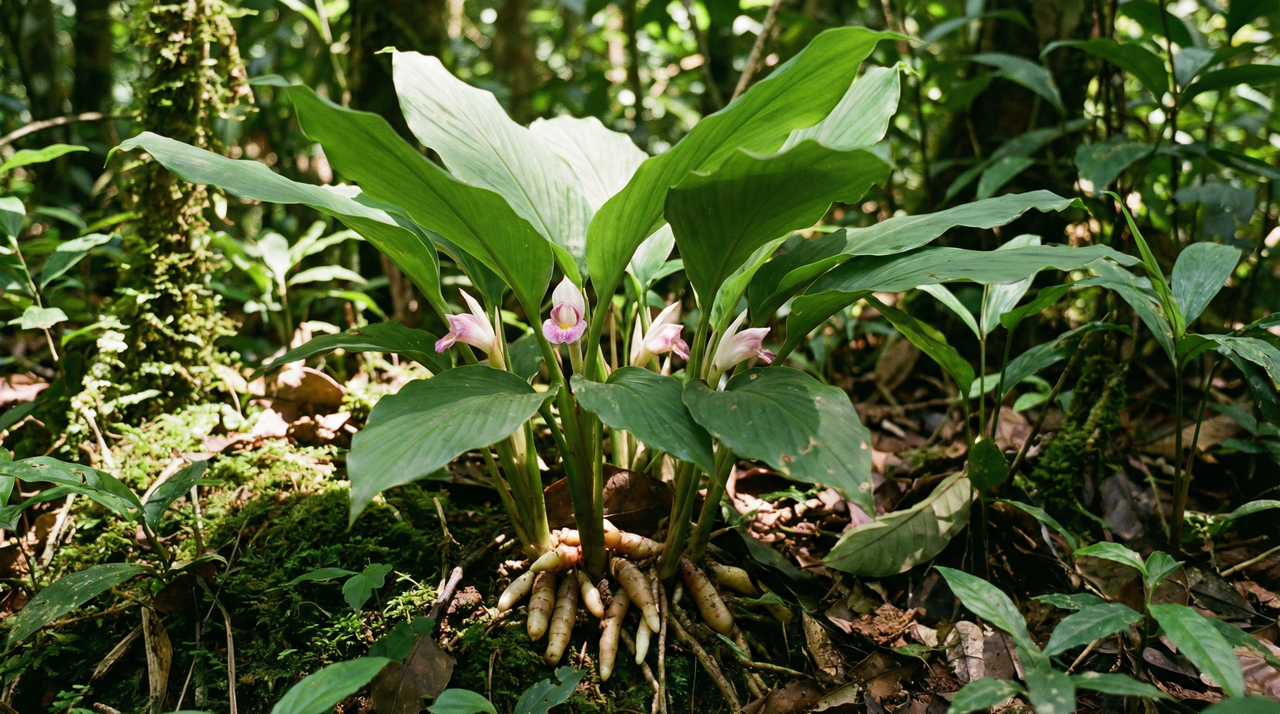
Most people who grow ginger have never heard of fingerroot, and that gap in awareness genuinely baffles me. I first encountered it at a Thai market in Los Angeles, where a vendor was selling what looked like a small hand with elongated fingers splaying out from a central body, pale yellow-tan and smelling like someone had crossed fresh ginger with a citrus zest and something almost floral underneath. I bought it without knowing what I was getting into. Then I went home, sliced into one raw, and stood over my cutting board for a long moment trying to figure out why this flavor wasn't already in my garden.
Here's the contradiction that hooked me: fingerroot (Boesenbergia rotunda) has been a staple of Thai, Malaysian, and Indonesian kitchens for centuries, a regular in temple medicine and street food alike, and yet Western gardeners almost universally overlook it in favor of its more famous cousins.[1] It's not harder to grow than ginger. It's genuinely better suited to the shaded corners of a food forest than most things I've tried there. And the flavor, that sharp-citrusy-pungent thing it does, is something you simply cannot replicate by substituting common ginger. Once you've grown it, you'll wonder how you designed a single Southeast Asian-inspired guild without it.
Fingerroot Origin, History, and Botanical Background
Botanical Identity and Native Range of Boesenbergia rotunda
Fingerroot, known botanically as Boesenbergia rotunda (L.) Mansf., is a rhizomatous perennial herb in the Zingiberaceae family with roots in the tropical forests of Southeast Asia.[2][3] Its native range sweeps across Thailand, Malaysia, Indonesia, Cambodia, Laos, Vietnam, parts of southern China, the Philippines, and India, making it one of the more geographically widespread understory gingers in the region.[4][5] You'll also hear it called Chinese keys, krachai, or cekering depending on where you are and who you're talking to. I've always found that knowing its many names helps you track down regional recipes and medicinal literature that would otherwise be scattered across different linguistic traditions.
In the garden, fingerroot spreads by creeping underground rhizomes in warm, humid microclimates, forming dense clumps over time.[6] Given good conditions, a planting can persist indefinitely through vegetative spread, reaching reproductive maturity just 8 to 10 months from rhizome division.[4] As a landscape designer, I appreciate that clumping, spreading habit. It fills space without becoming a weed problem, which is something I can't say for all the gingers I've worked with. That said, I always label my Zingiberaceae carefully because the family is full of look-alikes. Fingerroot is easily confused with galangal (Alpinia galanga), zedoary (Curcuma zedoaria), and aromatic ginger (Kaempferia galanga), and misidentifying them matters both culinarily and medicinally.[3][7]
Visual Characteristics and Morphology
The common name tells you almost everything you need to know about the rhizome. Those segmented, finger-like underground structures typically run 5 to 15 cm long and about 1 to 2 cm in diameter, pale yellowish inside, with that characteristic aromatic snap when you break one open.[8] The whole clump sits somewhere between 30 and 150 cm tall, though most cultivated plants settle in around 50 to 100 cm with broad, shiny leaves arranged in two opposite vertical rows (that's the distichous pattern botanists describe) and a leathery texture that catches whatever dappled light filters through the canopy above.[9] Growing Zingiberaceae relatives in humid subtropical conditions has taught me to pay attention to how those rhizomes emerge below ground. They scatter outward from the crown like puzzle pieces, each segment angled slightly differently, and you learn quickly to harvest with care so you're leaving buds behind for next season's growth.
Flowering happens in the wet season, with small white or pale yellow blooms emerging directly from the rhizome in short dense spikes.[10] Each flower features a labellum (the prominent lip petal) marked with red or purple stripes, which is actually a useful identification cue when you're trying to sort fingerroot from its relatives at the market or in a mixed planting. Individual blooms last only a day or two, so you have to be paying attention to catch them. The fruit that follows is a small reddish capsule with tiny black seeds, though in cultivation the plant rarely needs to reproduce that way given how vigorously it spreads by rhizome.[11] All of this morphology, the broad thin leaves, the high chlorophyll content, the shade tolerance, reflects millions of years of adaptation to the tropical forest understory.[12]
Traditional and Cultural Uses Across Southeast Asia
In Thailand, where it's known as krachai, fingerroot has been a cornerstone of traditional medicine for centuries. Healers traditionally relied on it for a broad range of digestive complaints, structural injuries, and postpartum recovery practices.[13][14] Its reputation extended well beyond the medicine chest into fertility ceremonies and protective charms, the kind of cultural weight you only accumulate over centuries of genuine usefulness. That traditional knowledge radiates outward across the region: Chinese medicine employed it for stomach ailments, vitality, and detoxification; Malaysian practitioners used it for colds and as a culinary tea base; in Myanmar it was applied as an antimicrobial; Cambodian traditions reached for it as a postpartum tonic and respiratory aid.[15][16] On the culinary side, it shows up in Thai curries, tom yum, green curries, and pla ra; in Indonesian jamu tonics; in Malaysian rendang and ulam salads, often serving both as flavoring and as functional food in a single dish.[17]
Today fingerroot is cultivated well beyond its native range, with established production in India, Sri Lanka, Australia, parts of Africa, and warmer corners of the Americas including Florida and Hawaii.[18] That spread is partly a conservation story. Wild harvesting has pushed some populations into decline, and as someone who works in regenerative landscape design, I always source nursery-grown or cultivated rhizomes rather than anything wild-harvested. It's a small but meaningful way to honor the plant's traditional role while reducing pressure on the ecosystems that still sustain it.[19]
Fun Facts and Ecological Insights
In its native habitat, fingerroot is doing more than feeding and healing people. Its rhizomatous root system stabilizes soil, suppresses weeds, and provides cover for insects and small creatures in the understory, the kind of stacked ecological function that makes it genuinely useful in a permaculture design rather than just an interesting specimen.[20] That finger-like rhizome is also a phytochemical powerhouse: it carries a dense array of flavonoids and essential oils that collectively add up to that distinctive ginger-galangal-citrus-pepper flavor that makes it irreplaceable in certain dishes.[21][22] I've noticed anecdotally that plants grown with consistent humidity and partial shade tend to produce rhizomes with a more pronounced citrus-pungent bite, which demonstrates how directly sunlight and moisture levels shift the plant's essential oil profile.
Cultivation under good conditions yields roughly 4 to 6 tons of fresh rhizomes per hectare after 8 to 10 months, which is a respectable return for a low-input understory perennial.[23] Globally, the species sits at Least Concern on the conservation spectrum, largely because cultivation has expanded enough to buffer against wild population losses.[24] Community agroforestry programs across Southeast Asia continue to build that buffer, and it's one of the more hopeful conservation pictures you'll find among heavily-used medicinal plants in the region.
Fingerroot Varieties and Sourcing
Botanical Varieties of Boesenbergia rotunda
Unlike tomatoes or peppers, fingerroot has no meaningful commercial breeding history, and the named selections most growers encounter are regional landraces chosen over generations for superior flavor, yield, or disease resistance rather than anything developed by a seed company.[25][26] What you're really choosing between are three recognized botanical varieties within Boesenbergia rotunda, each with distinct traits worth understanding before you buy.
Var. rotunda is the standard form and the one most likely to show up labeled simply as "fingerroot" or "krachai" from Thai suppliers. Its rhizomes carry a reddish-brown skin over pale yellow to white flesh, and it delivers the highest essential-oil content and most intense pungent-citrus flavor of the three.[27][28] I've grown several accessions side by side, and the more intensely colored rhizomes from var. rotunda-type plants consistently hit harder in the kitchen. Var. alba produces white-fleshed rhizomes with a milder profile, while var. pandurata is distinguished by its fiddle-shaped leaves and noticeably better drought tolerance, which is genuinely useful if your summers run dry or you're growing in a container that dries out between waterings.[29][28]
All three share the same clumping growth habit, reaching 50 to 100 cm tall, and all produce those characteristic finger-like rhizomes with their peppery, earthy, slightly camphorous aroma.[30] Thailand has functioned as the primary center of selection for centuries, and Thai-sourced krachai strains in particular tend to show measurable differences in rhizome size and essential-oil concentration compared to accessions from Indonesia, Malaysia, or Vietnam.[31][32] All forms are hardy in USDA zones 9 through 11 with limited frost tolerance, so zone placement matters more than varietal choice for most North American gardeners.[30]
Sourcing Fingerroot Plants and Rhizomes
For U.S. gardeners, rhizomes from domestic specialty nurseries are the most practical starting point. Sources like Logee's Greenhouses, Plant Delights Nursery, and reputable Etsy or eBay vendors periodically stock live plants or fresh rhizomes, with availability peaking in spring and fall and prices typically running $5 to $20 per rhizome or starter plant.[30][25] Importing directly requires a USDA APHIS permit and phytosanitary certificate, which adds real logistical friction.[33][34] Fresh culinary rhizomes face lighter inspection if declared at entry, but fingerroot isn't a plant you want to gamble on with regulatory gray areas when domestic sources exist.
Buy from vendors you can verify. Early in my growing experience I ended up with rhizomes that sprouted into something clearly not fingerroot, and the young foliage of several Zingiberaceae relatives looks similar enough that the mistake isn't obvious until weeks later.[30] I now only buy from botanical garden sales or nurseries with documented sourcing. When fresh rhizomes arrive, I check them immediately: firm and heavy is what you want. Anything soft or shriveled rarely sprouts reliably, regardless of how the listing described it. Fortunately, Boesenbergia rotunda carries no federal noxious weed status and has no established naturalized populations in the U.S., so once you have a legitimate domestic source, the path forward is straightforward.[35][36]
Fingerroot Propagation and Planting (Boesenbergia rotunda)
If there's one thing I've learned after growing multiple Zingiberaceae species across warm subtropical gardens, it's that propagation method shapes your entire first season. With fingerroot, that choice is almost never a real debate: you're working with rhizomes. Nearly everything else is supporting detail.
Rhizome Division: The Most Reliable Propagation Method
Rhizome division consistently achieves 80-90% success when you start with healthy, disease-free material that carries at least one viable bud or growth point.[37][38][39] You also maintain genetic uniformity, which matters when you've sourced a particular strain known for flavor or essential-oil content. Timing the division during the rainy season or as the plant enters dormancy in cooler months keeps stress minimal, and each divided section needs that at least one bud to have any chance of shooting.[37]
What I look for in a good division is plumpness and firmness, with visible pinkish buds that feel slightly raised and intact. A soft, sunken, or discolored piece is telling you something has already gone wrong; using it anyway just introduces pathogens to your planting bed. I've been burned by that once, which is once too many. Stem cuttings can work with rooting hormone and high humidity, but success rates drop to 50-70%, and tissue culture produces impressive multiplication (5-10 shoots per explant) for commercial nurseries but is completely impractical at the home garden scale.[40][41] Grafting is simply not applicable to this monocot.[42]
Seed Propagation: Morphology, Germination, and Why It's Rarely Used
The seeds themselves are genuinely interesting objects if you've never encountered them. They're tiny, black, three-angled in cross-section, roughly 2-3 mm long and 1.5-2 mm wide, wrapped in a thin white aril, and weigh less than a milligram each.[43][27][44] Each one is monoembryonic with a small curved embryo and an oily, starchy endosperm.[45] Striking as they are, they're deeply inconvenient to work with.
Fingerroot seeds are recalcitrant, meaning they cannot survive drying or conventional cold storage.[46][47] Fresh seed can achieve 80-95% germination, but that window closes fast, with viability dropping significantly within 1-3 months at ambient temperatures.[46][48] You can extend viability to 6-12 months by storing seed in moist sand or vermiculite at 10-20°C with around 40-50% moisture content. However, dropping below 10-15°C introduces chilling injury that finishes the job.[49] I tried moist vermiculite at roughly 15°C after reading the research and watched germination rates fall noticeably by month four. It's a fragile window. Germination under ideal conditions (25-30°C, humidity above 80%, well-drained humus-rich or sand-peat media) sees radicle emergence in 10-14 days, with overall germination stretching to 2-4 weeks; scarification or pre-soaking can nudge rates upward.[50][51] The bigger problem is that seedlings don't reliably come true to type, and germination itself is irregular.[52][53] Seed propagation is genuinely useful for breeding and conservation work. For the home grower or food forest designer, it's a detour.
Soil, Site, and Planting Requirements
Fingerroot evolved in the shaded, humid understories of Southeast Asian tropical forests where rainfall runs 1,500-2,500 mm annually, temperatures stay between 20-32°C, and humidity hovers around 70-80%.[27][54] Those conditions are your target. The plant prefers 20-50% sunlight, doing best under partial to full shade, in fertile loamy or sandy-loam soil with 3-5% organic matter and a pH of 5.5-7.0, optimally 6.0-6.5.[3][55] Poor drainage isn't just suboptimal; it's an invitation to Phytophthora, Pythium, and Fusarium infections that will rot your rhizomes before you've harvested a thing.[56]
In humid climates, I recreate those well-drained forest-floor micro-sites by building raised beds or mounding the soil before planting. It's one of the simplest design interventions that separates a thriving planting from a disappointing one. For containers, a mix of 40% loam, 30% coarse sand or perlite, 20% compost, and 10% peat or coir in a pot at least 20-30 cm deep does the job well.[55][41] Rhizomes go in at 5-10 cm depth regardless of whether you're planting in ground or containers.[57] Watering details and fertility management are covered in the care guide, but at planting the goal is simply to get moisture consistent without ever letting the soil sit wet.
Spacing, Depth, and Initial Establishment
For most home gardens, 25-30 cm between plants and 40-50 cm between rows is the right starting point.[58][59] The fingerroot plant forms clumps that reach 30-60 cm in both height and width, and that spacing reflects a balance between maximizing density and maintaining enough airflow to keep fungal pressure down in humid conditions.[60][3] In particularly muggy conditions I lean toward the wider end of that range; the clumps knit together attractively within a season anyway, so you don't lose much visual density. Larger-scale production can go to 30-45 cm by 50-80 cm rows to allow equipment access, but that's a different conversation from the food forest or kitchen garden context most readers here are working in.
Germination and Growth Timeline
Set realistic expectations before that first rhizome goes in the ground. From division, expect slow going: vigorous, well-established plants typically take 3-6 months to develop, and those first weeks can feel like nothing is happening at all.[39] I've noticed that fingerroot establishes noticeably more slowly than turmeric or common ginger from comparable division sizes, so if you're growing several Zingiberaceae side by side, don't be alarmed when the others surge ahead first. One practical tip I give everyone: label your trays carefully, because early fingerroot shoots look remarkably similar to young ginger and, at a stretch, some coarser grass seedlings. In a diverse polyculture garden, that mix-up is easier than you'd think. From seed, germination under optimal conditions occurs in 2-4 weeks, but the full journey to harvestable rhizomes stretches to 8-12 months or longer.[61] That extended timeline, on top of the storage and true-to-type issues, is the final reason rhizome division remains the practical default for anyone actually trying to grow a productive fingerroot planting.
Fingerroot Care Guide: Growing and Maintaining Boesenbergia rotunda
Everything about caring for fingerroot flows from one simple fact: this is a plant that evolved beneath a forest canopy in tropical Southeast Asia, where the air is humid, the light is filtered, and the soil stays consistently moist. Get those conditions right and fingerroot is surprisingly unfussy. Push too far against them and it tells you quickly, usually with scorched leaf edges or yellowing that creeps in from the margins.
Sunlight and Light Requirements for Fingerroot
Fingerroot thrives in bright indirect light or partial shade, somewhere in the 30-50% full sunlight range, which translates roughly to 1,000-5,000 lux in practice.[62][63] It can handle four to six hours of gentle morning sun if you protect it from afternoon exposure, and full sun is only workable with high humidity and consistently moist soil underneath.[10] I've seen beginners assume that more light equals better rhizome production, and that's usually where things go sideways. Shade cloth at 40% is my standard setup during summer months, and it's made a visible difference in how compact and fragrant the rhizomes grow.
The diagnostic symptoms are worth knowing. Too little light and you'll see older leaves yellowing first, along with elongated, spindly stems and smaller-than-normal leaves; the plant is reaching for what it can't find.[64][65] Too much direct sun and you get the opposite: brown, crispy leaf edges, bleaching, and wilting by midday. Either extreme hurts rhizome development, which is ultimately what you're growing for.
Watering Needs and Moisture Management
Consistent moisture is what keeps fingerroot rhizomes plump and aromatic. The target is moist but never waterlogged soil, ideally at 60-80% field capacity through the active growing season, which in practice means watering when the top inch or two begins to dry out, roughly every two to three days in warm weather.[66][67] In containers I check more frequently because they dry faster; a heavy pot tells me almost nothing about soil moisture six inches down.
Overwatering in poorly drained soil is where fingerroot really suffers, opening the door to Pythium, Fusarium, and Rhizoctonia root rots.[68] On the other side, underwatering shows up as wilted foliage, yellowing tips, and eventually shriveled rhizomes with lower essential-oil content.[69][70] A two-to-four week dry spell won't kill an established plant, but it will cost you quality at harvest. I use a thick layer of mulch, usually three inches, which dramatically cuts how often I need to check soil moisture and keeps humidity higher right at the leaf base where this plant most wants it.[71][66] Where possible, use rainwater or dechlorinated water; fingerroot has low salinity tolerance and prefers water with a pH near neutral.
Soil, Feeding, and Nutrient Management for Fingerroot
Fingerroot is a light-to-moderate feeder that responds better to forest-floor fertility than synthetic inputs. It wants well-drained loamy or sandy soil rich in organic matter, with a pH between 5.5 and 6.5.[72][73] A balanced fertilizer at 50-100 g/m² before planting, followed by repeat applications every four to six weeks through the growing season, keeps things on track.[74] Nitrogen drives leaf and stem development early on, phosphorus supports rhizome initiation, and potassium is what actually determines rhizome quality.[72][75] I first noticed marginal leaf scorch during a dry spell one midsummer in my zone 9B garden and eventually traced it to potassium deficiency rather than sun damage. Now I apply a top-dressing of composted manure in midsummer and haven't seen the same browning since.
Because the entire Zingiberaceae family is sensitive to salt stress, I never push fertilizer concentration high, especially in containers.[76] At half-strength liquid feed and an occasional flush with rainwater, the leaf margins stay clean. Compost, farmyard manure, and organic mulch are the backbone of my fingerroot fertility program; synthetic feeds are supplemental at most.
Frost Tolerance and Cold Protection
Fingerroot's tropical origins leave it genuinely vulnerable to cold. Optimal growth happens between 20-30°C, damage begins below 10°C, and anything below 0°C can kill the foliage outright.[77][78] In marginal zones outside reliable tropics, light frosts will occasionally test the foliage. The practical lifeline is the rhizome; it tolerates cold considerably better than the aerial parts, so even if the leaves collapse, the plant can often regrow from below when warmth returns.[41]
Cold injury shows as wilting, leaf drop, yellowing or browning foliage, and in serious cases, blackened or softened rhizomes followed by rot.[79][80] In my garden, I bring pots under cover at the first forecast dipping toward 5°C. For in-ground plants in colder zones, dig the rhizomes after foliage dies back and store them cool (10-15°C), dry, and dark in barely damp peat or sand.[67] I've used this method with 90% or better survival through the following spring, which is reassuring enough that I now do it automatically rather than gambling on a mild winter.
Heat Tolerance and High-Temperature Strategies
While cold is the more immediate threat, excessive heat creates its own problems. Above 35°C, fingerroot shows reduced growth and rhizome yield; at 40°C the symptoms escalate to severe wilting, chlorophyll loss, and significant yield drop.[81][82] The plant does have built-in recovery mechanisms, accumulating heat-shock proteins and osmolytes and upregulating antioxidant enzymes, and its rhizomes serve as a reserves buffer that lets it bounce back after brief heat spikes.[83]
In practice, 40% shade cloth, deep mulch, and early-morning irrigation handle most of what a hot subtropical summer throws at it.[84][85] I grow turmeric and ginger alongside my fingerroot and all three appreciate the same shade setup, but fingerroot tends to recover fastest from brief heat events, probably because its shorter stature and compact rhizome mass give it more resilience per square foot. If you can source Thai landraces, those tend toward greater heat tolerance than generic nursery stock.
Seasonal Rhythm and Growth Cycle
The year for fingerroot divides fairly cleanly. Active vegetative growth runs through the warm, wet season with optimal day temperatures around 21-32°C; flowering typically appears in summer, June through August in the native range.[86][87] As temperatures and rainfall ease off in autumn, leaves begin to yellow and die back, which in tropical regions usually signals the October-to-December harvest window. In lower light or rainier stretches the plant compensates by increasing its chlorophyll content and leaf area to capture what's available, which is elegant forest-understory adaptation at work.[62][10]
I watch for that first flush of yellowing leaves in autumn as my cue to back off watering and start thinking about harvest or overwintering. It's a reliable signal once you've seen it a couple of seasons, and it ties together almost everything else in this care guide: the warm season is for feeding and consistent moisture, the cool-down is for stepping back and letting the plant finish its cycle.
Pruning, Maintenance, and General Care Tips
Fingerroot asks for very little in the way of pruning. Remove yellowed or dead leaves and spent flower spikes promptly to keep airflow open and discourage disease, but otherwise leave the plant alone during active growth.[88][89] Every two to three years, divide clumps in early spring or during dormancy to keep them vigorous and productive.[90] For temperate growers, a greenhouse maintained above 15-18°C with 60-80% humidity is the best long-term solution; the stored-rhizome method works well as a seasonal workaround.[41][73]
One habit I'd recommend to anyone growing multiple gingers: label everything carefully. Fingerroot foliage in dormancy looks enough like neighboring ginger relatives that I mixed up a whole row in my first year and didn't figure it out until I dug the rhizomes. Companion planting with nitrogen-fixers improves soil fertility over time, and a soil test every six months keeps potassium levels where they need to be for good rhizome quality.[91] The rewards of getting this rhythm right are rhizomes that are genuinely fragrant, plump, and worth cooking with, which is the whole point.
Harvesting Fingerroot (Boesenbergia rotunda): Timing, Technique, and Post-Harvest Care
Fingerroot rewards patience. After 8-12 months in the ground, those finger-like rhizomes are finally ready, but the best signal isn't your calendar. It's the plant itself.
When to Harvest Fingerroot Rhizomes
The cue I've learned to watch for is that specific shade of yellow spreading through the foliage: once about 70-80% of leaves have yellowed and senesced, the rhizomes below have hit their sweet spot.[92][39] After several seasons in my Central Florida garden, I can say with confidence that even harvesting two weeks before that threshold produces noticeably smaller, less aromatic fingers. The wait is worth it.
Mature rhizomes should measure 1-3 cm across, feel plump and firm, show a light brown to yellowish outer skin, and smell unmistakably pungent and earthy when you nick one.[92][93] That scent is your best quality check. The interior should be creamy white and crisp, not pithy or pale gray.
Timing also affects flavor directly. Younger rhizomes harvested closer to the 8-month mark lean bright and citrusy; leave them until month 12 and they develop earthier, slightly sweeter undertones.[94] I've also waited too long once and ended up with tough, stringy roots that were much less pleasant to grate or pound. Now I mark my calendar but still let the leaves tell me when they're truly ready.[52]
How to Harvest Fingerroot Without Damaging Rhizomes
My first attempt at harvesting Fingerroot involved grabbing the base of the clump and pulling. I snapped off probably a third of the fingers before I'd even gotten them out of the ground. Now I always start with a digging fork, loosening the soil in a wide circle around the clump before gently lifting the entire cluster intact.[95][72] The rhizomes are delicate enough that bruising happens fast, and bruised ones don't store as long.
Once they're out, wash them thoroughly in clean water to remove all soil and debris.[96] Then cure them in a shaded, well-ventilated spot at around 25-30°C and 80-90% humidity for 3-7 days.[96][97] I skipped that step one year and lost a good portion of the batch to mold within a week, which in humid Florida summers is an expensive lesson. The curing allows a protective cork layer to form over any cut or bruised surfaces, and it genuinely makes a difference in shelf life.
For storage, keep cured rhizomes at 12-15°C with 85-90% relative humidity to minimize weight loss and discourage premature sprouting.[96][98] If you're processing for dried spice or powder, drying at 40-50°C down to 10-12% moisture content is the more practical long-term route.[96]
Flavor Profile and Yield of Fresh Fingerroot
At peak harvest size of 2-3 cm diameter and 2-5 cm length, fresh fingerroot has a crisp, mildly fibrous texture that reminds me of young ginger, though notably milder and with a completely different aromatic personality.[92][99] The best description I've managed is something between ginger and lemongrass: sour-pungent upfront, then a clean citrus-pepper finish that lingers. That profile comes from citral and related volatile compounds alongside linalool and pinene, which together create the spicy, herbal, slightly camphoraceous quality that makes fingerroot so distinctive.[100][101][102]
Home-grown rhizomes harvested at true maturity smell noticeably brighter and more volatile than anything I've bought from an Asian grocery. For dishes where that citrus-forward punch matters, I reach for the younger roots. The earthier, more mature ones suit longer-cooked applications where subtlety is the point.[94][103] Knowing which you want before you dig is the real harvest decision.
Fingerroot Preparation and Uses
Culinary Uses and Flavor Profile of Fingerroot Rhizomes
The rhizome is the whole show with fingerroot. Everything else on the plant is secondary, and once you've tasted one, you understand why this has been the aromatic backbone of Thai, Malaysian, and Indonesian kitchens for centuries.[5][104] It shows up raw in salads like yam krachai, cooked into curries and Tom Yum, tossed through stir-fries, and tucked into pickles.[105] The flavor is genuinely unlike ordinary ginger: sharp and pungent up front, then this citrusy, earthy, faintly sweet finish that lingers.[106] I tell my students it's like a lighter, more aromatic cousin of ginger, one that brightens a dish rather than bulldozing it with heat.
For raw use, always peel first.[107] The papery outer skin traps soil, and I've found it mutes the cleaner citrus notes you're actually after. Young shoots can occasionally be cooked as a vegetable,[108] and the leaves are aromatic enough to wrap or lightly flavor food, but the flowers and fruit aren't used culinarily.[106] Harvest young if you want tender rhizomes with maximum brightness for fingerroot recipes; older material gets more fibrous and earthy.
Traditional Medicinal Preparations
The same rhizome that goes into your soup also has centuries of ethnobotanical use behind it. Traditional Southeast Asian preparations run the full spectrum: decoctions, infusions, tinctures, pastes, fresh root juice, and dried powder, with conventional dosing sitting around 1 to 3 grams of dried material daily.[109] I keep that range in mind whenever I make fingerroot tea for digestion because the traditional practice and the available research point to the same modest amount. There's no reason to push past it, and in my experience, moderation gives the best results anyway. If you're using any concentrated fingerroot extract or supplement form, consulting a healthcare provider is the sensible move, especially given the interaction cautions already noted in this article.
Non-Food Applications
There's one non-culinary, non-medicinal use worth knowing: rhizome extracts have occasionally been used as a natural yellow dye in traditional crafts. It's a historically valid role, but I'd describe it as a footnote. The plant's real gifts are in the kitchen and the medicine cabinet, and that's where the depth of knowledge and practice lives. If you're growing fingerroot, you'll find that the rhizome keeps you busy enough between fingerroot uses at the stove and the occasional wellness preparation. Everything else is interesting, but firmly peripheral.
Fingerroot Health Benefits and Medicinal Uses
Traditional Uses of Fingerroot in Southeast Asian Medicine
Fingerroot (Boesenbergia rotunda) has been a fixture in traditional medicine across Thailand, Malaysia, Indonesia, the Philippines, Vietnam, and China for centuries.[110][111] The rhizome is the primary medicinal part, while leaves occasionally find use as topical poultices for skin irritations and wound healing.[112] In Thai practice especially, it's been the go-to carminative for dyspepsia, flatulence, gastritis, peptic ulcers, abdominal pain, and colic, and traditional healers have also reached for it to address sore throats, colds, and inflammatory conditions.[111][113] As someone who designs gardens that include tropical medicinals, I find it telling when a plant covers this much therapeutic ground across multiple independent cultures.
Key Phytochemicals in Fingerroot: Flavonoids, Diarylheptanoids, and Beyond
The chemistry behind those traditional uses is genuinely rich. Researchers have identified over 100 compounds in Boesenbergia rotunda, with the most pharmacologically active concentrated in the rhizomes.[114][115] The flavonoids lead the list: pinostrobin makes up 0.5 to 2.5% of rhizome dry weight, alongside boesenbergin A, panduratin A, pinocembrin, and kaempferol derivatives. Diarylheptanoids, terpenoids like β-pinene and δ-3-carene, and phenolic acids including protocatechuic and p-coumaric acid round out the picture.[116] Leaves contain higher volatiles and kaempferol but lower overall flavonoid levels; stems have minimal bioactive content, so the rhizome really is where the action is.[116][117]
One thing I've noticed growing Zingiberaceae in varied conditions is how dramatically soil and timing affect rhizome aroma and pungency. The research backs this up: sandy loam soils can elevate phenolic content by up to 25%, and geography, season, shading, and organic practices all shift the phytochemical profile.[118][119][120] For growers interested in fingerroot's medicinal potential, harvest timing and growing conditions matter as much as the plant itself.
Scientific Research on Fingerroot's Pharmacological Properties
The preclinical evidence for fingerroot's anti-inflammatory activity is among the strongest in the literature. Extracts inhibit the NF-κB pathway, reduce pro-inflammatory cytokines including TNF-α and IL-6, and suppress both COX-2 and iNOS enzymes, with effects in some animal models comparable to indomethacin.[121][122] Antioxidant capacity is also well-documented, with DPPH and ABTS radical scavenging IC50 values of 10 to 50 μg/mL and measurable upregulation of antioxidant enzymes SOD and CAT.[123] Antimicrobial activity against Staphylococcus aureus, Candida albicans, and other pathogens has been demonstrated through cell membrane disruption and biofilm inhibition, with MIC values below 100 μg/mL for the essential oils and flavonoid fractions.[123][124]
For the digestive system specifically, fingerroot shows impressive gastroprotective effects: mucus enhancement, reduced acid secretion, and H+/K+-ATPase inhibition, with over 80% protection against both ethanol- and indomethacin-induced gastric ulcers in rodent models.[125] That's a striking number, and it maps neatly onto the centuries of Thai traditional use for gastric complaints. Beyond digestion and inflammation, preclinical studies have explored alpha-glucosidase inhibition and PPAR-γ activation for metabolic benefits, anti-adipogenic effects, analgesic pathways, and anticancer activity in breast, colon, and cervical cell lines, largely driven by panduratin A and pinostrobin.[126][127][128]
Here's where I try to be straight with clients and readers: virtually all of this data comes from in vitro and animal models. There's one small RCT on functional dyspepsia and a handful of pilot studies, but no large-scale human trials.[129][130] The preclinical foundation is genuinely promising, and traditional use across multiple cultures adds real weight. But "promising in rodents" and "proven in humans" are different things, and I'd rather say that clearly than let enthusiasm outrun the evidence.
Nutritional Profile of Fingerroot Rhizomes
As a food, fingerroot is modest in calories but worthwhile as a culinary mineral source. Fresh rhizomes run 50 to 70 kcal per 100g, with 70 to 80% moisture, 6.7 to 20g carbohydrates, up to 4.2g protein, around 2.1g fiber, and under 1g fat.[131] The mineral picture is more interesting: roughly 328mg potassium, 158mg calcium, 72mg magnesium, and 2.8mg iron per 100g fresh weight, with modest vitamin C and beta-carotene rounding things out.[132] This isn't a plant you'd turn to as a vitamin powerhouse; it's the bioactive compounds that make it stand out nutritionally.
Preparation does shift what you're getting. I've found that using fresh, raw fingerroot in salads gives a brighter, more volatile camphor-citrus note, while light cooking seems to mellow that edge and may enhance phenolic bioavailability. Drying concentrates minerals but can reduce heat-sensitive antioxidants.[131] Typical culinary servings fall in the 10 to 20g range, so this is more of a flavorful functional ingredient than a dietary staple, and comprehensive nutritional data outside regional Southeast Asian literature is still limited.[131]
Safety, Dosage, and Considerations for Using Fingerroot
For culinary use at normal cooking amounts, fingerroot has a reassuring safety record. Rodent studies put acute toxicity at LD50 values above 2000 to 5000 mg/kg, subchronic exposure up to 1000 mg/kg/day showed no adverse organ or blood effects, and there's no evidence of genotoxicity.[133][134] The dyspepsia RCT used around 1g of dried rhizome extract daily; a broader traditional and research range sits at 1 to 3g dried rhizome per day, with mild GI discomfort as the occasional side effect.[129]
A few specific cautions deserve clear attention. If you're on anticoagulants or antiplatelet medications, the rhizome's preclinical interaction potential is real enough to warrant a conversation with your healthcare provider before adding it medicinally.[135] The same goes for diabetes medications given evidence of glucose-lowering synergy in models.[136] Anyone with Zingiberaceae allergies should be aware of possible cross-reactivity.[137] If you're pregnant, avoid medicinal doses; potential emmenagogue effects and a genuine absence of teratogenicity data make that the prudent call, full stop.[138][139] I always remind clients of this when we're talking about incorporating medicinal tropicals into a kitchen garden, and fingerroot is no exception.
One practical note I share with anyone new to this plant: get your rhizomes from a reputable source and confirm the ID. It can be confused with Zingiber zerumbet and Curcuma zedoaria, which have different chemistry and different safety profiles.[140][141] A misidentified rhizome undermines everything else in this section.
Fingerroot Pests and Diseases
Natural Resistance and Built-in Defenses
Pick up a healthy fingerroot leaf and rub it gently between your fingers. That velvety texture and faint aromatic release aren't accidental; they're fingerroot's first line of defense. The dense trichomes and essential-oil chemistry give it genuine resistance to aphids and respectable protection against spider mites, and the secondary metabolites in those oils, including pinostrobin, boesenbergin A, and a suite of monoterpenes and sesquiterpenes, have documented insecticidal and repellent activity, particularly against stored-product insects like Sitophilus zeamais.[142][143][144] In my experience, fingerroot handles foliar pests a bit better than ginger does, which I attribute to exactly these traits.
Underground is a different story. Rhizome borers and weevils encounter no such deterrent once they're in the soil, and root-knot nematodes (Meloidogyne spp.) can cause galling and yield losses up to 50% when conditions favor them.[142][145] Fingerroot sits roughly in the middle of the Zingiberaceae resistance spectrum; stronger than many in foliar scenarios but not as naturally fortified as turmeric, which benefits from higher curcumin concentrations.[146] Bred resistant cultivars are limited, though some Thai and Malaysian landraces show partial advantages, and selection work is ongoing.[147] A cultural IPM approach combining crop rotation, soil solarization, biological agents like Beauveria bassiana and Steinernema spp., and neem-based products can reduce insect damage by 40 to 60%.[148] I also make a simple fermented extract from damaged rhizomes and leaves to spray on neighboring plants, leaning on the same pinostrobin and volatile compounds the research credits with repellent activity.
Common Diseases and Their Management
The real limiting factor for fingerroot isn't what flies in from outside the garden; it's what builds up in the soil when drainage fails. Rhizome rot from Pythium, Fusarium, and Phytophthora species is the primary disease threat, causing soft rot, wilting, and plant death in waterlogged or poorly aerated conditions.[149][150] I lost a whole patch to Pythium once in a flat bed that looked well-drained on the surface but wasn't. I've planted fingerroot exclusively in raised beds ever since, and I drench with Trichoderma before planting. Bacterial wilt from Ralstonia solanacearum is equally fast-moving and spreads readily through contaminated soil and irrigation water, while leaf spot pathogens like Colletotrichum and Cercospora chip away at photosynthetic capacity when humidity stays high and airflow is poor.[149][151] Disease pressure across all these pathogens spikes above 70 to 90% relative humidity with restricted ventilation, conditions that the care guide's drainage and spacing advice is specifically designed to prevent.[152]
Prevention is the whole game here. Start with certified disease-free planting material, rotate out of the bed for two to three years using cereals as non-host crops, and keep Trichoderma in the soil biology mix.[153][154] I only reach for metalaxyl or carbendazim after cultural and biological tools have been exhausted; my own trials show most outbreaks stay manageable when you begin with clean stock, solid rotation, and raised beds that never let the rhizomes sit in wet soil.[155] Intercropping also helps, and fingerroot's own extracts have shown enough repellent and antimicrobial activity that growing it alongside neighboring beds likely confers some benefit beyond the harvest itself.[156]
Fingerroot in Permaculture Design
Fingerroot earns its place in a well-designed food forest not through drama but through quiet competence. It fills a layer that many tropical and subtropical designers struggle to populate well: the humid, shaded understory where few edibles actually want to live. Getting it into the right system starts with being honest about its climate requirements, because this is not a plant that tolerates compromise gracefully.
Climate Requirements and Suitable Zones
Boesenbergia rotunda is a true tropical understory plant, native to humid lowland forests below about 500-1,000 meters where Köppen classifications run Af and Am.[2][3] It wants temperatures between 20-30°C (68-86°F), humidity in the 60-80% range, and somewhere between 1,500-2,500 mm of annual rainfall distributed fairly evenly through the year.[3] Growth slows noticeably below 15°C (59°F), and anything below 5-10°C (41-50°F) for any extended stretch will damage or kill it outright.[3][25]
That puts it squarely in USDA zones 10-11 as a fully reliable perennial, with southern Florida, Hawaii, and coastal Southern California being the primary North American zones for year-round outdoor growing.[157][158] Zone 9 is possible, but only where brief cold snaps stay above 10°C and a warm microclimate offers some buffer.[158] Everywhere else, containers brought indoors or greenhouse culture are the realistic path. In my experience growing in humid subtropical conditions, the first thing that tells me humidity has dropped too low isn't a sensor reading -- it's the leaves. When relative humidity falls below 60%, the foliage starts to look stressed before anything else does, which gives you a quick visual cue without any instruments. One more reason climate fit matters here: growing conditions directly shape flavor, with Thai-origin material tending toward greater pungency and Indonesian selections running sweeter.[159][160] That's a design consideration worth noting: where you grow it and how you manage its canopy will influence what ends up on your plate.
Forest Layer and Guild Placement
Fingerroot is a clumping herbaceous perennial that typically reaches 0.5-1.5 m in height.[27][3] In forest garden terms, that places it cleanly in the herbaceous layer, directly beneath the shrub layer and well under any canopy. In its native habitat it thrives in 50-70% or even 70-90% canopy cover, flourishing in the dappled 1,000-2,000 lux light of a tropical forest floor.[161][162] I think of it in the same breath as turmeric or cardamom when I'm explaining shade tolerance to new students: if you can grow cardamom successfully under a fruit tree canopy, fingerroot will likely be happy in the same pocket.
What I love about planting it in polyculture is how its rhizomatous growth fills in bare soil without becoming aggressive. The spreading clumps suppress weeds, help stabilize soil on gentle slopes, and feed the system through decomposing leaf litter and rhizome material over time.[163][164] I have genuinely never seen it escape its bed or crowd out neighboring perennials, even in rich, disturbed ground, and that kind of predictable behavior makes it easy to design with confidently. It also forms symbiotic associations with arbuscular mycorrhizal fungi, enhancing phosphorus uptake, and functions as a dynamic accumulator of potassium and calcium -- up to about 1.5% and 0.8% dry weight respectively -- which means its chop-and-drop contributes real fertility back into the system.[165]
I routinely interplant it with pigeon pea or moringa where the canopy is still developing and light comes through in patches. Its shallow root system means it genuinely doesn't compete for the same resources as its taller companions, and that combination of nitrogen-fixing canopy above with rhizome-knitting groundcover below is one of my favorite low-effort guild configurations in warm climates.[163]
Ecosystem Functions and Services
The pollination ecology here is genuinely interesting. Fingerroot's small tubular white to pale yellow flowers emerge on ground-level inflorescences and are worked primarily by bees, including honeybees, stingless bees (Trigona and related Meliponini), and halictid bees, through buzz pollination of poricidal anthers.[166][167] The flowers are protandrous, shedding pollen before the stigma becomes receptive, which pushes the system toward outcrossing even though the plant is self-compatible.[168] Hoverflies and butterflies visit too, but they're less effective pollinators.[166] Pollination performs best between 25-35°C at 70-90% humidity, peaking during the wet season when those conditions align naturally.[169] In garden settings where stingless bees aren't reliably present, I've had noticeably better seed set by hand pollinating with a small soft brush during peak bloom, just working pollen from one inflorescence to the next at the same time each morning.
Beyond pollination, the dense ground-level foliage creates genuine microhabitat: foraging cover for bees and butterflies, shelter for invertebrates and small amphibians, and a structural contribution to forest-floor biodiversity. The aromatic foliage, rich in pinene and borneol, also brings insect-repellent properties into the mix.[170] I've noticed what seems like reduced pest pressure on neighboring plants when fingerroot is close by, and while I'd attribute that to its essential oil chemistry rather than anything magical, the cited research on its bioactive compounds supports the general direction of that observation. It's also confirmed non-invasive within its native range and most cultivation areas,[171] which, for a rhizomatous plant in a food forest, is exactly what you want to hear.
The Rhizome That Rewired How I Think About Ground Layer Design
I planted my first fingerroot under a young jackfruit tree mostly out of curiosity, expecting it to just fill space. Three seasons later, I'm harvesting those citrus-sharp little fingers and wondering why it took me so long to take this plant seriously. There's something quietly humbling about a rhizome that feeds you, suppresses weeds, and asks for almost nothing in return except shade and patience.
Sources 171
- Boesenbergia rotunda: from ethnobotany to pharmacology ↩
- Plants of the World Online - Kew Science ↩
- Boesenbergia rotunda - Useful Tropical Plants ↩
- Flora of China: Boesenbergia rotunda ↩
- Boesenbergia rotunda - Wikipedia ↩
- Missouri Botanical Garden Plant Finder - Boesenbergia rotunda ↩
- Zingiberaceae Family Identification Guide - Kew Gardens ↩
- Boesenbergia rotunda (L.) Mansf. ↩
- Flora of China: Boesenbergia rotunda ↩
- Zingiberaceae: Boesenbergia rotunda ↩
- Boesenbergia rotunda (L.) Mansf. ↩
- Plants of the World Online - Boesenbergia rotunda ↩
- Ethnobotanical Uses of Boesenbergia rotunda in Southeast Asia ↩
- Traditional Uses of Boesenbergia rotunda in Thai Medicine ↩
- Boesenbergia rotunda in Chinese Traditional Medicine ↩
- Medicinal Plants of Myanmar ↩
- Thai Herbs and Spices in Culinary Applications ↩
- Boesenbergia rotunda (L.) Mansf. ↩
- Sustainable Cultivation and Conservation of Boesenbergia rotunda in Thailand ↩
- Zingiberaceae: Boesenbergia rotunda ↩
- Phytochemical and Pharmacological Review of Boesenbergia rotunda ↩
- Volatile Compounds in Fingerroot (Boesenbergia rotunda) ↩
- Boesenbergia rotunda (L.) Mansf.: Botanical, Phytochemical, Pharmacological and Nutritional Importance—A Review ↩
- IUCN Red List of Threatened Species ↩
- Growing Chinese Keys (Boesenbergia rotunda) ↩
- Agromorphological Characterization of Fingerroot (Boesenbergia rotunda) Collections ↩
- Boesenbergia rotunda (L.) Mansf. ↩
- Morphological and Agronomic Characterization of Boesenbergia rotunda Varieties ↩
- Phytochemicals and Pharmacology of the Genus Boesenbergia ↩
- Fingerroot (Boesenbergia rotunda) - Plant Profile ↩
- Phytochemical variation in Boesenbergia rotunda from different geographical origins ↩
- Thai Medicinal Plants: Boesenbergia rotunda ↩
- Importing Plants and Plant Products for Research or as Specimens ↩
- Phytosanitary Certificates ↩
- Federal Noxious Weed List ↩
- Boesenbergia rotunda (L.) Mansf. ↩
- Propagation of Boesenbergia rotunda (L.) Mansf. ↩
- Vegetative Propagation Techniques for Fingerroot (Boesenbergia rotunda) ↩
- Boesenbergia rotunda (Fingerroot): Cultivation and Propagation ↩
- Micropropagation of Boesenbergia rotunda (L.) Mansf. through rhizome and shoot tip culture ↩
- Growing Fingerroot: A Guide to Boesenbergia rotunda ↩
- Propagation of Boesenbergia rotunda ↩
- Flora Malesiana: Zingiberaceae ↩
- Anatomy and Embryology of Boesenbergia rotunda (Zingiberaceae) ↩
- Seed Morphology of Boesenbergia rotunda (L.) Mansf. ↩
- Germination and Storage of Boesenbergia rotunda Seeds ↩
- Seed Storage Behaviour of Plants from Tropical Regions ↩
- Recalcitrant Seeds in the Zingiberaceae Family ↩
- Seed Morphology and Storage Characteristics of Zingiberaceae ↩
- Germination and Storage of Zingiberaceae Seeds ↩
- Germination Studies on Boesenbergia rotunda ↩
- Cultivation of Boesenbergia rotunda (Fingerroot): A Review ↩
- Propagation of Boesenbergia rotunda: seed versus rhizome methods ↩
- Shade Tolerance in Zingiberaceae Species ↩
- Cultivation of Fingerroot (Boesenbergia rotunda) ↩
- Soil Management for Tropical Rhizomes ↩
- Cultivation and Propagation Techniques for Fingerroot (Boesenbergia rotunda) ↩
- Cultivation of Fingerroot (Boesenbergia rotunda) ↩
- Boesenbergia rotunda (Fingerroot) Plant Profile ↩
- Horticultural Practices for Boesenbergia rotunda ↩
- Growth and Development of Boesenbergia rotunda from Seed ↩
- Missouri Botanical Garden - Plant Finder: Boesenbergia rotunda ↩
- Plants of the World Online - Boesenbergia rotunda ↩
- Agro-morphological Characterization and Evaluation of Boesenbergia rotunda Accessions ↩
- Zingiberaceae in the Southeast Asian Forest Understory: Ecology and Adaptations ↩
- University of Hawaii College of Tropical Agriculture and Human Resources ↩
- Tropical Ginger Care - University of Florida IFAS Extension ↩
- Preventing Root Rot in Rhizomes ↩
- Drought Stress Response in Boesenbergia rotunda ↩
- Horticultural Practices for Boesenbergia Species ↩
- Soil and Water Requirements for Ginger Family Plants ↩
- Agronomic Practices for Boesenbergia rotunda Cultivation ↩
- Cultivation of Boesenbergia rotunda: A Review ↩
- Nutrient Management in Ginger and Related Spices ↩
- Boesenbergia rotunda Cultivation Guide ↩
- Zingiberaceae Horticulture Guidelines ↩
- Boesenbergia rotunda (Fingerroot) ↩
- Frost sensitivity of Zingiberaceae in cultivation ↩
- Boesenbergia rotunda (Fingerroot) - Plant Profile and Care ↩
- Cold Tolerance in Tropical Ginger Species ↩
- Response of Boesenbergia rotunda to Temperature Stress in Tropical Cultivation ↩
- Responses of Boesenbergia rotunda to Abiotic Stresses: Implications for Cultivation in Changing Climates ↩
- Heat Stress in Tropical Ginger Family Plants: Physiological and Molecular Insights ↩
- Cultivation of Fingerroot (Boesenbergia rotunda) ↩
- University of Florida IFAS Extension: Tropical Plant Irrigation Guidelines ↩
- Boesenbergia rotunda - Useful Tropical Plants Database ↩
- Cultivation and Utilization of Fingerroot (Boesenbergia rotunda) in Thailand ↩
- Growing Boesenbergia rotunda ↩
- Pruning and Maintenance of Ginger Family Plants ↩
- Diseases and Pests of Ginger and Relatives ↩
- Boesenbergia rotunda (Fingerroot) ↩
- Cultivation and Harvesting of Boesenbergia rotunda ↩
- Maturity Indicators for Rhizomatous Crops in Southeast Asia ↩
- Effect of Maturity Stage on Essential Oil Yield and Composition of Fingerroot ↩
- Harvesting Techniques for Rhizomatous Crops in Asia ↩
- Postharvest Technology of Horticultural Crops ↩
- Post-Harvest Handling of Ginger: A Review ↩
- Ginger Postharvest Management Guidelines ↩
- Physicochemical and Sensory Properties of Boesenbergia rotunda Rhizome ↩
- Phytochemical profile and sensory attributes of Boesenbergia rotunda in Southern Thailand ↩
- Chemical Composition and Antioxidant Activities of Essential Oils from Boesenbergia rotunda ↩
- Volatile Constituents of the Rhizomes of Boesenbergia rotunda from Thailand ↩
- Influence of Drying Methods on the Flavor Compounds of Boesenbergia rotunda ↩
- Boesenbergia rotunda: Botany, Phytochemistry, Pharmacology and Traditional Uses ↩
- Fingerroot (Boesenbergia rotunda) in Southeast Asian Cuisine ↩
- Flavor and Aroma Profiles of Fingerroot (Boesenbergia rotunda) ↩
- Royal Botanic Gardens, Kew - Boesenbergia rotunda Fact Sheet ↩
- Krachai (Fingerroot) Production and Harvesting ↩
- Traditional Dosage of Boesenbergia rotunda in Southeast Asian Medicine - Journal of Ethnopharmacology ↩
- Pharmacological Activities of Boesenbergia rotunda: A Review ↩
- Traditional and Medicinal Uses of Boesenbergia rotunda ↩
- Boesenbergia rotunda (L.) Mansf.: A Systematic Review of Traditional Uses, Phytochemistry, Pharmacology, Toxicology, and Quality Control ↩
- Traditional uses and pharmacological properties of Boesenbergia rotunda: A comprehensive review ↩
- Phytochemical and Pharmacological Review of Boesenbergia rotunda ↩
- Secondary Metabolites from Boesenbergia rotunda (L.) Mansf. and Their Biological Activities ↩
- Distribution of flavonoids in different parts of Boesenbergia rotunda ↩
- Analysis of secondary metabolites in rhizomes and leaves of fingerroot ↩
- Seasonal Variation in Chemical Constituents of Boesenbergia rotunda Rhizomes ↩
- Geographic and Environmental Influences on Secondary Metabolites of Boesenbergia rotunda ↩
- Effect of Soil Type and Cultivation Practices on Phytochemicals in Boesenbergia rotunda ↩
- Anti-inflammatory and Analgesic Properties of Boesenbergia rotunda Extract ↩
- Anti-inflammatory activities of Boesenbergia rotunda rhizome extracts ↩
- Antioxidant and Antimicrobial Activities of Boesenbergia rotunda ↩
- Antimicrobial activity of essential oil from Boesenbergia rotunda ↩
- Anti-Ulcerogenic Effect of Boesenbergia rotunda against Indomethacin-Induced Gastric Ulcers in Rats ↩
- Boesenbergia rotunda (L.) Mansf.: A Review on Phytochemistry and Pharmacology ↩
- Anticancer Potential of Boesenbergia rotunda Compounds ↩
- Pinostrobin from Boesenbergia rotunda Induces Apoptosis in Human Cancer Cells ↩
- Efficacy and Safety of Fingerroot (Boesenbergia rotunda) Extract in Patients with Functional Dyspepsia: A Randomized, Placebo-Controlled Trial ↩
- Phytochemistry and Pharmacological Activities of Boesenbergia rotunda (L.) Mansf.: A Review ↩
- Nutritional and Phytochemical Composition of Boesenbergia rotunda ↩
- Nutritional Composition of Fingerroot (Boesenbergia rotunda) Rhizome ↩
- Acute and subchronic toxicity of Boesenbergia rotunda extract in rats ↩
- Acute and subchronic toxicity of Boesenbergia rotunda rhizome extract ↩
- Herb-Drug Interactions: Boesenbergia rotunda and Anticoagulants ↩
- Pharmacological Activities of Boesenbergia rotunda: A Review ↩
- Allergic Reactions to Spices ↩
- Safety evaluation of Boesenbergia rotunda in traditional medicine ↩
- Medicinal Uses and Safety of Zingiberaceae Species in Traditional Medicine ↩
- Boesenbergia rotunda (L.) Mansf. (Zingiberaceae): Ethnopharmacology, phytochemistry, biological activities, toxicology, and pharmacokinetics – A comprehensive review ↩
- Zingiber zerumbet vs. Boesenbergia rotunda: Identification Guide - Plants of the World Online ↩
- Pest Resistance in Zingiberaceae Species ↩
- Insecticidal Activity of Essential Oils from Boesenbergia rotunda Against Stored-Product Insects ↩
- Anatomical and Chemical Defense in Leaves of Zingiberaceae: Focus on Boesenbergia rotunda ↩
- Nematode Problems in Tropical Ginger Production ↩
- Comparative Resistance in Zingiberaceae to Soil-Borne Pathogens ↩
- Breeding for Disease Resistance in Zingiberaceae Crops ↩
- Integrated Pest Management for Tropical Crops ↩
- Diseases of Fingerroot (Boesenbergia rotunda) in Thailand ↩
- Fusarium and Phytophthora Infections in Ginger Family Plants ↩
- Bacterial Wilt Management in Tropical Crops ↩
- Pests and Diseases of Medicinal and Aromatic Plants: Boesenbergia rotunda ↩
- Management of Rhizome Rot in Fingerroot ↩
- Integrated Pest Management for Zingiberaceae ↩
- Horticultural Guidelines for Fingerroot Cultivation ↩
- Boesenbergia rotunda: A Review of Phytochemistry and Pharmacology ↩
- UF/IFAS Assessment of the Status of Non-native Plants in Florida - Boesenbergia rotunda ↩
- Boesenbergia rotunda - Missouri Botanical Garden Plant Finder ↩
- Agronomic Practices and Flavor Quality in Tropical Spices: Case of Boesenbergia rotunda ↩
- Regional Variations in Cultivars of Boesenbergia rotunda and Their Sensory Profiles ↩
- Medicinal Plants of Southeast Asia: Habitat and Cultivation ↩
- Ecological Role of Zingiberaceae in Southeast Asian Forests ↩
- Agroforestry Practices in Southeast Asia: The Role of Understory Herbs like Boesenbergia rotunda ↩
- Soil Conservation through Rhizomatous Plants in Tropical Ecosystems ↩
- Mycorrhizal associations in Zingiberaceae plants ↩
- Pollination Biology of Boesenbergia rotunda (L.) Mansf. ↩
- Insect Pollinators in Zingiberaceae ↩
- Pollination Biology of Boesenbergia rotunda ↩
- Pollination Biology of Boesenbergia rotunda (L.) Mansf. (Zingiberaceae) ↩
- Insecticidal and Repellent Activities of Essential Oil from Boesenbergia rotunda ↩
- Boesenbergia rotunda ↩