For decades, the holiday industry did a spectacular job flattening one of the most ecologically complex trees in the northern hemisphere into a decoration. But here's what stopped me cold the first time I actually read the ethnobotanical record on balsam fir: the Mi'kmaq, Ojibwe, and Cree weren't just making seasonal use of this tree. They were running a complete pharmacy out of it, one grounded in chemistry so sophisticated that 19th-century optical manufacturers eventually came looking for the same resin to manufacture precision lenses.[1] The same sticky stuff a grandmother might press into a wound was, decades later, helping scientists see more clearly through a microscope.
I've planted firs in cold northern gardens where almost nothing else survives with any dignity, and what keeps pulling me back to this genus isn't the fragrance (though that's real and immediate and stops you mid-sentence). It's the contradiction at the center of the tree: shade-tolerant enough to germinate under a closed canopy, yet patient enough to outlast the trees above it and eventually own the site. Balsam fir doesn't muscle its way into a forest. It waits. That kind of ecological stubbornness is worth understanding, whether you're designing a windbreak in zone 3 or just wondering why your cut tree still smells incredible three weeks into January.
Origin and History of Balsam Fir (Abies balsamea)
Botanical Background and Lifecycle
Balsam fir holds a quiet kind of authority in the boreal forest. Classified as a climax species,[2] it's the tree that shows up late in succession and then stays, native across northeastern and north-central North America from the Maritime provinces through the Great Lakes and north into subarctic Canada.[3] On a good site it reaches 40 to 60 feet at maturity, occasionally pushing 80, with that dense pyramidal silhouette that makes it instantly recognizable.[2] Typical lifespans run 150 to 200 years, with protected individuals reaching 250 to 300 years in favorable sites,[2][4] though European silver fir puts even that longevity to shame, routinely living 200 to 400 years and occasionally stretching past 500.[5]
Fire is not balsam fir's friend. Thin bark and flammable foliage make it genuinely fire-vulnerable, and post-fire recovery depends on wind-dispersed seeds drifting in from unburned stands nearby rather than any vegetative resprouting or serotinous cones.[6] Those seeds need mineral soil exposed by disturbance to germinate successfully, and viability only lasts one to two years on the forest floor, so the window is narrow.[2] Trees reach reproductive maturity somewhere between 15 and 30 years depending on site quality,[7] after which they're monoecious and polycarpic, producing both male and female cones on the same tree every year.[8] Heavy seed years come in pulses every two to five years,[8] and the full cone cycle spans two years from pollination to seed dispersal in late summer or fall.[7] Fraser fir, its close Appalachian cousin, shares much of this biology but faces the added pressure of balsam woolly adelgid, with climate projections pointing toward 50 to 70 percent habitat loss by 2100.[9]
Visual Characteristics
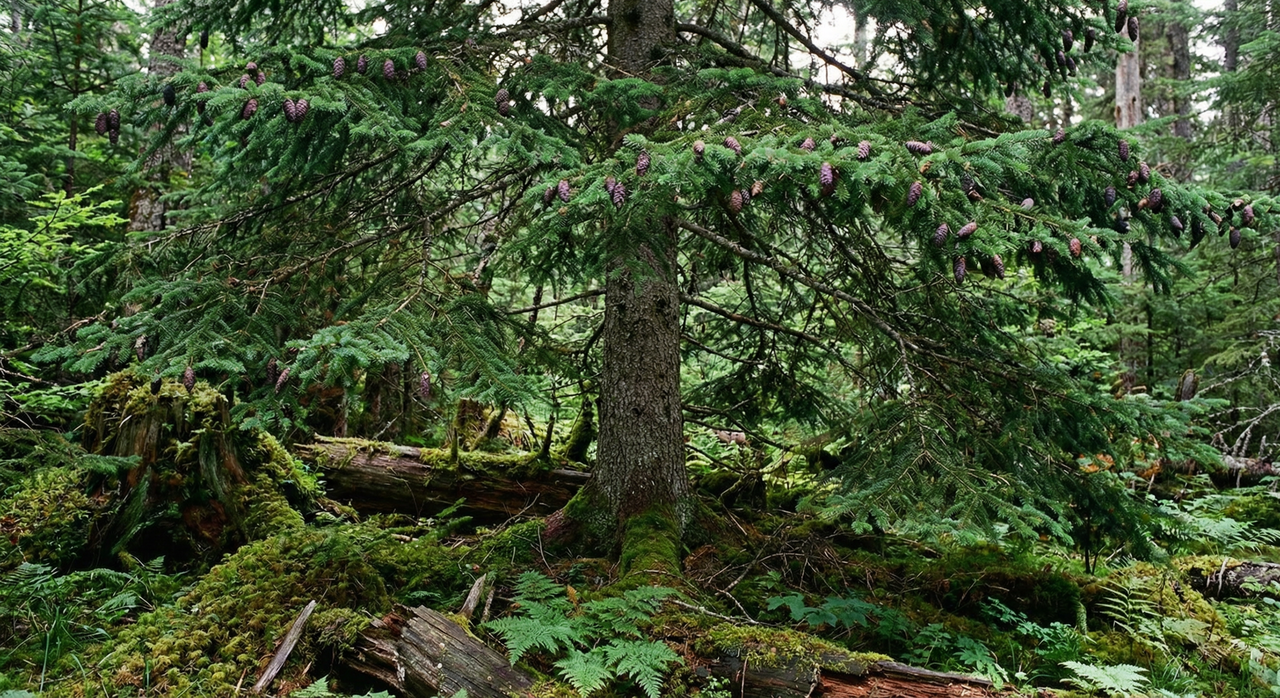
I've grown balsam fir seedlings from stratified seed, and the first thing I tell people is to label everything carefully. Young plants look deceptively similar to hemlock or spruce until you learn the telltale signs. The needles are flat, soft, and blunt-tipped, 1 to 2.5 cm long, arranged spirally but appearing two-ranked along the branches, dark green above with distinctly silvery-white stomatal bands below.[10][11] Crush a needle and the clean, resinous balsam scent is immediate and unmistakable. That soft texture is also a quick field ID in itself; spruce needles are sharp enough to poke back when you grab a branch, while balsam fir feels almost pleasant in the hand.
The young bark is another giveaway. Smooth, pale gray to greenish, and studded with prominent resin blisters,[2] those blisters practically beg to be tapped. I've done it more times than I can count, and that clean, sweet fragrance confirms identification before you even look at the needles. As the tree ages, the bark roughens into fissured, scaly, darker gray plates.[12] The cones are erect and cylindrical, 5 to 10 cm long, starting green or purple and turning reddish-brown, with the distinctive habit of shattering apart at maturity right on the tree rather than falling intact.[13] The small male cones, only 1 to 1.5 cm and yellowish to reddish-purple, cluster on the lower branches.[13]
Across the genus, the contrasts are striking. Red fir reaches 150 to 200 feet with upward-curving bluish-green needles and massive barrel-shaped cones 10 to 20 cm long.[14] Silver fir stretches 98 to 180 feet, its flat needles tipped with a rounded notch and its bark shifting from smooth olive-green to thick reddish-brown plates over time.[5] Fraser fir looks like balsam fir's twin at a glance, but closer inspection reveals notched needle tips, orange inner bark, and violet-purple cones.[15]
Traditional and Cultural Uses
Long before European botanists were cataloguing it, balsam fir was already essential. Mi'kmaq, Algonquin, Iroquois, Ojibwe, Cree, and other Indigenous peoples used it medicinally for colds, wounds, and respiratory ailments,[16] while the resin served as an antiseptic healing salve for cuts and burns, was chewed for sore throats, and was eventually adopted by European colonists who recognized the same properties.[17] Needle teas provided vitamin C to prevent scurvy through long northern winters and offered relief for respiratory complaints.[18] Boughs were used in ceremony, smudging, sweat lodges, and as incense for spiritual purification.[19] The resin's practical applications extended further still: waterproofing canoes, sealing baskets, and bonding tools.[6] These weren't incidental uses; they reflected an intimate, multi-generational understanding of the tree.
European introduction came by 1755, when cultivation was documented in Scotland,[20] and commercial extraction of Canada balsam followed in the 19th century for varnishes, adhesives, photographic plates, and medicine.[17] Silver fir followed its own cultural arc in Europe, symbolizing eternal life and protection and serving as the archetypal Christmas tree in 16th-century Germany.[21] In my own design work I make a point of leaving mature fir specimens as nurse trees and wildlife cover, a small nod to the Indigenous conservation ethic that managed these forests long before modern permaculture had a name for it.
Fun Facts and Ecological Role
Balsam fir's ecological generosity is hard to overstate. It provides winter browse for moose and caribou, seeds for white-winged crossbills, and dense cover for birds, small mammals, and caribou calving sites.[22] The resin that makes it so useful to people is chemically complex, composed primarily of diterpenoid resin acids including abietic acid at 20 to 30 percent or more, plus monoterpenes like alpha-pinene, beta-pinene, and limonene.[23] Canada balsam earned a particularly specialized role in optics: its refractive index of 1.52 to 1.54 so closely matches glass that it became the standard mounting medium for microscope slides.[24] And the cold hardiness of this tree is genuinely impressive, with the capacity to tolerate -40°C through a suite of physiological adaptations including antifreeze proteins, sugar and amino acid accumulation, thick needle cuticles, and progressive frost hardening that peaks in January.[25][26] When I cut balsam fir boughs for holiday wreaths, I'm always struck by how well the needles hold compared to many other conifers; that retention isn't an accident but a reflection of the same physiology that lets this tree survive a boreal winter in fine form.
Fir Varieties and Sourcing
Botanical Varieties of Balsam Fir
Balsam Fir splits into two botanical varieties that gardeners should know before buying.[13][7] The typical var. balsamea is the classic boreal form, dense and narrow with hidden cone bracts and a strong intolerance of heat and drought. Var. phanerolepis, commonly called Canaan Fir, has visible, prominent cone bracts, a slightly more open crown, and meaningfully better tolerance of summer heat and dry spells.[27][12] If your site runs warm in summer or dries out between rains, Canaan Fir is the variety worth seeking out. I've seen both in landscapes on the edges of their climate comfort zones, and the difference in late-summer needle condition is noticeable.
Popular Cultivars Across Fir Species
Balsam Fir's cultivar world tilts heavily toward compact and dwarf forms. 'Nana', 'Compacta', 'Piccolo', 'Globosa', 'Green Carpet', and 'Laurin' all top out at roughly three to six feet, growing slowly enough that they stay tidy in rock gardens or containers for years.[13][28] Excellent drainage is non-negotiable with these selections. I lost an early 'Nana' to root rot after leaving it in a slightly low spot for one wet winter. Lesson learned. The blue-needled 'Glauca' adds color interest, while production-oriented selections like 'Noble Standards' are bred specifically for Christmas-tree form, with cultivars such as 'Vanguard', 'Heck Hill', and 'Jensen' targeting growth rate, disease resistance, and branching density.[28][29]
Fraser Fir (Abies fraseri) is a distinct species with its own robust cultivar list built almost entirely around Christmas-tree performance. Selections like 'Austrian Prince', 'Burgundy', 'Plyler', and 'Covington' are bred for branch density, needle retention, and resistance to Phytophthora and balsam woolly adelgid, while 'Gentsch White' and 'Pygmaea' serve ornamental roles.[30][31] In my experience, a well-selected Fraser cultivar will hold its needles indoors a solid two weeks longer than a standard Balsam. European Silver Fir (Abies alba) cultivars lean ornamental: 'Pendula' for a weeping form, 'Aurea' for golden-yellow foliage, 'Variegata' for white-tipped needles, and 'Nana' for a dwarf rounded habit that fits smaller gardens.[32][33] Noble Fir (Abies procera) rounds out the picture with 'Glauca' for bluish-silver needles and 'Compacta' for a dwarf form suited to smaller landscapes.[34][35]
Where to Buy Fir Trees and Regulatory Notes
Balsam Fir is the most accessible species for North American gardeners. Nurseries including Musser Forests, Prairie Moon Nursery, Sheffield's Seed Company, Nature Hills, and the Arbor Day Foundation all carry it regularly.[36][37][38] I've ordered from both Musser and Prairie Moon over the years and have been happy with stock quality, but I always ask for certified disease-free material. Balsam woolly adelgid and Phytophthora have bitten me before, and those problems trail back to the nursery source more often than not.
Budget-wise, seedlings typically run $1 to $5, young trees under five feet around $20 to $50, and larger specimens $100 to $300 or more.[39][40] Fraser Fir seedlings are often cheaper still at $0.50 to $1.50 each, which reflects their dominance in the U.S. Christmas-tree market where they account for more than half of all sales.[40] Silver Fir is harder to find domestically and typically more expensive when you do. Container-grown stock is worth the price premium over bare-root for any fir; the fibrous, shallow root system transplants far better when it hasn't been dug and stored.[41]
On the regulatory side, both Balsam Fir and Fraser Fir are IUCN Least Concern and Least Concern/Near Threatened respectively, neither is CITES-listed, and neither falls under U.S. Endangered Species Act protection.[42][43][44] Wild harvest in Canada operates under provincial sustainable-yield quotas, and U.S. National Forest collection follows the National Forest Management Act.[45][46] Interstate shipping and any imports require USDA APHIS phytosanitary compliance, so check current regulations before ordering across state lines or internationally.[47] These are well-managed species, not rare ones, but buying through reputable channels still matters.
Balsam Fir Propagation and Planting (Abies balsamea)
Growing fir from scratch demands a certain kind of patience, which is either deeply satisfying or quietly maddening depending on your personality. I've propagated Balsam fir by seed and by graft in several projects, and each approach asks something different of you. Seeds ask for time and humility. Grafts ask for skill and equipment. Understanding both before you commit will save you a season of frustration.
Propagation Methods: Seeds, Grafting, and Beyond
Seed is the backbone of Balsam fir propagation commercially, because it's the simplest and cheapest method and it generates the kind of genetic diversity that makes a healthy planting over time.[48] That said, seeds don't just germinate on demand. Balsam fir shows orthodox seed behavior, tolerating desiccation and even cryopreservation, but it needs 30 to 90 days of cold moist stratification at 3 to 5°C to break dormancy before germination will happen at all.[49] Even with proper cold treatment, expect realistic germination rates of 30 to 60%, occasionally hitting 70% with careful handling.[50][51] Plan for losses, and sow more than you think you need.
The reproductive biology here is genuinely interesting. Fraser fir seeds can carry four to eight embryos from a single fertilized egg (cleavage polyembryony), plus asexual maternal embryos on top of that, though only one embryo typically matures per seed.[52] Silver fir, by contrast, is mostly monoembryonic.[53] For growers, the practical takeaway is that seedling populations will vary considerably in form and growth rate, even from the same seed lot. That genetic mix is an asset in naturalized plantings and a headache when uniformity matters.
If you're storing seed, keep moisture content down to 5 to 8% and use sealed containers at around minus 18°C. Under those conditions, viability can hold at 70 to 80% for five years and remain useful, if degraded, at 20 to 40% after ten years.[49][54] Left in natural forest litter, seeds lose viability within two to five years.[50] Test stored seed with a flotation test or tetrazolium staining before relying on it for a major planting.[55][56]
Grafting is where things get faster and more predictable. I've used Balsam fir as rootstock for Fraser fir in a couple of colder microclimates, and the vigor it imparts has been impressive. University trials confirm the compatibility, and I've validated it in the field.[57][58] Performed in late winter or early spring using side-veneer or cleft grafting under controlled humidity, success rates run from 50 to 90%.[59] The real payoff is that grafted trees from mature parents can begin producing seed cones in two to five years versus the 15 to 30 years you'd wait on seedling trees.[57] For clients who want a specific symmetrical form rather than the natural variation you get from seed, grafting is almost always the answer in my landscape work.
Cuttings are possible but humbling. Softwood or semi-hardwood cuttings taken in late spring through late summer (4 to 6 inches, treated with IBA at 1,000 to 8,000 ppm) root at 20 to 50%, take 8 to 12 weeks under mist with bottom heat, and can push to 3 to 6 months in less-than-ideal setups.[60][61] Air layering in late summer with wounding and hormone treatment gets you 20 to 60% success.[61] Tissue culture can exceed 80% but requires laboratory conditions and specialized media that make it impractical outside of commercial research settings.[62] Across all vegetative methods, the shared enemy is damping-off and root rot from Pythium and Alternaria, so use sterile media, maintain precise humidity, and treat seeds or cuttings with fungicide preventively.[60]
Soil and Site Requirements for Success
Balsam fir wants acidic, moist, well-drained soil with real organic matter in it. The optimal pH sits at 5.0 to 5.5, with a workable range from about 4.0 to 7.5 before you start seeing problems.[63][64] Above 6.5 to 7.0, iron becomes less available and chlorosis sets in. Below about 4.5, aluminum becomes soluble and actively damages roots.[65] In landscape soils that have drifted toward neutral, elemental sulfur works well to bring pH down, but test first. Over-correcting to below 4.5 trades one problem for a harder one to fix.
Loamy, sandy loam, or silt loam textures derived from glacial till or alluvium give this tree what it needs structurally. The root system is shallow, with most activity in the upper one to two meters, so adequate depth (ideally 24 to 36 inches) and good porosity matter more than any single amendment.[63][66] Compaction is a serious concern. Bulk density above 1.4 to 1.6 g/cm³ inhibits root growth, and the consequences show up as yellowing needles, stunted growth, and increased susceptibility to Armillaria and Phytophthora root rot.[67] Avoid heavy equipment traffic on planting areas, and in established plantations, keep thinning operations thoughtful about soil disturbance.
Silver fir tolerates a somewhat higher pH on calcareous substrates (up to 6.5 to 7.5 in some conditions), which is a useful contrast if you're working on borderline sites or trying to understand genus-wide soil flexibility.[68] But for Balsam fir specifically, consistent soil moisture is non-negotiable. Think of it like yews or certain hollies that thrive in the 20 to 30% light range as seedlings; Balsam fir can establish under partial canopy and genuinely prefers dappled conditions in its early years, especially in warmer planting zones where afternoon shade reduces stress.[69][70] As the tree matures, it wants more sun: six to eight hours daily for good growth and cone production.[7] Too little light produces thin crowns, yellowing, and early needle drop; too much on a young tree or in a hot site causes scorch on the south- and west-facing sides.[71]
Planting Spacing, Technique, and Establishment
How you space Balsam fir depends almost entirely on what you're asking it to do. At maturity, this species typically develops a 20 to 30 foot canopy spread.[2][70] For Christmas tree production, you're working tight: 5 to 6 feet within rows, 6 to 8 feet between rows, often 700 to 1,800 trees per acre.[72] Timber plantings go wider at 8 to 12 feet initially (800 to 1,500 stems per acre), and landscape or windbreak planting should be 10 to 20 feet apart to allow canopy development without competition stress.[73]
I learned early in a humid coastal project that planting too tightly creates a humidity trap that feeds needle cast and root disease pressure. Giving trees at least 6 feet of space improves airflow enough to meaningfully reduce those risks, and orienting rows north-south maximizes light across the planting.[66] In permaculture guilds or windbreaks, wider spacing also creates room for understory companions like ferns and blueberries, avoiding the humidity buildup that invites problems. Dense Christmas tree plantings benefit from progressive thinning after two to three years, while forest plantings are typically thinned every five to ten years down to 300 to 500 stems per acre as the stand develops.[74] Young trees on exposed sites may need staking for the first year or two, and if transplanting from containers or a nursery bed, root pruning six to twelve months in advance helps establishment considerably.[75]
Timeline from Seed to Maturity
Balsam fir is not in a hurry. Seed-grown trees typically won't reach reproductive maturity and begin producing cones until they're 15 to 30 years old, though managed plantation trees under optimal conditions can get there in 10 to 15 years.[76] Once a tree starts producing, the cone cycle itself takes 15 to 18 months from pollination in spring to seed dispersal the following autumn.[77] Cone production peaks somewhere between 40 and 100 years, which puts things in perspective for long-term forest design.
Grafting changes the calculus entirely. Trees grafted from mature parents can begin producing seed cones in as little as two to five years.[78] For clients or projects with specific seed orchard or collection goals, this is the route I recommend without hesitation. Young Balsam fir seedlings grow 12 to 18 inches per year under good conditions, with Fraser fir running similarly at one to two feet per year.[66][70] For Christmas tree growers, commercial rotations typically run seven to fifteen years from planting to harvest size, a timeline that keeps all those spacing, soil, and propagation decisions very consequential from year one.[66]
Balsam Fir Care Guide
Every care decision you'll make with balsam fir flows back to one anatomical fact: its root system is shallow and fibrous, concentrated in the top 12 to 18 inches of soil.[79][80] That root architecture makes it exquisitely responsive to soil conditions, both good and bad. Get the moisture balance right and you've won half the battle. Get it wrong in either direction and those shallow roots tell you immediately.
Water Needs
Young balsam firs are thirsty. In the first one to three years, I aim for deep watering to 12 to 18 inches, roughly 1 to 2 inches per week, every two to three days in the growing season or whenever the top inch of soil dries out.[81][82] The goal is encouraging roots to grow down, not sideways in the mulch layer. Established trees get more leeway; they can handle short dry stretches of four to six weeks, but drought beyond six to eight weeks brings needle discoloration, stunted growth, and real mortality risk.[83][84] For a mature tree, I switch to supplemental irrigation only during dry spells over two weeks, applying about an inch every 10 to 14 days.[82]
When needles start to turn, the root zone is where I look first. Browning or yellowing at the tips progressing inward, plus premature needle drop, usually points to underwatering.[82] Yellowing that starts on lower branches while the soil still feels wet is the overwatering signal, and Phytophthora root rot follows waterlogged conditions fast.[85] Two to four inches of organic mulch over the root zone is the simplest intervention for both problems; it moderates soil temperature, slows evaporation, and buffers against erratic rainfall. I've actually seen roots lifting the mulch after heavy spring rains on exposed spots on my property, which taught me to add an extra inch of bark in those areas rather than assuming a standard application would hold.
Sunlight and Heat Tolerance
Balsam fir is a shade-tolerant boreal native that performs best where summers stay below 68°F on average.[86] Above 85°F, heat stress shows up as needle scorch, chlorosis, and increased resin flow, and it rarely arrives alone; drought almost always amplifies it.[87] I think of it the way I think about rhododendrons in full sun: both sulk visibly and won't recover until conditions shift. Seedlings and young trees are the most vulnerable.[7] If you're pushing the southern edge of its range, north-facing slopes, 30 to 50 percent shade during peak summer, and drip irrigation go a long way toward keeping temperatures in that optimal 59 to 68°F daytime range.[88]
Feeding and Soil Fertility
Balsam fir wants acidic, humus-rich soil in the pH 5.0 to 6.0 range and is a moderate nutrient feeder.[89] Nitrogen is the primary driver of healthy growth, with optimal foliar levels between 1.2 and 1.8 percent, but timing matters; apply a balanced slow-release fertilizer early spring before bud break and stop by midsummer to avoid pushing soft growth into fall.[90] Micronutrient deficiencies show up as interveinal chlorosis on new growth (iron), yellowing on older needles (magnesium), or stunted rosetting (zinc).[91] I test every two years because one season of guessing led to overly soft late-summer growth that winter-killed; the cost of a soil test is trivial compared to losing a tree you've been nurturing for a decade. In a naturalized or forest setting, mature trees rarely need any supplemental feeding at all. Over-fertilization, especially excess nitrogen, reduces cold hardiness and invites pest pressure, so less really is more here.[92]
Frost Tolerance and Winter Protection
Mature balsam firs are impressively cold-hardy, tolerating temperatures down to -40°F to -50°F across USDA zones 3 to 7.[2] The nuance is that "hardy tree" doesn't mean "invulnerable tree." Shallow fibrous roots, swelling buds, new needles, and cambium tissue are all vulnerable to freeze-thaw cycles, late spring frosts, and early fall cold snaps, particularly in trees under five years old.[7] I've learned to watch bud swell in April as a precise frost-risk signal; the moment that bright green tip emerges, any frost event can cause tip browning or bud kill that sets the tree back visibly. Four to six inches of organic mulch over the root zone, trunk guards or burlap wrap for young specimens, windbreaks, and sites that avoid frost pockets are the most straightforward protections.[93] This care matters most in the first two to five years; after that, the tree typically looks after itself through a northern winter.
Pruning, Maintenance, and Seasonal Rhythm
Balsam fir's annual rhythm runs from bud break in April to May, through shoot elongation into July, and into dormancy by November.[7] I mark bud-break dates on my planting calendar and use that first flush of bright-green new growth as the signal that major frost risk has passed and the tree is actively growing again. Pruning belongs in late winter or early spring before bud break, and it should be minimal; remove dead, damaged, or crossing branches only.[94] Firs don't regenerate from old wood, which I learned the hard way on a young tree I once pruned too hard. It stayed thin and gapped for three full seasons because there was simply no latent bud tissue to fill back in. For Christmas tree production or a more compact landscape form, light shearing of new growth by two to four inches in late winter to early summer encourages density without cutting into old wood.[95] Beyond pruning, ongoing maintenance means consistent moisture through establishment, 2 to 4 inches of mulch year-round, seasonal monitoring for adelgid and needle cast, and anti-desiccant sprays on young trees in exposed winter sites. The natural pyramidal form is a gift; the best maintenance practice is usually to stay out of its way.[96]
Harvesting Balsam Fir: Timing, Cues, and Post-Harvest Handling
Patience is the first thing fir teaches you. In the wild, a Balsam Fir won't produce its first cones for 15-25 years, with peak seed years not arriving until the tree is 40-100 years old.[63][97] Grafting in seed orchards collapses that window dramatically, bringing first cones in just 2-5 years, which is how Christmas tree operations and restoration nurseries actually stay viable.[98] If you're growing from seed or managing a young planting, set your expectations accordingly.
When to Harvest Balsam Fir Cones, Trees, and Timber
For seed collection, the window between ripe and gone is brutally short. Pollination happens in late spring (May-June), and the whole development cycle runs only 120-150 days before seeds are ready in September-October.[63][98] What you're watching for is the shift from bright green to purplish-brown or reddish-brown, with scales just beginning to separate while the cone still sits upright on the branch.[99][100] I've learned to check trees daily in early September because that "scales loosening but not yet open" stage lasts only a few days, and I missed it completely in my first couple of seasons.
For Christmas tree growers, the rotation looks different entirely. Balsam Fir and Fraser Fir reach marketable height of 6-12 feet (with 7-9 feet being the sweet spot) after 7-15 years, with most cutting happening from late September through November, typically before Thanksgiving in northern growing regions.[40][66] Timber harvest follows a completely different calendar: winter, on frozen ground, between December and March, which minimizes soil disturbance from equipment on those shallow, compaction-sensitive root zones.[101] Commercial thinning typically begins around 40-60 years, with full rotations running 80-120 years by site.[102]
One genus note worth keeping in your back pocket: while Balsam and Fraser firs complete their cone cycle in a single season, Red Fir and Silver Fir operate on a two-year cycle with pollination in year one and fertilization and maturity in year two, though the visual ripeness cues (brown coloration, loosening scales) translate across species.[103][104]
Harvest Techniques and Post-Harvest Care for Maximum Freshness
Everything you did right in timing can unravel in the hour after cutting if you skip the basics. The moment a Christmas tree comes down, make a fresh straight cut at the base, get it into water or wet burlap, and move it to shade in cool conditions.[105] For storage, 32-40°F with 80-95% relative humidity and good airflow will keep a cut tree fresh for 2-6 weeks.[106][107] I've stored trees at 34°F with high humidity and kept needle drop negligible for over a month. The one time I skimped on humidity, I watched a beautifully timed tree shed needles inside a week.
Anti-desiccant sprays applied before harvest or transport can reduce water loss by up to 50%, making them genuinely worth the extra step for anyone selling trees or moving them any distance.[108] For foliage or branches harvested for decoration or drying, cure in shade at 40-50°F for 1-2 weeks and dry down to roughly 10% moisture content to prevent mold.[109] Clean cutting tools between trees with a 10% bleach solution, especially if any disease pressure exists in the planting.[108] It's an easy step to skip and a frustrating one to regret.
Fir Preparation and Uses
Culinary Uses of Fir Needles, Shoots, and Resin
The easiest way into fir as a food plant is a cup of tea. Steep a teaspoon or two of young needles in just-boiled water for ten to fifteen minutes and you get something genuinely lovely: bright, citrusy, with a clean pine backbone that reminds me of a milder spruce beer or a very gentle juniper. That flavor comes from the monoterpene profile in the essential oil, particularly α-pinene, β-pinene, limonene, and bornyl acetate,[110][111] and from a surprisingly high vitamin C content.[112][113] Indigenous peoples including the Mi'kmaq, Algonquin, Cree, Ojibwe, and Iroquois brewed needle tea to prevent and treat scurvy long before European settlers arrived with the same idea.[114][115]
Every spring I clip a few young tips from balsam firs on my property, and I've noticed that the fresh spring growth is noticeably more citrus-forward and less resinous than needles harvested later in the season. Those tender pale-green shoots are also worth eating raw, tossed into a salad the way you might use spruce tips, with a minty-pine snap that's crisp and juicy before it turns pleasantly astringent.[116] Beyond tea and fresh shoots, needle infusions and syrups, vinegars, jellies, and baked goods all work well with fir's citrus notes.[117] Silver fir has parallel traditions in Europe, where it flavors herbal beers and liqueurs.[118]
Young immature cones can be eaten raw or cooked when still soft, offering a resinous, tangy bite.[119][120] The inner bark, or cambium, has a long history as emergency survival food across the genus, though its bitterness and mucilaginous texture after cooking make it a lean-times option rather than a daily staple.[121][122] Resin can be chewed as a gum or used sparingly in syrups, but balsam fir's Canada balsam is bitter and should always be taken in moderation since large amounts cause digestive irritation.[10][120]
Before you brew or nibble anything, get your identification right. I keep my young fir seedlings clearly labeled in my garden precisely because conifers can look deceptively similar at first glance, and I always verify the flat needles with their two white stomatal bands on the underside before using anything. Yew (Taxus species) is the critical look-alike to rule out; it is toxic.[123] Cultivated Christmas trees should also be avoided unless you know they are pesticide-free.[124] On the conservation side, Fraser fir is an endangered species restricted to high-elevation Southern Appalachian forests with declining populations.[125] I never forage it, full stop, choosing instead the abundant balsam fir or cultivated landscape specimens where I know the source.
Medicinal Preparations and Traditional Remedies
Standard herbal preparations for fir follow sensible, low-intervention methods. A traditional needle infusion uses one to two teaspoons of dried needles per cup of boiling water, steeped ten to fifteen minutes.[126] Tinctures are typically dosed at one to two milliliters up to three times daily for short-term use.[127] For topical applications, diluting the essential oil to one to two percent in a carrier oil is standard practice; internal use of the essential oil is not something I'd recommend without the guidance of a qualified practitioner.[128] These are all traditionally documented practices rather than clinically validated protocols, and it's worth approaching them with that framing in mind.
Non-Food Uses: From Timber to Crafts
The Canada balsam resin that balsam fir weeps from its smooth bark blisters has a history that runs well beyond the kitchen. Traditionally, Indigenous peoples across the genus applied fir resin as a poultice or salve for wounds, sores, insect bites, and skin infections, relying on its antiseptic properties.[115][129] I've made simple wound salves from Canada balsam collected off pruned balsam fir branches and found it forms a remarkably effective protective coating over minor cuts, exactly what the ethnobotanical record would lead you to expect.
At larger scales, fir is serious timber. Red fir, noble fir, and silver fir are all valued for construction lumber, furniture, plywood, and even musical instruments,[130][131] while balsam and Fraser firs contribute pulpwood and paper feedstock.[15] Noble fir alone can produce 20 to 30 tons of biomass per acre over a 40 to 50 year rotation.[132]
Whatever the application, sustainable practice matters. Collecting resin or bark from fallen branches rather than living trees, pruning rather than felling, and sourcing from managed or cultivated stands rather than wild populations protects both the trees and the traditional knowledge systems that taught us their value in the first place.[133][134] As a landscape designer I always ask clients with mature firs to think of those trees as a slow, generous resource that rewards patience and restraint over extraction.
Balsam Fir Health Benefits and Medicinal Uses
Every time I work near a balsam fir and catch that sharp, resinous scent, I'm reminded that this tree has been a medicine cabinet for Indigenous peoples across northeastern North America long before anyone was running lab assays on it. The health story here starts with lived practice, not petri dishes, and that grounding matters.
Traditional Indigenous and Folk Medicinal Uses
Mi'kmaq, Ojibwe, Cree, and other nations used virtually every part of balsam fir medicinally. Canada balsam, the thick oleoresin collected from bark blisters, was applied as a poultice on wounds, cuts, and sores for its antiseptic action, while needle tea served as a reliable cold-season respiratory remedy.[135][136][137] This wasn't isolated to one nation or one species. Cherokee and Appalachian communities used Fraser fir as an expectorant and diuretic and applied its resin topically for burns and rheumatism;[138] Karok, Hupa, and Miwok peoples worked with red fir the same way, relying on bark decoctions for coughs and resin poultices for wounds;[139] and silver fir has a parallel record in Alpine European folk medicine for respiratory complaints and inflammation.[140] What strikes me about this pattern is how consistent it is across wildly different cultures and continents, which tends to mean the plant is actually doing something.
Modern preclinical research has started to explain what. Balsam fir essential oil and resin show meaningful anti-inflammatory activity in cell and animal models, working primarily through COX enzyme inhibition and suppression of the NF-κB signaling pathway to reduce pro-inflammatory cytokines,[141][142] and Fraser and silver fir extracts show comparable effects through similar pathways.[143][144] Antimicrobial activity against Staphylococcus aureus and Candida albicans, attributed to terpenes disrupting microbial membranes, has been documented with MIC values around 0.5 to 2 percent,[141][145] which goes a long way toward explaining why a resin poultice on a wound actually helped. Wound healing specifically has also been studied in the context of Canada balsam, with collagen synthesis effects noted in silver fir bark extracts.[146][147] Analgesic effects in animal models and preliminary signals around anticancer activity from abietic acid suggest further potential, though these findings are early and should be read carefully.[142][148] There are no large-scale human clinical trials for any Abies species, and the evidence base remains preclinical.[149] That's worth holding onto before drawing conclusions.
Phytochemical Profile of Balsam Fir
The essential oil from balsam fir needles is dominated by monoterpenes: α-pinene typically runs 15 to 40%, β-pinene contributes 5 to 25%, and bornyl acetate, which gives the oil much of its characteristic piney-sweet character, accounts for 10 to 40% of total composition depending on origin and season.[141][145] The resin itself contains diterpene acids, primarily abietic acid at 20 to 40% alongside pimaric, palustric, and dehydroabietic acids,[150] while bark and needle extracts yield phenolic flavonoids including taxifolin, quercetin, catechin, and proanthocyanidins, with total phenolics reaching up to 150 mg/g dry weight in bark.[151][152]
One pattern I've noticed in my own plantings is that trees under stress seem to produce more resin, which aligns with what the research shows: drought, UV exposure, herbivory, and wounding all trigger upregulation of phenolics, flavonoids, and terpenoids as chemical defenses.[153][154] Seasonal timing shifts the chemistry too, with resin acids and phenolics typically peaking in winter and spring, aiding cold stress resistance.[155] Geographic variation is substantial enough to produce distinct chemotypes, with eastern populations trending higher in bornyl acetate and high-altitude populations generally showing elevated terpene and phenolic concentrations correlated with herbivore pressure and UV intensity.[156] Alkaloids don't appear in any meaningful concentration across Abies species; the defense chemistry here is entirely terpenoid and phenolic.[157] For a comparison that might feel more familiar: the antioxidant flavonoid content in fir needles and bark is genuinely impressive, sitting in a range comparable to rosemary or pine needle extracts, with IC50 values of 20 to 50 μg/mL in DPPH free radical assays attributed to Nrf2 pathway activation.[141][158]
Nutritional Value of Fir Needles and Other Parts
Balsam fir needles contain approximately 100 to 270 mg of vitamin C per 100g fresh weight, reportedly the highest of any North American conifer, which makes the historical use of needle tea for scurvy prevention far less surprising once you see the numbers.[137][159] Beyond vitamin C, needles contribute flavonoids (catechin, quercetin glycosides, rutin) totaling 1 to 5% dry weight, plus minerals including calcium at 1,000 to 1,500 mg/100g dry weight, magnesium at 200 to 400 mg/100g, and potassium at 500 to 800 mg/100g.[160][161] When I'm harvesting for tea, I always pick only the bright green current-year growth; it tastes noticeably fresher, less resinous, and I suspect the vitamin content is higher in that young tissue before the needle has had a full season of photochemical wear.
Young shoots are edible raw or added to salads, and inner bark has traditionally been eaten raw, boiled, or dried into flour by Indigenous peoples, though this doesn't apply to Fraser fir, whose inner bark may cause digestive issues.[135] Dried needle flour provides roughly 10 to 15% protein, 5 to 10% fat, and 60 to 70% carbohydrates, mostly fiber.[162] Balsam fir doesn't appear in USDA FoodData Central as a standardized entry, since it's primarily a wild forage plant rather than a commercial food crop,[2] so treat all nutritional figures here as field estimates that vary considerably with season, harvest timing, and location rather than fixed values.
Safety Considerations and Contraindications
The overall toxicity picture for balsam fir is low to moderate, and casual contact or reasonable culinary use carries minimal risk for most people.[163][164] Ingesting large amounts of needles or resin may cause mild gastrointestinal upset, and concentrated essential oils carry higher risk than the whole plant, including potential hepatotoxicity in livestock.[165] For skin, the resin and undiluted essential oil can cause contact dermatitis in sensitive individuals, and balsam fir pollen is a recognized seasonal allergen with possible cross-reactivity to other conifers.[166][167]
One thing I take seriously in any conifer planting or foraging context is the yew misidentification risk. Canada yew (Taxus canadensis) overlaps with balsam fir across much of eastern North America, and yews contain taxine alkaloids that can be fatal.[168] I double-check needle arrangement, bark texture, and cone presence every single time I'm harvesting from a mixed conifer guild. One tree is not interchangeable with another when the stakes are that high.
If you're pregnant or on blood thinners, skip medicinal use of fir resin or essential oil entirely. Monoterpenes like pinenes and limonene have demonstrated mild antiplatelet activity,[169] and there's insufficient safety data during pregnancy with possible uterine stimulant effects flagged in the literature.[170] These aren't theoretical cautions; I always recommend checking with a healthcare provider before using fir essential oils medicinally. For topical use, dilute to 1 to 2% in a carrier oil. Internal use without professional guidance isn't something I'd recommend. A reasonable starting point for needle tea is 1 to 2 teaspoons of fresh needles per cup of hot water, once to three times daily.[171][172] The genus lacks the highly toxic cyanogenic glycosides and alkaloids found in more dangerous conifers, so the risk profile stays manageable as long as you know what you're working with.
Fir Pests and Diseases
Balsam fir has moderate baseline disease resistance under typical conditions, but two threats can override that resilience quickly: balsam woolly adelgid and spruce budworm. If you're growing fir for timber, Christmas trees, or long-lived landscape specimens, these are the ones that keep foresters and designers up at night. The good news is that healthy, well-sited trees with strong mycorrhizal networks handle pressure far better than stressed ones, and that's a dynamic you can actively manage.
Major Insect Pests of Balsam Fir
Balsam woolly adelgid (Adelges piceae) is the headline threat. This invasive pest causes gouting, growth reduction, and eventual mortality, with resistance in balsam fir generally low.[173] Fraser fir fares even worse, with mortality exceeding 90% in heavily infested stands, while noble fir shows notably better tolerance by comparison.[174] The gouting on branch whorls looks a bit like the swelling you'd see from woolly aphids on other conifers, that same puffy, distorted growth, except here the consequences are far more severe. I've watched woolly adelgid outbreaks explode in overcrowded plantings but seen the same species stay clean once thinned and mulched, which tells you a lot about the role of tree vigor.
Spruce budworm (Choristoneura fumiferana) is the other major defoliator, causing widespread economic damage across North American fir and spruce forests.[175] Resistance varies meaningfully by genetic provenance; certain eastern Canadian and Maine sources show higher tolerance through slower larval development and elevated monoterpene levels in needles.[176] That terpene chemistry matters. Balsam fir produces resins rich in alpha-pinene, beta-pinene, and limonene alongside phenolic compounds and resin ducts that slow or deter feeding insects, and trees growing in healthy, mycorrhizal soils seem to mount these defenses more effectively in my experience.[177][178] Secondary pests including balsam fir sawfly, Ips bark beetles, fir tussock moth, and tip moths are worth knowing but tend to target trees already weakened by drought, overcrowding, or poor drainage rather than vigorous specimens.[175][179]
Common Diseases Affecting True Firs
On the disease side, the worst outcomes I've seen come from soil problems, not foliar ones. Heterobasidion annosum causes basal rot and mortality, especially in dense stands, and Phytophthora root rot moves fast in poorly drained soils.[180][181] I've learned the hard way to avoid planting balsam fir in low-lying areas; I've watched Phytophthora take out young trees in a single wet season, while the same cultivar thrives on a slight mound with mulch and good drainage. Needle cast diseases caused by Lirula, Lophodermium, Rhizosphaera, and Rhabdocline lead to premature needle drop and defoliation and are a persistent nuisance in humid climates.[182]
Dwarf mistletoe (Arceuthobium abietinum) causes witches' brooms and sustained growth reduction, and Diplodia tip blight can damage new shoots during wet springs.[183] Susceptibility across all these diseases is compounded by the same triggers: dense stocking, wet soils, lower elevations, and drought stress.[184] In diverse polyculture plantings I've designed, these problems show up far less frequently than in monoculture blocks, which to me signals that system health genuinely shifts the odds.
Resistance, Prevention, and Integrated Management
Breeding programs have produced cultivars worth seeking out. Balsam fir 'Schneideri' carries improved resistance to woolly adelgid, and for clients in adelgid pressure zones I now prioritize it over straight species selections.[185] Fraser fir 'Mount Vernon' offers high resistance and is a reliable choice where that species fits the site.[186] Silver fir clones from Central European provenances show better Heterobasidion tolerance than others, which matters if you're sourcing for a wetter site.[187]
Cultural practices form the real foundation:
- good spacing for airflow
- well-drained sites
- consistent mulching
- prompt removal of infected material
- keeping tree vigor high.
Balsam Fir in Permaculture Design
If you garden in a cold northern climate and you've been looking for a canopy tree that earns its keep ecologically, balsam fir deserves serious consideration. It's not a plant for everyone or every site, and I'll be direct about that. But in the right conditions, it functions as a keystone species in the truest sense: stabilizing soil, sequestering carbon, sheltering wildlife, and anchoring a multi-layered forest system with very little coaxing from you.
Climate Adaptability and Hardiness Zones
Balsam fir is cold-hardy to USDA zone 2, tolerating temperatures as low as -50°F, with its sweet spot in zones 3 through 5.[7][3] Zone 6 is marginal, and zone 7 is genuinely challenging -- heat and humidity are the limiting factors, not cold.[191] Summer temperatures above 80°F stress this tree, and above 85°F you're asking for trouble.[7] I sometimes use lingonberry or certain blueberry varieties as a mental benchmark for borderline sites -- if your summers regularly push past that threshold and your blueberries are already struggling without afternoon shade, balsam fir is going to be a fight. In zone 6, mulching and supplemental water aren't optional; they're the difference between a tree and a dead stick.[192]
Its native home is the humid continental and subarctic zones of northeastern and central North America, from Newfoundland west to Alberta and south into West Virginia and Minnesota.[2] What that geography tells you is humidity: this tree needs more than 70-80% relative humidity and prefers annual precipitation between 1,000 and 1,270 mm.[7] Snow cover matters too. I've watched balsam seedlings on exposed hillsides take a beating through hard winters, and the ones sheltered under a consistent 12-18 inches of snow consistently overwinter better than exposed plantings -- that insulation around the root zone is genuinely significant.[2] It also has low tolerance for road salt and coastal salt spray, so siting near roads or shorelines is worth thinking through carefully.[193]
Other firs follow recognizably similar patterns while occupying different niches. Fraser fir (zones 4-7) is a Southern Appalachian high-elevation specialist, native above 1,300 meters, and even more sensitive to summer heat than balsam.[194] Subalpine fir matches balsam's cold tolerance and pushes into genuinely alpine terrain up to 2,400 meters, but it's equally unsuited to hot lowlands.[1] Silver fir and red fir both tolerate slightly warmer minimum zones (4-7) but still cap out at relatively cool summer temperatures.[195][196] The genus-wide pattern is clear: firs are trees for cool, moist, high-humidity climates, and designing around that constraint is the first job.
Ecosystem Functions and Services
In boreal and mixed-forest systems, balsam fir often acts as a pioneer or early-successional species, colonizing disturbed areas and facilitating transitions toward mature forest structure.[77] That successional flexibility is actually useful in permaculture contexts because it means young plantings can establish without waiting for a closed canopy. Once mature, the carbon sequestration figures are substantial: roughly 2-4 tons per hectare annually for balsam fir stands, while related species like red fir and silver fir contribute 200-300 kg per mature tree per year and hundreds of tons per hectare in older European montane forests, respectively.[2][196][197]
The wildlife value is immediate and tangible. Balsam fir provides critical winter cover for moose, deer, and birds like spruce grouse, with its dense form creating thermal shelter that other canopy trees simply don't offer in the same way.[2] The extensive fibrous root system stabilizes soil and regulates water movement, and needle litter builds up over time into an acidic humus layer that supports the mycorrhizal network below ground.[196]
Balsam fir is monoecious and wind-pollinated, with male and female cones on the same tree and female cones becoming receptive slightly before pollen release.[63] Pollination happens in late spring (May to June) at temperatures between 15-25°C, and seed set is sensitive to rain, high humidity, and phenological mismatches.[198] In my experience, maintaining connected plantings with clear wind corridors supports natural regeneration far more reliably than any direct intervention. Isolated trees in fragmented landscapes just don't set seed consistently. Its shelterbelts value is also well established: the dense, symmetrical growth form that makes balsam fir famous as a Christmas tree[199] translates directly into effective windbreak function when planted in rows or masses.[200]
Forest Layer, Guilds, and Companion Planting
Balsam fir is a canopy-layer tree in forest stratification, with shade-tolerant seedlings capable of persisting in the understory until a gap opens above them.[79][12] For comparison, noble fir can push 30-60 meters as a Pacific Northwest co-dominant, while Fraser fir tops out at 15-20 meters in its high-elevation Appalachian habitat.[201][202] In a food forest or agroforestry design, balsam fir claims the tall canopy position and should be planned accordingly.
Below ground, the relationships are just as interesting. Balsam fir forms ectomycorrhizal partnerships with fungi including Amanita and Boletus species, which significantly extend nutrient uptake capacity beyond what its roots alone can reach.[77] When I establish firs in a new design, I look for evidence of bolete fruiting bodies in adjacent established plantings as a sign of a healthy native fungal community. If the soil is starting from scratch, inoculating with appropriate ectomycorrhizal species at planting is worth the effort. The needle litter itself contributes to soil acidification over time, which is not a problem to manage around but a feature to lean into.[203]
Balsam fir does exhibit mild allelopathy through resin and leachates that can suppress some weeds, but the effect is compatible with nitrogen-fixers like alder and clover.[203] I treat this as mild and site-specific rather than a hard design rule. The more consistent dynamic is how the acidic humus layer the tree builds over years creates conditions that genuinely favor blueberries (Vaccinium spp.), ferns, and woodland herbs like Maianthemum racemosum and Tiarella cordifolia without any amendment from you.[204][200] That's classic permaculture design at work: place a tree where its natural outputs become inputs for its neighbors. I've planted Vaccinium directly into the drip zone of established firs and skipped pH amendment entirely because the litter layer had already done the work.
For guild building, pairing fir with lupine as a nitrogen-fixer, comfrey as a dynamic accumulator, and a blueberry understory creates a productive acid-woodland system that's also visually cohesive.[205] One design note worth taking seriously: balsam fir's roots are shallow and extensive, which makes it prone to windthrow on exposed sites.[7] I've seen mature trees topple after ice storms on sites where I wish I'd positioned the windbreak guild differently. Fir works as the windbreak, not the tree that receives wind from an unprotected edge. Site it in masses or staggered rows on the windward side of your design, and let it shelter the more vulnerable plantings to the lee. The needle tea and resin uses are genuine bonuses,[206] but the tree earns its place in cold-climate permaculture long before you harvest a single tip.
The Tree That Made Me Rethink What "Useful" Means
I planted my first balsam fir before I fully understood what I was committing to, and honestly, that ignorance was a gift. It took years before it gave me anything I could harvest, but watching it slowly anchor a windswept corner of my food forest, sheltering everything downslope, I stopped waiting for the yield. Some plants don't feed you from the plate. They feed the whole system, and sometimes that's the more generous offering.
Sources 206
- Fire Effects Information System: Abies balsamea ↩
- Abies balsamea (balsam fir) ↩
- Abies balsamea - Missouri Botanical Garden Plant Finder ↩
- Abies balsamea (Balsam Fir) ↩
- Abies alba - Wikipedia ↩
- Fire Effects on Balsam Fir Regeneration ↩
- Balsam Fir - Abies balsamea ↩
- Silvics of North America: Abies balsamea ↩
- Climate Change Vulnerability of Fraser Fir in the Southern Appalachians ↩
- Abies balsamea ↩
- Abies balsamea (balsam fir) ↩
- Flora of North America - Abies balsamea ↩
- Balsam Fir (Abies balsamea) - Gymnosperm Database ↩
- Conifers.org - Abies magnifica ↩
- Abies fraseri ↩
- Balsam Fir (Abies balsamea): Ethnobotany and Traditional Uses ↩
- Canada Balsam: Historical and Commercial Uses ↩
- Native American Medicinal Plants: An Ethnobotanical Dictionary ↩
- Mi'kmaq Traditional Medicine and Ceremonies ↩
- Balsam Fir - Abies balsamea ↩
- The Silver Fir: Symbolism and Folklore in European Culture ↩
- Balsam Fir (Abies balsamea) in Wildlife Management ↩
- Chemical Composition of the Resin of Abies balsamea ↩
- Canada Balsam in Microscopy ↩
- Physiological Adaptations of Balsam Fir to Cold Environments ↩
- Antifreeze Proteins in Conifers ↩
- Canaan Fir (Abies balsamea var. phanerolepis) - Missouri Botanical Garden ↩
- Balsam Fir Cultivars ↩
- Ontario Tree Improvement and Seed Management - Fir Breeding ↩
- Fraser Fir (Abies fraseri) ↩
- Christmas Trees: Fraser Fir Cultivars ↩
- Abies alba ↩
- Abies alba Cultivars ↩
- Royal Horticultural Society ↩
- Missouri Botanical Garden Plant Finder ↩
- Abies balsamea - Balsam Fir ↩
- Balsam Fir - Abies balsamea ↩
- Balsam Fir Seedlings ↩
- Fraser Fir Seedling Prices ↩
- Fraser Fir Production and Marketing ↩
- Balsam Fir Production Guide ↩
- Abies balsamea (Balsam Fir) ↩
- Abies fraseri ↩
- CITES Appendices ↩
- Forest Management Guidelines for Canada ↩
- National Forest Management Act ↩
- Plant Protection and Quarantine Regulations ↩
- Propagation of Fraser Fir (Abies fraseri) ↩
- USDA Forest Service - Woody-Plant Seed Manual ↩
- Silvics of North America: Volume 1. Conifers ↩
- Germination of Fraser Fir Seeds ↩
- Seed Development and Polyembryony in Fraser Fir (Abies fraseri) ↩
- Seed Development in Abies alba: Anatomy and Embryology ↩
- Seed Storage of Conifers ↩
- International Rules for Seed Testing (ISTA) ↩
- Tetrazolium Testing of Conifer Seeds ↩
- Propagation of Fraser Fir by Grafting ↩
- Grafting Techniques for True Firs (Abies spp.) ↩
- Side-Veneer Grafting in Silver Fir (Abies alba) ↩
- Propagation of Fraser Fir (Abies fraseri) by Cuttings ↩
- Vegetative Propagation of Abies Species ↩
- Tissue Culture of Conifers ↩
- USDA Forest Service Silvics Manual - Abies balsamea ↩
- University of Minnesota Extension - Soil pH Preferences of Conifers ↩
- Iron Chlorosis in Trees - Purdue Extension ↩
- Fraser Fir Production Guide ↩
- Soil Compaction in Christmas Tree Plantations ↩
- Silvics of North America: Abies alba ↩
- Regeneration Ecology of Balsam Fir ↩
- Missouri Botanical Garden - Abies balsamea ↩
- Sunscald and Winter Injury in Landscape Trees ↩
- Christmas Tree Production: Site Selection and Planting ↩
- Balsam Fir: Characteristics and Management ↩
- Density Management in Fir Plantations ↩
- Shearing and Shaping Fraser Fir Trees ↩
- Reproductive Biology of Abies balsamea ↩
- Reproduction and Seed Production of Balsam Fir ↩
- Cone Production in Grafted Abies Species ↩
- USDA PLANTS Database ↩
- Missouri Botanical Garden Plant Finder ↩
- Balsam Fir Care Guide ↩
- Balsam Fir (Abies balsamea) Plant Profile ↩
- USDA PLANTS Database - Abies balsamea ↩
- Missouri Botanical Garden Plant Finder - Abies balsamea ↩
- Balsam Fir (Abies balsamea) Care Guide ↩
- Silvics of North America: Abies balsamea ↩
- Environmental Stresses on Balsam Fir ↩
- Growing Conifers in Warm Climates ↩
- USDA Forest Service - Abies balsamea Species Guide ↩
- Fertilization of Fraser Fir Christmas Trees ↩
- Nutrient Disorders of Fraser Fir Christmas Trees ↩
- Nutrient Management for Fraser Fir Christmas Trees ↩
- University of Minnesota Extension - Winter Damage to Trees and Shrubs ↩
- Pruning Conifers ↩
- Balsam Fir Production Guide ↩
- Balsam Fir Care and Maintenance ↩
- Reproductive Biology of Abies balsamea ↩
- Balsam Fir (Abies balsamea) Seed Collection Guidelines ↩
- Abies balsamea (Balsam Fir) ↩
- Cone and Seed Maturation in Conifers ↩
- Silviculture Guide to Managing Wooded Sites in the Ontario Boreal Forest ↩
- Silviculture of European Silver Fir (Abies alba) ↩
- Silvics of North America: Abies magnifica ↩
- Reproductive Phenology of Silver Fir (Abies alba Mill.) ↩
- Postharvest Handling of Cut Christmas Trees ↩
- Balsam Fir (Abies balsamea) Production and Marketing ↩
- Needle Retention in Christmas Trees ↩
- Christmas Tree Stand Life Guide ↩
- Forest Service RMS Handbook for Storage of North American Conifer and Deciduous Tree Seeds ↩
- Essential Oils of Abies species - Phytochemistry Reviews ↩
- Chemical composition and biological activities of essential oils of Abies species ↩
- Vitamin C Content in Conifer Needles ↩
- Vitamin C Content in Conifer Needles ↩
- Traditional use of Abies balsamea (L.) Mill. by the Algonquin and Iroquois ↩
- Native American Ethnobotany: A Database of Foods, Drugs, Dyes and Fibers of Native American Peoples ↩
- Edible Wild Plants: A North American Field Guide ↩
- Culinary Uses of Conifers: Fir Needles ↩
- Edible and Medicinal Plants of Europe ↩
- Abies magnifica - Wikipedia ↩
- The Encyclopedia of Edible Plants ↩
- Native American Ethnobotany: A Database of Plants Used as Drugs, Foods, Dyes, Fibers, and in Ceremonies by Indigenous Peoples of North America ↩
- Ethnobotany of Pacific Northwest Conifers ↩
- Fir Tree Toxicity - Poison Control ↩
- Christmas Tree Pesticides and Safety ↩
- Royal Botanic Gardens, Kew - Abies fraseri ↩
- European Silver Fir (Abies alba): Traditional Uses - EMA ↩
- Subalpine Fir (Abies lasiocarpa) - Traditional and Modern Uses ↩
- Essential Oils Safety Guidelines - NAHA ↩
- Medicinal Resins from European Conifers ↩
- Wood Properties of Abies magnifica - Wood Database ↩
- Timber Properties of Silver Fir (Abies alba) ↩
- Biomass Production and Yield of Noble Fir Plantations ↩
- Sustainable Harvesting Guidelines for Forest Products - USFS ↩
- Conservation Status of Abies alba in Europe ↩
- Native American Ethnobotany Database - Abies balsamea ↩
- Ethnobotany of Abies balsamea in North America ↩
- Arginine, scurvy and Cartier's tree of life - PMC ↩
- Ethnobotany of the Southern Appalachians ↩
- Native American Ethnobotany: A Database of Foods, Drugs, Dyes and Fibers of Native American Peoples, Derived from Plants ↩
- Folk Medicinal Uses of Silver Fir in the Alps ↩
- Chemical Composition and Antioxidant, Anti-Inflammatory, and Antimicrobial Activities of the Essential Oil from Leaves of Abies balsamea ↩
- Pharmacological Activities of Abies balsamea Essential Oil: A Review ↩
- Antioxidant and Anti-inflammatory Properties of Fraser Fir Extracts ↩
- Antioxidant and Anti-inflammatory Properties of Silver Fir (Abies alba) Extracts ↩
- Chemical Composition and Antimicrobial Activity of Abies balsamea Essential Oil ↩
- Balsam Fir (Abies balsamea) - Traditional and Modern Uses ↩
- Traditional and Pharmacological Uses of Abies alba Resin ↩
- Anticancer Effects of Abietic Acid from Conifer Resins ↩
- Balsam Fir (Abies balsamea) - Monograph ↩
- Composition of Canada Balsam Resin from Abies balsamea ↩
- Phenolic Compounds in the Bark of Abies Species ↩
- Flavonoids and Terpenoids in Conifer Needles ↩
- Phenolic Compounds in Conifers: Response to Environmental Stress in Abies balsamea ↩
- Secondary Metabolites in Balsam Fir: Cold Adaptation and Defense ↩
- Seasonal Variation in the Content of Secondary Metabolites of Abies balsamea ↩
- Geographic Variation in Essential Oil Composition of Balsam Fir (Abies balsamea) ↩
- Secondary Metabolites from Roots of Abies alba ↩
- Antioxidant and Anti-inflammatory Properties of Balsam Fir Extracts ↩
- Vitamin C Content in Conifer Needles ↩
- Phenolic Compounds and Antioxidant Activity in Balsam Fir Needles ↩
- Nutritional Composition of Conifer Needles ↩
- Subalpine Fir (Abies lasiocarpa) - Edible and Medicinal Uses ↩
- Balsam Fir (Abies balsamea) - North Carolina Extension Gardener Plant Toolbox ↩
- ASPCA Toxic and Non-Toxic Plants - Fir ↩
- Journal of Veterinary Pharmacology & Toxicology (2018): Case report on fir essential oil hepatotoxicity ↩
- Contact Dermatitis from Tree Resins ↩
- Balsam Fir Allergy Information ↩
- Yew - Taxus spp. Toxicity ↩
- Antiplatelet Activity of Monoterpenes in Essential Oils ↩
- Safety of Essential Oils During Pregnancy - NAHA ↩
- WebMD - Balsam Fir Overview ↩
- Essential Oils Safety: Fir Oils - Tisserand Institute ↩
- USDA Forest Service - Balsam Woolly Adelgid on True Firs ↩
- Balsam Woolly Adelgid and Its Impact on Fraser Fir ↩
- USDA Forest Service - Insects and Diseases of Balsam Fir ↩
- Spruce Budworm Resistance in Balsam Fir Provenances ↩
- Terpenoid-based defenses in Abies balsamea against spruce budworm ↩
- Role of Mycorrhizae in Plant Resistance to Herbivores ↩
- Climate change impacts on Abies alba pests and pathogens ↩
- Heterobasidion annosum Root Disease ↩
- Phytophthora Root Rot of True Firs ↩
- Needle Cast Diseases of Conifers - USDA Forest Service ↩
- Dwarf Mistletoe on Western Conifers ↩
- Balsam Fir Decline in the Northern Forest ↩
- Balsam Woolly Adelgid Resistant Fraser Fir Selections ↩
- Breeding Fraser Fir for Resistance to Phytophthora Root Rot ↩
- Genetic variation in resistance of silver fir (Abies alba Mill.) to root rot pathogens ↩
- Christmas Trees: Disease Management in Balsam Fir ↩
- Christmas Tree Pest Management - NC State Extension ↩
- Integrated Pest Management for Christmas Trees - University of Georgia ↩
- Missouri Botanical Garden Plant Finder - Abies balsamea ↩
- Growing Balsam Fir - Missouri Botanical Garden ↩
- Salt Tolerance of Trees and Shrubs ↩
- USDA Forest Service: Fraser Fir Ecology ↩
- Abies alba ↩
- USDA Forest Service - Abies magnifica ↩
- Carbon Sequestration in Silver Fir Forests ↩
- Reproductive Ecology of Balsam Fir (Abies balsamea) in the Black Spruce Type of Northwestern Ontario ↩
- Fraser Fir - North Carolina State University Extension ↩
- Permaculture Applications of Conifers - Permaculture Research Institute ↩
- USDA Plants Database - Abies fraseri ↩
- USDA Forest Service - Abies procera ↩
- Allelopathy in Conifers ↩
- Permaculture Guilds with Conifers ↩
- Permaculture Companion Plants for Conifers ↩
- Balsam Fir: Edible and Medicinal Uses ↩