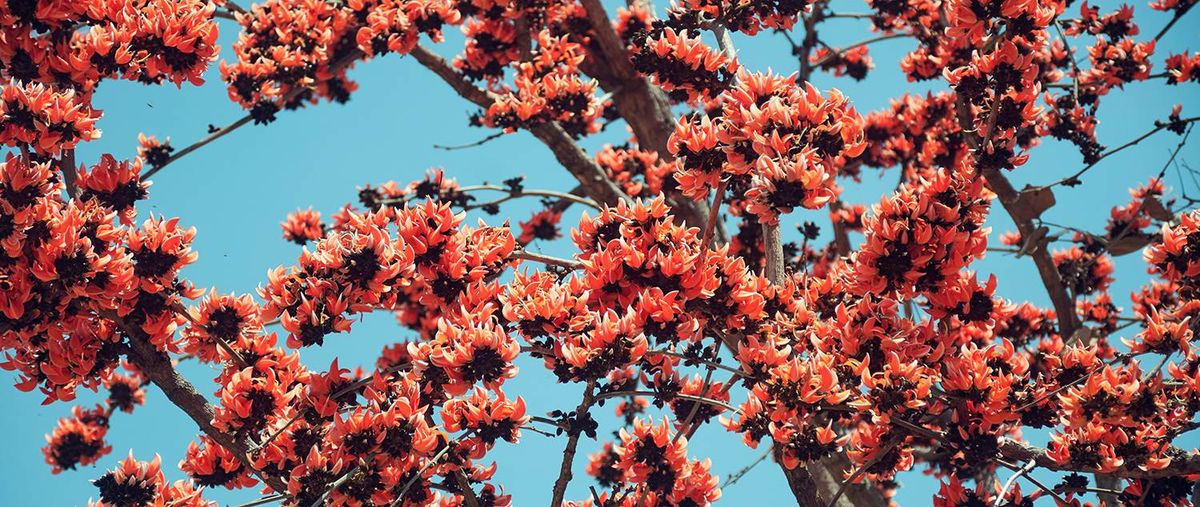
In late February, when the rest of the forest is still in its dry-season stupor, the flame of the forest (Butea monosperma) ignites. Bare branches, no green anywhere, just this explosion of deep orange-red flowers so dense and so vivid that travelers crossing the Indian subcontinent for centuries thought the hillsides were on fire. That's not a metaphor someone invented for a plant catalog. It's the literal reason the tree got its common name, the image that embedded itself into Vedic texts, into Holi festival traditions, into the ritual lives of communities who've lived alongside it for thousands of years.
What gets me, though, is how completely this tree has slipped past Western permaculture circles. People in USDA zones 9b through 11 are out here agonizing over nitrogen fixers and canopy pioneers, and almost nobody is talking about a fast-rooting, drought-adapted Fabaceae tree that feeds giant honey bees, builds soil, produces edible flowers, yields natural dye, and then puts on what is genuinely one of the most arresting floral displays of any tree I've ever grown. There's a catch, of course. There's always a catch. But it's not the one most people expect.
Origin and History of Flame of the Forest
Botanical Background and Native Range
Butea monosperma is a medium-sized deciduous tree in the Fabaceae family, native to the tropical and subtropical dry deciduous forests stretching from the Indian subcontinent across Southeast Asia, from Pakistan and Nepal through Bangladesh, Myanmar, Thailand, and Laos to the border regions of Afghanistan.[1][2] It typically reaches 6 to 15 meters with a characteristically crooked trunk and wide, irregular branching that gives it real personality as a landscape specimen. When I first started designing around Fabaceae pioneers, I was struck by how often the "imperfect" form of a tree like this is exactly what makes it work in a naturalistic food forest planting. That crooked habit catches the eye and breaks up a monotonous canopy in all the right ways.
Patience is non-negotiable with this tree. It begins flowering at 5 to 8 years and reaches full height within 10 to 20 years from seed, with a natural lifespan often spanning 50 years and sometimes well past 100 in favorable conditions.[3][4] That's a long game, but it's one I'd encourage any serious permaculture gardener to play. Local populations, meanwhile, are under genuine pressure from overharvesting for timber, dyes, lac production, and medicinal bark, and habitat loss compounds the problem.[5] I've watched firsthand how demand for lac and natural dyes can hollow out local stands, which is exactly why growing your own from ethically sourced seed matters in any regenerative design context.
Visual Characteristics and Seasonal Display
The common name says everything. From February through May, before a single leaf appears, the bare branches erupt in dense pendulous racemes of orange-red to scarlet papilionaceous flowers, each bloom 1.5 to 4 cm long, arranged in clusters 15 to 45 cm long.[6][7] In a subtropical garden, it reads as fire from a distance. I've used it as a focal point in dry-season plantings precisely because nothing else blooms with that kind of intensity when everything else looks scorched and dormant.
The rest of the year tells a quieter story. Large trifoliate leaves with leathery, elliptic-obovate leaflets 5 to 20 cm long emerge after the flowers fade in May or June, and the tree sheds them again in January or February before the next bloom cycle begins.[2][4] The gray-brown bark is rough and fissured, exuding a reddish gum, and the flat oblong pods that follow the flowers contain one to three brown seeds each. The flowers' nectar richness draws birds, bees, and a range of other pollinators, and while a rare white-flowered mutant form exists in the wild, it's not recognized as a formal cultivar.[7][8] I find those natural variations a useful reminder of how much genetic diversity hides inside a species that looks uniform on paper.
Traditional and Cultural Uses
The flame of the forest plant has been woven into South Asian life for at least three thousand years, with references to it as "Palāśa" appear in the Rigveda and Atharvaveda (c. 1200 to 1000 BCE), where it symbolizes fire, passion, and renewal.[9] Its flowers are offered in rituals for Lord Shiva, used during Holi as a source of natural colored powder, and celebrated at Teej and Shivaratri. It holds the official status of state flower for both Uttar Pradesh and Bihar. Having designed around other deeply culturally embedded Indian trees like neem and sacred fig, I have a real appreciation for how that kind of symbolic weight shapes the way communities interact with a species across generations.
Ayurvedic practitioners have long worked with nearly every part of this tree. Each part of the tree serves specialized therapeutic functions, and the gum is used for various other applications, with the system as a whole considering the plant cooling and dry in quality, balancing Pitta and Kapha.[10][11] Tribal communities including the Bhils, Gonds, and Santhals extend that tradition further, incorporating it into natural dye production, fodder, fuelwood, ceremonial leaf plates, shellac hosting via lac insects, and a rich oral folklore connecting the tree to love and devotion.[12] These living traditions are precisely why local population declines from overharvesting deserve to be taken seriously by anyone who values this plant.
Ecological Adaptations and Fun Facts
What I find genuinely impressive about this tree, from a designer's perspective, is how thoroughly it's built for disturbance. Its deep taproot anchors it through prolonged drought; its thick bark shields the cambium from fire; and after a burn, it can resprout from the base rather than simply dying back.[13] That combination of traits is exactly what you want in a pioneer species for a degraded dryland site. I've worked with other resilient Fabaceae that share pieces of this profile, but few of them pair fire-resprouting ability with a leafless flowering display so visually spectacular that it evolved partly to make itself unmissable to pollinators when the landscape around it is at its barest. That's elegant ecological problem-solving, and it makes the flame of the forest tree a genuinely durable foundation species for any subtropical permaculture system willing to wait for it.
Flame of the Forest Varieties and Sourcing
Natural Variation in Butea monosperma
If you go looking for named cultivars of Butea monosperma, you won't find them. Botanically, there are none. No stabilized selections, no registered clones, no trademarked varieties. The species is treated as a single taxon in standard botanical classification, with no formally recognized infraspecific categories, and while a proposed B. monosperma var. lutea has been floated for yellow-flowered forms, it hasn't been stabilized or widely accepted.[14][15][16] For gardeners used to browsing cultivar lists, that's a bit of an adjustment. What you're working with here is the authentic wild-type species, which I'd argue is the more interesting choice anyway.
That said, natural populations across South and Southeast Asia show real morphological diversity. Seed-grown plants from different provenances can vary noticeably in flower color, petal size, leaf shape, overall tree size, and growth habit. The most robust, tall-growing forms come from the Himalayan foothills, while plants originating further into Southeast Asia tend toward a smaller, sometimes shrubby stature.[17][18] I've found it useful to label seedlings carefully in their first year and note the seed origin, because growth vigor can surprise you. The iconic orange-red flower is what most people picture, but a yellow or near-white bloom occasionally turns up in seed-raised plants, offering a bit of serendipity without any guarantee of repeatability.
How to Source, Import, and Propagate Flame of the Forest
Finding this tree in the US takes some effort. Commercial availability is genuinely limited, reflecting both its tropical origins and its narrow outdoor range in USDA zones 9b through 11.[19][20] Your best options are specialty tropical nurseries, a handful of reputable online retailers, and occasionally botanical garden plant sales. Seeds typically run $5 to $15 per packet, seedlings $20 to $50, and larger saplings anywhere from $50 to $150 depending on size and availability.[21][19] Both fluctuate.
Importing seed or live material from abroad requires navigating USDA APHIS phytosanitary regulations; a PPQ Form 587 permit may be needed for live plants or seeds, which must originate from approved pest-free sources.[22][23] It's not listed as a federal noxious weed, and Florida hasn't flagged it as invasive either, but always verify current state-level rules before ordering. In my experience, the permit process is slower than people expect, but sourcing properly documented seed from a known tropical nursery sidesteps most of the headaches and tends to yield healthier, pest-free stock.
Whichever route you take, prioritize fresh seed. Like many legumes, Butea monosperma viability drops off after one to two years,[4] and I've wasted more than one season waiting on germination from old stock before I learned that lesson properly. With scarification, a 24 to 48 hour soak, and sowing temperatures around 25 to 30°C, germination rates of 60 to 80% are achievable.[4] Propagation from cuttings or air-layering can reach 80 to 90% rooting success in the right conditions,[4] and the propagation section covers all of that in depth. The larger point is that this species, despite the sourcing effort, propagates readily once you have good material. That's not a minor thing for a tree that's also the state tree of Chhattisgarh,[24] globally secure as Least Concern,[25] and increasingly rare in cultivation outside its native range. Growing it from the base species, in its full, unselected wildness, feels like the right approach.
Flame of the Forest Propagation and Planting
The first time I held a Butea monosperma seed in my hand, I wasn't sure what I was looking at. It's a striking little thing, dark brown to almost blackish, glossy, flat, and shaped somewhere between a lens and a kidney, roughly 8-18 mm long with a neat hilum scar along one edge.[26][27] It reminded me immediately of a rosary pea or a young poinciana seed, that same pebble-smooth surface that practically announces "I am not going to germinate easily." The pod that delivers it is long, flat, and papery, 10-20 cm, holding one to three of these seeds and barely opening even at maturity.[26] That hard, impermeable coat is the whole story with this species.
Seed Morphology, Dormancy, and Germination
The seeds are orthodox and monoembryonic, meaning each one carries a single embryo that stays dormant behind a physically impermeable seed coat until something breaks through.[28] Germination is hypogeal, so the cotyledons stay underground while the shoot emerges, which is a useful thing to know when you're wondering why nothing seems to be happening above the soil surface.[29] Skip scarification and you'll wait a very long time for very little. Pretreat properly, though, and the results are genuinely encouraging: mechanical nicking, a hot-water soak at 80-90°C for five to ten minutes, or a twenty-four-hour soak at lower temperature all reliably break dormancy.[30] Concentrated sulfuric acid works too, but I'd only recommend that route to someone with lab experience and a reason to process large quantities. In my own trays at 28°C, properly pretreated seed shows radicle emergence by day twelve to fifteen without fail; the published window is ten to twenty days at 25-32°C, with germination rates climbing to 60-85% after treatment versus the sluggish, patchy results you get from untreated seed.[3][31]
Because the species is primarily outcrossing and insect-pollinated, seedlings from open-pollinated collections will be genetically variable.[32] For restoration plantings, that variability is a feature. For ornamental selections or medicinal material where you want consistent flower color or phytochemical profile, it's a problem. I label my seedling trays meticulously at this stage partly because young Butea seedlings look remarkably like several other Fabaceae coming up simultaneously, and a mix-up I made early on cost me a full growing season of confusion. One more practical note: if you're storing Butea monosperma seeds, they hold viability for one to two years under ambient conditions but will last five to fifteen years if you dry them to 5-10% moisture and refrigerate or freeze them in sealed packaging.[33][34] Once ambient moisture creeps above 12%, viability drops fast, so don't skip the drying step.
Vegetative Propagation Methods
Seeds are fine for scale, but if you want a flame of the forest tree that flowers in two to three years rather than three to five, grafting is the answer.[3][35] Veneer or cleft grafting onto one-year-old seedling rootstocks achieves 70-90% success with good technique.[36] My own best results came from wrapping unions tightly with parafilm and keeping grafted plants under 50% shade cloth for the first four weeks; the high humidity (75-85%) and temperatures of 25-32°C that all vegetative methods require are easiest to maintain in a simple humidity tent during this establishment window.[37] That extra attention early on is a worthwhile trade for not waiting half a decade to see the first flowers.
Air layering is the next most reliable option at 80-85% rooting success, and I find it more forgiving than cutting work once you've done it a few times.[37] Hardwood stem cuttings are less satisfying, even with IBA treatment, hovering around 40-60% success.[38] Tissue culture protocols do exist for mass propagation, but they're largely still in research settings and not a realistic option for home growers or small nurseries yet.[38] Seedlings are ready to transplant after six to twelve months in the nursery, once they've reached 30-45 cm, starting under partial shade before hardening to full sun.[39][36]
Soil, Site Selection, and Planting Technique
Butea monosperma is a pioneer of open, disturbed, high-light environments, the kind of tree that colonizes roadsides and degraded hillsides where other species struggle.[40] That ecology tells you most of what you need to know about siting it: full sun, well-drained soil, and no waterlogging. It tolerates sandy loam, loam, clay, rocky and lateritic soils, and genuinely poor fertility without complaint, but sustained flooding is the one condition it cannot handle.[4][41] For containers, a mix of 50% garden soil, 30% sand, and 20% compost gives good drainage without sacrificing nutrition early on.[42]
Preferred soil pH sits between 6.0 and 7.5; the tree tolerates a wider range of 5.5-8.5, but the extremes carry real costs.[43] I always test pH before planting because the difference between 5.5 and 6.5 shows up clearly in the tree's vigor. I've seen leaf yellowing and genuinely stunted growth on soils below pH 5.5, and once lime was worked in and the pH corrected, the same trees put on 60-80 cm of new growth the following season. Above 7.5, iron and phosphorus availability start to decline and chlorosis follows.[44] Once established, the deep taproot (reaching 2-5 m or more) makes this tree genuinely drought-tolerant and gives it a degree of salinity and compaction tolerance that keeps it productive on marginal land;[45] a handful of compost at planting pays visible dividends through the first two years, but after that the tree is largely self-sufficient.
Spacing, Growth Rate, and Establishment
The size this tree eventually reaches should drive every spacing decision you make. Mature specimens hit 15-25 m tall with an 8-15 m canopy spread, and root systems extend 15-20 m from the trunk.[46] Growth rate is moderate to fast once established, reaching 8-12 m in ten to fifteen years under good conditions.[47] Plant too close to structures or other canopy trees and the root spread will eventually cause conflict.
Purpose should drive your spacing choice. Timber and general plantation work calls for 5-6 m between trees (roughly 250-400 per hectare); agroforestry rows work better at 6-8 m to leave room for intercropped species; dense fuelwood systems can get away with 3-4 m; restoration plantings are best at 5-10 m to allow full canopy development over time.[48][49] In my own food forest designs, I tend toward 6-7 m, which leaves enough room below the eventual canopy for a productive understory guild once the tree fills in. Timing the planting to coincide with the onset of monsoon (June-July) gives roots the best possible start; dig 45 cm × 45 cm × 45 cm pits filled with well-drained organic soil, stake young trees for the first year or two to discourage wind rock, and invest a little time in formative pruning through years one to three to build a central leader and an open canopy structure that will pay off for decades.[50][51]
Flame of the Forest Care Guide
Growing flame of the forest well comes down to understanding one central truth: this tree has two completely different personalities. For the first year or two, it needs your attention. After that, it mostly wants you to leave it alone. The care decisions that matter most are front-loaded into establishment, and once that deep taproot locks in, you're managing one of the most self-sufficient trees you can plant in a tropical or subtropical garden.
Sunlight Requirements
Full sun is non-negotiable. Butea monosperma evolved as a pioneer of open dry deciduous forests, and it behaves accordingly; anything less than 80% sun exposure will cost you flowers.[52] I've seen specimens grown in partial shade that stayed technically alive for years but never bloomed. If your planting site is shaded for more than a few hours mid-day, find a different site.
Watering Needs and Drought Tolerance
During the first two years, water deeply and consistently: two to three times a week for young seedlings, tapering to every seven to ten days as the plant establishes.[36][53] The goal is to drive roots down, not pamper the surface. I aim for 10 to 20 liters per watering, delivered slowly enough to penetrate 30 to 60 centimeters.[54] Mulching 5 to 10 centimeters of organic matter over the root zone at planting makes a real difference in moisture retention through this critical window.
Once established, the transformation is dramatic. Mature trees manage on 500 to 800 millimeters of annual rainfall and can endure six to eight months of dry conditions with minimal leaf drop.[55][54] I've had a similar experience with southern live oaks and certain acacias: you invest in establishment, then the tree effectively takes care of itself. In practice, I find most gardeners overwater this tree past year three out of habit. Watch for the diagnostic signs instead: wilting with brown crispy leaf edges signals underwatering, while lower-leaf yellowing and soft, foul-smelling roots signal the opposite.[56][57] This is one tree that will quickly punish wet feet; I now run a percolation test on every site before planting. The tree performs well across a wide soil pH range of 5.5 to 8.5 and tolerates moderate salinity, but it rewards well-drained sandy or loamy soil above everything else.[42][58]
Feeding and Fertility
As a nitrogen-fixing legume, flame of the forest is one of the least fussy feeders I've worked with. Young trees benefit from a single early-spring application of balanced slow-release fertilizer (10-10-10), and mature trees need nothing more than an annual top-dressing of compost or aged manure.[36] Skip the high-nitrogen formulas entirely; the tree is fixing its own from the atmosphere, and pushing it with extra nitrogen just encourages leafy growth at the expense of flowers. For a low-input permaculture planting, this is genuinely ideal.
Frost Tolerance and Cold Protection
Flame of the forest is a tropical tree at heart, native to frost-free regions of India and Southeast Asia, and it has no meaningful frost hardiness.[59] Temperatures below 5°C cause stress; prolonged exposure below freezing brings branch dieback or death, particularly in young plants.[60][4] In colder climates it's grown under glass in botanical collections precisely because outdoor survival isn't realistic.[42] If you're seeing wilting, blackened foliage, and tender shoot dieback after a cold snap, that's frost damage.[61]
Reliably suited to USDA zones 10 and 11, it can survive in zone 9b with the right microclimate.[20] I've learned the hard way that site selection does most of the protective work here: a south or west-facing position with a windbreak behind it creates the kind of warm pocket that tips a marginal planting toward survival. Young plants are the real weak link, comparable to young citrus or avocado in Central Florida winters. For saplings in exposed sites, 5 to 10 centimeters of root mulch and well-watered (not waterlogged) soil going into a cold spell offer meaningful protection; fleece on the canopy adds a degree or two when temperatures dip briefly.
Heat Tolerance
Where this tree truly earns its keep is at the hot end of the spectrum. Rated for AHS Heat Zone 12, it thrives across a range of 10 to 45°C and can tolerate brief spikes to 50°C in dry conditions.[19][62] Thick leaf cuticles, deep roots, and stomatal regulation give it a suite of physiological tools that most ornamental trees simply don't have. Growth does slow 10 to 15 percent above 40°C, but in my experience watching mulched specimens through brutal summer weeks, the leaves may wilt mid-afternoon and recover by evening; that's the deep root system doing its job, not a tree in distress.[52]
Seedlings and flowering-stage trees are the most heat-vulnerable, so prioritize establishment watering and keep that mulch layer consistent through the first two summers.[63] In agroforestry systems, established trees actually moderate the microclimate around them, reducing understory temperatures by 3 to 5°C and cutting wind speed by 30 to 50%.[64] That's not just a botanical footnote; it's a reason to site it deliberately on the hot western edge of a food forest.
Pruning, Maintenance and Seasonal Rhythm
Understanding the annual cycle makes every other maintenance decision obvious. From December through February, the tree drops its leaves and enters dry-season dormancy. February through April, it flowers spectacularly on bare branches. Leaf flush follows in March through May, fruiting in May through June, and then the cycle resets.[7][65] Once you've seen orange flowers blazing from naked branches against a February sky, the deciduous habit stops feeling like a liability.
Pruning flame of the forest is minimal: a light tidy after flowering to remove dead wood and encourage next year's bloom structure is all it needs.[66][53] The more pressing maintenance task is suckers. This tree produces them prolifically, and if you let them go, you end up with a multi-stemmed thicket rather than a specimen tree. I made exactly that mistake with a young plant early on; remove suckers as soon as they appear and you keep the ornamental form clean.[36] Beyond that, an annual mulch refresh and the occasional check for waterlogging are genuinely all a mature, well-sited tree requires.
Harvesting Flame of the Forest (Butea monosperma)
Patience is the first skill this tree teaches. I've grown seed-raised Flame of the Forest specimens that didn't produce a single flower until their fifth year, and I've watched grafted stock bloom in the third year post-grafting with a reliability that still impresses me. That gap matters when you're planning a food forest.[3][67] Compared to a moringa or papaya that rewards you in months, this one asks for a multi-year commitment before the harvest window even opens. Knowing that upfront saves a lot of frustration.
Timing and Maturity Cues for Flowers and Seeds
The bloom signal isn't subtle. Flame of the Forest flowers when conditions turn hot and dry, typically 20-35°C with minimal rainfall, producing its extraordinary orange-red blossoms on completely bare branches from February through April, peaking in February and March across much of its native Indian range.[68][69] The leaflessness isn't incidental; it's your visual cue that the season has arrived. Then comes the wait for seeds.
From flowering to ripe pods is roughly 90 to 120 days, carrying you into May and June.[70][71] The go/no-go test I use in the field is simple: the pods should have turned from green to brown, feel dry and woody rather than supple, and when you shake one, you should hear the seed rattling inside.[72][73] Some will have already split open on the tree. That rattle is your green light. Exact months can shift a few weeks depending on your latitude or an unusual weather year, so watch the pods rather than the calendar.
Sustainable Harvesting Techniques
For the flowers, which are the main harvest for most growers, early morning on a dry sunny day is the right window.[74][73] I've found the blossoms are at their most vivid and bruise far less easily before the day's heat arrives; once temperatures climb, the petals turn fragile and begin dropping bioactive compounds noticeably faster. Hand-pick blossoms that have fully opened and are showing their deepest orange-red color. Gentle and selective is the approach; stripping branches encourages fewer blooms the following season, particularly on trees that haven't yet reached full canopy maturity. A mature specimen can produce thousands of flowers across a season,[73] so there's no need to be aggressive about it.
A brief note for anyone exploring the broader genus: the related Thai species Butea superba (Red Kwao Krua) requires a completely different approach for its medicinal roots, involving partial digging of 2-3-year-old tubers and strict low-temperature drying protocols.[75][76] Root digging has no place in Butea monosperma harvesting. These are distinct plants with distinct protocols, and conflating them causes real harm to both the tree and the person using it. I only harvest from trees I've positively identified and grown myself, and I'd encourage the same caution here.
Post-Harvest Handling and Yield
Processing matters as much as picking. Flowers and bark should be shade-dried, not set out in direct sun, to preserve the flavonoids and other bioactive compounds that make the harvest worth anything in the first place.[77][78] I learned this the hard way early on when a flat of flowers I'd spread on a sun-facing table developed mold within 36 hours. Shade, airflow, and a controlled drying temperature of 30-40°C get seeds down to the 8-10% moisture content needed for safe long-term storage.[77] Flame of the Forest seed pods and their contents are measured in quality, not bulk; a single healthy tree easily supplies a household's annual needs for dye, tea, and propagation stock without ever stressing the canopy. That's a permaculture win in the truest sense.
Flame of the Forest Preparation, Uses, and Safety
Edible Parts and Culinary Applications
The flowers are the heart of every culinary tradition built around the flame of the forest. They carry a mildly sour, tangy quality with a faint bitterness, though the nectar itself is sweet enough to sip directly from the bloom.[79][80] Cooked or properly processed, they turn up in laddus, sherbets, curries, and festival dyes, and they bring real antioxidant and flavonoid value to every one of those applications.[81] One thing I've learned from working with fresh-picked blooms: that vivid orange-red fades fast once the flowers leave the branch. I process them the same day, whether that's simmering for a sherbet or laying them out for drying, because waiting even overnight costs you both color and fragrance.
Boiling, fermenting, or cooking are the approaches traditional knowledge consistently recommends before consumption, and they matter.[82][80] Young leaves can be eaten cooked and behave a bit like bitter mustard greens or amaranth in the pan, though they're far more common in medicinal use than on the dinner table.[4] The seeds, pods, husks, and seed oil are a different story entirely. They contain alkaloids and tannins that cause real gastrointestinal harm and should not be eaten.[79][83] I keep this tree clearly labeled in my design plans because similar-looking Fabaceae relatives like Royal Poinciana share the same fiery floral spectacle without the same risks; mis-harvesting between them isn't catastrophic, but knowing exactly what you're working with still matters. Processed leaves and bark show low acute toxicity in studies, but dosage limits apply and pregnant women and children should avoid them.[84][85]
During Holi, the flowers have historically served as the source of natural red dye for festival powders and colored water, a use that speaks to how deeply this tree is woven into seasonal ritual across South Asia.[80][86]
Traditional Medicinal Preparations and Dosages
Ayurvedic and folk practice has developed a clear toolkit for this tree: bark decoctions for gastrointestinal complaints, leaf and flower infusions for respiratory issues, dried powders, tinctures, and topical poultices for wounds and skin conditions.[87][88] Traditional dosage ranges from the literature give us a working reference: bark powder up to 3-6 grams per day, dried leaf extract around 5-10 grams, flower decoction at 10-20 ml.[88] I always tell clients that 3-6 grams of bark powder is the traditional upper limit, not a starting point; exceeding it risks the GI irritation the literature documents rather than just a rough guess at home.[85] The astringent gum known as Bengal Kino is medicinal, not culinary, another clear line worth holding.[89] These preparations have been used safely across generations when made correctly, but the absence of large-scale human trials means starting conservatively and working with a qualified practitioner is still the responsible path.
Non-Food Uses and Practical Applications
Beyond the kitchen and the apothecary, Flame of the Forest earns its place in any landscape through sheer material utility. The wood, commonly called Bastard Teak, is dense and durable enough for construction, railway sleepers, and fuel.[90][86] Young leaves serve as livestock fodder, and the flowers supply natural red dye for textiles and ritual decoration alongside their festival role.[4] Seeing those flower-dyed Holi powders in photos made me appreciate, in a genuinely personal way, that some plants carry cultural continuity the way others carry nitrogen: quietly, essentially, over centuries. Growing this tree well means respecting all of that. Correct identification, informed preparation, and a willingness to learn from the traditions that developed these uses are what make the difference between using Butea monosperma thoughtfully and simply admiring it from a distance.
Flame of the Forest Health Benefits
Butea monosperma carries a medicinal reputation that goes well beyond its visual appeal. In Ayurvedic, Siddha, and folk medicine systems, nearly every part of this tree has a designated role:
- bark decocted for diarrhea, dysentery, and skin ailments
- flowers applied for eye disorders and urinary complaints
- seeds used as an anthelmintic
- gum as a demulcent
Medicinal Research and Traditional Uses
The most consistent finding across the research literature is anti-inflammatory activity. Bark, leaf, and flower extracts have all demonstrated inhibition of the NF-κB pathway, suppression of COX-2 expression, and modulation of STAT3 signaling in preclinical animal models and in vitro systems.[94][95][96] Those same anti-inflammatory pathways underpin the plant's documented wound-healing effects, where extracts accelerate epithelialization and collagen deposition in excision models, and its analgesic activity, which in hot-plate and acetic acid writhing tests ran comparable to aspirin at doses of 100–400 mg/kg, likely through prostaglandin inhibition.[97][98]
The antioxidant story is equally compelling. Methanolic extracts show strong free-radical scavenging in DPPH assays, and the mechanism traces back to Nrf2 pathway activation, which induces protective enzymes including HO-1 and NQO1.[99][100] That cellular defense mechanism connects directly to the hepatoprotective effects seen against carbon tetrachloride toxicity and to antidiabetic activity via α-glucosidase inhibition and blood-glucose reduction in streptozotocin-induced diabetic rats, both largely mediated by flavonoid compounds.[101]
Beyond those headline activities, the research documents broad-spectrum antimicrobial action against both Gram-positive and Gram-negative bacteria, plus antifungal effects against Candida albicans and Aspergillus niger, with minimum inhibitory concentrations typically in the 0.5–4 mg/mL range.[102][103] Antispasmodic effects operate through calcium-channel blockade, diuretic action has been shown to be comparable to furosemide in rat models, saponins contribute expectorant and mucolytic properties, and tannins provide the astringency behind traditional diarrhea and topical wound applications.[104][102]
In my review of the available studies, the preclinical results are genuinely compelling, but I always remind clients that robust human trials are still needed before relying on this plant for serious conditions. Topical applications, where the evidence is somewhat stronger clinically, sit in a different category than the systemic uses. The flame of the forest benefits documented in the lab are a promising map, not a prescription.
Key Phytochemicals in Flame of the Forest
The pharmacology above makes a lot more sense once you see the chemistry underneath it. Butea monosperma contains an impressive roster of bioactive compounds: flavonoids including butein, butrin, isobutrin, palasitrin, monospermoside, quercetin, and kaempferol; isoflavones such as prunetin, genistein, biochanin A, and formononetin; chalcones, glycosides, tannins, saponins, steroids (particularly β-sitosterol), terpenoids, phenolic acids, and coumarins.[105][106][107] Flavonoids and isoflavones receive the most research attention because they're concentrated in the flowers and seeds, while bark is richer in tannins, phenolics, and saponins, and terpenoids and steroids concentrate more in stems and roots.[108][109]
After years of designing subtropical landscapes, I've noticed that flowers from mature, sun-exposed trees tend to develop a noticeably deeper orange-red hue and more pronounced tangy flavor, and research on stress-induced secondary metabolite accumulation offers a plausible explanation. Isoflavone concentrations are also higher during the flowering period, which is one reason harvest timing matters if you're after peak bioactivity.[108] The seed oil rounds out the picture with a fatty acid profile dominated by oleic acid (45–50%), linoleic acid (20–25%), and palmitic acid (10–15%), and these compounds contribute to the plant's anti-inflammatory and antioxidant activities while also playing ecological roles in herbivore defense and pollinator attraction.[110][111]
Nutritional Profile of Edible Parts
The flowers are the part to focus on here. Traditionally boiled for 10–15 minutes to reduce bitterness before use in curries, chutneys, sherbets, and teas, they've been a culinary ingredient in India for generations, typically in servings around 10–20 g.[7][112] Fresh flowers run roughly 45–50 kcal per 100 g, with 82–85 g moisture, 1.2–4 g protein, 8–15 g carbohydrates, 1.5–7 g fiber, 10–30 mg vitamin C, and 100–200 IU vitamin A from beta-carotene. Dried flowers are more nutrient-dense: approximately 145 mg calcium, 4.2 mg iron, 285 mg potassium, 78 mg magnesium, and 0.9 mg zinc per 100 g.[113][114][115]
Compared to edible flowers like hibiscus or rose, the vitamin C numbers here are modest rather than standout, but the mineral density in dried flowers is genuinely respectable for a foraged ingredient. The antioxidant flavonoids, quercetin and kaempferol among them, add meaningful value that the raw nutrient figures don't fully capture.[116] Leaves are primarily livestock fodder and can cause digestive upset eaten raw; they're not part of the human culinary tradition even though their dry-weight protein and mineral values look impressive on paper. Seeds, despite containing 25–30 g protein and 15–20% oil rich in oleic and linoleic acids, are not candidates for eating: they harbor monospermin and cyanogenic compounds that make them genuinely hazardous.[117] Most nutritional data comes from a small number of phytochemical surveys, so treat the specific values as useful ballpark figures rather than certified nutrition facts, and always apply proper preparation before consuming flowers.
Safety Considerations and Contraindications
Seeds are the primary concern. They contain monospermin, butein, and possible cyanogenic glycosides, and ingestion of significant quantities can cause nausea, vomiting, abdominal pain, diarrhea, and dehydration. Animal studies have flagged potential hepatotoxicity and cytotoxicity at high doses of butein, though documented human poisoning cases remain rare.[118][119][120] Early in my career I wasn't careful enough about labeling toxic versus edible plant parts in client gardens, and I've since made seed toxicity warnings a standard part of every Butea monosperma installation. Every homeowner I work with knows: the flowers are food, the seeds are not.
Properly prepared leaves and bark sit in a safer category. Acute toxicity studies report LD50 values above 2000 mg/kg in rats for leaf extracts, with no observed genotoxicity, though excessive intake can still cause mild gastrointestinal upset.[121] Traditional Ayurvedic bark powder doses run 3–6 g per day under professional supervision, and there are no formal FDA or WHO dosage guidelines since the plant is classified as a dietary supplement in the U.S.[122][123] Skin contact with leaves, flowers, or sap can cause dermatitis in sensitive individuals, presenting as redness, itching, or rash. Because the tree is primarily bird- and squirrel-pollinated rather than wind-pollinated, airborne pollen reactions are unlikely; contact reactions are the more realistic concern for gardeners.[124][125]
I do not use or recommend flame of the forest medicinally during pregnancy or alongside blood-thinning medications. The emmenagogue and uterine-stimulant properties are well documented enough that the contraindication during pregnancy is unambiguous, and the potential for enhanced hypoglycemic effects when combined with antidiabetic drugs or increased bleeding risk with anticoagulants deserves equal seriousness.[91] I grow this tree for its spectacular spring display, its ecological value, and its deep cultural history. For anything medicinal, I defer to qualified Ayurvedic practitioners who understand the full preparation context and contraindication picture.
Pests and Diseases of Flame of the Forest (Butea monosperma)
Natural Resistance and Common Pests
Flame of the Forest comes reasonably well-armed. The same phenolic compounds, tannins, and flavonoids like butein that show up in its medicinal profile[126] also function as feeding deterrents against generalist insects, and leaf extracts have demonstrated measurable antifeedant activity against lepidopteran larvae like Spodoptera litura.[127] That orange-red latex I've noticed seeping from fresh cuts in the field? It isn't just striking; it appears to deter casual browsers that would happily strip a neighboring legume. The tree also shows genuine termite resistance, which puts it ahead of several acacias I regularly use in restoration plantings.
That said, a handful of specialist insects have worked around those defenses. The Bihar hairy caterpillar (Spilarctia obliqua), semiloopers (Achaea janata), leaf beetles, and various Noctuidae caterpillars are the most commonly reported defoliators.[128][129] Seed borers (Bruchus spp.), stem borers (Anarsia sp.), mealybugs, and gall midges round out the usual suspects.[128][130] Damage shows up as yellowing, defoliation, stem deformities, and sooty mold from mealybug honeydew.[130] Pressure peaks during monsoon season and hits young trees hardest; established specimens typically weather infestations with far less drama.[131] I label my young plants through the first two monsoons and check new leaf flush weekly; catching Bihar hairy caterpillar early has saved me from full defoliation every time. No commercial pest-resistant cultivars exist, though some wild genotypes from Rajasthan and Madhya Pradesh show partial natural resistance in screening programs.[132]
Diseases and Environmental Influences
Bacterial and viral diseases are rarely reported, which suggests a reasonable baseline immunity.[133] The real threats are fungal and almost entirely tied to water and humidity. Root rot driven by Ganoderma lucidum, Phytophthora spp., Fusarium, and Pythium becomes a genuine problem in waterlogged or poorly drained soils,[134][4] and I lost a young tree to it once before I learned to treat even modest drainage improvements as non-negotiable. Raising a planting bed by six inches made more difference than any spray ever could. Fusarium solani dieback typically starts at branch tips and can kill young specimens if left unchecked.[133] Foliar problems like leaf spot (Cercospora spp., Phyllosticta butea) and powdery mildew (Erysiphe butea) appear when relative humidity climbs above 70%.[135][136] Well-sited trees in tropical and subtropical gardens, the kind of clients most readers here are designing for, rarely face disease pressure that cultural practices can't manage.
Integrated Management Strategies
My approach follows the same hierarchy I use across every regenerative system: culture first, biology second, chemistry as a genuine last resort. Proper spacing of 5 to 6 meters, pruning for airflow, and removing infected material before pathogens spread handle the majority of problems without any inputs.[137][138] For biological support, parasitic wasps like Trichogramma spp., Beauveria bassiana, and pheromone traps where relevant all work with the system rather than against it.[139] When I do reach for something stronger, neem-based azadirachtin applied early and targeted to the affected area is my first chemical choice, with copper-based fungicides reserved for persistent foliar disease.[140] I've found that trees in well-designed polycultures with good plant diversity simply experience less sustained pest pressure than conventionally managed specimens, which makes thoughtful design the most effective intervention of all.
Flame of the Forest in Permaculture Design
Before you plant anything, you need to know whether a tree belongs in your climate. With flame of the forest, that question has a clean answer: if you're in USDA zones 10–12, you're in business. Zone 9b is marginal, and I speak from experience when I say a surprise dip to 3 °C can torch new growth on young trees overnight. I now plant anything under three years old in a protected microclimate and keep frost cloth within reach from November through February.
Climate Adaptation and Hardiness Zones
In the wild, Butea monosperma earns its toughness honestly. It's native to tropical and subtropical dry deciduous forests stretching across India, Bangladesh, Nepal, Sri Lanka, Myanmar, and Thailand, from sea level up to about 1,500 m.[141][142] Its home climates are Köppen Aw and BSh, which means punishing dry seasons, scorching heat, and then a monsoon deluge. That's the rhythm the tree is built around. It thrives between 25–35 °C, tolerates peaks up to 45–50 °C, and handles annual rainfall anywhere from 500 to 1,500 mm, dropping its leaves during the dry season to conserve moisture rather than fight it.[4][143] Think of it a bit like a more drought-hardy version of a jacaranda that sheds its canopy to survive the dry season rather than sulking through it.
The frost intolerance is real and non-negotiable. Damage sets in below 0 °C, and anything below 5 °C sustained over several nights will stress even established specimens.[7][144] In practical terms, that limits outdoor cultivation to southern Florida, coastal and inland southern California, Hawaii, and similar subtropical pockets.[20][145] Hawaii growers should note that it has been recorded as invasive there, so check local regulations before planting.[146] On the mainland, waterlogging is the other hard limit; it insists on well-drained sandy or loamy soil with a pH of 6.0–7.5 and will not tolerate sitting in wet feet.[4]
Forest Layer and Guild Companions
In its native forests, flame of the forest occupies the upper canopy, reaching 15–20 m with a spreading crown that influences everything beneath it through light, litter, and soil chemistry.[147][148] Its co-occurring native neighbors include teak, sal, and mahua, which gives you a sense of the ecological guild it's accustomed to playing in. In a designed food forest, it slots naturally into the canopy layer above shrubs and herbaceous understory plantings, with its deciduous habit creating a useful light pulse: full canopy shade through the wet season, then bare branches and maximum sun penetration during the dry months when lower-story plants may need the warmth.
What I love about it from a design standpoint is that it behaves like a legume pioneer in exactly the situations where you need one most. In my early food forest work I used it in the same role I'd give a black locust in a temperate system: to jump-start succession on sandy, nutrient-poor ground. It fixes atmospheric nitrogen through symbiotic rhizobial associations in its root nodules, and its mycorrhizal partnerships enhance phosphorus uptake in soils that would otherwise be difficult to establish anything in.[4] Within three seasons on a depleted site, I watched the soil organic matter visibly improve as leaf litter accumulated and decomposed. Deep roots do the rest, reaching moisture through the dry season without any help from me once the tree is past its second birthday.
Ecosystem Functions and Services
The ecological payoff from flame of the forest becomes obvious in late winter. The flowers open on bare branches from February through April, dense orange-red racemes 2–3 cm long producing nectar and pollen before a single leaf appears.[42][54] The dominant pollinator is Apis dorsata, the giant honey bee, which I find thrilling to watch work a tree in full bloom.[149] But carpenter bees, Apis cerana, butterflies, and occasional birds also show up, and in my garden that early-season bloom draws in beneficial insects well before most other plants offer much of anything.[149]
Pollination is self-incompatible, so you need more than one tree for reliable fruit set. In fragmented landscapes or gardens where large bees are scarce, fruit set can drop by up to 50 percent, so planting companion nectar sources nearby is good insurance, and hand-pollination is a practical option for small plantings.[73][150] Beyond pollinator support, the tree earns its place through sheer multipurpose utility: the leaves are used as fodder and for making traditional plates, the wood serves as fuelwood, the thick bark is fire-resistant, and the whole structure improves degraded soil while stabilizing it against erosion.[151][152] In agroforestry terms, whether that's alley cropping or a silvopastoral system, that combination of nitrogen fixation, canopy architecture, fodder, and pollinator services in one tree is genuinely hard to match in tropical zones 10 and above.
The Tree That Made Me Rethink What "Ornamental" Even Means
I still think about the first time I saw one in full flower, completely leafless, just this bare-boned explosion of orange against a grey February sky. Nothing in my temperate training had prepared me for a tree that strips itself down to nothing and then burns. It reordered something in how I think about rest, and about what a plant is quietly doing while it looks like it's doing nothing at all.
Sources
- Butea monosperma ↩
- Butea monosperma Lam. ↩
- Butea monosperma: Propagation and Cultivation ↩
- Butea monosperma - Useful Tropical Plants Database ↩
- IUCN Red List - Butea monosperma ↩
- Missouri Botanical Garden - Butea monosperma ↩
- Butea monosperma - Wikipedia ↩
- Journal of Genetics Article on Flower Color Mutant ↩
- Cultural and religious significance of Butea monosperma in India ↩
- Ayurvedic Uses of Palash (Butea monosperma) ↩
- Butea monosperma in Traditional Medicine ↩
- Ethnobotanical Uses of Butea monosperma in Ayurveda ↩
- Butea monosperma: A Review of Its Phytochemistry and Pharmacology ↩
- Butea monosperma - Plants of the World Online ↩
- The Plant List - Butea monosperma ↩
- Flora of China - Butea monosperma ↩
- Taxonomic studies on Butea monosperma in India ↩
- Regional Variations of Butea monosperma in South Asia ↩
- Butea monosperma (Flame-of-the-forest) ↩
- Butea monosperma ↩
- Butea Monosperma Seeds ↩
- Importation of Plants and Plant Products ↩
- Federal Noxious Weed List ↩
- State Symbols of Chhattisgarh ↩
- IUCN Red List - Butea monosperma ↩
- Seed Development and Anatomy in Butea monosperma ↩
- Morphological Characterization of Butea monosperma Seeds ↩
- Seed Storage Behaviour of Butea monosperma ↩
- Germination Ecology of Butea monosperma in Tropical Forests ↩
- Overcoming Seed Dormancy in Butea monosperma for Forest Restoration ↩
- Seed Germination and Fire Adaptation in Indian Legumes ↩
- Reproductive Biology and Seed Dispersal of Butea monosperma ↩
- Seed Storage of Tropical Tree Seeds ↩
- Long-term Conservation of Butea monosperma Seeds ↩
- Propagation of Butea monosperma by Grafting ↩
- Butea monosperma: Cultivation and Propagation ↩
- Vegetative Propagation Techniques for Flame of the Forest ↩
- Micropropagation of Butea monosperma ↩
- Nursery Management of Multipurpose Trees ↩
- Butea monosperma - Plants of the World Online ↩
- Flame of the Forest Soil Requirements ↩
- Butea monosperma - Missouri Botanical Garden ↩
- Cultivation of Butea monosperma ↩
- Soil pH Effects on Nutrient Availability ↩
- Soil and Water Requirements of Tropical Trees ↩
- Butea monosperma - Missouri Botanical Garden Plant Finder ↩
- Butea monosperma Cultivation Guidelines ↩
- Agroforestry Practices in India ↩
- Planting Density for Multipurpose Trees ↩
- Cultivation of Butea Monosperma ↩
- Planting and Management of Palas Tree ↩
- Ecophysiology of Butea monosperma in Semi-Arid Tropics ↩
- Horticultural Practices for Palash Tree ↩
- Royal Botanic Gardens, Kew - Butea monosperma Fact Sheet ↩
- Drought Tolerance of Tropical Trees Including Butea monosperma ↩
- Butea monosperma - Royal Horticultural Society ↩
- Butea monosperma Cultivation - USDA Plants Database ↩
- Salinity Tolerance of Trees - FAO Document ↩
- Butea monosperma - Kew Science ↩
- Butea monosperma - Flame of the Forest ↩
- Frost Damage in Ornamental Trees ↩
- Physiological Responses of Butea monosperma to Heat and Drought Stress ↩
- Plants of the World Online - Butea monosperma ↩
- Agroforestry Systems for Climate Resilience: Role of Butea monosperma ↩
- Butea monosperma (Flame of the Forest) Plant Profile ↩
- Pruning Techniques for Deciduous Trees in India ↩
- Propagation and Cultivation of Butea monosperma ↩
- Phenology of Butea monosperma in Tropical Dry Deciduous Forests ↩
- Flora of India - Butea monosperma ↩
- Phenology of Butea monosperma ↩
- Reproductive Biology of Flame of the Forest ↩
- Flame of the Forest (Butea monosperma): Cultivation and Uses ↩
- Butea monosperma: Cultivation and Utilization ↩
- Harvesting Techniques for Palash Flowers ↩
- Phenology and Post-Harvest Processing of Butea superba ↩
- Thai Traditional Medicine: Kwao Krua Harvest Guidelines ↩
- Post-Harvest Management of Butea monosperma ↩
- Post-Harvest Handling of Medicinal Plants: Butea monosperma ↩
- Butea monosperma: Phytochemistry, Pharmacology and Toxicology ↩
- Culinary and Ritual Uses of Butea monosperma Flowers in South Asia ↩
- Traditional Uses of Butea monosperma in Indian Folk Medicine ↩
- Traditional Uses of Palash (Butea monosperma) in Indian Folklore ↩
- Acute and Subchronic Toxicity Study of Butea monosperma Seed Extract ↩
- Toxicity and Safety Evaluation of Butea monosperma Leaf Extract ↩
- Ayurvedic Uses and Safety of Palasha (Butea monosperma) ↩
- Plants of the World Online: Butea monosperma ↩
- Pharmacopoeia of Ayurveda, Unani, Siddha and Homeopathy (PAUSH) ↩
- Butea monosperma (Lam.): A Comprehensive Review on Pharmacognosy, Phytochemistry, Ethnopharmacology and Pharmacology ↩
- Pharmacological Properties of Butea monosperma Gum ↩
- Bastard Teak (Butea monosperma) - The Wood Database ↩
- Medicinal Properties of Butea monosperma - NCBI ↩
- Ayurvedic Properties of Palash (Butea monosperma) ↩
- Medicinal Uses of Butea monosperma in Traditional Medicine ↩
- Anti-inflammatory effects of Butea monosperma through NF-κB inhibition ↩
- Flavonoids from Butea monosperma: STAT3 inhibition and anti-inflammatory potential ↩
- Quercetin and butein in Butea monosperma: COX-2 suppression mechanisms ↩
- Analgesic and anti-inflammatory activities of the ethanolic extract of the stem bark of Butea monosperma ↩
- Wound Healing and Analgesic Properties ↩
- Butein modulates Nrf2 pathway for antioxidant activity in Butea monosperma ↩
- Antioxidant and Nrf2 activation by Butea monosperma extracts ↩
- Antidiabetic and Hepatoprotective Effects ↩
- Antimicrobial Activity of Butea monosperma Leaf Extracts ↩
- Antioxidant and Antimicrobial Studies on Butea monosperma ↩
- Antispasmodic and bronchodilator activities of Butea monosperma flowers ↩
- Phytochemistry of Butea monosperma ↩
- Chemical constituents and bioactivities ↩
- Phytochemical and Pharmacological Profile of Butea monosperma ↩
- Distribution of metabolites in Butea monosperma ↩
- Environmental effects on Butea monosperma metabolites ↩
- Fatty acid composition of Butea seed oil ↩
- Ethnopharmacology and phytochemistry of Butea monosperma ↩
- Ethnobotanical Uses of Butea monosperma_Lamk_a_review ↩
- Nutritional and Phytochemical Evaluation of Butea monosperma Flowers ↩
- Traditional Uses and Nutritional Potential of Palash (Butea monosperma) ↩
- Mineral Content in Edible Flowers of Indian Plants Including Butea monosperma ↩
- Phytochemical and pharmacological review of Butea monosperma ↩
- Medicinal Uses and Toxicity of Butea Monosperma - ResearchGate ↩
- Toxicity Studies on Butea monosperma Seeds ↩
- Toxicity Studies of Butea monosperma Seeds ↩
- Butein and Its Derivatives: Biological Activities and Toxicity ↩
- Toxicity Evaluation of Butea monosperma Leaf Extract in Wistar Rats ↩
- U.S. FDA: Dietary Supplements ↩
- USDA PLANTS Database - Butea monosperma (BUMO5) ↩
- Contact Dermatitis from Butea monosperma ↩
- Reproductive Biology of Butea monosperma (Fabaceae) ↩
- Phytochemical constituents and pharmacological activities of Butea monosperma ↩
- Insect antifeedant activity of leaf extracts of Butea monosperma against Spodoptera litura ↩
- Insect pests of Butea monosperma ↩
- Pest Management in Butea Trees ↩
- Pests and Diseases of Butea monosperma ↩
- Insect Pests of Forest Trees in India ↩
- Germplasm Evaluation for Pest Resistance in Palash (Butea monosperma) ↩
- Fungal Pathogens of Flame of the Forest ↩
- Butea monosperma - Diseases and Management ↩
- Indian Journal of Plant Pathology Study on Fusarium Wilt ↩
- Management of Diseases in Agroforestry: Butea monosperma ↩
- Palash Tree Cultivation Guide ↩
- Integrated Pest Management for Flame of the Forest ↩
- Pest Management in Forestry ↩
- Butea monosperma: A Multipurpose Tree Species ↩
- Butea monosperma - Plants of the World Online | Kew Science ↩
- Flora of India - Butea monosperma ↩
- Ecological Distribution of Butea monosperma in India ↩
- Royal Horticultural Society - Butea monosperma ↩
- Butea monosperma in Florida - University of Florida IFAS ↩
- USDA PLANTS Database - Butea monosperma ↩
- Butea monosperma - Missouri Botanical Garden ↩
- Ecological Role of Butea monosperma in Indian Forests - Forest Research Institute ↩
- Suresh, V., et al. (2007). Pollination ecology of Butea monosperma Roxb. (Leguminosae: Caesalpinioideae) in dry deciduous forests of central India. Current Science, 93(5), 727-731. ↩
- Pollination Ecology of Butea Monosperma in Central India ↩
- Flora of India: Butea monosperma Distribution ↩
- Agroforestry Potential of Butea monosperma ↩
About the Author
Samiksha is a Certified Permaculture Designer and Teacher. Raised on a regenerative farm, she has over 20 years of experience learning and growing with local and indigenous communities.