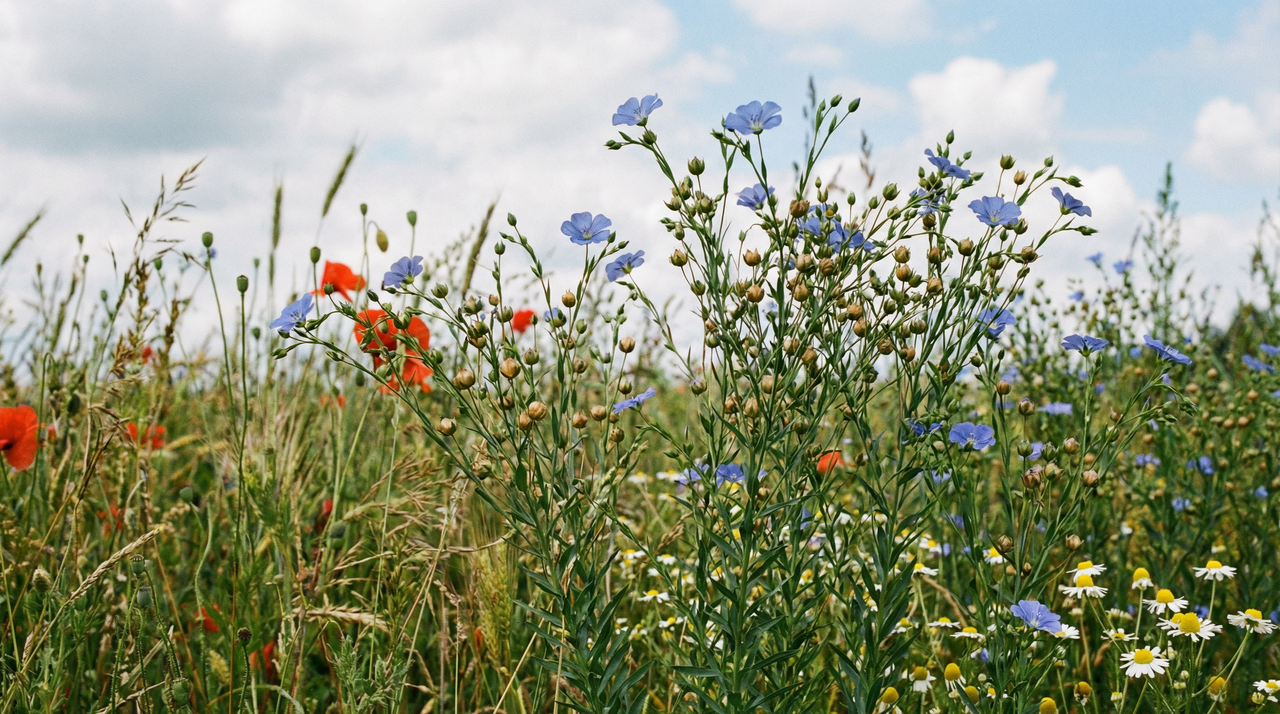
Somewhere in a cave in the Republic of Georgia, researchers found twisted flax fibers dating back 30,000 years.[1] Not seeds. Not pollen. Spun, dyed, twisted fibers, which means someone was deliberately processing this plant before we had pottery, before we had agriculture, possibly before we had much of anything we'd recognize as civilization. That detail stopped me cold the first time I read it. I've grown flax half a dozen times across different gardens and I still find it almost impossible to hold that timeline in my head while I'm standing there watching those pale blue flowers open in the morning cool.
What gets me about flax isn't just the age of it. It's that the plant was doing two completely different jobs for humans simultaneously, fiber and food, for most of that history, and somehow we've managed to split those roles so completely that most gardeners today think of flaxseed as a health food aisle product and have never once imagined pulling fiber from the same stem. That split is relatively recent, and honestly, a little unfortunate. Because growing flax as a single-purpose crop means leaving half the plant's potential on the table, which feels like a waste of something genuinely ancient and genuinely good.
Flax Origin, History, and Botanical Background
Few plants have threaded themselves so completely through human history as flax. Thirty thousand years before anyone thought to write anything down, people were already working with it.
Botanical Background and Life Cycle of Flax
The flax plant's scientific name, Linum usitatissimum, translates roughly to "most useful flax," which tells you something about how long humans have been paying attention to it.[2] It's an annual that completes its entire life cycle in a single season, typically 90 to 150 days from germination to death, with flowers appearing around day 50 to 60.[3][4][5] That brief bloom window is one of the reasons it became so important: a fast, reliable crop that doesn't linger.
Flax was domesticated in the Fertile Crescent around 10,000 years ago during the Pre-Pottery Neolithic, and the changes farmers selected for over generations are worth understanding. Wild flax shatters its seed capsules to disperse naturally, produces dormant seeds, and invests relatively little in fiber quality or oil content. Cultivated flax doesn't shatter, germinates readily, and delivers substantially better yields of both fiber and oil.[6] Those aren't minor tweaks; they represent thousands of years of intentional selection that turned a weedy annual into one of the most productive dual-purpose crops the ancient world had ever seen.
In the wild, flax grows naturally across a broad arc of temperate terrain: the eastern Mediterranean, Anatolia, the Levant, the Caucasus, and into Central Asia, favoring open grasslands, disturbed fields, roadsides, and well-drained sandy or loamy soils.[7][2] I've noticed this weedy-edge tendency in my own garden; flax self-seeds happily at bed margins and in paths where the soil gets disturbed, which makes complete sense once you understand where it comes from. As a cool-season annual, it adapted to northern climates with earlier flowering in southern populations and later flowering in northern ones, which is part of why it spread so successfully across temperate Eurasia.[8][9]
Visual Characteristics of Flax Plants
Above ground, flax looks almost impossibly delicate. Slender, erect stems reach 12 to 36 inches tall under typical garden conditions, though in ideal circumstances they can push to four or even five feet.[10][11] The leaves are narrow and lanceolate, and the flowers are a true sky blue in most cultivars, small and clustered at the stem tips. They're brief, dropping their petals by afternoon on a warm day, which only adds to the feeling of fragility. When I first grew flax for fiber, I kept expecting it to keel over. It didn't.
What's happening underground explains why. Flax develops a primary taproot that can extend one to two meters deep in favorable conditions, with minimal lateral branching.[12] That depth relative to the plant's airy above-ground presence surprised me the first time I dug one up. It's a useful reminder that minimal tillage isn't just an ecological preference; it's structurally appropriate for a plant that's doing serious vertical work in the soil. The seed capsules, once the petals drop, are small brown globes 5 to 10 mm across, and the seeds inside are smooth, ovoid, and just 2 to 3 mm long, golden or brown depending on the cultivar.[10]
Traditional and Cultural Significance of Flax
The story that brought flax to global prominence is fundamentally a dual-use story. From the Fertile Crescent outward, it spread across the ancient Mediterranean via trade routes, into Europe through Roman expansion, along the Silk Road into Asia, and eventually to the Americas with European colonizers in the 17th century.[11] Everywhere it traveled, it carried both purposes with it: fiber for cloth, seeds for oil.
Ancient Egypt offers the most vivid example of how completely a culture can build around a single plant. From around 4,500 BCE onward, flax linen was used for clothing, sails, priestly vestments, and most significantly, mummy wrappings, where it symbolized purity and resurrection.[13][14] Seeing flax in bloom, those pale blue flowers luminous in morning light, I find that association entirely believable. There's something genuinely ethereal about a field of it. Pliny the Elder documented linseed oil's medicinal role in Rome, where it treated skin conditions, burns, and served as a laxative; similar uses appear across Mesopotamian and Greek medicine.[15]
In Ayurvedic tradition, flax was valued as anti-inflammatory and digestive, used to balance the doshas; in Traditional Chinese Medicine, the seeds have been used since Neolithic times for cooling, constipation relief, and respiratory support.[16][17] Medieval Europe leaned heavily on linen for both economic and sacred purposes, with Flanders and Ireland building regional economies around it, and religious communities using linen altar cloths as symbols of holiness.[18] Indigenous peoples, including Lakota, Navajo, and Paiute communities, used flax fibers for cordage, baskets, and medicinal poultices, while Siberian groups incorporated it into textiles and ritual life.[19][20]
As someone who works with heritage and native plants in regenerative design, I feel strongly that we have an obligation to understand and credit the traditional knowledge that shaped how flax has been used across cultures. The concern around biopiracy and cultural appropriation of indigenous flax knowledge is real, and frameworks like the Nagoya Protocol exist for good reason.[21][22]
Fun Facts and Historical Uses of Flax
The oldest physical evidence of flax fiber use comes from Dzudzuana Cave in Georgia, where impressions on pottery suggest people were processing wild flax fibers roughly 30,000 years ago.[23] Intentional cultivation followed much later, spreading from the Near East into Europe between 6,000 and 5,000 BCE and reaching Egypt by around 4,500 BCE. That's a remarkably long arc from opportunistic harvesting to global crop.
The range of products that followed from linseed oil alone is genuinely staggering: lamp fuel, food, medicine, paints, varnishes, and the drying oil medium that Renaissance painters, including Rembrandt, used to bind their pigments.[24][25] The same chemistry that made those paintings last centuries still makes linseed oil one of the best natural wood finishes in a regenerative builder's toolkit today.
From a permaculture perspective, what I find most compelling is flax's behavior as a pioneer species. It colonizes disturbed ground, its deep taproot improves soil structure, it attracts bees and butterflies while in bloom, and it self-seeds reliably.[26] I now let a handful of plants go to seed each year rather than pulling everything at harvest, and they reliably return the following spring without any intervention. An annual that behaves like a semi-permanent guild member, given half a chance, is a rare and useful thing.
Flax Varieties and Cultivars
When someone asks me which flax to grow, my first question back is always: what do you actually want from it? The answer to that question divides Linum usitatissimum into two distinct breeding paths, and choosing the wrong one will leave you either with a stand of tall, nodding stems that lodges before you can harvest seed, or a short bushy crop that produces excellent seeds but almost no usable fiber.[11][27][28] Dual-purpose cultivars exist but they're genuinely uncommon, because the architectural trade-offs make it hard to optimize both goals simultaneously.
Fiber Flax vs. Oilseed Flax: Key Differences
Fiber types are tall, reaching up to 1.2 meters, with minimal branching and long bast fibers running 30 to 50 centimeters down the stem at over 70% cellulose content.[29][30] That architecture is beautiful in the garden, but it comes with demands: fiber flax wants cool temperatures around 15 to 20°C, reliable rainfall of 500 to 700 mm, and a longer season of 100 to 120 days.[31][24] I've watched taller fiber types lodge badly in humid summers when air circulation was poor, which is a real consideration if you're not gardening in the cool, moist Pacific Northwest or Upper Midwest.
Oilseed types stay shorter, 0.6 to 0.8 meters, branch more freely, and put their energy into seed production rather than stem length, yielding 1 to 2.5 tons per hectare with oil content typically between 35 and 45%.[29][30] They're also more forgiving of warmth, tolerating conditions up to 25°C, lower rainfall, and shorter seasons of 80 to 100 days.[31][32] Those are the ones I grow for seed harvest at home. They stay upright even in humid conditions where I'd expect a fiber type to give up mid-season.
Flower color is worth factoring in if you have culinary goals. Most flax carries the classic bright blue blooms, but cultivars with white or pale pink flowers do exist, and the white-flowered types tend to produce seeds with noticeably milder, nuttier flavor.[2][33] I can confirm this from my own grinding: the yellow-seeded types especially have a cleaner taste, less of the slightly grassy edge you get from some brown-seeded lines. Selective breeding has also reduced cyanogenic glucosides in certain cultivars, which minimizes bitterness, and low-linolenic lines like Linola push oil content above 50% while essentially eliminating the fishy aftertaste that puts some people off raw flaxseed.[30][34]
Notable Cultivars and Modern Breeding
On the fiber side, 'Viola', 'Libella', and 'Arapahoe' are well-documented choices, with 'Arapahoe' specifically bred for high yield and Fusarium resistance, a combination I now look for deliberately after losing a planting to wilt a few seasons back.[29][35] 'Alva' is Midwest-adapted with solid disease tolerance and crosses between fiber and oilseed purposes. For dedicated seed production, 'Omega' and 'Linott' are the names you'll see most often from USDA regional programs. If you want a dual-purpose option despite the trade-offs, 'Sundial' and 'Kyrie' (the latter Fusarium-resistant) are your best leads.[36]
Modern U.S. breeding programs, active since the early 20th century through USDA, now prioritize disease resistance, organic suitability, and non-GMO high-oleic lines.[37][38] 'Halo' and 'Cadre' are certified organic-suitable cultivars worth seeking out if you're growing for edible harvest and want to keep your whole system clean. I personally reach for organic, non-GMO seed for anything destined for the kitchen; the flavor difference is subtle but the peace of mind is not.
Where to Buy Flax Seeds
Flax is almost always sold as seed rather than live plants, which makes sense since it's a direct-sown annual that resents transplanting.[39][40] Small packets of 100 to 500 seeds typically run $3 to $10 and are widely available through Johnny's Selected Seeds, Burpee, and Seed Savers Exchange, among many others.[41][42] That affordability makes flax one of the easiest plants to trial across a full bed or meadow edge without committing significant budget. I label my rows carefully at the seedling stage because young flax looks deceptively similar to several herbs, and mixing up an oilseed type with an ornamental blue-flowered planting means an unexpected harvest later in the season.
For those interested in the ornamental angle, flax grows beautifully as an edging annual in USDA zones 4 through 9, where its sky-blue flowers attract bees and beneficial insects through the cool season.[43][44] It's non-invasive in the U.S. but will self-seed freely if you let capsules mature and drop, so deadhead after bloom if volunteers aren't part of your plan.[45] If you want both the blue flowers and an edible seed harvest, an oilseed cultivar delivers both without the height or lodging risk of a dedicated fiber type.
Flax Propagation and Planting Guide
Flax is, for nearly every practical purpose, a direct-seeding crop. That's not a limitation; it's one of the things that makes growing flax so straightforward once you understand the biology behind it.
Understanding Flax Seeds: Biology, Morphology, and Storage
Each flax seed contains a single embryo with classic dicotyledonous architecture: two foliaceous cotyledons, a radicle, and a plumule arranged in a straight axial structure.[46][47] The seeds themselves are small and oval, typically 4-6 mm long with a smooth, shiny testa and a distinctive elliptical hilum at the basal end.[24] That glassy surface is part of what makes flax seed so recognizable, golden or dark reddish-brown and almost polished-looking in your hand.
What makes seed propagation especially reliable here is flax's breeding system. It self-pollinates at rates of 90-95% or higher, which means saved seed comes back true to type with impressive consistency.[48] Transplanting simply doesn't work; flax resents root disturbance intensely, and while tissue culture and stem cuttings exist as research tools, neither is practical or reliable for garden use.[49][50] Sow where it grows. Full stop.
Flax is an orthodox seed, meaning it tolerates desiccation down to 3-7% moisture without losing viability.[49] I keep my own saved seed in sealed glass jars in the freezer, and I've had germination rates stay high after five or more years that way. For longer-term genebank-style storage, ideal conditions are -18 to -20°C with moisture at around 5% and 15-20% relative humidity; under those conditions viability can hold for 20-50 years or more.[51][52] If you're saving seed long-term, run a simple germination test before planting season: 20°C, moist paper towel, check at day five to ten.[53][54] Don't skip that step with seed you haven't tested in several years.
Soil, Site, and Sun Requirements for Successful Establishment
Flax wants well-drained loamy or sandy-loam soil, 2-4% organic matter, a pH between 6.0 and 7.5, and full sun for at least six to eight hours a day.[55][56] I always soil-test before planting flax because I once lost an entire patch to undiagnosed acidity; the plants just sat there, stunted and pale, and I couldn't figure out why until I finally pulled out the test kit. Outside the 6.0-7.5 window, nutrient deficiencies and toxicities compound quickly.[57] Liming acidic soils at 1-2 tons per acre and incorporating compost at 5-10 tons per acre can correct both pH and structure in one pass.[8][50]
What catches a lot of growers off guard is how sensitive flax is to waterlogging and compaction. Its roots are shallow and fibrous, needing at least 30-60 cm of loose, friable soil to develop well.[56] Poor drainage doesn't just slow growth; it can cut yields by 20-50% and opens the door to Fusarium and Pythium root rots.[58] I switched to raised beds with amended organic matter after watching a dense-clay bed fail repeatedly, and the difference was immediate. For gardeners working heavy soils, gypsum can help open up structure alongside the compost.[8] Fertility should be based on soil tests, with moderate nitrogen (40-60 lbs N/acre in field settings) to avoid the stem lodging that collapses fiber crops before harvest.[8][50]
Direct Sowing, Spacing, and Planting Techniques
Sow after the last frost when soil temperatures hit at least 7-10°C (45-50°F), pressing seed into the top 1-2 cm of soil.[59][55] Deeper sowing is a common mistake; flax seedlings don't have the energy reserves to push through much more than a couple of centimeters of soil. In my trial beds, even a few days at soil temperatures below 7°C slowed stand establishment noticeably, so patience pays off here.
Spacing is where your end goal changes everything. Growing flax for fiber? Use narrow rows, 15-20 cm apart, and high plant populations to push stems tall, straight, and unbranched, exactly the architecture you need for quality linen.[60][50] I think of it like growing lettuce for seed versus for leaves: tighter spacing shapes the plant toward one function. For seed production, open rows to 20-30 cm to encourage branching and capsule set. Commercial target populations run 200-400 plants per square meter, but in a home garden, 15-20 cm between individual plants often gets you good results for either purpose.[8][56] Proper spacing also keeps airflow moving through the canopy, which cuts fungal disease pressure significantly and prevents the lodging and shading that reduce both fiber quality and seed yield.[8]
Germination Timeline and Early Growth
Flax germinates quickly under the right conditions. Optimal soil temperatures of 15-21°C (59-70°F) produce emergence in 7-10 days, and in ideal conditions seedlings can show in as little as 2-5 days.[61][55] The seedlings emerge looking remarkably like fine grass, slender and delicate, so label your rows clearly or you'll be weeding out your crop by mistake. From sowing to harvest, expect 90-120 days total: shorter if you're cutting for fiber, longer if you're waiting for mature seed.[50][62] Get the soil, drainage, and spacing right at the outset and the rest of that cycle moves along with very little intervention.
Flax Care Guide: Water, Sun, Feeding, Frost, Heat, Pruning & Seasonal Needs
Flax moves fast. That 90-120 day lifecycle means every care decision lands harder than it would with a slower crop, and what works beautifully in one growth stage can cause real damage in the next. I've learned to think of growing flax as a series of narrow windows rather than a single steady routine.
Water Needs for Flax
Flax wants moderate, consistent moisture in well-drained soil, about 1 inch per week through most of the season, stepping up to 1.5-2 inches during flowering and seed fill when demand peaks.[11][56] Total seasonal use runs 12-18 inches, which lines up with the 400-800 mm annual precipitation of its native eastern Mediterranean grasslands, where rain falls on fast-draining soils rather than pooling around roots.[63] Seedlings need the most attention: light watering every 2-3 days keeps the root zone moist without waterlogging.[64] Once established, plants can tolerate 7-10 days without irrigation, but quality drops noticeably beyond that window.[8] I monitor closely in summer because a heavy afternoon rainstorm in a poorly draining bed mimics chronic waterlogging fast, and the symptoms are easy to misread: yellowing leaves and wilting despite wet soil usually mean roots are suffocating, not thirsty. Underwatering shows up differently, with marginal leaf scorch and stunted new growth, and young plants go downhill quickly.
Sunlight Requirements
Flax needs full sun, at least 6-8 hours daily, and it won't flower reliably without 14-16 hours of daylight because it's a true long-day plant.[56][65] Short that, and you get tall, leggy stems reaching for light instead of setting flower buds. Think of it like lettuce in that respect: fine in full sun during cool weather, but once summer heat arrives, that same exposure starts working against you. Prairie flax (Linum lewisii) handles intense sun and drought better than the cultivated annual, but for Linum usitatissimum in hot climates, afternoon shade becomes a real consideration once temperatures climb.[66]
Feeding and Fertility Management
Flax is a medium feeder, and the single most important thing I've learned is to run a soil test before adding anything. The target rates are roughly 50-60 lbs of nitrogen per acre, 20-40 lbs each of phosphorus and potassium, applied pre-plant or at planting with P and K incorporated and nitrogen possibly split in drier conditions.[50][67] In my early years I over-fertilized a small bed with a nitrogen-heavy amendment, and watched the stems collapse in the first summer thunderstorm. Lodging isn't a minor inconvenience; it ends your harvest. Keep soil pH between 6.0-7.5 for optimal uptake, and watch for regional micronutrient gaps: copper deficiency on high-pH northern plains soils, boron issues on sandy beds.[68] I always do a soil test now, especially on sandy ground where I've seen boron deficiency show up as yellowing tips before I knew what I was looking at. For perennial types like Linum perenne, fertility needs drop considerably; a light top-dress of compost in spring is usually all mine get, and they reward that restraint with months of blue flowers.[3]
Frost Tolerance and Cold Protection
Annual flax sits in USDA zones 4-9, but those zone numbers don't tell the whole story.[11] Seedlings are damaged below 28°F (-2°C), mature plants can handle a brief dip to around 23°F (-5°C), and flowers are the most vulnerable tissue of all.[69] I've lost early plantings to surprise late frosts and now simply wait until soil reaches 50°F before sowing; the few extra days of patience consistently outperform the race to get seeds in the ground. Prairie flax is a different animal entirely: hardy to zone 3, surviving -40°F, and timed to bloom May through July in a way that naturally sidesteps the worst late-frost risk.[66] For either species, row covers and 2-3 inches of mulch after the ground freezes protect exposed perennial types through winter.[70]
Heat Tolerance and High-Temperature Management
Flax's sweet spot is 59-68°F (15-20°C). Once daytime highs push past 77-86°F (25-30°C), photosynthesis slows, flowers drop via ethylene release, and pollen sterility becomes a real problem; sustained heat above 86°F can cut seed yields by 20-50%.[71][72] Cool nights below 59°F help the plant recover, which is why timing matters more than location in some climates. I use 30% shade cloth on flax beds during July heat spikes and the difference in flower retention compared to unprotected plants is obvious. Combine that with 2-4 inches of mulch to buffer root-zone temperature and early or late irrigation to maintain consistent soil moisture, and you can carry the crop through a hot spell that would otherwise end it.[73]
Pruning, Maintenance, and Seasonal Rhythm
Flax doesn't need pruning in any traditional sense. For the annual crop, the maintenance work is really about thinning, rotation, and weed suppression: thin seedlings to 4-6 inches (10-15 cm), keep a pre-emergent strategy in place, and avoid following cereals in the rotation to reduce disease pressure.[50][8] I find hand-thinning pays off in better air circulation and sturdier stems, especially when you've resisted the urge to over-fertilize. Ornamental perennial types benefit from light deadheading and removal of dead foliage in fall or early spring.[3] The seasonal calendar is driven by temperature and daylength: germination kicks off at 45°F or above, vegetative growth runs 4-6 weeks at 59-70°F, and flowering follows once day length clears 14-16 hours, about 6-8 weeks after planting.[56][65] I time my early spring sowings so that flowering lands in the cooler stretch before summer fully arrives; those cooler nights during seed fill make a measurable difference in both oil quality and overall yield, and the whole 90-120 day cycle feels a lot more forgiving when you're working with the season rather than against it.[74]
Harvesting Flax: Timing, Techniques, and Flavor
Flax is one of those plants where getting the harvest right means understanding what you're actually growing it for. Seed harvest and fiber harvest are not the same operation, and treating them as interchangeable will cost you quality in both directions. I've grown both fiber-type and seed-type flax in the garden, and the lesson I had to learn by losing a third of a planting to shattering is that flax waits for nobody.
When to Harvest Flax for Seed vs. Fiber
For seed, skip the calendar and read the plant instead. The reliable cues are capsule color shifting from green to yellow-brown, with roughly 75-90% of pods showing that change, combined with seeds that are dark, firm, and audibly rattling inside when you shake a stalk.[75][76] I think of it like harvesting cilantro seed: when the pods rattle and the seeds resist your thumbnail, you're there. Seasonally, that moment typically falls between late July and September, about 110-120 days from planting in most growing regions.[77][78]
Fiber harvest runs on a completely different clock. You want to pull plants before seeds reach full maturity, when the lower stems are yellowing and somewhere between 10-80% of bolls have turned brown, usually around 100 days in.[75][79] If you're growing dual-purpose flax and want reasonable quality from both, harvesting at around 50% bloom can thread the needle, though the tradeoff is real: seeds pulled early will be more bitter due to incomplete maturity, and fully mature seed gives you the best nutty flavor at the table.[50][80] In my experience, the rattle test is the most dependable on-plant signal you have, and waiting even two or three days past that window means volunteer seedlings scattered everywhere come spring.
Harvesting and Post-Harvest Techniques
Whatever you're harvesting for, pick a dry day and wait for the morning dew to evaporate first. You also want to move before more than 10% of pods have cracked open, because shattering happens fast once it starts.[75][76] From there, the technique diverges sharply depending on your end goal.
For fiber, you pull plants out by the root rather than cutting them. Preserving full stem length is the whole point, so a sickle or scythe at backyard scale keeps the long bast fibers intact in a way that chopping or combining would destroy.[75][62] Seed crops, by contrast, are candidates for direct combining at 8-12% moisture or swathing while the stems still carry 20-25% moisture and letting them finish down in windrows.[62][8] At home-garden scale, cutting stalks and hanging them to dry over a tarp does the job just fine.
Retting is the step most home growers have never heard of, and it's genuinely make-or-break for fiber quality. The pulled, dried stalks are laid out on the field or submerged in a tank so microbial action can loosen the bast fibers from the woody core over 4-6 weeks, after which they need to dry back to 12-15% moisture before processing.[81] I've tried both dew retting and water retting at home, and the lesson I took from dew retting is that consistent dry weather is non-negotiable. A stretch of rain mid-ret turned my stalks dark and left the fiber weak and uneven.
Yield, Flavor, and Storage
Only the seeds of Linum usitatissimum are eaten, and maturity has a direct effect on what they taste like. Fully ripe, properly dried seeds carry a nutty, slightly sweet flavor that becomes richer when you toast them; immature seeds are noticeably more bitter, a result of cyanogenic glycosides that diminish as the seed matures.[82][80] That bitterness is a reliable signal that you pulled too early, and it doesn't fully process out in storage.
For safe storage, seeds need to come down to 7-9% moisture using forced air, and they should be kept below 10°C in cool, dry conditions to prevent the rancidity that the high oil content makes flaxseed particularly prone to.[83][81] I keep mine in a sealed glass jar in the freezer and grind small batches as I need them. The flavor from freshly ground, well-matured homegrown seed is genuinely different from what you buy at the store, and once you've tasted it, the extra care at harvest starts to feel completely worth it.
Preparing and Using Flax: From Seed to Table, Medicine, and Fiber
Culinary Uses and Safety of Flaxseeds
The seed is where you start. Whole flaxseeds look deceptively edible, but I learned after my first harvest that they pass through the digestive system almost entirely intact, which means you're growing all that nutrition for the birds if you skip the grinder. Grinding is non-negotiable for omega-3 and lignan bioavailability.[84] I grind only what I'll use in a week and store the rest whole in the fridge, where the intact seed hull protects those delicate oils from going rancid.
There's something you can't skip: flaxseeds contain cyanogenic glycosides that can release small amounts of hydrogen cyanide when consumed raw in quantity.[85] Roasting, grinding, sprouting, or fermentation reduces those cyanide levels by 70 to 90 percent, so proper processing isn't a suggestion.[85] My favorite approach is a light oven roast at around 160°C for 10 minutes. The kitchen fills with a toasty, buttery smell that's one of the small rewards of growing your own. That's the Maillard reaction doing its work between 150 and 180°C, building the nutty, rich flavor profiles that make roasted flaxseed genuinely pleasant to eat rather than medicinal.[86]
Once you're working with properly processed seed, the nutritional return is impressive: omega-3 alpha-linolenic acid, SDG lignans, dietary fiber, protein, magnesium, and manganese, all packed into something smaller than a sesame seed.[87][88] A tablespoon of ground seed stirred into oatmeal, blended into a smoothie, or mixed into bread dough barely registers texturally but adds real substance. The classic flax egg recipe (one tablespoon ground seed plus three tablespoons water, rested five minutes) works beautifully as a binder in baking when you need an egg alternative.
Cold-pressed flaxseed oil carries a fresh, slightly grassy nuttiness that's quite different from the neutral flavor of the refined linseed oil you'd find in a hardware store.[80] The culinary oil belongs in dressings and drizzled over finished dishes, never in a hot pan. I prefer it for both kitchen and skin applications, and the difference between home-pressed and store-bought is pronounced enough that it's worth the effort.
On safety: one to two tablespoons of ground flaxseed daily is the widely accepted moderate use for most adults.[89] I've read the Mayo Clinic's guidance carefully on pregnancy, and I always tell friends who are expecting to enjoy flax in baked goods but to check with their doctor before using larger therapeutic amounts; the phytoestrogenic lignan effect is real and the caution is warranted.[90]
Native American peoples working with the closely related prairie flax processed its seeds in remarkably similar ways, grinding them into flour for bread and porridge or using them as a thickener mixed with berries.[91] That parallel across cultures and species says something about how obvious the seed's value is once you have it in your hands. For edible seed production in my own garden, I stick with cultivated Linum usitatissimum rather than prairie flax because the cyanogenic glycoside levels are far better documented and the seed yields are more reliable.
Medicinal Preparations and Traditional Remedies
The same oil you drizzle on salad works as a topical treatment for dry skin and eczema.[92] Traditional preparations also used leaves and stems as poultices for wounds and inflammation,[93] and the anti-inflammatory and laxative properties that modern research now supports were the same ones drawing healers to this plant for millennia.[94] The clinical evidence behind those benefits is covered elsewhere in this article; here the practical point is that proper processing (grinding, roasting, cold-pressing) is what makes those compounds accessible whether you're eating the seed or applying the oil externally. The one to two tablespoon daily dose applies in both culinary and gentle medicinal contexts,[90] and the pregnancy caution carries over equally.
Non-Food Applications and Industrial Uses
Flax bast fibers, retted and processed from the stem, produce linen textiles and high-quality paper.[95] The industrial side of linseed oil covers wood finishes, paints, and varnishes, while the seed meal left after pressing serves as animal feed.[95] Indigenous peoples working with prairie flax were already thinking this way long before the word "permaculture" existed, using the same plant for cordage, dye, ceremonial purposes, and medicine alongside the edible seed.[96]
When you grow flax for seed or fiber in a regenerative system, you're also getting pollinator forage, soil structure improvement from its deep roots, and weed suppression through allelopathy; those yields don't appear on any harvest record but they accumulate in the garden every season. That stacking of functions across food, medicine, fiber, and ecology is exactly why flax has stayed in human cultivation for over six thousand years.[97] It's a rare plant that earns its space at every scale.
Flax Health Benefits
Few plants in the edible landscape pack as much biochemical complexity into a small seed as flax. Linum usitatissimum contains a genuinely impressive roster of secondary metabolites: lignans, flavonoids, phenolic acids, cyanogenic glycosides, coumarins, saponins, alkaloids, terpenoids, tannins, and steroids.[98][99] Understanding that diversity is the foundation for understanding why flax has such a broad range of documented effects on human health.
Key Phytochemicals in Flaxseed: Lignans, ALA, and Phenolics
Three compound classes dominate the health story. First, secoisolariciresinol diglucoside (SDG), the major lignan, is present at 0.5-3.5 mg/g in whole seed and an extraordinary 20-37 mg/g in the hulls.[98][100] SDG doesn't act directly; gut bacteria convert it to the active enterolignans enterodiol and enterolactone, which means your microbiome is genuinely part of the equation. Second, alpha-linolenic acid (ALA) makes up 45-60% of flaxseed oil's fatty acids and roughly 20-25% of seed weight, placing flax among the richest plant sources of omega-3s on the planet.[101][102] Third, phenolic compounds including quercetin, kaempferol glycosides, ferulic acid, and p-coumaric acid total approximately 150-300 mg GAE/100g and contribute meaningful antioxidant and anti-inflammatory activity on their own.[103][104]
One thing I've noticed after years of growing flax: seeds from hotter, drier seasons taste distinctly more pungent, and that tracks with the research showing up to a five-fold variation in lignan and phenolic content based on cultivar, environment, and soil type.[105][106] These compounds exist because the plant needs them for UV protection, herbivore defense, and attracting beneficial insects. The health benefits are, in a sense, a side effect of ecological strategy.
Medicinal Research and Clinical Evidence
The antioxidant and anti-inflammatory mechanisms are well-characterized. Lignans and ALA boost endogenous protective enzymes (SOD, CAT, GPx), neutralize reactive oxygen species, and reduce oxidative stress markers in human trials.[107][108] Anti-inflammatory effects work through NF-κB inhibition, reduced pro-inflammatory cytokines, and suppression of COX-2 and LOX enzymes, driven by lignans, ALA, and the phenolic fraction together.[107][109]
The cardiovascular evidence is the strongest in the whole file. Daily intake of 15-40g of ground flaxseed significantly lowers total and LDL cholesterol, and meta-analyses show modest but real reductions in systolic blood pressure (around 2-5 mmHg) in hypertensive individuals.[110][111][112] When clients ask me about herbal support for metabolic concerns, ground flax is one of the first things I bring up precisely because this evidence is as robust as you'll find in the supplement world. Flaxseed also improves insulin sensitivity and glycemic control in diabetic and pre-diabetic individuals through its soluble fiber, lignans, and AMPK pathway activation.[113][114]
The anticancer data is promising but I want to be honest about where it stands. Lab and animal studies show lignans can inhibit angiogenesis, induce apoptosis, and exhibit phytoestrogenic effects in breast, prostate, and colon cancer models.[115][116] Human evidence remains mixed. Similarly, menopausal hot flash relief through enterolignans binding estrogen receptor beta is biologically plausible and occasionally clinically meaningful, but results are far less consistent than the cardiovascular benefits.[117][118] Traditional uses like relieving constipation through mucilage and fiber are well-supported;[119] other folk applications (analgesic, sedative, diuretic) remain largely unvalidated.[120]
Bioavailability is where I made my biggest early mistake. I was eating whole seeds for months and wondering what the fuss was about. Grinding improves ALA and lignan bioavailability by 20-50%,[119][121] because gut bacteria need access to the lignans locked inside that hard seed coat to convert SDG into active enterolignans.[122][118] Mill it fresh each week and refrigerate it. That single habit changes what flax can actually do for you.
Nutritional Profile
A single tablespoon (10g) of whole seeds delivers 53 kcal, 4.2g fat (including 2.6g ALA), 2.8g fiber, 1.8g protein, and 30% of your daily manganese.[123] Scale to 100g and the picture becomes even richer: 534 kcal, 18.3g protein, ~28g ALA, 27.3g fiber, 392mg magnesium, 642mg phosphorus, and 1.644mg thiamine.[124] That's a genuinely dense nutritional package for something most people sprinkle on yogurt without thinking twice.
Form matters enormously. Flaxseed oil concentrates ALA at ~53g/100g but loses all fiber, protein, and lignans in the pressing process.[125] Defatted flax meal runs the other direction, concentrating protein to around 37g/100g with plenty of fiber intact. Whole ground seed is the best all-around option for most people. Store whole seeds cool and dark for up to a year; refrigerate ground seed or oil immediately to prevent the rancidity that makes both taste bitter and wastes those fragile omega-3s.[126]
Safety Considerations and Potential Side Effects
Flax has a dual nature that every grower and consumer should understand clearly. Cyanogenic glycosides throughout the plant can release hydrogen cyanide upon crushing or enzymatic hydrolysis.[127][128] Seed levels (50-500 mg/kg) are low compared to young leaves and stems, and toxicity is rare at normal dietary amounts,[127][129] but eating large amounts of raw ground seed is simply not worth the risk. Grinding followed by cooking or roasting significantly reduces cyanogenic potential.[130] EFSA recommends a conservative limit of about 11g ground flaxseed per eating occasion and around 33g per day total; the FDA recognizes flaxseed as GRAS in moderation, with a commonly cited safe range up to 30g/day.[131][132]
The high fiber content can cause bloating, gas, and diarrhea if you add too much too fast -- introduce it gradually, and drink extra water.[101][128] I compare it to chia in this way: both are mucilaginous, both need hydration, but flax's lignans add a layer of hormonal activity that chia simply doesn't have, which makes the contraindications more serious. I never recommend flax medicinally to pregnant clients or anyone on blood thinners without their doctor's involvement. Pregnancy carries a real risk of hormonal and uterine stimulation,[101][128] and flaxseed can interact meaningfully with anticoagulants (increased bleeding risk), antidiabetic drugs (additive glucose lowering), and hormone-sensitive conditions -- its lignans inhibit CYP1A2 and CYP3A4, which affects how other medications are metabolized.[128][133] If you keep livestock, keep the green plant material away from them; horses, cattle, and dogs are vulnerable to rapid HCN release from flax foliage, with symptoms ranging from GI distress to convulsions and respiratory failure.[134][135] Prepare it correctly, respect the limits, and the benefits far outweigh these manageable risks for most healthy adults.
Flax Pests and Diseases
The good news about growing flax is that plant breeders have done a lot of the hard work for you. Years of targeted selection have produced cultivars with named, documented resistance to the diseases most likely to give you grief, and that's where I'd start any conversation about keeping a flax crop healthy.
Disease Resistance in Flax Cultivars
Modern flax cultivars carry real, specific resistance rather than vague "good tolerance" language you can't act on. Omega has high rust resistance, Linott shows solid Sclerotinia tolerance, and ND Hammarsmark was bred specifically for Fusarium wilt resistance; many current lines stack resistance to multiple pathogens at once.[136][137] When I can find Omega-type seed, I seek it out; I've watched it hold a noticeably cleaner stand through seasons where other varieties showed rust pustules by midsummer. The stakes are real: Fusarium wilt, rust, powdery mildew, Sclerotinia stem rot, pasmo, and Pythium root rot can each cut vigor and seed yield by up to 50 percent in a bad year.[138][139]
Fortunately, the management framework isn't complicated. Resistant varieties come first, then a four-to-five-year rotation (essential for soil-borne Fusarium), good drainage to head off Pythium, balanced fertility, and consistent scouting before problems compound. Fungicides enter the picture only when thresholds are actually exceeded.[56][140] I rarely need anything beyond rotation and smart variety selection in my own trials. Prairie flax (Linum lewisii) sits at the low-intervention end of this spectrum: it's prone to rust in humid conditions and Fusarium where drainage is poor, but established plants in appropriate native sites essentially take care of themselves.[141][142] Perennial flax (Linum perenne) faces the same disease roster but selected cultivars like Blue Star and Princess handle rust and powdery mildew reasonably well; give them good air circulation and drainage and they're perfectly suitable for a low-maintenance garden setting.[143][144]
Common Insect Pests and Natural Defenses
Flax isn't defenseless against insects. Its glaucous leaf surface deters flea beetle egg-laying, giving cultivated flax high resistance to that particular pest, while cyanogenic glycosides that release hydrogen cyanide when tissue is damaged confer moderate resistance to aphids.[145] Layered on top of that are phenolic compounds including lignans and flavonoids with antifeedant activity, glandular trichomes, a thick cuticle, and endophytic bacteria that can trigger systemic resistance from within the plant.[146][147] These are the reasons I rarely reach for a spray bottle with flax.
That said, environment can tip the balance. Aphids peak between 60 and 80 degrees Fahrenheit, and dense plantings push humidity high enough to trigger outbreaks.[148] I learned this firsthand in a thickly sown demonstration bed during a warm, humid Florida spring where aphids exploded seemingly overnight; I give plants more generous spacing now. The broader pest list includes flax leaf beetles, cutworms, wireworms, thrips, and seed beetles that can destroy up to half of stored seed if you're not careful.[149][150] Cultivars like Omega, CDC Bethune, and AC Carnduff carry combined pest and disease tolerance worth seeking out.[151] For prairie flax restoration work, Bluestone, Gordon, and Appar are go-to choices precisely because their broad native tolerance means they rarely need intervention once established.[152]
An integrated approach, rotating the crop every three to four years, starting with certified clean seed, scouting regularly, and welcoming lady beetles as natural aphid control, keeps chemical inputs to a true last resort and aligns with how permaculture systems are meant to function.[153][154]
Flax in Permaculture Design
Flax doesn't fix nitrogen. I want to say that upfront because gardeners sometimes lump it in with cover crop legumes, expecting it to behave like crimson clover or field peas. It won't. But that doesn't make it a lesser plant in a designed system; it just means you need to understand what it actually does, which turns out to be quite a lot.
Climate and Growing Zones for Flax
Flax is comfortably at home across USDA zones 4 through 9, with the sweet spot sitting in zones 5 through 8.[11][56] It's a cool-season annual at heart, happiest when temperatures sit between 15 and 21°C (59-70°F), and it can shrug off a light frost down to about -2°C (28°F) once established.[8] Push it above 30°C, though, and you'll see the consequences quickly: reduced seed set, stressed stems, and flowers that open and close before pollen has a real chance to do its job.[155]
The zone breakdown also shifts by what you're growing it for. Cooler zones 4 through 7 favor the tall fiber types that need a long, cool stretch to develop the longest bast fibers; warmer zones 7 through 9 tip toward oilseed production where the crop can be pushed along before summer heat sets in.[11][24] In zone 9 and the warmer edges of zone 8, I've had success sowing in late fall and letting it run as a winter annual, the same strategy I use for winter wheat in Central Florida. It catches the mild, moist months, sets seed before April heat arrives, and then I'm pulling it into the compost pile just as summer squash starts going in. The crop wants about 380 to 635 mm of annual rainfall and handles dry spells by sending roots deeper rather than collapsing outright,[156] which is genuinely useful in drought-prone systems where you can't babysit irrigation schedules.
Ecosystem Functions and Soil Benefits
Here's where flax earns its place in a guild without being a legume. As a cover crop, it scavenges residual nitrogen before it leaches past the root zone, improves soil structure as its roots and biomass break down, suppresses weeds through allelopathic root exudates, and holds soil against erosion during vulnerable shoulder seasons.[157][158] It also functions as a dynamic accumulator of potassium and forms symbiotic relationships with arbuscular mycorrhizal fungi that help it pull phosphorus and other nutrients from deeper in the profile.[159][160] None of that is nitrogen fixation. The fertility benefits come from scavenging, organic matter addition, and microbial stimulation, full stop.[157]
I've started pairing flax deliberately with crimson clover in the same bed for this reason. The clover fixes nitrogen; the flax scavenges what doesn't get taken up and adds it back through residue. They complement each other in a way that neither does alone, and the combination gives me better results than either monoculture. I've watched the crumb structure in my sandier beds visibly improve after a single flax rotation, which backs up what the mycorrhizal research suggests about rhizosphere stimulation being a real effect rather than a theoretical one.
One thing worth raising responsibly: flax contains cyanogenic glycosides capable of releasing small amounts of hydrogen cyanide.[161] In a design context this mostly matters if you're growing flax as forage for livestock or planning to use large quantities of raw seed. I always grind and briefly toast or soak my seed before using it in cooking. It's a simple step, not a reason for alarm, but it belongs in any honest design discussion.
Forest Layer Placement and Guild Roles
Flax is a slender, upright annual reaching 30 to 90 cm, with narrow leaves and very low shade tolerance.[11][162] That puts it squarely in the herbaceous layer of a food forest, ideally in the sunnier gaps between young fruit trees or along the edges of shrub guilds where it won't get shaded out before it finishes its cycle. What I love about its habit is how light and airy it reads in the garden; those blue flowers add genuine beauty to guild edges without the visual weight that taller cover crops bring.
Its 100-day cool-season cycle is one of the most useful things about it from a design standpoint.[163] I've used flax as a quick-turnover living mulch between young stone fruit trees, sowing it in early spring, letting it flower for the bees, and cutting it back before it competes for water in summer heat. By the time I pull it, the soil under it has a noticeably better texture than the surrounding area. The seeds go in shallowly at 1 to 2 cm in well-drained loamy or sandy-loam soil at pH 6.0 to 7.5, which makes it broadly adaptable across most of the soil types you'll find in a typical food-forest site.[164]
In guild design, pairing flax with legumes is the obvious move. The legume fixes nitrogen; flax scavenges it, adds organic matter, and suppresses weeds while contributing pollinator forage and dual yields of fiber or oilseed on the way out.[159] That's a lot of stacked function from one short-season annual.
Pollination Ecology in Permaculture Systems
Flax is primarily self-pollinating, so you'll get a baseline seed set even in an isolated patch.[165] But leaving a patch to flower in a diverse garden has consistently drawn more native bees into my space overall, and the research backs up why that matters: cross-pollination from bee visits can increase seed set by 20 to 30 percent.[166] Honeybees, bumblebees, and solitary bees all work the flowers for nectar.
The flowers themselves are protandrous and open for just one day, typically from about 8 AM through the evening, at 2 to 2.5 cm wide in sky blue, occasionally white.[167] Optimal pollination happens between 15 and 25°C with moderate humidity; above 30°C, pollen viability drops sharply, which is another reason heat management matters in warm-climate designs.[168][169] The short bloom window per flower means that a mass planting, rather than a single scattered row, is far more useful for supporting pollinator populations. A dense patch provides continuous forage over the several weeks it takes the full planting to cycle through bloom, which has real habitat value even if flax itself is just a transit stop in your broader insect corridor.
The Plant That Made Me Rethink What "Useful" Really Means
I grew flax for the first time mostly as a cover crop, honestly expecting to turn it under and move on. Then I watched the bees work those blue flowers on a June morning, harvested seed I ground into my oatmeal that same week, and steeped the leftover stalks out of sheer curiosity. It's one of the few plants that's made me feel like I was catching up to something ancient, rather than discovering anything new.
Sources 169
- Kvavadze et al. (2009) – 30,000-Year-Old Wild Flax Fibers, Science ↩
- Linum usitatissimum - Wikipedia ↩
- Linum usitatissimum - Missouri Botanical Garden ↩
- The Biology of Linum usitatissimum L. (Flax) - CFIA ↩
- Flax Growth and Development - North Dakota State University Extension ↩
- Domestication of Flax (Linum usitatissimum L.) ↩
- Flax (Linum usitatissimum L.): A Versatile Plant for Food, Oil, and Fiber ↩
- Flax - University of Minnesota Extension ↩
- Geographic Variation in Phenology of Flax ↩
- Linum usitatissimum - Missouri Botanical Garden ↩
- Linum usitatissimum - USDA PLANTS Database ↩
- Linum usitatissimum - Missouri Botanical Garden ↩
- Flax in Ancient Egypt ↩
- Linen in Ancient Egypt ↩
- Natural History (Pliny the Elder translation) ↩
- Flax in Ayurvedic Tradition ↩
- Flax in Chinese Traditional Medicine ↩
- Medieval Textiles: Linen in Religious Ceremonies ↩
- Ethnobotany of Native American Flax Use ↩
- Siberian Indigenous Uses of Flax ↩
- Cultural Appropriation of Traditional Flax Knowledge ↩
- Ethical Considerations in Ethnobotany ↩
- The Domestication of Flax in Southwest Asia ↩
- Linseed Oil Production and Uses ↩
- Flax ↩
- Ecological Role of Linum usitatissimum in Mediterranean Ecosystems ↩
- FAO - Flax Production and Uses ↩
- Flax Cultivars for Fiber and Oilseed - Review ↩
- Flax Cultivars for Fiber and Oilseed - Review ↩
- Flax: Botany, Cultivation, and Utilization ↩
- Flax Production Guide - Saskatchewan Ministry of Agriculture ↩
- Agronomic Differences Between Fiber and Oilseed Flax - Journal of Agronomy ↩
- Flax Plant Profile - Missouri Botanical Garden ↩
- Cultivar Variation in Flax (Linum usitatissimum L.) ↩
- National Plant Germplasm System - Flax Cultivars ↩
- USDA Flax Disease Resistance Information ↩
- Recent Advances in Flax Cultivar Development in North America ↩
- USDA ARS Flax Breeding Program Overview ↩
- Annual Flax Seeds ↩
- USDA PLANTS Database - Linum usitatissimum ↩
- Ornamental Flax ↩
- Organic Flax Seeds ↩
- Growing Flax in the Garden ↩
- Plant Hardiness Zone Map ↩
- Flax Profile ↩
- Seed Development in Flax (Linum usitatissimum L.) ↩
- Anatomy and Morphology of Flax Seeds ↩
- Breeding System of Linum usitatissimum ↩
- Flax Production Guide ↩
- Flax Production in North Dakota ↩
- Seed Storage Behaviour: Genebank Standards ↩
- Flax Seed Storage Guidelines ↩
- ISTA Rules for Seed Testing ↩
- X-ray Analysis in Seed Quality Testing ↩
- Flax Production Guide - University of Minnesota Extension ↩
- Flax Production Guide - North Dakota State University ↩
- Linum usitatissimum - Missouri Botanical Garden ↩
- Effects of Waterlogging on Flax (Linum usitatissimum L.) Growth and Yield ↩
- Flax Production Guide ↩
- Flax Production Guide ↩
- Flax Seed Structure and Germination ↩
- Flax Production Guide ↩
- Kew Science - Linum usitatissimum ↩
- Royal Horticultural Society - Flax Growing Guide ↩
- FAO - Flax Production Guidelines ↩
- USDA PLANTS Database - Linum lewisii ↩
- Nutrient Management for Flax - University of Saskatchewan ↩
- California Flax Production Guide ↩
- Frost Injury to Flax Seedlings ↩
- Lady Bird Johnson Wildflower Center - Linum lewisii ↩
- Temperature Effects on Flax (Linum usitatissimum L.) Growth and Development ↩
- Effects of Heat Stress on Flax (Linum usitatissimum L.) Growth and Yield ↩
- High Temperature Stress Responses in Flax: Physiological and Molecular Insights ↩
- Extension.umn.edu - Growing Flax for Seed and Fiber ↩
- Flax Production and Management ↩
- Harvesting Flax for Fiber and Seed ↩
- Flax Production Guide ↩
- Harvesting Flax for Seed ↩
- Flax Production and Utilization ↩
- UC Master Gardener Program: Flax (Linum usitatissimum) ↩
- Post-Harvest Handling of Flax ↩
- Flax - Wikipedia ↩
- Flaxseed Harvesting and Storage ↩
- Health Benefits of Flaxseeds - Mayo Clinic ↩
- Cyanogenic Glycosides in Flax ↩
- Cropscape: Flax (Saskatchewan Agriculture) ↩
- USDA FoodData Central ↩
- National Center for Biotechnology Information (NIH) - Review on Flaxseed Nutrition ↩
- European Medicines Agency (EMA) Assessment Report on Linum usitatissimum ↩
- Flaxseed Consumption During Pregnancy: Safety Considerations ↩
- Native American Ethnobotany Database - Linum lewisii ↩
- Medicinal Uses of Flaxseed - Review Article ↩
- Flaxseed in Traditional Medicine ↩
- Phytochemistry and Pharmacological Properties of Linum usitatissimum ↩
- Flax (Linum usitatissimum L.): Current Uses and Future Applications ↩
- Traditional Uses of Lewis Flax by Indigenous Peoples ↩
- Flax in Ancient Egypt ↩
- Phytochemical Constituents of Linum usitatissimum ↩
- Secondary Metabolites in Flaxseed: A Review ↩
- Lignan content in flaxseed hulls ↩
- Flaxseed and Flaxseed Oil - NCCIH ↩
- Fatty acid composition of flaxseed oil ↩
- Phenolic Compounds in Flaxseed ↩
- Bioactive compounds in flaxseed: a comprehensive review ↩
- Environmental and Genetic Effects on Lignan Content in Flaxseed ↩
- Secondary Metabolites in Flax: Biosynthesis and Ecological Roles ↩
- Antioxidant and Anti-inflammatory Properties of Flaxseed ↩
- Pharmacological Activities of Flaxseed Lignans: A Review ↩
- Inhibition of COX-2 and LOX by Flaxseed Components ↩
- Systematic Review: Flaxseed and LDL Cholesterol Reduction ↩
- Flaxseed and cardiovascular risk factors: A systematic review and meta-analysis ↩
- Effects of flaxseed supplementation on blood pressure: A systematic review and meta-analysis ↩
- Meta-analysis: Flaxseed & Glycemic Control ↩
- Flaxseed and AMPK Activation in Type 2 Diabetes ↩
- Anti-Cancer Effects of Flaxseed Lignans: Mechanisms and Evidence ↩
- Review: Flaxseed Components & Anticancer Effects ↩
- Clinical Study: Flaxseed Lignans & Phytoestrogenic Activity ↩
- Lignans from Flaxseed as Phytoestrogens: Mechanisms and Health Benefits ↩
- Flaxseed: A Potential Functional Food Source ↩
- Pharmacological Activities of Flaxseed (Linum usitatissimum L.): A Review ↩
- Bioavailability of Flaxseed Nutrients ↩
- The Relative Bioavailability of Enterolignans in Humans Is Enhanced by Milling and Crushing of Flaxseed ↩
- Seeds, flaxseed - USDA FoodData Central ↩
- USDA FoodData Central - Seeds, flaxseed ↩
- USDA FoodData Central - Oil, flaxseed ↩
- Cyanogenic Glycosides in Flaxseed - EFSA Journal ↩
- Cyanogenic Glycosides in Flaxseed (Linum usitatissimum L.): Determination and Toxicity Implications ↩
- Flaxseed and flaxseed oil ↩
- Cyanogenic glycosides in flaxseed: occurrence, toxicity, and detoxification ↩
- Cyanogenic Glycosides in Flax Seeds: Distribution and Reduction by Processing ↩
- Scientific Opinion on the substantiation of health claims related to flaxseed ↩
- Code of Federal Regulations Title 21 - Flaxseed ↩
- CYP450 Inhibition by Flaxseed Phytochemicals ↩
- Flaxseed Poisoning in Animals ↩
- Linum usitatissimum: Toxicology Overview ↩
- Flax Breeding for Disease Resistance ↩
- USDA Flax Variety Releases ↩
- Flax Diseases and Their Management ↩
- Integrated Pest Management for Flax - University of Minnesota Extension ↩
- Flax Disease Management ↩
- Diseases and Pests of Flax ↩
- Pathogens of Wild Flax Species ↩
- Powdery Mildew on Perennial Flax ↩
- Linum perenne - Missouri Botanical Garden Plant Finder ↩
- Insect Resistance in Cultivated Flax ↩
- Phenolic Compounds in Flax and Their Role in Insect Deterrence ↩
- Endophytic Bacteria and Plant Defense in Flax ↩
- Temperature and Density Effects on Aphids and Cutworms in Flax Crops ↩
- Flax Council of Canada: Disease and Pest Resistance in Flax ↩
- Insect Pests of Flax - University of Minnesota Extension ↩
- Flax Breeding for Disease Resistance - Saskatchewan Pulse Growers ↩
- Blue Flax Cultivars for Restoration ↩
- Integrated Pest Management for Flax - USDA ARS Resources ↩
- Integrated Pest Management for Flax ↩
- Flax Frost and Heat Tolerance Studies ↩
- USDA Plant Guide for Flax (Linum usitatissimum) ↩
- Managing Cover Crops Profitably, 3rd Edition ↩
- Allelopathic Potential of Linum usitatissimum Root Exudates on Weed Suppression ↩
- Ecological Benefits of Flax Cultivation in Sustainable Farming Systems ↩
- Mycorrhizal Associations in Linaceae: Nutrient Cycling and Rhizosphere Interactions ↩
- Flaxseed Composition and its Benefits ↩
- Permaculture Plants: Flax ↩
- Flax Production in Minnesota - University of Minnesota Extension ↩
- Royal Horticultural Society - Growing Flax ↩
- Pollination ecology of Linum usitatissimum ↩
- Pollination in Flax (Linum usitatissimum L.) ↩
- Botanical Journal: Pollination Biology of Flax ↩
- Temperature Effects on Pollen Viability in Flax ↩
- Effects of Environmental Factors on Flax Seed Set ↩