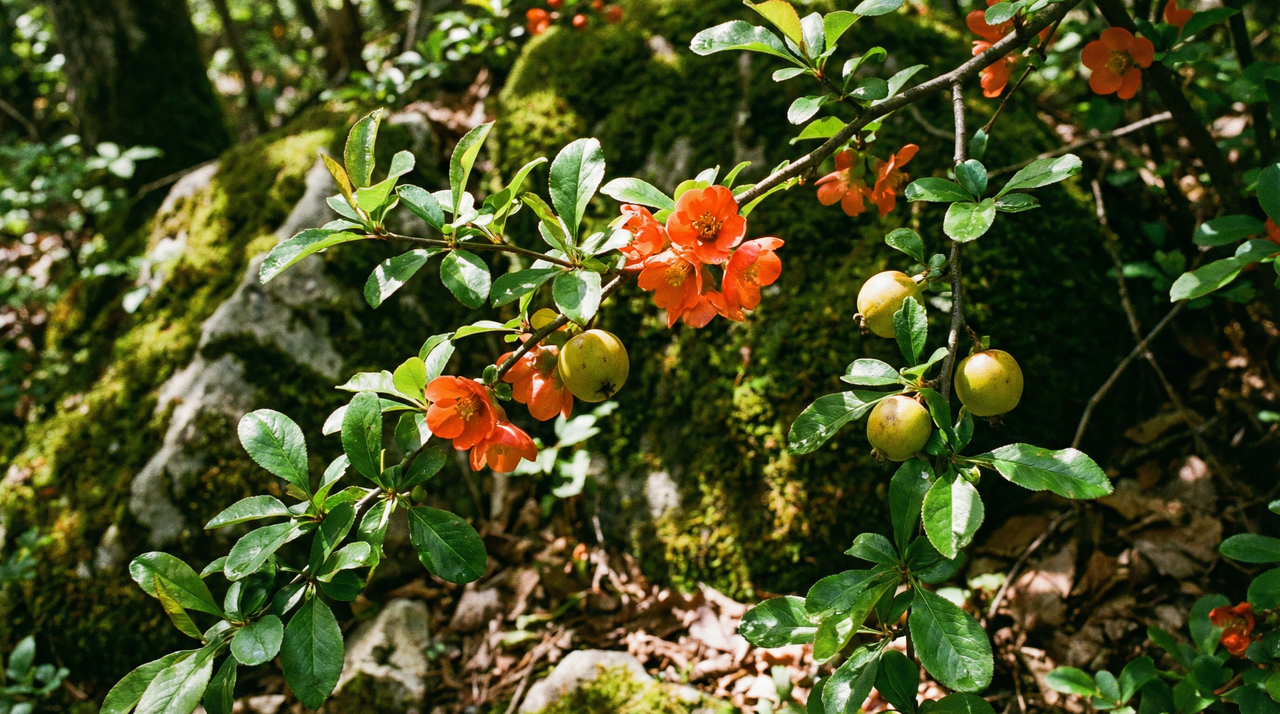
Most people who grow flowering quince have no idea they're growing food. They plant it for the flowers, which is completely reasonable; few shrubs do what this one does in late winter, erupting into scarlet and coral and salmon on completely bare branches while everything else in the garden is still dead-looking and grey. But then September arrives, and the plant is absolutely loaded with small, hard, greenish-yellow fruits, and most gardeners just... let them drop. I've watched people rake them up and toss them in the compost for years without ever once wondering whether they were edible. They are. Aggressively, stubbornly, wonderfully edible, once you know what to do with them.
Here's the part that genuinely surprised me the first time I cooked a batch down: the raw fruit smells faintly of pineapple and quince perfume, tastes like battery acid, and has the texture of an unripe apple crossed with a cricket ball. Cook it with a little water and sugar, though, and something alchemical happens. The astringency softens, the pectin (and there is a lot of it) does its job, and what sets in the jar is this luminous, fragrant jelly that tastes nothing like anything else in my pantry. That gap between raw and cooked is the whole story of this plant, and it's why so many gardeners miss half of what flowering quince actually is.
Origin and History of Flowering Quince (Chaenomeles japonica)
Botanical Background and Native Habitat
Flowering quince is one of those plants that rewards you the moment you understand where it actually comes from. Chaenomeles japonica, the Japanese quince, is a long-lived polycarpic deciduous shrub native to Japan, Korea, and parts of eastern China, where it grows along forest edges, rocky slopes, stream banks, and woodland thickets from sea level up to around 1,500 meters.[1][2][3] That origin story explains a lot about how it performs in cultivation: a plant that evolved scrambling over disturbed, rocky ground in temperate mountain forests is going to shrug off conditions that would send fussier shrubs into decline. Its close relative, Chaenomeles speciosa (Chinese quince), hails from central and eastern China at higher elevations of 500 to 2,000 meters, while Chaenomeles cathayensis produces notably larger fruits and is distinguished by fuzzy undersides on its leaves.[4][5][6] Since the 19th century, the genus has naturalized in parts of Western Europe and eastern North America, and while it can establish in disturbed sites in the Northeast and Midwest, it isn't considered invasive across most of the United States, though New Hampshire and Wisconsin do flag it as a species to watch.[7][8]
Visual Characteristics
In the garden, Chaenomeles japonica presents as a dense, multi-stemmed shrub with an upright to slightly arching habit, typically reaching 3 to 6 feet tall and wide, though I've seen older specimens push toward 10 feet when left unpruned for years.[1][9] The stems are armed with sharp thorns that become more pronounced on older wood, a detail I've learned to respect after more than one unplanned pruning session without proper gloves. The leaves are simple, alternate, and glossy dark green with serrated margins; they put on a quiet yellow-red show in autumn before dropping, and the fibrous root system stays mostly in the top 12 to 18 inches of soil.[10][11]
The flowers are the reason people fall for this plant. In March and April, before a single leaf has opened, the bare branches light up with cup-shaped blooms typically vivid scarlet-red, occasionally pink or white, each about 2 to 4 cm across.[1][12] They last two to three weeks and are among the first reliable nectar and pollen sources for solitary bees in early spring, a quality I've observed firsthand: on a warm March morning, a flowering quince in bloom is genuinely buzzing while everything else in the garden is still half-asleep. By late summer the show shifts to small round fruits, ripening from green to golden yellow, hard and aromatic and intensely astringent straight off the branch.[1][13] That fruit is not a snack; it's a jelly ingredient, and a good one. The genus offers real cultivar diversity: over 100 named selections exist within Chaenomeles speciosa alone, and hybrids have given us options like Cameo (double pink), Etna (bright red), and the contorted-branched curiosity aptly named Contorta.[1][12]
Traditional and Cultural Uses
Flowering quince has been woven into East Asian culture for over a thousand years. Its earliest recorded appearances in Japanese literature date to the Heian period (794 to 1185 CE), including mentions in the Sakuteiki garden manual, and cultivation intensified through the Kamakura and into the Edo period (1603 to 1868), when it was grown near temples and water features for both ornament and medicine.[14][15][16] In Japanese cultural symbolism, the flowering quince represents perseverance, renewal, and the arrival of spring; it appears in New Year celebrations and in literary works like Hana Monogatari, its early blaze of color on bare branches reading as an act of defiance against the cold.[17][18] That symbolism mirrors the plant's actual garden behavior in a way I find quietly satisfying.
Across East Asia, the fruit has long served therapeutic purposes: known as "Mu Gua" in traditional Chinese medicine, it was prescribed for rheumatism, arthritis, digestive complaints, and inflammation, while Japanese and Korean folk traditions used it for diarrhea and dysentery, with decoctions of bark and leaves applied for joint complaints and circulation.[19][20][21] These uses are rooted in centuries of practice and the fruit's astringent phytochemical profile; the modern research behind them is a story I'll let the health benefits section tell properly. The plant arrived in England around 1814[22][23] and has been a fixture of Western ornamental horticulture ever since, its conservation status stable and unthreatened.
Fun Facts and Ecological Notes
One thing that doesn't get mentioned enough about flowering quince is how long it actually sticks around. With good drainage, a well-sited specimen can live 20 to 50 years or more, and because the genus hybridizes freely between japonica and speciosa, many of the beloved cultivars available today represent decades of accidental and deliberate crossing.[24][25] I've watched a 'Cameo' planted in a client's border fill out into a genuinely handsome structural plant over more than a decade, barely needing attention beyond a post-bloom prune. That kind of quiet persistence is exactly what earns a shrub its place in a long-term planting.
Hardiness ranges from USDA zones 5 to 9, with documented tolerance from -20°F to around 100°F.[26][27][28] Its dense, thorny structure lends itself naturally to hedging, espalier work, and barrier planting, and while birds and small mammals do visit the fruits, the plant's real gift is its structural presence and that dependable early-spring color before the rest of the garden remembers it's supposed to wake up.[29][25] The fruit requires cooking to be anything other than puckering, but for gardeners willing to meet it on its own terms, this is a plant that pays dividends in form, flower, and function for a very long time.
Flowering Quince Varieties and Where to Buy Them
Notable Varieties of Flowering Quince
Japanese flowering quince (Chaenomeles japonica) is the species you'll encounter most often, and for good reason. It stays compact at roughly 1 to 3 meters, develops a dense thorny spreading habit, and lights up bare branches with scarlet to red flowers in March and April before a single leaf has opened.[30][31] Cultivar selection stretches that color range from white through pink to deep red.[32] By late summer those same branches carry small, hard, intensely aromatic yellow-green fruits that are inedible raw but high in pectin and excellent for preserves once cooked.[30][31] It's reliably hardy in USDA zones 5 through 8, tolerates poor and rocky soils, and once established needs supplemental water only during prolonged dry spells.[25][3]
I've used japonica's thorny spreading branches to close a gap in a hedgerow where deer were strolling through to my vegetable beds. The thorns do the deterring while the flowers, opening weeks before almost anything else in the garden, feed the first honeybees and mason bees of the season. That dual function is exactly why it earns a place in a food forest shrub layer.
If you want more fruit volume, Chinese quince (Chaenomeles cathayensis) is worth knowing. It grows larger, 2 to 3 meters with an upright multi-stemmed habit,[33][1] and its fruits reach 5 to 7.5 centimeters, noticeably bigger than the small fruits of japonica.[1][34] Honestly, I tend to reach for japonica at harvest time anyway. Those smaller fruits need less prep and the jelly comes together faster. The cathayensis quinces are beautifully fragrant but they're dense, and breaking them down takes real kitchen time. That said, if yield per harvest is a priority, cathayensis delivers. Hardy in zones 5 through 9 with fewer named cultivars than its relatives, it has fewer options but its flowers and fruit are genuinely showy.[35][33]
One thing worth knowing before you go shopping: many plants sold simply as "flowering quince" at garden centers are hybrids, often Chaenomeles × superba, rather than pure species.[33] That's not a problem for ornamental use, but if you're specifically after culinary fruit production, it's worth asking your nursery what you're actually buying.
Sourcing Flowering Quince Plants
Japanese flowering quince is a staple of the US nursery trade, carried at most independent garden centers and reliably available through online retailers like Nature Hills, Hardy Plant Nursery, Clipper Growers, and Eden Brothers (for seeds).[36][37][38] Expect to pay roughly $20 to $35 for a 1-gallon container and $45 to $65 for a 3-gallon.[39][40] Stock peaks in early spring (March through May) and again in fall (September through November).[41]
My own habit is to buy young 1-gallon plants in early fall. They're cheaper, they have all winter to quietly settle their roots, and by the following spring they flush with noticeably more energy than a large specimen planted at the wrong time. One more reassurance for anyone hesitant about adding yet another potentially weedy shrub to a managed planting: Japanese quince is not listed as invasive on federal or most state lists.[42][1] Prices and regional availability do shift seasonally, so checking your local independent nursery first is always a good move before ordering online.
How to Propagate and Plant Flowering Quince
Flowering quince gives you four realistic paths to a new plant, and which one you choose depends mostly on how patient you are and whether you care about getting a specific cultivar. The success rates tell the story pretty clearly: layering hits 90-100%, grafting lands at 80-90%, semi-ripe cuttings come in at 60-80%, and stratified seed brings up the rear at 50-70%.[43][44][45] Seed is the slowest and least predictable route; every other method will get you a blooming, fruiting shrub faster and with far more reliable results.
Propagation Methods: From Seed, Cuttings, Layering, and Grafting
Semi-ripe cuttings are my go-to for chaenomeles propagation. You take them in late July or August once the current season's growth has started to firm up, dip the cut end in IBA rooting hormone, and stick them into sterile, well-drained media under 80-90% humidity at 65-75°F with bright indirect light.[12][46] In my nursery work, the difference between open-air attempts and a simple mist system was dramatic. Without humidity control, cuttings desiccate before they root. With it, I was seeing strikes in four to six weeks consistently. Softwood cuttings work from June to July, and hardwood cuttings from dormant stems in late winter are another option, though I find semi-ripe gives the best balance of maturity and rooting vigor.
Layering is the genuinely foolproof option for home gardeners who have an established plant to work with. Wound a low-growing stem in spring or summer, pin it to the ground or wrap it with moist moss if you're doing air layering, and you'll have a rooted plant to detach by fall with near-certain success.[43][47] Grafting onto compatible rootstocks like Cydonia oblonga, Pyrus species, or other Chaenomeles achieves 80-90% success and is the method nurseries use when they need true-to-type fruiting plants on a predictable schedule.[48][44]
Growing from seed is a legitimate option if you enjoy the process and aren't attached to a specific flower color. The seeds are small (3-6 mm), dark brown to nearly black, with a hard, wrinkled coat.[49] They require 60-120 days of cold stratification at around 4-5°C to break dormancy before they'll germinate at all, which makes sense when you consider that these plants evolved on mountain slopes where seeds overwinter in cold soil.[12][50] The bigger caveat is that seedlings are genetically variable and almost never true-to-type.[51][52] I've grown out several batches of seed-raised quince and the flower colors ranged from pale pink to deep scarlet. If you want a specific cultivar for a guild or hedge, take cuttings or graft instead. Seeds do store well, though: kept dry at 3-5°C, they stay viable for two to five years or longer.[49]
Soil, Site Selection, and Planting Technique
Drainage is the one thing you cannot compromise on with flowering quince, and I learned that the hard way. Early in my career I planted a specimen into unamended clay that stayed wet through the rainy season, and it was gone to Phytophthora root rot before its first anniversary. The plant prefers loamy or sandy loam with 2-5% organic matter, but it will tolerate heavier soil if you incorporate grit or compost aggressively, or plant on a slight mound so water moves away from the crown.[12][1][53] In my experience, keeping soil pH between 6.0 and 7.0 and ensuring sharp drainage has eliminated every case of chlorosis or crown rot I've seen in client gardens. The plant tolerates a wider range of 5.5-7.5, but outside of that you start seeing nutrient lockout and stress symptoms.
The root system is relatively shallow (30-60 cm deep), so dig your planting hole at least 45 cm down and twice as wide as the root ball, setting the root crown at or just slightly above soil level.[11] For site selection, full sun (at least six hours daily) drives the best flowering, but in hotter climates some afternoon shade prevents leaf scorch without sacrificing too many blooms.[11][1] Too little light and the plant gets leggy fast, flowering drops off, and you've wasted a perfectly good thorny shrub.
Spacing, Timing, and Establishment
Mature plants reach 3-10 feet tall with a vase-shaped, arching, thorny habit and a slow-to-moderate growth rate under 12 inches per year.[3][1] For individual specimens or a loosely planted hedge, space plants 4-6 feet apart to allow air circulation and enough light for reliable flowering; for a dense, impenetrable security barrier, I often drop to 3-foot centers.[12] At that spacing the thorns interlock and the hedge becomes a genuine deer deterrent, which makes it a useful structural element in edible landscape design. Wear heavy gloves during planting regardless of spacing; the spines are serious.
Timing your planting for early spring after the last frost, or fall (September-October), gives roots the best chance to establish before they face summer heat or winter cold.[12][45] Fall planting is underrated for woody shrubs because the soil stays warm while air temperatures cool, which encourages root growth without pushing tender new shoots. If you're putting in a hedge row and propagating your own plants from cuttings, label everything carefully because young chaenomeles seedlings and rooted cuttings look nearly identical until they start to show their flower colors.
Germination and Fruiting Timeline
The honest answer about how long flowering quince takes to reward your patience is: it depends entirely on how you propagated it. Seed-grown plants typically take 3-5 years just to reach flowering maturity and produce their first fruit.[12][54] Grafted or cutting-grown plants can begin flowering and fruiting in 2-3 years, with full production settling in around year 4-5 regardless of method.[12] That trade-off between time and certainty is exactly why vegetative propagation is so worth the extra effort upfront, and why I lean on cuttings or layering for any planting where I want a specific result on a predictable schedule.
The wait feels long, but flowering quince is genuinely long-lived once established. Those early years of slow growth translate into decades of those bare-branch blooms every spring before the leaves even emerge, which is about as rewarding a payoff as a temperate garden shrub can offer.
Flowering Quince Care Guide
Get the fundamentals right and flowering quince rewards you with decades of low-maintenance beauty. Neglect a few key preferences and you'll spend the season wondering why a supposedly tough shrub looks tired and barely blooms. The good news is that the preferences are specific but not demanding, and once you understand the plant's seasonal rhythm, care becomes mostly intuitive.
Sunlight Requirements for Optimal Flowering
Sun is non-negotiable if blooms are your goal. Chaenomeles japonica wants at least 6 hours of direct sunlight daily, and in my experience, 8 hours produces noticeably denser flowering and a more compact habit.[1][3] It tolerates partial shade, the way it might receive on a forest edge in the wild, but you're trading bloom density for survival in those conditions. One exception: in zone 8 and warmer, afternoon shade is actually welcome in midsummer to prevent heat scorch, which I'll get to shortly.
Watering Needs and Drought Tolerance
Flowering quince wants well-drained, loamy soil with a pH between 6.0 and 7.5.[55][12] The drought tolerance it's known for is a mature-plant trait, not a young-plant one. For the first one to two years, plan on about an inch of water per week to support root establishment.[11][56] Once it's established, deep soaks every two to three weeks during dry spells replace that regular schedule, and winter dormancy reduces needs further still.[55][57] A 2- to 4-inch layer of organic mulch out to the drip line (kept a few inches back from the stems) does a lot of the work here, moderating soil temperature and cutting irrigation frequency significantly.[58] Watch for yellowing lower leaves and wilting despite wet soil as signs of overwatering, and browning leaf margins as the telltale of underwatering; prolonged drought will reduce flowering even on an otherwise established plant.[12][59]
Soil, Feeding, and Nutrient Management
Flowering quince is a moderate feeder, and the most common mistake I see in client gardens is over-fertilizing with a high-nitrogen product, which produces lush leafy growth at the direct expense of flowers.[11][24] A balanced slow-release formula like 10-10-10 or 5-10-10 applied in early spring before new growth, at roughly half a cup per plant or 1 to 2 pounds per 100 square feet, is plenty.[60][12] Stop feeding by midsummer without exception; late feeding pushes tender growth that won't harden before frost.[11] In reasonably fertile soil, an annual top-dress of compost often does the job without any bagged fertilizer at all.[11] If you see interveinal yellowing on young leaves, that's iron chlorosis signaling soil pH is too high; I've corrected this on several client sites with a simple sulfur amendment after a soil test confirmed the pH was creeping above 7.0.[61][60]
Frost Tolerance and Winter Protection
Chaenomeles japonica is reliably hardy from USDA zones 5 through 8, tolerating temperatures down to around -29°C (-20°F) with an RHS H6 rating.[1][32] That toughness has limits, though: flower buds and young plants are the most vulnerable parts, and a late-spring freeze can wipe out an entire season of blooms even on an otherwise healthy shrub. I learned this the hard way with an unprotected first-year plant that never produced a single flower that season; it sprouted back from latent buds, but the blooms were gone.[62] For zone 5, young plants deserve burlap wrapping and a sheltered site away from prevailing winter winds.[53] Everywhere, 2 to 4 inches of organic mulch applied in late fall protects roots and reduces freeze-thaw cycling at the soil surface,[53] and hold off any pruning until after the last frost date.
Heat Tolerance and Summer Stress Management
This shrub evolved in cool, hilly terrain and prefers temperatures below 25°C (77°F), which tells you something about where it performs best.[63] It manages up to about 32-35°C with adequate moisture, but above that threshold -- especially in dry conditions -- you'll see leaf scorch along margins, wilting, and reduced fruit set.[63][64] In my zone 9B garden, I've watched unmulched plants scorch badly through July while mulched neighbors a few feet away came through looking fine; 3 to 4 inches of organic mulch around the root zone is the single highest-return practice in a hot summer.[64][65] Afternoon shade, deep irrigation every week or two during dry stretches, and heat-tolerant cultivar selection (I've had good results with 'Cameo' and 'Crimson and Gold' in warm climates) round out the summer management toolkit.[65]
Pruning, Maintenance, and Seasonal Care
Flowering quince blooms on old wood, which means pruning timing is everything. Cut in winter or early spring before bloom and you're removing exactly the buds you waited all year to see. The rule I follow without exception: prune immediately after flowering finishes in late spring.[12][66] Once I stopped winter pruning and switched to post-bloom cuts, my flower display roughly doubled within two seasons. That's the single most impactful change I've made to my flowering quince care.
The actual cuts are straightforward: remove up to one-third of the oldest stems to the ground each year to encourage vigorous new growth, and take out anything dead, damaged, crossing, or suckering from the base.[12][32] Wear thick gloves and long sleeves regardless of how short the task seems. The thorns are stiff enough to punch straight through ordinary garden gloves, and I have the small scars to prove it. For shaping, you can train this shrub as a multi-stemmed form by selecting 3 to 5 strong framework stems, or espalier it flat against a trellis at 4 to 6 feet for a beautiful wall or fence treatment.[67] Keeping that interior open also reduces the humid stagnant air that invites powdery mildew and fire blight, the two most common disease problems on this plant.[68]
Harvesting Flowering Quince (Chaenomeles japonica)
Most people plant flowering quince for the flowers and then find themselves surprised in late summer when the shrub is suddenly loaded with small, waxy fruits. That surprise is a good thing. The fruit is a genuine bonus yield, and once you know what you're looking for and what to do with it, harvest becomes one of the more satisfying moments in the permaculture garden calendar.
When to Harvest Flowering Quince
After the April or May bloom, the fruit spends roughly 90 to 150 days quietly developing before it's ready to pick.[69][70][71] In most temperate gardens that puts you somewhere between late August and October. Warmer zones tend toward the earlier end; northern gardeners are often picking just ahead of the first hard frost.
The official cues are size and color: you're looking for fruits around 5 to 7 cm across that have turned from green to yellow or golden, still firm to the touch but just beginning to yield slightly at the stem end.[72][73][12] My most reliable cue, though, is scent. Once that distinctive pineapple-citrus fragrance starts drifting off the fruits, I trust my nose over the calendar every time. The aroma tells you the volatile compounds are fully developed, and that's really when the fruit is at its most useful for preserving.
How to Harvest and Store the Fruit
These fruits are too hard and astringent for raw eating, so there's no temptation to graze as you pick.[72] The main challenge is physical: the thorns on a mature bush are formidable. I learned the hard way in my first season not to reach bare-handed into the interior of a well-established shrub. Wear sturdy gloves and work methodically from the outside in, using your other hand to gently hold a branch back rather than pushing through it. Hand-pick each fruit individually to avoid snapping spurs or breaking the stems that will carry next year's flower buds.
Handle the harvest gently. Bruising accelerates spoilage faster than you'd expect for something this hard. Store the fruits at 32 to 40 °F in a cool, humid spot and they'll keep two to three weeks easily, or up to two to three months if conditions are right.[12][72] A spare refrigerator drawer or an unheated basement shelf both work well.
Flavor, Texture, and Yield of Flowering Quince Fruit
Let me be honest about the raw fruit: it is essentially inedible. The flesh is dry, mealy, and gritty, the skin is tough and leathery, and the flavor hits you with 10 to 12 percent total acids against only 4 to 6 percent sugars.[74][75][76] I tried to bite into one once. Once was enough.
What makes the fruit genuinely exciting is what happens after harvest and heat. That pineapple-like fragrance you noticed at picking comes from volatile esters including ethyl butanoate and ethyl hexanoate, along with hexanol and hexanal,[77][78] and those compounds carry straight through into cooked preserves. Simmering transforms the texture completely, and the fruit's naturally high pectin content means it gels readily without commercial thickeners or excessive added sugar.[75][72] This is my go-to fruit when I want a foolproof jelly that sets on the first try.
A mature shrub three to five years old typically produces 20 to 50 fruits weighing 50 to 100 grams each, putting the seasonal yield around 5 to 10 kg per established plant.[12] A four-year-old shrub in a mixed guild I tend gave me close to 18 pounds last fall, enough for four generous batches of jelly with fruit left over. For a plant most people would grow purely for its spring color, that's a meaningful pantry contribution from something that otherwise asks very little of you.
Preparation and Uses of Flowering Quince
Culinary Uses: From Astringent Fruit to Perfect Preserves
Bite into a raw flowering quince fruit and you'll understand immediately why it spent centuries as a garnish rather than a snack. The raw flesh is harshly tart, bitter, and astringent enough to make your mouth pucker unpleasantly.[76][79] Cook it, though, and something genuinely magical happens. The whole kitchen fills with what I can only describe as a tropical floral perfume, somewhere between pineapple and rose, and the transformation from puckering ornamental to pantry gold is complete.
What makes chaenomeles fruit recipes so rewarding is that the fruit is exceptionally high in natural pectin, so jams, jellies, marmalades, and syrups set beautifully without commercial thickeners.[75][76] I stopped adding storebought pectin to my flowering quince jelly years ago. I now blend fruit from early and late harvests to fine-tune the set, and the result is consistently better than anything I achieved when I was following standard jam recipes. In Japan the fruit has been prepared this way for centuries under the name "boke," and the tradition of turning it into preserves is deeply embedded in East Asian food culture.[75][80] The fruit also works in herbal teas and the occasional savory glaze, though sweet preserves are where it truly shines.[11] Nutritionally, it contributes modest vitamin C (around 11-16 mg per 100 g) and a solid load of flavonoids and phenolic antioxidants once cooked[20] -- useful, not exceptional, but worth appreciating as a bonus.
Don't overlook the flowers. The petals have a gentle apple-like flavor and can be scattered over spring salads or used as garnishes.[79] I give mine a light brush before using them to knock off excess pollen, which can leave a slightly dusty bitterness behind.
Two firm rules: the seeds contain cyanogenic glycosides including amygdalin and must be removed completely before processing[81][82] -- I learned the hard way that even a few seeds left in the pot can leave the whole batch tasting unpleasantly bitter -- and the leaves are not edible and may cause digestive upset.[79][76] Fruit and flowers only.
Traditional Medicinal Preparations
In traditional Chinese and Japanese Kampo medicine, the dried fruit (known as mugua) has a long history of use as a decoction, typically at 6-15 g per day, as a tincture at 5-15 ml daily, or applied as a poultice for joint pain, rheumatism, sore throat, digestive complaints, and inflammation.[83][84][85] I keep those preparation ranges in my notes as a respectful reference point, but the modern evidence for these uses rests largely on in-vitro work and animal studies, not human clinical trials.[86] Anyone on medication or pregnant should absolutely check with their healthcare provider before using chaenomeles medicinally. The health benefits section of this profile covers the underlying phytochemistry in detail; the short version here is that centuries of traditional knowledge deserve respect, and so does honest acknowledgment of where the clinical evidence currently sits.
Non-Food Applications
Beyond the pantry, flowering quince has earned its keep in traditional craft and landscape work. The bark has historically supplied fiber for rope-making, the dense wood serves as fuel, and the fruit yields natural dyes.[87][23] In my own garden the most meaningful non-food contribution is ecological: the earliest blooms on bare branches in late winter draw bees when almost nothing else is open, and the dense thorny habit stabilizes soil on berms and slopes where few other shrubs would bother. An ornamental that feeds pollinators, anchors soil, deters deer, and still leaves you with jars of jewel-toned jelly at the end of summer is, by any permaculture measure, genuinely earning its space.
Flowering Quince Health Benefits
I'll be honest with you: flowering quince earned its place in my landscapes long before I gave much thought to what the fruit might do medicinally. It's a tough, gorgeous shrub that blooms when almost nothing else does. But the more I've dug into its history, the more I've come to respect the long empirical tradition behind it, even while keeping realistic expectations about what that tradition actually proves.
Traditional Medicinal Uses in East Asia
Japanese quince (Chaenomeles japonica) has been used in Kampo medicine in Japan and Korean folk herbalism for centuries, primarily for digestive complaints like stomachaches, diarrhea, and dysentery, and for joint pain, rheumatoid conditions, and muscle spasms.[88][89] Its close relative Chaenomeles speciosa, known in TCM as Mu Gua, carries the heavier therapeutic load in formal Chinese medical texts, where it's used to dispel wind-damp, relax sinews, and treat the constellation of symptoms associated with bi syndrome, including arthritis, lower back pain, and muscle cramping.[90][91] The fruit is described in TCM as sour and warm in nature, acting on the liver and spleen meridians. That tracks with the astringency I taste every time I sneak a bite off the shrub in late summer.
Here's where I have to be straight with you, though. No published human clinical trials exist for any Chaenomeles species evaluating efficacy or safety for specific health conditions.[92][93] Every modern pharmacological finding comes from in vitro studies or animal models. I respect the centuries of empirical use in Kampo and Korean folk medicine, but I treat flowering quince primarily as a landscape specimen with a fascinating backstory, not a medicine cabinet staple.
Phytochemical Profile and Bioactive Compounds
What makes the preclinical research credible is the sheer richness of the chemistry. Chaenomeles japonica fruits contain significant concentrations of flavonoids including quercetin and kaempferol (along with glycosides like rutin, hyperoside, and isoquercitrin), phenolic acids like chlorogenic and neochlorogenic acid, catechins, and triterpenoids including ursolic acid, oleanolic acid, and pomolic acid, which can reach up to 0.5% of dry weight.[94][95][96] Flavonoid concentrations in ripe fruits can hit 15-25 mg/g and actually increase as the fruit matures.[97]
Fruit is consistently the richest source of bioactive compounds across the genus, with total phenolic content ranging from 20-50 mg/g dry weight, followed by leaves, bark, and roots.[98] The bark carries the highest triterpenoid concentrations, and the seeds contain a fatty acid profile worth noting (oleic, linoleic, and alpha-linolenic acids, with an oil yield of 10-15%), but also cyanogenic glycosides, primarily amygdalin.[99] I'll come back to that. The condensed tannins in bark reach 5-10% dry weight, which explains both the traditional astringent applications and the gastrointestinal irritation that can follow heavy consumption.[95]
Scientific Research and Pharmacological Effects
The strongest signals from lab research cluster around antioxidant and anti-inflammatory activity. Extracts show free radical scavenging capacity comparable to ascorbic acid in DPPH and ABTS assays and measurably enhance endogenous antioxidant enzymes like superoxide dismutase and glutathione peroxidase.[93][100] Anti-inflammatory effects operate through suppression of NF-κB signaling, inhibition of cytokines including TNF-α, IL-6, and IL-1β, and reduced COX-2 and iNOS expression, demonstrated in carrageenan-induced paw edema and adjuvant-induced arthritis models.[101] These mechanisms offer a plausible biochemical explanation for why traditional practitioners reached for this plant when treating joint pain and inflammatory conditions.
Emerging signals for anti-diabetic, hepatoprotective, and anticancer activity are present too, primarily driven by ursolic acid's activation of the Nrf2 pathway, inhibition of NF-κB, and pro-apoptotic effects in cancer cell lines.[77][102] Antimicrobial activity against both Staphylococcus aureus and Escherichia coli has been documented at minimum inhibitory concentrations of 0.5-2 mg/mL.[103] What's interesting about all of this is that whole extracts consistently outperform isolated compounds, suggesting the phytochemical synergies matter as much as any single constituent.[104] Promising, certainly. Definitive for human use? Not yet.
Nutritional Value of the Fruit
Setting aside the medicinal angle, the fruit has a practical nutritional profile worth knowing. Raw Japanese quince runs roughly 40-50 calories per 100g, with about 11g carbohydrates, 3g dietary fiber, and 83% water content.[105] Vitamin C ranges from 20-100 mg per 100g fresh weight, a meaningful amount that seems to hold reasonably well through gentle cooking.[106] Pectin content runs approximately 1-2% by weight, which is why this fruit gels without commercial pectin added, much like true quince (Cydonia oblonga), a Rosaceae neighbor I've cooked with for years.[107] That fiber and pectin combination supports the traditional digestive applications in a very direct, unglamorous way.
One honest caveat: specific nutritional data for Chaenomeles japonica is thin in standard databases, with values often extrapolated from related species, and actual composition shifts with cultivar, soil, and harvest timing.[108] The fruit is also extremely astringent raw, due to high tannins and organic acids. I've watched people try to eat it straight off the shrub and immediately regret it. Cook it, and everything changes.
Safety Considerations and Precautions
The most important thing to know is where the actual risk lives: the seeds. They contain amygdalin, a cyanogenic glycoside that can release hydrogen cyanide when ingested, and that's not a theoretical concern.[105][109] I always remove and discard seeds before I make quince jelly, every single time, without exception. It takes two extra minutes and eliminates the risk entirely. The ripe cooked fruit pulp itself is generally considered safe in moderate amounts.[110] Unripe fruit, leaves, and stems can cause nausea and vomiting and are best avoided.[76]
For pet owners asking whether flowering quince is toxic to dogs: the ASPCA classifies it as non-toxic, but ingestion of seeds or significant quantities of plant material can still cause mild vomiting, diarrhea, or lethargy, so it's worth keeping curious dogs away from fallen fruit.[110] People with Rosaceae family allergies or birch pollen sensitivities may also experience oral allergy syndrome from contact with or consumption of the fruit.[111] Traditional TCM sources advise caution during pregnancy due to possible uterine-stimulating properties, though direct human evidence is lacking.[84] My general position: if you're pregnant, on anticoagulants, or planning to use this plant beyond normal food quantities, talk with your doctor first. The research simply isn't there yet to say more than that with confidence.
Pests and Diseases of Flowering Quince
Flowering quince comes into the garden with a decent set of natural defenses already in place. Its dense, thorny foliage and phytochemical arsenal, including phenolic compounds, condensed tannins, and flavonoids, give it genuine antifeedant activity against many common insects.[112][113] My apple trees get dormant oil sprays every winter without fail. My quince? Rarely anything more than a strong blast from the hose on new spring growth.
Common Insect Pests and Natural Resistance
That said, the defenses aren't absolute. Aphids will cluster on tender emerging shoots, spider mites show up during hot dry spells, and scale, Japanese beetles, and the occasional caterpillar can all cause trouble if conditions are right.[114][53] Pest pressure is generally worse in humid zone 5-8 climates, particularly the southeastern US.[115] I design with beneficial insects in mind everywhere I can, and in my experience quince rarely needs more than the ladybugs and lacewings already working the garden. When aphids do flare, dormant oil in late winter handles scale, and insecticidal soap works on mites without torching the ecosystem.[115][12] Cultivar choice helps too; selections like 'Cameo' and 'Orange Delight' show reduced aphid susceptibility compared to straight species.[115][12]
Major Diseases and Environmental Triggers
Fire blight is the real thing to watch for. Erwinia amylovora causes that unmistakable shepherd's crook wilt, blackened shoots, and rapid dieback, and in a warm wet spring it can kill branches fast.[116][117] I lost a young specimen to it after an unusually humid spring, and now I treat the first sign of blackening as an emergency. Beyond fire blight, poor drainage opens the door to Phytophthora root rot, especially in acidic soils below pH 6.0.[118] Rust (those orange pustules that trigger premature leaf drop) needs a juniper nearby to complete its life cycle, so removing alternate hosts removes a meaningful chunk of the risk.[119][120] Fungal leaf spots overwinter in fallen leaves and spread by splash, while canker pathogens enter through wounds.[120] Powdery mildew is possible but usually minor; it favors high humidity and poor airflow rather than full sun open plantings.[121] Fire blight thrives above 21°C with moisture, while rust and mildew both peak at 60-80% humidity.[122] Hybrids generally outperform pure japonica selections here; 'Scarlet Storm' and 'Toyo-Nishiki' both show better performance against fire blight and powdery mildew than many straight species plants.[123][124] I evaluated 'Toyo-Nishiki' in a client's mixed border during a particularly muggy summer and it came through noticeably cleaner than the adjacent pure japonica selections.
Integrated Management and Prevention
The most effective management for flowering quince diseases is site selection. Full sun, well-drained soil in the pH 6.0-7.5 range, good airflow, and no overhead irrigation remove the environmental triggers for most of what can go wrong.[125][126] Rake and dispose of fallen leaves to break the leaf spot cycle; keep pruning tools clean and do any structural cuts during dry weather. For fire blight, cut at least 8-12 inches below visible symptoms and disinfect tools between every cut; preventive copper sprays before bloom can help where the disease has appeared before.[127] Powdery mildew warrants sulfur or a triazole fungicide at first sign; rust and serious leaf spot may call for myclobutanil if defoliation is heavy.[128][129] In a well-sited planting with decent sanitation, I reach for sprays rarely. The plant's own vigor, given the right conditions, does most of the work.
Flowering Quince in Permaculture Design
There's a plant archetype in temperate permaculture that I keep returning to: the thorny, early-successional shrub that does about six useful things at once while asking almost nothing in return. Flowering quince fits that description almost perfectly. Chaenomeles japonica is a dense, multi-stemmed deciduous shrub reaching 6-10 feet tall and wide with a rounded form, erupting into vivid red to crimson bloom in February through April before a single leaf unfurls, then quietly ripening its small, apple-like, yellowish-green fruits through late summer and fall.[63][130] Understanding where it comes from ecologically tells you almost everything about how to use it in a designed system.
Ecosystem Functions and Wildlife Support
Japanese quince evolved as an early-successional pioneer of disturbed ground: forest edges, rocky hillsides, scrubland margins. That heritage shows up directly in its fibrous root system, which is genuinely effective at binding and stabilizing soil on slopes and riverbanks.[131] In a food forest on any kind of grade, this matters. I once used a low-growing cultivar as a living fence around a young planting on a slight slope; within three years the thicket had excluded deer completely while the roots were quietly knitting the soil together below the surface.
The early bloom is what really earns this plant its permaculture credentials, though. Those 1.5-2 inch flowers packed with yellow stamens open when almost nothing else does, giving honeybees, bumblebees, solitary bees, hoverflies, and butterflies a critical fuel stop during their first active weeks of the season.[3][132] The flowers remind me of serviceberry in that regard: both are invaluable for waking up pollinator populations in late winter when the garden otherwise looks like it's still asleep. The dense thorny structure also provides year-round cover for birds and small mammals, and the persistent fruits carry birds through fall and into winter.[131]
A practical note on fruit set: the flowers are self-compatible, so a single plant will produce fruit, but cross-pollination with other Chaenomeles varieties meaningfully improves both yield and fruit size.[133][72] In guild design I always try to include at least two varieties. Late frosts, heavy rain during bloom, or a depleted pollinator population can undercut that early-season contribution fast, which is another argument for planting flowering quince companions that support beneficial insects throughout the season: lavender, thyme, and nitrogen-fixing groundcovers all work well in the understory.[3]
Forest Layer and Guild Placement
In the forest garden stack, flowering quince belongs decisively in the shrub layer. The typical C. japonica form stays 3-6 feet tall (occasionally reaching 10 feet in cultivation) and spreads through suckering roots to form dense thickets over time.[134][135] That suckering habit is a feature, not a flaw, on slopes or along hedgerow corridors where you want the plant to knit itself into the landscape. In a tighter design, it responds well to pruning and can even be trained to a single trunk if your site demands it.
Its native habitat (mountainous mixed deciduous forest understories, woodland edges, and rocky slopes across Japan, Korea, and China) explains why it forms mycorrhizal associations that improve its own drought tolerance and nutrient uptake while benefiting neighboring guild plants.[1][132] In my designs I often place it on south-facing slopes where its roots stabilize the bank while the thorny canopy shields more tender guild members from deer browse. Pair it with nitrogen-fixers like Siberian pea shrub or goumi and you've got a self-reinforcing edge planting that improves its own soil over time.
One thing worth stating plainly here: the fruits are not a fresh-eating crop. They're astringent raw, and the seeds contain low levels of cyanogenic compounds that you don't want to mess with.[12][136] I always cook the pulp and discard the seeds when making jelly. For birds and wildlife, though, the persistent fruits are a genuine resource through the lean months, which adds another layer of ecological function to this already productive shrub-layer plant.[137][138]
Climate Adaptation and Hardiness Zones
The core hardiness range for C. japonica is USDA zones 5-9, with cold tolerance down to around -20°F.[139][10][3] At the zone 5 edge, young plants appreciate a winter mulch layer over their root zone until they're established. At the warm edge (zone 9), the limiting factor isn't cold: it's the chilling-hour requirement. Flowering quince needs 400-800 hours below 45°F to bloom well.[1][140] If your winters don't accumulate those hours, flowering will be sparse regardless of how healthy the plant otherwise looks. I've watched this play out in marginal zone 9 microclimates: a vigorous, leafy plant that produces almost no bloom because the chill bank never filled.
For designers working in warmer climates, Chaenomeles speciosa offers a slightly broader range (zones 4-9 in many citations, with heat tolerance pushing 100-105°F) and adds useful traits like salt-spray and wind tolerance for coastal sites.[141][142] Chinese quince (C. cathayensis), native to high-elevation regions of China between 1,000 and 3,000 meters, performs particularly well in climates like the Pacific Northwest and tends to struggle in hot, humid heat.[143]
At the warm edge of any zone, siting choices make a real difference. After observing plants in zone 9 adjacent conditions, I've found that afternoon shade combined with deep summer mulch reduces heat stress significantly and improves fruit set compared to full-sun specimens baking on a south-facing wall. Optimal growing temperatures sit between 60-80°F, and the plant appreciates consistent moisture in well-drained soil even after it's drought-tolerant by reputation.[12] Microclimate and cultivar selection both shape performance meaningfully at the range edges, so consulting your local extension service before committing to a specific variety is genuinely worthwhile advice, not just a disclaimer.
The Shrub That Blooms Before I'm Ready for Spring
Every February, before I've even started my seed trays, the flowering quince outside my studio window is already lit up scarlet against bare wood and grey sky. It doesn't ask for anything. It just goes. I've had clients dismiss it as "just ornamental," and I always point them toward the jar of quince jelly on my shelf, the one that smells faintly of guava and old roses, made from fruit I almost let fall. That jar is usually enough to change their minds.
Sources 143
- Missouri Botanical Garden - Chaenomeles japonica ↩
- Plants of the World Online: Chaenomeles japonica ↩
- USDA Plants Database - Chaenomeles japonica ↩
- Flora of China - Chaenomeles speciosa ↩
- Flora of China - Chaenomeles cathayensis ↩
- Kew Science - Chaenomeles speciosa ↩
- USDA PLANTS Database: Chaenomeles japonica ↩
- Invasive Plant Atlas ↩
- Royal Horticultural Society - Japanese quince ↩
- North Carolina Extension Gardener - Japanese Flowering Quince ↩
- RHS Gardening: Chaenomeles japonica ↩
- Royal Horticultural Society - Flowering Quince ↩
- Kew Science - Plants of the World Online - Chaenomeles japonica ↩
- Sakuteiki: The Japanese Garden Manual ↩
- Japanese Flowering Quince: History and Cultivation ↩
- Plants in Japanese History and Culture ↩
- Flowering Quince in Japanese Culture ↩
- Hana Monogatari: Tales of Japanese Flowers ↩
- Traditional Chinese Medicine: Mu Gua (Chaenomeles Fruit) ↩
- Traditional Uses of Flowering Quince in East Asia ↩
- Chaenomeles in Traditional Chinese Medicine ↩
- RHS Plant Finder & History ↩
- Sustainability of Ornamental Plants: Chaenomeles spp. ↩
- Missouri Botanical Garden - Chaenomeles speciosa (similar to japonica) ↩
- Flowering Quince: Chaenomeles spp. ↩
- Japanese Flowering Quince (Chaenomeles japonica) ↩
- Royal Horticultural Society - Chaenomeles japonica ↩
- UC Master Gardener - Japanese Flowering Quince ↩
- Missouri Botanical Garden - Chaenomeles japonica ↩
- Royal Horticultural Society - Chaenomeles japonica ↩
- Missouri Botanical Garden - Chaenomeles japonica ↩
- RHS Flower Finder - Chaenomeles japonica ↩
- RHS - Chaenomeles cathayensis ↩
- Kew Gardens - Chaenomeles cathayensis Fact Sheet ↩
- USDA Plant Database - Chaenomeles cathayensis ↩
- USDA PLANTS Profile - Chaenomeles japonica ↩
- Chaenomeles Japonica Seeds ↩
- Japanese Quince (Chaenomeles japonica) ↩
- Chaenomeles japonica - Japanese Quince ↩
- Buy Japanese Flowering Quince Shrubs ↩
- Seasonal Availability of Japanese Quince in US Nurseries ↩
- Chaenomeles japonica (Japanese-flowering quince) ↩
- Royal Horticultural Society - Propagation of Ornamental Plants: Chaenomeles japonica ↩
- University of Florida IFAS Extension - Propagation of Chaenomeles species ↩
- Missouri Botanical Garden - Chaenomeles japonica (Japanese Flowering Quince) ↩
- University of Minnesota Extension - Propagation of Flowering Quince ↩
- Grafting and Layering Methods for Rosaceae Family Plants ↩
- Grafting and Budding Nursery Crop Plants ↩
- Royal Botanic Gardens Kew - Seed Information Database ↩
- Seed Dormancy and Germination in Chaenomeles Species ↩
- Breeding Systems in Chaenomeles: Outcrossing and Seedling Variation ↩
- Propagation of Flowering Quince (Chaenomeles spp.) ↩
- University of Minnesota Extension - Flowering Quince Care ↩
- UCANR - Quince Production ↩
- Chaenomeles japonica - Missouri Botanical Garden ↩
- Chaenomeles japonica Care Guide - Missouri Botanical Garden ↩
- How to Grow and Care for Japanese Flowering Quince ↩
- Flowering Quince (Chaenomeles spp.) ↩
- Japanese Flowering Quince Care - UC Master Gardener Program ↩
- Flowering Quince Care Guide ↩
- Iron Chlorosis in Woody Ornamentals ↩
- Frost Injury to Woody Plants ↩
- Chaenomeles japonica ↩
- Heat Stress in Ornamental Plants: Symptoms and Management ↩
- Flowering Quince (Chaenomeles spp.) ↩
- North Carolina State University Cooperative Extension: Flowering Quince ↩
- Missouri Botanical Garden Plant Finder: Chaenomeles japonica ↩
- Pests and Diseases of Flowering Quince ↩
- Chaenomeles japonica - Missouri Botanical Garden ↩
- Chaenomeles japonica - Royal Horticultural Society ↩
- Japanese Quince (Chaenomeles japonica) S4E6 - UC Master Gardener Program ↩
- Flowering Quince (Chaenomeles spp.) ↩
- Growing and Harvesting Flowering Quince ↩
- Chemical Composition of Flowering Quince Fruits ↩
- Chaenomeles - Wikipedia ↩
- Chaenomeles japonica - Wikipedia ↩
- Volatile Compounds in the Fruit of Chaenomeles japonica ↩
- Aroma Profile of Japanese Quince (Chaenomeles japonica) ↩
- Flowering Quince (Chaenomeles) – Edible Parts and Uses ↩
- Ethnobotany of Chaenomeles Species in East Asia ↩
- Are Quince Seeds Poisonous? ↩
- Chaenomeles cathayensis - Useful Tropical Plants Database ↩
- Chaenomeles in Traditional Chinese Medicine ↩
- Chaenomeles - an overview in Traditional Chinese Medicine ↩
- Journal of Ethnopharmacology - Ethnomedical uses of Chaenomeles species ↩
- Traditional Uses of Flowering Quince in East Asia ↩
- Chaenomeles japonica - Japanese Flowering Quince ↩
- Medicinal Uses of Chaenomeles in Traditional Chinese Medicine ↩
- Ethnobotanical Survey of Medicinal Plants in Korea ↩
- Traditional uses and phytochemistry of Chaenomeles species in East Asia ↩
- Pharmacological Review of Chaenomeles speciosa ↩
- Pharmacological Activities and Mechanisms of Action of Chaenomeles speciosa and Chaenomeles cathayensis: A Review ↩
- Phytochemical and Pharmacological Review of Chaenomeles Genus ↩
- Pharmacological potential of flavonoid-rich extracts from Chaenomeles japonica ↩
- Phytochemical Profile and Health-Promoting Effects of Chaenomeles Fruits ↩
- Triterpenoids from Chaenomeles Species: Isolation and Bioactivity ↩
- Flavonoids and Phenolic Acids in Fruits of Chaenomeles japonica ↩
- Phytochemical Profiling of Chaenomeles japonica: Secondary Metabolites Across Plant Parts ↩
- Chemical Composition of Seed Oil from Chaenomeles japonica ↩
- Antioxidant Activity of Chaenomeles japonica Fruits ↩
- Pharmacological effects of Chaenomeles speciosa and its bioactive constituents ↩
- Triterpenoids from Chaenomeles japonica with hepatoprotective effects via Nrf2 activation ↩
- Antimicrobial properties of Japanese quince (Chaenomeles japonica) extracts ↩
- Bioactive compounds in Japanese quince (Chaenomeles japonica) and their health benefits ↩
- Nutritional Composition of Chaenomeles Fruits ↩
- Vitamin C Content in Japanese Quince ↩
- Pectin and Bioactive Compounds in Chaenomeles ↩
- Nutritional value of Japanese quince (Chaenomeles japonica) fruit ↩
- Cyanogenic Glycosides in Plants ↩
- Flowering Quince ↩
- Allergic Reactions to Fruits of the Rosaceae Family ↩
- Flowering Quince (Chaenomeles spp.) ↩
- Phytochemical studies on Chaenomeles species ↩
- Pests and Diseases of Ornamental Quince ↩
- Flowering Quince ↩
- Fire Blight on Flowering Quince ↩
- Fire Blight of Ornamentals ↩
- UC IPM - Chaenomeles ↩
- Rust Diseases of Woody Ornamentals ↩
- Diseases of Quince ↩
- Powdery Mildew on Woody Ornamentals ↩
- Environmental Factors in Plant Disease Management ↩
- Missouri Botanical Garden Plant Finder: Chaenomeles speciosa ↩
- Flowering Quince (Chaenomeles spp.) ↩
- Chaenomeles japonica Care Guide ↩
- Diseases of Flowering Quince ↩
- Fire Blight of Ornamentals ↩
- Powdery Mildew on Ornamentals ↩
- Diseases of Ornamental Quince ↩
- RHS - Japanese Quince ↩
- Ecological Roles of Flowering Quince in Asian Temperate Forests - ResearchGate ↩
- Pollination Ecology of Flowering Quince (Chaenomeles japonica) ↩
- Entomophily and Self-Fertility in Chaenomeles - Journal of Horticultural Science ↩
- Missouri Botanical Garden Plant Finder ↩
- Royal Horticultural Society (RHS) ↩
- Chaenomeles japonica - Royal Horticultural Society ↩
- Chaenomeles in Permaculture Systems ↩
- Plant Ecology of China - Habitat Description ↩
- Missouri Botanical Garden - Chaenomeles japonica ↩
- Chilling Requirements for Deciduous Fruit Trees - University of California Agriculture ↩
- USDA Plants Database - Chaenomeles speciosa ↩
- Royal Horticultural Society - Chaenomeles speciosa ↩
- Kew Science - Plants of the World Online: Chaenomeles cathayensis ↩