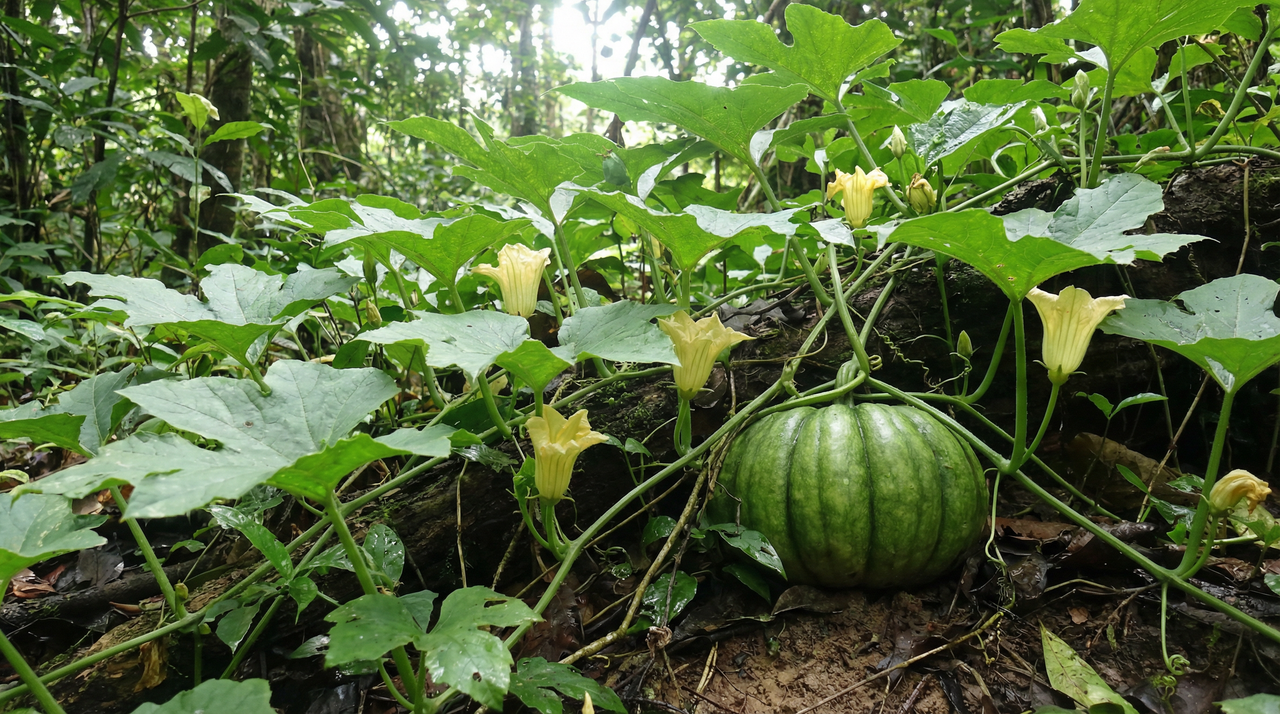
Nobody told me the leaves were the whole point. When I first encountered fluted pumpkin at a West African grocery in Atlanta, I walked right past the greens and fixated on a photograph of those extraordinary fruits: long, woody, deeply ridged along their length like something a production designer invented for a fantasy film. I assumed, the way you do when a plant is new to you, that the fruit was the crop. It's not. Across Nigeria, Cameroon, and the wider West African diaspora, Telfairia occidentalis is grown almost entirely for its leaves, harvested on a rolling cycle every few weeks the way you'd cut chard or moringa, and folded into soups and stews that have anchored family nutrition for generations.[1] The fruits are almost incidental to the daily kitchen garden, prized mainly for their seeds.
That inversion is what keeps pulling me back to this plant. We're so trained to think of cucurbits as fruit crops, squash and cucumber and melon, that a vigorous climbing relative grown primarily as a cut-and-come-again leafy green genuinely scrambles the mental model. If you've been dismissing ugu as too tropical, too obscure, or too specialized for your garden, I'd ask you to hold that judgment a little longer.
Fluted Pumpkin Origin and History
If you've spent any time around West African markets or diaspora kitchens, you've probably seen ugu without knowing its name. Fluted pumpkin, known botanically as Telfairia occidentalis, is a perennial climbing vine in the Cucurbitaceae family, native to the humid lowlands of southern Nigeria, Cameroon, Ghana, and Benin.[2][3][4] It's a cucurbit through and through, sharing that vigorous, tendril-grabbing ambition with your cucumbers and squash, but it operates on a scale that stops you in your tracks. Vines routinely reach 10 to 20 meters,[5][4] and that growth happens fast in its preferred range below 500 meters elevation, with temperatures between 25 and 30°C and annual rainfall of 1,500 to 2,500 mm.[3][6]
Botanically it's perennial, but most growers treat it as an annual with a productive window of 6 to 12 months, occasionally stretching to 3 years under ideal management.[7][8] Its polycarpic nature means it flowers and fruits repeatedly rather than burning itself out after one round, which is excellent news for anyone managing it as a productive crop. The timeline is genuinely impressive: seeds germinate in 7 to 14 days, first leaf harvest arrives at just 4 to 6 weeks, male flowers appear at 8 to 10 weeks, and the plant reaches first fruiting at 4 to 6 months.[9] I've managed tropical climbers with similarly aggressive early-leaf yields, and that 4-to-6-week window before fruiting kicks in is genuinely valuable for home growers trying to maximize output from a single plant.
Botanical Background and Visual Characteristics of Fluted Pumpkin
The leaves alone would make this plant worth growing. They're alternate, palmately compound with 5 to 7 ovate-lanceolate leaflets each reaching 10 to 25 cm, bright green with a handsome serrated margin.[6][10] The flowers are where it gets interesting, because this is a dioecious species, meaning you need both male and female plants to get fruit. Male flowers are small (1 to 2 cm), bright yellow, and appear in racemes; female flowers are considerably showier at 5 to 7 cm, solitary, and bloom in a striking reddish-purple bell shape.[6][11] Any grower planning to fruit this plant needs to account for both sexes upfront, or get comfortable with hand pollination.
The fruit is what gives fluted pumpkin its name: a large, oblong pepo with 10 to 12 prominent longitudinal ribs running the length of the gourd, measuring 15 to 50 cm long and weighing anywhere from 2 to 10 kg.[12][13] Immature fruits are green, ripening to a warm yellowish-orange, and inside they hold 50 to 100 large, flat, black or cream-colored seeds embedded in fibrous orange pulp.[14] Those seeds are substantial, around 3 to 4 cm long, and they're as much a crop as the leaves themselves.
Traditional and Cultural Uses of Fluted Pumpkin (Ugu)
This plant has been feeding and healing West African communities for over 2,000 years, with its center of domestication in southeastern Nigeria.[15] Joseph Dalton Hooker formally described it for Western science in 1864,[16] but by then it was already ancient knowledge. Among the Igbo and Yoruba, ugu carries deep symbolic weight, appearing in rituals, festivals, and ceremonies as a marker of health, fertility, and prosperity.[17][18] Postpartum recovery diets in particular feature ugu leaves prominently, a tradition that makes a lot of sense when you consider the plant's iron and vitamin content, something the health benefits section gets into more deeply.
In the kitchen, the leaves anchor dishes like egusi soup, pepper soup, and efo riro, while seeds are roasted as snacks or pressed for oil.[19][20] Traditional medicine reaches further still, using leaf decoctions and poultices to address anemia, hypertension, malaria, and digestive complaints.[21] This plant traveled far beyond its homeland because people valued it that much: enslaved Africans carried its seeds to the Americas and Caribbean during the Atlantic slave trade,[22] ensuring that its nutritional and cultural significance survived the crossing.
Fun Facts About Fluted Pumpkin
From a permaculture perspective, what I find compelling about fluted pumpkin is how much ecological work it does without being asked. In intercropped systems with yam and cassava, the vine suppresses weeds, stabilizes soil, feeds leaf litter back into nutrient cycles, and draws in pollinators like bees.[23] It's the kind of sprawling ground-layer behavior I've seen in other vigorous climbers, but with an edible yield that backs it up: leaves can yield 10 to 20 tons per hectare annually across multiple harvests, with seeds adding another 1 to 2 tons per hectare.[24][25] The leaves themselves pack 20 to 45% protein on a dry weight basis alongside vitamins A and C and iron,[24] which puts it squarely in the company of other exceptional leafy greens.
For growers in the United States, it's viable in USDA zones 9 to 11 or under protected greenhouse conditions.[26] Expect the same pressure you'd see on cucumbers: aphids, spider mites, powdery mildew, and downy mildew all show up, managed well through consistent IPM, crop rotation, and neem-based sprays.[27] Nothing unusual there for anyone who's grown cucurbits in a humid climate, but it's worth knowing before you commit to the trellis infrastructure this plant genuinely needs.
Fluted Pumpkin Varieties and Where to Source Them
Fluted pumpkin sits in an interesting position in the American gardening world: beloved by Nigerian and West African diaspora communities, studied by researchers at IITA and NIHORT, and almost completely invisible at your local nursery. If you want to grow it, you need to know what you're looking for and where to actually find it.
Notable Landraces and Improved Cultivars of Telfairia occidentalis
The genetic diversity within Telfairia occidentalis is more substantial than most growers realize. Researchers have documented over 20 distinct accessions in Nigeria alone, with meaningful variation across regions like Enugu and Anambra, distinguished primarily by fruit shape, leaf architecture, and yield potential.[28] Broadly, you'll encounter two fruit types: round-fruited and elongated-fruited forms. The elongated type produces those dramatic oblong fruits, typically 12 to 18 inches long, with the deep longitudinal ridges that give the plant its common name.[28]
For growers focused on leaf production, the improved cultivar Telfairia-1 is worth seeking out. It yields up to 30% more leaf biomass than unselected local landraces, and when you add staking and adequate fertilization, total yields can jump an additional 40 to 50%.[29] The 'Ugu Dwarf' cultivar takes a different approach, trading some of that raw vigor for moderate resistance to common pests and diseases.[28][30] In my trials, though, the vigorous climbing types still tend to outperform 'Ugu Dwarf' on raw leaf output under a long subtropical growing season, so unless disease pressure is severe, I'd lean toward the more productive landraces and manage with good airflow and cultural controls. The dioecious nature of this plant is also something I've learned to plan for the hard way: you need both male and female vines to produce seeds, so I grow at least four or five seedlings together and label them early rather than assuming my handful of plants will give me a useful sex ratio.
Because most of the breeding and performance data comes from Nigerian field conditions, treat U.S. performance as genuinely experimental. The plant is frost-sensitive and realistically suited to USDA zones 9 to 11, with optimal growth between 68 and 86°F.[31] Outside that range, it's typically grown as an annual or under glass.
Sourcing Fluted Pumpkin Seeds and Plants in the United States
Cultivation of Telfairia occidentalis in the U.S. is still largely experimental, confined to southern states like Florida and to greenhouse settings, with no official commercial production guidelines to speak of.[31] That means you won't stumble across Telfairia pedata seeds at a big-box garden center. Your best bets are specialty online retailers like Sow Exotic and Rare Exotic Seeds, African food markets in cities with Nigerian communities, and occasionally Etsy or eBay. Expect to pay somewhere between $5 and $15 for a seed packet depending on quantity, or $10 to $25 for a live plant if you can find one. I've had much better germination rates from packets sourced through established specialty seed vendors than from anonymous marketplace listings; seed viability is genuinely variable, so buying from someone with a reputation to protect matters here. If you're importing Telfairia pedata seeds directly, be aware that USDA APHIS rules may require a permit for propagative material, and the plant carries no CITES restrictions.[14][32] For most home growers, sticking with domestic specialty suppliers keeps things simple and compliant. The growing interest from diaspora communities and adventurous food forest designers does seem to be nudging more vendors toward stocking it regularly, which is a promising sign for availability over the next few years.
Propagating and Planting Fluted Pumpkin
Most people pick up fluted pumpkin seeds for the first time and assume they're holding something like a big squash seed. They're not. Telfairia occidentalis seeds are thick, flat, oblong slabs, 2-4 cm long with a hard, dark brown coat covered in prominent ridges, which is exactly where the "fluted" in the common name comes from.[33][34] The first time I tried direct-sowing without any pre-treatment, I got patchy, sluggish germination and spent two weeks wondering what I'd done wrong. The seed coat was the culprit. Getting this plant off to a strong start is almost entirely about understanding the seed before it ever touches soil.
Seed Characteristics and Pre-Treatment
What makes Ugu seeds genuinely unusual is that they're recalcitrant, meaning they die when dried out. Where most temperate garden seeds prefer cool, dry storage, these need to stay at 40-50% moisture content and between 10-25°C to maintain viability for anywhere from 6 to 18 months.[35][36] I now keep mine tucked into moist sphagnum moss inside a sealed bag in the refrigerator crisper drawer. Viability holds reliably through winter for spring planting in my zone 9B garden. A paper envelope on the seed rack? That's a recipe for a dead batch. Each seed also contains a single embryo with no polyembryony to give you backup seedlings,[37] so viability really matters.
Beyond storage, the hard, fibrous coat creates physical dormancy that resists water uptake even in perfectly moist soil. Soaking seeds in 50-60°C water for 24 hours, light scarification with sandpaper, or priming with gibberellic acid all break that barrier and dramatically improve germination speed and uniformity.[38][39] With proper pre-treatment, germination rates climb to 80-100%; skip it, and you're often below 50%.[4][40] Hot-water soaking is the simplest method for most home growers. Hybrid seed lines showing improved germination and early vigor exist but aren't yet widely available commercially.[41]
Germination and Seedling Care
Pre-treated seeds sown into warm, moist soil at 25-30°C germinate in 7-14 days.[4][42] That's actually faster than bottle gourd in similar conditions, which always surprises gardeners who expect tropical cucurbits to be slow starters. Keep the soil temperature up, keep moisture consistent, and these seedlings move quickly. First leaf harvests are possible at 4-6 weeks, and by the 60-90 day mark the vine has reached vegetative maturity and you can begin cutting on a regular rotation.[4][42] For most home growers, that leaf harvest rhythm is the entire point.
Vegetative Propagation Options
If you have access to an established plant and want to clone it, stem cuttings are viable. Semi-hardwood cuttings of 15-30 cm with 2-4 nodes, treated with 1000-2000 ppm IBA and struck in a sterile sand-peat mix at 25-30°C with high humidity, root in 2-4 weeks with success rates of 30-60%.[43][40] That success range is honest; cuttings are useful for multiplying a specific female plant you want to keep, but they're more work and less reliable than starting from well-handled seed. Most experienced Ugu growers default to seeds for good reason.
Soil Requirements and Site Selection
This plant comes from the humid lowland tropics of West Africa, where soils tend to be deep, organically rich, and free-draining. Replicating that at home means loamy or sandy-loam soil with good depth (at least 30-45 cm), 3-4% organic matter worked in at planting, and a pH sitting close to 6.5, though the plant tolerates a range of 5.5-7.5.[44][45] Below 5.5 you'll see aluminum toxicity; above 7.5 you start losing micronutrient availability. Both problems show up in the leaves before you'd ever think to test the soil, so if new growth looks off, check pH first.
Drainage is non-negotiable. Consistent moisture at 60-80% field capacity is ideal, but any standing water invites root rot fast.[46][47] Raised beds with mulched pathways work well in heavier soils. For sun, full exposure (6-8 hours direct) produces the strongest growth and the best leaf yields; the plant tolerates partial shade and can be intercropped, but prolonged low light causes etiolated, weak vines that are frustrating to manage and harvest.[48][49] Pick the sunniest available spot and save the dappled areas for shade-tolerant understory plants.
Spacing, Support, and Planting Technique
Standard planting is 1 m between plants and 2 m between rows, around 5000 plants per hectare at scale.[4][50] I learned the hard way that 1 m between plants is a minimum, not a suggestion. A fluted pumpkin vine can run 10-16 m if you let it, with a canopy spread of 2-3 m, and overcrowded plantings become dense, humid, tangled messes that lose 25-40% of potential yield to shading, entanglement, and poor pollination.[51][52] Since this is a dioecious species, you need male and female flowers to find each other; poor airflow and tangled vines make that harder than it needs to be.
A sturdy trellis changes everything. I switched to cattle-panel trellises in my home garden and found that both harvest ergonomics and airflow improved immediately. Wide rows (2-2.5 m) make access easy and keep humidity down between plants; tighter rows at 1.2 m can push density to 8000-10000 plants per hectare but carry a noticeably higher disease risk in humid summers.[4][50] Get the spacing and support right from planting day, and everything else, from those first leaf cuts at week four to the sustained harvests that follow, flows considerably more smoothly.
Fluted Pumpkin Care Guide
Growing ugu well is really about understanding what a rainforest vine expects from the world. Telfairia occidentalis evolved in the humid lowland forests of West Africa, where it gets bright, filtered light, consistent warmth, and a steady supply of nutrients to fuel its aggressive growth. Replicate those conditions and you'll be harvesting armloads of dark-green leaves. Deviate significantly from them and the plant will tell you, loudly, through yellowing foliage, scorched margins, or the kind of spindly growth that no market will touch.
Sunlight Requirements for Healthy Growth
Good light is the foundation everything else builds on. Plants grown with optimal sun develop denser foliage, better pest resistance, and the deep color that signals nutritional quality.[53] I learned this the hard way in a trial bed where a neighboring tree threw more shade than I realized. The vines stretched toward any available light, producing the elongated, pale-stemmed growth that's the textbook picture of etiolation: small leaves, chlorotic color, and zero commercial value.[54][55] At least six hours of direct sun is the minimum I'd recommend for leaves worth eating.
The other edge of that spectrum is real too. When temperatures climb above 35 °C and the sun is relentless, leaf scorch becomes a genuine risk: bleached patches, brown dried margins, wilting that doesn't fully recover overnight.[56][57] In zone 9B summers I watch leaf color and turgor daily, because the line between "full sun" and "too much sun during a heat spike" is thinner than you'd expect. I'll address shade strategies in the heat section below.
Watering Needs and Irrigation Strategies
Seedlings need frequent, light watering: roughly every one to two days, aiming for about 20–30 mm per week, keeping the soil consistently moist without ever letting it become waterlogged.[58][4] As vines mature and root systems deepen (roots can reach 1.5 m), weekly needs shift to 25–50 mm during vegetative growth, climbing to 60–80 mm when the plant is flowering and fruiting.[58][4][59] Treat those numbers as starting points and adjust based on rainfall, soil type, and how the leaves actually look.
The target soil moisture is 60–80% of field capacity.[58][4] Drip irrigation is my strong preference here because it delivers water directly to the root zone while keeping foliage dry, which matters a great deal for disease management. During dry periods, water every two to three days in the early morning to reduce evaporative loss; ease off during rainy seasons to avoid waterlogging.[58][60] Overwatering causes yellowing, stunted growth, and opens the door to fungal root pathogens; underwatering shows up as wilting and browning leaf edges, and prolonged drought can cut leaf yield by up to 50%.[61][62][63] A 5–10 cm mulch layer reduces how often you need to irrigate by 20–30% and keeps soil temperature stable.[4][64]
Frost Tolerance and Cold Protection
Fluted pumpkin has essentially no frost tolerance. That's not a caveat; it's a hard biological fact. This is a plant that evolved in equatorial lowland rainforests where frost is simply not a variable, which means it has developed zero cold-hardiness mechanisms.[65][66][67] Temperatures below 10–15 °C cause damage; below 10 °C, you're looking at potential plant death.[65] It thrives in USDA zones 10–12, with optimal growth between 25–30 °C.[66][67][68]
Cold damage first appears on young leaves and growing tips: wilting, yellowing or browning, scorched margins, and necrosis that doesn't reverse when temperatures recover.[69][70] Outside zones 10–12, the practical options are growing it as a warm-season annual, container planting for indoor overwintering, or using greenhouses and frost blankets during cold snaps.[71][72][73] I've kept a container-grown vine alive through a mild Florida winter by moving it into a bright room whenever nighttime forecasts dipped toward 15 °C. It sat there looking slightly sulky but survived without cold damage, which confirmed for me that the threshold is real and the protection genuinely works. Never plant out until soil temperatures are reliably above 20 °C and the last frost date has passed.
Heat Tolerance and Summer Management
The 25–30 °C sweet spot that mirrors the plant's native habitat is the same range where you get the fastest vine extension and the most tender, productive leaves.[4][74] Above 35 °C, heat stress sets in, and it looks different from water stress in ways that matter for diagnosis. Heat damage hits leaf margins and tips first, causing scorch and necrosis that doesn't reverse with watering; prolonged heat also causes flower drop and poor fruit set through irreversible cellular damage at the membrane level.[74][75] By contrast, water stress tends to produce uniform, often recoverable wilting once you irrigate. Learning to tell the two apart saves a lot of misdiagnosis.
The practical mitigation toolkit I've settled on: 30–50% shade cloth during peak summer heat, a consistent 5–10 cm mulch layer, and irrigation timed for early morning or late afternoon.[76] Spacing plants at 1–1.5 m improves airflow and reduces the canopy heat buildup that intensifies stress. In my experience, 40% shade cloth makes a noticeable difference in leaf quality through July and August, reducing scorch and keeping the leaf margins that smooth, clean green rather than brown-edged. The plant does have some built-in resilience; thick cuticles and antioxidant enzyme activity give it a degree of thermal protection,[77] and certain Nigerian landraces show meaningfully higher heat tolerance than others.[13] If you can source those varieties, they're worth prioritizing for hot-summer growing.
Feeding and Soil Fertility Management
Ugu is a serious nitrogen feeder, and if you under-fertilize it, the plant will let you know in the most embarrassing way: pale, undersized leaves that no self-respecting West African kitchen would accept. I've made that mistake once. Research-backed recommendations put optimal nitrogen at 100–200 kg/ha, with phosphorus at 50–100 kg/ha P₂O₅ and potassium at 50–150 kg/ha K₂O, all within a soil pH range of 5.5–7.5.[78][79][80] Split those applications between a basal dressing at planting and top-dressing as the vines establish; NPK 15:15:15 at 200–400 kg/ha is a common formulation. Get the nutrition right and 20–30 tonnes per hectare of fresh leaves is achievable, though your actual yield will depend on climate, spacing, and how consistently you harvest.[42][81][82]
Micronutrient deficiencies are worth knowing how to spot. Interveinal chlorosis on young leaves usually points to iron deficiency, correctable with a 2–5% iron-chelate foliar spray; I've watched leaves green up noticeably within a week of that treatment on alkaline-soil plants. Zinc shows up as rosette formation and leaf mottling (0.5% zinc sulfate foliar), magnesium as interveinal yellowing on older leaves, calcium as tip burn in acidic soils, and boron deficiency as poor fruit set.[80][83] A soil test before you plant is the single best investment you can make; the difference between a 15 t/ha harvest and a 25 t/ha harvest often comes down to knowing your baseline before you start applying anything. Complement chemical fertilizers with compost or manure at 10–20 t/ha to sustain long-term soil health.[84][85][58] Integrated nutrient management keeps your soil biology working with you across multiple growing seasons rather than burning through its fertility in one.
Harvesting Fluted Pumpkin (Telfairia occidentalis)
Most people come to this plant for the leaves, and the timeline rewards that impatience. First harvest typically comes 4 to 6 weeks after sowing, once the vines reach about 30 to 50 cm tall.[4][86] From there, the plant settles into a rhythm you can count on: new leaves every 2 to 3 weeks under normal conditions, and as frequently as every 7 to 10 days if you're keeping it well-watered and fed.[4][87] That continuous flush is the whole point of growing it.
Timing and Maturity Cues for Leaves and Fruits
For leaves, you're targeting young, fully expanded growth around 10 to 15 cm long, deep vibrant green, harvested before the plant puts energy into flowering.[88][89] After several seasons growing Telfairia occidentalis in humid subtropical conditions, I've noticed that leaf bitterness spikes noticeably once the plant starts flowering, so I now keep mine pruned specifically to delay that transition and extend the tender-harvest window. It's one of those observations that sounds minor until you taste the difference.
In tropical West Africa, peak leaf season tracks the rainy months from May through October. In subtropical climates like Florida, a spring planting between March and May supports harvests running from May through November before frost ends the season.[26][90] Heat and reliable moisture are what drive those leaf flushes, which matches everything you'd expect from a rainforest vine.
If you're growing for seed, the fruit timeline is a different kind of patience. Fruits mature roughly 60 to 70 days after flowering, which works out to about 3 to 4 months post-anthesis depending on conditions.[91][4] A mature fruit shifts from dark green to yellowish-green or brownish, the skin hardens to a woody texture, and the fruit won't yield when you press it firmly. I've started listening for a rattle inside the shell as my most reliable cue, after harvesting a few too early and finding underdeveloped seeds. If the seeds shift when you shake it, the fruit is ready.[92]
Flavor, Texture, and Yield Characteristics
Young leaves taste mildly bitter and earthy, with subtle umami undertones that remind me of a cross between spinach and a mild dandelion. The bitterness comes from alkaloids and phenolics concentrated in the leaf tissue, and it's genuinely milder in younger growth.[93][94] Fresh off the vine, the aroma is pungent and green vegetal in a way that's actually quite appealing once you know what you're smelling.[95]
Raw young leaves are slightly crunchy and fibrous; mature leaves get noticeably tougher. Once cooked, they turn tender and develop a mucilaginous quality similar to okra, which is actually useful since it thickens soups naturally.[96][97] The slight sliminess surprises people the first time, but once you understand what it does to soup body, you start to appreciate it.
The seeds are their own reward. Raw, they have a mild nutty aroma that deepens considerably with roasting. The first time I roasted a batch from my own vines, the transformation was striking: what starts as a fairly neutral seed becomes something toasted and slightly sweet, richer than a standard pumpkin seed.[98][93] They can also be ground into flour for thickening, which the preparation section covers in more detail.[98]
Fluted Pumpkin Preparation and Uses
Culinary Uses and Flavor Profile of Fluted Pumpkin
The leaves are where most of the action is. Known as ugu in Igbo-speaking Nigeria, fluted pumpkin leaves anchor some of the most beloved soups in West African cooking, from egusi to okra soup to the simply named ugu soup itself.[99][93] Raw, they have a mild, slightly bitter earthiness with a faint peppery edge that reminds me of mature spinach with a little extra attitude.[99][100] Heat changes everything. After five to seven minutes of boiling, the leaves turn a vibrant deep green, the peppery bite softens, and the flavor settles into something savory and faintly nutty. That color shift is my own kitchen cue that both the bitterness and the oxalates have been adequately reduced.
Those oxalates are worth taking seriously. Fresh leaves contain 200–500 mg per 100g, but boiling for 10–20 minutes drops that load by 30–70% and also reduces cyanogenic glycosides.[101] Don't eat them raw. The good news is that the nutritional payoff after cooking is genuinely impressive: around 2.5–3.5g protein, up to 6000 μg vitamin A, 20–50 mg vitamin C, and meaningful amounts of iron, calcium, and potassium per 100g fresh weight.[102][103] I add the chopped leaves at the very end of cooking, just long enough to wilt through the soup, which preserves more of that vitamin C while still neutralizing the anti-nutrients.
Traditional preparation pairs the leaves with palm oil, crayfish, and protein, served alongside fufu or eba.[93][104] In Ghana, the same leaves go by kontomire and find their way into groundnut soup and palava sauce.[105] Younger leaves stay the tenderest and least bitter; drying intensifies the earthy character while fermentation adds a tangy, umami-forward depth that transforms the flavor entirely.[106] The behavior under heat is similar to callaloo or amaranth, both of which I grow in warm-climate gardens, though ugu has a slightly firmer texture and that distinctive nuttiness that sets it apart.
Seeds are their own reward. With up to 27% protein and an oil yield of 40–50%, they can be roasted as snacks, ground into flour, or cold-pressed.[99][107] Roasting, fermenting, or boiling reduces phytates and tannins to improve digestibility, and seeds from a long hot growing season develop a noticeably deeper, nuttier aroma. Young stems are also edible;[99] the fruit pulp is mildly sweet and tangy but fibrous enough that most cooks skip it in favor of the seeds inside. The cultural weight behind all of this is real. Fluted pumpkin carries symbolic associations with health, abundance, and fertility in Nigerian and West African tradition, and remains a festival food and household cash crop in southeastern Nigeria to this day.[99][108]
Traditional Medicinal Preparations
The same leaves that go into egusi soup have a long history as therapeutic tools. Traditional practitioners across Nigeria use fluted pumpkin to address anemia, malaria, hypertension, and fertility and prostate concerns, drawing on the plant's antioxidant and anti-inflammatory properties in practical preparations: leaf infusions steeped in hot water, decoctions boiled down for concentration, dried powders, and alcohol tinctures.[109][110] Ethnobotanical records suggest 100–200g of fresh leaves boiled as a tea once or twice daily, or the equivalent of 5–10g of dried leaf per day for conditions like anemia, though no standardized clinical dosages have been established.[110][111] These are traditional use patterns, not clinical prescriptions, and the pharmacological evidence remains largely preclinical.
I always cook ugu leaves thoroughly and advise the same for anyone new to the plant. The research on oxalate reduction is clear, and in years of working with it I've seen no issues when it's properly prepared. Excessive raw consumption can cause gastrointestinal upset, very high extract doses have shown mild liver effects in animal studies, and there may be interactions with blood-sugar medications.[112][113] If you're using concentrated extracts therapeutically rather than eating the cooked leaves as food, consult a healthcare provider, especially if you're managing diabetes or liver conditions.
Non-Food Uses in Permaculture and Traditional Crafts
Beyond the kitchen and the medicine cabinet, fluted pumpkin earns its space in a system several times over. Stem fibers have long been woven into mats, baskets, and ropes in rural West African communities,[114] and the sheer biomass this vine produces makes it genuinely useful as mulch or green manure, with the foliage and spent fruit returning nitrogen and organic matter to the soil.[115] I've used similarly vigorous tropical vines to chop-and-drop mulch pathways between beds, and ugu fits that same rhythm beautifully. The leaves you don't harvest go back to the ground. Nothing goes to waste, which mirrors exactly how the plant has always been used in West African agroforestry systems where utility at every layer is the whole point.
Fluted Pumpkin Health Benefits and Medicinal Uses
West African cooks have known for generations what researchers are now spending serious time confirming: fluted pumpkin, or ugu, is genuinely exceptional as a food plant. What makes it interesting from both a nutritional and a pharmacological standpoint is that the same compounds driving its flavor and color are also the ones generating real biological activity in lab and animal studies. The tradition and the science are pointing in the same direction, even if the science hasn't fully caught up yet.
Powerful Phytochemicals Driving Fluted Pumpkin's Benefits
Telfairia occidentalis produces an impressive array of secondary metabolites across its leaves, seeds, fruits, and stem bark: alkaloids, flavonoids (including quercetin and kaempferol), phenolic acids like chlorogenic and gallic acid, saponins, tannins, terpenoids, coumarins, and steroids.[116][117] Leaves typically show total phenolic content in the range of 150 to 200 mg GAE/g, with flavonoids around 10 to 30 mg QE/g; seeds run even higher on flavonoids (20 to 50 mg QE/g) and contain saponins up to roughly 5 to 10% of dry weight.[118][119] All of these figures are approximate and variable, which brings me to something I find genuinely fascinating as a grower: those concentrations aren't fixed. Plants from loamy, organically rich soils and leaves harvested during the rainy season tend to show higher phenolic and flavonoid levels, and different cultivars carry distinct alkaloid and terpenoid profiles.[120][121] In my experience with other leafy perennials in humid subtropical conditions, the deepest green leaves from well-fed, moisture-consistent plants almost always deliver better flavor and denser nutrition. It's reasonable to expect the same pattern holds here.
That phytochemical richness translates into measurable antioxidant capacity. DPPH and FRAP assays confirm strong free-radical scavenging activity, particularly in leaves and seeds, driven primarily by the phenolics and flavonoids.[116][122] Saponins and alkaloids also show antimicrobial activity against both E. coli and Candida albicans.[123] The seeds contain cucurbitacins with preliminary cytotoxic properties of interest in cancer research, though that work is very early.[124] The medicinal research subsection below covers those bioactivities in more depth.
Nutritional Profile of Fluted Pumpkin Leaves and Seeds
The primary edible parts are the young leaves and the seeds, typically consumed as 50 to 100 grams of cooked leaves or 15 to 30 grams of seeds per serving.[125] Per 100 grams of fresh leaves, you're looking at roughly 35 calories, 3.15 grams of protein, 6.8 grams of carbohydrates, 3.5 grams of fiber, and an impressive mineral profile: 8.5 mg of iron, 105 mg of calcium, 361 mg of potassium, and 45 mg of magnesium.[126][127] The vitamin A picture is equally compelling, with beta-carotene running 5 to 15 mg per gram depending on conditions, alongside 20 to 40 mg of vitamin C.[128] For context: I've grown a lot of iron-dense greens over the years, from spinach to amaranth, and very few match ugu's combination of iron and provitamin A in a single leaf. That's exactly the nutritional profile that makes it such a central anemia-prevention food in West African diets.
Cooking method matters more than people usually realize. Boiling can reduce water-soluble vitamins like vitamin C by 30 to 50%, while steaming does a meaningfully better job of preserving nutrients.[129][130] For seeds specifically, boiling or roasting reduces anti-nutritional factors like tannins, phytates, and trypsin inhibitors by 50 to 70%, which improves both mineral bioavailability and protein digestibility substantially.[131] In addition to these minerals and vitamins, the leaves carry strong antioxidant activity with DPPH scavenging rates up to 80 to 90%, a thread that connects squarely back to the phytochemical profile already discussed.
Medicinal Research and Traditional Uses
Traditional West African medicine has long used fluted pumpkin for anemia, hypertension, diabetes, malaria, gastrointestinal complaints, post-partum recovery, and as a lactogenic aid.[132][133] What I find compelling is how well the modern pharmacological research aligns with those traditional uses, even if most of the evidence is still preclinical.
The antioxidant and anti-inflammatory effects are among the best-documented. Leaf extracts neutralize reactive oxygen species and inhibit lipid peroxidation via their flavonoids and polyphenols, as confirmed across multiple DPPH assay studies.[134] Anti-inflammatory work in rat models shows inhibition of TNF-α, IL-6, and the NF-κB pathway, alongside analgesic effects in writhing tests, all attributed largely to flavonoids.[135] Antimicrobial activity targets both Staphylococcus aureus and E. coli as well as Candida albicans, via tannins and other compounds that disrupt cell walls.[134][136]
The metabolic research is where things get really interesting. In streptozotocin-induced diabetic rat models, leaf extract at 500 mg/kg reduced blood glucose by approximately 40%, apparently through enhanced insulin sensitivity and enzyme inhibition.[137] Lipid profiles improved too, with total cholesterol dropping around 25% and triglycerides by 35% in similar models.[138] Liver and kidney protection against chemical toxins has been demonstrated in animal models as well, with ALT, AST, creatinine, and BUN levels normalizing after extract administration, possibly via Nrf2 pathway activation.[139][140] On blood pressure, seed methanol extract at 200 mg/kg showed effects comparable to captopril in spontaneously hypertensive rats,[141] and one human trial found that 50g of fresh leaf paste daily for four weeks significantly lowered blood pressure in prehypertensive subjects.[142] That's the only robust human clinical trial I'm aware of in this body of research, and while it's encouraging, I'd want to see much larger trials before recommending concentrated extracts alongside antihypertensive or antidiabetic medications, where additive or blood-thinning interactions are a real concern. As a vegetable on the table? The case for incorporating those iron-rich leaves into regular meals has always been strong.
Safety Considerations and Potential Side Effects
Fluted pumpkin has a long, documented history of safe culinary use in West Africa, and the toxicology data backs that up. Acute oral toxicity in rats sits at an LD50 of roughly 5,244 mg/kg, which puts it firmly in the low-toxicity category for a food plant.[143][144] Raw leaf oxalate content is quite low at around 1 to 2 mg per 100g fresh weight, well below spinach by comparison.[145][146] Seeds are where more care is warranted: they contain tannins, phytates, saponins, and trypsin inhibitors that drop 50 to 70% with proper boiling or roasting.[131] I learned early in my work with other saponin-rich plants that skipping traditional preparation steps is where digestive discomfort comes from, not from the plant itself.
A few caveats worth knowing: doses above 2,000 mg/kg of extract, or excessive seed intake, may cause mild gastrointestinal upset or reversible liver enzyme elevation.[147][148] The plant can also accumulate heavy metals from contaminated soils, so where you grow it genuinely matters.[149] No major allergens have been identified, and there are no documented acute poisoning cases from normal culinary use. For medicinal-dose extracts, especially if you're managing blood pressure or blood sugar with conventional medications, a conversation with your healthcare provider first is simply good sense.
Fluted Pumpkin Pests and Diseases
Fluted pumpkin is a vigorous grower, but that lush, fast-moving foliage comes with a trade-off in humid climates: it's genuinely attractive to a wide range of insects and vulnerable to several fungal pathogens. Knowing what to scout for before you see it is half the battle.
Common Insect Pests
Aphids are the pest I watch most closely on my cucurbits, and fluted pumpkin is no exception. Both Aphis gossypii and Aphis craccivora colonize the tender new growth, causing leaf curl and, more critically, transmitting viruses that have no cure once they take hold. In susceptible plants, heavy infestations can cut yields by up to 40%.[150][151] I've learned to start weekly scouting the moment vines hit their rapid-growth phase, because after a stretch of warm, rainy weather aphid colonies can go from a handful to a full infestation almost overnight. Whiteflies (Bemisia tabaci) and leaf miners (Liriomyza spp.) pile on, reducing photosynthetic area and vectoring additional viruses.[152][153] Leaf beetles (Podagrica spp.) chew distinctive holes and can skeletonize foliage; caterpillars (Spodoptera spp.) can strip young plants shockingly fast; weevils bore into stems; and root-knot nematodes quietly undermine the root system before you notice anything above ground.[152]
Major Diseases and Pathogens
The fungal disease complex is where humid-climate growers really feel the pressure. Field studies from West Africa document disease incidence ranging from 10% to 60%, with the worst outbreaks during rainy seasons when relative humidity climbs above 85%.[154][155] Cercospora leaf blight, powdery mildew, downy mildew, Fusarium wilt, and root rot are all documented pathogens, and they tend to show up together when conditions favor them.[154][156] Layered on top of that are viral diseases, primarily cucumber mosaic virus and potyviruses, which cause the classic mosaic mottling and stunting that any cucurbit grower will recognize. There is no cure once a plant is infected, which is exactly why keeping aphid and whitefly populations low is non-negotiable rather than optional.[157][154]
Natural Defenses and Resistance
Here's what I find genuinely encouraging about this plant: it's not defenseless. Compared to many cucurbits, fluted pumpkin shows moderate inherent resistance, deploying cucurbitacins, flavonoids, saponins, and alkaloids as chemical antifeedants, plus leaf trichomes that physically deter insects and reduce egg-laying.[158][159][160] Crush a leaf and you'll notice a distinctly bitter, almost medicinal scent; that's the cucurbitacins doing exactly what they evolved to do. I've observed noticeably fewer caterpillar attacks on plants with visibly fuzzy foliage, which tracks with the research. Nigerian landraces like 'Aku' and 'Ameki,' selected by farmers over generations for higher trichome density and partial tolerance to aphids and fungal blights, show real differences in pest pressure under field conditions.[150][161] I've trialed several Nigerian landraces from seed exchanges and found meaningful differences in aphid load between accessions, so if you can source material through diaspora seed networks, it's worth experimenting. That said, no standardized resistant cultivars are commercially available in the U.S., so "resistant" here means partial tolerance, not immunity.[162]
Integrated Pest and Disease Management
The research from West African field trials consistently points to the same conclusion I've reached through experience managing cucurbits in humid subtropical conditions: cultural practices are your most powerful tool, and cultural failures are usually where disease epidemics begin. Keeping relative humidity at the canopy level below 85%, soil pH in the 5.5–7.5 range, and temperatures in the 25–30 °C window creates conditions that suppress most fungal pathogens before they establish.[163] Practically, that means 1.5–2 m spacing between plants, trellising to lift foliage off the ground, drip irrigation instead of overhead watering, rotating beds on a three-year cycle with non-cucurbit hosts, and removing infected debris immediately rather than composting it.[161][164] Done consistently, these steps alone can reduce disease incidence by 40–60%. I learned that the hard way one season when I crowded a planting and watched downy mildew sweep through a row while a properly spaced bed ten feet away stayed clean all summer.
Once cultural foundations are solid, biological controls like releasing ladybugs to knock back aphid populations fit naturally into the system. Chemical interventions, whether copper or sulfur for fungal issues, neem oil for soft-bodied insects, or pyrethroids for heavier infestations, should come last and only when monitoring confirms populations have crossed a meaningful threshold.[165][164] Rotate your chemistries to slow resistance development, and always follow label rates. For specific product choices in your region, your local extension service is a better guide than any general article can be.
Fluted Pumpkin in Permaculture Design
Before you can decide where fluted pumpkin fits in a designed system, you need to be honest about where it can actually survive. This is a plant from the humid lowlands of West and Central Africa, evolved for tropical rainforest and monsoon climates with annual rainfall in the 1,500–2,500 mm range, humidity sitting between 70 and 90 percent, and no meaningful dry season.[3][166] That context shapes every design decision you'll make with it.
Climate Requirements and Growing Zones
Fluted pumpkin grows best between 25 and 30 °C and handles anything from 18 to 35 °C without shutting down, but once temperatures drop below 15 °C, growth stalls hard and the plant sustains real damage.[3][99][167] Frost is simply lethal, which puts it firmly in USDA zones 9b through 11, often grown as a warm-season annual where winters dip below that threshold.[14][168] I grow mine in zone 9b, and after several seasons I've learned to watch for a very specific moment: once nighttime lows hold reliably above 18 °C, the vines practically sprint. Before that threshold, you're just babysitting a sulky seedling. Think of it as having similar cold sensitivity to sweet potato or okra; those are useful reference points for zone 9b and 10 growers who already know the rhythm of tropical annuals. Outside of West Africa, trials in Florida, the Caribbean, Brazil, and parts of tropical Asia have shown promise, but cultivation remains experimental.[169][14] The data supporting its performance is strongest from its native range, and I think it's worth being upfront about that.
Ecosystem Functions and Pollination Services
Telfairia occidentalis is dioecious, meaning you'll have separate male and female plants, and its large yellow flowers open in the morning and draw carpenter bees (Xylocopa spp.) and honeybees as their primary pollinators.[170][171] I learned this lesson the hard way: my first season I planted one male and three females and got almost no fruit set. Now I run at least two males alongside every cluster of females. Pollination works best between 25 and 32 °C with humidity in the 70 to 85 percent range and a full six to eight hours of sun.[172][173] If carpenter bees are scarce in your yard, a 30-second hand-pollination routine each morning, transferring pollen with a small brush or by pressing male flower to female flower, can increase fruit and seed set by up to 50 percent.[173] I do this routinely in my garden and it has reliably doubled my seed harvest.
Beyond pollination, the vine's sprawling growth acts as genuine ground cover: it suppresses weeds, conserves soil moisture, and provides moderate surface erosion control on disturbed ground or gentle slopes, similar in character to sweet potato foliage though without the deep tuberous root structure that anchors that plant more firmly.[174] The leaf litter contributes to nutrient cycling, and the flower-rich canopy supports insect diversity and provides habitat for small mammals.[175][176] What it doesn't do: fix nitrogen, serve as a structural windbreak, or show any invasive tendencies.[174] Being clear on those limits helps you design its companions deliberately. Nitrogen-fixing beans are an obvious and well-documented pairing; maize and okra work well alongside it, while heavy feeders like cabbage compete in ways that reduce both crops.[177]
Forest Garden Layer and Guild Placement
In a layered food forest, fluted pumpkin belongs in the vine layer, scrambling up living trellises or over shrubs to reach light while its base growth does double duty as ground cover below.[178][177] I place it at the sunny southern edge of a food forest planting where pigeon pea or mulberry can serve as living support structures; the Ugu climbs up into the light while the nitrogen fixers below feed the soil it roots in. That edge position also keeps pollinators accessible and makes harvest easy without disturbing the interior of the system. It's a design combination that does a lot of work from a small footprint, as long as you're working within that warm, humid climate envelope it needs to thrive.
The Plant That Made Me Rethink What a "Staple" Can Be
I grew up thinking staple vegetables were boring by definition. Ugu changed that quietly. The first time I cooked the leaves down into a simple broth, just to taste them without ceremony, I sat with the bowl for a long time. There's something humbling about a plant this generous, this deeply embedded in someone else's food memory, finding its way into my garden and asking almost nothing except warmth and a trellis to climb.
Sources 178
- Telfairia occidentalis: A review of its phytochemistry, pharmacology and toxicology ↩
- Telfairia occidentalis - Plants of the World Online ↩
- Telfairia occidentalis - Useful Tropical Plants ↩
- Fluted Pumpkin (Telfairia occidentalis): A Review ↩
- Telfairia occidentalis Hook.f. - Plants of the World Online ↩
- Telfairia occidentalis - Useful Tropical Plants ↩
- Fluted Pumpkin (Telfairia occidentalis Hook. f.) ↩
- Telfairia occidentalis ↩
- Fluted Pumpkin (Telfairia occidentalis): Production Guidelines ↩
- Fluted Pumpkin (Telfairia occidentalis): A Review ↩
- Telfairia occidentalis ↩
- Telfairia occidentalis Hook.f. ↩
- Telfairia occidentalis ↩
- Fluted Pumpkin ↩
- Domestication and Distribution of Telfairia occidentalis in Africa ↩
- Flora of Tropical Africa ↩
- Cultural Significance of Ugu (Telfairia occidentalis) in Igbo Traditions ↩
- Ethnobotanical Survey of Telfairia occidentalis in West Africa ↩
- Ethnobotany of Telfairia occidentalis in Nigeria ↩
- African Leafy Vegetables: a review of some lesser-known species ↩
- Telfairia occidentalis: A Review of Traditional Uses and Pharmacological Activities ↩
- Ugu Soup: Traditional Nigerian Recipe and Cultural Significance ↩
- Ecological and Socio-Economic Importance of Telfairia occidentalis in Nigeria ↩
- Nutritional Composition of Fluted Pumpkin Leaves ↩
- Cultivation of Fluted Pumpkin (Telfairia occidentalis Hook F.): A Review ↩
- Adapting Tropical Crops for US Agriculture: Case of Telfairia occidentalis ↩
- Pest and Disease Management in Fluted Gourd ↩
- Genetic Diversity and Conservation of Telfairia occidentalis in Nigeria ↩
- Agronomic Performance and Yield Evaluation of Fluted Pumpkin (Telfairia occidentalis Hook F.) Landraces in Nigeria ↩
- Breeding for Disease Resistance in Fluted Pumpkin ↩
- Growing Tropical Vegetables in the US ↩
- Importation of Seeds and Seedling Plants ↩
- Morphological Characterization of Telfairia occidentalis Hook F. Accessions ↩
- Seed Morphology and Dimensions of Fluted Gourd (Telfairia occidentalis) ↩
- Seed storage behaviour of Telfairia occidentalis Hook. F. ↩
- Seed Storage of Telfairia occidentalis Hook F.: The Effect of Moisture Content and Storage Temperature on Seed Viability ↩
- Embryology and Seed Development in Telfairia occidentalis Hook. F. ↩
- Challenges in Fluted Pumpkin Seed Germination ↩
- Effect of Seed Priming on Germination of Ugu Seeds ↩
- Propagation Techniques for Telfairia occidentalis ↩
- Hybrid Vigor in Telfairia occidentalis Breeding ↩
- Agronomic Practices for Telfairia occidentalis in West Africa ↩
- Vegetative Propagation of Telfairia occidentalis by Stem Cuttings ↩
- Cultivation of Fluted Pumpkin (Telfairia occidentalis) ↩
- Fluted Pumpkin (Telfairia occidentalis Hook F.): Ethnopharmacology, Nutritional and Medicinal Uses ↩
- Agronomic Requirements of Telfairia occidentalis Hook F. ↩
- Water Management for Fluted Pumpkin Production in Humid Tropics ↩
- Cultivation of Fluted Pumpkin (Telfairia occidentalis) ↩
- Agronomic Practices for Telfairia occidentalis in West Africa ↩
- Effect of Plant Spacing on Growth and Yield of Telfairia occidentalis ↩
- Cultivation Guide for Telfairia occidentalis ↩
- Cultivation Practices for Fluted Pumpkin in Tropical Nigeria ↩
- Agronomic Practices for Fluted Gourd in Nigeria ↩
- Symptoms of Nutrient and Light Deficiencies in Leafy Vegetables ↩
- Light and Growth Requirements of Fluted Pumpkin ↩
- Heat Stress Effects on Telfairia occidentalis ↩
- Physiological Responses of Fluted Pumpkin to Environmental Stress ↩
- Cultivation of Fluted Pumpkin (Telfairia occidentalis) ↩
- Irrigation Management for Vegetable Crops in the Tropics ↩
- Irrigation Management for African Leafy Vegetables ↩
- Cultivation of Fluted Pumpkin (Telfairia occidentalis) ↩
- Root Rot Diseases in Cucurbits ↩
- Water Use Efficiency and Drought Tolerance in Fluted Pumpkin ↩
- Agronomic Practices for Telfairia occidentalis in West Africa ↩
- Telfairia occidentalis: A Review of Its Cultivation and Utilization ↩
- Growing Tropical Vegetables: Fluted Pumpkin ↩
- Telfairia occidentalis (Fluted Pumpkin) ↩
- Agroecology of Telfairia occidentalis ↩
- Fluted Pumpkin (Telfairia occidentalis) Production Guide ↩
- Frost Damage in Tropical Vegetables ↩
- Frost Protection for Tropical Vegetables ↩
- Growing Fluted Pumpkin (Telfairia occidentalis) in Temperate Climates ↩
- Telfairia occidentalis (Fluted Pumpkin) - Cultivation and Management ↩
- Response of Telfairia occidentalis to Abiotic Stresses: Heat and Drought ↩
- Heat Stress Effects on Photosynthesis and Growth in Telfairia occidentalis ↩
- Telfairia occidentalis ↩
- Tolerance Mechanisms in African Indigenous Vegetables Under Heat and Drought ↩
- Response of fluted pumpkin (Telfairia occidentalis Hook F.) to NPK fertilizer in the humid tropics ↩
- Macronutrient Requirements and Fertilizer Management for Telfairia occidentalis ↩
- Nutrient Requirements and Management of Fluted Pumpkin (Telfairia occidentalis Hook F.) ↩
- Nutrient Management for Fluted Pumpkin Production ↩
- Fertilizer Recommendations for Leafy Vegetables in Nigeria ↩
- Diagnosis and Correction of Nutrient Deficiencies in Telfairia occidentalis ↩
- Fertilizer Recommendations for Fluted Pumpkin (Ugu) ↩
- Nutrient Management for Sustainable Yield of Fluted Pumpkin ↩
- Ugu Vegetable Farming Guide ↩
- Harvesting Leafy Vegetables in West Africa ↩
- Agronomic Practices for Telfairia occidentalis ↩
- Fluted Pumpkin Production Guide ↩
- Telfairia occidentalis: A Review of Its Cultivation and Utilization ↩
- Phenology and reproductive biology of Telfairia occidentalis Hook F. ↩
- Agronomy of Telfairia occidentalis in West Africa ↩
- Fluted Pumpkin (Telfairia occidentalis): A Traditional Leafy Vegetable in Nigeria ↩
- Sensory and Nutritional Evaluation of Fluted Pumpkin (Telfairia occidentalis) Leaves ↩
- Aroma Compounds in Telfairia occidentalis Leaves and Their Culinary Implications ↩
- Fluted Pumpkin (Telfairia occidentalis): A Review of Its Nutritional and Culinary Uses ↩
- Nutritional Composition and Sensory Properties of Fluted Pumpkin Leaves ↩
- Physicochemical and Sensory Properties of Telfairia occidentalis Seed Flour ↩
- Telfairia occidentalis - Wikipedia ↩
- Fluted Pumpkin (Telfairia occidentalis): Ethnopharmacology, Nutritional and Food Potential - PMC ↩
- Nutritional Composition and Anti-nutritional Factors of Telfairia occidentalis Leaves ↩
- Nutritional Composition of Fluted Pumpkin (Telfairia occidentalis Hook F.) Leaves ↩
- Proximate Composition and Mineral Content of Telfairia occidentalis Leaves ↩
- Processing Effects on the Proximate Composition and Sensory Qualities of Ugu (Telfairia occidentalis) Leaves ↩
- Traditional Uses and Nutritional Value of Fluted Pumpkin in Nigeria ↩
- Telfairia occidentalis: A Review of Its Nutritional and Phytochemical Composition ↩
- Processing Effects on Anti-nutrients in Fluted Pumpkin Seeds ↩
- The Nutritional and Medicinal Values of Telfairia occidentalis ↩
- Medicinal Uses of Telfairia occidentalis in Nigeria ↩
- Medicinal potential of Telfairia occidentalis: A review ↩
- Ethnobotanical survey and uses of fluted pumpkin in Nigeria ↩
- Nutritional and Anti-Nutritional Composition of Telfairia occidentalis Leaves ↩
- Safety and Health Benefits of Fluted Pumpkin ↩
- Ethnobotany of Telfairia occidentalis in Ghana ↩
- Agricultural Applications of Telfairia occidentalis as Green Manure ↩
- Phytochemical Screening and Antioxidant Activity of Telfairia occidentalis Hook F. Leaves ↩
- Secondary Metabolites and Biological Activities of Telfairia occidentalis ↩
- Quantitative Analysis of Phytochemicals in Different Parts of Telfairia occidentalis ↩
- Secondary Metabolites in Seeds of Fluted Pumpkin (Telfairia occidentalis) ↩
- Influence of Soil Types on Growth and Yield of Fluted Pumpkin (Telfairia occidentalis) ↩
- Effect of Fertilizer on Secondary Metabolites in Leafy Vegetables Including Telfairia occidentalis ↩
- Qualitative and Quantitative Analysis of Phytochemicals in Fluted Pumpkin (Telfairia occidentalis) ↩
- Antimicrobial and Anti-inflammatory Properties of Fluted Pumpkin Extracts ↩
- Secondary Metabolites and Biological Activities of Telfairia occidentalis ↩
- Kew Science: Plants of the World Online - Telfairia occidentalis ↩
- Nutritional Composition of Telfairia occidentalis Leaves ↩
- Nutrient Composition and Phytochemical Analysis of Telfairia occidentalis (Fluted Pumpkin) Leaves ↩
- Vitamins and Minerals in Fluted Pumpkin (Telfairia occidentalis) Leaves ↩
- Nutritional Composition and Effects of Processing on Telfairia occidentalis Leaves ↩
- Vitamin Loss in Leafy Vegetables During Boiling: Case of Ugu (Telfairia occidentalis) ↩
- Anti-Nutritional Factors in Fluted Pumpkin Seeds and Mitigation by Cooking ↩
- Ethnomedicinal uses and preliminary phytochemical screening of Telfairia occidentalis ↩
- Ethnobotanical Survey of Telfairia occidentalis in Nigeria ↩
- Antioxidant and antimicrobial activities of Telfairia occidentalis ↩
- Anti-inflammatory and analgesic properties of Telfairia occidentalis leaf extract ↩
- Antimicrobial and Anticancer Activities of Telfairia occidentalis Extracts ↩
- Antidiabetic and Hepatoprotective Effects of Telfairia occidentalis ↩
- Antidiabetic & lipid-lowering effects (JMF) ↩
- Hepatoprotective role of Telfairia occidentalis via Nrf2 pathway ↩
- Hepatoprotective study (Phytotherapy Research) ↩
- Antihypertensive effect in SHRs (NJBA-BS) ↩
- Human BP clinical trial (WAJP) ↩
- Sub-Chronic Toxicity of the Hydroethanolic Leaf Extract of Telfairia occidentalis - PMC ↩
- Toxicity Studies of Telfairia occidentalis Leaves in Rats ↩
- Minerals and antinutrients in fluted pumpkin (Telfairia occidentalis Hook f.) ↩
- Anti-Nutrient Composition of Pumpkin Leaf (Telfairia occidentalis) at Three Temperature Regimes ↩
- Toxicity Assessment of Telfairia occidentalis Leaf Extract ↩
- Nutritional and Toxicological Evaluation of Fluted Pumpkin (Telfairia occidentalis) Seeds ↩
- Heavy Metal Accumulation in Leafy Vegetables: Case of Telfairia occidentalis in Nigeria ↩
- Varietal Differences in Telfairia occidentalis Response to Aphid Infestation ↩
- Pest Management in Fluted Pumpkin (Telfairia occidentalis Hook F.) Production in Nigeria ↩
- Insect Pests of Fluted Pumpkin (Telfairia occidentalis) in Nigeria ↩
- Pest and Disease Management in Telfairia occidentalis ↩
- Diseases of Fluted Pumpkin (Telfairia occidentalis) in Nigeria ↩
- Fungal Pathogens Affecting Telfairia occidentalis ↩
- Fluted Pumpkin Diseases and Pests - Royal Horticultural Society ↩
- Management of Viral Diseases in Cucurbit Crops Including Fluted Pumpkin ↩
- Phytochemical and Pharmacological Review of Telfairia occidentalis ↩
- Cucurbitacins: Natural Weapons Against Insects ↩
- Trichomes and Plant Defense in Cucurbitaceae ↩
- Management of Pest and Diseases of Fluted Pumpkin (Telfairia occidentalis) in Nigeria ↩
- Journal of Agricultural Science and Technology Research, Vol. 10, No. 4, 2018 ↩
- Environmental Factors Affecting Disease Incidence in Fluted Pumpkin ↩
- Integrated Pest Management for Cucurbits ↩
- Integrated Pest Management for Telfairia occidentalis ↩
- Fluted Pumpkin (Telfairia occidentalis): Cultivation and Agronomic Practices ↩
- FAO - Cultivation of Fluted Pumpkin ↩
- Fluted Pumpkin (Telfairia occidentalis) - Growing Guide ↩
- Fluted pumpkin (Telfairia occidentalis): A traditional crop in West Africa with potential for wider adoption ↩
- Pollination Ecology of Telfairia occidentalis Hook F. ↩
- Insect Pollinators of Fluted Pumpkin (Telfairia occidentalis) in Nigeria ↩
- Pollination Ecology of Telfairia occidentalis ↩
- Hand-Pollination Techniques for Fluted Pumpkin ↩
- Fluted Pumpkin (Telfairia occidentalis) ↩
- Telfairia occidentalis: A Review of Its Nutritional and Medicinal Properties ↩
- Role of Cucurbitaceae in Nutrient Cycling and Soil Health ↩
- Growing Fluted Pumpkin (Telfairia occidentalis) ↩
- Fluted pumpkin (Telfairia occidentalis Hook f.) - A review of its nutritional, pharmacological and economic potentials ↩