The first time I held a raw fox nut seed, I thought someone had handed me a small piece of gravel. It was that hard, that dense, that utterly impenetrable. And yet somewhere between that seed and the finished product, something almost theatrical happens: a short roast, a sharp crack, and the thing practically explodes into a white, airy puff that tastes like a quieter, more elegant popcorn. I've introduced a lot of people to makhana this way, handing them a bowl before explaining what it actually is, and the reaction is almost always the same: disbelief, then delight, then the inevitable question of why they've never heard of this before.
That question has a layered answer. Fox nut (Euryale ferox) has been feeding and healing people across Asia for thousands of years, woven into Ayurvedic medicine, Buddhist offerings, and the everyday cooking of entire regions in India and China. In Bihar's Mithila district alone, the harvest of these seeds still sustains thousands of families. But in the Western world, most people encounter "makhana" only as a trendy snack food, with no idea the seeds came from a spiny, prickle-armed aquatic plant that blooms only at night and hides its fruits beneath leaves large enough to sit on. That gap between what this plant is and what most people think it is, is exactly what makes it worth knowing properly.
Fox Nut Origin, History, and Cultural Significance
Botanical Background and Native Range
Most people encounter fox nut as a bag of puffed white seeds at an Indian grocery store, which makes it easy to forget that the plant behind that snack is one of the most visually arresting aquatics in the world. Euryale ferox, the aquatic species responsible, belongs to the Nymphaeaceae family and grows natively across a broad swath of eastern and southern Asia, from China's Yangtze River basin through the Indo-Gangetic plains of Bihar, West Bengal, and Assam, and into Bangladesh, Nepal, Japan, and Korea.[1][2] It favors stagnant or slow-moving freshwater in warm lowland basins, the kind of silty, nutrient-heavy ponds that most Western gardeners might dismiss as swampy nuisance water. Those conditions are precisely what Euryale ferox has been exploiting for millennia.
The plant is polycarpic, meaning it flowers and sets seed repeatedly rather than dying after a single reproductive event, and under ideal conditions it can persist for three to five years, though intensive cultivation for makhana production often shortens that.[3][4] For North American growers, there's an important practical note before you even think about sourcing the plant: seeds imported for eating fall under FDA oversight, while live plants or seeds intended for propagation are regulated by USDA APHIS.[5][6] These are two separate regulatory worlds, and conflating them is a real headache I've seen trip up enthusiastic growers who ordered "seeds" without specifying what they intended to do with them. Outside its native range, fox nut is best treated as a non-native aquatic ornamental suited to southern US states or managed greenhouse ponds further north.
Visual Characteristics and Adaptations
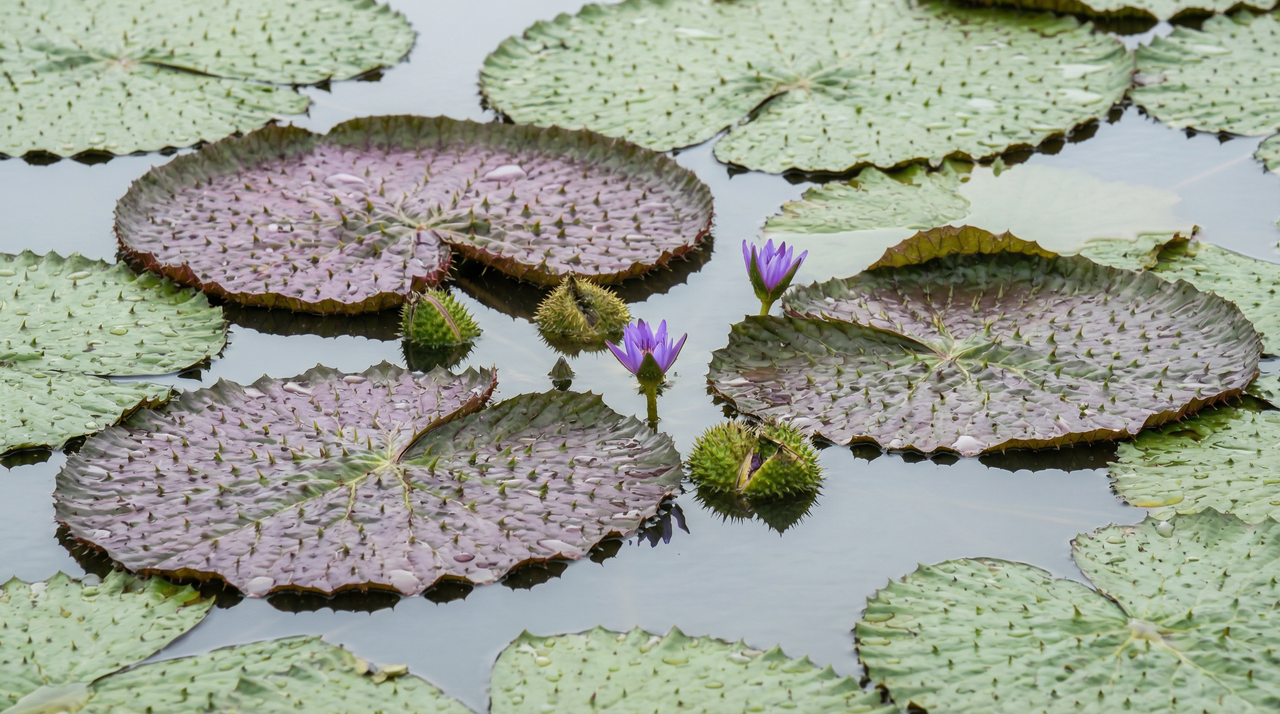
The first time I saw a mature fox nut plant in a pond, my honest reaction was that someone had crossed a Victoria water lily with a medieval weapon. The rhizomes root into muddy sediment, and the spiny petioles can stretch two to four meters before they reach the surface.[7][8] What floats on top are orbicular leaves that can run anywhere from thirty centimeters to two meters across, occasionally more, smooth and green on top but covered on the underside with dense, genuinely painful prickles.[9] I made the mistake of reaching under a leaf bare-handed during my first close inspection. I now mark my pond edges clearly and wear gloves without exception. Those prickles aren't incidental; they're an active defense against herbivores that might otherwise graze the canopy flat.
The flowers are something worth staying up for. Solitary blooms, white to pale pink and four to ten centimeters across, open on long stalks above the water surface at night during summer.[10][11] After pollination, the plant produces a globose, spiny fruit four to eight centimeters in diameter, and inside that armored capsule sit twenty to fifty hard, dark-seeded ovals, the makhana seeds that end up in your pantry.[12] Leaf size, spininess, and overall robustness vary considerably depending on water depth and season; plants in deeper Asian wetlands tend to be larger and more heavily armored.[13] That variability means a pond-grown specimen in Florida and a wild plant in a Bihar floodplain can look like different plants entirely, which catches a lot of first-time growers off guard.
Traditional and Cultural Uses Across Asia
The human relationship with this plant is genuinely old. Archaeological seeds appear at Neolithic sites associated with China's Hemudu culture dating to around 5000 BCE, and carbonized seeds from Bihar push the Indian record back to roughly 1000 BCE.[14][15] Written documentation follows in the Chinese Shennong Bencao Jing (around 200 BCE to 200 CE) and the Indian Charaka Samhita and Sushruta Samhita of roughly the same era.[16][17] It's the kind of continuity I find in lotus (Nelumbo nucifera), a plant I know well from Florida ponds: both have moved through food, medicine, and ritual across radically different cultures without ever losing their thread back to the wetland.
The two great classical systems read the seeds differently but complementarily. Traditional Chinese medicine, codified in Li Shizhen's sixteenth-century Bencao Gangmu, classifies makhana as sweet and neutral, a superior tonic that strengthens the spleen, kidneys, and lungs, consolidates essence, and addresses everything from diarrhea to leucorrhea.[18][19] Ayurveda and Unani systems describe it as cooling and astringent, used to balance vata-pitta, support urinary and kidney health, and serve as a nutritive aphrodisiac.[20] Neither tradition invented the other's use; they arrived at overlapping applications independently, which is the kind of convergence that tends to mean a plant is doing something real.
The living cultural role is harder to summarize because it's everywhere. In Hinduism, makhana symbolizes purity, prosperity, and immortality; it appears as prasad at Diwali and as a ritual offering during Chhath Puja.[21] In Nepal it's woven into Dashain and Tihar celebrations; in Assam it appears at Bihu; in Buddhist communities it reaches temple altars.[22] Indigenous groups including the Santhal and Munda use it for digestive complaints, kidney stones, and general vitality.[23] Tasting makhana at an Indian festival, knowing those seeds connect back to texts that are over two thousand years old, gives you a different relationship with your snack bowl.
Fun Facts About Fox Nut (Makhana)
The ecological setup is worth appreciating on its own terms. Fox nut thrives in shallow, still, warm water between twenty and thirty degrees Celsius, anchored in nutrient-rich mud, with those prickly leaves functioning as the plant's primary herbivore deterrent.[24] The night-blooming flowers add another layer of strangeness; if you're growing this plant in a backyard pond, set an alarm and go look. The seeds themselves, once dried, roasted, and popped, transform into something surprisingly light and nutty. I've found they need careful drying first; rush the roasting and you get a bitter center that gives the whole batch an off note.
Cultivated stands typically yield one to two and a half tonnes per hectare over a 150 to 180 day cycle, with well-managed ponds reaching three to four tonnes.[3][25] Bihar's Mithila region remains the economic center of global makhana production, a three-thousand-year tradition still running in the same wetlands. But wild populations are declining from habitat loss, pollution, and overharvesting, which is why I source exclusively from reputable cultivated stock. Growing fox nut deliberately, in a managed pond or wetland guild, isn't just an interesting horticultural project; it's a small act of connection to an aquatic ecosystem that is quietly disappearing.
Fox Nut Varieties and Sourcing
If you're expecting a seed catalog full of named cultivars, fox nut will surprise you. Euryale ferox has remarkably few formally registered varieties worldwide, and most of what growers call "varieties" are really traditional landraces shaped over centuries by local climate, pond conditions, and food preferences rather than formal breeding programs.[26][27] The domestication story goes back thousands of years in both India and China, and the entire selection effort has always centered on one thing: bigger seeds.[28] Not ornamental leaves, not growth habit, not cold hardiness. Just the seed.
Notable Varieties and Cultivars of Euryale ferox
In Bihar, where fox nut makhana production is most concentrated, growers work with a handful of traditional types and a small set of improved cultivars. The old landraces like 'Local Bihar' and 'Raja' are still grown, and the region also produces both thorny and thornless forms, with breeding selection pushing hard toward faster growth and heavier seed output.[29] More recently, cultivars like 'B-1' and 'B-2' have come out of Indian research programs, carrying seed sizes in the 12-18 mm range and yield potential around 2-3 tons per hectare.[29][30] Chinese selections tend to run larger still, with seeds reaching 20 mm and yields pushing toward 3-4 tons per hectare, adapted to temperate growing conditions rather than the tropical and subtropical ponds that Indian types prefer.[31][32] I've grown a few different batches and found that seed size differences between regional types become obvious once plants hit the flowering stage; it's the kind of thing you only notice after trialing material side by side in the same pond. The overall range across cultivar types and growing conditions runs from about 1.5 to 4 tons per hectare.[27]
Ongoing genetic diversity research is quietly building the foundation for more targeted improvement, including region-specific cultivars developed through hybridization and selection from natural variability.[26][33] The breeding mechanics are complex, but the practical takeaway for growers is simple: better cultivars are coming, just not yet.
Where to Buy Fox Nut Seeds and Plants
Fox nut is still genuinely exotic in the North American market. It's not widely cultivated commercially here, and you won't find it at a big-box garden center or even most specialty aquatic nurseries.[34][35] Seeds turn up occasionally through specialty online retailers and aquatic plant suppliers,[36][37] but live plants are almost nonexistent; shipping established aquatic specimens across continents is logistically difficult, and most sellers simply don't try. I've chased down seeds from several aquatic nurseries over the years and found germination rates and true-to-type performance to be highly variable, which is why I now stick with suppliers who specifically list it as a specialty water plant rather than treating it as an afterthought. Starting from seed is honestly the better path anyway. Before ordering, check your state's aquatic invasive species regulations. This is a lesson I learned the hard way after receiving a shipment I had to return because of local restrictions on non-native aquatic plants. The plant's commercial production and breeding programs remain firmly centered in India and China, and that's where the best seed stock still comes from.
Fox Nut Propagation and Planting Guide
If you've only ever seen fox nuts in their processed form, pale cream and smooth as river stones, the raw seeds will stop you in your tracks. Unprocessed Euryale ferox seeds are roughly spherical, typically around 1.5 cm across (though they range from 6 to 20 mm), and covered in 8 to 15 hard conical spines that make them look more like a medieval weapon than a future snack.[38][39] Once dried and mature, those seeds go dark brown to black. They look inert, and yet inside that armored coat, the plant has done something botanically unusual: nucellar polyembryony means a single seed can carry multiple embryos.[40] I've watched scarified seeds produce two or even three shoots simultaneously and found myself reassuring workshop participants that no, the seedling isn't broken, it's just giving you extras.
Understanding Fox Nut Seeds: Morphology, Dormancy, and Storage
That same thick, hard, impermeable seed coat responsible for the spiny drama is also what causes physical dormancy.[41] Water simply cannot penetrate the testa without help, which is why untreated fox nut seeds sitting in a tray will wait indefinitely rather than germinate. The good news is that same impermeability makes these seeds orthodox: they tolerate desiccation down to 5-10% moisture content and remain viable for 2 to 5 years under refrigerator temperatures and low humidity, with seed-bank conditions extending that window to a decade or more.[42] In practice, I dry my saved seeds thoroughly, seal them in paper envelopes inside an airtight container, and keep them at refrigerator temperature. Seeds held this way have germinated well for me across multiple seasons. If you're sourcing older stock, a tetrazolium assay or a simple germination trial on a wet paper towel after scarification will tell you quickly what you're working with.[43]
Seed propagation is the only reliably productive route with this plant. Vegetative options like rhizome division succeed less than 30% of the time, and tissue culture remains a research tool rather than a grower's option due to cost and complexity.[44][45] So: seeds it is, and that's genuinely fine once you understand the preparation they need.
Germination Timeline and Scarification Methods
Breaking physical dormancy requires either a hot-water soak (80 to 90°C, poured over the seeds and left to cool) or mechanical abrasion with sandpaper or a file at the hilum end of the seed.[46] Both work. I've used the hot-water method more often simply because it's faster when you're working with a batch of seeds, and seeing them swell visibly in the cooling water is a satisfying confirmation that the testa has been breached. Once scarified and placed in warm water, germination typically takes 10 to 20 days, occasionally stretching to 30, as long as water temperature holds at 25 to 30°C (77 to 86°F).[47] Below that range, germination stalls. Temperature is genuinely non-negotiable here.
Germination is epigeal, meaning the seedling lifts the seed coat above the substrate as it emerges. The first leaves look disarmingly like tiny water-lily pads, and first-time growers sometimes wonder if something went wrong. Nothing did. Once water temperatures are consistently in that 25 to 30°C sweet spot, those small pads transition into vigorous producers remarkably fast. The entire annual cycle from scarified seed to first flowering runs 3 to 6 months under optimal conditions, with seed harvest following in late summer to autumn.[48] That's a tight, single-season window, and it's one of the things that distinguishes fox nut from its slower water-lily relatives. If conditions are right, this plant moves.
Soil, Site, and Water Requirements for Fox Nut
Fox nut needs full sun, stagnant or slow-moving freshwater with salinity below 0.5 ppt, and a rich silty clay-loam substrate with 2 to 5% organic matter.[49][50] In a North American context, that means southern exposures, away from overhanging trees that drop debris and shade the surface. Think Bihar pond, not woodland water garden. The plant develops aerenchyma to transport oxygen internally, so it handles the low-oxygen mud that would stress most terrestrial crops, though that same tolerance has limits: Pythium and Fusarium root rots are real risks in poorly aerated or excessively deep water, and they're harder to address once established than they are to prevent through good site management.[51]
Water depth management during establishment matters more than most sources emphasize. Start seedlings in shallow water, then raise water levels gradually as plants mature.[47] I've found starting around 15 to 20 cm and stepping up by roughly 20 cm every few weeks mirrors the natural seasonal flood-pulse in Asian wetlands and avoids the transplant shock I saw in an earlier trial where I moved seedlings directly into deep water. On pH, aim for 6.5 to 7.5 in both water and substrate; the plant tolerates 5.5 to 8.5, but outside the optimal band you'll start seeing the leaf yellowing that signals iron chlorosis from reduced Fe availability.[52][53] I've made that mistake. Getting pH right before planting is far easier than troubleshooting yellow leaves mid-season. Pond bottoms should be prepared by desilting and incorporating 2 to 10 tonnes per hectare of well-decomposed organic manure; avoid synthetic fertilizers entirely to protect water quality.[54]
Spacing, Planting Technique, and Establishment
The leaves tell you everything you need to know about spacing. Mature fox nut leaves reach 1 to 2 m across on petioles 45 to 60 cm tall; crowd them and you get disease, shading, and competition that tanks yield.[49] The standard recommendation is 1 to 2 m between plants center to center, with 24 to 36 inches between rows in more structured plantings.[55] Commercial systems run anywhere from 10,000 to 60,000 plants per hectare depending on whether seeds are broadcast-sown or transplanted; canopy thinning is often necessary 1 to 2 months in to reduce shading and airflow problems.[56]
For most growers reading this, direct sowing is the preferred approach. Sow scarified seeds directly into prepared pond mud at 8 to 60 kg per hectare once water temperatures reach at least 21°C (70°F) after the last frost.[47] If you want more control, start seeds in shallow nursery trays or floating greenhouse systems and transplant at the 10 to 15 cm seedling stage, around 4 to 6 weeks after germination, but expect some transplant shock even with care.[57] In smaller container ponds or home water gardens, a planting density of roughly 4 to 6 plants per square metre is workable, though yields will be lower than in open-water systems. I've also used bamboo frames to support expanding leaves in container settings during the first few weeks, which prevents the larger leaves from folding over smaller ones and creating the shading problems you'd otherwise have to thin your way out of later.
Fox Nut Care Guide: Growing Euryale ferox Successfully
Fox nut is not a forgiving plant. Euryale ferox will tell you exactly what it needs, loudly and visually, and if you don't listen it will give you a pond full of stunted leaves and no seeds to show for your season. I say that not to discourage anyone but because I've watched too many growers treat this like a tough bog plant and wonder why it underperforms. Get the fundamentals right, and you're rewarded with one of the most spectacular aquatics you can grow.
Sunlight Requirements for Fox Nut
Full sun is non-negotiable. Euryale ferox needs at least 6-8 hours of direct sunlight daily for the leaves to reach their full size, for flowering to happen on schedule, and for seeds to develop.[58][59] Optimal photosynthesis happens between 1000 and 2000 µmol m⁻² s⁻¹, and dropping below that threshold shrinks productivity noticeably.[60] I once sited a test planting where a stand of bald cypress threw afternoon shade across the pond for roughly three hours a day. The leaves never exceeded about half the diameter I was seeing in the full-sun pond twenty meters away, and I harvested almost nothing. That experience made the 6-hour rule feel very real to me.
Pale yellowing foliage, stretched petioles, and undersized leaves are your signal that light is insufficient.[61] At the other extreme, intensities above 3000 µmol m⁻² s⁻¹ can trigger photoinhibition, and you'll see leaf scorch and wilting rather than the rich flat canopy you're after.[62] The plant's strategy of producing enormous overlapping floating leaves is itself an adaptation for maximizing light capture while crowding out competitors[63] — but that strategy only works when there's genuine full sun to capture. Site your pond accordingly before you plant anything.
Water Needs and Pond Management
This is an obligate aquatic. There is no damp-soil workaround, no partially flooded container shortcut. Euryale ferox requires consistent standing water throughout its entire life cycle, with zero drought tolerance, and its roots penetrate only 15-30 cm into nutrient-rich bottom mud.[64] The most common beginner mistake I see is starting seedlings at full pond depth. Don't. Young plants need just 5-10 cm of water, progressing to 30-50 cm during vegetative growth, and finally 50-100 cm once flowering begins; mature ponds typically settle around 1 m depth.[64][65] Managing that depth progression carefully in the early weeks makes the difference between vigorous plants and rotted seedlings.
Water chemistry matters as much as depth. Target pH 6.5-7.5, dissolved oxygen above 5 mg/L, salinity below 0.5 ppt, and electrical conductivity below 1.5-2.0 dS/m.[66] Regular monitoring is genuinely worth the effort; letting EC creep up or pH drift past 8.0 locks out nutrients and opens the door to algal blooms that compete directly with your plants. Occasional liming helps buffer fluctuating pH in ponds with heavy organic load.
Fertility and Nutrient Management
Fox nut is a heavy feeder. Plan on applying roughly 40-120 kg N, 20-60 kg P₂O₅, and 30-50 kg K₂O per hectare per season, typically at a 5:3:2 NPK ratio, combined with 5-15 tons per hectare of farmyard manure worked into the pond bottom before planting.[67][66] Phosphorus and potassium go in basally before planting; nitrogen is split, with about 25% applied at 30-40 days during vegetative growth and 50% at 60-70 days as flowering and seed development ramp up.[67]
Learning to read the leaves is genuinely useful here. Nitrogen deficiency shows first as chlorosis on older leaves with stunted growth overall; phosphorus deficiency turns foliage purplish with poor root development and low seed set; potassium deficiency scorches leaf margins; iron deficiency produces interveinal chlorosis on young leaves.[68] Once you see that purple tinge, you know phosphorus is the problem. I over-applied nitrogen early in my pond trials and watched the plants push out lush, dark, almost succulent foliage with almost no flowers to speak of — a textbook case of excessive N diverting energy away from reproduction. Follow the split-dose schedule, test your water before top-dressing, and start conservatively. Excess salinity from over-fertilization (above 1.5-2.0 dS/m EC) causes scorched edges and wilting that can easily be mistaken for disease.[68]
Seasonal Rhythm and Growth Cycle
The entire productive season unfolds in 4-6 months under warm conditions. Seeds germinate in 7-14 days, vegetative leaf expansion dominates the first 30-90 days, flowers open 60-120 days after planting (typically June through August in the Northern Hemisphere), and seeds mature fully around the 120-150 day mark.[64] Every one of those phases depends on sustained water temperatures of 20-35°C, with the sweet spot sitting at 25-30°C; drop below 15°C and growth stops entirely.[47] Plan your planting around that window and you'll always have enough growing season. Wait for it to warm past 21°C before putting anything in the water, and watch the flowering window closely because that's when management decisions matter most.
In its native range, Euryale ferox can live 3-5 years as a short-lived perennial, but in cultivation it commonly runs 1-2 years because harvest removes the seed-bearing fruits that would otherwise persist.[3] Treat it as an annual in cooler climates and you'll set the right expectations from the start.
Temperature Tolerance: Heat and Frost for Fox Nut
Fox nut has essentially no frost hardiness. It's reliably perennial only in USDA zones 9-11, with a minimum survival water temperature around 10°C (50°F).[69][70] Frost damage is fast and unmistakable: leaves blacken and go necrotic, stems wilt and curl, water-soaked translucent spots appear that quickly turn brown-black, and prolonged temperatures below -5°C can kill the rhizome outright.[71]
For growers in zone 8 and colder, the path forward is the same one I use for tropical water lilies: lift the tubers in fall before the first freeze, shake off excess mud, and store them in moist sphagnum or sand at 45-60°F in a cool, dark spot through winter. Replant the following spring only after water temperatures climb back to at least 21°C (70°F).[72] Survival rates in my experience are reasonable if you don't let the storage medium dry out completely. And a practical note: keep your planting contained to a managed pond. Euryale ferox isn't considered invasive in North America, but in warm climates with frost-free winters it can naturalize, and responsible cultivation means not giving it a route to natural waterways.[47]
Heat Tolerance and Summer Care
The ideal range of 25-30°C is also where things can get tricky in a hot summer. Once water temperatures push past 35°C, leaves wilt, chlorosis appears, flowers drop, and developing seed pods can be damaged.[73] The plant can tolerate brief spikes to 38-40°C through upregulated antioxidant responses, but flowering and seed development are the most sensitive stages, so a week of extreme heat right as buds are opening can devastate your yield. In my hotter summers I'll deploy 50% shade cloth over part of the pond by mid-morning and it does make a real difference in preventing flower drop, dropping water surface temperature by 3-5°C.[66] Deeper water (1-1.5 m) buffers temperature swings, and aeration helps keep dissolved oxygen from crashing on hot nights. Try to hold nighttime temperatures above 20°C and humidity above 70% during peak heat.[66]
Pruning, Maintenance, and Overwintering
Left alone, Euryale ferox will pile leaf on top of leaf until the pond is a wall-to-wall mat of spiny vegetation with surprisingly few seeds beneath it. Thin plants to 1-2 m spacing, remove damaged or diseased leaves while keeping 60-70% of foliage intact, and pinch weak flower buds to concentrate the plant's energy on fewer, better seeds. That selective pinching can increase seed size and yield by 15-20%.[74] My early plantings were crowded disasters; once I started thinning ruthlessly, seed production improved noticeably season over season.
Hand-pollination during the brief nighttime flowering window is worth attempting if you want to maximize seed set, especially in smaller ponds where insect pollinators may not be active at the right hour.[47] Keep an eye on the water for aphids, beetles, and snails; neem oil, Bacillus thuringiensis, and manual removal are your main tools in an aquatic system where chemical inputs carry obvious risks. Monitor water depth and quality consistently throughout the season because both tend to drift quietly until something goes wrong. This is a plant that rewards weekly attention rather than set-and-forget management.
Fox Nut Harvesting and Post-Harvest Processing
When to Harvest Fox Nuts: Timing, Growth Cycle, and Maturity Indicators
From sowing to harvest, fox nut runs a 120-180 day cycle.[75][76] Plants typically flower somewhere between June and August, then take another 40-60 days for seeds to fully mature, depending on water temperature.[75] That puts the main harvest window from July through October.[77]
After a few seasons of watching my pond, I've learned to trust the plant more than the calendar. The pods shift from green to a dark, woody brown, firm up noticeably, and reach about 4-6 cm across.[77][78] The most reliable cue for me is buoyancy: a ripe pod develops internal air pockets and floats when you nudge it gently with a pole. In a warm, humid summer, maturation can move faster than the textbook suggests, so check your pods weekly once flowering winds down.
Harvesting Techniques for Aquatic Fox Nut Pods
Pods are collected manually using long bamboo poles fitted with rakes or scoops, and the work happens at the water's surface in early morning or late evening to avoid heat stress on both the harvester and the seeds.[79][80] I'll be honest about the physical reality: working chest-deep in warm water for a couple of hours is genuinely demanding, and I've sized my planting area to what one person can comfortably manage before the day heats up. For backyard ponds, that's the honest constraint to design around.
Intensively managed ponds with proper pruning and nutrition yield significantly more seed biomass than unmanaged plantings.[81][76] Cultivated strains produce seeds up to 20 mm wide; wild types run only 5-10 mm.[8] After collection, seeds are threshed from the pods, cleaned, and dried down from roughly 45% moisture to 10-12%, either by sun-drying or in a controlled dryer at 40-60°C.[82] I ruined my first batch by skipping careful drying; the seeds went musty fast. Getting that moisture level right is the step that separates shelf-stable dried fox nut from compost. From there, seeds are roasted at 200-250°C until they pop, then stored in airtight containers at 5-15°C and below 60% humidity, where they'll keep for 12-18 months.[83][84] I never push that humidity threshold; I've seen properly popped makhana turn disappointingly soft within days in a humid kitchen.
Yield, Flavor Profile, and Post-Harvest Processing of Fox Nuts
The roasting step is where chemistry takes over. High heat drives Maillard reactions that generate pyrazines, furans, and 2-acetyl-1-pyrroline, producing the nutty, earthy, caramelized aroma with distinct popcorn notes that defines good makhana. Researchers have identified over 50 volatile compounds contributing to that profile.[85][86] The texture is light and airy because the high starch content expands dramatically during roasting, and the flavor itself sits in an interesting zone: subtly sweet and mildly umami from glutamic acid and reducing sugars, with a clean, low-bitterness finish that makes it genuinely neutral enough for both savory spicing and sweet preparations.[87][8]
Terroir matters more than I expected. Bihar's alkaline wetlands consistently produce larger seeds with a noticeably nuttier, crisper result after popping; the "bold" Bihar varieties outperform smaller regional types in both texture and aroma intensity.[88] Comparing store-bought Bihar-sourced makhana against seed I grew in my own less alkaline pond made that difference unmistakably clear. Each mature pod holds 10-20 seeds measuring up to 2-3 cm across,[77] so even a modest pond harvest adds up quickly once the processing rhythm becomes familiar.
Fox Nut Preparation and Uses
Culinary Uses and Traditional Preparation of Makhana
Every part of Euryale ferox has some documented traditional use, but the seeds are the only portion most people will ever cook with.[89][90] And even the seeds need real processing before they become the light, crunchy makhana you find in a bag at the grocery store. The traditional sequence involves washing the freshly extracted seeds, soaking them eight to twelve hours (which cuts phytic acid and tannins by fifty to eighty percent), drying them over two to three days, then dry-roasting or popping them until they expand into that characteristic airy sphere.[89][91][85] I've done this with workshop groups who were skeptical right up until the pop. The transformation from a dense, greenish-grey pebble into something as light as a rice cake never fails to impress.
Once properly popped, fox nut has a mild, faintly nutty flavor with just enough neutral sweetness that it absorbs whatever you throw at it, savory or sweet.[92] I've made kheer (a creamy milk pudding) and also tossed them in ghee, cumin, and chili powder for a spiced chivda snack, and the same batch of seeds performed beautifully in both. In Indian kitchens they go into laddoo, halwa, curries, festival sweets, and roasted fox nut snack mixes, and they hold a special place as a fasting food during Navratri and Diwali because they're considered acceptable during Hindu vrat observances.[92][93][90]
One thing I want to flag strongly for anyone foraging rather than buying packaged seeds: positive identification matters enormously here. Euryale ferox is identifiable by its spiny leaf undersides, floating aquatic habit, purple flowers, and Asian native range, but it shares the "large floating-leaf aquatic" profile with plants that are outright dangerous.[94] Horse chestnut seeds contain aesculin, which is highly toxic, and they've caught people off guard before.[95][96] After years of working with aquatic edibles, I will not bend on this: label your harvest, know your plant before you touch it, and if there's any doubt, don't pop it.
Medicinal Preparations in Ayurveda and Traditional Chinese Medicine
In Ayurveda, fox nuts are known as Shuktichatu or makhana and are classified as cooling and digestive, with traditional use for diarrhea, fever, and edema. In Ayurvedic practice, the daily medicinal dosage is typically divided across one or two administrations.[90][97] I respect that range and recommend sticking to it; if you're using makhana therapeutically rather than as food, a qualified Ayurvedic practitioner is worth consulting. Traditional Chinese Medicine takes a related but distinct angle, calling the seeds Qian Shi and using them to strengthen the spleen, kidneys, and bladder, and as a demulcent for coughs.[94][90] Leaves have been used for astringent and cooling properties in folk medicine, and roots appear in preparations for diuretic and anti-diabetic effects, though these are supporting characters in the plant's medicinal story, not the leads.[90] What I find quietly remarkable is that the same seed we pop for snacks and scatter over kheer is the one both traditions reach for when restoring digestive balance after illness.
Non-Food and Functional Uses
The plant's usefulness doesn't stop at the kitchen or the apothecary. Stems have traditionally provided fiber for textiles and cordage, and dried plant parts serve as fuel in rural communities where the plant grows abundantly.[98] From a design standpoint, Euryale ferox also integrates productively into rice polycultures, where intercropping in shallow paddies reduces weed pressure and increases on-farm diversity while the plant's nutrient cycling supports both seed yields and broader wetland health.[99] Growing aquatic plants like fox nut has genuinely changed how I think about pond guilds. Every layer, from the muddy substrate to the floating canopy, is doing something. The seeds just happen to be delicious too.
Fox Nut Health Benefits and Medicinal Uses
What I find fascinating about fox nut is that its reputation as a healing food isn't a recent wellness trend. This is a plant that healers in two of the world's oldest medical traditions independently figured out was worth cultivating and prescribing, long before anyone had heard of a polyphenol.
Traditional Uses in Ayurveda and Traditional Chinese Medicine
In Ayurveda, Euryale ferox seeds have been prescribed for diarrhea, dysentery, and urinary disorders, and as a tonic for kidney weakness and spleen-kidney deficiency. Traditional Chinese Medicine arrived at strikingly similar conclusions, classifying the seed as Qian Shi and using it for much the same restorative, tonifying purposes.[97][100][101][102] That kind of cross-cultural convergence tells me something. Two sophisticated medical traditions, separated by geography and philosophy, both landed on the same plant for digestive and restorative support.
That said, I always tell clients to hold the traditional data and the modern research data in different hands. No large-scale randomized controlled trials have been conducted on Euryale ferox in humans.[103] What we have is centuries of empirical use plus a growing body of preclinical work. The preclinical signals are genuinely exciting; they just aren't yet human clinical evidence.
Key Phytochemicals and Bioactive Compounds
The seeds contain a rich suite of flavonoids, including kaempferol, quercetin, rutin, vitexin, and isovitexin, alongside phenolic acids such as gallic, ferulic, and ellagic acids, beta-glucan polysaccharides, trace alkaloids, and terpenoids like beta-sitosterol.[104][105][106] The leaves add tannins, saponins, and hyperoside that contribute additional anti-inflammatory and hepatoprotective activity.[107] Total phenolic content across extracts ranges from 10 to 50 mg gallic acid equivalents per gram, with DPPH free-radical scavenging IC50 values frequently below 100 µg/mL, which is a meaningful potency benchmark.[108][109]
These levels aren't fixed, though. Metabolite concentrations peak in mature post-monsoon seeds and vary substantially with water quality, soil geochemistry, geography, and how the crop was grown.[110][111] After years working with aquatic edibles, I've noticed that seeds from cleaner, organically enriched ponds consistently taste sweeter and pop with better texture. The water the plant grows in isn't just a habitat detail; it's shaping the chemistry of what you eat.
Nutritional Profile of Fox Nut Seeds
Per 100 grams of raw seeds, you're looking at roughly 347 to 380 calories, 77 to 78 grams of carbohydrates, 9 to 15 grams of protein (with essential amino acids including lysine and methionine), up to 15 grams of dietary fiber, less than 1 gram of fat, and 5 to 10 percent resistant starch.[112][113][114] The B-vitamin and mineral profile is equally solid: thiamine, riboflavin, niacin, and pyridoxine, plus meaningful amounts of potassium, phosphorus, magnesium, calcium, iron, and zinc.[115][113]
I think of popped makhana as what popcorn would be if popcorn actually tried. The resistant starch and flavonoids together support a low glycemic response and blood-sugar regulation, and the high-fiber, low-fat profile explains why the seeds keep you satisfied without weighing you down.[116][117] One early mistake I made was deep-frying them, which I'd picked up from a recipe that sounded appealing. It produced a crunchier snack and a less nutritious one; high heat degrades antioxidants and breaks down resistant starch. Low-temperature roasting preserves the bioactives and still delivers that satisfying crisp.[118][119]
Pharmacological Research and Potential Benefits
The strongest preclinical evidence clusters around antioxidant and anti-inflammatory activity. The phenolic compounds and flavonoids in fox nut activate the Nrf2 pathway to neutralize free radicals,[120][121] while separate research demonstrates inhibition of the NF-κB pathway and a measurable reduction in pro-inflammatory cytokines like TNF-α and IL-6.[122][123] For a plant people eat as a snack, those are notable mechanisms.
Antidiabetic potential is also well-supported at the preclinical level, through alpha-glucosidase inhibition, AMPK activation, and improved insulin sensitivity, with hepatoprotective effects against chemical-induced liver damage demonstrated alongside.[124][125] Beyond those core areas, preliminary research points to immunomodulatory polysaccharides, neuroprotective activity against beta-amyloid toxicity, antimicrobial action against both gram-positive and gram-negative bacteria, and pro-apoptotic effects in cancer cell lines.[126][127][128][129] As someone who reviews this literature regularly, I find the Nrf2 and NF-κB data genuinely compelling. But I'm careful with clients: compelling preclinical signals are not a reason to treat fox nut as medicine for a specific condition until human trials confirm what the cell studies suggest.
Safety Profile and Precautions
Fox nut has a reassuring safety story. Centuries of traditional use, animal study LD50 values above 2000 mg/kg, regulatory affirmation from India's FSSAI, and no documented cases of poisoning from properly processed seeds all point toward a food with a genuinely low risk profile.[130][131][132][133] Compared to common seeds I recommend to clients, like sunflower or pumpkin, fox nut is among the gentler options digestively, with a low allergenicity profile that makes it accessible for most people.
The real risks are mostly about sourcing and preparation. Raw seeds contain tannins, phytic acid, and husk alkaloids that traditional processing, specifically dehulling, roasting, and popping at controlled temperatures, significantly reduces.[134] Seeds grown in polluted water can accumulate lead, cadmium, and arsenic, and improperly stored seeds carry aflatoxin risk.[135][136] Buy from reputable suppliers who source from clean, managed growing systems and store the popped seeds properly. That eliminates virtually all practical concern.
Allergic reactions are rare but documented as IgE-mediated responses. The seeds may have mild hypotensive effects, so anyone on antihypertensives should be aware, and theoretically the vitamin K content could interact with anticoagulant medications, though specific clinical evidence for makhana is limited.[137][138][139] Pregnancy and lactation safety data simply doesn't exist yet, so caution is the sensible default. For most healthy adults, 20 to 50 grams of popped seeds daily is the accepted dietary range; traditional medicinal preparations use 3 to 6 grams of seed powder per day.[140][141]
Fox Nut Pests and Diseases
Fox nut is one of those plants that looks impervious from a distance. Those enormous, prickle-studded leaves floating on the water surface read as formidable, and in some ways they are. But get close, check the undersides, probe the roots, and you'll find that Euryale ferox is surprisingly vulnerable once pests and pathogens find a foothold in the humid, still-water conditions it calls home.
Common Insect Pests of Euryale ferox
The insect pressure on fox nut falls into two distinct guilds. Sap-suckers, primarily whiteflies (Bemisia tabaci) and various aphid species, work quietly and build populations fast in warm, sheltered conditions. Chewing insects are noisier about their damage: aquatic beetles from the family Hydrophilidae, leaf beetles in the genera Galerucella and Oulema, leaf miners, stem borers, caterpillars, and apple snails all take visible bites out of foliage and stems.[142][143] I've managed water-lily leaf beetles in the same ponds where I grow Euryale, and the damage profile is similar enough that new growers often conflate the two; the tell is that fox nut chewers tend to hit the upper leaf surface in a way that water-lily beetles usually don't.
These aren't cosmetic problems. Chewing insects have caused up to 30% foliage loss in controlled trials, and stem borers attacking rhizomes can quietly contribute another 20 to 30% yield reduction before you realize what's happening.[144][145] The plant doesn't have strong chemical defenses to fall back on, which is part of why it's so exposed. Some varieties do have waxy leaf surfaces that slow aphid colonization, and cultivars like 'Swamp Makhana,' 'Swamp Giant,' and certain Bihar accessions from India show noticeably better resistance overall.[146][147] I trialed a few Indian-sourced lines a couple of seasons ago and observed markedly less aphid pressure on the waxy-leaved types, which matches the literature. Breeding programs in India and China are actively pulling genetic material from wild Euryale populations to push resistance further, so the cultivar situation should improve over time.[147][148]
Major Diseases and Their Management
The disease list for fox nut is long and reads like a who's-who of fungal trouble: leaf spots from Alternaria, Cercospora, Septoria, and Colletotrichum gloeosporioides; root and curd rots driven by Pythium, Phytophthora, and Sclerotium rolfsii; blast similar to Pyricularia oryzae; bacterial soft rot from Erwinia and Pseudomonas; and bacterial leaf blight caused by Xanthomonas spp.[149][150][151] Viral disease, on the other hand, is rarely documented; occasional mosaic symptoms show up in the literature, but it's not a primary concern for most growers.[149]
After losing an entire bed of young fox nut to undetected root rot one humid Florida summer, I now check dissolved oxygen weekly. When it drops below 5 mg/L, disease incidence spikes. Stagnant water, crowding, and high humidity create the perfect conditions for root rot and leaf-spot complexes to take hold.[152][153] I also learned to check the oldest floating leaves first when I'm scouting: leaf-spot lesions usually show up there before they appear on newer growth, and they're easy to misread as a nutrient deficiency until you notice the characteristic concentric rings. Commercially available disease-resistant cultivars are still limited, though Indian breeding programs have identified accessions with partial resistance to Alternaria leaf spot and root rot that are worth seeking out.[148][151]
Integrated Pest and Disease Management Strategies
My approach to pest and disease management in any aquatic system starts with the pond itself. Cultural fixes come first: proper spacing, reduced planting density, and water-quality maintenance do more preventative work than any spray. For biological control, ladybugs and predatory spiders handle a surprising share of sap-sucker pressure, and I avoid broad-spectrum insecticides on aquatic systems because they kill the dragonfly nymphs that naturally keep caterpillar populations in check. Neem-based biopesticides are my fallback when biological allies aren't keeping up. Synthetic options like carbaryl, mancozeb, and carbendazim exist in the literature as last resorts, but I've rarely needed them, and I'm cautious about their effects on the wider pond guild.[145][154] A small solar-powered fountain has become standard equipment in any pond where I'm growing Euryale; keeping water moving and dissolved oxygen above 5 mg/L cuts root rot incidence dramatically. Vigilant monitoring, water-quality discipline, and thoughtful variety selection are what separate a productive fox nut planting from a frustrating one.
Fox Nut in Permaculture Design
Most of the aquatic plants I work with in my Florida designs are adaptable enough to forgive a misstep or two. Fox nut is not one of them. Before you start thinking about pond guilds or seed yields, you need to know whether your site can even support this plant, because the climate parameters here are non-negotiable in a way that most temperate aquatics simply aren't.
Climate Requirements and USDA Hardiness Zones
Euryale ferox is a creature of the Asian monsoon, shaped by heat, humidity, and water. It's reliably perennial only in USDA zones 9-11, with a cold floor around 10°C (50°F) and zero tolerance for frost or anything below 5°C (41°F).[155][156][47] I think of it like tropical water lilies in this respect: both collapse below that 10°C threshold, so if your water temperatures drop there even briefly, the season is over. In zones 7-8 you can attempt it as an annual or with winter protection, but you're working against the biology the whole time.
The productive sweet spot sits between 25-30°C, with germination requiring 20-25°C and heat stress kicking in above 35°C; sustained temperatures over 40°C will noticeably reduce seed yields.[157][158] Beyond temperature, the plant needs water, and a lot of it. Annual precipitation needs to exceed 1,000-1,500 mm, or you're committing to heavy managed irrigation.[2][159] Optimal water depth is 0.5-3 m, with 1-2 m in static or slow-moving freshwater over a muddy substrate being the ideal.[2] Relative humidity in the 70-90% range suits it well, and it performs best in freshwater only; any salinity intrusion will cause problems.[8][160]
In a North American context, this narrows the realistic outdoor range to Florida, coastal Texas, and parts of Southern California, with aquaponics systems or heated greenhouse ponds as the viable option for everyone else.[161][35] Those controlled environments also happen to be the most responsible way to grow it, which connects directly to the invasive risk I'll address below.
Ecosystem Functions and Services
What I love about integrating fox nut into a pond system is how much it does beyond producing food. It's a genuine dynamic accumulator for aquatic environments, absorbing excess nitrogen and phosphorus from the water column and actively mitigating eutrophication.[162][163] In the Central Florida ponds where I've run aquatic guilds, I've watched the dense floating mats suppress algae blooms in a way that open-water systems simply can't match. The research confirms why: the plant is pulling nutrients that algae would otherwise consume. It also takes up heavy metals including cadmium and lead, which matters if you're working with any restored or degraded water body.[162]
The habitat services stack up quickly from there. Decomposing biomass builds wetland soil fertility over time, the extensive root systems stabilize sediments and buffer shoreline erosion, and the physical structure of the leaf mats creates shaded microhabitats for fish, amphibians, invertebrates, and waterfowl.[164][99] Nitrogen-fixing bacteria in the rhizosphere contribute to nutrient cycling in low-nutrient wetlands as well, which means the plant is enriching its own environment rather than just extracting from it.[165]
Pollination is worth understanding if seed production is your goal. The flowers are protogynous, meaning the female phase opens first, and they're primarily visited by beetles, bees, flies, and aquatic insects.[166] Peak flowering happens during summer monsoon conditions: 25-35°C, humidity above 70%, full sun, and 1-2 m water depth.[166][167] During one low-insect summer in my garden, I started hand-pollinating with a soft brush and saw noticeably better seed set. That technique can boost yield by 20-30%, which is meaningful when you've invested the whole growing season in a plant this demanding.[152]
Aquatic Guilds, Forest Layers, and Companion Planting
In aquatic permaculture design, fox nut occupies the floating surface layer the same way a canopy tree occupies the top of a food forest. Its dense leaf mats shade the water column, suppress submerged vegetation, and combine allelopathic chemistry with aggressive nutrient uptake to dominate the surface zone.[168][99] That competitive dominance is a design feature, not a problem, as long as you're intentional about what you pair with it.
The companions I've had success with in Florida demonstration ponds are lotus (Nelumbo nucifera), water lilies (Nymphaea spp.), and cattails (Typha spp.) positioned at the margins where the canopy opens up.[169][99] Common carp fit naturally into these guilds, benefiting from the shade and habitat cover while the tubers and seeds supplement their diet; the fish in turn disturb sediment in ways that can accelerate nutrient cycling. It's the kind of multi-layered, mutually reinforcing pond design that permaculture does well when the species are matched to the site.
The caution I'd give any designer considering fox nut: it can self-seed aggressively, and its invasive potential in non-native warm wetlands is documented and real.[161] I only ever grow it in lined ponds or systems I can fully drain and manage. Responsible permaculture means matching plants to managed systems, and before you introduce Euryale ferox anywhere near natural waterways in the southern U.S., consult your local regulations. The plant earns its place in a well-designed pond guild, but escape into the broader watershed is not a risk worth taking.
Rethinking What a Permaculture Pond Could Feed
I still remember pulling the first popped makhana out of the pan and thinking: this came from that? From the spiny, prehistoric-looking thing taking over my test pond in ninety-degree heat? There's something quietly humbling about a plant that's been feeding people since the Neolithic, that holds up whole regional economies in Bihar, and that most of my colleagues have never heard of. I keep growing it partly for the harvest, and partly just to have it nearby.
Sources 169
- Euryale ferox - Flora of China ↩
- Foxnut (Euryale ferox Salisb.): A Potential Aquatic Cash Crop ↩
- Cultivation of Makhana (Euryale ferox Salisb.) ↩
- Intensive Cultivation Practices of Makhana (Euryale ferox) in India ↩
- Importing Plants and Plant Products into the United States ↩
- Food Import Guidance ↩
- Euryale ferox - Kew Science ↩
- Euryale ferox ↩
- Euryale ferox ↩
- Euryale ferox - Wikipedia ↩
- Euryale ferox (Gorgon Plant) ↩
- The Genus Euryale in India ↩
- Variability in leaf morphology of Euryale ferox in relation to water depth and season ↩
- Archaeological Evidence of Euryale ferox in Ancient China ↩
- History and Cultivation of Makhana in India ↩
- The Divine Farmer's Materia Medica: A Translation of the Shen Nong Ben Cao Jing ↩
- Ayurvedic Uses of Phala Makhana ↩
- Ben Cao Gang Mu (Compendium of Materia Medica) ↩
- Euryale ferox in Traditional Chinese Medicine ↩
- Traditional Uses of Makhana in Ayurveda and Siddha Medicine ↩
- Cultural Significance of Fox Nuts in Bihar, India ↩
- Traditional Uses of Makhana in Nepalese Communities ↩
- Ethnobotanical Survey of Euryale ferox in Bihar, India ↩
- Makhana: Nutritional, Nutraceutical, and Health Benefits ↩
- Makhana Production in Bihar ↩
- Genetic Diversity and Population Structure of Euryale ferox ↩
- Makhana (Euryale ferox Salisb.): A Potential Aquatic Crop for India ↩
- Fox-nut (Euryale ferox) ↩
- Cultivation and Varieties of Fox Nut (Euryale ferox) ↩
- Varietal Improvement of Makhana (Euryale ferox Salisb.) ↩
- Euryale ferox Varieties in China: Breeding and Adaptation ↩
- Makhana Cultivation in Bihar: Cultivars and Production ↩
- Breeding and Improvement of Makhana Varieties in India ↩
- Euryale ferox - Foxnut ↩
- USDA Plants Database: Euryale ferox ↩
- Euryale Ferox Seeds - Fox Nut Lily ↩
- Euryale ferox (Makhana) Seeds ↩
- Plants of the World Online: Euryale ferox ↩
- Flora of China: Euryale ferox ↩
- Embryology of Euryale ferox Salisb. ↩
- Seed Morphology of Aquatic Angiosperms: Euryale ferox ↩
- Seed dormancy, germination and storage of Euryale ferox in an aquatic plant (Nymphaeaceae) ↩
- Germination and Dormancy in Euryale ferox ↩
- Cultivation and Propagation of Euryale ferox ↩
- Makhana (Euryale ferox) Cultivation Guide ↩
- Propagation of Euryale ferox: A Review ↩
- Growing Euryale ferox: The Fox Nut Plant ↩
- Cultivation of Fox Nut (Euryale ferox) - ICAR ↩
- Cultivation of Euryale ferox: A Review ↩
- Cultivation of Makhana (Euryale ferox Salisb.) ↩
- Flood Tolerance Physiology of Aquatic Plants: Euryale ferox ↩
- Makhana (Euryale ferox) Production Technology ↩
- Nutrient Dynamics and pH Effects in Euryale ferox Cultivation ↩
- Package of Practices for Makhana Cultivation ↩
- Euryale ferox Cultivation Guide ↩
- Makhana Cultivation Practices in India ↩
- Makhana Cultivation Practices ↩
- Growing Tropical Water Lilies and Similar Aquatics ↩
- Foxnut (Euryale ferox) Cultivation ↩
- Cultivation of Euryale ferox ↩
- Euryale ferox: Cultivation and Utilization ↩
- Photoinhibition and Repair Mechanisms in Euryale ferox under High Light Stress ↩
- Euryale ferox - An Overview ↩
- Makhana Cultivation Practices ↩
- Euryale ferox: Cultivation and Production ↩
- Package of Practices for Cultivation of Makhana (Euryale ferox) ↩
- Package of Practices for Cultivation of Makhana ↩
- Nutrient Management in Fox Nut (Euryale ferox) Cultivation ↩
- Missouri Botanical Garden PlantFinder ↩
- Euryale ferox Salisb. ↩
- Cold Damage in Water Plants ↩
- Frost Protection Techniques for Pond Plants ↩
- Heat Stress Responses in Euryale ferox: Antioxidant Enzyme Activities ↩
- Cultivation of Makhana (Euryale ferox Salisb.) ↩
- Cultivation Practices of Makhana (Euryale ferox Salisb.) ↩
- Cultivation of Foxnut (Euryale ferox): A Review ↩
- Cultivation and Processing of Makhana (Euryale ferox Salisb.) ↩
- Cultivation and harvesting of Euryale ferox ↩
- Makhana (Euryale ferox) Cultivation and Processing ↩
- Harvesting Techniques for Fox Nuts in Wetland Cultivation ↩
- Aquatic Plants for Food and Water Management ↩
- Post-Harvest Management of Makhana (Euryale ferox Salisb.) ↩
- Post-Harvest Management of Makhana ↩
- Storage Conditions for Fox Nuts (Euryale ferox) ↩
- Volatile Compounds and Sensory Characteristics of Roasted Fox Nuts (Euryale ferox) ↩
- Volatile Compounds in Roasted Makhana and Their Contribution to Aroma ↩
- Nutritional and Sensory Properties of Makhana (Euryale ferox) ↩
- Traditional Processing and Cultivation of Makhana in Bihar, India ↩
- Fox Nut (Makhana) Processing and Nutritional Benefits ↩
- Journal of Ethnopharmacology - Ethnobotanical Review ↩
- Preparation of Euryale ferox Seeds: Traditional and Modern Methods ↩
- Journal of Food Science and Technology - Sensory and Nutritional Evaluation of Makhana ↩
- Makhana in Traditional Indian Cuisine - Ministry of Food Processing Industries, India ↩
- Flora of China - Euryale ferox ↩
- Horse Chestnut Toxicity - Poison Control ↩
- Trapa natans Identification - USDA ↩
- Ayurvedic Uses and Dosage of Makhana (Euryale ferox) ↩
- Euryale ferox - Useful Tropical Plants ↩
- Aquatic Plants for Permaculture ↩
- Traditional Uses of Makhana in Indian Folk Medicine ↩
- Euryale ferox Salisb.: A comprehensive review on its ethnopharmacology, phytochemistry, and pharmacological activities ↩
- Traditional Chinese Medicine Database: Euryale Seed ↩
- Euryale ferox Salisb.: A comprehensive review on its phytochemistry and pharmacological potential ↩
- Phytochemical and pharmacological profile of Euryale ferox Salisb.: A review ↩
- Antioxidant flavonoids from seeds of Euryale ferox ↩
- Flavonoids from Euryale ferox and their biological activities ↩
- Secondary metabolites from leaves of Euryale ferox and their bioactivities ↩
- Bioactive compounds and antioxidant properties of Euryale ferox seeds ↩
- Phytochemical investigation and antioxidant activity of Euryale ferox Salisb. (fox nut) ↩
- Phytochemical Profile of Euryale ferox Salisb. Seeds: A Review ↩
- Geographical Variation in Bioactive Compounds of Fox Nuts ↩
- Nutritional Composition of Makhana (Euryale ferox Salisb.) Seeds ↩
- Nutritional Composition of Fox Nut (Euryale ferox): A Review ↩
- Indian Food Composition Tables (IFCT) 2017 - National Institute of Nutrition ↩
- Nutritional Composition of Makhana (Euryale ferox Salisb.) Seeds ↩
- Phytochemical Components and Health-Promoting Effects of Euryale Ferox Salisb: A Review ↩
- Resistant Starch Content in Traditional Indian Foods Including Makhana ↩
- Cultivation Practices and Nutritional Variability of Euryale ferox ↩
- Nutritional Composition and Health Benefits of Euryale ferox (Makhana) ↩
- Antioxidant and Anti-inflammatory Properties of Euryale ferox Seed Extracts ↩
- Antioxidant activity of phenolic compounds from Euryale ferox and Nrf2 pathway activation ↩
- Anti-inflammatory effects of Euryale ferox seed extract via NF-κB inhibition ↩
- Anti-inflammatory Effects of Euryale ferox via NF-κB Pathway Suppression ↩
- Antidiabetic and Hepatoprotective Effects of Euryale ferox ↩
- AMPK-Mediated Anti-Diabetic Effects of Euryale ferox in Vitro ↩
- Immunomodulatory Polysaccharides from Euryale ferox in RAW 264.7 Macrophages ↩
- Neuroprotective Potential of Euryale ferox in Alzheimer's Disease Models ↩
- Antimicrobial Activity of Euryale ferox Against Pathogenic Bacteria ↩
- Induction of Apoptosis in HepG2 Cells by Euryale ferox Extracts ↩
- Euryale ferox (Makhana): Nutritional and Health-Promoting Perspectives ↩
- Phytochemical and Pharmacological Profile of Euryale ferox Salisb.: A Review ↩
- Safety Assessment of Euryale ferox Seeds ↩
- Safety assessment of Euryale ferox seeds in experimental animals ↩
- Nutritional Composition and Anti-Nutritional Factors in Euryale ferox Seeds ↩
- Heavy Metal Contamination in Makhana (Euryale ferox) from Bihar, India ↩
- Aflatoxin Contamination in Stored Makhana Seeds ↩
- Hypersensitivity to Euryale ferox (Makhana): A Case Report ↩
- Makhana (Euryale ferox): Nutritional Profile and Health Benefits ↩
- Euryale ferox Salisb.: an Indian aquatic plant - a review of recent pharmacological studies ↩
- Traditional Uses and Toxicology of Euryale ferox ↩
- Trapa natans (Water Caltrop) - Invasive Species Compendium ↩
- Pest Management in Makhana Cultivation ↩
- Insect Pests of Fox Nut and Management Strategies ↩
- Diseases and Pests in Fox Nut Aquaculture ↩
- Integrated Pest Management in Makhana (Euryale ferox) Cultivation ↩
- Guide to Aquatic Plant Pests ↩
- Breeding for Resistance in Aquatic Crops: Focus on Euryale ferox ↩
- Breeding Strategies for Euryale ferox in India ↩
- Diseases of Aquatic Plants: Focus on Euryale ferox ↩
- Diseases of Makhana (Euryale ferox Salisb.) and Their Management ↩
- Fungal Diseases of Makhana and Their Management ↩
- Cultivation and Disease Management of Makhana (Euryale ferox) ↩
- Aquatic Plant Diseases: Root Rot in Water Plants ↩
- Sustainable Practices for Euryale ferox Farming ↩
- Euryale ferox - Missouri Botanical Garden Plant Finder ↩
- Euryale ferox - North Carolina Extension Gardener Plant Toolbox ↩
- Thermal Requirements of Aquatic Plants: Euryale ferox ↩
- Makhana Cultivation Practices ↩
- Makhana Production and Water Management ↩
- Euryale ferox - Useful Tropical Plants Database ↩
- Suitability of Exotic Aquatic Plants for US Aquaculture ↩
- Aquatic Plants for Phytoremediation of Heavy Metals in Water Bodies ↩
- Nutrient Dynamics of Euryale ferox in Wetland Ecosystems ↩
- Role of Macrophytes in Wetland Restoration and Management ↩
- Microbial Communities in Rhizosphere of Water Lilies ↩
- Pollination Biology of Euryale ferox Salisb. (Nymphaeaceae) ↩
- Phenology and Life Cycle of Aquatic Plants in China ↩
- Ecological Role of Euryale ferox in Aquatic Ecosystems ↩
- Integrated Aquaculture with Floating Aquatic Plants ↩