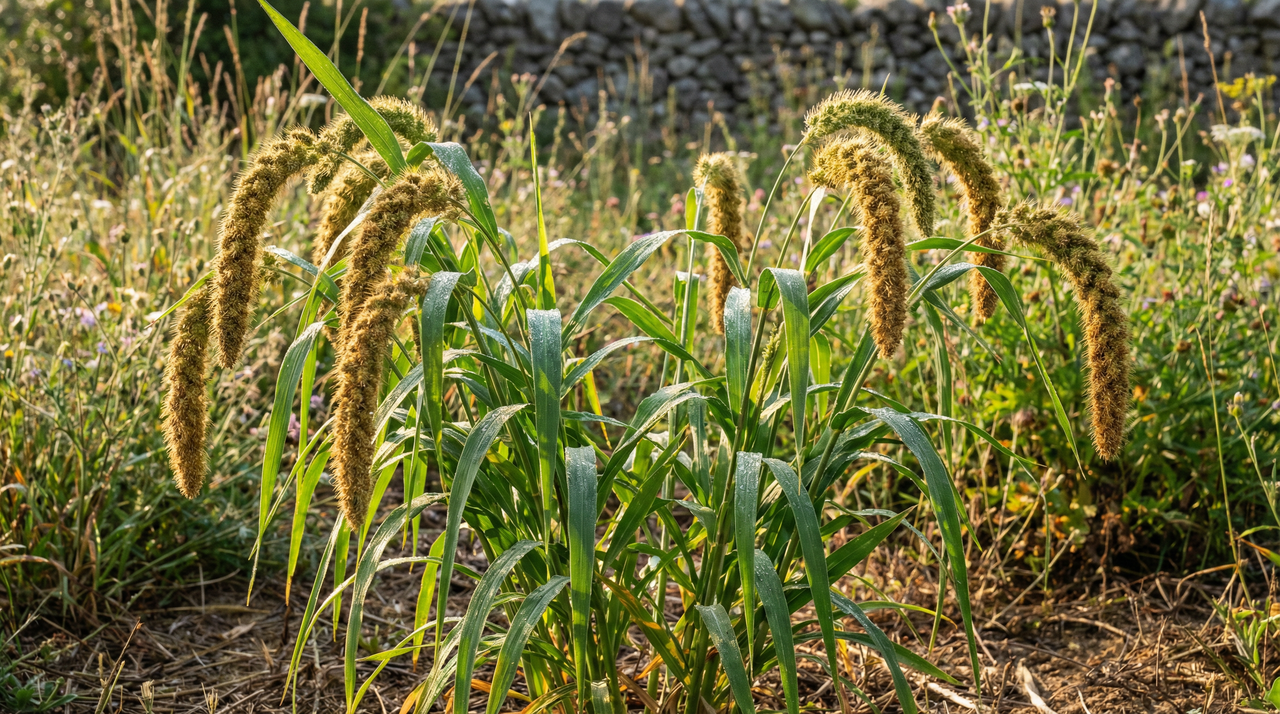
Most people have pulled foxtail grass out of their garden beds without a second thought, tossing it on the compost pile as just another weedy intruder. What they don't realize is that they might have been yanking out one of the oldest cultivated grains on the planet. Foxtail millet, Setaria italica, has been feeding humans for somewhere between 8,000 and 10,000 years,[1] and its weedy wild ancestor, Setaria viridis, is so similar to the cultivated form that even experienced gardeners can't always tell them apart at a glance. That's not a design flaw. That's 10,000 years of resilience baked into the genetics.
I've grown foxtail millet in humid subtropical Florida and in drier inland climates, and every single time, it makes me reconsider my assumptions about which plants belong in a serious food system. It germinates fast, matures in as little as 60 days, tolerates poor soils that would stall most grain crops, and produces seed heads so graceful they'd stop you in a cut-flower garden. The contradiction that keeps drawing me back to it is this: here's a crop ancient enough to appear in Chinese ritual texts, gluten-free, nutritionally dense, and ecologically useful as a cover crop, and most Western gardeners only recognize it as birdseed.
Foxtail Grass Origin and History
Botanical Background of Foxtail Millet (Setaria italica)
Foxtail grass, known botanically as Setaria italica, is an annual warm-season grass that completes its entire lifecycle in just 60 to 120 days, reaching 60 to 150 cm tall with erect, tillering stems, fibrous roots, and that unmistakable dense cylindrical panicle that genuinely does look like a fox's tail.[2][3] The first time I pulled one from a seed mix edge in my Central Florida food forest and held that bristly head up to the light, I understood immediately why it's been in cultivation for millennia. There's something almost prehistoric about it.
Its wild ancestor is Setaria viridis, and the domesticated form shares that same annual habit while gaining significantly larger, more cohesive seed heads through centuries of selection.[4] What makes this grass so productive in hot, dry conditions is its C4 photosynthetic pathway, which allows it to fix carbon efficiently at high temperatures where C3 grasses start to drag.[5] I've watched it push through scorching summer weeks when my slower-growing greens gave up entirely. That C4 efficiency, combined with a lifecycle that wraps up in as little as 60 days, makes it genuinely useful as an annual filler in warm-season guild designs.
The plant itself is strictly annual and won't overwinter vegetatively, but its seeds can persist in the soil for 5 to 10 years.[6] That persistent seed bank is what gives it a moderate weed potential in managed landscapes, though it's not considered highly invasive when you're deliberate about timing your harvests.[7]
Traditional and Cultural Uses in Ancient China
The foxtail grass scientific name, Setaria italica, is a mild historical irony: this is emphatically not an Italian plant. Domestication occurred 8,000 to 10,000 years ago in northern China's Yellow River basin, with the oldest archaeobotanical evidence coming from the Cishan site in Hebei Province, dated to approximately 8000 BCE.[8][9] Supporting finds from the Dadiwan and Peiligang Neolithic cultures paint a picture of foxtail millet as one of East Asia's foundational cereals, deeply woven into the fabric of early agricultural society.[10]
Its significance went well beyond food. Foxtail millet held ritual and symbolic importance in ancient Chinese culture, appearing in burial practices, religious ceremonies, and early texts including Sima Qian's Shiji. That kind of deep cultural embedding tells you something about a plant's reliability: you don't build ceremonies around a crop that fails you. From those Yellow River origins, cultivation eventually spread westward into the Middle East and Europe, where it picked up the names "Italian millet" and "French millet," and southward into South and Southeast Asia, carrying traditional medicinal applications with it along the way.[2][11] Its relative absence from Greek and Roman agricultural writing only underscores how thoroughly it belonged to East Asian farming traditions first.
As a permaculture designer, I find this history genuinely grounding. A crop that sustained Neolithic civilizations through the variable droughts of northern China and then traveled across continents without losing its adaptability deserves serious attention in any resilience-focused garden.
Fun Facts About Foxtail Grass
That fox-tail panicle shape isn't just charming; it's genuinely useful for identification. The bristly, nodding seed head is how I recognize this plant immediately in mixed seed tapes or weedy garden edges, well before I'd bother with a key.[2] Those same bristles make it a favorite in commercial birdseed mixes, and it doubles as livestock fodder and a bioenergy feedstock with real potential.[2]
The gluten-free food movement has given this ancient grain a second act in Western markets, but it never stopped being a staple across much of Asia. Its global spread is remarkable: Setaria italica has been introduced and naturalized across 49 U.S. states, turning up in disturbed areas, roadsides, and field margins with quiet persistence.[12] And backing all that adaptability is extraordinary genetic depth: genebanks currently hold over 30,000 accessions representing adaptations to wildly different climates, soils, and growing seasons.[13] When I'm sourcing seed for bird-friendly guild plantings or ornamental borders, that diversity means I can usually find a regionally adapted type rather than gambling on a generic commercial blend.
Foxtail Grass Varieties and Where to Buy
Notable Cultivars of Setaria italica
Setaria italica grows in dense, upright bunches reaching 2 to 5 feet tall and about 1 to 2 feet wide,[12][14] with seeds that range from pale yellow to reddish-brown depending on the cultivar. That color variation is actually useful for identification. I've had volunteer plants come up in mixed guilds and the seed coat color helped me sort out which cultivar had self-seeded before the panicles fully formed. The plant itself grows fast in warm weather and matures in 60 to 90 days with heat tolerance up to 40°C,[15][16] performing across USDA zones 5 to 10 on sandy to loamy soils. In the US it's primarily grown for forage, birdseed, and cover cropping rather than grain.[17]
The most important decision point when choosing a cultivar is plant architecture. Prostrate types suit dense plantings and lower light conditions while erect types are optimized for grain yield and drought performance.[18] For US growers, that erect category includes the most accessible and well-documented options. 'Sierra' and 'Oasis' are workhorses for high-yielding forage, capable of 4 to 6 tons per acre of dry matter under irrigation.[19][17] The Millex series (Millex 32, Millex 36, and Excel) trades some yield ceiling for drought tolerance, coming in at 1,500 to 2,500 lbs per acre of grain without irrigation.[19][20] I've grown several Millex lines in demonstration plots and watched them maintain palatable forage quality well into dry spells when older cultivars were already going stemmy and unappetizing. For drier sites in permaculture systems, that resilience matters more than peak yield numbers.
Globally, Indian cultivars like PSB-1, PSB-3, and Arjuna are bred for rainfed semi-arid conditions, while Chinese types such as Anqing No. 1 favor irrigated high-yield settings.[13] Japanese 'Hakata' and various African landraces round out the global picture, many improved through hybridization for stress tolerance. For nutrition-focused permaculture work, varieties run 10 to 13 percent protein with good fiber, iron, and calcium, and biofortified lines like ICTP-8203 push micronutrient levels even higher.[21] I find those biofortified lines genuinely exciting, though in practice I still default to locally adapted open-pollinated types whenever seed saving is part of the plan. Ornamental cultivars like 'Fireworks', 'Goldilocks', and 'Variegata' do exist[22][23] and 'Fireworks' has the same rich purple-tinged drama I associate with Pennisetum setaceum 'Rubrum', but they're specialty items and harder to track down than agricultural types.
Sourcing Foxtail Grass Seeds and Plants
For most home growers, Johnny's Selected Seeds, True Leaf Market, and Eden Brothers are reliable first stops, with packets running roughly $3 to $10 and bulk seed at $5 to $15 per ounce.[24][25][26] I usually check Johnny's or True Leaf first when helping clients source seed for a guild because their germination rate notes are reliable and their non-GMO options are clearly labeled. Everwilde Farms and Adaptive Seeds are also worth bookmarking. Non-GMO and certified organic options are widely available across these suppliers, and the USDA National Plant Germplasm System and Kew Millennium Seed Bank hold diverse Setaria italica accessions for research and conservation purposes.[27][28] Ornamental forms like 'Fireworks' are best sourced from specialty perennial nurseries rather than farm seed suppliers. If you're importing seed from outside the US, a USDA APHIS permit is required under 7 CFR Part 319, interstate movement falls under the Federal Seed Act, and California growers need additional CDFA permits with purity testing.[29][30] I always double-check current APHIS and state rules before importing any grass seed; the few minutes spent on compliance prevent much bigger headaches later.
Foxtail Grass Propagation and Planting (Setaria italica)
Of all the crops I grow in my permaculture beds, foxtail millet is one of the most straightforward to establish. That's largely because there's only one method worth your time: seed. No cuttings, no divisions, no transplants. Just small seeds, warm soil, and a little patience.
Seed Characteristics and Storage
Foxtail grass seed is genuinely tiny. Each seed is an ellipsoid caryopsis, roughly 2–3 mm long and barely 1–2 mm wide, with a smooth, shiny surface and a pale yellow to light brown color.[31][32] A thousand of them weigh somewhere between 2 and 3.5 grams.[31] The first time I poured a handful into my palm, I honestly wasn't sure whether I was looking at seed or dust. I've since learned to label my rows immediately, because the seedlings resemble lawn grass or even a common weed in their first week or two. An unlabeled row of foxtail millet is a very easy thing to accidentally pull.
What I love about these seeds is how well they store. Foxtail millet has orthodox seed storage behavior, meaning it tolerates drying and cold without losing viability.[33][34] Under genebank conditions it can stay viable for 50 years or more; for home gardeners, dried seeds kept at 10–15°C in an airtight glass jar will hold well for 5–10 years.[33][35] I've saved seed from my own harvest and replanted it three seasons running, still pulling germination rates above 80%. Knowing your saved seed is good seed is a real confidence-builder.
Propagation Methods and Germination Timeline
Seed is the only realistic propagation route here, and that's not just my opinion.[36][37] The fibrous root system, erect unbranched stems, and annual life cycle all make vegetative propagation essentially impractical; cuttings and division have very low success rates,[38][39] and while tissue culture is theoretically possible, it stays firmly in the research lab.[40] I never bother attempting transplants either; the fibrous roots and rapid early growth make direct sowing far simpler and more reliable.
Sow after the last frost once soil temperatures reach at least 60°F (15.5°C), which in zones 5–9 typically means late spring to early summer.[39] Germination is fastest at 25–30°C, with success rates of 80–95% under good conditions and emergence in 7–14 days.[39][41] From there, expect flowering around 30–50 days after planting and full physiological maturity somewhere in the 60–90 day window.[42] That timeline shifts with temperature and moisture, but it's reliably fast.
Soil, Site, and Sun Requirements
Foxtail grass wants full sun: at least 6–8 hours of direct light daily.[43][44] It's a C4 grass that evolved in open Asian grasslands, and its photosynthetic machinery is built for intense light and heat.[45] Shade produces weaker stems and poor seed set, so site selection matters more than soil amendments do.
For soil, it prefers sandy loam or loam with good drainage, and it tolerates a surprisingly wide pH range of 5.0–8.0, with optimal performance between 6.0 and 7.5.[46][47] Below pH 5.5, aluminum toxicity and phosphate lockout become real problems; above 7.5, iron and zinc availability drops off.[48] Compared to something like tomatoes, this is a fairly forgiving range, which is exactly why foxtail millet succeeds on marginal ground where other annuals give up. I've planted it on a dry, compacted edge of a guild bed where almost nothing else would establish, and it performed beautifully. That said, compaction above a bulk density of about 1.6 g/cm³ will hurt emergence and yield, and waterlogged conditions invite root disease.[49] A soil test before planting is always worth doing.
Spacing, Planting Technique, and Early Management
Sow seeds ½ to 1 inch deep (1–2 cm); they're small enough that going deeper risks poor emergence.[50] Agricultural recommendations call for 4–8 inches between plants and 12–18 inches between rows,[51] but in my own beds I tend toward the wider end of that range, around 8–10 inches between plants. Better airflow at the base means less humidity, and in a humid summer that matters. Compact varieties can be planted somewhat closer together; taller types benefit from extra room to avoid lodging once the panicles fill out.[52]
Each plant tillers actively, producing 5–15 side shoots and reaching 60–150 cm tall at maturity,[42] so give them room to express that bunchgrass habit rather than crowding them into competition. Early weeding is the most important management task in the first few weeks; once the foxtail grass canopy closes, it handles itself reasonably well. This is a low-input annual, and most of its success is determined by getting the early decisions right: warm soil, good drainage, full sun, and honest spacing.
Foxtail Grass Care Guide
Foxtail grass rewards gardeners who understand its rhythm: it's a warm-season annual that wants to sprint, not stroll. Once you work with that tempo instead of against it, it's one of the most forgiving grains I've grown.
Seasonal Rhythm and Lifecycle
Foxtail millet moves quickly, with flowering typically beginning around day 40-70.[53][54] I've watched it go from seedling to seed head in 75 days under Central Florida summer heat, which means you can pencil it in on your garden calendar right after your last frost date and be harvesting before fall plantings need the bed. It's grown as a summer annual across USDA zones 5-10, sown only after frost danger has passed.[12] That short window is also its superpower in permaculture guilds: it slots neatly between a spring planting and a fall cover crop without competing with perennial layers for more than a couple of months.
Sunlight Requirements
Full sun is non-negotiable. Foxtail grass needs at least 6-8 hours of direct light daily, and it genuinely performs better with 12-14 hours of summer daylight fueling flowering and seed set.[44] Because it evolved for open grassland conditions, shading it out weakens the whole plant. That said, combined heat and intense sun can push it into leaf scorching, bleaching, and wilting.[55] In my experience with warm-season grasses generally, a site that catches full morning sun and gets dappled relief in the hottest afternoon hours threads that needle well without sacrificing much yield.
Water Needs and Drought Tolerance
Few grain crops handle dry spells as gracefully as foxtail millet. Its C4 physiology delivers exceptional water-use efficiency of 8-12 kg/m³ under stress, and plants can survive 20-40 days without irrigation when established, on a seasonal budget of just 300-500 mm total.[56][57] Much of that resilience comes from its deep root system, which reaches 24-36 inches into the soil profile to pull from subsoil moisture long after the surface dries out.[58] During active vegetative growth, I aim for 1-2 inches every 7-14 days, keeping soil around 50-70% field capacity.[59] Older leaves wilting and curling tells you moisture is too low; yellowing with stunted growth usually means too much.[60] Flowering and grain fill are the stages that benefit most from consistent moisture, so I tighten my irrigation schedule there rather than backing off.[61] A layer of mulch over the bed cuts surface evaporation significantly and is probably the single easiest habit that converts drought tolerance into reliable yields.
Fertility and Feeding
Foxtail grass is a moderate feeder. Research benchmarks suggest 40-60 kg N/ha, 20-40 kg P2O5/ha, and 20-40 kg K2O/ha, with a nitrogen-forward ratio around 2:1:1 to 4:2:1.[62][53] The practical approach is to apply phosphorus and potassium at planting, then split nitrogen in thirds: once at planting, once at tillering, and once at booting.[44] I always soil-test before adding anything. Over-relying on nitrogen has cost me lodging and lower grain quality in the past, and it's a mistake worth avoiding. Watch older leaves for pale yellowing (nitrogen shortage), purplish tints with reduced tillering (phosphorus), or marginal browning on the leaf edges (potassium).[63] Zinc deficiency shows up most on alkaline soils and responds well to a 0.5-1% ZnSO4 foliar spray at tillering.[64] For permaculture guilds, 5-10 tons/ha of well-decomposed compost or manure plus a biofertilizer like Azotobacter usually covers the base load without synthetic inputs.[65] Because foxtail is modest in its demands, a single compost application with targeted top-dressing at tillering is often all my guilds need.
Frost Tolerance
Foxtail grass does not tolerate frost. Germination requires soil temperatures of at least 10-15°C, and young seedlings are killed by even a light freeze, with the growing point being especially vulnerable.[66][67] Mature plants can fleetingly tolerate temperatures near -2°C, but growth stops below 10°C, and a frost at flowering (below -1°C) can cause sterility and slash grain yield by up to 50%.[68][67] I treat it as a true summer annual regardless of zone: it goes in the ground after last frost, full stop, and it needs to finish well before first fall cold.
Heat Tolerance
Where foxtail grass earns its reputation is in the heat. Its optimum sits between 25-35°C, it can keep growing up to 35-40°C, and it tolerates AHS Heat Zones 7-11 comfortably.[69] Sustained temperatures above 38°C for 3-5 days push it into significant stress.[70] The flowering and grain-fill stages are the most sensitive window: heat above 35°C during flowering damages pollen and causes spikelet sterility, with yield reductions ranging from 10-50% depending on duration and intensity.[71][72] I've grown several landraces and noticed that those sourced from hotter regions in India and Rajasthan set seed more reliably when daytime highs push past 35°C; traditional varieties consistently outperform some modern high-yielding types when the thermometer climbs.[73] The plant's built-in resilience comes from C4 photosynthesis, heat shock proteins, and antioxidant enzyme systems, but recovery depends heavily on nights cooling below 25°C.[74] In hot, humid climates the combination of heat and moisture stress during flowering is the real challenge, and keeping irrigation consistent through that window is the most practical thing you can do to protect your yield.
Harvesting Foxtail Millet (Setaria italica)
One thing I love about growing foxtail millet is how clearly the plant tells you when it's ready. Short-season varieties can hit maturity in as little as 50-70 days in warm conditions.[42][75] Once flowering begins, you're looking at a 25-35 day window for seeds to reach physiological maturity and maximum dry weight.[76] I use that post-anthesis window to plan my succession plantings, knowing I can get a second planting in before frost if I time the first one right.
When to Harvest Foxtail Millet: Timing and Maturity Cues
The classic readiness signal is a golden-brown foxtail grass seed head where 80-90% of the panicle has matured, with seeds that feel hard and dry when you press them between your fingers.[75] Here's the thing I wish someone had told me when I first started growing this: the lower spikelets mature ahead of the tip. I always start checking the base of the panicle first. By the time the tip looks done, the bottom seeds may already be shattering. That 80-90% rule is a guideline, but your eyes on individual plants will always serve you better than the calendar. Temperatures, water availability, and cultivar all shift the timeline considerably,[42] and I've seen the German Strain variety hit full maturity in around 28 days from flowering while others in the same bed lagged nearly a week behind.
How to Harvest and Process Foxtail Millet Grains
At home scale, I cut the entire panicle with a few inches of stem attached, bundle them loosely, and hang them upside down in a dry spot with good airflow. Once the heads are fully dry, threshing is straightforward: I hold the bundle over a tub and rub or beat the heads against the side to knock the grain free, then winnow out the chaff on a breezy day. It's one of those satisfying, low-tech tasks that makes sense of why this grain has been grown by hand for 8,000 years. Commercial operations run combines, but the underlying principle is the same: get the grain off the plant and dry it down quickly. After threshing, I target 12-14% moisture before sealing anything in storage containers. Moldy millet is a real heartbreak after a fast, productive season, so I use a moisture meter to be certain rather than guessing. If I don't have it handy, a firm bite test helps; the grain should feel hard and dry, never soft or waxy.
Expected Yield, Flavor, and Aroma Profile
Well-managed foxtail millet yields 2-4 tons per hectare under good conditions, with optimized trials reaching 7-8 tons per hectare.[2][3] My Central Florida patch produces far less than those research numbers, but from a 4x8 bed I still come away with enough dried setaria grass grain to keep a meaningful supply in the pantry through winter. For a gluten-free, nutrient-dense staple that matures in under 90 days on marginal soil, that footprint-to-yield ratio is genuinely impressive.
What comes out of that harvest is a grain with real character. Raw, the grains carry a grassy, earthy aroma that shifts beautifully when heated into something toasted and nutty-sweet.[77][78] Cooked as whole grains, the texture lands somewhere between quinoa and soft wheat berries: chewy but tender, with a mild crunch.[79] Don't overcook it; bitterness creeps in if you push past done. The dried foxtail grass grain is also a legitimate fermentation crop, developing pleasant sour and tangy notes from lactic acid bacteria when prepared the traditional way.[80] That combination of fast maturity, honest nutrition, and real flavor is why I keep making room for it.
Foxtail Millet Preparation and Uses
Culinary Uses and Preparation Methods
Foxtail millet has fed people for roughly 8,000 years as a gluten-free staple, showing up as porridge, flatbread, fermented beverages, and dozens of regional variations across Asia and Africa.[81][82] The grain has a mild, nutty flavor with subtle earthy sweetness that gets noticeably richer when you roast it first, and the flour works well in gluten-free flatbreads, cookies, soups, pilafs, upma, and congee-style dishes.[83][84] I'd put its flavor somewhere between quinoa and buckwheat -- a little more gentle than either, and it holds its shape better than quinoa in a pilaf when cooked right.
The preparation steps matter here, not just for texture but for nutrition. Boiling uses roughly a 1:2 grain-to-water ratio for 15-30 minutes, but soaking overnight before you cook makes a real difference. Roasting, sprouting, and fermenting all reduce phytic acid by 20-50%, cut tannins and saponins, and improve mineral bioavailability and digestibility.[85][86][87] In my kitchen, a 20-minute simmer after an overnight soak consistently produces fluffy, digestible grains with none of the heaviness I sometimes get skipping that step. The nutritional payoff is substantial: per 100g you're looking at roughly 11-12g protein, 8g fiber, solid B-vitamins, 2.8mg iron, 114mg magnesium, and phenolic compounds that support glycemic control and antioxidant activity.[88][89][90]
Young leaves are edible in some traditional cuisines, occasionally eaten in salads or as cooked greens when tender, though the grain is really the point.[81] On safety: those with millet allergies or thyroid conditions should eat it in moderation, and accurate identification is genuinely non-negotiable. I always label my seed trays carefully because related grasses like Phalaris species carry alkaloids that cause neurological symptoms in livestock, and stressed sorghum can produce cyanogenic glycosides -- neither is a mix-up you want to make.[85][91][92]
Medicinal Preparations
Traditional Chinese Medicine has long prepared foxtail millet as decoctions boiled 20-30 minutes, fine powders mixed with water or herbs, or simple infusions to address spleen deficiency, poor appetite, indigestion, urinary issues, and clearing damp heat; stems occasionally appear in fever decoctions as well.[93][94] Clinical dosage data is thin on the ground, so I'd treat these preparations with respect for their long cultural record while acknowledging that the phytochemical and evidence discussions live in the health benefits section. What's worth noting here is that the same simple kitchen methods -- boiling and grinding -- that make the grain nourishing also underpin these traditional preparations.
Non-Food and Permaculture Applications
Beyond the kitchen, foxtail millet is a workhorse. It produces 4-6 tonnes per hectare of dry biomass,[95][96] which means the stems and leaves that aren't going into your bowl are doing real work as livestock fodder, cover-crop mulch, and green manure that builds soil organic matter. I use the leftover straw as garden mulch every season and I've watched the soil tilth improve and weed pressure drop noticeably over a couple of cycles -- which is about as satisfying as a permaculture result gets. Specific ornamental selections with dramatic panicles or variegated foliage also earn a place in borders and dried arrangements.[97][2] There's even research into its straw as cellulosic ethanol and biogas feedstock.[96] One plant feeding people, livestock, and soil in the same system -- that's the permaculture ideal in a short-season annual grass.
Foxtail Grass Health Benefits and Medicinal Uses
When I first started researching foxtail millet seriously, I expected a polite nutritional profile and maybe a footnote about folk medicine. What I found instead was a grain with thousands of years of therapeutic use behind it and a genuinely impressive body of preclinical science quietly building in its favor. The health story here runs deeper than most people realize, and it starts long before any modern laboratory got involved.
Traditional Medicinal Uses in TCM and Ayurveda
For millennia, foxtail millet has been feeding and healing people across East Asia. Domesticated in northern China roughly 6,000 to 8,000 years ago,[98] it became far more than a staple grain. In Traditional Chinese Medicine, the seeds ("Xiao Mi" or "Ji") are considered neutral in nature and sweet in taste, said to enter the spleen, stomach, and large intestine meridians. TCM practitioners used them to tonify the spleen, support digestion, ease diarrhea, and address inflammation and blood sugar concerns.[99][93][94] When I make a warm millet porridge for a family member with an unsettled stomach, I don't think I'm practicing TCM. But I do think there's something to the cooling, easy-to-digest quality of this grain that generations of people identified long before we had DPPH assays to confirm it.
Ayurvedic tradition takes a similar view. Known as Kangni or Priyangu, foxtail millet is considered cooling, used to balance Pitta dosha, and traditionally prescribed for anemia, urinary disorders, excessive thirst, and bleeding conditions.[100][101] Beyond the seed, traditional systems also used the leaves in poultices for wounds and inflammation, and the roots were applied externally for joint pain.[101] None of these uses have been evaluated in human clinical trials, and no standardized medicinal doses exist,[102][103] so I'd frame the traditional record as compelling context rather than clinical instruction. Still, that context matters: it's why researchers started looking in the first place.
Phytochemical Profile and Bioactive Compounds
The chemistry of this plant is genuinely complex. Seeds contain phenolic acids including ferulic, p-coumaric, vanillic, and gallic acid; flavonoids like luteolin, apigenin, quercetin, vitexin, and rutin; saponins; coumarins; sterols; tannins; and polysaccharides including beta-glucans.[104][105] The distribution isn't uniform across the plant: seeds hold the highest phenolic and flavonoid concentrations, leaves concentrate flavonoid glycosides, and roots accumulate saponins and steroid glycosides.[106][105]
What I find particularly interesting from a grower's perspective is that these compounds peak at maturity and actually increase under stress.[107] I've grown several Setaria italica cultivars in my Central Florida food forest, and after a dry spell I consistently notice that darker-seeded types produce grain that smells noticeably more aromatic, which tracks with research showing pigmented varieties contain higher anthocyanins and can have two to three times the antioxidant capacity of paler types.[108][109] A permaculture garden that occasionally runs dry isn't failing this plant; it might actually be making it more nutritious.
Pharmacological and Preclinical Research
Pharmacological lab work on Setaria italica covers a surprisingly wide range of biological effects. Preclinical studies show strong antioxidant activity through phenolic and flavonoid scavenging, anti-inflammatory effects via inhibition of TNF-α, IL-6, NF-κB, and COX-2, and antimicrobial action against E. coli and Staphylococcus linked to polysaccharides.[110][111] Animal models have demonstrated antidiabetic action (including alpha-glucosidase inhibition and gut microbiota modulation), hepatoprotective effects, neuroprotective activity, immunomodulation via polysaccharides, anticancer potential in cell lines, and accelerated wound healing.[112][113][114][115] That breadth is impressive. The honest caveat, though, is that every one of those findings comes from in-vitro or animal research. No human clinical trials have evaluated this plant for any health condition,[102] and pharmacological outcomes vary considerably by cultivar, plant part, and extraction method.[116] I grow foxtail millet first and foremost as a resilient, gluten-free grain for my family's table. The bioactive compounds are a welcome bonus, not a prescription.
Nutritional Composition
As a food, the numbers are solid. Foxtail millet is gluten-free with a low glycemic index, which makes it genuinely useful in households managing celiac disease or blood sugar.[117] Raw grain clocks in at 378 kcal per 100 g with 11.2 g protein, 4.3 g fat, 72.85 g carbohydrate, and 8.3 g dietary fiber. Once cooked, those numbers shift substantially: 119 kcal, 3.5 g protein, and 23.7 g carbohydrate per 100 g as water absorption dilutes the density.[117][118] I keep both sets of figures in mind when planning meals; raw weight is what I harvest and store, but cooked weight is what actually lands in the bowl.
The B-vitamin and mineral profile is worth highlighting. Per 100 g raw, foxtail millet provides thiamin at 49% of the daily value, niacin at 30%, vitamin B6 at 22%, along with meaningful amounts of iron, magnesium, phosphorus, and zinc.[117][119] Protein quality is reasonably balanced relative to other millets, though lysine is the limiting amino acid at 0.2 to 0.4% of protein.[105][120] My fix for that is simple: I pair it with legumes. A bowl of foxtail millet with black-eyed peas covers the amino acid gaps nicely, and in a food forest where cowpeas are already part of the guild, that combination practically designs itself.
Safety Profile and Considerations
Foxtail millet has a long, well-documented history of safe consumption as a staple food and livestock feed, with no well-documented poisoning incidents when properly prepared and stored.[121][122] That said, a few practical considerations apply. Phytic acid runs between 0.5 and 1.5%, and the grain also contains tannins and mild goitrogens that can reduce mineral absorption and affect thyroid function when eaten raw in quantity. Soaking, fermenting, sprouting, or thorough cooking reduces these antinutritional factors by 50 to 80%.[123][124] I always rinse and soak mine before cooking, not out of anxiety but habit. After a humid Central Florida summer, I also check stored grain carefully for any sign of mold before using it.
High fiber content can cause temporary bloating or gas if you're new to eating it regularly, so introducing it gradually makes sense. Allergic reactions are rare, affecting fewer than 1% of people, though anyone with grass-pollen sensitivity should be aware of the possibility.[125] If you're managing diabetes with medication, the low glycemic index is a feature but also a variable worth monitoring with your doctor, since it can potentiate blood-glucose-lowering effects. Anticoagulant interactions aren't a concern given the negligible vitamin K content, and unlike some related grasses, cultivated Setaria italica contains no cyanogenic glycosides.[126][127] For those using it as fodder, safe inclusion rates run 20 to 50% of ruminant diets and 10 to 20% for monogastrics, and the awns can cause mechanical irritation to animal mouths and eyes if forage is too mature.[128] The common weedy look-alike, green foxtail, is non-toxic.[129]
Foxtail Grass Pests and Diseases
Natural Defense Mechanisms
Foxtail millet isn't defenseless, and understanding why starts at the leaf surface. The plant layers its protections: phenolic compounds and flavonoids act as chemical deterrents against feeding insects, while dense leaf trichomes and a thick cuticle create physical barriers that many soft-bodied pests struggle to breach.[130][131] I've rubbed foxtail millet leaves between my fingers and noticed that roughness and faint grassy-resinous smell -- it correlates with noticeably lower aphid pressure compared to smoother-leaved grain crops nearby. Belowground, endophytic bacteria and arbuscular mycorrhizal fungi round out the guild, bolstering the plant's resilience from the root zone up.[132] None of these defenses make it bulletproof, but they do give it a meaningful head start over several other warm-season cereals.
Common Insect Pests
The primary insect threats to watch for are stem borers (Chilo partellus), aphids (Rhopalosiphum maidis), leaf folders, shoot flies (Atherigona spp.), and armyworms (Spodoptera litura and S. frugiperda).[133][134] Without any management, pest pressure can shave 15-25% off your yield.[135] Early in my trials with foxtail millet I planted a susceptible variety and watched stem borer damage climb past 20% before I even noticed the dead hearts. That experience changed how I source seed. Resistant genotypes can drop stem borer damage below 5%, while susceptible ones regularly hit 10-30%.[136] I now label every row by cultivar and prioritize ICRISAT-bred lines like Isegen 1 and Arjuna, which carry partial stem borer resistance and general pest tolerance.[137]
Aphids are most problematic on young plants, where a heavy infestation leads to stunted growth and sooty mold. Cultivars with denser trichomes handle aphid pressure better, which is part of why variety selection matters so much.[138] Compared to sorghum or maize, foxtail millet's narrower stems and faster maturity cycle give it moderate overall pest resilience, making it a reliable choice on marginal ground where those other cereals have struggled in my mixed plantings.[139] Its wild relative, Setaria viridis, carries even stronger natural resistance in some populations and continues to supply resistance genes to breeding programs.[140]
Major Diseases and Resistance
Disease resistance in foxtail millet is genuinely genotype-dependent; no single variety performs well everywhere against every pathogen, so environment and cultivar selection shape outcomes more than any spray schedule.[141] The best news is on rust (Uromyces setariae-italicae) and downy mildew (Sclerospora graminicola): select varieties show high rust resistance, and resistant hybrids limit downy mildew incidence to well under 20% even where susceptible varieties hit 50%.[141] In my subtropical garden I avoid overhead irrigation during humid stretches because moisture is the main driver of downy mildew pressure regardless of variety. For blast (Pyricularia grisea) and smut (Ustilago crameri), resistance is more variable but breeding has produced accessions with incidence below 5% in treated field conditions.[141]
Bacterial leaf streak and sheath blight are managed more reliably through Asian-bred improved cultivars and field conditions than through any single control measure.[141] Foxtail mosaic virus remains the trickiest problem since immune lines are scarce and management relies heavily on cultural practices.[141] Across the board, foxtail millet compares favorably with its relatives, showing better downy mildew resistance than pearl millet and better blast and rust resistance than finger millet.[142] The rich genetic diversity within the species, particularly via S. viridis, continues to supply breeders with transferable resistance traits.[143]
Integrated Management Strategies
The most effective approach I've found combines three layers: scout weekly during the vegetative stage for dead hearts (the telltale sign of stem borer), maintain habitat for ground beetles and parasitic wasps to work as biological controls, and rotate foxtail millet annually to break fungal and pest cycles in the soil.[144][145] Residue removal after harvest removes overwintering sites for smut spores and borer pupae, which costs almost nothing and pays forward into the next season. Chemical intervention stays a last resort, used only when pest populations exceed economic thresholds, because the plant's own layered defenses and a well-structured guild do most of the heavy lifting.[146] Get the variety right for your region, manage moisture, and let the predator community build -- foxtail millet rewards that kind of preventative thinking far better than reactive spraying ever will.
Foxtail Grass in Permaculture Design
There's a category of plants I think of as "fast workers," species that don't stick around long but leave the soil measurably better than they found it. Foxtail millet sits firmly in that group. Its entire ecological contribution happens in 60 to 90 days, which sounds brief until you watch what it does to a neglected bed or a bare slope in a single summer.
Climate Adaptation and Growing Zones
Foxtail millet is a warm-season annual built for heat. Growth is optimal between 20 and 30°C, with peak performance in that 25-28°C sweet spot most Florida summers deliver reliably.[44][147] It can push through brief highs up to 40-45°C without permanent damage, though prolonged temperatures above 35°C start stressing the plant reproductively.[147][148] In my zone-9B garden, I treat those threshold numbers as planting cues: get seed in after soil warms above 15°C and ensure harvest wraps up well before any cold snap arrives. Frost ends the conversation fast; seedlings are especially vulnerable, and even mature plants struggle below 0°C for more than a brief spell.[44][12]
As an annual, it performs best in USDA zones 5 through 9, with careful timing making it workable in zones 4 and 10. It needs 100 to 120 frost-free days and roughly 900 to 1,500 growing degree days to reach maturity.[44][148] What makes it genuinely useful in marginal or degraded spots is its C4 physiology. Reduced stomatal density, efficient water use, and a shallow but extensive root system let it produce reliably with as little as 200 to 380 mm of rainfall, and it handles moderate salinity up to 4-6 dS/m where other grains give up.[149][150][12] For subtropical designers, that combination of heat tolerance, drought resilience, and wide soil adaptability across sandy loams and loams at pH 5.5 to 7.5 means it fits most of the awkward corners of a food forest where nothing else wants to grow.[12][151]
Ecosystem Functions and Services
The soil story is where foxtail millet earns its place in a permaculture rotation. Dense stands establish quickly, and that fibrous root system physically knits topsoil together, which matters enormously on slopes. I've laid dried stems and root material as mulch on freshly terraced beds and watched the soil hold through heavy subtropical rains that would have carved channels in bare ground. Beyond erosion control, the plant scavenges nitrogen, phosphorus, potassium, and silica from the soil profile, cycling those nutrients back into available topsoil when the biomass decomposes.[152][153] Weed suppression is real too, partly through shading and competition, partly through mild allelopathic chemistry that discourages some germination below the canopy.[152]
One thing to be clear about: foxtail millet does not fix nitrogen.[95] It's a nutrient scavenger and accumulator, not a builder in that sense. Pair it with cowpeas or pigeon peas and it gets far more interesting, letting the legume supply what the millet can't. I've run that combination in Central Florida beds and seen noticeably deeper green growth in the legumes the following season, which tracks with research showing N increases of 20 to 50% in foxtail millet/legume polycultures.[154] The seed heads also pull in granivorous birds, particularly quail and sparrows, which contributes to local wildlife habitat in a low-maintenance way.[155]
On naturalization risk: foxtail millet has low to moderate invasive potential and isn't listed as a noxious weed in the US, though it can establish in disturbed areas if seed escapes managed ground.[156] My approach is simple: I let it go to seed only inside managed beds, and I cut any volunteers that show up near wild edges before they drop grain. It has never jumped the fence on my property, but I don't assume that gives me permission to stop watching.
Role in Forest Layers and Guilds
In a food forest context, foxtail millet belongs in the herbaceous layer. It grows 0.6 to 1.5 m tall in a tufted, clumping habit that doesn't spread aggressively or shade out neighboring plants.[157][12] Shorter varieties stay neatly under 1 m, and from trial and error I've found those work best tucked beneath young fruit trees where you need ground cover without competition. Its fibrous roots, which can reach 1 to 1.5 m deep, anchor slopes and access minerals that shallower-rooted companions can't reach, then share them with the wider guild when the plant dies back.[158][159]
As a relay partner it shines in subtropical polycultures. I tuck it around tomatoes where its 60-90 day cycle and mild allelopathy keep the understory reasonably clean without shading or crowding the main crop.[160] Any grain yield you get, realistically 2 to 3 t/ha in good conditions, is a bonus in this context rather than the goal.[159] The real payoff is what the biomass does for the soil once the season ends. For marginal ground, compacted edges, or newly established food forest zones that need a season of ground stabilization before perennials fill in, it does a job that most longer-lived plants simply can't turn around fast enough to match.
The Grain That Made Me Stop Underestimating Fast Plants
I used to associate speed with shallowness in the garden, quick crops that gave little and left nothing. Foxtail millet changed that. The first time I cut a panicle, rubbed the seeds into my palm, and later cooked them into a porridge my kids actually asked for again, I realized this little annual had quietly done more for that bed in ninety days than some of my perennials manage in a season. It earns its keep without asking much. That's rare.
Sources 160
- Foxtail millet: a review of its nutritional and medicinal properties ↩
- PLANTS Profile for Setaria italica (Common foxtail) - PLANTS Database (USDA) ↩
- Millet Production Guidelines ↩
- Domestication and Lifecycle of Setaria italica and S. viridis ↩
- C4 Photosynthesis in Setaria italica ↩
- Biology and Ecology of Foxtail Millet (Setaria italica) ↩
- Invasive Species Compendium: Setaria italica ↩
- Foxtail Millet: Origin and Domestication ↩
- The domestication process and domestication rate of foxtail millet (Setaria italica) revealed by flotation and systematic sampling in Neolithic sites in northern China ↩
- Millet Domestication in China ↩
- Foxtail millet - Herb Garden Profile | Kew Gardens ↩
- Setaria italica (foxtail millet) ↩
- Genetic Diversity in Foxtail Millet ↩
- Millet Production Guide ↩
- Foxtail Millet: An Overview ↩
- Agronomic Traits of Foxtail Millet Cultivars ↩
- Foxtail Millet for Forage ↩
- Setaria italica Cultivars Documentation ↩
- Guide to Forage Sorghum, Sudangrass, Millet and Pearl Millet Varieties 2023 ↩
- Millet Production Guide ↩
- Nutritional Composition of Foxtail Millet Varieties ↩
- Setaria italica 'Fireworks' - Plant Delights Nursery ↩
- Ornamental Grass Guide ↩
- Foxtail Millet Seeds - Setaria italica ↩
- Foxtail Millet Seeds - Johnny's Selected Seeds ↩
- Italian Millet (Foxtail Millet) Seeds ↩
- Setaria italica Accessions ↩
- Millennium Seed Bank - Setaria italica ↩
- Importation of Plants and Plant Products ↩
- Seed Laws and Regulations ↩
- Foxtail Millet (Setaria italica): Morphology and Taxonomy ↩
- Millet Grains: Structure and Development ↩
- Genebank Standards for Acquisition, Management and Characterization of Plant Genetic Resources ↩
- Seed Storage Behaviour: Describing Storage Characteristics of Plant Seeds ↩
- Manual of Seed Handling in Genebanks ↩
- Foxtail Millet Production Guide ↩
- Setaria italica ↩
- Propagation Methods for Cereal Crops ↩
- Foxtail Millet Production Guide ↩
- Tissue Culture of Foxtail Millet ↩
- Setaria italica (Foxtail Millet) ↩
- Foxtail Millet Production and Management ↩
- Missouri Botanical Garden - Setaria italica ↩
- Foxtail Millet | UMN Extension ↩
- Plants of the World Online by Kew Royal Botanic Gardens ↩
- Foxtail Millet Production Guide ↩
- Foxtail Millet Production in Georgia ↩
- Foxtail Millet Production Guide ↩
- Soil Compaction Effects on Foxtail Millet (Setaria italica) Establishment and Yield ↩
- Foxtail Millet Production Guide ↩
- Foxtail Millet Production Guide ↩
- Foxtail Millet Production Guide ↩
- Foxtail Millet: A Potential Crop for Dryland Areas ↩
- Agronomy of Foxtail Millet ↩
- Heat Stress in Foxtail Millet: Physiological Responses and Tolerance Mechanisms ↩
- Drought Tolerance in Foxtail Millet: Physiological and Genetic Insights ↩
- Foxtail Millet Production ↩
- Root Depth and Irrigation Scheduling for Millets ↩
- Foxtail Millet Cultivation Guide ↩
- Water Stress in Foxtail Millet ↩
- Irrigation Management for Millets ↩
- Foxtail Millet: Production and Utilization ↩
- Nutrient Deficiency Symptoms in Foxtail Millet ↩
- Zinc Deficiency in Foxtail Millet: Symptoms and Management ↩
- Organic Fertilization for Millets ↩
- Foxtail Millet ↩
- Frost Tolerance in Millet Crops ↩
- Cold Stress Effects on Foxtail Millet ↩
- Heat Stress Tolerance in Foxtail Millet (Setaria italica L.): An Overview ↩
- Heat Stress in Foxtail Millet: Physiological and Molecular Responses ↩
- Effects of Heat Stress on Foxtail Millet (Setaria italica) at Different Growth Stages ↩
- Agronomic Management of Heat Stress in Small Millets ↩
- Heat stress-induced changes in photosynthesis and antioxidant metabolism in foxtail millet (Setaria italica L.) ↩
- Heat Tolerance in Foxtail Millet (Setaria italica): Mechanisms and Crop Improvement Perspectives ↩
- Foxtail Millet Production Guidelines ↩
- Phenology and Maturity in Setaria italica ↩
- Sensory and Nutritional Evaluation of Foxtail Millet ↩
- Millet Grains: Nutritional Quality, Processing, and Potential Health Benefits ↩
- Sensory Evaluation of Cooked Millets ↩
- Fermentation of Millets and Aroma Development ↩
- Foxtail Millet: An Important Millet Crop ↩
- Millet Nutrition and Uses ↩
- Foxtail Millet: Nutrition, Benefits, and More ↩
- Millet: Types, Nutrition, and Culinary Uses ↩
- Nutritional and Anti-Nutritional Properties of Foxtail Millet (Setaria italica) ↩
- Foxtail Millet: A Review on Nutritional Value and Food Applications ↩
- Processing Methods to Reduce Anti-Nutritional Factors in Millets ↩
- Millet, raw ↩
- Nutritional composition and health benefits of millets ↩
- Foxtail millet: A neglected small grain with promising nutraceutical potential ↩
- Weed Alerts: Yellow Foxtail (Setaria pumila) ↩
- Phalaris spp. Toxicity in Livestock ↩
- Foxtail Millet: A Review of Its Nutritional and Medicinal Properties ↩
- Traditional Chinese Medicine Uses of Grains: Focus on Setaria italica ↩
- Foxtail Millet as a Cover Crop ↩
- Ethanol production from Setaria italica straw: Process optimization and techno-economic analysis ↩
- Setaria italica (Foxtail Millet) | North Carolina Extension Gardener's Guide ↩
- The Domestication of Foxtail Millet ↩
- Setaria italica in Traditional Chinese Medicine: Pharmacological and Phytochemical Insights ↩
- Ayurvedic Uses of Kangni (Foxtail Millet) ↩
- Medicinal Uses of Millets in Traditional Systems of Medicine ↩
- PubMed Search for Clinical Trials on Setaria italica ↩
- ClinicalTrials.gov Search for Setaria italica ↩
- Pharmacology of Bioactive Compounds in Foxtail Millet ↩
- Phytochemical Composition and Antioxidant Activity of Foxtail Millet (Setaria italica) ↩
- Phenolic Compounds in Different Parts of Setaria italica ↩
- Secondary Metabolites in Setaria italica: Response to Abiotic Stress ↩
- Phytochemical Composition and Antioxidant Properties of Foxtail Millet (Setaria italica) ↩
- Phenolic Profiles and Antioxidant Activity of Foxtail Millet Varieties ↩
- Antioxidant and Anti-inflammatory Activities of Foxtail Millet ↩
- Pharmacological Properties of Setaria italica: A Review ↩
- Antidiabetic Potential of Setaria italica Extracts ↩
- Hepatoprotective Activity of Foxtail Millet ↩
- Immunomodulatory Effects of Foxtail Millet Polysaccharides ↩
- Anti-cancer Potential of Foxtail Millet Polyphenols in Human Cell Lines ↩
- Nutritional and Health Benefits of Foxtail Millet ↩
- Foxtail millet, raw ↩
- Foxtail millet, cooked, boiled ↩
- Vitamins and Minerals in Millets ↩
- Nutritional Composition of Foxtail Millet ↩
- Nutritional Composition and Health Benefits of Foxtail Millet (Setaria italica) ↩
- Foxtail Millet - Nutrition and Safety ↩
- Nutritional and Antinutritional Components of Foxtail Millet (Setaria italica) ↩
- Anti-Nutritional Factors in Millets and Processing Methods ↩
- Allergenic Potential of Millets and Their Safety in Food Applications ↩
- Foxtail Millet: A Healthy Food with Potential Health Benefits ↩
- Nutritional Composition and Health Benefits of Millets ↩
- Toxicity of Setaria Species in Forage Grasses ↩
- Morphological and Germination Traits of Setaria spp. ↩
- Secondary Metabolites in Foxtail Millet: Roles in Insect Resistance ↩
- Physical and Chemical Defenses in Setaria italica Against Herbivores ↩
- Endophytes and Mycorrhizae Enhancing Insect Resistance in Millets ↩
- Insect Pests of Millet and Their Management ↩
- Fall Armyworm in Africa: Impacts on Smallholder Farmers ↩
- Pest Incidence in Field Trials of Setaria italica and viridis ↩
- Host Plant Resistance in Foxtail Millet Against Stem Borer ↩
- Breeding Foxtail Millet for Striga Resistance ↩
- Aphid Resistance Mechanisms in Setaria italica ↩
- Resistance to Insect Pests in Foxtail Millet ↩
- Setaria viridis as a Model for Pest Resistance ↩
- Disease Resistance in Foxtail Millet: A Review ↩
- Comparative Genomics of Disease Resistance in Millets ↩
- Genetic Diversity and Resistance to Pathogens in Setaria italica ↩
- Integrated Pest Management for Small Millets ↩
- Pest and Disease Management in Millets ↩
- Foxtail Millet Production Guide ↩
- Heat Stress Responses and Thermotolerance in Foxtail Millet ↩
- Foxtail Millet (Setaria italica) - Crop Adaptation and Tolerance ↩
- Foxtail Millet Production Guidelines ↩
- Abiotic Stress Tolerance in Foxtail Millet: A Review ↩
- Millets: A Solution to Drought and Climate Change ↩
- Foxtail Millet as a Cover Crop: Benefits and Management ↩
- Role of Millets in Sustainable Agroecosystems ↩
- Intercropping Foxtail Millet with Legumes for Nitrogen Fixation ↩
- Millet for Wildlife and Soil Health ↩
- Invasive Plant Atlas - Foxtail Millet ↩
- Foxtail Millet: A Versatile Crop for Sustainable Agriculture ↩
- Agroforestry Systems Incorporating Setaria italica for Erosion Control ↩
- Foxtail Millet: A Sustainable Crop for Food Security and Soil Health ↩
- Permaculture Applications of Millets in Dryland Agriculture ↩