Most people who cook Thai food have used galangal without knowing it. They taste that sharp, resinous bite in a bowl of tom yum and assume it's ginger, maybe a lot of ginger, maybe ginger with something else going on. It isn't. Galangal and ginger are related the way rosemary and basil are related: same general neighborhood, completely different personalities. Fresh galangal cuts with a piney, almost medicinal edge that ginger simply doesn't have. No amount of ginger will replicate it. I learned this the hard way after substituting one for the other in a curry paste early in my career, producing something that smelled vaguely like a spa treatment. The difference matters, and once you've grown your own rhizomes and sliced into one still warm from the soil, you'll never confuse them again.
What I find quietly remarkable about this plant is that it's been sitting in tropical gardens and traditional medicine chests for over two thousand years[1] and still manages to fly almost completely under the radar in Western permaculture design. It's a clumping, shade-tolerant rhizomatous perennial that suppresses weeds, feeds pollinators, builds soil, and then hands you a culinary ingredient that's genuinely irreplaceable. There's a lot more going on here than a grocery store spice.
The Origins, History, and Cultural Significance of Galangal
If you've ever stood at a nursery trying to figure out whether the tall, reed-like ginger relative in front of you is galangal or its showy cousin shell ginger, you're not alone. It's a question I get constantly from clients, and the confusion makes sense. Both belong to the genus Alpinia, both thrive in humid understories, and from a distance, both look like someone crossed a bamboo with a tropical flower arrangement. But once you know what to look for, and especially once you smell the rhizome, they're immediately distinct plants.
Botanical Background and Visual Identification of Galangal
Galangal (Alpinia galanga) is a perennial rhizomatous herb in the Zingiberaceae family, native to the tropical lowland rainforests, secondary forests, and stream-side moist areas of Indonesia, Malaysia, Thailand, Vietnam, the Philippines, and southern China, growing naturally from sea level up to about 1,200 meters elevation.[2][3][4] Shell ginger (Alpinia zerumbet), by contrast, extends further into southern Japan and across more of the Pacific, and it's grown almost entirely for its stunning pendulous flowers rather than any culinary rhizome.[2][5] That's the distinction worth internalizing early: galangal is the edible workhorse, shell ginger is the ornamental showpiece. In my subtropical garden designs, I often plant both together precisely because they complement each other so well.
Lifecycle, Growth Habits, and Adaptation
One thing I wish someone had told me before I first ordered galangal rhizomes is just how long-lived this plant is. It's polycarpic, meaning it flowers repeatedly across its life, and under good tropical conditions a single planting can persist and produce for ten to twenty-five years or more, with clumps needing occasional division to stay vigorous rather than declining from age.[6][7] That longevity is part of why I treat it as a foundational layer plant in food forest designs rather than something you re-plant each season. Growing from seed is possible, but it asks for patience most growers don't have: germination is slow, seedlings spend one to two years in vegetative growth, and first flowering can take two to four years from seed.[8][9] Rhizome divisions are almost always the better choice, yielding harvestable roots in eight to twelve months and flowers within eighteen to twenty-four months.[8] I've learned to label divisions carefully the moment they come out of the ground, because young Alpinia shoots look remarkably similar across species and a mixed-up tray creates headaches for months.
Visual Characteristics: From Rhizome to Flower
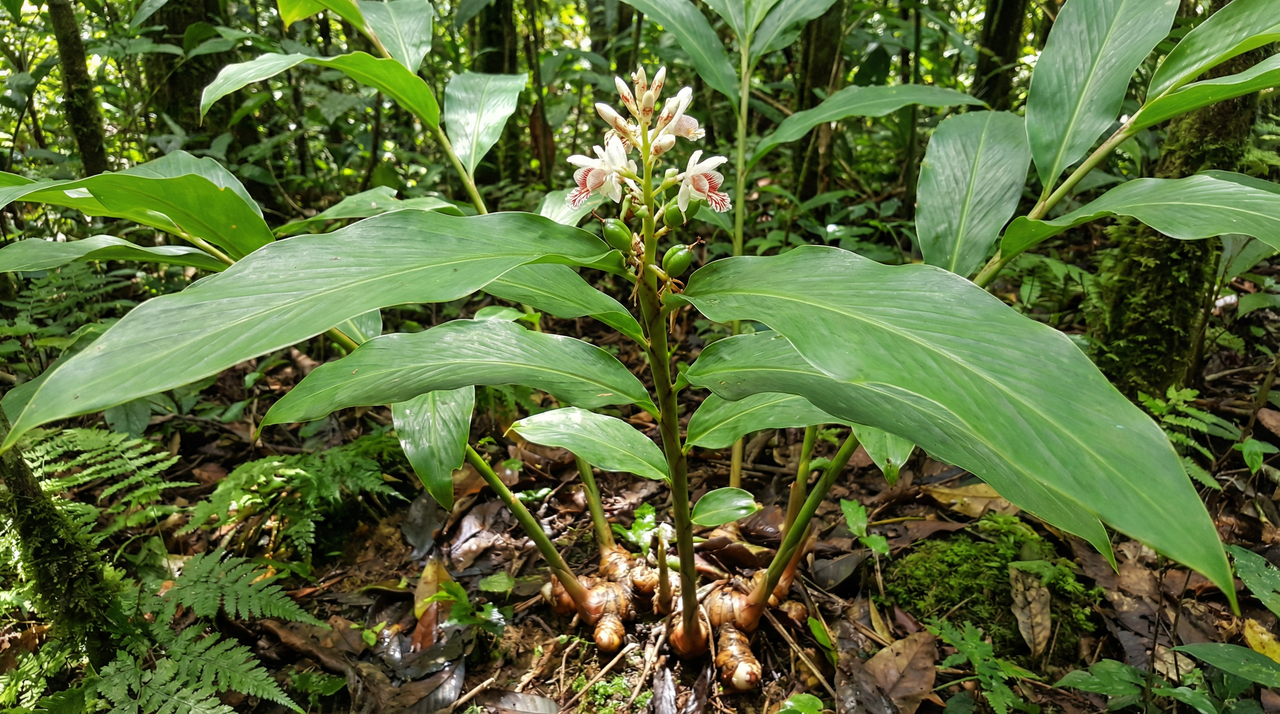
Mature galangal forms dense clumps of unbranched pseudostems reaching 1.5 to 3 meters tall with a spread of roughly 0.9 to 1.8 meters, rising from thick, knobby, reddish-brown rhizomes that can be two to five centimeters in diameter and creep horizontally up to two meters.[6][10] Crack one open and the inside is a pale yellowish-white with a sharp, camphorous, almost piney aroma that immediately tells you this isn't common ginger. That scent is how I distinguish galangal from other rhizomatous species at the nursery without needing a label, and it's unmistakable once you've experienced it.
The leaves are lanceolate, up to 50 centimeters long, arranged in two neat ranks along the pseudostems. Flowers emerge in terminal spikes twenty to thirty centimeters long, white with red and pink veining on the fringed labellum, and the plant fruits into small red-orange capsules containing black seeds roughly three to six months after blooming.[2][11] Shell ginger's flowers are a different picture entirely: pendulous, orchid-like, emerging from showy boat-shaped bracts with a deeply curved lip, glossy foliage, and a 'Variegata' cultivar prized for its cream-striped leaves.[12] Beautiful, yes. But its rhizomes won't end up in your tom yum.
Traditional and Cultural Uses Across Asia
The deep roots of galangal in human culture are part of why I trust it as a perennial in food forests over shorter-lived annual spices. A plant documented in the ancient Ayurvedic Sushruta Samhita around 600 BCE and in China's Shennong Bencao Jing around 200 CE, prescribed across those two thousand years for gastrointestinal complaints, inflammation, nausea, respiratory ailments, and wound healing, isn't some fleeting culinary trend.[13][14][15] It's a proven survivor of human use across cultures ranging from Javanese and Orang Asli communities to Thai, Philippine indigenous groups, and South Indian Ayurvedic practitioners.
Beyond the apothecary, galangal's rhizomes are kitchen essentials across Southeast Asia, central to Thai red curry pastes and the broth of tom yum in ways that have no real substitute. Spiritually, the plant appears in Balinese Hindu ritual offerings, Javanese wedding purification ceremonies, and Thai Buddhist cleansings.[16][17] The plant's presence in both kitchen and ceremony reflects how thoroughly embedded it became in the daily and sacred lives of the cultures that cultivated it.
That depth of use also raises real responsibilities for modern growers. Despite galangal's globally Least Concern conservation status, wild harvesting has created localized population pressure in parts of Southeast Asia, and the traditional knowledge tied to this plant remains at risk of being co-opted without benefit-sharing arrangements.[18][19] I recommend cultivated galangal over wild-harvested in every landscape design I do, and frameworks like the Nagoya Protocol give us an ethical roadmap for engaging with plants whose indigenous knowledge systems still deserve protection.[20]
Fun Facts, Archaeological Roots, and Modern Context
Archaeological evidence places galangal in Southeast Asian spice blends dating to the first millennium CE, suggesting it traveled ancient trade routes well before it appeared in European medieval spice recipes or arrived in the wider global kitchen.[16] The dried rhizomes yield essential oils dominated by 1,8-cineole, with regional variation, including higher methyl chavicol concentrations in some Thai samples, accounting for subtle differences in fragrance and heat across its range.[21]
That regional diversity extends to the informal cultivar landscape too. Thai 'kha' selections tend toward larger rhizomes with higher concentrations of 1'-acetoxychavicol acetate, while Indonesian 'lengkuas' varieties are valued more for their intense fragrance.[22][23] You'll sometimes see it labeled "greater galangal" to distinguish it from the smaller lesser galangal (Alpinia officinarum), a naming convention that's worth knowing when sourcing rhizomes or seeds. And while galangal is the culinary anchor of the Alpinia genus, shell ginger's spectacular variegated cultivars and elaborate floral morphology have expanded the family's cultural reach from purely utilitarian into decorative traditions across East Asia and the Pacific, a reminder that this is a genus with genuinely broad gifts to offer any thoughtful garden.[24][25]
Galangal Varieties and Where to Buy Them
Notable Varieties of Greater Galangal and Related Species
If you're expecting a catalog of named cultivars the way you'd find with, say, basil or pepper, galangal will underwhelm you on paper. Alpinia galanga has no formally designated subspecies and remarkably few named selections.[26][27] The informal names you'll encounter -- 'Red Galangal', 'Siamese', 'Thai Red' -- describe regional selections or rhizome color variations rather than anything registered with a botanical authority. In practice, 'Alpinia galanga var. galanga' covers nearly everything you'll grow and eat. What you're really choosing between is the quality of the rhizome in front of you, not a named variety on a tag.
The plant itself is hard to mistake once you've met it: a towering clumping perennial that tops out between six and ten feet, producing those thick cylindrical rhizomes with reddish-brown skin and pale interior flesh.[28][6] That size matters in a food forest design -- this is an herbaceous layer plant that makes a statement.
The confusion I see most often is people conflating greater galangal with Alpinia officinarum, lesser galangal. They're distinct species with different flavor profiles, smaller rhizomes in the case of A. officinarum, and different traditional applications.[29][30] If your goal is the galangal in Thai and Indonesian cooking, you want the greater galangal plant. Lesser galangal has its own culinary and medicinal history, but it's not interchangeable.
Where the Alpinia genus does explode with variety is in Shell Ginger (Alpinia zerumbet), the ornamental cousin. Cultivars like 'Variegata' (creamy-striped leaves), 'Rubra', 'Black Stem', 'Pink Pearl', and 'Compacta' offer real design diversity,[31][32] and yes, the young shoots, flowers, and leaves are edible with a mild ginger-like character. But I'd steer Florida gardeners away from planting it freely in the landscape -- I've seen it escape and form dense colonies that crowd out natives.[33] Greater galangal is the responsible edible-landscape choice here, with no comparable invasiveness record in U.S. cultivation.[34]
Sourcing Galangal Rhizomes, Plants, and Seeds
Don't expect to find live greater galangal plants at a big-box garden center. It's a specialty item, most reliably sourced through tropical herb nurseries, and availability clusters in Florida, Hawaii, and California where the climate makes growing it practical.[35][36] Fresh rhizomes turn up year-round in Asian grocery stores -- the U.S. imports roughly 1,000 to 2,000 metric tons annually, mostly from Thailand and Indonesia[37] -- but grocery store rhizomes are hit or miss for planting stock.
I've had noticeably better results starting from nursery-sourced 'Thai Red' rhizomes than from anything pulled off a supermarket shelf. The difference shows up quickly: more vigorous sprouting, stronger early clump establishment. When you're selecting rhizomes, look for pieces that feel heavy for their size, firm without any soft spots, and carry multiple visible buds. Pieces from two to three year old clumps in the 50 to 100 gram range tend to perform best. Skip anything with signs of rot, shrivel, or pest damage -- no amount of good soil fixes a compromised start.
For live plants, Florida Hill Nursery and Logee's Greenhouses are both sources I've ordered from with good results.[35][38] Etsy has expanded options too, though shipping restrictions mean most sellers won't send rhizomes outside warm-climate states. Budget around $15 to $30 for a live plant, or $8 to $15 per pound for fresh rhizomes from spice retailers.[39] Seeds exist and are cheaper ($5 to $12 a packet), but germination is slow and unreliable enough that most experienced growers skip them entirely.
Zone reality shapes all of this. Greater galangal needs USDA zones 9 to 11 for outdoor cultivation year-round.[40][41] If you're gardening in zone 8 or cooler, a large container that comes inside for winter is your path forward. Import rules add another layer if you're trying to bring rhizomes in from abroad -- fresh material requires phytosanitary certification and may need hot water or irradiation treatment before entry.[42] Dried or processed galangal travels with far fewer restrictions, so for eating, that's easy. For planting stock, buy domestic.
Galangal Propagation and Planting
In fifteen years of designing edible landscapes, I have never once met a grower who relies on galangal seed. Not a single one. Rhizome division is how the world grows this plant, and with good reason: it's faster, cheaper, and guarantees you get exactly what you planted. If you dug up a productive clump from a friend's garden or sourced a plump, fresh rhizome from a specialty nursery, you already have everything you need to get started.
Propagation Methods: Rhizome Division vs. Seed
The standard approach is to cut healthy, mature rhizomes into sections roughly 5 to 10 cm long, each carrying at least one visible bud or shoot, and plant them in spring or early summer when soil temperatures are reliably warm.[43][28] I've found that the visual difference between a good division candidate and a bad one is obvious once you've seen both: a freshly dug rhizome that's ready to divide is firm, plump, and slightly waxy, with tight buds just beginning to swell. A supermarket root that sat in a bin for three weeks is papery at the cut ends and often produces nothing at all. Freshness is everything.
For operations scaling up to commercial quantities or wanting pathogen-free stock, tissue culture through shoot-tip or rhizome-section explants allows rapid multiplication of disease-free plants.[44][45] For everyone else, a sharp knife and a healthy mother clump will do fine.
Seed propagation is a different story entirely. Germination rates are poor, often under 20 percent even with fresh seed, and the plant shows a strong tendency toward sterility.[46][28] Even when seeds do germinate, the offspring are often not true to type because of cross-pollination; you may wait years and end up with a plant that doesn't match the culinary qualities you wanted.[46] This pattern holds across the genus: shell ginger (Alpinia zerumbet) growers face the same tradeoffs, and variegated cultivars are always propagated vegetatively to preserve their traits.[47]
Seed Morphology, Storage, and Germination for Galangal
If you do want to try galangal from seed, understanding the seed biology will save you a lot of frustration. The seeds themselves are small, around 3 to 5 mm long, lens-shaped, and brownish-black to black at maturity, with a hairy surface and a distinctive white fleshy aril at the base.[48][49] That aril isn't decorative; it's thought to attract ants and potentially birds as dispersal agents.[48]
What makes seed propagation genuinely tricky is recalcitrance. Galangal seeds are classified as recalcitrant, meaning they have high moisture content at maturity (around 40 to 50 percent) and cannot be dried down or cold-stored without rapidly losing viability.[50][51] Dropping moisture content below roughly 20 to 30 percent, or chilling below 10 °C, can kill them.[50] After losing two batches to a standard refrigerator in my first attempts, I now keep a dedicated small unit set at 12 to 15 °C packed with damp vermiculite. Even under those careful conditions, viability declines significantly after three to six months, and germination rates that start near 60 to 90 percent with truly fresh seed can drop well below 30 percent by the time most gardeners source commercial stock.[50][52]
Germination itself, once you have viable seed, isn't complicated: warm temperatures between 25 and 30 °C, consistent high humidity, and two to eight weeks of patience.[53] There's no significant physiological dormancy to overcome, but soaking seeds in gibberellic acid at 100 to 500 ppm for 24 hours, or light scarification, can improve your odds.[53][54] My honest advice: unless you're specifically interested in the process or working on a breeding project, skip the seeds and divide a rhizome.
Soil, Site Selection, and Planting Technique
Galangal wants what its native Southeast Asian rainforest floor provides: loose, fertile, well-drained soil that holds moisture without ever sitting wet. The preferred pH runs from 5.5 to 7.0, with a sweet spot around 6.0 to 6.5, and organic matter content of at least 2 to 5 percent.[55][56] I watch for purplish lower leaves fading to yellow as an early warning that pH is drifting out of range, usually signaling nutrient lockout before a soil test confirms it. Waterlogging is a non-starter; compacted or poorly draining soils invite the rhizome rots that are this plant's biggest vulnerability.
For most garden situations, working in 5 to 10 cm of compost or well-rotted manure before planting is enough to give the rhizomes a strong start.[57] In heavy clay, adding 10 to 20 percent coarse sand or perlite improves drainage meaningfully.[58] For clients in zone 9B who want to grow galangal in containers and overwinter them indoors, I've settled on a mix of 40 percent garden soil, 30 percent compost, and 30 percent perlite in deep pots with generously-sized drainage holes.[6] That ratio has held up well across multiple seasons without compacting or going hydrophobic.
Spacing, Depth, and Establishment
A mature galangal clump is a substantial thing, and spacing decisions you make at planting will either give it room to perform or set you up for annual battles with overcrowding. Think of it the way I think about cardamom or turmeric in a food-forest guild: each plant eventually needs its own column of air. For a kitchen garden or polyculture planting, I space rhizomes 30 to 45 cm apart within rows, with 60 to 90 cm between rows.[28][59] Where you want large, established clumps for landscape impact, wider spacing of 90 cm to 1.2 m makes more sense and allows adequate airflow to reduce fungal pressure as the stems thicken up.
Plant the rhizome sections 5 to 10 cm deep, and make sure the bed or container offers at least 30 to 50 cm of workable soil depth beneath them so the expanding rhizome mass has somewhere to go.[60][61] Under good conditions, meaning consistent moisture, temperatures between 25 and 30 °C, and partial shade, you can expect new shoots to emerge and roots to establish within four to six weeks.[61] In a windy site, be prepared to stake taller stems once the clump matures; the canes can reach 1.5 to 3 meters and catch wind like a sail.
Germination and Maturity Timeline
The contrast in timelines between the two propagation methods is worth stating plainly. Rhizome-grown plants can yield harvestable roots within roughly one year under good conditions. Plants grown from seed take two to three years to reach the same point.[27][62] Even if seeds germinate on schedule, two to eight weeks after sowing under warm, humid conditions,[53] the seedlings grow slowly in those first months. I always label seed flats carefully because young galangal seedlings look nearly identical to ginger and can pass for ornamental grasses until they're well established.
Once a clump is in the ground and happy, the arithmetic shifts entirely in your favor. Galangal expands reliably each season through its own rhizome network, and divisions from a healthy established clump will always outpace anything you started from seed. That's the real payoff of getting the propagation right the first time.
Galangal Care Guide: Water, Light, Feeding, and Seasonal Maintenance
Growing galangal successfully comes down to understanding one thing first: this plant evolved in the humid understories of Southeast Asia, and every care decision you make should acknowledge that origin. Get the fundamentals right and it rewards you with vigorous clumps and aromatic rhizomes. Push it too far outside its comfort zone without support, and it lets you know quickly.
Watering Needs for Galangal: Consistent Moisture Without Waterlogging
Consistent moisture is the foundation everything else rests on. Galangal wants its soil evenly moist, roughly 1-2 inches of water per week during active growth, with the top inch of soil as your guide: when that dries out, it's time to water.[63][28] I learned this the hard way early in my design career when I overwatered a new clump and ended up with mushy roots and yellowing leaves before I'd even gotten a decent harvest. The symptoms of too much water and too little water can look deceptively similar: wilting, yellowing, stunted growth.[64] The difference shows up at the roots, where overwatering causes soft, rotted tissue and underwatering leaves them dry and stringy.
A 2-4 inch layer of organic mulch does more work than almost anything else you can do for moisture management. It buffers soil temperature, slows evaporation, and gives you a wider margin of error between waterings.[65] Soil pH in the 5.5-7.0 range and good drainage are non-negotiable; galangal handles brief dry spells better once established, but prolonged drought directly reduces rhizome development.[63][66] If you're in a dry climate or growing under cover, misting helps replicate that 50-80% humidity the plant genuinely prefers.[67]
Sunlight and Heat Tolerance for Healthy Galangal Growth
Galangal is not a full-sun plant. Its natural home is the forest understory, and it performs best with 4-6 hours of direct or filtered morning sun followed by afternoon shade.[68][69] Too much direct sun produces tell-tale brown necrotic margins, bleaching, and leaf curl; too little leads to pale, leggy growth and thin rhizomes. In Central Florida's peak summer, I've seen unprotected plants develop serious leaf scorch within days of a heat spike, which is why I now reach for 30-50% shade cloth as soon as temperatures climb reliably into the high 80s.[28]
Optimal growth happens between 77-86°F, and plants can tolerate up to 95°F if they have consistent moisture and some afternoon cover.[70] Below that threshold, keeping humidity at 70-80% and roots cool with mulch handles most of what summer throws at these plants.[71]
Frost Tolerance and Overwintering Strategies for Galangal
Galangal is rated for USDA zones 8b-11, with zones 9-11 being where it truly thrives without intervention.[72][64] Leaves will take damage before rhizomes do; the tops brown and die back at the tips and edges first, while the underground portions hold on longer. In zone 8, piling 8-12 inches of organic mulch over the root zone after the first frost has consistently allowed my rhizomes to rebound come spring, even through dips that most references would call marginal.[73][74] If you're in zone 7 or colder, dig the rhizomes before hard frost and store them indoors at 55-65°F with good humidity until spring replanting.[75] Good drainage matters here too: waterlogged soil in cold weather invites root rot faster than the frost itself.
Feeding Galangal: Nutrients for Rhizome Development and Vigor
Galangal is a moderate to heavy feeder, and what you put into the soil shows up directly at harvest. Watch for interveinal chlorosis in young leaves (iron deficiency), marginal necrosis on older leaves (potassium), and purplish discoloration (phosphorus) as the earliest visual diagnostics.[76][77] A balanced 10-10-10 or 15-15-15 fertilizer applied monthly through the spring-to-fall growing season keeps all three macronutrients in play, at roughly 50-100g per plant for home gardens.[40][78] I've paid particular attention to potassium levels over the years and consistently found that seasons with adequate potassium deliver noticeably plumper, more aromatic rhizomes. The difference is real enough that you'll taste it. Always amend beds with compost before planting, apply fertilizer after watering to prevent root burn, and taper off completely in winter.[79]
Pruning, Maintenance, and Seasonal Rhythm
The ongoing work of galangal plant care follows a natural seasonal cadence. Through the growing season, remove dead, yellowing, or damaged leaves at the base regularly; this improves air circulation and removes habitat for disease before it can establish.[80] Cut spent flower stalks to the ground after blooming, and stake taller stems (these plants reach 6-10 feet) if your site gets wind.[81] Every 2-4 years, plan a spring division: lift the clump, separate healthy rhizome pieces with at least one good shoot using a sterile knife, and replant at the same depth.[80] I think of this as renewing the planting rather than just maintaining it. Divided clumps come back more vigorously, produce better rhizomes, and stay disease-free longer. In tropical conditions galangal grows almost continuously; in subtropical and warm-temperate gardens it slows through winter, potentially going dormant below 60°F, then surges back in spring.[82][83] Use that winter slowdown to assess, mulch, and plan; let spring bring the feeding, dividing, and active growth.
Harvesting Galangal (Alpinia galanga)
When to Harvest Galangal Rhizomes
Galangal grown from rhizome divisions is typically ready to harvest 8-12 months after planting, and the plant tells you when through a pretty reliable visual cue: once 70-80% of the above-ground foliage yellows and begins to die back, the rhizomes below have usually completed their maturation cycle.[79][84] In warmer regions like Thailand and India, growers often pull rhizomes at the 9-10 month mark; in cooler subtropical conditions closer to mine in Central Florida, that full 12 months tends to be the more realistic target.[85][82] The dry season window, roughly October through March in tropical zones, is the traditional harvest period for good reason: drier soil around the rhizomes keeps rot risk low and makes digging cleaner.[62] What you're looking for in a ready rhizome is size: mature pieces run 10-20 cm long and 2-5 cm in diameter, firm and plump with that characteristic hard, knobby exterior.[79][27]
Shell Ginger (Alpinia zerumbet) follows similar leaf-senescence cues but requires 2-3 years from planting to reach harvestable rhizome size, and since it's primarily ornamental, harvest practices aren't nearly as standardized.[86] For anyone growing Alpinia for the kitchen, that contrast matters: galangal gives you culinary rhizomes in under a year from divisions while Shell Ginger keeps you waiting.
How to Harvest and Handle Galangal
My approach is to wait until we've had a dry spell of at least several days before I dig. Wet soil clings to the rhizomes, makes it harder to see what you're working with, and increases the chance of nicking or bruising them during extraction. I push a garden fork into the soil about 15-20 cm out from the base and lever upward gently rather than digging straight down, which reduces the snapping and tearing that damages good pieces.[85] The goal isn't to pull the whole clump; galangal's perennial habit means you can harvest a portion of the rhizome mass each year and leave the rest in the ground to regrow.[87][88] This partial-harvest approach keeps the planting productive season after season without starting from scratch.
Once they're out of the ground, store fresh rhizomes somewhere cool, dark, and moderately humid, around 10-13°C.[5] If you're drying them for longer storage, expect a yield of 0.5-1.5% essential oil from the dried material, which is enough to give dried galangal root its characteristic intensity.[89]
Galangal Rhizome Flavor, Yield, and Quality
Fresh galangal delivers something no other Zingiberaceae in my garden quite replicates: a sharp, piney, citrusy aroma with that warm peppery edge that hits you immediately when you snap a rhizome open.[90][91] In my experience, waiting the full 8-12 months is genuinely worth it. I harvested one clump early in my second season, around the 6-month mark, and the difference was obvious: the roots were softer, lighter in color, and the aromatic punch was noticeably muted compared to a fully mature piece.
Properly matured rhizomes are firm and dense with light brown skin and a pale yellow interior, and they have that hard, almost woody snap when you cut through them.[82] That fibrous, dense texture is exactly why I always slice mine paper-thin for teas or pastes; it doesn't soften like ginger and resists grinding unless it's fully dried. When you do dry galangal, the flavor profile shifts: the bright citrus edge gives way to something more woody, camphor-forward, and resinous, which has its own appeal in spice blends and dried galangal powder but is a genuinely different ingredient from the fresh root.[91] This is why mature roots are prized; an early harvest yields a milder flavor that lacks the intense pine-resin bite that defines true culinary galangal.[92] That lingering spicy-citrus warmth fading to something clean and faintly sweet is what the whole growing season is building toward.
Galangal Preparation and Uses
Culinary Uses and Flavor Profile of Galangal
The rhizome is where this plant lives culinarily. Leaves can wrap food during cooking to lend a faint background note. They are not eaten directly, and the stems, flowers, and seeds don't come into the kitchen at all.[89][93] Everything is about that rhizome, and it delivers something ginger simply doesn't. Fresh galangal is crisp, almost piercingly aromatic, with a flavor that reads as citrusy and piney before the heat arrives. That profile comes from its essential oil composition, which runs roughly 40-70% 1,8-cineole (the same eucalyptus-family compound that gives it that clean, almost camphoraceous edge), alongside methyl cinnamate for sweetness and paradol for the heat itself.[94][95] I've noticed that late-summer rhizomes from my own garden hit those citrus-pine notes hardest, and I now deliberately time my harvests for Thai paste-making with that in mind.
When you cook galangal, that sharp intensity mellows considerably into something warm and sweet-spicy with far less edge.[91] This is why it works so well in long-simmered tom yum, rendang, and Indonesian spice pastes where it anchors flavor without overpowering everything else.[96] You can use it fresh (sliced or grated), dry it into powder, or pickle it, each method pulling a slightly different register from the same rhizome.[89]
For post-harvest handling, I've found the curing step genuinely worth doing: a 2-3 day rest wrapped in turmeric leaves or soaked briefly in lime solution at room temperature reduces fungal risk and produces a subtle shift in aroma that's noticeably cleaner than uncured rhizomes.[97] If you're drying for galangal powder, slice pieces 5-10 mm thick and sun-dry for 3-5 days or use a dehydrator at 50-60°C for 8-12 hours until moisture drops to around 10-12%.[98] Fresh rhizomes store for 2-3 months refrigerated at 13-15°C; dried pieces in a ventilated container at cool room temperature keep for 1-2 years.[97]
If you're growing both species and wondering how Shell Ginger compares as a galangal substitute in the kitchen, the honest answer is: it depends on what you're after. Shell Ginger's young spring shoots are edible raw or cooked, tender and mild like bamboo shoots;[99] its flowers are sweet and floral, lovely in salads or tempura;[92] its rhizomes are edible but run bitter, more suited to teas than any recipe using galangal as a spice anchor.[100] I've used the zerumbet flowers in salads where I wanted something floral and gingery-sweet, a flavor galangal rhizomes simply cannot offer. The two species complement rather than replicate each other, which is exactly the kind of layered yield a food forest rewards.
Medicinal Preparations and Traditional Applications
Traditional preparations span a fairly wide range: decoctions, tinctures, infusions, essential oil extractions, and dried powders all appear across Ayurvedic and Southeast Asian herbal systems.[101] The strongest documented applications center on digestive complaints, nausea, inflammation, and respiratory issues, with conventional dosage guidance suggesting 1-3 grams of dried rhizome per day or equivalent extracts.[102][103] I always tell people: consult a healthcare provider before moving from culinary use into anything concentrated. Growing conditions affect bioactive strength in ways we can't predict, and most of the clinical evidence remains preclinical or in-vitro. The gap between "this compound shows anti-inflammatory activity in a lab" and "take this much daily for this condition" is real and not one I'm comfortable bridging without professional guidance. Shell Ginger preparations follow a similar traditional range of tinctures, poultices, and infusions, with the same caution: dosages are tradition-specific and variable.[104]
Non-Food Uses and Other Applications
The same volatile-rich chemistry that defines galangal's flavor carries into its non-culinary roles. Galangal leaves have been used as poultices for headaches and wound care, while Shell Ginger leaves serve as food wrappers in Japanese and Southeast Asian traditions, imparting a gentle aroma to rice cakes or fish without the bitterness of the rhizome.[105][106] That 1,8-cineole-rich essential oil doing the flavor work in the kitchen is also what makes the leaves credible as mild topical aids and aromatic wrappers. It's a tidy reminder that in a well-designed polyculture, every part of the plant earns its space.
Galangal Health Benefits and Medicinal Uses
What draws me to galangal as both a grower and a cook isn't any single compound or traditional claim -- it's how consistently the modern pharmacological picture lines up with what healers in Thailand, India, and China have been doing with this rhizome for over two thousand years. The chemistry is real, the traditional uses are coherent, and the caveats matter. I'll give you all three.
Key Phytochemicals in Galangal: 1,8-Cineole, Galangin, and 1'-Acetoxychavicol Acetate
Galangal's reputation rests on four main compound classes working together. The essential oil (0.5–1.5% of the rhizome by weight) is dominated by 1,8-cineole at 20–50% of that fraction, with α-pinene, β-pinene, camphene, and methyl cinnamate rounding out the profile.[107][108] Then there are the flavonoids -- galangin and kaempferol primarily, along with quercetin and their glycosides, concentrated highest in the leaves but present throughout the plant.[109][110] The third class is 1'-acetoxychavicol acetate (ACA), a diarylheptanoid unique enough to be considered one of galangal's chemical signatures, showing anti-inflammatory, anti-allergic, and cytotoxic properties in isolation.[111][112] Underpinning all of them is a dense phenolic matrix -- roughly 80 mg GAE per gram in rhizome extracts -- including ferulic, gallic, and p-coumaric acids.[113]
I've grown galangal in my Central Florida garden for years, and one thing I've noticed firsthand: rhizomes harvested after a dry spell are noticeably more aromatic and pungent than those dug after prolonged wet weather. That tracks with the research. Phytochemical levels shift significantly with soil pH, season, altitude, and environmental stress, and tropical conditions combined with organic practices tend to push essential-oil and phenolic yields higher.[114][115] If you care about potency, your growing conditions are part of the equation. I also grow shell ginger alongside my galangal, and the scent difference in the leaves is immediately obvious -- that distinctive camphoraceous quality in shell ginger comes largely from zerumbone, which can make up 20–72% of its rhizome essential oil and represents a genuinely different chemical strategy within the same genus.[116]
Medicinal Research and Pharmacological Actions
Traditional uses of galangal read like a comprehensive digestive and anti-inflammatory toolkit: Ayurvedic, Thai, and Chinese systems have used it for indigestion, nausea, flatulence, ulcers, rheumatic pain, respiratory complaints, wound healing, and as a general circulatory tonic.[117][118] Modern pharmacology has largely validated the core of that list. The strongest preclinical evidence sits in four areas: antioxidant activity, anti-inflammatory effects, antimicrobial action, and anti-diabetic potential.[119][120]
The mechanisms are worth understanding because they explain why so many traditional uses cluster around inflammation. Galangin and kaempferol suppress COX-2 by blocking NF-κB nuclear translocation via reduced IKKβ phosphorylation, while ACA and alpinetin damp down ERK and p38 MAPK signaling, directly lowering cytokine release.[121][122][123] On the antioxidant side, kaempferol metabolites activate the Nrf2 pathway, increasing HO-1 and SOD expression, while 1,8-cineole and related terpenoids act as weak TRPV1 antagonists -- which helps explain the analgesic effects seen in animal pain models.[124][125] Shell ginger's zerumbone extends this picture into neuroprotective territory (AChE inhibition, anti-apoptotic effects), hepatoprotective action, and anti-obesity activity via PPARγ/AMPK modulation, though all of this remains preclinical.[126]
That last point deserves emphasis. Almost all of the pharmacological data for galangal comes from in-vitro and animal studies; human clinical trials are essentially absent.[117][119] The lab and animal work is genuinely impressive, but I treat galangal as a supportive kitchen herb rather than a standalone medicine until we have better human data -- and I think that's the honest position.
Nutritional Profile of Galangal Rhizomes
Fresh galangal rhizome clocks in at roughly 80–97 kcal per 100 g, with 18–22 g of carbohydrates, 2–8.5 g of fiber, 1–3 g of protein, and 80–85% water.[127] Vitamins and minerals are present but modest: about 5–10 mg vitamin C, some B vitamins, potassium in the 300–500 mg range, and decent calcium and magnesium.[128][129] The practical issue, as with turmeric or ginger, is that you're using 5–10 g per dish at most. The macro contribution is negligible. What you're actually getting in those small amounts -- and what makes galangal worth growing -- is its dense phenolic and flavonoid content: 100–300 mg GAE per 100 g of phenolics, and 20–50 mg per 100 g of flavonoids. Those are the compounds that overlap directly with the medicinal properties above.
Processing matters more than most people realize. Drying concentrates macronutrients and minerals but can degrade vitamin C by 20–40%; cooking reduces water-soluble nutrients further; and dry-season rhizomes tend to carry higher volatile concentrations than wet-season ones.[130][131] I've noticed this when comparing fresh-grated galangal to the dried powder in my pantry -- the fresh rhizome has that bright, piercing pine-citrus bite, while the dried version goes softer and woodier, similar to what happens with ginger but more pronounced. For the phenolics and flavonoids you actually want, fresh or minimally processed is the better choice.
Safety Considerations and Contraindications
Galangal's safety record as a food is solid. The FDA lists it as GRAS, acute toxicity in animal models puts the LD50 above 5 g/kg, and culinary use at 1–3 g dried or a teaspoon or two of fresh rhizome daily is considered safe for most adults.[103][132] At higher medicinal doses, some people experience stomach upset, heartburn, or oral irritation; the undiluted essential oil is a dermal and mucous-membrane irritant and should never be applied directly to skin.[133]
Two interactions deserve direct attention. If you take warfarin or any anticoagulant, talk with your doctor before using galangal medicinally -- galangin inhibits CYP3A4 and the plant has antiplatelet effects, and the interaction data are consistent enough that caution is warranted.[134] Galangal can also enhance the effect of antidiabetic medications, creating a hypoglycemia risk that's worth monitoring if you're managing blood sugar pharmacologically.[135] As for pregnancy: I don't use galangal medicinally during pregnancy and I advise clients in the same situation to avoid it too. Possible emmenagogue effects and insufficient safety data in pregnancy make the conservative choice the right one.[103] In culinary amounts, pets are generally fine, but large quantities of essential oil should stay away from dogs and cats.[136]
Galangal Pests and Diseases
Galangal comes to the garden with a kind of built-in chemical bodyguard. The same essential oils that make the rhizome so compelling in the kitchen -- 1'-acetoxychavicol acetate, 1,8-cineole, alpha-pinene -- give the plant measurable insect-deterrent and antimicrobial properties that hold many common garden pests at arm's length.[137][138] I've noticed this in practice: when I tuck galangal into guild understories alongside tender herbs, those neighbors seem to attract noticeably less foliar insect pressure than when they're planted out on their own. The aromatic foliage appears to do real work. Compared with the ginger I grow a few beds over, galangal's tougher leaves and stronger scent translate to meaningfully lower foliar pest pressure.[139]
Natural Pest Resistance and Common Insect Pests
Despite those defenses, thrips (Frankliniella spp. and Scirtothrips spp.) reliably break through. They're the headline pest in humid subtropical and tropical growing conditions, causing scarring, flower deformation, and distorted new foliage that reduces both aesthetics and yield.[140] I check leaf undersides weekly once temperatures climb in late spring; catching thrips early, before populations explode, makes a real difference. Leaf miners and stem borers represent a secondary tier of concern, weakening plants through trails and tunnels but rarely causing outright collapse on established clumps.[141]
Spider mites show up specifically when plants are heat-stressed or dry, producing the telltale bronze stippling on upper leaf surfaces.[142] I've seen the same mite flare-ups on neighboring Shell Ginger during drought stretches, which makes sense given their shared genus chemistry. Aphids, mealybugs, rhizome weevils, rhizome flies, and shoot borers round out the threat list; most are manageable, but rhizome weevils (Odoiporus longicollis) and rhizome flies cause wilting and yield loss that can be genuinely frustrating to diagnose since the damage happens underground.[143][144] The Thai cultivars 'Bangmod' and 'Phrae' show moderate resistance to rhizome pests, attributed to higher essential oil content and thicker rhizome skin, though most of this data comes from Southeast Asian research and should be adapted to your local conditions.[145] For control, I rely on neem oil and insecticidal soap before anything else, with good spacing and air circulation as the first line of defense.[146][78]
Major Diseases and Environmental Factors
The disease picture is more serious than the pest picture, especially in humid climates with heavy soils. Rhizome rot and root rot caused by Fusarium, Pythium, and Phytophthora species top the list, producing soft, discolored rhizomes and sudden wilting that often first announces itself after heavy summer rains.[147][148] I've learned that lesson the hard way in heavy Florida soils: what looks like drought stress one afternoon is frequently rot by the next morning. Bacterial soft rot (Erwinia spp.) and bacterial wilt (Ralstonia solanacearum) thrive when humidity stays above 80%, while leaf spot (Colletotrichum spp.), rust, root-knot nematodes, and occasional viral diseases fill out a full pathogen roster.[149][150]
Disease risk jumps sharply when humidity exceeds 80%, soil pH drops below 5.0, or drainage fails.[151] Keeping pH between 5.5 and 7.0, temperatures in the 25–30 °C range, and relative humidity at 60–80% in well-drained loamy soil creates conditions where most pathogens struggle to establish. Some galangal landraces show improved tolerance to bacterial wilt and rhizome rot, but breeding for resistance is far less advanced than it is for commercial ginger, so cultural prevention remains your best tool.[152] My standard approach combines raised beds, strict crop rotation, 3 to 4 foot spacing for airflow, soil solarization between plantings, and meticulous removal of infected debris.[153][63] On an edible crop, I reach for copper-based fungicides only as a genuine last resort; prevention through drainage and sanitation is almost always enough when you're consistent about it.
Galangal in Permaculture Design
Walk through a well-established subtropical food forest and you'll often find galangal doing exactly what it evolved to do: filling the herbaceous understory with dense, upright clumps while taller canopy plants like banana or papaya claim the sky above. That's not coincidence. Alpinia galanga is native to the shaded, humid understory of Southeast Asian tropical rainforests, where it reaches 1.5 to 3 meters tall with a tight rhizomatous clumping habit that crowds out competition at ground level.[89][154] I love this plant for that exact quality. In my Central Florida designs, the broad lance-shaped leaves arch outward and create what amounts to a living mulch, shading the root zone of surrounding plants while their litter breaks down into a slow, steady fertility contribution beneath the clump.
Forest Layer and Guild Roles
Galangal sits in the herbaceous layer, and it earns its place there several times over. The dense clumping habit suppresses weeds effectively, reduces surface erosion on sloped or sandy ground, and improves soil structure through the physical action of rhizome expansion.[155][156] It doesn't fix nitrogen, but it does act as a dynamic accumulator, pulling up potassium and other minerals that cycle back into the system when leaves and spent stems decompose. That high leaf biomass also makes it a worthwhile compost contributor if you're running a hot pile nearby.
Come summer, the fragrant white flowers with red veining attract bees and butterflies consistently enough that I've started positioning clumps deliberately near vegetable beds that need pollinator support.[157][89] The volatile compounds in the leaves and rhizomes also carry some natural insect-repellent activity against mosquitoes and aphids,[158] which I've come to think of as a quiet bonus rather than a main selling point, but it's real.
In guild plantings, galangal pairs naturally with turmeric, lemongrass, taro, and basil at the herbaceous level, with bananas providing the overstory canopy above.[159][80] Shell ginger (Alpinia zerumbet) fits a nearly identical niche in the same layer, reaching 1 to 3 meters with similar preferences for moist, well-drained, organically rich soil and partial shade, so it works as either a companion or an alternative depending on your goals.[160] One management note I learned the hard way: galangal's rhizomes spread. I once let a clump go unmanaged for two seasons and spent an embarrassing number of hours digging runners out of an adjacent bed. Install root barriers at planting, or plan to harvest the perimeter rhizomes annually to keep the clump where you want it.[161]
Climate and Hardiness Zones
Galangal's native climate sets the baseline for every placement decision: it wants temperatures between 20 and 30°C (68 to 86°F), humidity in the 70 to 90 percent range, and rainfall equivalent to 1,500 to 3,000 mm annually.[4][162] In practice, that means it thrives where other tropical gingers and heliconias thrive. If your site feels right for those plants, galangal will probably be happy there too.
Officially, it's hardy in USDA zones 8 through 11, but zone 9 through 11 is where you'll see real vigor.[163][164] Established plants can survive brief dips to around 25 to 30°F with protection, but active growth requires a minimum of 50 to 55°F, and frost will kill the foliage back hard.[6] In zone 9b, I routinely protect borderline plantings with a heavy layer of mulch over the rhizome zone and a simple hoop house when temperatures threaten to drop below freezing. The rhizomes usually survive; the stems don't always. In zone 8, I'd honestly recommend containers you can move under cover rather than gambling on in-ground survival every winter. Outdoor cultivation in the U.S. is most reliable in Florida, Hawaii, and coastal California, with container culture opening the door further north.[163][27]
Shell ginger handles cold a bit more generously, tolerating brief lows down to around 10 to 25°F with protection and recovering from roots after light frost in marginal zones.[160][165] Alpinia emaculata, by contrast, is stricter, requiring zones 9b through 11 and showing lethal rhizome damage near 50°F, so think of it as the most frost-sensitive of the three for design purposes.[166] On the invasiveness question: greater galangal has naturalized in Florida, Hawaii, and parts of the Pacific but isn't currently listed as invasive by the Florida Exotic Pest Plant Council. Shell ginger is a different story in Hawaii and parts of Queensland, where it can form dense stands that displace native vegetation.[34][167] Knowing that distinction matters when you're designing for restoration sites or near natural areas. Regular rhizome harvesting solves the containment problem and, conveniently, also puts food on your table.
The Rhizome That Made Me Rethink What a Workhorse Plant Could Be
I planted my first galangal division half-expecting it to just sit there looking tropical and impressive while I waited years for anything useful. What I got instead was a clump that quietly suppressed weeds, fed the soil, pulled pollinators into the understory, and handed me rhizomes that smelled like nothing else in my garden. I still slice a piece fresh before every batch of tom kha, just to smell it, because that sharp piney citrus hit reminds me that some plants really do earn every square foot they occupy.
Sources 167
- Alpinia galanga: A review of its phytochemistry and pharmacological activities ↩
- Alpinia galanga - Wikipedia ↩
- Galangal (Alpinia galanga) - Useful Tropical Plants Database ↩
- Alpinia galanga (L.) Sw. - Plants of the World Online ↩
- Alpinia zerumbet - Missouri Botanical Garden ↩
- Galangal (Alpinia galanga) ↩
- Greater Galangal (Alpinia galanga) ↩
- Propagation and Cultivation of Greater Galangal (Alpinia galanga) ↩
- Horticultural Guide to Ginger Family Plants ↩
- Alpinia galanga (L.) Willd. - Plants of the World Online ↩
- Alpinia galanga (Greater Galangal) ↩
- Alpinia zerumbet - Shell Ginger ↩
- Galangal - Wikipedia ↩
- Ethnobotanical Uses of Alpinia galanga in Southeast Asia ↩
- Traditional Medicinal Uses of Alpinia Species in Southeast Asia ↩
- Galangal: A Review of Current Knowledge and Future Perspectives ↩
- Ethnobotany of Greater Galangal in Southeast Asian Ceremonies ↩
- Conservation Status of Alpinia galanga ↩
- Ethnobotany and Sustainability of Greater Galangal ↩
- Biopiracy Concerns in Tropical Plants: Galangal Case Study ↩
- Essential Oils of Alpinia galanga ↩
- Chemical and genetic diversity of Alpinia galanga in Southeast Asia ↩
- Ethnobotany and regional cultivars of greater galangal ↩
- Alpinia zerumbet - Missouri Botanical Garden ↩
- Alpinia zerumbet (Shell Ginger) ↩
- Plants of the World Online: Alpinia galanga ↩
- Galangal (Alpinia galanga) Production Guide ↩
- Galangal (Alpinia galanga) Plant Profile ↩
- Plants of the World Online: Alpinia galanga ↩
- Chemical composition of essential oils from Alpinia galanga and A. officinarum ↩
- Alpinia zerumbet - Missouri Botanical Garden ↩
- Alpinia zerumbet 'Variegata' - Royal Horticultural Society ↩
- Florida Invasive Species Council - Alpinia zerumbet ↩
- Alpinia galanga (L.) Willd. ↩
- Greater Galangal - Alpinia galanga ↩
- Alpinia galangal ↩
- U.S. Ginger and Galangal Imports ↩
- Alpinia galanga (Greater Galangal) ↩
- Greater Galangal Rhizome - Fresh Organic ↩
- Galangal Production Guide ↩
- USDA Plant Hardiness Zone Map ↩
- Importing Plants and Plant Products into the United States ↩
- Propagation of Greater Galangal (Alpinia galanga) ↩
- In Vitro Propagation of Alpinia galanga ↩
- Micropropagation of Alpinia galanga via Tissue Culture ↩
- Propagation Techniques of Greater Galangal (Alpinia galanga L.) ↩
- Growing Alpinia zerumbet from Seed ↩
- Alpinia galanga, Species Profile, Plants of the World Online ↩
- Seed Morphology of Zingiberaceae: Implications for Taxonomy and Dispersal ↩
- Seed Information Database - Kew ↩
- Recalcitrant Seeds in Zingiberaceae ↩
- Recalcitrant Seeds: Guidelines for Tropical Plant Conservation ↩
- Germination and Storage of Seeds of Alpinia galanga ↩
- Propagation of Greater Galangal (Alpinia galanga) ↩
- Alpinia galanga (Greater Galangal) ↩
- Greater Galangal (Alpinia galanga) Production Guide - University of Hawaii ↩
- Galangal Growing Guide - Kew Gardens ↩
- Galangal Production and Marketing in Traditional Systems ↩
- Growing Greater Galangal ↩
- Galangal Cultivation Practices ↩
- Propagation of Galangal (Alpinia galanga) ↩
- Alpinia galanga: Botany and Cultivation ↩
- Growing Galangal in the Home Garden ↩
- Galangal Production Guide ↩
- Alpinia galanga Care Guide ↩
- Cultivation of Greater Galangal (Alpinia galanga) ↩
- Soil and Water Requirements for Ginger Family Plants ↩
- Alpinia galanga ↩
- Alpinia galanga ↩
- Physiological Responses of Alpinia zerumbet to Heat Stress ↩
- Thermal Tolerance in Ornamental Ginger Species ↩
- Galangal (Alpinia galanga) ↩
- Overwintering Tropical Perennials ↩
- Cold Damage to Tropical Plants ↩
- Alpinia zerumbet (shell ginger): Cultural Information ↩
- Nutrient Management in Ginger and Turmeric ↩
- Foliar Nutrient Disorders in Tropical Plants ↩
- Galangal Production Guide ↩
- Cultivation of Greater Galangal (Alpinia galanga) ↩
- Growing Galangal: A Guide to Alpinia galanga Care ↩
- Galangal Cultivation Guide ↩
- Alpinia galanga: Propagation and Harvesting Practices ↩
- Galangal (Alpinia galanga) ↩
- Phenology and Harvest Timing in Alpinia Species ↩
- Galangal Cultivation Guide ↩
- Alpinia zerumbet Cultivation ↩
- Alpinia galanga: Botany and Cultivation ↩
- Reproductive Biology of Greater Galangal ↩
- Alpinia galanga Fact Sheet ↩
- Volatile Compounds of Galangal (Alpinia galanga) Rhizomes ↩
- Sensory Evaluation of Greater Galangal ↩
- Alpinia zerumbet: Edible Uses and Flavor Profile ↩
- Plant Finder: Alpinia galanga - Missouri Botanical Garden ↩
- Essential Oils of Alpinia galanga - PubMed ↩
- Flavor Profile of Galangal Rhizome - ScienceDirect ↩
- Galangal in Traditional Medicine and Cuisine ↩
- Post-Harvest Management of Greater Galangal ↩
- Alpinia galanga: Cultivation and Postharvest Technology ↩
- Edible and Medicinal Plants of Hawaii ↩
- Alpinia zerumbet - Useful Tropical Plants ↩
- Galangal (Alpinia galanga): A Systematic Review of Its Medicinal Uses ↩
- Galangal: Traditional Uses, Botany, Chemistry, Pharmacology - PubMed Review ↩
- Galangal - WebMD ↩
- Alpinia zerumbet: A Review of Its Phytochemistry and Pharmacology ↩
- Alpinia galanga: Ethnopharmacological Uses and Phytochemical Constituents ↩
- Traditional Uses and Pharmacological Activities of Alpinia zerumbet ↩
- Chemical Composition and Antioxidant Activity of Essential Oil from Greater Galangal (Alpinia galanga) Rhizomes ↩
- Phytochemical Analysis of Fresh and Dried Greater Galangal by GC-MS ↩
- Phytochemical and Pharmacological Aspects of Galangal (Alpinia galanga) Constituents ↩
- Flavonoids and Phenolics in Alpinia Species: A Review ↩
- Secondary Metabolites from Alpinia galanga and Their Biological Activities ↩
- Diarylheptanoids from Alpinia galanga: Isolation and Bioactivity ↩
- Phenolic Content and Antioxidant Properties of Alpinia galanga Extracts ↩
- Influence of Environmental Factors on Secondary Metabolites in Alpinia galanga ↩
- Geographical Variation in the Essential Oil Composition of Alpinia galanga from Different Regions ↩
- Bioactive Sesquiterpenes from Alpinia zerumbet and Their Health Benefits ↩
- Alpinia galanga (L.) Willd.: A phytochemical, ethnomedical and pharmacological review ↩
- Ethnobotany of Alpinia galanga in the Philippines ↩
- Pharmacological Review of Alpinia galanga: Antioxidant, Anti‑Inflammatory, Antimicrobial, and Antidiabetic Activities ↩
- Alpinia galanga (L.) Willd., A Review of Its Phytochemistry and Pharmacology ↩
- Journal of Ethnopharmacology (2019) – COX‑2 and LOX inhibition by galangin and alpinetin ↩
- Phytomedicine (2020) – IKKβ/NF‑κB inhibition by kaempferol and galangin ↩
- Food Chemistry (2021) – MAPK (ERK/p38) modulation by alpinetin & ACA ↩
- Journal of Agricultural and Food Chemistry (2020) – Nrf2 activation by kaempferol metabolites ↩
- Pain Medicine (2018) – TRPV1 antagonism by 1‑cineole ↩
- Pharmacological Activities of Alpinia zerumbet: A Review ↩
- USDA FoodData Central Entry for Galangal ↩
- Phytochemical and Pharmacological Properties of Greater Galangal ↩
- Nutritional Composition of Galangal (Alpinia galanga) ↩
- Effect of Processing on Bioactive Compounds in Rhizomes ↩
- Phytochemical Diversity in Alpinia galanga from Different Regions ↩
- Safety Assessment of Galangal Essential Oil ↩
- Alpinia galanga: A Systematic Review of the Ethnopharmacology, Pharmacology, Phytochemistry, and Safety ↩
- Inhibitory Effects of Galangin on Cytochrome P450 Enzymes ↩
- Pharmacological Activities of Alpinia zerumbet: A Review ↩
- Toxic and Non-Toxic Plants ↩
- Insecticidal and Repellent Activities of Alpinia galanga Rhizome Extract Against Aedes aegypti ↩
- Natural Pest Resistance in Zingiberaceae: Focus on Alpinia galanga ↩
- Comparative Study of Pest Resistance in Zingiberaceae Species ↩
- ICAR-National Research Center for Spice Crops, Gangtok, India - Pest Management Bulletin ↩
- Integrated Pest Management of Zingiberaceae Crops in Malaysia - Journal of Agricultural Science ↩
- Pests and Diseases of Galangal ↩
- Insect Pests of Alpinia galanga and Their Management ↩
- Rhizome Fly Management in Alpinia Species ↩
- Varietal Resistance in Greater Galangal to Rhizome Weevils ↩
- Integrated Pest Management for Ginger and Galangal ↩
- Pests and Diseases of Ginger and Turmeric ↩
- Diseases of Ginger and Ornamental Gingers ↩
- Bacterial Soft Rot of Rhizomatous Crops ↩
- Management of Leaf Spot Diseases in Alpinia galanga ↩
- Environmental Factors Affecting Rhizome Crops in Southeast Asia ↩
- Varietal Improvement in Galangal for Disease Resistance ↩
- Management of Diseases in Galangal (Alpinia galanga) ↩
- Alpinia galanga ↩
- Greater Galangal: Habitat and Conservation ↩
- Tropical Perennials as Ground Covers for Erosion Control ↩
- Ecological Role of Zingiberaceae in Southeast Asian Rainforests ↩
- Insecticidal Properties of Greater Galangal ↩
- Permaculture Plants: Galangal ↩
- Alpinia zerumbet - North Carolina Extension Gardener Plant Toolbox ↩
- USDA PLANTS Database - Alpinia zerumbet ↩
- Growing Galangal - University of Florida IFAS Extension ↩
- Alpinia galanga - North Carolina Extension Gardener Plant Toolbox ↩
- University of Florida IFAS Extension: Growing Ginger and Galangal in Florida ↩
- Shell Ginger ↩
- University of Florida IFAS Extension – Alpinia emaculata (Red Ginger Lily) ↩
- Alpinia zerumbet (shellplant) ↩