Amarogentin, the compound that gives gentian root its legendary bitterness, is the most bitter naturally occurring substance scientists have ever measured.[1] It is not just the most bitter among plants or roots; of everything found in nature, this wins. I've made a lot of tinctures over the years, and the first time I worked with dried gentian root I made the rookie mistake of tasting a small scraping straight off the cutting board. The bitterness didn't peak for nearly a full minute, and then it just stayed, settled in like an unwelcome guest who'd decided to move furniture around. That's amarogentin doing exactly what it evolved to do.
What gets me about gentian is the contradiction at its center. Here's a plant so chemically defended that most grazing animals won't touch it, yet humans have been deliberately seeking it out, digging up its massive taproot, and building entire liqueur traditions around it for over two thousand years. Suze, Aperol, Angostura bitters, countless Alpine digestifs, all of them owe their backbone to this slow-growing mountain perennial that takes the better part of a decade to reach harvestable size. The bitterness that should repel became the very thing we couldn't stop chasing.
Growing gentian has a way of recalibrating your patience. It's not a plant that rewards impatience or shortcuts, and understanding why requires getting into its origins, its chemistry, and honestly its whole worldview as an alpine specialist. That's where this gets interesting.
Gentian Origin, History, and Botanical Background
Few plants demand as much patience from a gardener as Great Yellow Gentian. I've grown Gentiana lutea from seed in a cool raised bed, and watching that basal rosette inch along for year after year teaches you something about the plant's character before you ever taste the root. That slow accumulation of energy is the key to everything: the medicinal potency, the ecological resilience, and, ultimately, the conservation challenge that shadows this ancient plant today.
Botanical Background and Life Cycle of Great Yellow Gentian
Gentiana lutea is a polycarpic perennial that routinely lives 20 to 50 years in the wild, with some individuals documented past 80 years.[2][3] It earns every one of those years slowly: wild plants typically take 5 to 10 years to reach flowering size, and in harsh alpine conditions that window stretches to 20.[2][4] This is a plant for people who think in decades, not seasons. Home cultivation compresses that timeline somewhat -- cultivated plants are often harvested at 3 to 5 years -- but the tradeoff is a shorter productive life compared to wild specimens.[2][3] I compare it to angelica or elecampane: perennials that reward patience in a way annual herbs simply cannot.
Its native home is the high mountains of central and southern Europe -- the Alps, Pyrenees, Apennines, and Carpathians -- at elevations between 800 and 2,500 meters, thriving best in cool, moist alpine meadows on calcareous, well-drained soils.[5][6] Globally the species is assessed as Least Concern by the IUCN, and it holds the Royal Horticultural Society Award of Garden Merit, yet that global status masks real regional vulnerability, a point I'll return to shortly.[7][8]
Visual Characteristics and Identification Features
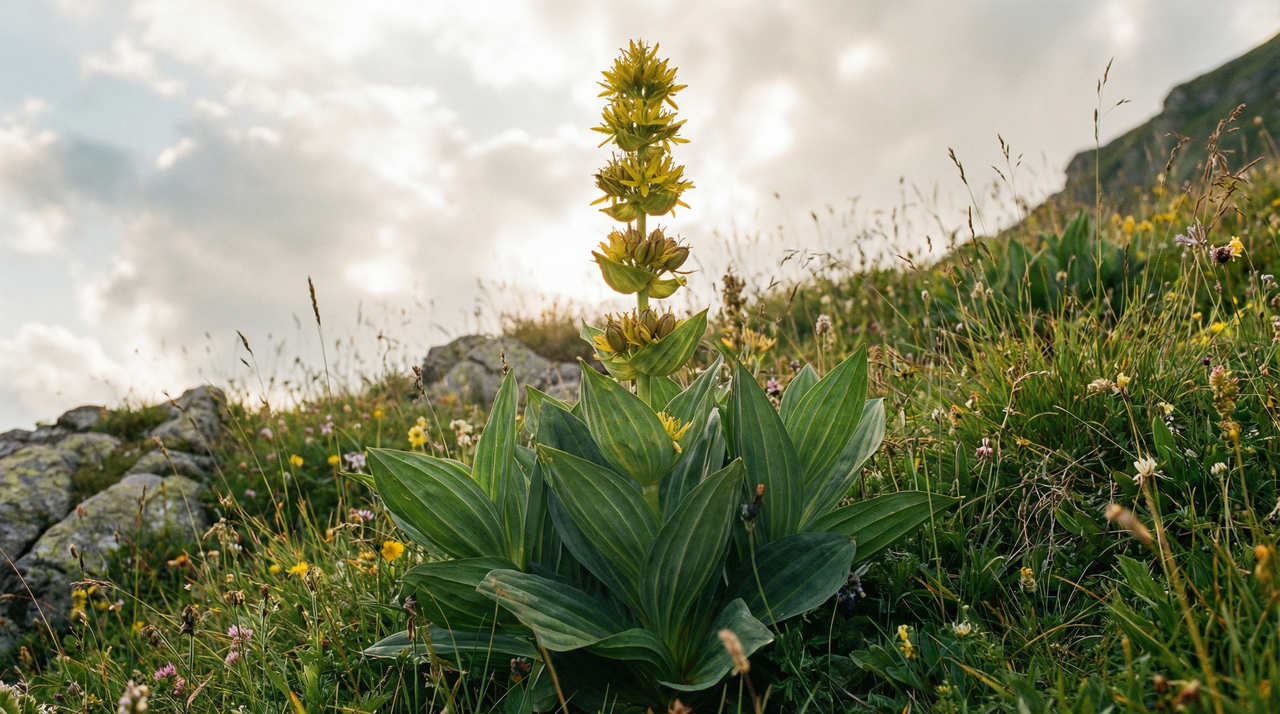
Start below the surface and the plant announces itself immediately. The taproot is pale yellowish-brown externally, white internally, and can drive 1 to 3 meters into rocky alpine soil.[9] It tastes extraordinary -- biting into a fresh root is an experience that instantly explains two thousand years of medicinal use; the bitterness is total and lingers long after you'd expect it to quit. Above ground, the plant builds a large basal rosette of opposite, elliptic leaves 15 to 30 centimeters long, each marked by 20 to 30 prominent parallel veins.[10] I use that parallel venation as my primary identification feature when spotting seedlings before they flower; it's clean and unmistakable. Mature stems reach 1 to 1.5 meters and carry dense terminal clusters of bright yellow, trumpet-shaped flowers from July to September.[10][11]
Its Asian relative Qinjiao (G. macrophylla) offers a useful visual contrast: considerably shorter at 30 to 100 centimeters, with blue-violet tubular flowers carried in racemes rather than the dense yellow clusters of lutea.[12] While my own garden leans toward the European species, I find the blue-flowered Chinese relatives fascinating for how they fill a parallel medicinal role within entirely different traditional systems.
Traditional and Cultural Uses Across Continents
The plant's common name traces to Gentius, an Illyrian king credited in antiquity with discovering the root's medicinal properties. Both Dioscorides in De Materia Medica and Pliny the Elder referenced it in the first century AD, and European folklore assigned the intensely bitter root powers of purification and protection against evil spirits.[13][14] Through the medieval period it was prized as a digestive tonic and appetite stimulant, its bitterness stimulating gastric secretions to address stomach, liver, and rheumatic complaints.[9] That bitter-tonic principle eventually entered European aperitif culture in the form of vermouth and Suze, the French liqueur whose backbone is gentian root harvested in autumn from alpine pastures.[15]
On the other side of the world, an almost identical discovery happened independently. Qinjiao has been documented in Chinese materia medica since the Shennong Bencao Jing around 200 CE.[16] In Traditional Chinese Medicine the bitter, cold root dispels wind-dampness, clears heat, and appears in classical formulas for rheumatism, arthritis, and liver disorders; Tibetan, Mongolian, and Korean traditions hold related species in similar regard for anti-inflammatory and antipyretic uses.[17] Two cultures, two mountain ranges, the same convergence on bitter roots as medicine for inflammation and digestive fire. That parallel evolution of herbal knowledge across continents never stops being remarkable to me.
Fun Facts and Conservation Status
The root contains amarogentin, one of the most bitter natural substances ever identified, detectable at dilutions of 1 part in 200,000.[9][18] That bitterness, combined with the deep taproot anchoring the plant in rocky terrain, is the reason ungulates mostly leave it alone -- though hungry animals will still browse young shoots despite the taste.[19] Above ground, the nectar-rich yellow flowers attract bumblebees, solitary bees, and butterflies; insect visitation directly increases seed set, making the species genuinely dependent on its mountain pollinator community.[20]
That global Least Concern status deserves scrutiny. In accessible parts of the Alps and Carpathians, regional populations have declined by up to 50% due to overharvesting, habitat degradation, and shifting climate conditions.[21] Wild collection is now regulated under the EU Habitats Directive and listed on CITES Appendix II.[7] I've stopped buying wild-harvested gentian root entirely and now source only from nursery-grown material; the difference in sustainability is worth the extra effort. Cultivation programs in Austria, Switzerland, and through Kew Gardens are steadily reducing pressure on wild stocks,[3] and Qinjiao faces an almost identical story across its alpine range in China and Mongolia, where it's considered Vulnerable in parts of its range and driving its own parallel cultivation push.[22][23] Seeing tall yellow gentian spires thriving in a botanical garden or a responsible nursery planting always feels, to me, like a small but genuine victory for mountain biodiversity.
Gentian Varieties and Sourcing
The Gentiana genus is enormous, with somewhere around 400 species, but for gardeners growing gentian with either a medicinal or ornamental purpose, the choice usually narrows to a handful of species with very different personalities. Understanding which one fits your site and goals saves years of frustration.
Notable Varieties and Cultivars of Gentiana lutea
Great Yellow Gentian is the anchor species for most Western growers: a tall, clump-forming perennial with vivid yellow flowers and a massive taproot, valued equally as an ornamental specimen and a medicinal root crop in its native European alpine habitats.[24][3] Named cultivars include 'Alba' with white flowers, the foliage-focused 'Variegata', and 'First Light', which grows more compactly than the species.[25][26] Within the species itself, subspecies reflect altitudinal origins: subsp. lutea handles lower to mid-elevations, subsp. collina is adapted to higher altitudes, and var. alpicola carries distinctly alpine traits.[27][28] All forms are hardy in USDA zones 5-8, tolerating lows to -20°F, rated H5 by the RHS, but they want cool summers and struggle in heat and humidity beyond zone 8.[24][29]
I've grown G. lutea from seed and one thing I wish someone had told me earlier: label those rows obsessively. First-year rosettes look remarkably similar to other bitter-root herbs, and the confusion at transplant time is real.
The contrast with Trumpet Gentian (Gentiana acaulis) couldn't be sharper. Where lutea is architectural and tall-border material, acaulis is a low, mat-forming cushion plant with intensely blue trumpet flowers, built for rock gardens and alpine troughs. Cultivars like 'Blue Ladoga', 'Blue Heart', 'Kernloch', 'Brookside', and 'Kronen' give you gradations of that deep blue, while 'Alba' breaks to white; all need protection from winter wet.[30][31] As a designer, I think of these two species as occupying completely different niches: lutea earns its place at the back of a cool mixed border; acaulis belongs wedged between stones where its flowers stop people mid-path.
Qinjiao (Gentiana macrophylla) is the hardiest of the three, surviving -30°F and rated H5/H6 by the RHS, thriving in zones 4-8.[32][33] Its recognized varieties include var. macrophylla (broader leaves, blue-violet flowers), var. fulva (yellowish flowers), and var. przewalskii, with breeding efforts focused on increasing gentiopicroside content and disease resistance rather than ornamental traits.[32][34] Across the genus, seed-grown plants take 3-5 years to first bloom and all species require cool, well-drained conditions to avoid root rot, so patience and site preparation aren't optional.[24]
Finding and Purchasing Gentian Plants and Seeds
Live Gentiana lutea plants are available in the US, but you have to look. Specialty alpine and perennial nurseries, seed companies, and online importers are your realistic options; mainstream garden centers almost never carry it because the slow growth and cool-climate requirements make commercial production impractical.[35][36] Starter plants run $10-15, larger specimens $20-50, and seed packets range from $5 into the triple digits depending on rarity and provenance; stock is seasonal and sells out fast, so ordering early matters.[37][38]
The root trade is a separate story, and one with real ethical weight. Most of the several hundred tons of gentian root consumed annually by the European digestif and pharmaceutical industries still comes from wild-harvested plants in France, Italy, Austria, and Switzerland, though cultivated supply is slowly expanding.[6][39] Wild populations carry IUCN vulnerable status in parts of Europe, and I've watched wild-collected nursery stock disappear from catalogs as regulations tighten.[40] I always ask suppliers directly about provenance before I commit to a purchase, and I'd encourage anyone sourcing gentian for a design or medicinal planting to do the same; cultivated or nursery-propagated material is the right call.[39]
Qinjiao is considerably easier to find in the US, just through different channels. Dried root from vendors like Mountain Rose Herbs, Starwest Botanicals, and 1st Chinese Herbs runs roughly $2.50-5 per ounce, seeds from Strictly Medicinal Seeds cost $5-8.50 a packet, and live plants occasionally surface on Etsy or through herbal specialists for $13-20.[41][42][43] I order its dried root regularly for personal use and always verify that it's organically grown or sustainably sourced before purchasing. For live plant imports from Europe, reputable suppliers handle phytosanitary certificates, but it's worth confirming state-level import rules and any FDA considerations for medicinal use before placing an order.[44]
Gentian Propagation and Planting Guide (Gentiana lutea)
Growing gentian from seed is fundamentally an exercise in trusting a cold, slow process you can't rush. Before you even get to that point, though, it helps to know what you're actually working with. The seeds of Gentiana lutea are small (1-2 mm), ellipsoid, brown, and fringed with a thin membranous wing along the long axis that in the wild carries them on alpine winds.[45] Qinjiao (G. macrophylla) seeds are even tinier (0.7-0.8 mm), roundish, warty, and wingless.[46] I keep them in separate labeled envelopes because at a glance they're easy to mix up, and the sowing protocols, while similar, aren't identical.
Seed Morphology, Viability, and Germination Requirements
What makes gentian seeds so reliably tricky is the embryo itself: it's small, underdeveloped, and surrounded by oily endosperm, meaning it isn't physiologically ready to grow without first completing a period of cold moist stratification.[47][48] The seeds also form persistent soil seed banks and germinate in staggered waves, which is the plant's alpine hedge against a single bad spring.[49] Understanding this explains why gardeners who skip stratification and simply sow in spring get nothing, then give up. The seeds are orthodox in storage terms (they tolerate desiccation to 3-7% moisture content),[50] so if you're holding them for future seasons, dry them well and store airtight at -18 to -20 °C, where G. lutea viability can hold for decades while Qinjiao typically lasts 2-5 years under similar conditions.[51]
For sowing, cold moist stratification at 4-5 °C for 2-3 months is non-negotiable.[52] I use damp vermiculite in a zip-lock bag in the back of the fridge, starting in late November for a late-winter sow. After stratification, sow shallow (1-2 mm deep) in well-drained compost because the seeds need light to germinate.[53] Germination rates run 20-70% depending heavily on seed freshness, and inoculating with mycorrhizal fungi (Glomus spp.) at sowing can meaningfully improve establishment.[49] Use fresh seed whenever possible and avoid waterlogging the flats at all costs; I lost an entire first sowing to Phytophthora root rot before I switched to a grittier mix and bottom watering only.[54]
Vegetative propagation is possible but comes with caveats. Division of clumps at least 3-4 years old works in spring or autumn, but the deep taproot resents being disturbed and clumsy division can set the plant back by years.[55] Stem and root cuttings have low success rates even with IBA rooting hormone, and tissue culture is really the domain of commercial producers and conservation programs.[56] For home growers, seed is the most reliable route. One non-negotiable regardless of method: I only buy from nurseries selling verified cultivated stock. Wild populations are legally protected across much of Europe,[57] and the wild-harvest pressure on these slow-maturing mountain plants is real.
Germination Timeline and Maturity
Once stratification is complete and temperatures rise to 15-20 °C, initial sprouts can appear in 2-6 weeks.[58] Don't let that fool you. What's happening aboveground in year one is almost irrelevant; the plant is pouring energy into root development, and those first-year seedlings look so modest that I now label every flat obsessively because young gentian can pass for any number of small perennial herbs. Full establishment as a robust plant takes 1-3 years, with medicinal root harvest typically falling between years 4 and 7 from seed, depending on altitude, soil, and climate.[3][52] I grow valerian, elecampane, and echinacea alongside my gentian bed, and all of those feel fast by comparison. But a deep-rooted medicinal perennial that can live for 50 years and anchor a slope while feeding bumblebees earns its place in any regenerative planting. The wait is the point.
Soil, Site Selection, and Planting Technique
Drainage is the one thing Gentiana lutea refuses to negotiate. Its native habitat is alpine limestone meadows between 800 and 2500 m elevation, and that origin dictates everything: humus-rich, calcareous or loamy soil, pH 6.0-7.5 (neutral to slightly alkaline is optimal), and absolutely no waterlogging or compaction.[59][52] I've lost more gentians to wet feet than to any other cause, usually in the first spring after a slow-draining winter. If your soil is heavy clay, raised beds with a grit-amended mix are not optional, they're how you grow this plant successfully. Qinjiao tolerates a slightly broader pH range (down to 5.5),[60] but drainage requirements are just as firm across the genus.
For light, aim for full sun to partial shade (4-6 hours of direct sun), with afternoon shade in warmer climates to prevent leaf scorch. Deep shade causes etiolation and suppresses flowering.[59] Before planting, soil-test, lime if pH is below 6.0, work in 5-10% organic matter, and loosen the bed to at least 60 cm depth to accommodate the developing taproot.[61] Gravel mulch around the crown after planting improves drainage and discourages slug habitat in one move.
Spacing, Establishment, and Long-Term Considerations
Mature plants reach 100-150 cm tall with a 45-60 cm spread, so spacing of 30-60 cm gives clumps room to develop and allows enough airflow to reduce foliar disease pressure.[62] The taproot needs minimum 60 cm of uncompacted soil depth, ideally 80-120 cm, so crowding or planting into shallow beds simply doesn't work long-term. For medicinal-focused Qinjiao plantings, 30-40 cm intra-row and 40-50 cm inter-row spacing is standard practice.[63]
Plant in spring or autumn with the crown sitting at soil level, never buried. Transplant seedlings when they're 5-10 cm tall and disturb the roots as little as possible; a dibber rather than trowel makes this easier with small plants.[64] Established clumps can be divided every 3-4 years to rejuvenate them,[65] but given how long gentian takes to reach its stride, I treat division as a last resort rather than routine maintenance. Get the site right from the beginning and this plant will outlast most of what's around it.
Gentian Care and Cultivation Guide
Growing Gentiana lutea well comes down to one central discipline: replicate the alpine meadow. Every care decision, from how often you water to whether you reach for the fertilizer bag, makes more sense once you accept that this plant spent millions of years in cool, well-drained, nutrient-poor mountain soils between 800 and 2500 meters elevation. I've grown it from cold-stratified seed through multiple seasons, and the gardeners I've seen struggle with it are almost always the ones who treat it like a conventional herbaceous perennial. It isn't.
Sunlight Requirements for Gentiana lutea
Great Yellow Gentian wants full sun to partial shade, with dappled light being the sweet spot in most garden settings.[10] Good air circulation matters too; high-altitude plants are accustomed to moving air, and stagnant conditions invite the fungal problems covered in a later section. What catches gardeners off guard is that "full sun" in an alpine meadow at 1500 meters is a very different thing from full sun in a humid lowland garden in July. The intensity and heat are incomparable. In warmer parts of zones 7 and 8, I treat Gentian much like my European alpine primulas: a taller companion on the southwest side, or a stretch of afternoon shade cloth, makes the difference between scorched leaves and healthy growth.
Water Needs and Soil Moisture Management
The rule here is consistently moist but never soggy, which sounds simple until you're managing it through a variable summer. Gentiana lutea's native habitat receives 600 to 1200 mm of annual precipitation, distributed across cool seasons with excellent natural drainage through rocky alpine soils.[3] In the garden, I let the top inch or two dry slightly between waterings, then water deeply, and I cut back considerably during winter dormancy to prevent the root rot that kills more established plants than anything else.[66]
Stress symptoms are worth knowing. Overwatering shows up as yellowing leaves, wilting despite wet soil, and soft roots when you probe. Underwatering produces browning leaf tips, stunted growth, and occasionally premature flowering.[66] I've had the best results using rainwater collected from roof runoff rather than tap water; it avoids salinity buildup and keeps soil chemistry stable. A 5 cm organic mulch layer handles moisture retention, suppresses weeds, and buffers soil temperature all at once.
Feeding and Fertility for Gentian
Gentian is one of those plants that actively resents generosity. Its native soils are nutrient-poor, and the chemistry of its roots reflects that; in my own trials, plants given even moderate nitrogen produced noticeably softer, less bitter roots. That's not a subjective impression. Excess nitrogen generates lush but weak growth, reduced root quality, and greater susceptibility to disease.[67]
If you feed at all, one early-spring application of a low-nitrogen balanced fertilizer at half the labeled rate is sufficient.[68] Soil pH should sit between 6.5 and 7.5; amend acidic soils with lime rather than assuming humus will compensate.[69] If foliage looks pale or lower leaves are yellowing, nitrogen is the likely deficit. Purplish-red leaf color and poor root development point to phosphorus. Scorched margins on otherwise healthy stems suggest potassium is off.[70] Most of the time, though, a well-chosen site with decent humus content means you won't need to intervene at all.
Frost Tolerance and Winter Protection
Once established, Gentiana lutea is genuinely tough in cold climates, rated hardy through USDA zones 4 to 8 and capable of handling temperatures down to around -20 °C to -29 °C.[67][35] The vulnerability window is spring, when emerging shoots are soft and a late frost can cause blackening and necrosis before the plant has a chance to harden. Young plants in their first two years need the most attention.
My approach: apply 5 to 10 cm of bark mulch after the ground freezes in autumn, not before, so you're insulating against freeze-thaw cycling rather than trapping residual warmth and inviting rot.[26] That technique has seen my zone-5 clumps through dips to -25 °C without dieback. For young plants, a fleece cloche over emerging shoots in a surprise late-spring frost takes about two minutes to deploy and has saved more than a few first-year rosettes.
Heat Tolerance and Summer Care
This is where gardians in zones 7 and 8 need to be realistic. Gentiana lutea evolved in habitats where summer temperatures rarely exceed 20 °C, and above 25 to 30 °C it shows it: leaf scorch, wilting, and visibly reduced vigor.[71][72] Seedlings and plants in active flower are the most sensitive. The practical toolkit is the same one that works across alpine perennials: afternoon shade, consistent moisture (mulch does double duty here), and wind protection to reduce desiccation. The plant performs best in AHS Heat Zones 1 through 6, so if you're gardening outside that range, microclimate selection at planting time is not optional.[73]
Pruning, Maintenance, and Seasonal Rhythm
Maintenance here is genuinely minimal, and I mean that as a compliment rather than a caveat. Deadhead spent flower spikes in late summer if you want to limit self-seeding or simply tidy things up. Cut dead foliage back to the base in late autumn or early spring. Thin overcrowded clumps every four to five years.[74] That's essentially the full maintenance calendar.
The one thing I'd emphasize from hard experience: do not move an established plant if you can help it. That taproot reaches up to a meter deep and resents disturbance in a way that costs you years of progress.[67] I once relocated a three-year-old clump and watched it sulk for two full seasons before resuming normal growth. Once planted, Gentiana lutea really wants to stay put. Choose the site carefully, and then commit.
Seasonally, the plant follows alpine cues with remarkable consistency: slow taproot development through spring, tall flowering stems reaching 1.5 meters with yellow blooms from July through September, seed set in autumn, and complete die-back to the rootstock for winter.[3] From seed, expect three to five years before first flowering. It's a long wait by any measure. But Gentiana lutea can live 20 to 50 years once it finds its footing,[75] and a well-sited plant in its seventh or eighth year, in full bloom with a root system that has never been disturbed, is the kind of thing that makes the patience feel entirely justified. Get the site right, then mostly leave it alone. That is the whole strategy.
Gentian Root Harvesting Guidelines
Everything about growing Gentiana lutea teaches patience, and the harvest is where that lesson lands hardest. You can't rush this root. By the third autumn, the foliage yellows in a particular way and the crowns feel heavy and settled. By year four or five, you know.
When to Harvest: Timing and Maturity Cues
Autumn is the window, specifically September through October, after the plant has flowered and dropped fully into dormancy.[76][77] Roots should be at least 1 to 2 cm in diameter with a firm, yellowish-brown exterior, which typically means year four at the earliest and ideally year five or six.[78] Harvest earlier than that and you're leaving the medicine in the ground: autumn digging can yield 20 to 30% higher bitter-compound concentrations than summer or spring harvest, because the plant pulls resources back into the root as it goes dormant.[79][77] I've found that roots lifted just after the first light frost are noticeably heavier and more fragrant than anything dug in late summer. The foliage going fully limp and straw-colored is the cue I trust most.
The same autumn-window logic holds across the genus. Qinjiao (G. macrophylla) is traditionally harvested September through November, when the aerial parts wither, aligning with the 9th to 11th lunar month in Chinese practice.[80][81] Different cultural context, different medicinal tradition, same fundamental rhythm.
Sustainable Harvesting Techniques
Dig with a fork or spade, working wide around the root to avoid snapping the taproot, and lift carefully. The whole root system matters. Sustainable practice limits removal to 20 to 30% of mature plants in any given stand, with smaller offsets replanted rather than composted.[76][82] I take those guidelines seriously, not as bureaucratic caution but because I've seen what undisturbed plants do over a decade: they keep enlarging, and a stand managed this way is a long-term resource rather than a one-time extraction.[83] Wild gentian populations are protected across much of their European range; if you're growing your own, that's the ethical baseline anyway.
Once lifted, wash the roots, slice them crosswise, and dry slowly in shade or at temperatures below 40°C.[84] High heat above 50°C or any fermentation can degrade amarogentin by 15 to 30%, which defeats the entire purpose of waiting six years.[85] Fresh roots are surprisingly heavy and almost resinous to the touch; improperly dried ones stay rubbery rather than becoming crisp and breakable, which is a sign the chemistry has suffered too.
Yield, Flavor Profile, and Post-Harvest Handling
A properly grown, properly dried lutea root is something else entirely. Mature roots carry 2.5 to 5% bitter glycosides by dry weight, with gentiopicroside at 1 to 2% and amarogentin at 0.5 to 1%.[86][87] Amarogentin is detectable at parts-per-billion levels, and its bitterness lingers five to fifteen minutes with a clean, almost architectural finish.[88] The first time I tasted a slice of my own dried root, the bitterness genuinely surprised me with how clean it was compared to commercially powdered gentian that had clearly seen too much heat. The difference is not subtle.
The aroma is earthy and balsamic with a faint camphoraceous edge, driven by an essential oil fraction rich in sesquiterpenes including germacrene D, β-caryophyllene, and α-humulene, alongside monoterpenes like α-pinene and limonene.[89][90] The root itself is tough, fibrous, and often twisted, with a yellowish interior; the dried cortex is what distillers and herbalists are after, though young shoots are occasionally pickled in Alpine culinary traditions.[91][92]
Qinjiao shares much of this bitterness and a similar volatile profile dominated by β-pinene and germacrene D, but regional variation is real: roots from Sichuan provenances can show 15 to 40% higher secoiridoid content than lower-elevation sources from Gansu.[93][94] It's the kind of terroir effect a serious herbalist thinks about. Unlike lutea, Qinjiao sits firmly in TCM as a medicinal rather than a culinary bitter, which shapes how it's processed and dosed, and misuse carries real toxicity risks.
Gentian Preparation and Uses
Once you've waited five or more years for that taproot to mature and done the careful autumn dig, the next question is: what do you actually do with it? The answer starts with a firm rule. Only the roots and rhizomes of Gentiana lutea go into preparations; the leaves and flowers stay out, both because they carry their own potential toxicity and because the bitterness is simply overwhelming.[95][96] Raw root is also off the table; gentian is always dried or otherwise processed before use.[95][97] That non-negotiable has everything to do with the chemistry: the root contains amarogentin, which is roughly 4,500 times more bitter than sucrose, and gentiopicrin, which can constitute anywhere from 1 to 10 percent of root dry weight in wild plants.[98][99] I work with dandelion and chicory root regularly, and both are genuinely bitter plants, but gentian makes them taste like mild salad greens. A tiny sliver of dried root is all it takes to understand why Europeans have built entire liqueur traditions around this flavor.
Culinary Applications and Flavor Profile
Once roots are fully cured in shaded, well-ventilated conditions for one to two weeks until completely brittle.[100] I keep my drying temperatures conservative on principle. Pushing too high risks degrading the gentiopicrin you spent years coaxing into that root, and there's no recovering from that.
For a simple gentian root tea, steep one to two grams of dried root in a cup of boiling water for five to ten minutes.[100] For liqueur, the classic approach is to macerate ten to twenty grams of dried root per liter of alcohol at roughly a 1:10 ratio, shaking daily and filtering after two to four weeks before sweetening to taste.[100] That basic method is more or less the backbone of Suze, the French gentian liqueur that has been produced since 1885, as well as vermouth and herbal beers across the Alpine tradition.[98][101] The root has trace amounts of vitamin C, B vitamins, and minerals like potassium and calcium, but nobody is using gentian bitters for nutritional value.[102] The point is the bitterness and what that bitterness does.
A brief but important aside on genus diversity: Qinjiao (Gentiana macrophylla), used in Traditional Chinese Medicine, is not a culinary bitter in the European sense. Its primary application is treating rheumatism and arthritis,[103][104] and it is not approved for food use in the United States.[105] The two species share genus-level chemistry but they are not interchangeable in the kitchen or apothecary.
The European Medicines Agency and Germany's Commission E both formally authorize gentian root for appetite stimulation and dyspeptic complaints.[106][107] That regulatory weight is reassuring, though the guardrails are real. Gentian is contraindicated in pregnancy, lactation, gastric or duodenal ulcers, and hyperacidity conditions.[106][107] I always lead with the pregnancy contraindication when I share my home preparations, because the EMA guidance is unambiguous on this one. Beyond six grams of dried root per day you're looking at nausea, vomiting, and digestive upset,[106][108] so the one-to-two gram daily recommendation isn't conservative overcaution; it's the actual therapeutic window.[106][107]
Medicinal Preparations and Dosages
Standardized preparations give home herbalists a reliable framework for working with a root this potent. Tinctures typically run at a 1:5 ratio in 60% alcohol, five to ten milliliters taken three times daily; decoctions use two to four grams of dried root per cup.[109][110] The WHO monograph recommends 0.6 to 2 grams of dried root daily for bitters applications, and the European Pharmacopoeia standardizes commercial preparations to four to eight percent bitter principles by weight.[111] What I appreciate about these frameworks is the precision they offer. When you're working with something this concentrated, knowing your starting bitterness percentage matters enormously for blending into digestif formulas or tinctures where you want a specific intensity rather than overwhelming everything else in the bottle.
Non-Food and Traditional Uses
Gentian's history in European aperitif and bitter traditions stretches back to the Middle Ages, long before Suze or Angostura made its flavor globally recognizable.[112][113] The pre-dinner aperitif and post-dinner digestif were never purely social rituals; they were functional medicine dressed in convivial clothing, and gentian sat at the center of that tradition because its bitterness genuinely worked on the gut. That blurred line between kitchen, pharmacy, and tavern is where gentian has always lived. For modern home growers and craft bitters makers, that same creative space is still wide open. A small batch of single-origin home-grown gentian bitters, built from roots you planted, harvested, and dried yourself, connects you to something considerably older than any brand on a bottle.
Gentian Health Benefits and Medicinal Uses
If you've ever tasted a well-made Angostura bitter or a traditional Alpine digestif, you've already encountered gentian's medicine without knowing it. The benefits of gentian root trace almost entirely back to its bitterness, and that bitterness is no accident or incidental trait. It's a finely tuned biochemical system that, when used correctly, has real and demonstrable effects on human digestion.
Key Phytochemicals in Gentiana lutea
The roots of Great Yellow Gentian hold 2-10% gentiopicroside as the dominant secoiridoid glycoside, with amarogentin, sweroside, and swertiamarin also present in meaningful amounts.[114][115] Amarogentin in particular drives this aggressive therapeutic action. I've been making gentian tinctures for years, and even a few drops in a glass of water are unmistakably, almost aggressively bitter. What I've learned the hard way is that roots from higher-elevation, late-autumn harvests are dramatically more potent than anything grown at lower altitude or dug in early season, because gentiopicroside concentrations peak in autumn of two-to-three year old plants and increase significantly with altitude above 1,500 meters, cooler temperatures, and low-input cultivation.[116][117] The roots from my garden beds, grown in amended soil with regular water, taste notably milder than high-alpine wild roots. That's not a flaw; it's just biology responding to its environment.
Alongside the secoiridoids, the root holds flavonoids (rutin, isoquercitrin, kaempferol glycosides), xanthones (gentisin, isogentisin), phenolic acids, coumarins, and a small fraction of essential oil.[39][118] The root concentrates the highest levels of all these compound classes. And all that bitterness? It evolved as chemical defense against herbivores, reducing damage by over 50% in studies, with concentrations that actually increase under herbivore pressure.[119] The same biochemistry that protects the plant in an alpine meadow is what makes it useful in your apothecary. Related species like Qinjiao (Gentiana macrophylla) share the same dominant secoiridoids at 1-2.5% in roots, with phytochemical concentrations peaking similarly in autumn, confirming these patterns run deep across the genus.[120]
Supported Medicinal Actions and Research
The secoiridoids in gentian root, particularly gentiopicroside and amarogentin, activate bitter taste receptors (TAS2R) on the tongue and gut lining, triggering cephalic vagal reflexes that stimulate gastric secretions, bile flow, appetite, and motility.[114][121] That's not folk wisdom dressed up in modern language; it's a confirmed receptor-level mechanism. The digestive evidence is also the strongest clinically: a 2015 multicentre double-blind RCT (72 participants, 8 weeks) demonstrated significant symptom reduction in functional dyspepsia using a standardised root extract,[122] and both German Commission E and the European Medicines Agency have approved it for mild digestive complaints including bloating and appetite loss. For anyone searching gentian herb benefits in the context of digestion, this is where the evidence genuinely delivers.
Preclinical work extends the picture meaningfully. Anti-inflammatory activity via NF-κB inhibition and reduced TNF-α, IL-6, and COX enzymes (comparable to indomethacin in some models), solid antioxidant effects through DPPH scavenging and Nrf2 activation, hepatoprotective action in chemical liver injury models, and antimicrobial activity against Gram-positive bacteria have all been documented.[123][124][125] There's also preliminary research pointing toward antidiabetic potential through α-glucosidase inhibition and GLP-1 pathways, xanthine oxidase inhibition (relevant to gout management), and mild gastroprokinetic effects via 5-HT4 modulation.[126][127] These are genuinely interesting leads, but systematic reviews are clear that high-quality human trials beyond the dyspepsia study are scarce.[128][129] I compare gentian's digestive action to dandelion root or artichoke leaf in conversations with clients, and it's a useful frame: where dandelion is a gentle nudge, gentian is something closer to a firm hand. The research is still catching up to centuries of European use, but for bloating and sluggish digestion, the traditional profile holds up well. Qinjiao's TCM applications, particularly for wind-damp conditions and rheumatic pain, show overlapping anti-inflammatory and analgesic pharmacology that reinforces genus-wide patterns without substituting for lutea-specific data.[34]
Nutritional Profile of Gentian Root
Gentian root is medicine before it's food, and that framing matters. The macronutrient numbers are real, approximately 224-300 kcal per 100 g dry weight, 8-12 g protein, 50-65 g carbohydrates including 10-15 g fiber and inulin-like fructans, plus meaningful potassium (1,500-2,000 mg), calcium (100-200 mg), and iron (5-15 mg),[130][131] but nobody is eating gentian root as a dietary staple. The bitterness alone makes that impossible. What actually accounts for its therapeutic value is the bioactive fraction: those secoiridoids, flavonoids, and xanthones described above, not the macronutrients.[130][132] Qinjiao shows a broadly similar macronutrient and phytochemical range and is equally unsuitable as a dietary staple for the same reasons. Think of the nutritional data as context, not the headline.
Safety Considerations and Contraindications
Gentiana lutea has a low overall toxicity profile at medicinal doses (LD50 >5 g/kg in animal studies), and up to 2 g of dried root daily is considered a reasonable upper limit,[106][133] but the secoiridoids that make it effective are exactly what causes problems when someone overreaches. Too much, and those same compounds that stimulate digestive secretions start irritating them, producing nausea, heartburn, vomiting, or diarrhea. The bitterness itself is a signal, and I've come to treat that as a practical dosage guide: if a tincture batch from high-elevation, late-autumn roots is notably more aggressive on the palate, I dilute accordingly rather than using a standard drop count. Gentian is not a herb where more equals better.
The contraindications are firm and worth listing clearly. It's contraindicated in pregnancy, where its documented potential as a uterine stimulant and historical use as an emmenagogue make it one I remove entirely from any blend for pregnant clients, not something to hedge with a generic disclaimer.[134][76] Peptic ulcers, gastritis, GERD, gallbladder obstruction, breastfeeding, and children under 12 are also contraindicated, with theoretical drug interactions involving anticoagulants, glucose-lowering drugs, antihypertensives, and diuretics.[135] Qinjiao carries a somewhat more forgiving toxicity profile (LD50 >15 g/kg in mice, used at 3-10 g/day in TCM),[136] but the shared contraindications, particularly around pregnancy and pre-existing GI conditions, run across the genus.
One practical caution I emphasize to anyone foraging or growing their own: misidentification is a genuine risk. Toxic look-alikes including Caltha palustris and Ranunculus species can share a similar habitat and growth stage.[137][138] True Gentiana lutea has the parallel venation running the length of each large leaf and those distinctive clustered yellow flowers at stem nodes; the toxic Ranunculus relatives have the divided, buttercup-style leaves that look nothing like gentian once you know what you're looking for. That distinction, learned by eye in a mountain meadow, is non-negotiable before you put anything into a tincture jar.
Gentian Pests and Diseases
Pest Resistance and Common Insect Pests of Gentiana lutea
Great Yellow Gentian comes to the garden with some genuine built-in protection. The same secoiridoid glycosides that make the root so medicinally potent, gentiopicroside and amarogentin, function as antifeedants, and the thick, waxy, sessile leaves add a physical barrier that many soft-bodied insects simply avoid.[139][140] Compare it to something like a young feverfew or a tender annual herb, and the difference in browse pressure is noticeable. Deer occasionally sample young plants, but once the bitter chemistry establishes, most mammals move on.[141]
That said, seedlings are a different story. Aphids are the primary insect threat, clustering on young growth, distorting leaves, depositing honeydew that leads to sooty mold, and potentially vectoring viral disease in the process.[142][143] Slugs and snails follow close behind, chewing irregular holes in leaves through damp spells, a problem I can speak to directly. I lost several seedlings in my early gentian years before I started laying copper tape barriers around new transplants as a matter of course.[144][145] Leaf beetles in the Chrysomelidae family, including Altica lythri, can cause moderate defoliation on young plants too, though their impact on mature specimens tends to be minor.[146][147]
Occasional root feeders like cutworms, wireworms, and vine weevil larvae are worth watching for, and spider mites show up in dry conditions (reported more consistently in G. macrophylla cultivation than in lutea).[143] Cultivated plants are meaningfully more susceptible than wild populations, which benefit from the genetic diversity that monoculture strips away. For IPM, I reach for neem oil and insecticidal soap on aphids, diatomaceous earth around seedlings for slugs, and predatory insects like ladybugs where possible. Given that the root ends up in tinctures or bitters, I stay well away from synthetic pesticides.[148][145] No cultivars have been bred for pest resistance; selection in this genus focuses on ornamental or medicinal traits, so the grower's management is the only insurance available.[149][150]
Disease Susceptibility and Prevention Strategies
Root rot is the thing that kills gentian in cultivation. Full stop. Pythium, Phytophthora, Fusarium, and Rhizoctonia are the key offenders, and any waterlogging gives them an opening.[151][152][153] I think of it similarly to valerian and other bitter-rooted perennials I've grown: the medicinal roots are often fleshy and slow to recover from prolonged wet, and by the time you see wilting above ground, the damage below is usually severe. Damping-off from the same fungal complex hits seedlings especially hard; sterile potting mix at the propagation stage is non-negotiable.[154]
Beyond root rot, powdery mildew (Erysiphe spp.) shows up in humid conditions and weakens plants without usually killing them; sulfur-based treatments work if you catch it early.[155][156] Leaf spot diseases from Alternaria, Septoria, or Ramularia gentianae appear as brown spots and can escalate to defoliation if conditions stay wet and crowded.[152] Verticillium wilt and bacterial wilt from Ralstonia solanacearum are documented in warm, wet soils, and viral disease has been reported in the genus, though specific viruses remain poorly characterized and aphid control is the main line of defense against spread.[151][157]
Wild populations show considerably higher disease resistance than cultivated plants, a function of genetic diversity that garden monocultures simply can't replicate.[158] No widely available cultivar carries documented high disease resistance, though the selection 'Sorgen' has shown moderate tolerance to root rot.[159] I source plants from reputable medicinal herb nurseries specifically because their selections have at least been grown with root quality in mind, which often correlates with better baseline vigor than generic ornamental stock. The real prevention, though, is cultural: excellent drainage, spacing of 50-60 cm for air circulation, no overhead watering, and prompt removal of diseased material.[160][66] Mimic an alpine meadow in your drainage, and most of this disease list stays hypothetical.
Gentian in Permaculture Design
Gentian is one of those plants I recommend with genuine enthusiasm and an immediate caveat. The caveat comes first, because getting the climate wrong means years of slow decline rather than the decades of performance this plant is capable of delivering. Get it right, and you have a tall, deep-rooted herbaceous perennial that earns its space through pollinator value, soil function, and sheer presence.
Climate and Hardiness Zones
Gentiana lutea is cold-hardy to -20°C (-4°F) and fits comfortably in USDA zones 3-8, with the best performance in zones 6-7 where summers stay cool and winters deliver enough chill to satisfy its mountain instincts.[161][162][163] But hardiness zones only tell part of the story. This plant evolved in the Alps, Pyrenees, Apennines, and Carpathians at elevations between 800 and 2500 meters,[164] and those origins show up clearly in its preferences. Optimal growing temperatures fall between 10 and 20°C (50-68°F), and it starts to struggle with prolonged exposure above 25°C, especially when nights stay warm.[6][162] Think of how rhubarb sulks through a Central Florida summer, refusing to produce anything worthwhile; Great Yellow Gentian does the same, just more slowly and more expensively.
In the US, realistic cultivation is mostly limited to the Rocky Mountains, Cascades, Sierra Nevada, and the higher elevations of the Appalachians.[161][165] It also needs consistent moisture, preferring 800-1500 mm of annual precipitation and well-drained, calcareous or neutral-to-alkaline soils; hot, humid, or drought-prone lowlands are genuinely unsuitable, not just suboptimal.[3][6] If you garden above 1500 meters or can engineer a cool, well-drained north-facing microclimate with consistent summer irrigation, this plant belongs in your design. If you can't, consider Gentiana macrophylla, the Asian relative known as Qinjiao, which tolerates slightly warmer summers (up to 30-32°C in some accessions), manages on as little as 400-1000 mm of rain annually, and extends the cold-hardy range comfortably into zone 4.[10][166] Same family, meaningfully wider window.
Ecosystem Functions and Guilds
When conditions are right, the yellow tubular blooms that appear from July through September are a genuine spectacle, and a functional one. Bumblebees are the primary pollinators, particularly long-tongued species like Bombus pascuorum and Bombus terrestris, which buzz-pollinate the poricidal anthers in a relationship that makes honeybees and hoverflies look like casual visitors by comparison.[2] Against the darker greens of woodland-edge companions like ferns or astilbe, those vivid yellow spikes read as a beacon in the landscape, and from a design perspective that's exactly how they function: a pollinator corridor anchor for the late-season window when many perennials have already wound down.
There's a catch. Gentiana lutea is self-incompatible, so it requires cross-pollination for any seed set, and optimal pollination happens in a fairly tight temperature and humidity band (10-20°C, 50-70% relative humidity).[167][168] Co-flowering companions improve outcomes, which is one of several reasons I think of gentian as a guild plant rather than a specimen. In my work with medicinal guilds I've watched how quickly pollinator declines affect seed set in self-incompatible species like this one, which is why I prioritize habitat plantings for bumblebees and keep hand-pollination as a backup in any design that includes it.[169] Climate change is compressing that window further, advancing flowering phenology by 2-5 days per decade and creating timing mismatches with pollinator populations already under pressure from habitat loss and pesticide exposure.[170][171] Gentian is a bioindicator species; where it thrives, the habitat is intact.[172] Where it's failing, something in the ecosystem is signaling distress.
Below the flower show, the taproot is doing quiet, serious work. It can extend up to 2 meters into the soil, stabilizing slopes and drawing up iron, calcium, and magnesium from layers that shallower-rooted plants can't access.[93][173] I think of it the way I think of comfrey or horseradish: a deep mineral miner whose aerial growth becomes a useful chop-and-drop material, cycling those minerals back to the surface for the rest of the guild. The accumulator function is inferred from alpine ecology rather than rigorously confirmed in cultivation trials, so treat it as a practical bonus rather than the headline function.
Forest Layer Placement
Gentiana lutea is firmly a herbaceous-layer plant, but it's a tall one. Mature specimens reach 1-2 meters, emerging each season from a basal rosette before dying back after flowering.[29] That habit places it naturally at forest edges, open meadows, and clearings rather than in deep shade. It needs full sun to partial shade and strongly prefers calcareous or neutral-to-alkaline soils with good drainage and genuine humus content.[174] Unlike many of its woodland-edge neighbors, it doesn't form mycorrhizal associations at all, relying entirely on that deep taproot for nutrient and water acquisition.[175] That makes it a genuinely independent contributor to a guild rather than a competitor for fungal networks.
I position plants like this the way I position tall milkweeds or Verbascum in an edge guild: at the boundary between the canopy drip-line and the open ground, where they get light without competing with tree roots for moisture. For guild companions, cool-climate and shade-tolerant species are natural partners, and pairing gentian with nitrogen-fixers means the chop-and-drop mineral accumulation feeds the whole system rather than just benefiting the plant itself. The Asian relative Gentiana macrophylla brings similar accumulator and soil-stabilizing traits to the same kind of placement, but it tolerates slightly acidic soils (pH 6.0-7.5), forms arbuscular mycorrhizal associations, and works well alongside ferns, hostas, astilbe, or woodland nitrogen-fixers.[176] The shorter Gentiana manshurica (30-60 cm) can fill a lower layer in the same guild, adding mild pest-deterrent qualities from its bitter alkaloids as a secondary benefit.[177]
I typically recommend Great Yellow Gentian only to clients who already have an established cool-summer microclimate or a genuinely high-elevation site. Its slow maturation and narrow niche aren't weaknesses so much as constraints that reward the designer who respects them. Nail the microclimate first, and everything else about integrating this plant into a guild follows naturally.
The Plant That Taught Me to Stop Rushing the Harvest
I have a patch of Gentiana lutea that I planted eight years ago, and I still haven't touched the roots. Every autumn I crouch down next to those big, waxy leaves and think: not yet. There's something quietly corrective about a plant that simply will not be hurried, that asks you to measure your ambitions in decades rather than seasons. I needed that lesson more than I needed the tincture.
Sources 177
- Amarogentin, a naturally occurring secoiridoid glycoside and a newly recognized inhibitor of topoisomerase I from Gentiana root ↩
- Gentiana lutea L. (Yellow Gentian) - A Lesser Known European Medicinal Plant with Great Potential for Biotechnology ↩
- Gentiana lutea - Yellow Gentian ↩
- The Biology of Gentiana lutea L. ↩
- Gentiana lutea L. ↩
- Gentiana lutea ↩
- Gentiana lutea ↩
- Gentiana lutea ↩
- Gentiana lutea L. (Gentianaceae): The Comprehensive Review ↩
- Gentiana lutea ↩
- Gentiana lutea ↩
- Flora of China: Gentiana macrophylla ↩
- De Materia Medica ↩
- Ethnobotany of Gentiana lutea in the Alps and Carpathians ↩
- Gentian: History and Uses in Traditional Medicine ↩
- Shennong's Classic of Materia Medica ↩
- Gentiana macrophylla Pall.: A Review on its Ethnopharmacology, Phytochemistry and Pharmacology ↩
- The Great Yellow Gentian (Gentiana lutea L.): A Comprehensive Review ↩
- Herbivory and Plant Defense in Gentiana lutea ↩
- Pollination Biology of Gentiana lutea in the European Alps ↩
- Conservation Status of Gentiana lutea in Europe ↩
- Gentiana macrophylla Pall.: A Review on Its Phytochemistry, Pharmacology and Genetics ↩
- IUCN Red List Assessment: Gentiana macrophylla ↩
- Yellow Gentian Hardiness ↩
- Gentiana lutea ↩
- Gentiana lutea ↩
- Gentiana lutea L. - Yellow Gentian ↩
- The Genus Gentiana in Europe ↩
- Gentiana lutea ↩
- Gentiana acaulis Cultivars - Royal Horticultural Society ↩
- Gentiana acaulis - Wikipedia ↩
- Flora of China - Gentiana macrophylla ↩
- Gentiana macrophylla - RHS Plant Guide ↩
- Radix Gentianae Macrophyllae: A Review on Phytochemistry and Pharmacology ↩
- Gentiana lutea ↩
- Gentiana lutea - Yellow Gentian ↩
- Gentiana lutea ↩
- Yellow Gentian (Gentiana lutea) ↩
- Sustainable Production of Medicinal Plants: The Case of Gentiana lutea ↩
- Gentiana lutea L. - Yellow Gentian ↩
- Gentian, Chinese (Gentiana macrophylla) ↩
- Gentiana macrophylla Seeds ↩
- Radix Gentianae Macrophyllae Bulk ↩
- GRIN GERMPISAC Table ↩
- Seed Morphology of Gentiana lutea L. ↩
- Flora of China - Gentiana macrophylla ↩
- Seed Morphology and Anatomy in Gentianaceae ↩
- Embryology of Gentianaceae: A Review ↩
- Germination Ecology of Gentiana lutea ↩
- Seed Storage Behaviour of Gentiana lutea ↩
- Seed Information Database - Gentiana lutea ↩
- Growing Yellow Gentian (Gentiana lutea) ↩
- Seed Germination of Gentiana lutea L. ↩
- Root Rot Diseases in Gentiana lutea ↩
- Propagation of Gentiana lutea: Challenges and Strategies ↩
- Micropropagation of Gentiana Species via Tissue Culture ↩
- Legal Framework for Gentiana lutea Harvesting in Europe ↩
- Cultivation of Gentiana lutea: A Review ↩
- Gentiana lutea Habitat Preferences in the European Alps ↩
- Flora of China: Gentiana macrophylla ↩
- Gentiana lutea Cultivation Advice ↩
- Gentiana lutea ↩
- Radix Gentianae Macrophyllae Cultivation Guidelines ↩
- Growing Gentiana lutea: From Seed to Harvest ↩
- Cultivation and Utilization of Gentiana macrophylla ↩
- Growing Gentians: Care and Cultivation ↩
- Gentiana lutea - Great Yellow Gentian ↩
- Cultivating Gentians ↩
- Soil Requirements for Gentian Root Production ↩
- Deficiency Symptoms in Perennial Herbs ↩
- Gentiana lutea L.: Traditional Uses, Phytochemistry, and Pharmacology ↩
- Stress Responses in Gentiana lutea: Insights from Alpine Plant Physiology ↩
- Gentiana lutea Plant Profile ↩
- Gentiana lutea: Cultivation and Care ↩
- Phenological Variation in Alpine Plants: Gentiana lutea as a Case Study ↩
- Assessment report on Gentiana lutea L., radix ↩
- Gentiana lutea L.: Wild Population Monitoring, Sustainable Use and Phytochemical Analysis ↩
- Cultivation and Harvesting of Gentiana lutea ↩
- Harvest Optimization for Bitter Principles in Gentian ↩
- Phenology and Harvest Timing of Gentiana macrophylla Pall. in Traditional Chinese Medicine ↩
- Pharmacopoeia of the People's Republic of China - Gentianae Radix et Rhizoma ↩
- Guidelines for Sustainable Harvest of Gentiana lutea ↩
- Medicinal Plants for Forest Conservation and Health Care ↩
- Harvesting and Processing of Gentian Roots ↩
- Drying and Processing Techniques for Gentian Roots ↩
- Gentian Root (Gentiana lutea): Chemical Composition and Pharmacological Activities ↩
- Phytotherapy Research - Amarogentin content in Gentiana lutea root ↩
- Journal of Agricultural and Food Chemistry - Amarogentin Characterization ↩
- Chemical Composition of the Essential Oils from Gentiana lutea ↩
- Aroma Profile of Gentian Root ↩
- Gentiana lutea - Yellow Gentian ↩
- Royal Horticultural Society - Gentiana lutea care & uses ↩
- Chemical Constituents and Quality Evaluation of Gentiana macrophylla from Different Regions in China ↩
- Gentiana macrophylla Pall.: A Review on its Phytochemistry, Pharmacology and Phytopharmaceutical Potential ↩
- Gentiana lutea - Plant Profile ↩
- Gentian - Royal Horticultural Society ↩
- Gentiana lutea - USDA Plants Database ↩
- Gentiana lutea - an overview ↩
- Pharmacological and Chemical Features of Gentianaceae ↩
- Gentiana lutea - Drugs and Lactation Database (LactMed) ↩
- The Story of Suze: A History of Gentian Liqueur ↩
- Nutritional Composition of Gentian Root ↩
- Gentiana macrophylla: A Review of Its Phytochemistry, Pharmacology and Clinical Applications ↩
- Chinese Herbal Medicine: Materia Medica ↩
- USDA PLANTS Database Search ↩
- Assessment Report on Gentiana lutea L., Radix ↩
- Gentian Root - Gentiana lutea L. ↩
- Safety and Efficacy of Gentiana lutea Extracts in Dyspepsia: A Review ↩
- Gentian Root - Monograph ↩
- Commission E Monographs - Gentian ↩
- WHO Monographs on Selected Medicinal Plants - Volume 1: Gentian ↩
- Bitters and Alcohol: The Role of Gentian ↩
- Culinary Uses of Gentian Root in European Traditions ↩
- Gentiana lutea L. (Gentianaceae): A Review of Its Ethnopharmacology, Phytochemistry and Pharmacology ↩
- Seasonal Dynamics of Secoiridoids in Gentiana lutea Roots ↩
- Influence of Altitude on Chemical Composition of Gentiana lutea ↩
- Effects of Soil pH on Iridoid Glycosides in Gentianaceae ↩
- Iridoid Glycosides and Xanthones in Gentiana Species: Bioactivity and Therapeutic Potential ↩
- Chemical Defense in Gentiana lutea: Role of Secoiridoids Against Herbivory ↩
- Radix Gentianae Macrophyllae: A review of its phytochemistry and pharmacology ↩
- Amarogentin, a secoiridoid glycoside, activates human bitter taste receptors hTAS2R4 and hTAS2R10 ↩
- Efficacy of a standardised root extract from Gentiana lutea L. (yellow gentian) in functional dyspepsia: A multicentre, double-blind, randomised, placebo-controlled trial ↩
- Anti-inflammatory effects of Gentiana lutea root extracts ↩
- Antioxidant and hepatoprotective activity of Gentiana lutea in rats ↩
- Antimicrobial activity of Gentiana lutea extracts against pathogens ↩
- Antidiabetic Potential of Gentiana Species: Mechanisms and Evidence ↩
- Inhibitory effects of gentiopicrin on xanthine oxidase ↩
- Gentiana lutea: A comprehensive review on ethnopharmacology, phytochemistry and pharmacological aspects ↩
- Systematic Review on the Therapeutic Potential of Gentianaceae ↩
- Chemical Composition and Antioxidant Activity of Gentiana lutea L. ↩
- Phytochemical and Nutrient Analysis of Gentiana lutea L. ↩
- Phytochemical and pharmacological progress on the genus Gentiana ↩
- Chemical Composition and Biological Activities of Gentiana lutea L. ↩
- German Commission E Monographs: Gentiana lutea ↩
- Gentian: Uses, Side Effects, Interactions ↩
- Gentiana macrophylla Pall.: A Review on its Phytochemistry, Pharmacology and Toxicology ↩
- Gentiana lutea ↩
- Pharmacological review of Gentiana lutea ↩
- Phytochemical and Pharmacological Importance of Gentiana lutea L. ↩
- Defense Mechanisms in Gentianaceae: Focus on Gentiana lutea ↩
- Pests and Diseases of Gentiana lutea in Cultivation ↩
- Insect Pests of Ornamental Plants: Gentianaceae ↩
- Pests and Diseases of Medicinal Plants: Gentiana macrophylla ↩
- Gentiana lutea (Great Yellow Gentian) - Cultivation and Care ↩
- Pest and Disease Management for Gentians ↩
- Cultivation and Pest Management of Gentiana macrophylla Pall. ↩
- Insect Pests of Gentian Crops in Traditional Chinese Medicine ↩
- Integrated Pest Management for Medicinal Plants ↩
- Gentiana lutea: Yellow Gentian ↩
- Advances in the research of Gentiana macrophylla Pall. ↩
- Diseases of Gentian ↩
- Fungal Pathogens of Gentianaceae ↩
- Journal of Plant Diseases - Management of Phytophthora in Gentiana Species ↩
- Pest Management in Gentians - Extension Service Bulletin ↩
- Diseases of Gentiana lutea in Cultivation ↩
- Fungal Diseases of Perennials ↩
- Phytosanitary Certificate Conclusion (Russian Federation) for Gentiana lutea seeds/plugs ↩
- Pathogen Resistance in Gentian Species ↩
- Disease Resistance in Gentiana lutea Cultivars: A Review ↩
- Horticultural Management of Gentiana lutea ↩
- USDA PLANTS Database - Gentiana lutea ↩
- RHS Plant Selector - Gentiana lutea ↩
- Missouri Botanical Garden - Gentiana lutea ↩
- Plants of the World Online - Gentiana lutea ↩
- Missouri Botanical Garden Plant Finder - Gentiana lutea ↩
- Frontiers in Pharmacology - Gentiana macrophylla Review ↩
- Environmental Requirements for Reproductive Success in Alpine Gentians ↩
- Pollination Ecology of Gentiana lutea in the Alps ↩
- Cultivation and Propagation of Gentiana lutea ↩
- Phenological Mismatch in Gentiana lutea Due to Climate Change ↩
- Impacts of Pollinator Decline on Alpine Plant Reproduction ↩
- Ecological Functions of Gentiana Species in Mountain Ecosystems ↩
- Role of Gentian Roots in Soil Stabilization in Alpine Meadows ↩
- RHS Plant Finder - Gentiana lutea ↩
- FEIS - Gentiana lutea ↩
- PFAF - Gentiana macrophylla ↩
- Flora of China - Gentiana manshurica ↩