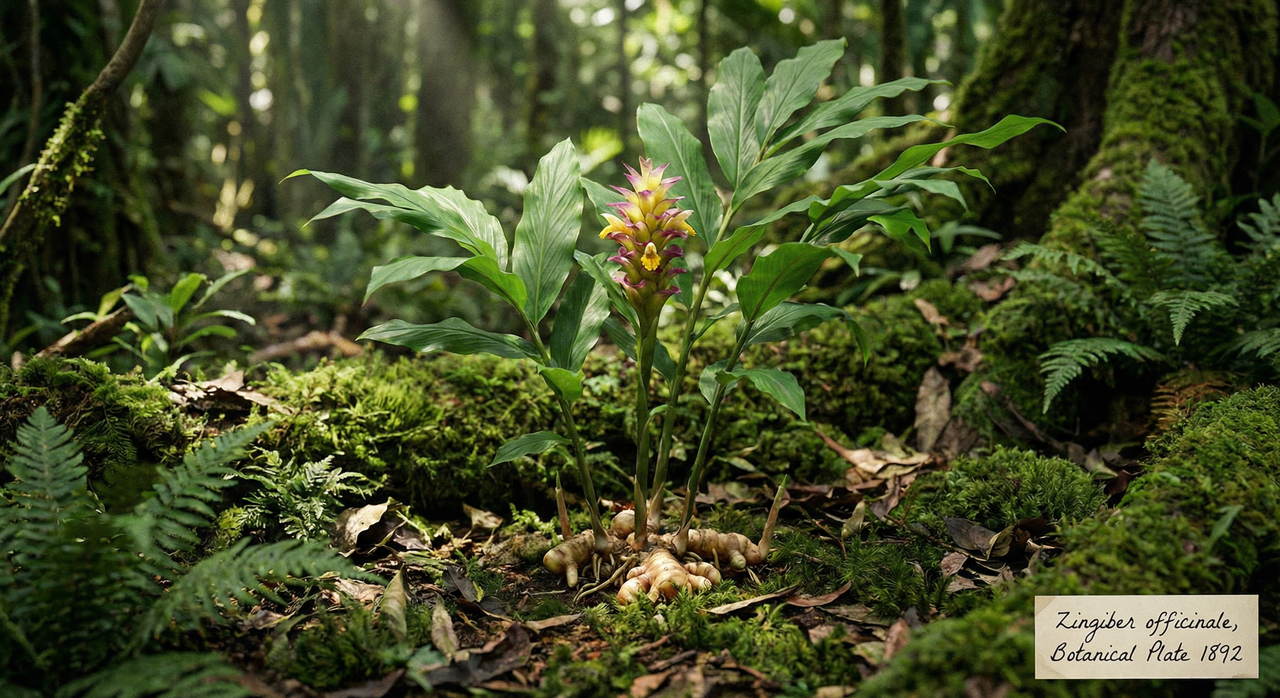
Most people have eaten ginger hundreds of times without ever seeing the living plant. That gap between the knobby brown rhizome at the grocery store and the actual living thing, a lush, shoulder-high clump of arching tropical leaves releasing a sharp, resinous scent when you brush against them, is wider than you'd expect. I grew ginger for two full seasons before I ever saw it flower, and when it finally did, a dense little cone pushing up straight from the soil on its own separate stem, completely apart from the leafy pseudostems, I genuinely thought something had gone wrong. Nothing had gone wrong. That's just what ginger does, quietly, on its own timeline, mostly underground.
Here's the thing that reshapes how I think about this plant: ginger as we know it almost certainly doesn't exist in the wild anymore. After at least 5,000 years of human selection and clonal propagation,[1] every culinary rhizome you've ever bought, pickled, or grated is essentially a cutting of a cutting of a cutting, passed hand to hand across continents without a single viable seed involved. You're not growing a plant with a wild ancestor you could go find. You're growing a domesticate so thoroughly shaped by human hands that it's lost the ability to reproduce any other way. That history is in the rhizome sitting in your kitchen right now, and it's a better reason than any to get it in the ground.
Ginger Origin, History, and Botanical Background
There's a reason ginger feels so at home tucked under a banana tree or nestled in the dappled shade of a food forest canopy. Zingiber officinale is native to the humid monsoon forests and tropical understories of the Indo-Malayan region, with its center of origin in India and southern China.[2][3] That origin explains almost every quirk of growing it: the demand for moisture, the preference for filtered light, the way it sulks in cold or waterlogged soil. The plant is essentially asking you to recreate a forest floor in miniature.
Botanical Background and Visual Characteristics
Ginger is a long-lived evergreen perennial with a rhizomatous habit, capable of persisting three to five years or longer in ideal tropical conditions while slowly expanding into dense clonal colonies through sympodial rhizome division.[4][5][6] "Sympodial" just means each growing tip eventually terminates and a new lateral shoot takes over, which is exactly why one planted piece becomes a spreading clump over time. In the garden, that translates to a plant that multiplies generously and rewards patience. It can technically flower and set seed after a year or two when conditions are perfect, with birds and ants dispersing those small black capsule seeds in wild populations, but in cultivation you'll almost never see it happen.[7][8]
The architecture of the plant is worth knowing for identification. The creeping, knobby rhizome with its pale yellow interior is the heart of the whole operation, the primary storage organ and the feature that makes ginger unmistakable once you've snapped a piece fresh from the soil. The moment you do, that sharp, warming aroma hits you immediately, far more vibrant than anything from a grocery store bag, and I've found it's a reliable cue for when the plant is packing the most flavor. Above ground, overlapping leaf sheaths form hollow pseudostems that reach 0.6 to 1.2 meters tall, topped with bright lanceolate leaves arranged in two rows along the stem, each 15 to 35 centimeters long.[9][10][6] Flowering, when it happens, emerges on a separate stalk as a conical spike with pale greenish flowers and a yellow-purple labellum, and in my years growing this plant in Central Florida, I've seen it maybe twice.[11]
Its closest relative in the garden context is Mioga ginger (Zingiber mioga), native to moist forest understories and stream banks in Japan, Korea, and northeastern China, where it grows at elevations up to 1,500 meters.[12][13][14] Mioga is deciduous, slightly taller at one to two meters, longer-lived at ten to twenty years, and considerably more cold-tolerant. I've grown both side by side, and the leaf shape is strikingly similar until late autumn, when the mioga collapses dramatically to the ground and the common ginger just keeps going. Label your rhizomes carefully in a mixed bed. I learned that the hard way.[15] Where common ginger's flowers are rare and stalked, mioga produces fragrant flower buds directly from the rhizome at the soil surface, something gardeners in cooler climates will actually get to see reliably.
History, Traditional Uses, and Cultural Significance
Ginger's history with humans is as old as agriculture itself in Asia. The plant was likely first domesticated around 5,000 to 6,000 years ago in the Assam region of India, with cultivation recorded in southern China by 1500 BCE.[2][16] Ayurvedic texts like the Charaka Samhita, written around 600 BCE, documented its warming and digestive uses, and Chinese medicine followed with references in the Shennong Bencao Jing around 200 to 250 CE.[17][18] The clinical research we have today confirms the digestive benefits those diverse traditions mapped out millennia ago.
From India, ginger traveled. Arab traders carried it along Indian Ocean routes to the Middle East, Africa, and Europe by the 1st century CE, where Dioscorides noted its properties, and Portuguese colonizers brought it to the Americas in the 16th century, where it worked its way into Mexican moles and Caribbean cooking.[19][20][21] That journey was driven by the rhizome's rare combination of culinary power and medicinal credibility. Across India, Thailand, the Philippines, West Africa, and Bangladesh, ethnobotanical traditions document decoctions and poultices for digestive and inflammatory conditions; the Maasai used it similarly.[22][23][24] Mioga ginger carved its own parallel path in Japan, cultivated since the Nara period (710 to 794 CE) and expanded commercially during the Edo era. It became embedded in Kampo medicine and seasonal sansai foraging culture, with folklore linking it to protection from evil spirits.[25][26]
Carl Linnaeus formally named the species Zingiber officinale in 1753, and today India leads global production at over one million tons annually out of a worldwide total of roughly two to four million tons.[27][28] When I source ginger or share recipes, I always try to honor the Indian and Southeast Asian communities who stewarded this plant for thousands of years. It's more than a spice; it's living knowledge, and the growing concern around wild-relative overharvesting and Western commercialization without attribution makes that acknowledgment all the more important.[29]
Fun Facts About Ginger
Under optimal growing conditions, ginger yields can reach 20 to 30 tons per hectare, all of it centered on that knobby rhizome that serves simultaneously as the plant's food reserve, its means of vegetative survival, and the crop itself.[27][30] Mioga ginger flips that priority entirely: its edible harvest comes from the fragrant flower buds, not the rhizome, and those buds show up at harvest festivals and seasonal Japanese cuisine in ways that make the plant feel more ornamental than agricultural.[13][31] I love sharing that contrast with friends who assume all gingers are grown the same way.
And then there's the medieval price tag. In Europe, ginger was at times more valuable than gold, a luxury import that genuinely fueled the age of exploration.[16] Considering that I now grow it as a low-maintenance understory perennial that spreads on its own and asks almost nothing from me after the first season, that historical context still catches me off guard every time I think about it.
Ginger Varieties and Sourcing
Notable Varieties of Ginger (Zingiber officinale) and Mioga Ginger (Zingiber mioga)
Unlike tomatoes or peppers, ginger has never been the target of serious modern breeding programs, so you won't find a tidy seed catalog of named cultivars. Instead, the roughly 50 to 100 named varieties and landraces that exist globally are grouped by practical traits: rhizome color, fiber content, pungency, and regional origin.[32][33] The broadest groupings are yellow (yellowish mature rhizomes), white (pale cream flesh, thin skin), and black or red (darker skin, often more pungent).[34][35] That's about as formal as the taxonomy gets, which honestly reflects ginger's story as an ancient traded crop shaped by farmers over millennia rather than by plant breeders in a greenhouse.
For home growers, the regional differences matter more than the color categories. Jamaican types tend to produce large, pale, low-fiber rhizomes with mild flavor, while Cochin ginger from India is plumper but noticeably more fibrous, and African types run smaller and more fibrous still. The Chinese and Rio de Janeiro types show those pretty bluish rings in cross-section, with light brown skin and pale yellow flesh.[32][34] I grow a low-fiber Jamaican-type in my Florida garden, and the difference at the grater is real. Lower fiber means smoother juice, less straining, and a more refined result in fresh ginger drinks or marinades. If yield and disease resistance are your priorities, the Indian releases are worth knowing: 'Nadia' comes in at 20 to 25 tons per hectare with moderate bacterial wilt resistance, 'Suprabha' offers similar yield potential at 18 to 22 tons per hectare, and 'Mahima' leans harder into disease resistance.[36]
Zingiber mioga, mioga or Japanese ginger, is a genuinely different plant and worth a mention here even though it won't give you the fat rhizomes you're probably imagining. Its harvest is tender flower buds and young shoots rather than large culinary roots, and Japanese selections are divided by shoot color: red-shoot types like 'Beni Myoga' are more pungent, while green-shoot types run milder.[37] The ornamental cultivars ('Dancing Crane,' 'White Feather,' 'Silver Dancer,' and the golden-variegated 'Variegatum Aureum') are where mioga really earns its place in a permaculture design.[38][39] I have 'Dancing Crane' tucked into a shaded guild where it catches dappled light under a citrus canopy, and the cream-striped foliage alone justifies the space even in years when I don't harvest a single bud.
Sourcing Ginger Plants and Rhizomes in the United States
Here's the market reality: the United States grows almost no commercial ginger. Hawaii produces around 1,000 acres annually, and domestic production outside Hawaii barely registers.[40] In fiscal year 2022 alone, the U.S. imported roughly 78,000 metric tons of fresh ginger worth about $150 million, primarily from China, India, Peru, and Mexico.[41] So when you pick up a knob at the grocery store for $3 to $6 a pound, you're almost certainly holding an import.[42]
For planting stock, your options are broader than you might expect. Rhizomes are available online through Amazon, Etsy, eBay, and Burpee, with small packs running $5.99 to $12.99 and live starter plants generally falling in the $8.99 to $25 range.[43][44] Botanical garden shops like Missouri Botanical Garden also carry selections worth exploring.[45] I spent years starting ginger from grocery-store roots, and while it works, I've since switched to certified disease-free stock from reputable vendors after watching bacterial wilt move through a bed that I traced back to compromised planting material. Look for firm, plump rhizomes with multiple healthy buds and no soft spots or mold.[46][47] That extra attention at sourcing pays off through the whole season.
Before ordering across state lines or internationally, check the regulations. Importing ginger rhizomes or plants requires USDA APHIS permits and phytosanitary certificates, Hawaii restricts Z. mioga, and California has its own inspection requirements.[48][49][50] I've had shipments flagged before; it's a headache that's entirely avoidable with a five-minute check before you order. For mioga ginger specifically, specialty nurseries and Asian plant suppliers are your best bet. It grows in USDA zones 7 to 10, isn't considered invasive in the continental U.S., and typically sells as live plants for $15 to $30 or rhizome divisions for $5 to $15.[13][51]
Ginger Propagation and Planting Guide
If you've been searching for how to grow a ginger plant from seed, I'll save you some frustration: don't bother. Almost every ginger rhizome you'll ever eat or grow comes from vegetative propagation, not a seedling. Commercial ginger cultivation relies entirely on rhizome division to guarantee genetic uniformity, rapid establishment, and plants that reliably produce the flavor and yield traits you're actually after.[52][53][8] This isn't an arbitrary convention; it's what the plant's biology demands.
Choosing the Right Propagation Method for Ginger
I've been propagating ginger from organic grocery-store rhizomes for years, and the method is genuinely simple once you know what to look for. Select pieces that feel firm and dense, not spongy, with plump, visible buds (eyes) on the surface. Cut them into sections about 1-2 inches long, each with at least one eye, then let the cut ends callus on your kitchen counter for a day or two before planting.[54][55] You can dust those cut surfaces with mycorrhizal inoculant if you like; I've found it speeds establishment noticeably in garden beds. Plant in spring once your soil is consistently sitting between 70 and 85°F.[54][56]
Seed propagation is worth understanding only so you can confidently skip it. Ginger seeds are recalcitrant, meaning they lose viability the moment they dry out, and even under ideal laboratory conditions germination rates sit between 20 and 50%.[57][58][59] The seeds themselves are tiny (under 1 mg), genetically variable, and rarely even produced by cultivated varieties.[6][60] I once tried sprouting seed from a flowering ornamental ginger relative, largely out of curiosity, and it was a months-long lesson in why every commercial grower I know simply divides rhizomes. Seed propagation belongs in breeding programs, not kitchen gardens. The rhizome method, by contrast, gives you high success rates and true-to-type plants every time.
One thing worth knowing before you get into the ground: ginger needs 70-80% humidity during initial establishment, consistently moist soil (never saturated), and some protection from harsh direct sun while it's getting started.[54][57] Those conditions set up the soil and site requirements below.
Soil, Site, and Light Requirements for Successful Planting
Poor drainage is the single most reliable way to kill a ginger planting before it starts. I lost my first batch to waterlogged soil before I learned that raising the bed 6-8 inches or growing in deep containers is the best insurance against the rhizome rot that results. The literature confirms what my garden taught me: ginger wants fertile, well-drained loamy soil with 3-4% organic matter, a pH between 5.5 and 6.5, and enough aeration that water moves through freely without compacting around the rhizomes.[61][62][63] Amend heavily with compost or well-rotted manure before planting; this is one crop that rewards a generous soil investment upfront.
Ginger evolved as an understory plant in tropical humid forests, which explains its relationship with light perfectly. In cooler climates it tolerates 4-6 hours of direct sun; in hot regions, filtered light or 30-50% shade cloth is a better choice.[54][64] Morning sun with afternoon shade is the sweet spot I keep coming back to. Plants I've grown under 30-40% shade cloth during Florida summers consistently produce larger, more aromatic rhizomes than those left in full afternoon exposure, and the research on photodamage and leaf scorch bears that out. Too little light causes etiolation and stunted rhizomes; too much causes scorched, ragged leaves and smaller yields. Mioga ginger follows a similar logic but pushes the shade tolerance further, thriving in actual woodland conditions with a slightly broader pH range of 5.0-7.5, making it a useful option for gardeners with more heavily canopied sites.[65][15]
Spacing, Planting Depth, and Initial Care
Ginger is a clumping perennial that reaches 3-6 feet tall with a spread of 12-36 inches depending on conditions, so giving rhizomes room to expand matters for both yield and disease management.[66] Plant sections 2-4 inches deep with the bud facing up, spacing plants 6-12 inches apart within rows and rows 12-24 inches apart for home gardens.[8][67] Closer spacing maximizes yield per square foot but demands sharper attention to airflow and drainage; I tend to split the difference at about 8 inches in my beds and keep the rows 18 inches apart. If you're also growing planting ginger root indoors in containers, a pot 12-14 inches deep with one or two sections per pot gives the rhizomes enough room to size up properly. Mioga ginger needs wider spacing, 18-24 inches or more, to let its clumps fully develop over the years it takes to reach harvest scale.[68]
Timeline from Planting to First Harvest
Under warm, moist conditions shoots typically emerge in 4-6 weeks, though the range stretches from 2 to 8 weeks depending on soil temperature and rhizome health.[52][53] If you're past six weeks with no sign of life, check warmth first and moisture second before assuming failure; ginger below 60°F simply stalls.[13] The real patience test comes after: first edible rhizome harvest is 8-10 months from planting, which means a spring planting yields in late fall or early winter. That's a long season, but it's predictable, and once you've done it once the rhythm feels natural. Mioga ginger operates on a completely different clock, taking 2-3 years from division to a substantial harvest of its flower buds rather than rhizomes.[69][70] If your goal is a rhizome harvest within a single growing season, common ginger is clearly the right choice; if you want a low-maintenance woodland perennial you're willing to wait on, mioga earns its place. In USDA zones 9-12 you can leave rhizomes in the ground year-round and let the planting expand; in cooler zones, treat it as an annual or bring pots indoors before frost.[71]
Ginger Care and Growing Guide (Zingiber officinale)
Ginger is not a fussy plant, but it is an honest one. Give it what it evolved for — steady warmth, consistent moisture, and fertile soil — and it rewards you with plump, aromatic rhizomes. Shortchange any of those needs and it tells you immediately, usually through wilting leaves or a disappointing harvest. After growing culinary ginger in containers on my Central Florida patio for several seasons alongside a patch of mioga ginger in partial shade, I've come to think of caring for this plant as managing a microclimate rather than following a rigid schedule.
Watering Needs
Consistent moisture is non-negotiable. Ginger needs the top 1–2 inches of soil to stay reliably moist during active growth, which translates to roughly 1–2 inches of water per week and a root zone kept moist down to about 6–8 inches.[72][73][13] Skip watering for even 3–7 days during a hot spell and the plant will tell you: leaves wilt, curl, and the edges start browning.[74] Soggy soil is just as damaging, as overwatering shows up as yellowing lower leaves and, more critically, soft, mushy, foul-smelling rhizomes — the early signature of rot.[54]
I check the top inch of soil every other day during Florida's hot, rainy summers because heavy pots can look damp on the surface while the bottom is either bone-dry or pooling. The watering rhythm also shifts across the season: keep seedlings and newly planted rhizomes consistently moist, maintain regular watering through the long vegetative and rhizome-bulking phases, then deliberately back off once the leaves begin to yellow in fall.[75] Container plants dry out faster than in-ground beds, so they need more frequent attention; a well-drained sandy loam or clay loam with a pH of 5.5–7.0 gives you more buffer.[76][13]
Soil and Fertilizer Requirements
Ginger is a moderate to heavy feeder, and the soil needs to back that up — fertile, well-drained, and rich in organic matter.[8][77] The nutrient ratio that matters most is approximately 2:1:2 (N:P:K), and potassium deserves particular attention because it directly drives rhizome development, disease resistance, and overall quality.[8][78][79] I learned this the hard way: one season I leaned too heavy on nitrogen and ended up with gorgeous leafy pseudostems and rhizomes the size of my finger instead of my fist. A simple soil test each spring has saved me from repeating that mistake.
Apply fertilizer in split doses rather than all at once. Full phosphorus, potassium, and organic matter go in at planting; nitrogen follows in three or four applications at planting and then around 30–40 and 60–70 days in.[78][80] Excess nitrogen doesn't just waste money — it produces leafy growth at the expense of rhizomes and opens the door to disease.[81][82] For container growers in temperate zones, a balanced liquid fertilizer (10-10-10) every 4–6 weeks during active growth works well, diluted to half strength for mioga ginger, which is a lighter feeder; compost and well-rotted manure improve the long-term soil structure that makes all of this nutrition actually available.[54][83]
Sunlight Preferences and Heat Tolerance
Ginger's sweet spot is 77–86 °F (25–30 °C), with USDA hardiness zones 9–12 covering the range where it grows as a perennial.[84][85] It can push through brief spikes to 104 °F, but sustained heat above 90 °F reduces rhizome yield by 20–40%.[86] When heat stress hits, you see leaf wilting, tip and margin scorch, slowed stem elongation, and eventual rhizome softening.[87]
Practical mitigation: 35–50% shade cloth, 2–4 inches of organic mulch to keep soil temperatures below 32 °C, and shifting irrigation to early morning or late afternoon.[88][89] Heat-tolerant cultivars like 'Rio de Janeiro', 'Kerala Local', and 'Maran' perform better in punishing summers if you can source them.[90] Mioga ginger (Zingiber mioga) thrives at a cooler 59–82 °F with more shade — its AHS Heat Zone range runs 1–9 — but it also wilts and drops flower buds above 95 °F without adequate moisture.[91][92]
Frost Tolerance and Overwintering
Culinary ginger is a genuine tropical. Foliage damage begins below 50 °F (10 °C), a hard frost kills the tops entirely, and prolonged freezing destroys the rhizomes.[93][13] The symptoms are unmistakable: leaves go water-soaked, then black, then mushy — and once the rhizomes have frozen through, recovery is essentially off the table.[94]
In zones 8 and below, your options are layering 4–6 inches of organic mulch over in-ground plants after frost risk passes, draping frost cloth over them (without letting it touch the foliage), or digging the rhizomes after senescence and storing them in moist sand or peat at 50–59 °F in a dark spot until spring.[95][93] Honestly, I prefer the container approach in north Florida when occasional freezes threaten — moving a 5-gallon pot indoors for a night or two is far less stressful than scrambling to mulch beds at 10 pm. Mioga ginger is a different story; it survives down to 0 °F (-18 °C) with heavy mulching and is reliably perennial in zones 7–10, making it a genuine low-maintenance option for temperate gardens where culinary ginger simply won't overwinter.[96][69]
Pruning, Maintenance, and Seasonal Rhythm
Caring for a ginger plant through the season is mostly about restraint. Remove only dead, yellowing, or diseased leaves to improve airflow and reduce fungal pressure; cutting healthy foliage pulls energy away from the rhizomes you're trying to fatten up.[93][97] My personal cue for approaching harvest is the first basal leaves yellowing in fall — once that starts, I know I'm only weeks away, and I shift from maintenance mode to anticipation mode.
Mulch does a lot of the maintenance work for you: 2–4 inches suppresses weeds and holds moisture through the growing season, while bumping to 4–6 inches in marginal zones provides meaningful winter insulation.[54][98] In hot climates, 50–70% afternoon shade prevents the leaf scorch that hammers unprotected plants. Pest and disease prevention is primarily cultural: good drainage, sanitation, crop rotation, and starting with certified disease-free stock keep aphids, spider mites, nematodes, and the more serious Fusarium and Phytophthora problems from getting a foothold.[81][99] Neem oil or insecticidal soap handles early above-ground infestations; the soil-borne threats respond far better to prevention than treatment.
Seasonal Care Calendar
How ginger behaves across a year depends almost entirely on where you're growing it. In tropical and subtropical climates it grows near-continuously, bulking rhizomes through warm wet seasons and slowing during cooler, drier periods without true dormancy.[100] In temperate zones the pattern is sharper: growth kicks off once soil temperatures clear 68 °F in spring, peaks through summer, then shuts down as temperatures fall below 50–59 °F in autumn — at which point the plant yellows, the rhizomes go dormant, and the cycle either ends with harvest or begins the overwintering routine.[101]
Most temperate growers treat culinary ginger as an annual, harvesting after 8–10 months and starting fresh each spring.[102] Container growing makes the perennial option viable: bring the pot indoors, keep it barely moist through winter, and the rhizomes break dormancy again when warmth returns.[103] Mioga ginger follows a distinct seasonal beat — spring emergence above 59–68 °F, summer vegetative growth, late-summer flower bud harvest, then six months of cold-induced dormancy — which makes it a natural fit for gardeners in cooler zones who want a productive, low-input ginger relative without the overwintering drama.[104]
Ginger Harvesting: Timing, Technique, and Flavor at Peak
After 8 to 10 months of watching those tall, reed-like pseudostems fill out in the garden, harvest day for ginger is genuinely satisfying. But it takes patience to get there, and a little practice learning to read the plant's signals rather than the calendar.
When to Harvest Ginger Rhizomes
The clearest signal that Zingiber officinale rhizomes are ready is leaf yellowing and dieback.[105][106] In my Central Florida garden, I've learned to wait for a specific, golden-yellow fade across most of the foliage rather than just a few yellowed tips, which often just means stress. At that point, if I scrape the soil back carefully with my fingers, the rhizomes are typically 1 to 2 inches in diameter, firm, smooth-skinned, and a warm light brown.[107] Digging early is tempting, but you sacrifice both size and that deep, developed flavor.
In subtropical climates like Florida and Hawaii, the sweet spot for harvest runs from October through December after a spring planting, though local weather will push that window a week or two in either direction.[81][108] Flowering, if it happens at all in cultivation, typically occurs 6 to 8 months in, with rhizomes hitting full maturity roughly 60 to 90 days after that.[109][110] Mioga ginger (Zingiber mioga) follows a completely different rhythm, with its edible flower buds harvested just 3 to 7 days after they emerge, at 2 to 4 inches long, typically between May and July in zones 7 to 9.[111][112] Blink and you'll miss that window.
How to Harvest and Cure Ginger
I dig ginger carefully, using a garden fork inserted well outside the clump so I'm loosening soil rather than spearing rhizomes. Once the clump lifts free, I shake off excess soil by hand and inspect for any cuts or bruises before moving the rhizomes to a shaded, well-ventilated spot to cure.[105][13] My preferred method is a mesh screen in the shed with good airflow for 4 to 5 days. The curing period toughens the skin, heals any cut surfaces, and dramatically reduces mold risk in storage.[6] Skipping this step has cost me rhizomes before.
With mioga, the process is gentler and faster. You simply pull or cut the buds at the base, and regular harvesting actually encourages the plant to keep producing through the season.[111] No curing required, no clump excavation. I've grown both side by side, and mioga's ease of harvest is genuinely appealing, even if the rhizome is off the table.
Flavor, Aroma, and Yield: From Fresh Rhizome to Dried Powder
Fresh ginger at peak harvest has a brightness you don't get from the grocery store. The high 6-gingerol content delivers sharp, pungent heat layered over citrus notes, lemon and lime, with floral undertones and a lingering warmth that hangs on the palate.[113][114] That profile shifts once you dry or powder it. Drying converts 6-gingerol to 6-shogaol, pushing the flavor toward earthier, woodier intensity while pulling back the citrus freshness.[115][116] I've noticed this directly: rhizomes from my hotter, muggier summer beds make a noticeably more pungent dried powder than those I've harvested after a milder spring, which fits the research showing that growing conditions and mild stress can push secondary metabolite production upward.[117][118]
Mioga buds offer a softer, lemonier alternative, their essential oils rich in citral, linalool, and geraniol rather than the gingerols that dominate common ginger.[119][120] They're a genuinely delightful garnish, no curing, minimal processing, and that bright floral quality that makes them feel like a completely different ingredient.
Ginger Preparation and Uses
Culinary Uses of Ginger Rhizomes and Related Species
The rhizome is where everything begins. Fresh, dried, powdered, pickled, juiced, candied, or extracted, the rhizome of Zingiber officinale does the heavy lifting in kitchens worldwide, its heat driven by gingerols when raw and shogaols once dried.[121][122] I frequently pull rhizomes early around month five when I want that thin-skinned, sweeter baby ginger for slicing into salads, reserving the fully mature harvest for drying.[123][63] What doesn't go straight to the kitchen I store in a cool, humid spot at roughly 10 to 13°C where it keeps well for up to three months.
Cooking changes the character of ginger in ways worth understanding. Heat converts gingerols to zingerone, softening pungency and drawing out a warmer, sweeter quality.[124] Candying pushes this further, producing almost caramel-like notes while preserving the aromatic backbone.[125] I've noticed that rhizomes grown through Central Florida's hotter summers come out noticeably more fiery before candying, so the starting pungency of your raw rhizome genuinely affects the finished product. For savory cooking, ginger pairs beautifully with poultry, seafood, pork, tofu, and alliums; for sweet applications, think stone fruits, citrus, pineapple, and warming spices like cardamom and cinnamon.[121][126]
One identification warning I give every new grower: if the leaves are heart-shaped rather than lanceolate, it is not culinary ginger. Wild ginger (Asarum species) looks superficially similar but contains nephrotoxic aristolochic acids.[127][128] I've reinforced this distinction in plant-ID workshops more times than I can count. The rhizome itself is generally safe and well-tolerated in culinary amounts,[129] but doses above 5 grams a day can cause heartburn, so concentrated therapeutic doses should be managed carefully to avoid gastrointestinal discomfort.[130]
I also grow a small patch of Zingiber mioga, and it earns its space by offering something Z. officinale never will: tender, crunchy flower buds with a delicate ginger-floral flavor suited to pickling or eating raw.[131][132] I harvest the buds early in the morning before they open, when the crunch is best. The shoots can be blanched or stir-fried like asparagus, and those flower buds actually carry impressive antioxidant polyphenols that can rival common ginger's bioactives.[133] The same look-alike caution applies here: Asarum, lords-and-ladies (Arum maculatum), and raw taro are all potential misidentifications in a garden setting, so know your plants before you harvest.[134][135]
Medicinal Preparations and Traditional Applications
Ginger tea made with fresh root is my first line of defense for nausea, whether it's motion sickness or a rough stomach. For therapeutic use, about 1 gram per day is the evidence-backed target for nausea relief, typically split into 250 to 500 mg doses taken a few times daily.[130][136] I keep powdered ginger capsules in my travel kit for exactly this reason. Hot tea with ginger root is the simplest preparation: simmer a few thin slices in water for ten minutes, add honey and lemon, and you have something that works. Growing your own supply means you control freshness in a way no grocery store allows. Traditional use of Zingiber mioga follows a gentler protocol, around 10 to 20 grams of fresh flower buds or 3 to 9 grams of dried rhizome as a decoction, with no formalized pharmacopoeia dosage behind it.[137] Think of mioga as a culinary-medicinal bridge rather than a standardized remedy.
Non-Food Uses and Cultural Significance
Beyond the kitchen and medicine cabinet, ginger carries real cultural weight. Across Hindu ceremonies it functions as an offering and purification agent, and its symbolic role in South and Southeast Asian traditions connects warmth, protection, and spiritual cleansing to a single aromatic root.[22][17] The rhizomes also yield a yellow dye used traditionally in India and Southeast Asia for fabrics, cosmetics, and food coloring, while stem fibers have been explored for natural textiles.[138] A plant this widely traveled doesn't carry millennia of human reverence by accident.
In my own garden nothing from the ginger patch goes to waste. The spent foliage and fibrous trim from Z. mioga go straight back as chop-and-drop mulch, building the organic layer that the next season's rhizomes will grow into.[139] Growing ginger well means closing that loop: harvest the root, return the tops, and let the soil grow richer for the cycle.
Ginger Health Benefits and Medicinal Uses
Ginger occupies a rare position in the plant world: it's genuinely beloved as a kitchen staple and taken seriously as a medicinal ally, and the clinical literature actually backs that dual identity up. Ayurvedic practitioners have prescribed it for digestive complaints and respiratory congestion for millennia, while TCM physicians used dried ginger to warm the body and stop vomiting.[1][140] What's satisfying, as both a grower and a gardener who cooks from the garden, is that modern research keeps validating those ancient applications rather than overturning them.
Key Phytochemicals in Ginger: Gingerols, Shogaols, and Beyond
The chemistry behind ginger's punch starts with gingerols. In fresh rhizomes, 6-gingerol is the dominant pungent compound, present at up to 1–3% of fresh weight, with 8- and 10-gingerols and smaller amounts of paradols rounding out the family.[141][142] Harvest younger rhizomes and the gingerol content is higher; let them mature and it drops. I've noticed this in my own beds: rhizomes pulled at seven months have a sharper, more aggressive bite than those left in the ground through a full ten-month cycle.
When you dry or heat ginger, those gingerols convert to shogaols, with 6-shogaol reaching up to 0.5% in dried material, and further into zingerone, which shows its own antioxidant, neuroprotective, and anticoagulant activity.[143] The conversion also increases anti-inflammatory activity overall, which is one reason dried ginger behaves differently therapeutically than fresh. The essential oil fraction (1–3% of rhizome by weight) adds another layer, dominated by sesquiterpenes like zingiberene at 20–30% alongside geraniol and citral.[144] Phenolics round out the picture: total phenolics run 20–50 mg/g dry weight, with ferulic acid, quercetin, kaempferol, and rutin all contributing to antioxidant activity.[145]
For growers, there's a practical lever here: nitrogen fertilization can increase gingerol content by up to 20%, and keeping soil pH in the 5.5–6.5 range supports optimal biosynthesis.[146] If you're growing ginger for medicinal use rather than just flavor, those inputs matter. Mioga ginger (Zingiber mioga) takes a different phytochemical path, featuring unique diarylheptanoids like miogadial and miogarendial with their own anti-inflammatory and antioxidant activity, plus essential oils rich in linalool and geraniol.[147] It's a reminder that medicinal activity runs across this genus, even when the chemistry takes a detour.
Evidence-Based Health Benefits of Ginger
The anti-nausea evidence is where ginger's clinical profile is strongest, and where most people first encounter it as medicine rather than spice. Multiple randomized controlled trials and meta-analyses confirm its efficacy against pregnancy-related nausea, postoperative nausea, and chemotherapy-induced vomiting, working primarily through 5-HT3 receptor antagonism.[148][149] I kept a jar of fresh-grated ginger in my fridge through a particularly rough first trimester a few years ago, and I wasn't surprised at all when my midwife confirmed there's real data behind that instinct.
Anti-inflammatory action is the second major pillar, with clinical trials supporting benefits for osteoarthritis and primary dysmenorrhea via inhibition of COX-2, TNF-α, IL-1β, and NF-κB pathways.[150][151] Digestive benefits are equally well-supported: ginger accelerates gastric emptying and reliably reduces functional dyspepsia symptoms, and it inhibits the digestive enzymes α-amylase and α-glucosidase at IC50 values comparable to the diabetes drug acarbose.[152][153]
Beyond those three core areas, gingerols and shogaols activate the Nrf2 pathway and scavenge reactive oxygen species, with RCT meta-analyses showing measurable reductions in oxidative stress markers.[154] Cardiovascular, antimicrobial (including activity against H. pylori, S. aureus, and Candida), and preclinical anticancer mechanisms are documented as well.[155][156] Those last two categories are genuinely exciting in preclinical models, but the clinical translation still requires caution given study heterogeneity and the need for larger RCTs.[157] Mioga ginger mirrors many of these activities through its unique compounds, though its evidence base is almost entirely preclinical for now.[158]
Nutrition Profile of Ginger Rhizomes
Ginger isn't a nutritional powerhouse in the conventional sense. Per 100 g raw rhizome: 80 kcal, 17.77 g carbohydrates, 1.82 g protein, modest vitamin C (5 mg) and B6 (0.16 mg), with potassium (415 mg) and magnesium (43 mg) as the most meaningful minerals.[159] A typical tablespoon of fresh grated ginger weighs about 5 g, so you're not adding much of those numbers to a meal. But that framing misses the point entirely. The real value lives in its phytochemical density: gingerols, shogaols, zingiberene, and the broader phenolic matrix are what make even small daily amounts functionally significant.[129]
Fresh ginger preserves vitamin C and volatile aromatic compounds better; drying concentrates the nutrient profile per gram and shifts gingerols toward the more stable shogaols. Boiling for tea or broth may leach some water-soluble vitamins, but it also breaks down cell walls in ways that can improve phytonutrient bioavailability.[143] Mioga ginger's edible flower buds and shoots sit at only 20–35 kcal per 100 g with about 91.5 g water, delivering potassium and modest vitamin C alongside quercetin and kaempferol, but they're better understood as a mild, aromatic vegetable than a concentrated medicinal source.[160]
Safety, Dosage, and Potential Side Effects of Ginger
Ginger is FDA GRAS for food use, listed by the ASPCA as non-toxic to dogs, cats, and horses, and shows an acute oral LD50 above 2,000–5,000 mg/kg in animal studies.[161][162] That's a reassuring baseline. In culinary amounts, ginger is essentially trouble-free for most people. The general safe ceiling for supplemental use is up to 4 g per day, with medicinal applications typically staying around 1–2 g per day; for pregnancy nausea, 1 g per day short-term is the established guidance.[130] Push past 4 g and you may encounter heartburn, loose stools, or abdominal discomfort, and rare contact dermatitis can develop from repeated handling of fresh rhizomes.[163]
The interactions worth knowing are real and specific. Ginger's antiplatelet effects can increase bleeding risk when combined with anticoagulants like warfarin, and its glycemic effects can potentiate antidiabetic medications.[164] Anyone with gallstones should also exercise caution, as ginger stimulates bile production.[165] The antiplatelet effect is documented enough that I always tell clients on blood thinners to check with their physician before reaching for ginger medicinally. That's not alarmism; it's just responsible information-sharing. Culinary amounts during pregnancy are generally considered safe, but higher medicinal doses warrant medical advice.[166]
One identification note that comes up in my foraging workshops: do not confuse true ginger with wild ginger (Asarum spp.), which contains aristolochic acid and can cause serious kidney damage.[167] The aromatic rhizome of Zingiber officinale is unmistakable once you've handled it, but the leaf resemblance can fool beginners. Mioga ginger carries a comparable safety profile to common ginger, though specific pregnancy data is thin and the same prudence around blood thinners applies given shared antiplatelet potential.[168]
Pests and Diseases of Ginger
Ginger has a few tricks up its sleeve when it comes to defending itself. The same compounds that make it delicious, gingerols, shogaols, and zingiberene, also function as natural insect deterrents, and its waxy leaf surfaces and dense trichomes add a physical barrier that many soft-bodied pests find uninviting.[169][170] I've noticed this firsthand: when I'm dividing rhizomes, that sharp, pungent aroma seems to keep most insects at a respectful distance in the surrounding garden beds.
Ginger's Natural Pest Resistance and Vulnerabilities
Aphids and whiteflies tend to leave ginger alone, kept in check by its chemical profile.[171] Spider mites are a different story, especially when plants are heat-stressed or under-watered, and thrips can move in on young shoots while also vectoring viruses you really don't want in your patch.[172][173] Below ground is where ginger's defenses really start to falter. Rhizome borers, mealybugs, scale insects, and root-knot nematodes (Meloidogyne spp.) all thrive in the same warm, moist conditions that ginger loves, and rhizome borers alone can destroy up to 50% of a harvest.[174][175] Cultivars 'Nadia' and 'Maran' offer some tolerance to rhizome scale, and 'Rio de Janeiro' performs better against nematodes, though none of these are silver bullets.[176]
Mioga ginger (Zingiber mioga) sits at the more resilient end of the genus. Its temperate adaptation, deciduous winter habit, and similar defensive volatile compounds give it meaningfully stronger resistance to rhizome borers, nematodes, and bacterial wilt.[174][92] That said, my mioga beds still get slugs, and flower buds can be damaged by inflorescence midges if I'm not watching.[177] Cultivars like 'Dancing Crane' and 'Silver Star' show enhanced tolerance to leaf spot and rhizome rot, which is worth knowing if you're in a cooler, wetter climate.[178]
Major Diseases and Resistant Cultivars
If there's one thing that separates successful ginger growers from frustrated ones, it's understanding how quickly rhizome rot escalates. Pythium, Phytophthora, and Fusarium species all cause rhizome rot; bacterial wilt from Ralstonia solanacearum can collapse a planting with alarming speed; and leaf spot thrives whenever humidity is high and air circulation is poor.[81][179] Ginger plant leaves turning yellow with a general decline in vigor is often the first visible sign, even when the real damage has already happened underground. Viral diseases, including ginger mosaic virus and chlorotic stunt virus, round out the threat list, and no resistant cultivars exist for these.[180]
Indian breeding programs have made genuine progress on partial resistance. 'IISR Varada' can reduce Fusarium wilt incidence by up to 50% and also resists bacterial wilt; 'Mahima' shows broad multi-disease tolerance; 'Suprabha' and 'Suruchi' hold up reasonably well against soft rot and leaf spot; 'Rio de Janeiro' and 'Ithachi' offer moderate Fusarium resistance; and 'Himsoori' handles leaf spot in subtropical conditions.[181][182] If bacterial wilt is a known issue in your area, 'IISR Varada' or 'Mahima' are the first cultivars I'd reach for. Mioga's 'Dancing Crane' adds another option for cooler climates, with better tolerance to bacterial wilt and some fungal diseases, though saturated soils remain its weak point.[174]
Integrated Prevention and Management Strategies
After losing my first serious ginger bed to rhizome rot in a flat, clay-heavy spot, I rebuilt entirely around prevention: raised beds, certified disease-free rhizomes, hot-water treatment before planting, and a Trichoderma inoculant worked into the planting medium.[183][184] Trichoderma, Pseudomonas fluorescens, and Beauveria bassiana all suppress rhizome rot, bacterial wilt, and certain insect pests biologically, and cultural methods like these can reduce disease incidence by 30 to 50%.[185] Rotating ginger with cereals for two to three years (not legumes) breaks soilborne pathogen cycles, and mulching combined with neem cake amendments rounds out the foundation.[186][187] Chemical options, thiophanate-methyl for rot, metalaxyl or mancozeb for Phytophthora, targeted nematicides when pressure is severe, stay on the shelf unless all cultural and biological approaches have been exhausted.[188] This protocol has kept my ginger beds productive across multiple seasons without heavy chemical reliance, and I'm confident it can do the same for most home growers.
Ginger in Permaculture Design
Ginger has a very specific idea of where it wants to live, and honestly, working with that rather than against it is the whole game in permaculture design. Knowing those limits upfront saves a lot of disappointment.
Climate Requirements and Hardiness Zones for Ginger
Zingiber officinale is a genuine tropical, hardy only in USDA zones 9-12, and even in zone 9 it needs heavy mulching of six to twelve inches and active frost protection to survive winter as a perennial.[84][189][69] Below about 50°F (10°C), top growth dies back, though well-insulated rhizomes can regrow from the soil if you've given them enough protection.[190] In zones 8 and cooler, most growers treat it as a warm-season annual, which means planning your food forest guild timing around that rhythm rather than expecting a permanent ground layer. Optimal growth happens between 77-95°F (25-35°C), with the best rhizome yields coming in that narrower 77-82°F (25-28°C) sweet spot.[191][192] Extended heat above 95°F can cause stress, so even in subtropical climates, midday shade from a canopy layer isn't just aesthetic; it's productive.
Site selection also hinges on moisture. Ginger needs the equivalent of 1,500 to 2,500 mm of annual rainfall, plus high relative humidity in the 70-80% range, well-drained fertile soil with a pH around 5.5-6.5, and partial shade in the range of 50-70% filtered light or about four to six hours of direct sun.[193][194][195] Those numbers basically describe the floor of a humid tropical forest, which is exactly where this plant evolved. If you're pushing the boundary of the genus into cooler temperate zones, Zingiber mioga (mioga ginger) is worth knowing about. It's deciduous, dies back hard in winter, and re-emerges from its rhizomes in spring, yet it's reliably hardy down to zone 7 and with heavy mulching can handle temperatures approaching 0°F.[13][196][112] It's not a replacement for culinary ginger, but if you're in zone 7 or 8 and want a ginger relative holding down the herbaceous layer year after year, mioga opens that door.
Ecosystem Functions and Benefits of Ginger
Even when it never flowers in your garden (and in most cultivated settings it won't, since commercial production relies on vegetative propagation), ginger still contributes to the ecosystem. When it does flower, those cone-like, fragrant inflorescences attract honeybees, bumblebees, stingless bees, hoverflies, and butterflies through daylight hours; the flowers are protandrous, meaning they shed pollen before the stigma is receptive, which nudges the plant toward cross-pollination and genetic diversity.[197][198] It's a pollinator bonus rather than a reliable annual contribution, but worth designing for if you're in a climate where flowering is possible.
Below ground is where ginger really earns its place. Its rhizomatous root system actively improves soil structure, drives organic matter accumulation through leaf litter decomposition, and stimulates microbial activity that supports phosphorus and potassium cycling.[199][200] It's not a nitrogen-fixer, so pairing it with leguminous companions is a smart move to round out nutrient cycling. The dense fibrous root mat also does genuine erosion work; I've watched a ginger planting hold a small slope through heavy summer rains in Central Florida without any visible soil movement, which is the kind of quiet infrastructure a well-designed system depends on.[201]
The plant's bioactive compounds, particularly gingerol and essential oils, also act as natural pest deterrents, suppressing nematodes and discouraging aphids in the surrounding soil zone.[202] In my years designing subtropical systems, I've never seen ginger escape cultivation; it has no established wild populations in Florida or elsewhere in North America, so it stays exactly where you put it.[203][204] That's a real asset in a food forest where you want groundcover that works hard without taking over.
Ginger in Food Forests, Layers, and Guilds
Ginger slots into the herbaceous layer of a food forest almost instinctively once you understand where it came from. Its native Southeast Asian forest-floor habitat means it's already adapted to dappled light, consistent moisture, and the kind of rich, decomposing organic matter that builds up under a layered canopy.[205][189] Paired with overstory trees like banana or coconut, it gets both the filtered light it needs and the sheltered microclimate that buffers humidity and temperature, and the overhead canopy's dropped organic matter feeds the very soil conditions ginger thrives in. A five to ten centimeter mulch layer underneath suppresses weeds while ginger's own dense foliage closes the canopy gap at ground level.[206][207]
After growing ginger in Central Florida food forests for several seasons, I've noticed that plants under a light banana canopy consistently produce noticeably thicker rhizomes than those in heavier shade. That partial-shade preference isn't just a botanical fact; it shows up in the harvest bucket in a pretty measurable way. Guild companions matter too. Turmeric and lemongrass are my go-to pairings; they share ginger's moisture and fertility requirements, complement its pest-deterring chemistry, and together create a resilient aromatic understory that's genuinely low-maintenance once established.[208][189] Early on I made the mistake of pairing ginger too close to some aggressive spreaders before I understood just how much it relies on consistent, even moisture; the competition stress showed up immediately in stunted early growth. A well-mulched guild along a swale edge, where water lingers just long enough to saturate the root zone before draining, is close to ideal placement.
For gardeners in cooler zones who want something in this same herbaceous niche, mioga ginger fills a temperate woodland role beautifully alongside hostas, ferns, and comfrey, contributing soil stabilization and seasonal interest while producing edible flower buds rather than rhizomes.[112][13] It functions beautifully as a deciduous understory plant in cooler microclimates, and while my firsthand experience is with Zingiber officinale in subtropical systems, the clumping, non-invasive habit of the genus holds consistent across both species. That combination of low spread potential and genuine ecological contribution is what makes gingers, in their various forms, reliable building blocks for layered edible systems.
The Rhizome That Started My Obsession With the Understory
I planted my first piece of supermarket ginger in a forgotten corner under a banana, mostly as an experiment, half-expecting it to rot. It didn't. It spread quietly, smelled incredible every time I brushed past it, and showed up again the following spring like it had always belonged there. That's the thing about ginger; it doesn't ask for much, and then one day you realize it's become the reason you started paying attention to what was growing in the shade.
Sources 208
- Ginger: A review of its botany, chemistry, and clinical evidence ↩
- The Origin and Domestication of Ginger (Zingiber officinale) ↩
- Zingiber officinale - Plants of the World Online, Kew Science ↩
- Missouri Botanical Garden Plant Finder ↩
- Zingiber officinale - Royal Horticultural Society ↩
- Zingiber officinale - Kew Royal Botanic Gardens ↩
- Ginger: Botany and Horticulture in Medicinal and Aromatic Plants of the World ↩
- The Ginger Plant: Reproduction and Propagation ↩
- Missouri Botanical Garden Plant Finder ↩
- Zingiber officinale - Kew Science ↩
- Zingiber officinale - Flora of China ↩
- Zingiber mioga - Plants of the World Online, Kew Science ↩
- Zingiber mioga - Missouri Botanical Garden ↩
- Flora of China: Zingiber mioga ↩
- Zingiber mioga - Missouri Botanical Garden ↩
- The History of Ginger: From Ancient Spice to Modern Medicine ↩
- Ginger in Indian Ayurveda and Rituals ↩
- Ginger in Traditional Chinese Medicine ↩
- The Spice Routes: Ginger's Journey Through History ↩
- Ginger: A Global History ↩
- The Spice Trade: Marco Polo and Medieval Commerce ↩
- Cultural Significance of Ginger in Asian Traditions ↩
- Ethnobotany of Ginger in Southeast Asia ↩
- Ethnobotanical Survey of Ginger in India ↩
- Myoga Ginger: History and Cultivation in Japan ↩
- Traditional Uses of Ginger Species in East Asia ↩
- Ginger production data ↩
- IUCN Red List: Zingiber officinale ↩
- Cultural Appropriation in Herbal Medicine: The Case of Ginger ↩
- Ginger Production and Rhizome Characteristics ↩
- Cultural Significance of Edible Plants in Japan ↩
- Zingiber officinale - Useful Tropical Plants Database ↩
- Ginger Production - FAO Agricultural Guidelines ↩
- Ginger Plant Varieties: Types Of Ginger For The Home Garden ↩
- Ginger: Botany, Production and Uses ↩
- Cultivars of Ginger in India - ICAR ↩
- Japanese Ginger Varieties: Myoga ↩
- Plants of the World Online ↩
- Cultivars and Varieties of Myoga Ginger ↩
- Vegetables 2022 Summary ↩
- Ginger: World Markets and Trade ↩
- Seasonal Availability Charts for Fruits and Vegetables ↩
- Bulk Ginger Rhizomes - 1 lb ↩
- Organic Ginger Rhizome for Planting ↩
- Missouri Botanical Garden Garden Store ↩
- Ginger Production in Florida ↩
- Ginger: A Home Garden Plant ↩
- Importation of Plants and Plant Products: Ginger ↩
- Hawaii Plant Quarantine Restrictions ↩
- California Plant Quarantine Manual ↩
- Zingiber mioga - USDA PLANTS Database ↩
- Ginger Production Guide ↩
- Growing Ginger: From Planting to Harvest ↩
- How to grow ginger ↩
- Ginger Propagation Guide ↩
- Vegetative Propagation Methods for Ginger and Related Species ↩
- Commercial Ginger Production - University of California Agriculture and Natural Resources ↩
- Propagation Methods for Ginger ↩
- Seed Storage of Recalcitrant Species in the Zingiberaceae Family ↩
- Zingiber officinale Propagation - Flora of North America ↩
- Ginger Production Guide ↩
- Soil Requirements for Ginger ↩
- Ginger Production in Florida ↩
- Growing Ginger ↩
- Zingiber mioga - Myoga Ginger ↩
- Ginger Production Guidelines - University of Hawaii ↩
- Growing Ginger in the Home Garden ↩
- Zingiber mioga Cultivation Guide ↩
- Zingiber mioga: Propagation and Harvest ↩
- Myoga (Zingiber mioga) Production Timeline ↩
- Growing Myoga Ginger ↩
- University of Florida IFAS Extension - Ginger Production in Florida ↩
- North Carolina State University Extension - Growing Ginger ↩
- Missouri Botanical Garden Plant Finder: Ginger (Zingiber officinale) ↩
- University of Florida IFAS Extension - Ginger Production Guide ↩
- ICAR - Ginger Cultivation Guide ↩
- Ginger Cultivation Practices ↩
- Ginger Cultivation Practices - ICAR ↩
- Fertilizer Management in Ginger - FAO ↩
- Ginger Production Guide - University of Hawaii Extension ↩
- Nutrient Management for Ginger Production ↩
- Tropical Root Crop Production Guide: Ginger ↩
- Growing Myoga Ginger (Zingiber mioga) ↩
- USDA Plant Hardiness Zone Map ↩
- Ginger Production Guide ↩
- Temperature Requirements for Ginger ↩
- Heat Stress Effects on Ginger (Zingiber officinale) Cultivation ↩
- Shade Netting for Tropical Crops: Effects on Ginger Yield ↩
- Heat-Tolerant Varieties of Ginger in India ↩
- Management of Heat Stress in Ginger (Zingiber officinale Roscoe) ↩
- Myoga Ginger: Hardy Ginger for Temperate Gardens ↩
- Growing Myoga (Zingiber mioga) in the Home Garden ↩
- RHS - Growing Ginger ↩
- Royal Horticultural Society (RHS) - Zingiber officinale ↩
- Missouri Botanical Garden Plant Finder ↩
- Zingiber mioga ↩
- Missouri Botanical Garden - Zingiber officinale ↩
- Ginger Production in Florida ↩
- Pests and Diseases of Ginger in Hawaii ↩
- Seasonal Growth of Ginger in Different Climates ↩
- Phenology of Ginger Plant ↩
- Growing Ginger - University of Florida IFAS Extension ↩
- Physiological Dormancy in Ginger Rhizomes ↩
- Zingiber mioga - Plant Finder ↩
- Ginger Production Guide ↩
- How to Grow Ginger ↩
- Harvesting Ginger: Timing and Indicators ↩
- University of Florida IFAS Extension ↩
- FAO Aromatic and Medicinal Plants Manual ↩
- Ginger Production Guide ↩
- Cultivation of Zingiber mioga ↩
- Zingiber mioga - Mioga Ginger ↩
- Ginger root essential oil: A review of the composition and biological activity ↩
- Flavor Chemistry of Ginger (Zingiber officinale Roscoe) ↩
- Changes in gingerols and shogaols in ginger during storage and heating ↩
- Journal of Agricultural and Food Chemistry (2014): Ginger aroma compounds ↩
- Influence of cultivar and growing environment on ginger flavor compounds ↩
- Characterization of ginger cultivars and their chemical composition ↩
- Volatile Compounds in the Flower Buds of Myoga Ginger (Zingiber mioga Roscoe) ↩
- Zingiber mioga - Wikipedia ↩
- Missouri Botanical Garden Plant Finder - Zingiber officinale ↩
- Ginger (Zingiber officinale) - Uses, Benefits, and Dosage ↩
- FAO Ginger Cultivation Guide: Harvest and Postharvest Handling ↩
- Food Chemistry journal, 2015 study on ginger sensory analysis ↩
- PMC Nutritional Neuroscience (2019): Candied ginger sensory profile ↩
- Rutgers University New Jersey Agricultural Experiment Station - Ginger (Zingiber officinale) ↩
- Wild Ginger Toxicity - Asarum canadense ↩
- Aristolochic Acid Nephropathy ↩
- Ginger in Traditional Indian Medicine ↩
- National Center for Complementary and Integrative Health (NCCIH) - Ginger Fact Sheet ↩
- Royal Horticultural Society - Zingiber mioga ↩
- Myoga Ginger: History and Uses in Japanese Cuisine ↩
- Matsuo et al. (2018) - Polyphenol composition and antioxidant activity of Zingiber mioga flower buds ↩
- Wild Ginger (Asarum) Toxicity - Poison Control ↩
- Arum maculatum - Kew Royal Botanic Gardens ↩
- American Herbal Pharmacopoeia: Ginger Root Monograph ↩
- Medicinal Uses of Myoga Ginger in Kampo Medicine ↩
- Ethnobotany of Ginger: A Review ↩
- UGA Cooperative Extension System ↩
- Ginger in Traditional Chinese Medicine - Review ↩
- Phytochemical and Pharmacological Aspects of Ginger (Zingiber officinale Roscoe): A Review ↩
- Gingerols and Related Analogues from Zingiber officinale ↩
- Gingerols and Shogaols: Important Nutraceuticals Against Aging and Age-Related Diseases ↩
- Chemical Composition of Ginger Essential Oil: A Review ↩
- Phenolic Compounds in Ginger: Identification and Bioactivity ↩
- Effects of Nitrogen Fertilization on the Metabolite Profile of Zingiber officinale ↩
- Chemical Constituents of the Rhizomes of Zingiber mioga and Their Antioxidative Activity ↩
- Ginger for nausea and vomiting in pregnancy: randomized, double-masked, placebo-controlled trial ↩
- Efficacy of ginger for nausea and vomiting: a systematic review of randomized clinical trials ↩
- Ginger on Human Health: A Comprehensive Systematic Review of 109 Randomized Controlled Trials ↩
- Ginger (Zingiber officinale) for the treatment of osteoarthritis: a systematic review of clinical trials ↩
- Effects of ginger on gastric motility and symptoms of functional dyspepsia: a randomized, double-blind, placebo-controlled trial ↩
- Inhibitory Effects of Ginger on Pancreatic α-Amylase and Intestinal α-Glucosidase ↩
- The Effects of Ginger Supplementation on Markers of Oxidative Stress: A Systematic Review and Meta-Analysis of Randomized Controlled Trials ↩
- Ginger for Cardiovascular Health: Mechanisms and Evidence ↩
- Anticancer Potential of Ginger: A Comprehensive Review ↩
- Pharmacological Activities of Ginger (Zingiber officinale Roscoe) and Its Active Components: A Review ↩
- Bioactive compounds and pharmacological activities of Zingiber mioga ↩
- USDA FoodData Central - Ginger root, raw ↩
- USDA FoodData Central - Ginger, mioga (Japanese ginger), raw ↩
- Ginger - Health Professional Fact Sheet ↩
- Toxic and Non-Toxic Plants: Ginger ↩
- Zingiber officinale: A Review of Toxicity ↩
- Ginger and Warfarin Interaction Study ↩
- Ginger and Gastrointestinal Disorders ↩
- Ginger in Pregnancy: A Review ↩
- Wild Ginger: A Toxic Look-Alike to True Ginger ↩
- Zingiber mioga - Drugs and Lactation Database (LactMed) ↩
- Peer-Reviewed Study on Gingeroid Compounds and Insect Deterrence ↩
- Volatile Constituents of Myoga Ginger (Zingiber mioga Roscoe) and Their Insecticidal Activities ↩
- Insect Pests of Ginger and Their Management ↩
- Pests and Diseases of Ginger and Its Relatives ↩
- Pest Management in Zingiber officinale Crops ↩
- Susceptibility of Ginger to Rhizome Borer Chilo partellus ↩
- Management of Root-Knot Nematode in Ginger ↩
- ICAR-Directorate of Cashew and Spices: Ginger Varieties ↩
- Myoga Ginger (Zingiber mioga) Production and Problems ↩
- Cultivar Evaluation of Zingiber mioga for Ornamental and Edible Use ↩
- Management of Diseases of Ginger (Zingiber officinale Rosc.) ↩
- Pests and Diseases of Ginger ↩
- Varieties of Ginger - Indian Institute of Spices Research ↩
- Breeding for Disease Resistance in Ginger ↩
- Rattanacheewin et al.: Hot Water Treatment for Ginger Rhizomes ↩
- Management of Bacterial Wilt in Ginger ↩
- Integrated Pest Management for Ginger ↩
- Integrated Pest Management for Ginger ↩
- Managing Zingiber Disease Complexes ↩
- Ginger Diseases and Their Management - Cornell University ↩
- Zingiber officinale in Permaculture Design ↩
- Missouri Botanical Garden - Zingiber officinale ↩
- Temperature effects on ginger growth ↩
- Climate Requirements for Ginger Cultivation - FAO ↩
- Climate requirements for ginger ↩
- Zingiber officinale - Useful Tropical Plants Database ↩
- Ginger Cultivation Guide - FAO ↩
- Zingiber mioga - Royal Horticultural Society ↩
- Pollination Ecology of Ginger (Zingiber officinale Roscoe) in India ↩
- Reproductive Ecology and Flower Morphology of Ginger (Zingiber officinale) ↩
- Biodiversity and Soil Health Benefits of Ginger Cultivation ↩
- Ginger Production and Soil Health Benefits ↩
- Ecological Role of Ginger in Tropical Agroecosystems ↩
- Bioactive Compounds in Ginger and Pest Management ↩
- USDA PLANTS Database - Zingiber officinale ↩
- Invasive Plant Atlas - Ginger ↩
- Agroforestry Handbook: Understory Crops and Soil Improvement ↩
- Ginger in Food Forests ↩
- Ginger Production in Agroforestry Systems ↩
- Companion Planting Guide for Ginger ↩
About the Author
After ten years of living on Ometepe, Rachael is passionate about the connection between nature, food, and homes. She believes in returning to living in homes made from local materials and eating food grown close by.