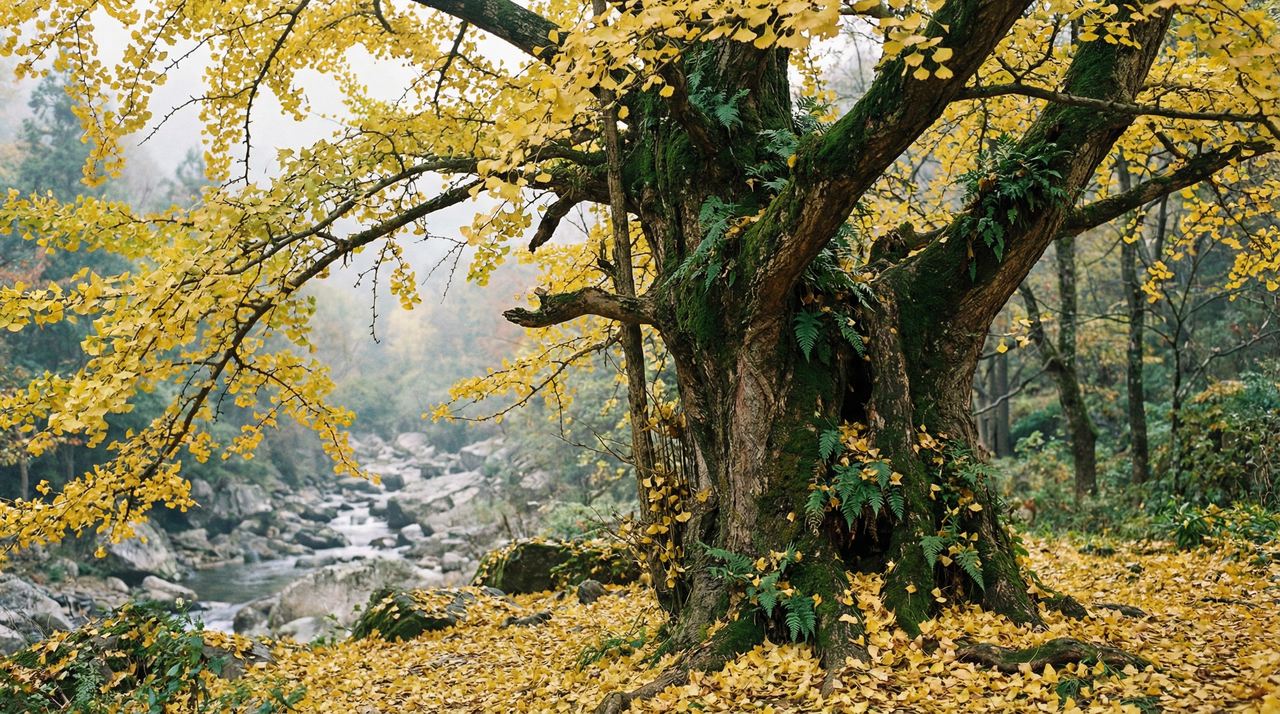
There's a ginkgo tree growing right now in Hiroshima, about a kilometer from the hypocenter of the 1945 atomic bomb, that was already over 200 years old when the blast hit. The heat carbonized everything around it. And then, the following spring, it leafed out. No slow recovery, no years of struggle; it simply kept going, because that's what ginkgos do. I've thought about that tree every single time I've specified this species for a difficult urban site, which is more times than I can count at this point. Something about it reframes the whole exercise of planting trees, the act of committing to something that will almost certainly outlast you, your house, and probably the neighborhood as you know it.
Ginkgo isn't just old for a tree. It's old in a way that breaks your brain a little when you sit with it. The lineage goes back 270 million years, [1] through mass extinctions that reshuffled life on this planet multiple times over, and the leaf sitting on the pavement outside your parking garage looks essentially identical to fossils pressed into Jurassic rock. Every other member of its entire plant division is gone. This one just kept going. If you're a designer or a grower trying to understand what this plant actually is before you put it in the ground, that context matters more than any plant tag ever tells you.
Ginkgo Origin, History, and Botanical Background
Living Fossil: A 270-Million-Year Evolutionary Story
There are old trees, and then there is ginkgo. This species carries a fossil record stretching back approximately 270 million years to the late Permian, long before the first dinosaur set foot on earth.[2][3] The Ginkgoales order diversified across nearly every continent during the Mesozoic, thriving alongside the great reptiles of the Jurassic and Cretaceous. Then the mass extinction event 66 million years ago wiped most of them out, and by the Eocene the family had effectively collapsed to a handful of relict populations.[2] Today, Ginkgo biloba stands alone: the single surviving species of the entire division Ginkgophyta, an entire class (Ginkgoopsida), and the entire order Ginkgoales.[4][5] Nothing else alive is close to it taxonomically. Every time I put one in the ground I pause for a second because I know I'm planting something that could outlive my grandchildren many times over: cultivated specimens routinely reach 500 to 1,000 years, and some documented individuals in Asia have surpassed 2,000 to 3,000 years.[4][6] That perspective changes the way you think about long-term design.
Native Range and Wild Status in China
For all its global fame, ginkgo's natural home is a narrow band of mountainous southeastern China, primarily Zhejiang and Anhui provinces, where it grows in mixed deciduous forest on slopes between roughly 300 and 1,000 meters elevation.[7][3] Wild populations are critically endangered, restricted to isolated stands such as those at Tianmushan, with fewer than 1,000 mature individuals remaining.[8][9] Habitat loss, overexploitation, high inbreeding, and low natural regeneration are all driving those numbers down. So here's the contradiction: a tree grown on virtually every continent, beloved in parks from Tokyo to Toronto, is simultaneously on the IUCN Red List. Sourcing from reputable nurseries that support conservation programs isn't a nice-to-have; it genuinely matters.
Ancient Cultural and Traditional Uses Across East Asia
Humans have been cultivating ginkgo since at least the Han Dynasty (206 BC to 220 AD), planting it in Buddhist temple gardens across China, Japan, and Korea where it became deeply associated with longevity, resilience, and peace.[10][11] The ginkgo leaf's symbolism runs deep in East Asian culture precisely because the trees at those temple sites were already ancient when medieval monks tended them. Seeing centuries-old ginkgos in Japanese temple precincts will rewire how you think about specifying trees for long-term landscapes; I know it changed mine. The seeds have a parallel story, used for over 1,000 years in Chinese and Japanese medicine to address conditions like asthma and poor circulation, and featured in Korean ceremonial cooking for weddings and festivals, where they represent fidelity and prosperity.[12][13]
Global Spread and Modern Cultural Significance
Ginkgo reached Europe around 1730, following the botanist Engelbert Kaempfer's observations between 1709 and 1712, and arrived in North America by 1784.[14] From there its spread as an ornamental street and landscape tree was swift, and today it's cultivated in temperate regions across the globe. That popularity, though, comes with a shadow: the boom in patented pharmaceutical ginkgo extracts has raised genuine concerns about biopiracy of traditional Chinese knowledge that communities spent millennia developing.[11] The meaning of ginkgo biloba in a commercial supplement bottle is a very different thing from the meaning of a ginkgo tree standing for eight centuries in a temple courtyard.
Iconic Visual Traits and Remarkable Biology
A mature ginkgo reaches 50 to 80 feet tall with a 30 to 50-foot spread, starting out pyramidal and slowly opening into something more irregular and grand with age.[15] The fan-shaped leaves with their forking dichotomous venation are unlike anything else in the temperate landscape; I use them as an identification teaching tool with design students because you can confirm the species from across a garden with a single glance.[16][17] Nothing else forks that way. In autumn those leaves turn a clear, almost luminous golden-yellow before dropping, often all at once, which resets the whole landscape around them. The tree is dioecious, meaning male and female flowers on separate trees, and female trees produce seeds enclosed in a fleshy outer layer that smells powerfully of butyric acid as it decomposes.[18][19] I only needed to experience that smell on a city sidewalk once. Now I always spec male cultivars or grafted sterile selections, no exceptions.
Famous Ginkgo Trees and Fun Facts
The most visceral proof of ginkgo's toughness is its documented ability to survive extreme radiation and concussive blasts. They came through the blast and radiation and still stand today.[20] When I first saw photographs of those trees, still leafing out amid the wreckage, it confirmed something I had already suspected from years of watching ginkgos succeed on difficult urban sites: this is a species that simply refuses to give up. Its urban tolerance covers a remarkable range of stresses including sulfur dioxide, ozone, heavy metals, soil compaction, drought, and even radiation.[21] I've watched clients dismiss a young ginkgo as unimpressive, then fall completely in love once they see one glowing gold against a city skyline in late October. Give it twenty or thirty years and the tree starts to accelerate in girth and canopy spread in a way that surprises people who weren't paying attention. Plan for the tree it will become, not the sapling you're planting.
Ginkgo Biloba Varieties and Where to Buy Them
Dioecious Nature and Preference for Male Cultivars
Ginkgo biloba is dioecious, meaning individual trees are either male or female, and that distinction matters enormously in a landscape context.[22] Female trees produce seeds encased in a fleshy pulp that creates significant messy and odorous maintenance issues when it falls.[23][24] I learned early in my career to always confirm sex at the nursery, because one female tree in a neighborhood can generate months of complaints. Virtually every landscape-grade cultivar available today is a guaranteed male selection for exactly this reason.
Beyond the sex issue, the tree itself is remarkably tolerant: excellent resistance to pests, diseases, urban pollution, compacted soil, salt spray, and drought once established, with hardiness across USDA zones 3 through 8.[22][25] The fan-shaped leaves turn a vivid golden-yellow in autumn before dropping cleanly.[26] Growth is slow to moderate at roughly 12 to 24 inches per year, and mature trees eventually reach 50 to 80 feet tall with a 30 to 40 foot spread, so you're making a multigenerational commitment.[22][24]
Popular Ginkgo Cultivars by Growth Habit
For tight urban spaces or street-tree applications, columnar males are the go-to. 'Princeton Sentry' is one I've specified repeatedly: it stays narrow and upright at 40 to 50 feet tall, handles pollution beautifully, and never outgrows a typical planting strip.[27] 'Fastigiata' is similarly columnar but a bit more compact at 30 to 40 feet tall and only 10 to 15 feet wide, useful where vertical space is abundant but horizontal room is genuinely scarce.[28]
For broader residential yards, 'Autumn Gold' is the standard bearer. Selected in California in 1951, it's a symmetrical male with a pyramidal habit when young and brilliant golden fall color that I find noticeably more vivid when the tree is sited in full sun with good drainage.[29][30] It tops out around 40 to 50 feet, more manageable than the straight species. 'Majestic' offers a similar broad, rounded form for large open sites.[26] Smaller gardens have options too: 'Troll' is a cold-hardy dwarf with a contorted, wiry structure, and weeping forms like 'Pendula' stay in the 20 to 30 foot range but are typically grafted and harder to source.[28][31]
Sourcing and Purchasing Ginkgo Trees
The maidenhair tree is widely available across the U.S. through wholesale nurseries, online retailers, and local garden centers, with peak selection in spring and fall. Saplings in the 1 to 5 foot range typically run $20 to $100; larger specimens between 6 and 15 feet climb to $150 or more.[25] I usually spec 6 to 8 foot balled-and-burlapped males for client projects when instant presence matters, which typically lands in the $400 to $700 range depending on supplier and timing.
Always verify that you're buying a named male cultivar like 'Autumn Gold' or the Princeton Sentry ginkgo. Ginkgo biloba is not invasive or listed as noxious anywhere in the United States,[25][32] but some California municipalities restrict or prohibit planting female trees because of nuisance ordinances around the fruit odor.[33] I advise every client to confirm local rules before purchasing, regardless of region. It's a small step that saves a lot of future headaches.
Ginkgo Propagation and Planting Guide
Growing ginkgo from scratch means accepting one fundamental truth upfront: this tree operates on geological time, not garden time. I've propagated it both ways, from stratified seed and from grafted stock, and the experience taught me more about patience than any plant I've worked with. Getting the basics right from day one matters because you're making a decision that will outlast most of the other plants in your garden.
Ginkgo Seed Biology and Storage
What most people call a ginkgo "fruit" is technically not a fruit at all. The seed is a gymnosperm structure consisting of a fleshy outer layer called the sarcotesta, a hard inner shell called the sclerotesta, a nutritive megagametophyte, and a single embryo with two cotyledons.[34][35][36] That yellow-orange sarcotesta is what smells so aggressively of butyric acid, the same compound responsible for rancid butter. I learned the hard way to remove it outdoors with gloves on, because the smell transfers to skin and tools and does not apologize. Remove it before storage or stratification; if you skip this step, fungal growth will follow quickly and contaminate everything around it.[37][38] A fungicide treatment after cleaning is good insurance.
The cleaned seeds themselves are classified as orthodox, meaning they tolerate drying down to 5-10% moisture content and store well at low temperatures. Properly dried and sealed seeds will hold viability for 5-10 years at 4°C, and 10 or more years at -18°C to -20°C.[39][40] Fresh seeds run about 50-70% viability, testable via germination trials after stratification, tetrazolium staining, or X-ray radiography if you have access to lab resources.[41][26]
Seed propagation is the commercial standard because it's cost-effective and viable at scale, but it produces genetically diverse offspring with no guarantee of sex or cultivar traits.[42][43] Vegetative methods, primarily grafting and air layering, are how you replicate named cultivars and guarantee a male tree. Grafting succeeds at 70-95%, air layering at 60-85%, and hardwood cuttings from dormant wood root at 20-50% depending heavily on the clone.[44][45] I now specify grafted males like 'Autumn Gold' or 'Magyar' for nearly every client project; I had to deal with a large female tree in a courtyard once, and the annual stench of dropped seeds in late October convinced me that grafted males are almost always the right call.
Stratification, Germination, and Propagation Techniques
Ginkgo seeds have deep physiological dormancy that won't break without cold treatment. The protocol is 1-3 months of cold moist stratification at 1-5°C (34-41°F), after which germination proceeds at 20-25°C and typically takes 2-4 weeks.[46][47] For spring sowing, stratify in a sealed bag with damp vermiculite in the fridge starting in December or January, then bring seeds indoors to sow in March or April.[48][21] The lazy-gardener shortcut is to sow freshly cleaned seeds directly in fall and let the winter do the stratification for you. I've had good germination rates with both methods; the fall sow just requires trusting the process and waiting until May to worry.
Now for the honest conversation about timelines. Seed-grown ginkgo trees take 20-35 years to reach reproductive maturity, with females hitting peak seed production around 30 years.[47][3] Grafted trees compress that dramatically; grafted females can begin seed production in 5-10 years.[49][45] If your goal is medicinal leaves or a canopy tree with character, seedlings get you there eventually. But if you want seeds in your own lifetime from trees you plant yourself, a grafted tree is the only realistic choice. One more non-negotiable habit I developed early: label every pot and every seedling, because you cannot determine the sex of a ginkgo by appearance for two decades or more.
Soil, Site Selection, and Planting Spacing
Ginkgo thrives in well-drained loamy or sandy soils with a pH anywhere from 5.0 to 8.0, with an optimal range of 6.0-7.5.[50][25][51] It handles compacted soil, alkaline city conditions, and poor fertility with a resilience I've seen few other trees match. In my landscape design work, I regularly plant ginkgo in compacted courthouse squares and roadside medians, and its taproot finds its way through even marginal drainage situations. That taproot needs minimum 60-90 cm of soil depth to anchor and thrive, so raised beds and shallow planting sites are the wrong fit.[52] Mature trees want full sun for the best growth and autumn color; seedlings tolerate partial shade while they're establishing.[3]
The one vulnerability that overrides everything else is waterlogging. I've lost two young ginkgos to winter standing water, and the experience was a reminder that the tree's legendary toughness does not extend to soggy feet. Before siting any ginkgo now, I dig a percolation hole and watch what happens after heavy rain. If water sits longer than an hour, I choose a different spot or improve drainage before planting. For container growing, a mix of roughly 50% loam, 30% sand, and 20% organic matter with good drainage holes does the job.[48][53]
Spacing is where I see the most expensive mistakes. Ginkgo biloba reaches 50-80 feet tall with a 30-50 foot spread at maturity, so plant trees 20-30 feet apart in landscape settings and 25-40 feet from infrastructure.[15][54] If you're mixing sexes for seed production, keep male and female trees 50-100 feet apart to reduce fruit drop in areas where people will be walking. Transplant young trees or grafted stock in spring once soil temperatures reach 50-60°F.[48] The siting decision you make today is one you and future owners will live with for a very long time; give the roots room, keep them out of wet soil, and this tree will reward that care for generations.
Ginkgo Care Guide: Growing and Maintaining Ginkgo biloba
Most of the work in ginkgo tree care happens in the first two or three years, and then this tree largely takes care of itself. I've grown several male specimens for over fifteen years, and watching a young ginkgo transform from a fussy little sapling into a genuinely self-sufficient tree is one of the more satisfying experiences in this work. Site selection is where every success or failure begins, so get that right first and the rest follows.
Watering Needs for Young and Established Ginkgo Trees
Young trees need consistent, deep watering during the growing season, roughly 1 to 2 inches per week for the first year or two.[55][26] Once established, the picture changes dramatically. Mature ginkgos are exceptionally drought-tolerant and typically only need supplemental water every two to four weeks during extended dry spells, with deep soakings of five to ten inches when you do water.[56][26] My established specimens go weeks without a drop from me even in summer heat, and they're fine. The deep taproot is doing real work down there.
The two most common mistakes are mirror images of each other. Overwatering in poorly drained soil leads to yellowing leaves, wilting, and eventually Phytophthora root rot.[56][57] Underwatering causes marginal leaf scorch, premature drop, and crispy foliage, with young trees showing symptoms much sooner than established ones.[58] Ginkgo biloba prefers well-drained loamy or sandy soils with a pH of 5.0 to 7.5, ideally staying in the 6.0 to 7.0 range.[24] It has moderate salt tolerance, which contributes to its urban resilience, but roots appreciate rainwater or dechlorinated tap water over time.[59] Stop supplemental irrigation entirely in winter dormancy; the tree needs essentially nothing until growth resumes in spring.[60]
Sunlight Requirements and Light Stress Symptoms
Ginkgo biloba wants full sun, at least six to eight hours of direct light per day, for its best growth, structure, and that spectacular golden fall color.[61][62] Young trees will tolerate partial shade, but inadequate light over time leads to chlorosis, reduced leaf size, and early drop. Go too far the other direction in a drought year and you'll see marginal leaf burn. I watch for the first hints of browning edges in July as my cue to deepen irrigation rather than move the tree; it's nearly always a water issue, not a light issue.
Feeding and Nutrient Management for Optimal Leaf Health
Ginkgo is a genuinely light feeder, naturally adapted to nutrient-poor soils, and established trees rarely need fertilizer at all.[63] Always test your soil before amending anything; I test every other year and have never needed more than a light spring application for young trees on my property. For slow-growing juveniles, a balanced slow-release fertilizer at half strength in early spring supports leaf development without pushing excessive vegetative growth or risking salt buildup.[64][65] If you're seeing yellowing young leaves with green veins staying visible, that's iron chlorosis and it almost always points to soil pH creeping above 7.5 rather than a nutrient deficiency per se.[66] I once amended a high-pH bed with sulfur and watched bright-green new growth return the following season. Fix the pH, and the chlorosis resolves itself.
Frost Tolerance and Winter Protection Strategies
Hardy through USDA zones 3 to 8, mature ginkgo trees can survive temperatures down to -40°F through strong physiological cold acclimation.[67][68] The caveat is that new leaves and buds are vulnerable, and a late spring frost can blacken fresh growth in an evening. I learned this firsthand when an unexpected April frost hit a young tree and turned the new flush crispy overnight. The tree bounced back vigorously by midsummer, but I've checked the forecast and kept row cover handy every April since. For young trees, four to six inches of organic mulch kept away from the trunk, trunk wrapping against sunscald, and site selection that avoids frost pockets make the difference.[69][70] Established mature trees need none of this. They genuinely take care of themselves.
Heat Tolerance and Managing Summer Stress
Ginkgo handles heat far better than most gardeners expect, thriving across AHS Heat Zones 1 to 9 and tolerating temperatures up to 95°F comfortably.[71][72] Leaf scorch and wilting begin above that threshold, especially without adequate moisture, but well-watered established trees can push through brief periods reaching 104°F or higher.[73] The deep root system that explains its drought tolerance also buffers against combined heat and moisture stress, giving it a real edge over maples and other ornamentals I've grown alongside it. Compared to maples, which can look genuinely miserable by August in a hot year, a mulched ginkgo holds its composure. Two to four inches of mulch and deep infrequent irrigation during heatwaves are the practical tools.[74] For hotter climates, cultivars like 'Autumn Gold' and 'Princeton Sentry' have a track record of performing well.[75]
Pruning, Maintenance, and Seasonal Care Rhythm
Ginkgo has a naturally strong structure and asks for almost nothing in terms of pruning once it's established.[76] With young trees, late winter or early spring is the time to remove crossing or weak branches and train toward a single central leader.[77] After that, the tree mostly takes over. My oldest male ginkgo specimen has needed two significant pruning sessions in twenty years and still looks better than ornamentals that demand annual attention.
If you're planting for a landscape or urban setting, choose a male cultivar. Female trees reach reproductive maturity at 20 to 40 years and produce foul-smelling fleshy seeds that create real maintenance headaches.[78][79] Once you know the seasonal rhythm, ginkgo care becomes intuitive. Leaves emerge and pollination happens in mid-spring before the canopy fully expands; fruiting on females runs September through November; and then comes the golden senescence in early autumn that the tree is famous for.[46][23] That autumn display is brief and brilliant, more concentrated than the slow fade of a maple, and it's the tree's way of signaling that it's headed into a dormancy period where it genuinely needs nothing from you at all.
Ginkgo Harvesting: Timing, Technique, and Yield
When to Harvest Ginkgo Leaves and Seeds
Ginkgo offers two distinct harvests, and they run on different clocks. For leaves destined for medicinal use, August through September is the sweet spot if you're after peak flavonoid content, though waiting until 90-100% of the canopy turns yellow in October or November works too.[80][81] The seed harvest follows its own phenological cues entirely: look for the outer coat shifting from green to yellow-orange, the pulp softening, and a distinctly powerful foul odor announcing that the seeds inside have firmed up and are ready.[82][83] That smell is not subtle. I've spotted female ginkgo trees in urban plantings from a full block away in October, which is actually a useful trick when you're scouting a neighborhood for accessible seed sources.
The maturation arc from spring flowering to ripe seed runs roughly 150-200 days, with peak drop landing in October and extending into early November during warmer autumns.[84][85] A cool autumn accelerates both ripening and fruit drop; drought stress through the growing season tends to produce smaller seeds. First frost is your practical field marker. Once it hits, the remaining fruits fall quickly, and the window for ground collection opens up.
How to Harvest and Process Ginkgo Safely
Collect seeds that have dropped naturally or rake them from beneath female trees, and do not skip the gloves. The fleshy outer layer, the sarcotesta, contains oils that cause genuine skin irritation and produces that notorious smell in concentrated form.[86][21] The first time I processed fresh ginkgo tree fruit, I underestimated how penetrating that odor would be. I now recommend harvesting on a cool, breezy day, wearing dedicated clothes you don't mind retiring, and double-bagging all sarcotesta waste before it goes anywhere near your compost or your car.
Remove the sarcotesta promptly by soaking the seeds in water for 24-48 hours, or allowing 3-5 days of fermentation, then wash the cleaned inner seeds thoroughly and dry them down to below 10% moisture content before storage.[87] For leaves, dry them at temperatures below 50°C and store in cool, dry conditions for a shelf life of one to two years.[87][80] If you've ever dried herbs in a low oven or a food dehydrator set to the basil-and-mint range, you already know the right feel for this. And on the seeds: cook them thoroughly every single time. Roasting or boiling is non-negotiable because ginkgotoxin and ginkgolic acids are genuinely harmful when raw.[72][88] I never serve or eat ginkgo nuts without thorough roasting. The research on ginkgotoxin is clear, and this isn't a step to reason your way around.
Expected Yield and Flavor Profile of Ginkgo Seeds
After all that processing, the reward is real. Properly cooked ginkgo seeds have a sweet, nutty flavor with subtle earthy undertones and a tender-crisp, creamy-chewy texture that most people compare to chestnuts or water chestnuts.[89][90][91] Autumn-harvested seeds, processed and cooked promptly, are noticeably milder and richer than anything left too long on the ground.
Yields, though, require honest expectation-setting. Seed-grown trees typically need 20-35 years before they produce anything, while grafted female cultivars may begin bearing in 5-10 years.[87][84] I've watched young nursery stock with impatience I'm not proud of. The more satisfying reality I've come to accept is that a 30-year street tree dropping its annual crop is a genuine gift, and for most home growers, foraging from established female trees in the neighborhood is a far more practical approach than waiting for their own specimen to mature. Sustainable leaf collection from existing landscape trees is similarly realistic in a way that bark harvesting is not, and far less ecologically costly.
Ginkgo Preparation and Uses
There's a reason I always tell people that ginkgo is not a plant you casually snack on. Only the inner seeds are edible for humans, and even those require real work before they're safe.[92][93] The leaves are for tea at most, and the fleshy outer seed coat, the sarcotesta, is something you genuinely don't want to touch bare-handed. It causes severe contact dermatitis upon bare skin exposure.[92][12] I learned this the hard way my first harvest season. Now I wear nitrile gloves, work outdoors, and process seeds immediately rather than letting them sit anywhere near my kitchen.
Culinary Preparation of Ginkgo Seeds
Once the sarcotesta is off and discarded, the hard inner shell still harbors ginkgotoxin and ginkgolic acids that need heat to neutralize. Roasting at 150-180°C for 10-20 minutes, or a good boil, reduces phenolic content by 30-50% and makes the seeds both safe and genuinely delicious.[94][95][96] The transformation is real. After roasting, the ginkgo nut turns a translucent jade green and develops a flavor that splits the difference between chestnut and pistachio, creamy but with some resistance to the bite.[97][98][99] In my trials, they've worked best in savory applications: Japanese chawanmushi, rice congee, and simple stir-fries with ginger, chicken, or tofu, where their mildness plays well against bolder flavors. Keep portions to 5-10 nuts per adult serving; more than that regularly, especially for children or pregnant people, isn't advisable given the residual toxin load.
Ginkgo leaves can be steeped as a bitter, astringent tea due to their flavonoid and terpenoid content, but they're not eaten directly.[100] Think of leaf tea as a mild, home-scale use, distinct from seed preparation and distinct from therapeutic extracts.
Medicinal Preparations and Dosages
For anyone pursuing the circulatory or cognitive applications covered in the health benefits section, standardized ginkgo biloba extract is where the evidence points. The benchmark is EGb 761, typically dosed at 120-240 mg daily, split across two or three doses. Tincture (0.5-1 mL of a 1:5 preparation, three times daily) and leaf tea from 1-2 grams of dried leaf per cup, up to two cups a day, are the alternatives.[101][102][103] I've found leaf tea useful for mild daily use and I enjoy growing my own trees for that purpose, but for anything therapeutic, I always point people toward verified standardized extracts rather than home-prepared material. The precision matters; this isn't hedging, it's what both the research and traditional practice support.
One thing I say clearly to anyone asking: if you're on blood thinners, talk to your doctor before adding ginkgo medicinally in any form. The anticoagulant effects are well-documented, and that's not a variable you want to manage casually.
Ginkgo Health Benefits
Ginkgo biloba has been studied more extensively than almost any other botanical supplement, and what the science reveals is genuinely fascinating, even when it complicates the marketing. The benefits of ginkgo trace directly back to two families of compounds that exist in measurable, meaningful concentrations in the leaves, and understanding those compounds is the starting point for everything else.
Key Phytochemicals in Ginkgo Biloba
Standardized medicinal extracts contain 22-27% flavonoids (primarily quercetin, kaempferol, and isorhamnetin glycosides) and 5-7% terpenoids (ginkgolides A, B, C, J, and bilobalide).[104][105][106] Those percentages aren't incidental; they're the reason why product standardization matters so much with this plant. The flavonoids neutralize free radicals, reduce inflammatory responses, and activate the Nrf2 pathway, a cellular defense mechanism that ramps up the body's own antioxidant production.[105][107] The terpenoids, especially ginkgolide B and bilobalide, do different work: neuroprotection, enhanced cerebral blood flow, and antagonism of platelet-activating factor (PAF), which is relevant to both circulation and inflammation.[105][108]
The leaves are where these compounds concentrate: flavonoids at 20-30 mg/g dry weight, terpenoids up to 6-12% in extracts.[109][110] Seeds, by contrast, carry ginkgotoxin at 0.5-2 mg/g with minimal terpenoids, which tells you something important about which plant part is the safe medicinal source and which one demands caution. Bark and roots contain phenolics and flavonoids too, but the research there is thin enough that I wouldn't base any practical decisions on it. Growing conditions noticeably shape the chemistry: full sun, slightly acidic soil (pH 5.5-6.5), and good drainage push phytochemical concentrations up, as does tree maturity (concentrations stabilize after about 10 years) and autumn harvest timing when levels peak.[111] I've grown ginkgo trees for years in my own landscape, and the leaves I harvest in autumn from mature, full-sun specimens consistently make a more pungent, noticeably richer tea than what I'd pull from younger trees in spring. That's the chemistry talking.
Medicinal Research and Traditional Uses
Ginkgo has been used in traditional Chinese medicine for over 2,500 years, with applications spanning asthma, poor circulation, tinnitus, vertigo, and cognitive decline; Japanese Kampo medicine similarly prized it for longevity and dementia-like symptoms.[4][112][113] The preclinical science gives those traditions reasonable mechanistic footing. Human studies confirm ginkgo extract reduces oxidative stress markers like lipid peroxidation and boosts superoxide dismutase activity, while suppressing pro-inflammatory cytokines including TNF-α, IL-6, and IL-1β.[114][115][116] Neuroprotective mechanisms are well-documented too: EGb 761 inhibits acetylcholinesterase, antagonizes NMDA receptors to protect against glutamate toxicity, and modulates serotonin, dopamine, and GABA pathways.[117][118][119]
When I first started recommending ginkgo to clients, I expected the clinical trials to back up the traditional brain health claims more strongly. They don't, not reliably. The large GEM study found no significant benefit for preventing dementia or Alzheimer's in healthy older adults, and Cochrane reviews show inconsistent or no better-than-placebo results for peripheral artery disease and tinnitus.[120][121][122][123] I now recommend it more for general antioxidant support than as a dementia preventive. The in vitro antimicrobial activity against Staphylococcus aureus, E. coli, and Candida albicans is interesting but still a long way from clinical application.[124] The mechanism research remains the strongest argument for standardized EGb 761 extracts, where the phytochemical content is verified and consistent rather than variable by batch or preparation method.[119]
Nutritional Profile
Ginkgo has two edible parts, leaves and seeds, and both require careful handling before they're safe to eat.[4] Dried leaves carry a surprisingly robust nutritional profile: around 24g protein and 13g fiber per 100g dry weight, with meaningful concentrations of vitamin C (50-100 mg), vitamin E (10-20 mg), and beta-carotene, alongside the flavonoids and terpenoids already discussed.[125][126] Those values shift with growing conditions and processing, so treat them as directional rather than precise. The seeds (ginkgo nuts) offer approximately 182 calories per 100g raw, with good mineral density: 617 mg potassium, 111 mg magnesium, 376 mg phosphorus, and 6 mg iron, plus vitamins C and B.[127][128] The catch is that those same raw seeds carry neurotoxic ginkgotoxin. Proper preparation means removing the fleshy outer sarcotesta, thorough washing, and cooking (boiling 30-60 minutes or roasting at 350°F) to reduce toxin levels to something manageable, with adults capped at 5-10 nuts per day and no more than 50g weekly.[129][130]
Safety and Precautions
Ginkgo leaf tea and standardized supplements are generally well-tolerated in moderate amounts, but the seeds and fruit pulp are a different story entirely. Raw seeds contain ginkgotoxin at concentrations high enough to cause seizures, particularly in children, and the fleshy outer pulp's ginkgolic acids cause contact dermatitis that's frequently compared to poison ivy exposure.[48][131][132] While the cooked nuts are a traditional delicacy in several Asian cuisines, I keep my household well under 10 per day and I never let children near the raw fruit. The risk of ginkgotoxin-induced seizures is too real and too well-documented to treat casually. The fleshy aril and raw seeds are also toxic to dogs and cats, causing vomiting, diarrhea, and potential neurological effects, and pollen from male trees can trigger respiratory allergies in sensitive individuals.[133][134]
For supplements, the antiplatelet effects from PAF antagonism create a real bleeding risk, something I think of similarly to how I advise caution with large amounts of fresh garlic for people on blood thinners. The same evidence-based rule applies here: check with your doctor before using ginkgo supplements if you're on anticoagulants, NSAIDs, SSRIs, or anticonvulsants.[135] Supplements are contraindicated during pregnancy and before surgery, and common side effects include headache, dizziness, and stomach upset.[136][12][137] I only recommend or use products standardized to EGb 761-level specifications with verified 24% flavonoids and ginkgolic acid below 5 ppm.[138][139] Home preparations are simply too variable to rely on. The ginkgo biloba side effects profile isn't alarming in a well-sourced, properly dosed supplement, but that qualification does a lot of work, and it only holds if you've confirmed there are no contraindications for your specific situation.
Ginkgo Pests and Diseases
Few landscape trees give you this kind of peace of mind. Ginkgo's 270-million-year lineage didn't just produce a botanical curiosity; it produced a tree armed with ginkgolic acids, bilobalides, and a dense array of phenolic compounds that modern insects and pathogens largely haven't figured out how to deal with. The result is a tree that routinely outlasts its neighbors in the landscape with almost zero intervention from the gardener.
Pest Resistance of Ginkgo biloba
Ginkgo biloba shows strong natural resistance to the vast majority of insect pests, and I've watched this play out in practice over many years of planting and maintaining these trees.[140][141] Major pests that devastate other landscape trees, including the emerald ash borer and gypsy moth, simply don't use ginkgo as a host.[142] My citrus and maples draw scale, Japanese beetles, and aphids every single season. My ginkgos? Rarely a problem worth mentioning.
The short list of occasional visitors includes ginkgo aphids (Pterocomma bicolor), scale insects like Aspidiotus ancylus, and Japanese beetles, but infestations almost never cross the threshold from cosmetic nuisance to genuine damage.[26][143][77][144] On young trees I've occasionally hosed off early aphid colonies; that's been the extent of it. Horticultural oil handles anything more persistent, and reaching for an insecticide is almost never warranted.[79] Healthy trees simply outgrow the leaf distortion or sooty mold that sometimes follows a minor infestation.
Disease Resistance and Management
The same ancient lineage that shrugs off insects extends to fungal pathogens. Ginkgo shows broad immunity or strong resistance to most diseases common in temperate climates, including bacterial blights that trouble other ornamentals.[21][145] When leaf problems do appear, they're almost always cosmetic: a scattering of brown or black spots from Septoria, Cercospora, Alternaria, or Phyllosticta, triggered by prolonged wet conditions above 70% humidity.[146][26][144] Powdery mildew and anthracnose susceptibility is low. A vigorous tree shrugs these off without help.
The one disease that deserves real respect is Phytophthora root rot, and it's entirely site-driven. Ginkgo in waterlogged or poorly drained soil becomes genuinely vulnerable.[147][26] I lost a young tree once in a low pocket of a garden where water pooled after heavy rain. That was the lesson. Raised planting and amended drainage protect against it far better than any fungicide.
Cultivars like 'Princeton' and 'Fastigiata' demonstrate superior disease resistance and carry the RHS Award of Garden Merit.[148][149] I reach for these male selections routinely; they maintain vigor and resist foliar stress better under humid conditions, and good air circulation around the canopy keeps the minor leaf-spot issues from ever becoming worth worrying about.[150][151] If an unusually wet spring brings persistent anthracnose, a targeted application of chlorothalonil or mancozeb can help; Botryosphaeria canker responds to prompt pruning and disposal of infected wood.[152][153] But in most years, for a well-sited ginkgo, the spray cabinet stays shut.
Ginkgo in Permaculture Design
Few canopy trees earn a permanent spot in a temperate food forest the way ginkgo does. It's not the most productive fruiting tree, it won't fix nitrogen, and it won't play nicely with everything you plant beneath it. What it offers instead is something rarer: genuine, tested resilience across a span of conditions that would stress most other trees into decline. For long-horizon design, that matters more than I used to appreciate.
Climate Adaptability and Hardiness Zones
Ginkgo biloba is hardy across USDA zones 3 through 9, with the most vigorous growth and that iconic golden fall display reliably happening in zones 4-7.[48][25][69] The Royal Horticultural Society rates it H6 to H7, meaning it holds up below -20°C, and sources consistently converge on a wide band of thermal tolerance that few broad-leaved trees can match.[154][23] Mature trees handle everything from -40°F to over 100°F with minimal damage; only young trees in the most extreme heat show leaf scorch, typically above 110°F.[48][155]
The physiology behind that tolerance is worth understanding as a designer. A deep taproot reaching 10-15 feet anchors the tree against frost heaving and pulls moisture from well below the root zone of most companions.[46] Thick waxy leaf cuticles and tight stomatal regulation reduce water loss during heat events, and its antioxidant systems resist oxidative stress that would damage less adapted trees.[46] Once established, it's drought-tolerant and highly adaptable to moisture variation, though it genuinely wants well-drained soil; waterlogging is one of the few things it won't forgive.[21][156] The first two or three years do reward consistent irrigation, but after that you're mostly stepping back.
I've watched ginkgo perform better than almost anything else I've specified for urban-adjacent sites where compacted soil, road salt, and vehicle exhaust would stress most ornamentals into early decline.[157][158] The compounds that give ginkgo its therapeutic reputation seem tied to the same stress-tolerance mechanisms that let it shrug off city smog, which is a useful thing to carry in your head when you're deciding where to site it. Urban heat islands can effectively raise local temperatures by 2-5°F, which in practice means ginkgo often performs in zone 5 or 6 microclimates as though it's in zone 6 or 7.[157][159] Its phenotypic plasticity, adjusting growth rate, leaf morphology, and dormancy timing at range edges, reinforces that this is a tree designed by deep time to adapt rather than fail.[154][23]
Ecosystem Functions and Guild Roles
Ginkgo is dioecious and wind-pollinated, releasing lightweight pollen from male catkin-like cones in April and May that can travel kilometers, though viability drops in heavily polluted air.[160][161] Natural fertilization rates are low, typically 10-20%, which tells you something about why it needs proximity to a male tree to fruit at all.[160][162] For most food-forest and landscape applications, this dioecious nature makes the male-versus-female choice one of the more consequential design decisions you'll make early on. I'll address that directly below.
On the positive side of the ecosystem ledger, ginkgo is exceptionally resistant to urban pollution, pests, and diseases, and it can easily live over 1,000 years, meaning a well-placed tree truly does function as a permanent landscape anchor.[17][16] It forms beneficial ectomycorrhizal associations with fungi like Pisolithus and Suillus that improve its own nutrient and water uptake, and those fungal networks can be leveraged in guild design by pairing ginkgo with companions that share or support the same mycelial communities.[163]
The cautionary side is real, though, and I've learned it from experience. Ginkgo's dense canopy limits light penetration significantly, which can reduce understory diversity if you haven't planned for it.[164][165] Its leaf litter is high in lignin and decomposes slowly, altering nutrient cycling under the canopy in ways that favor some plants and suppress others.[166] There are also documented allelopathic effects from both leaves and seeds that can inhibit understory growth outright.[167] In one of my early guilds I underestimated how these factors compound; the result was a thinning understory I hadn't designed for. Now I build the guild around what ginkgo actually does rather than what I wish it would do.
Forest Layer Placement in Temperate Food Forests
In its native temperate mixed broadleaf forests of eastern China, ginkgo occupies the canopy or sub-canopy layer, eventually reaching 50 to 115 feet at maturity with a strongly upright pyramidal form in youth that gradually opens into a broad, irregular crown.[168][169] That trajectory places it squarely in the tall canopy tier of a temperate food forest design, functioning as a long-term shade provider, wildlife habitat structure, and medicinal leaf source rather than a primary food producer.
The key guild decisions follow directly from the ecosystem traits above. Select male trees whenever possible; after dealing with the lingering odor of female fruit drop in an early planting, I've sourced only male cultivars for food-forest canopy work ever since. It keeps paths usable and eliminates the weeks-long smell that no amount of aesthetic appreciation quite compensates for.[170][17] For the understory, lean toward shade-tolerant species that partner well with ectomycorrhizal networks: native ferns, comfrey for dynamic accumulation, and wild ginger as a ground cover all hold up under the canopy conditions ginkgo creates. Avoid light-demanding fruiting shrubs or annual vegetable beds within the drip line; they'll underperform and frustrate you.
I think of ginkgo as a tree that rewards ancient-thinking design. Give it the long edge of your site, space it to eventually dominate its zone, and plan the guild around its competitive nature rather than hoping it'll be more cooperative than its 270-million-year track record suggests. Used that way, it becomes one of the most stable, low-input canopy elements you can include in a temperate system.
The Tree That Made Me Rethink My Own Timeline
I planted a grafted male Ginkgo in my food forest eight years ago, and it's still barely taller than I am. Some days that feels discouraging. Most days, when I'm honest, it feels like the tree is teaching me something I still haven't fully learned: that the most enduring things in a landscape, and maybe anywhere, don't hurry. I'm designing for people I'll never meet. Ginkgo gets that instinctively. I'm still catching up.
Sources 170
- Ginkgo | Britannica ↩
- Ginkgo: The Living Fossil Tree ↩
- Ginkgo biloba: The Living Fossil ↩
- Ginkgo biloba - Wikipedia ↩
- Ginkgo biloba - The Morton Arboretum ↩
- The Ancient Ginkgo: A Living Fossil ↩
- Flora of China - Ginkgo biloba ↩
- The IUCN Red List of Threatened Species: Ginkgo biloba ↩
- Population Genetics and Demography of Ginkgo biloba L. ↩
- Historical Cultivation and Religious Significance of Ginkgo in East Asia ↩
- Cultural Significance of Ginkgo biloba in East Asia ↩
- Ginkgo biloba in Traditional Chinese Medicine ↩
- Ginkgo Seeds in Traditional Chinese Medicine - NCBI ↩
- History of Ginkgo biloba Introduction to Europe ↩
- Ginkgo biloba - Missouri Botanical Garden ↩
- Ginkgo Biloba Tree Profile ↩
- Plant Fact Sheet - Ginkgo biloba L. ↩
- Ginkgo biloba - Missouri Botanical Garden ↩
- Ginkgo biloba ↩
- The Sacred Trees of Hiroshima ↩
- Ginkgo biloba in Urban Environments ↩
- Ginkgo biloba - Missouri Botanical Garden ↩
- Ginkgo biloba Fact Sheet - Kew Gardens ↩
- Ginkgo biloba Cultivars - North Carolina Extension Gardener Plant Toolbox ↩
- Ginkgo biloba - USDA Plants Database ↩
- Ginkgo Biloba Varieties and Care - University of Minnesota Extension ↩
- Princeton Sentry Ginkgo - Missouri Botanical Garden ↩
- Ginkgo biloba Cultivars - Missouri Botanical Garden ↩
- Ginkgo biloba Autumn Gold - Nursery Crop Extension Research ↩
- Autumn Gold Ginkgo - Morton Arboretum ↩
- Ginkgo Biloba Hardiness - Kansas State University Extension ↩
- Noxious Weed List - Washington State Noxious Weed Control Board ↩
- Ginkgo Trees and Odor Regulations - California ReLeaf ↩
- Ginkgo biloba Profile - USDA PLANTS Database ↩
- Ginkgo biloba - Flora of China ↩
- Ginkgo Tree - Royal Botanical Gardens, Kew ↩
- Ginkgo biloba Seed Germination and Storage ↩
- Seed Propagation of Trees and Shrubs by USDA Forest Service ↩
- Seed Storage of Temperate Tree Species ↩
- Kew Seed Information Database - Ginkgo biloba ↩
- Tetrazolium Testing for Seed Viability - Royal Botanic Gardens Kew ↩
- Ginkgo: Growing and Maintenance ↩
- Propagation of Ginkgo biloba ↩
- Propagation of Ginkgo biloba by Seeds, Cuttings, and Grafting ↩
- Grafting Techniques for Ginkgo Trees ↩
- Ginkgo biloba - Missouri Botanical Garden ↩
- Ginkgo biloba L. ↩
- Ginkgo biloba ↩
- Propagation of Ginkgo biloba ↩
- Ginkgo biloba ↩
- Ginkgo biloba ↩
- Missouri Botanical Garden Plant Finder ↩
- Growing Ginkgo Trees in Missouri ↩
- Ginkgo biloba - Royal Horticultural Society ↩
- Ginkgo biloba - Missouri Botanical Garden ↩
- Ginkgo Biloba Care and Watering Guide ↩
- Root Rot in Trees and Shrubs - University of Minnesota Extension ↩
- Drought Stress in Trees - University of Minnesota Extension ↩
- Salt Tolerance of Landscape Plants - University of Florida IFAS Extension ↩
- Ginkgo biloba Plant Finder - Missouri Botanical Garden ↩
- Ginkgo biloba Fact Sheet - University of Maryland Extension ↩
- Ginkgo biloba - Morton Arboretum ↩
- Ginkgo biloba - Missouri Botanical Garden ↩
- Fertilizer Recommendations for Ginkgo biloba Cultivation - University of Maryland Extension ↩
- Fertilizing Trees and Shrubs - University of Minnesota Extension ↩
- Iron Chlorosis in Trees and Shrubs - Missouri Botanical Garden ↩
- USDA Plant Hardiness Zone Map ↩
- Studies on Frost Tolerance of Ginkgo biloba ↩
- Winter Care for Ginkgo Trees - The Morton Arboretum ↩
- Frost Injury to Trees and Shrubs - University of Minnesota Extension ↩
- Heat Zone Map - American Horticultural Society ↩
- Ginkgo biloba Plant Profile - Missouri Botanical Garden ↩
- Heat Tolerance of Trees - USDA Forest Service ↩
- Physiological Responses of Ginkgo biloba to Heat Stress ↩
- Horticultural Management of Ginkgo biloba in Warm Climates ↩
- Ginkgo biloba Growing Guide - Royal Horticultural Society ↩
- Ginkgo biloba - Missouri Botanical Garden ↩
- Ginkgo biloba - Missouri Botanical Garden ↩
- Ginkgo biloba in the Landscape - Michigan State University Extension ↩
- Medicinal Plant Harvest Guidelines: Ginkgo ↩
- Ginkgo biloba (Maidenhair Tree) Care & Growing Guide ↩
- Ginkgo biloba: Cultivation and Propagation ↩
- Phenology and Maturity Indicators in Ginkgo biloba ↩
- Reproductive Biology of Ginkgo biloba ↩
- Ginkgo biloba L. ↩
- Ginkgo biloba Cultivation and Harvesting ↩
- Ginkgo biloba Fact Sheet ↩
- Ginkgo Seed Poisoning ↩
- Missouri Botanical Garden Plant Finder ↩
- Flavor and Chemical Composition of Ginkgo biloba Seeds ↩
- Studies on Ginkgo biloba Seed Flavor and Aroma ↩
- Missouri Botanical Garden Plant Finder ↩
- USDA PLANTS Database ↩
- Ginkgo Seed Poisoning - Poison Control ↩
- Research on Ginkgo Nut Toxicity - Journal of Food Safety ↩
- Processing Effects on Ginkgo Nut Quality ↩
- Ginkgo Nuts: Culinary Uses and Safety ↩
- Japanese Ginnan Recipes ↩
- Traditional Preparation and Flavor Profile of Ginkgo Nuts ↩
- Journal of Ethnopharmacology Study on Ginkgo biloba leaf compounds ↩
- Ginkgo biloba - Drugs and Lactation Database (LactMed®) ↩
- WHO Monographs on Selected Medicinal Plants ↩
- Ginkgo: Health Benefits, Side Effects, Uses, Dose & Precautions ↩
- Phytochemicals in Ginkgo biloba Leaves, Seeds, and Extracts - NCBI ↩
- NCBI Review on Ginkgo biloba Biochemistry ↩
- Ginkgo biloba: A Review of Quality, Efficacy, and Safety ↩
- Antioxidant and anti-inflammatory effects of Ginkgo biloba flavonoids ↩
- Ginkgolides and bilobalide: PAF antagonists from Ginkgo biloba ↩
- Phytochemistry of Ginkgo biloba ↩
- Secondary Metabolites in Ginkgo Parts ↩
- Effect of Soil Conditions on Secondary Metabolites in Ginkgo biloba ↩
- Ginkgo biloba: A Treasure of Functional Phytochemicals with Multimedicinal Applications - NCBI ↩
- Traditional Uses of Ginkgo biloba in Japan - Journal of Ethnopharmacology ↩
- Antioxidant effects of Ginkgo biloba extract in humans: A meta-analysis ↩
- Anti-inflammatory properties of Ginkgo biloba: Systematic review ↩
- Ginkgo biloba inhibits pro-inflammatory cytokines TNF-α, IL-6, IL-1β ↩
- Mechanisms of Action of Ginkgo biloba in Neurotransmission ↩
- Ginkgo biloba and Neuroprotection ↩
- Pharmacological Activities of Ginkgo biloba Extract EGb 761 ↩
- Ginkgo biloba for cognitive impairment and dementia ↩
- The Ginkgo Evaluation of Memory (GEM) Study ↩
- Ginkgo biloba for intermittent claudication - Cochrane Review ↩
- Ginkgo biloba for tinnitus ↩
- Antimicrobial Activity of Ginkgo biloba L. (Ginkgoaceae) Leaves from Vietnam ↩
- Ginkgo biloba Nutritional Composition - USDA FoodData Central ↩
- Phytochemical and Nutritional Analysis of Ginkgo biloba ↩
- USDA FoodData Central - Ginkgo nuts, raw ↩
- Nutritional Composition of Ginkgo Nuts ↩
- Ginkgo Nuts: Preparation and Safety - University of California Extension ↩
- Safety of Ginkgo biloba - EFSA Journal ↩
- NCBI Bookshelf - Toxicology of Ginkgo biloba ↩
- Journal of the American Academy of Dermatology - Allergic Contact Dermatitis from Ginkgo biloba ↩
- Ginkgo - ASPCA Toxic Plants ↩
- IgE immune response to Ginkgo biloba pollen - PubMed ↩
- Ginkgo biloba and bleeding risk - Systematic Review ↩
- Ginkgo (Ginkgo biloba L.): NIH Office of Dietary Supplements ↩
- MedlinePlus - Ginkgo biloba Side Effects ↩
- European Food Safety Authority (EFSA) Report ↩
- National Center for Complementary and Integrative Health (NCCIH) ↩
- Missouri Botanical Garden: Ginkgo biloba ↩
- Chemical Defenses of Ginkgo biloba ↩
- USDA Forest Service Pest Resistance in Trees ↩
- Clemson HGIC: Ginkgo biloba ↩
- Ginkgo Problems - Royal Horticultural Society ↩
- Disease Resistance in Ginkgo biloba ↩
- Fungal Pathogens of Ginkgo ↩
- Phytophthora Root Rot in Trees ↩
- Missouri Botanical Garden Plant Finder - Ginkgo biloba 'Princeton' ↩
- Royal Horticultural Society (RHS) Award of Garden Merit - Ginkgo biloba ↩
- Environmental Factors Affecting Ginkgo Health ↩
- Cultural Practices for Healthy Ginkgo Trees ↩
- Managing Fungal Diseases of Trees: Anthracnose and Leaf Spot ↩
- Botryosphaeria Canker Management in Woody Plants ↩
- Ginkgo biloba - Royal Horticultural Society ↩
- Ginkgo Biloba: Cold and Heat Hardiness - Arbor Day Foundation ↩
- Ginkgo biloba Cultivation - Royal Horticultural Society ↩
- Ginkgo biloba - Missouri Botanical Garden ↩
- Urban Pollution Tolerance of Ginkgo biloba ↩
- Ornamental Value of Ginkgo in American Landscapes ↩
- Reproductive Biology of Ginkgo biloba L. ↩
- Effects of Urban Pollution on Ginkgo Pollen Viability ↩
- Pollination Biology of Ginkgo biloba ↩
- Mycorrhizal Associations of Ginkgo biloba ↩
- Shade Tolerance and Understory Impacts of Ginkgo biloba ↩
- Competitive Interactions of Ginkgo in Forest Ecosystems ↩
- Nutrient Cycling and Leaf Litter Decomposition in Ginkgo Forests ↩
- Allelopathic Effects of Ginkgo biloba on Understory Plants ↩
- Ecology of Ginkgo biloba in Native Habitats - Journal of Biogeography ↩
- Ginkgo biloba - Missouri Botanical Garden ↩
- Ginkgo biloba Growing Guide ↩