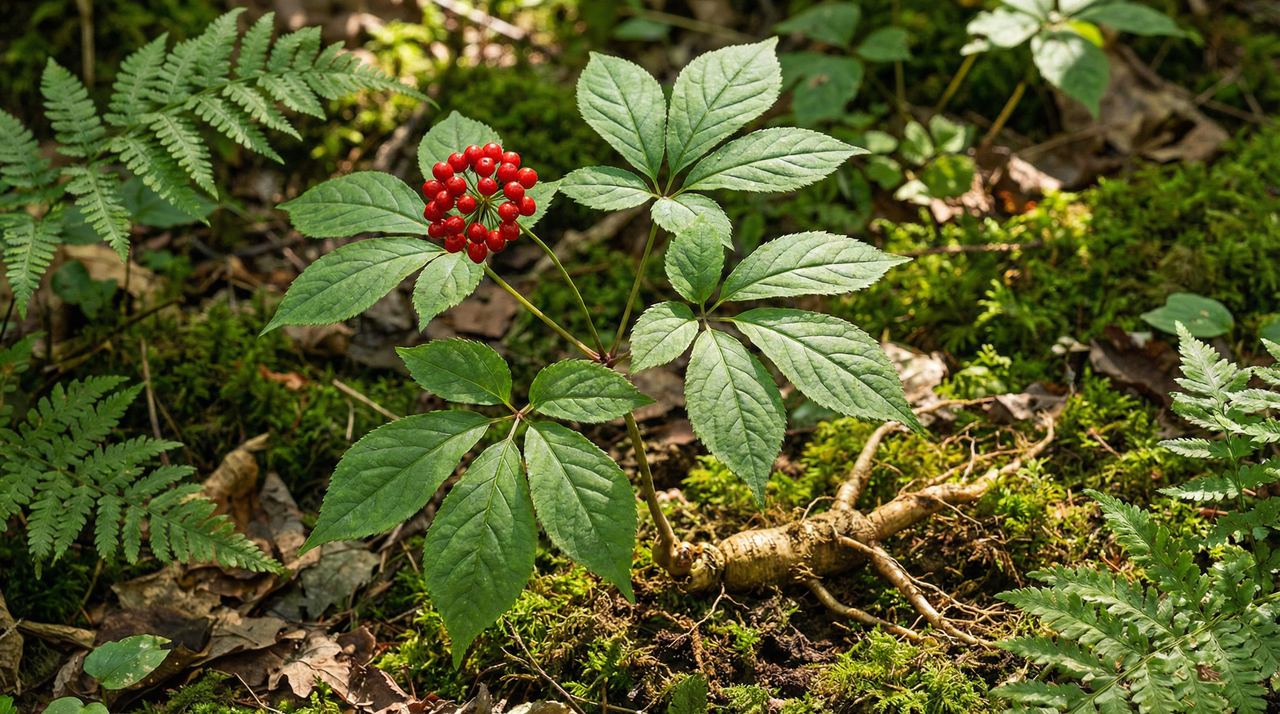
Every serious herbalist I've ever met has a complicated relationship with ginseng, and I think that tension is the most honest thing you can say about this plant. Here's the contradiction that hooked me: Panax comes from the Greek word for "all-healing," the same root as panacea, and for over two thousand years practitioners across East Asia treated it as the closest thing medicine had to a cure for everything.[1] Yet the plant itself is almost comically fragile. It demands decades of undisturbed forest floor, dies in direct sun, sulks in poorly drained soil, and takes longer to mature than some fruit trees produce their first harvest. The most revered tonic in human medical history is, by any practical measure, a diva.
What nobody tells you before you try growing it is that ginseng doesn't reward ambition. It rewards patience and humility, specifically the humility to stop treating your garden as something you control and start thinking like a forest. I've watched growers lose entire plantings because they got impatient with the shade requirements, or skipped the stratification protocol, or harvested a year too early and got a root with a fraction of the medicinal potency they'd waited years for. The plant has its own timeline, and it genuinely does not care about yours.
Ginseng Origin, History, and Botanical Background
Etymology and Traditional Cultural Significance
The name says everything. "Ginseng" comes from the Chinese rénshēn, meaning "man root," and the genus name Panax derives from the Greek panakeia, "all-healing."[2][3] Before a single scientific study was run, two languages had already agreed that this root was something singular. That reputation was formalized around 200 CE, when the Shen Nong Ben Cao Jing classified Panax ginseng as a "superior herb" capable of boosting qi, easing fatigue, treating deficiencies, and restoring digestive function.[4][5][2] By 1578, Li Shizhen's Bencao Gangmu had expanded the documented applications considerably and formalized records on Panax notoginseng as well.[6][7] In Chinese and Korean culture, ginseng was an imperial tribute plant, a symbol of longevity and vitality, and a ritual offering; its reach stretched along the Silk Road into European herbal medicine by the 17th century.[8][9]
The genus spread its cultural footprint well beyond East Asia. Over 20 Native American tribes including the Cherokee, Iroquois, and Ojibwe used American ginseng (Panax quinquefolius) for headaches, fever, respiratory problems, and pain, and the plant held genuine spiritual significance in their communities.[10][11] In traditional Chinese medicine, American ginseng is valued specifically for its "cooling" yin properties, a counterpoint to the warming yang energy of Asian ginseng, which is why it began moving in export quantities from North America to China as early as the 18th century.[10][12] Meanwhile, indigenous Sedang and Xo Dang peoples of Vietnam had long relied on Panax vietnamensis for fatigue, immune support, and stamina,[13] and Panax notoginseng developed a distinct TCM identity centered on hemostasis and blood circulation, eventually anchoring formulas like Yunnan Baiyao.[14]
Heavy wild harvesting was the inevitable consequence of that reverence. Wild populations of Asian ginseng were showing serious strain by the Ming Dynasty, driving systematic cultivation in Korea and later China.[4][15] North American commercial cultivation followed in the late 19th century.[16] Today, wild Panax ginseng is Endangered on the IUCN Red List, P. notoginseng is Vulnerable, P. vietnamensis is Endangered to Critically Endangered, and P. quinquefolius has been regulated under CITES Appendix II since 1975.[17][18][19] I only source and recommend certified cultivated ginseng for these reasons; the research on wild population declines is unambiguous, and for a plant this slow-growing, every wild root harvested is decades of forest ecology that can't be replaced quickly.
Botanical Characteristics and Life Cycle
Panax ginseng is a herbaceous perennial in the Araliaceae family, native to the cool, shaded mountain forests of northeastern China, the Korean Peninsula, and Russia's Far East.[20][21] Above ground it's a modest plant, reaching 30 to 80 cm with a single unbranched stem topped by a whorl of palmately compound leaves, usually three to five ovate-lanceolate leaflets that flush green in spring and turn reddish in autumn.[3][22] Small greenish-white flowers appear in a terminal umbel in summer; bright red berries follow in autumn, each carrying one to three seeds.[23] The root is where the story really lives. That fleshy, often forked taproot, 5 to 20 cm long at maturity, genuinely does resemble a human figure after years of slow development in the soil. The first time I pulled a well-grown six-year-old root from a test bed, I understood immediately why ancient herbalists assigned it such mythological weight. Wild roots grow slender and twisted; cultivated roots tend to be straighter and thicker, but both carry that unmistakable humanoid form.[24][3]
Ginseng is a long-lived polycarpic perennial, reproducing by seed and through rhizomes, but patience is non-negotiable. Under cultivation, plants reach reproductive maturity in four to six years and are typically harvested at four to seven years. Wild plants take five to twenty years to mature and can live well over a century.[25][26] Seedling mortality frequently exceeds 90% in early years even in intact forest populations,[27] a reality I find reminds me of goldenseal and black cohosh: these woodland medicinals are genuinely slow, genuinely fragile in youth, and genuinely worth the infrastructure investment to get establishment right.
Related Species and Conservation Status
The shared ecology across the genus is striking. Panax notoginseng grows in the shaded forest understories of Yunnan and Guangxi at 1,500 to 2,500 meters elevation and requires 80 to 90% shade, mirroring the light requirements of Asian ginseng almost exactly.[28][29] Panax vietnamensis, endemic to the cloud forests of Vietnam's Ngoc Linh Mountains at similar elevations, can live over 100 years[30] and was only formally described by science in 1985 despite centuries of indigenous use, with some wild individuals confirmed by dendrochronology at 168 to 200 years old.[31][32] American ginseng occupies the deciduous forests of eastern and central North America under 50 to 80% shade,[10] a habitat that will feel familiar to anyone who gardens in eastern woodland conditions and grows spring ephemerals or other forest-floor perennials.
The unifying thread across all these species is rarity earned through slow growth and habitat specificity. Wild Asian ginseng roots of exceptional age and form can fetch prices ranging from hundreds to tens of thousands of dollars per pound.[33] That market reality reflects both cultural weight and genuine ecological scarcity. For anyone drawn to growing this plant, that context matters: what you're working with is a slow-maturing forest understory species shaped by millennia of woodland ecology, and cultivated production done thoughtfully is both the practical path and the responsible one.
Ginseng Varieties and Where to Buy Them
Breeding programs for Panax ginseng have been remarkably intentional. Korean researchers developed each major cultivar with a specific end-use in mind, and the differences matter once you understand what drives the plant's medicinal value. Chunpoong was selected for high ginsenoside content and disease resistance, Yunpoong for yield, Gopoong specifically for red ginseng processing, Hochul for early maturity, Gumpoong for soil adaptability, and Sunhyang for elevated aroma and saponin levels.[34][35] Chinese programs in Jilin province followed a parallel logic, producing selections like Damuzhi, Erjingtiao, and JL-1 optimized for yield and regional adaptation.[36]
Notable Cultivars of Panax ginseng
When I'm helping someone choose a cultivar, I always ask what they're growing it for. If you want roots suited to steaming into red ginseng, Gopoong is the answer. If disease pressure is your biggest worry on a shaded, humid site, Chunpoong's resistance profile is worth the extra attention during sourcing. These weren't arbitrary breeding goals; they reflect the same ginsenoside-focused thinking that runs through all the health research, which means cultivar choice and therapeutic intent are genuinely connected.
The consistent subplot across all cultivated Korean and Chinese lines is that wild-harvested material still commands higher prestige and price in Asian markets, largely because older wild roots accumulate ginsenosides over decades rather than the four to six years typical of cultivation. Cultivated versions are the accessible, legal, and sustainable path forward, but it's worth being honest that the premium placed on wild roots reflects a real, if hard-to-quantify, difference in phytochemical complexity.
Cultivars Across the Panax Genus
American ginseng cultivars tell a different story. North American breeding, anchored largely in Ontario and Wisconsin, prioritized root biomass and vigor under humid continental climates. Cultivars like Cambridge, G1201, OAC 353, Optimum, and Harrington were developed for yield and disease resistance rather than specific ginsenoside profiles.[37][38] Panax notoginseng has its own set of Chinese lines, including Wenshan Sanqi, Yunnan No. 1, Guangxi No. 1, and Jinji, with northern types bred for cold tolerance and southern ones for shade performance and root size.[39]
Panax vietnamensis sits completely outside the cultivar conversation. There are no formally recognized cultivars; instead, plants are distinguished by geographical provenance (Ngoc Linh being the most prized) and chemotype, based on differing ginsenoside profiles between populations.[40] Panax japonicus has botanical varieties including var. major, with larger rhizomes used medicinally, and a minor ornamental cultivar called 'Nana'.[41]
Sourcing Ginseng Seeds, Plants, and Roots Legally
For most home growers in the U.S., cultivated Panax ginseng is the practical starting point and the ethically sound one. Seeds and live plants are available from domestic nurseries, with Wisconsin serving as a major production hub.[42][43] Stratified seed typically runs $50 to $150 per ounce, with live plants ranging from $20 to $50 depending on age and root size. Unlike American ginseng, Panax ginseng is not listed under CITES Appendix II, which simplifies purchasing considerably; that said, some states do require permits because the plants can look similar enough to the protected native species to cause regulatory confusion.[44][45] I always verify cultivated provenance before buying; any vendor claiming to sell wild Asian ginseng should be treated as a red flag, not a selling point.
Panax notoginseng seed is available through specialty U.S. suppliers like Strictly Medicinal Seeds, though most root material is imported from China under USDA and state quarantine rules.[46][47] Plan for three to seven years before that root is harvestable. Panax vietnamensis is effectively unavailable for home cultivation: it's critically endangered, protected under CITES Appendix II, and premium Ngoc Linh material commands thousands of dollars per kilogram with significant adulteration risk in the market.[48][49] I don't recommend pursuing it through anything other than legitimate cultivated channels, and for most of us, that means working with Panax ginseng and, where legal, American ginseng. The patience required to grow any of these well is the real cost of entry, not the seed price.
Ginseng Propagation and Planting Guide
Growing ginseng from seed is one of those experiences that quickly separates impatient gardeners from committed ones. I often compare it to growing ramps or goldenseal: you're working on the plant's timeline, not yours, and the whole enterprise rewards those who plan in years rather than weeks. The good news is that understanding how ginseng seed actually works makes the long wait feel purposeful rather than frustrating.
Understanding Ginseng Seed Biology and Dormancy
Panax ginseng seeds are recalcitrant, meaning they can't be dried down and stored on a shelf like tomato or bean seeds.[50][51] Let moisture drop below 20–30% and viability goes with it, fast. After I lost an entire flat's worth of seed one autumn by leaving it on a greenhouse bench too long, I started keeping a dedicated refrigerator drawer at 3–5 °C packed with moist peat moss and checking it every week. That one habit has made all the difference.
The seeds also carry deep morphophysiological dormancy that requires a specific double stratification sequence: a warm phase at 20–30 °C for two to three months, followed by a cold phase at 2–5 °C that can run anywhere from three months up to 18.[52][53] There's no shortcut here. What's botanically interesting about Panax ginseng specifically is that its seeds are polyembryonic, meaning a single seed can carry multiple zygotic and nucellar embryos, a trait that sets it apart from its monoembryonic relatives like American and Vietnamese ginseng.[54][55] The reddish-brown, kidney-shaped seeds themselves are tucked inside those bright red berries,[56][57] which also explains how birds serve as natural dispersers in the wild. Harvest seeds from fully ripe berries in late summer or fall and process them promptly; under optimal cool, moist storage they stay viable for one to two years, though cryopreservation can extend that for conservation purposes.[58][59]
Seed is the legally preferred method and preserves genetic diversity, which matters given the CITES scrutiny surrounding related Panax species. Commercial growers sometimes use vegetative propagation via rhizome division or root cuttings, though success rates run anywhere from 10–80% depending on technique and source material.[60][61] Tissue culture on MS medium with cytokinins and auxins achieves 80–95% success and produces genetically uniform plants,[62] which is useful once you've identified a superior line worth replicating. For most growers, though, seed is the practical and ecological starting point.
Soil, Site, and Light Requirements for Ginseng
Every soil and light requirement ginseng has makes sense the moment you picture its native habitat: a cool, humid temperate forest floor covered in leaf litter, filtered light dropping through a deciduous canopy, roots threading through humus-rich soil that never waterloggs.[63] Replicating that is the whole job.
Soil should be loamy or sandy-loam with 5–10% organic matter, a pH between 5.5 and 6.5, low bulk density, and at least 30–50 cm of workable depth.[64][65] I test every bed before planting and again in year two; keeping pH between 5.8 and 6.2 has been the single biggest factor in preventing the root-rot issues I saw in my first attempts. Use lime to raise pH or elemental sulfur to lower it, scaled to your soil's texture and buffer capacity, and test first rather than guessing.[65][66] Compaction and waterlogging are equally damaging; drainage is non-negotiable.
Shade is just as critical as soil. Ginseng needs 70–90% shade, or roughly 20–30% of full sun reaching the canopy floor.[67][68] Full sun scorches and stresses the plant; too little light produces weak, etiolated growth with poor medicinal content. In my trials comparing shade cloth densities, 75–80% knitted cloth consistently produced thicker, darker leaves and noticeably heavier roots after three years compared to 60% cloth. A deciduous canopy that allows some winter light through is ideal. After planting, lay 2–4 inches of organic mulch, leaf litter, or straw over the bed to retain moisture, suppress weeds, and continue building the forest-floor profile year after year.[69]
Planting Spacing, Depth, and Technique
Mature ginseng plants reach 12–24 inches tall with a spread of 12–18 inches,[70] so spacing decisions made at planting directly affect both root quality and disease pressure over the full four-to-six-year cycle. For wild-simulated plantings, space seeds 6–12 inches apart within rows with rows set 18–36 inches apart; field cultivation can run slightly tighter but still benefits from generous row spacing to keep air moving through the canopy.[70][71] Good air circulation is one of the more effective tools against Alternaria and Phytophthora, the fungal diseases that cause the most heartbreak in dense plantings.[70]
Plant stratified seeds half to one inch deep, firm the soil gently, and apply mulch immediately.[70][71] Fall planting aligns with the plant's natural seed-drop rhythm and gives seeds the cold period they need in place. One practical tip I've learned the hard way: label your rows carefully and draw a map. First-year ginseng seedlings look remarkably like tiny wild carrot or parsley, and after one mislabeled bed nearly cost me a season of work, I now use colored stakes at every row end and keep a hand-drawn plot plan in my garden notebook.
Germination Timeline and Establishment
Even after the full double-stratification protocol, germination typically takes 12–24 months from sowing,[72][73] and success rates range from 20–70% depending on seed source, storage quality, and handling.[72][73] That range is wide, and it's honest. Panax ginseng's requirements are actually more forgiving than American ginseng, which often needs a longer cold phase stretching 12–18 months and can push germination out to 18–24 months from sowing.[71] Knowing this helps calibrate expectations before you start wondering in month fourteen whether you've done something wrong.
Full establishment, where the seedling develops a true compound leaf set and begins accumulating root mass, typically takes an additional season beyond first emergence. That's why fresh seed and meticulous viability management matter so much from the start: a 20% germination rate from poorly stored seed means year one looks like failure when it's actually a supply-chain problem. Buy from reputable cultivated sources, keep moisture levels consistent through storage and stratification, and treat the first two years as the foundation on which the remaining four are built.
Ginseng Care Guide: Growing Panax ginseng Successfully
Every aspect of caring for ginseng comes back to one governing principle: replicate the forest floor. This is a plant that spent millennia evolving under deciduous canopies in cool Korean and Chinese mountain valleys, and it remembers. The 4-7 year cultivation timeline rewards growers who lean into that woodland logic and punishes those who try to rush or simplify it.
Water Requirements and Irrigation for Ginseng
Ginseng wants consistent moisture, roughly 1-2 inches per week during the growing season, maintaining soil at about 60-80% of field capacity.[69][74] The goal is never wet and never dry; allow the top inch or two to begin drying before irrigating again. Drip or soaker hose irrigation aimed at the root zone, reaching 6-12 inches deep, is far preferable to overhead watering, which keeps foliage wet and invites fungal trouble.[75] In my experience, the 2-4 inch layer of leaf litter mulch I keep over all my ginseng beds does more work than any irrigation schedule, buffering both drought and waterlogging by moderating soil temperature and slowing evaporation.[76]
Seedlings are the most unforgiving plants I've grown at either extreme. Overwatering triggers Phytophthora root rot, yellowing leaves, and soft mushy roots before you've even noticed a problem; underwatering produces wilting, brown curled margins, and stunted growth that sets a plant back by a full season.[77][69] If you're on municipal water, let it sit overnight or use collected rainwater; ginseng prefers low-salinity water with a pH of 6.0-7.0 and no residual chlorine.[72]
Sunlight and Shade Needs for Optimal Growth
Ginseng is shade-obligate, full stop. A natural deciduous canopy from maple, oak, or poplar is the ideal way to meet its strict light requirements.[69][78] Where natural canopy isn't available, 70-80% shade cloth works, though it lacks the dynamic light-filtering quality of a living canopy. Direct summer sun will scorch leaves within days, bleaching and browning the margins into crispy necrosis.[69][79] The other failure mode, too little light, produces etiolated stems, pale chlorotic foliage, poor root development, and measurably lower ginsenoside content. Either direction costs you.[79]
Feeding and Nutrient Management for Ginseng
I learned this lesson the hard way in year two of my first ginseng planting: I pushed nitrogen trying to build biomass and ended up with lush, beautiful foliage and thin roots worth almost nothing at harvest. High nitrogen promotes exactly the wrong kind of growth, reducing root quality and ginsenoside content while increasing disease susceptibility.[69][80] Ginseng is a light feeder that prefers organic amendments, compost, leaf litter, or well-rotted manure, over synthetic fertilizers, with annual soil testing to keep EC below 1.0 dS/m.[69]
The feeding schedule should shift with the plant's age. Year one seedlings tolerate a balanced low-dose 10-10-10; years two and three call for low-nitrogen 5-10-10; from year four onward, focus almost entirely on phosphorus and potassium to drive root development and compound accumulation.[81][82] Apply in split doses in early spring once soil reaches 50-60°F. Wild-simulated American ginseng, grown with zero inputs, is the model: the forest floor provides everything it needs through decomposing leaf litter. Minimize soil disturbance to protect mycorrhizal associations that help with phosphorus uptake.[83]
Frost Tolerance and Winter Protection
Established crowns handle cold remarkably well, tolerating winter lows down to -20°C once they enter complete dormancy.[69] The vulnerability window is spring emergence. New shoots and buds are damaged at -2°C, and I lost a full row of second-year plants to a late April freeze before I learned to watch soil temperature rather than the calendar.[84] Now I wait for consistent 50°F soil temperatures before pulling back winter mulch. Apply 4-6 inches of straw or leaves after the first hard frost in autumn; this is the primary overwintering strategy and it works.[85] Row covers add another 4-8°F of protection for young plants through late cold snaps. Panax notoginseng and Panax vietnamensis are significantly less frost-hardy, showing damage near 0°C, and generally require greenhouse culture in temperate climates.[85]
Heat Tolerance and Summer Stress Management
Cold hardiness often gets more attention, but heat is frequently the more limiting factor for growers in Zones 6 and above. Panax ginseng prefers daytime temperatures of 15-20°C and shows clear stress above 25°C, performing best in AHS Heat Zones 1-4.[86] Above 30-35°C, ginsenoside content drops 15-25%, roots stay small, and foliage scorches even under partial shade.[87] I've pulled roots from plants that sat through a week above 85°F and the difference in size and aroma compared to plants that stayed cool was obvious.
No heat-resistant variety exists, so management is everything: 70-80% shade cloth reduces canopy temperature by 5-10°C; 4-6 inches of organic mulch keeps soil below 25°C; drip irrigation in early morning supports recovery during the cooler night hours that are critical for the plant to reset.[88][89] North- or east-facing slopes, windbreaks, and integration with hardwood companions compound these benefits. Seedlings and flowering plants are most vulnerable, so pay close attention during June and July.[90]
Pruning, Maintenance, and Seasonal Rhythm
The longer I grow ginseng, the less I do to it. Pruning is minimal by design: remove only dead, diseased, or damaged material using sterilized tools, nothing more.[69] The one deliberate intervention that pays off is flower and fruit management. After late June flowering, remove spent stalks promptly; if you're growing for root production rather than seed, thin fruits to one or two per plant a few weeks after petal drop.[69] The energy that would have gone into seed development redirects to the root, and over a multi-year timeline that matters considerably. Apply fresh mulch each autumn, practice a 10-year bed rotation if you're growing in dedicated cultivated plots, and keep soil disturbance to an absolute minimum to protect the mycorrhizal networks the roots depend on.[91][64]
Seasonal Care Calendar for Ginseng
Ginseng follows a clear annual rhythm and aligning your care tasks to that cycle, rather than to a fixed monthly schedule, is how experienced growers stay ahead of problems. Leaves emerge April through May, flowering happens in late June, fruit ripens July through September, and the plant goes fully dormant by October, resting until March.[92] I think of the hostas and native ferns that share the woodland guild with my ginseng beds; they leaf out on a similar schedule, which makes them useful visual cues, but where those plants forgive a missed watering or a temperature spike, ginseng doesn't. During active growth, hold soil moisture at 60-80% and keep daytime temperatures below 25°C; when dormancy begins in autumn, reduce watering, apply mulch, and let the plant rest undisturbed.[92][93] That autumn-to-spring dormancy window is also when the roots are doing their slow, quiet work of accumulating ginsenosides, so resist any impulse to dig or disturb. The plants that reward patience are the ones you've largely left alone.
Harvesting Ginseng (Panax ginseng): Timing, Technique, and Yield
If there's one plant that has genuinely taught me patience, it's ginseng. You plant a seed, or a tiny rootlet, and then you wait. And wait. The reward only comes if you resist the urge to dig early, because a three-year-old root simply isn't the same plant as a five-year-old one, medicinally or sensorially.
When to Harvest Ginseng Roots: Maturity Indicators and Optimal Timing
Panax ginseng reaches peak medicinal quality at five to six years, when saponin content crests, though the accepted cultivated harvest window runs from four to six years in fall, typically September through November.[94][95] The plant tells you clearly when it's ready: leaves yellow and drop, red berries ripen (about 60 to 90 days after May-June flowering), and the root neck shows four to six distinct annual growth rings.[96][97] I mark my beds well because ginseng seedlings in year one look remarkably like other woodland plants, but by year five those neck scars are my trusted confirmation. A mature root runs roughly 2.5 to 5 cm across and 10 to 30 cm long, with firm yellowish bark and a woody core.[94]
Wild-simulated plants follow a much longer arc: 8 to 15 years for comparable quality, and true wild roots often 10 to 20 years.[98] American ginseng follows a similar principle, ready at five to seven years cultivated with its own readable cues: three or more leaf prongs, red berries, yellowing foliage, and three or more rhizome scars.[10] I've never dug every plant in a patch and never will. Leaving younger individuals and scattering seed back into the soil keeps the colony going, a principle that applies whether you're stewarding wild American ginseng or a cultivated Asian bed.[42]
How to Harvest and Process Ginseng Roots
Ginseng root harvesting rewards the careful and the unhurried. On a cool, dry morning in early fall, use a garden fork, spade, or small knife to loosen the soil widely around each plant before lifting, extracting the entire taproot intact.[94] Mechanical methods cause breakage, and a snapped root loses both value and potency. Think of it as the final act of a years-long relationship with a particular patch of ground.
After digging, gently wash or brush the roots clean, then decide: white or red? White ginseng is air-dried or dried at low temperatures between 35 and 50°C with 40 to 60% humidity for two to four weeks until moisture drops below 12%.[99][100] Red ginseng is steamed first at 95 to 100°C for two to three hours, which gelatinizes the starches and triggers Maillard reactions that deepen color and shift certain ginsenoside profiles, then dried at 40 to 60°C to 10 to 12% moisture.[101] In my own processing, the steamed roots are noticeably less harsh and take on a caramelized sweetness that white-dried roots simply don't have. It's not just cosmetic chemistry; it genuinely changes what new users experience in their first cup of dried ginseng root tea. Keep all drying below 60°C and maintain stable humidity to prevent mold, especially in warmer or more humid climates where conditions can shift fast.
Ginseng Root Flavor, Texture, Aroma, and Storage After Harvest
Fresh Panax ginseng root opens sweet from its polysaccharides, then layers in bitterness and a distinct umami character driven by ginsenosides, with an earthy, vegetal aroma and firm, fibrous texture.[102][103] Drying intensifies the bitterness and pushes the aroma toward woody, camphorous notes. Steaming to produce the red form softens all of that into something sweeter and more rounded, closer to honey-roasted, with considerably less of the astringency that can put people off younger roots.[104][105] Roots older than six years tend toward better flavor balance overall; younger ones can be quite astringent, which is another reason the waiting matters. If you're used to American ginseng's milder dried character, closer to vanilla-licorice with gentle earthiness, the Asian species will seem considerably more intense and pungent by comparison.[106]
Fresh roots store well at 0 to 4°C with 85 to 95% humidity in perforated bags or moist sand for six to twelve months.[107] For long-term storage of dried ginseng, airtight glass jars kept below 21°C in a dark, dry location at 40 to 60% relative humidity will preserve ginsenosides and potency for two to five years or more.[108] I check mine each season by smell; any musty note means the moisture crept in somewhere. After years of growing and waiting, proper storage is the last step that keeps that investment intact.
Ginseng Preparation, Culinary Uses, and Medicinal Applications
Edible Parts and Traditional Culinary Role
The root is the point. Everything else on a ginseng plant, leaves, stems, berries, occupies a distant supporting role, and even the leaves only show up occasionally in teas or as a minor vegetable in traditional dishes.[86][109] Those four to six years of patient cultivation exist entirely in service of that root. Traditional Korean and Chinese kitchens knew this well: in Korean samgyetang, a whole young chicken simmers with fresh ginseng root for one to two hours until the broth turns silky and faintly bitter-sweet, the root's compounds slowly releasing into the liquid.[110][111] I've made variations of this soup when I've had access to cultivated roots, and the depth it adds is genuinely unlike any other ingredient. Traditional Chinese preparations often pair ginseng with goji berries, red dates, and ginger, building a tonic that targets qi, spleen, and lung function.[112][113]
Preparation Methods: From Raw Root to Red Ginseng
How you process the root changes what it becomes, chemically and culinarily. Raw white ginseng is simply dried below 60°C to preserve active compounds; steaming the root to create red ginseng chemically shifts its baseline ginsenosides into highly bioavailable configurations like Rg3.[112] Think of it the way raw garlic transforms when roasted: the harsh edges mellow, new flavor compounds emerge, and the whole character shifts. Steaming also reduces the volatile aldehydes that make raw roots sharper, which is why traditional Korean red ginseng tea has that recognizable caramelized warmth rather than raw bitterness.[114] For a simple decoction at home, three to nine grams of sliced root simmered in water for twenty to thirty minutes is the standard approach.[112] If you're drying your own, air-dry at 30 to 40°C away from direct sun; high heat degrades the ginsenosides you spent years growing.
Flavor Profile, Nutrition, and Modern Uses
The raw root is genuinely complex: bitter up front from ginsenosides, with a quiet sweetness underneath and an earthy, woody finish that lingers.[115] Brewed into tea, that bitterness softens into something more balanced, which is why ginseng tea remains the most accessible entry point for most people. American ginseng's higher Rb1-to-Rg1 ratio gives it a milder, less pungent profile that tends to read as more approachable in Western-style herbal blends with honey or green tea. Nutritionally, the root is not the reason anyone's eating it: roughly 36 kcal per 100g, minimal protein, and most of those carbohydrates tied up in dietary fiber. The bioactive ginsenosides, typically two to five percent of the dried root by weight, are the actual story, with Rb1 and Rg1 as the dominant compounds driving both the bitter bite and the therapeutic effects. In modern Western kitchens, ginseng shows up in infused syrups, energy drinks, lattes, and occasionally savory glazes, though I'd argue a good cup of Korean red ginseng tea still beats all of those.[110]
Safety, Dosage, and Responsible Use
For adults, standard dosing lands at one to two grams of dried root daily as powder or tea, or 200 to 400 mg per day of a standardized extract running four to seven percent ginsenosides.[116][117] Ginseng is not a supplement you take indefinitely without breaks; cycling it with rest periods is standard practice and reflects how traditional medicine actually used it. I've watched people combine ginseng tea with two or three cups of coffee and then wonder why they feel wired and can't sleep -- the stimulant interaction is real.[116] The drug interactions are specific and serious: ginseng can reduce warfarin's effectiveness, increase hypoglycemia risk when combined with metformin, lower cyclosporine blood levels, and amplify caffeine's effects.[116][118][119] If you're on any of those medications, check with your doctor before using it. Avoid entirely during pregnancy or breastfeeding, in children under 18, and if you have uncontrolled hypertension, a bleeding disorder, or a hormone-sensitive condition. As someone who forages carefully, I'll also say plainly: start with cultivated roots. Foraging wild root introduces the severe risk of mistakenly harvesting poisonous plants that occupy the exact same woodland understory.[120][121] Beyond personal safety, wild Asian ginseng populations are CITES Appendix II regulated; buying cultivated roots from reputable domestic growers is the responsible choice for anyone serious about this plant's long-term survival.[44]
Ginseng Health Benefits and Medicinal Uses
Traditional Uses in Chinese and Korean Medicine
Few plants carry a medical resume as long as Panax ginseng. For over 2,000 years, practitioners of Traditional Chinese and Korean medicine have relied on it as a premier qi tonic, prescribed to invigorate the spleen and lungs, combat fatigue, sharpen memory, bolster the immune system, and build resilience against stress.[122][123] While traditional panaceas are obviously an overclaim by modern standards, the sheer breadth of conditions this root was applied to historically is genuinely striking. What's equally striking is how much of that traditional use is now finding mechanistic support in clinical research.
The strongest human evidence centers on inflammation, antioxidant defense, stress resilience, and cognition. Ginseng suppresses MAPK inflammatory pathways, including p38 and JNK, and inhibits NF-κB signaling, which reduces pro-inflammatory cytokines like TNF-α, IL-6, and CRP at the gene expression level.[124][125] Its antioxidant activity works through Nrf2 pathway activation, enhancing superoxide dismutase activity and upregulating protective genes like HO-1 and NQO1 while reducing oxidative stress markers.[126][127] As an adaptogen, systematic reviews show it modulates cortisol via HPA axis regulation and measurably reduces subjective fatigue scores over 4 to 12 weeks.[128][129] Randomized controlled trials and meta-analyses also document improvements in memory and attention.[130][131] I've worked with ginseng as a tonic herb for years and find the adaptogenic reputation holds up best when used in short cycles of four to six weeks with genuine lifestyle support behind it; without that context, you're not getting the full picture.
Emerging clinical evidence points toward antidiabetic potential too, with recent trials showing improvements in insulin sensitivity, glucose regulation, and HbA1c in type 2 diabetes patients.[132] Preclinical models also show analgesic and antimicrobial activity against S. aureus, E. coli, and C. albicans, though human data there remains limited.[133] While Panax ginseng sets the benchmark, related species extend the picture: Panax notoginseng has historically been used since the Ming Dynasty for trauma and bleeding, and modern research confirms its cardioprotective and hemostatic properties through unique saponins like notoginsenoside R1.[134][135] Panax vietnamensis, meanwhile, shows neuroprotective and anti-inflammatory potential with some human data supporting fatigue and immune benefits, though most of its more exciting findings are still preclinical.[136]
Key Phytochemicals: Ginsenosides and Supporting Compounds
Every benefit described above traces back, directly or indirectly, to ginsenosides, the triterpenoid saponins that make up 2 to 6 percent of the root's dry weight.[137] Over 100 individual ginsenosides have been identified, with Rb1, Rg1, Rd, Re, and Rf among the most studied. The root holds the highest concentrations, though leaves (1 to 7 percent) and berries (1 to 5 percent) contribute meaningfully too.[138] Supporting compounds include polysaccharides at 4 to 14 percent of root dry weight, phenolics, flavonoids (contributing 0.5 to 2 percent of antioxidant activity), terpenoids, coumarins, and sterols like β-sitosterol.[139][140]
Ginsenoside content swings dramatically based on growing conditions, a variability many fail to appreciate. Concentration peaks in roots aged four to six years, with autumn harvests typically yielding higher levels than spring. Soil pH between 5.5 and 6.5 with high organic matter, moderate shade, and the right altitude all influence accumulation.[141] Processing matters enormously too: steaming to produce red ginseng converts Rb1 and Rg1 into more bioavailable Rg3 and Rk1.[112] Wild or forest-simulated roots can carry two to three times the ginsenoside concentration of cultivated plants and tend to show more diverse profiles.[142][143] I've noticed this in practice: quality roots from older, forest-grown sources are noticeably more bitter and aromatic, a sensory signal of higher ginsenoside levels that I've learned to look for when sourcing material for tonic formulations. It's similar to the way curcumin content in turmeric varies wildly by cultivar and growing conditions; you can't assume the label tells the whole story.
The compounds exist in the plant for ecological reasons as much as medicinal ones: defense against herbivores, pathogens, UV radiation, and allelopathic competition in the dense forest understory where ginseng evolved.[142] Across the genus, the ginsenoside backbone is shared, but each species adds its own signature. Panax notoginseng brings notoginsenoside R1 at 5 to 20 mg/g and total saponins reaching 4 to 14 percent. Panax vietnamensis carries ginsenoside concentrations of 10 to 12 percent with unique ocotillol-type saponins not found elsewhere in the genus. Panax quinquefolius contributes malonyl ginsenosides and pseudoginsenoside F11.[144][145][146] Different chemistry, different emphases in effect, but the same underlying strategy of saponin-based chemical sophistication.
Nutritional Profile and Practical Considerations
Ginseng is medicine first. The dried root runs roughly 80 to 90 percent carbohydrates (including those 4 to 14 percent polysaccharides), 5 to 10 percent protein, and less than 1 percent fat.[147] Minerals are modest but present: per 100 grams, expect around 900 mg potassium, 180 mg calcium, 120 mg magnesium, and 12 mg iron. Vitamins are essentially negligible.[147] Nobody is eating ginseng for its vitamin C. A typical daily serving of 1 to 2 grams of dried root, safe up to 3 grams, delivers its value almost entirely through bioactive compounds rather than macronutrients.[148][149]
Processing shapes what you actually get in that gram or two. Steaming at 95 to 100 degrees Celsius to produce red ginseng increases Rg3 levels by two to three fold and improves overall bioavailability. Low-temperature drying below 60 degrees Celsius preserves the compound profile better than high heat.[112][114] I always recommend starting at the lower end of the dosage range, around 1 gram, and observing your response before increasing, especially if you're sourcing from a new supplier. Reputable sources providing standardized extracts (typically standardized to 4 to 7 percent ginsenosides) give you better confidence that the label reflects what's actually in the product.
Safety Profile, Side Effects, and Contraindications
Panax ginseng has a solid short-term safety record in healthy adults at 1 to 3 grams of dried root or 200 to 400 milligrams of standardized extract daily, for up to six months.[116][150] Beyond six months, or at higher doses, the risk of what's been called ginseng abuse syndrome rises, presenting as insomnia, headache, gastrointestinal upset, elevated blood pressure, nervousness, and restlessness.[151][152] More severe reactions, including tachycardia, mood changes, skin eruptions, and rare liver issues, are possible, attributed to ginsenosides and polyacetylenes. I've seen clients experience insomnia from evening doses even at modest amounts; I always recommend morning use under 2 grams unless they're working directly with a practitioner.
The contraindication list is clear and should be taken seriously: pregnancy, breastfeeding, hormone-sensitive conditions, bleeding disorders, and certain heart conditions are all grounds to avoid ginseng entirely, a caution shared across Panax notoginseng, vietnamensis, and quinquefolius due to potential uterine and hormonal effects.[153][154] If you're on blood thinners or diabetes medication, consult your doctor before starting; the interaction data on increased bleeding risk with anticoagulants and potential hypoglycemia with antidiabetics is solid enough to warrant it.[155] Interactions with stimulants are also documented, and allergic reactions including contact dermatitis and rare anaphylaxis are possible, with cross-reactivity across the Araliaceae family.[156]
One risk I always raise with foragers and buyers of wild-sourced material: misidentification with toxic look-alikes including Aristolochia species (which carry aristolochic acid), water hemlock, and poison hemlock is a real and documented hazard, particularly with American and Vietnamese ginseng.[157][19] Always buy from suppliers who provide botanical verification rather than relying on "wild-crafted" marketing language alone. Acute toxicity across the Panax genus is actually quite low in preclinical testing, but that low toxicity profile doesn't extend to every scenario, and heavy metal accumulation from contaminated soils adds another quality concern that reputable sourcing addresses directly.
Ginseng Pests and Diseases
If there's one thing ginseng will teach you fast, it's that a slow-growing forest perennial is not built for the pressures of intensive cultivation. The plant's natural resistance to soil-borne pathogens is low, and when you crowd it, skip the rotation, or let drainage slip even once, the consequences are severe. I think of it a bit like turmeric and ginger in that respect: let water sit around those roots and you're inviting rot that spreads faster than you'd believe.
Common Diseases Affecting Ginseng
The three root-rot pathogens that keep ginseng growers up at night are Phytophthora cactorum, Fusarium oxysporum, and Cylindrocarpon destructans. They often act together, and in poorly drained or monocultured beds they can cause 20 to 90% crop losses.[158][159][160] Waterlogging alone can push Phytophthora incidence to 80-90%,[161][162] which is why drainage isn't a preference here, it's the whole ballgame. The root rots often weaken plants enough that foliar problems follow: Alternaria leaf spot, downy mildew, powdery mildew, and Colletotrichum leaf spot all thrive in warm, humid conditions,[163] and bacterial wilt from Ralstonia solanacearum plus potyvirus infections can compound losses further.[164]
Wild populations across the genus typically show disease incidence under 10%, compared with the 50-90% common in cultivated monocultures.[163] American ginseng is generally more susceptible to Phytophthora and leaf spots than Asian ginseng,[165] worth knowing if you're growing P. quinquefolius in the eastern woodlands. Korean breeding programs have made real headway: cultivars like Gumwon show high resistance to Cylindrocarpon, and Chungok offers improved tolerance to soil-borne disease generally, with partial-resistance lines in P. notoginseng (the Yishen selections) following a similar path.[166][167] These aren't always easy to source outside of Korea, but in the trials I've tracked, even partial resistance translates to meaningfully healthier roots come harvest time.
Major Insect and Nematode Pests
The pest roster for ginseng is longer than most people expect. The ginseng leaf beetle (Pyrrhalta vibex), two-spotted spider mites, aphids (Myzus persicae and Aphis gossypii), root-knot nematodes (Meloidogyne hapla and relatives), cutworms, root weevils, thrips, and ginseng berry midge larvae all show up regularly in cultivated plantings; if you're growing American ginseng, add slugs and deer to that list.[168][169] The plant does produce ginsenosides, saponins, phenolics, trichomes, and leaf waxes as chemical and physical defenses, and there's some upregulation of chitinases under attack, but in cultivated settings the pest pressure consistently outpaces those natural barriers.[170] In the forest-simulated plantings I've designed, leaf-spot incidence and nematode pressure are noticeably lower than in more open or conventional beds. The structural diversity of the canopy seems to do more for pest suppression than any spray I've tried. Early scouting matters here: catching aphid colonies on new growth and checking for root-knot galls at harvest lets you respond before populations get ahead of you.
Integrated Pest Management Strategies for Ginseng
After watching a Phytophthora outbreak move through a compacted bed one wet spring, I don't plant ginseng without raised beds and Trichoderma soil drenches anymore. That experience converted me to IPM not as a philosophy but as simple pragmatics. The framework starts with prevention: 3-5 year rotation minimum, excellent drainage, disease-free planting stock, regular sanitation, soil testing, and companion planting with alliums.[158][171] Biological controls come next: Trichoderma spp., Bacillus subtilis, mycorrhizal inoculants, predatory mites, ladybugs, and parasitic wasps routinely reduce pathogen and pest loads by 50-70% in trials,[172] and I've seen comparable results in my own shaded beds when inoculants go in at planting. I reach for a targeted fungicide only after those cultural and biological steps fail. When I do use chemistry, I rotate between metalaxyl, propiconazole, or copper, because the research on resistance development is unambiguous and I'm not going to trade one problem for a worse one.[173] Wild-simulated and forest-guild systems consistently show lower disease incidence than open beds,[174] which means the permaculture design choices you make upstream genuinely matter here downstream.
Ginseng in Permaculture Design
If there's one plant that has taught me to stop trying to fit nature into my design and start fitting my design into nature, it's ginseng. Every time I've seen someone try to shoehorn Panax ginseng into a garden bed or a sunny border, it fails. Not slowly and ambiguously, but decisively. The plant is telling you something: it belongs in the forest, and it will accept nothing less.
Climate and Hardiness Zones for Ginseng
Panax ginseng is hardy across USDA zones 3-7, tolerating winter lows down to -40°F but requiring 1,000-1,500 chilling hours below 45°F to complete proper dormancy and drive root development.[175][176][165] Those chilling hours aren't a bonus feature; they're the physiological key that unlocks the next growing season. Skip them, and the root simply won't develop as it should.
The summer side of the equation is equally demanding. Optimal growth happens between 50-75°F, and once temperatures push past 80-85°F, the plant starts to struggle, especially when that heat comes with high humidity.[165][23] I've seen this firsthand in plantings at the warmer edges of its range, where roots grown in open-edge conditions came up thin and lacking compared to roots from the same seed stock grown deep in a wooded hollow. The difference wasn't fertilizer or watering; it was microclimate. Moisture requirements reinforce this: the plant wants 35-50 inches of well-distributed annual rainfall and relative humidity around 70-90%.[177] It hates drought. It hates sitting in water. It wants exactly what a healthy deciduous forest floor provides.
Shade is non-negotiable. Panax ginseng needs 70-80% shade, meaning it's living on just 20-30% of full sunlight.[178][179] I monitor for leaf scorch as my early warning system: any bleaching or browning at leaf margins tells me light is penetrating the canopy more than it should, usually after seasonal thinning or storm damage opens a gap above a planting. Soil needs to be well-drained, humus-rich, and loamy, with pH between 5.5-6.5; compaction or poor drainage leads quickly to root rot.[177][180]
American ginseng (Panax quinquefolius) mirrors these requirements closely, hardy in zones 3-8 with similar shade and soil preferences, though it shows slightly broader adaptability across eastern North American deciduous forests.[175][181] Panax notoginseng shifts the climate envelope into zones 7-10, tolerating more heat but still struggling above 86°F and needing winter protection.[182][178] The genus is adaptable in its distribution but consistent in its message: give it a cool, shaded, moist woodland environment or don't bother.
Ecosystem Functions and Forest Layer Placement
Ginseng is a slow grower, taking four to six years to reach maturity from cultivation and considerably longer in the wild.[86][183] That timeline shapes everything about how you design around it. But while it's not a heavy lifter in terms of biomass production, its ecological contributions are real and worth designing for. The bright red berries attract birds and small mammals that disperse seed, and the small greenish-white umbellate flowers draw a surprisingly diverse pollinator guild: bumblebees, honeybees, syrphid flies, and halictid bees all work the umbels in early summer.[184][185]
That pollination ecology deserves more attention than it usually gets from growers. Panax ginseng is protogynous, meaning the flowers open in their female phase first, before pollen is released.[186] Natural fruit set without good pollinator support is often only 10-30%.[187] I noticed this in my own plantings before I understood the mechanism: bumblebees were clearly visiting, but berry production was inconsistent across the patch. Once I started supplementing with gentle brush pollination across multiple plants, transferring pollen between flowers at slightly different developmental stages, fruit set jumped dramatically. Research backs this up, with hand- or cross-pollination pushing success rates to 70-90%.[188] If seed production matters to you, design your guild to support bumblebees and plan to spend a few mornings with a small brush during bloom.
Below ground, ginseng forms associations with both arbuscular and ectomycorrhizal fungi, improving phosphorus and nitrogen uptake and supporting healthy rhizosphere microbial communities in the nutrient-poor soils it favors.[189][190] This mirrors what I've observed with goldenseal and wild ginger: the mycorrhizal network is the real infrastructure holding a woodland medicinal guild together. Ginseng can also take up potassium and phosphorus from deeper soil layers, returning those minerals to the surface as leaf litter decomposes.[191][192] That dynamic accumulator function is modest and context-dependent, though, not a primary reason to include this plant in a design.
The conservation picture gives growers a compelling reason to cultivate it intentionally. Panax ginseng is listed as Vulnerable on the IUCN Red List due to overharvesting and habitat loss, and several close relatives, including Panax vietnamensis, carry Endangered or CITES listings.[193][194] Whenever I'm recommending ginseng to a client, I'm emphatic about sourcing cultivated starts from reputable domestic growers rather than anything wild-harvested. It's both the ethical choice and the practical one: cultivated stock is more traceable, often better adapted to your specific region, and doesn't drain wild genetic reserves that future plantings may depend on.
Designing Permaculture Guilds with Ginseng
Ginseng sits firmly in the herbaceous understory layer, reaching 30-80 cm tall and occupying the ecological niche directly beneath the shrub layer.[72][195] Designing for it means working backward from the canopy: what trees will create and sustain that 70-80% shade overhead, and what shrub layer will buffer air temperature and hold humidity without competing aggressively for root space? Get the canopy right first. Everything else follows.
The best American ginseng companion plants I've worked with are the ones that naturally share the same woodland floor: ferns for light moisture retention and ground-level humidity buffering, wild ginger (Asarum) as a low-spreading ground layer that doesn't compete at depth, bloodroot (Sanguinaria) for early-season interest that goes dormant before ginseng really gets going, and other understory medicinals like goldenseal that share the same mycorrhizal network.[196][197] That shared fungal infrastructure is something I deliberately nurture. I don't till anywhere near an established ginseng planting, I inoculate new beds with compost from the existing woodland area, and I let the leaf litter layer build undisturbed. Interrupting the mycelium is like cutting the nutrient plumbing mid-run.
For growers in zones 7-10 with subtropical or montane conditions, Panax notoginseng can slot into agroforestry systems under tea, coffee, or pine canopies at a similar 70-80% shade threshold, while the more specialist Panax vietnamensis fits high-elevation montane guilds alongside Lauraceae and Fagaceae family members.[198] None of the Panax species are nitrogen-fixers, and their erosion-control contribution is modest, so I don't design guilds around those functions here. The design logic is simpler: build and protect a cool, humid, biologically rich woodland floor, and ginseng will slowly but reliably reward that patience. Four to six years is a long time to wait. It's also the point. A plant that makes you think in decades has a way of clarifying what a permaculture system is actually for.
The Root That Taught Me to Stop Rushing
I've killed ginseng. More than once, and always for the same reason: impatience dressed up as good intentions, a little too much fussing, a site that was almost right. The plants that thrived were the ones I essentially left alone under a good canopy and trusted. There's something quietly humbling about a medicinal plant that refuses to perform on your schedule, that won't be optimized or hurried into giving you what you came for.
Sources 198
- Pharmacological Studies of Panax Ginseng ↩
- The History of Ginseng in Traditional Chinese Medicine ↩
- Panax ginseng ↩
- History of Ginseng in China - PMC ↩
- Shennong Ben Cao Jing ↩
- Compendium of Materia Medica ↩
- Panax notoginseng ↩
- Ginseng: The Divine Root ↩
- The History of Ginseng in the West ↩
- American Ginseng: A Guide to Its History and Uses ↩
- Native American Ethnobotany ↩
- Introduction of Asian Ginseng to North America ↩
- Ethnobotanical Survey of Medicinal Plants Used by Indigenous People in Ngoc Linh District ↩
- Pharmacology of Panax notoginseng: A comprehensive review ↩
- Ginseng Cultivation History in Korea and China ↩
- The History of Ginseng Cultivation in the United States ↩
- IUCN Red List of Threatened Species - Panax ginseng assessment ↩
- Panax vietnamensis ↩
- American Ginseng (Panax quinquefolius) Species Profile ↩
- Panax ginseng - Wikipedia ↩
- Kew Science: Panax ginseng Fact Sheet ↩
- Ginseng (Panax ginseng) ↩
- Panax ginseng ↩
- Panax ginseng - USDA PLANTS Database ↩
- Reproductive Biology of Panax ginseng ↩
- Wild Ginseng Longevity Study - Journal of Ginseng Research ↩
- Population Dynamics and Conservation of Wild Ginseng (Panax ginseng) ↩
- Panax notoginseng - Plants of the World Online ↩
- Panax notoginseng: Botanical and Ecological Characteristics ↩
- Panax vietnamensis Habitat Description ↩
- Panax vietnamensis Ha et Grushv. - A New Species of the Genus Panax from Vietnam ↩
- Age Determination and Longevity of Ngoc Linh Ginseng ↩
- Market Trends for Wild Ginseng Roots ↩
- Breeding History of Korean Ginseng Cultivars ↩
- Breeding and Selection of New Panax ginseng Cultivars in Korea ↩
- Ginseng Production in China ↩
- American Ginseng (Panax quinquefolius) Production Guide for the Midwest ↩
- Ginseng Varieties and Breeding in Ontario ↩
- Cultivation Techniques of Sanqi (Panax notoginseng) Varieties in Yunnan ↩
- Chemical Diversity of Vietnamese Ginseng (Panax vietnamensis Ha et Grushv.) ↩
- Panax japonicus - Flora of China ↩
- Ginseng Cultivation in Wisconsin ↩
- Panax ginseng ↩
- CITES Appendices ↩
- American Ginseng ↩
- Rare Medicinal Plants for Sale ↩
- California Plant Quarantine Manual ↩
- Panax vietnamensis ↩
- CITES Species Database ↩
- Missouri Botanical Garden Plant Finder ↩
- Seed Storage Behavior of Panax ginseng ↩
- Seed Dormancy and Germination of Panax ginseng ↩
- Panax ginseng Seed Dormancy and Germination ↩
- Polyembryony in Panax ginseng Seeds ↩
- Embryology of Panax Species: Mono- vs Polyembryony ↩
- Plants Profile for Panax ginseng ↩
- Flora of China, Volume 18 ↩
- Ginseng Seed Stratification and Storage ↩
- Effects of Storage Conditions on Ginseng Seed Viability ↩
- Ginseng Production Handbook ↩
- Vegetative Propagation of Panax Ginseng ↩
- Tissue Culture Protocols for Panax Species ↩
- Ecological Requirements of Panax ginseng ↩
- Ginseng Production Guide for Commercial Growers ↩
- Soil Management for Ginseng Production ↩
- Impact of Soil pH on Yield and Quality of Notoginseng ↩
- Ginseng Production Guide for Pennsylvania ↩
- Royal Horticultural Society - Panax ginseng ↩
- Ginseng Production Guide ↩
- Ginseng Plant Spacing ↩
- Growing American Ginseng in Ohio ↩
- Panax ginseng - Missouri Botanical Garden Plant Finder ↩
- Growing Ginseng - University of Maryland Extension ↩
- Growing Ginseng - North Carolina State University Extension ↩
- Growing Ginseng - Penn State Extension ↩
- Panax Ginseng Cultivation Guide - USDA Forest Service ↩
- Ginseng Root Rot Management - University of Wisconsin Extension ↩
- Panax ginseng Cultivation Guide - Royal Horticultural Society ↩
- Symptoms of Light Stress in Medicinal Ginseng Plants ↩
- Effects of Fertilization on Panax ginseng Growth and Quality ↩
- Nutrient Requirements for Ginseng Species - Journal of Ginseng Research ↩
- Ginseng Production Guide for Ohio - Ohio State University Extension ↩
- American Ginseng Production in Wisconsin ↩
- Frost Injury to Frost Injury to Ginseng ↩
- Ginseng Production Guide for the Midwest ↩
- Panax ginseng ↩
- Response of Panax notoginseng to High Temperature Stress: Physiological and Biochemical Changes ↩
- Shade and Mulch Effects on Ginseng Heat Tolerance ↩
- Effects of Shade Levels on Ginseng Growth Under Heat Stress ↩
- Breeding Heat-Tolerant Panax ginseng Varieties ↩
- Sustainable Cultivation of Korean Ginseng: 2020 Review ↩
- Phenological growth stages of Korean ginseng (Panax ginseng) ↩
- Flora of China - Panax ginseng ↩
- Ginseng Production Guide for Commercial Growers ↩
- Maturity Indicators for Panax Ginseng Harvest ↩
- Saponin Content and Root Maturity in Korean Ginseng ↩
- Reproductive Phenology of Panax ginseng ↩
- Cultivation and Harvesting of Wild Simulated Ginseng ↩
- Post-Harvest Handling of Ginseng Roots ↩
- Post-Harvest Handling of Ginseng Roots ↩
- Processing of Panax Ginseng ↩
- Sensory Characteristics of Panax Ginseng ↩
- Volatile Compounds and Sensory Characteristics of Panax ginseng Roots ↩
- Aroma Profile of Red Ginseng ↩
- Flavor Profile of Ginseng Roots ↩
- Volatile Constituents of American Ginseng Roots ↩
- Storing and Handling Ginseng Roots ↩
- Storage and Preservation of Medicinal Plants ↩
- Panax ginseng - USDA Plants Database ↩
- Panax ginseng - Missouri Botanical Garden ↩
- Samgyetang Recipe - Maangchi ↩
- Panax Ginseng - Traditional Chinese Medicine ↩
- Ethnobotany of Panax Ginseng in Asia ↩
- Influence of Processing Methods on Ginsenosides and Flavor Compounds in Panax notoginseng ↩
- Sensory Characteristics of Korean Red Ginseng - Journal of Ginseng Research ↩
- Asian Ginseng: Usefulness and Safety | NCCIH ↩
- Panax Ginseng Monograph - American Herbal Pharmacopoeia ↩
- Ginseng and Warfarin Interaction ↩
- Herb-Drug Interactions: Cyclosporine and Ginseng ↩
- Water Hemlock Identification and Toxicity - USDA Forest Service ↩
- Veratrum: Toxic Plant Profile - Poison Control ↩
- WHO Monograph on Selected Medicinal Plants: Panax ginseng ↩
- Traditional Chinese Medicine: Panax ginseng uses ↩
- Anti-Inflammatory Effects of Ginseng on MAPK Pathways ↩
- Inhibitory Effects of Ginseng on NF-κB Activation ↩
- Systematic review on antioxidant effects of ginseng ↩
- Panax Ginseng and Nrf2-Mediated Antioxidant Response ↩
- Efficacy of Ginseng Supplements on Fatigue and Physical Performance: a Meta-analysis ↩
- Adaptogenic Effects of Panax Ginseng: A Systematic Review (2022) ↩
- Meta-analysis of randomized controlled trials on ginseng and cognition ↩
- Ginseng for cognition: A systematic review ↩
- Clinical Trial on Antidiabetic Effects of Panax Ginseng (2023) ↩
- In vitro antimicrobial activity of Panax ginseng ↩
- Hemostatic Activity of Panax notoginseng ↩
- Ethnobotany of Panax notoginseng in Traditional Chinese Medicine ↩
- Pharmacological Activities of Panax vietnamensis ↩
- Chemical Constituents and Pharmacological Activities of Panax ginseng ↩
- Comparative Analysis of Ginsenosides in Root, Leaf, and Berry of Panax ginseng ↩
- Polysaccharides from Panax ginseng: A Review on Their Extraction, Analysis, and Biological Activities ↩
- Antioxidant Properties of Phenolic Compounds from Panax ginseng ↩
- Effects of Age and Harvest Time on Ginsenoside Content in Panax ginseng ↩
- Ecological Roles of Ginsenosides in Ginseng Plants ↩
- NCBI Bookshelf Chapter: Ginseng (Panax ginseng) - Chemistry and Pharmacology ↩
- Chemical Constituents and Pharmacological Activities of Panax notoginseng ↩
- Chemical Constituents of Panax vietnamensis ↩
- Ginsenosides from American Ginseng: Chemical and Pharmacological Diversity ↩
- USDA FoodData Central - Ginseng, raw ↩
- Linus Pauling Institute - Panax Ginseng ↩
- American Botanical Council - Panax Ginseng Monograph ↩
- Ginseng - Safety of ginseng in systematic reviews and meta-analyses ↩
- Panax Ginseng Side Effects and Toxicity ↩
- Ginseng Abuse Syndrome: Case Reports ↩
- Ginseng - Health Professional Fact Sheet ↩
- Safety of Ginseng in Pregnancy ↩
- Ginseng and Drug Interactions ↩
- Allergic Reactions to Ginseng: A Review ↩
- Identification and Quality Assessment of Vietnamese Ginseng ↩
- Diseases of Ginseng and Their Management ↩
- Fusarium Root Rot in Panax ginseng ↩
- Phytophthora Root Rot in Ginseng Species: Pathogen Identification and Management ↩
- Ginseng Production Guide for Commercial Growers ↩
- Phytophthora Root Rot in Ginseng: Management Strategies ↩
- Comparative Susceptibility of American and Asian Ginseng to Diseases ↩
- Bacterial Wilt Caused by Ralstonia solanacearum in Panax notoginseng ↩
- Diseases of American Ginseng ↩
- Development of Disease-Resistant Ginseng Cultivars in Korea ↩
- Breeding Panax ginseng for Resistance to Root Rot Pathogens ↩
- Insect Pests of Ginseng ↩
- Insect Pests of Ginseng in Wisconsin ↩
- Induced Defense Responses in Panax ginseng Against Herbivores ↩
- Integrated Pest Management for Ginseng in Wisconsin ↩
- Biological Control of Soilborne Diseases in Panax notoginseng ↩
- Ginseng Production Guide: Disease Management ↩
- Ecological Adaptations of Ngọc Linh Ginseng in Vietnamese Highlands ↩
- USDA Plants Database: Panax quinquefolius ↩
- American Ginseng Cultivation Guide - Penn State Extension ↩
- Cultivation of Panax notoginseng ↩
- Cultivation of Panax notoginseng in Yunnan Province ↩
- University of Wisconsin-Madison Division of Extension ↩
- USDA PLANTS Database ↩
- Missouri Botanical Garden Plant Finder ↩
- Panax notoginseng Cultivation Guide ↩
- Panax ginseng - Kew Science Plants of the World Online ↩
- Ecological Role of Ginseng in Forest Ecosystems - NCBI Review ↩
- Pollinators of American Ginseng ↩
- Pollination Biology of Panax ginseng ↩
- Pollinator Limitation and Climate Impacts on Ginseng Reproduction ↩
- Breeding System and Pollination Ecology of Panax quinquefolius ↩
- Microbial Communities in Ginseng Rhizosphere ↩
- Mycorrhizal Fungi Associated with Panax species in Southeast Asia ↩
- Dynamic Accumulators in Permaculture ↩
- Mineral Accumulation in Araliaceae Family ↩
- Panax ginseng - IUCN Red List ↩
- Panax vietnamensis Ha et Grushv. ↩
- Panax ginseng - Kew Science Plants of the World Online ↩
- Growing Ginseng in Forest Farms ↩
- Companion Planting for American Ginseng ↩
- Cultivation of Panax notoginseng in Agroforestry Systems ↩