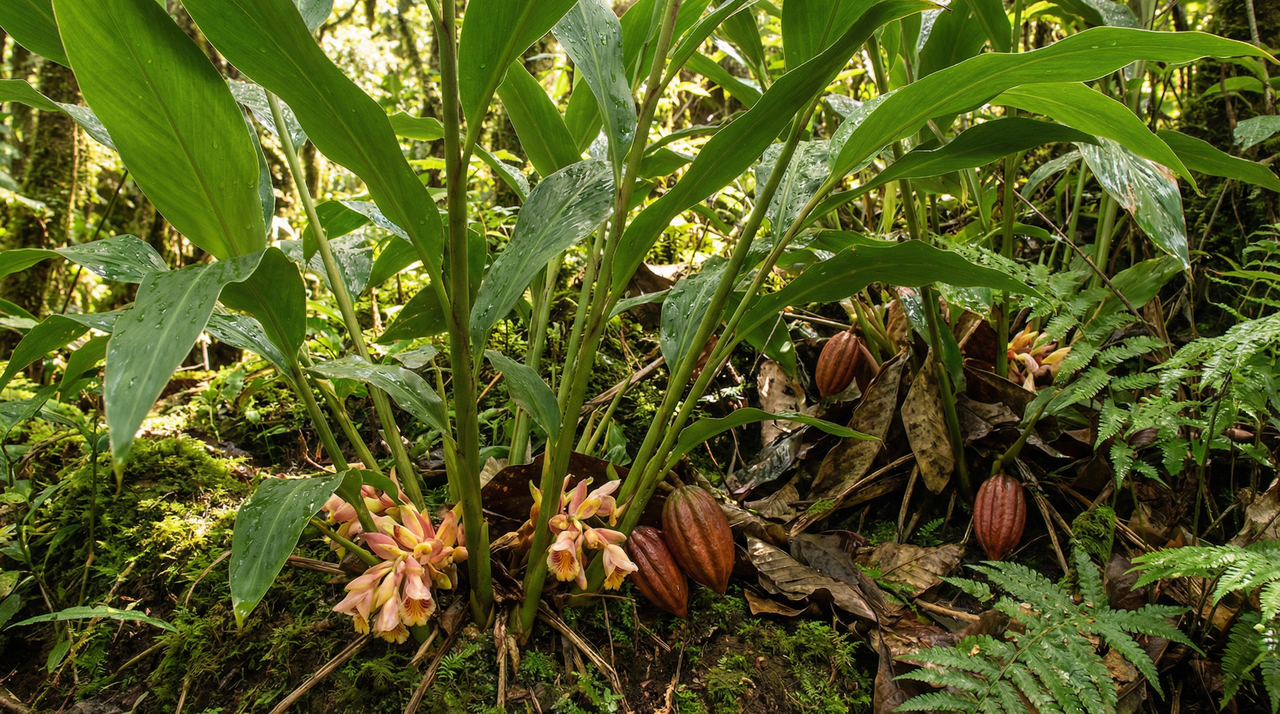
Grains of paradise (Aframomum melegueta) delivers a wave of peppery, citrusy, and gingery warmth from a single seed, making it one of the most complex culinary spices you can grow. The first time I ground a few seeds and touched them to my tongue, I stood in my kitchen trying to figure out what I was experiencing: pepper, yes, but also citrus, ginger, cardamom, something faintly floral, and a warmth that settled in slowly rather than hitting like a slap. It's genuinely one of the most complex flavors I've encountered from a single seed. The "alternative" framing has always struck me as backwards. This plant wasn't a substitute for something better; it was already something extraordinary, pulled into European trade routes because demand outpaced supply and merchants needed a story people could understand.
What makes it stranger is where it actually comes from. Grains of Paradise (Aframomum melegueta) is a West African rainforest understory plant, a relative of ginger and cardamom, with flowers that open at ground level and seeds tucked inside red capsules that look almost otherworldly hanging low in the shade. It shaped trans-Saharan trade empires, showed up in 1500 BCE Egyptian records, and still anchors Ghanaian kitchens and protective rituals today. And almost nobody in the West grows it. If you can find it at all, you're usually buying dried seeds from a specialty importer. That gap between how significant this plant is and how invisible it remains outside West Africa is exactly why I wanted to write this profile.
Grains of Paradise Origin and History
Botanical Background and Native Habitat
Grains of paradise (Aframomum melegueta) is a rhizomatous perennial herb in the Zingiberaceae family, and its closest relatives tell you immediately what it needs to thrive. Native to the humid lowland rainforests of West and Central Africa, including Ghana, Nigeria, Liberia, Sierra Leone, Ivory Coast, and Cameroon, it grows below 500 meters elevation in swampy margins, along riverbanks, and in the dappled shade of forest understory where rainfall tops 2,000 mm a year and the air rarely dries out.[1][2][3] The genus spans a remarkable range of habitats: Ethiopian cardamom (A. corrorima) grows in cool montane forests at 1,400 to 2,500 meters in the Ethiopian highlands,[4] while A. alboviolaceum occupies similar humid lowland forest floors across Central and West Africa.[5] That contrast matters because it sets realistic expectations: A. melegueta is a true lowland tropical, and trying to grow it outside of consistently warm, humid conditions is an uphill battle I know from experience.
As a polycarpic perennial it can live 5 to 10 years or more under good conditions, though you'll wait 2 to 3 years for the first seed pods to appear.[2][6] Domesticated over 2,000 years ago and capable of yielding 500 to 1,000 kg per hectare,[7] it is nonetheless still largely wild-harvested today, which sets up a sustainability tension worth keeping in mind from the start.
Visual Characteristics
In the garden, grains of paradise makes an impression before you ever see a seed. Plants form dense leafy clumps from stout horizontal rhizomes, typically reaching 1 to 2.5 meters tall with a spread of roughly 0.6 to 1 meter.[8] The leaves are long and lance-shaped, 10 to 50 cm, arranged in two ranks along unbranched pseudostems, and they have that smooth, slightly tropical look shared by many Zingiberaceae relatives.[9] Crush one and you get a pungent, peppery-gingery hit that I find even sharper than galangal leaf. It's honestly one of the quickest ways I confirm I'm looking at the right plant early in the season before any flowers show.[2]
The flowers are easy to miss if you're not paying attention because they emerge from the base of the plant at ground level, borne on short spikes rising directly from the rhizomes. Small, white to pale yellow, occasionally flushed with purple, and beautifully zygomorphic with a prominent labellum, they have nothing showy about them until you're crouching in the mulch looking for them.[10] That basal flowering habit surprises a lot of beginners who expect something more upright. The fruit that follows is where the real drama is: oblong capsules 4 to 7 cm long, ripening from green to a striking reddish-orange, splitting open to release 20 to 50 small, wrinkled, reddish-brown seeds per pod.[11] Ethiopian cardamom produces similar but distinctly ridged, compressed pods in red, and A. alboviolaceum carries white flowers with violet labellum markings and paler capsules, useful comparisons if you're ever trying to sort unlabeled rhizomes.[12]
Traditional and Cultural Uses
The history of grains of paradise is really a history of desire. Its earliest recorded uses trace to ancient Egypt around 1500 BCE, where it appeared as incense and medicine, and Greek and Roman texts from the 2nd century CE referenced it as "melegetes" or "medaloin."[13] From the 9th century onward, it moved north through trans-Saharan trade networks, enriching the Ghana, Mali, and Songhai empires as Arab traders funneled it into Mediterranean markets. Portuguese explorers in the 15th and 16th centuries documented cultivation in Benin and Gabon and valued it more highly than black pepper; by the 16th century, Dutch and English merchants had organized production along the Gold Coast.[14]
Medieval European cooks embraced it as a more affordable pepper substitute, seasoning ales, hippocras, mulled wines, meats, and sausages, with recipes appearing in texts like The Forme of Cury in 1390.[15] When I use the whole seeds in a slow-braised dish, I get exactly why cooks prized them: the warmth is complex and lingering in a way black pepper simply isn't. The Atlantic slave trade carried the spice to the Americas, where it took root in Afro-Caribbean foodways and folk traditions.[15]
In West Africa, the seeds never stopped being central. Yoruba, Igbo, and Nzema communities have long used them medicinally for digestive complaints, fever, rheumatism, malaria, and as a postpartum tonic, while also incorporating them into protective charms, fertility rites, and purification ceremonies.[16][17] I always try to acknowledge that depth of meaning with respect; many contemporary gardeners grow this plant primarily for its culinary heat and ornamental appeal, but the spiritual and protective dimensions it holds in West African traditions run far deeper and predate European interest by centuries. In Ghanaian cuisine today it flavors shito and bushmeat spice blends with that familiar warming bite.[18] Modern researchers are now validating what traditional practitioners have known for generations, identifying anti-inflammatory, antioxidant, and antimicrobial properties from compounds like paradol, gingerol, and zingerone with potential anti-obesity and analgesic applications.[19]
Fun Facts About Grains of Paradise
The common name "alligator pepper" is one of those vivid West African nicknames that actually tells you something useful: the rough, red capsule splitting open with its tightly packed seeds does call to mind something scaly and toothy.[20] The flavor inside those seeds, built from 6-paradol and an array of monoterpenes, is a layered pepper-ginger-cardamom-citrus warmth that lingers long after black pepper has faded.[2]
Ecologically, the plant earns its place. Pollinated by insects and with seeds dispersed by frugivorous birds and mammals,[7] it slots naturally into the understory layer of a tropical food forest, which is exactly where I've been experimenting with it alongside banana and cacao. It supports biodiversity without spreading invasively, a genuinely useful quality in a regenerative system.[2]
The harder truth is that most grains of paradise reaching Western markets are still wild-harvested, and overharvesting combined with deforestation is creating real pressure on wild populations.[21] Adulteration and misidentification with related Aframomum species in the spice trade compound the problem for buyers who want the genuine article.[22] I've been burned by this myself when ordering online and have learned to seek out whole red capsules or suppliers with verified West African sourcing rather than pre-ground powder that could be anything. Its agroforestry potential as a cultivated understory crop could eventually ease that pressure, but wider adoption will require both awareness and better supply chains than currently exist.
Grains of Paradise Varieties and Sourcing
Botanical Varieties and Landrace Diversity
Here's something that trips up almost everyone searching for grains of paradise plants: there are no named cultivars. None. No 'West African Gold' or 'Spice Coast Select' waiting in a seed catalog. What exists instead are two recognized botanical varieties of Aframomum melegueta, var. melegueta and the smaller-leaved, less widespread var. parvifolium, plus a sprawling collection of West African landraces that have never been formally classified but carry real, meaningful differences in seed size, pungency, and essential oil content.[23][24][25] Think of it like working with wild-stewarded heirloom crops: the genetic richness comes from generations of farmer selection across Ghana, Nigeria, and Cameroon, not from a breeding program.
After growing both West African-sourced material and Colombian forms over several seasons, I can tell you the differences show up in ways that matter for design. West African var. melegueta typically reaches 1.5 to 2.5 meters and handles shade and dry spells considerably better.[26] The Colombian forms stay shorter, around 1 to 1.5 meters, but they'll tolerate a brief dip to about 45°F (7°C) without collapsing.[27] I reach for the taller West African types when underplanting beneath a canopy layer, much like I would with certain Alpinia species; the Colombian material is what I'd consider for a zone 9b microclimate push. The West African landraces I've grown also produce noticeably more aromatic essential oils through Florida's long humid summers, which translates directly to what ends up in a spice grinder.
Two related Aframomum species follow the same pattern of landrace diversity without formal cultivars. Ethiopian cardamom (Aframomum corrorima) shows documented variation in pod size, seed yield, and essential oil content across farmer-maintained accessions,[28] while Aframomum alboviolaceum is wild-collected and unselected, valued mostly for its white flowers with violet markings rather than its seeds.[29] If you find A. alboviolaceum offered anywhere, treat it as a genus curiosity with genuine ornamental value, not a spice substitute.
How to Source Grains of Paradise Seeds and Plants
Fewer than five commercial suppliers in the US reliably carry Aframomum melegueta seed or plants, and availability tends to spike between October and February when culinary demand picks up around the holidays.[30] I've learned to place orders early in the fall because by January the good vendors are often sold out until the following growing season. Small seed packets (10 to 50 seeds) typically run $5 to $15; starter plants, when you can find them, land around $10 to $25. World Seed Supply, Logee's, and a handful of Etsy sellers are your most realistic starting points.
Quality matters enormously with this seed, and the sensory checkpoint is simple: the pods should be plump with a sharp, citrusy pungency that hits you when you open the package. Year-old seed from poor storage smells flat and slightly musty, and germination rates drop accordingly. Freshly harvested seeds, once pods split naturally, are the highest-quality material available, but they're almost never sold outside West Africa. When evaluating any shipment for myself or a client, that aroma is the first thing I check.
Importing seed or plant material directly from Africa requires a phytosanitary certificate and may trigger post-entry quarantine or treatment requirements under 7 CFR 319.37.[31] The species itself isn't listed under CITES and isn't considered threatened, so there's no conservation barrier.[32] After helping clients navigate APHIS permit paperwork for several tropical gingers, I'd frame this as standard practice for responsible sourcing of any regulated tropical species rather than a reason to avoid direct import. Ethiopian cardamom (Aframomum corrorima) seeds are more commercially available than live plants and follow the same import rules; spice-grade seed runs $10 to $25 per ounce from vendors like Mountain Rose Herbs and The Spice House when it's in stock.[33] The genus pattern holds: seeds are findable, plants are rare, and fresh beats old every time.
Grains of Paradise Propagation and Planting
I've grown grains of paradise from both fresh seed and rhizome divisions, and the experience is almost comically different. With seed, you're playing a long game that requires patience, good technique, and ideally a heat mat. With divisions, you're looking at an established clump pushing new growth within a couple of months. Both approaches work, but they suit different situations, and knowing the biology behind the seeds explains exactly why divisions tend to win for most home growers.
Seed Morphology and Viability
The seeds themselves are small things, just 2 to 5 mm across, ellipsoidal to roughly spherical, wrapped in a thin white aril with a reddish-brown reticulate testa.[24][34] They're also polyembryonic, meaning a single seed can carry multiple embryos from nucellar tissue, which sounds like good news until you realize those extra seedlings can vary wildly in vigor.[24][34] I label my rows and keep notes early on for exactly that reason.
What really shapes the propagation strategy is storage behavior. Grains of paradise seeds are recalcitrant, or at minimum intermediate, meaning they're sensitive to drying out and don't tolerate conventional dry storage well.[35][36] Viability typically holds for 3 to 12 months under cool, moist conditions around 15 to 20°C, but it drops fast outside that window.[35] I only use seed saved from the previous harvest; commercial packets that have been sitting on a shelf for months are genuinely not worth the effort, regardless of what the packet claims. If you must test a batch, tetrazolium staining and X-ray radiography are the reliable options, though a standard germination test in a warm tray tells you plenty quickly enough.[37][38]
Propagation Methods
Fresh seed germinates reasonably well once you address dormancy. A 24 to 48 hour warm water soak is the easiest pretreatment, and I've seen germination rates jump noticeably compared to unscarified seed sown dry. Gibberellic acid at 500 ppm for 24 hours can push rates further, and a four-week pre-chill at 10°C may also help break physiological dormancy.[39] Sow fresh pretreated seed at 1 to 2 cm depth in a moist, well-draining medium, keep temperatures at 25 to 30°C, and you can expect 70 to 90% germination from good fresh material; untreated seed from older stock often drops to 10 to 40%.[40][39] Ethiopian cardamom, the closely related A. corrorima, shows the same recalcitrance and responds to the same pretreatments, so the approach scales across the genus.[41]
Rhizome division is where I always start when I can get them. Divisions with two to three buds and a set of roots establish at 80 to 90% success rates, and they're genetically identical to the parent plant, which matters if you've found a particularly productive or flavorful clump.[42][43] Stem cuttings are possible but inconsistent, hovering around 30 to 50% success even with IBA rooting hormone at 1000 to 3000 ppm.[44][45] Tissue culture from meristems works well for disease-free mass production, but that's nursery territory rather than a backyard technique. Across all methods, maintain 70 to 80% humidity and temperatures in that 25 to 30°C range.[46]
Soil and Site Requirements
Think West African rainforest understory and you're most of the way there. This plant wants well-drained, fertile loamy or sandy-loam soil with 3 to 5% organic matter, a pH between 5.5 and 7.0 with 6.5 as the sweet spot.[47][48] Heavy clay and compacted ground invite the rhizome rots that can kill a planting, and pH extremes cause real problems: too acidic and aluminum toxicity becomes an issue, too alkaline and you'll see the chlorosis that comes with nutrient lockout.[47] I always recommend a soil test before planting, particularly if you're working with containers where local tap water can nudge pH higher over time. A bit of sulfur or fine pine bark in the mix handles that drift before it becomes a problem.
For light, 30 to 50% shade is the target, around two to six hours of indirect sun daily.[49] Full sun scorches the leaves visibly and fast; too little light produces tall, etiolated stems with minimal flowering.[50] Amend beds generously with compost and mulch thickly to mimic the leaf-litter layer the plant grows through in its native range.[51] For containers, I've had good results with a mix of 40 to 50% coir, 30 to 40% perlite, and 10 to 20% bark or compost, which keeps things moisture-retentive without sitting wet.[52]
Planting Spacing, Timing, and Technique
Space plants 0.5 to 1 meter apart within rows, with about 1 meter between rows.[53][54] In the humid conditions this plant demands, tighter spacing quickly becomes a disease problem as airflow drops and fungal pressure builds. Plant rhizome divisions 5 to 10 cm deep, with the buds facing upward, and time your plantings for spring or early summer when soil temperatures are climbing, or at the onset of the rainy season if you're in a genuinely tropical climate.[55] Label your divisions carefully. Young grains of paradise seedlings look enough like young ginger or turmeric that mixed-up rows happen more often than people admit, and the difference in growth rate between polyembryonic siblings can be startling until plants size up.
Germination and Establishment Timeline
Here's the reality check that changes most people's propagation decision: seed-grown plants take two to three years to reach flowering and first harvest.[40][56] Germination itself is quick enough, typically three to six weeks within a range of two to eight weeks at 25 to 30°C with proper pretreatment.[40] It's the juvenile phase afterward that demands patience. Rhizome divisions sidestep most of that wait, establishing within one to two months and flowering considerably sooner.[42] In my experience, a division reaches flowering size almost a full growing season ahead of its seed-grown counterpart started the same spring. For anyone in zone 9B or cooler, that timeline math makes containers and protected starts not just convenient but genuinely necessary, since the plant needs consistent warmth to move through each phase without stalling.
Grains of Paradise Care Guide
Every care decision you make for grains of paradise comes back to one thing: it's a rainforest-floor plant, and it has never forgotten that. The tall, leafy clumps you're trying to grow in your garden evolved under a dense canopy in humid West African lowlands, and the further your conditions drift from that baseline, the harder the plant will push back. That's not a discouragement. It's the clearest possible map for how to keep it healthy.
Temperature, Frost, and Heat Tolerance
Grains of paradise grows natively in tropical rainforests up to around 1,000 meters elevation, where temperatures stay reliably warm year-round.[57][58] Optimal growth happens between 20 and 30°C (68-86°F), and once temperatures slip below 15°C (59°F), growth essentially stops.[11][58] The plant can tolerate a brief dip to around 10°C (50°F), but prolonged exposure causes real physiological damage, and frost near 0°C (32°F) is severe even in a single night.[11][59] I've learned with related ginger-family plants to move containers inside the moment nighttime temperatures start dipping toward 50°F. Even a light frost will blacken new shoots, and once you see wilting, browning, or water-soaked lesions on the stems, the damage is already done.[60][61] Recovery is possible from a single brief exposure if you catch it quickly, but repeated cold stress will kill the plant outright.
This puts outdoor cultivation firmly in USDA zones 10-12, with zone 9b being marginal only if you're committed to protection and monitoring.[62][11] The genus does show some range: Ethiopian cardamom (Aframomum corrorima), a close relative, grows in Afromontane highlands at elevations of 1,400-2,500 meters with average temperatures of 15-25°C, which gives it a slightly broader cold buffer.[63] Even so, its young growth, apical meristem, and flower buds remain frost-sensitive, and the damage pattern progresses quickly from leaf browning to stem softening and rhizome rot.[64] For those of us outside the tropics, containers, greenhouses, and careful overwintering indoors aren't optional extras -- they're the whole strategy.[11][58]
Light, Water, and Soil Needs
In its native understory, grains of paradise gets bright, filtered light -- never direct harsh sun, which scorches the leaves. Partial shade is the target, with a soil that's loamy, fertile, rich in organic matter, and well-drained, at a pH of 5.5 to 7.0.[65][66] That drainage piece is non-negotiable: the roots need consistent moisture, but they rot fast if they're sitting in water. I think of it as the difference between a moist rainforest floor and a boggy ditch.
During active growth, plan for about 1-2 inches (25-50 mm) of water per week, letting the top inch or two dry slightly between waterings but never letting the root zone fully dry out.[67][66] Humidity matters just as much as soil moisture: the plant thrives at 70-80% ambient humidity, and indoor growers who skip this step end up with crispy leaf edges and stunted growth even when the watering schedule is perfect.[11] After growing several ginger-family plants in zone 9b, I've found that grains of paradise responds dramatically to a consistent humidity microclimate. A pebble tray kept filled with water, or a small enclosed greenhouse section, makes a visible difference. Overwatering reads as yellowing leaves, soft stems, and wilting despite wet soil; underwatering shows up as drooping, curled leaf edges, browning tips, and sluggish growth.[65][68] Learn to read those signals and adjust before damage accumulates.
Ethiopian cardamom offers a useful genus-level contrast here: it manages on 1,000-1,500 mm of annual rainfall and can survive short dry spells of three to four months when mulch is applied to retain soil moisture.[69] Grains of paradise has less flexibility. A 5-10 cm layer of organic mulch benefits both species for moisture retention and weed suppression, and it's one of the simplest wins you can give this plant.[70]
Fertilizing and Feeding
Grains of paradise is a moderate feeder that responds well to balanced nutrition, particularly during the active growing season from spring through fall.[71][72] A balanced NPK fertilizer (10-10-10 or 15-15-15) applied every four to six weeks works well, with potassium emphasis timed toward the fruiting period to support seed size and development.[70][73] Compost or well-decomposed manure incorporated into the soil before planting gives you an organic baseline to build on. I test my soil every spring, and in my own garden that mid-summer potassium boost consistently translates to better seed size and more aromatic results.
Early on, I mistakenly applied extra nitrogen hoping for a more vigorous plant. What I got was dense, lush, beautiful foliage and a disappointing seed set with noticeably less pungency. The research confirms this: excess nitrogen pushes vegetative growth at the direct expense of seed production, and the seeds that do form end up smaller with thinner coats.[74][75] On the deficiency side, watch for uniform pale yellowing starting at lower leaves (nitrogen), purplish tints on dark green leaves (phosphorus), and brown-tipped or marginal leaf scorch (potassium).[74] Much of the precise data for this species comes from general Zingiberaceae spice-crop guidelines, so I'd treat soil testing every six to twelve months as your actual compass rather than following any single rate recommendation rigidly.[76] Keep soil electrical conductivity below 2 dS/m; above 4 dS/m causes osmotic stress and reduced seed production.[77]
Pruning, Maintenance, and Seasonal Rhythm
Maintenance on grains of paradise is genuinely low-intervention once the plant is established. I remove yellow or dead leaves as I notice them and cut spent flower stalks after the fruit has been harvested; that's about it for routine work.[78] Every two to three years, thin overcrowded clumps to improve air circulation through the stems, since dense clumps hold moisture in ways that encourage fungal issues -- more on those in the pests and diseases section.[78][79] In windy spots, taller stems may need staking to prevent lodging, and occasionally supporting heavy seed clusters makes harvest easier.
The seasonal rhythm in its native West African habitat runs like this: flowering year-round with a peak during the rainy season from May to October, fruiting peak from July to October, and fruit maturation taking four to six months after pollination.[11] Under optimal tropical conditions the plant can live five to ten years, though yields often begin declining after two to three years, so plan on refreshing clumps periodically.[11][80] Ethiopian cardamom flowers slightly later (June to September) and fruits into the drier months of September to November, with selective removal of about 20-30% of older stems each year shown to increase pod production noticeably.[69][81] That's worth borrowing for grains of paradise as a practical clump-management strategy. The difference between a plant that merely survives in your garden and one that thrives and fruits reliably almost always comes down to humidity, drainage, and the consistency of care during those first two growing seasons -- get those right and the plant is surprisingly forgiving about the rest.
Harvesting Grains of Paradise
Patience is the first skill this plant teaches. Grains of Paradise takes 2–3 years from seed before you'll see your first harvestable pods, with productive yields continuing reliably for 5–10 years once the clumps are established.[82][83][84] After waiting the full stretch for my first plants to fruit, I now mark the calendar the week those pods begin shifting from green to glossy scarlet so I never miss the window.
When to Harvest Grains of Paradise: Timing and Ripeness Cues
Pods ripen 6–8 months after flowering, and the cue is unmistakable: the capsules turn bright red to reddish-brown and begin to crack open naturally at the seams.[85][83][86] In West Africa this peak falls between September and December during the dry season.[87] Don't wait for every pod to split on its own; once that color change is complete, pick promptly. The related Ethiopian cardamom harvests March through June when grown in highland conditions,[88] which underscores how sharply the two species diverge in calendar and habitat despite their family resemblance.
How to Harvest and Process Grains of Paradise Seeds
Hand-pick the ripe pods individually to avoid bruising, then clean off any debris before drying. You have two solid options: spread the pods on mats in full sun for 3–5 days, turning them periodically for even results, or use controlled heat at 45°C for 24–48 hours to bring moisture down to 10–12%.[85][89][90][91] The freshly extracted seeds feel hard and faintly sticky; after the full sun-drying period they turn fragrant and beautifully dry in a way that signals the volatile oils have been preserved rather than driven off. That step isn't optional if you care about flavor, because fast, even drying is what locks in the paradol, gingerols, and cineole that make this spice worth growing. Mold and aflatoxin are real risks when moisture lingers. Once dried, store seeds in airtight containers at 15–20°C and below 60% humidity, where they'll hold their essential oils for 6–12 months.[92][91]
Expected Yields and Flavor Profile of Grains of Paradise
A mature plant typically produces 50–100 fruits per season, translating to 200–500 g of dried seeds, with well-managed plants reaching 1–2 kg.[93][85][82] In good years, a healthy clump in my garden has reliably given me 300–400 g of dried seeds, which is a meaningful harvest for a home kitchen. The flavor that drying preserves is genuinely complex: peppery heat, citrus, ginger, cardamom, and floral notes, all driven by 6-paradol, gingerols, 1,8-cineole, beta-pinene, and about 1–3% essential oil overall.[94][95] The heat lands somewhere between 7,000–10,000 Scoville-equivalent, warmer and more lingering than black pepper rather than sharp and immediate.[96][97] Anyone who has tasted both fresh grains of paradise and black pepper side by side knows the difference immediately: the numbing, ginger-like warmth here lingers for minutes in a way piperine simply doesn't. Seeds from hotter, drier growing conditions tend to carry more paradol and therefore more heat; Ghanaian samples often skew spicier while Nigerian ones lean mintier and more camphoraceous.[98][99] By contrast, Ethiopian cardamom leans heavily eucalyptus and camphor from 1,8-cineole at up to 40–50%,[100] which helps clarify just how distinctly warming and multi-layered a well-harvested batch of grains of paradise really is.
Grains of Paradise Culinary Uses and Preparation
Culinary Uses, Flavor, and Processing
Grains of paradise has been seasoning West African kitchens for centuries, turning up in palm nut soup, pepper soup, jollof rice, fufu accompaniments, and millet beer long before European spice traders gave it a poetic name.[101][7] In Ghanaian and Nigerian cooking, ground seeds deliver a spicy, citrusy kick that black pepper simply can't replicate, and whole or crushed pods are simmered into infusions and broths.[102]
The flavor is the thing. After several seasons working with these seeds, the aroma I get when I lightly toast them is unmistakable: citrus-forward, ginger-warm, with a dry pine and cardamom note underneath and a peppery heat that blooms slowly and lingers.[103] That complexity is why craft brewers reach for it as a black-pepper substitute, and why it keeps showing up in spice blends where a flat, one-dimensional burn would miss the point.[102] The related Ethiopian cardamom (Aframomum corrorima) shares the warm, peppery-citrusy profile but adds eucalyptus and camphor notes that make it essential in berbere and doro wat,[81][104] which illustrates just how much flavor terrain this genus covers.
For processing, tradition starts with sun-drying or shade-drying freshly extracted seeds for three to seven days to reach about 10 to 12 percent moisture.[105] Light roasting at 80 to 100°C adds a nutty depth, but it does reduce paradol content by 20 to 30 percent, so I keep toasting brief and gentle when I want the full aromatic profile.[105] Fresh grinding in a mortar is non-negotiable for me; pre-ground powder fades fast. Store whatever you don't use immediately in an airtight container, because those paradol and gingerol notes are the first things to go.[16] The seeds are the primary edible part, though the fruit pods are also usable whole or ground, and leaves occasionally find their way into teas or wraps.[106]
Beyond the kitchen, the seeds carry solid nutritional credentials, including manganese, magnesium, iron, and calcium,[107] and their phenolic compounds show meaningful antioxidant activity, with total phenolic content reaching 50 to 100 mg GAE per gram and DPPH scavenging up to 80 to 90 percent.[108] Traditional Yoruba and Akan healers have long used them for digestive complaints, inflammation, and as a carminative, though the deeper pharmacological story lives in the health benefits section.[109] As a culinary spice at normal cooking amounts, the FDA recognizes grains of paradise as Generally Recognized as Safe.[110]
Medicinal Preparations and Dosages
There's a meaningful gap between sprinkling 0.1 to 0.5 g into a pot of soup and using 0.5 to 3 g of dried seed powder as a traditional therapeutic decoction or infusion.[111] I always start people at the low culinary end because the peppery heat builds quickly, and the jump to therapeutic doses deserves intentionality rather than accident. Topically, diluted extracts at 1 to 5 percent, or one to two drops of essential oil in a carrier oil, appear in traditional massage formulas, though the essential oil isn't something to take internally without professional guidance.[111] The related Ethiopian cardamom follows parallel patterns: seeds boiled as decoctions, steeped as tinctures, or chewed directly, with leaves brewed into fever teas.[112] These are traditional guidelines, not standardized clinical recommendations, and they're worth treating with the respect that implies.
Traditional Non-Food and Ritual Applications
The same seeds that spice pepper soup also appear in Yoruba naming ceremonies, protective charms, spiritual baths, and offerings symbolizing prosperity,[113] while Ethiopian cardamom seeds are burned as ceremonial incense.[114] Grains of paradise also flavor palm wine across West Africa and serve as a diuretic, galactagogue, and remedy for rheumatism and colds in traditional ethnobotanical practice.[18] Growing this plant feels like touching something much older than my food-forest design portfolio. There's a continuity there that I find worth acknowledging, even quietly.
Safety, Contraindications, and Look-Alikes
Because GRAS status and pregnancy contraindications are fully detailed in the health section, the main safety concern for culinary sourcing is botanical identification.[110] Push past normal cooking quantities, though, and gastrointestinal irritation becomes a real possibility, and anyone with sensitivity to Zingiberaceae family plants should watch for allergic responses.[115] There are also potential effects on blood pressure and blood sugar with possible interactions with related medications, so people managing either condition should talk to a healthcare provider before moving into higher therapeutic doses. Pregnancy is a firm caution; uterine stimulant effects are possible, and high doses should be avoided.[115]
The look-alike issue is one I take seriously. True Aframomum seeds have a ridged, wrinkled texture that I've learned to recognize on sight, which matters when buying in bulk because Morning Glory seeds (carrying hallucinogenic LSA) and Colocynth seeds (capable of causing severe gastroenteritis from cucurbitacins) can turn up in the same market context as related species.[115][116] Label your containers clearly, source from reputable suppliers, and when in doubt, let the aroma guide you: genuine grains of paradise smell like warmth and citrus the moment you crack the seed. That scent has saved me more than once.
Grains of Paradise Health Benefits and Medicinal Uses
Every time I grind a small handful of grains of paradise seeds and catch that wave of warmth -- peppery, citrusy, with a gingery depth that lingers -- I'm reminded that what I'm smelling and tasting is a dense library of bioactive compounds at work. The heat isn't incidental. It's the whole story of why this spice has held a place in West African healing traditions for centuries and why researchers keep coming back to it.
Key Phytochemicals in Grains of Paradise: Paradols, Gingerols, and Essential Oils
Grains of Paradise belongs to the ginger family (Zingiberaceae), and like its relatives it produces two dominant compound classes that explain most of its biological activity. The seeds contain an essential oil at roughly 1-2% of dry seed weight, dominated by monoterpenes including geranial (30-40%), neral (20-25%), and beta-pinene (15-20%), along with 1,8-cineole, linalool, and alpha-pinene.[117][118][119] That geranial-forward citrus note you detect in a fresh grind? That's this fraction.
The second class is the pungent phenolics: paradols, gingerols, and shogaols. The star here is 6-paradol, which makes up 5-10% of the seed and activates TRPV1 receptors, the same heat-sensing pathway that capsaicin and black pepper piperine trigger.[117][120][121] In my own harvests, seeds from plants grown in hotter, drier conditions feel noticeably more pungent -- consistent with research showing phytochemical composition shifts based on geographic origin and environmental stress.[117][122] The flavonoids -- quercetin glycosides, rutin, epicatechin, kaempferol-3-O-rutinoside -- round out the antioxidant picture, supported by minor alkaloids, saponins, tannins, and the carotenoid allophotoxanthin.[117][119]
Related species reinforce these patterns. Ethiopian cardamom (A. corrorima) grown above 2,000 meters shows higher phenolic content and an essential oil heavy in 1,8-cineole (up to 40-50%).[123][124] A. daniellii adds unique diarylheptanoids -- Aframodins A, B, and C -- that show cytotoxic activity not documented in melegueta.[125] These genus-wide patterns help explain why the Aframomum family has held such a consistent place in traditional medicine across the continent.
Medicinal Research and Traditional Uses of Grains of Paradise
Most of the research on grains of paradise benefits is preclinical, drawn from in vitro cell studies and animal models.[117] Human clinical trials remain limited. I hold that honestly, because I think the plant earns genuine respect without overstating what the science has proven.
That said, the preclinical evidence across multiple Aframomum species is consistent enough to give me real confidence in its traditional role. The antioxidant activity is strong and well-documented, with paradol derivatives and flavonoids scavenging free radicals, activating the Nrf2 pathway, and upregulating antioxidant enzymes like SOD.[126] The anti-inflammatory mechanisms are equally specific: inhibition of COX-2, suppression of NF-κB, and reduction of cytokines including TNF-α and IL-6, with animal studies showing effects comparable to indomethacin in carrageenan-induced inflammation models.[113][127] Antimicrobial activity is broad-spectrum: meaningful MIC values of 0.5-2 mg/mL against E. coli, S. aureus, and Candida albicans, with essential oils disrupting microbial membranes.[128]
West African healers have used these seeds for digestive disorders, respiratory complaints, pain, malaria, and as a postpartum tonic for generations, with local names like "osaawa" in Twi and "ata irele" in Yoruba carrying cultural and ritual weight alongside the medicinal.[101][129] What I find compelling is watching the lab begin to explain what healers mapped empirically. The analgesic effects, for instance, show activity comparable to aspirin in animal pain models, with related species acting via both central and opioid-mediated peripheral pathways.[113][130] I've used small amounts of ground seeds steeped into tea for mild bloating and found the warming, carminative effect genuinely reliable -- which aligns directly with the antispasmodic and digestive uses documented across the Akan, Yoruba, Igbo, and Ga-Adangbe traditions.
Emerging areas -- reduced fasting blood glucose in diabetic rat models, apoptosis induction in cancer cell lines, PPARγ modulation suggesting anti-obesity potential -- are promising but need to be held lightly.[131][132] The consistent anti-inflammatory and antioxidant findings across multiple species give me confidence in its supportive role as a culinary spice; the more dramatic claims around grains of paradise fat loss or anti-cancer effects are where I'd want robust human trials before drawing conclusions.
Nutritional Profile of Grains of Paradise
Grains of Paradise is a spice, not a staple food, so the relevant frame for its nutrition is small servings of 0.5-3g per dish -- about what you'd use of black pepper -- with medicinal use ranging from 0.5-2g daily for digestive or anti-inflammatory support.[133][122] At 100g scale, the seeds contain approximately 311 kcal, 8-11g protein, 6.5-7g fat, 65-71g carbohydrates, and an impressive 15-32g dietary fiber.[117][107] Mineral content is notable for a spice: potassium runs 1050-1500mg per 100g, calcium 117-800mg, magnesium 130-300mg, and iron 20-120mg, with meaningful zinc and phosphorus alongside trace B vitamins and modest vitamin C at 10-39mg.[134][135]
The real nutritional story, though, is the antioxidant density. Raw seeds carry up to 150 mg/g total phenolic content, and the paradols and gingerols that drive that number are better absorbed when consumed with fats -- something to keep in mind when you're using them in an oil-based dish.[136] One practical detail I've noticed from processing my own harvests: toasting the seeds briefly before grinding intensifies both the aroma and the after-heat noticeably. That heat processing can also improve phytochemical bioavailability, though it may reduce vitamin C by 30-50%.[137] At the amounts most people use this spice, it's the mineral density and antioxidant support that matter, not macronutrient contribution.
Safety and Precautions for Grains of Paradise
The FDA classifies Grains of Paradise as GRAS (Generally Recognized As Safe) for use as a flavoring ingredient, and animal toxicity studies show LD50 values exceeding 2000-5000 mg/kg -- well above any realistic culinary dose.[138][139] As someone who grows and processes multiple Zingiberaceae species, I treat this as a safe kitchen staple -- with a few clear limits worth knowing.
At culinary amounts of 1-3g daily, side effects are uncommon.[140] Push into higher doses and GI upset, nausea, or hypotension become real possibilities, and people with Zingiberaceae sensitivities occasionally report contact dermatitis.[141] The more serious precautions involve specific populations and drug interactions. Pregnancy is a firm contraindication: the seeds have documented uterine stimulant and emmenagogue properties.[132] Because of documented antiplatelet activity, I'm careful not to combine medicinal amounts with blood-thinning medications, and I always advise clients to check with their physician. The same caution extends to antidiabetic and antihypertensive drugs, where additive effects are plausible.[142] Those with gallbladder issues or active GI disorders should be cautious as well. Seeds have the most safety data; leaves and fruits less so, and some animal studies suggest chronic high-dose use may affect liver enzymes, though evidence there is mixed.[132] Related Aframomum species share the same low-toxicity profile and precautions.[143] My practical rule: keep medicinal use under 2g daily, stay at culinary levels unless working with a knowledgeable practitioner, and if you're pregnant or managing a chronic condition, this is one of those conversations to have with your doctor before the seeds even come out of the jar.
Grains of Paradise Pests and Diseases
Spend any time with grains of paradise and you start to appreciate how well-armed this plant is from the factory. Growing in the humid West African understory alongside a constant parade of insects and fungal spores, it didn't survive without some chemical artillery. Cultivation changes the equation. Move any plant out of its evolved context, stress it slightly, pack it too close, or put it in heavy soil that holds water, and those defenses start to look thinner than you'd like.
Natural Resistance and Chemical Defenses
The same paradol and gingerol compounds that give grains of paradise their heat and that researchers have studied for antimicrobial activity also function as natural insect repellents and antifeedants.[144][145] I've noticed this directly in my subtropical garden: vigorously growing, well-fed specimens tend to carry far lower aphid loads than stressed or waterlogged ones nearby. The chemistry isn't incidental; it's the plant's first line of defense, and a thriving plant produces more of it. Wild populations show consistently higher resistance than cultivated plants,[146] which tells you something about what domestication and stress cost a plant over time. Tough, leathery leaves also reduce palatability for chewing insects,[146] though these physical defenses are clearly secondary to the chemical ones.
Common Diseases and Preventive Strategies
Fungal problems are the main thing I watch for. Grains of paradise is susceptible to leaf spot diseases caused by Colletotrichum, Curvularia, Helminthosporium, and Cercospora species, and shows low resistance to Fusarium wilt.[147][148] The more pressing threat in my experience is root and rhizome rot from Pythium, Phytophthora, and Sclerotium rolfsii, all of which accelerate dramatically in waterlogged or poorly drained conditions.[149][150] I lost several young plants this way before I stopped trying to grow them in Florida clay and committed fully to raised beds with compost and sharp sand. That single change, prioritizing drainage above everything else, has been the most effective disease management step I've taken.
Disease pressure climbs sharply when humidity stays above 80% for extended periods or temperatures drift outside the 18-32°C comfort zone, with related Aframomum species showing up to 30% yield losses under poor site conditions.[151][152] Ethiopian cardamom paints an even starker picture, with Fusarium wilt and rhizome rot driving documented losses of 10-40%,[153] which gives you a sense of what's possible when site selection goes wrong across this genus.
Prevention is straightforward if you commit to it: proper plant spacing for airflow, maintaining soil pH between 6.0 and 7.0, and prompt removal of infected leaves or stems before spores spread.[154][61] Bacillus subtilis applied as a soil drench offers solid biological control before you reach for anything harsher.[155] There are no commercially available disease-resistant cultivars for this species yet, so site selection and sanitation remain the primary tools for most growers.[156]
Key Insect Pests and Integrated Management
Aphids and spider mites are the two I watch most closely through humid summers, and they'll be familiar to anyone growing ginger or turmeric nearby since conditions that favor one family member tend to favor the same pest complex across all of them. Aphids (Aphis spp., Myzus persicae) suck sap and transmit viruses, peaking in rainy seasons; spider mites (Tetranychus urticae) reduce photosynthesis when populations build under heat and humidity.[146][157] Root-knot nematodes, rhizome borers, and storage pests like cowpea weevil round out the list of threats, with unmanaged field infestations capable of causing 30-50% yield loss and storage insects trimming marketable yield by another 30%.[146][158]
For an integrated approach, cultural controls come first: rotating planting areas, intercropping with nitrogen-fixing companions, mulching, and keeping debris cleared from around the base.[158] Predatory mites, parasitic wasps, and lady beetles handle aphid and mite pressure effectively when you're not disrupting them with broad-spectrum sprays. For early-stage foliar infestations, I apply neem-based products at dusk, which minimizes impact on beneficial insects and avoids leaving residues that would compromise the seeds' flavor or medicinal value. Botanical and biological options cover most situations without undermining what makes this spice worth growing in the first place.[159][160]
Grains of Paradise in Permaculture Design
Picture the floor of a West African lowland rainforest: layered canopy filtering light down to a humid, dappled green understory, the air thick with moisture, the soil spongy with leaf litter. That's home for grains of paradise. Aframomum melegueta evolved in those conditions, at elevations typically below 800 m, with annual rainfall between 1,500 and 3,000 mm, humidity sitting at 70 to 90 percent, and temperatures holding reliably between 20 and 30 °C year-round.[2][6] Understanding that picture is the whole design challenge. Every guild recommendation, every companion-planting idea that follows, collapses if the climate doesn't match.
Climate and Hardiness Zones for Growing Grains of Paradise
Grains of paradise is a zones 10 to 11 plant, with marginal survival possible in protected zone 9b microclimates.[161] It will not tolerate frost. Temperatures below 10 °C cause real damage, and heat stress kicks in above 35 °C, which actually rules out some of the hottest, driest subtropical spots as well.[2] Outside West Africa, commercial cultivation is limited to parts of Asia, the Caribbean, and Brazil, precisely because so few agricultural regions can replicate those exacting tropical conditions.[162]
For those of us working in subtropical gardens, my honest recommendation is to test two or three container plants through your first winter before committing to a large planting. I've seen enthusiastic growers in marginal zone 9b lose entire beds to a single cold snap. Containers that can move into a heated greenhouse or bright indoor space are your insurance policy. Ethiopian cardamom (A. corrorima) is the exception in the genus, originating from cooler montane forests at 1,400 to 2,600 m with average temperatures of 15 to 20 °C, giving it marginally broader cold tolerance and brief exposure near 0 °C.[163] The lowland relatives, A. alboviolaceum and A. daniellii, share the same frost intolerance and demand the same warm, high-humidity, high-rainfall baseline as melegueta.[164][165] The genus, in other words, is consistently committed to the humid tropics.
Ecosystem Functions and Forest Layer Placement
In the landscape, grains of paradise forms clumping upright pseudostems reaching 1.5 to 2 m, with broad, lanceolate, glossy leaves that read immediately as ginger-family to anyone who's grown edible ginger or turmeric. The flowers emerge at the base of the clump, which surprises people the first time they see it. They're pale yellow to white, fragrant, and structurally similar to other Zingiberaceae blooms, with a three-lobed labellum built for bee access. Carpenter bees and honey bees are the primary pollinators, drawn in during early morning hours when the sweet-spicy scent peaks. Optimal pollination happens at 25 to 32 °C with humidity above 70 percent, squarely within the plant's comfort zone.[11][166]
In fragmented gardens, though, pollinator limitation is real. Fruit set drops noticeably without a healthy local bee population, and hand-pollination is standard practice in cultivation to compensate.[167] I've hand-pollinated mine with a small paintbrush on dewy mornings, and the difference in pod production is immediately obvious. It's not much extra work, maybe ten minutes every few days during flowering, and the payoff in fruit set is worth every minute. Once pollinated, the bright red capsules attract frugivorous birds and small mammals, which in natural forests aid in seed dispersal and forest regeneration.[168]
Below ground, the rhizomatous root system forms mycorrhizal associations and functions as a dynamic accumulator, cycling potassium, nitrogen, and phosphorus from deeper soil layers back into the surface zone.[169][170] The essential oils, paradol and gingerol in particular, appear to deter aphids, ants, and nematodes, which is consistent with traditional observations in West African farming systems, though I'd frame this as a practical benefit observed in practice rather than a fully mechanized certainty.[171] Above ground, those dense clumps function as living ground cover, suppressing weeds and retaining soil moisture in shaded areas, and the abundant leaf and stem biomass makes excellent chop-and-drop mulch for the surrounding system.[172] It prefers well-drained, fertile loamy soil rich in organic matter at a pH of 5.5 to 7.0, consistent moisture without waterlogging.[173]
Guilds and Companion Planting with Grains of Paradise
Grains of paradise belongs in the shrub layer, thriving under 30 to 70 percent canopy cover from taller trees.[174] Across West Africa, farmers have long grown it beneath cocoa and plantain, intercropped with yam, pigeon pea, and shade-tolerant spices like turmeric and ginger. That's a well-tested polyculture, and it maps cleanly onto permaculture guild logic: the nitrogen-fixer feeds the system, the taller fruit tree provides canopy, and the grains of paradise fills the middle-understory role while giving back in mulch, soil biology, and pollinators.[175] I find those traditional West African polycultures genuinely instructive for anyone designing a tropical food forest from scratch.
The Ethiopian cardamom pattern is worth knowing as a genus comparison: A. corrorima reaches 2 to 5 m and is traditionally intercropped with coffee and enset in the Ethiopian highlands, a cooler, higher-elevation analog that shows the Aframomum genus consistently integrates well beneath overstory crops while filling the same understory niche.[176] The lowland relatives, A. alboviolaceum and A. daniellii, occupy similar niches in West and Central African rainforests and share the same companion-plant affinities.[165]
When placing grains of paradise, I prioritize morning light at the base with filtered midday canopy sun. That balance, in my experience, does more for flowering and seed set than almost any other single factor. Pair it with a nitrogen-fixer like pigeon pea or Gliricidia on the sunny edge, tuck turmeric and ginger nearby in the same moisture zone, and let a fruit tree or tall banana handle the upper canopy. The plant is non-invasive, clumping rather than spreading aggressively, and its ornamental glossy foliage contributes to biodiversity and soil fertility without creating management headaches.[177][178] Rhizome division every three to four years keeps clumps productive and gives you propagation material to expand the planting or share with other growers.[82] It's a plant that rewards thoughtful siting with real system resilience, which is exactly what I'm looking for when I bring something this climate-specific into a food forest design.
The Plant That Made Me Rethink What a Spice Garden Could Be
I still remember crushing my first fresh seed between my fingers and being genuinely surprised; nothing in my garden smelled like that, pepper and citrus and something almost medicinal, all at once. It's one of those plants that quietly dismantles your assumptions about what belongs in a temperate-leaning food forest, and then, if you give it the right corner and enough humidity, rewards you with something you can't find at any grocery store. That's reason enough for me.
Sources 178
- Aframomum melegueta ↩
- Grains of Paradise (Aframomum melegueta) ↩
- PROTAbase: Aframomum melegueta ↩
- Aframomum corrorima (Ethiopian cardamom) ↩
- Aframomum alboviolaceum - Kew Science Plants of the World Online ↩
- Aframomum melegueta - Useful Tropical Plants ↩
- Propagation of Tropical Spices: Aframomum melegueta ↩
- Aframomum melegueta ↩
- Aframomum melegueta ↩
- Aframomum melegueta (Allspice, Grains-of-paradise) ↩
- Aframomum melegueta (Grains of Paradise) ↩
- Aframomum alboviolaceum - Kew Science ↩
- African Spices in Ancient Egypt ↩
- Historical Trade in West Africa ↩
- The Spice Trade in Medieval Europe ↩
- Aframomum melegueta in Traditional Medicine ↩
- Alligator Pepper: Cultural and Ritual Uses in Nigeria ↩
- Ethnobotanical Survey of Medicinal Plants Used by the Nzema People of Ghana ↩
- Pharmacological Potential of Aframomum melegueta ↩
- Aframomum melegueta ↩
- IUCN Red List of Threatened Species ↩
- Plants of the World Online ↩
- Aframomum melegueta (grains of paradise): A review on its phytochemicals, pharmacological properties and ethnobotany ↩
- Aframomum melegueta (Grains of Paradise) ↩
- Genetic diversity and population structure in Aframomum melegueta K. Schum. (Zingiberaceae) from the Centre Region of Cameroon ↩
- Aframomum melegueta ↩
- Aframomum melegueta Cultivation in Florida ↩
- Genetic diversity and population structure of korarima (Aframomum corrorima (Chiov.) B.L.Burtt) landraces ↩
- Aframomum - Wikipedia ↩
- Aframomum melegueta in California Horticulture ↩
- Importation of Seeds and Seedlings ↩
- CITES Appendices ↩
- Organic Korarima (Ethiopian Cardamom) Seeds ↩
- Embryology of the Zingiberaceae ↩
- Seed Storage Behaviour of Selected Tropical Species ↩
- Recalcitrant Seeds and Other Non-Orthodox Storage Behaviour ↩
- Tetrazolium Testing for Seed Viability ↩
- Non-Destructive Seed Viability Assessment Using X-Ray Radiography ↩
- Germination and Dormancy in Tropical Spices: Aframomum melegueta ↩
- Aframomum melegueta: Cultivation and Propagation ↩
- Seed Information Database - Aframomum corrorima ↩
- Propagation of Aframomum melegueta ↩
- Vegetative Propagation Techniques for Ginger Family Plants ↩
- Micropropagation of Aframomum Species ↩
- Vegetative Propagation in Zingiberaceae ↩
- Propagation of Aframomum melegueta: A Review ↩
- Aframomum melegueta (Grains of Paradise) ↩
- Soil Requirements for Ginger Family Plants ↩
- PROTA: Aframomum melegueta ↩
- Light Stress in Tropical Plants - Journal of Experimental Botany ↩
- Cultivation of Aframomum melegueta ↩
- Growing Aframomum Species in Containers ↩
- Cultivation Practices for Grains of Paradise ↩
- Horticultural Guidelines for Tropical Spices ↩
- Grains of Paradise: Botany and Cultivation ↩
- Grains of Paradise: From Seed to Harvest ↩
- Aframomum melegueta (grains-of-paradise) ↩
- Aframomum melegueta K. Schum. ↩
- Cultivation of Tropical Spices: Aframomum melegueta ↩
- Frost Damage in Tropical Plants ↩
- Cold Tolerance in Ginger Family Plants ↩
- USDA Plant Hardiness Zone Map ↩
- Aframomum corrorima (Ethiopian Cardamom) ↩
- Aframomum corrorima ↩
- Aframomum melegueta Care Guide ↩
- Aframomum melegueta Cultivation Guide ↩
- Growing Grains of Paradise: Aframomum melegueta Care Guide ↩
- Overwatering Signs in Zingiberaceae Plants ↩
- Cultivation and Agronomic Practices of Korarima (Aframomum corrorima) in Ethiopia ↩
- Cultivation of Aframomum melegueta ↩
- Aframomum melegueta - Missouri Botanical Garden Plant Finder ↩
- Grains of Paradise (Aframomum melegueta) - RHS Plant Finder ↩
- Cultivation and Utilization of Aframomum melegueta ↩
- Nutrient Deficiency Symptoms in Ginger and Allied Spices ↩
- Soil Fertility Management for Tropical Spices ↩
- Agronomic Practices for Aframomum melegueta Cultivation ↩
- Effects of Soil pH and Salinity on Aframomum melegueta Yield ↩
- Horticultural Practices for Aframomum Species ↩
- Kororima (Ethiopia Cardamom): Production Manual ↩
- Cultivation of Aframomum melegueta ↩
- Aframomum corrorima - Wikipedia ↩
- Cultivation of Aframomum melegueta in Ghana ↩
- Grains of Paradise: Cultivation and Harvest in Ghana ↩
- Grains of Paradise (Aframomum melegueta): Cultivation and Uses ↩
- Cultivation of Grains of Paradise ↩
- Grains of Paradise (Aframomum melegueta) Production Guide ↩
- Aframomum melegueta: The Paradoxical Pepper ↩
- Korarima (Aframomum corrorima) Production and Marketing in Ethiopia ↩
- Post-Harvest Management of Spices in Ethiopia ↩
- Drying Techniques for Aframomum corrorima ↩
- Post-Harvest Management of Spices: Focus on Cardamom Species ↩
- Spices and Seasonings: Safety and Handling Guidelines ↩
- Alligator Pepper (Aframomum melegueta) - Harvesting and Storage ↩
- Flavor Chemistry of Aframomum melegueta - Journal of Agricultural and Food Chemistry ↩
- Chemical Composition and Antioxidant Properties of Essential Oil from Aframomum melegueta Seeds ↩
- Sensory Evaluation of Grains of Paradise - Food Research International ↩
- Comparison of Pungency in Spices: Piperine vs. Paradol Content ↩
- Regional Variations in Essential Oil Yield and Composition of Aframomum melegueta in West Africa ↩
- Volatile Constituents of Grains of Paradise (Aframomum melegueta) from Different Regions in Africa ↩
- Chemical composition and antimicrobial activity of the essential oil of Aframomum corrorima ↩
- Medicinal Properties of Aframomum melegueta ↩
- Grains of Paradise: A Review of its Phytochemistry, Pharmacology and Therapeutic Potential ↩
- Volatile Compounds in Grains of Paradise ↩
- Ethiopian Spices and Herbs - Korarima - BBC Good Food ↩
- Processing Effects on the Flavor Compounds of Aframomum melegueta ↩
- Grains of Paradise: A Review of the Scientific Research ↩
- USDA FoodData Central ↩
- Antioxidant Activity of Aframomum melegueta Seeds ↩
- Phytochemical and Pharmacological Review of Aframomum melegueta ↩
- Spices, Grains of Paradise ↩
- Aframomum melegueta (Grains of Paradise): Traditional Uses and Dosage ↩
- Ethnobotanical Study of Medicinal Plants Used by the People of Wag and Awi Natural Resource Zones ↩
- Ethnobotanical Survey of Aframomum melegueta in Nigeria ↩
- Korarima: The Ethiopian Cardamom and Its Cultural Significance ↩
- Safety Assessment of Aframomum melegueta ↩
- Missouri Botanical Garden - Plant Finder - Citrullus colocynthis ↩
- Phytochemical and Pharmacological Review of Aframomum melegueta ↩
- Chemical Composition of Essential Oil from Aframomum melegueta Seeds ↩
- Phytochemical Composition and Antioxidant Activities of Aframomum melegueta ↩
- Bioactive Compounds from Grains of Paradise (Aframomum melegueta) ↩
- Grains of Paradise: A Review of Ethnopharmacology and Phytochemistry ↩
- Aframomum melegueta: Ethnomedicinal Uses, Phytochemistry, and Pharmacology ↩
- Antioxidant, Anti-inflammatory and Antimicrobial Activities of Ethiopian Cardamom (Aframomum corrorima) ↩
- Chemical Composition and Antioxidant Activity of Essential Oil from Aframomum corrorima ↩
- Secondary Metabolites from Aframomum daniellii Fruits and Their Bioactivities ↩
- Antioxidant and antimicrobial properties of Aframomum melegueta ↩
- Anti-inflammatory effects of Aframomum melegueta and its constituents ↩
- Antibacterial activity and mechanism of essential oil from Aframomum melegueta ↩
- Ethnobotanical Survey of Aframomum Species in West Africa ↩
- Analgesic effects of Aframomum corrorima in animal models ↩
- Antidiabetic Effects of Aframomum melegueta in Streptozotocin-Induced Diabetic Rats ↩
- Aframomum melegueta (Grains of Paradise) - Medicinal Uses and Pharmacology ↩
- Grains of Paradise - Wikipedia ↩
- Mineral Composition of Aframomum melegueta ↩
- Nutritional Composition of Aframomum melegueta - Research Paper ↩
- Nutritional Composition and Phytochemical Analysis of Aframomum melegueta ↩
- Chemical Composition and Antioxidant Activity of Ethiopian Cardamom (Aframomum corrorima) ↩
- FDA FEMA GRAS Database - Grains of Paradise (Aframomum melegueta) ↩
- Safety Assessment of Aframomum melegueta Seed Extract ↩
- Grains of Paradise (Aframomum melegueta) - Safety and Uses ↩
- Aframomum melegueta (Grains of Paradise): A Review of Its Phytochemistry and Pharmacology ↩
- Toxicity and Safety of Aframomum melegueta Extracts ↩
- Safety and Toxicity Profile of Aframomum corrorima in Traditional Medicine ↩
- Bioactive Compounds and Insect Resistance in Aframomum melegueta ↩
- Chemical Composition and Bioactivity of Essential Oils from Aframomum melegueta ↩
- Pests and Diseases of Aframomum melegueta in Ghana ↩
- CABI Invasive Species Compendium - Aframomum melegueta ↩
- Adebayo et al. (2016) - Fungal pathogen diversity in Aframomum melegueta ↩
- Diseases of Spices in Tropical Regions ↩
- Aframomum Species: Cultivation and Pathology ↩
- Environmental Factors Affecting Disease in Zingiberaceae ↩
- Survey of Pests and Diseases in Ethiopian Cardamom ↩
- Pathology of Aframomum corrorima: Fungal and Bacterial Diseases ↩
- Integrated Pest Management for Tropical Crops ↩
- Disease Management of Ethiopian Cardamom (Aframomum corrorima) in Ethiopia ↩
- Genetic Diversity and Disease Resistance in Aframomum corrorima ↩
- Insect Pests of Alligator Pepper (Aframomum melegueta) ↩
- Integrated Pest Management for Spices in West Africa ↩
- Aframomum melegueta - Cultivation and Pests ↩
- Integrated Pest Management for Alligator Pepper ↩
- Aframomum melegueta - Grains of Paradise ↩
- Global Production of Aframomum melegueta ↩
- Aframomum corrorima (Korarima) ↩
- Plants of the World Online (Kew) – Aframomum daniellii ↩
- Aframomum alboviolaceum - Useful Tropical Plants Database ↩
- Pollination biology of Aframomum (Zingiberaceae) in Ghana ↩
- Seed Dispersal by Frugivores in African Zingiberaceae ↩
- Natural History of Aframomum Species in Rainforest Ecosystems ↩
- Mycorrhizal Symbiosis in Aframomum melegueta Root Systems ↩
- Permaculture Plants: Dynamic Accumulators in Tropical Systems ↩
- Ecological Role of Understory Plants in African Rainforests ↩
- Traditional Polycultures and Food Forests in West Africa ↩
- Aframomum melegueta ↩
- Agroforestry Systems for Spices: Aframomum melegueta in West Africa ↩
- Cultivation and Agronomic Practices of Aframomum Species in Cameroon ↩
- Aframomum corrorima in Agroforestry Systems ↩
- Grains of Paradise - Aframomum melegueta ↩
- Understory Plant Dynamics in African Rainforests ↩