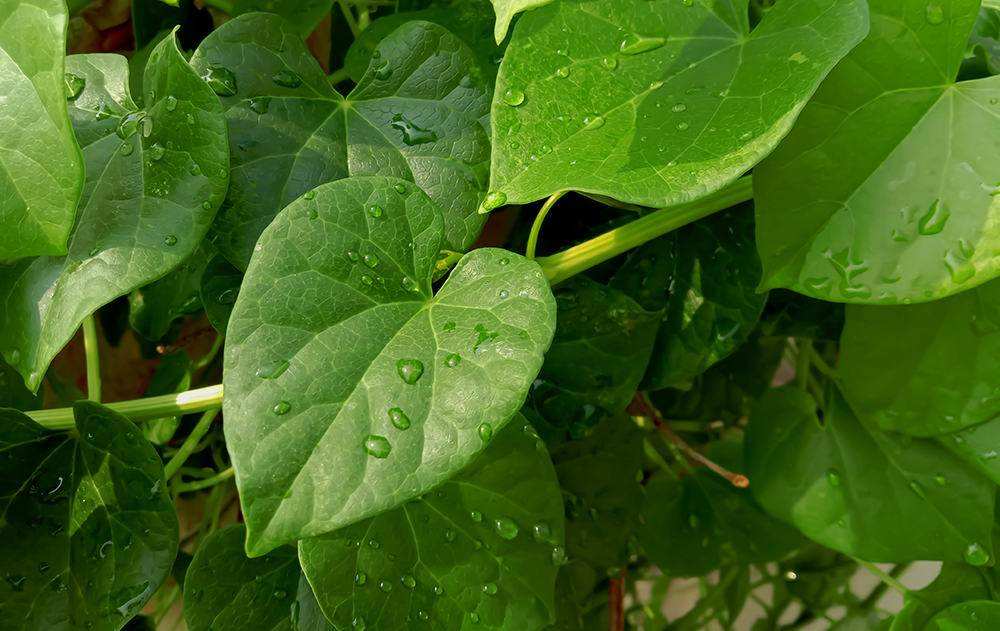
There's a plant in Ayurvedic tradition so deeply associated with immortality that its name, Guduchi, is sometimes translated as "the one who protects the body." That's a lot of weight for a weedy-looking vine you might walk past without a second glance. I've grown it scrambling up a dead mango tree in South Florida, and I'll admit that the first time I saw it, nothing about its appearance telegraphed "sacred." Heart-shaped leaves, succulent green stems with faint ridges, a few dangling aerial roots reaching for soil it hadn't found yet. It looked like something that had escaped from a garden and was making up its own rules. That, it turns out, is exactly what makes it worth understanding.
What stops most Western gardeners from taking Guduchi seriously is that it doesn't behave like a well-mannered herb. It's not a tidy rosette in a pot. It climbs, it sprawls, it roots where it touches, and it goes deciduous on you mid-winter without apology. But those same habits are precisely why it survived two thousand years of continuous human use across South Asia, why post-COVID demand nearly collapsed wild populations,[1] and why growing your own has quietly become an act of both self-sufficiency and conservation.
Origin and History of Guduchi (Tinospora cordifolia)
If you've spent any time exploring Ayurvedic herbalism, you've almost certainly encountered guduchi. Formally known as Tinospora cordifolia, it's a tropical deciduous liana in the Menispermaceae family, native across the warm lowlands and humid forests of South and Southeast Asia, from India and Sri Lanka through Bangladesh, Nepal, Myanmar, Thailand, and into parts of Africa.[2][3] What surprises most people is how vigorous it actually is. This isn't a delicate medicinal herb you coddle in a pot. Given the right support, a single plant can twine 20 meters upward and live for decades.[4][5] Think of it less like a garden herb and more like a woody, long-lived companion that will outlast most of the trees you plant with it.
Botanical Background and Physical Characteristics
In the wild, guduchi inhabits deciduous forest edges, riverbanks, hedgerows, and disturbed ground anywhere from sea level up to about 1,000 meters, occasionally pushing into Himalayan foothills at 1,500 meters.[5] It tolerates a broad soil palette (loamy, sandy, or clay) at pH 6.5 to 7.5, prefers 1,000 to 2,500 mm of annual rainfall, and does best in temperatures between 20 and 40°C.[4] It also forms mycorrhizal partnerships underground, which helps explain its resilience on poor forest soils.[6] The plant is dioecious, meaning male and female flowers grow on separate plants, so you'll want more than one if you're hoping for the bright orange-red drupes.[4] Stem cuttings are the preferred propagation route for faster establishment and consistent medicinal quality, though seeds will germinate in 15 to 30 days under warm, moist conditions.[7] Through the herbal trade and diaspora migration, it has also been introduced to parts of Africa, Australia, and the Americas.[5]
Visually, guduchi is distinctive once you know what to look for. The stems are succulent, longitudinally ridged, and greyish-brown, with dangling aerial roots that grab onto supports with impressive enthusiasm. I've grown it from cuttings for several seasons now, and watching those aerial roots find a branch within days of reaching it is one of those small garden satisfactions that never gets old. The leaves are broadly cordate, about 4 to 10 cm across, with that classic heart-shaped base and a neat acute tip.[4][2] To me they resemble a slightly thicker, tropical version of a hardy kiwi leaf, which gives gardeners from temperate zones an instant reference point. Flowers appear from March through June, small and greenish-yellow, followed by the drupes that ripen to a gorgeous reddish-orange.[8] The bark peels to reveal a yellowish interior, which is one of the most reliable field ID markers once you're hands-on with the plant.[9] Watch for look-alikes: Tinospora crispa and Tinospora sinensis are frequently confused with it, especially from vegetative samples alone.[10][9]
Traditional, Cultural, and Mythological Significance
Guduchi's documented medicinal use stretches back over two millennia. Both the Charaka Samhita and the Sushruta Samhita describe it as a premier rasayana herb, valued for balancing the three doshas, building ojas (vital energy), and treating fevers, diabetes, skin diseases, arthritis, and wounds.[11][12] In Hindu mythology, it's linked to Amrita, the nectar of immortality churned from the cosmic ocean, and carries deep associations with spiritual protection and purification.[11] Honestly, that mythology doesn't feel like a stretch when you watch this vine regenerate readily from a small cutting. It really does seem almost unkillable under the right conditions, which I suspect is part of why the Amrita association stuck.
Outside classical Ayurveda, tribal communities including the Santhal, Adivasi, and Tharu peoples across India and Nepal have long prepared stem decoctions, powders, and fresh juices for fever, malaria, digestive complaints, joint pain, and skin ailments, with the stem being the primary part used.[13][14] Parallel traditions exist in Unani medicine, where it's used for fever and rheumatism, and related species appear in Traditional Chinese Medicine records dating to the Tang Dynasty, though species boundaries there require careful attention.[15][16]
The recent surge in global demand, particularly the COVID-era boom in immunity supplements, has put serious pressure on wild populations. Overharvesting has become a genuine conservation concern, with wild stands declining as commercial collection outpaces natural regeneration.[17] I make a point of growing my own rather than purchasing wild-sourced material, both for quality control and because it feels like the responsible choice for anyone who values this plant's future. Growing it at home is genuinely not difficult, and the cuttings root readily enough to share with half the neighborhood.
Fun Facts and Conservation Notes
Beyond its medicinal legacy, guduchi pulls ecological weight in a food forest. It serves as a larval host for the Common Grass Yellow butterfly and contributes to broader forest biodiversity wherever it grows.[4][18] It won't win any records for sheer size, but as a reliable long-lived perennial it's the kind of plant that quietly earns its place over decades rather than dazzling you in year one.[17]
One caution I pass on to every gardener who asks me about sourcing: the risk of substitution with T. crispa or T. sinensis in the herbal trade is real, and the look-alike problem is compounded when suppliers are working from dried stems without flowers or fruit for comparison.[9] I learned this firsthand when a local nursery sold me what turned out to be a substitution. Now I always wait until I can confirm the distinctive heart-shaped leaves alongside the ripe orange drupes before using any new vine medicinally. Growing your own from verified cuttings is simply the most reliable way to know exactly what you have, and it puts you in a position to protect a genuinely remarkable plant for the long term.[19]
Guduchi Varieties and Sourcing
Morphological Variants and Regional Chemotypes
Here's the short answer for anyone searching frantically: there are no named cultivars of guduchi to choose from. Tinospora cordifolia is a single species with no formally described varieties, cultivars, or subspecies recognized in mainstream taxonomic databases.[20][21][22] No horticultural selections, no improved strains, no marketing names to chase.[22] Honestly, as someone who designs with unusual medicinals, I find that refreshing. The decision tree collapses to one thing: verified provenance.
That said, meaningful natural variation does exist. Regional literature describes informal morphological types, including a typical form with the characteristic cordate leaves and a var. latifolia with broader foliage, and across India populations shift into distinct ecotypes and chemotypes shaped by climate, soil, and rainfall.[22][23] The practical implication for herbalists: stems from arid regions tend to carry higher berberine levels and stronger antioxidant activity than material from wetter, cooler zones.[23] When I'm sourcing for medicinal preparations and want maximum bitterness and bioactive punch, I specifically look for material from drier, hotter growing regions. It's the kind of detail most online listings will never tell you, which is why supplier relationships matter more than product pages.
How to Source Guduchi in the United States
Finding Tinospora cordifolia as a live plant in the U.S. takes some legwork. It's grown in warmer states, primarily Florida, California, and Hawaii, for medicinal, ornamental, and research purposes, and it appears in botanical collections at institutions like Missouri Botanical Garden and Kew.[24][25] Mainstream nurseries almost never stock it; your real channels are specialty online vendors, exotic-plant retailers, and botanical suppliers.[24][26] My habit, whenever I'm tracking down an uncommon medicinal, is to contact local botanical gardens and permaculture nursery networks before I spend hours on search engines. Those connections almost always surface a lead faster.
When you do find material, it'll likely come as live plants, seeds, or cuttings. Stem cuttings are the most reliable form to request: they root in four to six weeks under moist, well-drained conditions[27][28] and they guarantee you're propagating the same chemotype as the parent plant. I've grown guduchi from cuttings in Central Florida designs and the vine responds quickly to consistent moisture once it roots, sometimes visibly extending in the same week. Plan for USDA zones 9 through 11; outside that range, containers are the practical option.[24][25] The species isn't on the Federal Noxious Weed List and isn't regulated under CITES, but live plants and seeds brought in from abroad may still need phytosanitary certificates and import permits, so check with USDA APHIS before ordering internationally.[29][30][31]
The adulteration issue is where I get serious. U.S. and imported material is commonly mislabeled, most often with Tinospora sinensis, a related species with a meaningfully different phytochemical profile and safety considerations.[32] I don't use guduchi from an unverified source. The difference between Tinospora cordifolia and Tinospora sinensis isn't visible to the naked eye in dried or powdered form, which is exactly why reputable suppliers rely on HPLC testing for berberine and arabinogalactan, plus DNA barcoding, for verification.[32] Ask for those results before you buy anything intended for medicinal use. On the sustainability side, expanding commercial cultivation in India is helping ease pressure on wild populations,[33][28] and U.S. growers who establish even a small, well-identified planting contribute something real to that picture.
How to Propagate and Plant Guduchi (Tinospora cordifolia)
Guduchi gives you two very different propagation paths, and choosing between them comes down to whether you want botanical curiosity or reliable medicine. I've tried both, and after a few humbling lessons I now reach for stem cuttings almost every time.
Understanding Guduchi Seeds: Morphology, Dormancy, and Why They Are Rarely Used
The seeds themselves are genuinely fascinating. Each one is a compressed, oblong structure measuring 5-8 mm long by 3-5 mm wide, with a hard, smooth, brown to dark brown crustaceous seed coat that shows faint striations under magnification.[34][35] And here is the genuinely cool part: Guduchi seeds are polyembryonic, carrying both a zygotic embryo and one or more nucellar embryos that are essentially genetic clones of the mother plant, a trait shared across the Menispermaceae family.[36] From a botany standpoint, that's worth pausing on. From a grower's standpoint, it barely matters.
The practical problem is that the zygotic embryo introduces genetic variability, and the offspring won't be true-to-type. That inconsistency shows up as variable growth habits, disease resistance, and, critically, medicinal alkaloid content.[37][38] If you're growing guduchi as a rasayana herb with specific bitterness and berberine levels in mind, that unpredictability is a real problem. Compounding it, the seeds are recalcitrant: they're sensitive to desiccation and lose viability fast. Fresh seed germinates at 70-90%, but let that seed dry in storage for three to six months and your germination rate can fall below 50%.[39] I learned this lesson the hard way one winter. I collected seed with the intention of sowing in spring and watched viability crater by the time I got around to it. Guduchi isn't a seed you can tuck into an envelope and forget, treating it like mango or avocado -- other tropical recalcitrants -- taught me to propagate vegetatively instead.
If you do want to try from seed, physical dormancy caused by that hard coat requires either mechanical scarification or a gibberellic acid soak; after treatment, fresh seeds germinate in 15-25 days at 25-30°C under moist conditions.[40][41] Viability of questionable seed can be confirmed with a tetrazolium chloride test -- viable embryos stain red after soaking in a 0.1-1% solution for two to four hours.[42][43] The seedlings, when they do emerge, look deceptively like tiny wild grape vines and grow noticeably more slowly than cutting-grown plants. For most home growers, it's more effort than it's worth.
Vegetative Propagation: Stem Cuttings, Air Layering, and Grafting
Stem cuttings are the backbone of tinospora cordifolia propagation for good reason: success rates run 80-95% in tropical climates, and every plant you produce is a genetic copy of the mother vine, which means consistent bitterness and medicinal compound levels you can actually rely on.[41][44] I now exclusively take semi-hardwood cuttings during the rainy season, and the rooting is so reliable it almost feels like cheating. For semi-hardwood material, aim for 15-20 cm sections with two to three nodes; softwood cuttings work too at 10-15 cm. Either way, a treatment of IBA at 1000-3000 ppm, a well-aerated rooting medium like perlite or a peat-perlite mix, and maintained temperatures of 25-35°C with 80-90% humidity will have roots established in three to six weeks.[45][46]
If you have access to an established vine with thick stems, air layering is a solid secondary option, achieving 70-90% success in eight to twelve weeks under high humidity conditions.[41] Grafting (cleft, whip, or bud) is less commonly used but achieves 60-80% with careful technique and proper cambial alignment.[47] Both are useful when you want more substantial starter material or are working from limited source stock. Tissue culture exists as a commercial option but is out of reach for home production. For temperate gardeners attempting to grow guduchi outside its natural range, expect success rates to drop to 60-80% and plan to propagate in a greenhouse with bottom heat, starting in late spring through summer.[41][46]
Soil, Site, and Light Requirements for Successful Establishment
Get the soil right first. Guduchi performs best in well-drained, fertile loamy or sandy-loam soils with a pH of 6.5-7.5, though it can tolerate a broader range from 5.5 to 8.0.[48][49][50] Outside that sweet spot, especially in waterlogged or compacted ground, you'll see chlorosis, stunted growth, root rot, and micronutrient lockout. I always test my soil before planting tropical climbers. I once dealt with iron chlorosis in a slightly alkaline raised bed by top-dressing with sulfur and compost, and the vine's vigor the following season made it clear the correction was worth the effort. The root system needs at least 30-45 cm of soil depth to anchor and establish well, so raised beds should be generously deep.[51][5] Biologically active soil with undisturbed fungal networks also gives this vine a mycorrhizal advantage that you lose when you sterilize or over-till.
For light, think tropical forest edge rather than open field. Guduchi naturally grows in understories and along forest margins where it gets dappled or filtered light, thriving with four to six hours of direct sun or under 50-70% shade.[52][53][54] Deep shade causes etiolation and washed-out leaves; full sun without adequate humidity can scorch the foliage. The permaculture design sweet spot is under the light canopy of a deciduous guild tree, which naturally replicates that forest-edge habitat while giving the vine something to climb.
Planting Techniques, Spacing, and Timeline to First Harvest
Guduchi is a vigorous twining climber capable of reaching 10-20 m once it finds a sturdy support, so plan accordingly from day one.[55][56][57] Space plants 1.5-2 m apart, with rows at least 2-2.5 m apart in more intensive plantings. I made the mistake early on of cramming young cuttings too close together and ended up with a tangled mass of vines that was almost impossible to harvest cleanly. I now space at a minimum of 2 m and train each leader to its own vertical wire from the start, which makes long-term management genuinely enjoyable rather than a wrestling match. The trellis or pandal you install should be sturdier than you think you need; once this vine is established and actively growing in warm weather, it moves fast. Planting during the monsoon or in spring, when humidity is high and temperatures are warm, gives rooted cuttings the best possible establishment conditions.
Germination and Maturity Timelines
Patience is part of growing this plant. Whether you start from cuttings or seed, Tinospora cordifolia typically takes two to three years to reach maturity for reliable stem harvest; grafted plants can be ready for an initial light harvest after one to two years, with yields increasing meaningfully after year three.[58][59] Vegetative plants consistently reach usable size faster than seedlings, which is one more reason to skip the seed route when you're growing for medicine. The primary harvest is stem material rather than fruit or leaves, so maturity here means woody, well-developed stems with that characteristic milky sap and pronounced bitterness that signals the alkaloid content you're after.
Guduchi Care Guide: Growing Tinospora cordifolia
Everything about caring for guduchi makes more sense once you stop thinking of it as a garden vine and start thinking of it as a tropical forest-edge liana that has been shaped by monsoons. Its leaf flush, flowering, and vigorous growth are all timed to rainfall and warmth. Its dormancy and leaf drop follow the dry season. If you work with that rhythm instead of against it, this tinospora plant rewards you with years of medicinal stems and very little fuss.
Sunlight Requirements for Guduchi
In its native habitat, guduchi climbs through tropical forest understories where light arrives in shifting patches, so the 4-6 hours of direct sun sweet spot isn't arbitrary: it mirrors exactly what the plant evolved to use.[60][61] I calibrate sites by thinking of it like passionfruit in a zone 9B landscape: it wants good morning light with some afternoon relief, not the flat-out exposure you'd give a bougainvillea. Push it past six hours of direct summer sun and you'll see it clearly: the tinospora cordifolia leaf yellows, margins scorch brown, then the plant drops leaves prematurely rather than waste energy on tissue it can't maintain.[61][62] If your only available spot is full sun, a 30-50% shade cloth through the hottest months will prevent photoinhibition and keep growth healthy.
Watering Needs and Soil Moisture Management
The single most important watering habit is simple: check the top 1-2 inches of soil and water only when they're dry.[63][64][25] In established tropical conditions that works out to roughly every 7-10 days; during hot dry spells in the first season, close that gap to every 4-5 days until the root system has settled in. Once established, guduchi is genuinely drought-tolerant and stretches happily to 10-14 days between waterings. Root rot is a real risk here, so never let it sit in soggy soil. Overwatering announces itself as yellowing on older leaves and a spongy, fungal smell at the soil surface; underwatering shows up as wilting with crispy curled margins and brittle stems.[64][65] A 2-4 inch organic mulch layer helps enormously, moderating both extremes and reducing how often you need to intervene.[66][25]
Soil, Nutrients, and Fertilization
Guduchi prefers well-drained loamy or sandy loam soils with generous organic matter and a pH between 6.0 and 8.0, with 6.5-7.5 being the sweet spot where nutrient availability peaks.[67][68][69] It's a light to moderate feeder, and in my experience, 10-15 kg of well-rotted compost or farmyard manure worked in at planting and refreshed annually is genuinely all most established vines need.[67][70][71] I stick to organics deliberately: I've seen excessive nitrogen produce lush, weak stems that yield lower berberine content, and that defeats the whole purpose of growing it as a medicinal plant.[72][73][74] Know what deficiency looks like: older leaves yellowing uniformly signals nitrogen shortage; purplish tinting on young growth points to phosphorus; and the marginal scorch I've watched creep around the edges of young tinospora cordifolia leaf tissue in late summer is almost always potassium, which a light compost side-dressing usually reverses within two weeks.[73][75][76] A baseline soil test before planting saves a lot of guesswork and protects the medicinal quality of what you eventually harvest.
Frost and Cold Tolerance
Guduchi is native to tropical and subtropical South and Southeast Asia, and it grows without complaint in USDA zones 9-11, with zones 10-12 being optimal.[69][25][77] Below 50°F (10°C) it starts to struggle, and anything below 28°F (-2°C) with prolonged exposure can kill unprotected plants outright.[78][79][80] I learned this the hard way with a young vine I'd planted out in zone 9B: one unexpected dip below 30°F turned the shoot tips black overnight, and the plant spent the next six weeks pushing recovery growth instead of establishing. Now I keep row cover or a small micro-greenhouse frame ready from November onward for any vine under two years old. Frost damage shows as wilting, blackening foliage, and shoot dieback; mature established plants often regrow from the root crown, but there's no reason to gamble with a medicinal vine you've waited three seasons to harvest.[78]
Heat and Drought Tolerance
Where cold is the enemy, heat is guduchi's comfort zone. Active growth peaks between 25-35°C (77-95°F) and the plant tolerates surges up to 45°C (113°F) through a suite of internal mechanisms including antioxidant enzymes, heat shock proteins, and osmolyte accumulation that keep cells functional under stress.[81][82][83] That resilience has limits when heat combines with drought: leaves will wilt, curl, and scorch, and the plant starts dropping foliage to reduce transpiration demand.[84][85][86] The mitigation package is straightforward and overlaps with sunlight and water management: keep that organic mulch layer consistent, provide afternoon shade during heat waves, maintain irrigation through dry spells, and site the vine where a neighboring tree or fence breaks the wind. These aren't heroic interventions; they're the same cultural practices that keep most tropical medicinals happy in a warm-climate food forest.
Pruning, Maintenance, and Seasonal Rhythm
Guduchi is a deciduous to semi-evergreen climber that can reach 20-30 feet, so sorting out its support structure early is non-negotiable.[5][84] I've seen what happens when you let a vigorous tropical climber do whatever it wants for two seasons: you end up with an impenetrable tangle that's nearly impossible to harvest cleanly. Sturdy trellises or fences spaced 6-8 feet apart, installed before planting, save enormous grief later. Light pruning in the dry season, when the plant naturally slows and sheds leaves, is the right moment to shape the canopy, remove crossing stems, and cut back density to promote the vigorous new growth that carries the medicinal value you're after.
That dry-season pause leads into the rhythm that ties the whole care year together. Guduchi flowers from March through June, peaks in April and May, fruits through the monsoon months into September, then sheds leaves as dry conditions settle in through February.[5][87][25] That first flush of new heart-shaped leaves after the rains return is the cue I use to time a light top-dressing of compost and any cleanup pruning I didn't finish in winter. The plant tells you when it's ready to grow again; all you have to do is watch for it and respond.
How to Harvest Guduchi (Tinospora cordifolia)
Guduchi isn't a once-a-season fruiting plant you pick clean and walk away from. It's a perennial vine you learn to read over years, harvesting incrementally while keeping the root crown and lower framework alive for the long haul. The fruits appear in the second year after establishment,[58] but stems are the primary medicinal target, and those need time to develop real potency.
Timing, Indicators, and Sustainable Techniques
Stems are ready to harvest when they've had 8 to 12 months of growth: dark brown to reddish-gray, woody, roughly 5 to 10 mm in diameter, and exuding a milky sap the instant you cut them.[88] I always describe this to people as the "pencil-thick" test: if the stem still feels like a soft green shoot, put the knife away and come back in a few months. When it feels genuinely woody and the cut end weeps that characteristic milky sap, you're there.
Two seasonal windows are commonly used in India. The main cultivated harvest runs March through June, before monsoon humidity complicates drying. The October-to-February window, after rains have ended, often yields higher concentrations of berberine and other bioactives.[89][90][91] If you're growing for medicinal use rather than just propagation material, the post-monsoon harvest is worth prioritizing when your climate allows it. Avoid July through September entirely; cutting during the rainy season invites fungal contamination during drying and processing.[92]
Leaves are a secondary but useful harvest, taken when they're fully expanded, vibrant green, and still flexible. Fruits shift from green to bright red and yield slightly to gentle pressure when ripe.[88] Cut stems at 1 to 2 meters height, always leaving the main root and lower structural framework untouched.[90] The vine regenerates vigorously from that intact base, which is the whole point.
I've kept the same mother plants going for several years now by treating each harvest as a partial removal rather than a clearcut. The rotational wisdom here is real: major harvests from the same plants or wild populations should allow 3 to 5 years of recovery between them.[93][94] For home growers with multiple established plants, rotating through them keeps the harvest consistent without exhausting any single vine. Wild populations have already been stressed by overcollection, and that reality should sit with anyone tempted to gather from non-cultivated sources.
Expected Yield and Distinct Bitter Flavor Profile
The taste of a freshly cut mature Guduchi stem is unmistakable once you've experienced it: intensely bitter, pungent, and astringent in a way that sits at the back of your throat for a good while afterward. That bitterness isn't incidental. It's driven by alkaloids including berberine and is considered the primary quality signal in Ayurvedic practice, reflecting the plant's heat-clearing and detoxifying actions.[95][96] If a stem tastes weak or bland, I'd question whether it's reached true maturity.
The bitterness gradient does vary. Stems and roots are the most acrid; fresh leaves are considerably milder and carry a faint sweetness by comparison. Plants grown in hotter, drier conditions develop stronger bitter notes than those from humid environments.[97][98][99] In my drier growing seasons I've noticed the harvested stems taste noticeably more acrid, which tells me the stress conditions are concentrating the compounds I'm actually after. Whether that's always a goal depends on your intended use, but it's a reliable pattern worth tracking in your own garden notes.
Guduchi Preparation and Uses
Edible Parts, Taste Profile, and Nutrition
The stems and leaves are the parts you want. Roots, flowers, fruits, and seeds are generally left alone, with the stem carrying the lion's share of traditional use.[100][101] I learned this firsthand the first time I chewed a small piece of fresh stem: the bitterness hit fast and hard, nothing like culinary herbs I was used to, fibrous and insistently tikta.[102][103] That bitterness isn't a flaw to overcome; in Ayurvedic tradition it's the signal that the rasayana action is present, the taste itself carrying tridoshic balancing and detoxifying intent.[104]
Nutritionally, the stems are modest on macronutrients but genuinely impressive on minerals and antioxidants. Fresh stems run about 2-5% protein and 10-20% carbohydrates, while leaves supply around 48-52 mg vitamin C and 15-20 mg iron per 100 g fresh weight.[105] The polyphenol and flavonoid load is where things get interesting: stems carry 50-200 mg GAE polyphenols per 100 g alongside rutin and quercetin, with DPPH antioxidant scavenging reaching up to 80-90%, and mineral levels including 200-500 mg calcium and 300-600 mg potassium per 100 g.[106][107] That profile supports its reputation as a rejuvenator, though I'd stop well short of calling it a superfood in the marketing sense.
Traditional Ayurvedic and Culinary Preparations
Because raw Guduchi is so aggressively bitter, almost every traditional preparation transforms it through heat, sweetening, or spice pairing. Boiling softens the bitterness into something rounder and more palatable; drying concentrates astringency; juicing yields a fresh, slightly sweet-bitter liquid suited to mixing.[98] Classic recipes combine it with ginger, cardamom, black pepper, cinnamon, jaggery, or honey to ease the palate, and it shows up in complex formulas like chyawanprash and herbal jams where other ingredients carry the flavor. Think of preparing a Guduchi kadha the same way you'd approach a strong ginger or turmeric tea: you're coaxing medicinal compounds into solution and then adjusting the result to something you'll actually drink twice a day. Along the Konkan coast, cooks fold it into a mustard-coconut soup with curry leaves where the fat and acid do the bitterness-tempering work.[108] Tribal communities have used stem preparations as bitter tonics and in wound and malaria treatments for centuries.[16] Guduchi is not a daily vegetable; it's a medicinal preparation that occasionally finds its way into food.
Medicinal Preparations and Dosage
The stem is the medicinal workhorse, prepared classically as kashaya (decoction), churna (powder), ghrita (medicated ghee), or concentrated into formulas like Guduchi Ghan Vati and Amritaarishta.[109] For dosage, the overlapping guidance from AYUSH, the WHO, and the Indian Pharmacopoeia lands in a fairly consistent range: 50-100 ml decoction twice daily, 3-6 g of guduchi powder per day, 2-4 ml tincture (1:5) two to three times daily, or 300-500 mg standardized extract twice daily.[110][109][111] I treat those as starting points, not prescriptions. Anyone adding a guduchi supplement or guduchi capsule to a therapeutic routine is best served by working with a practitioner who can calibrate dose to their specific constitution and any concurrent medications.
Safety, Side Effects, and Contraindications
Guduchi has a strong traditional safety record at normal doses, but there are real guardrails to respect. Known side effects include constipation, allergic skin reactions, digestive upset, and lowered blood sugar. Rare cases of hepatotoxicity have been tied to high doses or contaminated commercial products, which is one reason I label everything I harvest clearly and stick to material I've grown or personally verified. The herb is contraindicated in pregnancy because of insufficient safety data and possible abortifacient activity, and it isn't recommended during lactation or for children under 12 without medical supervision.
The drug interaction profile is the part I flag most often. Because Guduchi can meaningfully lower blood sugar, I tell anyone on diabetes medication to monitor their levels closely before using tinospora cordifolia therapeutically; the research and my own caution both support that step. It can also reduce the efficacy of immunosuppressants and interact with drugs metabolized by CYP3A4, so patients on chemotherapy or antiretrovirals need physician input first.
Non-Food Uses in Permaculture and Crafts
Even if you never brew a single decoction, Guduchi earns its place in a food forest. The stems and leaves are mineral-dense dynamic accumulators, pulling in calcium, potassium, and magnesium that return to the soil as chop-and-drop mulch.[27][107] After I started chopping stems back into the beds around my subtropical food forest, companion plants showed noticeably greener growth the following season. Fibrous stems can be twisted into cordage, bark yields natural dyes for crafts, and dried stems burn as fuel; trained over a fence or arbor, the vine is genuinely ornamental.[16]
I propagate my Guduchi from 6-8 inch semi-hardwood cuttings each spring under humid conditions and consistently see 80-90% rooting success,[112] which means new plants for new garden sites or sharing with other growers without touching wild populations. When I do harvest stems medicinally, I take no more than 50% of current-year growth from any one plant and rotate harvest sites to keep the vine vigorous.[113] Wild populations are already under commercial pressure, and growing your own is the most direct way to ensure what you're using is correctly identified, clean, and sustainably sourced.
Guduchi Health Benefits and Medicinal Uses
What draws me to guduchi as a medicinal plant isn't any single compound or clinical headline. It's the sheer density of what's going on chemically inside those succulent stems. Researchers have catalogued over 100 bioactive compounds from Tinospora cordifolia, spanning alkaloids like berberine, palmatine, choline, magnoflorine, and jatrorrhizine; flavonoids including rutin and quercetin; diterpenoids like tinosporic acid and tinosporone; glycosides, steroids, lignans, and polysaccharides.[114][115][116] That complexity matters because its benefits aren't driven by one superstar molecule working in isolation. They emerge from synergistic interactions across a whole chemistry set.
Key Bioactive Compounds in Guduchi
The alkaloids are the headline act, and berberine is the most studied among them. Alkaloids make up roughly 0.1 to 0.3% of dry weight overall, but berberine can reach up to 1.2% in methanolic stem extracts, with stems and roots carrying the highest concentrations compared to leaves.[117][118] The leaves bring a different value: leaf flavonoids like rutin and quercetin, along with phenolics such as tinosporin and syringin, provide the primary antioxidant activity, while the roots add polysaccharides including arabinogalactan alongside berberine and beta-sitosterol.[119][16] It's genuinely a part-specific pharmacy, which is why the distinction between stems, leaves, and roots matters in practice.
One thing I've learned from growing this vine in hot, humid summers is that potency is not fixed. Secondary metabolite concentrations peak during the monsoon season, and mature stems show 20 to 30% higher alkaloid content than young vines; geography and extraction method shift the numbers further still.[120][121] My own mature stems, harvested after the wet season, are noticeably more bitter than fresh spring growth. That bitterness is information. It tells me the plant has done the chemical work worth capturing.
Traditional Ayurvedic Uses and Modern Research
In Ayurveda, guduchi sits in the highest tier of medicinal plants: the rasayanas, herbs used long-term to build vitality, strengthen resistance to infection, and promote longevity.[122][123] Traditionally it treated intermittent fevers, including malaria, and was a primary remedy for diabetes (Madhumeha) and digestive issues. I find myself thinking of it as a plant that builds resilience quietly rather than acting dramatically, something I try to reflect in how I use decoctions during seasonal transitions when my body is adjusting to weather shifts.
Modern research has validated the immunomodulatory territory most thoroughly. Guduchi modulates the Th1/Th2 cytokine balance, increases macrophage phagocytic activity, stimulates natural killer cell function, and upregulates interferon-gamma and interleukin-2 production; clinical trials have shown increased neutrophil activity, higher antibody production, and measurable benefits in dengue fever patients.[124][125] Its antioxidant and anti-inflammatory mechanisms run deep: polyphenolic compounds scavenge reactive oxygen species, induce endogenous enzymes like superoxide dismutase and glutathione peroxidase, suppress NF-κB activation, and reduce pro-inflammatory cytokines including TNF-α, IL-1β, and IL-6, with clinical studies confirming decreased CRP and TNF-alpha markers.[126][127]
The anti-diabetic evidence is among the strongest in the clinical literature. Guduchi lowers blood glucose by enhancing insulin secretion, improving insulin sensitivity through PPAR-γ activation, and inhibiting α-glucosidase; human trials demonstrated significant reductions in fasting blood glucose and HbA1c over 8 to 12 weeks.[128][129][130] The plant also demonstrates hepatoprotective effects by boosting hepatic antioxidants and inhibiting lipid peroxidation, adaptogenic effects through HPA axis modulation and cortisol reduction, and early-stage antiviral, antibacterial, anticancer, and neuroprotective potential.[126][131][132] The Ayurvedic Pharmacopoeia recommends up to 12g per day in divided doses, while clinical studies more commonly use 500mg to 2g of extract daily, with stem preparations consistently showing comparable or superior efficacy for immune and anti-inflammatory effects.[133][110] A fair reading of the evidence also requires acknowledging its limits: most studies involve small sample sizes and variable preparations, and the research community is clear that larger, high-quality trials are still needed.[129][134]
Nutritional Profile of Guduchi
Guduchi is primarily a medicinal plant, not a daily vegetable, and its nutritional numbers need to be read in that context.[50] Dry leaf powder offers roughly 18 to 22g of protein per 100g alongside 10 to 15g of fiber, while fresh leaves run closer to 3 to 5g protein and 2 to 4g fiber; all values shift meaningfully with growing conditions and preparation method, so treat them as approximations rather than fixed facts.[135][136]
Where the nutritional story gets genuinely interesting is in the mineral density of stem powder. Dry stem powder reaches approximately 1240mg calcium, 1337mg potassium, 12.5mg iron, and 2.3mg zinc per 100g, alongside 60mg magnesium.[137][138] Fresh leaves contribute Vitamin C at 20 to 30mg per 100g and some beta-carotene.[50] The stems deliver the highest DPPH radical scavenging activity, and their alkaloid and polysaccharide content is what ties the nutritional profile back to the immunomodulatory and hepatoprotective effects already discussed.[50][139] Traditionally, the plant is consumed as a juice of fresh stems or as a water decoction, not as a cooked food. That's worth remembering when evaluating any nutritional claims you see marketed around guduchi powder products.
Safety Profile and Considerations
Guduchi has a strong safety record. Animal toxicity studies show an LD50 exceeding 2000mg/kg, and human trials using up to 3g per day for 8 weeks reported adverse events in fewer than 5% of participants, mostly mild gastrointestinal complaints like constipation or discomfort.[140][141] The WHO and Ayurvedic Pharmacopoeia of India both recognize its traditional use for fever and immune support at dosages of 2 to 5g stem powder or 300 to 500mg extract twice daily.[110][142]
That said, there are real contraindications worth knowing. Hypoglycemia is a genuine risk if guduchi is used alongside antidiabetic medications, and it may compound the effects of antihypertensives as well.[140][143] In vitro studies also show CYP3A4 inhibition, which matters for anyone on drugs metabolized through that pathway.[144] Pregnancy and breastfeeding are clear contraindications due to potential uterine stimulation and the absence of safety studies in those populations.[140][145] Its immune-stimulating properties also call for caution in autoimmune conditions; when something is pushing immune activity up, those with overactive immune responses need to weigh that carefully with their healthcare provider.[146] Due to its thrombolytic activity, it should be discontinued at least two weeks before surgery, and people on anticoagulants should discuss use with a physician first.[147]
One identification point I consider non-negotiable in the garden: know your species. The related Tinospora crispa, sometimes called Petawali, may cause hepatotoxicity and potential nephrotoxicity at high doses, a very different risk profile from T. cordifolia.[148][149] I always double-check by the leaf: cordifolia's heart-shaped leaves are distinctly broader and softer than crispa's narrower profile. Getting that identification right is as fundamental as any dosage guideline.
Guduchi Pests and Diseases
Natural Resistance Mechanisms
Guduchi is one of the more self-reliant vines I've grown in a medicinal garden. A lot of that toughness comes from its own chemistry: the same alkaloids, diterpenoids, berberine, and flavonoids that make it valuable as a rasayana herb also function as antimicrobial, antifungal, and anti-feedant agents within the plant itself.[150][151] Its thick, somewhat leathery leaves and glandular trichomes add a physical layer of defense that deters casual browsing by herbivores.[152] Most resistance data comes from cultivation observations and field performance rather than controlled inoculation trials,[153] but in my experience, a healthy, well-sited vine simply doesn't invite much trouble. Compared to more temperamental climbers like some of the Passiflora species I grow, guduchi feels almost indifferent to minor pest pressure.
Common Pests
The insects that do show up are a fairly predictable crew: aphids (particularly Aphis craccivora), mealybugs, stem borers, leafhoppers, caterpillars, spider mites, and seed bruchids.[154][155] Aphids are the ones worth monitoring most closely. They curl leaves, secrete honeydew, and set up the conditions for sooty mold to follow.[154][156] I had a rough aphid season on young vines during a particularly humid summer, and after that I started prioritizing morning sun exposure and wider spacing. The sooty mold essentially disappeared in subsequent seasons. Pest pressure tends to be higher in tropical Asian cultivation zones than in temperate or greenhouse settings in North America, where fungal issues become the bigger concern instead.[157]
Common Diseases and Environmental Triggers
The disease shortlist includes leaf spot (Cercospora spp.), powdery mildew, rust (Uredo tinisporae), downy mildew, and root rot caused by Phytophthora.[158] None of these are inherent weaknesses of the species; they're almost always environmental signals. Susceptibility spikes when humidity exceeds 70%, temperatures sit in the 25-35°C range, soil pH drops below 6.0, or drainage is poor.[159] Keep the vine in well-drained loamy soil at pH 6.5-7.5 with moderate airflow, and most of these pathogens rarely get a foothold. The conditions that cause disease are essentially the same conditions the care guide warns against for other reasons, so avoiding them isn't extra work.
Integrated Pest and Disease Management
Cultural prevention does the heavy lifting. Good drainage, full sun placement, trellising for airflow, proper spacing of 3-5 meters between plants, seasonal pruning, prompt removal of infected material, and basic sanitation keep the system stable.[160][161] When something does get through, I reach for biological tools first: ladybugs for aphid colonies, Bacillus thuringiensis for caterpillars, and neem cake worked into the soil to suppress nematodes.[162] For foliar problems, neem-based sprays provide roughly 70-80% deterrence against some lepidopteran pests and can reduce synthetic pesticide reliance by 40-50% in integrated systems.[163] I stick exclusively to organic tools on guduchi specifically because the stems go into Ayurvedic preparations; chemical residues would compromise exactly what makes the harvest worth taking. Synthetics, if ever warranted, should be a last resort and used well outside any harvest window.[164] One honest caveat: despite years of selecting vigorous clones, I have yet to find or source a truly pest-resistant variety. No commercially available cultivars bred for pest or disease resistance exist, since breeding programs have focused almost entirely on medicinal yield and potency.[165] For now, thoughtful siting is the best resistance trait you can give this vine.
Guduchi in Permaculture Design
Every design decision I make about guduchi starts from the same place: this is a liana, not a shrub. Until you genuinely internalize that, you'll keep planting it somewhere too small and spending the next season untangling it from things it was never meant to climb. Getting clear on its forest-layer identity first makes everything else easier.
Forest Layer and Guild Roles
Tinospora cordifolia is a deciduous twining climber that coils its flexible stems around whatever support it finds.[166][167] In cultivation it typically reaches 2.4 to 10 meters; in wild forest populations it can push to 20 meters, beginning life as a sprawling herb at the forest edge before threading its way into the understory and lower canopy.[168] Think of it the way you'd think about hardy kiwi or passionfruit in a temperate food forest: it occupies the vertical layer, stitching the shrub layer to the canopy rather than filling horizontal ground space. Its broad, cordate leaves are built for catching light in shaded understories, and the adventitious roots that emerge along the stem help it grip supports while pulling in nutrients along the way.[166][169]
Those succulent, water-storing stem bases give it a meaningful buffer during dry spells, which I've watched play out in my own zone 9B garden during the gaps between Florida's summer rains.[170] What it doesn't tolerate is being left without a sturdy host. In my early plantings I underestimated how quickly it could weigh down smaller shrubs; now I route it straight onto the sunny edge of a tall canopy tree from the start, where its broad leaves intercept light without smothering the herbs and groundcovers working below. Evidence for specific mycorrhizal partnerships is thin, so I treat its soil relationships the way I treat most climbing lianas: build good organic matter, maintain steady moisture, and let the plant's own root dynamics do the rest.[171] Placed well, it functions as both a structural element knitting vertical layers together and a potential dynamic accumulator cycling minerals from depth back into the surface mulch as its leaves drop each dry season.
Climate, Zones, and Site Selection
Guduchi is reliably hardy in USDA zones 9 through 11, with the strongest performance in zones 10 and 11 and in genuinely tropical climates like southern Florida, Hawaii, coastal Southern California, and South Texas.[172][78][173] In zone 9 it needs protection; cold stress symptoms below 10°C look a lot like what you'd see on a bougainvillea or star jasmine pushed past its limit: marginal leaf scorch, dieback on the newest growth, and a general sulking that can take several warm weeks to reverse.[174][79] Below freezing it can die back to the roots, so zone 9 growers should site it against a south-facing wall or inside the warm envelope of a dense guild.
Optimal growth happens between 25 and 35°C, with a broader tolerance range of roughly 10 to 45°C at the extremes.[175] Rainfall between 1,000 and 2,000 mm annually in a warm, humid microclimate suits it best, though it will cope with considerably more or less if drainage is solid.[176][177] In my experience with tropical climbers generally, consistent moisture and good drainage matter more than hitting a specific soil type; I've grown it in loamy sand that would disappoint a textbook and it performed fine once I quit letting it sit in a puddle after heavy rain. The related Petawali (Tinospora crispa) skews even more toward the tropics, suited to zones 10 through 12 with a minimum threshold around 30 to 50°F, which is a useful comparison point if you're deciding which Tinospora species matches your site.[178][179]
Ecosystem Functions and Pollination Services
A climbing liana that connects the shrub layer to the lower canopy doesn't just fill vertical space; it creates it. Guduchi's twining stems establish habitat bridges that support epiphytes, fungi, small invertebrates, and the microclimates that make a food forest feel genuinely layered rather than just stacked.[180][181] Its root system aids soil stabilization along edges and banks, which makes it a logical choice for a guild planted where erosion is a concern.
The flowers, small greenish-yellow racemes that open from March through June, attract a solid range of generalist pollinators: small halictid bees, honeybees, flies, butterflies, and possibly beetles.[182][183] It also serves as a larval host for the Common Grass Yellow butterfly (Eurema hecabe), which is a genuinely lovely thing to discover when you're standing next to a plant you grew for its stems.[182] The red fruits that follow are consumed by bulbuls, mynas, and similar birds, extending its ecosystem role well into the fruiting season.[184]
Here's the planning detail that catches people off guard: guduchi is dioecious, meaning you need both a male and a female plant to get fruit.[185] After growing both sexes I learned to mark them clearly at planting because the flowers look nearly identical until you're specifically looking for the difference. For a permaculture guild, plan for at least one of each, sited near companion plants that pull in pollinators during the March-through-June window. Optimal pollination happens between 25 and 35°C with 60 to 80 percent humidity.[186] In smaller gardens or more isolated sites where pollinators are scarce, manual pollination with a fine brush is a reliable backup, and it's the kind of simple intervention that makes the difference between a vine that produces nothing and one that feeds birds all autumn.[187] Pair it with flowering companions that bloom in that same window and you've built a guild that earns its square footage across multiple layers of ecosystem function at once.
The Vine That Changed How I Think About Bitter
I used to pull away from intensely bitter plants, honestly. Then I made my first guduchi kadha, sat with the discomfort of it, and something shifted. Not just in how I understood this vine, but in how I understood the whole idea that medicine isn't supposed to be easy. It's been climbing my neem tree for four years now, and every time I harvest a stem I think about the forests in India where wild populations are disappearing because demand outpaced patience. That thought keeps me growing it.
Sources 187
- Tinospora cordifolia: Ethnopharmacology and Conservation Concerns ↩
- Royal Botanic Gardens, Kew - Plants of the World Online - Tinospora cordifolia ↩
- Ayurvedic Pharmacopoeia of India (API) - Vol. 4 - Tinospora cordifolia ↩
- Tinospora cordifolia - Wikipedia ↩
- Tinospora cordifolia (Giloy) - Plant Profile - Useful Tropical Plants Database ↩
- Mycorrhizal Associations in Tinospora cordifolia - Mycorrhiza Journal ↩
- Cultivation of Guduchi (Tinospora cordifolia) ↩
- Botanical Description of Tinospora cordifolia - NCBI Bookshelf ↩
- Misidentification of Ayurvedic Herbal Drugs: Tinospora cordifolia ↩
- Tinospora cordifolia (Willd.) Miers ex Hook.f. & Thomson ↩
- Tinospora cordifolia: A multipurpose miracle medicinal herb ↩
- Ayurvedic Pharmacopoeia of India, Volume I ↩
- Ethnobotanical Survey of Medicinal Plants Used by Tribal Communities in Odisha, India ↩
- Indigenous Uses of Tinospora cordifolia in Nepal's Terai Region ↩
- Unani Medicine and Herbal Traditions in India ↩
- Ethnobotanical Survey of Tinospora cordifolia in Southeast Asia ↩
- Conservation of Tinospora cordifolia - IUCN Insights ↩
- Guduchi (Tinospora cordifolia) - Kew ↩
- Plants of the World Online: Tinospora cordifolia ↩
- Tinospora cordifolia (Willd.) Miers ex Hook.f. & Thomson ↩
- The genus Tinospora: A review ↩
- Tinospora cordifolia (Willd.) Miers: An Updated Review on Phytochemistry and Pharmacological Aspects ↩
- Variability in Chemical Constituents of Tinospora cordifolia from Different Regions of India ↩
- Tinospora cordifolia ↩
- Guduchi - Tinospora cordifolia ↩
- Tinospora cordifolia (Giloy) ↩
- Propagation of Tinospora cordifolia: Methods and Techniques ↩
- Commercial Cultivation Guide for Guduchi ↩
- Plants for Planting Manual ↩
- Federal Noxious Weed List ↩
- CITES Species + ↩
- Adulteration in Herbal Supplements: Tinospora Case Study ↩
- Sustainability in Ayurvedic Herb Cultivation ↩
- Flora of India - Tinospora cordifolia ↩
- Tinospora cordifolia (Willd.) Miers ↩
- Plants of the World Online ↩
- Propagation Techniques of Tinospora cordifolia: A Review ↩
- Genetic Variability in Tinospora cordifolia Using RAPD Markers ↩
- Seed Storage of Tinospora cordifolia: Implications for Conservation ↩
- Dormancy and Germination in Tinospora cordifolia Seeds ↩
- Propagation Techniques of Medicinal Plants: Tinospora cordifolia ↩
- Seed Viability Testing with Tetrazolium Chloride in Tinospora cordifolia ↩
- X-Ray Analysis for Seed Viability Assessment in Tropical Species ↩
- Vegetative Propagation of Tinospora cordifolia by Stem Cuttings ↩
- Propagation of Tinospora cordifolia by Stem Cuttings ↩
- Guduchi (Tinospora cordifolia) Cultivation and Propagation Guide ↩
- Vegetative Propagation of Tinospora cordifolia: Grafting Techniques and Success Rates ↩
- Tinospora cordifolia: A Review on Phytochemistry and Pharmacological Aspects ↩
- Effects of Soil pH on Medicinal Plants ↩
- Tinospora cordifolia Cultivation Guide ↩
- Cultivation and Propagation of Tinospora cordifolia ↩
- Flora of China: Tinospora ↩
- Guduchi (Tinospora cordifolia) ↩
- Horticultural Requirements and Stress Responses of Guduchi (Tinospora cordifolia) ↩
- Cultivation of Giloy (Tinospora cordifolia) ↩
- Cultivation Practices of Tinospora cordifolia ↩
- Tinospora cordifolia (Giloy): Morphology and Distribution ↩
- Cultivation of Guduchi (Tinospora cordifolia) ↩
- Propagation and Cultivation of Tinospora cordifolia ↩
- Tinospora cordifolia - Royal Horticultural Society ↩
- Photoinhibition and Leaf Damage in Tinospora cordifolia under High Light Stress ↩
- Physiological Effects of Light Intensity on Medicinal Plants: Case of Tinospora cordifolia ↩
- Cultivation of Guduchi (Tinospora cordifolia) ↩
- Tinospora cordifolia - Plant Care Guide by Missouri Botanical Garden ↩
- Cultivation Requirements of Tinospora cordifolia in Tropical Agroecosystems ↩
- Soil and Water Requirements for Medicinal Plants ↩
- Cultivation of Tinospora cordifolia ↩
- ICAR - Cultivation Practices for Tinospora cordifolia ↩
- Missouri Botanical Garden - Tinospora cordifolia ↩
- Agronomic Practices for Tinospora cordifolia ↩
- Organic Farming Guidelines for Giloy ↩
- Symptoms of Over-Fertilization in Tropical Climbers ↩
- Cultivation and Nutrient Management of Tinospora cordifolia ↩
- Fertilization Studies on Giloy (Tinospora cordifolia) ↩
- Nutrient Management in Medicinal Plants: Tinospora cordifolia ↩
- Potassium Nutrition and Disease Resistance in Tinospora cordifolia ↩
- Guduchi (Tinospora cordifolia) ↩
- Frost Damage in Tropical Plants ↩
- Tropical Vines: Hardiness and Care ↩
- Protecting Tropical Plants from Frost ↩
- Tinospora cordifolia: Uses, Cultivation, and Hardiness ↩
- Heat Stress Responses in Tinospora cordifolia: Antioxidant and Molecular Mechanisms ↩
- Role of Heat Shock Proteins in Medicinal Plants under Abiotic Stress ↩
- Cultivation Practices of Giloy (Tinospora cordifolia) ↩
- Giloy Farming Guide: Irrigation and Shade Management ↩
- Physiological Responses of Tinospora cordifolia to Abiotic Stresses ↩
- Phenology of Tinospora cordifolia in Indian Subcontinent - Journal of Medicinal Plants Studies ↩
- Cultivation of Tinospora Cordifolia among Tribal Communities of Central India (2012) ↩
- Cultivation and Utilization of Tinospora cordifolia ↩
- Guduchi (Tinospora cordifolia): Harvesting and Processing ↩
- Flora of India - Species Account ↩
- Ayurvedic Medicinal Plants: Tinospora cordifolia ↩
- University of Calcutta - Sustainable Harvesting of Medicinal Plants ↩
- Missouri Botanical Garden - Tinospora cordifolia Profile ↩
- Phytochemistry and Pharmacological Aspects of Tinospora cordifolia: A Review ↩
- WHO Monograph: Ayurvedic Medicinal Plants ↩
- Missouri Botanical Garden – Tinospora cordifolia Profile ↩
- Ayurvedic Pharmacopoeia of India – Giloy (Tinospora cordifolia) monograph ↩
- USDA PLANTS Database – Tinospora cordifolia Distribution ↩
- Medicinal Plants of India ↩
- Ethnobotanical Observations on Tinospora cordifolia ↩
- Tinospora cordifolia (Giloy): A Review of Its Phytochemistry, Pharmacology and Clinical Applications ↩
- Charaka Samhita: Classical Ayurvedic Text on Guduchi Properties ↩
- Guduchi (Tinospora cordifolia): A Review on Ayurvedic Perspective and Clinical Evidences ↩
- Nutritional and Phytochemical Analysis of Tinospora cordifolia ↩
- Phytochemical Composition of Tinospora cordifolia Leaves and Stems ↩
- Mineral Content Analysis of Guduchi (Tinospora cordifolia) ↩
- Choudhary & Sharma – Traditional Guduchi recipes in Uttar Pradesh, J. Indian Tradit. Knowl., 2021 ↩
- The Ayurvedic Pharmacopoeia of India ↩
- WHO Monographs on Selected Medicinal Plants ↩
- Indian Pharmacopoeia 2022 ↩
- Propagation Methods for Tinospora cordifolia ↩
- Sustainable Harvesting of Medicinal Plants: Tinospora cordifolia ↩
- Chemical constituents of Tinospora cordifolia: A comprehensive review ↩
- Phytochemical and pharmacological profile of Tinospora cordifolia: A review ↩
- Chemical Constituents and Biological Activities of Tinospora cordifolia ↩
- Chemical Constituents and Biological Activities of Tinospora cordifolia - Phytochemistry Reviews ↩
- Chemical Constituents of Tinospora cordifolia - IJPSR ↩
- Secondary Metabolites from Tinospora cordifolia - Natural Product Communications ↩
- Seasonal Variation in Phytochemicals of Tinospora cordifolia - Journal of Ethnopharmacology ↩
- Optimization of Extraction Methods for Tinospora cordifolia - Industrial Crops and Products ↩
- Tinospora cordifolia (Giloy) - Traditional Uses and Pharmacological Activities ↩
- Giloy (Tinospora cordifolia) in Ayurveda ↩
- Pharmacological Review on Tinospora cordifolia: A Potential Candidate for the Treatment of Various Diseases ↩
- Tinospora cordifolia as an adjunct in the treatment of dengue fever: A randomized trial ↩
- Antioxidant and Hepatoprotective Activities of Tinospora cordifolia ↩
- Anti-inflammatory activity of cordifolioside A from Tinospora cordifolia ↩
- Anti-diabetic and Anti-inflammatory Properties of Guduchi (Tinospora cordifolia) ↩
- Efficacy of Tinospora cordifolia in management of type 2 diabetes mellitus: A systematic review ↩
- Anti-Diabetic Clinical Trial of Tinospora cordifolia ↩
- Neuroprotective and Adaptogenic Effects of Tinospora cordifolia ↩
- Anticancer Potential of Tinospora cordifolia: Mechanisms and Evidence ↩
- Immunomodulatory Activity of Aqueous Extract of Tinospora cordifolia Stem ↩
- Pharmacological Activities of Tinospora cordifolia - A Review ↩
- Nutritional and Phytochemical Analysis of Tinospora cordifolia Leaves ↩
- Proximate Composition of Giloy (Tinospora cordifolia) Stem and Leaf ↩
- Nutritional Composition of Tinospora cordifolia ↩
- Phytochemical and Mineral Profile of Tinospora cordifolia ↩
- Antioxidant Activity of Tinospora cordifolia ↩
- Tinospora cordifolia: A Review on Its Phytochemistry, Pharmacology and Toxicology ↩
- Safety and Efficacy of Tinospora cordifolia in Immunomodulation ↩
- Ayurvedic Pharmacopoeia of India: Tinospora cordifolia ↩
- Drug Interactions with Herbal Medicines ↩
- In vitro inhibition of human CYP3A4 by extracts of Tinospora cordifolia ↩
- Safety of Herbal Medicines in Pregnancy ↩
- Tinospora cordifolia: A Phytopharmacological Review ↩
- Drug Interaction Potential of Tinospora cordifolia: A Review - RJPT ↩
- Hepatotoxicity Associated with the Use of Herbal Product Containing Tinospora crispa ↩
- Chemical Constituents and Nephrotoxicity of Tinospora Species ↩
- Phytochemical and Antimicrobial Properties of Tinospora cordifolia ↩
- Tinospora cordifolia (Giloy): Botany, Phytochemistry, Ethnopharmacology and Contemporary Applications ↩
- Plant Defenses Against Herbivores: Chemical and Physical Strategies ↩
- Kew Royal Botanic Gardens Plant Profile ↩
- Pest Management in Guduchi Cultivation ↩
- Pests of Tinospora cordifolia ↩
- Insect Pests of Heart-leaved Moonseed in Hawaii ↩
- Invasive Plant Profile: Tinospora cordifolia in Florida ↩
- Diseases of Tinospora cordifolia: A Review ↩
- Environmental Factors Affecting Guduchi (Tinospora cordifolia) Health ↩
- Cultivation of Guduchi (Tinospora cordifolia) ↩
- ICAR Guidelines for Tinospora Cultivation ↩
- Integrated Pest Management for Ornamental Vines including Moonseed ↩
- Insecticidal Properties of Tinospora cordifolia: A Review ↩
- Insect Pest Management in Medicinal Plants: Focus on Guduchi ↩
- Genetic Diversity and Breeding in Tinospora cordifolia ↩
- Tinospora cordifolia ↩
- Tinospora cordifolia ↩
- Tinospora cordifolia (Giloy) ↩
- Tinospora cordifolia - Plants of the World Online ↩
- Tinospora cordifolia - Missouri Botanical Garden ↩
- Missouri Botanical Garden Plant Finder - Tinospora cordifolia ↩
- Tinospora cordifolia Plant Profile ↩
- Tinospora cordifolia ↩
- Tinospora cordifolia: A Review on Phytochemistry and Pharmacological Aspects ↩
- Cultivation Practices of Guduchi (Tinospora cordifolia) ↩
- Tinospora cordifolia (Guduchi) ↩
- Giloy (Tinospora cordifolia) - Cultivation and Uses ↩
- Tropical Vines Hardiness Zones - University of Florida IFAS Extension ↩
- Tinospora crispa Plant Profile - Missouri Botanical Garden ↩
- Ecological Interactions of Tinospora cordifolia in Tropical Forests ↩
- Role of Lianas in Indian Forest Biodiversity ↩
- Insect Pollinators in Menispermaceae ↩
- Insect Pollinators of Medicinal Plants in India ↩
- Seed Dispersal by Birds in Tinospora cordifolia ↩
- Reproductive Biology of Tinospora cordifolia ↩
- Pollination Biology of Tinospora cordifolia (Willd.) Miers ↩
- Impact of Habitat Fragmentation on Plant-Pollinator Interactions in India ↩
About the Author
Samiksha is a Certified Permaculture Designer and Teacher. Raised on a regenerative farm, she has over 20 years of experience learning and growing with local and indigenous communities.