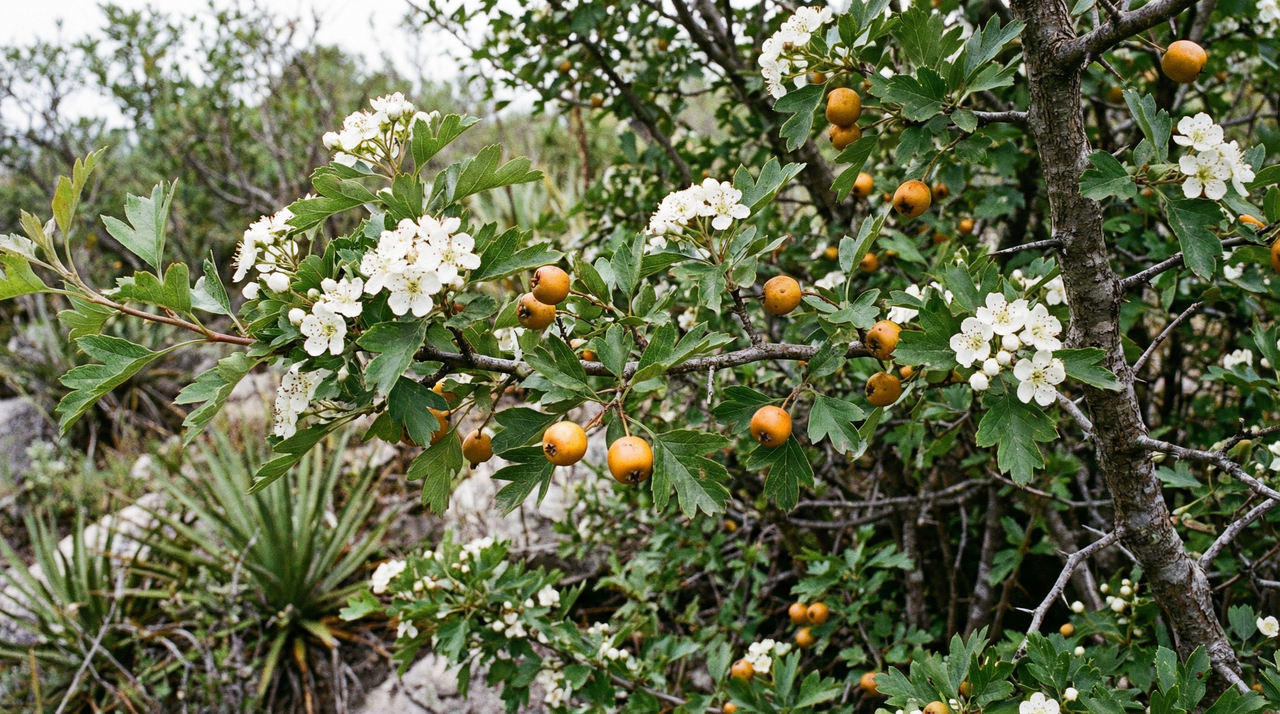
Nobody warns you about the smell. I planted my first Chinese hawthorn along a north-facing slope about fifteen years ago, tucked it into a guild between a persimmon and some comfrey, and mostly forgot about it until May, when the whole tree erupted in white blossoms that smelled, honestly, a little like rotting fish. Hawthorn flowers are pollinated by flies and beetles, not bees, and the scent is part of the deal.[1] That first spring I nearly pulled the thing out. I didn't, and I'm so glad, because by October that tree was laden with bright red fruit the size of small crabapples, and I've been obsessed with this genus ever since.
Here's what gets me about hawthorn: it's been feeding and healing people on opposite sides of the planet for thousands of years, through completely independent traditions, and every one of those traditions landed on the same conclusions. Chinese physicians were prescribing the dried fruit for sluggish digestion and heart complaints long before anyone had the word "flavonoid." Indigenous communities across North America were harvesting their native species for the same reasons. That kind of convergence doesn't happen with a plant that isn't actually doing something. Most Western gardeners still treat Crataegus as a hedge plant, a thorny nuisance to keep livestock in, rather than one of the most productive small trees they could put in a food forest.
Hawthorn Origin, History, and Cultural Significance
Botanical Background and Native Range
Chinese hawthorn (Crataegus pinnatifida) is native to northern and central China, ranging across provinces like Hebei, Shandong, Shanxi, Henan, Shaanxi, and Gansu.[2][3] It's a plant of edges and transitions, growing along roadsides, riverbanks, and hillsides in mixed oak-pine forest, where cold winters and warm summers define the rhythm of its life. In the garden, that temperate origin tells you a lot: this tree wants seasons. It needs dormancy. It's not trying to grow year-round, and that's part of what makes it such a long-lived, reliable producer.
As a deciduous small tree or large shrub in the Rosaceae family, Chinese hawthorn typically reaches 4 to 8 meters tall with a similar spread, growing at a moderate 12 to 24 inches per year and living 20 to 50-plus years with reasonable care.[4][5] It's polycarpic, meaning it flowers and fruits repeatedly across its entire lifespan rather than burning out after a single reproductive effort.[6] In my work with clients, that long productive window makes it one of the more satisfying food forest commitments you can make. Plant it right once and it feeds you for decades.
The Crataegus genus as a whole is notoriously taxonomically tangled, partly because many species reproduce through apomixis, producing seeds without fertilization and locking in local variations.[7] That complexity has produced remarkable adaptability across the genus. Mayhaw (C. aestivalis) is native to the wetlands of the southeastern U.S., thriving in zones 6 to 9.[8] Mexican hawthorn (C. mexicana, tejocote) grows in montane forests from 1,000 to 3,000 meters across Mexico and Central America.[9] Russian hawthorn (C. ambigua) pushes cold hardiness into zone 4.[10] Somewhere in that range, there's a hawthorn for almost every temperate and subtropical site.
Visual Characteristics of Hawthorn
The feature that gives C. pinnatifida its scientific name is also the one I find most useful for identification: those deeply cut, pinnatifid leaves. They're ovate to elliptic, 2 to 6 cm long, with 3 to 7 pointed lobes and serrated margins that give the whole canopy a lacier look than most other hawthorns.[11][4] Having grown several Crataegus species side by side, I can say that lobing pattern is genuinely useful when you're trying to distinguish Chinese hawthorn from southeastern natives while foraging or labeling a food forest planting. The stout reddish-brown thorns, ranging from 1 to 5 cm, are another unmistakable marker, and they're not decorative. They mean business.[12]
In late spring, flat-topped clusters of small white flowers appear, mildly fragrant, hermaphroditic, and attractive to a wide range of pollinators over a 2 to 4 week window.[4][13] By autumn those flowers have become bright red pomes that persist on the branches well into the season. Other hawthorns offer their own seasonal highlights: Russian hawthorn delivers vibrant red-purple fall color with strong urban tolerance, while Fireberry hawthorn (C. evansiana) forms suckering thickets and holds its fruit through winter for wildlife.[14][15]
One thing I learned the hard way: Chinese hawthorn develops a strong taproot with fibrous laterals, and it really does not like being moved once it's settled in.[11] I disturbed the roots on a young tree during a bed redesign early in my career and watched it sulk for two full seasons before recovering. Site it thoughtfully from the start.
Traditional and Cultural Uses Across Cultures
Chinese hawthorn has been woven into medicine and food culture for over 2,000 years, with its first recorded uses appearing in the Shennong Bencao Jing from the 1st to 2nd century AD.[16][17] Known as shānzhā in Chinese (and as Sansa in Korean and Japanese Kampo traditions), the fruit has long been prescribed in TCM to aid digestion, treat a broad spectrum of gastrointestinal and cardiovascular complaints.[18] On the street food side, it's the foundation of tánghúlu, those glossy candied hawthorn skewers sold at festivals that carry a kind of cultural nostalgia I find genuinely moving. There's something powerful about a plant that made it into both the medicine cabinet and the street vendor's cart over the same two millennia.
What strikes me about hawthorn's history is how independently different cultures arrived at similar conclusions. Aztec peoples used tejocote for heart conditions and digestion and incorporated it into Day of the Dead offerings.[19] Cherokee and Choctaw communities in the American Southeast used Mayhaw for fever, digestion, and nutrition.[8] Russian hawthorn appears in Slavic folk medicine for heart and anxiety complaints, and like Chinese hawthorn, it carried protective folklore associations.[20] A thorny, resilient plant that guards boundaries and heals the heart seems to inspire the same cultural roles wherever it grows. I don't think that's a coincidence.
Modern research has validated much of this through the fruit's flavonoids and triterpenoids, which show hypolipidemic, antihypertensive, and anti-inflammatory effects.[21] That validation comes with a conservation footnote worth taking seriously: demand for medicinal and food use has driven 30 to 50 percent population declines in some wild northern Chinese hawthorn stands, and cultivated sources now supply more than 80 percent of the market.[22] For home growers and permaculturists, that's actually an opportunity. Growing named grafted varieties from reputable nurseries isn't just a practical choice for fruit quality; it's a small act of pressure relief on wild populations that still need protecting.
Hawthorn Varieties and Where to Source Them
One thing I've learned after designing with multiple hawthorn species is that cultivar choice is really a climate-and-purpose decision. There's no universal "best" hawthorn any more than there's a universal best apple. The genus is enormous, the breeding history ranges from ancient Chinese orchards to near-zero commercial selection depending on species, and what thrives in a humid Florida food forest will be wrong for a cold-hardiness hedge in the Midwest. So let me walk through the most useful selections by species, then get practical about where to actually find them.
Botanical Varieties and Notable Cultivars of Chinese Hawthorn
Crataegus pinnatifida splits into two recognized botanical varieties: var. pinnatifida, the typical wild form with smaller fruits, and var. major, the one breeders and orchardists have mostly worked with, producing fruits up to 2-3 cm across.[23] That size difference matters in a kitchen garden context because the larger-fruited selections yield meaningfully more usable flesh per harvest, especially when you're processing for preserves or drying.
The cultivar list from Chinese breeding programs is long and still expanding. For home-scale edible landscapes, a few selections rise to the top. 'Dawuzu' and 'Dacheng' are the large-fruited workhorses. 'Big Golden Star' produces yellowish fruits that look unusual on a hawthorn tree and consistently surprise visitors. 'Xiaomihah' runs smaller but compensates with noticeably higher sugar content, making it worth considering if you're eating fresh rather than processing. 'Shan Lihong' is a solid red-fruited selection, and 'Ohio Pioneer' represents one of the few cultivars developed with North American conditions in mind.[24][25][4] In my experience, named cultivars like 'Big Golden Star' reliably outperform generic seedlings in fruit size and flavor, especially in climates with summer humidity. The extra specificity is worth it.
Cultivars and Forms Across Related Hawthorn Species
Mayhaw (Crataegus aestivalis) is where Southeastern U.S. breeding has concentrated its hawthorn energy, and the goals have been yield, jelly quality, and disease resistance rather than fruit size alone.[26] 'Big Red' delivers large fruit and high yield; 'Super Spur' grows more compactly with a spur-type habit that makes pruning genuinely easier; 'Texas Star' is the selection for warmer zones where the species pushes its southern limits.[27] Mayhaw inhabits zones 6a-9b and is at home in floodplains and wet sites where most other hawthorns would struggle.[28][29]
Mexican hawthorn or tejocote (Crataegus mexicana) has been selected in two directions: culinary types like 'Tejocote Rojo' with red, juicy fruits suited to ponche and candying, and drought-tolerant regional selections like 'Baja California' that hold up in drier conditions.[30][31] It's a zones 7-10 plant with genuine ornamental value and strong ties to traditional Mexican cooking.
Russian hawthorn (Crataegus ambigua) brings something different to the table: cold hardiness and serious thorning. The selection 'Ellwanger' stays dense and compact at 8-10 feet, which makes it one of my go-to recommendations for thorny guild edges and living fences where you want real deterrence. 'Monumental' grows much larger with a vase-like form and persistent reddish-brown bark that reads as genuinely ornamental.[32][33] It's a different use case than the large-fruited Chinese types reserved for food-forest understory layers.
Fireberry hawthorn (Crataegus evansiana) is the odd one out. It has no named horticultural cultivars worth speaking of, largely because commercial breeding has never touched it.[34] Native to the Ozarks of Missouri and Arkansas, it carries a vulnerable to imperiled conservation status in both states due to habitat loss.[35][36] I treat it the way I treat other under-commercialized natives I've used in wildlife guilds: valuable for ecological function, sourced from responsible specialists, and appreciated in its wild-type form rather than selected for any particular trait.
Sourcing Plants, Seeds, Regulations, and Pricing
I've ordered Chinese hawthorn from One Green World (Oregon) and Nature Hills Nursery, and seeds from Sheffield's Seed Company when I wanted to experiment with stratification.[37][38][39] Despite China producing over 300,000 tons of Chinese hawthorn annually, it's still a specialty item in U.S. nurseries, so options are narrower than you'd expect.[40] Mayhaw is the easiest to find regionally: Just Fruits and Exotics (Florida), Ty Ty Nursery (Georgia), and Stark Bro's all carry named cultivars.[41] Russian hawthorn turns up at Plant Delights Nursery, Broken Arrow Nursery, Woodlanders, and Sheffield's.[42][43][44] Tejocote reaches U.S. markets mainly as seasonal fresh fruit in late fall and winter, with some California and Texas nurseries carrying plants.[4] Fireberry hawthorn has the thinnest availability of any of them; native plant societies and botanical garden plant sales are often more reliable sources than commercial nurseries.[35][45]
On regulations: always verify current USDA APHIS rules before ordering, because a permit delay once cost me a full planting season and I'd hate for that to happen to you. Chinese hawthorn requires standard phytosanitary compliance but isn't federally prohibited. Mexican hawthorn live plants require permits; seeds are generally importable without a permit if soil-free; fresh fruit needs inspection. Russian hawthorn and Fireberry hawthorn also require phytosanitary certificates for international movement. Mayhaw, being native, faces no specific federal restrictions beyond standard interstate phytosanitary rules. Check state-level invasive species regulations too, since some states impose additional restrictions on non-native plants or limit shipment of live material.[46][47][48]
For pricing, expect $20-50 for small potted Chinese hawthorn or Mayhaw plants and $100-300 for larger 5-10 foot specimens.[49] Grafted or organic stock carries a 20-50% premium that I consider worth paying: in my projects, starting with a larger grafted tree has shortened the wait for meaningful fruit production by several years.[50] Russian hawthorn plants typically run $20-100; Fireberry hawthorn established plants are usually $50-150 for 3-5 gallon pots given the limited supply.[45] Tejocote seeds run $5-15 per packet, with mature plants up to $50-100.[4] Treat all of these as benchmarks; availability shifts with the seasons and suppliers change their stock frequently.
Chinese Hawthorn Propagation and Planting Guide
If there's one thing I want you to take away before we get into technique, it's this: hawthorn is a patient plant, and it rewards patient growers. The propagation journey starts long before a seed hits soil, and understanding that upfront saves a lot of frustration down the line.
Seed Propagation, Dormancy, and Germination
Chinese hawthorn seeds are not difficult to understand once you know what they need, but they do have real requirements. Each seed is relatively large at 6-8 mm, with a hard lignified coat encasing an underdeveloped embryo that simply isn't ready to germinate when the fruit ripens.[51][52] That's called morphophysiological dormancy, and breaking it requires two things working in sequence: scarification to nick or thin the seed coat, followed by 90-120 days of cold moist stratification at 3-5°C.[51][53][54] I've stratified hawthorn batches across multiple seasons now, and the single most reliable cue that stratification has worked is seeing that tiny radicle just beginning to crack the seed coat when you pull it from the fridge. Once you see that, you're ready to sow.
After stratification, move seeds into a germination mix at 15-25°C with light. Under controlled conditions, germination rates of 50-80% are achievable within one to three months.[51][54] If you're working with stored seeds, the good news is that hawthorn seeds are orthodox storers: viability holds above 80% after five years, and properly dried seeds stored at sub-zero temperatures can remain viable for 10-20 years.[55][56] For long-term banking, dry seeds to 3-7% moisture content and store them sealed with desiccant at -18 to -20°C; even short-term cold storage at 3-5°C with controlled humidity will protect viability if you're sowing within a season or two.[57][58] If you're unsure about a batch, tetrazolium staining (1% solution, 2-4 hours at 30-40°C on a sectioned seed) or X-ray imaging will tell you what you're working with before you commit to a full stratification run.[59]
One honest warning: seedlings grown from open-pollinated hawthorn seed often don't breed true. Genetic variability from outcrossing, polyploidy, and occasional polyembryony means you might raise a perfectly healthy tree that fruits differently than the parent.[51][60] For rootstock production or experimentation, seed is fine. For reliable edible yields, read on.
Vegetative Propagation and Grafting
Grafting is the preferred route for anyone who wants known-variety fruit in a reasonable timeframe. Onto compatible rootstocks like C. monogyna, C. crus-galli, or C. phaenopyrum, techniques like cleft, whip-and-tongue, and chip budding in late winter or early spring yield 70-90% success rates when cambium alignment is careful.[61][62][63] I've shifted to whip-and-tongue as my go-to on Chinese hawthorn because the narrower cambium contact seems to callus faster in my growing conditions, though cleft grafting is perfectly serviceable, especially on thicker rootstock.
For home gardeners who'd rather not graft, semi-hardwood cuttings taken in July or August (4-6 inches, treated with IBA at 1000-8000 ppm, rooted under 70-90% humidity with bottom heat at 18-25°C in a perlite-vermiculite mix) can root in 4-8 weeks with 30-80% success.[63][64] Air layering in spring is another accessible option, with 60-80% success rates reported.[63] These aren't the most efficient methods at scale, but for propagating a single valued specimen they're well worth attempting.
Soil, Site Selection, and Planting Technique
Chinese hawthorn comes from mountainous northern and central China, growing naturally in calcareous loamy soils at elevations up to 1,500 m.[4][65] That origin tells you a lot about what it wants: a well-drained loamy or sandy-loam soil, pH 6.0-7.5, 2-5% organic matter, consistent moisture, and good aeration.[4] What it absolutely cannot tolerate is waterlogged soil. Root rot moves in fast when drainage is poor; I've seen young trees succumb within 72 hours of saturation in heavy clay during a wet spring.[66] Run a simple drainage test before planting: if water is still sitting in your hole after 24 hours, either amend heavily or find a different spot. A quick soil test before planting also saves years of struggling with chlorosis or nutrient lock-up, which I always recommend before putting any Rosaceae fruit tree in the ground.
For sun, full exposure is non-negotiable if you're growing for fruit. The tree is hardy across USDA zones 5-8 and prefers 8-10 hours of direct light daily; below 6 hours, you'll see reduced flowering and poor fruit set.[4][67] Open guild placement, away from competition and shade from taller canopy trees, makes a measurable difference in yield. The tree handles moderate soil compaction (optimal bulk density below 1.4 g/cm³) and becomes genuinely drought-tolerant once established, but it doesn't share Mayhaw's tolerance for periodic flooding; treat them as opposites in that regard.[68]
Spacing, Timing, and Establishment
Mature trees reach 15-25 ft (4.5-7.6 m) tall and 15-20 ft (4.5-6 m) wide, so give them room from the start.[4] In orchard configurations, plant 15-20 ft (4.5-6 m) apart within rows and 20-25 ft (6-7.6 m) between rows, which works out to 300-500 trees per hectare; for landscape specimens, 15-20 ft spacing gives each tree enough airflow and light to perform well.[69][70] Tighter spacing for hedge applications increases airflow demands and raises disease pressure, something worth building management time around. Spring or fall planting both work; in milder climates I prefer fall planting to let roots establish before summer heat kicks in.[4]
The timeline question is the one I hear most often from permaculture clients, and the honest answer is that seed-grown plants typically fruit in 5-8 years while grafted stock can fruit in 2-4 years, sometimes as early as two years post-grafting under good conditions.[4][71] That gap is why I almost always recommend grafted plants to clients designing for edible yields. Mayhaw grafted onto compatible stock fruits in 2-3 years; even Mexican hawthorn from seed tends to fruit in 3-5 years.[72][73] If you do start from seed, know that the slow first 2-3 years while the tree prioritizes root development are normal, not a failure.[74] The payoff for that patience is a deeply rooted, long-lived tree. Cross-pollination also improves yields significantly, so plan to plant at least two trees, ideally different cultivars, within range of each other.[71]
Hawthorn Care and Growing Guide
Chinese hawthorn is rated for USDA zones 5-8 and AHS heat zones 5-8, which tells you most of what you need to know about its temperament before you ever turn on a hose or pick up pruners. It's a tough, adaptable small tree that asks for surprisingly little once it's settled in, but that "once it's settled" qualifier matters enormously. The practices that seem optional in year one (deep watering, light mulch, a bit of frost protection) are actually what determine whether you have a productive fruit tree by year five or a permanently stunted one.
Water Requirements for Chinese Hawthorn
In my experience, consistent deep watering in the first year is the single biggest factor separating a struggling transplant from a genuinely drought-tolerant tree by year three. Young plants need about an inch of water per week during the growing season, applied deeply and allowed to mostly dry in the top two to three inches between sessions.[4][1] That deep-but-infrequent rhythm encourages roots to chase moisture downward rather than loitering near the surface. Once established after that first or second season, you can step back considerably; a healthy mature hawthorn only needs irrigation during genuinely prolonged dry spells, roughly every one to two weeks.[4][75]
Overwatering is the more common mistake. Root rot (usually Phytophthora) shows up as yellowing leaves, wilting despite wet soil, and mushy roots; underwatering presents differently with browning leaf edges, premature drop, and stunted growth.[76][77] Cut watering back entirely during winter dormancy. Chinese hawthorn strongly prefers well-drained loamy soil with a pH of 6.0-7.5 and has low tolerance for saline conditions or standing water.[78] A four-inch mulch layer (pulled a few inches back from the trunk to avoid collar rot) does meaningful work here, retaining moisture and reducing how often you need to water during summer heat. I also avoid overhead irrigation; drip keeps the foliage dry and cuts down on the fungal issues that hawthorns can be prone to in humid seasons.[1]
Feeding and Nutrient Management
I've seen hawthorns push a lot of lush leafy growth and skip flowering entirely when someone got generous with nitrogen. Now I always soil test first and stay moderate. Chinese hawthorn is a moderate feeder; a balanced slow-release fertilizer (something like 10-10-10 NPK) applied in early spring at around 0.5-1 lb of actual nitrogen per mature tree is plenty.[79][80] Excess nitrogen is a reliable way to get a beautiful canopy with almost no fruit. A lighter second application after harvest can support root development going into fall, but skip anything in late summer that might stimulate tender new growth before frost.[81] Compost or well-rotted manure are my preferred inputs when the soil test allows it.
Learning to read deficiency symptoms saves a lot of guesswork. Uniform yellowing of older leaves points to nitrogen; purplish leaves with poor fruit set suggest phosphorus. The one I see most often in slightly alkaline beds is interveinal chlorosis on younger leaves, the same iron deficiency pattern I watch for on my blueberries: green veins, yellow between them. It usually means the pH has crept up and iron is locked out rather than actually absent from the soil.[82][83] Chelated iron and mild soil acidification sort it out. Potassium deficiency shows as marginal yellowing or leaf-edge necrosis; magnesium deficiency looks similar to iron but appears on older leaves first.[84] All of these are easier to prevent with a soil test than to diagnose after the fact.
Frost Tolerance and Winter Protection
Established Chinese hawthorn handles cold down to -20°F (-29°C), solidly within USDA zone 5, and in my experience mature trees bounce back well from late frosts with minimal intervention.[4] Young plants are more vulnerable, and the flowers are the real weak point: buds and open blossoms suffer damage below 28°F (-2°C), and small fruitlets can be knocked back by any frost.[85][86] A surprise late freeze early in my growing career taught me to keep burlap wraps and row covers on hand through mid-spring. Three to six inches of organic mulch over the root zone, kept away from the trunk, gives young trees meaningful protection in zones 5-7.[5]
Frost damage shows up as wilted or blackened leaf edges, shoot dieback, and occasionally bark splitting; prune the damaged wood out cleanly once you're past the last frost date and the tree will typically recover.[87] If you're gardening in zones 3-4, Russian hawthorn or Fireberry hawthorn tolerate down to -30°F and are better choices than pushing Chinese hawthorn beyond its comfort zone. Mayhaw and Mexican hawthorn sit at the other end, preferring zones 8-10 where a hard freeze is the exception rather than the rule.[88][89]
Heat Tolerance and Summer Stress Management
Chinese hawthorn can push through highs around 100°F (38°C) but it genuinely prefers cooler summers, which tracks with its origins in northern and central China.[4] Heat stress during flowering is the most consequential problem: high temperatures impair pollen viability and tank fruit set even when the tree otherwise looks fine. I've noticed that afternoon shade and consistent moisture during bloom make a real difference in how heavily the tree sets fruit that fall. Leaf scorch, wilting, and premature yellowing are the visual tells for heat stress across the rest of the season.[90]
Mitigation is straightforward: increase to one to two inches of water weekly during heat waves via drip, maintain three to four inches of mulch, and consider 30-50% shade cloth if you're dealing with an unusually brutal summer or a young tree in a hot exposure.[90] Mayhaw is more tolerant of combined heat and humidity (thriving into zone 10 with afternoon shade and consistent moisture), while Mexican hawthorn copes with dry heat better than prolonged humidity, drawing on deep roots once established.[91][92]
Pruning, Maintenance, and Seasonal Rhythm
The best window for hawthorn tree pruning is late winter to early spring before budbreak, or immediately after flowering if you prefer to see what the tree has set first.[93] I typically prune after flowering; it lets me confirm what wood is productive before I cut anything out, and I'm not accidentally removing the next season's fruiting spurs. Remove dead, diseased, and crossing branches, open up the center for air circulation, and work toward either a central leader or an open vase shape depending on your space. Keep removal to no more than 25-30% of the canopy in any single year.[94] Heavy crops can stress branches, so fruit thinning after a bumper set prevents breakage and tends to improve fruit size the following year.[95]
Hawthorn trees in slightly alkaline urban soils sometimes develop iron chlorosis; chelated iron applications and a gradual pH correction with sulfur amendments will resolve it over a season or two.[96] I top up mulch to about four inches each spring and pull it back a few inches from the trunk to avoid collar rot; that one habit handles moisture retention, weed suppression, and root temperature moderation all at once.
The annual calendar ties all of this together. Chinese hawthorn leafs out in March-April, blooms in April-June with peak flowering in May, and ripens fruit September-October before going fully dormant by November-March.[1][31] Spring means pruning out any frost-damaged wood, applying fertilizer once growth starts, and refreshing mulch. Summer is about monitoring water during fruit development. Fall is harvest and cleanup. Winter is when you leave it alone. That rhythm, once you internalize it, makes the whole care picture feel manageable. Watching those white spring flowers give way to clusters of deep red fruit by October is genuinely one of my favorite things about growing hawthorn.
Harvesting and Storing Hawthorn Fruits
When to Harvest Hawthorn: Timing, Phenology, and Ripeness Cues
Chinese hawthorn flowers in April and May, and from there you're looking at roughly 150 to 180 days before the fruits are ready to pick, typically landing in September and October.[97][31] After several seasons watching these trees, I've found the most reliable cue isn't the calendar at all; it's the moment the fruits shift from green to a true bright red-orange and give slightly under gentle pressure. Harvest too early and the astringency is punishing. Once that color deepens and softens, the peak window lasts about two to four weeks, so you can't dawdle.[98]
The rest of the genus runs on a different clock. Mayhaw ripens as early as May or June in the Deep South.[99] Mexican hawthorn, or tejocote, stretches all the way to October through December.[100] Russian and Fireberry hawthorns typically ripen August through October.[101][102] If you're growing Chinese hawthorn specifically, remember it needs 800 to 1,000 chill hours below 7°C to fruit well, which puts it squarely in zones 5 through 8.[4]
How to Harvest and Handle Hawthorn Fruits
These thorns are real. I always wear thick gloves and use pruning shears to cut whole fruit clusters rather than grabbing individual berries; you get less bruising and a faster harvest. For larger trees, shaking branches over a tarp works well, similar to bringing in a crabapple crop, though anything you can handpick stays in better shape for fresh storage.[97] Harvest on a dry day when you can help it; wet fruit bruises and rots faster.
Hawthorn fruits are genuinely perishable. Get them into refrigeration at 0 to 5°C with 85 to 95% humidity as soon as possible, using ventilated bags or containers, and you'll typically have a month or two to work with before quality drops.[98][103] For longer-term storage, freezing is your friend; tejocote holds well for up to 12 months at -18°C, and drying is equally effective if you blanch, halve, and dry the fruits at 50 to 60°C for 8 to 12 hours until moisture drops to around 15 to 20%.[104] Dried hawthorn berries are what most people are after for tea anyway, and drying hawthorn berries at home is genuinely easy once you've done it once. If you're growing Fireberry hawthorn, net the fruit clusters before they're fully ripe; birds will beat you to them every time.[5]
Expected Yields, Flavor, and Storage
A mature Chinese hawthorn tree will yield 10 to 30 kg of fruit, with Mayhaw pushing 20 to 100 pounds and tejocote landing around 20 to 50 kg at peak.[97][105] In my experience, trees on well-drained sites that have hit seven or eight years old consistently land at the higher end of that range. Yields typically peak between 5 and 10 years of age, so the patience required in the early years does pay off.[106]
The flavor is sour-sweet and distinctly astringent raw, somewhere between a crabapple and a cranberry.[78] Mayhaw runs sweeter with excellent pectin for jelly; Chinese hawthorn improves dramatically with cooking or sweetening, which is why dried hawthorn berry tea is such a natural entry point for most home growers. The dried hawthorn berry benefits you read about in the health literature start with fruit that's been properly processed and pitted.
On that note: I remove every pit before the fruit goes near the kitchen or the medicine cabinet. Removing the seeds takes only thirty seconds, establishing a simple but critical safety habit.[78] Proper identification matters too; if you're foraging rather than harvesting from a known tree, be certain of your species before you process anything.
Hawthorn Culinary Uses and Fruit Preparation
Culinary Uses and Flavor Profile of Hawthorn
Raw Chinese hawthorn is not what I'd call a snacking fruit. The first time I processed a bucketful from a client's established tree, I popped one in my mouth and got an immediate face-pucker from the tannins and organic acids. The pH sits around 3.0-3.5, sugar runs 10-15 degrees Brix, and malic acid dominates the sourness.[107][108] Think cranberry crossed with underripe apple. What changes everything is heat and sweetener. Cook these fruits down and that firm, granular flesh collapses into a soft, jammy pulp, and those sharp green and almond-like aromatics shift into warmer caramel and honey tones.[109][110] That's when you understand why Shan Zha shows up in so many Chinese preparations: jams, syrups, fruit leather, tanghulu (those skewered fruits in crackled sugar syrup), meat sauces, fermented wine, and of course digestive teas.[111]
Before any of that, though: the seeds must come out. Every single one. Hawthorn seeds contain amygdalin, a cyanogenic glycoside that can release cyanide, and this applies across the entire genus, not just the Chinese species.[112] Sitting at a kitchen table picking seeds out of a hundred small fruits by hand taught me to take that warning seriously. It's tedious, but it's non-negotiable.
The same transformation story plays out across Crataegus. Mayhaw fruits are nearly as tart as Chinese hawthorn but carry exceptional natural pectin levels of 1.5-2.5%, which gives Southern jelly makers a clean, firm set with minimal fuss.[41][72] My experience making crabapple jelly gives me an easy reference: that natural pectin set feels almost identical, satisfying in a way that added pectin rarely is. Tejocote follows a parallel path in Mexico, where the small fruits simmer into ponche navideño alongside cinnamon and piloncillo, mellowing from raw astringency into something genuinely festive.[113] Across every species I've worked with or researched, the pattern holds: heat moderates tannins, sugar fills the gap, and what started unpalatable becomes genuinely delicious.[114]
Medicinal Preparations and Safety Guidelines
In traditional Chinese medicine, dried Shan Zha has been prepared as decoctions, powders, teas, and wines for digestive support and cardiovascular health for centuries.[112] Modern research on its flavonoid and triterpenoid content aligns with those traditional applications more cleanly than with most medicinal herbs I've studied.[107] For practical home use, general guidance points to 10-30 grams of dried fruit daily or 160-900 mg of standardized extract, with leaves and flowers contributing supportive compounds in teas across multiple species.[115]
The safety picture deserves a direct, unvarnished conversation. Hawthorn preparations are generally well-tolerated, with mild nausea or dizziness as the occasional complaint. But if you take cardiac medications, including digoxin, beta-blockers, calcium channel blockers, or ACE inhibitors, hawthorn is not a casual addition to your tea rotation. The interaction data is clear, and every reliable clinical source I consult for clients flags it.[115][112] Pregnancy and breastfeeding are also firm contraindications. I always tell clients: consult your doctor before using hawthorn medicinally, especially for heart support. That conversation matters far more than any dosage chart.
For permaculture gardeners, the practical takeaway is that hawthorn earns its place twice over: once in the kitchen and once in the medicine cabinet, as long as you remove the seeds, respect the processing step, and approach the medicinal side with appropriate care. That's a genuinely rare combination in a tree this cold-hardy and self-sufficient.
Hawthorn Health Benefits and Medicinal Uses
Traditional Uses and Phytochemical Foundation of Crataegus pinnatifida
In Traditional Chinese Medicine, the ripe fruits of Crataegus pinnatifida have been classified under the name Shan Zha for centuries, prescribed specifically to resolve food stagnation (particularly from rich, fatty meals), invigorate blood circulation, and support heart function.[116][117] I've brewed Shan Zha tea more times than I can count after heavy shared meals in the garden, and I'll vouch for that gentle digestive clearing effect from my own experience. What I find striking is how closely the pharmacological research now mirrors what TCM practitioners observed empirically over generations.
The fruit carries a dense and unusually diverse phytochemical load: flavonoids (vitexin, hyperoside, rutin, quercetin glycosides) at roughly 2 to 5 percent dry weight in the leaves, phenolic acids including chlorogenic and caffeic acid, condensed tannins, triterpenoids such as oleanolic and ursolic acids, and coumarins including scopoletin.[118][119] This compound diversity is not incidental; it explains why hawthorn resists simple reductive explanations and why its traditional applications span digestion, circulation, and cholesterol management all at once.
Antioxidant, Anti-Inflammatory, and Cardioprotective Mechanisms
The antioxidant activity runs through a specific molecular pathway: hawthorn phenolics activate Nrf2 and upregulate protective enzymes including SOD and GSH-Px, while anti-inflammatory effects come via NF-κB inhibition that reduces pro-inflammatory cytokines like TNF-α and IL-6.[120][121] These mechanisms are not unique to the Chinese species; Mayhaw, Mexican hawthorn, Russian hawthorn, Fireberry hawthorn, and Azarole all show comparable antioxidant and anti-inflammatory activity, a genus-wide pattern that gives me confidence the whole group merits serious attention.[122]
Cardiovascular applications provide the most clinically meaningful evidence. Chinese hawthorn inhibits ACE, enhances eNOS activity, and works through nitric oxide pathways to reduce systolic blood pressure and improve endothelial function.[123][114] Preclinical models also show myocardial protection, reduced cardiac oxidative stress, and alleviation of ischemia-reperfusion injury.[124][125] The strongest human clinical data comes from meta-analyses of standardized hawthorn extracts used as adjunct therapy for NYHA class II-III chronic heart failure, where the evidence supports improved exercise tolerance, better quality of life, and meaningful symptom reduction alongside standard care.[126][127] Those trials largely used European hawthorn preparations, so while genus-wide extrapolation is reasonable given shared phytochemistry, species-specific human trials for Chinese, Mexican, and North American hawthorns remain genuinely sparse.
Lipid-lowering effects are well documented in animal models: Chinese hawthorn decreases total cholesterol and LDL while raising HDL, and shows anti-diabetic activity through AMPK activation and improved insulin sensitivity.[128][129] Mexican hawthorn and Azarole show comparable alpha-glucosidase inhibition.[130] Digestive benefits, the traditional heart of the Shan Zha application, are supported by procyanidin-mediated reductions in platelet aggregation and direct anti-inflammatory effects in gut models, consistent with ethnobotanical uses across the genus for indigestion and diarrhea.[131][132]
Nutritional Profile and Antioxidant Capacity of Hawthorn Fruits
Fresh Chinese hawthorn fruit is modest by caloric standards, around 55 kcal per 100 g with about 82 g water and 2.5 g dietary fiber, but that modest energy package comes wrapped in a meaningful mineral profile: 213 mg potassium, 26 mg calcium, 15 mg magnesium.[133][134] Vitamin C ranges from 20 to 100 mg per 100 g depending on cultivar and measurement method.[135] Fireberry hawthorn sits at a completely different level, hitting 200 to 300 mg per 100 g, which tracks with the noticeably brighter, more aggressive tartness I've tasted in those small fruits compared to the mellower Chinese hawthorn.[136] The phytochemical load is where hawthorn truly distinguishes itself nutritionally: total phenolic content runs 20 to 60 mg GAE per gram dry weight in Chinese hawthorn, with Mayhaw and Mexican hawthorn both reaching 200 to 500 mg GAE per 100 g fresh weight in some analyses.[137][138]
Drying concentrates sugars and phenolics but degrades heat-sensitive vitamin C; cooking can improve bioavailability of certain antioxidants while losing others.[136] In my kitchen, dried hawthorn makes a reliably tart digestive tea with a pleasant sour-apple quality. Always discard the seeds; the pulp is where the nutrition sits, and the seeds carry cyanogenic glycoside risks covered in the safety section below.
Key Phytochemical Compounds Across Crataegus Species
The flavonoid picture across the genus centers on vitexin, hyperoside, rutin, and quercetin glycosides, with leaves particularly concentrated in hyperoside (up to 1 to 2 percent dry weight) and fruits rich in phenolics and triterpenoids.[118][119] Procyanidins (condensed tannins), oleanolic acid, and ursolic acid round out the medicinally relevant compounds, and similar profiles appear in Mexican hawthorn, Russian hawthorn, Fireberry hawthorn, and Mayhaw, though exact concentrations shift significantly by cultivar, season, plant part, and growing conditions.[139][140] That variability is why published compound percentages should be read as ranges rather than fixed values. From a permaculture standpoint, the fact that both fruit and leaf carry meaningful flavonoid loads makes hawthorn a genuinely multi-harvest plant, not just a berry source.
Safety, Contraindications, and Drug Interactions
Ripe hawthorn fruit pulp is broadly regarded as safe for culinary and moderate medicinal use in healthy adults; mild side effects including nausea, dizziness, or gastrointestinal upset occur in fewer than 5 percent of users in clinical studies.[141][142] The hard seeds are a different matter. They contain cyanogenic glycosides (primarily amygdalin and prunasin) that can release hydrogen cyanide; unripe fruits and spring leaves carry higher concentrations, while ripe pulp stays well below hazardous thresholds.[143][144] I learned early in my foraging years to remove the pits before making jam or syrup, and that habit has stayed with me across every hawthorn species I've processed since.
The drug interaction picture is where I want to be especially direct. If you take digoxin, beta-blockers, calcium channel blockers, ACE inhibitors, or antihypertensives, talk with your doctor before using hawthorn medicinally. The research on additive blood-pressure-lowering effects and the risk of digoxin toxicity is well-documented, and I always err on the side of professional guidance in that territory.[145][146] Hawthorn is also contraindicated in pregnancy and breastfeeding given possible uterine stimulant effects and insufficient safety data, and should be avoided without medical supervision in children under 12 and in anyone with severe hypotension or bradycardia.[141][147]
Standardized extract dosages used in clinical studies typically run 160 to 900 mg daily in divided doses; traditional TCM practice uses 9 to 15 g dried fruit per day in decoction.[148][149] Most of the robust safety data behind those numbers comes from European and Chinese preparations. For Russian hawthorn, Fireberry hawthorn, or Mayhaw used medicinally, I'd recommend starting with well-studied preparations and monitoring individual response carefully while those species-specific clinical trials catch up with the preclinical evidence.
Hawthorn Pests and Diseases
Hawthorn sits in the Rosaceae family alongside roses, apples, and pears, so it inherits some of the same vulnerabilities that plague its cousins. The good news, at least for Chinese hawthorn specifically, is that Crataegus pinnatifida brings a genuinely impressive set of natural defenses to that fight. Its phenolic compounds, flavonoids, and tannins create a biochemical barrier against many would-be attackers, its thorns discourage larger browsers, and its extrafloral nectaries actively recruit predatory ants and beneficial insects the way yarrow or elderberry does in a guild planting.[150][151] A stressed, poorly sited tree is a different story, but a vigorous hawthorn in the right spot is not a high-maintenance patient.
Common Pests of Hawthorn Trees
The pest list for hawthorn trees is long on paper: aphids, scale insects, codling moth, Japanese beetles, leaf miners, hawthorn webworm, spider mites, and lace bugs all show up in the literature.[150][152] In practice, what you actually see depends heavily on conditions. Drought stress is the single biggest amplifier I've observed in my own plantings: when a tree is struggling for moisture, borers and sap-suckers move in fast. High humidity tips the balance the other way, creating conditions where fungal issues follow close behind honeydew-producing insects like aphids and scale.[153][154] Aphid colonies leave a clear calling card: curled leaves, sticky honeydew, and eventually the black smear of sooty mold. Fruit borers are subtler until you start finding dropped or hollowed fruit late in the season.
Cultivar selection genuinely shifts your odds here. Selections like 'Resultant' and 'Compacta' among Chinese hawthorn cultivars show improved tolerance to aphids and codling moth, and I learned early in my career that starting with a better-adapted cultivar saves far more time than any spray program.[155] On the breadth species end, a well-sited Mayhaw in appropriately wet, acidic conditions often needs minimal pesticide intervention at all.[156] Russian hawthorn and Fireberry hawthorn follow general genus patterns with moderate insect resistance, though specific cultivar data for both remains thin.[4]
My IPM approach for hawthorn pests starts with weekly scouting in late spring, a habit I built after watching an aphid outbreak explode on a tree I'd neglected to check for two weeks. Pheromone traps and sticky cards help catch problems before they escalate. From there, biological allies do most of the heavy lifting: encourage ladybugs, parasitic wasps, and predatory mites, and let the tree's own nectaries do their job of calling in reinforcements.[157] Horticultural oils, neem, and insecticidal soap stay in my kit for when thresholds are genuinely exceeded, but in a well-designed planting with proper spacing and airflow, I rarely reach for them.
Diseases Affecting Hawthorn and Management Strategies
Chinese hawthorn's disease profile has two genuine bright spots: good resistance to powdery mildew and moderate resistance to fire blight, with some cultivars outperforming European hawthorn species on both counts.[158][159] Where it stays vulnerable is leaf spot (from Entomosporium, Septoria, and Cercospora), cedar-hawthorn rust, and Phytophthora root rot in poorly drained soils.[160][161]
Rust is the hawthorn tree disease I take most seriously at the design stage. All hawthorns are susceptible to cedar-hawthorn rust, and the fungus requires an alternate juniper or cedar host to complete its life cycle; without that second host nearby, infection simply cannot establish.[162][163] I don't plant hawthorns anywhere near junipers in my designs, full stop. The research on alternate hosts is unambiguous, and prevention here costs nothing. Fire blight flares when temperatures exceed 20°C alongside humidity above 70%, while leaf spots and powdery mildew favor poor air circulation and humidity climbing past 80%.[162]
Among the breadth species, Mayhaw offers solid rust resistance but stays vulnerable to powdery mildew and Septoria leaf spot. Mexican hawthorn runs the opposite direction: partial fire blight tolerance but high rust susceptibility when humidity is elevated.[164] Russian hawthorn stands out for fire blight, with infection rates often below 20% in trials, plus moderate tolerance to rust, scab, and mildew, which is why I reach for it in urban plantings where conditions are harder to control.[4][165]
The management foundation is cultural, not chemical. I space hawthorns 15 to 20 feet apart in guild plantings for canopy balance and airflow, and that spacing alone has reduced the hawthorn tree fungus pressure I'd seen in more crowded designs.[166] Prune infected wood 8 to 12 inches below visible symptoms, do it during dry weather, and destroy the debris rather than composting it.[167] When cultural methods aren't enough, copper-based bactericides or streptomycin (where permitted) address hawthorn tree blight during bloom, sulfur or myclobutanil applied at bud break handles powdery mildew, and appropriate fungicides cover rust.[168][169] Always check local regulations before applying streptomycin, as availability varies. A properly placed hawthorn tree with good drainage, full sun, and consistent sanitation rarely needs to go further than that.
Hawthorn in Permaculture Design
Chinese hawthorn has one of those ecological resumes that makes a permaculture designer genuinely excited. It's native to the temperate provinces of northern and central China, including Hebei and Shanxi,[170][171] where it colonizes forest edges, shrublands, valley slopes, and disturbed roadsides with equal enthusiasm.[2] That pioneer spirit isn't incidental to its value in a designed system. It's the whole point.
Ecosystem Functions and Wildlife Support
The fibrous root system that lets Chinese hawthorn stabilize eroding slopes and rocky terrain in its native mountains[172][173] is the same system that makes it a smart choice for degraded sites in a food forest build. It doesn't wait for ideal conditions. I've observed how quickly thorny Crataegus species establish on slopes where almost nothing else wants to grip, and watching the leaf litter accumulate over a few seasons is genuinely satisfying. That leaf drop matters more than it gets credit for: hawthorn acts as a dynamic mineral accumulator, pulling calcium and potassium from deeper soil layers and cycling them back to the surface as the leaves break down.[174][175] I've used prunings and fallen leaves as mulch in guild beds and noticed measurably improved soil friability compared to nearby areas without that organic input. It doesn't fix nitrogen, sitting as it does squarely in the Rosaceae family, so you'll want nitrogen-fixing companions nearby to cover that function.
The wildlife value is something you feel as much as observe. Those red pomes persist well into winter, feeding thrushes and small mammals when almost nothing else is available.[172][176] The thorny thickets create nesting cover that genuinely deters larger herbivores from browsing understory plantings.[172][176] In one design I managed outside a deer-pressure zone, the hawthorn hedge anchoring the guild's windward edge functionally protected a whole row of tender berry shrubs through two winters without any additional fencing. The dense thickets also create microhabitats at ground level for insects and small ground-dwelling species.[172][176] Add in the white spring flowers drawing bees and butterflies for early-season nectar and pollen,[176] and hawthorn is doing ecosystem work across every season. Traditional Ningxia agroforestry systems recognized this long before permaculture had a name, pairing hawthorn with apples in windbreak and soil conservation plantings.[177]
Climate and Hardiness Zones
Chinese hawthorn is generally reliable in USDA zones 6 through 8, with some cultivars pushing into zone 5 or zone 9 depending on local conditions.[4][178] It tolerates winter lows down to roughly -10°F to -20°F,[4][179] and it wants a real dormant season with chilling hours to fruit well, much like an apple or serviceberry. The active-season sweet spot is 15-25°C (59-77°F), and while it handles summer heat up to about 30°C, performance drops off above 35°C.[180][181] In my experience, young trees in the cooler end of zone 6 benefit from a good mulch layer and some wind protection through the first couple winters. The research on cold tolerance is reassuring, but protecting the root zone during establishment prevents setbacks that can delay fruiting by a full season or more.
Annual precipitation in the 500-1200 mm range suits it well, with optimal fruit production in the 800-1200 mm band; once established it carries genuine drought tolerance, though consistent moisture during fruit development matters.[4][182] Humidity preferences sit in the 40-70% range typical of temperate climates.[183][184] Urban heat islands can bump hardiness up by 2-5°F, and coastal fog can moderate extreme summer heat, both useful microclimates to exploit when you're gardening at zone edges.[185][1]
The genus offers real range for growers outside the temperate sweet spot. Mayhaw thrives in zones 5-9 with flood tolerance and high humidity, suiting the humid Southeast.[72] Mexican hawthorn (tejocote) extends into zones 8-10, handling heat up to 100°F and elevations to 2500 meters in semi-arid conditions.[186] Russian hawthorn pushes the cold end hard, surviving -30°F to -35°F in zones 4-7, making it the genus's answer to genuinely brutal continental winters.[14][88] Choose your species before you fall in love with a particular one.
Pollination Ecology and Management
Hawthorn's self-incompatibility is the thing that catches growers off guard most often. Chinese hawthorn requires cross-pollination for reliable fruit set, exhibiting protandry where pollen sheds before the female parts are receptive, which pushes the plant toward outcrossing by design.[187][68] The practical takeaway: plant at least two compatible cultivars. In my designs, pairing two cultivars and weaving in bee-attracting companions like lavender or phacelia nearby has made a consistent, visible difference in fruit set compared to isolated plantings.
Pollination relies heavily on bees, supplemented by flies, hoverflies, and butterflies,[188][189] with optimal activity occurring between 15-25°C and 50-70% relative humidity during the April-May bloom window.[190][191] Habitat fragmentation in agricultural landscapes is a real concern: fragmented sites can see pollination success drop 30-50% simply because pollinators can't move efficiently between patches.[192] Designing continuous pollinator corridors rather than isolated hawthorn specimens directly addresses this. Climate-driven phenological shifts, where blooms advance ahead of bee populations, are worth monitoring as a long-term risk to fruit set.[193]
Forest Layer Placement and Guild Design
In a food forest, Chinese hawthorn belongs in the shrub-to-small-tree layer. It reaches 4-9 meters at maturity with a spreading, rounded crown[4][194] and fits naturally as a midstory component beneath taller canopy trees or as the canopy layer itself in a lower-stacked guild. It prefers full sun to partial shade for productive fruiting[195] and does well in well-drained loamy or sandy soils with neutral to slightly acidic pH, with tolerance for rocky and limestone-derived substrates that would frustrate more demanding fruit trees.[2]
The mycorrhizal partnerships it forms, both ectomycorrhizal and arbuscular depending on context, amplify nutrient uptake particularly in poorer soils.[196] Pair it with nitrogen-fixing shrubs like Siberian pea shrub or goumi to compensate for its non-fixing status, and let comfrey or yarrow handle dynamic accumulation in the understory below. The thorns earn their keep along a food forest's windward edge or as a living fence, creating a barrier that establishes quickly on disturbed ground and resists browsing pressure while the rest of the guild gets its footing.[197][198] Its disturbance resilience, resprouting from the base after pruning or fire, means heavy hedge management won't set it back the way it would a graft-sensitive fruit tree. That's a genuinely useful quality when you're shaping a living fence over years rather than installing a static structure.
The Tree I Keep Coming Back To
I've planted a lot of hawthorns over the years, but the one that stays with me is a gnarled old specimen I found on the edge of an abandoned orchard in my early twenties, loaded with fruit nobody was harvesting. I filled a bag, went home, cooked it down, and thought: where has this been all my life? That question never really went away. It's still driving my plant selections today.
Sources 198
- RHS: Growing Hawthorn ↩
- Flora of China - Crataegus pinnatifida ↩
- Crataegus pinnatifida - Kew Science Plants of the World Online ↩
- Crataegus pinnatifida - Chinese Hawthorn ↩
- Hawthorn Trees: Lifespan and Care ↩
- Longevity of Rosaceous Trees ↩
- Crataegus pinnatifida ↩
- Crataegus aestivalis (Mayhaw) ↩
- Crataegus mexicana DC. ↩
- Crataegus ambigua ↩
- Crataegus pinnatifida ↩
- Crataegus pinnatifida Bunge ↩
- Crataegus pinnatifida Profile ↩
- Crataegus ambigua ↩
- Crataegus evansiana ↩
- Crataegus pinnatifida Bunge (Chinese hawthorn): A Review on Phytochemical and Pharmacological Aspects ↩
- Shennong Bencao Jing ↩
- Crataegus pinnatifida - Wikipedia ↩
- Traditional Uses of Tejocote in Mexican Folk Medicine ↩
- Ethnobotany of Hawthorn in Russian Folk Medicine ↩
- Phytochemical and pharmacological characteristics of Crataegus pinnatifida ↩
- Overexploitation of Medicinal Plants in Northern China: Case of Shan Zha ↩
- Crataegus pinnatifida Bunge ↩
- Hawthorns (Crataegus) in China: Distribution, Taxonomy, and Uses ↩
- Chinese Hawthorn Cultivars and Propagation ↩
- Mayhaw Production in the Home Landscape ↩
- Selected Mayhaw Cultivars ↩
- Crataegus aestivalis ↩
- Crataegus aestivalis (Mayhaw) ↩
- Germplasm Resources Information Network (GRIN) - Crataegus ↩
- Mexican Hawthorn Cultivars: A Review ↩
- Royal Horticultural Society - Crataegus ambigua selections ↩
- Missouri Botanical Garden Plant Finder - Crataegus ambigua ↩
- Missouri Botanical Garden, Crataegus evansiana ↩
- Crataegus evansiana (Evans' Hawthorn) ↩
- Evans Hawthorn (Crataegus evansiana) ↩
- Chinese Hawthorn - Crataegus pinnatifida ↩
- Crataegus pinnatifida (Chinese Hawthorn) ↩
- Crataegus pinnatifida - Chinese Hawthorn Seeds ↩
- CRATAEGUS PINNATIFIDA (Chinese Hawthorn) ↩
- Mayhaw: The Jelly of the South ↩
- Crataegus ambigua - Russian Hawthorn ↩
- Crataegus ambigua ↩
- Rare Hawthorns for Sale ↩
- Crataegus evansiana - Evans Hawthorn ↩
- Importing Plants and Plant Products into the United States ↩
- Federal Noxious Weeds List ↩
- Plant Permits and Regulations ↩
- Buy Crataegus ambigua Online ↩
- Organic Plant Production Costs and Pricing ↩
- Propagation and cultivation of the Chinese hawthorn tree (Crataegus pinnatifida DC.) ↩
- Seed Morphology of Crataegus Species ↩
- Seed Dormancy and Germination in Rosaceae ↩
- Seed Dormancy and Germination in Crataegus Species ↩
- Seed Storage of North American Tree Species ↩
- Seed Storage Behaviour ↩
- Genebank Standards ↩
- Germination and Storage of Hawthorn Seeds ↩
- Tetrazolium Testing for Seed Viability in Rosaceae Family ↩
- Polyembryony and Apomixis in Crataegus ↩
- Grafting Techniques for Rosaceae Fruit Trees Including Hawthorns ↩
- Grafting Hawthorn Species: A Guide for Fruit Production ↩
- Rootstock Compatibility in Crataegus ↩
- Propagation of Crataegus Species ↩
- Crataegus pinnatifida ↩
- Root Rot Diseases in Landscape Plants ↩
- Photosynthetic Characteristics of Crataegus pinnatifida in Response to Light Intensity ↩
- Soil Compaction Effects on Tree Root Growth ↩
- Planting and Spacing Fruit Trees ↩
- Hawthorn Orchard Management ↩
- Horticulture of Crataegus Species: Seed to Fruit Timeline ↩
- Mayhaw: The Forgotten Fruit ↩
- Tejocote Cultivation Guide ↩
- Propagation and Culture of Chinese Hawthorn (Crataegus pinnatifida) ↩
- Drought-Tolerant Ornamental Trees: Crataegus spp. ↩
- Hawthorn Overwatering and Root Rot ↩
- Drought Stress in Ornamental Trees ↩
- Flora of China: Crataegus pinnatifida ↩
- Growing Chinese Hawthorn: Fertilization and Care ↩
- Fertilization Guidelines for Fruit Trees in Temperate Climates ↩
- Fertilizer Application Timing for Deciduous Fruit Trees in Temperate Climates ↩
- Nutrient Deficiency Symptoms in Deciduous Trees ↩
- Nutrient Deficiencies in Fruit Trees ↩
- Nutrient Deficiencies in Fruit Trees: Hawthorn (Crataegus spp.) ↩
- Frost Injury to Woody Plants ↩
- Frost Protection for Fruit Trees ↩
- Cold Hardiness of Hawthorn Species ↩
- Crataegus ambigua ↩
- Mayhaw ↩
- Heat Stress Management in Hawthorn Orchards ↩
- Mayhaw (Crataegus aestivalis and C. opaca) ↩
- Cultivation of Tejocote (Crataegus mexicana) in Mexico ↩
- RHS Gardening - Pruning Crataegus ↩
- Pruning Deciduous Trees like Hawthorn ↩
- Hawthorns for the Home Landscape ↩
- Missouri Botanical Garden, Crataegus pinnatifida ↩
- Chinese Hawthorn (Crataegus pinnatifida) Cultivation Guide ↩
- Postharvest Handling of Hawthorn Fruits ↩
- Mayhaw Production in the Home Landscape ↩
- Crataegus mexicana (Tejocote) Production Guide ↩
- Crataegus ambigua (Russian Hawthorn) ↩
- Crataegus evansiana (Evans Hawthorn) ↩
- Chinese Hawthorn (Crataegus pinnatifida) Production and Utilization ↩
- Postharvest Handling of Tejocote (Crataegus mexicana DC.) Fruits ↩
- Hawthorn (Crataegus spp.) Production and Uses ↩
- Fruit Production in Crataegus Species ↩
- Crataegus pinnatifida: A Comprehensive Review of Phytochemistry, Pharmacology, and Clinical Applications ↩
- Nutritional Composition and Phytochemicals of Shan Zha (Crataegus pinnatifida Bunge) ↩
- Identification of Volatile Compounds in the Fruit of Crataegus pinnatifida Bunge ↩
- Aroma Active Compounds in Chinese Hawthorn (Crataegus pinnatifida) Fruit Tea ↩
- Traditional Preparation Methods for Chinese Hawthorn Fruits ↩
- Chinese Hawthorn (Crataegus pinnatifida): A Review of Its Traditional Uses, Phytochemistry, and Pharmacology ↩
- Tejocote (Crataegus mexicana) Production and Uses ↩
- Traditional uses and medicinal potential of Crataegus pinnatifida ↩
- Hawthorn: MedlinePlus Supplements ↩
- Traditional Uses and Pharmacological Properties of Crataegus pinnatifida Bunge: A Review ↩
- Crataegus pinnatifida (Shan Zha) ↩
- Phytochemical and Pharmacological Progress on the Genus Crataegus ↩
- Chemical Constituents and Biological Activities of Crataegus pinnatifida ↩
- Activation of Nrf2 pathway by Crataegus pinnatifida phenolic compounds against oxidative stress ↩
- Anti-inflammatory effects of Crataegus pinnatifida through NF-κB inhibition ↩
- Antioxidant and Anti-inflammatory Activities of Russian Hawthorn ↩
- Flavonoids from Crataegus pinnatifida Inhibit ACE and NF-κB Pathways ↩
- Cardioprotective effects of Crataegus pinnatifida fruit extract in diabetic rats ↩
- Phytotherapy of Heart Failure and Angina: Role of Crataegus ssp. (Hawthorn) ↩
- Hawthorn for treating chronic heart failure ↩
- Efficacy and Safety of Crataegus Extract WS 1442 in the Treatment of Heart Failure: A Meta-Analysis ↩
- Hypolipidemic Activity of Chinese Hawthorn in Hyperlipidemic Rabbits ↩
- Antioxidant and Anti-Diabetic Effects of Hawthorn Extract via Nrf2 and AMPK ↩
- Phytochemical and Pharmacological Profile of Crataegus mexicana ↩
- Bioactive Compounds and Molecular Targets of Crataegus pinnatifida in Cardiovascular Diseases ↩
- Anti-Inflammatory Effects of Crataegus pinnatifida on Gastrointestinal Tract in Rats ↩
- USDA FoodData Central - Hawthorn ↩
- Nutritional Composition and Bioactive Compounds of Chinese Hawthorn (Crataegus pinnatifida) Fruit ↩
- Nutritional Composition of Chinese Hawthorn (Crataegus pinnatifida) ↩
- Nutritional Composition and Phytochemical Profile of Mexican Hawthorn (Crataegus mexicana DC.) Fruit ↩
- Phytochemical and Pharmacological Progress on the Genus Crataegus (Hawthorn) ↩
- Antioxidant Activity and Phenolic Composition of Crataegus Species ↩
- Phytochemical Characterization of Crataegus mexicana Fruits: Antioxidant and Enzyme Inhibitory Properties ↩
- Phytochemical Analysis of Mayhaw (Crataegus aestivalis) Fruits ↩
- Hawthorn (Crataegus Species) ↩
- Hawthorn (Crataegus spp.) Monograph ↩
- Cyanogenic Glycosides in Rosaceae Fruits ↩
- Chemical Composition and Safety of Crataegus pinnatifida ↩
- Hawthorn: Uses, Side Effects, Interactions ↩
- Interactions between hawthorn and cardiovascular drugs ↩
- Crataegus - Drugs and Lactation Database (LactMed®) ↩
- WHO Monographs on Selected Medicinal Plants - Volume 1: Crataegus leaves with flower ↩
- European Medicines Agency (EMA) Assessment Report on Crataegus spp. ↩
- Insect Pests of Hawthorn (Crataegus spp.) ↩
- Secondary Metabolites in Crataegus pinnatifida: Role in Plant Defense ↩
- Insect Pests of Hawthorn ↩
- Hawthorn Pests and Diseases - NC State Extension ↩
- Field Observations of Insect Damage on Crataegus pinnatifida in Northern China ↩
- Pest Resistance in Ornamental Hawthorns ↩
- Mayhaw Production in the Home Landscape ↩
- Integrated Pest Management for Hawthorn ↩
- Fire Blight Resistance in Rosaceous Plants ↩
- Disease Resistance in Chinese Hawthorn (Crataegus pinnatifida) ↩
- Diseases of Hawthorn (Crataegus spp.) ↩
- Diseases of Hawthorn ↩
- Rust Diseases of Woody Ornamentals ↩
- Cedar-Apple Rust Disease Cycle ↩
- Fungal Diseases of Hawthorn ↩
- Fire Blight Resistance in Hawthorns ↩
- Hawthorn (Crataegus spp.) Diseases and Insect Pests ↩
- Integrated Pest Management for Fruit Trees ↩
- Fire Blight of Apples and Pears ↩
- Powdery Mildew on Ornamentals ↩
- Flora of China: Crataegus pinnatifida ↩
- USDA Plants Database: CAPIP ↩
- PLANTS Database Profile: Crataegus pinnatifida ↩
- Flora of China: Crataegus pinnatifida ↩
- Dynamic Accumulators in Permaculture ↩
- Hawthorns in Permaculture ↩
- Wildlife Benefits of Hawthorn ↩
- Y. Zhang et al. (2020). 'Ningxia Agroforestry Strategies in Arid Regions' ↩
- Chinese Hawthorn (Crataegus pinnatifida) ↩
- Crataegus pinnatifida ↩
- Crataegus pinnatifida (Chinese Hawthorn) ↩
- Crataegus pinnatifida ↩
- Drought Tolerance of Hawthorn Species ↩
- Flora of China: Crataegus pinnatifida ↩
- Crataegus pinnatifida - Plants of the World Online ↩
- Urban Heat Island Effects on Plant Hardiness ↩
- Tejocote (Crataegus mexicana) Growing Guide ↩
- Breeding Systems in Chinese Hawthorn ↩
- Pollination Ecology of Crataegus pinnatifida in China ↩
- Pollination Ecology of Hawthorns (Crataegus spp.) in the Southeastern United States ↩
- Temperature Effects on Hawthorn Flowering ↩
- Pollination Ecology of Crataegus Species ↩
- Habitat Fragmentation and Pollinator Decline in Rosaceae ↩
- Effects of Climate Change on Hawthorn Pollination Ecology ↩
- Crataegus pinnatifida ↩
- Hawthorn (Crataegus spp.) Cultivation ↩
- Mycorrhizal Associations in Crataegus Species - Mycorrhiza Journal ↩
- Crataegus pinnatifida Bunge: An Updated Review on Phytochemistry and Pharmacology ↩
- Ecological Roles of Hawthorn in Temperate Ecosystems ↩